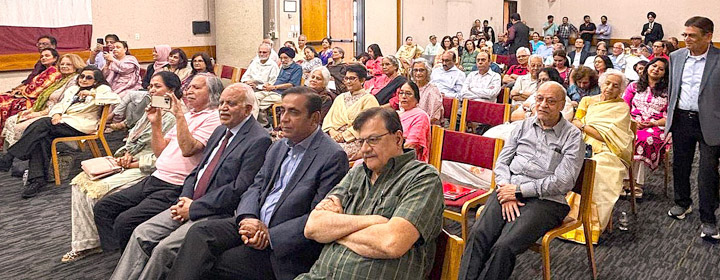
Volleyball match at Malindi to celebrate the birthday of Syedna Mufaddal Saifuddin
New Delhi :
The Dawoodi Bohra community living in Nairobi, Mombasa, Eldoret, Nakuru, Tanga, Morogoro, and Arusha in East Africa celebrated the birthday of their spiritual leader, Syedna Mufaddal Saifuddin, in a unique and inspiring way.
A grand volleyball tournament was held in the coastal city of Malindi to mark the occasion, uniting community members in an atmosphere of enthusiasm, sportsmanship, and unity.
Held in mid-October at the recently inaugurated Kutubi Sports Complex, the two-day tournament featured teams from various cities across East Africa. Hundreds of community members travelled to Malindi to participate. The event was not just a sporting competition, but a celebration of the community’s energy, cooperation, and positivity.
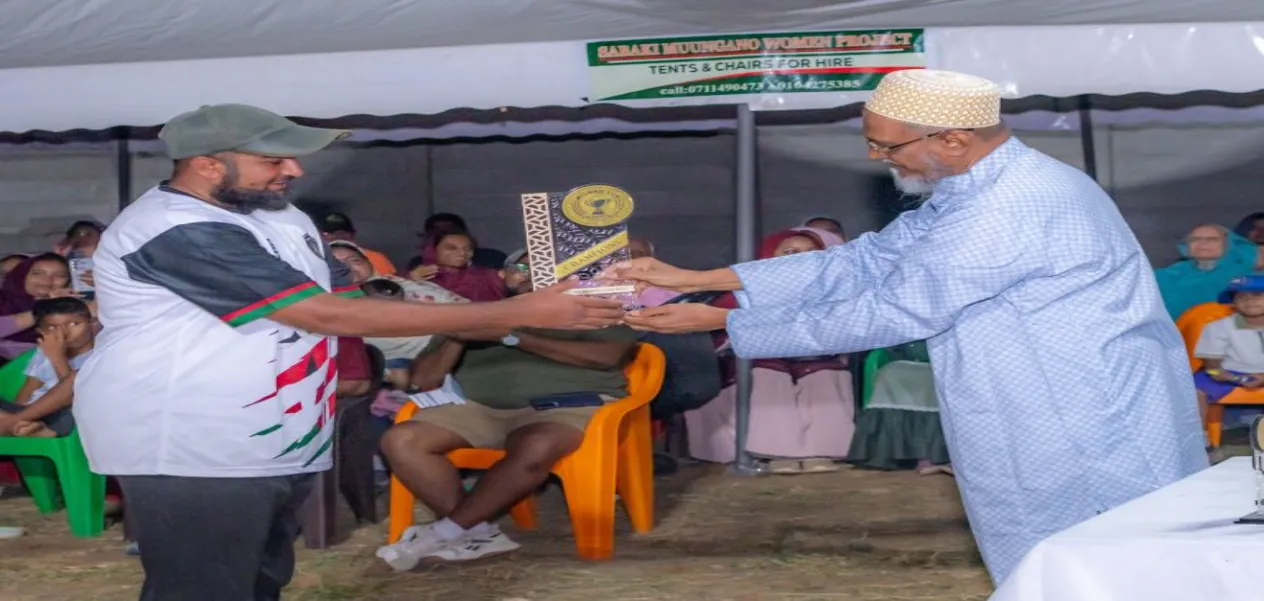
A Bohra leader gives away the trophy to the Captain of the Winning team
“There is no better way to celebate His Holiness Syedna’s birthday than by embracing one of his key teachings, to be physically active, in our lives,” said community member Huzaifa Hunaid.
Although Malindi has a small Dawoodi Bohra community, hosting the tournament filled the locals with pride and confidence. A local member beamed, “It was a proud moment to see our small team successfully organise such a large-scale event. The enthusiasm and positivity on and off the court reflected the true spirit of the event—building new relationships and strengthening old ones.”
The entire community joined in the sports festival. Locals were also present in large numbers in the audience. One spectator said, “We usually come to watch football, but this volleyball tournament brought a new wave of excitement and joy to the city.”
A match of Volleyball to mark the birthday of Bohra Community’s spiritual leader Syedna Mufaddal Saifuddin
The atmosphere at the Qutbi Sports Complex was festive throughout. Community members set up food stalls, serving delicious dishes, and everyone shared in the joy. After the matches, players were seen congratulating each other and exchanging pleasantries—a sight that exemplified brotherhood and affinity.
After the final match, when the winning team’s captain lifted the trophy, the entire arena erupted in applause and chants. Encouraged by the success of this event, the Qutubi Sports Club is now planning to hold a football tournament soon to further this spirit of enthusiasm and unity. The club’s objective is clear: to promote unity, health, and brotherhood through sport among East African communities.
The tournament in Malindi was not only a celebration of Syedna Mufaddal Saifuddin’s birthday but also a reflection of the community’s vibrancy, cooperation, and shared values.
The community feels the event has transformed sport into a bridge of humanity and unity.
source: http://www.awazthevoice.in / Awaz, The Voice / Home> Stories / by Aasha Khosa (edited) / November 06th, 2025
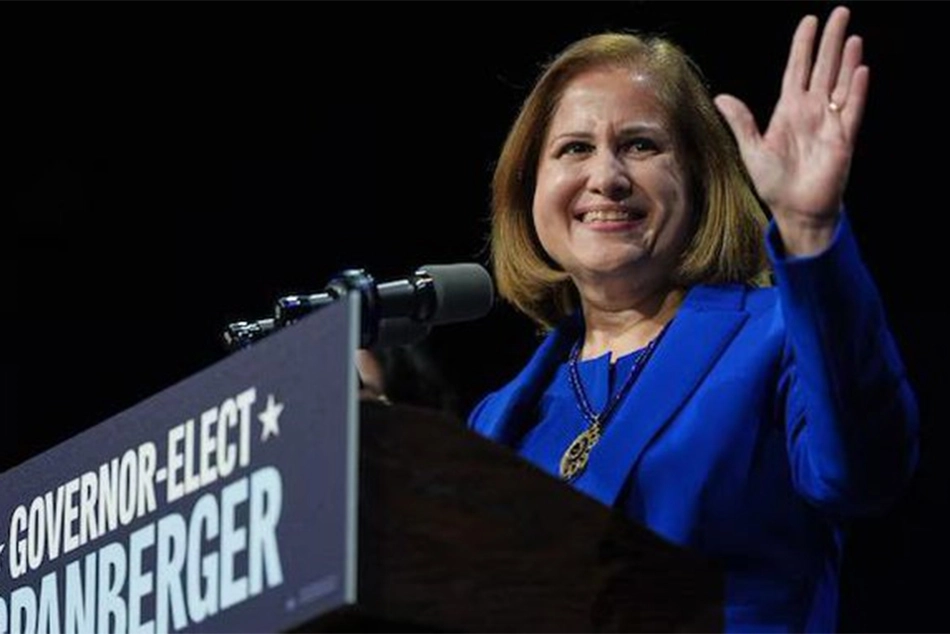
Indian-American Ghazala Hashmi, who is closely linked with the prestigious Aligarh Muslim University (AMU), has won the Virginia Lieutenant Governor 2025 Election result of which was declared on Monday.
Virginia:
Indian-American Ghazala Hashmi, who is closely linked with the prestigious Aligarh Muslim University (AMU), has won the Virginia Lieutenant Governor 2025 Election result of which was declared on Monday.
A Democrat Party candidate, Ghazala Hashmi, defeated Republican candidate and the state’s first gay statewide nominee, John Reid, to become first Muslim and first South Asian American elected as Lieutenant Governor of Virginia, a Republican stronghold.
Ghazala Hashmi polled over 55% votes as against her nearest rival John Reid who got the support of around 44.7% voters. Hashmi had earlier defeated five primary challengers in June, narrowly winning the nomination with 28% of the vote, as per the final result of the Virginia Lieutenant Governor Election 2025.
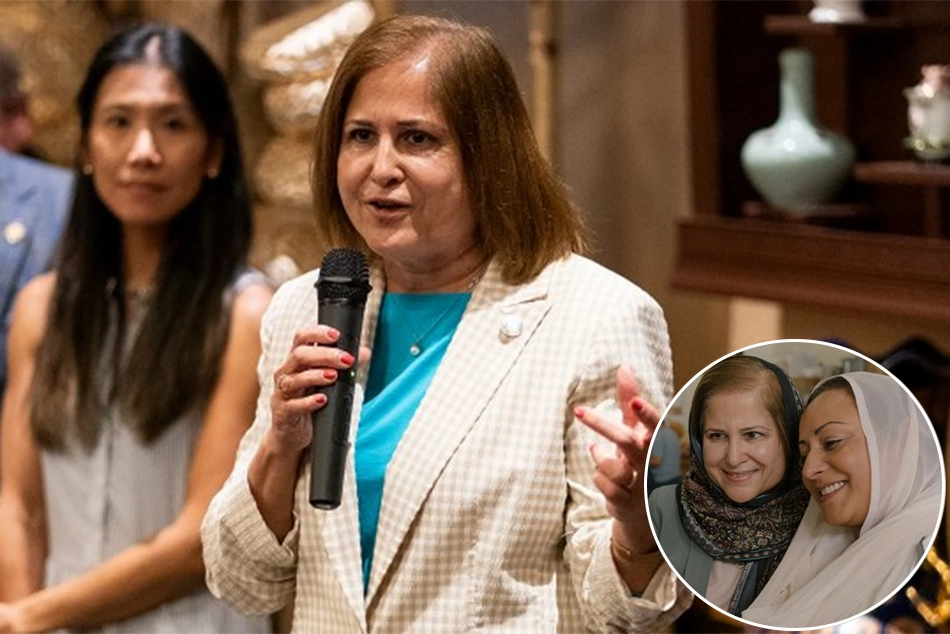
Ghazala Hashmi was the first Muslim woman to be elected to the Virginia State Senate following her stunning victory over sitting Republican Senator Republican Glen Sturtevant in the 2019 U.S. elections.
Ghazala Hashmi was born in India and emigrated to the US as a child with her family. She is also a former director of the Center for Excellence in Teaching & Learning at Reynolds Community College.
Ghazala Hashmi’s AMU Link
Ghazala Hashmi was born to Zia Hashmi and Tanveer Hashmi in Hyderabad in 1964. She spent her childhood days at her maternal grandparents’ house in Malakpet, Telangana.
She migrated to the United States with her mother and older brother as a 4-year-old child to join her father in Georgia.
Ghazala Hashmi’s mother, Tanveer Hashmi, is an alumna of Osmania University’s Women’s College in Kothi from where she did BA and B.Ed before migrating to the United States.
Ghazala’s father Professor Zia Hashmi is the alumnus of Aligarh Muslim University (AMU) from where he did MA and LLB. He completed his PhD in International Relations from University of South Carolina and soon after began his university teaching career. He retired as the Director of Centre for International Studies which he founded.
Ghazala Hashmi is married to Azhar Rafiq. The couple have two adult daughters – Yasmin and Noor – who both graduated from Chesterfield County Public Schools and the University of Virginia.
According to information available on her official website, Ghazala Hashmi is an experienced educator and an advocate of inclusive values and social justice. Her legislative priorities focus on public education, voting rights and the preservation of democracy, reproductive freedom, gun violence prevention, environmental protection, housing, and affordable healthcare access.
Hashmi spent nearly 30 years as a professor, first teaching at the University of Richmond and then at Reynolds Community College. At Reynolds Community College, Hashmi also served as the Founding Director of the Center for Excellence in Teaching and Learning (CETL).
Former Minister, MLA and BRS leader KT Ramarao has congratulated Ghazala Hashmi on her victory.
“This is massive! From Malakpet to Virginia… Congratulations to Ghazala Hashmi on becoming the first Indian-American Lieutenant Governor of Virginia. There is nothing more beautiful when democracies celebrate diversity of the world”. KTR wrote on X.
source: http://www.ummid.com / Ummid.com / Home> United States / by ummid.com news network / November 05th, 2025
The government of Karnataka’s department of Kannada and culture has announced the Karnataka Rajyotsava Awards for 2025–26, naming Zakaria Jokatte, founder of Al Muzain Company in Jubail, Saudi Arabia, and president of Mangaluru-based M Friends Charitable Trust, as the recipient in the Non-resident Kannadiga category.
Born on May 10, 1958, at Thokur in Jokatte, Zakaria is the eldest of five children of Haji B Shekuni and Katheejamma of Bajpeguttu. His journey from humble beginnings to international recognition is one of perseverance and determination. After discontinuing his schooling, he undertook various odd jobs — selling jaggery on streets, working as a welder, and even as a labourer carrying cement up to the 28th floor at construction sites abroad.
His years of hard work and sacrifice bore fruit when, in 2008, along with his eldest son Zaheer, he established Al Muzain Manpower Company in Jubail, Saudi Arabia, starting with just three employees. Through dedication and leadership, the company has now grown to employ 8,000 workers, with a goal of creating 10,000 jobs by 2027.
Following the success of Al Muzain, Zakaria expanded his entrepreneurial ventures, founding several other companies in Saudi Arabia, Bahrain, the UAE, Oman, Qatar, Kuwait, London, and India. He has also forayed into education by establishing an international institution in Al Khobar in collaboration with Yenepoya Group, and plans to set up a hospital and medical college in the near future. His upcoming projects include AI innovation initiatives and development ventures for the coastal region of Karnataka.
Currently residing in Bolar, Mangaluru, Zakaria lives with his wife Hazra Zakaria. His three sons — Zaheer, Nazir, and Zahid — are engaged in various business ventures abroad.
Zakaria serves as the chairman of M Friends Charitable Trust, Hidaya Foundation, and Zara Family Charity Trust. He is also associated as director, advisor, and sponsor with several organisations across Karnataka, working tirelessly for the welfare of thousands of underprivileged and needy individuals.
In recognition of his philanthropic contributions and entrepreneurial achievements, Zakaria Jokatte has received numerous national and international honours. His selection for the Karnataka Rajyotsava Award stands as a testament to his service, dedication, and pride as a global Kannadiga.
source: http://www.daijiworld.com / Daijiworld.com / Home> Karnataka / by Daijiworld Media Network – Mangaluru / October 30th, 2025
Karnire Town (Mangaluru Taluk, Dakshina Kannada District), KARNATAKA :
Padubidri:
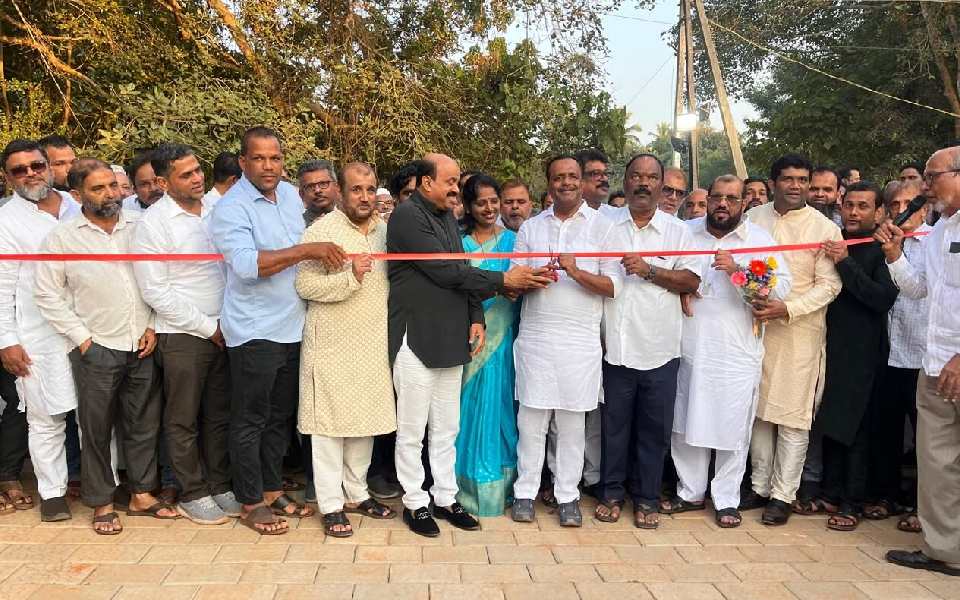
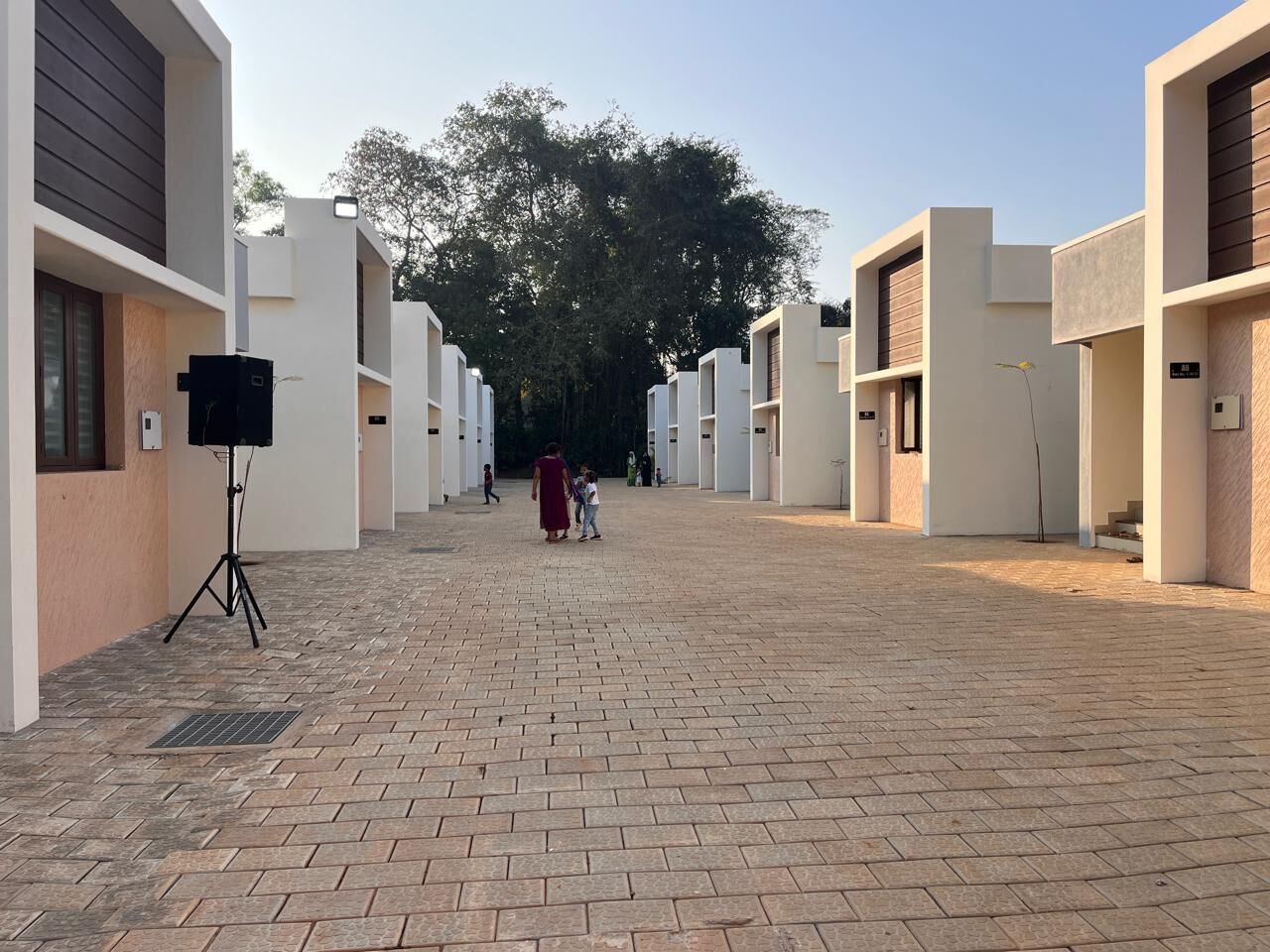
The Haji KS Sayeed Karnire Charitable Trust handed over seven newly constructed houses and laid the foundation stone for fourteen more in Karnire on Sunday.
Assembly Speaker U.T. Khader, who inaugurated the houses, highlighted the significant impact of this initiative, noting that while owning a home is a universal dream, many are unable to realize it.
He commended the project as a model of compassion and inspiration, emphasizing that such achievements go beyond financial capability and reflect a commitment to serving marginalized communities. He expressed hope for more transformative projects from the trust in the future and wished the beneficiaries a life of peace and harmony in their new homes.
Managing Trustee K.S. Sheikh, presiding over the event, detailed the trust’s ambitious project to construct 50 houses on two and a half acres of land. Each house, valued at approximately ₹20 lakh, is fully furnished with modern amenities, including a kitchen, hall, two bedrooms, and a washing machine. Sheikh explained that these homes are provided to deserving families in Karnire who lack proper housing.
He further revealed that with the foundation stone being laid for the construction of 14 more houses. There is a plan to build 50 houses on this land again, on two and a half acres of land.
Kaup MLA Gurme Suresh Shetty lauded the trust for its compassionate service in sheltering the underprivileged.
Former MLA Mohiuddin Bava praised the legacy of Syeed Haji’s hard work, which has turned his family into a beacon of service and harmony. He remarked that the family’s actions have become a model for communal unity.
Federation of World Bunts Vice President Karnire Vishwanath Shetty said, “Even though I have added Karnire to my name, the credit for taking the small village of Karnire to the world level belongs to the Syeed Haji family. Karnire is a town where everyone lives in harmony, regardless of caste, religion or difference. While Hindus have helped in the reconstruction of the mosque here, the Muslim community has also joined hands in the construction of the Hindu temple.”
Speaking in the opening remarks, K.S. Ashraf recalled the guidance of his late parents, expressed his gratitude for their teachings of kindness and service, which continue to inspire the family’s charitable efforts. He said, “We should do good to people. Our father used to preach to wish others well. Seeing his preaching and service, we have continued it. It is a great loss that our father and mother are not with us today. If they were here, they would have been happy now.”
On this occasion, U.T. Khader honored K.S. Sheikh on behalf of Karnire Juma Masjid and Karnire Khidma Young Men’s Association.
Abdul Jalil MH of Design Plus Architects, contractor H.N.G.C. Hussain, and supervisor Ramesh Kotian were also recognized for their contributions.
Karnire Juma Masjid Qatheeb Umarul Farooq Saquafi performed the dua. Family elders M.K. Abdul Hamid Mulki, K.S. Aboobacker were present.
Also present during the program were Balkunje Grama Panchayat President Mamata D. Poonja, Harishchandra Shetty, Karnire Juma Masjid President Muhammad Ali, Adv. Bhaskar Shetty, Kote Shekhabba Kannangar, T.K. Muhammad Kote Palimaru, Karnire Harishchandra Shetty, Khidma Youngmen’s President Khidma B.N, Ismail, K.S. Ashfak.
K.S. Ashraf delivered the welcome address, K.S. Abdul Rahim offered a vote of thanks, and Muhammad Ali Kammaradi moderated the event.
source: http://www.english.varthabharati.in / Vartha Bharati / Home> Karavali / by Vartha Bharati / October 05th, 2025
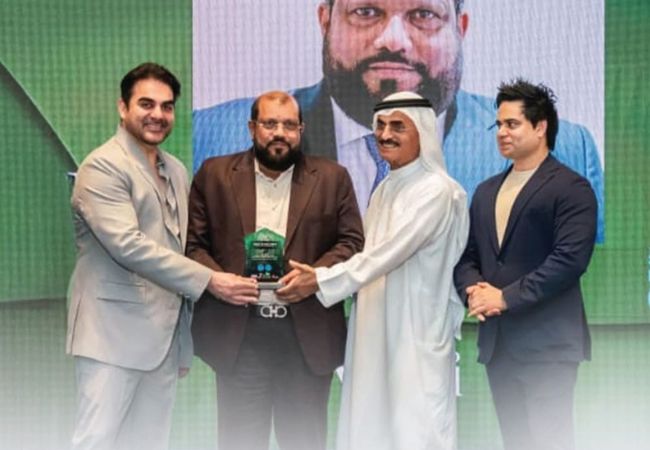
Recognising his outstanding contributions to business leadership and sustainable practices, K.S. Sheik Karnire, Chief Operating Officer of Expertise, was conferred with the prestigious Business Excellence Award 2025 at the Zee Media Gulf Green Summit & Awards held at Hilton Habtoor City, Dubai on September 26.
The event, organised by Zee Media in association with World WeTel, brought together global leaders, entrepreneurs, and sustainability advocates to deliberate on green initiatives and acknowledge exceptional business achievements across industries.
The award was presented to Karnire in the presence of eminent dignitaries including H.E. Dr. Abdullah Belhaif Al Nuaimi, Chairman of Sharjah Consultative Council and former UAE Minister of Climate Change and Environment, who graced the ceremony as Chief Guest.
Actor Arbaaz Khan attended as the Guest of Honor, while the proceedings were anchored by celebrity anchor Anil Singhvi.
source: http://www.english.varthabharati.in / Vartha Bharati / Home> Gulf / by Vartha Bharati / October 02nd, 2025
Prof. Ziaur Rahman Siddiqui, Department of Urdu, AMU
Aligarh:
In a proud moment for the global Urdu community, Prof. Ziaur Rahman Siddiqui, Department of Urdu, Aligarh Muslim University (AMU), has been nominated for the prestigious Nishan-e-Urdu 2023–24 award by Urdu Markaz, New York (USA).
The award, to be formally presented in New York on Sir Syed Day, honours individuals for their outstanding contributions to the promotion and enrichment of the Urdu language.
Mr. Raees Warsi, Founder and President of Urdu Markaz, New York, remarked, “Prof. Siddiqui’s nomination recognises his remarkable work in Urdu scholarship, research, criticism, and pedagogy.”
Prof Siddiqui is the author of more than two dozen books and over a hundred research and critical papers, blending intellectual depth with literary artistry.
source: http://www.radiancenews.com / Radiance News / Home> Pride of the Nation> Awards> Latest News / by Radiance News Bureau / October 13th, 2025
Former Chief of Muslim World League, President of King Abdulaziz University and the brain behind a number of key projects and initiatives, including the exemplary Hajj crowd management system, Dr. Abdullah Omar Naseef breathed his last aged 86 in Jeddah on Sunday October 12, 2025.
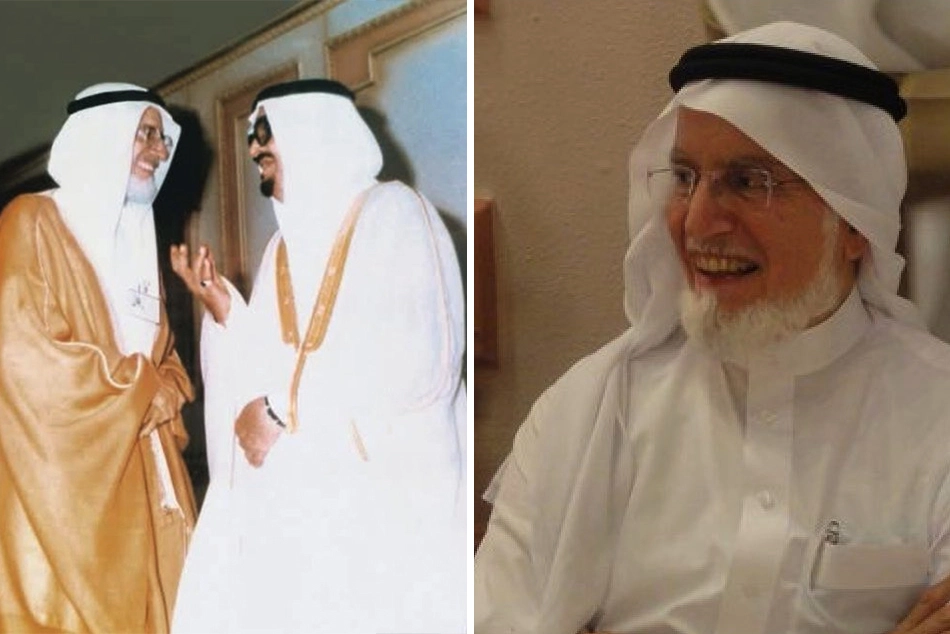
Dr. Abdullah Omar Naseef with King Fahd
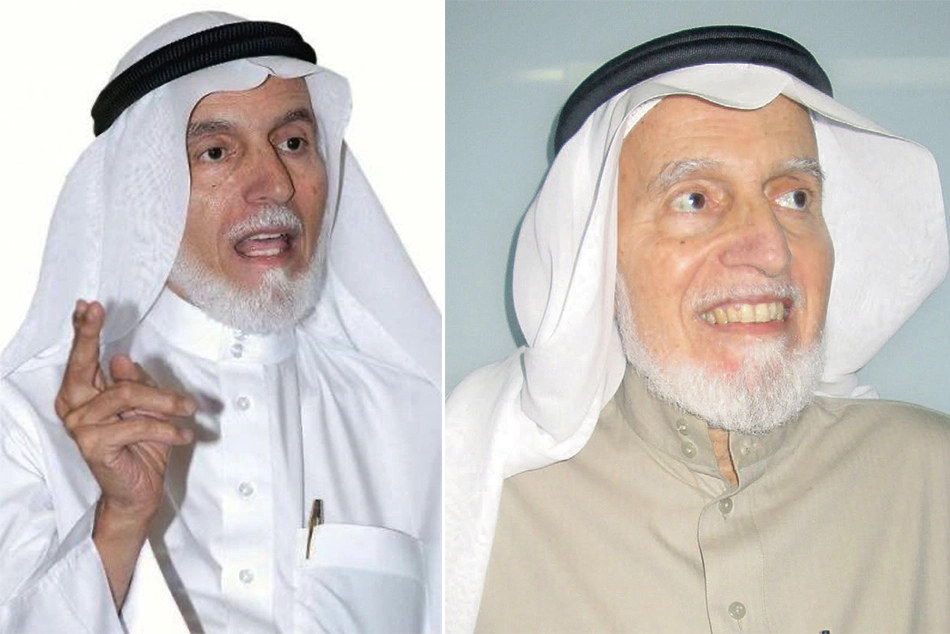
Dr. Abdullah Omar Naseef is no more. Former Chief of Muslim World League, President of King Abdulaziz University and the brain behind a number of key projects and initiatives, including the exemplary Hajj crowd management system, Dr. Abdullah Omar Naseef breathed his last aged 86 in Jeddah on Sunday October 12, 2025.
Dr Abdullah Omar Naseef’s funeral prayer was offered at Al-Juffali Mosque after Asr prayer Sunday. He was later buried at Al-Assad Cemetery in Jeddah.
Dr. Abdullah Omar Naseef was born in Jeddah in 1939. During his long career, Dr Abdullah Naseef held several key positions and also served as Secretary General of the Muslim World League (MWL) and Chairman of World Muslim Congress.
As Secretary General of the Muslim World League from 1983-1993, he extensively travelled all across the world to study the conditions of Muslim minorities and solve their problems.
Dr Abudllah Omar Naseef in Malegaon
Dr. Abdullah Omar Naseef receiving King Faisal Award
During the same period, he visited Malegaon on May 01, 1992 leading an extraordinary delegation of Muslim scholars and Arab dignitaries.
After arrival in Mumbai by air, Dr Naseef travelled to Malegaon by road with Maulana Mukhtar Ahmed Nadvi, renowned Islamic Scholar, Founder of Jamia Mohammadia Mansoora Malegaon, former Vice President of All India Muslim Personal Law Board (AIMPLB) and his host in Malegaon.
“A huge crowd had gathered on the two sides of the road from Girna Bridge to Jamia Mohammadia Mansoora to greet Dr Naseef and the members of his delegation”, Abdul Qayyum Faizee, General Secretary of Jamiat Ahle Hadees Maharashtra at that time, told ummid.com.
“Qari Abdus Samad led the crowd, standing along the Malegaon-Manmad Road and repeating the chants of Ahlan w Sahlan Marhaba to greet Dr Naseef and other guests”, Abdul Qayyum Faizee recalled.
“The grand welcome was indeed heart-warming for the onlookers as well as the visiting guests”, he added.
Abdul Qayyum Faizee said after offering Friday prayers at Masjid Ayesha Al Duaij in Mansoora, Dr Naseef and his delegation took a tour of Malegaon and also visited Jamiatul Huda.
“During his day-long visit to Malegaon, Dr Abdullah Omar Naseef’s focus of discussion was the social, educational and economic empowerment of Muslims”, he recalled.
Dr Abudllah Omar Naseef’s Mumbai and Bhiwandi connection
Dr Abudllah Omar Naseef’s mother was sister of Islamic Scholar Maulana Abdus Samad Sharafuddin. Abdus Samad Sharafuddin was a publisher of Islamic books, owning a printing press in Bhiwandi and a book shop in Mumbai. Sharafuddin and Sons at Mumbai’s iconic Mohammad Ali Road is still a one stop shop for rare books.
Maulana Abdus Samad Sharafuddin had formidable connections with Mumbai’s elites. When Saudi King Saud bin Abdulaziz visited Bombay in 1955, on his way to Jama Masjid Ahle Hadees Mominpura, he suddenly asked his convoy to halt at Abdus Samad Sharafuddin’s home.
“His visit to Maulana Abdus Samad Sharafuddin’s home was unscheduled and hence left the local security personnel puzzled”, Abdul Qayyum Faizee recalled.
King Saud’s visit to Dr Naseef’s maternal uncle Maulana Abdus Samad Sharafuddin’s home in Mumbai is reminiscent of the special relation Dr Naseef and his family had with the Saudi Royal family.
Dr Abdullah Omar Naseef’s Contributions
After completing primary education, Dr Naseef obtained bachelor’s degree in Chemistry from King Saud University in 1964. He was holder of a doctorate degree in Geology from the University of Leeds in 1971. He started his career as a Teacher first at King Saud University in Riyadh and then at King Abdulaziz University in Jeddah. He continued to rise through the academic ranks, until becoming a Professor and later appointed as the President King Abdulaziz University. He was also a fellow of the Geological Society of London and the Geological Society of America.
Dr Naseef also served as Chief Scout and member of the Board of Directors of the Saudi Arabian Boy Scouts Association, which he joined in 1956. Later, he served as President of the International Union of Muslim Scouts and member of the World Scout Committee.
Besides serving as the Secretary General of the Makkah-based Muslim World League, Dr Naseef also held several key positions – both in Saudi Arabia and abroad. His contributions were highlighted in the Islamic Relief Project, known as “Sanabel Al-Khair,” which aims to save the poor masses in the far reaches of the Islamic world from poverty, ignorance, and disease. He represented Saudi Arabia in several international conferences and forums, defending Islamic causes and calling for dialogue and understanding between peoples and religions.
Dr Naseef later also served as Vice President of the Saudi Shoura Council and carved his niche as a model of wisdom, broad vision, and service to the national interests. The positions held by Dr. Naseef include vice chairman of the Saudi National Dialogue Committee for 10 years, Secretary General of the International Islamic Council for Call and Relief from 2008 to 2019, Chairman of the Board of the International Islamic Relief Organization in 2000, President of the World Muslim Congress, Vice Chairman of the Saudi National Dialogue Committee for 10 years, and President of the Abdullah bin Omar Nassif Charitable Foundation.
Among the Arab and international positions that he held include Member of the Board of Trustees of the University of Dar es Salaam in New Mexico, the Islamic American College in Chicago, the Royal Moroccan Academy, the Islamic Academy in Cambridge, and Vice President of the International Islamic University in Islamabad. He chaired the Boards of Trustees of the Islamic Cultural Center in Geneva, the Institute for the History of Arabic and Islamic Sciences at the University of Frankfurt, the Islamic Cultural Center in Sydney, the International Islamic University in Chittagong, Darul Ihsan University in Bangladesh, and the Islamic University in Niger.
British-Pakistani writer Ziauddin Sardar in his book “Desperately Seeking Paradise: Journeys of a Sceptical Muslim” has described at length how Dr Abdullah Omar Naseef was instrumental in fomalising a system to manage crowd during Hajj, the annual ritual when over 2 million Muslims from around the world throng the Two Holy Cities – Makkah and Madinah.
Dr. Naseef was awarded with the King Faisal Prize for Service to Islam in 1991 and the King Abdulaziz Medal of the First Class in 2004. In 1983 Nasseef was awarded the Bronze Wolf, the only distinction of the World Organization of the Scout Movement, awarded by the World Scout Committee, for exceptional services to world Scouting.
Condolences
Condolences are pouring in from all across the world after the demise of Dr Abdullah Omar Naseef.
“The Departure of a Man Who Shaped a Civilization and Human Presence for Muslims Across the Globe”, Faid Mohammed Said, University Professor and a Member of the European Council for Muslim Leaders, said condoling the death of Dr Naseef.
“A great friend of the UK Muslim community”, the Muslim Council of Britain (MCB) in its condolence message on the passing of Dr Abdullah Omar Nassef.
In his condolence message, The Mufti of Uganda, Sheikh Shaban Ramadhan Mubaje, paid tribute to the late Dr. Abdallah Omar Naseef, recognising his key role in rebuilding and strengthening the country’s Muslim community in the 1980s and 1990s.
“One of the finest persons lived in Saudi Arabia. May Allah be pleased with the departed”, Dr Khaled Almaeena, Former Editor in Chief Arab News and Saudi Gazette, paid tribute to Dr Abdullah Omar Naseef in these words.
[With inputs from Saudi Gazette. The writer, Aleem Faizee, is Founder Editor of ummid.com. Aleem Faizee has also worked as Researcher at Tata Institute of Social Sciences (TISS) and with Action Aid for its research work published as “BROKEN PROMISES -A study on the socio-economic status of Indian Muslims: Seven years post Sachar”. Aleem Faizee’s research work “Mollywood: The Rise and Fall of a Subaltern Cinema” is part of the book “Creative Industries in India” published by Routledge India of Taylor and Francis Group, London. A prolific writer, Aleem Faizee has also worked with The Times of India and The Milli Gazette as Freelance Journalist for over 10 years. Aleem Faizee is also a Social Entrepreneur and heads Malegaon Industries and Manufacturers Association (MIMA) and Samara’s Education and Welfare Association (SEWA)]
source: http://www.ummid.com / Ummid.com / Home> Obituary / by Aleem Faizee / October 13th, 2025
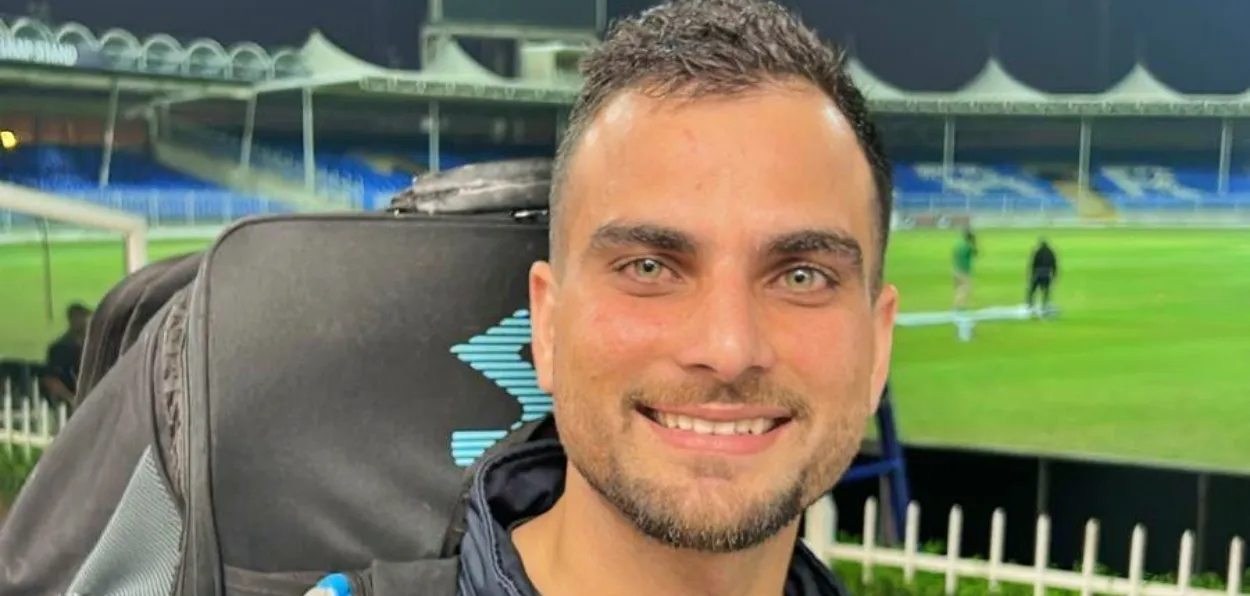
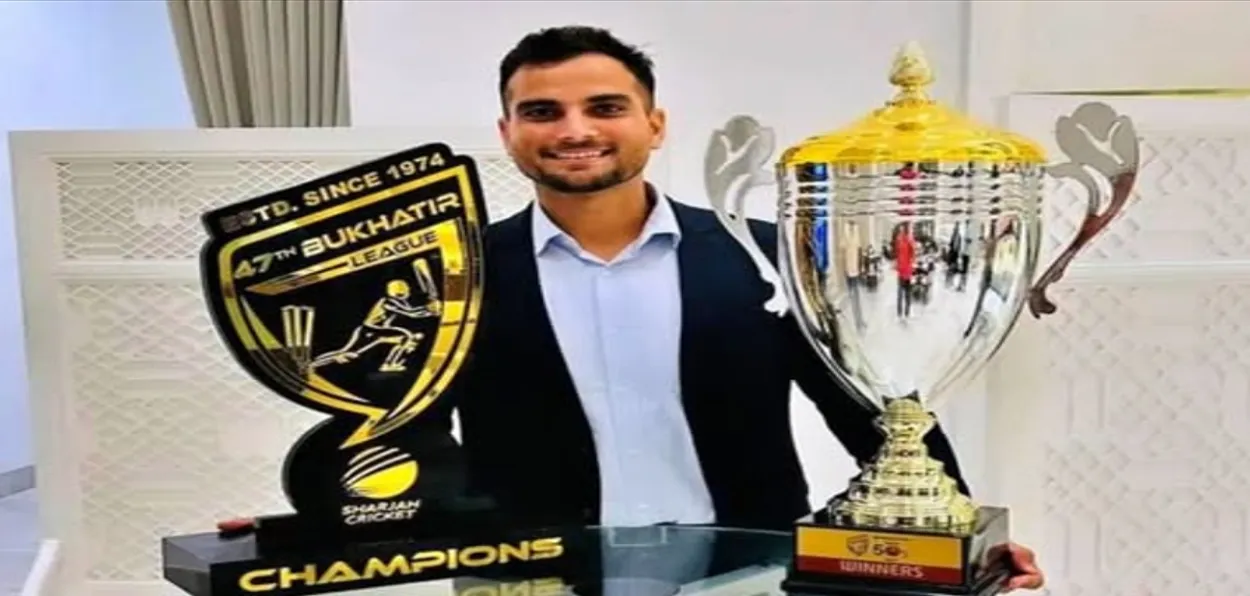
Shoaib Khan of the Gaya district of Bihar, has been selected in the development team of Dubai Capitals, the associate team of IPL franchise Delhi Capitals.
Shoaib comes from Kothi village of Imamganj, a Naxal-affected area of Bihar. In his village, even basic facilities of education and sports were nearly missing, and, therefore, this is a dream come true for him.
Shoaib’s father, Adeeb Khan alias Jugnu Khan, is a farmer and social worker. Despite being from a Naxalite-affected and backward area, he always gave priority to education in his family.
A law graduate, Adeeb Khan, left no stone unturned in providing a good education to his children. In those days, there were no good schools in the village, so he got Shoaib admitted to Gyan Bharti School in Gaya city.
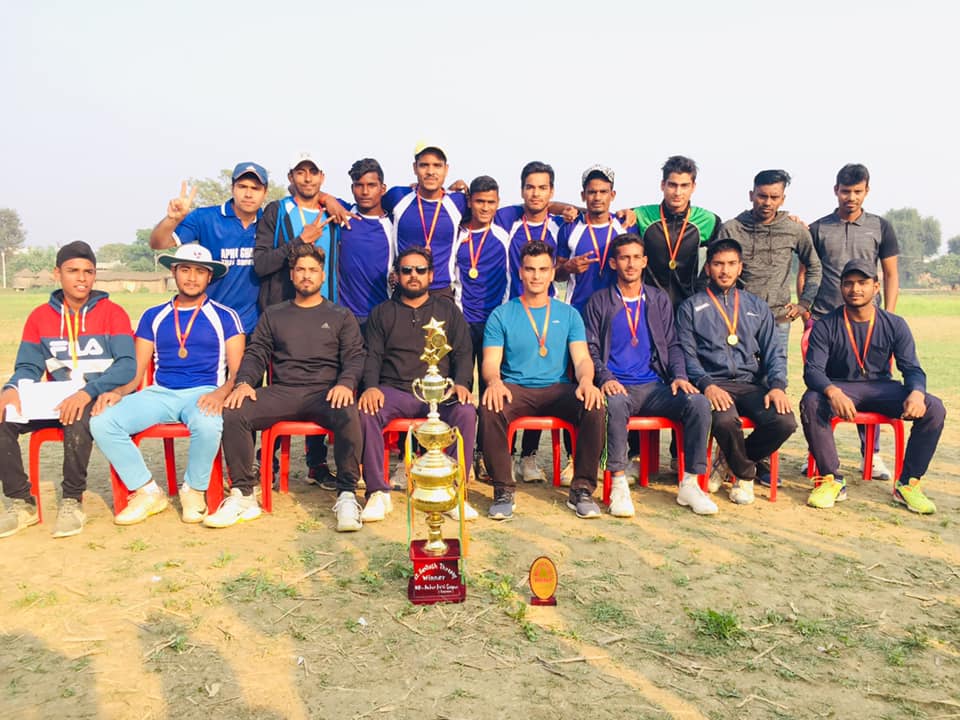
Shoaib with his team
From here, Shoaib’s passion for cricket deepened. Initially, his parents were apprehensive about his sports career, but they reconciled after seeing their son’s determination.
Shoaib’s elder brother, Altamash Khan, who works in District Disaster Management under the United Nations Development Programme, said that after playing at the school level, Shoaib also participated in district and state-level tournaments.
He joined Jamia Millia Islamia, Delhi, where he continued playing cricket while pursuing his graduation. Soon, he was selected for the university team and participated in charity matches and university development tournaments with many big players from the country.
Shoaib was disappointed after not being picked for the Bihar Ranji team. At one point, he had even decided to quit cricket.
It was when he stumbled upon the news that there was a vacancy in cricket in Dubai. Shoaib immediately started preparing to go there, and his father supported him. Soon, he was sending money to his parents. Gradually, Shoaib started playing in many clubs of Dubai and Sharjah and made his mark as a professional cricketer.
Shoaib’s hard work paid off, and now he has a contract with the Dubai International team. Due to his consistently excellent performance in club cricket, he has also started getting money for playing matches.
The Dubai cricket pitch has given a new flight to Shoaib’s dreams. He has also been honoured by the Emirates Cricket Board for his excellent fielding. Last year, he also received the Player of the Match and Best Fielder of the Tournament awards.
Shoaib performed brilliantly in his first match for Dubai Capitals in the ILT20 Development League. He played a blistering innings of 35 runs with the help of 3 sixes and 1 four in his first innings, giving his team a thrilling victory by 5 runs.
This performance not only gave the team its first win, but Shoaib also became the second-highest run scorer for his team. It is really unbelievable for a player from the Naxal-affected Kothi village to perform so well in the glittering T20 league of Dubai. When the news of his performance reached the village, there was an atmosphere of celebration there.
Shoaib Khan
Shoaib’s brother, Altamash Khan, said that if Shoaib performs well in the ILT20 Development League, he may be considered for the Emirates Cricket Board’s (ECB) auction for the International ILT20 2026 season.
Recalling his hard time, Jugnu Khan says that farming had also become difficult due to the fear of Naxalites. Despite this, he sent his children to schools in Gayaji.
He says when Shoaib was studying in a private school in Gaya, following his passion for cricket was not easy. During school holidays, Jugunu used to take him daily on a motorcycle to Gandhi Maidan in Gayaji, 100 km away, where he practiced.
All arrangements were made for Shoaib’s practice during his studies till matriculation. Later, the family got a pitch prepared on their farm in the village, where Shoaib used to practice regularly.
Shoaib started playing cricket at the age of 6. According to his father, this hobby was deep in him since childhood. At the age of 12, Shoaib established ‘Kothi Club’ in his village, Kothi, so that the children of the village could also enjoy cricket. He also got the ground prepared himself.
Father Jugunu Khan says, “There is a different passion for cricket in India, but the number of players is so high that it is very difficult to make a place in the national team from a backward village.”
This story of Shoaib Khan is not only about the success of a player, but it is also the story of the struggle of a family, the sacrifice of a father, and the big dreams of a small village.
source: http://www.awazthevoice.in / Awaz, The Voice / Home> Sports / by Naushad Akhtar, Gaya (Bihar) / September 08th, 2025
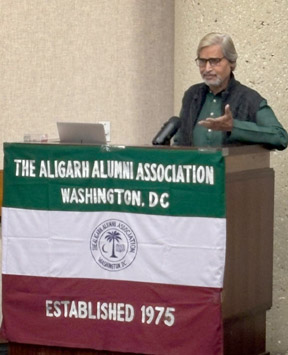
The Metro Washington chapters of the Global Organization of People of Indian Origin (GOPIO-Metro Washington) and the Aligarh Alumni Association (AAA-DC) jointly hosted the 17th Annual Mushaira–Kavi Sammelan on Saturday, September 6, 2025, at the Montgomery County Executive Building Auditorium in Rockville, Maryland.
The program was co-sponsored by several local literary and cultural organizations, including the Association of Indian Muslims (AIM), the Hyderabad Association of the Washington Metro Area (HAWMA), the Montgomery Nawabs (MONA), the Global Beat Foundation (GBF), the Bazm-e-Harf-o-Sukhan (BHS), and RR K Biosciences.
The session was presided over by Dr. Harish Naval, an acclaimed satirist and author of more than 40 books, as well as a recipient of the Yuva Jnanpith Prize.
Origins and Growth
Program Coordinator Dr. Zafar Iqbal welcomed the audience. He recalled the event’s origins in 2008 as a forum to commemorate Yaum-e-Azadi (South Asia’s Independence Day) through poetry in both Urdu and Hindi. Conceived by Drs. Renuka Misra and Zafar Iqbal (GOPIO-Metro Washington) and Dr. A. Abdullah (AAA-DC), the Mushaira–Kavi Sammelan has since become an annual tradition celebrating South Asia’s shared Ganga–Jamuni cultural heritage.
Mr. Vivek Chaudhary, First Secretary at the Embassy of India, Washington, D.C., and Dr. Renuka Misra at the Mushaira- Kavi Sammelan
A milestone was reached in 2011, when the Embassy of India joined GOPIO and AAA-DC to host the first international bilingual poetry recitation—an initiative inspired by Dr. Virandar Paul (my colleague from the All-India Institute of Medical Sciences, New Delhi), then Minister at the Indian Embassy in Washington. This recognition solidified the event as a platform for cultural diplomacy.
This year, Mr. Vivek Chaudhary, First Secretary at the Embassy of India, applauded the organizers for presenting an inspiring and meaningful program.
Literary Contributions
A defining feature of the Mushaira–Kavi Sammelan has been its encouragement of literary talent in the diaspora, often marked by book launches of both emerging and established writers. Over the years, the stage has hosted acclaimed authors and poets such as Prof. Satyapal Anand, Prof. Asghar Wajahat, Dr. A. Abdullah, Dr. K. Mohan, Raj Kumar Qais, Anadi Naik, Dr. Astha Naval, Dhananjaya Kumar, Rashmi Sanan, Farah Kamran, Surinder Deol, Daler Deol Aashna, Salman Akhtar, and Prof. Gopichand Narang.
The 2025 session featured an impressive lineup of poets, including A. Abdullah, Astha Naval, Harish Naval, Madhu Maheshwari, Mohammed Akbar, Mohammed Jaweed, Narendra Tandon, Nisha Narayan, Preethi Govindaraj, Razi Raziuddin, Rizwan Ali, Sarwat Parvez, Sarwat Zehra, Shamsa Najam, Sneh Sudha, Sukesh Chopra, Tabassum, Uday Kamath, Vinita Tiwari, Vishakha Thaker, and Yusuf Rahat.
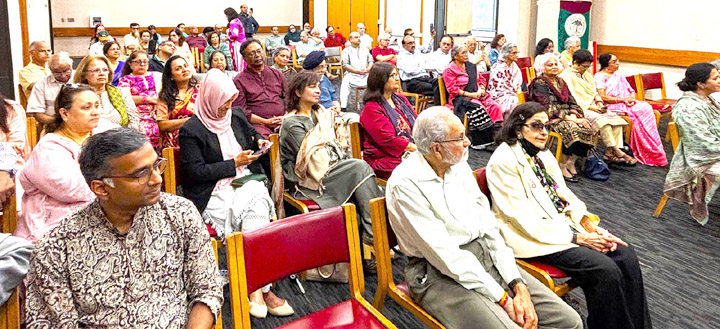
A view of the audience
Highlights of 2025 Program
The session was presided over by Dr. Harish Naval, an acclaimed satirist and author of more than 40 books, as well as a recipient of the Yuva Jnanpith Prize. He enriched the proceedings with his literary observations.
The program was conducted with elegance by Mohammed Akbar, who also introduced poets with verses of his own.
Dr. Mohammad Haziq served as master of ceremonies, and Dr. Salman Rashid delivered the vote of thanks.
The gathering also paid warm tributes to late senior poets of the Washington area—Professor Satyapal Anand, Aziz Qureshi, and Rakesh Khandelwal—as well as to eminent Urdu scholars Professor C.M. Naim (University of Chicago) and Professor Tahsin Siddiqi (University of Michigan, Ann Arbor).
Guests and Partners
Special guests included representatives of partner organizations and the Embassy of India. Recognized for their continued support were Ms. Ariena Rashid (AAA-DC), Dr. Renuka Misra (GOPIO), Mr. Kaleem Kawaja (AIM), Mr. Mir Zahid Ali (HAWMA), Dr. Mohammad Akbar (MONA), Ms. Nuzaira Azam (GBF), Dr. Arif Mahmood (BHS), and Dr. Qazi Hamid (R K Biosciences).
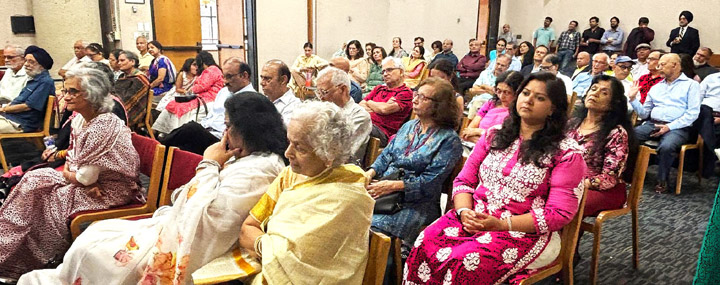
Another view of the audience (Photos : Courtesy Aslam Azad and Mohammad Haziq)
Cultural Impact
By bringing together poets from both Urdu and Hindi traditions, the Mushaira–Kavi Sammelan bridges linguistic divides and highlights the deep interconnections between vocabulary, idiom, and poetic form. Over the years, it has drawn audiences ranging from students and families to immigrants, longtime residents, and diplomats, fostering interfaith understanding and intergenerational bonds within the diaspora. Its continuity and inclusiveness ensure that South Asia’s literary heritage remains vibrant in the Washington, DC area.
The author gratefully acknowledges Mr. Aslam Azad and Mr. Mohammad Haziq for providing photographs.
source: http://www.theindianpanorama.news / The Indian Panorama / Home> United States / by Dr Zafar Iqbal / September 25th, 2025
Late Abdur Razzak Kalsekar, Chairman, Rasasi Group
Dubai/Mumbai:
Distinguished citizen, pioneer businessman and philanthropist, Haji Abdul Razak Kalsekar passed away on Monday at Dubai.
The well-known educationist and philanthropist who ran Kalsekar Trust, Kalsekar College and Kalsekar Hospital among many other charitable institutions. His special interest lay in the education sector and he had established many schools, colleges and orphanages.
“His philanthropy in India and West Asia will be remembered forever. He was very much concerned towards the upliftment of the downtrodden and empowerment of women.
Among his educational institutions, Kalsekar Girls Degree College for Women in Mumbra was established in order to provide quality education to girls. He was also very instrumental in setting up many hospitals, engineering, pharmacy and architecture colleges,” Aamir Edresy, president of the Association of Muslim Professionals, said.
Razzaq ran a perfume business in Dubai.
The AMP team offered deep condolences to his family and thousands of people, who considered him not just as an employer but also as a father and a guide.
source: http://www.twocircles.net / TwoCircles.net / Home> Indian Muslim / by TCN News / August 11th, 2015