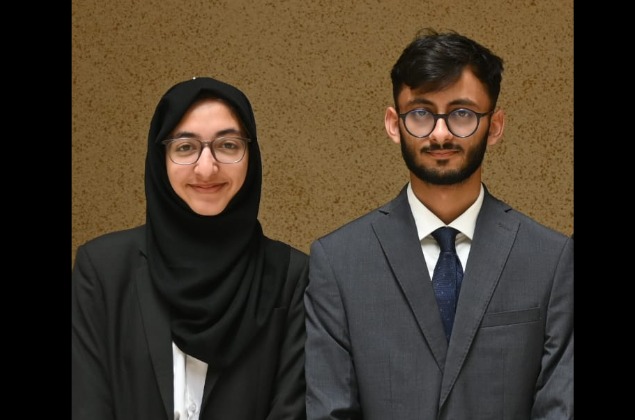
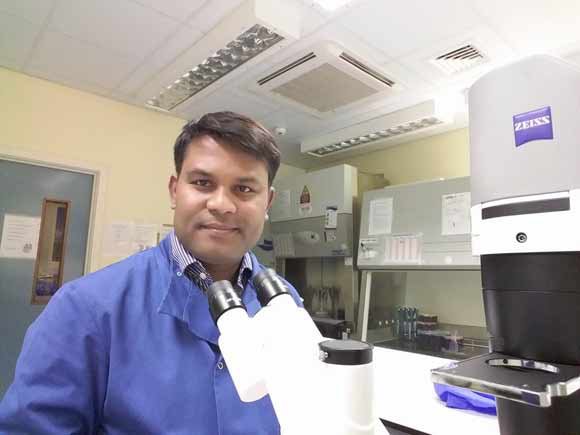
Zainab-ul-Kubra (3rd year), and Intizar-ul-Islam (4th year), Prize winners from NUSRL
Ranchi:
Students of National University of Study and Research in Law (NUSRL), have secured first place in the International Arbitral Award Writing Competition. Two university students, Intizar-ul-Islam (4th year) and Zainab-ul-Kubra (3rd year), achieved the top honour in the 5th Surana & Surana RGNUL International Arbitral Award Writing Competition 2024.
This is a significant achievement for the university, as the duo won this accolade by outperforming participants from some of the most renowned universities in India and abroad. The competition was organised by Center for Alternative Dispute Resolution (CADR) at Rajiv Gandhi National University of Law (RGNUL), Punjab, in collaboration with Surana & Surana International Attorneys.
Participants were tasked with drafting an arbitral award based on a hypothetical legal problem.
More than 72 contestants took part, including students pursuing BA-LLB, LLM, PhD, MPhil, or other law-related courses. The competition deadline was October 30, 2024, and the results were announced in January.
Based on their exceptional skills, Intizar and Zainab not only secured the first position but also received a cash prize of ₹25,000 for their victory. Their success highlights their dedication and expertise in the field of law. The competition served as an excellent platform for students to showcase their legal writing abilities.
The Vice-Chancellor of the university, Professor Dr. Ashok R. Pal, congratulated Intizar and Zainab on their achievement.
source: http://www.radiancenews.com / Radiance News / Home> Pride of the Nation> Awards> Latest News / by Radiance News Bureau / January 21st, 2025
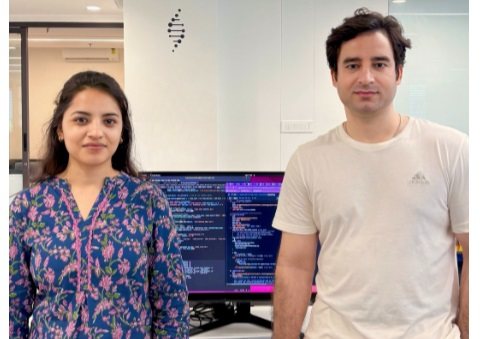
In a landmark achievement, the Government of India has recently awarded Patent No. 556810 to Jamia Millia Islamia (JMI) scholars Dr. Tanveer Ahmad, an Assistant Professor, and his PhD student, Miss Nisha Chaudhary, from the Multidisciplinary Centre for Advanced Research & Studies (MCARS) at JMI.
The patent granted on December 24, 2024, recognises their pioneering invention titled “A SYSTEM AND METHOD FOR GENOMIC MARKERS AND DIGITAL PATHOLOGY IMAGE-BASED PREDICTION OF ORAL MALIGNANT DISORDERS.”
Their innovative methodology, developed in collaboration with partners, leverages artificial intelligence (AI) and digital pathology to enhance the diagnosis and prediction of oral cancer.
Miss Nisha Chaudhary and Dr. Tanveer Ahmed
This advanced system can study tissue images to identify if they are linked to oral submucous fibrosis (OSMF), oral leukoplakia (OLL), oral lichen planus (OLP), or oral squamous cell carcinoma (OSCC). For OSCC, it can also determine how severe the cancer is—welldifferentiated, moderately differentiated, or poorly differentiated—using AI technology. The system predicts the chances of OSMF or OLP/OLL developing into OSCC, giving doctors helpful information about risks. By using genetic markers and digital tools, it provides clear treatment insights and lowers diagnostic costs compared to traditional methods. This invention is set to transform oral cancer detection by making it more affordable and accurate.
In addition to the patent, the research team has recently achieved another significant milestone with their publication in Scientific Data, a high impact factor (9.8) journal from the Nature Publishing Group. Their paper, “High-resolution AI image dataset for diagnosing oral submucous fibrosis and squamous cell carcinoma,” highlights the dataset underpinning their innovation, offering a valuable resource for researchers worldwide.
This accomplishment is shared with distinguished collaborators, including Dr. Akhilanand Chaurasia, Dr. Arpita Rai, Dr. Deepika Mishra, and Dr. Charbel Darido, whose contributions have been pivotal.
Together, these achievements have significant implications for medical treatment, underscoring the transformative potential of AI-driven solutions in digital pathology and oral cancer research, marking a significant leap toward improved diagnostic and prognostic outcomes.
Professor Mohammad Husain, Director of MCARS at JMI, congratulated all who were part of the study and expressed pride in the achievement.
source: http:/www.jmi.ac.in / Jamia Millia Islamia / Home / by Public Relations Office / December 31st, 2024
How a Madrasa student Mohammad Israr became a Maritime Archaeologist in the UK
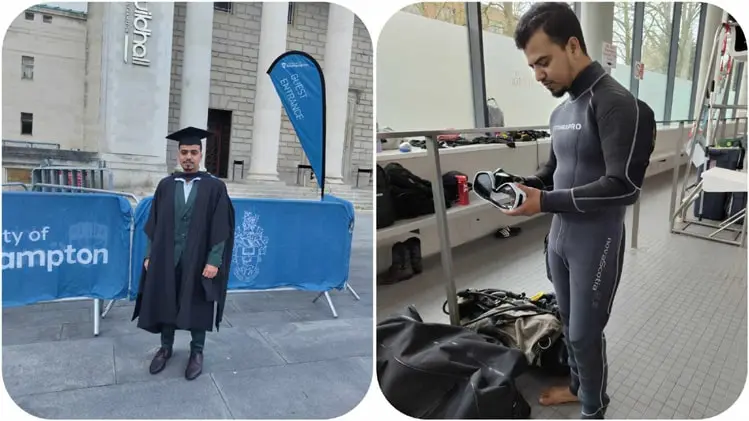
Mohammed Israr on December 19, after the convocation of University of Southampton and in his uniform as Maritime Archeologist | Arranged
Kolkata:
Madrasa Chaap is an abusive or slang term increasingly used to demean Indian Muslims. However, such people should meet Mohammad Israr, who, in the last decade, completed not only his Madrasa education (along with secondary school) but also his senior secondary education, graduation, and a Master’s degree from India’s top college and university. Recently, he earned another Master’s degree from the University of Southampton, that too as a fully funded student.
Last week, Israr, a resident of Kolkata, received his MSc in Maritime Archaeology from the University of Southampton. The 24-year-old, who comes from a modest family, aims to pursue a Doctorate in Philosophy (PhD) at an international university before embarking on a full-time professional career.
Israr’s father, the late Mohammad Mushtaque, passed away when he was only four years old. His father was a small businessman. Since then, Israr’s elder brother, Mohammed Istiak, has been supporting him.
But how did the journey of a Madrasa student, starting in the lanes of Elliot Lane, lead to the United Kingdom?
Inspired by a Friend to Pursue Additional Education Beyond Madrasa
“Since my father passed away early in my life, I was sent to a Madrasa (Jamia Abdullah ine Masood, Kolkata) for studies. However, my childhood friend Hassan Abdul Ghaffar, who attended an English medium school and excelled in academics, inspired my interest in modern and professional courses,” Israr told eNewsroom over phone from Southampton.
His friend is now a software engineer working with Accenture.
“Because of Hassan, I developed an interest in studying at colleges and universities considered mainstream in our country. After my initial studies at Madrasa, I joined Jamia Arifia Madrasa in Allahabad (now Prayagraj), which was recognized by Aligarh Muslim University,” he explained.
Shaikh Abu Saeed, the Founder of Jamia Arifia | Arranged
Jamia Arifia’s curriculum includes English, Mathematics, Science, and Hindi alongside traditional subjects. However, Israr, with clear goals in mind, pursued senior secondary education at AMU.
“After completing higher secondary school, I earned a bachelor’s degree in History (Honours) from AMU. Then, I enrolled at Maulana Azad National Urdu University, Hyderabad, and completed a Master’s degree in History there,” he mentioned.
While studying in Hyderabad, Israr worked at Genpact to support himself financially.
Balancing Work and Studies
Israr worked tirelessly to achieve his degrees. “I had to attend classes from 9 a.m. to 1:30 p.m. and then work from 3 p.m. until midnight. Sometimes, I had to work until 3 a.m. It was a tough schedule, but I succeeded,” he said.
Daring to Dream Big
Israr’s story is not just inspiring for Madrasa students but also for those pursuing modern education.
“After my Master’s, I applied for a fully funded MSc in Maritime Archaeology at the University of Southampton. Although I came from an arts background, I challenged myself to pursue a science-based Master’s degree. Initially, it was difficult, but I began enjoying it. Archaeology is a part of history, but the study of maritime archaeology is still uncommon, especially in India. Nonetheless, I completed the course successfully,” said Israr, who proudly embraces his Madrasa background in ‘New India.’
“In my journey so far, my mother, Amna Khatoon, has been my backbone, supporting me in every decision,” he added.
source: http://www.enewsroom.in / eNews Room India / Home>Bengal> Education / by Shanawaz Akhtar / December 28th, 2024
UK research team makes significant discovery on path to develop vaccine against global viruses
It’s very pleasing to know that a major breakthrough happened in the global biological science research and innovation of a life-saving vaccine has Bihar connection. Dr. Mumtaz Naiyer, a postdoctoral scientist at University of Southampton, UK originally hailing from Kishanganj (Bihar) with his team has made a significant discovery in efforts to develop a vaccine against Zika, dengue and Hepatitis C viruses that affect millions of people around the world. In a study published in Science Immunology, researchers have shown that natural killer cells (NK cells), which are a fundamental part of the body’s immune system, can recognise many different viruses including global pathogens such as Zika, dengue and Hepatitis C viruses, through a single receptor called KIR2DS2.
A native of Thakurganj (Kishanganj), Dr. Mumtaz Naiyer, the first author of the paper, said: “This is a well-presented study and a significant advancement in this field that identifies the important role of the receptor KIR2DS2. Since I come from India, which has thousands of cases of dengue each year, I can understand the suffering of patients with dengue. Nothing would give me greater pleasure than to ease the suffering of these dengue-affected patients.”
The study, which was funded by the Wellcome Trust and the Medical Research Council, analysed DNA from more than 300 patients exposed to the Hepatitis C virus, which showed that the KIR2DS2 receptor was associated with successfully clearing the virus. The team then identified that the immune system targeted the NS3 helicase protein of this using the receptor and found that it prevented the virus multiplying. They went on to demonstrate that this same mechanism could be important for many different viruses for example the Zika and dengue viruses, which also contain a region within their NS3 helicase protein that is recognised by the KIR2DS2 receptor.
The researchers now need to determine whether these KIR2DS2+ NK cells are protective during acute flaviviral infections, and are hoping to develop a vaccine that targets natural killer cells. They believe that a similar process could be used to target cancer.
Lead researcher Salim Khakoo, Professor of Hepatology, said the findings are very exciting and could change the way viruses are targeted by vaccines but warned that the research is still at an early stage, and animal studies/clinical trials will be needed to test the findings.
Professor Khakoo added: “Cancer treatments that use the body’s own immune system are becoming more common. Our findings present a completely new strategy for virus therapeutics which could be easily translated into the field of cancer. The next few years are going to be very exciting in this field.”
Giving back to the community that has supported them for over 30 years was so important to Tasneem and Shafiq Khaleel that they set up an endowed scholarship at MSU Billings in 2006. The Khaleels place a high value on education and where it can take you in life. From the moment Billings, Montana, became their home, they have reached out to the community to share their Indian culture and to offer help to those in need or educate those who would discriminate against them.
Since those early years at MSU Billings, Dr. Tasneem Khaleel has achieved full professor, was chair of the Biological and Physical Sciences department for many years, served as chair of Graduate Studies, and was Dean of the College of Arts and Sciences. Dr. Shafiq Khaleel has built a successful veterinary practice and a rose garden that is the envy of Billings. According to Tasneem, “We both came to this country with an education that has allowed us to be who we are today. If the scholarship allows even one student to achieve his/her goals, it will be one more educated citizen who will have the potential to make a difference.”
The Tasneem and Shafiq Khaleel Endowed Scholarship was designed to help motivated students achieve their goals and ease some of their financial burden in completing their education. The first scholarship was awarded in academic year 2008-2009.
Impact
I am humbled to have been given the opportunity to receive the special scholarship from you both. Dr. Tasneem Khaleel, you have been a role model for me since I had you as my first science class professor at MSUB. I was honored to meet Dr. Shafiq and shake your hand that one afternoon when you picked Dr. Khaleel up from work. The scholarship you both have provided will give me the opportunity to help pay for my college another year at MSUB; it will forever be remembered. Impacting my life to support one more year of school is a stepping stone that will forever support my future endeavors. Again, thank you.” — Sarah G., Biology and Pre-Professional Medicine major
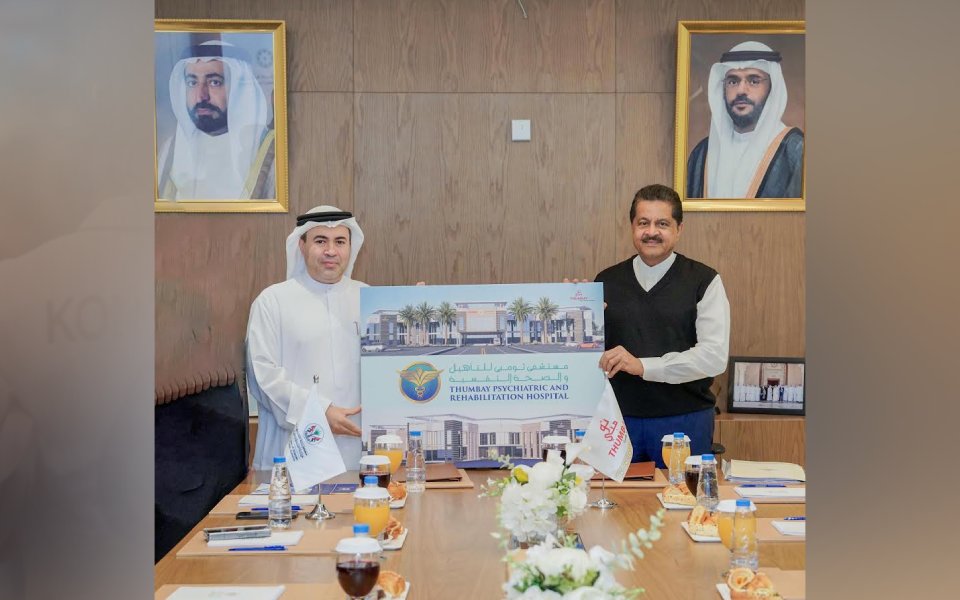
In a first, the Thumbay Group has announced plans to establish the region’s first private Psychiatric and Rehabilitation Hospital in Sharjah Healthcare City. The Hospital is set to become the largest private facility of its kind in the region.
The hospital will focus on Innovation and Patient-Centered Care and the hospital is equipped to meet the highest clinical standards, offering Advanced Therapeutic Modalities, Comprehensive Rehabilitation Programs, Integrated Tele-health Solutions and Precision Medicine among others.
The hospital’s multidisciplinary model includes psychiatrists, psychologists, addiction counselors, family therapists, physical therapists, and occupational specialists, ensuring a holistic and individualized approach to patient care.
Thumbay Psychiatric and Rehabilitation Hospital will be developed in two phases. Phase 1 includes 60 inpatient beds and 12 outpatient clinics (OPDs) and Phase 2 adds another 60 beds, bringing the total capacity to 120 beds. Construction is set to begin in June 2025, with the hospital expected to be operational by mid-2026.
Key Features of the Hospital:
1. Psychiatric Care:
Diagnosis and Treatment.
Therapeutic Interventions.
2. Rehabilitation Services:
Substance Abuse Rehabilitation
3. Long-term Care and Aftercare:
Aftercare Programs
Inpatient VIP Villas.
4. Swimming Pool and Spa
5. A mosque (Thumbay Masjid) with a capacity for 500-600 worshippers, open to the public.
Commitment to International Standards
Thumbay Psychiatric and Rehabilitation Hospital seeks to achieve Commission on Accreditation of Rehabilitation Facilities (CARF) certification, reflecting its adherence to rigorous global benchmarks in safety, quality, and effectiveness. The hospital will also comply with all UAE healthcare regulations, further emphasizing its commitment to ethical and evidence-based practices.
Dr. Thumbay Moideen, Founder and President of Thumbay Group, said, “This is the first private Psychiatric and Rehabilitation Hospital in the region, catering to regional and international patients seeking world-class care. Our goal is to make it the best facility serving the community.”
In a statement, His Excellency Dr. Abdelaziz Al Mheiri, Chairman of Sharjah Health Authority and Sharjah Healthcare City, lauded the initiative, saying, “This project aligns with our vision for Sharjah Healthcare City, where we prioritize all aspects of healthcare. Mental health is increasingly critical and often overlooked, and we are proud to host such a pioneering hospital.”
source: http://www.english.varthabharati.in / Vartha Bharati / Home> Gulf / by Vartha Bharati / December 26th, 2024
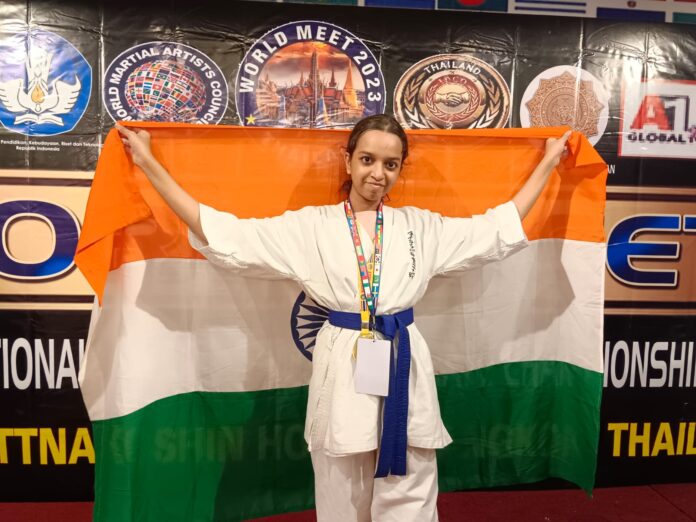
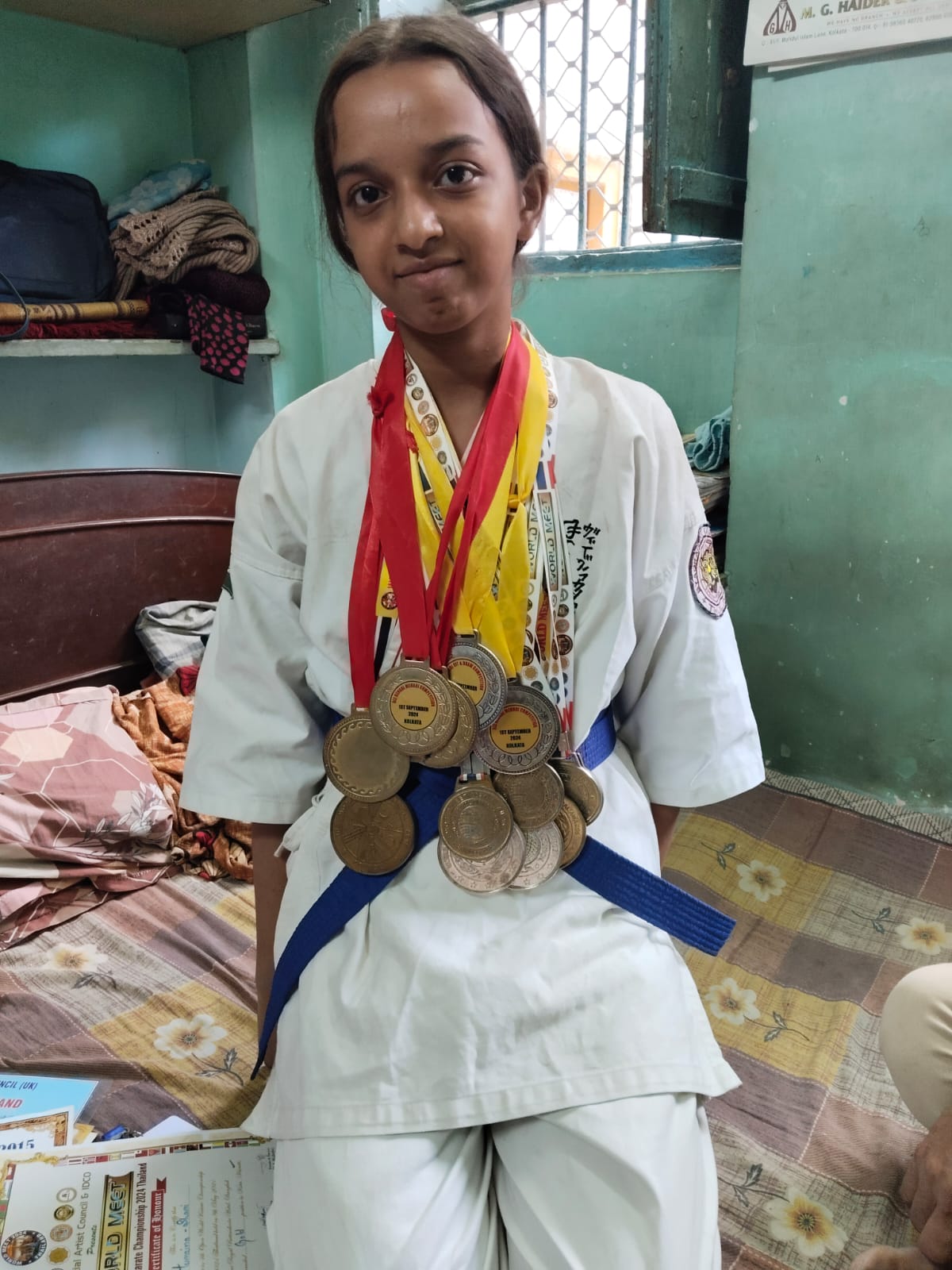
Humairah Shami, a young Karate champion from Kolkata, has recently earned the honour of representing India at the 7th World Meet, scheduled to take place on May 8, 2025, in Bangkok, Thailand, at the Royal Rattanakosin Hotel. This prestigious event is organised by the World Martial Arts Council. Although she is thrilled about this incredible opportunity, Humairah faces a challenge – the limited financial resources that may prevent her from attending.
Her father, Shami Ahmed, repairs footwear for a living. But due to poor health, he cannot work regularly. Her mother, too, has been battling a serious illness for the past three years. Despite these challenges, Humairah, along with her siblings, who are in grades 7 and 10, continues to pursue her education with the support of relatives.
However, these obstacles have not dampened her spirit. Humairah’s determination to follow her dreams led her to enrol in a self-defence course at the Indian Karate Association. Encouraged by the academy’s founder, M.A. Ali, who seems to have recognised her potential and took her under his wing, she was trained free of charges. Humairah’s agility and passion for the sport enabled her to quickly master the karate techniques. It led her to qualify in the 45 kg weight category. She triumphed in every competition she entered.
In 2023-24, Humairah earned a gold medal in Thailand. Her journey to Thailand was made possible thanks to the support of her schoolteachers and well-wishers who contributed to her travel expenses. She was also honoured with the International Sports Award by King Sany Wijaya Nata Kusuma of the Padjadran Kingdom of Indonesia.
His Majesty the King Sany Wijaya Natakusuma of Padjadaran Kingdom Indonesia honouring Humairah with International sports award 2024 in Bangkok Thailand
Humairah has once again proven herself by qualifying to participate in the 2025 World Meet. Though she is still a blue belt and has a long way to go before earning the coveted black belt, her commitment remains unwavering. “I took up Karate for self-defence, and I will continue to persevere until I achieve my black belt,” she says.
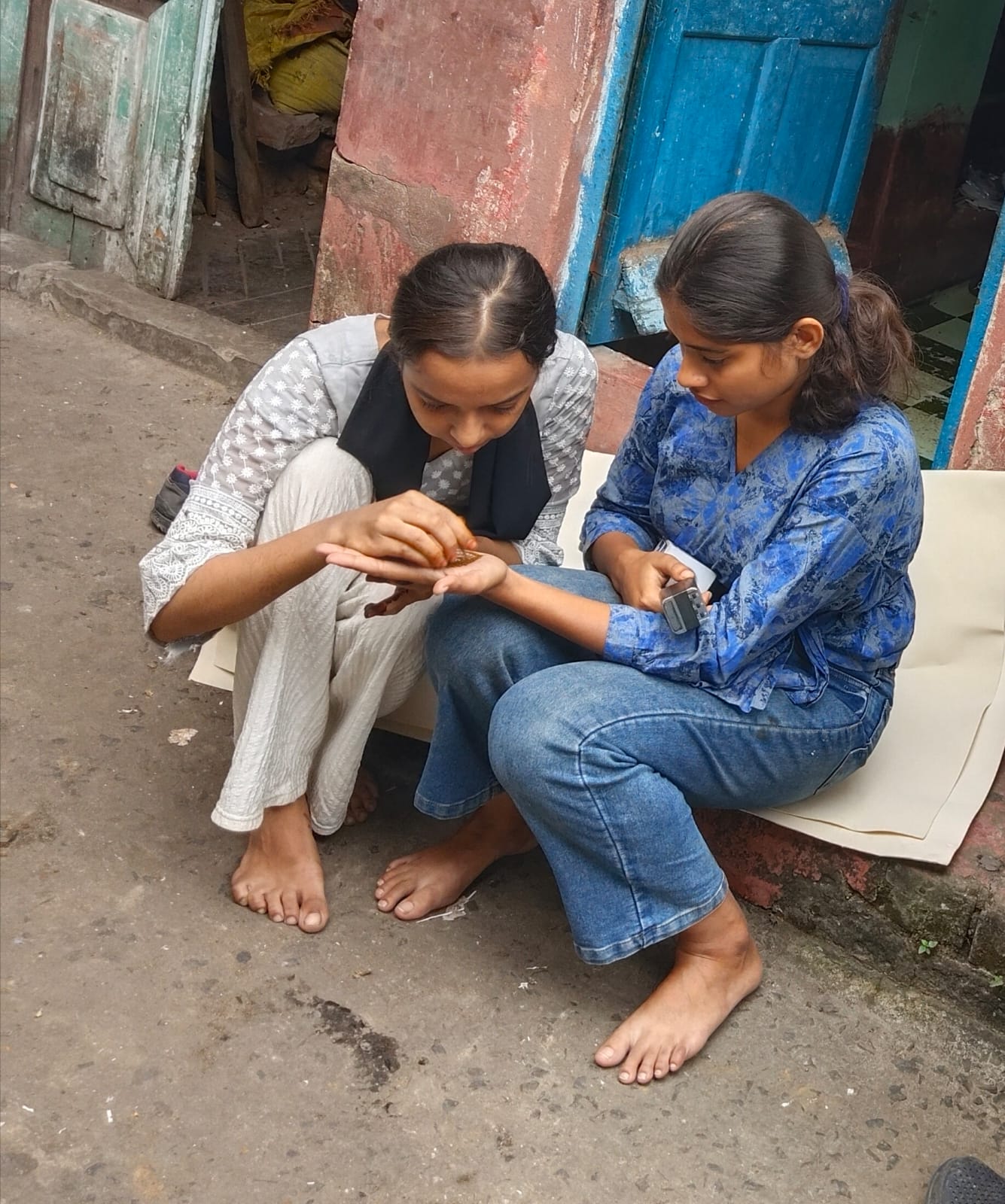
Humairah’s talents extend beyond Karate. During her holidays, she completed a crash course in Mehendi (henna) designing, and now, in her spare time after school and studies, she applies Mehdi to fulfil orders and earn some money.
A grade 11 student at Anjuman Girls High School, Humairah lives in the vibrant, bustling lanes of Mufidul Islam Lane in Kolkata. Her siblings look up to her, and her teachers hold high expectations for her future.
Deeply religious, Humairah dreams of becoming a doctor. She believes that her faith in God will help her overcome any challenge that comes her way. “Being able to go to Thailand last year was an impossible dream that came true. So, I am confident that the hurdles ahead will also be overcome, as I have utmost faith in Allah,” she says with a hopeful smile.
At present, Humairah is striving to raise the funds necessary to attend the 7th World Meet. In a remarkable show of resilience, she is using her mehdi art to raise money for her dream. Each intricate design is a testament to her determination to break through financial barriers and make her country proud.
“Despite coming from a financially disadvantaged family, Humairah has excelled in every field she has touched. Her dedication and perseverance have earned her a place in the prestigious 7th World Meet, where she will represent India on the global stage. This is a golden opportunity for her,” says her coach and mentor, M.A. Ali.
He further appeals to all philanthropists, sponsors, and kind-hearted individuals to help Humairah overcome her financial challenges: “Humairah’s story is a call to action for those who wish to invest in a bright young talent. Sponsoring Humairah isn’t just an act of charity—it’s an investment in a future filled with hope, ambition, and success. Let us unite as a community to ensure that financial constraints do not dim the light of this rising star.”
Those who wish to help Humairah in her journey can contribute to the following bank account:
Account Holder Name: Humairah Shami Bank Name: Punjab National Bank (PNB) Branch Name: Entally Account Number: 0088010367851 IFSC Code: PUNB0008820 Mobile Number: 7439884641
With the help of the community, Humairah can realise her dreams and take another step towards making India proud on the world stage.
source: http://www.twocircles.net / TwoCircles.net / Home> India News / by Nikhat Fatima, TwoCirlces.net / December 31st, 2024
Muslim Mirror’s list of 100 Indian Muslim achievers features four notable personalities from Karnataka, recognized for their contributions to education, business, journalism, and community development.
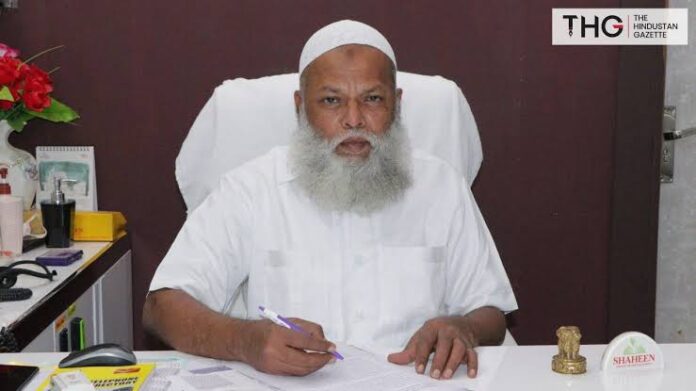
Bidar’s Abdul Qadeer – Educator and Visionary Leader Abdul Qadeer, a renowned educationist and founder of the Shaheen Group of Institutions in Bidar, has dedicated his life to empowering marginalized communities through education.
Under his leadership, Shaheen Institutions have grown into a network providing quality education, emphasizing academic excellence and holistic development. His commitment to integrating modern and traditional education has enabled numerous students to excel in competitive examinations and achieve higher educational aspirations.
Mangaluru’s Dr. Abdullah Kunhi – Entrepreneur and Educationist Dr. Yenepoya Abdullah Kunhi, the founder of Yenepoya University in Mangalore, has transformed education and healthcare in Karnataka.
Known for his vision and humanitarian spirit, Dr. Kunhi established Yenepoya University as a multidisciplinary institution offering innovative programs across various fields.
He also expanded healthcare access through advanced medical facilities and initiated programs to uplift marginalized communities, including scholarships and community health initiatives.
Azim Hashim Premji – Business Tycoon and Philanthropist Azim Premji, former chairman of Wipro Limited, revolutionized India’s IT industry and emerged as one of the country’s most influential business leaders.
A recipient of the Padma Bhushan and Padma Vibhushan, Premji is also one of the world’s leading philanthropists. Through the Azim Premji Foundation, he has donated over $21 billion, primarily to improve education and healthcare in India, leaving an indelible mark on society.
Mohammed Zubair – Journalist and Fact-Checker Mohammed Zubair, co-founder of the fact-checking website Alt News, is a pivotal figure in combating misinformation in India.
Transitioning from an engineering background to journalism, Zubair has exposed numerous instances of fake news and disinformation, fostering accountability and promoting responsible journalism. Despite facing harassment and legal challenges, his dedication to truth and transparency remains unwavering.
Irfan Razack – Real Estate Mogul and Community Advocate Irfan Razack, Chairman and Managing Director of Prestige Group, is one of India’s leading real estate entrepreneurs.
Based in Bengaluru, he has played a pivotal role in shaping India’s real estate landscape, making Prestige Group one of the most prominent property developers in the country.
Razack is also the co-founder of Inventure Academy in Bengaluru and has held esteemed positions, including Honorary Secretary of the Al-Ameen Educational Society and Chairman of CREDAI.
His community contributions through the Kutchi Memon Jamat and philanthropic initiatives have earned him numerous awards, including the Real Estate Excellence Award (2008) and Entrepreneur Extraordinaire Award (2010).
According to the 2024 Forbes list of India’s 100 richest tycoons, Irfan Razack and his siblings are ranked 49th, with a net worth of $6 billion.
These five distinguished individuals from Karnataka exemplify excellence, resilience, and a commitment to societal progress, earning them well-deserved recognition on this prestigious list.
source: http://www.thehindustangazette.com / The Hindustan Gazette / Home> News> Education / by The Hindustan Gazette / January 06th, 2024
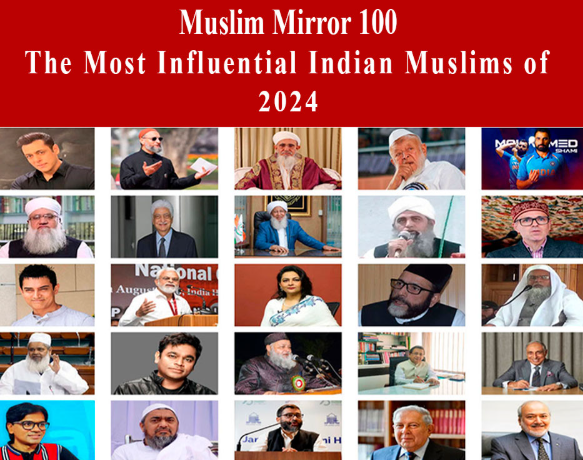
Muslim Mirror, in collaboration with the Minority Media Foundation, has released its highly anticipated list of the“100 Most Influential Indian Muslims of 2024.” This initiative, celebrated as a benchmark of excellence, acknowledges the remarkable contributions of Indian Muslims across various fields, showcasing their leadership and societal impact on a national scale.
A Mission to Shift Narratives
The project aims to counter the negative portrayal of Muslims often propagated by corporate-funded media serving political agendas. By curating this list, Muslim Mirror presents a positive narrative, celebrating the vibrant and diverse contributions of Indian Muslims to the nation’s development and society.
Comprehensive and Inclusive Representation
The selection process emphasizes inclusivity and diversity, representing achievers from Kashmir to Kanyakumari and Assam to Gujarat. The list spans a wide array of sectors, including politics, religion, activism, literature, entrepreneurship, academia, sports, and entertainment.
In an effort to reflect the broad spectrum of the Muslim community, individuals from all sects—Barelvis, Deobandis, Ahle Hadith, Shias, Bohras, and others—have been recognized. The selection underscores the community’s rich cultural and social diversity.
Spotlighting Leadership and Impact
The list features leaders from prominent Muslim organizations and unsung heroes who have made unparalleled contributions in their respective domains. Special attention was given to young achievers, whose recognition aims to inspire future generations of leaders.
Notably, the initiative also includes individuals facing legal challenges and imprisonment, underscoring the principle that they are accused, not convicted. This approach highlights their contributions despite the adversities they face, reaffirming the importance of justice and fairness.
A Rigorous and Ethical Selection Process
Selecting 100 individuals from a community of over 200 million posed significant challenges. Extensive consultations with grassroots representatives across India informed the process. A team of experts finalized the list, which is presented in alphabetical order due to the absence of a ranking mechanism.
While the team strived for accuracy and fairness, they acknowledged the possibility of unintentional exclusions. Readers and stakeholders are encouraged to provide suggestions for deserving individuals to be included in the 2025 list. To maintain ethical standards, members of the Muslim Mirror team and the Minority Media Foundation were not considered for the list.
The Muslim Mirror 100 serves as a testament to the exceptional contributions of Indian Muslims in shaping the nation. By shining a light on their achievements, the initiative not only celebrates their successes but also fosters a sense of pride and inspiration within the community.
As the list continues to evolve, it stands as a powerful reminder of the resilience, talent, and leadership within the Indian Muslim community, setting the stage for even greater accomplishments in the years to come.
source: http://www.muslimmirror.com / Muslim Mirror / Home> Big Story> Indian Muslim> Positive Story / by Muslim Mirror / January 03rd, 2025
There are many miles that separate Bengaluru from Haifa. But our city’s connection to this distant Mediterranean port town goes beyond geography to that of the spirit. It is where Mysorean cavalrymen earned honours and distinguished themselves during World War I. The town also became a final resting place for many who never returned home.
These men on horseback were the inheritors of an older legacy. Both Hyder Ali and his son Tipu Sultan, the 18th century rulers of Mysore, were known for their famous cavalry, the `Savar’ that had fought on home territory in the Anglo-Mysore Wars almost 150 years ago.
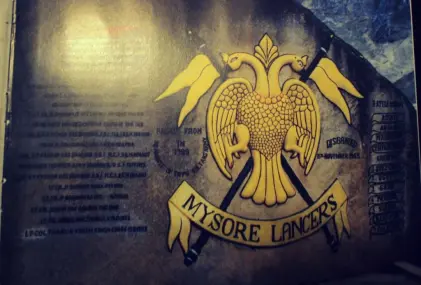
The Mysore Lancers (says a commemorative souvenir) were raised from what remained of this cavalry following the 4th Anglo-Mysore War in 1799.
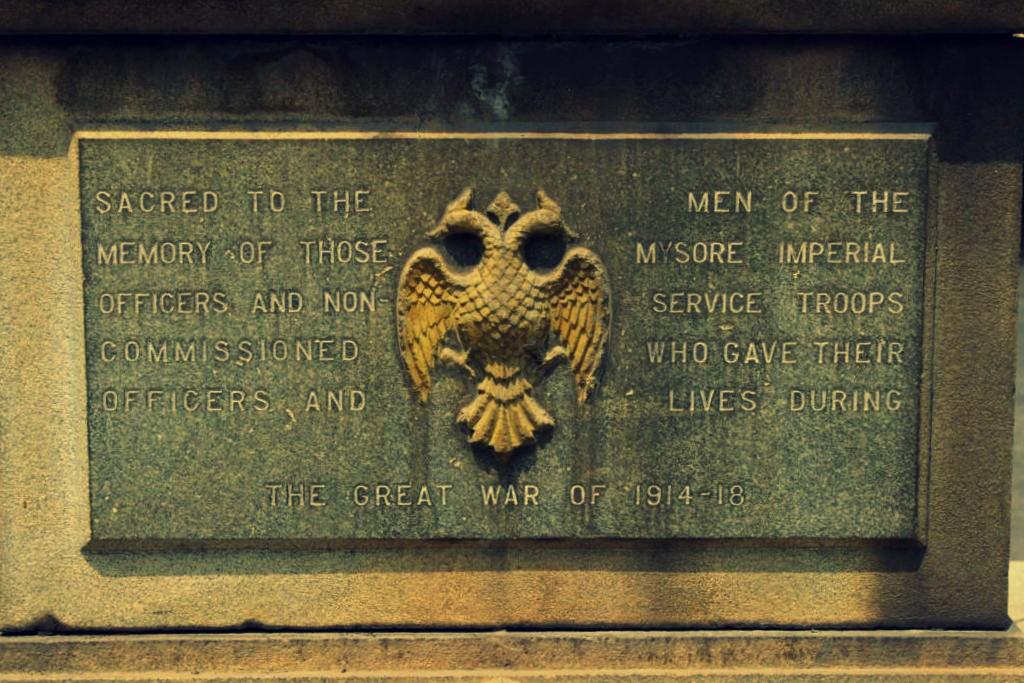
The regimental insignia and Mysore’s royal emblem, the two headed Ganda Berunda eagle
Bengaluru’s equestrian legacies also extended beyond the military; the Bangalore Turf Club is a heritage institution and the Race Course that was initially located near Domlur was as old as the Cantonment, Horse riding in Cubbon Park was `de rigeur‘ till the early 1900’s, many large houses had private stables and British Commissioner Sir Mark Cubbon even built a new home beyond Cubbon Park to accommodate his beloved horses!
Military forces in India’s princely states were maintained purely as a formality for a very long time following 1857.
But Viceroy Lord Dufferin’s landmark speech in Patalia (1888) signalled a change.
The Mysore (Mysuru) Maharaja Chamarajendra Wodeyar X was one of the first to raise a military force (including an Infantry and Transport Corps) capable of fighting alongside Imperial troops anywhere in the world. Major Mellis arrived here in 1890 to rearrange the two existing Silledar regiments into the Mysore Horse based in Mysore, and the Bangalore based Mysore Imperial Service Lancers (Mysore Lancers).
The Investiture Ceremony: “On the arrival of the Viceroy at the Imperial Service Lines, he was received by Dewan Krishna Murthi and conducted to a position near the saluting flag. After the horses of the entire regiment had lain down on the word of command so as to form covers for their riders in action, the regiment formed mass and the men dismounted and left their horses entirely alone with the rein passed through the girths. Rockets, carbine discharges and other noises were then made to test the training of the horses and except one or two horses which broke away, the remainder kept perfectly steady and unconcerned. After galloping past and advancing in review order, the Lancers cheered His Excellency. The Viceroy remarked that the display he had seen proved the excellence of the training of the horses and the special attention paid to the matter by Colonel Desaraj Urs… The manoeuvres subsequent to special show in connection with the horses reflected great credit, said His Excellency, on the regiment.” –M Shama Rao, Modern Mysore
The Mysorean, with his “superior physique” was also “specially noted for his endurance and hard work in distant countries and under the most trying conditions of climate and fatigue.”* And so, as part of the 15th Imperial Service Cavalry Brigade (this included the Patiala, Jodhpur and Hyderabad Horse) the men left Bangalore on 13th October, 1914 under the field command of Lt.Col. Chamaraj Urs Bahadur.
They were accompanied by Special Officers Major MH Henderson and Lt. K Evans-Gordon and Colonel J. Desraj Urs (Commander-in Chief of the Mysore State Forces and brother-in-law to Maharaja Sir Nalwadi Krishnaraja Wodeyar IV).
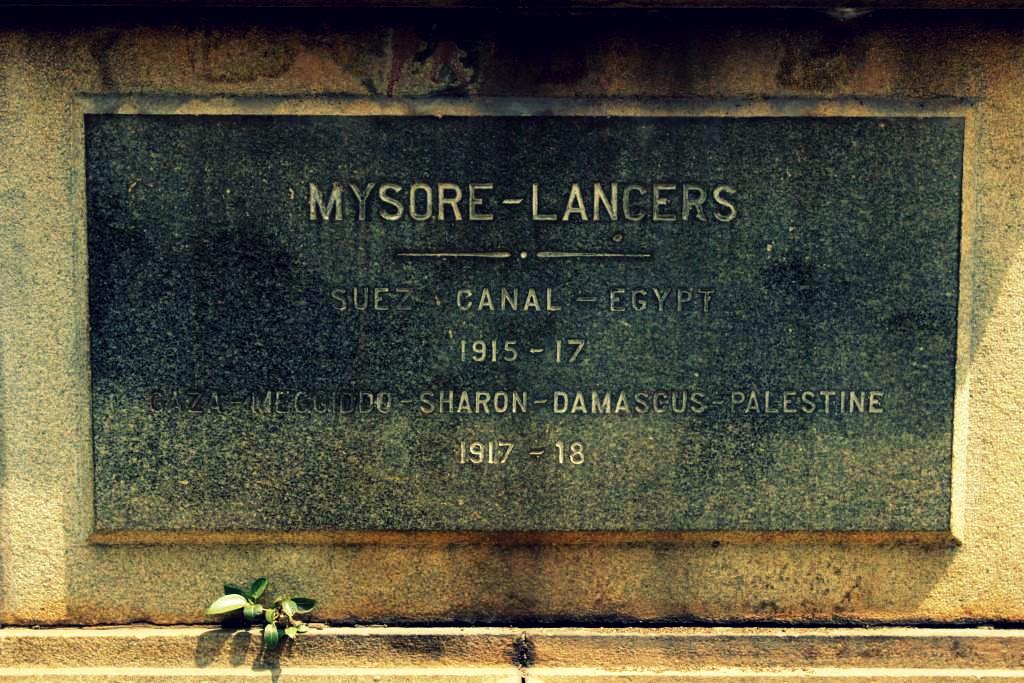
The men in the distinctive black head collar rope, black and white lance pennant, crossed lance badges on the chain mail epaulettes and the royal Ganda Bherunda insignia of Mysore disembarked to defend the Sweet Water Canal and undertake reconnaissance duties to the east of the Suez Canal.
Many of us in the city can proudly trace family who in 1914, were a part of the largest volunteer army in the world!
Fans of a sun tanned Peter O’ Toole in the film `Lawrence of Arabia’ will know that our Mysorean men and the legendary TE Lawrence were both part of a WWI force commanded by Field Marshall Sir Edmund Allenby. But off screen conditions were very tough. Water sources were scarce. Thousands of cavalry horses and Transport Corps animals perished at various stages-en route, during combat and post-war.The emaciated and weak were left by the road to be picked up and (hopefully) rehabilitated by the Remount and Veterinary Corps.Most were not so lucky.
Much has been written about the Battle of Haifa where Mysorean cavalrymen braved German and Austrian guns as they charged alongside the Jodhpur Lancers to route an artillery battery located on a hill above the town.
Mysore’s two headed eagle also altered history at Gaza, Jordan Valley, Sharon, Megiddo, Damascus and Palestine. Their roles in these decisive battles saw the officers, including Captain B. P. Krishne Urs, 29 year old Mir Turab Ali and Risaldar Subbaraja Urs, and their loyal horses receive a hero’s welcome in 1920.
Sirdar Bahadur Lt.Col. Chamaraj Urs succeeded the distinguished Col.J Desraj Urs to the post of Commandant-in-Chief in 1919.
The horsemen were then reconstituted into the New Horsed Cavalry Regiment, raised in Jaipur on January 1st, 1953 under the special dispensation of Prime Minister Jawaharlal Nehru.It was named the 61st Cavalry a year later. It is the only horse cavalry regiment in the world and is equally well-known for its indomitable equestrian sportsmen.
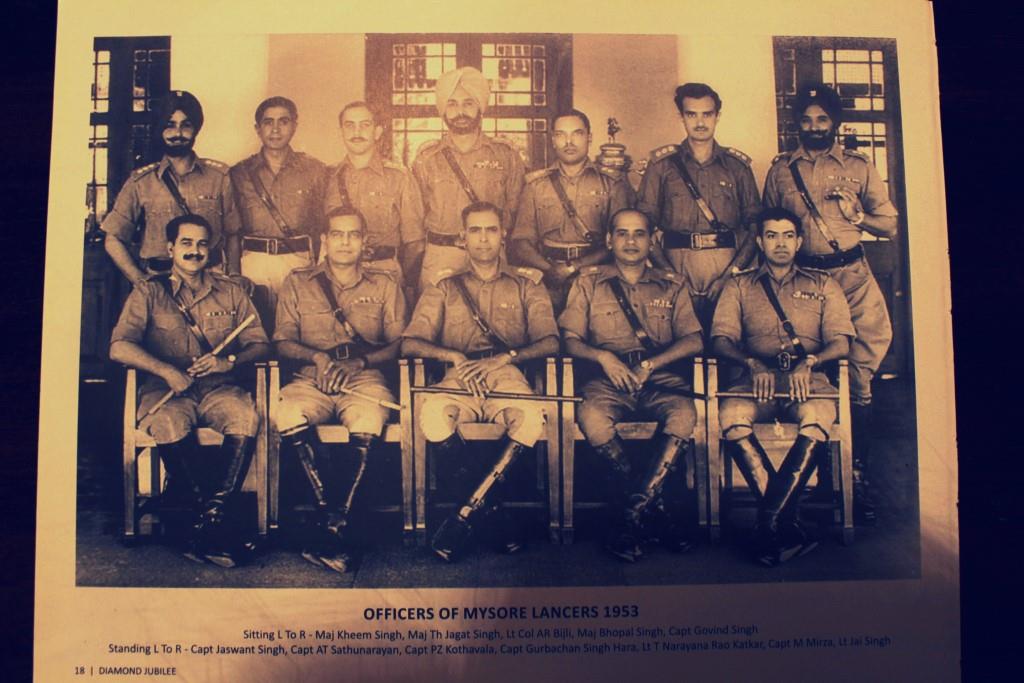
My grand aunt, Mrs. Syeda Mirza tells me that her husband, my grand uncle the late Major Mohammad Mirza, a Bengalurean 61st cavalryman, dashing polo player and nephew of Sir Mirza Ismail, Diwan of Mysore (1926-1941) commanded the elite President’s Bodyguard for Dr.Rajendra Prasad and Dr. S Radhakrishnan in the 1960’s. He was also in the Ganganagar Sector with the 61st Cavalry during the 1971 War.
Standing second from right: Major Mohammad Mirza. Photo Source: Sixty First Cavalry Diamond Jubilee Souvenir, courtesy: Mrs. Syeda Mirza
“I was returning to Jaipur with the children after visiting my parents in Hyderabad” she says “and hired a porter to help with the luggage. He deposited me near the army vehicle that had come to receive us, and refused to take any payment. He said he could not take money from someone whose husband was fighting for the country.” She adds, “those were very tough times for wives and families.With no mobile phones or connectivity like it is today, we had no way to stay in regular touch with our loved ones.We just had to manage as best as we could on our own.”
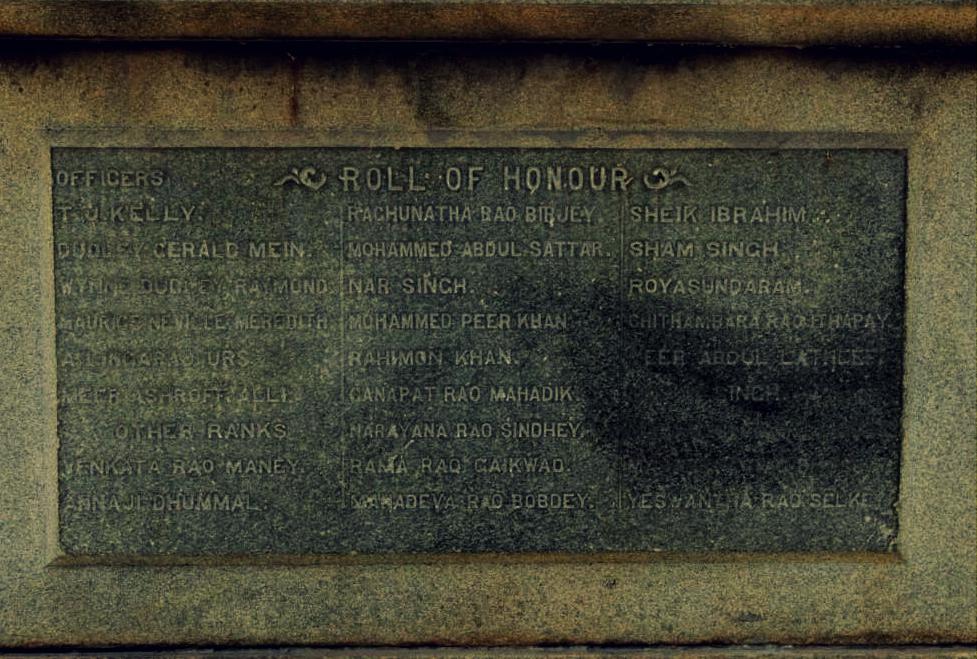
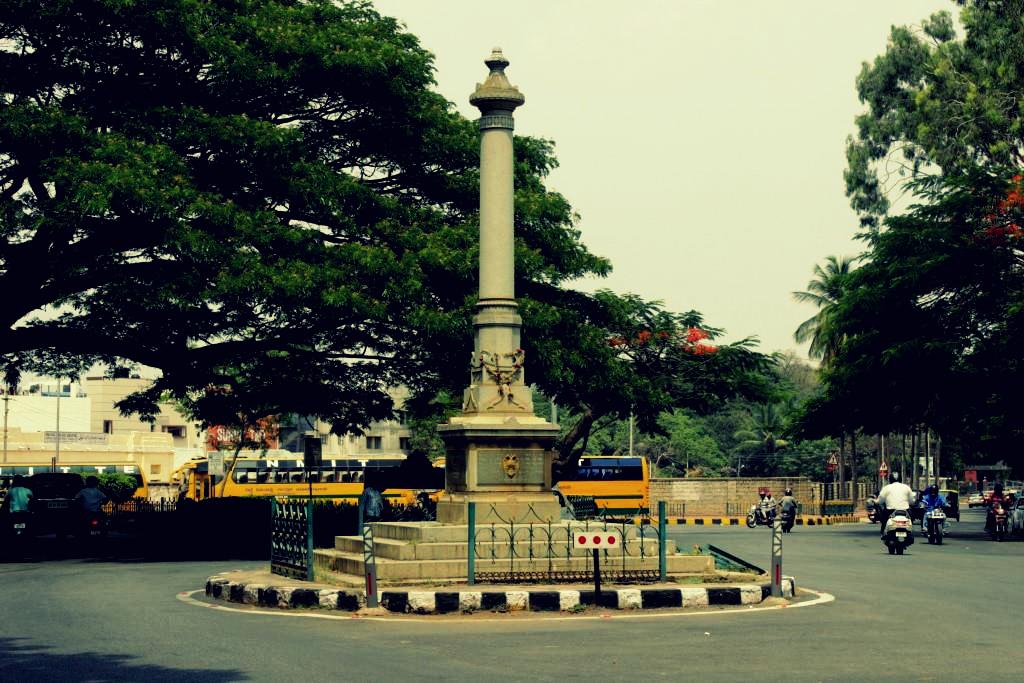
While a tribute to Indian cavalrymen is visibly embedded at Teen Murti Circle, New Delhi, a smaller Memorial Column on Col. Desraj Urs Road in Bengaluru’s Munireddy Palya stands overshadowed by the massive TV Tower nearby. The long forgotten structure lists all the brave men including officers Captain A.Lingaraj Urs (son-in-law to the Field Commander) and a Meer Ashroff Ali who lost their lives upholding the honour of Mysore state. Most city folks ride by without a second glance these days.
……………………………………………………………………………………………
On the Roll of Honour:
A Lingaraj Urs and Meer Ashroff Alli, Venkata Rao Maney, Annaji Dhummal, Rachunatha Rao Birjey, Mohammed Abdul Sattar, Nar Singh, Mohammed Peer Khan, Rahimon Khan, Ganapaty Rao Sindhey, Rama Rao Gaikwad, Manadeva Rao Bobdey, Sheik Ibrahim, Sham Singh, Roya Sundaram, Chithambara Rao Ithapay and Meer Abdul Latheef.
……………………………………………………………………………………………
This story was originally published in the Bangalore Mirror on April 11th 2016.Read it here.
* M Shama Rao, Modern Mysore, Page 104-106
source: http://www.aturquoisecloud.wordpress.com / A Turquoise Cloud / by Aliyeh Rizvi