Creates world record of doing Indian Bridal makeup in less than 9 minutes’*
Budgam :
A youth from Budgam district of Kashmir has made it to the International Book of records for doing the fastest Indian bridal makeup.
Younis Ahmad Sheikh (22) known by the name Afnan, a resident of Bugam district area in Chadoora hamlet of Budgam district has created a record for making Indian bridal makeup in less than 9 minutes.
Younis said that he was interested in calligraphy since childhood which later turned to designing and make up art as well.
“Despite facing taunts from the society as makeup artists being a female dominant area during the initial stage as there was no make up artist in Kashmir, I continued my passion and joined training programmes online,” he said.
Younis first used to do make-up of his customers at his residence as he wasn’t in a position to start his saloon due to financial issues.
“As my mother left this world in my childhood and father was old and not in a position to earn anything. After struggling hard, somehow I managed to start a saloon at my own village and slowly society has started becoming supportive as well,” he said.
After starting a salon titled YAS professional beauty salon, the number of customers started increasing and currently three girls are working as helpers at his salon.
“Three girls have got a job at my salon as currently makeup is available for ladies only and I am planning to start making up for male folk as well,” Younis said.
He said that earning livelihood for himself and providing jobs to others is a big achievement at a time when youth are getting involved in anti-social activities.
Younis claims that he had first made it to the Indian book of records followed by the Asia book of records and now the International book of records. He made to international book of records by breaking the previous record of Indian bridal make up of Assam girl in 13 minutes 46 seconds to just 8 minutes and 58 seconds
“I made it to the International book of records for making the fastest Indian bridal makeup and creating a world record,” he said. He said that people shouldn’t be judgemental as every art is a gift of Allah and everyone must respect it.
“Many people don’t show their arts just out of the fear that how society will react to it and if there are equal rights, then men can go in the field of women and vice versa,” he said—(KNO)
source: http://www.thedispatch.in / The Dispatch / Home> The Lead> The News Feed / by The Dispatch Staff / May 08th, 2023
Khan is a professional bodybuilder from Hyderabad and has earned many national and international titles including a silver medal in Mr World Body Building Championship, in the heavyweight category.
Internationally acclaimed Bodybuilder Mir Mohtesham
Hyderabad:
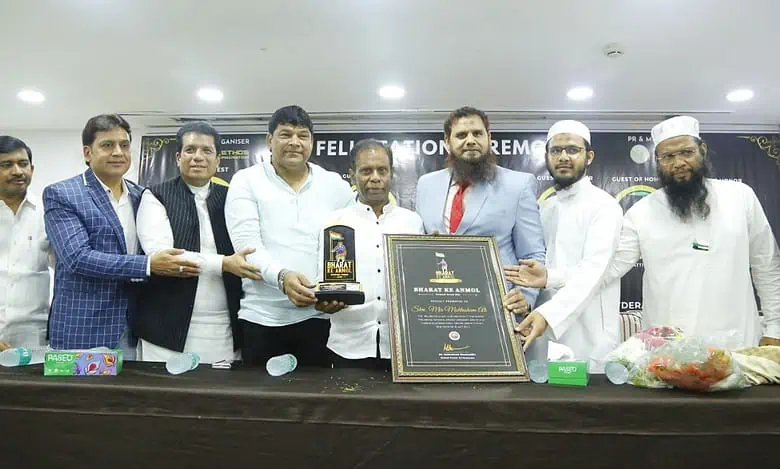
A celebration was held in Hyderabad’s Media Plus Auditorium to celebrate Mohtesham Ali Khan, who received the prestigious national award ‘Bharat Ke Anmol’ for his journey of determination, perseverance, and excellence in the realm of bodybuilding and fitness.
Khan is a professional bodybuilder from Hyderabad and has earned many national and international titles including a silver medal in Mr World Body Building Championship, in the heavyweight category.
The event which was held on Sunday, August 14, witnessed the presence of dignitaries and supporters who gathered to honour Khan’s accomplishments.
The chief guest Abdul Khayyum Khan, minority affairs advisor for the government lauded Khan’s unwavering commitment to his craft.
Other prominent figures including AIMIM leader Ather Farooqui, BRS leader Khaleequr Rahman, Pathergatti Corporator, Syed Sohail Quadri and chairman of Vandhe Bharat, Ramesh Eppalapalli were also present at the event.
The felicitation ceremony was organised by the founder and CEO of Ethos Imagination, Varaprasad who emphasised that the evening was not merely a tribute to Mir Mohtesham Ali Khan’s individual accomplishments but also a testament to the power of dedication and hard work.
At the event, Khan expressed his heartfelt gratitude to everyone who contributed to his journey and stood by him both during challenges and triumphs.
source: http://www.siasat.com / The Siasat Daily / Home> News> Hyderabad / by Sayma Ahmed / August 13th, 2023
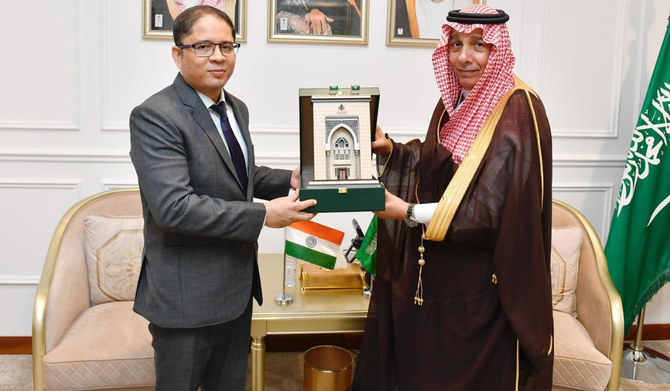
Mazin Hammad Al-Himali receives Mohammed Shahid Alam in Jeddah. (Supplied)
Director of Foreign Ministry Branch in Makkah Region Receives Indian Consul General in Jeddah
Director-General of the Ministry of Foreign Affairs’ branch in Makkah Mazin Hammad Al-Himali met with Indian Consul General Mohammed Shahid Alam in Jeddah on Monday.
The meeting was held on the occasion of the end of Alam’s tenure, the Saudi Press Agency reported.
Alam took over as India’s consul general in Jeddah in February 2021. He previously served in Jeddah as the Hajj consul from 2015 to 2018.
An upright officer of the Indian Foreign Service, he has now been posted to the Indian High Commission in London.
source: http://www.arabnews.com /Arab News / Home> News> Middle East / August 06th, 2024
Historians and enthusiasts are taking public education into their own hands to tell the story of the country’s Muslim communities.
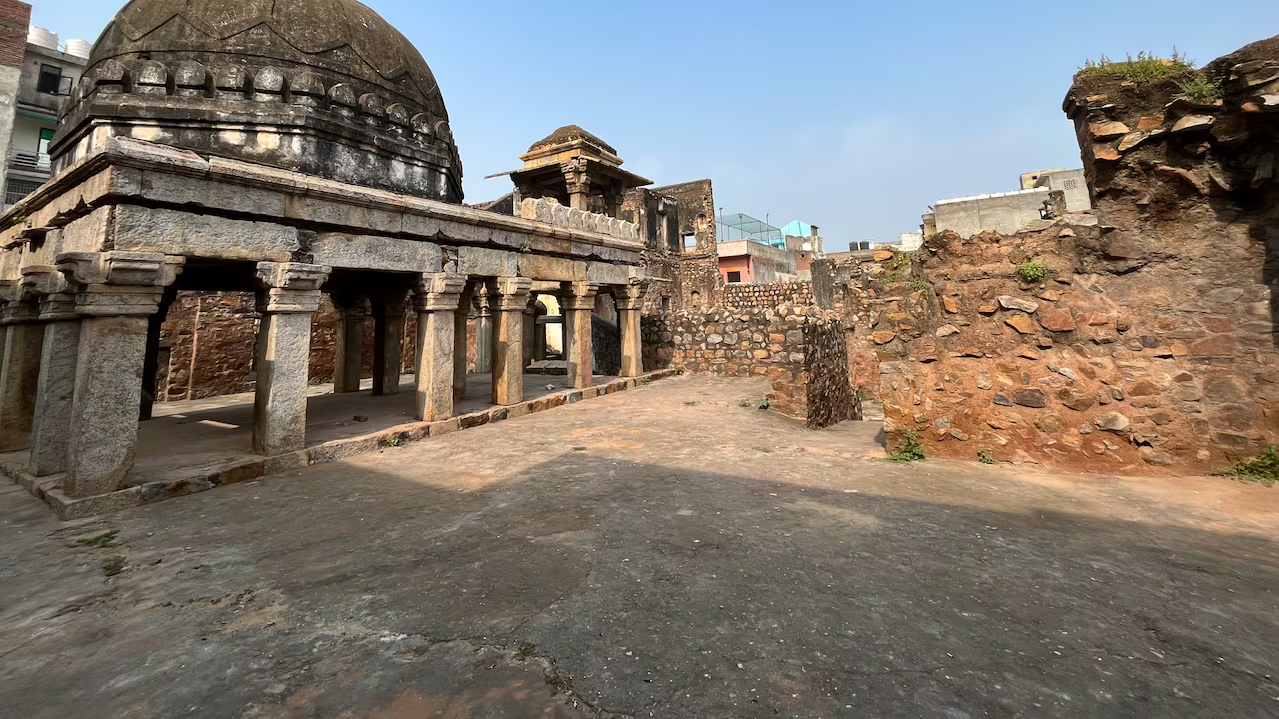
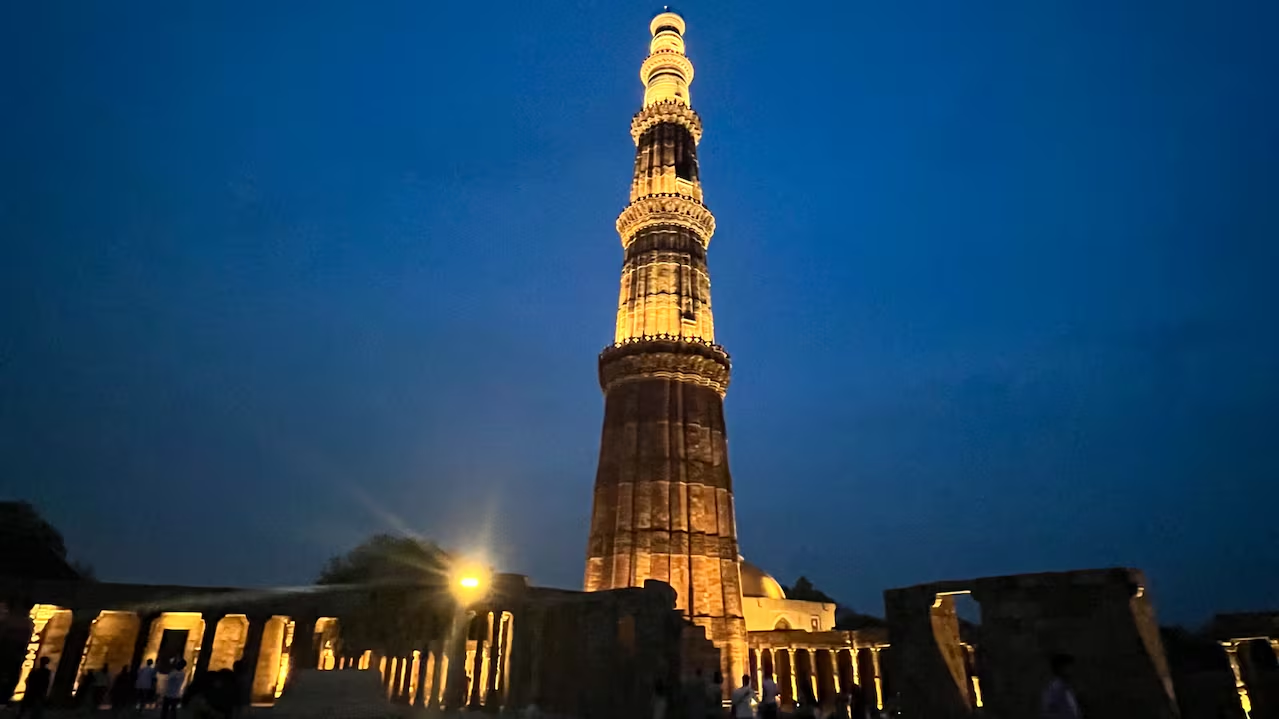
Chaotic narrow lanes lined with opulent old mansions, shops selling spices, dried fruits and kebabs, all overhung by dangling power cables – any trip to Old Delhi, a bustling Muslim hub built by Mughal ruler Shah Jahan, is a full sensory experience.
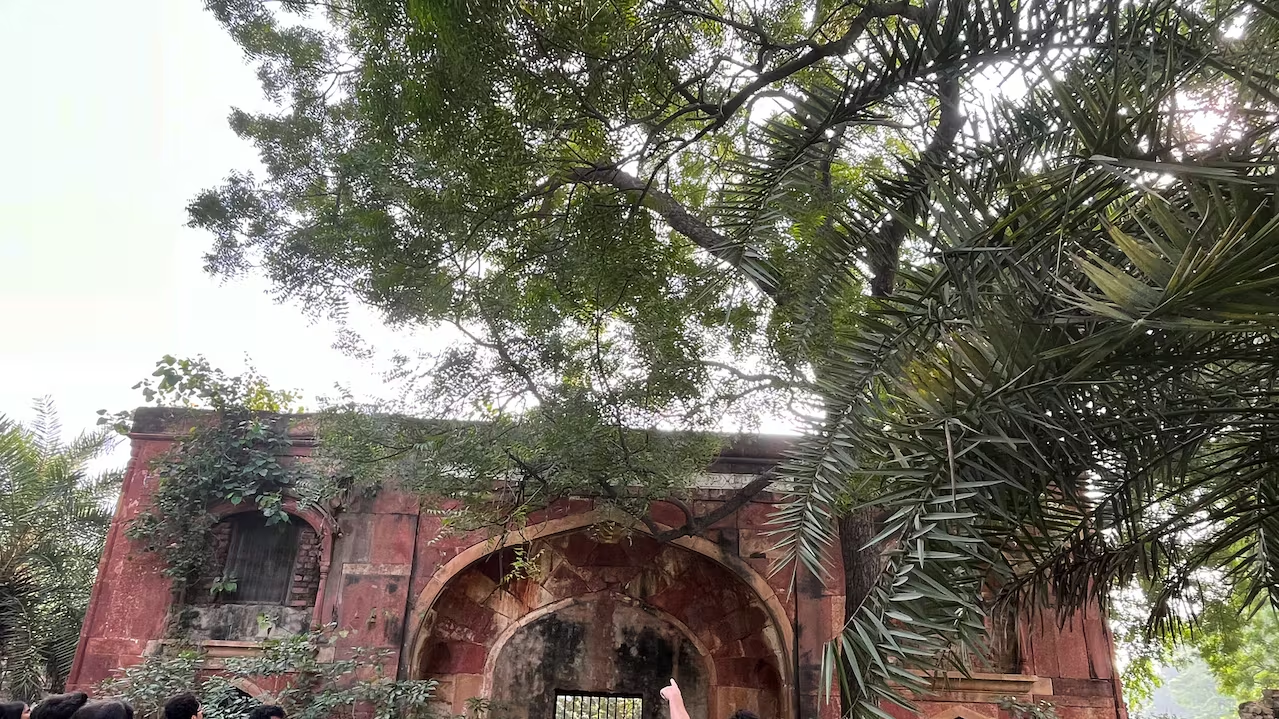
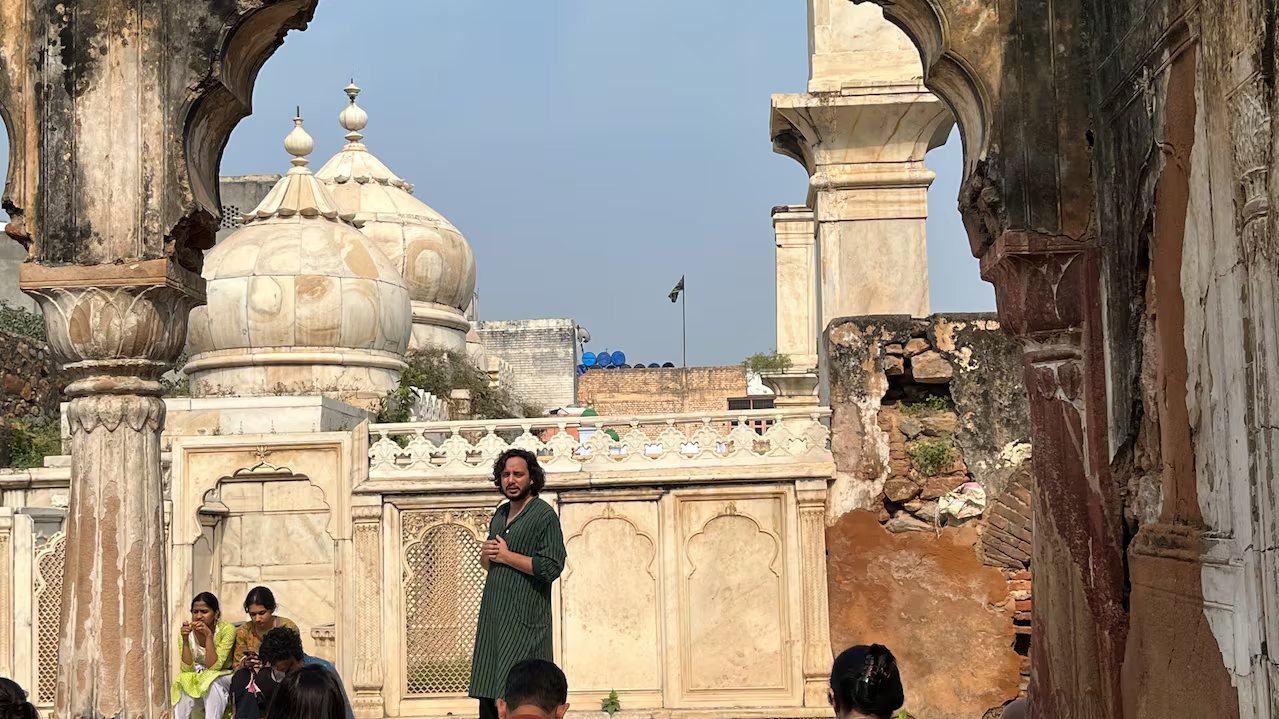
Abu Sufyan weaves through the crowd with about 20 people in tow, making his way through streets smelling of flatbread soaked in ghee, the call to prayer at a nearby mosque mingling with the bells of a Hindu temple.
He is on a mission to change negative perceptions of Muslims by showing visitors more of their history in the capital.
“People in old Delhi were labelled as ‘terrorists’ and ‘pickpockets’ because they were predominantly Muslims from the lower economic background, and Mughal rulers were vilified as cruel invaders, as they were considered the ancestors to Indian Muslims,” Abu Sufyan, 29, says.
“My walks involve the local community members including calligraphers, pigeon racers, cooks and weavers with ancestral links in the Mughal era to showcase old Delhi’s heritage beyond these stereotypes.”
Abu Sufyan is one of a growing crop of enterprising men and women using the medium of heritage walks to educate the Indian public and tourists on the nation’s lesser-known history.
He started his walks in 2016, when hatred against Muslim communities was on the rise after Prime Minister Narendra Modi’s ruling Bharatiya Janata Party introduced several anti-Muslim policies.
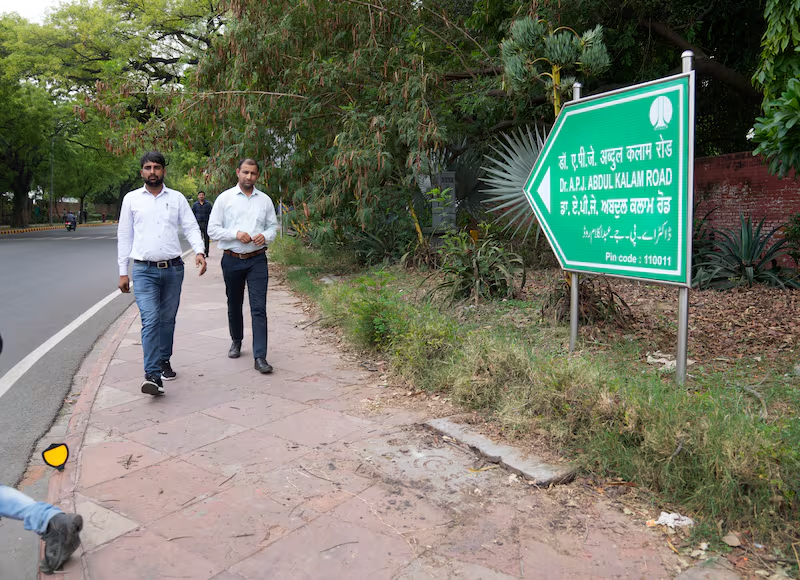
In 2015, a BJP politician urged the local civic body in Delhi to change the name of Aurangzeb Road to APJ Abdul Kalam Road. The civic body immediately obliged, removing the reference to the Mughal ruler from the road by naming it after the former president of India, who was always considered a “patriotic” Muslim.
Later, the 2019 Citizenship (Amendment) Act caused further division, as critics said it could be weaponised against Muslims, who are designated as “foreigners” under the National Register of Citizens.
Occasionally, divisions lead to violence: Thirty-six Muslims were killed in Hindu mob attacks for allegedly trading cattle or consuming beef between May 2015 and December 2018, according to Human Rights Watch.
‘A sense of belonging and togetherness’
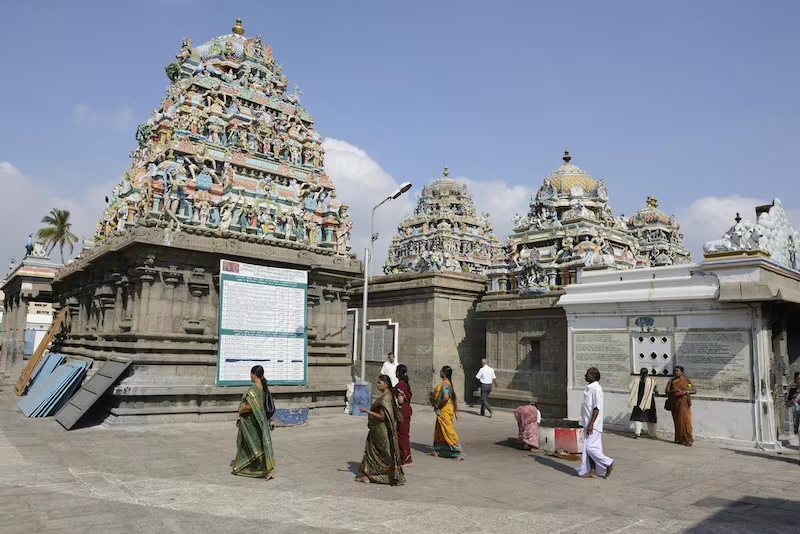
Over 2,000 kilometres away in Chennai, documentary filmmaker Kombai S Anwar hosts walks in Triplicane to tell stories of Tamil Muslim history, Tamil Nadu’s pre-Islamic maritime trade links with West Asia, the arrival of Arab traders, Mughal emperor Aurangzeb’s rule, the appointment of a Mughal minister’s son Zulfikhar Ali Khan as the first Nawab of Arcot, and the lives of the subsequent nawab’s descendants.
“Predominantly, non-Muslims participate in these walks because they are ‘curious’ about local Muslims and their heritage. During [Ramadan], they are invited to the historic Nawab Walaja mosque, where they experience the breaking of fast and partake in the iftar meal,” Mr Anwar says.
Tickets for heritage walks across India range between 200 and 5,000 Indian rupees ($2-60).
Historian Narayani Gupta, who conducted heritage walks in Delhi between 1984-1997, said any controversy related to history generates more interest.
“Whether history is right or wrong or good or bad, it has to be backed by research findings,” she said
Saima Jafari, 28, a project manager at an IT firm, who has attended more than 30 heritage walks in the past five years, says it is hard to ignore the historical monuments in the city since they are almost everywhere.
Delhi-based Ms Jafari recalled one of her best experiences was a walk, in 2021, trailing the path of “Phool Waalon Ki Sair”, an annual procession of Delhi florists, who provide sheets of flowers and floral fans at the shrine of Sufi saint Qutbuddin Bakhtiyar Kaki and floral fans and a canopy at the ancient Hindu temple of Devi Yogmaya in Mehrauli.
“When I walked along with others in that heritage walk, I realised that heritage enthusiasts across religion walk together in harmony,” Ms Jafari says.
“One of the best parts of heritage walks is the storytelling that connects places with lives of people of a certain period. Plus, it always gives a sense of belonging and togetherness.”
Anoushka Jain, 28, a postgraduate in history and founder of heritage and research organisation Enroute Indian History, which holds walks to explore the erstwhile “kothas (brothels),” and “attariyas (terraces)” of old Delhi, said during pandemic lockdowns, posts on Instagram helped sparked interest.
“Before the pandemic, barely 40 people participated in two weekly walks as opposed to 50 in each of the four weekly walks which we conduct now,” she says.
But it is not all smooth sailing.
Ms Jain says some people feel uncomfortable when they are given historical facts and research that show Hindu and Jain temples constructed by Rajput rulers were repurposed during the rule of Delhi Sultanate, Qutb ud-Din Aibak.
Iftekhar Ahsan, 41, chief executive of Calcutta Walks and Calcutta Bungalow, adds that sometimes, participants come with preconceived notions that Muslims “destroyed” India for more 1,000 years – but walk leaders hold open conversations to “cut through the clutter” with authentic information.
For some, heritage walks often change perceptions.
“Until I visited mosques in old Delhi during a walk, I didn’t know that women were allowed inside mosques,” law student Sandhya Jain told The National.
But history enthusiast Sohail Hashmi, who started leading heritage walks in Delhi 16 years ago, cautions that some walk leaders present popular tales as historical fact.
A mansion called Khazanchi ki Haveli in old Delhi’s Dariba Kalan is presented as the Palace of the Treasurer of the Mughals by some walk leaders, Mr Hashmi says. The Mughals, however, were virtual pensioners of the Marathas – Marathi-speaking warrior group mostly from what is now the western state of Maharashtra – and later the British and had no treasures left by the time the mansion was built in the late 18th or early 19th century.
Another walk leader had photo-copied an 1850 map of Shahjahanabad, now old Delhi, passing it off as his own research, he adds.
“The walk leaders must be well-read and responsible enough to ensure that the myths are debunked,” Mr Hashmi says.
source: http://www.thenationalnews.com / The National / Home> International Edition> World> Asia / by Sonia Sarkar / June 01st, 2023
The students and teachers of the German Section, Department of Foreign Languages, Aligarh Muslim University (AMU) contributed significantly to the Translation Project conducted by Goethe-Institut, Max Mueller Bhavan, Mumbai.
The South Asian regional translation project, “Diamantenschliff: The Digital Translation Academy” focused on the translations of German literary works into the South Asian languages with special emphasis on the translation of selected works of Franz Kafka from German into various South Asian languages, including Bangla, Hindi, Kannada, Malayalam, Marathi, Sinhala, Tamil and Urdu.
Syed Salman Abbas, Assistant Professor, German Language and Literature, Department of Foreign Languages, who was the mentor for Urdu translations, moderated a lecture session on translation delivered by Dr Almuth Degener, a retired professor from the Indology Department, University of Mainz, Germany.
The current and former students of the German Section, including Mohammad Uzair, Mohammad Khalid, Sadique Khan, Mohammad Intizar, Muhammad Fahad and Syeda Alina Ali translated different works of Kafka from German into Urdu, while Mr Syed Salman Abbas contributed to and edited the Urdu translations for the website.
Dr Subair PM, Assistant Professor, made contributions as one of the translators of German texts into Malayalam.
The one-year-long project concluded with the launch of the translations on the official website of Goethe-Institut, on July 3, marking Franz Kafka’s birthday. The voice recordings of the Urdu translations are also available on the website.
Prof Muhammad Azhar, Dean of the Faculty of International Studies and Chairman of the concerned department appreciated the unique achievement of the students and faculty members of the department and congratulated them for their outreach.
source: http://www.radiancenews.com / Radiance News / Home> Education> Latest News / by Radiance News Bureau / July 31st, 2024
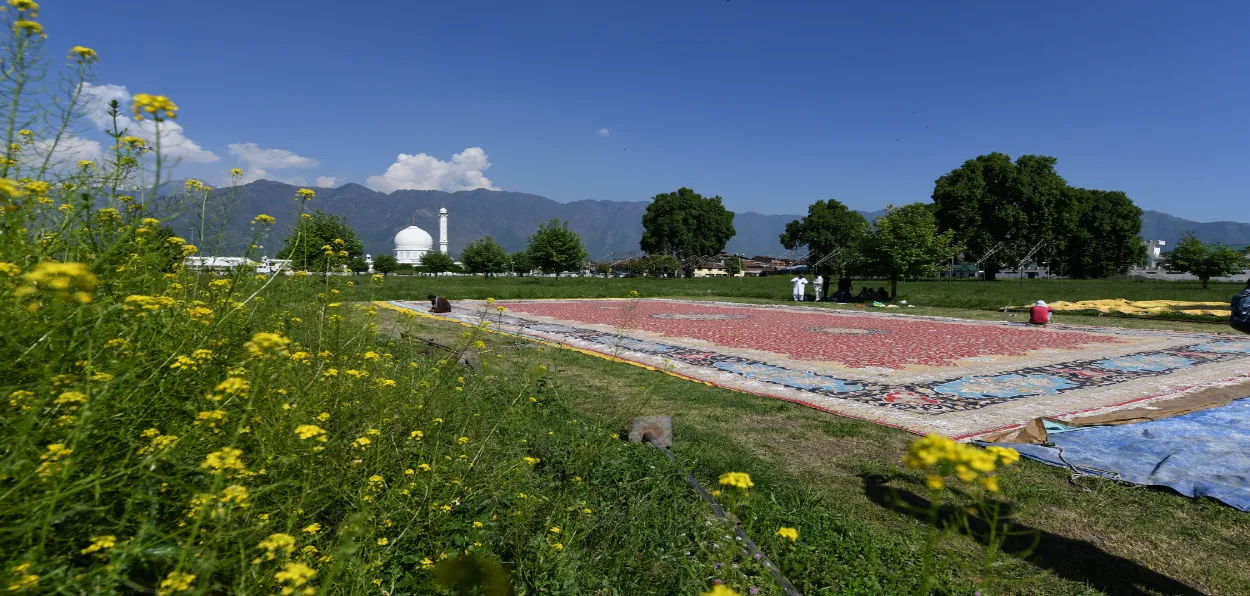
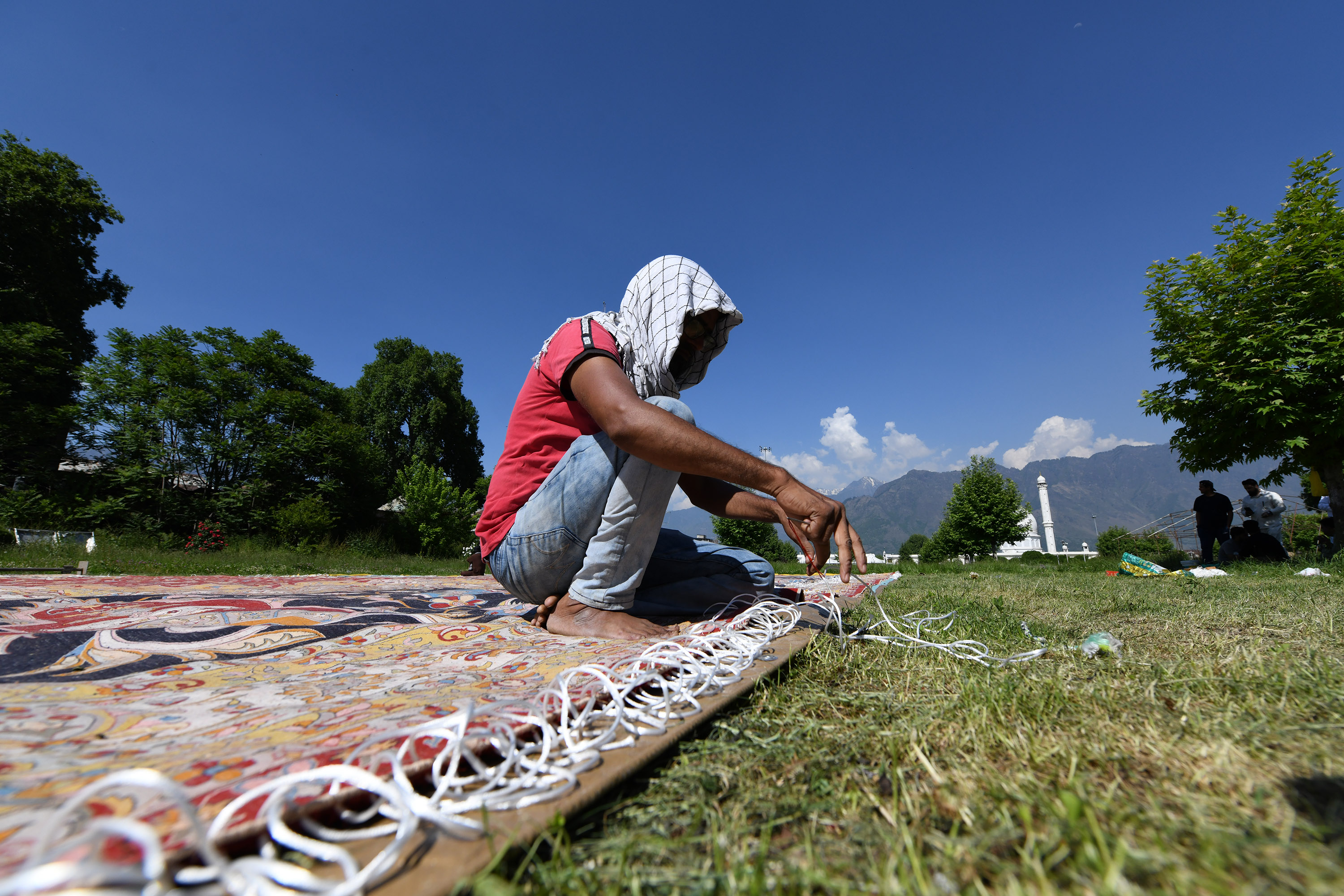
Asia’s largest carpet on display in Srinagar (Pics by Basit Zargar)
After Srinagar was designated among the most creative cities in the world, Kashmir Valley’s artisans are making sure to live up to the expectations of this title. In a village called Wayil in North Kashmir’s Kralpora area, a team of Kashmiri artisans have created a masterpiece touted as Asia’s largest handcrafted carpet.
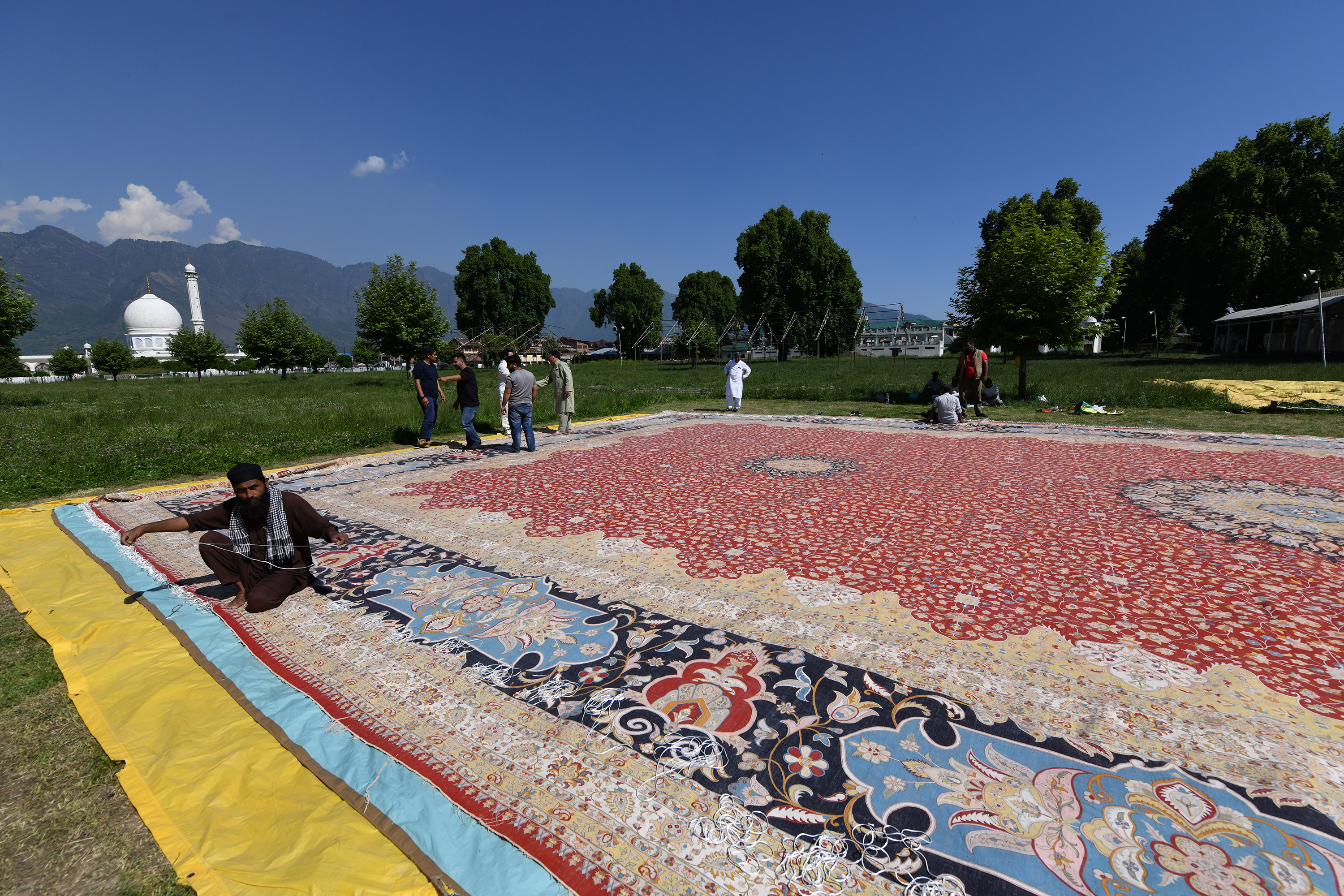
This hand-knotted carpet measuring 72 by 40 feet covers an area of 2,880 square feet. It took over 25 artisans around eight long years to complete this masterpiece.
The huge carpet on display in Srinagar
The whole carpet industry of Kashmir Valley is priding itself on this masterpiece. The intricate weaving of this exceptional carpet was overseen by two seasoned artisans – Fayaz Ahmed Shah and Abdul Gaffar Sheikh. It is due to their dedication that this monumental piece has found shape.
”This was an order by someone from our country only. This carpet is 72 feet long and 40 feet broad, and we have never made such a big carpet in the Kashmir Valley ever. We had to put our minds to a lot of things as it required a huge loom to be woven on.
“It was a big challenge and thank god it’s been finally completed. I am sure it will be sold abroad, and I am sure that in future we will make something bigger than this, ” said Fayaz Ahmed Shah, a craft dealer.
Asia’s largest carpet
The last eight years of weaving this masterpiece have not been smooth. There have been multiple obstacles that the artisans faced particularly the COVID-19 Pandemic. The lockdowns led to a lot of supply chain-related disruptions.
This mammoth carpet has written a new chapter for Kashmir’s rich legacy of art and craft.
According to the craft dealers, hundreds of artisans are returning to looms to pick up carpet weaving again.
An artisan tying the loose threads of Asia’s biggest carpet
”We have artisans coming back to us after this carpet was made. Around 226 artisans have come back to us and said that they want to work again. We just hope the way any employees get paid; it has to be the same and equal wages for them as well. Our artisans need to have a life of dignity and they should be able to afford their families… I am telling you they will never leave the work if they are paid well. This is a teamwork. From the designs to artisans, everyone has worked very hard for the making of this masterpiece, ” Shah added.
As this masterpiece becomes a symbol of Kashmir’s craftsmanship and artistic prowess, it has also become a ray of hope for the revitalization and recognition of local artisans and their invaluable contributions to preserving the cultural heritage of the region.
source: http://www.awazthevoice.in / Awaz, The Voice / Home / by Basit Zargar, Srinagar / May 18th, 2024
Zungalpura Village (Kulgam District, Kashmir), JAMMU & KASHMIR :
Kulgam, South Kashmir :
Muneeb Amin Bhatt, a talented techie from Zungalpora village in Kulgam district, has achieved a remarkable milestone by being inducted into the National Aeronautics and Space Administration (NASA)’s prestigious ‘Hall of Fame.’ This honor recognizes his outstanding contributions to identifying and addressing data breach vulnerabilities, a critical aspect of cybersecurity. Previously recognized by Apple’s ‘Hall of Fame’ in 2023, he reported his findings through NASA’s Vulnerability Disclosure Program.
Muneeb’s achievement not only brings pride to his hometown but also emphasizes the global significance of cybersecurity. In an era where safeguarding sensitive information is paramount, his work highlights the crucial role individuals play in protecting digital landscapes from potential threats.
Currently, Muneeb is pursuing a Bachelor’s in Computer Applications (BCA) through Indira Gandhi National Open University (IGNOU). His dedication to his studies, coupled with his exceptional skills in cybersecurity, has propelled him onto an international platform, showcasing his potential and determination.
Bhatt’s recognition by NASA serves as a powerful inspiration, demonstrating that with passion and commitment, individuals from any background can make significant contributions to global security. His journey from a small village in South Kashmir to receiving acclaim from one of the world’s leading space agencies is a testament to the potential that lies within every individual, regardless of their origins.
This accolade not only celebrates Muneeb’s technical prowess but also puts a spotlight on the importance of nurturing talent and providing growth opportunities, especially in fields as critical as cybersecurity. As the digital world continues to expand, the need for skilled professionals like Muneeb becomes ever more evident, ensuring a safer and more secure future for all.
source: http://www.radiancenews.com / Radiance News / Home> Focus / by Radiance News Bureau / May 27th, 2024
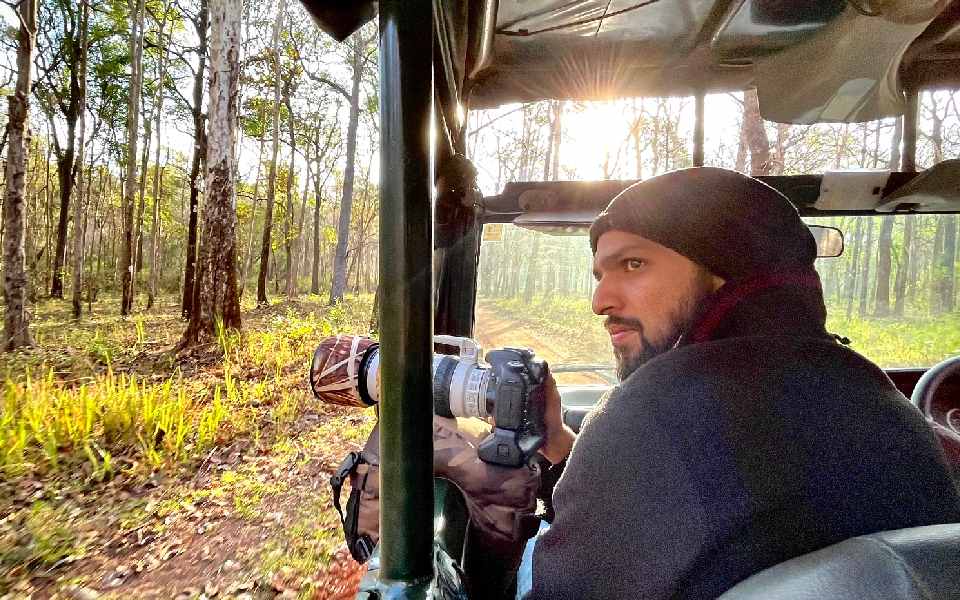
Haarish during one of his jungle visits with his camera
Udupi:
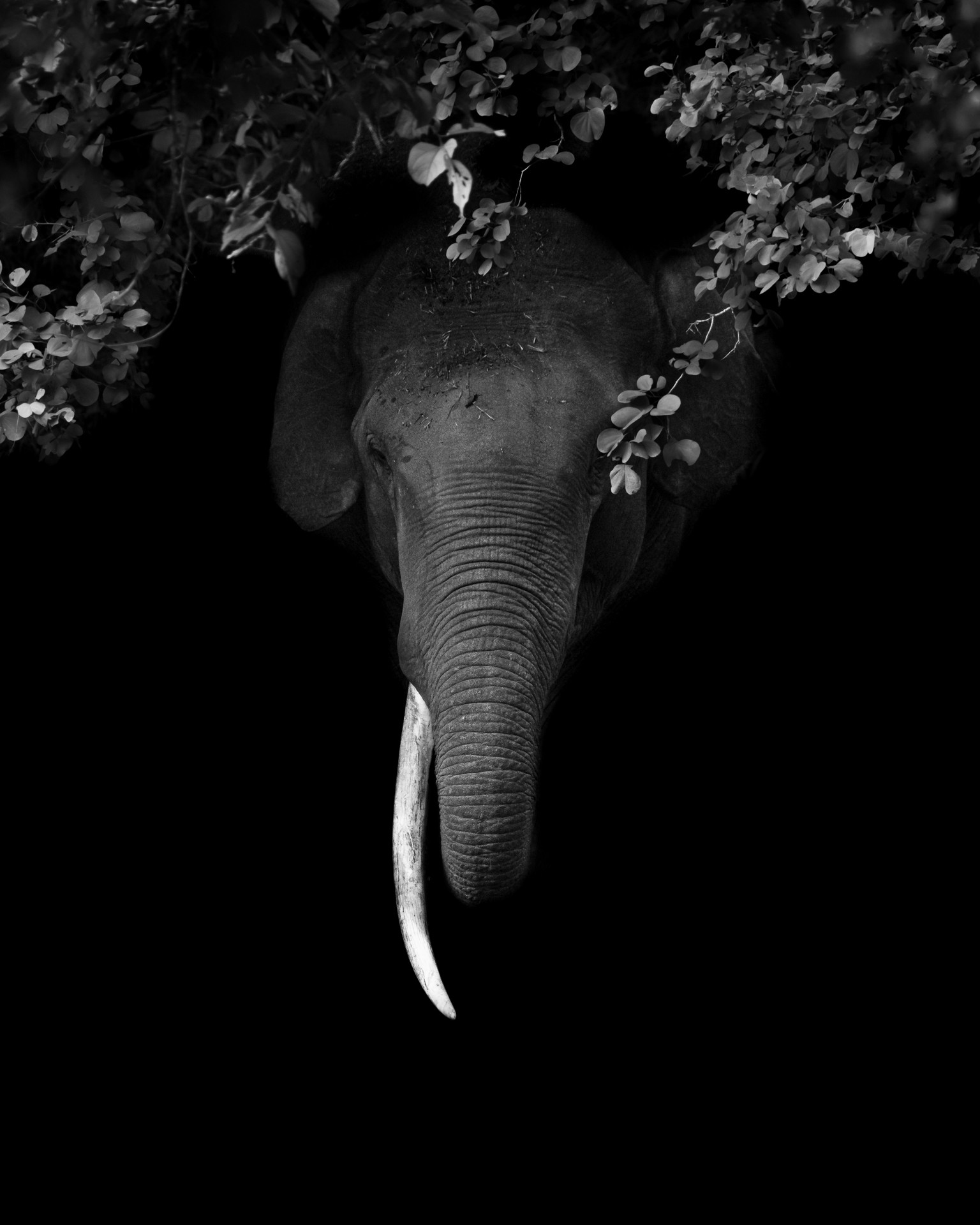
Haarish Mohammed, a wildlife photographer from Udupi, now residing in Saudi Arabia, has won the international photography competition organized by 35 Awards in the Black and White category. This contest saw a remarkable participation of 465,000 photographs submitted by 111,253 photographers from 174 countries.
Reflecting on his journey, Haarish shared, “I’ve been fascinated with nature and forests since childhood. During my college years, trekking through the Western Ghats became a regular activity. In 2011, I moved to Saudi Arabia for a job, realizing that my connection to the forest could only be maintained through a career in the Forest Department, becoming a naturalist, or pursuing wildlife photography. I dedicated 1.5 years to learning the theory of photography before purchasing my first camera in 2013.
“The period from 2013 to 2017 was all about learning, and in 2017, I met a group of talented photographers in Saudi Arabia called Photomates, which I joined. With their support, I honed my skills. However, my job in Saudi Arabia limited my opportunities to explore the forests of Karnataka. After the first wave of COVID-19 in 2020, I decided to resign and return to India to start my own business. Since then, I’ve had many of my works featured and published on various platforms. I visited national parks like Nagarhole, Kabini, and Bhadra, photographing beautiful animals such as tigers, leopards, elephants, and many colorful birds.”
Haarish elaborated on the story behind his winning image: “It was taken during an evening safari in the lush forests of Kabini, Karnataka. We were waiting for a herd of elephants to cross our path to reach a water body. To our surprise, a single tusker emerged from the dark forest.”
Haarish’s photo that bagged first place in international photography competition organized by 35 Awards
Haarish’s achievements include being featured in BBC Earth, the international online magazine PawsTrails, and Nature In Focus.
He secured third place in the 2020, 2021, and 2023 photography competitions held by Pilikula Biological Park in Mangalore. His work was also accepted for the International Wildlife Photo Exhibition held by Alvas Virasat in 2023.
Additionally, he won a certificate of merit in the National Level Photography Contest conducted by the Karnataka Forest Department in 2023. His most recent accolade is the first place in the 2023 international photography competition conducted by 35 Awards in the Black and White category.
“Wildlife photography is like a window into the world of animals. It helps us understand and appreciate them better by capturing their beauty and diversity. Moreover, wildlife photography raises awareness about the importance of protecting wildlife and their habitats. By showcasing the wonders of nature, it encourages us to take care of it. When we see how amazing animals are, we’re more likely to want to save them,” Haarish added.
It’s the author’s well-founded belief that Salim Ali’s life offers today’s children a role model.
Here’s hope for those young people who are mediocre with mathematics and other studies, and likely to be uninterested in business. Salim (pronounced Saalim, not Saleem) Ali’s interest in birds began to awaken when he shot a male sparrow, standing guard over its mate’s nest, with an air rifle. Next morning he found that another male sparrow had taken its place, and he shot that too… This went on until he had shot eight male sparrows, and then wonderment took the place of whatever had urged him to shoot those sparrows. This wonderment gave his life a foundation of incredible strength. It enabled him to survive the loss of several salaried jobs, and, later, the loss of Tehmina, his wife, who, throughout their 21 years together, supported his efforts wholeheartedly.
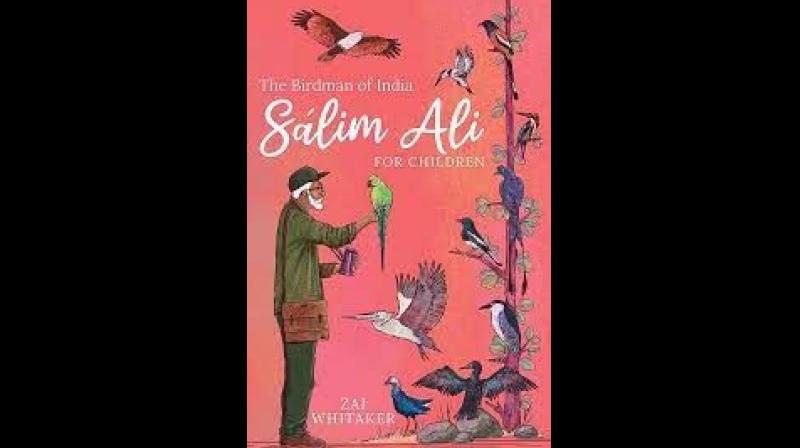
This book is his life story, told simply, and for children. It’s the author’s well-founded belief that Salim Ali’s life offers today’s children a role model.
The author makes no effort to sugar-coat the story. Salim’s initial difficulties with academics are covered in some detail, as well as mediocre performance in school, and his inability, found in many others of his extended family, to run a business successfully. This mediocrity at school had nothing to with his powers of observation, though. For example, it was known that the houbara bustard he saw in Sind (now in Pakistan), under normal hot and dry conditions, has a colour that affords perfect camouflage, enabling it to hide easily in the sand. Salim discovered, however, that the bustard’s colour changes in the rains, enabling it to hide in wet sand as well!
Also included is the story of Salim’s relationship with Colonel Richard Meinertzhagen, a former British Intelligence officer. The Colonel’s claims to being a hero might have been authentic, but his claims as an ornithologist were proven false in the 1990s, decades after his death. It illustrates Salim’s naivete with people, but also warns youngsters of the possibility of charlatanry in science.
My favourite story, though, is about Salim’s encounter with a bandit in the summer of 1945. Near the Tibetan border, poking around among the bushes, he saw a bandit armed with a dagger and a rifle. Escape was impossible, so he resorted to a ruse. He had a collapsible chair, a small folding seat on a stick. He pretended that the stick was a rifle barrel, and clicked the folding seat open to give the impression that he was loading and cocking his own rifle. It worked, for the bandit fled.
So here’s proof that commitment, integrity, and hard work — combined with observation, quick thinking, and luck — will get you where a great academic background won’t. A terrific lesson for youngsters, and packaged well, to boot.
The Bird Man of India: Salim Ali for Children
By Zai Whitaker / Hachette / pp. 142; Rs 350
source: http://www.asianage.com / Asian Age / Home> Books / by Shashi Warrier / August 27th, 2023
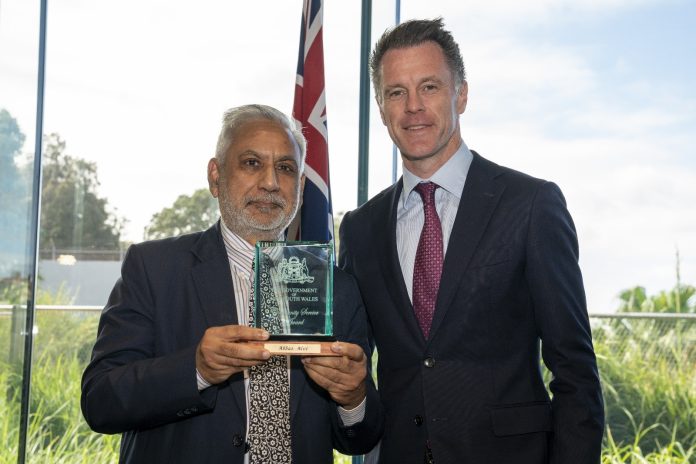
In a ceremony hosted by Australian Premier Chris Minns at the Art Gallery of NSW, Mr. Abbas Raza Alvi, President of the Indian Crescent Society of Australia, was awarded the NSW Government Community Service Award. The event, held on May 20th, marked the beginning of National Volunteer Week, celebrating the remarkable contributions of volunteers across New South Wales.
More than 300 guests representing various volunteer organizations attended the event, highlighting the vital role volunteers play in strengthening communities. The NSW Government Community Service Award recognizes individuals who have significantly enhanced the quality of life for community members, going above and beyond their regular duties.
Among the six distinguished recipients nominated by their State Members of Parliament, Mr. Alvi stood out for his exceptional dedication and selflessness. Nominated by Stephen Bali MP, Member for Blacktown, Mr. Alvi’s unwavering commitment to service has inspired and enriched countless lives.
As President of the Indian Crescent Society of Australia, Mr. Alvi champions multiculturalism, diversity, and inclusion, striving to foster harmony among diverse communities. His involvement in various associations, businesses, and cultural bodies demonstrates his broad impact and leadership in promoting social cohesion.
Mr. Alvi’s volunteer work extends across multiple sectors, from founding the Australia India Chamber of Commerce NSW to serving on advisory committees in councils. His passion for promoting peace and social responsibility serves as a beacon of civic engagement for others to emulate.
Through his recognition and award, Mr. Abbas Raza Alvi exemplifies the values of compassion and community service, inspiring individuals to actively contribute to the betterment of society.
source: http://www.radiancenews.com / Radiance News / Home>Muslim World> Australia / by Radiance News Bureau / May 27th, 2024