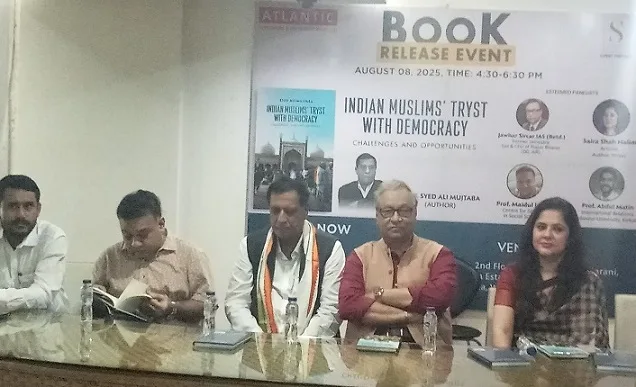
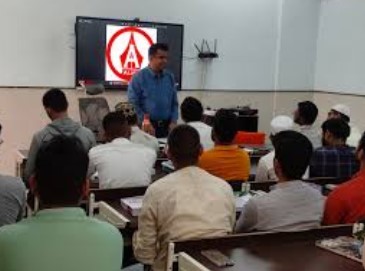
At the launch of the book Indian Muslims’ Tryst with Democracy: Challenges and Opportunities at ICCR Library, Kolkata, academics and public figures underlined that meaningful improvements in government schools and hospitals could significantly uplift India’s Muslim community, especially its poorest segments.
Professor Abdul Matin of Jadavpur University stressed that socio-economic realities leave many Muslims dependent on failing public services. “We keep saying Muslims lag in education — but how do we fix it? When families earn only ₹8,000–₹10,000 a month, they cannot afford private schools. They rely on government schools, which have deteriorated so much that students rarely move up in life,” he said.
Matin pointed out that this crisis is not limited to rural Bengal but also affects Muslim-majority urban areas such as Metiabruz, Khidirpur, Topsia, Park Circus, and Raja Bazar. Once-active Kolkata Municipal Corporation schools, he noted, have shut down, worsening access. The state’s public education system, weakened by years of political interference, has hit all low-income communities hard — with Muslims among the worst affected.
He also painted a bleak picture of healthcare: “In rural Bengal, people travel overnight and queue from midnight for a doctor’s appointment. We must revive mohalla-level schools and clinics.”
Jawhar Sircar, former Rajya Sabha MP and bureaucrat, urged the community to prioritise education over religious symbolism and to resist being reduced to a political vote bank. He encouraged Muslims to join democratic, secular movements fighting to restore India’s plural ethos. On the castecensus, Sircar advised patience, saying its 2026 release could be a “game changer” for the community.
Political activist and CPM leader Saira Shah Halim spoke bluntly about systemic discrimination, citing examples from both Delhi and Kolkata. On housing bias, she noted: “People say Muslims are ghettoised — but do they have a choice?” She also criticised the absence of certain MPs, including secular leaders, during critical parliamentary debates on Muslim concerns such as the CAA and the abrogation of Article 370.
From a historical and political perspective, Prof Maidul Islam of the Centre for Studies in Social Sciences, Calcutta, traced a steady decline in Muslim political representation — in the Lok Sabha since 1980 and in the Bengal Assembly since 2011. He alleged that parties deliberately withhold tickets from Muslim candidates, echoing warnings made decades ago by B.R. Ambedkar. The lack of progressive leadership, he argued, further limits the community’s advancement.
The book itself — Indian Muslims’ Tryst with Democracy — offers a detailed examination of these socio-political dynamics, combining historical insight with policy recommendations. Described by speakers as “a guide for collective action,” it lays out both the challenges and the concrete opportunities available for India’s Muslims to achieve equitable development.
You can order a copy from Atlantic Publishers & Distributors Pvt. Ltd 7/22, Ansari Road, Darya Ganj, New Delhi – 110002. Email- aparna@atlanticbooks.com – Phone: 011-40775252 Website: www.atlanticbooks.com
source: http://www.theindianawaaz.com / The Indian Awaaz / Home> Quami Awaaz / August 13th, 2025
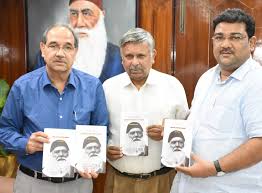
Aligarh Muslim University (AMU) Vice Chancellor, Professor Tariq Mansoor today released the Hindi translation of Sir Syed Ahmad Khan’s ‘Asbab-e-Baghawat-e-Hind’ along with a special reprint of the book in Urdu. The translation has been done by Dr Jasim Mohammad.
The book was released in the presence of Professor Shafey Kidwai (Member-in-Charge, Public Relations Office, AMU).
On the occasion, the Vice Chancellor said that Sir Syed Ahmad Khan took upon himself the challenge of educating the masses by pushing ahead common people towards over all development with the most modern and scientific education. He added that it is imperative that the teachings Sir Syed should reach all corners of world through translations in various languages.
Dr Jasim said that the idea behind the translation of ‘Asbab-e-Baghawat-e-Hind’ is to educate people on how Sir Syed with his nationalistic approach towards problems and controversies prevailing at that time took the unimaginable step of speaking against the British rule.
Dr Jasim has authored 26 books including ‘Sir Syed Ahmad Khan aur Aligarh Movement’, Aligarh Muslim University Minority Character: A Comprehensive Study’ and ‘Urdu Mass Media aur Rabta-e-Aama’. He regularly writes articles and opinion pieces in Hindi, Urdu and English languages for national dailies. Dr Jasim is also a recipient of Bharat Gaurav Samman, Acharya Hasthi Karuna Institutional Award and Rais Uddin Rais Award.
source: http://www.indiaeducationdiary.com / India Education Diary / Home> Academics> Competition> Edu Events> National News / by India Education Diary Bureau / pic: edited – facebook.com/proamuofficial / September 09th, 2017
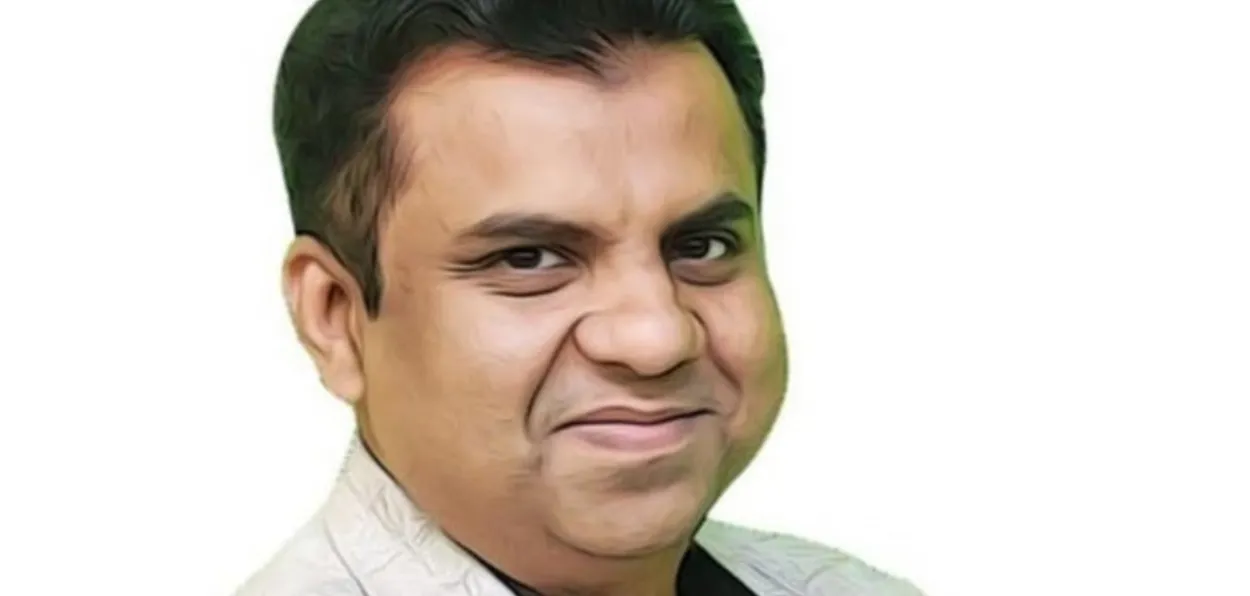
As Muslims all over the country are protesting against the Pahalgam carnage by the Pakistan-backed terrorists killing 27 persons, including a local ponywallah, Sameer Ahmed Siddiqui, a well-known IAS coaching Academy head, has proposed that the community should raise the “world’s largest anti-terror fund” to deal with aftermath of the terrorist attacks.
This fund, he said, would help the survivours and dependents of the victims of terrorism.
Sameer Ahmed Siddiqui, who is also emerging as a new age social thinker, says if 20 lakh Indian Muslims contribute Rs 100 each, a huge fund can be created. This fund can be used to provide financial assistance to the families killed in the Pahalgam attack for ‘seven generations’.
Sameer’s idea is similar to that of Kolkata’s Wali Rahmani, who established a state-of-the-art school for Rs 12 crore through similar small financial contributions.
Siddiqui’s idea is that the Chief Minister of Jammu and Kashmir, Omar Abdullah, must take the initiative for this fund. He says Abdullah must take the lead since Kashmir has been associated with terrorism and negative images for a long time. He said, “It’s time to associate Kashmir with a positive and historical record as well.”
He says, “At a place where innocent people have been killed after asking about their religion and attempts have been made to dishonour the Kalma, the world’s biggest anti-terror fund should be created on the call of the people there. This will not only change the face of Kashmir but will also send a strong message in favour of humanity.”
Sameer Ahmed Siddiqui presented his proposal on his YouTube channel ‘Team Sameer Siddiqui’ six days ago. The video has gone viral on social media, and the people are appreciating it as an ‘eye-opening initiative’.
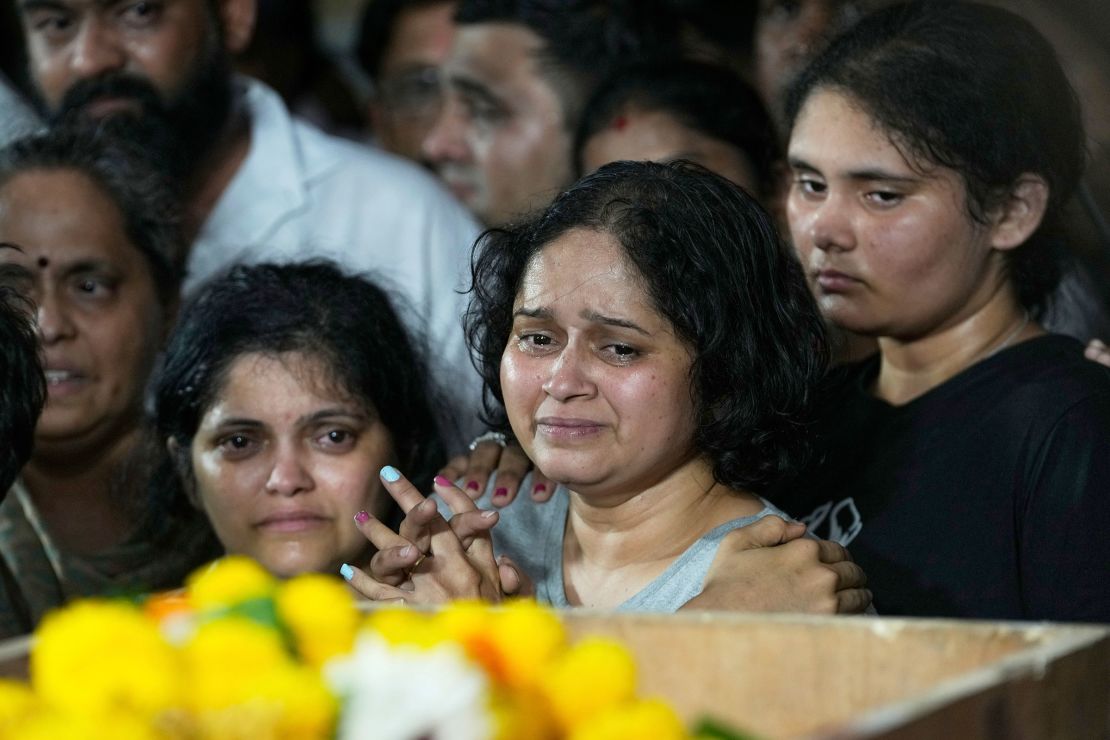
A family mourning the loss of their kin in the Pahalgam terrorist strike
The viewers have posted the following comments on the video:
“Sir, I salute your thinking. What you have said is very important in today’s time.”
“Distance from education is our failure today, scholars like you are our hope.”
“Subhan Allah! With what deep thinking you have given such a big message.”
Some of the reactions in the comments sections are as follows:
“How deeply you have explained a big thing.”
“The strongest answer is – unity and education.”
Sameer Ahmed Siddiqui is a reputed IAS coach and a business analyst. He has experience in the information technology and service industry. He is adept at operations management, communication, leadership and data analysis.
A graduate of Aligarh Muslim University, Sameer is currently the head of General Studies at M Puri IAS Institute, New Delhi. This institute is one of the top civil service training institutes in the country, from where the highest selection rate has been achieved in IAS, IPS, and Group-A services.
His books, especially the book on “Internal Security and Bilateral Relations”, are highly popular among competitive students.
Sameer advocates change in education in accordance with the needs of the future, and preparing the new generation for the era of Artificial Intelligence, Machine Learning and Robotics. He is also famous for beautifully combining the principles of traditional and modern science.
His lectures and analyses have been viewed and shared by millions of people on YouTube and other internet platforms.
If the Muslims of India unite and adopt this plan and the people of Kashmir take the initiative, then not only will the suffering families get support, but a new message will also be sent to the whole world – that the unity of humanity is much stronger than the hatred of terrorism.
source: http://www.awazthevoice.in / Awaz, The Voice / Home> Stories / by Malick Asghar Hashmi, New Delhi / April 28th, 2025
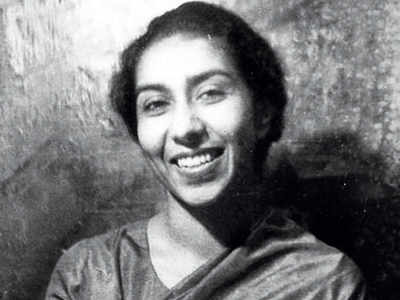
Asiya Siddiqi (1928-2019) (Pic Courtesy: Obaid Siddiqi)
Siddiqi also broke new ground by studying 20,000 HC insolvency records to recreate the lives of an array of 19th-century city inhabitants.
In an age that sometimes overrates quantity and is beguiled by grandiloquence, economic historian Asiya Siddiqi, who passed away on Monday morning, went against the grain.
A chronicler of 19th century India, she wrote just two books. But each was a culmination of decades of painstaking original research, presented in prose that many might describe as being quietly elegant. In between working on the two books, she edited a volume on trade and finance in colonial India.
She broke new ground in both her books by closely reading new or underutilised primary sources. In the second book, Bombay’s People, 1860-1898: Insolvents in the City, published in 2017 by the Oxford University Press, she not only tapped a voluminous new source, namely about 20,000 insolvency records in the high court, but also incorporated the innovative conceptual approach of microhistory to illuminate the past.
She admired the work of one of microhistory’s founding scholars, Italian historian Carlo Ginzburg, especially his book ‘The Cheese and the Worms: The Cosmos of a 16th Century Miller’. Microhistory focuses on small units of research, such as a village, a single event or an individual, instead of large ones such as nations, kingdoms and cities. Siddiqi’s chapter, ‘Ayesha’s World’, the story of an unlettered butcher’s wife, is a gem of this genre.
“She was a first-rate historian, approaching her work with a craftlike precision,” said Mariam Dossal, a friend of hers who is an urban and maritime historian of 18th and 19th -century Mumbai and a former professor at the University of Mumbai, where Siddiqi worked for everal years. “In Bombay’s People, her view was so rich and broad that it covered every kind of person who inhabited the city, from the wealthy Jamshetji Jejeebhoy all the way to Ayesha. One marvelled at her beautiful use of language, through which she recreated the worlds of these inhabitants. For Asiya, everybody deserved a history.”
Her early work on the 19th-century opium and cotton trade based in Mumbai was also influential, in particular her article ‘The Business World of Jamshetji Jejeebhoy’, which appeared in the Indian Economic and Social History Review in 1982. She worked for years on the private papers of the merchant who was a central figure in those two trades to offer a finely-etched view of the entrepreneurial climate of that period, while also shedding light on the ways in which Mumbai supported the growth of the British economy.
A large portion of these papers consisted of letters in which Jejeebhoy had recorded both his business dealings and social life in great detail. Because the papers were disintegrating in the heat and humidity of Mumbai, she got them laminated with help from her uncle Saiyid Nurul Hasan, who was then the union minister of state for education, Dossal recalled.
Asiya Siddiqi’s first book, Agrarian Change in a Northern Indian State: Uttar Pradesh, 1819 to 1833, published in 1973 by Oxford Clarendon Press, grew out of the thesis she did for her DPhil at Oxford University. In what became a classic of South Asian economic history, she analysed the relevant records with characteristic rigor, becoming one of of the earliest to show how colonial trade policies contributed to a severe agricultural depression in the region.
She grew up in Lucknow, and from 1962 worked in and on Mumbai for four decades. She moved in the late 1990s to Bangalore, where her daughter said she passed away peacefully in her sleep. Her husband was the eminent biologist Obaid Siddiqi, who founded the biology department at the Tata Institute of Fundamental Research in Colaba and the National Centre for Biological Sciences in Bangalore. He passed away in 2013.
Asiya Siddiqi balanced her research with bringing up four accomplished children: the eldest Imran, a leading plant biologist based in Hyderabad; Yumna, a professor of English in the US; and fraternal twins, Diba, a visual artist and high school social science teacher in Bangalore, and Kaleem, a computer scientist in Canada.
Siddiqi seemed happiest working by herself in the archives, as an independent researcher, although she had two productive teaching stints: one at Aligarh Muslim University, where she met her husband just after getting a bachelor’s degree at Oxford University, and the other at Mumbai University.
She quit teaching when, at one point she found it difficult to commute from her home in south Mumbai to the university campus in Kalina while also keeping up with her research and and raising four children.
Disclaimer: The views expressed here are the author’s own. The opinions and facts expressed here do not reflect the views of Mirror and Mirror does not assume any responsibility or or liability for the same.
source: http://www.mumbaimirror.indiatimes.com / Mumbai Mirror / Opinion > Columnist / by Sumana Ramanan / October 11th, 2019
The author talks about how identity and politics play a huge role in his writing.
Abdullah Khan will be at The Hindu Lit Fest 2024 in Chennai on January 26-27.
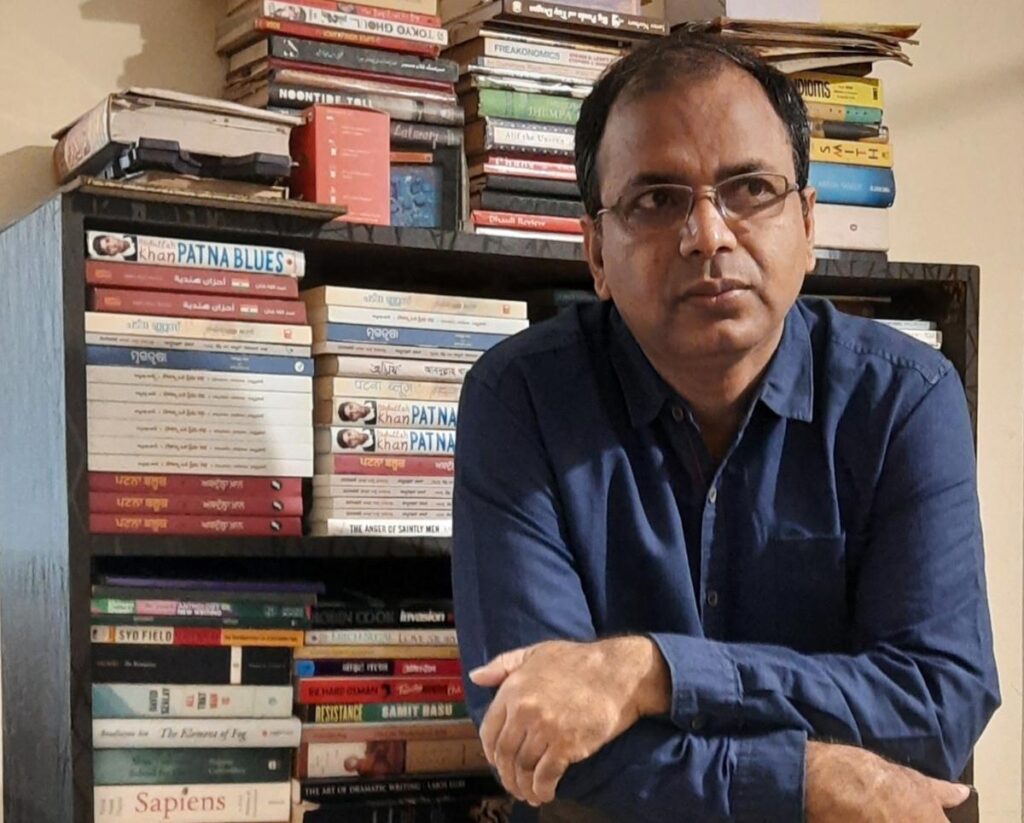
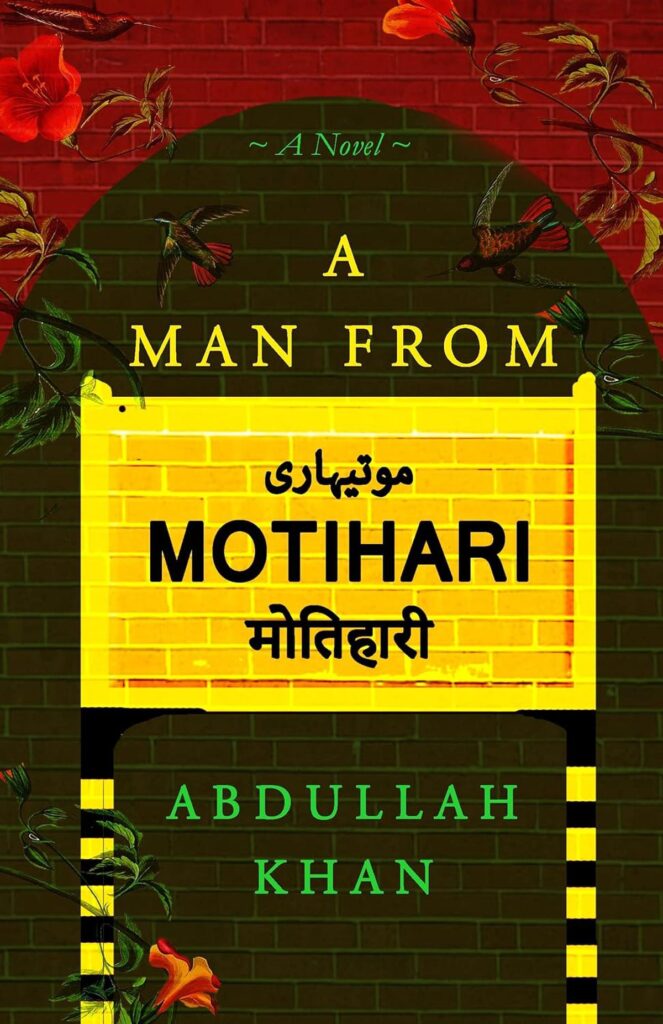
Abdullah Khan’s journey with literature began with a discovery — that he shared his place of birth, Motihari in Bihar, with one of the most prominent authors of the 20th century, George Orwell. Since then, the written word has remained Khan’s constant companion. From his debut novel Patna Blues (2018) to his latest, A Man From Motihari (2023), Khan employs a deft handling of sensitive subjects and hot-button issues to tell stories of everyday characters in Indian society. A speaker at The Hindu Lit Fest 2024 in Chennai on January 26-27, Khan discusses his thoughts on identity, desire and aspiration.
Edited excerpts:
How much of what you write is influenced by your own story?
During my school days in Bihar, my history teacher once asked, “Are you Muslim first or Indian first?” I confidently replied, borrowing the answer from my grand uncle: “I am both, born to Muslim parents, I’m Muslim; born in India, I’m Indian. Both identities came to me at birth.” As a boy, I didn’t fully grasp the complexities of identity.
During college, I pondered over how identity shapes thoughts, realising we’re not always aware of every facet of our identity. Sub-identities and super-identities emerge, revealed by others’ prejudices. In my village, I was Pathan; in school, a Muslim. Beyond Bihar, a Bihari. These identities intrigued me.
As I ventured into fiction writing, my reflections on identity seamlessly became woven into my stories. And, conflict between circumstances and desire is integral to human existence and is a vital element in crafting engaging narratives. I found inspiration in Bihari IAS/ civil services aspirants, news, historical incidents, real-life characters, beautiful places, and even SMS/ WhatsApp forwards for plot ideas.
What comes first — the plot or the point it makes? And in the case of ‘A Man from Motihari’, what was the genesis of the story?
Plots and characters naturally come to me without any preconceived plan. As I create the story, some significant points or messages often emerge organically.
Take, for instance, the inspiration behind A Man from Motihari. A few years ago, a Bangladeshi newspaper asked me to write about the house in Motihari where Orwell was born. While standing in front of that house, I had an idea: what if a boy from Motihari is born in the same room where Orwell was born many years ago? How would the boy react when he finds out, and how would it change his life? That’s how I came up with the character of the protagonist, Aslam Sher Khan, who is born in the same house as Orwell.
Tell us about your journey — from writing to publication.
Fresh out of completing my Master’s in chemistry, when I began writing Patna Blues, I had no knowledge of the technicalities of fiction writing and no background in literature. So, writing Patna Blues served as a kind of training for me, a sort of MFA, where I learned everything from scratch through trial and error. It took almost 10 years to write and nearly 9 years to get it published. I didn’t have a peer group then for beta reading or sharing comments. The journey to publication was challenging, enduring more than 200 rejections before it was published.
For my second novel, it took no more than a year to write, and finding a publisher was comparatively easier. Style-wise, I have improved significantly and gained more confidence in my writing.
There are strong political notes in your stories. What kind of responsibility do you feel towards your readers in terms of what you write about?
I believe no story exists in a vacuum. I allow the politics of the time to become a part of the narrative as I believe it is the only way to tell authentic stories.
While writing about politics, I do not shirk my responsibility as a writer and chronicler of the truth. I strive to be as impartial as possible. I generally don’t allow my personal beliefs or political ideology to creep into the story. Instead, I focus on the characters’ take on the politics of that time and keep myself a bit distant from those events.
What’s your take on literature festivals? What can they do for writers, and their readers?
Literature festivals offer writers a chance to share ideas. They gain inspiration and build a community, while readers enjoy insights into the creative process. As writers, we also get a chance to meet authors from all over the world, and learn from each other.
I think we should do more at these festivals for aspiring authors, like arranging pitching events or conducting writing masterclasses.
I have also observed a disturbing trend at many literature fests, where organisers invite celebrities such as film stars or cricketers to boost attendance. This often shifts the entire limelight to them, sidelining writers.
Gsquare Group presents The Hindu Lit Fest 2024 in Association with NITTE Education Trust & Christ University. Bookstore partner: Higginbothams
swati.daftuar@thehindu.co.in
source: http://www.thehindu.com / The Hindu / Home> Litfest> The Hindu Litfest 2024 / by Swati Daftuar / January 05th, 2024
Irfan Ahmad Khan taught many people about the Quran, including his great-grandchild Sulayman Ahmed Ansari. | Provided photo
Irfan Ahmad Khan wrote books, taught college classes, gave lectures and counseled inmates after their release from jail to help people learn about the Quran.
One of the best-known Quranic scholars in Chicago’s South Asian Muslim community, he also worked to promote understanding among different religions through interfaith groups.
“My father’s aim was not for material gain or fame,” said his daughter Humera Hai. “Spiritual peace and harmony was his main aim.”
He would go hours out of his way to drive medicine to a sick person or to resolve disputes, Hai said.
Mr. Khan, 86, who had been having heart problems, died April 3 in Chicago, said his grandson Saeb Ahsan.
Irfan Ahmad Khan in 1996. | Sun-Times files
Mr. Khan, who lived in Markham, spoke and wrote in English, Urdu, Hindi and Arabic. He also could read and write in Farsi and Latin.
His books included “An Introduction to Understanding the Quran,” “An Exercise in Understanding the Quran” and “Reflections on the Quran.” He also edited a journal on Islamic thought.
He was born in 1931 in British India, in Saharanpur in the state of Uttar Pradesh. His father was a well-to-do merchant and landlord. He expected his son to take a role in the family businesses, but “He wanted to study,” said his daughter.
In 1952, he earned a degree in physical sciences from India’s Aligarh Muslim University and continued his Islamic studies in the city of Rampur. He taught at the Indian university from 1958 to 1973.
Irfan Ahmad Khan and his wife Shamim. | Provided photo
Mr. Khan married Shamim Akthar Khan in 1957.
“He was always so gentle, so kind,” his wife said.
In 1974, he arrived in Chicago to study at the University of Illinois at Chicago. His wife, who was raising their seven children in India, had to await immigration clearance and wasn’t able to join him full-time until 1981, Hai said. “Both of them struggled” with being apart, their daughter said.
Mr. Khan, who admired the philosophers Immanuel Kant and Rene Descartes, earned a master’s degree in philosophy from UIC in 1977 and a doctorate in philosophy in 1986, according to the university.
Irfan Ahmad Khan, with then-Mayor Eugene Sawyer in the background. | Provided photo
He taught Islamic philosophy at UIC and lectured at schools including the University of Chicago, the School of the Art Institute of Chicago and the University of Iowa, his family said.
He was founder and president of the World Council of Muslims for Interfaith Relations, an emeritus board member of the Parliament of the World’s Religions, founding president of the Interreligious Engagement Project for the 21st Century and director of the Association for Quranic Understanding.
“His message was that there was a commonality in many faiths — a commitment to justice and fairness,” said Abdullah Mitchell, a lawyer and friend who said Mr. Khan was known for his outreach to the African-American Muslim community.
His lectures were delivered with energy and humor, and he always was approachable, said another friend, Afaq Mujtaba.
Mujtaba said young people in the South Asian Muslim community referred to him as “Uncle,” a term of affection and respect.
When Mujtaba’s mother died, “The way he consoled me, I will remember for the rest of my life,” he said.
Mr. Khan made multiple pilgrimages to Mecca and traveled to educational and interfaith conferences in Asia, Africa, Australia and Europe.
Islamic scholar Irfan Ahmad Khan worked to build relationships with other religions and interfaith groups. | Provided photo
His grandson said Mr. Khan would tell him, “Develop your relationship with God” and “Keep your studies’ focus; don’t necessarily get married too early.”
He enjoyed Red Lobster, Reza’s Restaurant on Ontario Street and anything that tasted of mango, his grandson said. Every morning, he ate toast and drank strong English breakfast tea with milk and lots of sugar. He liked it in a china cup and saucer, the hotter the better.
Once, when a student brought him tea, he removed his topi — a traditional hat — and placed it atop the drink like a tea cozy to keep it warm. But Mr. Khan forgot where the tea was. So the student brought him a second cup. “He picked up his hat,” said his son Farhan, “and he found the other tea.”
Irfan Ahmad Khan. | Provided photo
He always made sure his sherwani — a formal, knee-length coat — was pressed and crisp.
Though he usually focused on philosophical questions and lectures, his family found it endearing when Mr. Khan would catch a glimpse of an Indian or Pakistani soap opera on TV and then comment, with serious deliberation, on the motivations of the characters.
“This person is not being honest,” he’d say. “They are trying to take advantage.”
He is also survived by daughters Nusba Parveen, Husna Ahmad, Bushra Islam and Saba Khan, son Salman, brothers Ehtasham, Afzal, Iqbal and Rehan, sisters Ayesha Jamal and Rehana Bilquis and 21 grandchildren and two great-grandchildren. Services have been held.
source: http://www.chicago.suntimes.com / Chicago Sun*Times / Home> Obituaries> News> Religion / by Maureen O’Donnell / April 14th, 2018
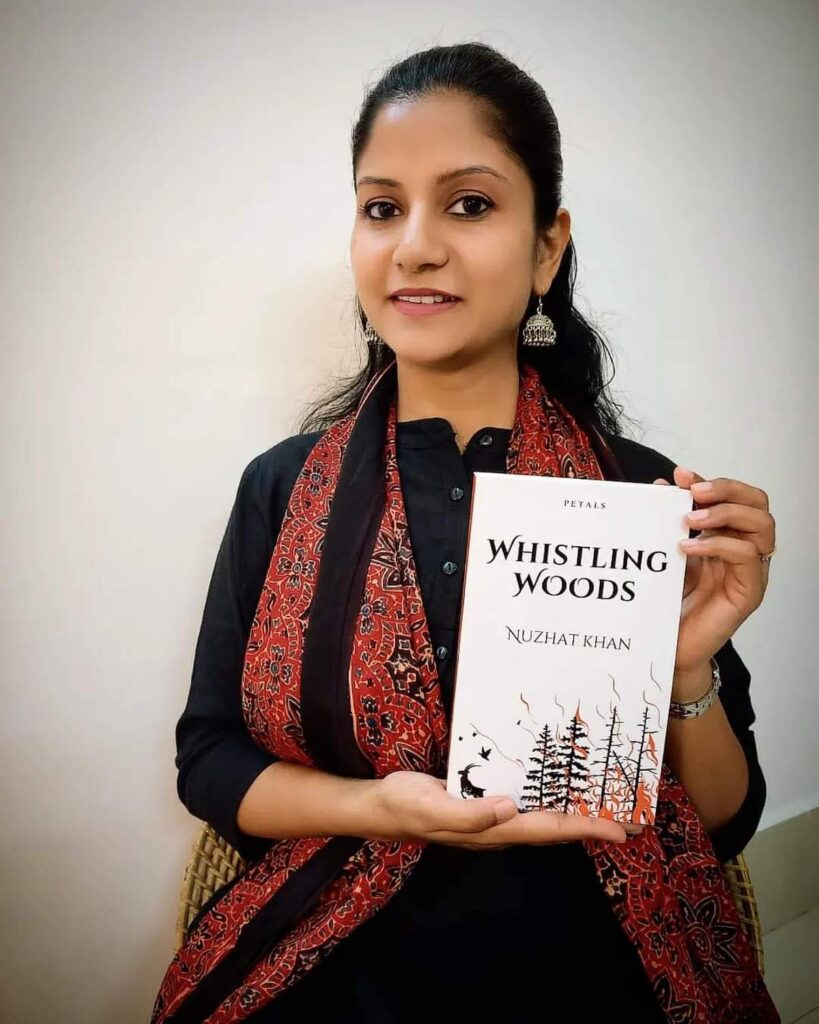
Author Nuzhat Khan weaves a story of love and loss against the backdrop of Uttarakhand’s forest fire catastrophe in her latest novel.
Author Nuzhat Khan | Photo Credit: Special Arrangement
Author Nuzhat Khan is among the growing tribe of writers confronting the world’s most pressing issue — climate emergency and the unfolding weather catastrophe — through a genre of fiction set in natural ecosystems. In her latest novel Whistling Woods (Petals Publishers), she highlights the impact of forest fire on people’s livelihood in Uttarakhand along with the story of two strangers — Akshay and Kaveri — who embark on a journey of self-discovery to the hills.
Nuzhat says the book is her way of doing her bit for Nature and the environment. “Growing up in Almora hill station amidst the snow-capped Himalayan ranges of Uttarakhand, I was blown away by the stunning landscape. This is the case with anyone who belongs to the hills. It pained me to watch forest fires ravage the serene hills.” She decided to act by writing a light-hearted story around the issue to reach out to more people. “I thought presenting plain facts and figures would be drab on topics like, what’s fuelling forest fires that continue to scorch hectares of green cover? I have tried to propose a solution, although it may not be the perfect one,” she says.
Her style of storytelling, both evocative and driven by research, helps readers get a grip of the issue while enjoying the budding romance between the lead characters. “I have attempted to capture a mix of human emotions, complexity of relationships, and the innocence of love. The setting helped me run parallels between urban and rural lives. For people in villages, even access to clean drinking water can be challenging ” explains Nuzhat adding that the book has been in the making for five years which also involved several trips to institutes like Avani Bio-Energy plant in Pithoragarh, the Naula Foundation, an NGO that creates awareness on the problems of dying aquifiers (naulas) in the hills of Uttarakhand.
“My interactions with the locals and forest department officials was an eye-opener. They are constantly working to mitigate the problem. Organisations like the Himalayan Institute For Environment, Ecology & Development have developed fire reporting apps that can alert people on forest fires across various locations.”
She points out that the ashram described in the book that works towards empowering girl children was inspired by the Lakshmi Ashram run by a couple in Uttarakhand. “Some of the characters are not entirely fictional,” she hints.
The book also touches upon excessive tourism in the hills. “Several unplanned constructions in the form of resorts have come up usurping the forest cover and triggering landslides. The region is also prone to earthquakes.” She wants people to sit up and take note of Uttarakhand. “Everyone wants to live in the hills. I want to tell them it is beautiful, but everyday life can be challenging.”
source: http://www.thehindu.com / The Hindu / Home> Books / by K Jeshi / December 26th, 2023
In your final rest
on a rope-cot,
were you still dreaming
of a piece of bread?
Beloved one,
we the people
of this country,
of that country,
can make anything
but a piece of bread
for you.
--Evening with a Sufi: Selected Poemsby Afsar Mohammad, translated from the Telugu by Afsar Mohammad & Shamala Gallagher, Red River Books, 2022.
These lines send shivers down the spine and recreate an empathetic longing for immigrant souls in search of succour. They also swiftly draw an image laced with poignancy — a loss, a regret, the economics that deny innovative young men their keep and force immigration in search of sustenance. Would the poet have been one of them?
Travelling from a small village in the South Indian state of Telangana, Afsar Mohammad has journeyed across continents and now teaches South Asian Studies at the University of Pennsylvania. Known as a trendsetting poet and literary critic for post-1980s Telugu literature, Afsar has brought out five volumes of poetry, one collection of short stories and two volumes of literary theory essays. He is also a distinguished scholar of Indian studies and has published extensively with various international presses, including Oxford and Cambridge. He is currently working on a translation of Sufi poetry from Telugu to English. In this interview, we trace his growth as a writer and editor of the webzine, Saranga, which now seems to be transcending linguistic barriers to give voice to multiple cultures…
Tell us about your journey as a writer. When and how did it start?
It’s a long story, but to cut it short — the beginnings were somewhat puzzling… Inspired by Shakespearean sonnets, I first wrote some sonnets in English, and then switched to free verse. Since most of my friends in my high school started pushing me to write something in Telugu, I had to migrate to Telugu. Quite surprisingly, I was first published in English, and then it took me a while to get something published in Telugu. I had hard time getting published in Telugu due to its newness in expressions and most editors felt that there was nothing “Telugu” in that kind of writing. So, my early writings quite naturally found their home in some English journals!
Your poetry rings with the pain of distance, the pain and struggle from others’ suffering transcending your own self. What is the source of your inspiration — is it your past or your present?What affects you more — your being an immigrant or a Sufi?
We’re distanced by many things — not just physically! We live in many shattered and scattered worlds, and sometimes we fail to reflect on those worlds. I feel like I’m a constant immigrant — despite my formal citizenship and legal boundaries. Sufism is merely a segment of this expansive realm. Both past and present define our destiny, right?! Of course, I try to live in the present rather than in the past, but never deny the baggage of the past.
Why do you subscribe to the Sufi school of poetry? What is Sufism all about?
I come from an extremely local rural setting where such Sufi mystical practices openly defined my everyday life. It’s not about the technicalities and theories or institutionalised Sufi schools of their philosophies, this is more about what I learned from my childhood, and its physical surroundings dotted by several hybrid shrines. I’ve described this cultural setting in my 2013 Oxford University Press publication, The Festival of Pirs: Popular Islam and Shared Devotion in South India. This version of Sufism has more to do with everyday life rather than a spiritual domain.
You have lived away from your country for long, and yet the past seems to still haunt you. What is the identity you seek as a poet? Is it necessary to have a unique identity or can one be like a drop that flows and moulds as per the needs of the vessel?
In a way — physically– I’m away from my birth place, but in many ways, I’m also closer to my homeland than in my past. When I moved away from the actual picture, I see many dimensions from a new lens. Each dimension contributed to my rethinking and reconsidering the idea of India. As I wander around and meet totally different places and people, I learn more about my birthplace and moved a little closer to it. I totally understand this as a process to reconcile with the past and connect it to a new present intensified by many factors, not just personal. We’re living in a virtual world, which also looks like “real” in its sounds, colours and words. Every moment it makes me realise that I’m actually not that far. On the other hand, I also see the people in my homeland who are far more removed by their immediate reality and everyday experiences. We need to read this conditionality more in terms of perspective rather than physical distance.
You are fluent in Telugu, Urdu and English. You started writing in English and then moved to Telugu. And all your poetry collections have been in Telugu. Why? Would the outreach of English not have been wider? What made you pick Telugu over English?
Great question! My literary graph is neither linear nor simplistic. When I look back and reflect on it, it’s a quite messy roadmap — actually, there’s nothing like a map to get its contours. Yes, I started writing in English and then suddenly stopped sending out the poems to magazines. In fact, I write more in my personal journals rather than in print journals. Theoretically, I saw poetry as a personal diary for my experiences for many years. Due to financial concerns within my family, I had to start working very early on and left most of my journals at home. Then, my friends found them by chance and put them together that became my first collection of poems in Telugu. The collection was an instant success for its innovative style and then that opened up my career in Telugu rather than English which was my first language of literary expression.
You are now bringing out a bi-lingual online magazine, Saranga? What made you think of a magazine in two languages?
Before entering into teaching career, I worked as an editor of the literary supplement and Sunday magazine for a largest circulated Telugu newspaper. When we moved to the USA, I thought it would be better to have some outlet to engage with my home language and literature. In the early phase, Saranga was primarily a Telugu webmagazine. When I started teaching South Asian literature, then I realised the importance of making Indian literary texts available to contemporary generation in the USA. That was just one reason, but there’re were many factors as our team saw a rise in the Indian diaspora writings in the new millennium. Luckily, we got wonderful support from writers and poets in various Indian languages. The humble beginnings have actually ended up as a rewarding experience.
What is it you look for in contributors from two languages? Is it the same guidelines or different?
We’re still learning how this works! As it appears now, these two sections require two different approaches and guidelines. Since the English section has been now attracting writers from various languages, it’s moving more towards a multi-lingual base. We’re trying to accommodate more translations into English from different Indian languages. We still need to do lots of work there.
Is the journal only aimed at South Asian diaspora or would you be extending your services to all cultures and all geographies?
Saranga, as we see it right now, is more about South Asia and its diaspora. As you know, we need more such spaces for South Asia and its diaspora. Not sure about its future directions at this point, however, if the situation demands, we will extend its services further.
You have number of essays and academic books in English. But all your creative writing is in Telugu. Why? Would you be thinking of writing in English too because proficiency in the language is obviously not an issue?
Most of my academic writing came out of my teaching experience. As I started teaching new courses, I then realised that we need more material from South Asia. I started focusing on producing such materials primarily for my courses and then gradually, they became useful for many academicians elsewhere too. I still believe creating writing as a more personal space — that enables me to articulate more about myself. However, the publication of Evening with a Sufi, brought a new change — as I’ve been getting more requests for more writing in English for the last two years. As you know pretty well, I’m an extremely slow writer.
How do you perceive language as a tool for a poet?
I see language working many ways since I dwell in multiple languages. I started my elementary education in Urdu, and my middle school was in Telugu, and the subsequent studies were in English. Through the last day of her life, my mother was extremely particular about me learning Arabic and Farsi. So, I believe that helped me so much to understand how language works in a poem. When I published my first poem in Telugu, the immediate critique was it was a not a “Telugu” poem. Telugu literary critics labelled me as a poet who thinks either in Urdu or English, then writes in Telugu. Of course, most of them were also fascinated by the new syntax of my Telugu poems and the new images and metaphors—that totally deviate from a normative or mainstream Telugu poem of those days. The uses of language in a poem varies for each poet. If you’re reading, writing and thinking in just “one” language, that might be a safe condition. A contemporary or modern poet, however, belongs to many languages and cultures. We also migrate from one language to another in our everyday life.
Do borders of nationalism, mother tongue and geographies divide or connect in your opinion? Do these impact your writing?
The response to this question might be an extension to the above conditionality of a person. Anyway, I’m not a big fan of those ideas of nationalism, mother tongue and singular geographies. They don’t exist in my world. Most of my writings both creative and academic contest such boundaries and borders. To describe this in a single term- borderless. In fact, I believe we’re all borderless, but unfortunately, many boundaries and borders are now being imposed on our personalities.
(The online interview has been conducted by emails by Mitali Chakravarty)
Hyderabad, TELANGANA / Boston (Massachusetts), U.S.A.:
Photo: twitter.com/swachhhyd/
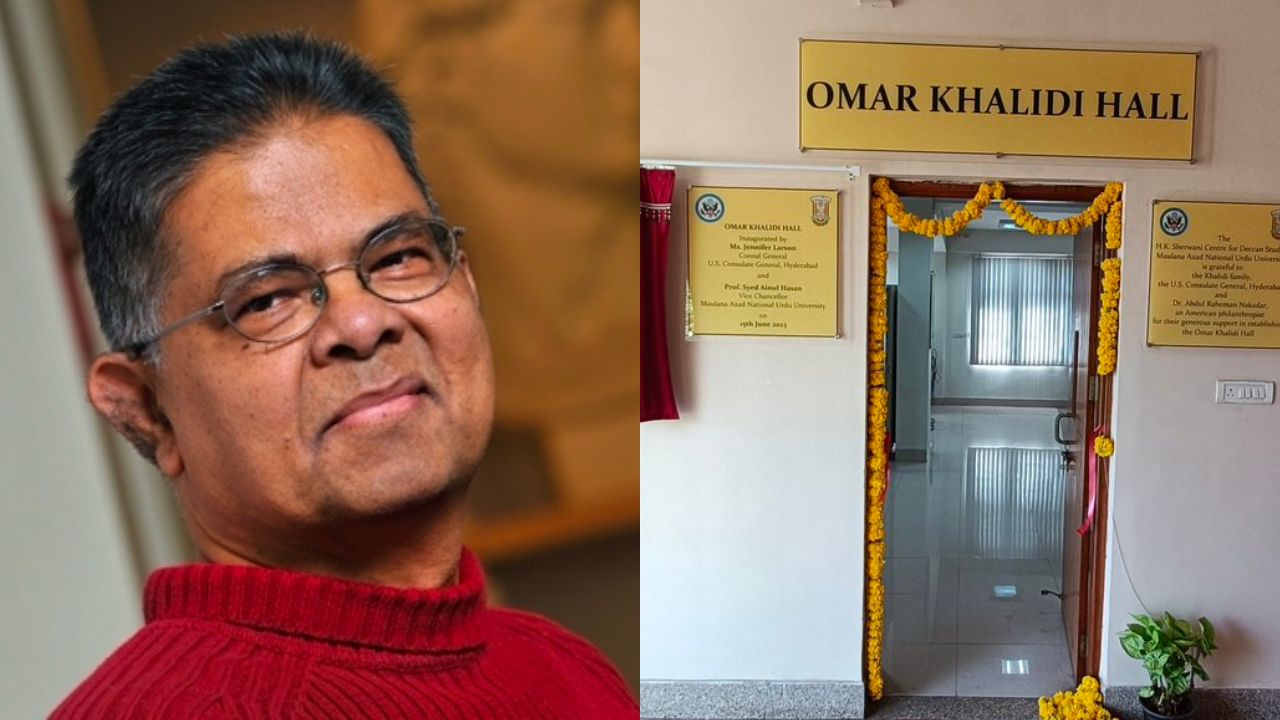
Omar Khalidi Hall, named after the late renowned Hyderabadi scholar, was inaugurated at Maulana Azad National Urdu University (MANUU) on Thursday. The hall, which now houses Khalidi’s personal library comprising scores of rare books, marks a significant milestone for the university.
The collaborative efforts of Khalidi’s daughter Aliya Khalidi, his wife Nigar Sultana Khalidi, historian Prof Salma Farooqui leading MANUU’s H.K. Sherwani Centre for Deccan Studies, the United States Consulate General in Hyderabad, and admirers of the Hyderabad scholar based in the USA made it possible to bring his personal library back to his hometown of Hyderabad.
Khalidi’s library is an impressive collection with over 1,000 Urdu, English, Persian, French, German, and French titles. It covers a wide range of subjects including the history, culture, and administration of the Deccan, Hyderabad State, Golconda, religion, Sufis and Sufism, heritage, and numerous journals. Notably, the collection includes rare books such as L’Inde Anglaise, published in 1845, The Hindu reported.
Khalidi’s strong connection with his hometown led him to compile an exhaustive list of books on Hyderabad’s history, culture, and archaeology. Many of these books were either unknown or had faded from public memory due to the passage of time.
Apart from his personal library, Khalidi was also renowned for his authored works. His book Khaki and Ethnic Violence in India explored the complexities of religious composition within the armed forces and police, as well as the Muslim community. L.K. Advani had verbally attacked Khalidi for the book and reportedly acknowledged that the book provided “inspiration to the Sachar Committee to seek a communal census in the Armed forces.”
Among his other important works were Muslims in Indian Economy and Hyderabad: After the Fall, a collection of essays edited by Khalidi.
Khalidi, who worked at the Massachusetts Institute of Technology as part of the Aga Khan Programme for Islamic Architecture, passed away on November 29, 2010, leaving behind a significant intellectual legacy.
The inauguration of Omar Khalidi Hall at MANUU on Thursday not only celebrates the life and work of this distinguished scholar but also provides a valuable resource for students and researchers. The inclusion of Khalidi’s personal library in the hall will serve as a source of inspiration, enabling a deeper understanding of Hyderabad’s history, culture, and heritage.
source: http://www.thecognate.com / The Cognate / Home> Culture / by The Cognate News Desk / June 16th, 2023
Ahmad’s book, Caste and Social Stratification Among Muslims in India, is celebrated as pioneering work in the field.
Imtiaz Ahmad (1940-2023). Photo: Twitter/@syedurahman
New Delhi:
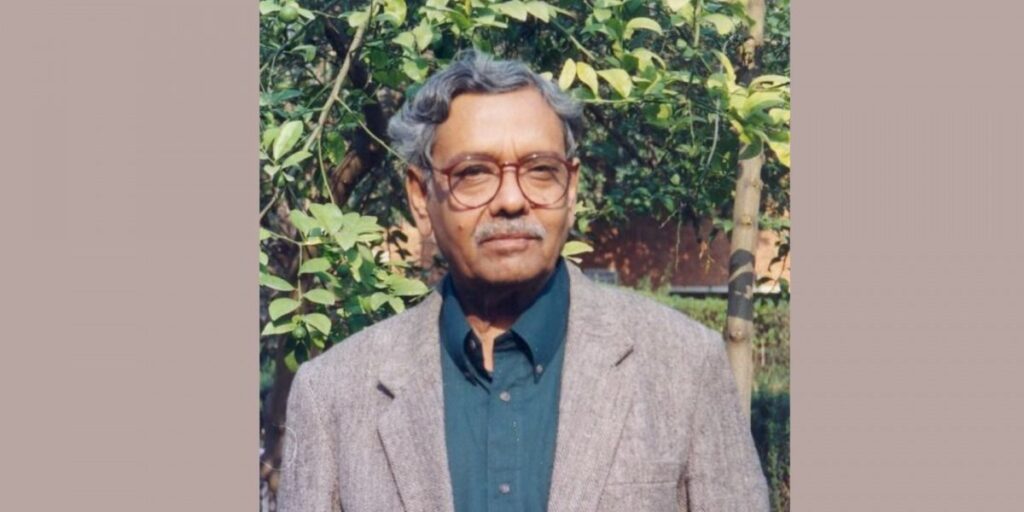
Imtiaz Ahmad, renowned scholar who taught political sociology at the Jawaharlal Nehru University in India, has died. He was 83.
Ahmad’s book, Caste and Social Stratification Among Muslims in India, is celebrated as pioneering work in the field.
Ahmad got his BA and MA degrees from the Lucknow University in 1958 and 1960 respectively. He started as a senior research analyst at the Institute of Economic Growth at the Delhi University in 1964 and two years later, became a lecturer in sociology in the same university.
After three years as visiting professor of anthropology at the University of Missouri in the US, Ahmad joined JNU as associate professor in political sociology in 1972. He became a professor in the department in 1983 and taught there for three decades.
Among his numerous publications are those which throw light on Muslim empowerment, minority rights, the role of education among Muslims, how Islamic ideologies mesh with social realities, how Muslim women are studied in India and communalism.
Ahmad also wrote critically on the Gujarat riots of 2002 in particular and communal politics in general. His work has been lauded as having shed light on the composite culture of India.
source: http://www.thewire.in / The Wire / Home> Education> Society / by The Wire Staff / June 19th, 2023