Tag Archives: Indian Muslim Women Freedom Fighters

Less known Muslim Women Freedom Fighters

INDIA :

Sultana Saleem was one of the officers of Azad Hind Fauj, or INA, of Subhas Chandra Bose.
It is a concise compilation of a few of less known Muslim women who took part in the Indian Freedom Struggle. 

Begum Mahboob Fatima: On 13 April 1932, two women were arrested at Chandni Chowk in Delhi by the police for commemorating the anniversary of the massacre at Jallianwala Bagh. These two were Begum Mahboob Fatima and Satyawati. On 21 April 1932, Begum Mahboob was sentenced for six months of Rigorous Imprisonment and Rupees 50 of fine. With this she became the first Muslim woman to have been sentenced during the freedom struggle in Delhi.

Sultana Saleem: Sultana Saleem was one of the officers of Azad Hind Fauj, or INA, of Subhas Chandra Bose. Her husband Colonel Saleem, whom she met during the war, also served the INA and Sultana was an officer of Rani Jhansi Regiment. Sultana reached India as part of the first contingent of captured soldiers of Rani of Jhansi Regiment in February 1946. The Indian Express reported on 22 February 1946, “Mrs Sleem felt that there was only one country for her- Hindusthan – and only one nation – Hindustani. She did not believe in either communalism or provincialism. It was the oneness of India that appealed to her most. In East Asia, she said there was no consciousness at all of religious or provincial differences and no untouchability problem. She believed that if India had freedom her many problems could be solved without much difficulty.”

Asghuri Begum: In 1857, when somewhere else Rani of Jhansi and Begum Hazrat Mahal were fighting against the colonial army of the English East India Company, in Muzaffarnagar and Shamli, peasant women had organised themselves in armed bands. The leader was Asghuri Begum. The region had been liberated by the Indian revolutionaries where the women contingent was being led by Asghuri. When Major Sawyer conquered Thana Bhawan, a town in Shamli, in October 1857, Asghuri was also captured. British troops tied her to a pole at a public place and set fire to her alive. 

Nishat-un-Nisa: “I appeal to the youth of this country that they sit at the feet of this goddess (Nishat un Nisa Begum) to learn the lessons of independence and perseverance.” These were the words of famous Urdu poet Pandit Brij Narayan Chakbast. Nishat was the first Muslim woman to address a Congress Session and that too without a purdah. Hasrat Mohani, who coined Inquilab Zinadabad, was her husband. Nishat attended the public political meetings without her husband. She wrote articles, led delegations to Viceroy, participated in strikes and was the first woman to move a resolution for complete independence at a Congress session.

Saadat Bano: Saadat Bano whose husband Saifuddin Kitchlew is known as the hero of Jallianwala Bagh was a writer, poet and political activist much before her marriage. She wrote extensively for women rights, patriotism and education. It is a well known fact that people gathered at Jallianwala on 13 April 1919 to protest the arrest of Saifuddin but it is often overlooked that they came to listen to a public address by Saadat. Saifuddin was in jail but Saadat did not sit at home in those times. She used to address meetings, meet political leaders, attend Congress sessions, write in papers and take part in All India Women Conference activities. She was considered orator par excellence.

Amjadi Begum: How important a person would be if Gandhi himself wrote in one of his articles that this ‘brave woman’ led the ‘fundraising campaigns’ from the front ? Almost no history student in India knows Amjadi Begum. They know her as the wife of Maulana Muhammad Ali Jauhar. Gandhi in one of his articles wondered whether she could teach her husband the art of public oratory, where one impressed upon the hearts of the audience in a few words. She is believed to have single handedly led the fundraising campaigns and managed affairs of Jamia Millia Islamia when her husband was in prison.

Moondar:  Rani of Jhansi’s movement had an important Muslim woman, viz. Moondar. She was a close aide and assisted her during battles. Robert Hamilton, agent of Governor General to Central India, informed the British government on 30 October 1858, “Rani was riding a horse. There was another Muslim woman riding with her, who used to be her servant as well as companion since many years. Both fell down from the horse with the bullet wounds simultaneously.” Another British officer John Venables Sturt claimed that the body recovered by the British was not of Rani but Moondar’s. 

Nani Hakko: Nani Hakko was a jolaha (weaver) woman from Panipat who was impressed by Mahatma Gandhi’s idea of boycott and swadeshi. The she first heard him, Hakko started weaving her own shroud. She willed to be buried in a khadi shroud. When someone asked her what she was weaving, she would reply, ““I am weaving a kafan (shroud) for myself”. 

Hakko left this world only the day after completing this khaddar ka kafan. She asked people to bury her in this handwoven shroud (khaddar ka kafan) and boycotted the foreign made cloth even in her death. According to Khwaja Ahmad Abbas, she was the first person to have been buried in khaddar ka kafan as a result of Gandhi’s call to charkha. Khwaja wrote, “she was the first one to be buried in a khaddar ka kafan — a patriot unto death!”

source: http://www.heritagetimes.in / Heritage Times / Home / by Saquib Salim / March 08th, 2025
Zohra Ansari, the Freedom Fighter Who Taught Urdu to Mahatma Gandhi and Sold Her House to Fund Congress

Yusufpur (GhazipurDistrict), UTTAR PRADESH / NEW DELHI / London, U. K :

Begum Zohra Ansari sold away ‘Dar-us-Salam’ to raise party funds and worked for the victory of the candidates of the Indian National Congress and for the defeat of the candidates of the Muslim League, who wanted partition.

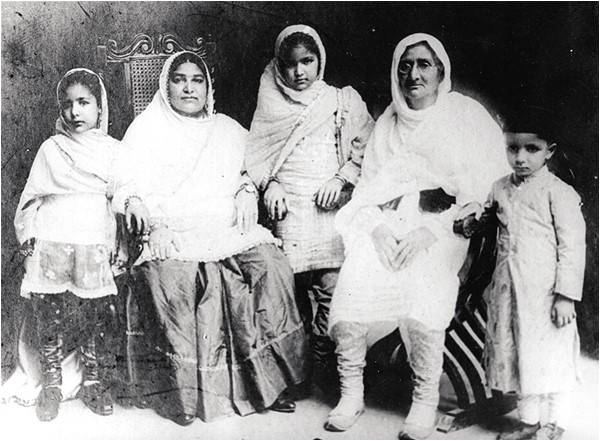
Begum Zohra Ansari, an activist of the Indian National Movement whom Mahatma Gandhi addressed as “Vasthad Bi, was born in Delhi. She was the adopted daughter of freedom fighters, Dr. Mukhtar Ahmed Ansari and Begum Shamsunnisa Ansari.

Besides playing an important role in the National Movement, her parents provided hospitality to leaders and a cadre of the Indian National Movement and scholars and people of repute in different walks of life in their residence ‘Dar-us-Salam’.  It was very spacious like a royal palace.

While Begum Shamshunnisa Ansari was busy in these responsibilities, Zohra helped her. Thus she had an opportunity to see from close-quarters leaders such as Mahatma Gandhi, Pandit Motilal Nehru, and the Ali Brothers and to serve them. Right from childhood she evinced interest in literature, history, and social sciences. She also gained proficiency in Urdu, Arabic, Persian, and Hindi.

Zohra Ansari and Mahatma Gandhi

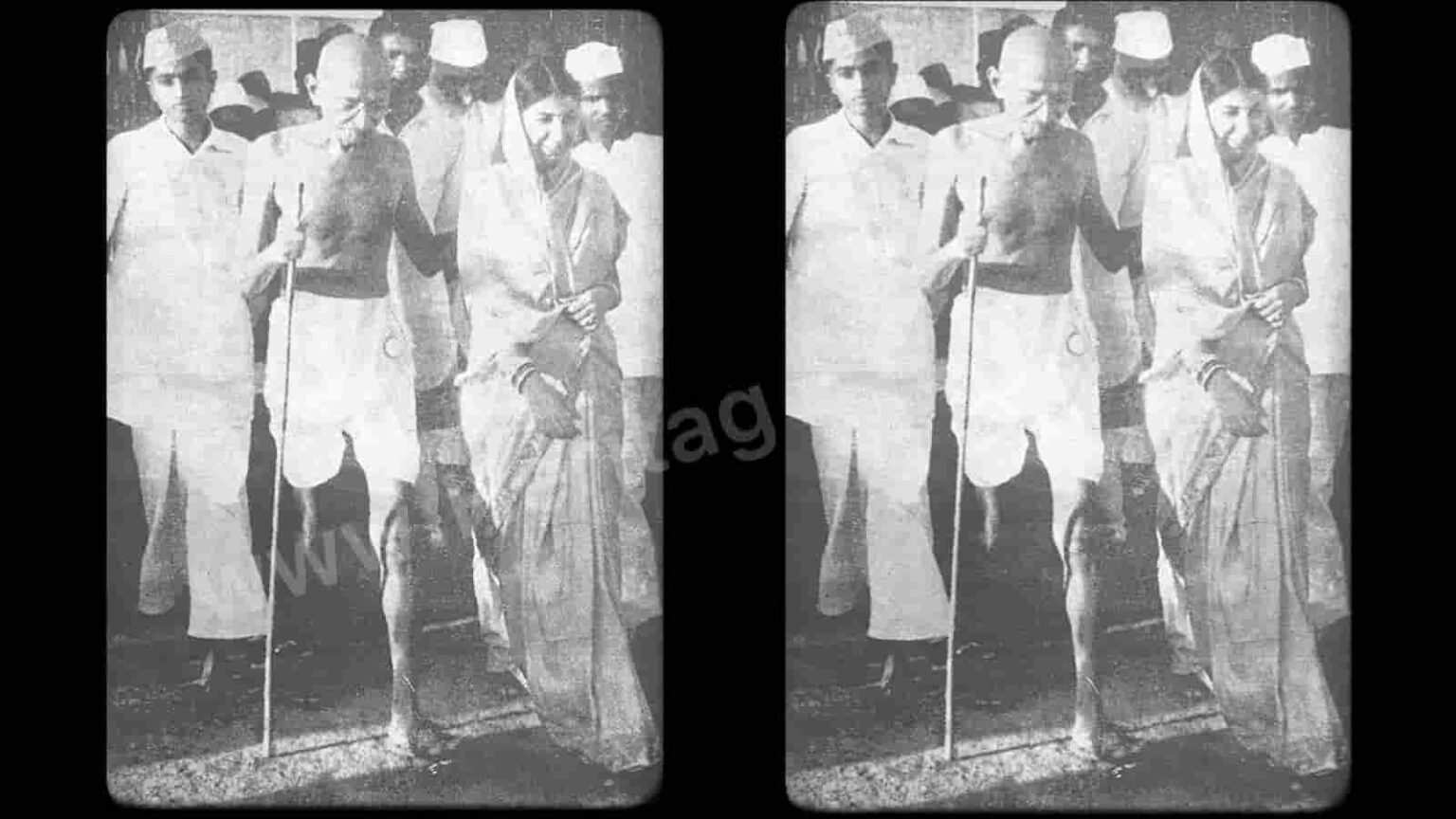
Zohra Ansari rendered her services in Wardha Ashram for a long time. Mahatma Gandhi came to know about her command over Urdu and started learning the language from her. He used to address her in his letters as ‘Vastad Bi’ and ‘Beti.

Zohra Ansari and Mahatma Gandhi used to have regular correspondence on various issues. In his letter dated 22 December 1932 to Dr Ansari, Gandhiji remarked that he used to look forward to Zohra’s letter every week. When Zohra expressed her desire to go to jail as a part of the National Movement, like her parents, Gandhiji asked her to wait and promised to allow her to go to jail.

Begum Zohra Ansari married Dr Shaukatulla Shah Ansari (1908-1972) who was her relative and leader of the Indian National Movement. Begum Zohra Ansari lost her father in 1936 and mother in 1938. She took an active part in the Freedom Struggle along with her husband. Both wife and husband opposed the partition of India.

She sold away ‘Dar-us-Salam’ to raise party funds and worked for the victory of the candidates of the Indian National Congress and for the defeat of the candidates of the Muslim League, who wanted partition. Post Independence, Begum Zohra Ansari led a simple life and passed away on 28 July 1988 in England.

source: http://www.heritagetimes.in / Heritage Times / Home / by Syed Naseer Ahamed / December 12th, 2023

Who was Nishat un Nisa Begum who discarded purdah during freedom movement

UTTAR PRADESH:

“I appeal to the youth of this country that they sit at the feet of this goddess (Nishat un Nisa Begum) to learn the lessons of independence and perseverance.” Famous Indian writer Brij Narayan Chakbast wrote this in 1918 about the freedom fighter Nishat un Nisa Begum.

People knew more about her husband Maulana Hasrat Mohani, who coined the slogan Inquilab Zindabad (Long live revolution). Historians have kept Nishat, like many other women, at the margins of historical narratives. She existed not as a protagonist but as a supporting actor in a play that had her husband as the protagonist.

This happened even though Hasrat admitted that he would have remained an apolitical editor if he had not married her. Maulana Abul Kalam Azad likened her to “a mountain of determination and patience.” Mahatma Gandhi also acknowledged a key role in the Non-Cooperation Movement. By no stretch of the imagination, she was a dependent woman and owed her existence to Hasrat.

Born in Lucknow in 1885, Nishat was home tutored, as was the custom of those times. She knew Urdu, Arabic, Persian, and English. Even before she married Hasrat in 1901 was teaching girls from backward sections of the society at her home. Marriage exposed her to the world of politics. Nishat and Hasrat were among the first Muslims in India to join Bal Gangadhar Tilak’s extremist group of Congress and open a Swadeshi shop in Aligarh. In 1903, the couple started a nationalist Urdu newspaper ‘Urdu e Mualla’. The British did not like it and jailed Hasrat in 1908. After his release, the couple resumed the newspaper. The newspaper had only two employees – Nishat and Hasrat.

Hasrat was again jailed during the First World War. Nishat, who like other Muslim women of her times, used to take a veil, came out in public to defend her husband in the court trial. She wrote letters to leaders, and articles in newspapers, and removed her veil while visiting courts. To go out of one’s house without a purdah was a courageous act.

Hasrat’s friend Pandit Kishan Parshad Kaul wrote, “She (Nishat) took this courageous step at a time when the veil was a symbol of dignity not only among Muslim women but among Hindu women as well”.

In those times Congress and other organizations used to raise public funds to help the families of jailed freedom fighters. Nishat declined to accept her share from it. Pandit Kishan Parshad recalled later that in 1917 when he once visited her in Aligarh he saw her living in abject poverty. Being a friend of Hasrat, he offered her money. Nishat told him, “I am happy with whatever I have”. She later asked him if he could help her in selling the Urdu books printed by their defunct press.

Kishan Parshad told Shiv Prasad Gupta, another prominent freedom fighter from Lucknow about Nishat’s condition. Gupta didn’t take a moment to write a cheque to purchase all the books from Nishat.

When Edwin Montagu visited India in 1917, Nishat was among the representatives of the All India Women’s Conference (AIWC) to meet him. In the meeting, she demanded that all the freedom fighters be released from jail.

Nishat had abandoned the purdah for good. In 1919, she attended the Amritsar Congress session after the Jallianwala Massacre and impressed everyone with her passionate speeches. A Muslim woman, without purdah and participating in politics at par with her husband, she was noticed as a “comrade of Hasrat.”

Nishat and Hasrat were sure that asking for concessions from the British was futile. They moved a resolution for Purna Swaraj (Complete Independence) and not a dominion status at the Ahmedabad session of Congress in 1921 as the party’s goal. Nishat spoke in support of the motion. The resolution was defeated as Mahatma Gandhi opposed the idea. Eight years later, Congress adopted the Purna Swaraj as its goal.

Hasrat was again jailed in 1922 and this time Nishat attended the Congress Session at Gaya without him. She eloquently opposed the participation of Congress members in the Legislative Councils. She said those who wanted complete independence from British rule could not dream of entering the assemblies formed by them.

According to Prof. Abida Samiuddin, Nishat’s politics did not depend on Hasrat alone. She was the first Muslim woman to address a Congress Session. Her work for the popularisation of Swadeshi, the All India Women Conference, correspondences with the nationalist leaders, articles in newspapers, public speeches, and other political activities are proof that she carried her identity in the Indian Freedom Struggle. She was active in workers’ movements till her death in 1937.   

source: http://www.awazthevoice.in / Awaz, The Voice / Home> Stories / by Saquib Salim / May 14th, 2023