Tag Archives: Indian Muslim Women

Ghazal Khan”s dedication helped disabled cricket come of age in India

Agra, UTTAR PRADESH:

Ghazal Khan with a trophy

“I dedicated my second life to specially-abled people; especially helping the wheel-chair bound cricketers make their careers. Nowadays they are the talk of the town; they are scoring runs and playing well,” Ghazal Khan, CEO of Divyang Cricket Control Board of India (DCCBI), says.

Ghazal Khan, 28, from Agra, Uttar Pradesh, is the youngest woman in the world to be involved in the promotion of wheelchair cricket. She is also the Vice Chairperson of the International Council of Wheelchair Cricket and the Secretary of International Affairs of the International Cricket Council for the Physically Challenged.

Ghazal Khan narrated an incident from her childhood that changed the course of her life,

At the age of 21, Ghazal had a close shave with death. “On 22 December 2015 when I was preparing for the examination of the second semester of the MBA my blood pressure suddenly fell. I was riding a scooter when it happened. I fainted and fell off it. I opened my eyes after 9 days in the ICU of a hospital in Agra.”
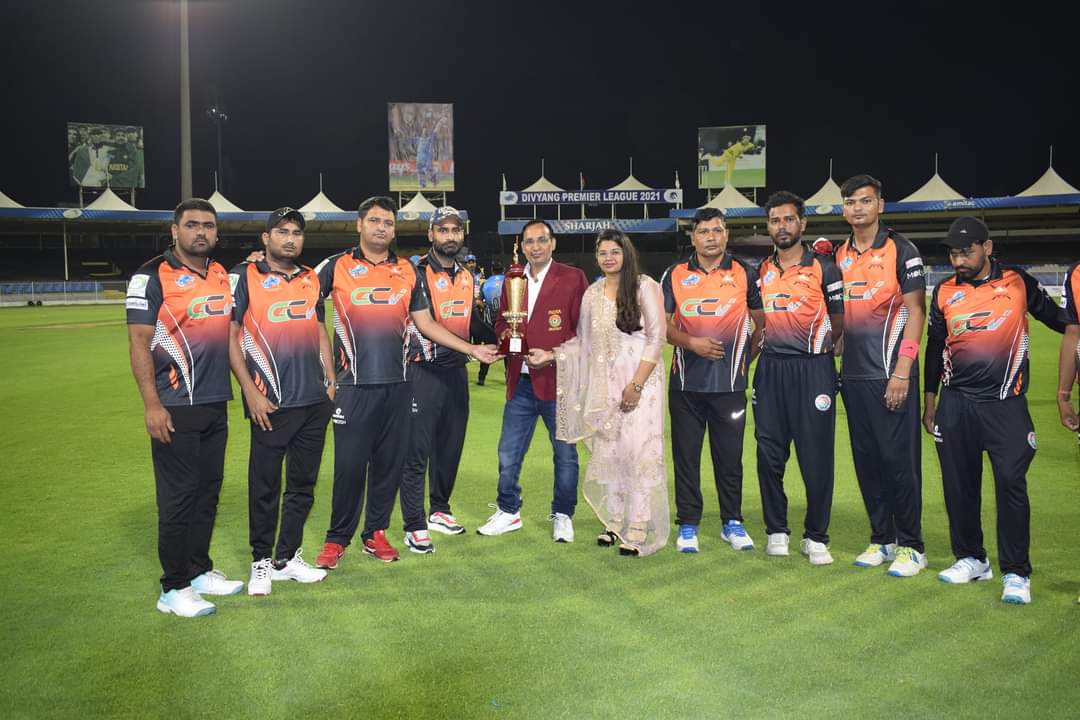
Ghazal Khan with the winning team after a tournament

Ghazal spent 20 days in the ICU. He was told that she was in critical condition and on a ventilator for 2 days. Doctors had declared her almost dead and given her only a 2% chance of survival.

“I was reborn on December 24 that year on my birthday. I had been in a coma for 9 days. My face was sewn up to close the injuries. I lost the beauty of my face. When I looked in the mirror, I couldn’t recognize myself.”

After this experience, Ghazal wondered why she survived even after doctors had given her a 2 percent chance.

“I asked myself, why did He (Allah) save me..? During this period, I received several calls from disabled cricketers from my father’s association.”

Ghazal Khan with her father Haroon Rashid (right) and another official

Ghazal’s father Haroon Rashid was a famous pacer of the Indian team. He too met with a mishap and had to give up cricket on doctors’ advice.

He founded the Divyang Cricket Control Board of India (DCCBI) to enable cricketers facing disabilities to pursue their interests. He is the general secretary of the Board and Ghazal the CEO.

Ghazal says, “I volunteered to help them during the first Asia Cup in 2015. It also helped me develop a good relationship with disabled cricketers.

“I realized that I had lost the beauty of my face, but they lost their body parts and yet they are very happy and thankful to the almighty. So, why should I be ashamed of my ugly face?

 “I realized that Allah has saved me for a reason; I decided to prepare for UPSC civil services examination and become an IFS officer.

“I was sure of cracking the examination on the first attempt. However, I day before my preliminary exam, I fought with my fiancé. Thereafter I became depressed and was diagnosed with severe clinical depression. 
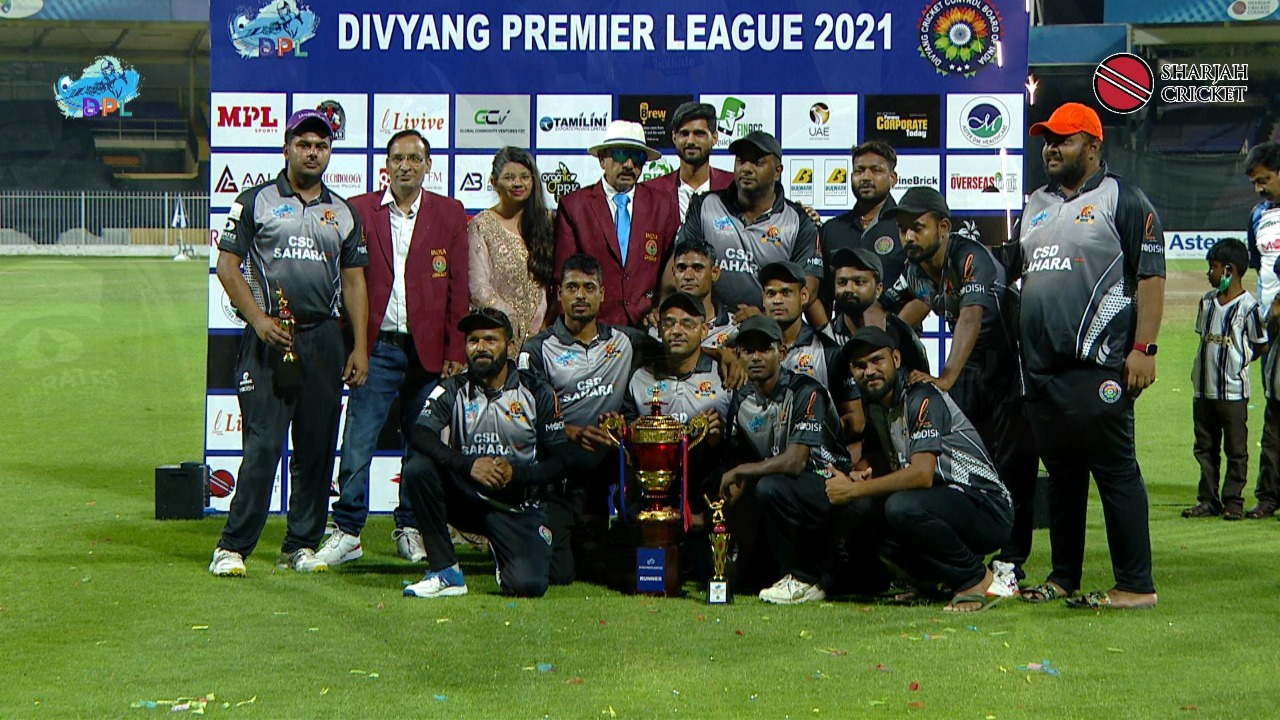
Ghazal Khan posing with officials and the winning team

“Suddenly I behaved like a child of 8-9 years’; had a loss of memory. Biologically, I was 23 but mentally I was 8 years old. I had lost all senses.

 “One day while playing with the wheelchair cricketers before the IWPL tournament, a miracle happened. I felt normal. It was a pleasant shock for my family.”

Ghazal decided to work for the disabled cricketers. “This was the moment when I realized why Allah saved me. From that day till now I have given all my time and energy to Divyangjan’s cricket.

Ghazal is also Vice President of the International Council for Wheelchair Cricket (ICWC) and is secretary, International Affairs in the International Council for the Physically Challenged Cricket (ICPCC).

Almost four years ago she launched the Divyang Premier League DPL T-20.

Ghazal says she aims to elevate disabled cricketers to the status of others. Due to her efforts, on the lines of IPL, the Divyang Premier League IPL was played between 6 teams in 2021 at the Sharjah International Cricket Stadium in Dubai.

Ghazal Khan with players

She gives the credit for her success to her father.

Ghazal Khan said she is also influenced by Prime Minister Narendra Modi. She was impressed by Modi’s remarks in o address ‘Mann Ki Baat’ on December 27, 2015, which said that physically challenged people have a divine ability and for this, they should be called Divyangjan and not disabled.

Ghazal Khan recently received the Global Excellence Award from the Samarth Seva Sansthan of Rajasthan. Last year she received the Icons of Asia Award.

Ghazal Khan told Awaz-The Voice that she is also planning to work for women’s disability cricket, improving the commentary of the game and setting up a sports business industry.

source: http://www.awazthevoice.in / Awaz, The Voice / Home> Story / by Onika Maheshwari, New Delhi / March 29th, 2023

Indian Muslim writer Andaleeb Wajid’s new book is part of a time-travel trilogy

Bengaluru, KARNATAKA:

Andaleeb Wajid is a Bangalore-based writer who attempts to authentically portray India’s Muslim diaspora through novels that focus on life, food, family and relationships.

The young Indian Muslim writer Andaleeb Wajid has published five books in almost as many years. Courtesy Andaleeb Wajid

Modestly dressed in a pretty headscarf and shalwar kameez, the Bangalore-based writer Andaleeb Wajid smiles as she talks about her short but successful writing career – she has published five books in six years, most of them featuring a Muslim setting and credibly representing the community in India.

Wajid, 36, says she has been writing since she was 10. Her first book, Kite Strings, was released in August 2009 followed by Blinkers Off (August 2011), My Brother’s Wedding (May 2013) and More Than Just Biryani (January 2014). No Time For Goodbyes, released in April this year, is her latest book and the first in the Tamanna Trilogy series, books on time travel targeted at young adults. The other two will be released in September and December this year.

How did you begin writing?

I have been writing stories since I was 10. When I was in Grade 12, I was left very confused about what I would do with my life. There weren’t many options for girls from orthodox Muslim families. Then it occurred to me to take up writing as a career. I was certain that no one would stop me.

Is there a reason why many of your books have been set in a Muslim milieu?

I’m quite amused with the way Muslims are depicted in Bollywood films and on television in India. My stories attempt to show a slice of Muslim life, which is no different from anyone else’s. I wrote More Than Just Biryani only because I strongly felt that the world has labelled us as just biryani-eaters and I wanted them to be aware of the diversity in Muslim cuisine. Kite Strings discusses the issues a young girl from an orthodox Lababin Muslim [a community from Tamil Nadu] family faces. But a large number of non-Muslim fans also reached out to me, saying how much they identified with the character, which proves that some things transcend religious boundaries.

More Than Just Biryani was ­conceived as a recipe book. What prompted you to turn it into fiction?

My brother and I had thought of writing a culinary memoir but the idea never took off because I realised early that I could never do justice to non-fiction. Instead I wrote about three women and the role food plays in their lives. Nearly every chapter of the book has a recipe, which is ­woven into the story.

Have you drawn upon your personal experiences to craft stories?

Yes. Like most writers, I started off writing about what I knew best. In Kite Strings, the protagonist Mehnaz is a rebel without a cause and ­behaves a lot like I did as a teenager. The story is set in Vellore, Tamil Nadu, where as a child I spent several holidays with my grandparents. In More Than Just Biryani, one of the protagonists loses her father. It was the most painful chapter I have ever written.

What else is in the pipeline?

I have one more young-adult novel in my kitty, about a girl whose mother has left the family. Then there’s ­another about a crochet teacher and the four women who learn this ­beautiful craft from her and end up baring their lives to her.

• Andaleeb Wajid’s books are ­available on Amazon

artslife@thenational.ae

source: http://www.thenationalnews.com / The National / Home / by Priti Salian / July 05th, 2014

Nusrat Noor: First Muslim Woman to Top Jharkhand Public Service Commission

Jamshedpur, JHARKHAND:

Nusrat Noor from Jamshedpur not only cleared the Jharkhand Public Service Commission (JPSC) examination but also secured the highest rank in the list of successful candidates

Ranchi:

Nusrat Noor has become the first Muslim woman to top the Jharkhand Public Service Commission examination 2022 securing the first rank. She not only cleared the Jharkhand Public Service Commission (JPSC) examination but also secured the highest rank in the list of successful candidates who cleared the coveted examination the result of which was declared two days ago.

Nusrat Noor, 27, applied for the examination a year ago under the medical category soon after application forms were made available on the website. She prepared for the exams with due diligence, appeared for an interview last month, performed brilliantly in the exam and eventually came out with flying colours to become the first Muslim woman to ever top the JPSC examination.


On the empowerment of Muslim women, Nusrat Noor said, “Participation and initiative are key to increasing women’s representation. It doesn’t matter what the result might be, Muslim women should come forward to get into civil services. This is how we can increase our representation and benefit our community and the nation at large.”

The Jharkhand Public Service Commission conducts the state-level civil services examinations to make recruitment for top governmental posts in various departments, including teaching, medical, and healthcare, in the state. It is also responsible to conduct written and verbal examinations to appoint candidates for these prestigious government positions.

On being asked what motivated her to go for civil services, she said, “I noticed that the representation of Muslim women in the government workforce is negligible. It’s high time Muslims got highly educated. Especially our women should be in the forefront when it comes to grabbing the opportunities that come our way from every sector.”

Born and brought up in the Jamshedpur city of Jharkhand, Noor, a mother of one is a medical practitioner with a specialisation in neurology.

After completing her primary education at Sacred Heart Convent School in Jamshedpur, she moved to Ranchi to pursue her degree in medical sciences from the Rajendra Institute of Medical Science.

She completed her degree of MBBS in the year 2020, and consequent to this, she was posted in the same medical college to practice what she refers to as a junior residentship.


During her residentship, she got married. But her marriage has not come in the way of her studies and her dedication to pursue her goals. She lives in a joint family where, she says, everyone is very supportive. Her in-laws never discouraged her from pursuing her dream and goals.

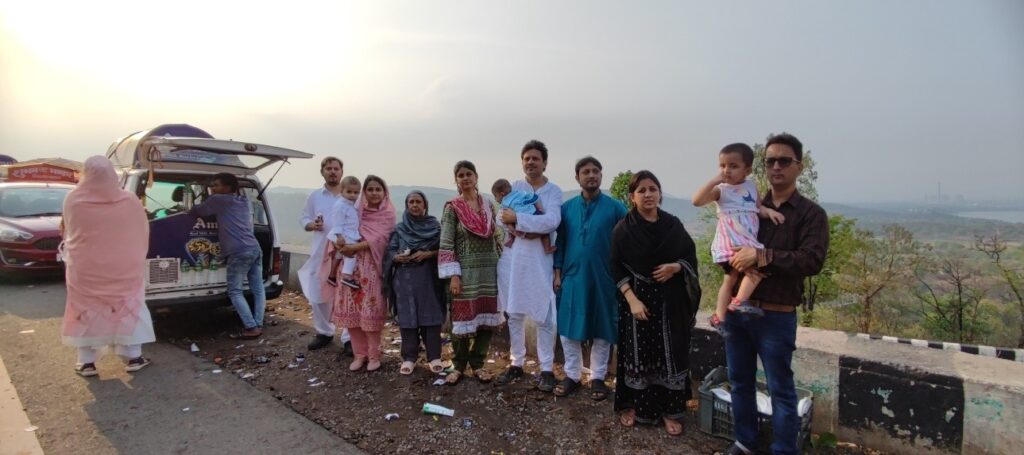
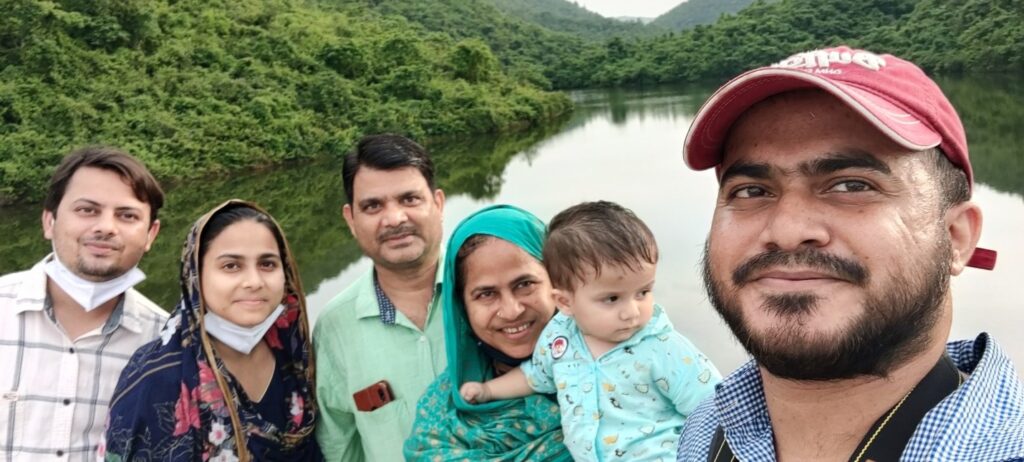
During an outing with her in-laws

She says, “My husband and in-laws are very encouraging and supportive, I am lucky in a way, but this is how it should be in every household. I would say my family is a role model for every other family which treats its daughter-in-law as someone who is no more than a person whose job it is to do all the household chores.”

She looks at her family of more than 10 members as her strength and backbone. “I have a very big family, but it never has been a setback in doing whatever I wanted to do”.

Her husband, Mohammad Umar, is also a doctor and a consultant surgeon. He has always been by her side during her entire journey.


“My husband has always motivated me; he switched roles and helped me in my household chores. He did everything possible to make me achieve my goal, from setting up the timetable for me to study to taking care of our two-year-old child,” she recounts with a sense of gratitude.

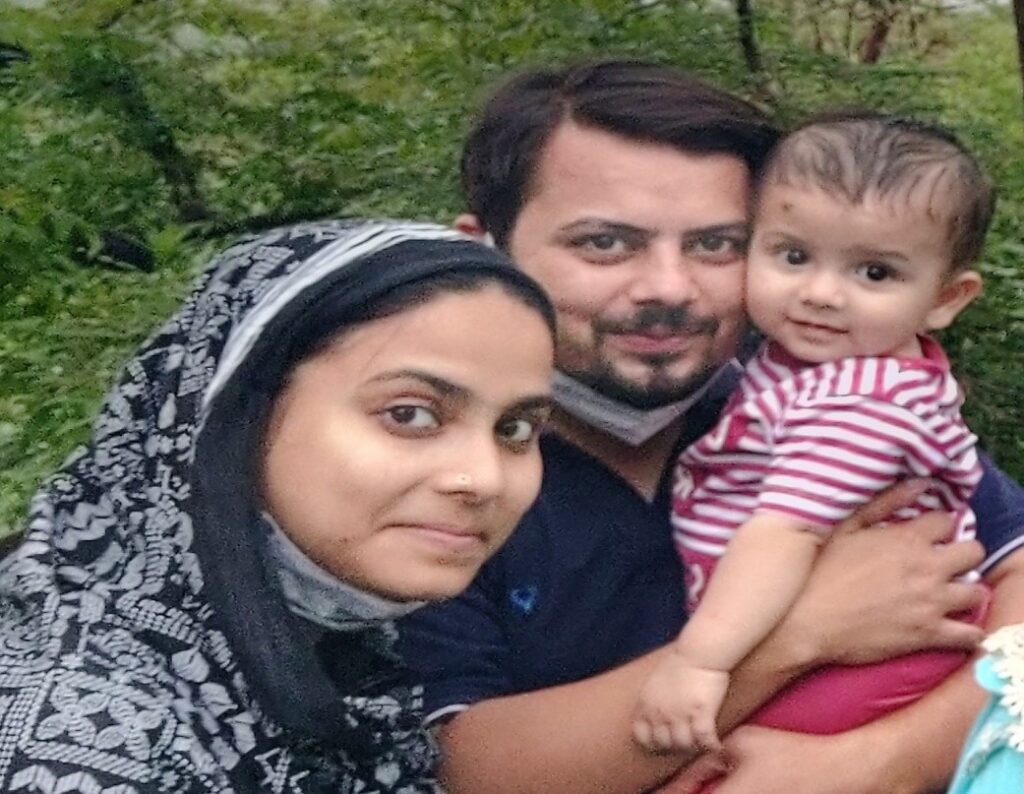
With husband Dr. Mohd Umar and son Mohd Saad

Noor’s father, Md. Noor Alam, is in a managerial post at Tata Steel, Jamshedpur while mother Seerat Fatima is a homemaker. She is the youngest in her family. The news of her becoming the first Muslim woman in the entire state to top the JPSC examination makes them proud.

Her elder brother, Mohammad Faisal Noor, is pursuing his research in industrial engineering at the National Institute of Technology, Jamshedpur.

He says, “We were quite confident about her selection, but the news of that she got the first rank was, Alhamdulillah, a pleasant surprise.”

With her elder siblings

The one thing that she will never forget about in her entire journey, right from her school days to becoming a doctor to now cracking the JPSC, is that people and society even in the 21st century don’t consider a woman’s approach to her career as a personal achievement. Society still believes that a woman’s well-being lies in her traditional role as a homemaker.

She recalled the moment she got married, she was told by a friend that getting married ‘on time is an achievement in life and she has achieved it.

She said, “Personal life can be an aspect to achieve the ‘progress’, but there is much more to it. For me, apart from my personal life, achieving goals set by myself counts as progress. Society still needs to evolve to address the needs of today’s generation. My husband’s family, which is mine too, present an example of a ‘just’ and ‘progressive’ society which looks at the woman more than someone whose responsibility is confined to looking after the household.”

Nusrat now aims to start preparing for her post-graduation while taking charge as a medical officer in one of the government hospitals as appointed by the administration. She also looks forward to encouraging and facilitating other women to take up professional and administrative positions.

Proud mother of a two-year-old Mohd Saad

“Women should participate more to come into the mainstream. I also make an appeal to families to encourage their daughters to educate themselves as much as possible, as this is the only way to make them economically independent and socially self-sufficient.”

source: http://www.clarionindia.net / Clarion India / Home / by Ghazala Ahmad, Clarion India / December 11th, 2022

Meet Ruveda Salam – a doctor and Kashmir’s first woman IPS officer

Farkin Village (Kupwara District), JAMMU & KASHMIR :

Meet Ruveda Salam - a doctor and Kashmir's first woman IPS officer

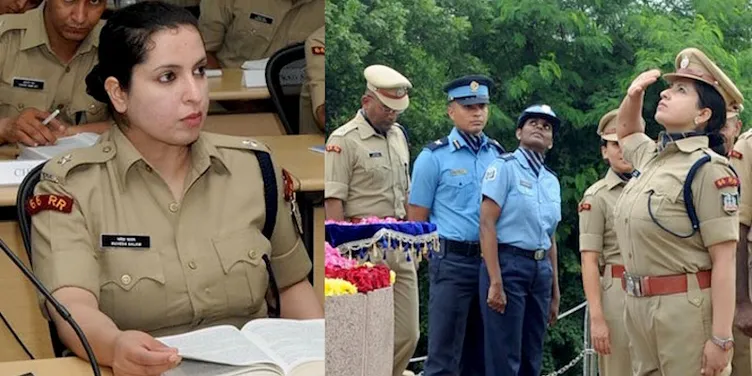
In 2015, Dr Ruveda Salam became the very first woman IPS officer from Jammu & Kashmir. When Ruveda was growing up, her father often used to say that he wanted his daughter to become an IPS (Indian Administrative Service) officer. That’s when she first thought of becoming one. It inspired her and she decided to aim for it.’

“As I have cleared the UPSC (Union Public Services Commission) exam for the second time, I will have to go for training again depending on the cadre. I think I will be posted as a sub-collector. Last year, I was selected to the Indian Police Service cadre. I went for training to Hyderabad. The training was very strenuous. Physically it was very hard. I joined the IPS cadre in Tamil Nadu and was posted as an Assistant Commissioner of Police in Chennai,” Ruveda said in a report in Rediff.com.

Before Ruveda cleared the UPSC (for the first time), she got into medical college, but even while studying medicine she used to read a lot. Ruveda found time to clear the Kashmir State Administrative Service exam. Instead of doing a post graduation in medicine, Ruveda started preparing for the UPSC.

As a young ACP, Ruveda has given motivational speeches to the youth, particularly girls. She encourages them to appear for the IPS exams in Jammu and Kashmir. Ruveda’s role is challenging. It carries a lot of responsibility. “I am in a state where people respect the police. I like it here (Tamil Nadu). When girls see me in uniform they look at me with admiration. I had conducted a workshop for girls in Hyderabad. The girls who attended said they wanted to join the IPS, but were apprehensive about whether their parents will support them,” Ruveda shared.

According to Ruveda, development will lead to peace in Jammu and Kashmir. “Peace and development go together. We should look to the future. Living outside has helped me understand the situation better,” said Ruveda.

source: http://www.yourstory.com / Your Story / Home> Inspiration / by Think Change India / May 11th, 2016

UAE: Meet the Guinness record-holding Indian father-daughter duo at Sharjah book fair

Kozhikode, KERALA / Dubai, UAE:

20-year-old Roshna created the longest cartoon strip measuring 430m, titled ‘The Billion Dollar Journey’ honouring businessman MA Yusuff Ali

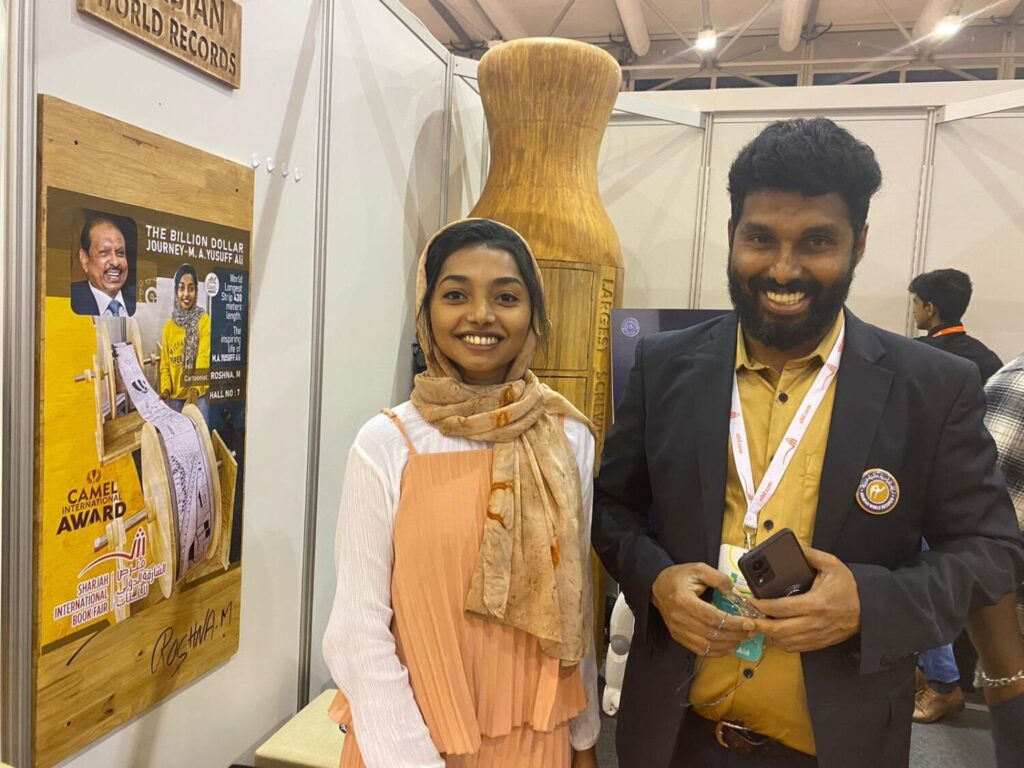
Father and daughter duo M Dileef and Roshna M. Photo: Nasreen Abdulla

The ongoing Sharjah International Book Fair (SIBF) houses two record-breaking installations — tucked away in Hall 7, the world’s largest screwdriver is displayed and right next to it is the world’s longest cartoon strip depicting the inspirational story of UAE-based businessman MA Yusuff Ali.

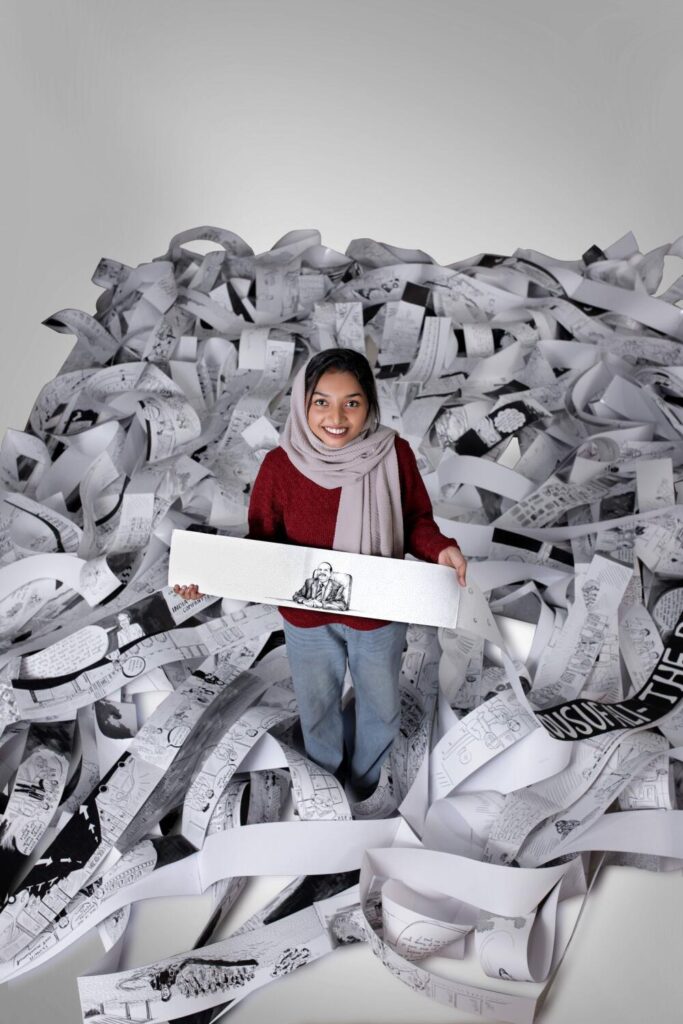
Both of these Guinness world record-holding creations have been made by Indian expat father-daughter duo M Dileef and Roshna M. “It feels great to be exhibiting here,” said 20-year-old Roshna, who broke her own record for the longest cartoon strip established in 2021 with her latest creation. Measuring 430m, the new strip titled ‘The Billion Dollar Journey’ is stretched across two wheels and can be read by rotating the hand.

On Sunday, the illustrious Indian businessman from Kerala, MA Yusuff Ali, visited the stall and commended Roshan’s efforts.

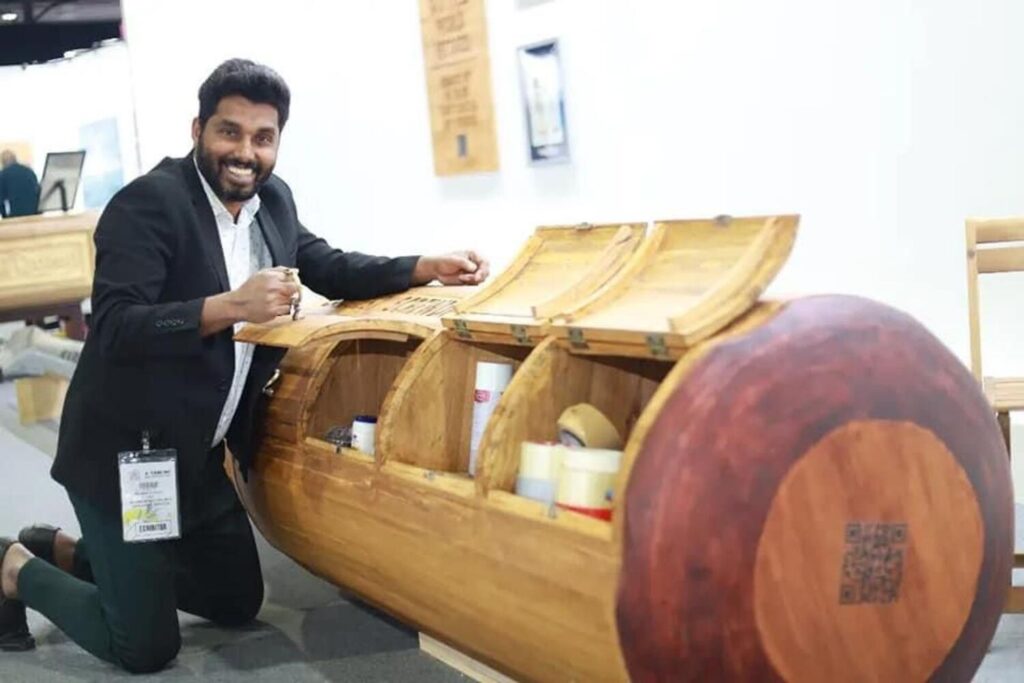
Roshna’s father, M Dileef, a seasoned record-setter, said this is his third Guinness World Record. “Due to space constraints, I could only put the head of the screwdriver on display,” he said. Completed in March, the tool measures a whooping 6.6m in length. The artist was recently granted a Golden Visa in the UAE.

The longest cartoon strip

The cartoon strip charts the journey of businessman MA Yusuff Ali, from his childhood in a village in Kerala to his meteoric rise as one of the most influential businessmen in the world.

“I have always looked up to him,” she said. “I want to be an entrepreneur; he is my role model, so I wanted to make something to honour him.”

It was in 2021 that Roshna set her first world record with a cartoon strip measuring 404 metres in collaboration with Global Village. This year, she has broken that record. According to the youngster, who recently graduated with a bachelor’s in fine arts, making this strip took her 8 months, five months of which was just for research.

“I had a team of six classmates,” she said. “We had decided that we wanted to do something to make our mark, and this is the idea we came up with. They helped me in the entire research process and aided me when drawing the cartoon strip as well.”

The graduate now dreams of pursuing a master’s degree in Europe and hopes to raise funds for her education with her artwork.

Largest screwdriver

The masterpiece by Dileef was first displayed at World Art Dubai in March of this year. “I wanted to pay tribute to the working-class population in the city,” he said. “No other country has honoured and valued the contribution of the working class like the UAE has. So many lives were transformed because of Dubai. This piece was a homage to that.”

Made out of mahagony wood and mild steel, the screwdriver was constructed in Dubai. The handle, which has a diameter of 70cm, also has storage space for knickknacks.

Dileef has earlier set two world records- one for curating the world’s longest Quran and another for the largest badminton racket.

www.dileefartgallery.com

source: http://www.khaleejtimes.com / Khaleej Times / Home> UAE / by Nasreen Abdulla / November 06th, 2022

Ramadan 2021: meet the Dubai mother who feeds 500 people every day during the holy month

Mangaluru, KARNATAKA / Dubai, UAE :

Mahnaz Faquih teams up with local charities to distribute food parcels at worker accommodation in Al Quoz.

Mahnaz Faquih has helped donate tens of thousands of iftar boxes to the needy in the past 20 years in Dubai. Chris Whiteoak / The National

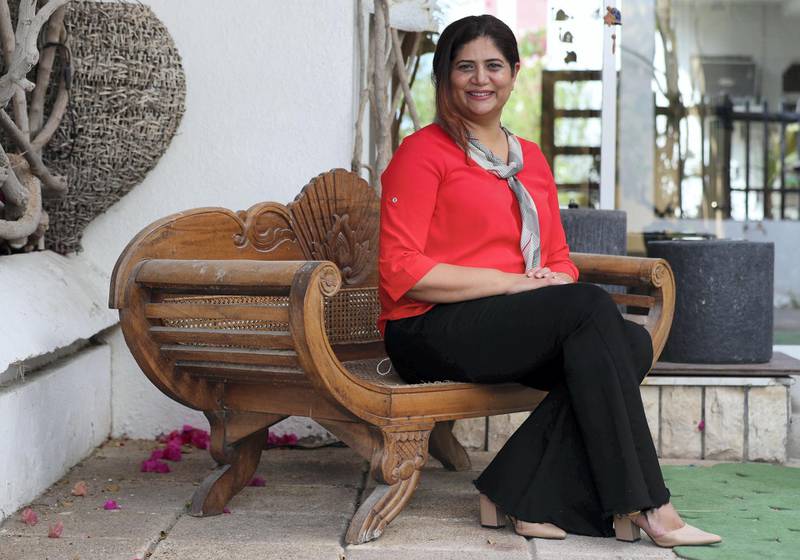
Dubai resident Mahnaz Faquih, 51, feeds 500 needy people every day during Ramadan.

She started when she moved to Dubai from India in 2002, distributing food during Ramadan to those around her, including the security guard in her building.

In 2018, thanks to the help of her friends and community members, she delivered 500 iftar boxes a day to workers and unemployed people during the holy month.

That trend has continued every year since.

This year, because of Covid-19 restrictions on sharing and distributing food, Ms Faquih joined up with local charities to distribute food parcels at worker accommodation in Al Quoz.

In 2020, she worked with Sahana, a Sri Lankan Welfare Association in the UAE, to help provide meals to those who lost their jobs during the pandemic.

“I moved to the UAE from India where I lived in a joint family of 10 people and there was a lot of Ramadan fervour,” Ms Faquih said.

“For me, Ramadan meant being involved in charity.

“My parents always encouraged me to help others and I wanted to keep that tradition alive.

“I started sending iftar boxes of fruit, laban or juice to my local mosque,” she said.

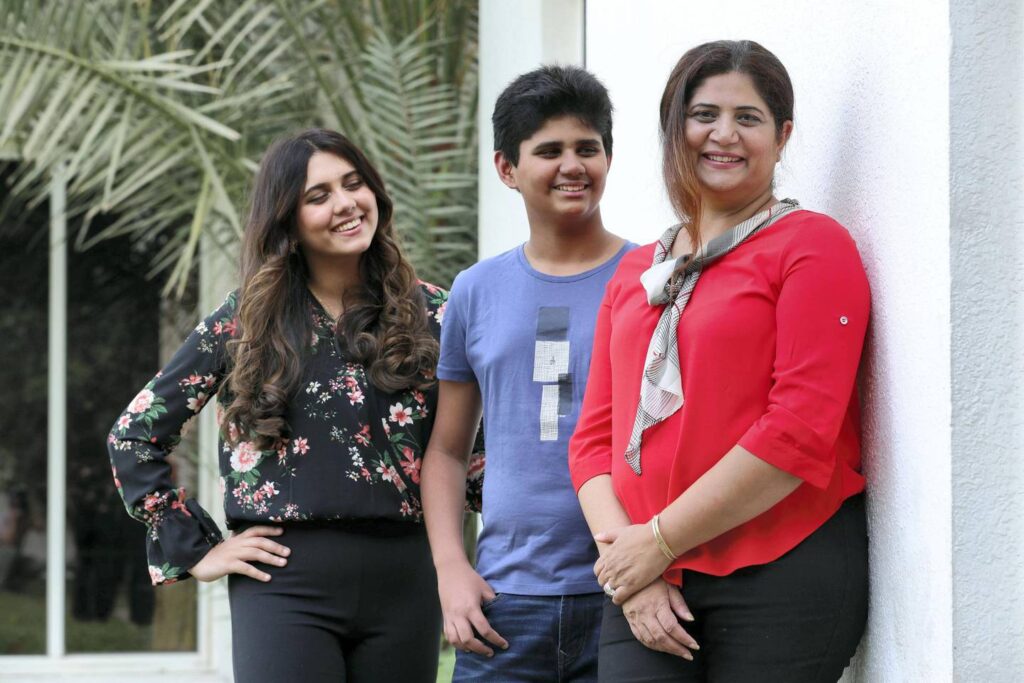
Mahnaz Faquih with her daughter Alina and son Mikhail. Chris Whiteoak / The National

Ms Faquih, an interior designer, said she ensured her children understood the importance of giving while realising their own privilege.

“The initiative has grown so big. It started with a wish to treat others to some good food or a box of biryani,” Ms Faquih said.

“Before the pandemic, I asked my children to give away the food packets so that it touched their hearts.

“I wanted them to have the consciousness that others are needy and they are privileged.

“My parents always gave away money or gifts through us, and I wanted my children to think about others.”

Her daughter, Alina Shaikh, 16, has been helping her mother since she was six and her son, Mikhail Shaikh, 12, also helps to distribute boxes.

“When we were little, we used to bring food and juices to workers every single day during Ramadan,” Alina said.

“We feel happy and grateful that we are lucky enough to help others.

“It’s such an amazing and rewarding feeling.

“It’s allowed us to understand how others live and empathise with them. It has helped us become humble and open-minded to people from different walks of life,” she said.

Mikhail also enjoyed being able to help others.

“In the past, we helped in packing the food boxes, but most of the time we handed out the iftar meals to people,” he said.

“We think that giving back is extremely important and when you have the ability to help others, why not do it?”

Ms Faquih said her friends supported her, too.

Shanu Hathiramani, an Indian from Nigeria living in Dubai, has known Ms Faquih for the past eight years and often helps her with her charitable work.

“Mahnaz is a very giving and helpful person,” Ms Hathiramani said.

“In the past, we have helped feed people during Ramadan. My son also helped out with the charity work.”

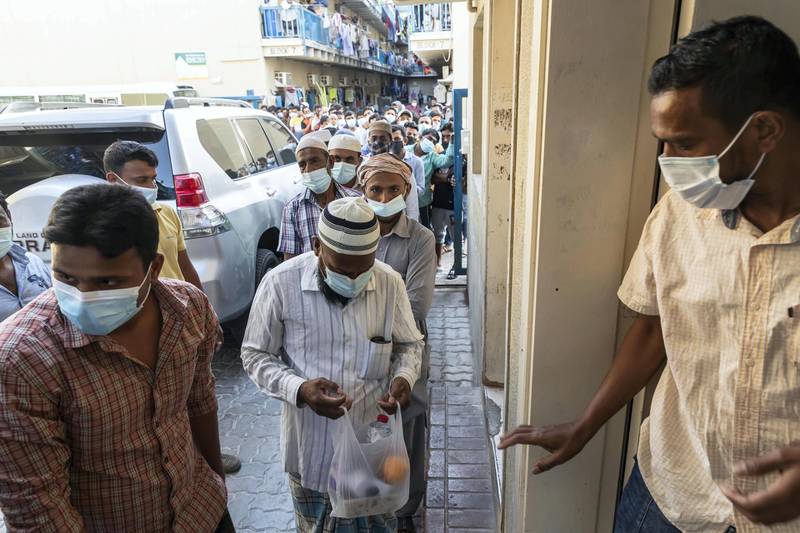
Iftar boxes being distributed at a workers’ accommodation – in picture

Sri Lankan community volunteers hand out meals for 300 people at a labour accommodation block in Sonapur, Dubai. All pictures by Antonie Robertson / The National

source: http://www.thenationalnews.com / The National / Home> UAE / by Anam Rizvi / May 07th, 2021

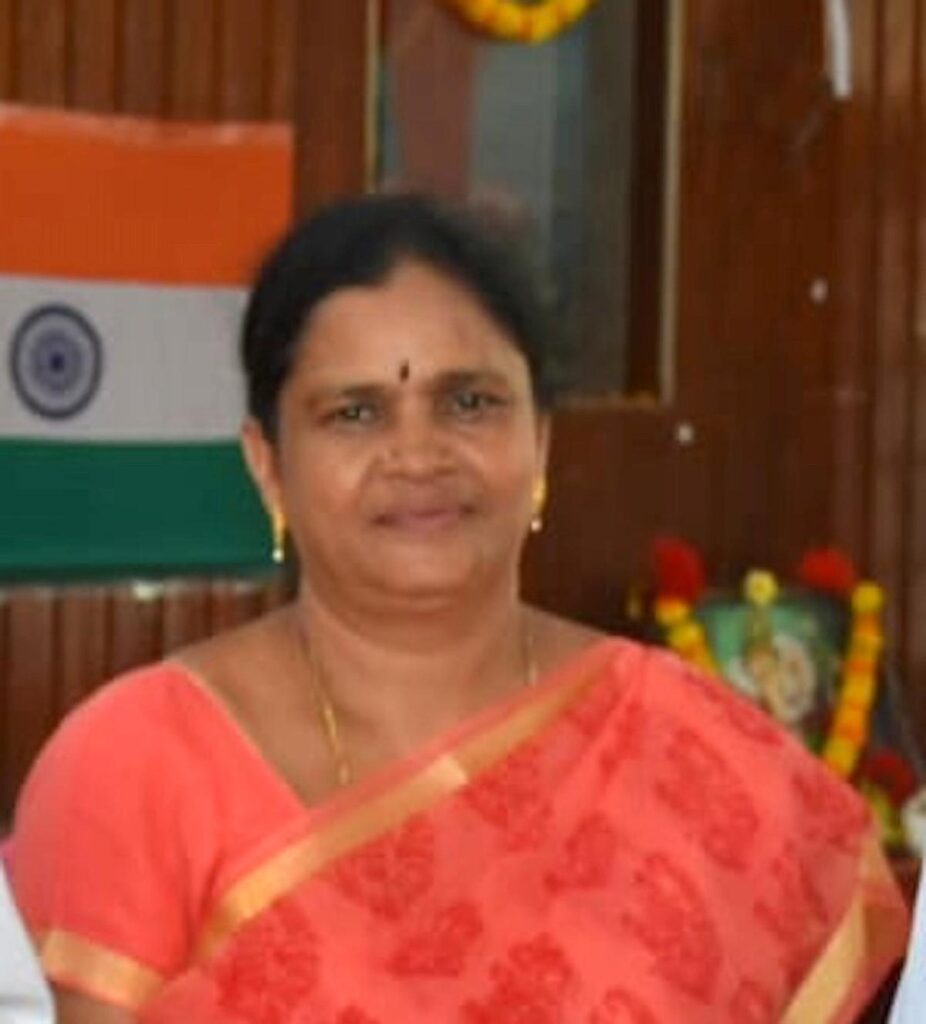
Five lecturers from Anantapur get Best Teacher awards

ANDHRA PRADESH :

Five professors and lecturers of different universities and colleges in the undivided Anantapur district and three in the undivided Kurnool district have been selected for Best Teacher Award 2022.

Five professors and lecturers of different universities and colleges in the undivided Anantapur district and three in the undivided Kurnool district have been selected by the State government to receive the ‘Best Teacher Award 2022’ out of the 24 Statewide on Teachers’ Day on September 5.

Government Arts College Anantapur Botany lecturer E. Sreedevi, who has been selected by the State government for the Best Teacher Award 2022. | Photo Credit: R.V.S. Prasad

While Government Arts College, Anantapur Botany Department in-charge lecturer E. Sreedevi got selected, others include Sri Krishnadevaraya University Rural Development and Social Sciences professor M. Muninarayanappa, JNTU Anantapur Mechanical Engineering professor M.L.S. Devakumar and V. Venugopal Reddy from the same department and T.S. Syam Prasad, lecturer in Political Science, Government College for Men, Anantapur.

In the Kurnool district, those selected for the award are K.V.R. Government College for Women, Kurnool, Urdu Department lecturer Irfana Begum, Biochemistry lecturer B. Dhanashree from the same college, and A. Vimala Rhode of Silver Jubilee Government Degree College. 

source: http://www.thehindu.com / The Hindu / Home> News> India> Andhra Pradesh / by Ramesh Surla / Anantapur-Kurnool / September 03rd, 2022

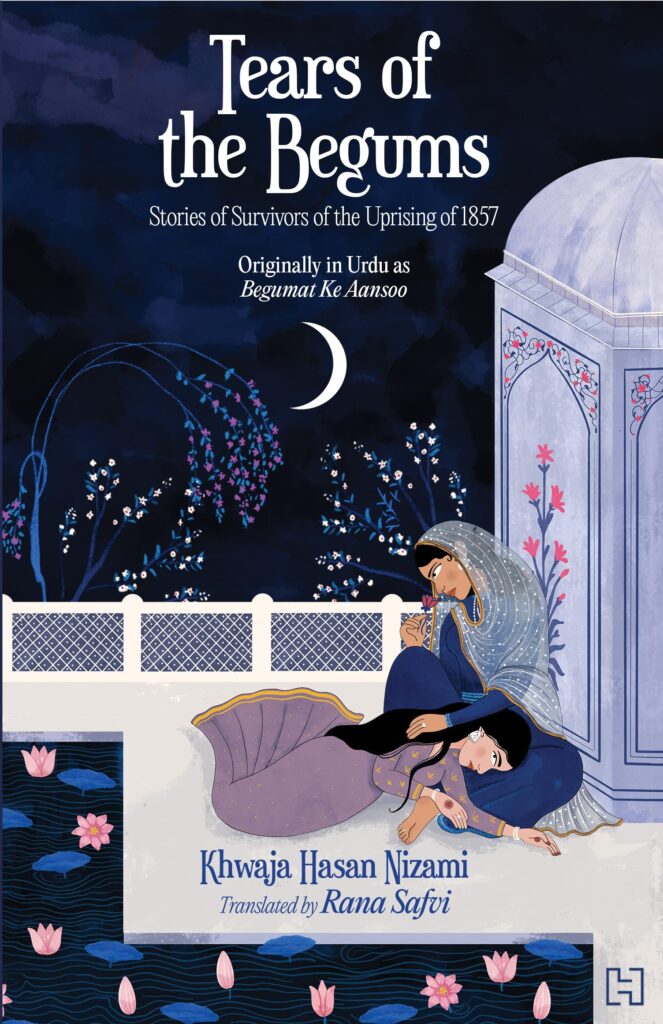
Tears of the Begums: Stories of Survivors of the Uprising of 1857 (Originally in Urdu as Begumat ke Aansoo)

INDIA :

New Book , First ever English translation of Nizami’s invaluable Urdu book Begumat ke Aansoo 

pix: amazon.in

Apart from the fifteen years that Sher Shah Suri snatched upon defeating Humayun, the flag of the grand Mughal Empire flew over Delhi undefeated for over 300 years.

But then, 1857 arrived and the mighty sword fell helpless in the face of a mightier British force.

After the fall of Delhi and Emperor Bahadur Shah Zafar’s tragic departure from the Red Fort in 1857, members of the royal Mughal court had to flee to safer places. Driven out from their palaces and palanquins onto the streets in search of food and shelter, the dethroned royals scrambled to survive. Some bore their fate with a bitter pride, others succumbed to the adversity.

Through twenty-nine accounts of the survivors of the Uprising of 1857, Khwaja Hasan Nizami documents the devastating tale of the erstwhile glorious royalty’s struggle with the hardships thrust upon them by a ruthless new enemy.

In vivid and tragic stories drawn from the recollection of true events, Nizami paints a picture of a crumbling historical era and another charging forward to take its place.

With the reminiscence of past glory contrasted against the drudgery of everyday survival, Tears of the Begums – the first ever English translation of Nizami’s invaluable Urdu book Begumat ke Aansoo – chronicles the turning of the wheel of fortune in the aftermath of India’s first war of independence.

source: http://www.amazon.in / Amazon / Home> Books> History> World / as on August 06th, 2022

25-year-old PIO is UK’s youngest civic mayor

Valsad, GUJARAT / London, U.K :

banner img
Humaira Garasia, whose family roots are in Valsad, was .elected speaker of London borough of Hackney in May

Surat :

Rishi Sunak might be in news for being the frontrunner for the post of Prime Minister of the UK and he will create history if he is elected for the post of the country that once ruled India.

But Indian origin Humaira Garasia (25) has already created a history by becoming the youngest-ever speaker of council in London Borough of Hackney.

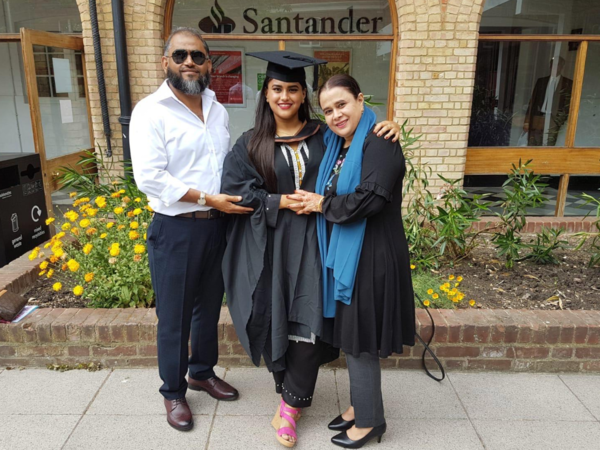
Garasia’s family is originally from Valsad and her father had migrated to the UK at a young age. Garasia was determined to enter active politics when she was 15 and wanted to represent the marginalised population.

Untitled design - 2022-07-23T090744.002

She identifies herself as a Gujarati of Indian origin. She studied BA politics from the University of London. Her father Rafik Ahmed, a warehouse worker, is from Nana Taiwad in Valsad while her mother Najma, a housewife, is from Bharuch.

“I am the youngest-ever speaker/civic mayor of Indian origin in the whole of the UK and the youngest speaker to have ever been elected for the London Borough of Hackney,” says Garasia.

Untitled design - 2022-07-23T091008.368

“I was elected at the age of 21 as a councillor in 2018 and completed a four-year term. I was the youngest person of Indian origin to be elected as a councillor then. I was successfully re-elected as a councillor in May 2022,” she added.

She said: “I will be working with leaders, residents and communities from across the borough to address issues of inequalities, while also helping to tackle long-term issues such as racism and discrimination. I will focus on providing support to the most vulnerable members of society and helping young people to feel both empowered and safe.”

Untitled design - 2022-07-23T091115.687

Born and brought up in London, Garasia’s parents migrated around 35 years ago. Garasia visits Valsad every year with her family.

source: http://www.timesofindia.com / The Times of India / Home> News> City News / by Yagnesh Bharat Mehta / July 23rd, 2022

Shahnawaz Pathan becomes first Muslim woman judge of Pune

Pune, MAHARASHTRA :

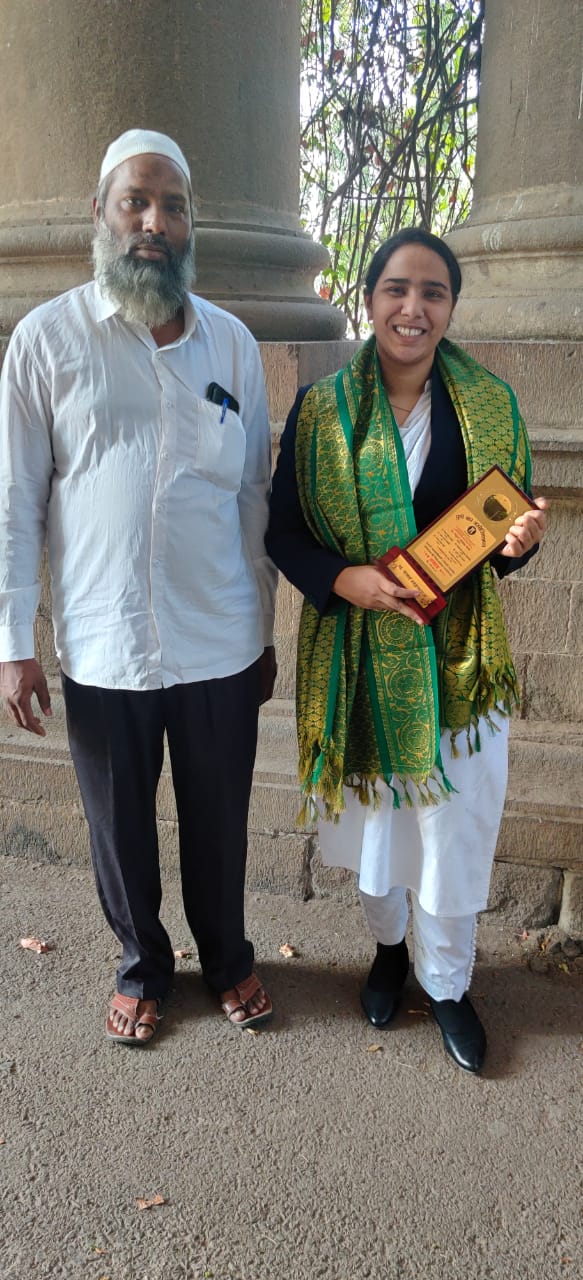
Shahnawaz Khan Pathan with her parents and brother

Come August and Shahnawaz Khan Pathan of Pune would join the training course for the First Class Judge. Her’s is an incredible journey from living with her family in a ten-by-ten space in Ghorpadi Pait Lohia Nagar slum settlement where she grew up and studied. 

Shahnawaz Khan’s story proves that success is not achieved in a day and only one who has the determination to make it will succeed. Shahnawaz Khan Pathan is the third sibling among her four sisters and one brother. Their father Aman Khan Pathan manages the family with his earnings from a small grocery shop.

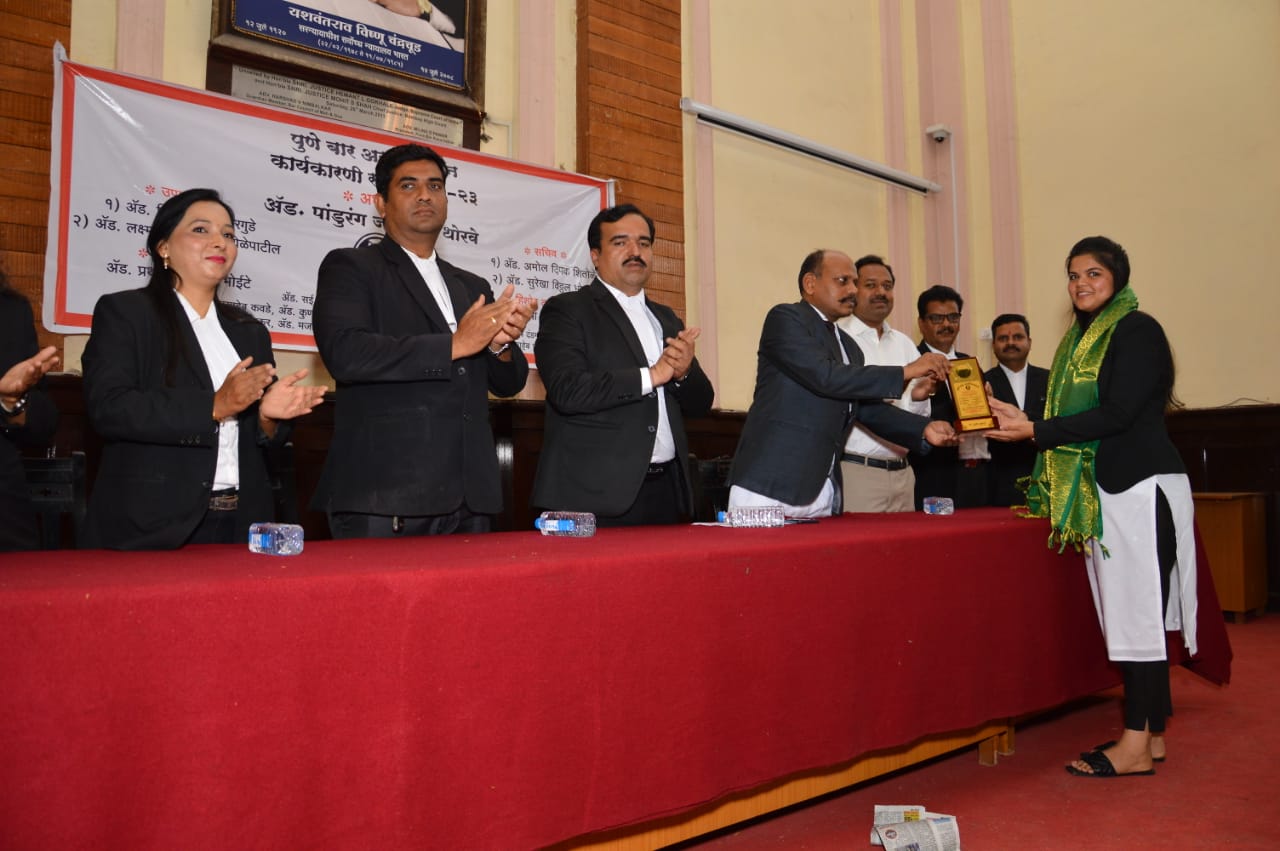
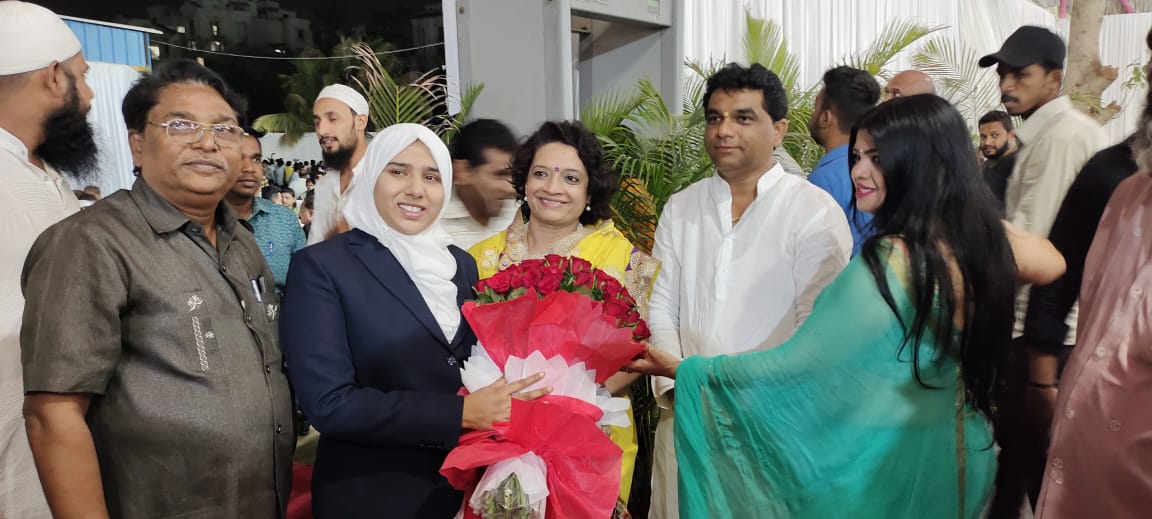
Shahnawaz Khan Pathan being felicitated by the Pune Bar after her selection as Judge

Despite Aman Khan’s low income,  he tried his best to provide proper education to his children as a result all his children are educated.

Shahnawaz Khan Pathan’s success has her father happy and proud. Aman Khan Pathan says that due to the poor financial condition of his family, he was not able to study. Sumaiya not only made his dream come true and also made him a proud father who can tell the world that he is the father of Shahnawaz Khan Pathan. 

Speaking with Awaz-the Voice, Aman Khan Pathan became emotional and said: “I am proud of Shahnawaz.” 

Her mother  Sugrabi Pathan wipes her tears of joy and says that her daughter was always very good in her studies from the very beginning. “We had high hopes from her and see she did it. I always pray for her success and success.”

Shahnawaz Khan with her Uncle Jia Khan Pathan

The family has lived all through in a small hut in the narrow streets of Lohia Nagar. There is hardly an environment conducive to studies.

However,  Shahnawaz Khan Pathan worked hard and made history by becoming the first Muslim first-class judge of Pune. 

Shahnawaz says that mere imagination does not lead to success. One needs to work hard to fulfill one’s dreams and achieve success. 

On her family’s support, Shahnawaz says that her father was always there to guide her. “Even with his meager income, he made every effort to provide for me whenever I needed something.” 

However, Shahnawaz has another hero in her life: her uncle Jia Khan Pathan, and his wife – whom she credits with encouraging her and filling her with hope and enthusiasm to keep moving.

Shahnawaz being felicitated by a civil society organisation in Pune

“From the first day till the JFMC interview, Uncleji was with me like my shadow. Whenever I had to go outside the city for writing an examination, my uncle and aunty would accompany me. He never left me alone. My mother and my entire family, friends, and neighbors all kept encouraging me.” 

However, her failure to clear the Public service Commission conducted Maharashtra Judicial Services Examination in her first attempt in 2019  caused her disappointment. “At that time my father encouraged me and told me to try it again. I tried with renewed vigor and confidence and this time my name figured in the list of results declared in 2020,” she says.

 Shahnawaz has studied at Maharishi Annasaheb Shinde, Zilla Parishad School. Today, when she is all set to become the first Muslim judge of Pune, Shahnawaz says she believes that “education is not preparation for life but education is life.” 

She says she was always determined to not let the circumstances of her life become a hindrance in her path. It was only some time back that her family shifted to their new house in the Kondhwa area. 

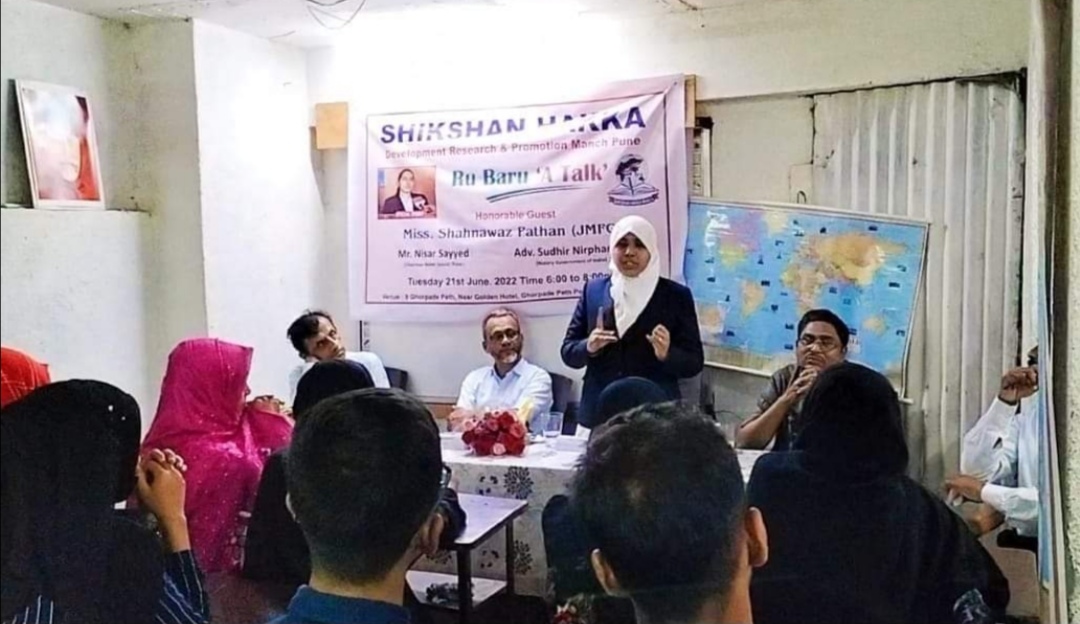
Shahnawaz Khan Pathan speaking at a function

Shahnawaz was a practicing lawyer before becoming a civil judge-cum-judicial magistrate first class (JFMC). She married software developer Sunny Sayyed before on May 25 before the JFMC results were out. She lives with her husband in the Urudi Kanchan area of Pune. 

As a legal professional Shahnawaz says that awareness campaigns should be launched to make common people aware of the legal options and legal aspects of life. Legal camps and street plays can be very helpful in this direction. She says that lack of proper information aggravates many problems.

Shahnawaz believes that a common citizen can become a force multiplier in the progress of the country by staying within the purview of the law for redressal of his grievances.

source: http://www.awazthevoice.in / Awaz, The Voice / Home> India / by Shahtaj Khan, Pune / July 14th, 2022