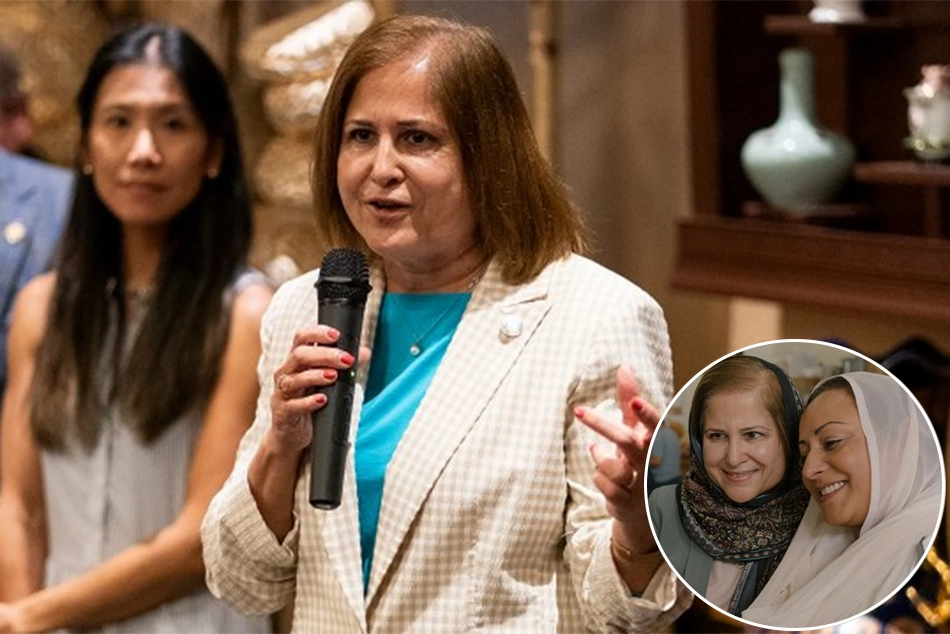
Indian-American Ghazala Hashmi, who is closely linked with the prestigious Aligarh Muslim University (AMU), has won the Virginia Lieutenant Governor 2025 Election result of which was declared on Monday.
Virginia:
Indian-American Ghazala Hashmi, who is closely linked with the prestigious Aligarh Muslim University (AMU), has won the Virginia Lieutenant Governor 2025 Election result of which was declared on Monday.
A Democrat Party candidate, Ghazala Hashmi, defeated Republican candidate and the state’s first gay statewide nominee, John Reid, to become first Muslim and first South Asian American elected as Lieutenant Governor of Virginia, a Republican stronghold.
Ghazala Hashmi polled over 55% votes as against her nearest rival John Reid who got the support of around 44.7% voters. Hashmi had earlier defeated five primary challengers in June, narrowly winning the nomination with 28% of the vote, as per the final result of the Virginia Lieutenant Governor Election 2025.
Ghazala Hashmi was the first Muslim woman to be elected to the Virginia State Senate following her stunning victory over sitting Republican Senator Republican Glen Sturtevant in the 2019 U.S. elections.
Ghazala Hashmi was born in India and emigrated to the US as a child with her family. She is also a former director of the Center for Excellence in Teaching & Learning at Reynolds Community College.
Ghazala Hashmi’s AMU Link
Ghazala Hashmi was born to Zia Hashmi and Tanveer Hashmi in Hyderabad in 1964. She spent her childhood days at her maternal grandparents’ house in Malakpet, Telangana.
She migrated to the United States with her mother and older brother as a 4-year-old child to join her father in Georgia.
Ghazala Hashmi’s mother, Tanveer Hashmi, is an alumna of Osmania University’s Women’s College in Kothi from where she did BA and B.Ed before migrating to the United States.
Ghazala’s father Professor Zia Hashmi is the alumnus of Aligarh Muslim University (AMU) from where he did MA and LLB. He completed his PhD in International Relations from University of South Carolina and soon after began his university teaching career. He retired as the Director of Centre for International Studies which he founded.
Ghazala Hashmi is married to Azhar Rafiq. The couple have two adult daughters – Yasmin and Noor – who both graduated from Chesterfield County Public Schools and the University of Virginia.
According to information available on her official website, Ghazala Hashmi is an experienced educator and an advocate of inclusive values and social justice. Her legislative priorities focus on public education, voting rights and the preservation of democracy, reproductive freedom, gun violence prevention, environmental protection, housing, and affordable healthcare access.
Hashmi spent nearly 30 years as a professor, first teaching at the University of Richmond and then at Reynolds Community College. At Reynolds Community College, Hashmi also served as the Founding Director of the Center for Excellence in Teaching and Learning (CETL).
Former Minister, MLA and BRS leader KT Ramarao has congratulated Ghazala Hashmi on her victory.
“This is massive! From Malakpet to Virginia… Congratulations to Ghazala Hashmi on becoming the first Indian-American Lieutenant Governor of Virginia. There is nothing more beautiful when democracies celebrate diversity of the world”. KTR wrote on X.
source: http://www.ummid.com / Ummid.com / Home> United States / by ummid.com news network / November 05th, 2025
What sets Zeenath Sajida’s creative repertoire apart is its reach, stretching well beyond the domestic concerns and romantic themes one might stereotypically associate with a female writer in mid-twentieth-century Hyderabad.
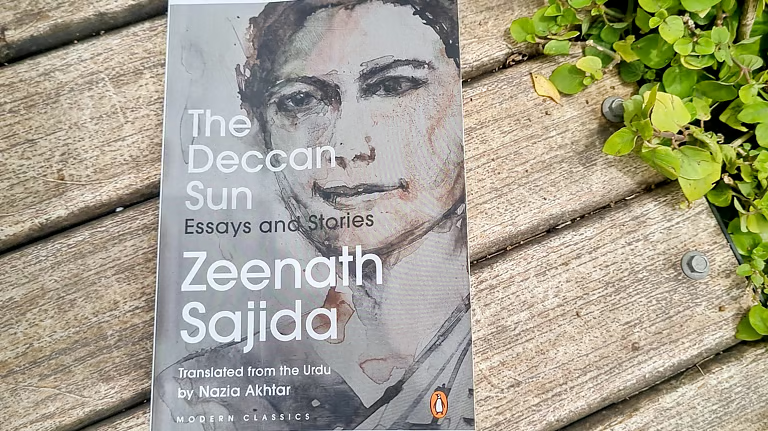
Image of Zeenath Sajida’s book, translated by Nazia Akhtar
Can humorous essays and fictional stories by a single writer paint a holistically authentic portrait of the Deccan? Particularly when filtered through an urban, middle-class, academic lens?
And what happens when that prose is resurrected for an English-reading audience? Translation demands fluency across traditions, sensitivity to historical currents, and an intuitive grasp of possibilities.
The Deccan Sun, a selection of Zeenath Sajida’s Urdu writings, represents exactly this kind of sustained care. Translated and curated by Professor Nazia Akhtar, this collection brings together nine satirical essays and five short stories that offer bundles of pleasure and provocation.
Hyderabad’s Zeenath apa
A prolific Urdu Professor at Osmania University and a literary icon shaped by the leftist wave that turned many youngsters of princely Hyderabad toward rebellion, the mere mention of Zeenath Sajida still evokes a smile among a fading generation of the city’s progressives.
She produced works of considerable intellectual ambition, including A History of Telugu Literature, written in 1960.
But what sets her creative repertoire apart is its reach, stretching well beyond the domestic concerns and romantic themes one might stereotypically associate with a female writer in mid-twentieth-century Hyderabad. Her questions span the practical and the metaphysical: from work-life balance to memory and ageing. This breadth, alongside her engagement with gender, establishes Sajida as a crystallising force within Deccan literature.
Sadly, Sajida’s writings have suffered critical neglect.
Until now, only a single essay of hers had found life in English—thanks to Nazia Akhtar’s earlier offering, Bibi’s Room. The book also contained tantalising glimpses of Sajida’s inimitable biographical sketch of Makhdoom Mohiuddin, the celebrated poet she exalts and irreverently mocks, even branding him a lapoot (scoundrel). Originally delivered at a gathering in Hyderabad’s Urdu Hall, the event was jokingly dubbed Jashn-e-Makhdoom: part tribute, part roast of a comrade. The sketch hinted at the easy cosmopolitanism that once threaded through the city’s cultural circles.
But those were just glimpses.
The Deccan Sun finally delivers, showcasing Sajida’s full creative range. More importantly, the collection corrects reductive narratives that have long confined Hyderabadi women’s stories to tales of exploitation. It provides crucial cultural clues and gives interior lives the breathing space that more documentary modes often flatten or omit altogether.
Ox at an oil press
Sajida’s central tension seems to revolve around competing hungers: the quiet solitude for reading and writing versus the public acknowledgement of her labour. This struggle animates the essay I Got Myself a Job, where she likens the drudgery of a stagnant workplace to “an ox circling in an oilpress”, grimly awaiting holidays that arrive only upon the death of eminent people. This rage at invisibility, whether in households or intellectual circles, surfaces through observations about poets jealous of Makhdoom’s fame. It’s a pain that resonates universally, yet cuts especially deep for women navigating careers within constrictive social structures.
The satirical method at play follows a deceptively simple pattern. First, open with bland, widely held assertions and then excavate them through unflinching personal experience until readers question her true position. Is she earnest or sarcastic? In If I Were a Man, the writer begins by wondering how delightful male privilege might be. Then she chips away at heroic masculinity, and in the process, exposes revolutionaries for what they truly are.
And that is aimless poseurs marching under the banner of self-respect. The game becomes clear: there’s zero intention of being a man. Her worldview remains stubbornly intact and cheerful as ever.
No one is spared in the collection’s funniest piece, From Storeroom to Museum, be it a famous king, his moustache, historians who invent their own history, or doctors “in whose name graveyards thrive”.
Even the qazis and the rigid interpretations of Islamic law they uphold come under fire. Writing as a Muslim woman in post-Razakar Hyderabad, when her community faced suspicion and strain, turning satire inward and choosing stark honesty over protective silence was no small risk.
Naturally, such wit and honesty carry complications well beyond fatwas.
In Building a House, Sajida wryly catches herself making classist remarks—about servants using her soap when she’s away or taking advantage of her generosity. She knows their innocence is something she ought to celebrate. Still, resisting those barbs proves difficult because their exploitation stings!
Though the translator suggests a self-deprecating tone, the humour feels more defiant than apologetic. Comparing stories with essays reveals Sajida’s evolution. The stories, chosen from Jal Tarang (published in 1947 when she was just 24!), infantilise the titular characters’ desires without retribution, while the essays own those same longings with fierce pride. They embrace her job, gender, and sartorial choices, laughing in the face of absurdity.
My Hens embodies this mature confidence with perfect clarity. Against family objections, the narrator acquires chickens and endures subsequent chaos. These birds become emblems of unruly desire, pushing back against blanket resistance.
She recoils in disgust when some are slaughtered. Nonetheless, the ending is satisfying as she’s already anticipating her next trip to the market. Nothing deters her from wanting. The searing rage and humour intertwine to yield a stance that is utterly assured.
Chasing fireflies
The short stories reveal a younger Sajida, one who is still finding her artistic footing. Where the essays crackle with precision, the stories sometimes drown in ornamental excess, mirroring preoccupations of mid-1900s Urdu readers. The translator’s admission about reducing repetitions confirms the original’s verbosity. Even so, young Sajida possessed remarkable instincts for imagery. In The Stranger, memories become “moments flitting like fireflies on a dark night” before melodrama takes over, chasing those fireflies to a dead end.
Formally, Bibi stands apart, approaching the analytical brilliance of Chekhov’s The Darling—both protagonists transform recurring domestic episodes. Here, Sajida demonstrates her architectural sense, building tension through careful structural pacing. Each section shifts the emotional register while maintaining the same configuration. What begins as amorous banter gradually sours into genuine bitterness, yet paradoxically, the acts of care deepen. The story rewards multiple readings, revealing omissions and callbacks that initially escape one’s notice.
Does loneliness lick or feed on us?
Translations inevitably create friction. Most readers prize smooth prose that overlooks the translator’s labour, but Nazia’s occasional bumps through deliberate references (Hatim Tai, Alif Laila) gently remind us that we are entering a world rooted in another language.
The friction becomes sharper when comparing languages head-on. Professor Shagufta Shaheen’s lively Urdu reading of the story What Time Is It? shows how even a thoughtful rendering of a dramatic line—“loneliness feeds on them like termites”—dilutes its original menace: “tanhai unhe deemak ki tarah chaat rahi hai”. Though it lands smoothly, feed can’t quite match the threat of that slow, intimate licking (chaat). Likewise, scoundrel misses the mischievous warmth of the Dakhni lapoot. English’s imperfect lens will always create such distortions. Yet receiving anything from the previously inaccessible feels miraculous.
The translator didn’t just convert Urdu into English; she collated specific pieces from Sajida’s larger corpus, provided context, secured publication, and built literary networks across years, believing in its relevance. Such cultural stewardship enables conversations that couldn’t have existed otherwise.
Nazia amplifies the Deccan sun’s raging flame like oil feeding a lamp, letting us moths finally gather around it in ecstatic circles.
Surya Bulusu, a Researcher and Software Engineer at Avanti Fellows, is working on open-source tech for government school systems. He lives in Mumbai, but has spent several years in Hyderabad. His write-ups can be accessed on his blog.
Views expressed are the author’s own.
source: http://www.thenewsminute.com / The News Minute / Home> Telangana / by Surya Bulusu / July 18th, 2025
Amirbai Karnataki is one of the earliest Kannada singer-actress who made it big in Hindi cinema. She went to Bombay when women artistes were labelled ‘fallen’, but with grit and passion Amirbai became a star and sang 380 songs in 150 Kannada and Hindi films.
Amirbai’s tale is one of inspiration
For someone who didn’t belong to the gramophone generation but the golden period of radio, Lata Mangeshkar, Asha Bhonsle, Mukesh, and Rafi ruled our hearts and constituted our imagination of a film song. The same AIR, during a light music programme, had played “Ninnane Neneyuta Ratriya Kalede”. This, was a carbon copy of Lata’s memorable “Saari Saari Raat Teri Yaad Sataye”, but the voice was starkly different. It had a heavy nasal tone, and the flawless rendition had a simplicity to it. The charming song left an indelible mark and I felt I had to recover her voice from pages that were unknown to me.
Amirbai Karnataki was an unheard voice for the Seventies: she was long gone, and had faded into the archives of black and white era of early films. She was someone who lived on in personal memories of people who had known and heard her.
Amirbai Karnataki (1912-65), who sang 380 songs in 150 films, was an early singer and actress of Hindi cinema. This singer who sang the unforgettable “Main to pavan chali hoon bole papiha” and “Bairan Nindiya Kyon Nahi Aaye”, was born in Bijapur in Karnataka. During the 1930s Amirbai was a prominent name along with stars like Suraiyya, Shamshad Begum, Noor Jahan and Zohrabai Ambalewali.
When Lata Mangeshkar came on to the scene, many of these singers moved into the background and for the later generations they remained unknown.
Born into a family of artistes, Amirbai’s parents Ameenabi and Husensaab worked for a theatre company and even ran one for many years. Growing up years for Amirbai and her five siblings was filled with music and theatre, what with many of her uncles and aunts being top musicians and actors in theatre. She lost her father early and her uncle, Hatel Saheb took care of all the children.
During those years, Bijapur was part of Mumbai Presidency and the sangeet natak tradition in these parts was flourishing. The famous Balagandharva’s company and several other theatre companies camped at Bijapur; Amirbai and her sister Goharbai, trained as they were in classical music, impressed these companies with their singing and they began to not only sing for several of them, but also act.
As Rahmat Tarikere writes in his biography of Amirbai Karnataki, Amirbai moved from Bijapur to Mumbai, from theatre to films. But the exact date and nature of these movements and transitions are hard to tell. The story of Amirbai is a sum total of several happenings in a historical period as there are few definitive documents to lead us to any accurate picture. Painstakingly put together by the biographer, Tarikere says that when Amirbai reached Mumbai (it was perhaps the year of Alam Ara’s release, 1931), women who worked in films, theatre and music were still seen as “fallen”.
Women artistes were often ridiculed as “free women” and among the several women performers, Amirbai and her sister Goharbai too, tried to free women of this stigma. In fact, families not only disowned such women, but there were instances of women being killed for choosing the arts.
In fact, Rahmat Tarikere says that the kind of fight these women put up with the social circumstances of those days is no less significant than the freedom struggle itself. If women artistes, in the later years, earned fame and reputation, it was because of the sacrifices these women made. Ironically, two very popular films “Basant” and “Kismet” in which Amirbai acted deals with the plight of actresses.
Amirbai became a very reputed singer and actress of her times. She was highly paid, and even built a theatre Amir Talkies in Bijapur. She travelled the length and breadth of North Karnataka giving programmes related to theatre and cinema.
A singer who sang some of the finest love songs, had a very unhappy love life though. Tarikere writes how her husband, a Parsi actor who played villain in those days, Himalayavala, abused her physically and emotionally. She had to suffer several assaults from him and even separation became a painful affair. Unable to recover from the trauma, she went into oblivion for several years, and later Badri Kanchawala, with his love and care brought back peace into her life.
At the age of 55, Amirbai passed away; Karnataka had been unified by then and the rest of Karnataka hardly knew of her. Even the newspapers reported her death four days later. It was only later that people have slowly learnt of Amirbai’s greatness and how Gandhiji was immensely fond of her rendition of “Vaishnava Janato”.
source: http://www.thehindu.com / The Hindu / Home> Features> MetroPlus / by Deepa Ganesh / February 27th, 2015
Tamkeen Fatima, a past student of Aligarh Muslim University (AMU), has been selected as Scientist ‘B’ by the Defence Research and Development Organisation (DRDO), Ministry of Defence, Government of India
Aligarh Muslim University:
Tamkeen Fatima, a past student of Aligarh Muslim University (AMU), has been selected as Scientist ‘B’ by the Defence Research and Development Organisation (DRDO), Ministry of Defence, Government of India.
Tamkeen Fatima is a recent M.Tech. graduate from the Department of Computer Engineering. Her selection came through a highly competitive process comprising academic performance, GATE score and interview.
Tamkeen completed her M.Tech. (Computer Science & Engineering) in 2025 with an outstanding CPI of 9.944, securing the top rank in her class.
She also completed her B.Tech. from AMU in 2023 and qualified UG-NET (JRF) 2024 in Computer Science with an All-India Rank 2 (99.9933 percentile) in her very first attempt.
“A Consistent Performer”
Tamkeen is a Second Year student pursuing M. Tech. in Computer Science and Engineering at the Department of Computer Engineering, Z.H. College of Engineering and Technology, Aligarh Muslim University.
She completed her B Tech from AMU in 2023 with 9.703 CPI. She has been a consistent recipient of Merit Scholarships from class X onwards, including UP STSE, University Merit Financial Award (AMU), and GATE scholarship.
During her B Tech, Fatima participated in research internship programmes at ISRO, McMaster University, Toronto, Canada (Mitacs GRI), and The Fields Institute, Toronto, Canada (Fields Undergraduate Summer Research Programme). She has also published a research paper in ACM Conference Proceedings.
Recognising her academic excellence and research potential, she was selected as Assistant Professor (Contractual) through the Local Selection Committee and joined the Department of Computer Engineering, AMU in August 2025.
source: http://www.ummid.com / Ummid.com / Home> Career / by Ummid.com news network / November 01st, 2025
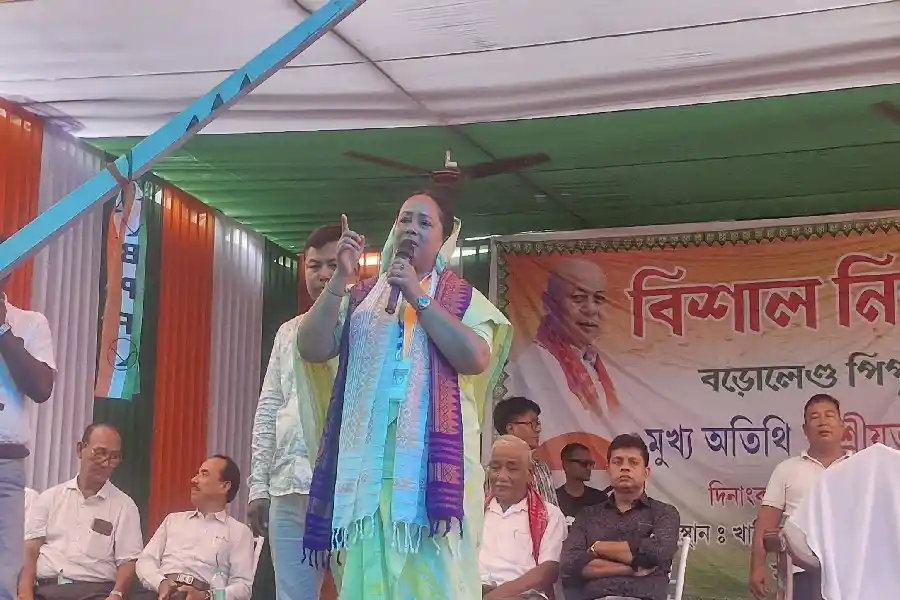
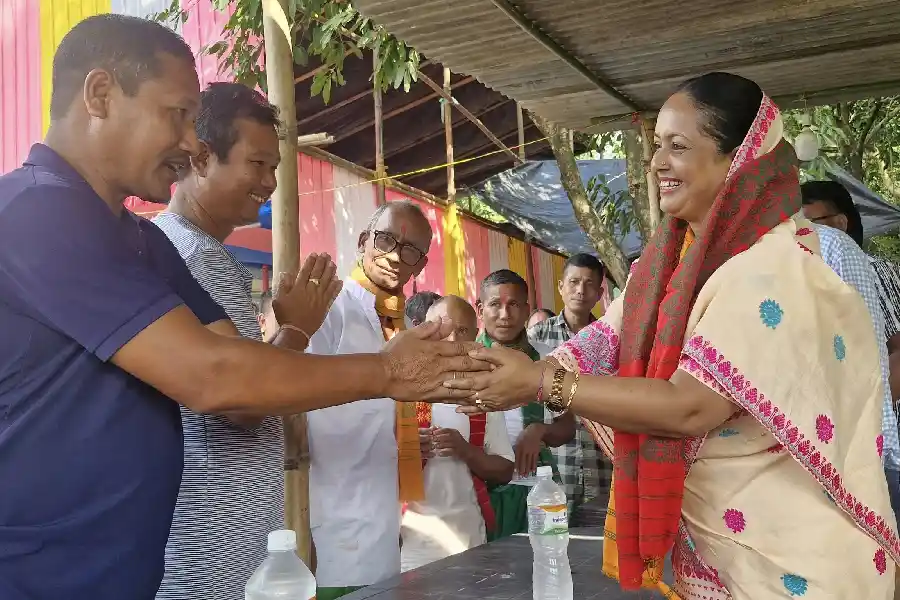
For the first time, the Bodoland Territorial Council (BTC), led by Bodoland People’s Front (BPF) chief Hagrama Mohilary, has a Muslim woman as an elected executive member. As Muslims in BTAD (Bodoland Territorial Autonomous Districts) had been feeling marginalised for a long time, a Muslim woman’s election to a council is significant and historic.
BTC is the governing autonomous council of BTAD, aka BTR (Bodoland Territorial Region), comprising Kokrajhar, Chirang, Baksa, Udalguri and Tamulpur of Assam as districts. It was formed following the peace treaty with the Bodoland Liberation Front in February 2003. BTAD covers an area of over 9000 square kilometres and is predominantly inhabited by the Bodo people and other tribal communities of Assam.
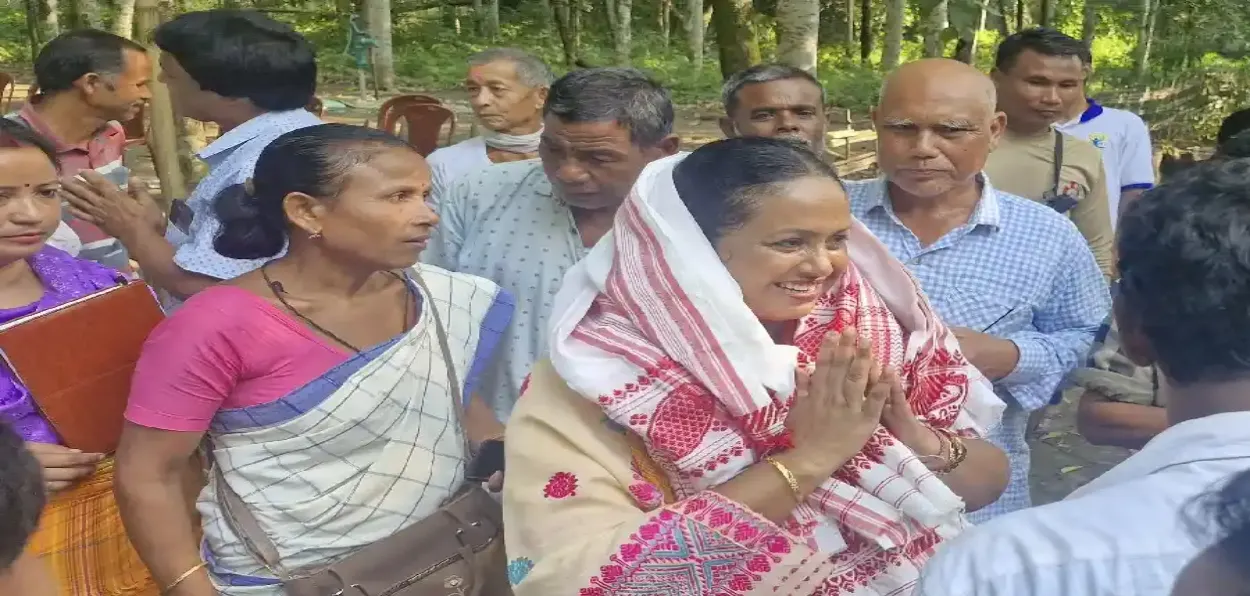
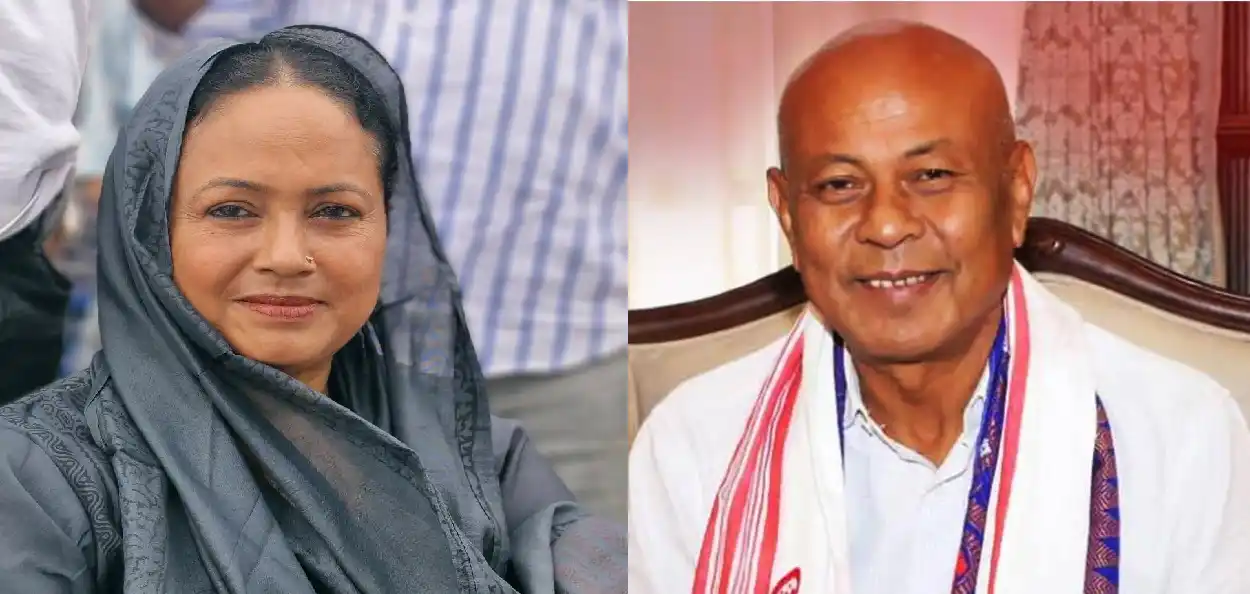
Begum Akhtara Ahmed has been elected from Mathanguri constituency of the BTC and inducted into Mohilary’s cabinet. She has been bestowed with the responsibility of the Public Health Engineering (PHE) Department. Regional political party BPF won the single largest party majority in the BTC elections held in September 2025 with 28 seats.
Begum Akhtara Ahmed and Hagrama Mohilary
Incumbent UPPL won seven seats and the BJP won five seats in the 40-seat council. The BTC was formed in 2003, and Hagrama Mohilary has been in power for the past five years.
Begum Akhtara Ahmed of the BTC had no aim or desire to be in politics as she wanted to be a litterateur. But destiny has another script for her life.
Begum Akhtara was born in the Kalgachia area of Barpeta district. She got her primary education in Kalgachia. She was married while studying in Class VII.
Her husband, Ibrahim Ali Molla, recently retired as a higher secondary school teacher. Begum Akhtara could pursue her education. Her first child was born while she was in Class X. She passed her matriculation examination under such circumstances.
Begum Akhtara Ahmed addressing a political rally
Her second child was born while she was in Class XII. Begum Akhtara continued her education and completed her postgraduate degree from Gauhati University in 2003.
She joined Langla College in the Bangaigaon district as a part-time lecturer, but quit soon. She got involved in politics. She joined the Congress and was appointed as the organising secretary of the Barpeta District Women’s Congress.
Since her matrimonial home is in Lawahur village of Mathanguri constituency in Baksa district, she changed her address and became the president of the Baksa District Women’s Congress. She joined the BPF in 2004.
Begum Akhtara Ahmed with Chief Minister Himanta Biswa Sarma
This is where her new political journey and new life of conflicts begin. Party chief Mohilary formed the women’s wing of the BPF, and she was appointed its president.
After three years as the women’s BPF president, she was appointed as the party’s organising secretary by party president Hagrama Mohilary.
She contested the 2020 BTC elections for the first time and was defeated by the BJP’s Gautam Das in the Mathanguri constituency. This time, however, Begum Akhtara contested from the same constituency for the second time and defeated the same opponent.
Begum Akhtara Ahmed was attacked and her house was torched in the once-violent BTC. She was even threatened and asked to stay away from politics in the BTC. Once, while she was busy with a political meeting, her car was set on fire at the venue, and she barely survived.
Begum Akhtara Ahmed with activists of her party at a rally
Begum Akhtara Ahmed said three of her cars were set on fire in 2012. It may be mentioned that several incidents of attacks on minorities took place in the BTC in 2012. Most of the attacks took place in the Baksa district, from where many minorities were forced to flee their homes. Several people were even brutally murdered.
However, all this could not distract her from her goals and objectives.
Praising her leader, Hagrama Mohilary, Begum Akhtar said he wants the Bodo people to move forward along with all ethnic groups. So she is happy to work under the leadership of Mohilary.
According to Begum Akhtara, BTC is a small place. Therefore, it is necessary to rely on the governments at the Centre and in the state to work for its development. Otherwise, developmental work may be interrupted. “We don’t have to look at which party’s government is at the Centre or in the State, we have to work with that government in coordination,” she said.
source: http://www.awazthevoice.in / Awaz, The Voice / Home> Story / by Priya Sarma, Guwahati / October 27th, 2025
Diners at Sheraton Hyderabad were recently introduced to the rarely seen Bhatkali cuisine, thanks to home chef Fatima Riyaz. Through an exclusive pop-up, Fatima presented dishes rooted in the coastal town of Bhatkal in Karnataka, highlighting its Nawayathi heritage and centuries of cultural exchange.
Bhatkali food is known for its unique blend of spices, coconut, and rice. “Five out of six dishes have rice in some form,” Fatima explained, noting how coconut adds sweetness and depth to most preparations. Spice levels are high, but carefully balanced with caramelised onions. Signature to the cuisine is Loli, a red chilli-based spice paste slow-cooked in coconut oil and used across dishes.
The Sheraton menu included Mudkale, rice balls with prawns cooked in coconut oil, and seasonal desserts like Chibbad, a local melon served with coconut milk and lime. While seafood dominates the cuisine, Fatima also created vegetarian versions to suit diverse diners.
Her food is deeply personal, drawn from family traditions and her community’s layered history. “Our cuisine reflects Islamic influences, Jain touches, and coastal Indian roots,” she said. The language of her community, Nawayathi, similarly borrows from Marathi and Konkani, echoing cultural ties along the western coast.
Fatima began cooking professionally after the pandemic, inspired by people reviving traditional recipes. Since then, she has taken Bhatkali cuisine to cities through curated pop-ups. “I only cook this cuisine,” she noted. “It is Indian, but with a sweetness that is ours.”
Story by Deccan Chronicle
source: http://www.radiancenews.com / Radiance News / Home> Features> Latest News> Report / by Radiance News Bureau / September 20th, 2025
Taiyba Afroz created history by becoming a commercial pilot. The Muslim girl hails from a modest family. Her father Motiul Haq runs a ration shop in the Madhoura locality in the Saran district of Bihar and her mother Samsun Nisha is a homemaker.
Despite such challenges, Taiyaba remained determined to achieve her dream of becoming a commercial pilot. Her journey began in 2019 when she joined the Government Aviation Training Institute in Bhubaneswar. There she logged 200 grueling flight hours, battling storms, monsoons, and self-doubt.
Taiyaba’s training was marathon-2-3 years of theory exams (scoring 70%+ in DGCA papers), simulator drills, and mastering the art of safe landings.
“Flying solo for 100 hours was terrifying but fear never griped my mind,” she recalls.
Later, in 2023, she completed 120 hours of training at Indore Flying Club. After all this, Taiyaba finally obtained her license from the DDCA. She was certified to become a commercial pilot and can fly any commercial plane.
As a Muslim woman in a crisp pilot’s uniform, Taiyaba faced catcalls: “Shouldn’t she be in a Burqa?” To this, she retorts: “The cockpit has no dress code. The aircraft doesn’t care about your surname.”
A pilot’s salary starts at ₹1.5 lakh,” but that’s not the trophy, Taiyaba aimed to achieve. Her real achievement is being a Muslim girl, coming from a backward region of Bihar, hailing from a weak financial family; she endured all these odds and has come out with flying colors. Her message is; “Look at this Muslim girl, she can fly planes.”
Taiba Afroz is not just a pilot; she’s a beacon for every Muslim girl who is told to shrink their dreams. Her success story is a matter of pride as she inspires many young Muslim girls to follow her career path. She is a role model for them.
Taiyaba’s achievement testifies that with perseverance and determination, any goal can be achieved.
Her story screams that; the sky is not the limit, it’s the beginning.
—
Syed Ali Mujtaba is a journalist. He can be contacted at syedalimujtaba2007@gmail.com
source: http://www.muslimmirror.com / Muslim Mirror / Home> Positive Story / by Muslim Mirror Network / March 05th, 2025
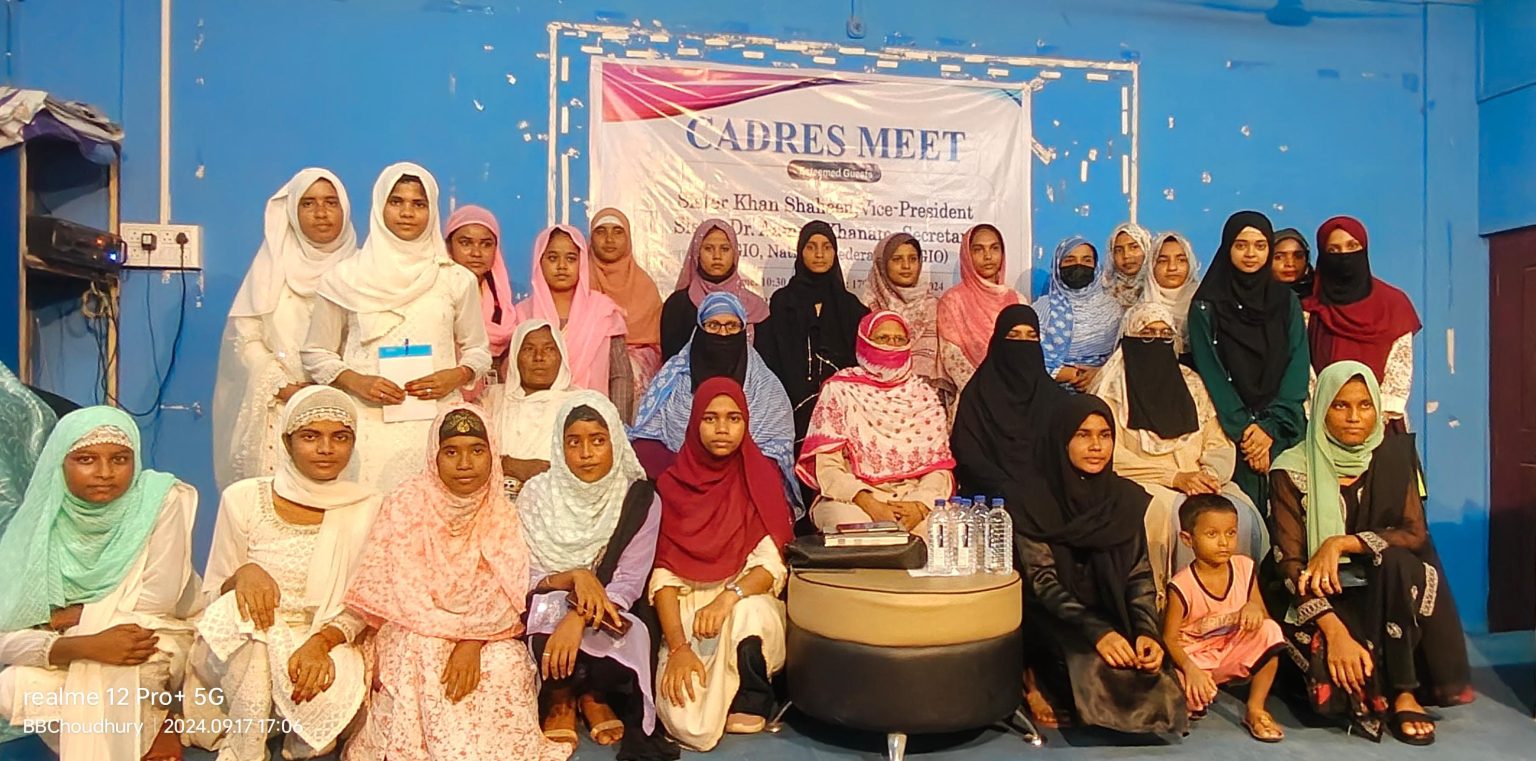
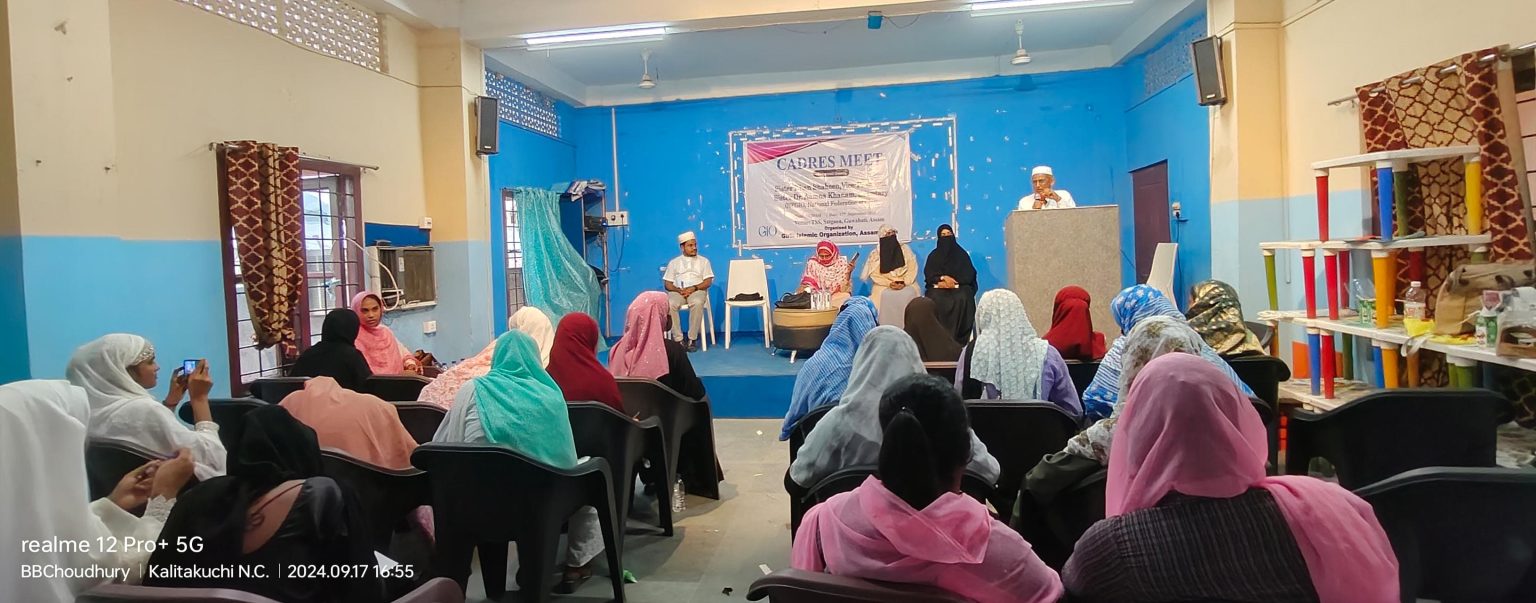
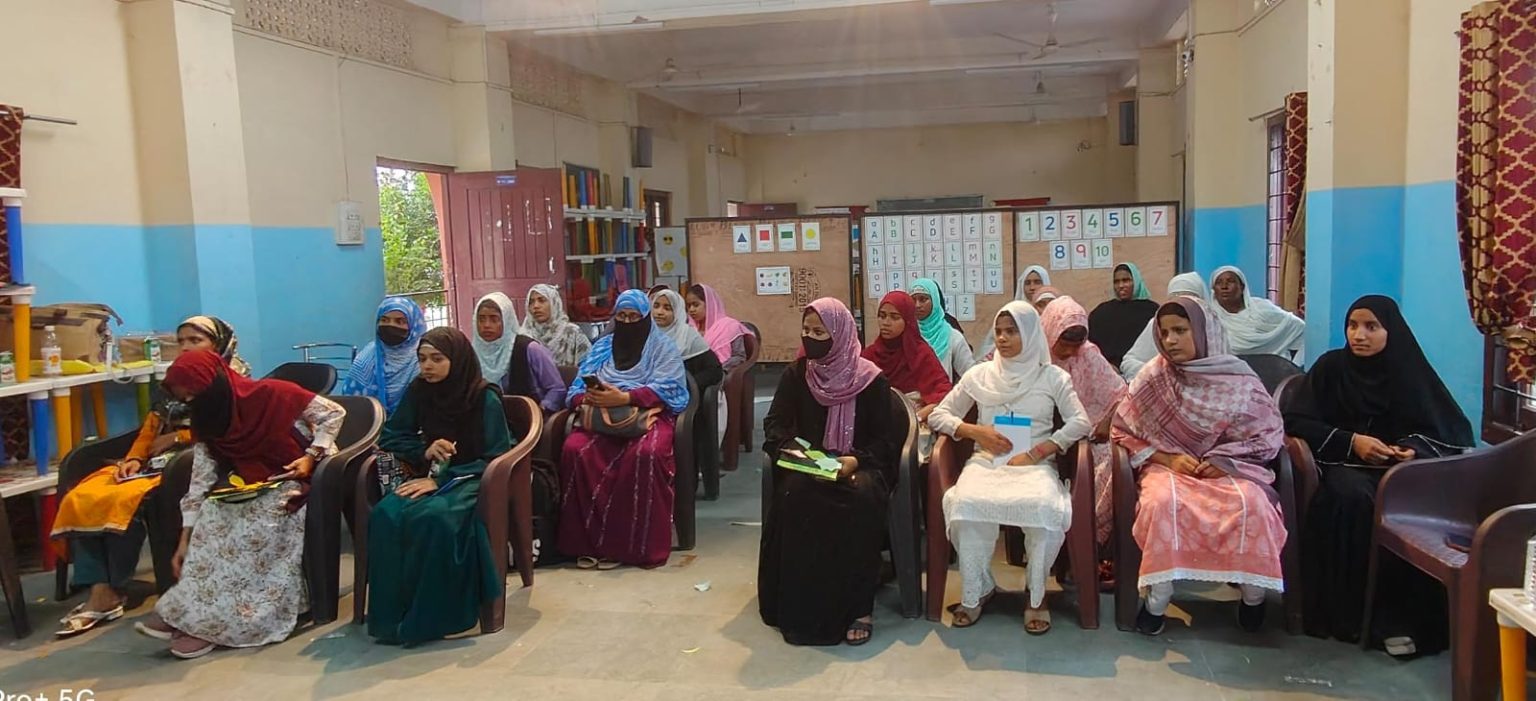
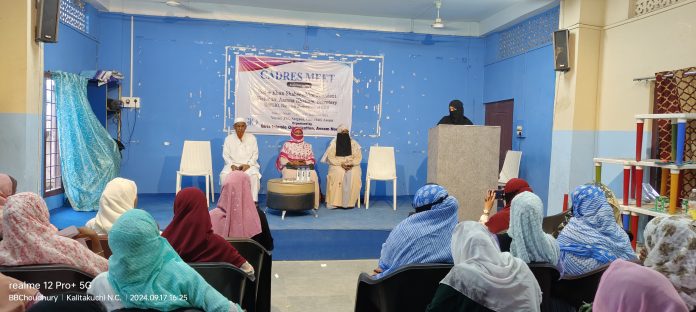
In a milestone for the Girls Islamic Organisation (GIO), the first-ever cadre meet for GIO Assam North took place in Guwahati, marking a new chapter in the organization’s efforts to empower young women in the region.
Under the patronage of Zahida Batul, Secretary of JIH Assam North Women’s Wing, GIO has been making strides in Assam over the past few years. The event commenced with the recitation of the Quran by Sumiya Begom, setting a spiritual tone for the day-long program.
Zahida Batul, the GIO Assam North Coordinator, delivered the inaugural speech, emphasizing the organization’s commitment to fostering leadership among young women. The gathering featured an invaluable address on the “Purpose of Life” by Khan Shaheen, Vice-President of the National Federation of Girls Islamic Organisation (NFGIO).
Dr. Aamna Khanam, Secretary of NFGIO, followed with a presentation on “GIO: Aims and Objectives & Organisational Setup,” outlining the structure and mission of the GIO.
Khan Shaheen further introduced the NFGIO, detailing its functions and activities, which aim to promote education and empowerment for girls across the nation.
Dr. Aamna Khanam also delivered a speech on the “Etiquette of Organisational Life,” highlighting the importance of discipline and collaboration within the GIO framework.
The open session featured esteemed guests, including Prof. Zohurul Islam Mullah, Ameer-e-Halqua; and Bazlul Basit Choudhury, Halqa Office Secretary and HRD Secretary, who delivered valuable insights.
Ameer-e-Halqua JIH Assam North congratulated the newly elected Convener and Core Committee Members, encouraging them to lead with dedication and vision.
Following detailed discussions, an Ad-hoc Coordination Committee for GIO Assam North was formed to advance the organization’s objectives.
The committee includes:
Convener: Jubaida Khatun (Tezpur) – MA in Political Science and Sociology, currently a lecturer at a private college.
Co-convener: Sujana Sultana (Guwahati) – Bachelor of Optometry, working in primary eye care.
Core Committee Members:
Selima Akhtara (Goalpara) – MA (Double), M.Ed., currently principal of a private HS school.
Jinnatara Yeasmin (Darrang) – BDS First Year student.
Sumaiya Begom (Hojai) – HS Final Year student.
The concluding remarks were delivered by Khan Shaheen, who reiterated the importance of unity and proactive engagement in the community.
This historic gathering not only strengthened the foundation of GIO in Assam but also ignited a sense of purpose among the participants, paving the way for future initiatives aimed at empowering girls across the region.
source: http://www.radiancenews.com / Radiance News / Home> Latest News> Report / by Radiance News Bureau / September 29th, 2024
Recently, Home Minister Amit Shah claimed during an election campaign that the Muslim population in India is growing uncontrollably. He presented statistics to support this claim. Later, he said this increase is happening due to infiltrators and asked the audience, “Will you allow infiltrators to vote?” People responded, “No.” In Bihar, the Election Commission had claimed that there were many infiltrators in the state, but when the Election Commission published the SIR report, not a single infiltrator was found. The claim proved hollow. India’s census data over the past seven decades tells a different story.
Between 1951 and 2011, India’s Muslim population grew in absolute numbers from 3.54 crore to 17.23 crore. However, during the same period, the fertility rate has been continuously declining. The Muslim population growth rate decreased from 32.77% in the 1950s to 24.67% by 2011. Data from the National Family Health Survey (NFHS) confirms this trend. According to NFHS-2 (1998–99), the fertility rate among Muslims was 3.59, which fell to 3.09 in NFHS-3 (2005–06), then to 2.61 in NFHS-4 (2015–16), and further to 2.36 in NFHS-5 (2019–21). This decline is clear, continuous, and quite complex. Why did it drop from 3.59 to 2.36? The current fertility rate is unknown because the government has neither conducted a census in recent years nor released any updated data. In reality, Muslims in India are facing economic stagnation and backwardness, yet their fertility rate continues to fall.
This declining fertility rate among Indian Muslims presents an interesting paradox. It has occurred despite the community’s limited economic progress compared to other communities. The 2006 Sachar Committee Report and subsequent studies have repeatedly shown that Muslims remain economically and educationally disadvantaged. They face lower access to education, fewer employment opportunities, and higher poverty levels than national averages. Yet their fertility rate continues to decline, suggesting that this change is being driven by broader social and economic factors rather than economic prosperity alone.
Improved public health across the country has been a major factor. After independence, government efforts expanded vaccination, maternal healthcare, and access to clean drinking water to most people, including economically weaker sections. These government initiatives dramatically reduced child mortality, which was one of the key drivers of large family sizes in the past. When parents are more confident that their children will survive, they tend to have fewer children. Alongside this, there has been gradual progress in education among Muslims, particularly in female literacy, which has grown considerably since 1951 in several regions such as Kerala, Tamil Nadu, and Maharashtra. Even modest educational gains, especially for women, play a decisive role in shaping family planning decisions and promoting smaller families.
The economic environment also influences this change. As living costs rise and employment opportunities shrink, families across all communities are rethinking the size of their households. Among Muslims, urban migration has brought exposure to new social trends, increased living expenses, and housing shortages, creating problems. Now many families feel that raising and educating multiple children is becoming increasingly difficult in the current economy. Ironically, economic insecurity and limited opportunities discourage larger families, not because of affluence, but due to a sense of resource scarcity.
In addition to these socio-economic factors, the reach of media, mobile phones, and social awareness campaigns has extended to almost everyone, regardless of income or education level. Information about health, contraception, and family planning circulates freely through television, social media, and community networks, influencing social attitudes about ideal family size. As families become more aware of these issues, they tend to adopt modern reproductive behaviors (fewer children).
However, the reasons for declining fertility rates are different for different communities in India, and experts continue to debate the exact mix of factors responsible. In the case of Muslims, the declining fertility rate may also be linked to the uncertainty and insecurity that Muslims have experienced in recent years. Several social scientists have observed that the ruling political party’s creation of a climate of fear, legislation against Muslims, the use of bulldozers, the Waqf Amendment Bill, and debates around the proposed Uniform Civil Code generate apprehensions among Muslims. Analysts also point to the impact of negative portrayals in sections of the mainstream media and the use of religious polarization in political campaigns, which according to them have contributed to creating a sense of alienation. Moreover, concerns have been raised about the limited inclusion of Muslims in policy frameworks focused on education, employment, and business sectors. Living under prolonged social and political pressure, many Muslim families may have become more cautious and less optimistic about expanding their households. Therefore, their demographic change may not reflect prosperity or modernity but rather a cautious adaptation to an environment perceived as uncertain or exclusionary.
Demographic experts and social scientists should engage in an open, data-driven debate on the causes behind the declining fertility rates among Indian Muslims, as this trend raises complex social and political questions that go beyond mere numbers. While census and NFHS data clearly show a consistent decline in fertility over the decades, the underlying reasons remain contested. Some experts attribute it to improved health facilities, educational progress, and urban issues, while others argue that deepening economic insecurity, social marginalization, and limited representation in development policies are equally responsible.
A national dialogue among demographers, economists, sociologists, and policymakers is urgently needed to examine how socio-economic factors, Muslim perceptions, and policy frameworks are influencing demographic behavior within the country’s largest minority community, and what this means for the nation’s inclusive development.
*The author is associated with the Welfare Party of India.
source: http://www.indiatomorrow.net / India Tomorrow / Home> National Interest / by Sheikh Saleem / October 22nd, 2025
The National Federation of Girls Islamic Organisation (NFGIO) organised a national campaign titled “Connecting Hearts Eternally in Relishing Islamic Sisterhood’ (CHERISH)” with the theme المتحابون في الله which translates to ‘those who love each other for the sake of Allah’.
Mumbai :
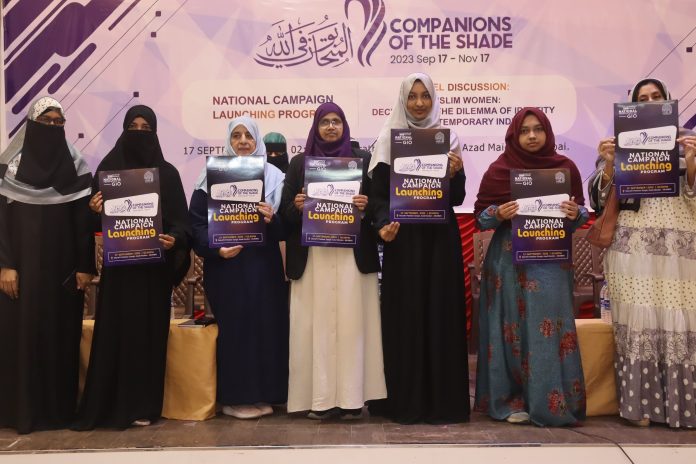
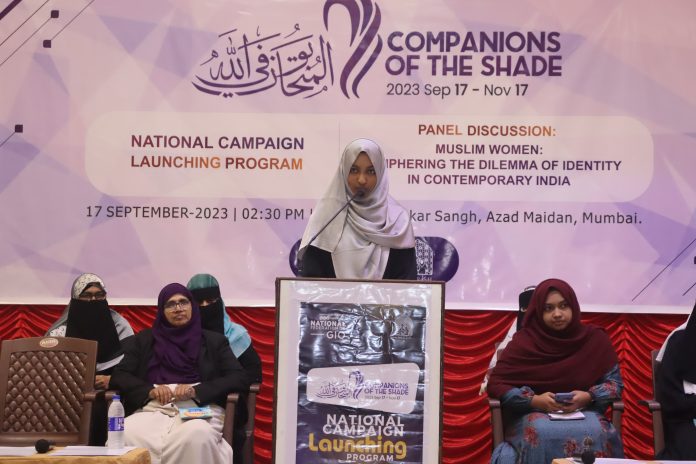
The National Federation of Girls Islamic Organisation (NFGIO) organised a national campaign titled “Connecting Hearts Eternally in Relishing Islamic Sisterhood’ (CHERISH)” with the theme المتحابون في الله which translates to ‘those who love each other for the sake of Allah’. The launching program of the campaign was held at Marathi Patrakar Sangh here Sunday.
The program commenced with the soulful recitation of the verses from the Holy Quran by Uzma Sagri (Regional In-charge, GIO Mumbai Region), followed by the welcoming words by Anamtha Ahmed (General Secretary, GIO MSZ).
Sister Samar Ali (General Secretary, NFGIO) shed light on the aims and objectives of the campaign.
Advocate Sumaiya Roshan, National President NFGIO addressing the program
The launching program was inaugurated by Adv. Sumaiya Roshan, (President, NFGIO), detailing the core intentions planned to be achieved through the campaign.
Adv. Sumaiya explained the goal of the campaign as to establish a secure and encouraging community for Muslim sisters. They must unite to confront the world’s obstacles and thrive with their steadfast faith. Unfortunately, in present times, practising and expressing one’s faith can be arduous and often unaccepted. This leaves many Muslim women feeling alienated from society.
Through sisterhood, women can discover and embrace their authentic selves as creations of the Almighty. They can find their purpose in life and ways to achieve it. The Almutahabbuna Fillah – Companions of the Shade campaign aims to promote righteous friendships among sisters. These friendships go beyond selfish worldly needs and are blessed by Allah. They can be a means of earning His pleasure and becoming successful in both this life and the Hereafter.
The phrase Almutahabbuna Fillah means “those who love each other for the sake of Allah.” It is narrated that on the Day of Judgement, there will be no shade except for the shade of Allah. Among the seven types of people who will be under His shade are two people who love each other for the sake of Allah.
The program further had felicitation addresses by Mrs. Rahmathunnissa A., National Secretary, JIH. She mentioned the contributions put forth by the Girls Islamic Organization from its formation in 1984 in developing and enhancing a healthy society. The organization has been working towards the goal of enhancing the community and developing them to serve for the betterment of the whole of humanity.
It was followed by the address of Mr. Mohammed Zafar Ansari, Secretary, JIH Maharashtra, followed by the concluding address of Khan Shaheen Jattu, Vice President, NFGIO.
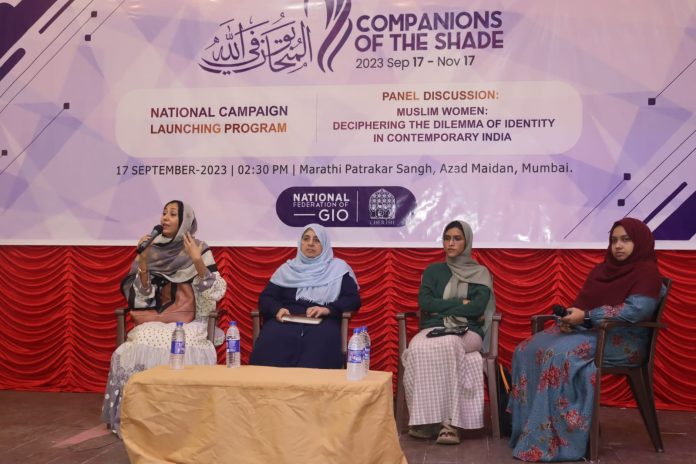
The panel discussion held with Advocate Huriya Patel, Uzma Naheed, Haniya Anwar and Samar Ali
A panel discussion titled “Muslim Women: Deciphering the Dilemma of Identity in Contemporary India” was conducted with Samar Ali as the moderator as part of the event. Samar stated the aim of the discussion as to bring forth powerful and socially engaging Muslim women icons and establish the idea of empowerment through their presence in the public sphere.
The panellists included Mrs. Uzma Nahid (Executive Director, Iqra Education Foundation), Adv. Huriya Patel (Advocate, Bombay High Court) and Ms Haniya Anwar (Student leader, TISS Mumbai).
Uzma Nahid encouraged the audience to be revolutionary thinkers and to focus on getting educated and enlightened on the necessity of financial development for the overall empowerment of women.
The audience listening to the discussion at Marathi Patrakar Sangh, Mumbai
Adv. Huriya Patel mentioned the lack of legal awareness among the women community and pointed out the importance of embracing one’s identity and beliefs without compromising values and ethics to build successful career platforms.
Haniya Anwar inspiringly brought forth the challenges faced by Muslims in general and women with visible Muslim identity in particular on Indian campuses. She shared her experience faced while contesting for the post of Equal Opportunity Cell of Students Union, TISS Mumbai.
The panel discussion was concluded by Mrs. Rahmathunnissa A., who highlighted that if one is ready to change the society, nothing can stop them.
The program concluded with a vote of thanks by Aamna Khanam (Secretary, NFGIO) who thanked everyone for their enormous support for the historical event.
source: http://www.radiancenews.com / Radiance News / Home> Latest News / by Aaliyah Rumane / September 20th, 2023