Prof. Zakia Siddiqi Honoured with Dr. B R Ambedkar International Award
Aligarh:
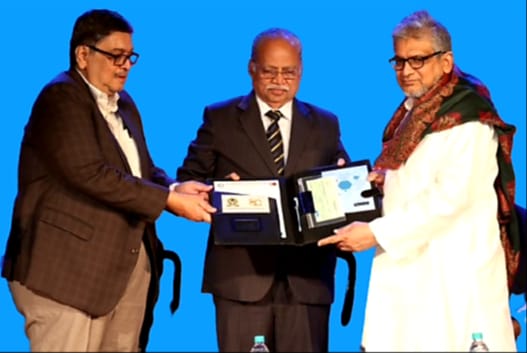
Prof. Zakia Ather Siddiqi, a celebrated educationist and former Principal of Women’s College, Aligarh Muslim University (AMU), has been conferred with the Dr. B R Ambedkar International Award (Certificate of Excellence) by the Tirupati Balaji Educational Foundation, honouring her lifelong service to education and social upliftment.
Renowned for her unwavering commitment to women’s empowerment through education, Prof. Siddiqi transformed academic standards and inspired generations of female students. As the OSD of Aligarh Public School, she introduced dynamic pedagogical reforms and steered the institution to national recognition.
Under her leadership, the Aligarh Public School secured the prestigious Digital India Competition Award four times – in 2017, 2018, 2023, and 2024 – reflecting her vision of merging education with technological advancement.
Even after retirement, her dedication remains undiminished. This award not only celebrates her legacy but also serves as a beacon of inspiration for educators and students alike.
source: http://www.radiancenews.com / Radiance News / Home> Pride of the Nation> Awards> Latest News / by Radiance News Bureau / May 09th, 2025
Ohida Khandekar’s Dream Your Museum, an installation and film about her uncle’s collection won the V&A’s Jameel Prize for contemporary art and design inspired by Islamic traditions.
Selim Khandakar with his grand-niece and the trunks housing his collection. | Photo Credit: Anand Kumar Ekboty
Selim Khandakar, 71, has always dreamt of making a museum in his village for the 12,000-plus objects he has collected over 50 years. A small portion of that collection has now reached one of the best museums in the world — the Victoria & Albert Museum (V&A) in London — thanks to his artist niece, Ohida Khandakar.
Ohida, 31, has turned her uncle’s lifelong obsession into an installation and film — Dream Your Museum — which won the V&A’s prestigious Jameel Prize for contemporary art and design inspired by Islamic traditions. The work is not just a tribute to what seems to be her uncle’s calling; it also challenges colonial museum structures and asks whether ordinary, personal objects deserve a place in museums. Can museums be flexible and inclusive spaces, showcasing the narratives of minority communities and customs? Are private collections the exclusive privilege of the rich?
The installation and film, ‘Dream Your Museum’, at the Victoria & Albert Museum (V&A) in London.
Selim worked as a doctor’s compounder in Kolkata and started collecting random objects from the year 1970. A stamp exhibition piqued his interest first, prompting him to start collecting them. He also came across an exhibition of vintage objects from Mallik Bari, one of Kolkata’s heritage homes. “It was a record of what objects were used in the ancient times and how lives were led,” Selim tells me over a Zoom call from his home in Kelepara, a village near Hooghly, West Bengal. “It inspired me to start collecting whatever felt like a record of the common person’s life and times. From bus tickets to stamps to refills of pens, I wouldn’t throw anything away.”
An assortment of rare and mundane items makes up Selim’s collection. Old clocks, inscribed ceramics, vintage records and music players, letters dating back to Partition, perfume bottles, crystal rocks, hand fans, stamps, handbills, ink pots, cameras, train tickets, receipts, even matriculation answer sheets from the 70s!
Selim Khandakar surrounded by the objects he has collected over the years. | Photo Credit: Anand Kumar Ekboty
Gramophones to baby clothes
Much of Selim’s collection is housed in tin trunks and scattered across his home in Kelepara. It sometimes becomes a ‘travelling museum’ for people in the village to explore and interact with the objects as Selim takes them around. There is curiosity, awe, some ridicule, some laughter, and from those who understand history and record keeping, even encouragement.
Ohida’s film captures Selim walking through village fields with his trunk, stopping by the river to rinse some crystal stones, and holding them up to the sun. “Where did you find these, nanu?” asks Maria, his grand-niece, who appears in the film. “In the graveyard,” Selim replies.
Selim Khandakar walking through village fields with his trunk. | Photo Credit: Anand Kumar Ekboty
Ohida, who studied art at the Government College of Art & Craft, Kolkata, and Jamia Millia Islamia, New Delhi, says it is sometimes hard to understand what keeps her uncle going. Is it hoarding, as his exasperated family has often believed? She and Selim don’t think so. Instead, he thinks his collection, much like Dream Your Museum, is about storytelling. “Collecting is my way of showing people from my village a glimpse of things from around the world,” Selim notes. “Like rare coins dating back to the Mughal period or vintage perfume bottles from around the world. Often people here do not get a chance to go to cities to see such things. That’s what has always kept me going.”
Selim Khandakar’s house that was destroyed after a cyclone.. | Photo Credit: Anand Kumar Ekboty
Once displayed in his modest mud house, now destroyed after a cyclone, Selim’s possessions came close to being discarded by his family until Ohida decided to document it digitally. She reacquainted herself with both her uncle and his collection when stuck at home during the pandemic. To her artist’s eye, it is a compelling one, given its range — from gramophones to baby clothes from the 80s. “It even has a bunch of fingernails [Selim’s own] in a box. It reminds me of Marcel Duchamp’s Dadaist Fountain exhibit [1917], where he displayed an upside-down urinal. Such objects challenge conventional notions of what belongs in a museum. These items, including a broken plate passed down through generations, show the power of storytelling through objects.”
Selim laughs when asked about the fingernails. “I had once visited an exhibition where I saw art made with fingernails and thought I would do the same with mine. It made me curious, so I kept them.”
What makes a museum?
Curiosity has been the driving force behind Selim’s obsession and this is what Ohida celebrates in her work. Maria accompanies Selim throughout the film, asking him curious questions about the objects in his collection, an attempt to peek into his mind. Ohida started filming Dream Your Museum as an entry for the 2022 Berlin Biennale, where it was received well, eventually landing her the V&A award.
Filmmaker Ohida Khandakar
Growing up in Kelepara, Ohida hadn’t stepped inside a museum until she came to study art in Kolkata. “I had achieved my dream of studying art and moving beyond a village where many women still had no voice and were married off early. It made me wonder — was there a limit to our dreams? Was there a limit to the dreams of my uncle, a rural, aged Muslim man?”
With the funds from the award, Ohida is now hoping to create a museum for her uncle’s collection and a cultural space in the village. “We need accessible museums that work as alternative spaces for the narratives of rural minority communities; as safe spaces for women without opportunities; to engage those who might not typically visit traditional museums due to a lack of knowledge, distance or financial constraints.”
In Dream Your Museum, her camera gently films Selim among his collections in his crumbling ancestral home. He expresses frustration at having no permanent place even after 50 years to showcase his prized collection. “I’ll now make a museum on the moon,” he declares.
The writer is a freelance journalist and the co-author of ‘Rethink Ageing’ (2022).
source: http://www.thehindu.com / The Hindu / Home> Entertainment> Art / by Reshmi Chakraborty / April 20th, 2025
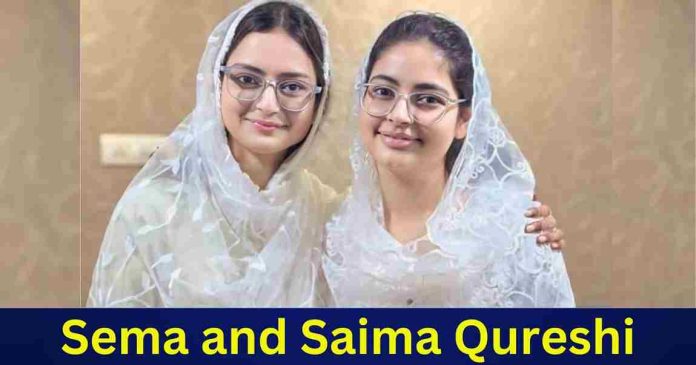
In a shining example of determination, hard work, and the power of education, sisters Sema Qureshi and Saima Qureshi, daughters of Abdul Nabi Qureshi, have successfully completed their MBBS degrees and officially earned the title of doctors. Their achievement marks a moment of immense pride for their family and community, highlighting the importance of female empowerment through education, reported the NewsofKashmir.
Raised in a home where education and moral values were deeply cherished, both sisters had aspired to become doctors from a young age. Their father, Jenab Abdul Nabi Qureshi, a strong proponent of academic excellence, provided unwavering support throughout their journey. “My daughters have made not just me, but our entire family proud. They are proof that with hard work and faith, anything is possible,” he said.
Their accomplishment comes at a time when encouraging girls to pursue professional education is critical, especially in regions where access and opportunities remain limited. Sema and Saima’s story stands as an inspiring example for young girls who dream of careers in demanding fields like medicine.
Expressing gratitude for the support they received, the sisters said in a joint statement, “This success belongs to our parents and teachers as much as it belongs to us. We hope to serve the people with sincerity and compassion in our medical careers.”
With their degrees now in hand, the duo is set to begin internships in local hospitals and is also exploring options for further specialization, particularly in healthcare services for underprivileged communities.
Their journey is not just one of academic success—it is a powerful reminder of the role that family encouragement, community support, and access to education play in shaping the future of young women in Kashmir and across the country.
source: http://www.radiancenews.com / Radiance News / Home> Focus> Markers of Excellence / by Radiance News Bureau / May 08th, 2025
Former president of the All India Muslim Majlis-e-Mushawarat (AIMMM) and general secretary of the Movement for Empowerment of Indian Muslims (MOEMIM), Navaid Hamid, honoured with the Qaide Millat Award.
The award was presented by former Madras High Court judge, Justice KN Basha at an event held at a grand ceremony at the Music Academy on Saturday.
Renowned human rights activist John Dayal, and founder of the Sadbhavana Mission, distinguished scientist Professor Vipin Kumar Tripathi, were also honoured by the southern Indian institution, Qaide Millat Educational and Social Trust (Chennai).
The annual award is given for probity in political/public life and consists of a certificate of appreciation, a cash prize of five lakh rupees, and shawl.
Congratulating the awardees on the occasion, Justice Basha said he felt honoured and privileged to present the awards to individuals who serve as beacons of light amidst the darkness of the current environment while M G Dawood Miyakhan, general Secretary of the trust, said “the awardees are based on their unblemished track record of integrity in political and personal life in India”.
Retired CSI Bishop Dr V Devasagayam said while facilitating the awardees “we are here to recognise your services, support your initiatives and to wish that you continue your fight in spite of all the odds”.
The event was presided over by the president of the Qaide Millat Trust, Qazi Dr Salahuddin Muhammad Ayub, while announcement the awards and introduction of awardees were made by the Trust’s general secretary.
On this occasion, Dr S Sadiq, former Vice-Chancellor of Madras University, and retired CSI Bishop Dr V Devasagayam, were also honoured. General Secretary Dawood Miyan Khan, Treasurer S Mushtaq Ahmed, and Principal of Qaide Millat College, Dr MA Thawab, presented certificates of honour, prize, and shawls to the dignitaries.
The announcement of the 2024 Qaide Millat Award was made in February 2025. The award jury comprised Dr Vasanti Devi (former Vice-Chancellor), Dr V Devasagayam (former Bishop), Paneerselvam (Readers’ Editor, The Hindu), and Dawood Miyan Khan (general secretary, QEST).
Born on June 23, 1963, in the walled city of Delhi, Navaid Hamid has been associated with the All India Muslim Majlis-e-Mushawarat since the late 1980s. He served as its President from 2016 to 2023. A graduate in English from Zakir Hussain College, University of Delhi, Navaid Hamid has been actively involved in political and social work since his student days at the university.
During the UPA Government (2004–2014), he was appointed as a member of the National Integration Council for two terms. He is the founding secretary of the South Asian Council for Minorities (SACM) and also serves as the national general secretary of the Movement for Empowerment of Muslim Indians (MOEMIN). He has worked actively to support and uplift marginalized communities.
In 2008, at the Global Minorities Meet held in New Delhi and attended by delegates from 18 countries, Navaid Hamid was elected General Secretary of the Global Minorities Forum for Justice and Peace.
Previously, the Trust has presented the Qaide Millat Award to eminent personalities, including Teesta Setalvad and Nilakanoo (2015), N. Shankariah and Syed Shahabuddin (2016), Manik Sarkar and Muhammad Ismail (2017), Vice President of India Dr. Hamid Ansari and Aruna Roy (2018), AG Noorani and Thiru V mavalavan (2019), Harsh Mander and Bilkis Bano (2020), Dr Irfan Habib and Samyukt Kisan Morcha (2021), Thiru Veeramani and The Wire news (2022), N Ram (The Hindu) and Dr Abu Saleh Sharif.
The Qaide Millat award is presented in memory of Qaide Millat Maulvi Muhammad Ismail, a selfless servant of the community, freedom fighter, and a distinguished national leader. His significant contributions to the development of the country and community after independence are widely acknowledged.
As a member of the Constituent Assembly, a Member of Parliament in both the Lok Sabha and the Rajya Sabha, and as the founder-leader of the Indian Union Muslim League, his services are considered unforgettable. He was also among the founding members of the All India Muslim Majlis-e-Mushawarat (AIMMM).
The Qaide Millat Trust instituted this award on the 40th death anniversary of Maulvi Muhammad Ismail, and it is awarded annually to distinguished individuals active in public life.
source: http://www.theokhlatimes.com / The Okhla Times / Home> Local / by The Okhla Times / May 01st, 2025
At 21, Muskan Begum from Hyderabad becomes licensed commercial pilot
A 21-year-old from Hyderabad, Muskan Begum.
Hyderabad:
A 21-year-old from Hyderabad, Muskan Begum, has obtained her commercial pilot licence after completing training in Cape Town, South Africa, becoming one of the youngest from the city to have achieved the feat.
She completed her schooling from Narayana and her intermediate education from Chaitanya before starting her aviation journey. “I did my medicals in Hyderabad and cleared the Directorate General of Civil Aviation (DGCA) exams from V2 Aviation Academy in Khader Bagh,” she said.
She joined the 4 Aviators Flying School in Cape Town in 2023 after receiving her South African visa. “I completed both my theory and practical exams there, and I was tested with the examiner for my CPL checkride,” she said.
“I’ve flown more than 250 hours and now legally hold a commercial pilot licence,” she told Siasat.com.
Belonging to a middle-class family of seven, Muskan credits her parents for their unwavering support. “My mom does small businesses, and my dad works in Doha, Qatar. Initially, convincing them was a tough task due to the community and irrelevant stereotypes, but in the end, I had their full support,” she said.
“Being a hijabi and getting trained in South Africa was fine with a bit of struggle. But the key was not letting others’ opinions influence me,” she added.
She is currently pursuing instructor training from the same flying school. “I’ll be working here as an instructor to build a good amount of hours and experience,” she said. “So when airline vacancies are available, I can join directly.”
Recalling where it all began, she said, “As a child, I used to see aircraft near the airport. Since then, I imagined myself sitting in the cockpit, flying it by myself.”
“Aviation was a dream at first. Now, it’s everything,” she added further.
source: http://www.siasat.com / The Siasat Daily / Home> News> Hyderabad / by Tamreen Sultana / May 06th, 2025
In 2000, Rabiya was diagnosed with cancer, which she later overcame, after which she returned to social work.
In 2022, she was honoured with the Padma Shri for social work. (File Photo)
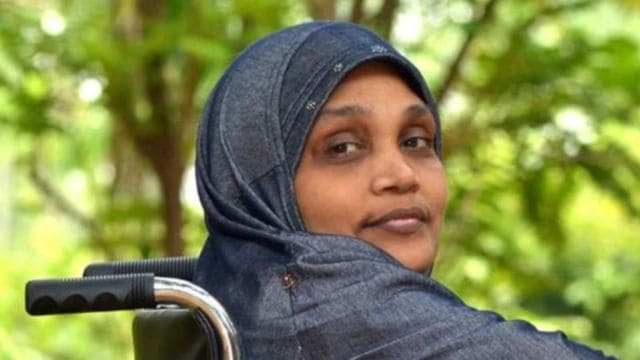
K V Rabiya, known for her prominent role in Kerala’s adult literacy programme, died at her home in Malappuram on Sunday. She was 59.
A native of Vellikakkad in Malappuram district, Rabiya fought against heavy odds and personal tragedies, right from childhood, to work relentlessly for the betterment of the differently abled and inspired thousands of women to enter the world of letters.
In 2022, she was honoured with Padma Shri for social work.
While still a school student, Rabiya contracted polio at the age of 12, which would eventually leave her paraplegic. Despite this, she completed her schooling and joined a college. However, she could not complete the degree course.
Rabiya then turned to books, reading everything from science to literature. Wheelchair-bound by then, Rabiya also started taking tuition classes for local children at a nominal fee.
It was by chance that Rabiya became a part of Kerala’s literacy movement, which began in the late 1980s. A college degree was a must for a literacy instructor. However, an instructor, who could not continue with the programme, sought Rabiya’s help. This marked the birth of a social worker and the beginning of her legacy.
She started teaching literacy classes in June 1990, and local elderly women and housewives were her students. She worked to convince women from orthodox families about the importance of education, and told them inspiring stories of world leaders and social reformers to get them interested in her classes.
When her number of students started swelling, Rabiya became a full-time literacy instructor. Later, she also established a library for women and became instrumental in the development of her locality, which did not have basic facilities such as roads and electricity, telephone, and water connections.
She eventually launched a voluntary organisation named Chalanam (movement), which also spearheaded literary programmes.
Her intervention was not limited to literacy alone. She started six schools for children with special needs and trained and empowered more than 250 women through a small-scale manufacturing unit. She was also at the forefront of the movement to create awareness against dowry and superstition. In later years, she was also actively involved in the e-literacy programme, Akshaya, in Malappuram.
In 2000, Rabiya was diagnosed with cancer, which she later overcame, after which she returned to social work.
In her autobiography, Swapnangalkku Chirakukalundu (Dreams Have Wings), Rabiya told the story of her inspiring life and how she chased her dreams. She also authored four other books, including the memoir, Mouna Nombarangal (Silent Pains). A documentary was also made on her life, titled Rabiya Moves.
She received several honours, including the Kannagi Devi Stree Shakti Puraskar, instituted by the Child Welfare Department of the Union government, in 2000. She also won the Youth Volunteer against Poverty award, jointly instituted by the Union Youth Affairs Ministry and the United Nations Development Programme.
source: http://www.indianexpress.com / The Indian Express / Home> India / by Shaju Philip, Thiruvananthapuram / May 05th, 2025
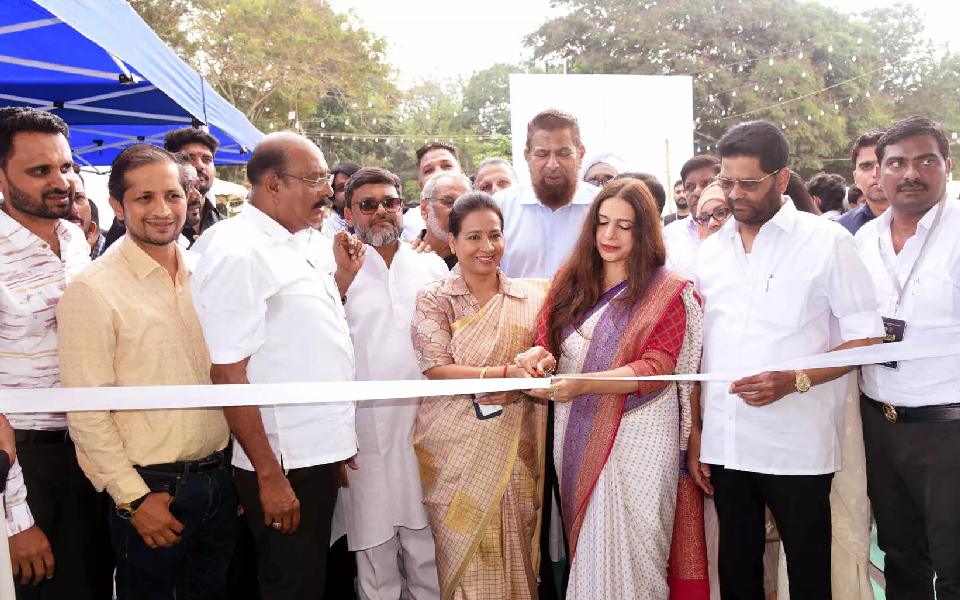
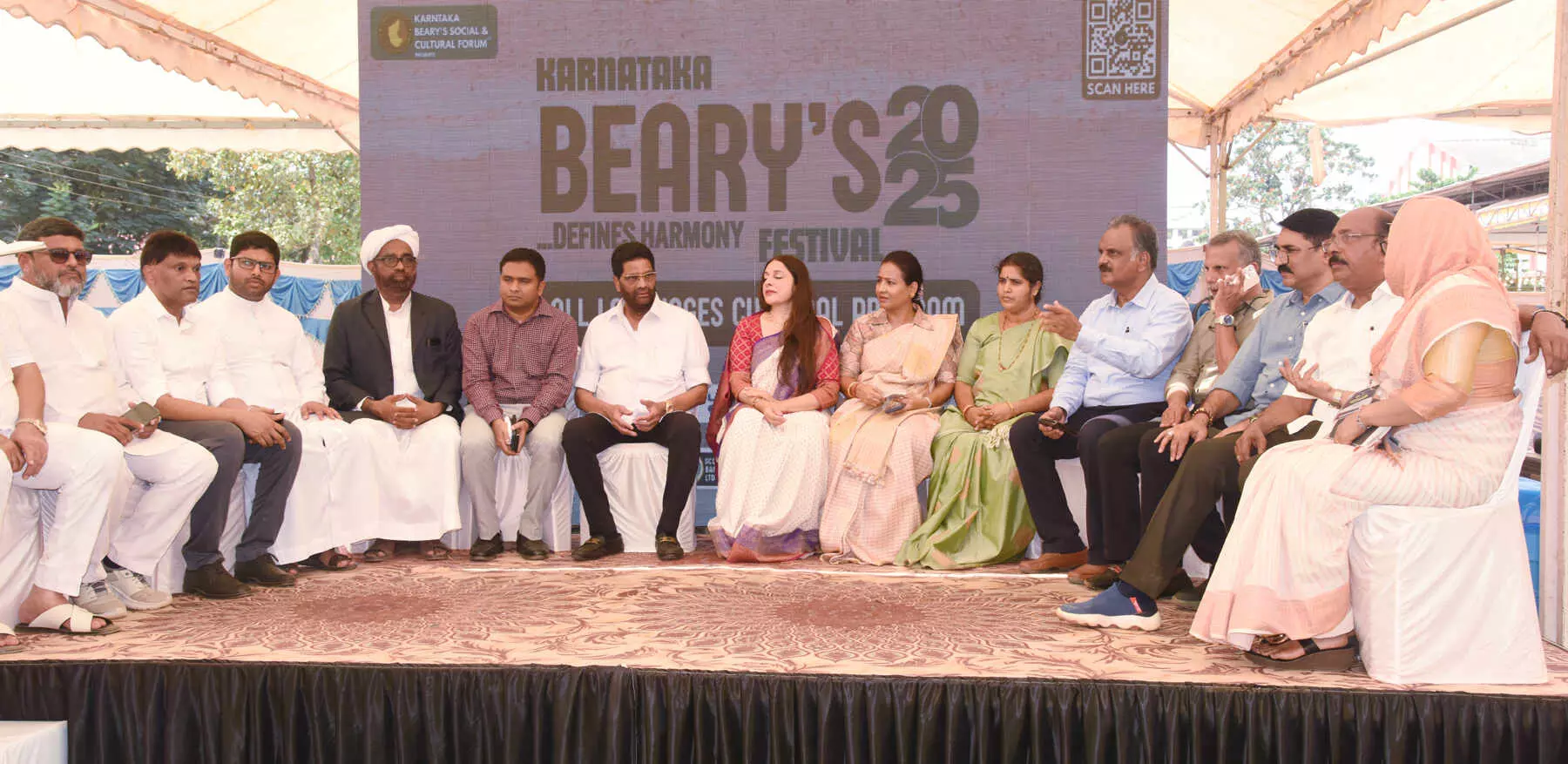
The two-day ‘Beary’s Festival 2025’ was inaugurated by Skill Development Corporation President Kantha Nayak at the Karavali Utsava ground by the Karnataka Bearys Social and Cultural Forum on Saturday.
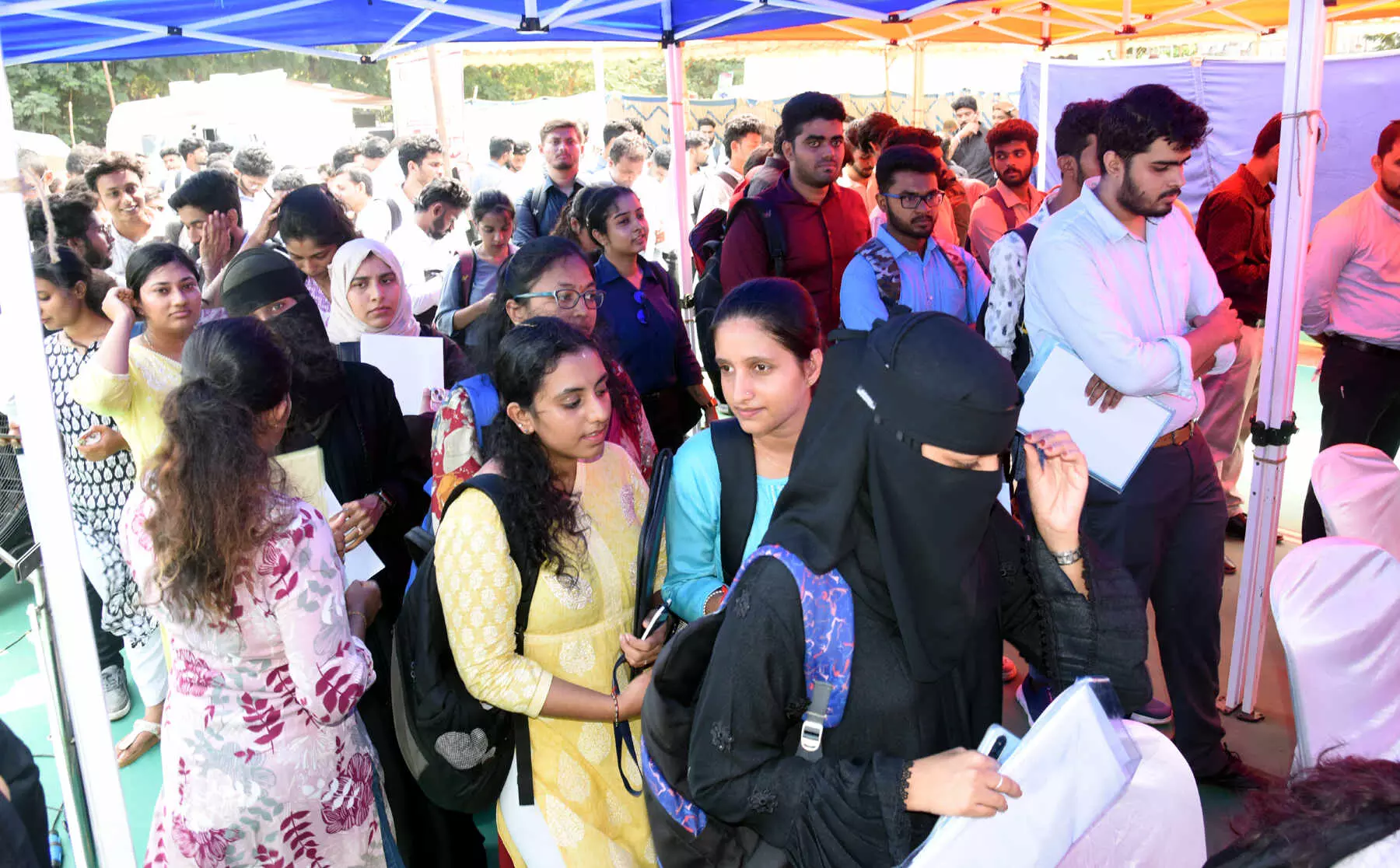
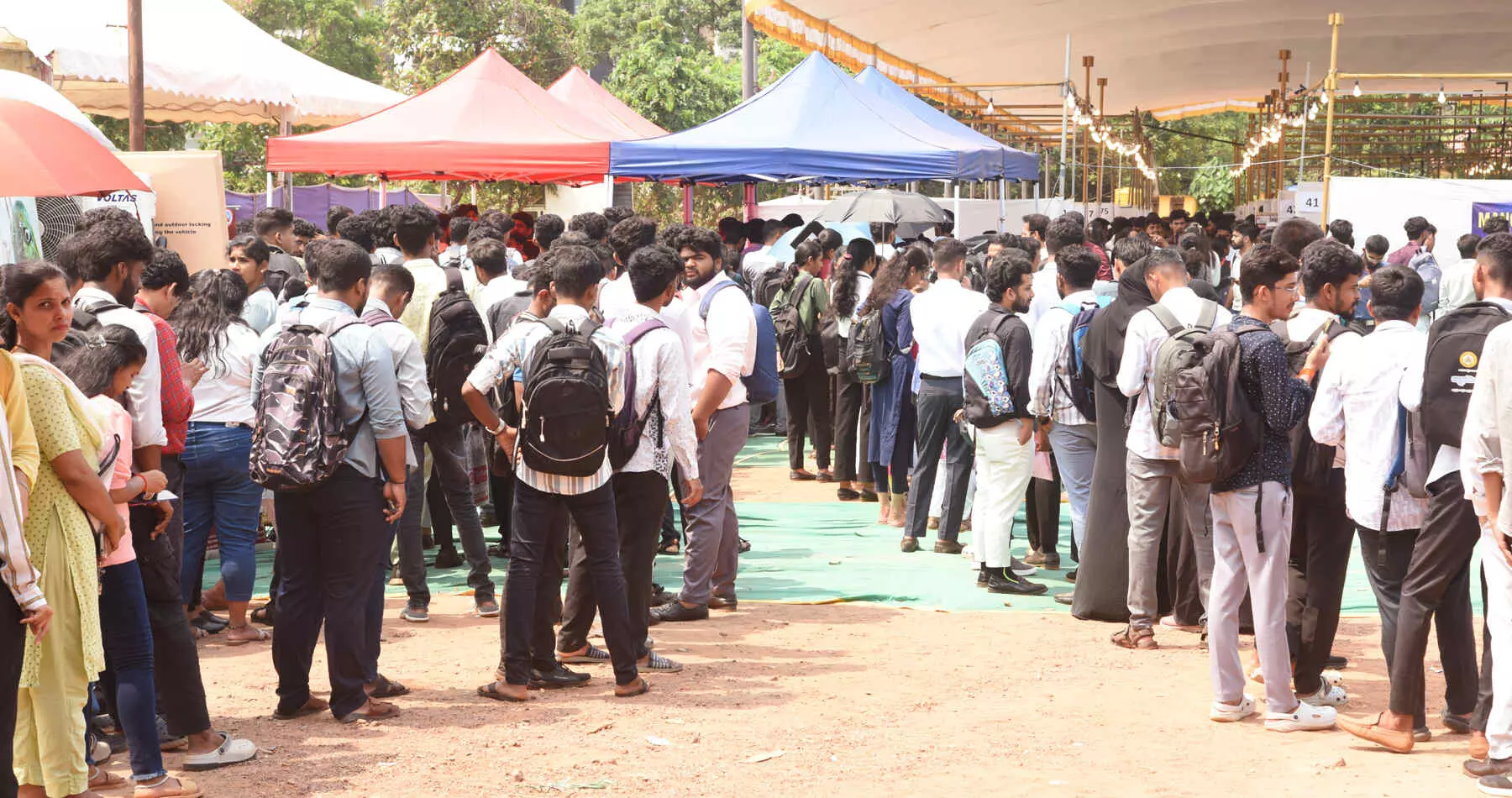
The festival includes a job fest which has attracted more than national and international 100 companies and more than 5,000 job applicants. Educational and career counseling sessions, medical check-up and blood donation camps, business meets, food fests, competitions, discussions on various issues, sessions for the benefit of youth and cultural events are also organized as a part of the festival.
Kantha Nayak, who addressed the gathering, called upon unemployed people to make the best use of the job fair as it would also make the organizers’ efforts worthwhile and advised the candidates who fail to get job not to be disappointed. She explained that it was important for candidates to hone their skills, along with gaining education, as it helps in job-hunting.
Dakshina Kannada Deputy Commissioner Mullai Muhilan lauded the efforts of the organizers for holding the festival aiming for communal harmony.
Pastor of Bejai Church Rev. Fr. Norman D’Souza spoke on the occasion and wished well for the festival.
Entrepreneur and TK Group member Umar TK was honoured with the ‘Motivational Award’.
Retired Superintendent of Police and Chairperson of the Organizing Committee GA Bava made the inaugural address. Moulana SB Mohamman Darimi offered dua for the programme. UT Farzana welcomed the gathering and Rafique Master was the Master of Ceremony.
State Cashew Development Board President Mamatha Gatti, NRI Forum Vice-president Dr. Arati Krishna, Presidency Group of Institutions Bengaluru Vice-chairman Suhail Ahmed, Presidency Group of Institutions Director Kausar Nisar Ahmed, Entrepreneurs Mustafa Bharat, Zakaria Jokatte, Sharief Whitestone, UT Ifthikar and UT Zulfikar Ali, SCDCC Bank Chairman Dr MN Rajendra Kumar, Nasir Luckystar, Musabba Beary, Mustafa Sullia, KM Aboobakar Siddiq, Sheik Irfani, Congress leaders KK Shahul Hamid, Padmaraj R and Pradeep D’Souza and Iqbal Parliya were among those who attended the inaugural event.
source: http://www.english.varthabharati.in / Vartha Bharati / Home> Karavali / by Vartha Bharati / April 19th, 2025
Anantnag District / Kupwara District : JAMMU & KASHMIR :
Two out of 12 aspirants from Jammu and Kashmir who qualified for the UPSC Civil Services 2024 have followed their passion for “Yeh Dil Mange More” (My heart wants more) and improved their rankings in the administrative services for which they had already qualified.
The duo is Mohammad Muneeb Bhat from Anantnag district of South Kashmir (AIR 131) who is already serving the J&K government after clearing the JK Public Service Commission examination; and Mohammad Haris Mir, AIR 314 from Kupwara district of North Kashmir.
Haris Mir hit the All India rank of 345 in the UPSC Civil Services examinations of 2023 and has improved his rankings.
Interestingly, a woman – Iram Choudhary from Rajouri district of Jammu region – is the topper from the UT with AIR 40.
Mohammad Muneeb Bhat, son of the government teachers from Anantnag town of South Kashmir, had set his goal of joining the civil services while pursuing his Civil Engineering degree at the Lovely Professional University in Punjab.
He told Awaz-The Voice that he started preparing for the coveted UPSC exam soon after completing his Engineering degree. He took the exam in 2017. “The motivation for civil services came from those already qualified persons from J&K like Shah Faesal (2009) and Athar Aamir Khan (2016), though there has been a considerable number of UPSC qualifiers over the past about two decades.
“I continued to achieve the goal” till my success in the last attempt this year”, Bhat said. He stayed in Delhi to attend different institutions including the Residential Coaching Academy (RCA) at the Jamia Millia Islamia.
While preparing for the UPSC examination, Mohamad Muneeb Bhat qualified for the J&K (UT) PSC examination in 2023 and was allocated the J&K Police Services. He is presently undergoing probation with the UT government.
His father, Mohammad Ashraf Bhat retired as a Zonal Education Officer (ZEO) last year, while his mother recently retired from service.
Mohammad Haris Mir qualified for the UPSC with AIR 345 last year but made yet another attempt to achieve a higher rank. He was allotted Revenue Services ((IRS) and is presently undergoing probation at the National Academy of Direct Taxes (NADT) in Nagpur.
“To achieve a higher rank, I prepared during my probation”, Mohammad Haris Mir told Awaz The Voice from Nagpur. “The motivation (to achieve a higher rank) was like any other aspirant and the hard work has been fruitful”, he said.
As it’s permitted, Haris took leave fromn the Lal Bahadur Shastri National Academy of Administration (LBSNAA), Mussoorie, to prepare for the mains of the 2024 examinination and later joined the Uttarakhand, and took leave to prepare for mains of the Civil services 2024. He later joined NADT at Nagpur.
Mohammad Haris was also motivated by the success of senior bureaucrats like Shah Faesal and Athar Amir. He qualified for the UPSC on the first attempt last year.
Though his father is a doctor, Haris opted for the humanities. Hailing from a remote area of Handwara in the border district of Kupwara, Dr Mir had shifted to Srinagar as he was posted in the Oncology Department at the SKIMS Hospital, Soura in Srinagar.
After completing the XII examination, Haris, 26, joined the 5-year degree course in Law, B A, LL.B from the Jamia Millia Islamia, Delhi. Though Jamia Millia Islamia offers free coaching to students from minority communities for the UPSC examinations (Residential Coaching Academy) Haris preferred to prepare without joining coaching classes. “Soon after completing his Law degree, I began to prepare through self-study for the UPSC examination….it was a full year of studies involving hard work, which led me to clear the examination in the first attempt”, he told Awaz-the Voice
source: http://www.awazthevoice.in / Awaz, The Voice / Home> Stories / by Ehsan Fazili, Srinagar / April 30th, 2025
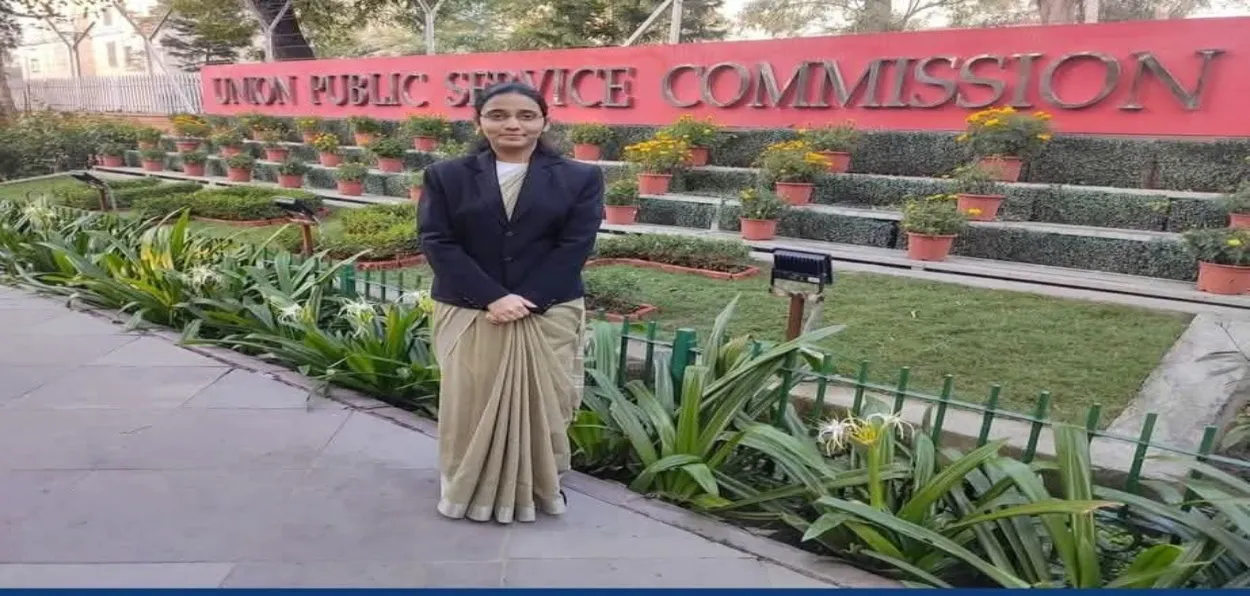
Farkhanda Qureshi of Balaghat, Madya Pradesh, outside UPSC office in Delhi
Farkhanda Qureshi was in her eighth grade when she saw district Collector B. Chandrasekharan son a local Television channel. This visual ignited a dream in her mind; she too wanted to become a civil servant. Today this Muslim woman from from Balaghat, a small town of Madhya Pradesh, has realized her dream which she nurtured over the years with passion, hard work, overcoming failures and perseverance.
Farkhanda Qureshi has secured 67th rank in the UPSC 2024 Civil Services Examination and would soon join the Lal Bahadur Shashtri National Academy for Administration, Dehradun, for training to become an Indian civil servant.
“I had decided that one day I will also become a collector and work for society.” She credits her success in her fourth attempt to her family’s support.
She started preparing for UPSC in 2021. Despite failures, she did not give up. She says, “My parents did not let me break down; they motivated me and told me that I will get success one day. Had they not supported me, I would have probably given up in the first or second attempt,” she told the told media persons.
Farkhanda believes that for a tough exam like UPSC, studying for 18 hours is not necessary, but consistency and strategy are. “I studied for 6 to 8 hours every day, but I studied every day. Old year papers, standard books, current affairs and newspapers were an important part of my preparation.”
Farkhanda Qureshi flanked by her parents Nikhat Anjum and Abdul Malik Qureshi
Farkhanda, who completed her 10th from St. Mary’s School and 12th from Methodist Mission, says, “Being from a small town like Balaghat has never been my weakness. I believe that if the youth here get the right direction and resources, they can make a name for themselves across the country.”
Farkhanda considers her father Abdul Malik Qureshi, who is a lawyer, and her mother Nikhat Anjum Qureshi, a homemaker, her heroes and credits her success to them.
Her father said, “Today people recognize me by my daughter’s name, nothing can give me greater happiness than this.”
There is a festive atmosphere in the area, the collector congratulated Farkhanda and and wished her a bright future. The local mosque committee (Anjuman( also felicitated her and called her inspiration for the Muslim youth.
Out of the 1,009 candidates recommended by UPSC this year, 26 are Muslims, though none made it to the Top 25.
Iram Choudhary (Rank 40) and Farkhanda Qureshi (Rank 67) are the highest-ranking Muslim candidates in the merit list. A total of 97 Muslim candidates were selected for the interview stage, and the success rate stands at 2.57%, lower than previous years.
source: http://www.awazthevoice.in / Awaz, The Voice / Home> Stories / by Abdul Wasim Ansari, Balaghat, Bhopal (name error edited) / April 26th, 2025
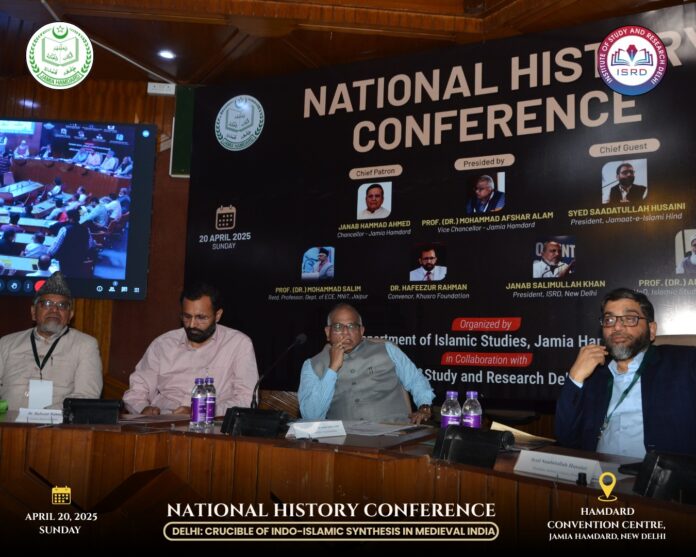
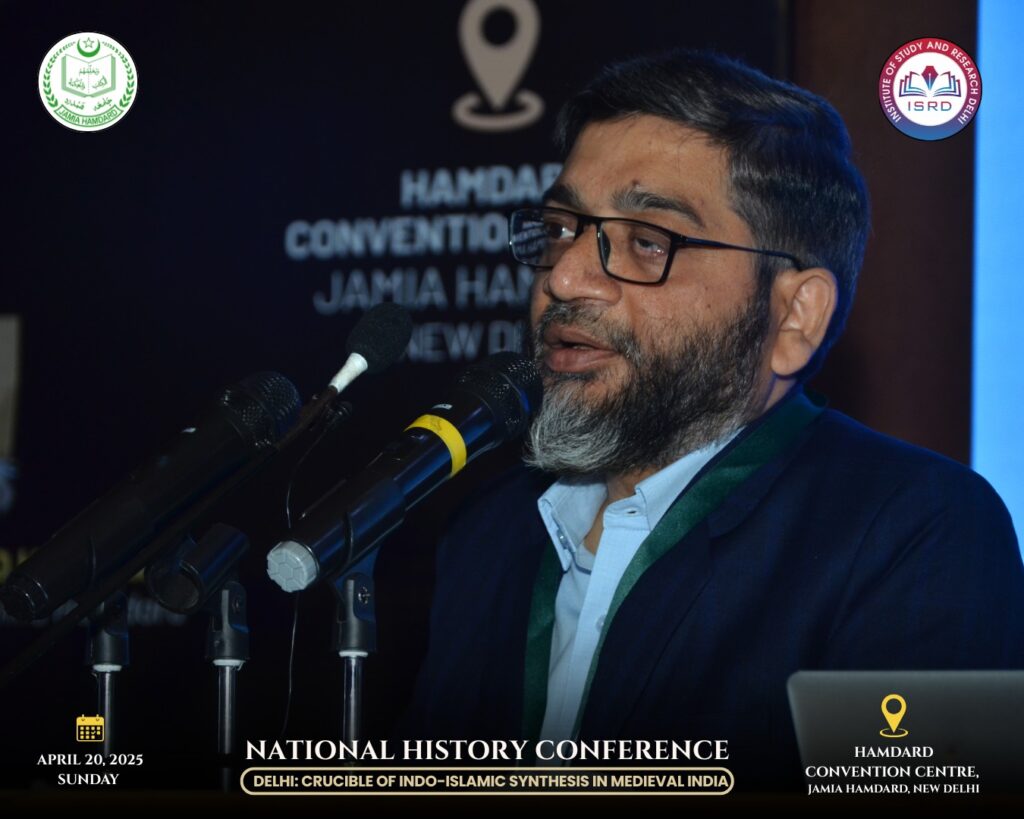
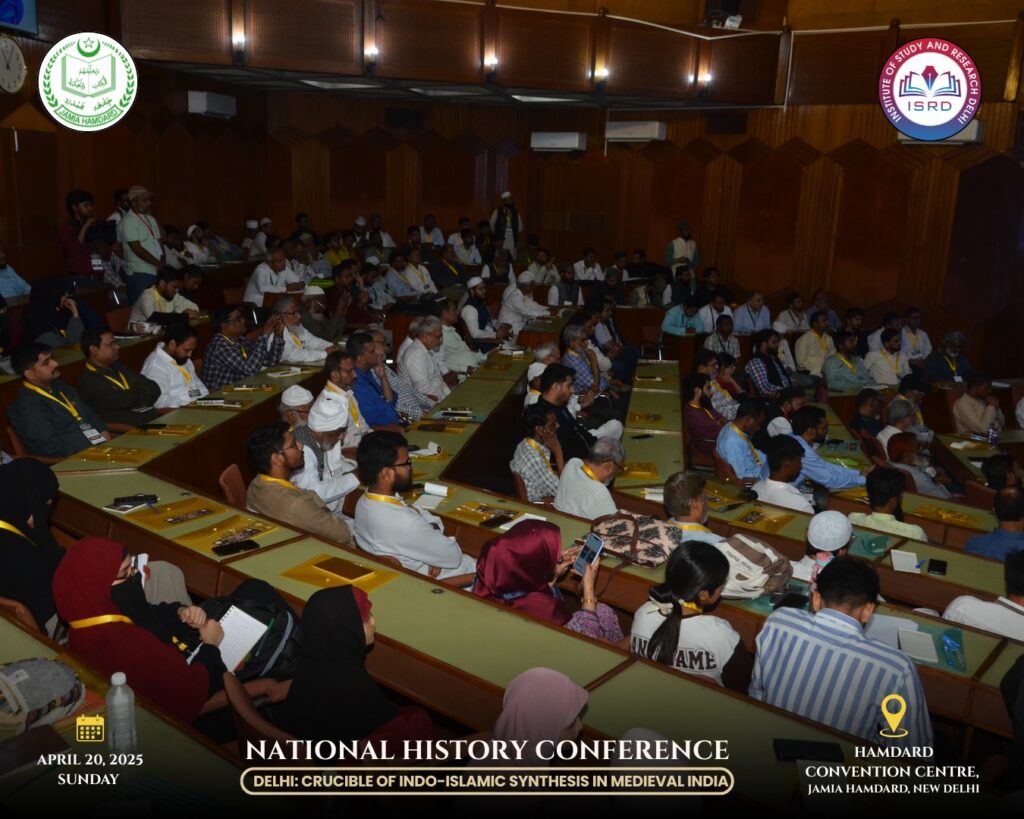
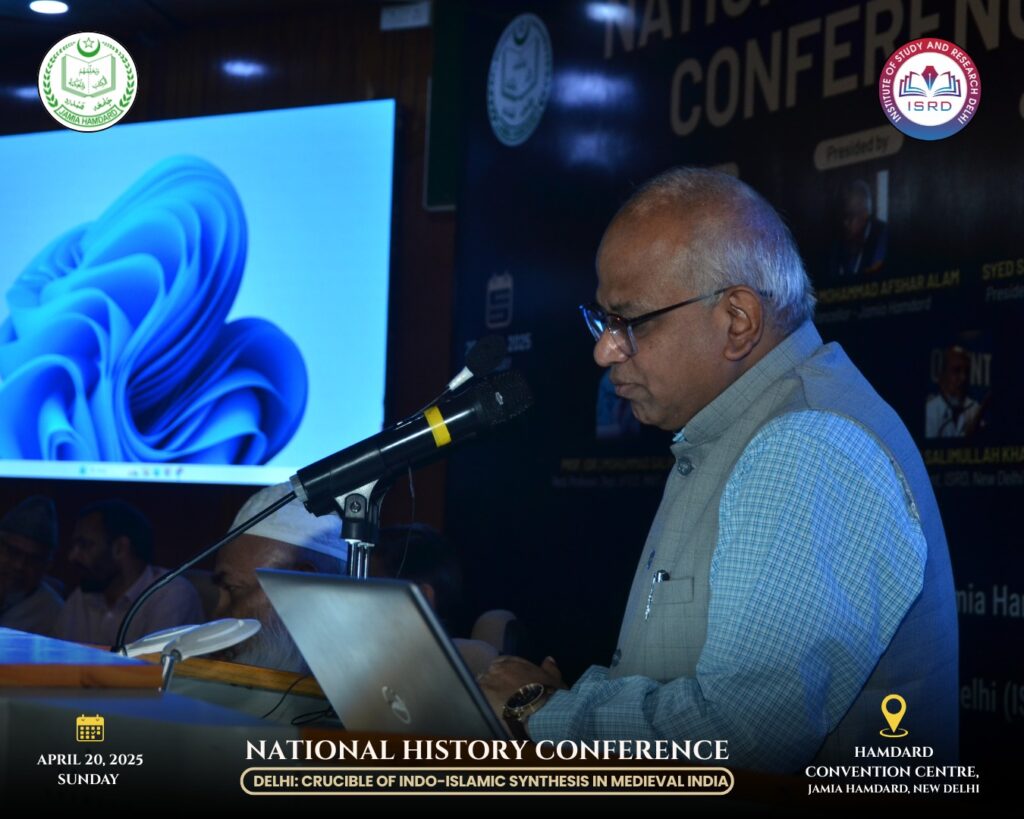
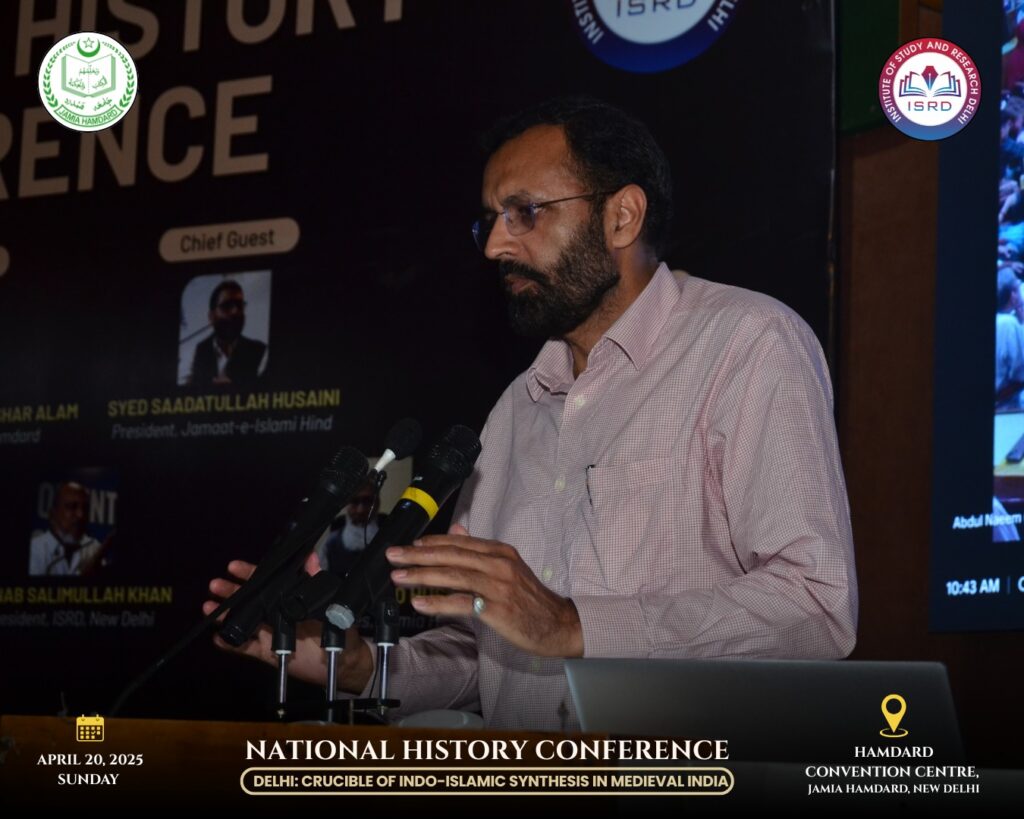
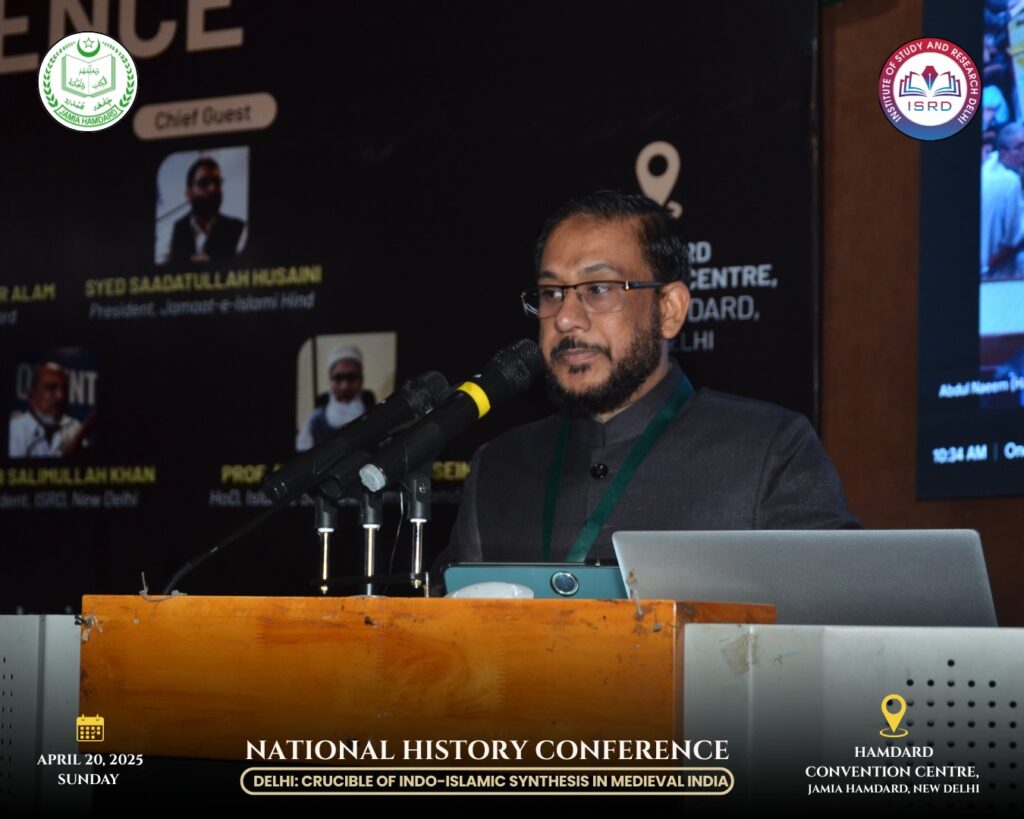
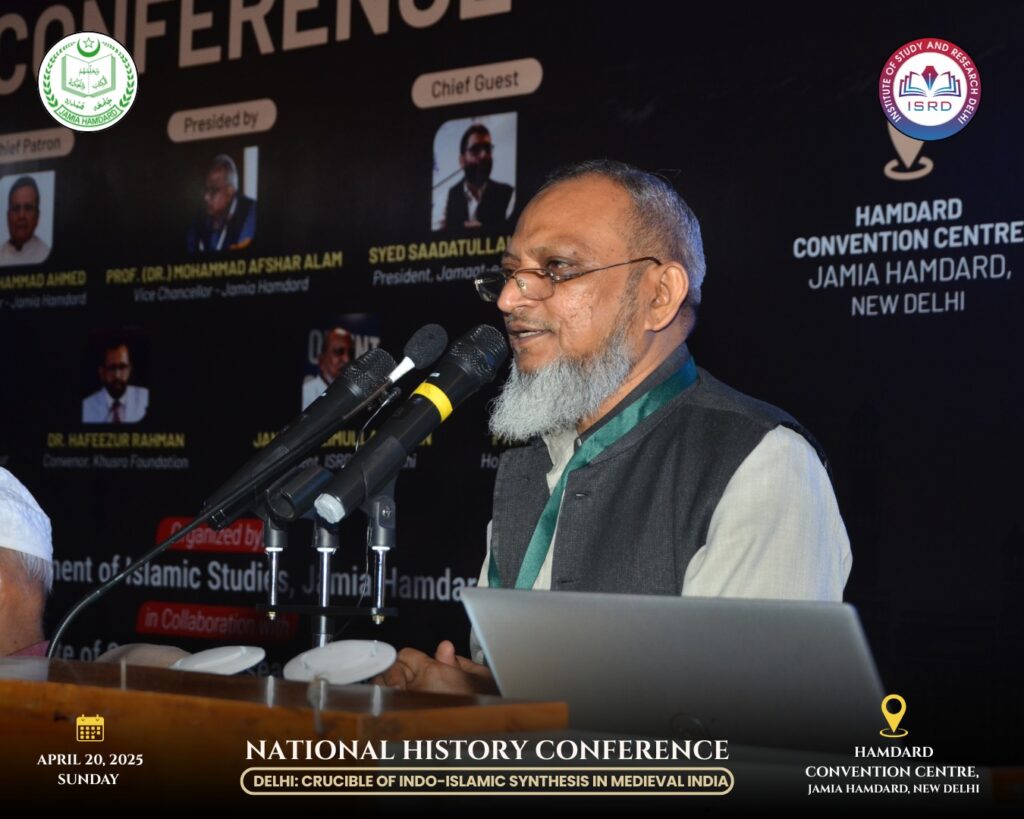
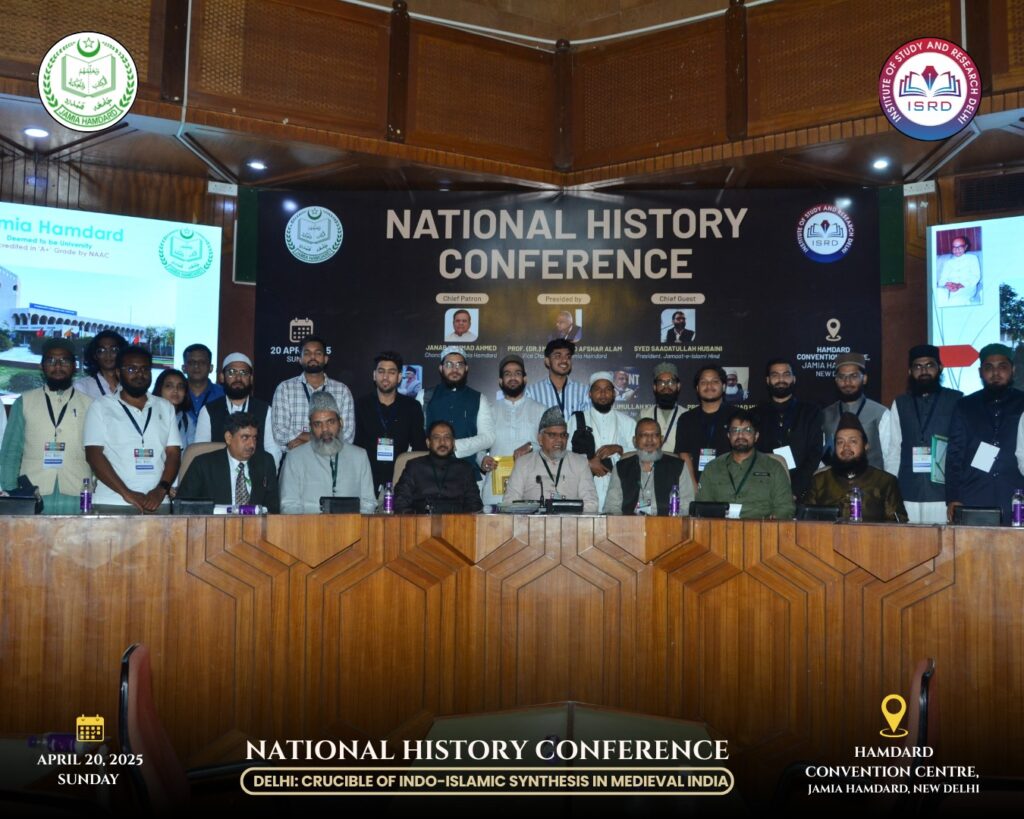
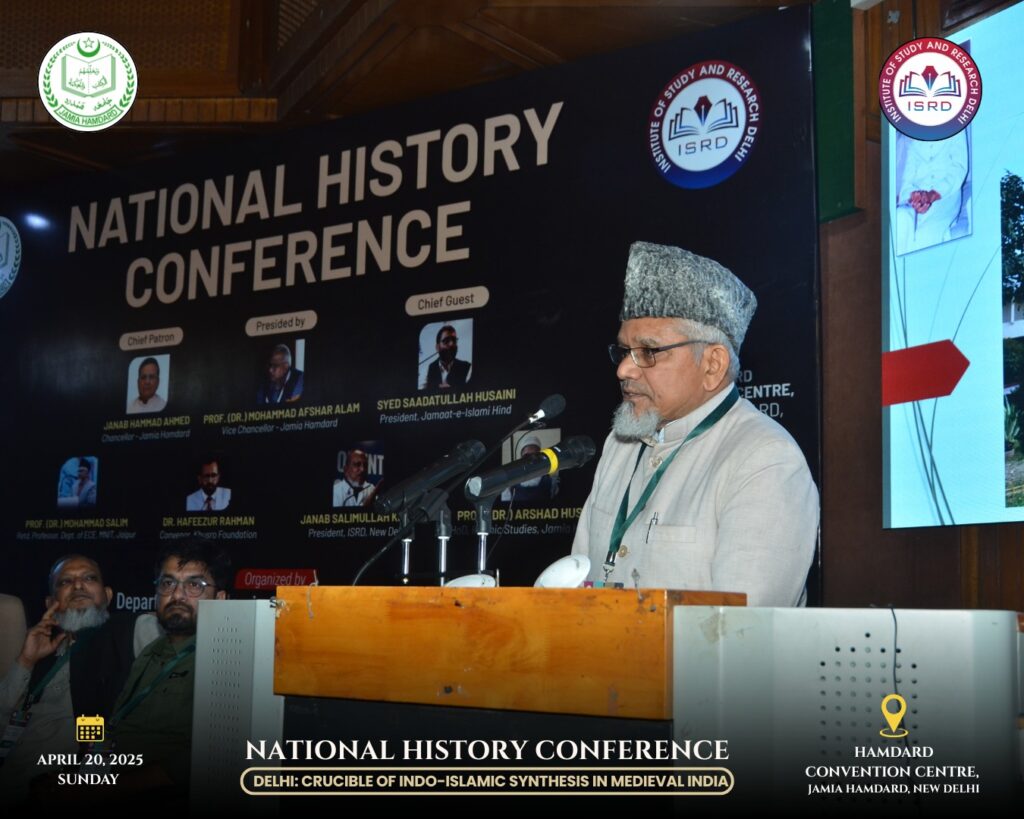
At a landmark one-day national history conference, prominent scholars, professors, and historians Sunday gathered to commemorate the unparalleled contributions of Muslims to India’s cultural and civilizational fabric. Titled “Delhi: Crucible of Indo-Islamic Synthesis in Medieval India,” the conference was hosted by the Department of Islamic Studies, Jamia Hamdard University, in collaboration with the Institute of Study and Research Delhi (ISRD), New Delhi.
Held at the Hamdard Convention Centre, Jamia Hamdard, the conference aimed to explore the profound impact of Islamic heritage on shaping medieval Indian culture, society, and governance, with a special emphasis on Delhi as the epicenter of this cultural convergence.
A wide array of research papers was presented under several sub-themes aligned with the central topic, including the Advent of Islam in North India , Educational Institutions and Knowledge Production, Indo-Islamic Architecture, Sufi Traditions and Sacred Spaces, Language and Literature, Music and Performing Arts Role in the Freedom Struggle, Calligraphy and Decorative Arts, Culinary Heritage and the Culture of Cuisine, Women’s Contributions, Science and Technology, Mughal Gardens and Economic and Administrative Innovations.
As a chief guest, Jamaat-e-Islami Hind Syed Sadatullah Husaini emphasised that the Quran repeatedly encourages the study of history and historical events to extract lessons and guidance. “If lessons are taken from history, it becomes an asset,” he asserted, adding that history serves as a mirror of society.
Refuting the prevailing negative narratives surrounding Muslims in India, Husaini remarked, “Muslims are not outsiders or foreign invaders. They are developers, not destroyers; builders, not colonizers; inheritors, not intruders.” He highlighted how the Delhi Sultanate acted as a conduit, connecting India with the thriving global centers of knowledge in the Muslim world.
He cited the example of Sanskrit scholars and experts in numerics being recognized and honored in the court of the Abbasid Caliphate. The Arabs, he noted, never appropriated the intellectual achievements of Indian scholars but instead gave them due credit. “Muslim Sultanates helped disseminate India’s hidden treasures of knowledge across the globe,” he stated.
Husaini also praised the architectural marvels of the Delhi Sultanate, such as the Qutub Minar, calling them a testament to the era’s artistic grandeur. He emphasized that the most valuable contribution of Muslim rulers was the promotion of unity and human equality, bringing together people across religions, castes, and classes under a shared identity of humankind—a concept Allama Iqbal referred to as “Wahdat-e-Khaas Quwwat” (special power of unity).
Referencing Maulana Abul Kalam Azad, he recalled Azad’s fervent appeals to Muslims at the time of Partition to remain in India, invoking their emotional and civilizational connection to iconic Islamic monuments such as the Taj Mahal, Red Fort, and Qutub Minar.
Dr. Afshar Alam, Vice Chancellor of Jamia Hamdard University, presided over the inaugural session. He provided a historical overview of Islamic rule in India, tracing it from Mohammad Ghori’s arrival in the 12th century to the British colonial era, covering the Slave, Khilji, Tughlaq, Sayyid, Lodhi, and Mughal dynasties.
He emphasized how Delhi became the nucleus of Indo-Islamic cultural fusion, with Central Asian and Persian architectural styles merging with indigenous Indian designs. This, he said, resulted in a unique Indo-Islamic architectural identity, visible in the city’s rich heritage.
Alam also elaborated on the contributions of the Islamic period in education, science, music, literature, governance, and social reform, asserting that this synthesis laid the foundation of what is now referred to as South Asian culture. “This fusion didn’t just shape Indian civilization—it gave it depth, diversity, and resilience,” he concluded.
Dr. Hafeezur Rahman, convenor of the Khusro Foundation and an expert in Urdu and Persian, delivered speech as a special guest. He reflected on historiography, distinguishing between pro-establishment and anti-establishment narratives, and praised Islam’s contribution to historical objectivity through the tradition of “Asma al-Rijal” (biographical evaluation of narrators).
He noted, “It is often said that the Mughals gifted India three unparalleled treasures: the Taj Mahal, Mirza Ghalib, and the Urdu language.” Rahman particularly celebrated the role of Sufi saints, especially Hazrat Nizamuddin Auliya and his disciple Ameer Khusrau, a 13th-century polymath and the founding father of the Urdu language. Khusrau, he said, was also a distinguished scholar in astrology, astronomy, and music.
Quoting Khusrau’s oft-repeated teaching from his spiritual mentor—”Agar duniya aap ke raste mein kaante bichhaye, to tum phool bichhao” (If the world throws thorns in your path, you lay down flowers)—he emphasized the Sufi message of love and resilience.
Dr. Hafeezur Rahman further illustrated how cultural synthesis led to creations like biryani and sherwani, both products of Indo-Islamic fusion. He expressed hope that the academic papers presented at the conference would become historical documents in their own right.
Dr. Fazlur Rahman, Assistant Professor in the Department of Islamic Studies, anchored the conference and gave a brief introduction to its aims.
ISRD Secretary and Organizer Asif Iqbal outlined five core objectives and sub-themes of the event. Asif Iqbal emphasized that civilizational interactions—such as those between Islam and Indian culture—often result in positive transformations. He stated that Muslims, while introducing new cultural and civilizational values to the subcontinent, also embraced indigenous practices. “This mutual exchange reshaped the cultural and intellectual landscape of the region,” he said.
ISRD President Saleemullah Khan offered reflections on the ethical teachings of Prophet Muhammad, citing his instruction to Hazrat Ali to return belongings even to those who plotted to kill him during the Hijrah (migration to Madinah). He also quoted Urdu writer Rashidul Khairi, who praised the skills, cooperation, and intelligence of Delhi’s women during the medieval era.
Professor Arshad Hussain, Head of the Department of Islamic Studies at Jamia Hamdard, delivered the welcome address and warmly greeted all dignitaries and guests.
The day featured parallel academic sessions, with 50 research papers presented by scholars and students from institutions including Jamia Millia Islamia (JMI), Aligarh Muslim University (AMU), Jawaharlal Nehru University (JNU), Maulana Azad National Urdu University (MANUU), National Institute of Technology (NIT), Delhi University, and Jamia Hamdard.
Sessions were chaired by eminent professors such as Prof. Obaidullah Fahad (AMU), Dr. Faizan Ahmed (National Archives of India), Dr. Mohiuddin Ghazi (former Dean, Al Jamia Al Islamia, Kerala), Prof. Azizuddin Husain, and Prof. Parvez Nazir. Guest speakers received mementoes, and research scholars were presented with certificates.
In the valedictory session, Prof. Mohammad Salim Engineer, retired professor from MNIT Jaipur, addressed emerging researchers, emphasizing key research ethics—many of which, he noted, align with Islamic principles. These include academic honesty, objectivity, peer review, and depth over volume. “There’s no shortcut to excellence,” he advised. “Hard work can even surpass intelligence.”
In light of the current communal atmosphere, he urged the Muslim community to take charge of creating history, not just recalling it.
Abdul Kalam, co-convenor of the event, delivered closing thanks, while Dr. Shadab Musa, Assistant Secretary of Jamaat-e-Islami Hind, offered a speech reflecting on the present socio-political environment.
source: http://www.indiatomorrow.net / India Tomorrow / Home> Breaking News> Education> National Interest / by Anwarulhaq Baig / April 21st, 2025