Tag Archives: Muslims of India

Assam: 2 Hafiz-e-Quran from Assam on their way to become doctors

ASSAM :

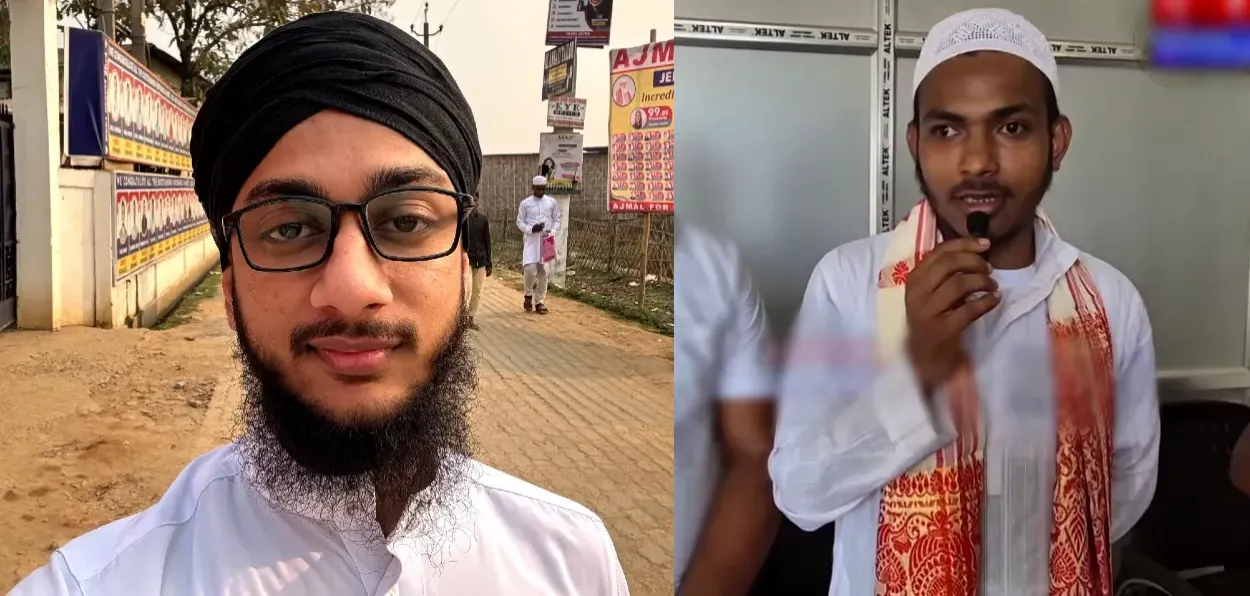
Hafiz Huzaifa Laskar (right) and Hafiz Momtazul Hassan Choudhury

Most people have a misconception that students of madrasa can only become Hafiz or Maulana. Breaking this myth two Hafiz-e-Quran (Degree in memorizing Quran) in Assam have cracked the National Eligibility cum Entrance Test 2025, (NEET) examinations, 2025, and are on their way to joining Medical college to fulfill their dream of becoming doctors.

Hafiz Momtazul Hassan Choudhury and Hafiz Huzaifa Laskar proved that one can become a doctor even after enrolling themselves in a Madrasa.

Thanking his parents and teachers, Momtazul Hassan Choudhury said: “If anyone works selflessly behind their children’s success, it is their parents. At first, when I was weak in studies and did not even know the basic formulae of Mathematics, my brothers Noor Ahmed and Anwar Hussain Laskar helped me.”
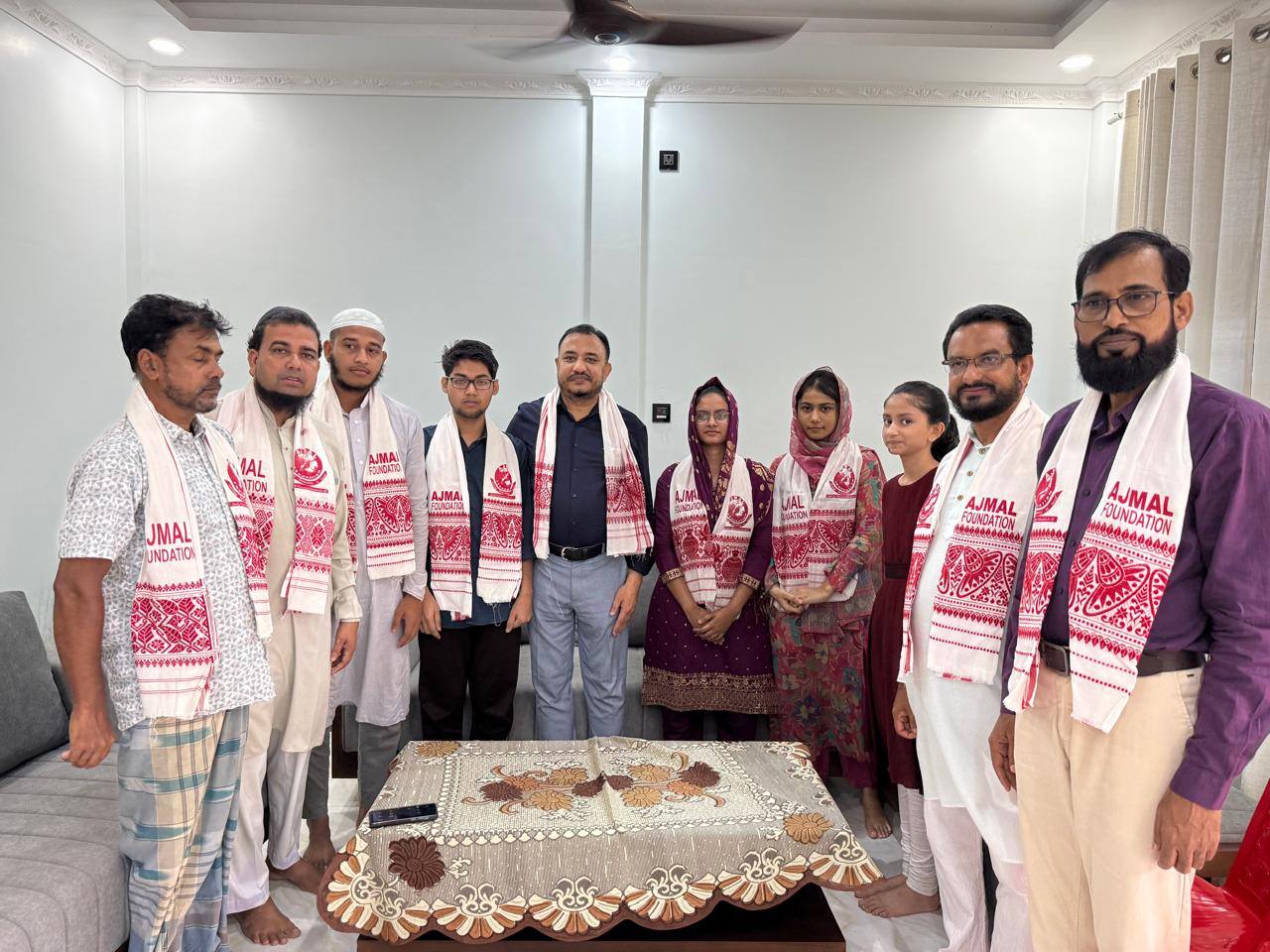
Hafiz Huzaifa with other successful candidates of Ajmal Super40’s andd their guardians and Ajmal Foundation officials

“I want to go further. I want to crack higher examinations. Please pray for me. And I will work tirelessly to be successful,” he added.

Momtazul Hassan Choudhury took the NEET examination after attending coaching classes at the Anfar Super 50 at Hojai in central Assam. This is the second year of the center preparing students for the NEET examination.

This year, Momtazul Hassan Choudhury and seven other students from the centre have cleared the NEET examinations.

Maulana Mustaq Anfar, founder of the coaching center had waived off the fee for Hafiz Momtazul Hassan Choudhury.

On the other hand, Hafiz Huzaifa Laskar of Ganirgram Shantipur in Katigora area of the Cachar district wrote the NEET examinations after preparing at the Ajmal Super 40, another Hojai-based coaching institute. Huzaifa Laskar, son of Abdullah Laskar and Fatima Bilkis Laskar, cleared the NEET with distinction with 547 marks. Huzaifa’s brother Muyaz Laskar recently cracked the JEE examination and is studying at NIT Silchar.
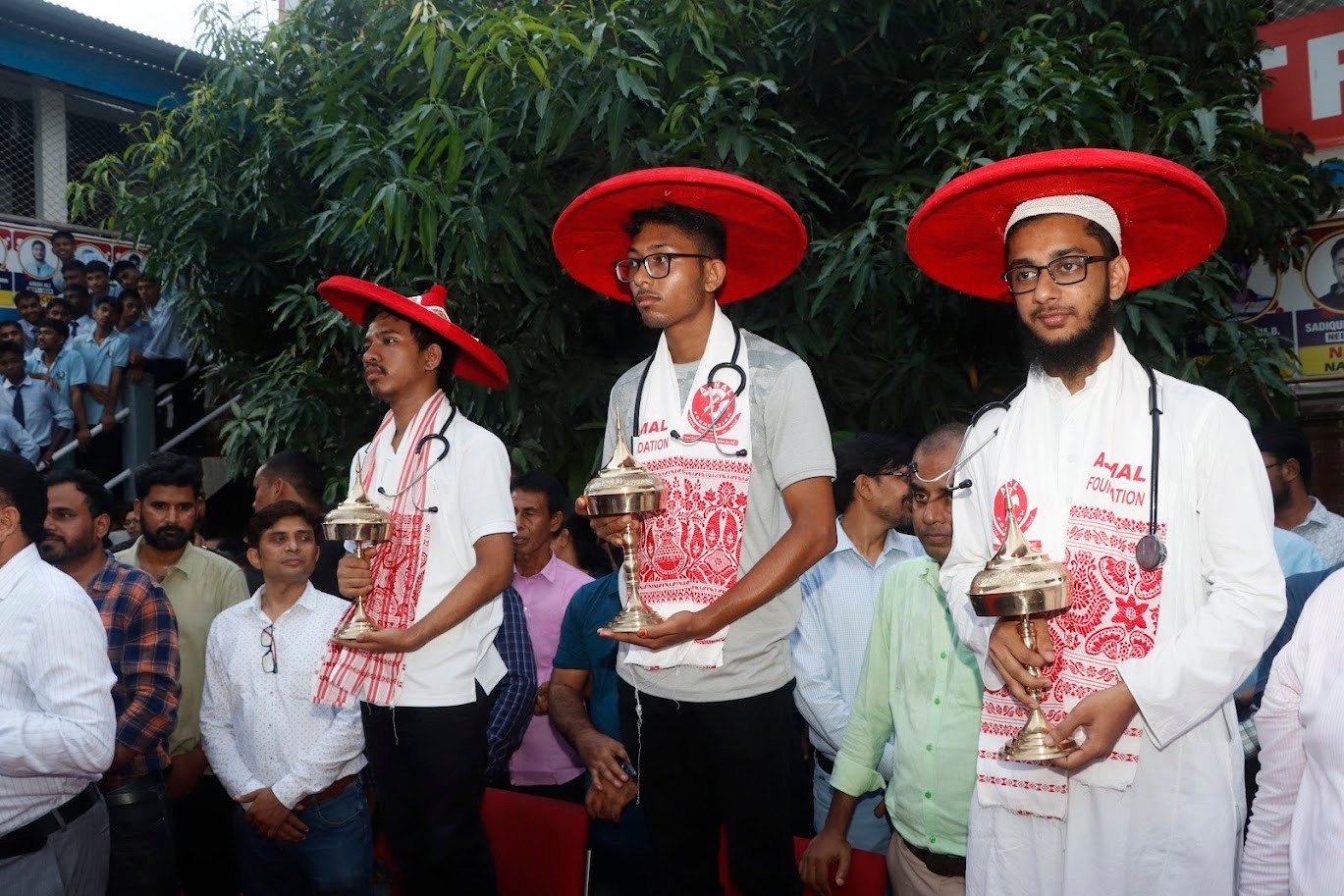
Hafiz Huzaifa Laskar being felicitated along with other successful NEET at Ajmal Super40 in Hojai

Talking to Awaz –The Voice, Islamic scholar Maulana Nurul Amin Qasimi said: “One can pursue general education along with madrassa education. People may not have understood this. Those who want to study for Hafiz, they enroll themselves in madrassas after studying general school till class five or six. A good student completes the Hafiz course in three years. He also pursues general education alongside the standard of Class IX. Once they clear Hafiz, they are promoted to Class IX where they are registered for the High School Leaving Certificate examinations and they concentrate on the rest of their general education from there.”

“There are many examples of students educated in madrasas who have secured good jobs or got good positions in society. So, nowadays people are understanding it and preparing accordingly to become doctors, engineers, professors, etc after completing Hafiz or Maulana courses in madrassas,” Qasimi added.

A total of 22,76,069 students from across India applied for the NEET UG examination this year out of which 22,09,318 took the examinations. 12,36,531 students emerged successful in the examination.

Mohammad Musa Kalim of Assam secured the All India 509th rank in the NEET 2025 examination. Musa Kalim has topped the list of students in Assam. Musa Kalim secured the 99.97 percentile.

From Assam, 41,848 candidates wrote the examination in 2025 and 19,809 cleared it.

source: http://www.awazthevoice.in / Awaz, The Voice / Home> Story / by Ariful Islam, Guwahati / June 20th, 2025
A Madrasa Like No Other: Inside India’s First Inclusive Madrasa for the Deaf, Mute and Blind

Pune, MAHARASHTRA :

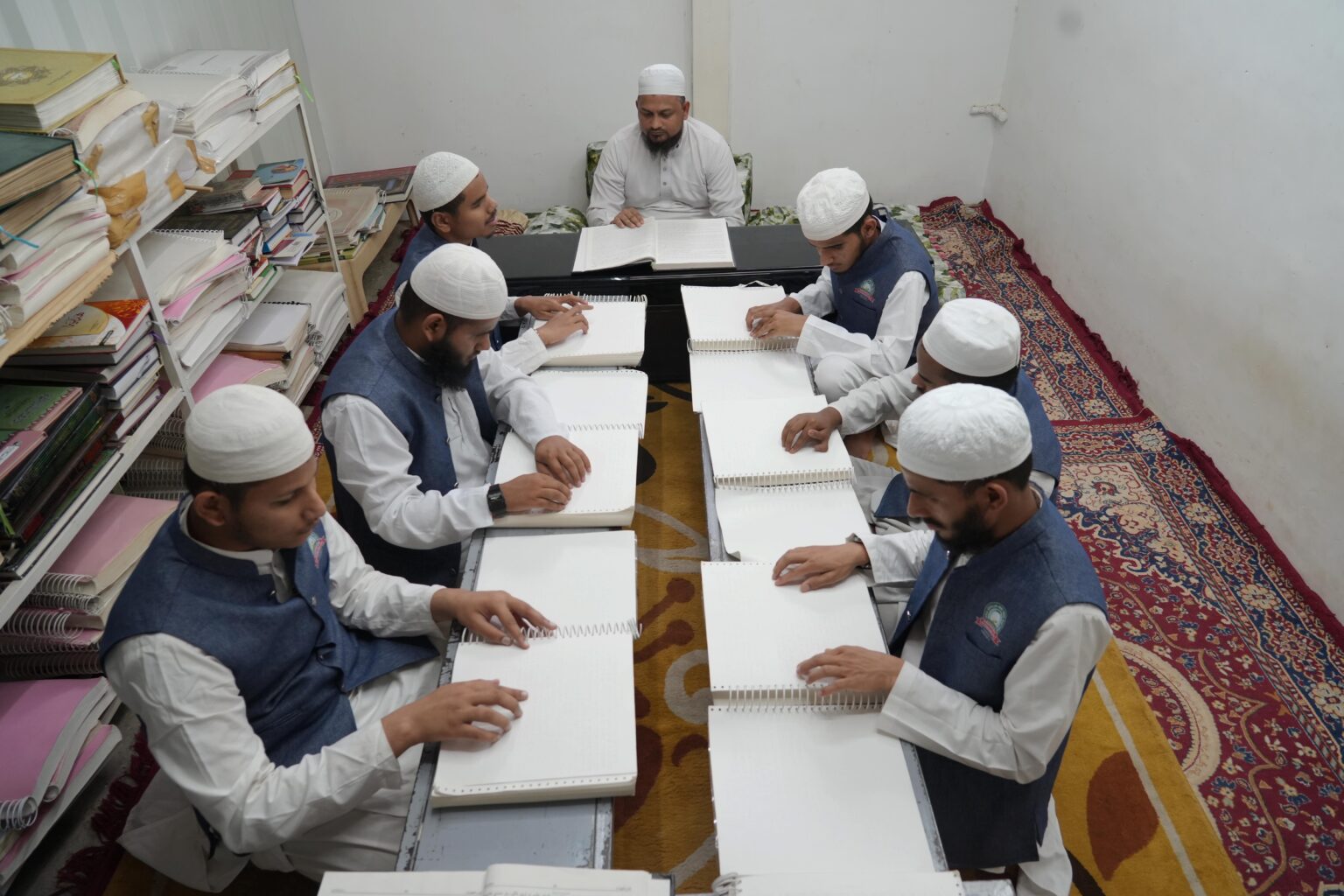
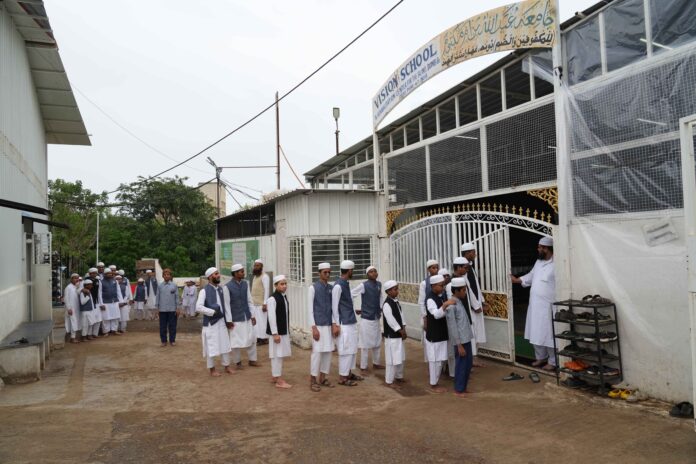
Students at Jamia Abdullah Ibne Umme Maktoom, India’s first inclusive madrasa for differently-abled children in Pune, Maharashtra, walk in a queue as they enter the Vision School campus. The madrasa provides free Islamic and contemporary education to mute, deaf and visually impaired students from 17 states across India.

In Pune, Maharashtra, Jamia Abdullah Ibne Umme Maktoom offers free Islamic and contemporary education to mute, deaf, and blind children from across 17 states—proving that disability is no barrier to dignity, faith, or ambition.

Pune (Maharashtra): 

In a small park in Maharashtra’s Pune, on a Thursday morning in May, a group of well-dressed uniformed students stood barefoot, wearing white skull caps. Many of them were mute or visually impaired. As the national anthem played in the background, the students stood in solemn attention, while others – mute and deaf – used sign language to express the lyrics. It turned the moment into a display of patriotism and unity.

This is the usual beginning of the day at Jamia Abdullah Ibne Umme Maktoom (a religious seminary in Pune), where hundreds of mute, deaf and blind students receive free Islamic and contemporary education.

“It took us years to convince families of the importance of education for their special children,” says Nayeem Ahmad Qasmi, a secretary of the madrasa.

The institution was founded in 2013 with only two children with the vision to uplift differently abled children from across India through inclusive education.

According to the Census of 2011, approximately 2.2% of the population, around 26.8 million people, were identified as living with disabilities.

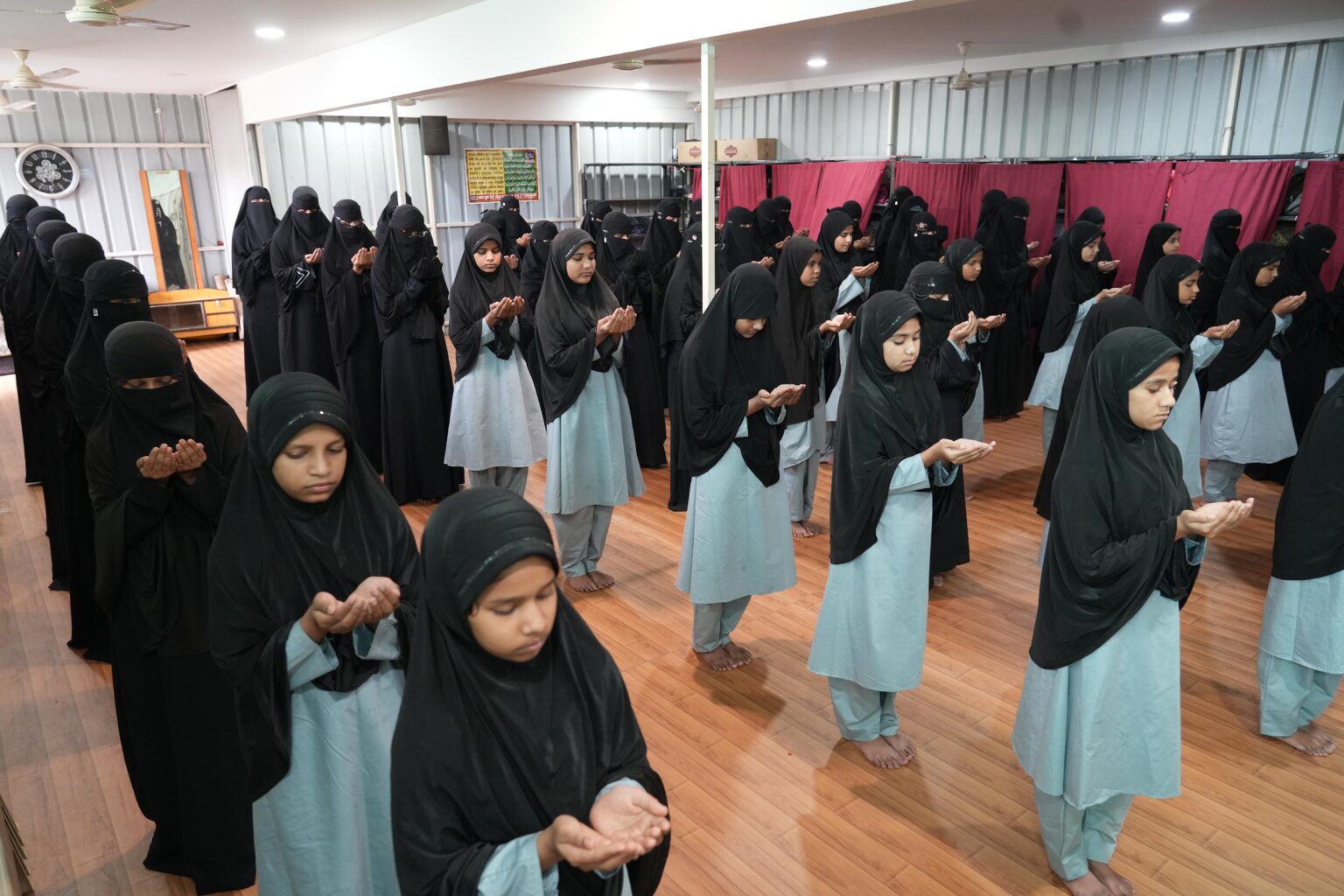
Female students at Jamia Abdullah Ibne Umme Maktoom in Pune, Maharashtra, offer prayers during school hours. The madrasa currently educates over 70 differently-abled girls – many of whom are mute, deaf or visually impaired – providing them with a safe and inclusive environment for both Islamic and contemporary learning.

Unfortunately, many families abandon differently abled children or keep them confined at home – considering them a burden.

“It is the duty of every person to support differently abled children so they can prove their capabilities,” he adds.

Many students come from rural areas in different states, where families often do not know the value of education or the opportunities available to them.

“Before coming to Jamia, I did not know anything about Islamic and contemporary education,” says 18-year-old Rehan Saleem from Jalgaon in Maharashtra.

Many students have received opportunities to present their skills on different platforms across India. Several have represented their school and secured positions in various sectors.

“By the grace of God, I have completed the Hifz-e-Quran (memorisation of the entire holy Quran) at this Jamia and got the opportunity to perform Umrah,” says Rehan.

Students at Jamia Abdullah Ibne Umme Maktoom in Pune attend a classroom session where they receive both Islamic and contemporary education, guided by their teacher.

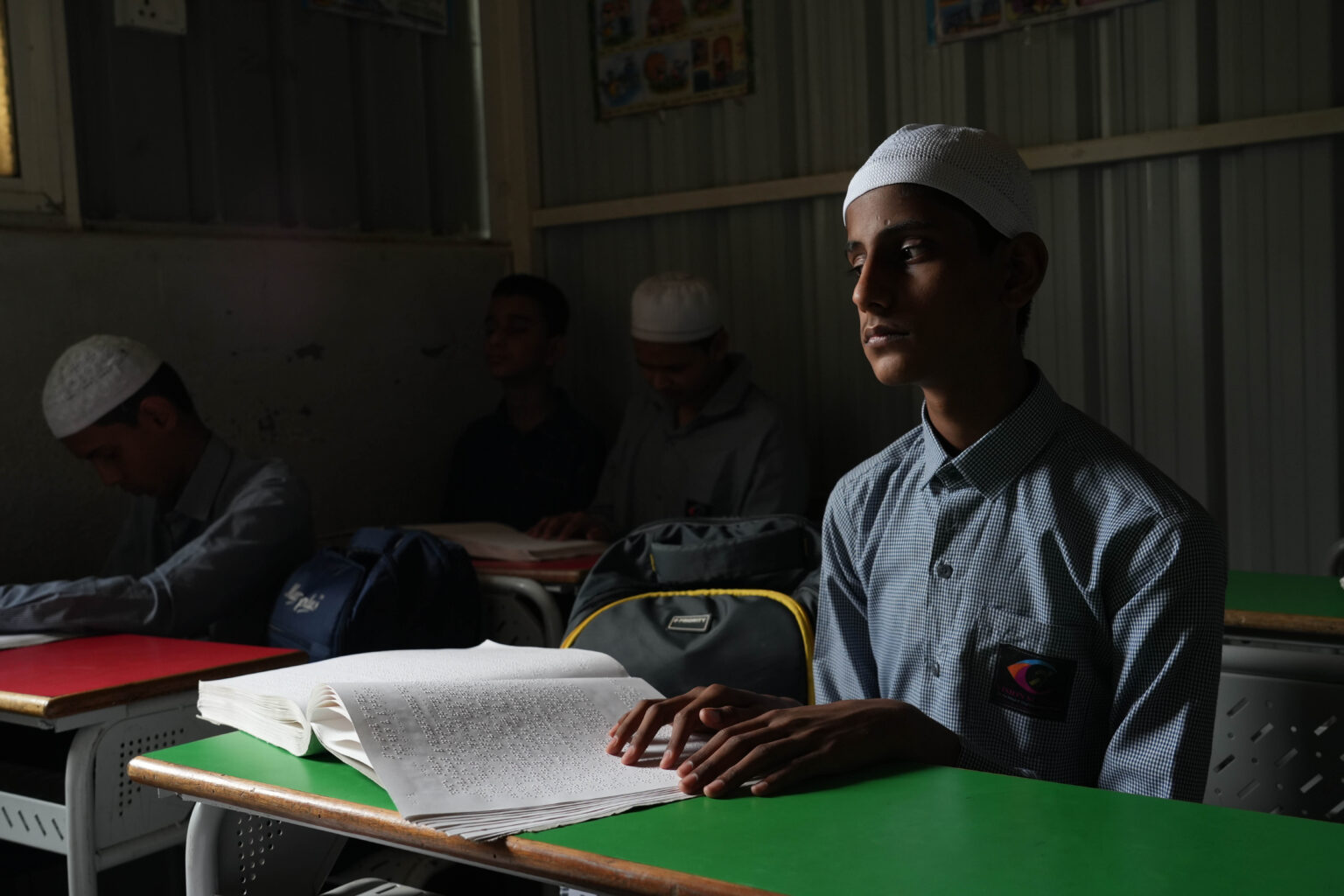
Today, the Jamia hosts 210 mute, deaf and blind students from 17 states across India. The seminary provides free education from Grade 1 to Grade 12, including subjects like science, computers, Islamic studies and advanced education.

Many students have gone on to study at various universities and colleges. For those unable to attend in person, the madrasa has launched an online education programme. Children here are provided with education, food, accommodation and even uniforms free of cost.

“Our mission is to see these children represent the country on every platform one day,” says Qasmi.

Despite the struggle, they have succeeded in building a thriving institution. In 2021, the madrasa launched separate sections for mute, blind and deaf women to ensure inclusive learning environments. Women’s education is just as important as men’s, and this initiative reflects that commitment.

Mubashira Sadiya Khan, who teaches specially abled girls at the madrasa, says, “Women’s education is equally important as male education. These girls are usually occupied with household work at their homes, but we are giving them better education and showing them the purpose of life.”

A young visually impaired student sits attentively in class, beside a Braille slate and stylus used for writing. At Jamia Abdullah Ibne Umme Maktoom, visually impaired children are given tools and support to receive religious and formal education in an inclusive environment.

Since safety is a major concern for women in the country, the madrasa has provided separate rooms for them, with all female helpers to ensure a secure learning environment.

Mubashira adds, “Usually, women are not safe in the country, but here we have created a safe space where they can learn and grow with confidence.”

Despite progress in education, children with disabilities in India often remain invisible – excluded from schools, denied opportunities and treated as burdens. Many end up begging or isolated at home, not by choice, but because society offers them no alternatives.

“We often see them begging on the roads, not because they want to, but because the society has failed to give them a chance,” says Qasmi.

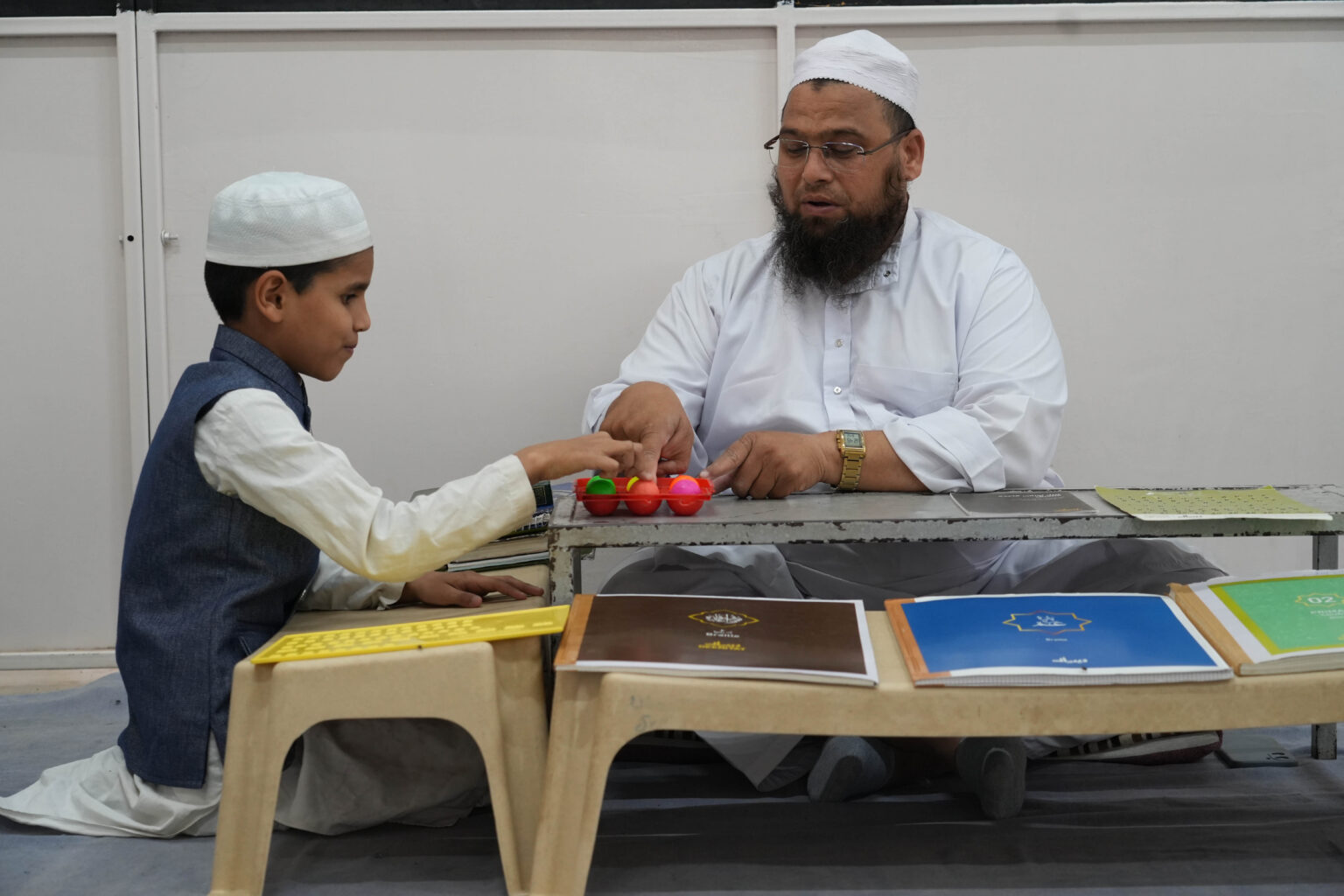
Students in uniform attend class at Jamia Abdullah Ibne Umme Maktoom in Pune, where multiple sessions are held simultaneously in a shared hall to support inclusive learning.

The Jamia has been working to ensure that students with disabilities receive quality education, access to proper infrastructure and opportunities to engage in play and creative activities on campus. Its vision is to provide them with equal opportunities so they can compete and thrive like any other student.

“Our goal was simple – give them dignity, knowledge and a future,” Qasmi explains.

The Jamia is already offering digital learning tools, smart boards and inclusive facilities to ensure that the students receive a modern and accessible education. The institution continues to innovate and expand its reach through technology and tailored teaching methods.

“We have introduced smart boards, digital tools and inclusive classrooms because every child no matter their ability deserves access to quality, modern education,” says Qasmi.

In the current political climate in India, the Muslim community has often been portrayed in a negative light, and madrasa education is frequently misunderstood or dismissed. Despite these challenges, Jamia Abdullah Ibne Umme Maktoom continues to provide quality Islamic and contemporary education to differently-abled children, aiming to empower them with knowledge and confidence.

source: http://www.twocircles.net / TwoCircles.net / Home> Disability / by Suhail Bhat, TwoCircles.net / June 21st, 2025

Lubna Naseer Creates History with First Gold for J&K at National Taekwondo Championship

Churmujroo Village (Beerwah, Budgam), JAMMU & KASHMIR :

Photo Credit: X.Com

Budgam/Dehradun :

In a historic moment for Jammu and Kashmir, Lubna Naseer, a young Taekwondo athlete from Churmujura village in Beerwah, Budgam, has clinched the first-ever gold medal for the Union Territory at the 4th Cadet & Junior National Taekwondo Championship 2025, held in Dehradun, reported the Brighter Kashmir.

Representing the Khelo India Taekwondo Centre under the Jammu & Kashmir Sports Council, Lubna showcased an exceptional performance, defeating top contenders from Gujarat, Delhi, and Madhya Pradesh. In the finals, she delivered a clean sweep against Haryana, securing a flawless victory that highlighted her dominance on the national stage.

Lubna’s journey to the top was anything but easy. Battling a recent injury, she continued training under the dedicated mentorship of her coach, Rohit Sharma. Her perseverance and resilience have earned her praise from sports officials and admiration from across the region.

“This gold medal is not just mine—it belongs to my coach, my parents, my school, and the entire Jammu and Kashmir,” Lubna said, dedicating her win to everyone who supported her.

Looking ahead, the young athlete now aims to represent India in the Asian Games, the World Junior Championships, and eventually, the Olympics. Lubna has also appealed for enhanced sports infrastructure in Budgam, urging authorities to invest in the potential of Kashmiri youth.

Her victory not only marks a personal achievement but also serves as an inspiration for aspiring athletes in the Valley. Lubna Naseer is now a beacon of hope and pride for Jammu and Kashmir, symbolizing what determination and support can achieve.

source: http://www.radiancenews.com / Radiance News / Home> Latest News> Markers of Excellence / by Radiance News Bureau / June 12th, 2025

Uppinangady student selected for international science fair in Japan

Uppinangady (Puttur Taluk, Dakshina Kannada District), KARNATAKA :

Uppinangady: 

Abdul Basith, a student from the Government Model Higher Primary School in Uppinangady, has been selected to represent India at an international science fair to be held in Japan.

Basith had earlier participated in the prestigious INSPIRE Awards MANAK competition, organised by the Department of Science and Technology, Government of India. He showcased his science model during the national-level exhibition held at the IIT campus in Delhi. Following this, he has now been chosen for the international-level “Sakura Science Fair” in Japan, providing him with a rare opportunity to present his innovation on a global platform.

The model developed by Basith is aimed at helping individuals with special needs, particularly those who have lost their hands. His innovation has been widely appreciated for its social relevance and practical utility.

Abdul Basith is the son of Ilyas Pasha, a resident of Kadavinabagilu. He is a Class 10 student of Tanveerul Islam Madrasa located at the Malik Dinar Juma Masjid and also serves as the General Secretary of SKSBV Tanveerul Islam Madrasa.

In recognition of his achievement, SKSBV Tanveerul Islam Madrasa, Uppinangady felicitated him at a special event.

source: http://www.english.varthabharati.in / Vartha Bharati / Home> Karavali / by Vartha Bharati / June 12th, 2025

Barakah NEET Academy’s first batch clears NEET Exam; several qualify for Govt MBBS seats

Mangaluru, KARNATAKA :

Mangaluru: 

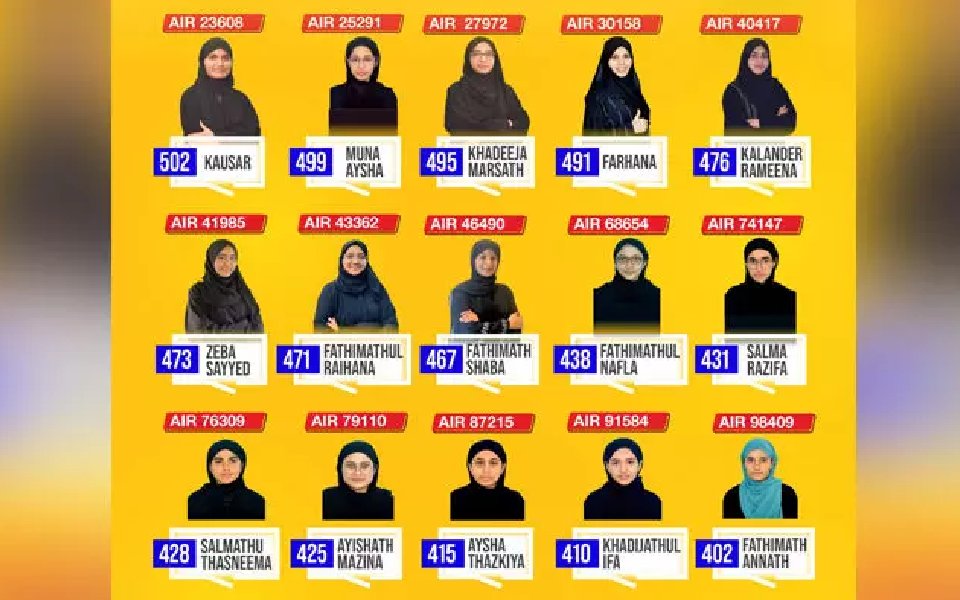
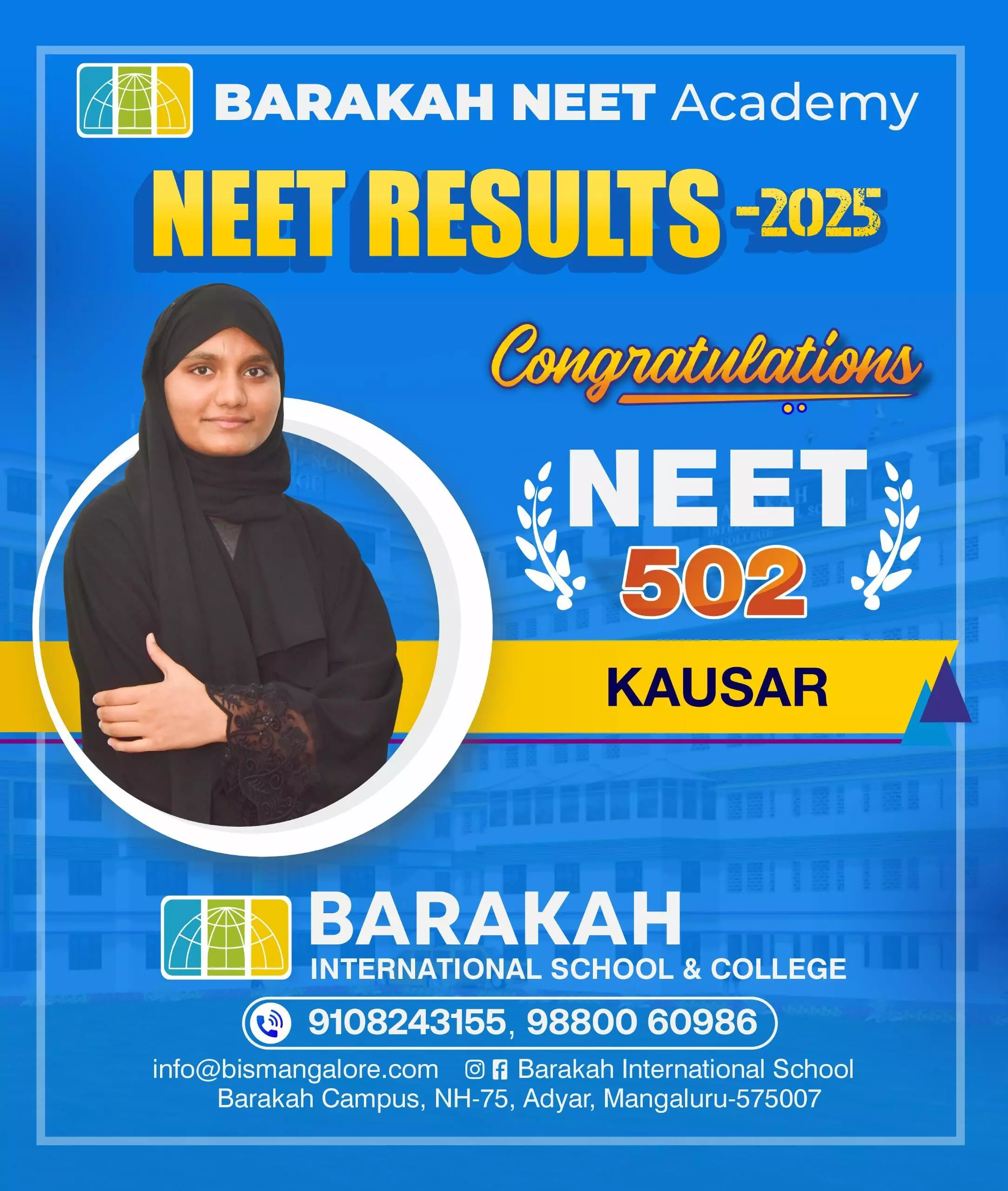
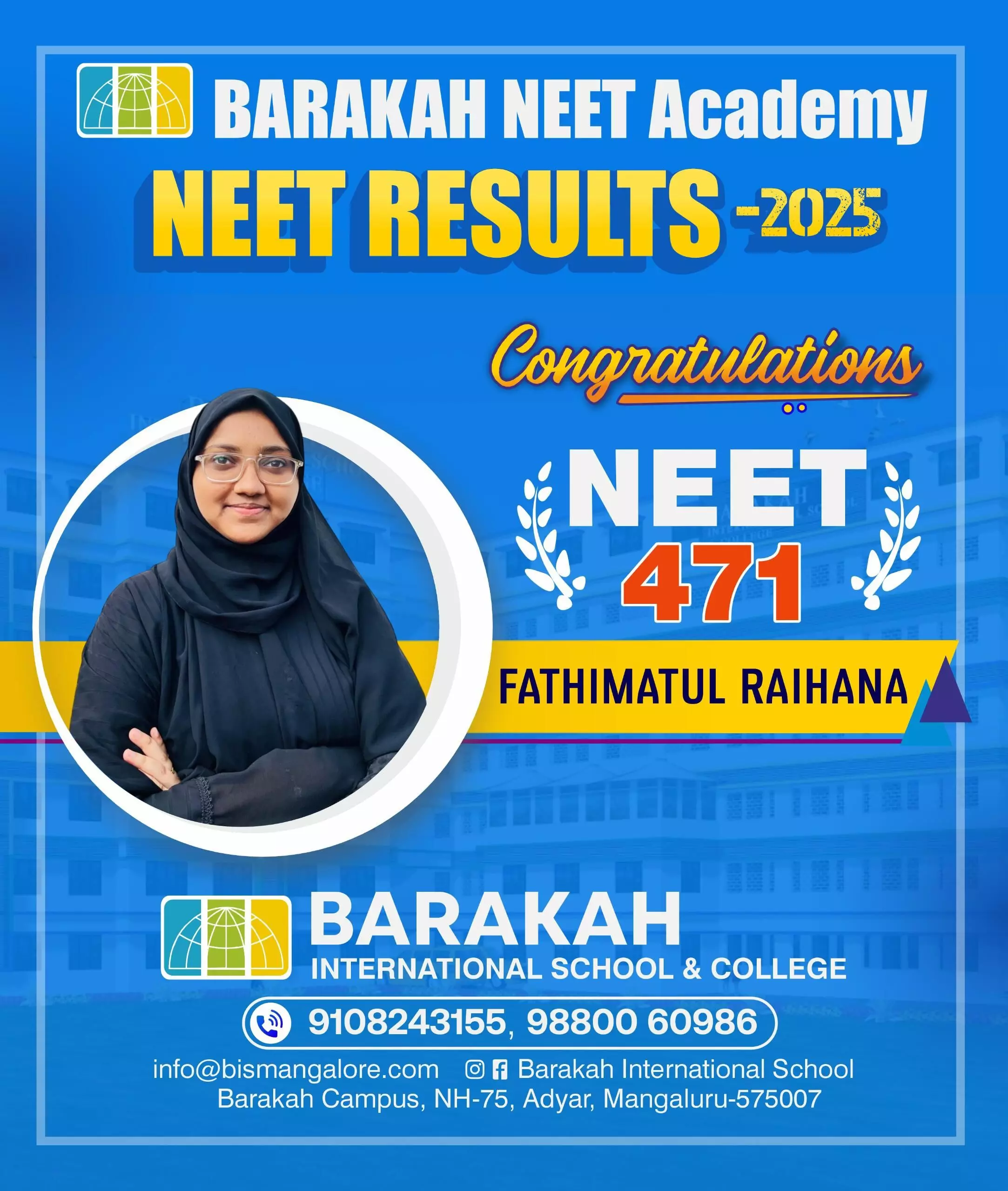
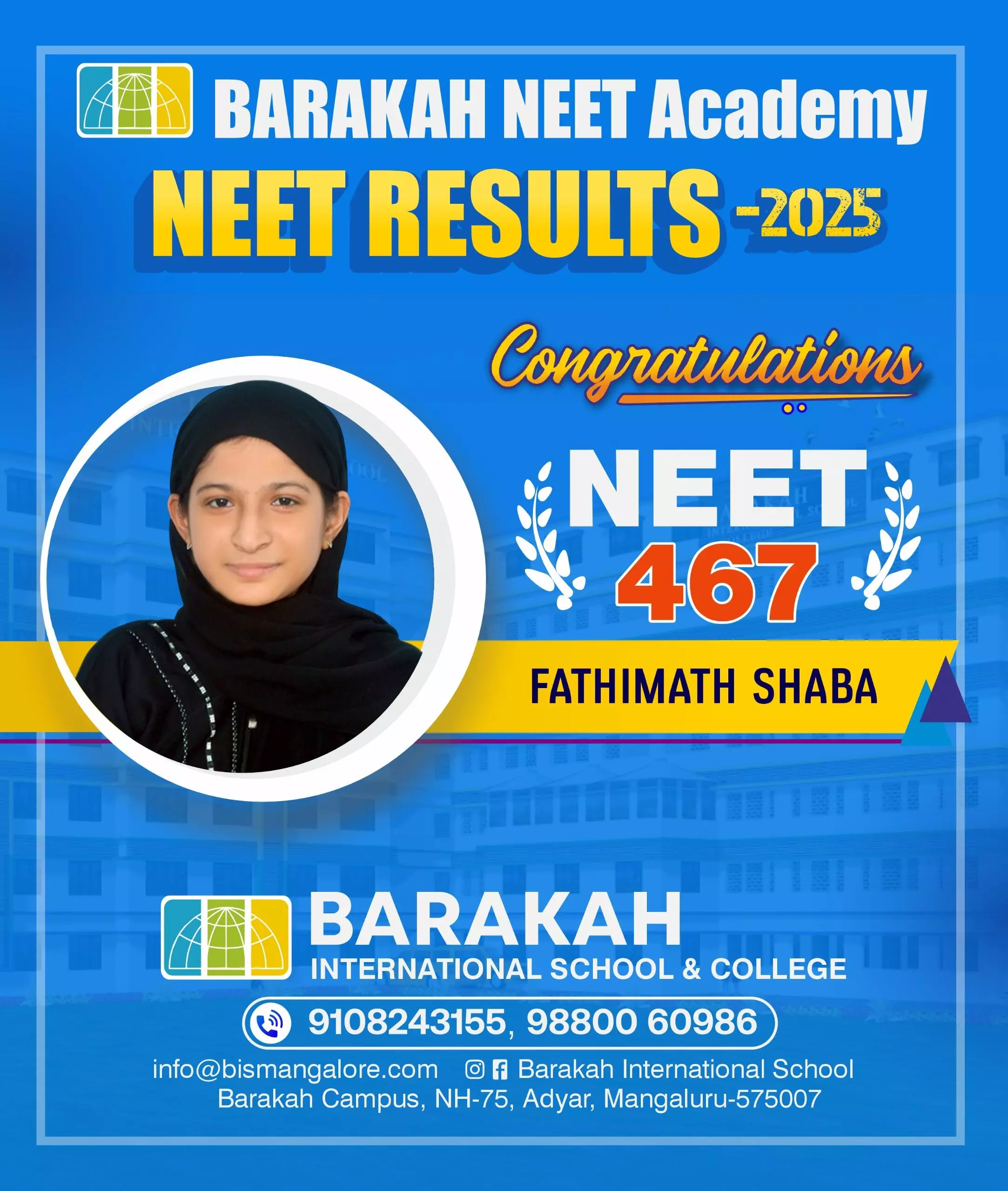
Barakah NEET Academy, a Mangaluru-based coaching institution, has announced that all 32 students from its first batch have cleared the National Eligibility-cum-Entrance Test (NEET) this year.

According to the academy, 25% of the students have qualified for government MBBS seats, while others have secured eligibility for courses like BDS, BAMS, and other medical programs.

Kausar, a student of the academy, scored 502 marks and emerged as the batch topper. In total, eight students have scored above 460 marks, qualifying for government medical colleges.

The institution, which offers residential NEET coaching along with an Islamic learning environment, said it aims to support students with focused academic guidance and preparation for medical entrance exams.

source: http://www.english.varthabharati.in / Vartha Bharati / Home> Karavali / by Vartha Bharati / June 15th, 2025

Reflections on a Mission: A Visit to Vision International Academy, Phulat

Kodangallur, KERALA / Fulat(Phulat)Village (Muzaffarnagar District), UTTAR PRADESH :

Recently, I had the opportunity to visit Vision International Academy (VIA), situated in the village of Fullat in Muzaffarnagar district, Uttar Pradesh. It was a journey I had long awaited. Spending time with the children there—even briefly—was a moving experience. Before me sat over 300 Huffaz—young children who had committed the Qur’an to memory. But the academy is not merely a Hifz institution. As the name “Vision” suggests, it embodies a deeper insight into human potential, blending spiritual excellence with academic brilliance.

Mammooty Anjukunnu

That evening, while returning to Darul Uloom Deoband, I received a call from Babukka. He sounded emotional. He had called to express his joy—not just about my visit to Vision or meeting the students—but about something much greater. Because what I had visited was not just another educational center. It was a mission. A dream. And behind it stood the journey of a visionary man.

Let me tell you that story.

A man from Kodungallur, Kerala—Ameer Ahmad Babu Manappat—never imagined that his life would take a turn into the field of Islamic education. A former student of Aligarh Muslim University, he was first struck by the concept of Hifz during a visit to Delhi. Intrigued, he began exploring madrasas in SaharanpurDeoband, and surrounding areas of North India. He wanted to understand the intellectual capacity of Huffaz. People had told him these children possessed extraordinary memory and brilliance.

However, while interacting with them, he found something amiss. These bright children, despite having memorized the entire Qur’an, were often unaware of the world outside. And he, in turn, was a stranger to theirs. This encounter exposed a painful reality: two different worlds existed—and there was a vast, unbridged distance between them.

In North India, the term “madrasa” is broad and includes Hifz centers, Arabic colleges, and basic religious schools. Many children are enrolled in such madrasas without access to formal education. They might learn basic arithmetic or science, but there’s little focus on academic rigor or integration. Most teachers remain confined to their own disciplines. The idea of combining Qur’anic and modern education barely exists.

Ameer Babu, grandson of Kerala’s renowned Muslim reformer Manappat Kunhahammad Haji, felt a growing sense of responsibility. He believed that Huffaz—gifted with sharpened intellect and memory—deserved access to high-quality general education. Their potential, he thought, could be channeled for the upliftment of society and the community.

He spent months researching and, with experts, developed an innovative bridge course—an academic fast-track that compresses eight years of schooling into one. After two more years, students would be ready for the 10th-grade public examination.

Many doubted his vision. He met numerous religious scholars and explained the idea, but most dismissed it. “We already teach school subjects,” they would say. “What more do you want?”

In reality, over 35,000 Huffaz graduate annually from madrasas in Uttar Pradesh alone. Yet less than 10% of them appear for the 10th-grade board exams. Most do not pursue further education. Many end up in manual labor, small trades, or low-income jobs.

Still, Ameer Babu did not abandon his mission.

His journey brought him to Fullat, near the UP-Delhi border, home to a vast madrasa campus named Jamia Shah Waliullah, founded by Maulana Kaleem Siddiqui, a renowned scholar and spiritual leader. The madrasa is located in the birthplace of Imam Shah Waliullah Dehlawi, one of the greatest Islamic scholars in Indian history.

When Ameer Babu shared his vision with the people there, he was told, “Let Hazrat come, he will help you.” Soon, Hazrat arrived—dressed in white, with a radiant smile and graceful demeanor. It was Maulana Kaleem Siddiqui himself.

After listening carefully, Maulana asked Ameer Babu:

“Ameer Saab, what do you want?

Land?
Buildings?
Some support?”

Then he stood up, led him to a nearby three-acre plot of land adjacent to the madrasa, and asked: “Is this enough?”

That was the beginning.

In August 2017, Ameer Babu admitted 76 Huffaz in the first batch. The results were astounding. These students, with their incredible memory skills, were able to learn up to 1,500 words a week. They completed an entire year’s academic syllabus in just 13 to 18 days, using innovative learning techniques. Simultaneously, their Qur’anic memorization was maintained through a dedicated revision system (daura).

Under the Open School system, the first batch achieved a 92% pass rate in the 10th-grade board exams. Encouraged, they transitioned to the more rigorous UP State Board—and the pass rate rose to 96%. Then, Vision shifted to the CBSE curriculum, and the first batch passed with a 100% success rate.

Classes were expanded to include Plus One and Plus Two, with both Science and Humanities streams. Today, more than 300 Huffaz are enrolled at VIA.

Among its graduates:

  • 2 are now in medical colleges
  • 7 in engineering colleges
  • 8 in law schools
  • Over 50 in various Arts & Science colleges

Vision’s students now come from across seven Indian states. They are fluent in English, academically competitive, and grounded in Qur’anic values.

Last year, during Ramadan, 235 VIA students led Taraweeh prayers as Imams in 17 Indian states, including Kerala—showcasing both their spiritual and intellectual discipline.

Some of these students have now joined the SAFI Institute in Kerala, where Ameer Babu serves as Vice Chairman—an ongoing experiment in integrated education. His goal is to nurture a generation of confident, competent Muslim youth who carry the Qur’an in their hearts and knowledge in their minds.

During my visit, Babukka shared with me his dream—to build 100 such institutions across India for Huffaz. I responded with a story.

In 1992Balbir Singh, a leader in the mob that demolished the Babri Masjid, returned to his village a hero. But his father rejected him. His wife left. Disgraced and broken, he eventually arrived at Maulana Kaleem Siddiqui’s khanqah in Fullat. There, he broke down and wept. He embraced Islam and became known as Mohammad Aamir.

Following Maulana’s advice, Aamir joined Tablighi Jamaat for four months. Later, he told Maulana:

“Hazrat, I was one of those who demolished Babri Masjid. I must build 100 mosques to atone.”

Before his death in 2021, Mohammad Aamir fulfilled that dream.

Now, from the same khanqahAmeer Babu has set out on his own mission—to build 100 schools for Huffaz.

When Maulana Kaleem Siddiqui’s dawah efforts began shaking the status quo, the authorities arrested him under fabricated charges. That is a different story altogether.

But Ameer Babu carries on, undeterred.

He serves— the Qur’an, and those who carry it within.

source: http://www.muslimmirror.com / Muslim Mirror / Home> Education> Positive Story / by Mammooty Anjukunnu / June 07th, 2025

MPJ Telangana Helps Secure Bail for 57 First-Time Offenders, Extends Aid to Families and Prisoners

TELANGANA :

Hyderabad:

The Movement for Peace & Justice (MPJ) Telangana has reaffirmed its commitment to supporting justice and rehabilitation by providing monetary and legal assistance to first-time Muslim offenders seeking bail across various jails in Telangana. In the year 2024–2025 alone, MPJ facilitated the release of 57 such prisoners.

The organisation, which has consistently worked to aid the underprivileged segments of society, specifically limits its legal and financial support to individuals charged for the first time with non-heinous crimes. Those involved in grave offenses such as rape, murder, or digital financial frauds are excluded from MPJ’s assistance programs, irrespective of their first-time offender status.

In addition to helping individuals secure bail, MPJ Telangana previously extended support to prisoners who had completed their sentences but remained behind bars due to an inability to pay court-imposed penalties.

Beyond legal aid, MPJ Telangana has also taken several humanitarian steps. The organisation distributed general knowledge books, Islamic literature in Urdu and Telugu, stationery, and sports items to inmates. Notably, educational materials were also provided for children living with their incarcerated mothers at the Chanchalguda Special Prison for Women.

Expanding its outreach, MPJ Telangana provided general aid to 121 underprivileged families, educational support to children of 41 daily wage laborers, and medical aid to 59 impoverished families in the state.

MPJ Telangana continues to serve as a vital support system for the marginalized, promoting both justice and rehabilitation with dignity and compassion.

source: http://www.radiancenews.com / Radiance News / Home> Latest News / by Reliance News Bureau / June 11th, 2025

‘Yahya Ali’ streets in Chennai: From street name to gobbledygook

Chennai, TAMIL NADU :

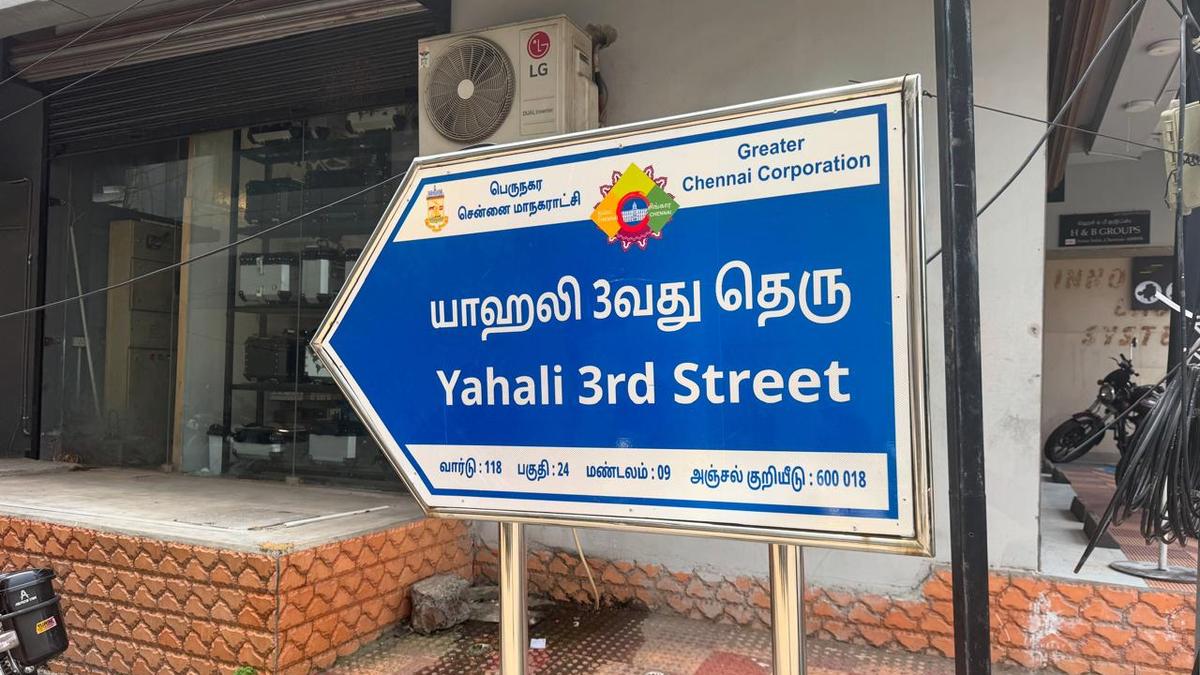
The correct name is Yahya Ali Streets – 1, 2 and 3, and they take their names from Justice Yahya Ali of the High Court of Madras.  | Photo Credit: Special Arrangement

The street sign says it all – Yahali 3rd Street. There are three of them, all connecting Anna Salai with G.N. Chetty Road, at Teynampet, very close to Semmozhi Poonga. Only Yahali is not the correct name. Google Maps has compounded matters further. You need to search under Yaya Hali Street if you need to find it. The correct name is Yahya Ali Streets – 1, 2, and 3, and they take their names from Justice Yahya Ali of the High Court of Madras.

The learned judge is not in public memory. When I spoke to a friend on this, he said that the Internet has no reference to such a judge, and I guess that would mean such a person did not exist. But he did. And when he died as a sitting judge in 1949, the High Court convened to condole his passing. The brilliant barrister and then Public Prosecutor V.L. Ethiraj led the mourners. He dwelt on the “keen intellect, great learning, profound human understanding and exquisite courtesy we found in that frail figure.” But to get full biographical details, we need to turn to the speech of an illustrious contemporary, V.C. Gopalaratnam, who spoke on behalf of the Madras Advocates Association.

Yahya Ali was born in August 1893 in Nellore, his father serving as Assistant Secretary in the Finance Department of the Nizams of Hyderabad. He graduated in History and Economics from the Presidency College in 1916 and then qualified in Law. He set up practice in Nellore and became Government Pleader and Public Prosecutor. He was a member of the Madras Legislative Council as well. In between, he became Chairman of Nellore Municipality, his election being testimony to the regard he enjoyed from all residents of the town. It was a place notorious for communal tension, and being a Hindu majority, it was considered impossible for a Muslim to win the ballot.

In 1926, Yahya Ali became District Judge, being posted in that capacity to various parts of Madras Presidency. His specialisation in matters concerning finance led to his being appointed by the then Imperial Government in 1942 as the Chairman of the Appellate Income Tax Tribunal where he equipped himself “with a thorough and exhaustive knowledge of Income Tax Law and Procedure.” In 1945 he became a judge of the High Court of Madras. It is interesting to note that he sat in judgment till the last day of his life, taking ill on April 21, 1949, and passing away the next day.

While these details are from Gopalaratnam’s speech during the condolence meet, we learn some more from what the then Chief Justice P.V. Rajamannar had to say. Yahya Ali, he noted, was a connoisseur of Telugu poetry and “he was a deeply cultured person – culture with the best ingredients of what I may call Moghul culture – urbanity, catholicity and instinctive love of all that was beautiful.”

What was his link to Teynampet? He was at the time of his death Mutawalli (trustee or guardian) of the Teynampet Mosque in which his family had taken a deep interest. It was also in the precincts of this mosque that Yahya Ali was buried. And eventually, a locality was named after him. And from there, the name has morphed phonetically as it were, to what it is now with street names changing accordingly.

I wish the Corporation would be more careful with street signs. We have suffered enough mutilation with truncation of many names to initials, morphing of others, and of course, name changes at the drop of a hat.

source: http://www.thehindu.com / The Hindu / Home> News> Cities> Chennai>My Madras / by Sriram V / June 11th, 2025

Farah Usmani’s campaign to break stereotype of Indian Muslim women

Aligarh, UTTAR PRADESH / New York, U.S.A. :

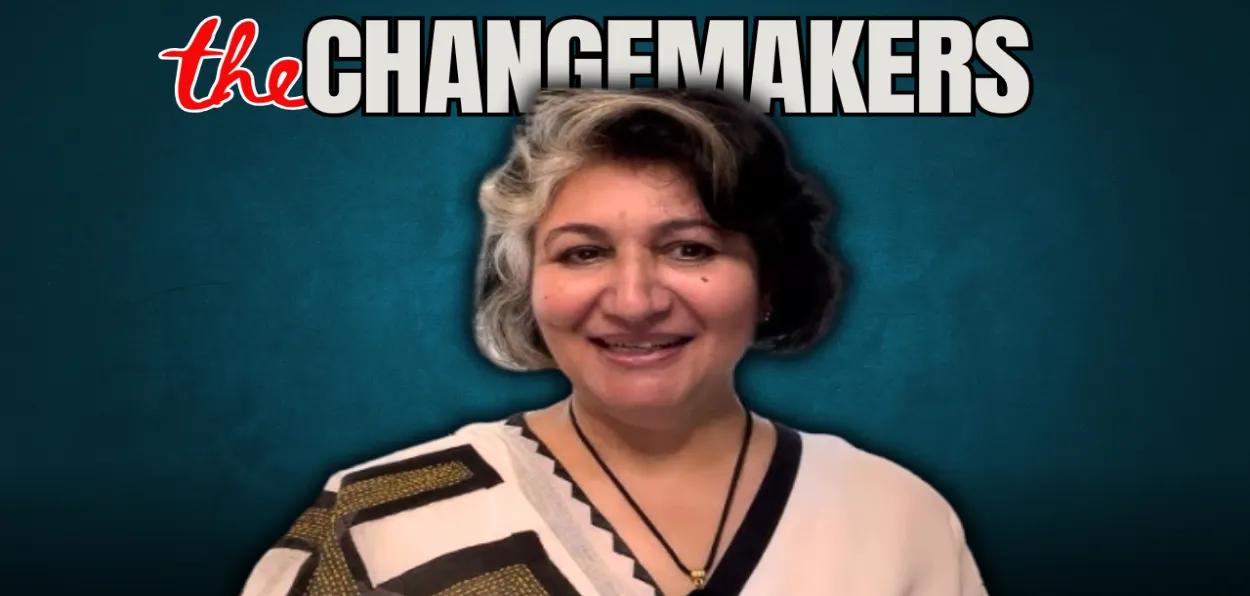
Dr. Farah Usmani

In 2007, Farah Usmani was working at the United Nations headquarters in New York when she made a pivotal decision that sparked a movement aimed at empowering women worldwide through financial independence.

Dr. Usmani, a physician from Uttar Pradesh, relocated to the city six years ago for work. During her search for a rental apartment, she discovered that New York’s rental prices were soaring and becoming unaffordable. After doing some quick calculations, she opted for a low-interest mortgage from the UN Federal Credit Union to purchase an apartment. She ended up buying a two-bedroom apartment in Manhattan, with a monthly mortgage payment that was only slightly higher than the rent she would have paid.

“This slightly higher expenditure (along with a down payment) would enable me to own an asset, and not fritter away my money on rent. It was such a wise decision. Today, 15 years later, I am on track to be a mortgage-free homeowner,” Usmani shared with the Morning Star newspaper. This experience inspired her to launch a campaign aimed at educating women around the globe about the importance of financial freedom and empowering themselves through financial independence.

Today Dr. Farah Usmani is an international health, gender and development expert based in New York.

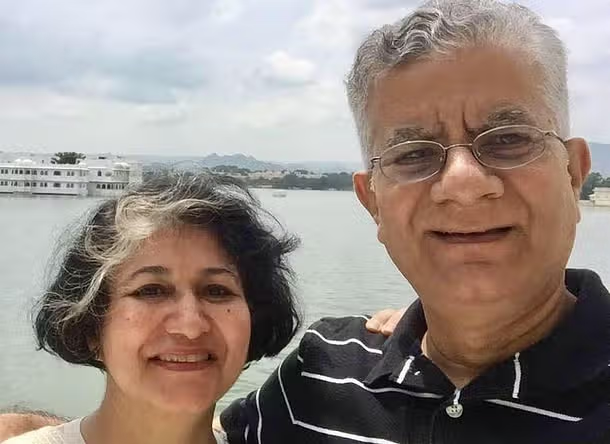
Dr. Farah Usmani with her husband Javed Usmani

Dr. Usmani is also the first Muslim woman from India to work with the United Nations International Civil Service at Director Level. She is the recipient of the 2021 Mahatma Award for Social Impact for her work with women, girls, and minorities.

She has 25 years of experience working with the United Nations International Civil Service with UNFPA, focusing on women and girls and their reproductive health and rights.

Carrying forward her mission to empower women, Dr. Usmani is the Global Vice President of SAFAR Foundation,(Supporting Action for Advancement and Rights), a philanthropic organization focused on uplifting marginalized women and girls.

Tap HERE to watch the video.

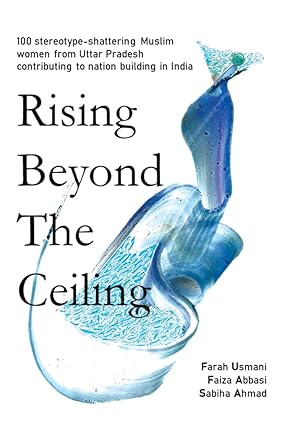
She is the Founder of “Rising Beyond The Ceiling”, a global initiative supported by SAFAR to shine a spotlight on Muslim women of India and contribute towards changing their stereotypical narrative.

The organization has published its first volume on Muslim women from Uttar Pradesh and is working on the rest of the Indian states.

Farah has received several awards and recognitions including the British Council and the Joint-Japan World Bank Merit Fellowships. 

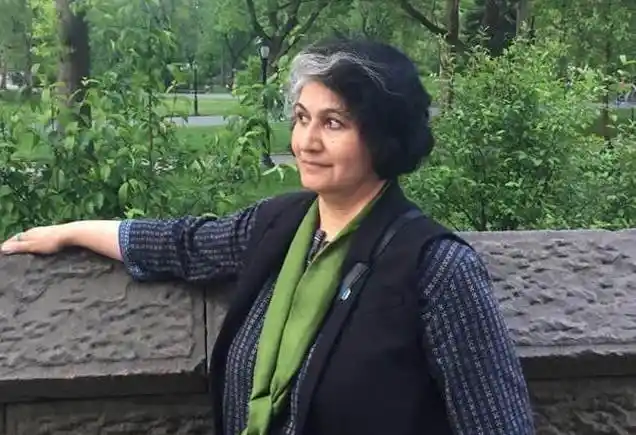
Dr. Farah Usmani

At the UNFPA (United Nations Population Fund), Dr. Usmani played a pivotal role in policy, planning, technical leadership, and health services across more than 50 countries, working on the rights of women and girls. She became the first Indian Muslim woman to reach the Director level in the UN’s International Civil Service in New York.

She noticed that Muslim women were often boxed into stereotypical roles on every platform. Farah made it her mission to break that mold.

“Why are our stories limited to the veil and the home?”

Inspired by this question, Dr. Farah Usmani launched Rising Beyond the Ceiling a global initiative that highlights the achievements of Indian Muslim women, brings their hidden stories to light, and challenges societal stereotypes.

This initiative didn’t stay confined to books or speeches it became a movement. A beacon of hope for every woman in a small town who dreams of a bigger world.

Dr. Usmani believes that money is not just a necessity it is power. She says, “Instead of being afraid of money, we need to befriend it.” Her husband taught her: money that doesn’t generate returns slowly vanishes. And that’s where her journey into financial literacy began.She started investing in tax-free savings, fixed deposits, and NRE (Non-Resident External) deposits. Today, her daughter Saba is also a real estate investor in Manhattan. This is not just a financial legacy it is an intellectual one, building a story of empowerment across generations.

Dr. Usmani has received numerous accolades, including Merit Fellowships from the World Bank and the British Council, and the Mahatma Award in 2021. She has worked globally for the rights of women, minorities, and marginalized girls.

She also serves as the Global Vice President of SAFAR Supporting Action for Advancement and Rights a philanthropic organization focused on uplifting marginalized women and girls.Breaking many gender barriers at different stages in her life, she has the distinction of being the first woman student to top the merit list in the pre-medical examination of the Aligarh Muslim University, where she completed her medical training.

She is the recipient of the 2021 Mahatma Award for Social Impact for her work with women, girls, and minorities.

Farah Usmani comes from a middle-class Muslim Family in Aligarh, Uttar Pradesh.

She holds a Master’s in Health Policy, Planning & Financing given by the London School of Economics & London School of Hygiene & Tropical Medicine & a M.D. in Obstetrics & Gynecology from Jawaharlal Nehru Medical College, Aligarh India. She has certifications in leadership and organizational management from Cornell University, Cranfield School of Management, Stanford University & the American Management Association, New York.

Farah is married to Jawed Usmani, an Indian civil servant, who rose to the position of Chief secretary of the Uttar Pradesh government. They have two children Faraz Usmani and Sabah Usmani.

Dr. Usmani says, “The coins our mothers and grandmothers hid in their mattresses were not just savings they were their attempt at independence.

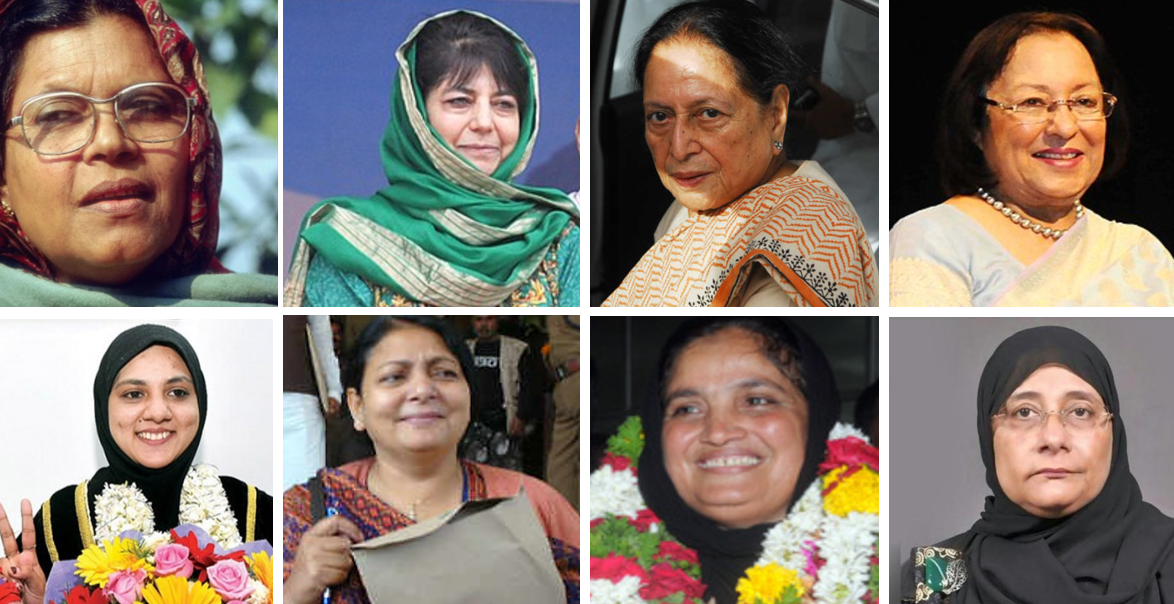
Indian Muslim Women who feature in the list of Rising Beyond the Ceiling 

The “The time has come for women to see money not as shame, but as strength.”

Her mindset, her struggles, her smile they are a source of inspiration for every woman who dreams of flying in an open sky, not a cage.

Dr. Farah Usmani’s story reads like a novel with trials, a determined heroine, a journey of transformation, and a path toward the light.

It teaches us that with courage, even the walls of a house can become the rooftop of the world’s tallest building.

Because when a woman shapes her identity by herself, she doesn’t just create a path for herself but for every generation that follows.

source: http://www.awazthevoice.in / Awaz, The Voice / Home> Stories> The Changemakers / by Onika Maheshwari, New Delhi / June 02nd, 2025

Muslim Women, Waqf, and the Power of Charitable Legacy: A Forgotten Force in the Shadows of Reform

INDIA :

A New Law, A Timeless Legacy

The Waqf Amendment Act 2025, recently passed by the Government of India, has stirred a wave of public discourse. Promising to regulate and modernize the administration of waqfproperties across the country, the law is being introduced as a means to improve transparency and benefit marginalized communities, especially Muslim women.

However, in this swirl of policy language, governance reform, and bureaucratic oversight, we must not forget a foundational truth: Muslim women have always been central to the waqftradition—not as passive recipients, but as active architects of community transformation.

Waqf as a Tool of Empowerment—Before the State Claimed It

Before governments created waqf boards, before institutional frameworks shaped their regulation, and long before women were officially recognized in policy narratives, Muslim women in India were shaping societies through charitable endowments.

They:

• Founded schools and madrasas for girls and boys alike

• Donated lands and properties for the construction of mosques, shrines, and Sufi lodges

• Built hospitals, water fountains, and orphanages

• Funded scholarships, welfare kitchens, and even public rest-houses for travelers.

This was not mere charity—it was strategic social intervention, embedded in Islamic ethics and guided by a vision of communal upliftment.

👑 Queens of Waqf: A Glimpse into Heroines of Charity and Community Leadership

🏛️ Razia Sultana (1205–1240, Delhi)

India’s only woman Sultan, Razia established educational and civic institutions supported by state waqf. Her leadership emphasized justice, learning, and infrastructure.

🏛️ Jahanara Begum (1614–1681, Delhi)

Daughter of Shah Jahan, she created waqf endowments for Sufi shrines, caravanserais, and public gardens. Her waqf documents are among the earliest female-authored ones preserved in India.

🏛️ Roshanara Begum (1617–1671, Delhi)

Sister to Jahanara, she built Roshanara Garden and a Sufi lodge. She maintained religious institutions through royal waqf.

🏛️ Sultan Jahan Begum (1858–1930, Bhopal)

The last Begum of Bhopal, she modernized education, built hospitals, supported madrasas, and legally registered many waqf properties to support her reforms.

🏛️ Begum Hazrat Mahal (1820–1879, Lucknow)

Regent of Awadh, she protected the city’s religious institutions and supported waqf-based welfare during the 1857 Rebellion.

🏛️ Khair-un-Nissa Begum (18th c., Hyderabad)

Established Khairtabad Mosque and other public works through her waqf. One of the early noblewomen to invest in education and water supply systems.

🏛️ Begum Rokeya Sakhawat Hossain (1880–1932, Kolkata)

A visionary educationist, she established the Sakhawat Memorial Girls’ School using her own resources and informal waqf practices. A true reformer of women’s rights.

🏛️ Begum Sughra Humayun Mirza (1884–1958, Hyderabad)

Urdu novelist and educationist who established the Safdariya Girls School through personal endowment. One of India’s earliest women school founders.

🏛️ Princess Durru Shehvar (1914–2006, Hyderabad)

Ottoman princess and daughter-in-law of the Nizam. Founded the Durru Shehvar Hospital, a major maternity and child-care waqf.

🏛️ Princess Niloufer (1916–1989, Hyderabad)

Ottoman royal by birth and philanthropist. Established Niloufer Hospital for women and children in response to maternal health tragedies.

🏛️ Dr. Uzma Naheed (Contemporary, Mumbai)

Thinker and leader who founded the IQRA International Women’s Alliance. Created vocational and educational centers for women through charitable trusts and waqf-like models.

🏛️ Begum Abadi Bano (Bi Amma) (1850–1924)

Mother of freedom fighters Maulana Mohammad Ali and Shaukat Ali, she supported the Khilafat movement and women’s education through charity and informal waqf support.

🏛️ Begum Qudsia Aizaz Rasul (1909–2001)

Only Muslim woman member of the Indian Constituent Assembly. Promoted educational waqfs and women’s legal rights in independent India.

🏛️ Hamida Habibullah (1916–2018, Lucknow)

Educator, politician, and philanthropist who helped establish Talimgah-e-Niswan, a leading girls’ school, partially supported by endowments and community waqf models.

🏛️ Tayyaba Begum (early 1900s, Hyderabad)

Co-founder of Anjuman-e-Khawateen-e-Deccan, she organized women’s welfare through educational trusts and neighborhood charities alongside Sughra Humayun Mirza.

These women are not anomalies in history. They are evidence of a forgotten mainstream—a rich legacy of Muslim women using waqf, education, and philanthropy to shape the public sphere.

What the Law Misses

The 2025 Amendment claims to create better access for women and transparency in waqfgovernance. Yet, many community members raise concerns about:

• Increased government control over waqf boards

• Reduced autonomy of local Muslim stakeholders

• Weak representation of women in decision-making roles

If reform is truly meant to benefit women, it must not just focus on current access. It must honor and preserve the legacy of those women who built the system through vision, sacrifice, and faith.

Reclaiming the Narrative

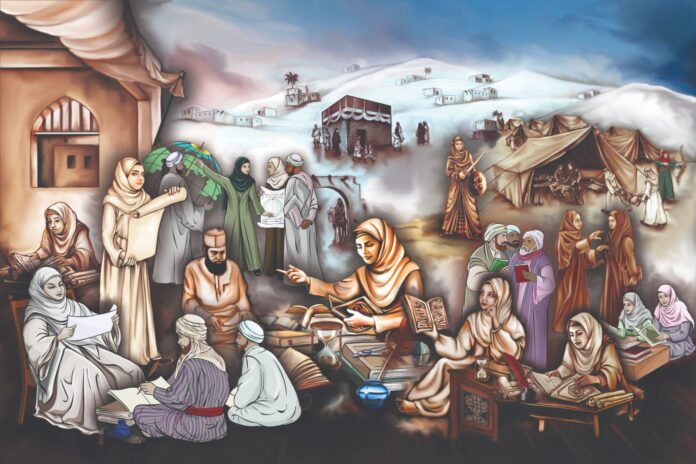
As students of history and as researchers in the contributions of Muslim women across disciplines—al-Muhaddithat, scholars, judges, educators, warriors, nurses, and philanthropists—we find it essential to reclaim and highlight this tradition in the current discourse.

This document delves into the intersections of gender, history, law, and social development, spotlighting women’s roles in charitable work and community building through waqf and related institutions.

Our goal is not just to preserve history, but to activate it: to inspire current and future generations to recognize the power of service, leadership, and waqf in reshaping communities. The struggle for recognition today stands on the shoulders of those who built with purpose and gave with dignity.

Conclusion: From Past to Future

Muslim women in India have been pioneers of welfare through the waqf system for centuries. Their work wasn’t performed for applause or public acclaim. It was done with quiet resolve, deep faith, and a vision for lasting impact.

As new policies reshape the landscape of waqf, let us not merely react—we must respond with wisdom, rooted in history and hope. Let the legacy of women like Razia, Jahanara, Durru Shehvar, Niloufer, Sughra, and Uzma guide us in reimagining waqf as a tool not only for preservation—but for progressive, inclusive development.


The author is a Social Worker, Student of History and Educator

source: http://www.muslimmirror.com / Muslim Mirror / Home> Education> Positive Story> Waqf> Women / by M A Lateef Atear / June 04th, 2025