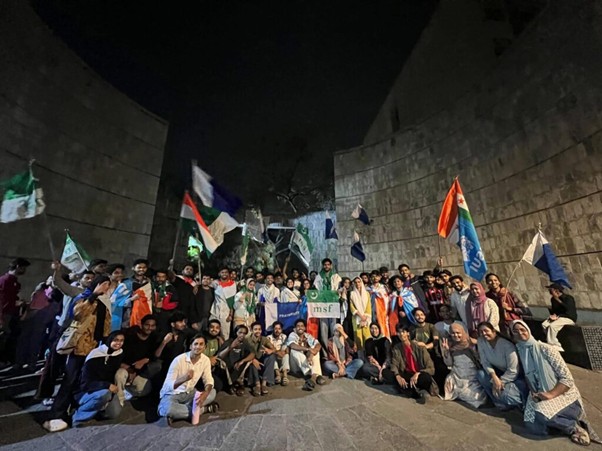
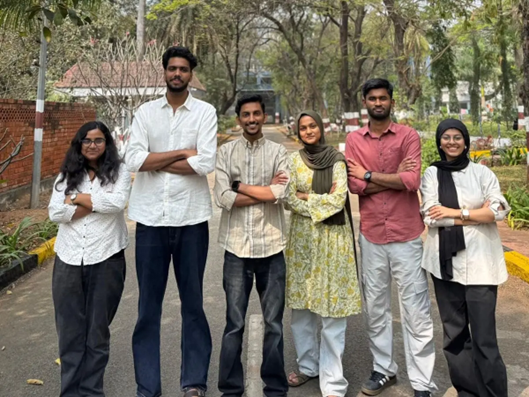
The Awaaz Alliance—comprising the Fraternity Movement, Muslim Students Federation (MSF), and the National Students’ Union of India (NSUI)—has won all Central Panel posts in the English and Foreign Languages University (EFLU) Students’ Union elections, defeating the right-wing student group Akhil Bharatiya Vidyarthi Parishad (ABVP).
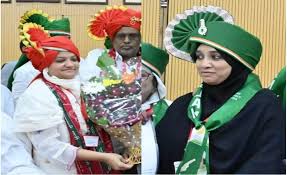
Harshad Shibin NK a PhD student from the Fraternity Movement has been elected as the new Students’ Union president.
Irfan Shajudheen from MSF a student of BA (digital communication) won the post of general secretary, while NSUI’s Sonu Raj 2year BA (English) student was elected vice-president. Other winners include MSF’s Haleemathu SS Adiya studying BA Arabic (Joint Secretary), Fraternity Movement’s Ayisha Neha (Cultural Secretary), and NSUI’s Udita Purkait (Sports Secretary).
ABVP finished second in all seats, while the Left student group Students’ Federation of India (SFI) emerged a distant third across all positions.
“This historic victory demonstrates the growing unity of democratic student forces committed to safeguarding campus diversity, social justice, and students’ rights. The mandate clearly rejects the politics of hatred and polarisation and affirms the students’ aspiration for an inclusive, egalitarian, and vibrant campus culture,” the Fraternity Movement said in a statement.
The newly elected panel members said they are committed to working tirelessly for academic welfare, gender justice, minority rights and democratisation of campuses.
source: http://www.radiancenews.com / Radiance News / Home> Latest News> Report / by Radiance News Bureau / February 07th, 2026
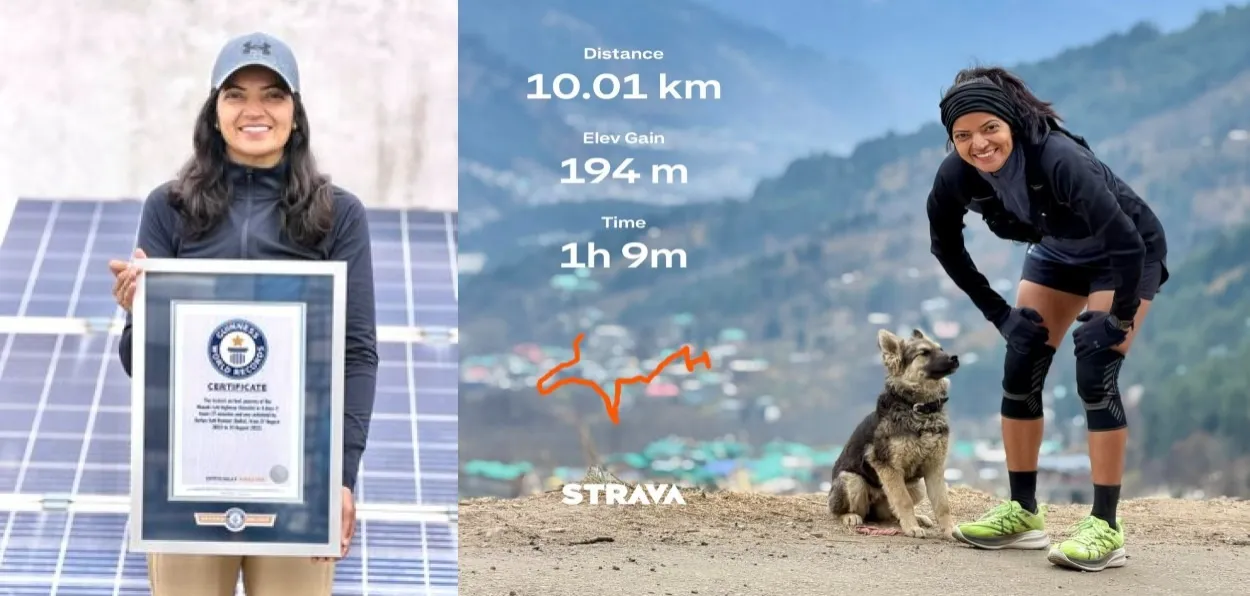
Indian ultra-distance runner Sufiya Sufi, 38, from Ajmer, Rajasthan, has officially received her Guinness World Record certificate for completing the formidable Manali–Leh high-altitude run in 98 hours and 27 minutes, a feat no woman in the world has accomplished before.
The record, formally approved by Guinness World Records in 2023, spans nearly 480 kilometres across some of the most treacherous terrain in the Himalayas. The route crosses five high mountain passes, involves a cumulative elevation gain of over 8,500 metres, and exposes runners to freezing temperatures and dangerously low oxygen levels. The challenge is widely regarded as one of the toughest endurance runs on the planet.
Although the achievement was validated in 2023, the physical certificate reached Sufi only in early 2026, following prolonged delays related to international delivery logistics and customs clearance. Once the certificate arrived, her accomplishment drew renewed admiration from the global running community, sponsors, and the wider public. Supporters celebrated the milestone as another defining moment in an already extraordinary athletic journey.
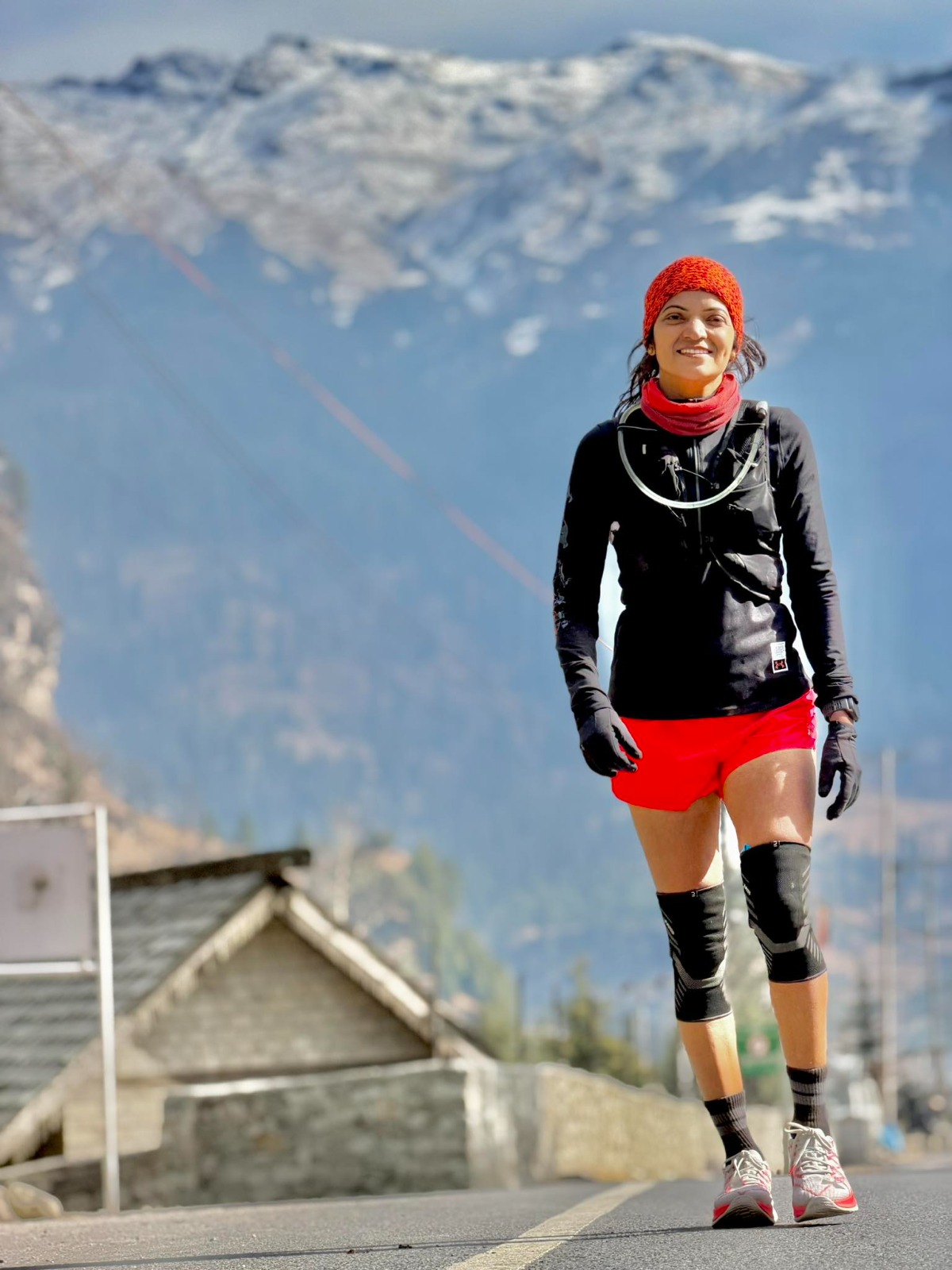
Sufiya Sufi on Manali-Leh run
Sufiya Sufi’s record-setting run on the Manali–Leh route represents a remarkable benchmark in endurance sports. The challenge begins in Manali, a Himalayan hill town in Himachal Pradesh, and winds its way through rugged, unforgiving landscapes before culminating in Leh, Ladakh. Along the way, runners cross legendary high-altitude passes such as Rohtang Pass and Tanglang La, where temperatures often plunge well below zero and oxygen levels drop dramatically.
At such extreme altitudes, even the most experienced athletes struggle to breathe, recover, and maintain pace. Completing this journey on foot in under 100 hours is considered exceptional. By finishing in 98 hours and 27 minutes, Sufi not only met the challenge but surpassed it, becoming the fastest woman ever* to traverse this Himalayan stretch on foot.
Despite the physical run being completed and officially recognised in 2023, the nearly two-year delay in receiving the certificate became a story in itself. Sufi later spoke about the delay publicly, addressing it with humour and gratitude rather than frustration.
In a post on the social media platform *X*, she described her accomplishment as the fastest-ever run from Manali to Leh across all five high passes. She also expressed heartfelt thanks to her sponsors, support crew, and well-wishers who stood by her throughout months of preparation and recovery. Members of the running community and followers on social media responded with admiration, highlighting the sheer brutality of the terrain and the mental toughness required to succeed.
Day 03 done with 03 KM.
01 to 100 Km Running Challenge.
No Speed, No pace, Just showing up everyday with 01 Km stronger mindset.
Daily effort. Daily discipline. Daily belief. This is how 1% turns into something unimaginable. pic.twitter.com/mYSxRTZJIu
Sufiya Sufi’s journey is as compelling as the record itself. Born in *1987 in Ajmer, she spent nearly 10 years working in the aviation industry. Running initially entered her life as a way to stay fit and break free from the monotony of a demanding job. Over time, what began as a fitness routine evolved into a deep passion for endurance sports, eventually redefining her professional and personal identity.
Her rise as an ultra-runner has been marked by a series of achievements. In 2018, she earned her first Guinness World Record for running the most marathons by a woman in a single calendar year*. This milestone established her as a serious force in long-distance running.
She went on to complete the Kashmir to Kanyakumari run, covering approximately 4,000 kilometres in 87 days, another Guinness-certified feat. Shortly thereafter, she conquered the Golden Quadrilateral, a 6,002-kilometre route linking India’s major highways, in just 110 days, securing yet another world record.
Sufiya Sufi’s journey is as compelling as the record itself. Born in *1987 in Ajmer, she spent nearly 10 years working in the aviation industry. Running initially entered her life as a way to stay fit and break free from the monotony of a demanding job. Over time, what began as a fitness routine evolved into a deep passion for endurance sports, eventually redefining her professional and personal identity.
Her rise as an ultra-runner has been marked by a series of achievements. In 2018, she earned her first Guinness World Record for running the most marathons by a woman in a single calendar year*. This milestone established her as a serious force in long-distance running.
She went on to complete the Kashmir to Kanyakumari run, covering approximately 4,000 kilometres in 87 days, another Guinness-certified feat. Shortly thereafter, she conquered the Golden Quadrilateral, a 6,002-kilometre route linking India’s major highways, in just 110 days, securing yet another world record.
Each of these runs required not only exceptional physical endurance but also rigorous mental conditioning, logistical planning, and resilience. Sufi has often credited her family for their unwavering support, especially her partner, who frequently serves as part of her on-ground support crew.
She has spoken about the challenges of acclimatising to high altitudes, training in extreme conditions, and preparing her body for prolonged exposure to thin air and severe cold.
Sufi’s expanding list of accomplishments has drawn the attention of corporate partners as well. In October 2024, Hindustan Zinc Limited appointed her as a brand ambassador, reflecting growing corporate confidence in her ability to inspire communities and promote fitness as a sustainable lifestyle choice.
Looking beyond national records, Sufi has set her sights on even larger international goals. According to previous interviews and public statements, she plans to undertake a “Run Around the Globe” expedition, covering tens of thousands of kilometres across multiple continents. She envisions the project not merely as an athletic challenge, but as a global mission promoting *Humanity, Oneness, Peace, and Equality, collectively referred to as HOPE.
Sufiya Sufi’s journey stands as a powerful testament to human resilience, courage, and the transformative power of unwavering determination. Her transition from a stable career in aviation to pushing the limits of endurance in the harshest Himalayan conditions reflects a profound belief in personal growth and self-discovery.
In a world often dominated by narratives of division and despair, her story offers a rare and uplifting reminder of what is possible through perseverance, discipline, and purpose. Her achievements celebrate not only athletic excellence, but also the boundless potential of the human spirit.
source: http://www.awazthevoice.in / Awaz, The Voice / Home> Stories / by Aasha Khosa / February 03rd, 2026
The Malegaon Secular Front of ISLAM Party and the Samajwadi Party, secured the mayor and deputy mayor posts in the civic body, while AIMIM and BJP stayed away from voting
Malegaon :
Malegaon in Maharashtra has entered a new phase in local politics after the mayor and deputy mayor elections brought a clear win for the ISLAM Party–Samajwadi Party alliance, known as the Malegaon Secular Front. Sheikh Nasreen Khalid was elected mayor, while Shan-e-Hind Nihal Ahmed was chosen as deputy mayor on Saturday.
The election took place in the 84-member Malegaon Municipal Corporation, where 43 votes were needed to secure a majority. With the backing of the Congress, the Malegaon Secular Front reached the required number and took control of the civic body.
Sheikh Nasreen Khalid received 43 votes in the mayoral election. These included 35 councillors from the ISLAM Party, five from the Samajwadi Party, and three from the Congress. Her nearest rival, Shiv Sena candidate Lata Ghodke from the Eknath Shinde group, managed to secure only 18 votes.
All India Majlis Ittehad-ul Muslimeen’s (AIMIM) 21 councillors and the BJP’s two councillors stayed away from the voting process. The BJP, which is part of the ruling alliance at the Centre and in Maharashtra, did not vote in support of the Shiv Sena candidate, dealing a setback to the Shinde faction in Malegaon.
Speaking after her election, Mayor Sheikh Nasreen Khalid said, “This victory belongs to the people of Malegaon. We will work for justice, development, and equal respect for every section of society.”
In the deputy mayor election, Samajwadi Party councillor Shan-e-Hind Nihal Ahmed defeated Shiv Sena’s Advocate Nilesh Kakade by the same margin. Nihal Ahmed secured 43 votes, while Kakade received 18. AIMIM again stayed away, and the BJP did not take part in the vote.
After her win, Deputy Mayor Nihal Ahmed said, “Malegaon has shown faith in secular values. Our duty is to serve the city honestly and listen to the voice of the common people.”
The municipal elections were held on 15 January. Results showed the ISLAM Party emerging as the single largest party with 35 seats. AIMIM won 21 seats, Shiv Sena secured 18, the Samajwadi Party five, Congress three, and the BJP two.
The ISLAM Party was founded by former Congress MLA Sheikh Asif Sheikh Rashid on 20 October 2024. In its first civic election, the party succeeded in winning the mayor’s post, marking a strong start in local politics.
District Collector Ayush Prasad conducted the election as the presiding officer. He said, “The mayor and deputy mayor elections were completed in a peaceful and orderly manner.”
For many residents, the result reflects the political strength and unity of Malegaon’s Muslim-majority population and reinforces their role in shaping the city’s democratic future through the ballot box.
source: http://www.clarionindia.net / Clarion India / Home> Editor’s Pick> India> Indian Muslims / by Team Clarion / February 08th, 2026
Ahead of the Assembly elections in Tamil Nadu, scheduled for April-May 2026, the Muslim community is emerging as an important player in the poll-bound state, with Chief Minister M.K. Stalin rolling out several welfare initiatives aimed at benefiting them. Stalin has laid emphasis on the ruling Dravida Munnetra Kazhagam’s (DMK) historical ties with Muslims.
Muslims in Tamil Nadu constitute approximately 5.86% of the state’s population. Their number in the state was 42 lakh, as per the 2011 Census, and they primarily belong to the Tamil-speaking Labbai, Marakayar, and Rowther communities. With a history dating back to 7thcentury Arab trade, they are well-integrated, often using Tamil as their native tongue, and exhibit high social, literacy, and economic indicators compared to other regions.
In a powerful message to the ruling Bharatiya Janata Party (BJP) at the Centre, Stalin has claimed that Tamil Nadu is the “only state which is safe for Muslims” and described the DMK as a fortress that protects the minorities in the state. Because of this, incidents like mob lynching could not rear their head in Tamil Nadu, Stalin said at a function at Kumbakonam recently.
The occasion was the State Mahalla Jamaats Conference organised by Indian Union Muslim League (IUML) near Kumbakonam, in which office-bearers of around 8,000 Jamaats from across the state participated. In his address, Stalin launched a scathing attack on the Central Government, accusing it of using central agencies like the CBI, ED, and IT to intimidate political opponents and the public.
The Chief Minister remarked that he did not need to explain the current situation of the country further, implying a climate of pressure from the Centre. His remarks were indicative of the DMK’s strategy to consolidate minority votes by positioning itself as a primary defender against central interference and communal insecurity.
Stalin accused the Opposition All India Anna Dravida Munnetra Kazhagam (AIADMK) of betraying minority communities to appease central authorities in Delhi. He asserted that only the DMK-led Secular Progressive Alliance has the strength to defeat the anti-people AIADMK-BJP alliance in the upcoming Assembly elections.
Stalin announced five welfare schemes for Muslims on the occasion, including the establishment of a third Waqf Tribunal at Coimbatore and the increase of pension for Ulema registered with Tamil Nadu Waqf Board from Rs. 3,000 to Rs. 5,000, and the family pension from Rs. 1,500 to Rs. 2,500.
Stalin also announced that in the first phase of a scheme, 1,000 Ulema will receive the increased subsidy of Rs. 50,000 for buying two-wheelers. The Ulema play a pivotal role as Islamic scholars in Tamil Nadu’s Muslim societies, acting as guardians and interpreters of religious knowledge and law. They are highly respected for their deep understanding of Islamic theology, Sharia law, and the Hadiths, guiding the Muslim community on matters of faith and practice.
The other announcements included creation of burial grounds in City Corporation areas where there is none, and filling of 10 vacant posts of Urdu language teachers at the government high schools and higher secondary schools. Stalin said the efforts of those who were trying to disturb peace had been in vain, and added that they had formed in their own interest, an alliance of those who are servile by threatening with agencies like ED, CBI and IT.
Pointing at AIADMK’s support to the contentious Citizenship Amendment Act (CAA), 2019, the Chief Minister said the Leader of Opposition, Edappadi K. Palaniswami, has been continuing his betrayal of Muslims. “But for AIADMK’s support, the CAA Bill would have been defeated in the Rajya Sabha,” he said. He further pointed out that the DMK government had courageously declared the CAA would not be implemented in Tamil Nadu.
Stalin also referred to the DMK’s vote against the Triple Talaq Bill and Waqf Amendment Bill. “If the BJP alliance comes to power in Tamil Nadu, it will ruin the developed state. Only the DMK alliance has the courage and strength to stop it from coming to power,” he declared.
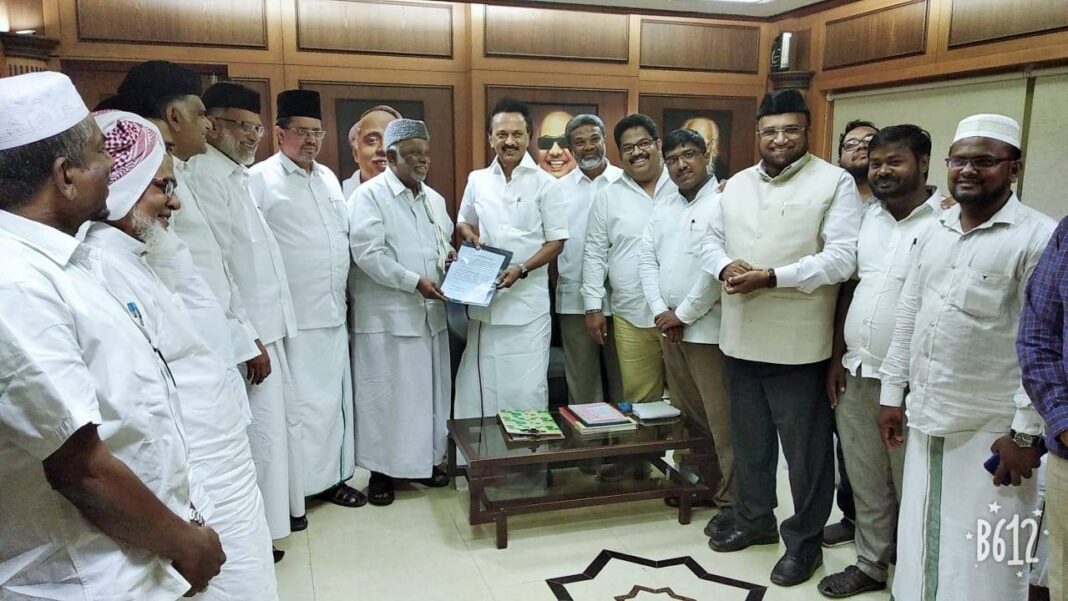
Pointing out that the DMK cadre have started their door-to-door campaign, he urged the IUML cadre, particularly the youth and women, to campaign for those who will protect and enable their growth. IUML chief K.M. Kader Mohideen, who presided over the meeting, said his party and members of Mahalla Jamaats will ensure the continuance of the Dravida model of governance.
The key aspects of Muslims in Tamil Nadu include their cultural fusion, social harmony, and concentration in towns like Kayalpatnam, Kilakkarai, Adirampattinam, and Melapalayam. Chennai also has a notable Muslim population, comprising about 9.45% of the capital city’s total population.
The Tamil Muslims are known for a unique synthesis of Tamil culture and Islamic faith, with strong traditions in trade and education, particularly in coastal towns. The community is primarily Sunni, with diverse, well-integrated, and long-settled, as well as some Dakani-speaking groups. The presence of ancient mosques like the Kilakaraj Jumma Masjid, built in 7th century, highlights early Islamic contact through maritime trade, while Tamil Nadu is often described as a model for communal coexistence because of its peaceful Muslim community.
source: http://www.indiatomorrow.net / India Tomorrow / Home> Debate / by India Tomorrow Correspondent / February 03rd, 2026
Belonging to a conservative Muslim family, it was hard for Fatima Ahmed to break the shackles but she made sure to follow her dreams and do all that she ever wanted. From travelling the world to living like a “gypsy” and creating her very own niche in the world of art, Ahmed has lived her life on her terms. Read about this feisty and inspiring artist.
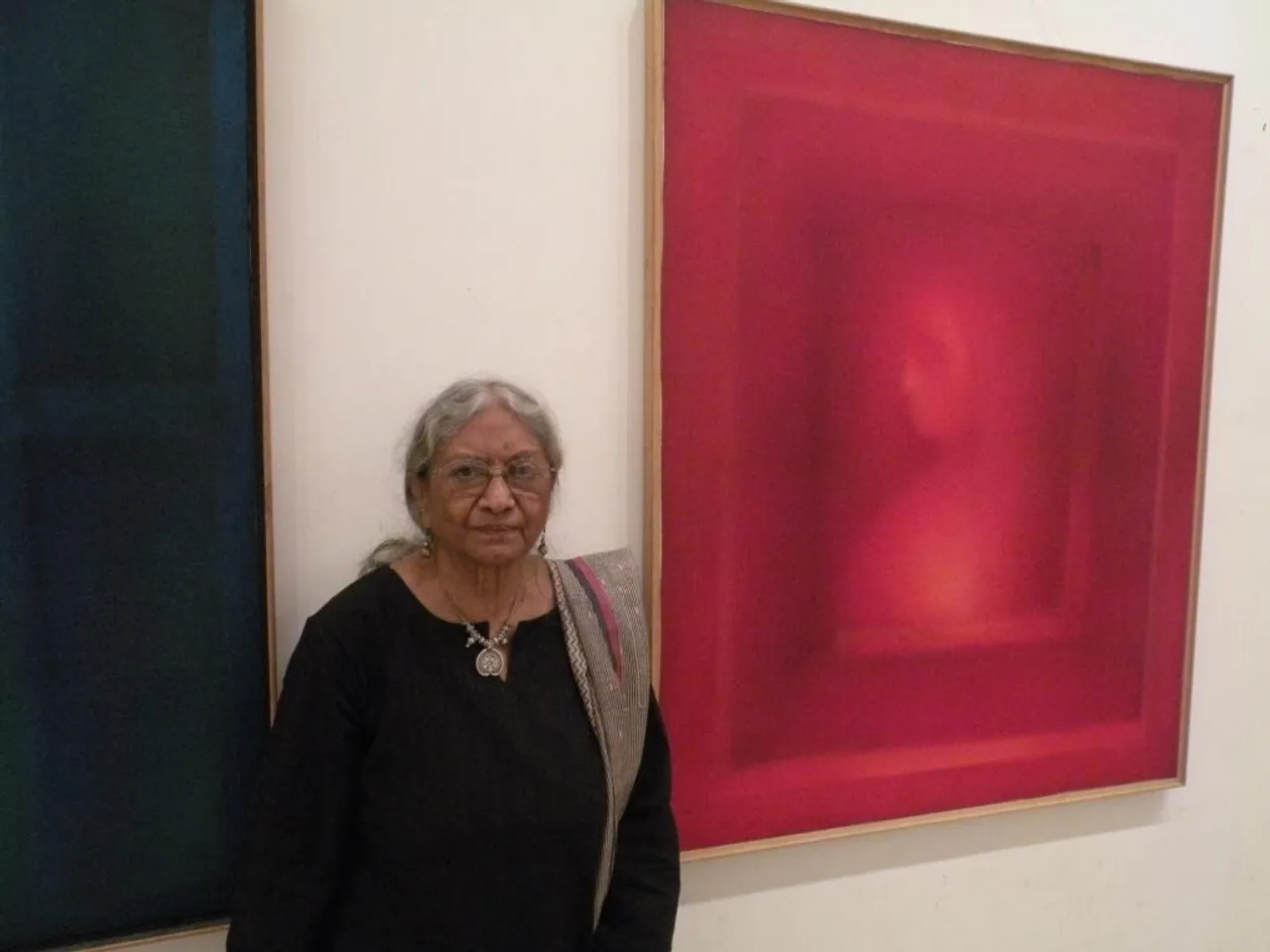
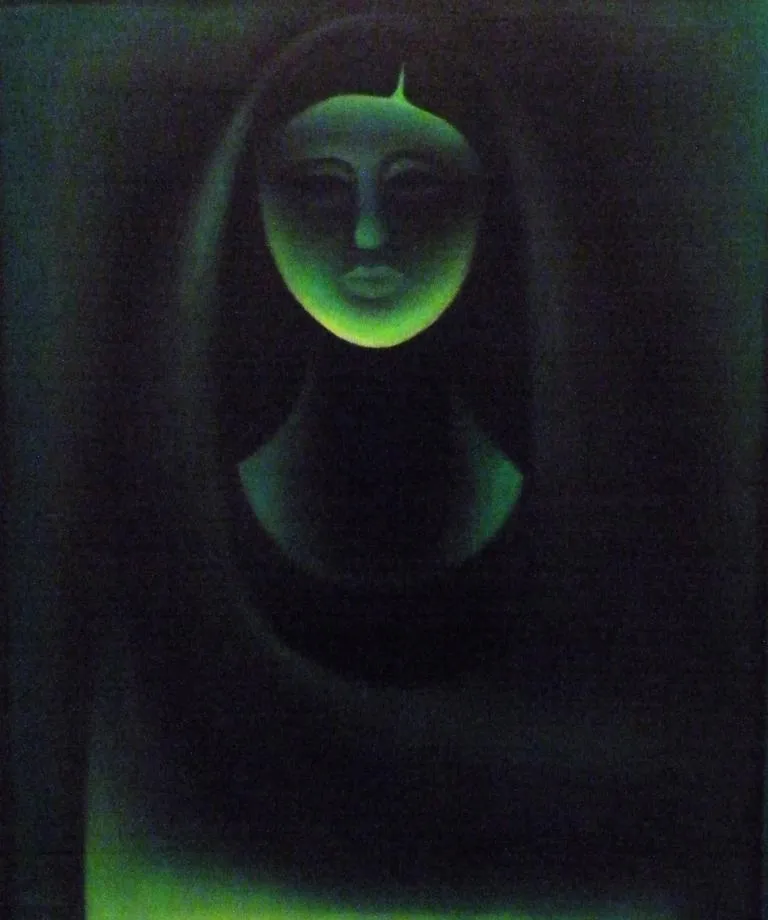
Legendary rebel artist and writer Fatima Ahmed, who is nearing 80, is a picture of contrasts. While she is fun-loving and full of life, her paintings are still and silent. (Credit: Surekha Kadapa- Bose\WFS)
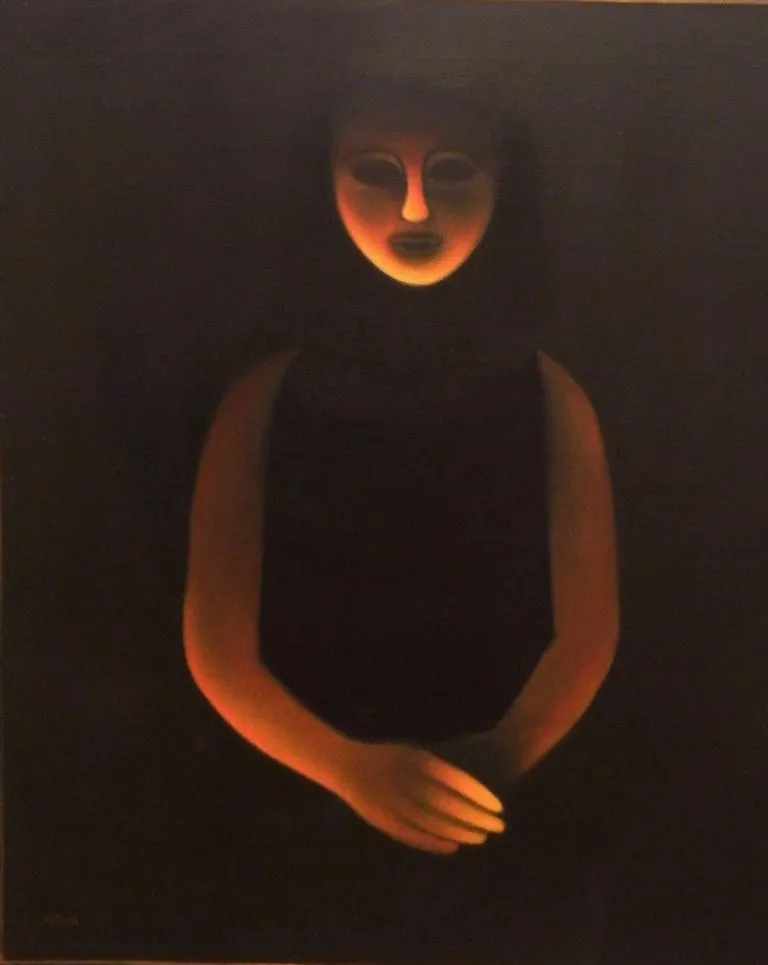
‘If only silence could speak’ goes the adage. Well, here silence does speak – and how! Soft, hazy, elusive images of women gaze steadily from the confines of their canvas making the much-mesmerised onlooker feel as though they would simply vanish if s/he so much as blinked. The women in red, pink, beige oil paints look ethereal, delicate and yet they convey power, strength – much like the woman who has created them.
“Space and light are very important to any work of art, especially paintings,” explains legendary rebel artist and writer Fatima Ahmed, whose latest oil canvases were on display in Mumbai recently. She continues, “In life, there has to be some mystery. Everything shouldn’t be very obvious and spoken out loud. In my works I don’t like clutter, loud colours or screaming. I like my paintings to be as subtle as a whisper.”
“Let me start by saying I simply love to eat the crisp crust of a samosa,” she says, with twinkle in her eyes, before adding, “Now as far as the silence in my work is concerned, throughout my life I have been more of an observer. I was a recluse during my childhood as I didn’t have anyone to share my thoughts and feelings with. I was a rebel for everyone around me and way back in the middle of last century it wasn’t a good sign.”
Coming from a conservative Muslim family in Hyderabad, Ahmed never really fit in because she was a free spirit who believed in equality. Her father was a Collector under Nizam Osman Ali Khan, Asif Jah VII, the last Nizam of Hyderabad.
In her joint family, daughters were married off in their early teens within the extended family. Moreover, as the Ahmed family was very highly placed within the Nizam’s palace, its members, too, were treated as royalty, which was never acceptable to her.
“I just couldn’t tolerate treating those employed in our household as slaves. Besides, women in that era didn’t have any say in any sphere of life and were forced to blindly follow all the dictates of men without questioning them. I certainly wasn’t going to do that,” she says emphatically, her voice betraying the anger she still feels towards the strict patriarchal rules they were made to adhere to in that period.
The women in red, pink, beige oil paints look ethereal, delicate and yet they convey power, strength. (Credit: Surekha Kadapa-Bose\WFS)
So Ahmed grew up with vivid visions of freeing everyone who was treated as a lesser human being. “Quite unknowingly, I was influenced by socialism,” she remarks. And at that age she had also made up her mind that she would rather die than marry one of her cousins. According to her, the one good thing her father did was to enrol her in the Government Mahaboobia Girls School, the foremost learning institution at that time. “Our teachers taught us out of syllabus and gave us the freedom to think. I didn’t like Hyderabad then but I loved my school,” says the artist, who is nearing 80.
It was there that she developed a deep love for drawing, painting and the classical Indian dance form Kathak, all of which she learnt without the approval of the family elders. The dance classes came to an end as soon as her father came to know.
“Unfortunately, my mother had a stroke at the time. And though I did have a large family of sisters, brothers, cousins and aunts, I could never really converse with any of them or share my true feelings,” she elaborates.
After school, as Ahmed refused marriage outright, she was grudgingly allowed to join college. But there again she met with another hurdle. She wasn’t interested in any of the usual subjects of science and wanted to join College of Fine Arts, which, of course, wasn’t permitted. So she found a way to get in. Mischievously she narrates, “I forged my father’s signature on the application form but the principal detected my lie and quizzed me. When he understood that I was really interested in the arts and saw a painting I had done of a litter of puppies, he relented.”
The demise of her parents made her leave home and Hyderabad for good. “I certainly didn’t want to stay back and be bossed around by my brothers and other family members,” she says about her escape to Bombay in early 1960s.
Admitting that the Hyderabad of today has changed considerably, the ageing artist nonetheless doesn’t think there is much difference still in the way girls from poor Muslim families are treated, “While girls from well-to-do homes get an education, are fashionable, go abroad, mingle with the rest of the world, this is not true of the low income Muslim families. They still live in a very male dominated society and this is not only restricted to Hyderabad or India but all over the world.”
Her arrival in Bombay and the “gypsy lifestyle” she led for the next two decades saw her engage closely with the world of art and writing. “I really didn’t exploit the kind of opportunities that came my way. I just took life one day at a time by living it on my own terms,” recalls Ahmed especially referring to her two-year stint in London where she painted, went through a financial crisis and then discovered spiritualism.
Fatima Ahmed, whose latest works were part of a recent exhibition, ‘If only silence could speak’, likes her paintings to be as subtle as a whisper. (Credit: Surekha Kadapa- Bose\WFS)
Despite those struggles, great success has come to her. She has held innumerable exhibitions in Mumbai, Delhi, Chennai, Hyderabad, Bhopal, London, Mauritius, Dubai, Hong Kong, Russia and South Africa, among many other places. Her works have been auctioned by Christies and are part of several private collections and state galleries, including the National Gallery of Modern Art (NGMA) in Delhi, Birla Art Akademi, Kolkata, the Stuttgart State Library and Masanori Fukuoka Museum in Japan.
What or who has influenced her art over the years? Initially, Ahmed says she was influenced by Gauguin, Cezanne, Van Gogh and Modigliani. But she consciously stayed away from those influences, as she felt “there was no fun in copying others”, and developed her own style.
Once she got back from London to Mumbai she caught up with many of her journalist friends. One of them was late Khushwant Singh, with whom she argued, fought and enjoyed interacting. It was he who encouraged her to get into writing. She started by translating works of Ismat Chugtai, Saadat Hassan Manto, Kaifi Azmi and other Urdu literary greats into English. This paved the way for to her write the semi-autobiographical, ‘In Haleema’s Words’. It was on one of her reporting assignments that she visited the Rajneesh Ashram in Pune, which has become her permanent home now.
Personally, Ahmed may be less of a rebel these days but her works more than make up – though still and silent they exude the quiet strength of women.
Written by Surekha Kadapa-Bose for Women’s Feature Service (WFS) and republished here in arrangement with WFS.
source: http://www.thebetterindia.com / The Better India / Home> Art / by Surekha Kadapa-Bose / December 14th, 2014
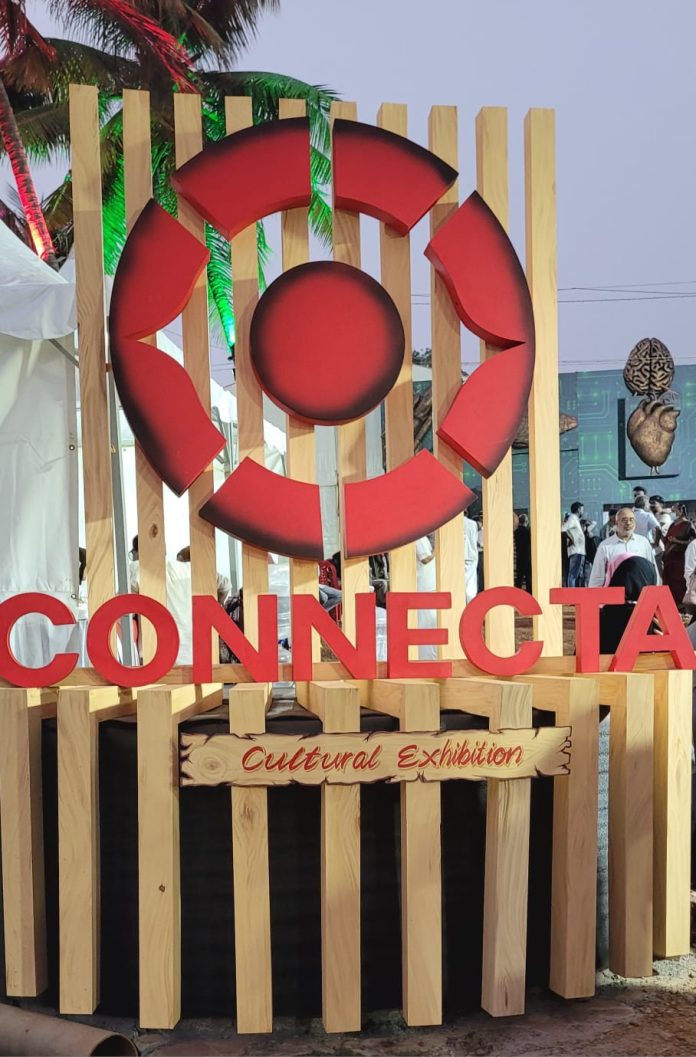
On a January evening, the busy town square of Kannur changed in a big way. Usually, the square is crowded with people rushing about their daily work. But on this day, it became a calm and welcoming space. People slowed down, reflected, and spoke with one another. They discussed daily habits, shared ideas, learned about different cultures, and understood what others believe in.
This transformation happened because the CONNECTA Cultural Exhibition was inaugurated. The event was organised by the Dialogue Centre Kerala.
A Call to Kindness and Togetherness
The inauguration was not a routine ceremony. It was a strong message inviting people to show kindness and build unity. CONNECTA reminded everyone that all human beings are connected in many ways. This message is especially important today, when people often focus more on differences than shared values.
CONNECTA highlighted common issues, lifestyles, and moral values that unite people, regardless of faith, culture, or background.
CONNECTA is built on three key ideas: Faith, Culture, and Dialogue. These elements can help heal divisions in society. The organisers carefully selected displays that encouraged visitors to reflect and engage in meaningful conversations. Alongside this, the exhibition included many cultural activities that brought people together.
Every display in CONNECTA carried a clear message: faith and culture should unite people, not separate them. The exhibition emphasised that belief systems and traditions are meant to build understanding and harmony.
We live in a world where disagreements are common and often lead to conflict. CONNECTA offers a hopeful vision. It encourages people to recognise differences, respect them, and even celebrate them. According to CONNECTA, diversity is not a weakness; it is what makes us truly human and is something to value.
Message from Ms. A. Rahmathunnissa
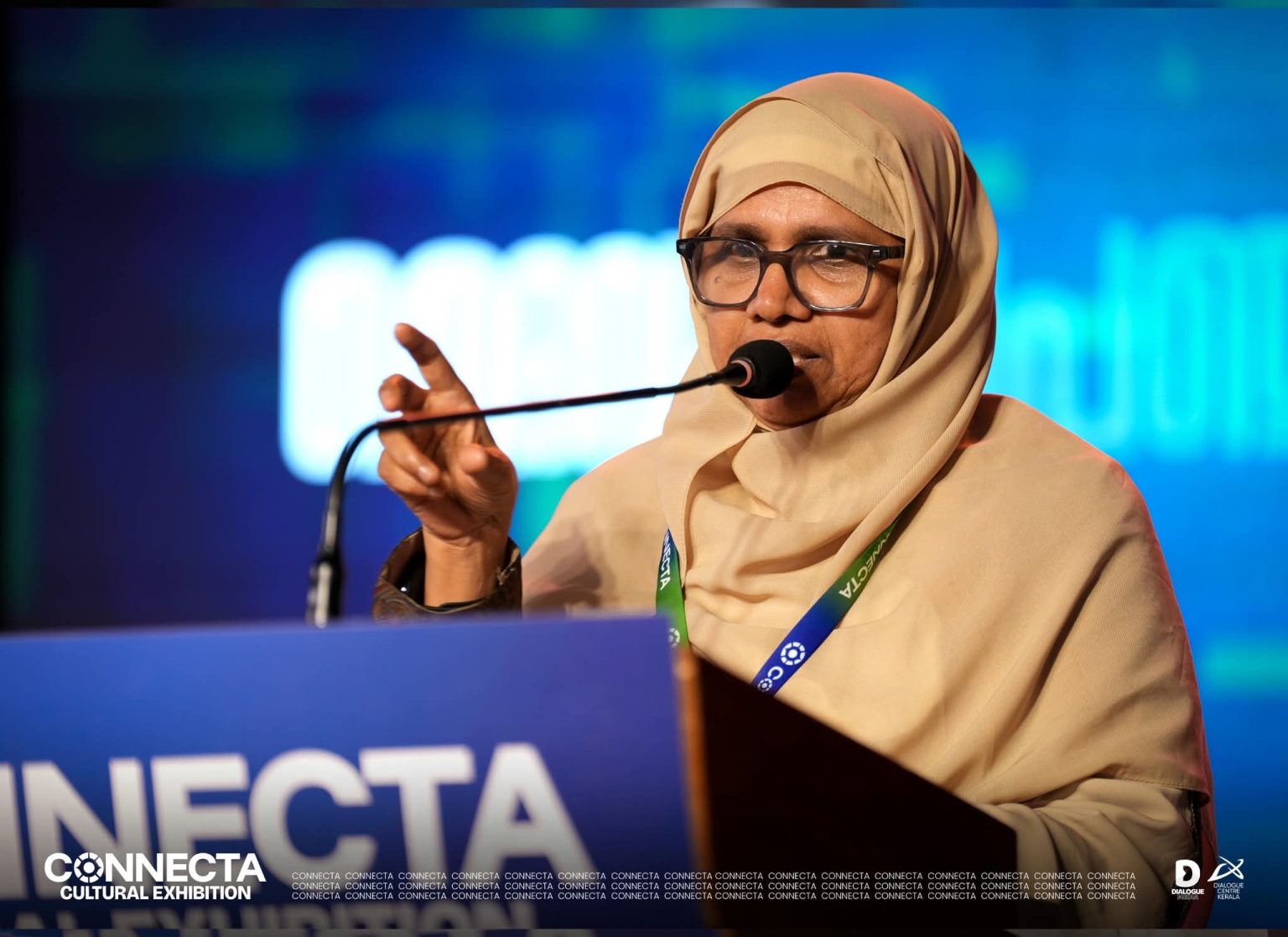
Ms. A. Rahmathunnissa, National Secretary of Jamaat-e-Islami Hind and Executive Member of All India Muslim Personal Law Board, addressed the gathering. She spoke about the deep importance of the exhibition’s theme and thanked everyone who worked together to make CONNECTA possible.
She began by highlighting the disturbing patterns that exist in today’s society. She noted that messages of disconnection, isolation, and separation are being heard again and again, shaping attitudes in ways that lead people to demonise one another, push others to the margins, and cut themselves off from the collective. In such a context, the call to connect people becomes not just relevant, but essential. Rebuilding bonds, restoring trust, and bringing people together is the urgent need of our time.
She pointed out that people today are growing increasingly distant from one another. In such times, exhibitions like CONNECTA are deeply needed, as they help rebuild human connections and strengthen relationships. CONNECTA, she said, reminds us to care for one another and to restore lost bonds.
CONNECTA as a Way of Life
Ms. Rahmathunnissa explained that CONNECTA represents a way of living. It encourages personal responsibility, peaceful coexistence, and moral awareness. CONNECTA serves as a guide for ethical and spiritual living, teaching people how to act with integrity and live in harmony with others.
She described CONNECTA as a path rooted in responsibility, social balance, and moral consciousness – principles that can help people lead meaningful lives.
Ms. Rahmathunnissa expanded CONNECTA as an acronym and explained its meaning as
C – Contemplate the signs of God in the universe
She encouraged people to reflect on nature, culture, and humanity. The variety we see in the world is a sign of God’s wisdom. Diversity is not accidental; it is part of the Creator’s design. Differences in creation reflect God’s intention and should be appreciated.
O – Open hearts to compassion and empathy
True faith, she said, softens the heart. It helps people feel compassion for others. Compassion allows us to see others not as strangers, but as fellow travellers sharing the same journey of life.
N – Nurture relationships with all creatures
Human beings have a duty to care for everyone, not just those close to them. Every person, animal, and living being deserves kindness and respect. Caring for the Earth and its creatures is a core human responsibility.
N – Navigate the path of balance and harmony
Extremes can damage communities. Balance creates unity. Harmony grows when justice, mercy, and wisdom work together. This balance strengthens society and brings people closer.
E – Embrace the interconnectedness of all things
No one lives in isolation. Each person’s life is linked to others. Communities thrive because of these connections, even when we are not always aware of them.
C – Cultivate gratitude and mindfulness
Gratitude keeps people aware of what truly matters. Mindfulness reminds us that our words and actions have consequences. Together, gratitude and awareness help people act responsibly and thoughtfully.
T – Transmit love, peace, and kindness
These values are not just beliefs; they must be practised. People must actively live these values and share them through their actions every day.
A – Awaken to our role as ambassadors of God on Earth.
Being ambassadors of Allah, it is our duty to consider everyone and take everyone together.
A Timely and Lasting Message
Ms. Rahamathunnisa expressed hope that CONNECTA would inspire people to practise kindness and responsibility. The exhibition encourages gratitude toward the Creator and care for one another.
CONNECTA promotes dialogue, shared values, empathy, and understanding – qualities essential for harmony in a diverse society. By encouraging connection over isolation and compassion over fear, CONNECTA calls on humanity to honour one another and the Creator who gave life to all.
[The writer is Assistant Secretary, Jamaat-e-Islami Hind, Media In-Charge Women’s Department]
source: http://www.radiancenews.com / Radiance News / Home> Latest News> Report / by Rabia Basri / February 06th, 2026
Visually-impaired children from deprived Muslim families gain education and dignity at the institution founded by Mohammad Usman in Chennai and Ranipet
Chennai :
In the busy streets of Chennai and surrounding districts, where poverty often limits opportunity, one institution is rewriting the story for visually impaired Muslim children. Madrasa Imdadiya, a semi-residential trust founded by Mohammad Usman, offers education, skills, and dignity to children who might otherwise have spent their lives begging.
Ashraf Khan, a Tamil teacher in a private college in Chennai, was born blind into a poor family. He recalls his early years at a small madrasa for blind students in Melvisharam, near Ranipet, as life-changing. Today, he earns about ₹50,000 per month. “Education saved my life,” he says.
Usman draws a stark contrast. He has often seen blind children on streets with equally deprived parents. “This is what happens with the poorest Muslims. When parents are blind and poor, the children end up on the streets,” he explains. This inspired him to act.
Founded in 2010, the madrasa now runs centres in Chennai and Ranipet, inspiring similar institutions in Pune, Ahmedabad, Aurangabad, and Kashmir. The Tamil Nadu centre, the largest, covers 5,000 square feet and hosts 50 blind students, including ten girls, with hostel staff managing daily needs.
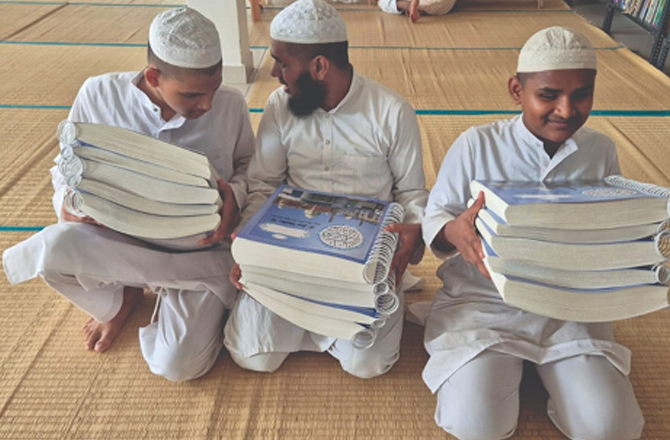
The madrasa blends religious and formal education, filling gaps left by government institutions. Students study the Qur’an, Hadith, and other religious texts in Braille, alongside school and college instruction via audio tools. Children with other disabilities are also accepted, though Braille education is separate.
Usman stresses self-reliance. “Some parents still take financial help from the trust, but many become self-reliant through their educated children. This is the real success,” he says. Students often pursue higher education, vocational training, or government jobs, with some returning as teachers.
The madrasa also produces copies of Qur’an in Braille, distributed free across India and abroad. Each copy costs about ₹3,500 to print. “All our students become Huffaz and complete Class 12 and degree education,” Usman adds.
Mobina (name changed), a blind and disabled girl who lost her father early, is a shining example. With the madrasa’s support, she now teaches in a government school and earns ₹75,000 per month. “Without this madrasa, I would have remained invisible,” she says.
Challenges remain, especially for girls. Deep social barriers, safety concerns, and marriage prospects keep many girls out of school. Usman says patience is key. “Families do not outright reject education but hesitate. Inclusion is about changing attitudes regarding gender, disability, and value,” he explains.
Disability activists note that blind children in poorer districts often lack access to formal education. Government schools exist only on paper, and families may be unaware of disability certificates, scholarships, or assistive technology. Without early intervention, entire families risk cycles of begging or informal labour.
Madrasa Imdadiya shows how targeted community efforts can break generational poverty and empower blind Muslim children. By providing education, accommodation, and skills, the madrasa transforms lives and reinforces that education is a right, not charity.
“Other communities invest in education, but we do not,” Usman remarks, highlighting a broader challenge within the Muslim community. Yet he takes pride in his students’ successes. With over 500 students across India benefiting from similar madrasas, he dreams of a school for blind children in every district and tuition centre in every village.
“Every story here is regrettable. Happy stories go to cities and private schools; they do not come to my trust’s madrasa,” he admits, underscoring the ongoing need for support for India’s most vulnerable children.
source: http://www.clarionindia.net / Clarion India / Home> Editor’s Pick> India / by Team Clarion / January 10th, 2026
Jubuni Village (Rampurhat subdivision of Birbhum District), WEST BENGAL :
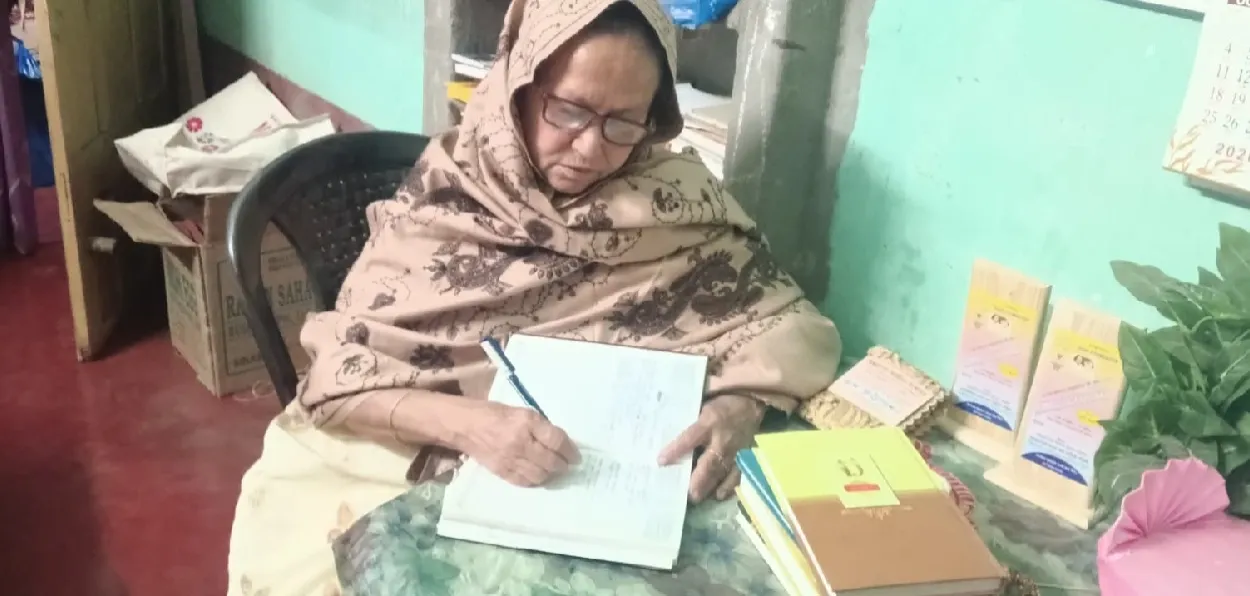
Feroza Begum
Firoza Begum’s language of protest against the harsh realities of rural India, gender inequality, and family adversity is a strong statement. The poet and writer in her, though, has emerged from a phase of struggle.
She was born into a respectable family in Jubuni village of Rampurhat subdivision of Birbhum district, West Bengal. Her parents, Abdul Hakim Mallick and Arestun Bibi, faced poverty, disease, and social uncertainty, due to which her childhood was difficult.
The struggle for survival of her family and relatives during the terrible smallpox epidemic influenced and triggered a humanitarian spirit in her.
In her childhood, when women’s education was neglected in rural society, she completed her schooling. She broke many social barriers. The discrimination and neglect she faced while in school ignited the spirit of rebellion in her, which, in due course, made the language of her writing sharp, protestant and sensitive.
Feroza Begum with an award
In 1974, she married Nurul Haque Mallick, a science-minded teacher. With her husband’s liberal attitude and inspiration, she managed to balance both her family life and pursuit of literature. She made sure her four daughters got educated and financially independent, self-reliant. Although her husband’s death in 2016 left a deep void in her life, she did not stop pursuing literature.
Since 1992, Firoza Begum has been regularly writing poems, songs and essays. Her writings have been published in various literary magazines of Murshidabad, Rampurhat and Kolkata, Pragati, Trinayani, Kalam, Bhabbana, Sangbad Darpan, Roddur, Arpan, etc.
Besides, she is also a regular participant in the radio and television programs and has received recognition beyond her hometown and community.
The poetry collection “Nayantara” published in 2010) and “Aparajita” published in 2014) clearly reflect the struggle of women, the adversities of life, and the human spirit.
She proofread and published the book, despite illness and limitations, and it reflected her perseverance.
Firoza Begum has received several honours and awards in recognition of her contribution to literary endeavours.
The reception by the Bhabna O Anubhavber Dana newspaper of Rampurhat, the Rokeya Award from the Roddur newspaper, certificates from various radio stations in Kolkata and Baharampur, the Ambedkar Shilpi Ratna Award from New Barrackpore, and the recent “Best Bengali” award from the Asha Foundation are important recognitions of her literary and humanitarian activities.
The life of poet Firoza Begum is not just the autobiography of a writer, it is a courageous document of a struggling woman. Her pen still bears witness to the fact that even in the deep darkness of adversity, education, humanity and literature are capable of illuminating the path of humanity.
source: http://www.awazthevoice.in / Awaz, The Voice / Home> Stories / by Dev Kishore Chakraborty / February 03rd, 2026
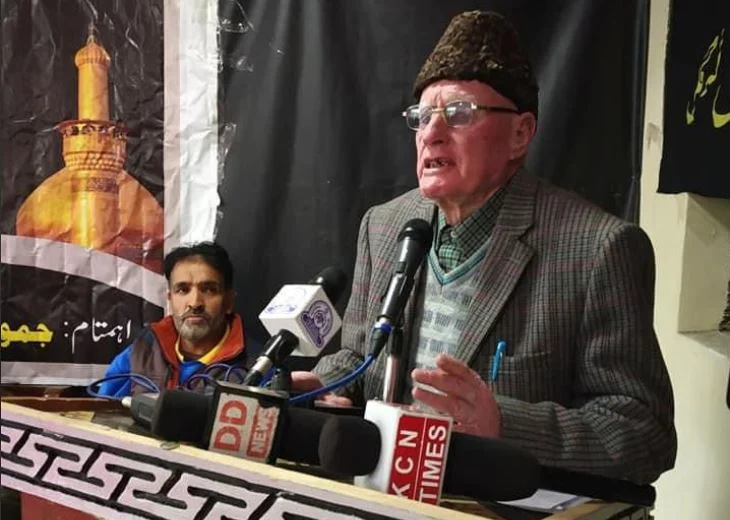
A heartfelt Condolence Meeting in memory of the late Haji Khawaja Abdul Hamid Tanveer, the eminent scholar, writer, and poet of Kargil, Ladakh, was held today at the Ladakh Cultural Academy Hall, Kargil.
This gathering brought together the literary and cultural community of Kargil, including esteemed writers, poets, and cultural activists, who paid their deepest respects and expressed heartfelt condolences for the loss of this iconic literary figure.
Haji Khawaja Abdul Hamid Tanveer, who passed away today morning in Srinagar, Kashmir, was remembered for his immense contributions to literature and culture. Known as an “ocean of knowledge,” his prose and poetry were celebrated for their depth, wisdom, and literary craftsmanship. His work left a lasting impact on Kargil’s cultural identity, inspiring both his contemporaries and the younger generations.
The attendees honored the late scholar’s memory with a solemn two-minute silence, and “Surah-e-Fatiha” was recited to pray for his departed soul’s peace. His legacy as a guiding light in Kargil’s literary circles was acknowledged by all, with deep admiration for his significant contributions to the region’s literary heritage.
Distinguished individuals present at the meeting included Padmashree Dr. Akhoon Asgar Ali Basharat, State Awardee Ghulam Ahmed Jawan, Alhaj Aga Sayed Hadi Shah, Muhammad Hussain Rehnuma, Muhammad Hussain Fayaz, Nazir Hussain (Deputy Secretary, LAACL), Muhammad Ali Tak (OSD/Under Secretary), Department of Tourism & Culture, UT Ladakh, Zakir Hussain (HA, LAACL), Gulzar Hussain Mendoktsar, Shafaqat Ali, and others.
In his speech, Alhaj Aga Sayed Hadi Shah highlighted that the late Haji Khawaja Abdul Hamid Tanveer was not only a respected literary scholar but also his personal mentor and a guiding influence in the field of literature. He was closely associated with All India Radio (AIR) Kargil, the J&K Cultural Academy, and the Ladakh Cultural Academy, leaving behind a rich legacy of cultural contributions.
On this occasion, both Padmashree Dr. Akhoon Asgar Ali Basharat and Muhammad Hussain Rehnuma paid tribute to the late poet by reciting a special poem dedicated to his memory and achievements.
The entire region of Ladakh grieves the loss of this legendary writer and poet. His wisdom, knowledge, and literary legacy will forever be cherished, serving as a source of inspiration for generations to come. His contributions to the field of education, particularly his role as Zonal Education Officer (ZEO) in Kargil, were also acknowledged with deep respect, reflecting his unwavering dedication to the community he served with passion and commitment.
source: http://www.boldnewsonline.com / Bold News / Home> Art & Culture / by Bold News Online Desk / November 16th, 2024
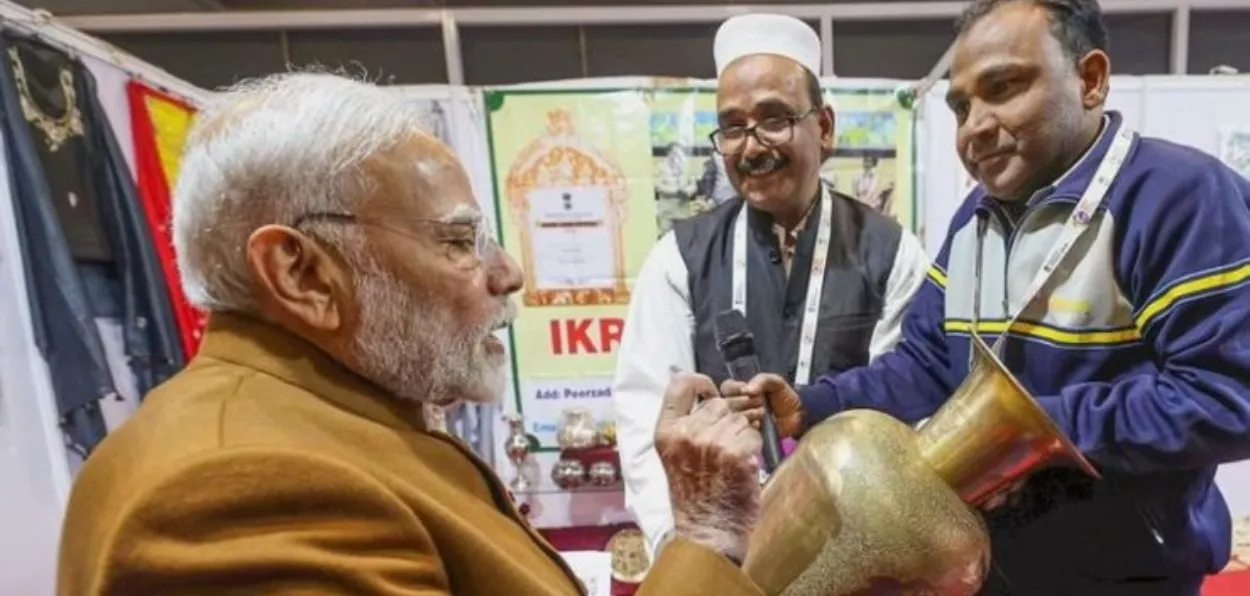
Ikram Hussain (wearing a cap) with Prime Minister Narendra Modi at Bharat Mandapam, New Delhi
Ikram Hussain was 15 years old when the manager of the Eidgah Gurdwara in Moradabad, UP, asked him to engrave his mother’s name on an aluminium plate. The young boy had never gone to school but had picked up the skill of metal carving from his father. The young boy felt embarrassed and told the manager that he must write the name for him since he was illiterate.
He engraved the name beautifully onto the plate and received Rs 10 for this work. This amount gave him confidence, and he decided to pursue his work seriously.
Today, Ikram Hussain, 61, from Moradabad, Uttar Pradesh, is a national award winner. None other than Prime Minister Narendra Modi praised him for his art.
One of the glorious moments of his life was when Prime Minister Narendra Modi was impressed and moved by his beautiful carvings at the The 12th Grameen Bharat Mahotsav at Bharat Mandapam, New Delhi last year.
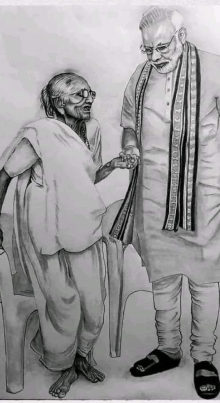
Ikram was carving a piece depicting Prime Minister with his late mother on a 3-feet brass jar. Prime Minister intently watched his carvings and patted him for his work and dedication. He displayed this work at the festival.
Moradabad, known as the “Brass City,” is renowned for its exquisite brass artefacts. Ikram Hussain says he could not study due to financial constraints at home. However, he never lost hope.
At a young age, he began assisting his grandfather and father in their brass engraving work. His father, Haji Abdul Hamid, and his uncle, Razak Medal winner Haji Ghulam Nabi, were well-known brass engravers in Moradabad. Ikram started learning this art at the tender age of seven.
Even today, his eyes well up with tears when asked why he couldn’t complete his studies. He explains that his family’s financial situation was extremely precarious. To help support the family, he had to leave school and start working.
The family worked day and night, yet they could barely earn five to seven rupees a week. Even that amount was hard to come by those days. Despite this, Ikram never let his circumstances become a weakness.
While working, he meticulously learned the intricacies of engraving. His hard work and dedication resulted in him gradually mastering the art of working with brass to the point where he could accurately engrave the likeness of any person’s face.
His engravings display emotion, depth, and lifelike detail. This is why his art has equally impressed people from all communities—Hindus, Muslims, Sikhs, and Christians alike.
#VIRAL | मुरादाबाद, जो अपनी पीतल की कला और हस्तशिल्प के लिए पूरी दुनिया में प्रसिद्ध है, ने अनेक प्रतिभाशाली शिल्पकारों को जन्म दिया है। इन सभी में एक नाम विशेष रूप से उभर कर आता है—इकराम हुसैन। 61 वर्षीय इकराम हुसैन ने अपने जीवन की कठिनाइयों और संघर्षों के बावजूद पीतल की नक्काशी… pic.twitter.com/1Jvxm3iWTt
His hard work paid off, and in 2004, he received an award from the Uttar Pradesh government for his outstanding carving skills. He also received a cash prize of 5,000 rupees.
At that time, five thousand rupees was a considerable sum of money. Ikram recounts that when he went to deposit the check at the bank, the bank manager even offered him tea. This recognition was like a dream come true for him. There was an atmosphere of joy in his family, and his morale was boosted manifold.
Today, Ikram Hussain is recipient of honours and awards from various parts of the country.
He runs his company, which he started with a bank loan. This craftsman, who once earned just five rupees a week, is now providing jobs and training to many.
Ikram Hussain’s story is not just a success story of a craftsman, but an example of struggle, perseverance, and self-confidence. He proved that with determination and hard work, a lack of formal education cannot be an obstacle to success.
The master craftsman is recognised throughout the country for his art and social message. The demand for his brass products is high, and his business is worth millions.
The Bihar government has hired him to train the artisans. He trained more than 400 artisans at the Upendra Maharathi Shilp Anudan Sansthan.
Ikram Hussain inherited his passion for this art form, as his father also trained people in the same craft. His exceptional carvings have earned him a place in the Guinness Book of World Records.
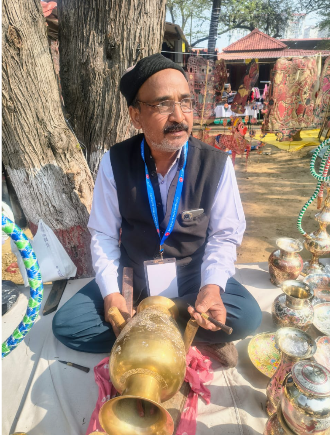
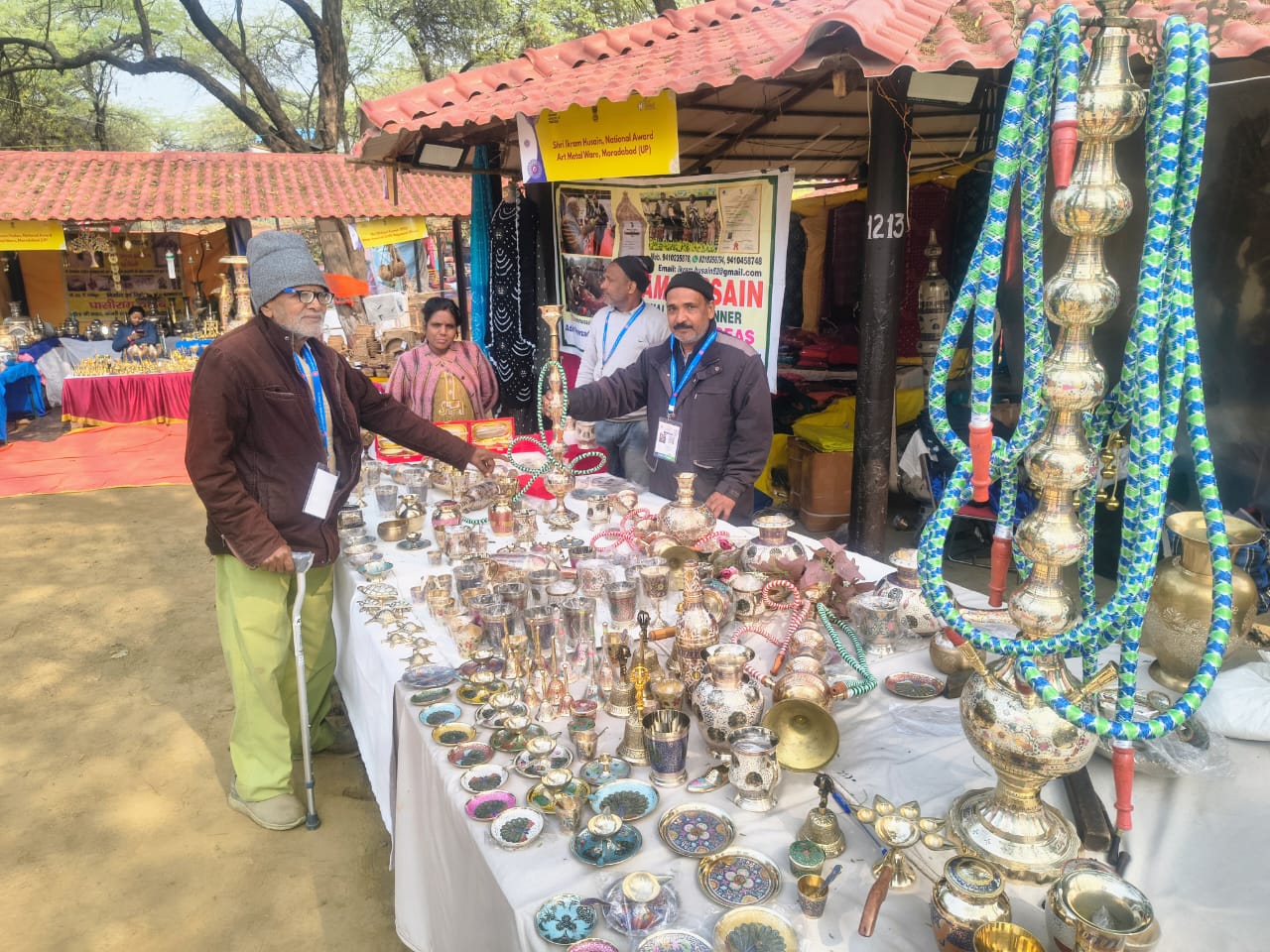
Ikram Hussain at his stall at the Surajkund Festival
Craftsman Ikram Hussain has conveyed a message of communal harmony by engraving symbols of Hindu, Muslim, Sikh, and Christian religions on his brass products.
He was honoured with a National Award in 2022 for his art and for promoting brotherhood in society.
Ikram Hussain believes that all religions are part of the same family and that we should rise above caste and creed to strengthen love and brotherhood. “We are all flowers of the same branch, only our colours are different. We should promote love and brotherhood, not hatred.”
His carving of the Ram Temple on a vase and his work on a 40-inch vase at the Golden Temple can be seen up close at the Lucknow Museum.
He has received numerous awards, including the State Award Second from Uttar Pradesh, the Bhim Rao Ambedkar Award, the Dr Ram Manohar Lohia State Award, the National Award Second from Union Minister Piyush Goyal, two honours from the Assam government, and an honour from the Prime Minister.
Overall, he has received 20 national and international awards. His work and contributions have also earned him a place in the Guinness Book of World Records.
source: http://www.awazthevoice.in / Awaz, The Voice / Home> Stories / by Dayaram Vashisth / February 05th, 2026