Tag Archives: Positive News of Indian Muslims

This Urdu newspaper was banned after criticising General Dyer. Here’s what it did next

Bijnor (former Northwest United Provinces) – presently (Moradabad Division), UTTAR PRADESH :

In ‘Print and the Urdu Public’, Megan Eaton Robb writes about the impact and role of popular Urdu newspaper Madinah and how it pushed back against censorship.

File photo | Gen. Reginald Dyer | Wikimedia Commons

Madīnah’s community of editors, subeditors, and proprietors illustrate the interconnected network of professionals working on newspapers across North India, with a shared commitment to confounding censorship laws. Editors of Madīnah were products of qasbahs and lived in Bijnor or nearby while employed by the publication. At least one assistant editor, Ḥamīd Ḥasan “Fakīr” Bijnorī (1903–1991), was a relative, having married Majīd Ḥasan’s daughter in the 1910s before he became the editor of Madinah Press’s children’s magazine Ghunchah after 1922. Ḥamīd Ḥasan would later be listed as an assistant editor from 1930 to 1935 and even take over as editor for several months when the need arose in 1945. When a new editor took over the work of Madīnah and was not already resident in Bijnor, he would move into the Ḥasan compound, which acted as the administrative office of the paper. Several small apartments attached to the main verandah, so editors could live in comfort with their families, remaining accessible to the newspaper office while maintaining privacy. Maulānā Majīd Ḥasan’s name, along with the name of the current chief editor, always appeared on the paper’s title page. At any given time there could be up to three editors of the paper, with the chief editor being referred to as “mudīr-i mas’ūl.”

Although Majīd Ḥasan’s proprietorship provided continuity for the newspaper, its different editors influenced the paper’s tone and focus. The turnover between editors could be rapid when legal troubles emerged. For instance, in 1924, when the editor Qāẓī Badrul Ḥasan Jalālī (1891–1956) was prosecuted by the British Raj for an article, he resigned his editorship, but he stepped back into his position once the dust of government scrutiny had settled. If Majīd Ḥasan attracted too much scrutiny from government surveillance, he could retreat from view behind the shadow of his prominent editors, continuing to exert the same influence behind the scenes. This allowed his outfit to survive draconian censorship measures while retaining the continuity essential to the newspaper’s success.

When he launched the newspaper in 1912, Majīd Ḥasan had little local influence. The only person of significance attached to the newspaper initially was a prominent journalist of the period, Nūr ul-Ḥasan Zahīn, who wrote for Ṣaḥīfa as well. Colonial censors initially dismissed Madīnah as a “bigoted Muhammadan organ, inclined to make trouble between Hindus and Muhammadans.” Madīnah first earned the ire of colonial administrators by criticizing the headmaster of Bijnor High School for complying with the British Educational Code. This was only the first of many encounters with censorship legislation.

April 1917 marked the beginning of Editor Mazh̤ ar ud-Dīn Shairkoṭī’s tenure, and the newspaper’s shift to publishing more explicitly political, anti-British stances. Shairkoṭī, a novelist as well as a journalist, was born in the Shairkoṭ qasbah of Bijnor in 1888. Initially educated by Maulānā ‘Abdul Qayūm Arshāq and Miyānji Sa‘ad Allah Sahib, he had attended Deoband as a pupil of Maulānā Mahmud ul-Ḥasan Asīr Mālṭā, known as Shaikh ul-Hind. After completing his education at Deoband, Mazh̤ ar ud- Dīn returned to Shairkot, where he worked on the newspaper Dastūr under the management of Ḥakīm Asrār ul-Nabī and on the newspaper Nagīnah.

Maulānā Majīd Ḥasan saw Maz̤har ud-Dīn’s affiliation with the newspaper as the beginning of a new period of commitment to the Muslim community and wrote an illustrious introduction for his new editor. Majīd Ḥasan’s message in his introduction was clear: he had brought in a power player to man the ship of Madīnah, a man who indubitably linked the paper to a network of powerful publications and individuals. The new editor transformed Madīnah into a more explicitly political entity. Maz̤har ud-Dīn associated with prominent political Muslims of the period, including Syed Ḥasan Imām, who presided over the Indian National Congress’s consideration of the Montagu-Chelmsford Reforms in Bombay in 1918. His other associates included Nawab Muḥammad Ismā’il Khān. He was, along with Khalīquzzamān, a key organizer of the UP Muslim League, and a prominent member until 1947; he remained in India after independence.

After the end of World War I in November 1918, discussions of independence and postwar reality in India began in earnest. The state of Islam, and the progress of both national and local branches of organizations such as the Muslim League and Congress, became matters of intense concern. Mohandas Karamchand “Mahātmā” Gāndhī (1869–1948) featured in several articles musing on the way forward for political Muslims. In addition, discussions of the fall out of World War I in Turkey and the caliphate took center stage. Under Mazh̤ ar ud-Dīn’s leadership, the newspaper emphasized the connection between the fate of Indian Muslims and of those in Turkey and other nations with significant ties to Islam.

Mazh̤ ar ud-Dīn presided over Madīnah’s publication of an article critical of the government’s role in the Jallianwallabagh massacre, which led to a dramatic conflict with the British Raj. In April 1919 Madīnah published an article criticizing Lieutenant Governor Sir Michael O’Dwyer’s (1864–1940) endorsement. Putting Madīnah on the Muslim Map of the actions of Colonel Reginald Dyer, who had overseen the disproportionate response at Jallianwallabagh. The article minced no words:

His honour O’Dwyer’s government of Panjab, from the very beginning, kept as the foundation of its policy a despotic course of action [ . . . ] This was his honor O’Dwyer’s last period of government; therefore it was necessary that he make amends for his past course of actions. This was the time when, instead of extinguishing the fire with the water Of gentleness and kindness, he inflamed the hearts of the ahl-i Punjab. Perhaps it could be said that he did not put out the fire with water, but instead doused it with oil. If that were not the case, then why would he at the conclusion of his reign, give orders that were so repellent, so far from resembling affection that they approximated hate?

It was actually illegal at this point in time to question the motives of the colonial government; thus, the final statement of the quotation accusing O’Dwyer of “hate” fell afoul of censorship laws. The government banned Madīnah from circulating in Punjab as a result of this piece. Mazh̤ arud-Dīn and Majīd Ḥasan’s response was defiant: in August 1919 they renamed the newspaper Yasrab, an Arabic synonym of Madīnah, as a bid to evade censorship.64 On the cover of each issue of Yasrab an Iqbal couplet appeared, a knowing wink to its readership base:

The dust of Madinah is better than both worlds. How wonderful is the city where the beloved is.

Khāk-i yas̱rab az do ‘ālam khūshtar ast Ā’e khunak shahre ke ānjā dilbar ast.

The couplet hinted at the paper Yasrab’s true identity, offered praise for the paper’s unpretentious popularity, and emphasized the link between the newspaper and the city Madīnah. Madīnah’s proprietor and editors were men who wore their few educational laurels lightly. More important than formal education was the ability to use that knowledge in the service of Indians generally and Muslims particularly. Unsurprisingly, the attempt at flouting the circulation ban was quickly detected. The paper reverted back to the title Madīnah after a few weeks, and the ban on circulation was lifted eventually.66 Madīnah was a space offering a figurative point of access to the community of Islam, the qaum, and it was a space increasingly under siege of colonial censorship laws.

Madīnah had been only one of many significant voices in the press commenting on the Jallianwallabagh fiasco. As the UP fortnightly report complained, “[The] occurrences in the Punjab [ . . . ] practically absorbed the entire attention of the press.” Along with Madīnah/Yasrab, the British excluded from Punjab al- Khalīl of Bijnor, The Independent of Allahabad (a Nehru paper), Hamdam and Akhuwat of Lucknow (Farangi Mahalli papers), Swadesh of Gorakhpur, and Amrita bazar patrika of Calcutta. The government demanded securities, or large sums of money as surety against future crimes of sedition, from papers in Bengal, Nagpur, Lucknow, and Madras. Madīnah’s inclusion in this censorship was a testament to its growing influence; its subterfuge demonstrated a growing sense of urgency in its mandate to reach readers and an emerging resolve to flout British restrictions.

In the 1920s, Madīnah focused on coverage of the Muslim League and the Indian National Congress, showing a preference for Congress.

It was per- haps Maz̤har ud-Dīn’s affection for the League that motivated him ultimately to resign from Madīnah in 1921. It is also possible that Mazh̤ ar ud-Dīn’s taste for politics pulled him closer to Delhi and toward the League after the political awakening accompanying the Khilafat Movement.

It was common for editors to move around among different qasbah-based newspapers, and after leaving Madīnah, Mazh̤ ar ud-Dīn joined Munshī Safīr Aḥmed’s Naginah-based paper Almān as its first editor; he was instrumental in relocating that paper to Delhi. He later became close to the leadership of the All-India Muslim League, including Muḥammad ‘Alī Jinnāh. In the 1930s he founded a paper entitled Vaḥdat (Unity) in order to assist the propagation of Muslim League ideals. When Maulānā Shabbīr Aḥmed ‘Usmānī, a Deobandi who supported the creation of Pakistan, resigned from the pro-Congress Jam‘īat ‘Ulamā and declared his allegiance to the Muslim League and Jinnah, he did so from Mazh̤ ar ud-Dīn’s office. This demonstrated Madīnah was one node in an important network of political power and publishing prestige in this period and had to make considered choices when it came to balancing shifting political alliances.

This excerpt from Print and the Urdu Public: Muslims, Newspapers, and Urban Life in Colonial India has been published with special permission from Oxford Univerity Press.

source: http://www.theprint.in / The Print / Home> Page Turner> Book Excerpts / by Megan Eaton Robb /May 15th, 2021

AMU Faculty Member Wins Best Paper Award at Int’l Conference in Oman

Aligarh, UTTAR PRADESH :

AMU Faculty Wins Best Paper Award at International Conference in Oman

Aligarh:

Dr. Lamay Bin Sabir, Assistant Professor, Department of Business Administration, Aligarh Muslim University (AMU), has been awarded the Best Paper Award at the International Conference on Intelligent Systems and Artificial Intelligence Applications (ISAA 2026) held at the University of Nizwa, Oman.

His award-winning paper, titled “Bridging Algorithmic Transparency and Managerial Trust: The Role of Explainable AI in Decision-Making – A Systematic Literature Review,” examines the challenges posed by limited transparency in AI-driven decision-making. The study highlights that AI systems are often perceived as “black boxes,” which affects managerial trust and decision effectiveness.

Dean, Faculty of Management Studies and Research, Prof. M. Naved Khan along with Chairperson, Department of Business Administration, Prof. Salma Ahmed congratulated Dr. Lamay on his achievement.

source: http://www.radiancenews.com / Radiance News / Home> Awards> Latest News> Science & Technology / by Radiance News Bureau / April 08th, 2026

Hafiz Doctor Mohammad Faisal Ansari Balances Medical Practice and Quranic Service in Pune

Bijnor, UTTAR PRADESH / Pune, MAHARASHTRA :

Mumbai:

A young dentist from Maharashtra has drawn attention for balancing a professional career with dedicated service to the Quran. Dr. Mohammad Faisal Ansari, aged 26, has been leading Taraweeh prayers for the past six years while also working as a dental professional and online tutor.

Originally from Bijnor in Uttar Pradesh, Faisal grew up in Mira Road after his family moved there in 2000. He received both religious and modern education in the area. Under the guidance of Maulana Sirajuddin, he began learning Arabic and later started memorising the Quran on his own initiative. After completing three parts, his parents formally supported his journey. He completed his Hifz in December 2013 at Darul Uloom Aziziyah under Hafiz Wa Qari Hadis Ansari. Dr. Faisal is a member of the Students Islamic Organization (SIO) of India.

After passing his SSC in 2015 with 82 percent marks, he began leading Taraweeh prayers. He later completed HSC with 72 percent and qualified through NEET to secure admission at Mohammad Ali Rangoonwala Dental College in Pune. He completed his dental degree in 2025.

Since 2021, he has been leading 27-day Taraweeh prayers at the Islamic Information Centre in Pune. Alongside his profession, he teaches Quran memorisation, Tajweed and basic Arabic to students across India and abroad, including learners from Australia, the United States, Switzerland and the United Kingdom.

Speaking about his journey, Dr. Faisal said he gives priority to maintaining his connection with the Quran, especially during Ramadan. He said his teachers advised him to never lose focus on the importance of the Quran regardless of his profession.

He currently works at a dental clinic in Pune and plans to start his own clinic in Mira Road after Eid. Coming from a family deeply connected with Islamic learning, his siblings have also pursued both religious and professional education.

His journey reflects a consistent effort to balance faith, education and professional growth.

Story courtesy inquilab.com

source: http://www.radiancenews.com / Radiance News / Home> Features> Latest News> Markers of Excellence> Personality> Reports / by Radiance News Bureau / March 17th, 2026

AMU Research Scholar Wins Best Poster Award at ESTIC 2025

Aligarh, UTTAR PRADESH :

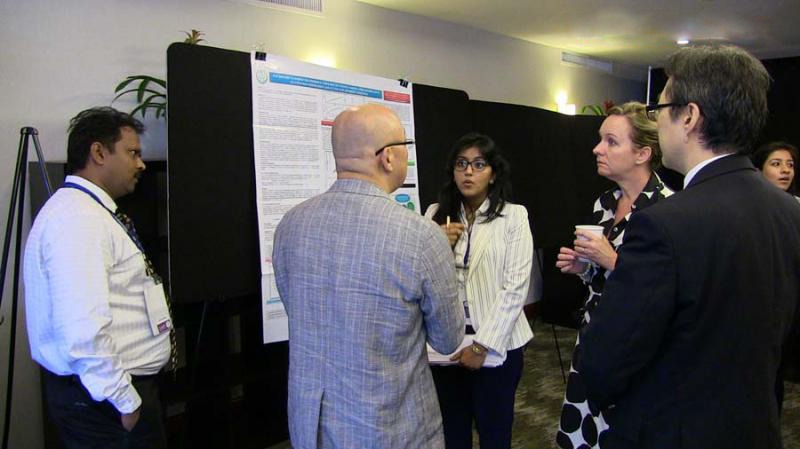
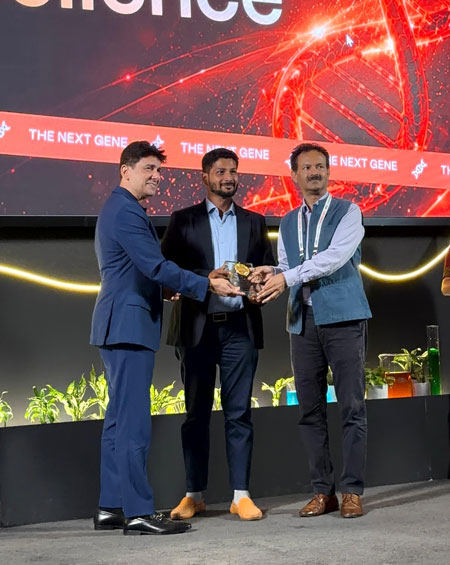
Adiba, a research scholar from the Department of Physics, AMU, receiving the Best Poster Award at the Emerging Science, Technology and Innovation Conclave (ESTIC) 2025

Aligarh:

Adiba, a research scholar from the Department of Physics, Aligarh Muslim University (AMU), has brought laurels to the University by winning the Best Poster Award at the Emerging Science, Technology and Innovation Conclave (ESTIC) 2025, organised by the Department of Science & Technology (DST), Government of India. The prestigious event was held at Bharat Mandapam, New Delhi.

The conclave, inaugurated by Prime Minister Narendra Modi, was supported by thirteen ministries and departments of the Government of India, showcasing the nation’s growing emphasis on innovation and scientific advancement.

Adiba received the award from Dr. Jitendra Singh, Union Minister of State (Independent Charge) for Science & Technology, and Prof. Abhay Karandikar, Secretary, DST, in the presence of Prof. Ajay Kumar Sood, Principal Scientific Adviser to the Government of India, along with several eminent scientists and leaders of India’s science and technology ecosystem.

Out of over 1,000 entries received from across the country, 100 were shortlisted for presentation at the conclave. From these, only five participants were selected for the top honours.

Adiba’s award-winning poster, titled “Bipolar Resistive Switching in Forming-Free, Flexible, and Transparent ReRAM Devices”, showcased her pioneering research on resistive switching mechanisms for neuromorphic and in-memory computing applications – a key area in next-generation electronic devices.

Expressing her gratitude, Adiba said, “It’s an honour to be recognised for my research on such a prestigious platform graced by leading scientists. I am deeply thankful to my supervisor, Prof. Tufail Ahmad, for his constant guidance and support.”

The achievement marks another proud moment for AMU, underscoring the university’s strong contribution to cutting-edge scientific research and innovation.

source: http://www.radiancenews.com / Radiance News / Home> Pride of the Nation> Awards>Latest News / by Radiance News Bureau / November 11th, 2025

AMU History Department Confers Lifetime Achievement Award on Prof. Irfan Habib

Vadodara, GUJARAT / Aligarh, UTTAR PRADESH :

Aligarh:

The Centre of Advanced Study, Department of History at Aligarh Muslim University (AMU), conferred a Lifetime Achievement Award on renowned historian and Emeritus Professor Irfan Habib, recognising his exemplary scholarship, mentorship, and decades of dedicated service to the discipline of history and the University.

The award was presented during a special farewell ceremony organised to honour retired faculty members and non-teaching staff whose formal farewells had been pending for years. The initiative, led by Professor Hassan Imam, Chairman and Coordinator of the Department, marked a significant moment of acknowledgment and collective appreciation.

Across various sessions, the Department paid tribute to several retired professors, including Prof Tariq Ahmed, Prof Roohi Abida Ahmed, Prof Gulfishan Khan, Prof Mohammad Afzal Khan, and Prof Ali Athar, along with 25 non-teaching staff members.

On October 11, 2025, a dedicated ceremony celebrated distinguished historians such as Prof S.P. Verma, Prof Pushpa Prasad, Prof Shireen Moosvi, Prof S. Jabir Raza, Prof S.L.H. Moini, Prof Ishtiaq Ahmad Zilli, Prof K.A.S.M. Ishrat Alam, among others, acknowledging their remarkable academic contributions and institutional service.

Dr Lubna Irfan conducted the programme, while Dr Sana Aziz delivered the vote of thanks, appreciating the collaborative efforts that made the series of farewell events a success.

source: http://www.radiancenews.com / Radiance News / Home> Pride of the Nation> Awards> Latest News / by Radiance News Bureau / October 16th, 2025

AMU Orthopaedic Surgeon Continues to Excel on the Global Stage

Aligarh, UTTAR PRADESH :

Aligarh:

Prof. (Dr.) Aamir Bin Sabir, a distinguished orthopaedic surgeon at Jawaharlal Nehru Medical College and Hospital, Aligarh Muslim University, has once again exhibited his expertise on the international stage. With over 25 years of clinical experience and a former Chairman of the Department of Orthopaedics, Dr. Sabir’s commitment to professional excellence is evident.

Dr. Sabir’s recent participation in two International conferences has garnered recognition for AMU and the Department of Orthopaedics. At the Annual Scientific Conference in Ho Chi Minh City, Vietnam, jointly organised by VAAS, APAS, APHS, HAS, and HAA, Dr. Sabir was honoured with a Certificate of Appreciation for his valuable contributions as a speaker and moderator. He delivered a notable lecture on “Periprosthetic Fractures around Total Knee Replacement and Their Solutions.”

Earlier, at the APOA2025 Congress in Cairns, Australia, Dr. Sabir delivered a lecture on “Latest Methods to Control Bleeding during Surgery for Total Knee Replacement”, backed by his research trial. These achievements promote commitment to orthopaedics and contributions to academic and research excellence.

source: http://www.radiancenews.com / Radiance News / Home> Latest News> Markers of Excellence> Report / by Radiance News Bureau / September 05th, 2025

The Poet of Palnadu: How Sheikh Kareemullah Taught a Generation to Question

Palnadu District, ANDHRA PRADESH :

Beyond the Classroom: Honouring the literary soul and dedicated leadership of Headmaster Sheikh Kareemullah on his retirement, May 31, 2026

In the rural classrooms of Palnadu, a quiet revolution has been unfolding for decades. It did not begin with protests or speeches, but with the cadence of Vemana’s poems and the relentless commitment of a man who believed the classroom was a laboratory for democracy. As Sheikh Kareemullah, a senior educator and luminary of contemporary Telugu literature, hangs up his boots as a Headmaster this May 31, his legacy remains etched not in the service records of the state, but in the social consciousness of a generation.

For Kareemullah, teaching was never a mechanical transfer of curriculum. His tenure, particularly in the village of Enugupalem, became legendary. When news of his transfer broke, the village didn’t just file a grievance; two tractor-loads of residents reportedly arrived at the district office, demanding his retention.

It was a rare instance where the bureaucracy bowed to the pedagogical impact of an individual. Kareemullah had transformed his classroom into a crucible for critical thought, teaching children the nuances of pluralism, equality, and the weight of historical justice. He did not just teach the future; he nurtured it.

If teaching was his primary vocation, literature was his chosen battlefield. Kareemullah’s evolution as a writer is a mirror to the anxieties of the era. As communal tensions and social polarisation grew, his poetry shifted from traditional progressive themes to a sharper, more visceral exploration of identity.

His poem ‘Naa Raktham Kaaru Chauka’ (My Blood is Cheap) became more than a verse; it became a rallying cry for dignity. His long poem, ‘Saibu’, remains a seminal text in the Telugu literature, articulating the Muslim experience in India with a defiance that was both unapologetic and profoundly human.

Perhaps his most significant contribution to the literary canon is the introduction of the ‘Ababeel’, a poetic form inspired by Qur’anic allegory. By using the metaphor of small birds confronting overwhelming might, Kareemullah demonstrated that brevity could harbour immense political weight. The form took root, inspiring a new wave of younger poets to find their voices, and transforming what began as a creative experiment into a full-fledged literary movement.

Through the establishment of ‘Murasam’, Kareemullah created a vital space for Muslim writers to find a common ground, turning a literary collective into a school of critical thinking.

Throughout his career, Kareemullah has been the recipient of numerous honours, including the ‘Janmabhoomi Best Teacher’ award and the ‘Adarsha Guru Brahma’ title. Yet, to those who know him, these awards are mere footnotes.

His true achievement lies in his ability to bridge the gap between the teacher’s desk and the poet’s podium. His work, now part of university curricula, continues to be subjected to the rigorous academic scrutiny that defines a classic. He has navigated the complexities of domestic politics, critiqued imperialism, and remained a staunch defender of humanism.

As he steps into retirement, Kareemullah leaves behind a roadmap for the modern intellectual: to remain a teacher when the world is in chaos, and a poet when the world has lost its words. He remains not just a chronicler of his times, but an architect of the resistance against the silencing of voices.

[The writer is a journalist based in Hyderabad.]

source: http://www.radiancenews.com / Radiance News/ Home> Features>Focus / by Md. Mujahid / May 31st, 2026

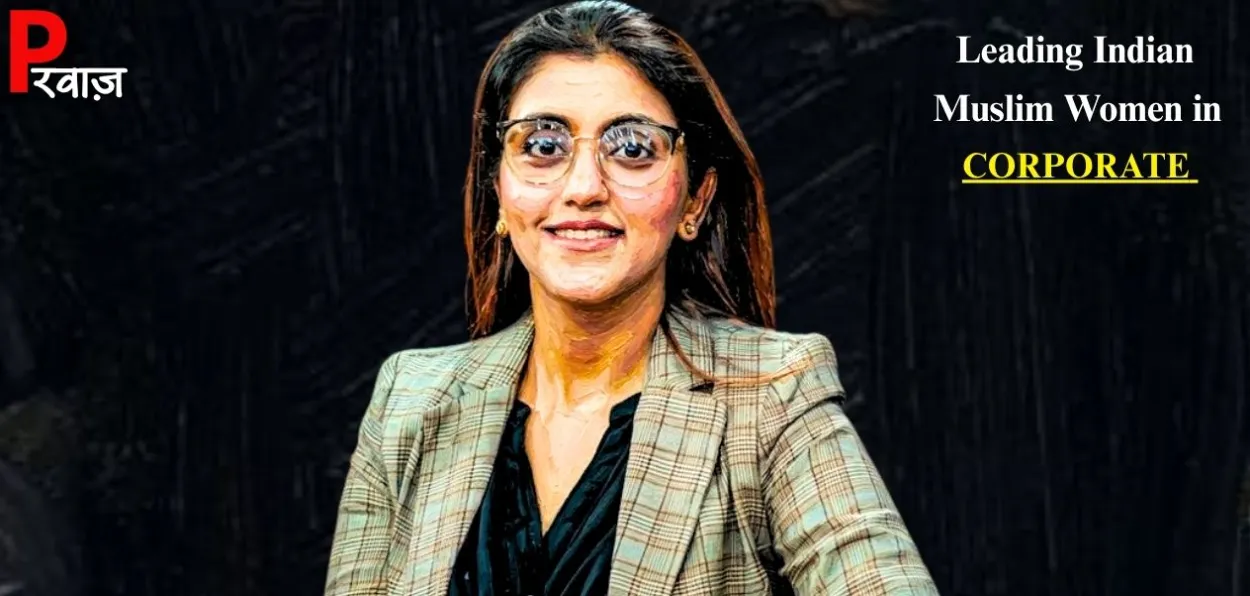
10 Muslim women who shine while running institutions

INDIA :

Representational Image

New Delhi :

Across India’s administrative corridors, diplomatic missions, universities, welfare departments, and heritage institutions, a generation of Muslim women is redefining leadership through intellect, perseverance, and public service. Their journeys are rooted in struggle, shaped by education, and driven by a deep commitment to society.

Under the Parvaz series, Awaz-the Voice brings you the stories of ten such Muslim women, whose lives and work should become an inspiration for all women in India.

Adeeba Anam Ashfaq Ahmed Shaikh

Adeeba Anam Ashfaq Ahmed Shaikh

Adeeba Anam Ashfaq Ahmed Shaikh’s journey from a modest home in Yavatmal to becoming Maharashtra’s first Muslim woman IAS officer is a story of determination overcoming adversity.

The daughter of an auto-rickshaw driver, she rose above financial hardship, repeated failures, and social prejudice to secure All India Rank 142 in UPSC 2024. Her success stands as a beacon of hope for countless girls from rural and marginalised communities who dream of changing their destinies through education and hard work.

Dr Adeela Abdulla

Dr Adeela Abdulla

Dr Adeela Abdulla represents a compassionate and thoughtful face of governance in Kerala. One of the early Muslim women from Malabar to join the IAS, she has played a vital role in strengthening social welfare systems and urban governance.

Whether through her work in Kerala’s Solid Waste Management Project or as Special Secretary in the Social Justice Department, her leadership reflects empathy, accountability, and a deep commitment to human dignity, particularly for vulnerable sections of society.

Dr Chabina Hassan

Dr Chabina Hassan

In Assam, Dr Chabina Hassan has emerged as a powerful force in heritage conservation and archaeology. As Deputy Director at the Directorate of Archaeology, Assam, she played a key role in securing UNESCO World Heritage recognition for Charaideo Maidam and made groundbreaking discoveries in Dima Hasao.

Balancing motherhood, academics, and fieldwork, she has transformed archaeology into a bridge connecting communities with their cultural roots while inspiring younger generations to value history and preservation.

Dr Syed Sehrish Asgar

Dr Syed Sehrish Asgar

Dr Syed Sehrish Asgar’s career reflects excellence, resilience, and transformative public service. A doctor by training, she topped the J&K Administrative Services examination in 2010 and later secured AIR 118 in UPSC.

From becoming Budgam’s first woman Deputy Commissioner to spearheading initiatives like the SAATH programme that empowered over five lakh rural women through Self Help Groups, her administrative journey has been marked by innovation and social impact.

Her recognition with the Prime Minister’s Award for Excellence in Civil Services further highlights her contributions to governance and public welfare.

Naghath Tabassum Abroo

Naghath Tabassum Abroo

Naghath Tabassum Abroo’s life story is deeply rooted in the strength of family values, education, and perseverance. After a decade-long break from academics due to marriage and motherhood, she returned to secure third rank in the KPSC examination and later rose to become one of Karnataka’s pioneering Muslim women IAS officers

Through initiatives in women’s welfare, sanitation, healthcare, and e-governance, including Bengaluru One and Khajane II, she demonstrated how compassionate leadership and administrative innovation can improve public systems and people’s lives.

Nagma Mohammad Mallick

Nagma Mohammad Mallick

Nagma Mohammad Mallick carved history as India’s first Muslim woman IFS officer and built a distinguished diplomatic career through quiet yet impactful service. Currently serving as India’s Ambassador to Japan and the Marshall Islands, she has represented India in several countries while strengthening international partnerships in diplomacy, technology, and economic cooperation.

Through her thoughtful articulation of democracy, dialogue, and non-violence, Mallick has projected India’s values on the global stage with dignity and restraint.

Nahida Zam Zam

Nahida Zam Zam

Nahida Zam Zam has become known as a fearless and people-centric administrator in Karnataka. Through her public speeches and grassroots engagement, she consistently advocates for women’s empowerment, education, and freedom of thought.Her dedicated fieldwork during the COVID-19 pandemic, even while pregnant, earned her admiration as a compassionate officer deeply connected with ordinary people.

Whether speaking to students, women, or marginalised communities, she challenges restrictive social norms and encourages self-reliance and awareness.

Syeda Saiyidain Hameed

Syeda Saiyidain Hameed 

Syeda Saiyidain Hameed stands as one of the most influential voices for women’s rights, peace, and social justice in India. An acclaimed author, educationist, former member of the Planning Commission, and member of the National Commission for Women, she has devoted her life to defending human rights and promoting dialogue across communities.

As a founder of the Muslim Women’s Forum and Women’s Initiative for Peace in South Asia, she worked tirelessly for peace-building efforts between India and Pakistan, proving that courage and compassion can coexist in public life.

Professor Shabina Nishat Omar

Professor Shabina Nishat Omar 

Professor Shabina Nishat Omar has emerged as a dynamic symbol of academic leadership and women’s empowerment in West Bengal. With over twenty-five years in education and administration, she has transformed institutions through her leadership while advocating inclusive education, digital literacy, and gender awareness.

As an educator, speaker, and administrator, she continues to inspire young people to view education not merely as a profession, but as a powerful tool for social transformation and self-reliance.

Zaynab Syed

Zaynab Syed

Zaynab Syed’s journey reflects perseverance, discipline, and dedication to public service. From overcoming repeated failures in the civil services examination to securing an All India Rank 107, she proved the power of resilience and self-belief. Today, through her role at TRIFED, she works to strengthen tribal livelihoods and expand economic opportunities for artisans and self-help groups across eastern India.

Her story demonstrates how determination and commitment can turn setbacks into opportunities to serve society meaningfully.

By breaking barriers and creating spaces for future generations, they are not only shaping institutions but also redefining what leadership looks like in contemporary India.

source: http://www.awazthevoice.in / Awaz, The Voice / Home> The Changemakers / by Vidushi Gaur /May 30th, 2026

Kalaburagi to Host Karnataka Muslim Convention on June 7

Kalaburagi (formerly Gulbarga), KARNATAKA :

Kalaburagi:

The district unit of the Federation of Karnataka Muslim Organisations (FKMO) will organise the Karnataka Muslim Convention at Sabha Function Hall in Kalaburagi on June 7.

Addressing a press conference at the Kalaburagi Press Club, FKMO leader Ibrahim Patel said the convention has received support from various Muslim organisations, associations, institutions and members of the public. Thousands of people are expected to participate in the event.

He said the convention will feature the presentation of a report prepared by members of the Federation of Karnataka Muslim Organisations and experts from different fields.

According to Patel, the report examines the promises made to the Muslim community by Congress, the commitments that have been fulfilled and those that remain pending. The convention will also deliberate on issues relating to political representation and the key demands of the community.

He said that after its release at the Karnataka Muslim Convention in Bengaluru, the report is now being presented in Kalaburagi. Similar programmes will also be organised in Mysuru, Davangere and Mangaluru.

Community leader Afzal Mehmood said several assurances given by the Congress government are yet to be implemented. He urged the government to address ten major demands of the community, including restoration of reservation, action against hate speech, adequate budget allocation, political representation, Waqf-related issues, repeal of the cow slaughter prohibition law, withdrawal of the anti-conversion law and scholarship-related concerns.

He also expressed disappointment over the absence of a Muslim candidate in the upcoming Legislative Council elections despite demands for at least two seats for the community. He called for representation through at least one Rajya Sabha seat and four Cabinet berths.

The organisers clarified that no political leaders have been invited to the convention. They said the event is not a political programme but a democratic platform aimed at urging the government to fulfil its promises to the community in accordance with constitutional principles.

Retired Tahsildar Syed Nisar Ahmed Wazir, Feroz Khan Wadi and others were present at the press conference.

source: http://www.english.varthabharati.in / Vartha Bharati / Home> Karnataka / by Vartha Bharati / June 04th, 2026

For the Love of Telugu: How a Warangal Madrasa Teacher Bridged Faith and Literature

Warangal, TELANGANA :

With a copy of the Holy Qur’an in one hand and the nectar of Telugu verse in the other, Mohammad Abdul Rasheed’s life is a testament to an enduring truth: language knows no faith, and the alphabet recognises no borders.

Mohammad Abdul Rasheed is a rare crimson rose blooming in the sprawling Nandanavanam, the celestial garden of Telugu literature. His faith is Islam, yet the consciousness of being profoundly, unapologetically ‘Telugu’ flows through his very veins. He possesses no grand academic degrees, but armed with nothing more than an insatiable appetite for the written word and a fierce determination to weaponize the alphabet, he has authored 43 books. His life is an epic poem in motion.

Recently appointed as the National Coordinator for the prestigious Sri Sri Kala Vedika 7th World Telugu Literature Conference, this Akshara Tapasvi (an ascetic of letters) stands as a monument to cultural synthesis.

The Ten-Paise Genesis

Born on April 12, 1952, in the Desaipeta locality of Warangal, Rasheed was the third of 12 children born to the impoverished couple Mohammad Abdul Sattar and Sarabi. His romance with literature began with a childhood snub. At the age of nine, while lingering in a local eatery, he was mesmerised by the vibrant, multi-coloured jacket of a novel held by a customer. When the young boy instinctively reached out to touch it, he was harshly rebuked. That sting did not discourage him; instead, it ignited a lifelong obsession.

He found his sanctuary at a makeshift wooden kiosk outside the Rajarajeswari Talkies. For a deposit of one rupee, the shopkeeper let him rent pulp novels and magazines for 10 paise a day. Flipping through the iconic pages of ChandamamaBalamitra, and Vijayachitra, Rasheed devoured stories the way others consumed food.

“I have no higher education,” Rasheed reflects, his voice tinged with quiet pride. “But it was that raw, unadulterated reading habit of my childhood that gave me the spine to stand tall in the literary world today.”

The Epiphany in ‘Geeturai’ and the Accidental Teacher

As the years rolled on, the writer within Rasheed found his awakening in the columns of the Geeturai weekly magazine, where he began contributing sharp opinion pieces. His turning point, however, came during an Islamic training seminar. Tasked with speaking on the theme “Desh Bachao” (Save the Nation), Rasheed delivered an electrifying five-minute speech that stunned his mentors.

Recognising a rare linguistic prodigy, authorities appointed him in 1985 to teach Telugu as a second language at Hyderabad’s renowned Jamia Darul Huda Madrasa. For 12 years, he served as a bridge between communities, earning the revered title of ‘Rasheed Master’ among generations of students.

A Harvest of 43 Volumes

The year 1990 marked a seismic shift in his literary career when he took up the monumental task of translating four dense volumes by the globally acclaimed Islamic scholar, Maulana Abul Hasan Ali Nadwi, into Telugu. Since then, the ink has never dried on his pen. Of the 43 books he has delivered to the Telugu literary canon, nine are original creative works:

In 2003, his seminal book ‘Jihad’ – an effort to demystify and contextually reclaim the term – was unveiled and lauded by Jnanpith Award laureate, Dr. C. Narayana Reddy (CiNaRe).

In 2021, his poignant poetry anthology ‘Bangaru Desam Naa Desam’ (My Country, A Golden Country) was launched at the historic Ravindra Bharathi stage by the venerable academician Acharya Kolakaluri Enoch.

Verse for a New State

When the fires of the Telangana statehood movement were raging, Rasheed’s verses became an anthem for progress. During the 2017 World Telugu Conference, standing on the Jagruthi platforms helmed by then Chief Minister K. Chandrashekar Rao and Kalvakuntla Kavitha, Rasheed’s voice echoed across the auditorium:

“Then, it was a Telangana of barren rocks… today, it is a Telangana of precious gems. / Then, it was wrapped in pitch darkness… today, it is a Telangana radiant with the light of electric progress.”

The stanza brought the house down, proving that his poetry was intimately tied to the soil that raised him.

To the Zenith of Global Telugu Stages

Rasheed’s contribution extends far beyond the quiet solitude of writing; he is a lifetime member who has shaped four distinct World Telugu Conferences. He famously shared stages with cultural ambassadors like Ghazal Srinivas, felicitating contemporary poets.

In a crowning achievement for his decades of silent service, the ‘Sri Sri Kala Vedika’ has named Rasheed the National Coordinator for its upcoming 7th World Telugu Literature Conference, slated for June 6–7, 2026, at the Godavari Global University in Rajamahendravaram. For a scholar from a Muslim minority background to be elevated to the vanguard of Telugu cultural custodianship is a historic moment of pride for the entire state.

A Decorated Journey

Over the decades, a garland of prestigious accolades has found its way to Rasheed:

  1. Gidugu Rammurthi Panthulu National Award (for linguistic service)
  2. Joshua Sahitya Bhushan Award
  3. International Sri Sri Kala Vedika ‘Kaviratna’ National Merit Award
  4. Prajakavi Kaloji Narayana Rao Literary Service Award
  5. Maulana Abul Kalam National Award
  6. NTR Legendary Award by the Helping Hand Foundation

The Final Verse

Mohammad Abdul Rasheed remains an inherently humble man who has spent a lifetime proving that while faiths may vary, language remains a singular, unifying thread. He is the living embodiment of the truth that letters possess no caste, and syntax bears no religion. The boy from the Warangal cinema kiosk who traded ten paise for a dream has climbed to the absolute zenith of the Telugu literary world. As his pen continues to slash through biases, the Telugu linguistic world smiles upon its extraordinary son.

source: http://www.radiancenews.com / Radiance News / Home> Features> Focus / by Radiance News Bureau / June 03rd, 2026