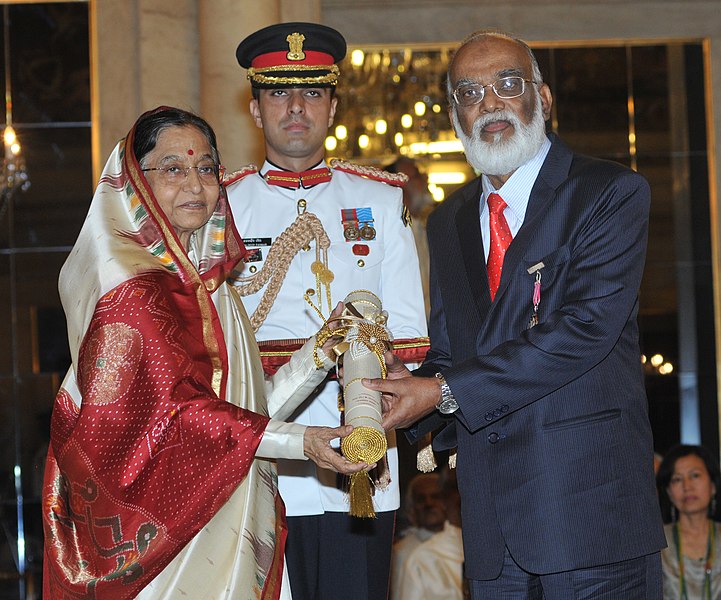
The President, Smt. Pratibha Devisingh Patil presenting the Padma Shri Award to Prof. (Dr.) M. Ahmed Ali, at an Investiture Ceremony II, at Rashtrapati Bhavan, in New Delhi on April 01, 2011./ pix: en.wikipedia.org
Dr. Ahmed Ali can perhaps scale Mount Everest to gain knowledge in surgery, and will come back to serve the poor and needy. That is the thirst he has, and the skill gained by his extra ordinary, photographic memory power.
After obtaining the highest degree in surgery such as M.Ch, he was awarded the prestigious Doctor of Science D.Sc.in surgery.
The Padma Shree Awardees, listed on January 31, 2011, Dr. Ahmed Ali, won the nation’s prestigious award.
A dedicated, and most devoted to his profession, he declined an opportunity, assigned in New York soon after post graduation in gastroenterology and proctology. Surgery is an art to him same as a gifted and a born artist plays with his brush and colors. There is no exaggeration that if it is said that his tournament is surgery.
He visits every month to his native town to impart free service, in addition he gives nutrient suppliments and other vitamins and other additives to less fortunates. He does this as a token of gratitude to the school he studied and for the people who mutually loved.
Born in Ambur in 1940, graduated from Madras Medical College, and after retiring from service, he is concentrating his profession in Mehtha Nursing Home,Chetpet in Chennai.
His only son Dr. Mansoor is a surgical specialist in liver, pancreas, and bile duct (Hepato Pancreato Bilary Specialist) working in Kings Hospital, London UK. Dr. Mansoor is as good as his father, and was the student of Dr. Rela, the world renowned liver specialist.
Ambur, a town in Vellore District in Tamil Nadu is famous for leather industry, as well the elite of the society Ambur Muslim Educational Society, and it is fully devoted in concentrating women’s education and the students performance is par excellent.
Mr. Mecca Rafeeque Ahmed, a renowned leather industrialist, from Ambur also awarded Padma Shree for his industrial achievements.
Dr. Ali was felicitated with standing ovation by different groups elites, but he stood humble and modest.
source: http://www.amityindias.blogspot.com / April 05th, 2011
Khilorband (Patharkandi Village, Karimganj District), ASSAM:
By establishing nine schools with the money collected from driving an autorickshaw, Ali has helped bridge the gap between education and poverty in his community.
Ahmed Ali, from Assam’s Karimganj district, is a true inspiration for many, especially those who are determined to make a positive difference in their communities. Despite facing financial challenges, the 87-year-old decided to take matters into his own hands and established schools in his village to provide education to underprivileged children.
By establishing nine schools with the money collected from driving an autorickshaw, Ali has helped bridge the gap between education and poverty in his community. He understands that education is the key to unlocking opportunities and breaking the cycle of poverty. His schools offer affordable education to students who would otherwise not have access to it.
He is a resident of Khilorband, a marginal village of Patharkandi in the Indian state of Assam, bordering Bangladesh. Ali started the first school in 1978 in his village Madhurband. He sold some of his land and donated a part of the land to the school, on which it was built. Out of his 36 bigha land, he donated 32 bigha land for the construction of the school. Funding of the school is also done from its deposits, daily earnings and donations.
His high School was set up in 1990. In addition to it, he also established three lower secondary schools, five secondary schools and one higher secondary school. He hopes to establish a college in the future.
Besides donating his own land for the schools’ construction, Ali also works hard to keep them running. He drives a rickshaw during the day to earn a living, and at night, he cuts wood to help maintain the school’s finances. His dedication and hard work have made a significant impact on the education of many children in his community.
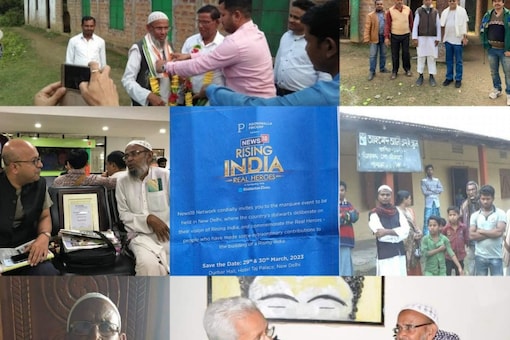
Ahmed Ali’s work has not gone unnoticed. He was nominated for the News18 Rising India Real Heroes Award in the education category, and he will be conferred with the award at the News18 Rising India Summit at the Taj Palace Hotel in New Delhi on March 30.
His story has been shared by Prime Minister Narendra Modi on his radio programme ‘Mann Ki Baat,’ inspiring many others to take action in their own communities. Narendra Modi said, “I have come to know that a rickshaw puller named Ahmed Ali of Assam’s Karimganj district has opened nine schools for the education of poor children. It is a beautiful manifestation of the will of the people of our country.” Ali was also invited to Delhi as a speaker by an NGO Jookto.
source: http://www.news18.com / News 18 / Home> India / by Akhi Das, edited by Jessica Nani / March 29th, 2023
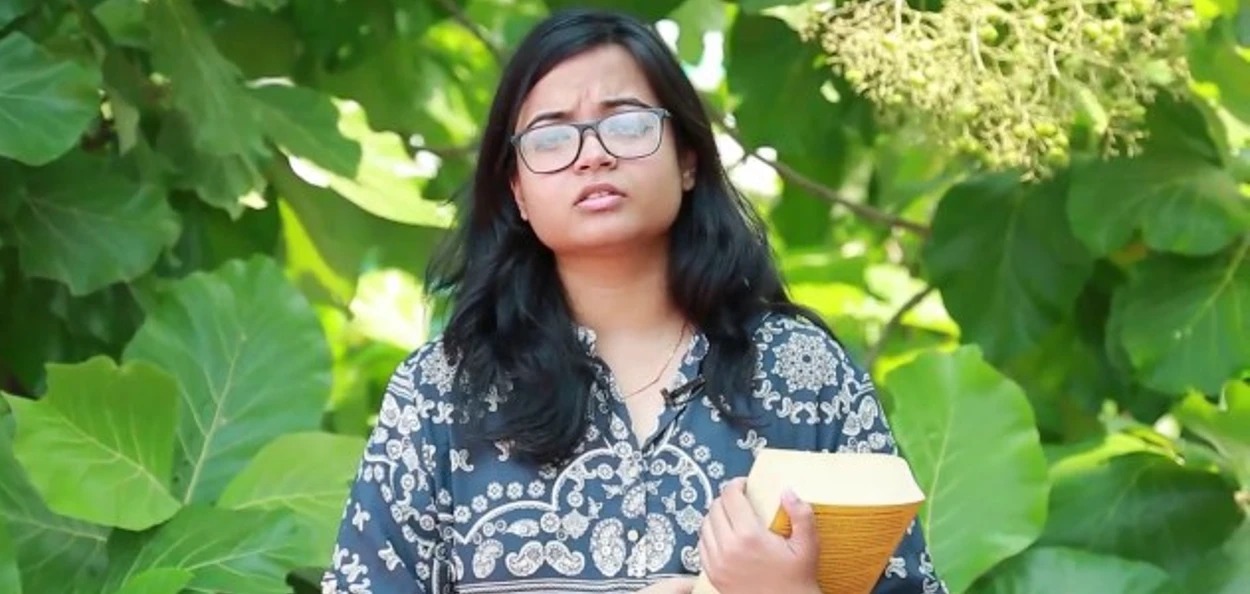
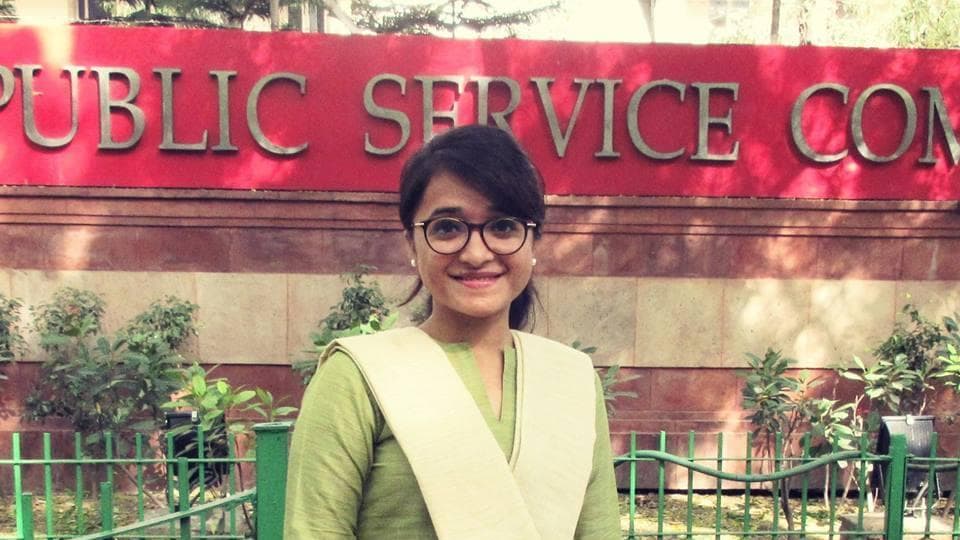
Rashika Islam has topped the Combined Competitive Examination (CCE), 2022 conducted by the Assam Public Service Commission (APSC). The results of the CCE which were declared on Wednesday also saw 54 Muslim candidates crack the tough examination to become civil servants, police officials, and administrators in allied State services. Rashika Islam, daughter of Colonel (Retd) Saidul Islam and Raihana Islam, of Matiabag, Gauripur in Dhubr district, has secured the highest marks in the CCE exam conducted by the APSC. Rashika’s achievement has delighted the residents of Gaurpur and the entire Dhubri district.
“I am elated after seeing my name on the top of the APSC results. In 2020 I had cleared the final of the CCE. But my rank was low and I got the job of a Tax Inspector posted in Dhubri district. However, I was not happy and wanted to improve my rank in the APSC exam. Though it was tough to study for such a tough exam while serving the job of tax inspector, my husband and parents were supportive. I took no coaching in any institute to prepare for the CCE 2022. I prepare a lot for the exam by watching free YouTube channels and websites on success mantra in civil service examination,” Rashika Islam told Awaz-The Voice soon after the results were declared on Wednesday evening.
Rashika Islam has been selected for the Assam Civil Service (ACS) category. When asked about study tips to crack the exam like CCE Rashika said there is no definite answer to such a question.
“There is no shortcut but to study hard for the exam. Despite my hectic schedule as the tax inspector I managed to study four to five hours a day before the CCE-2022,” Rashika said.
Raashika’s husband who is also a bureaucrat with the Assam Government had been very supportive of his wife’s success. Due to her father’s pan-India job, Rashika studied in different army schools in different parts of the country, including the Army Public School, Narengi, Guwahati.
Besides Rashika, 53 other Muslim students cracked the APSC exam and have made it to the civil police and allies services of the government of Assam.
The Muslim candidates selected for the Assam Civil Services are Rashika Islam, Wahiduz Zaman, Zamanur Islam, Asfaq Laskar, Benazir Ilyas, Abu Saeed Mohammad, Golzar Hussain, Affan Khan, and for the Assam Police Service: Fayez Ahmed, Rubina Begum, Arshad Wasim Ahmed and SK Sajidur Islam.
Rashika islam
Shabnu Rahman and Shahjahan Ali have been selected as Superintendent of Taxes while Mohammad Abdul Wakil has been selected for the Assam Finance Services.
Others selected candidates are:
Block Development Officers: Mohsin Siddiqui, Zahid Hussain Hazarika Khorshida Khanam, and Antra Hussain.
Assistant Manager, District Industries Center: Farida Yasmin.
Assistant Registrar of Co-operative Societies: Pinaj Rahman. Tax Inspectors
Pakiza Begum and Javed Akhtar Laskar.
For Inspector of Excise posts Mohammad Tazim Ahmed, Imran Hussain, Sarnaz Mehboob. Sub Register, Mudrika Jhabiullah Hindi. Assistant AuditOfficers Shabiha Shabnam, Tanveer, Parvez, Hamidur Rahman, Salim Majid, Anjum Parbin, and Jahangir Alam Barbhuiya have been selected.
For Assistant Account Officers posts Philorina Begum, Tanveer Amin, Wasim Ahmed, Syeda Tamanna Yasmin, Manin Uddin Ahmed, Nekib Zaman Ahmed, Zaffrin Rahman, Firdaus Rahman, Jackie Ahmed, Rauchna Parbin Akand, Mirza Kausar Ahmed, Shamsur Rahman, Abdul Ullah Ahmed, Khandkar They are Khairul Islam, Shabana Rakia Ahmed, Mohammad Ali and Abu Bakar Siddique have been selected.
Ahmed Faraz will be a Research Assistant in the Transport Service Department. For Assam Urban Administrative Service Azharul Alam, Asif Ali Khan, Baitul Alam Rahman, and Ajmal Hussain have been selected.
So far, 68 Muslim candidates have cracked the CCE conducted by the APSC between 2013-18. This year, 54 Muslim candidates cracking the same exam in a single year is considered a very encouraging and positive development for the minority community in Assam.
The number of Muslim candidates selected for ACS and Allied Services would be more in the future provided quality education spreads among them,” eminent surgeon and Padmashri Dr Illias Ali said.
source: http://www.awazthevoice.in / Awaz, The Voice / Home> Story / by Ariful Islam, Guwahati / January 19th, 2024
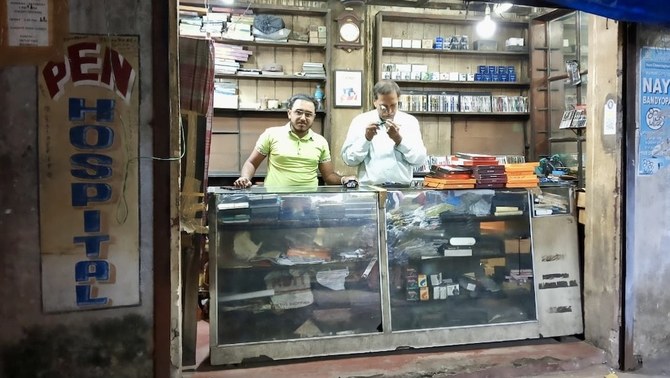
Mohammed Imtiaz, right, and his nephew Mohammed Shahbaz Reyaz are seen at their Pen Hospital in Kolkata on Nov. 30, 2023. (Mohammed Shahbaz Reyaz)
Pen Hospital in Chowringhee Lane in Kolkata was established in 1940s
It is increasingly catering to young people rediscovering fine writing instruments
The nondescript facade with a fading nameplate misses the attention of passersby at Chowringhee Lane in Kolkata, remaining a go-to place only for connoisseurs who still cherish the old-fashioned art of handwriting.
In its quiet and quaint interior, a visitor can try thousands of vintage and high-end fountain pens from brands like Montblanc, Parker, Pilot, Visconti, Wilson, Waterman, Pelikan, or Sheaffer, and watch as Mohmmad Imtiaz brings them back to life.
The Pen Hospital represents a bygone era in an age of instant electronic messaging, but it still draws lawyers, academics and collectors from across India and, lately, also young people who have been increasingly attracted to fine writing instruments.
Established in the 1940s by Imtiaz’s great-grandfather Mohammed Shamsuddin, the shop has stayed in the family ever since. Imtiaz’s partner behind the counter is Mohammed Shahbaz Reyaz, the son of his late brother.
“Despite the popularity of high-tech laptops and iPads, pens are also getting popular and that’s the reason I have roped in my nephew into the business. My son will join, too,” Imtiaz told Arab News.
“There is a renewed interest in fountain pens among the new generation. Today, half of my customers are younger people and this gives me hope.”
Depending on the model, it costs between 25 cents and $60 to have a pen “treated” at the Pen Hospital. Sometimes, parts of older or rarer pens need to be procured from different sources.
Imtiaz repairs seven to eight pens a day on his “operation table” — the shop’s counter.
“Sometimes the workload is so high that some customers have to wait a week for an appointment,” he said.
There used to be many such shops during the time of Imtiaz’s great-grandfather and grandfather, but most ceased to exist in the 1990s, when cheap, disposable ball pens hit the mass market in India.
Now, Imtiaz believes his Pen Hospital is the “only shop in eastern India” that still deals in the trade, which began to thrive again only a few years ago.
“Things started taking up after the COVID-19 pandemic. Long periods of lockdown forced many people to read and write, and people started coming with old fountain pens for repair,” he said. “Some people discovered vintage pens in their cupboards. They have not used them for decades.”
His shop has a special value for collectors like Sarthak Ganguly, a media professional, who has been visiting the Pen Hospital for almost 20 years.
“The Pen Hospital is the only place in Kolkata where you can look for some nice vintage pens,” he said.
“Here you will get a fountain pen that can cost you from $1.20 up to $1,200. Many fountain pen collectors, like me, have at least 1,000 old and new fountain pens. Most of my pens have been collected from the Pen Hospital.”
In a city like Kolkata, known as the cultural capital of India, writing with a pen brings together craftsmanship, style and a touch of nostalgia — something that younger people are increasingly fond of.
It is mostly the new generation of collectors that Ganguly sees at the shop in the morning.
“The young generation is buying fountain pens and that is really heartening,” he said.
“The Pen Hospital not only has nostalgic value, but also it is a pleasure to visit such an iconic shop. It reminds you of history.”
source: http://www.arabnews.com / Arab News / Home> World / by Sanjay Kumar / December 13th, 2023
Rana’s feat assumes significance in the wake of a rise in the number of drowning cases in the state.
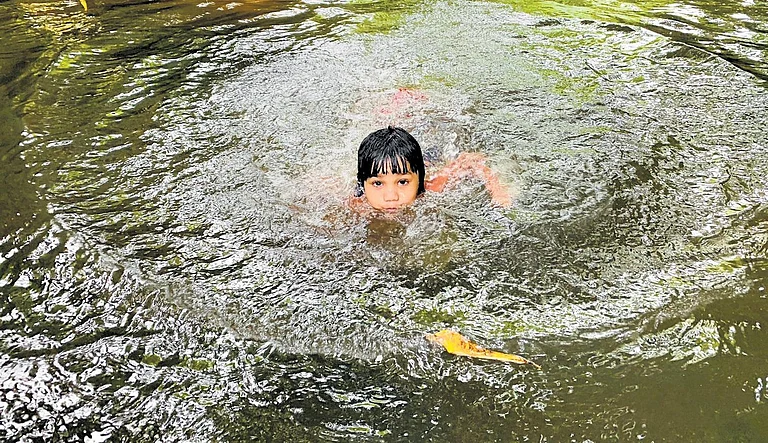
Rana Fathima shows off her skills in the water
Kozhikode :
Rana Fathima, a five-year-old swimming prodigy hailing from Kodiyathoor panchayat, has been enchanting denizens on the internet with her skills in the water for some years now. Now, as a brand ambassador of ‘Neenthi vaa Makkale’, an initiative organised by Mukkam municipality to impart swimming lessons to students, she is a role model, inspiring youngsters in the panchayat to take up swimming.
Rana learned to swim in a small river in Thottumukham under the tutelage of her grandmother, Ramla Manaf. She is the daughter of journalist Rafeeque Thottumukham and Rifana.“It is important for children to learn how to swim. It’s equally important for parents to encourage their kids to come out of their cocoons. Mobile phones and television are adversely affecting the young generation. Children should stay close to nature,” Rafeeque said.
After her videos went viral, Rana was frequented by social media influencers, all eager to capture her story in greater detail. Rahul Gandhi, too, had paid her a visit on one of his trips to the state.
Rana’s feat assumes significance in the wake of a rise in the number of drowning cases in the state. “Most of the drowning cases happen during the vacation. People who take to the water bodies here do not heed our warnings. You might have prior experience in swimming, but the rivers here have strong currents. Even the native swimmers are scared to get down sometimes,” said Muralidharan C K, assistant station officer, Fire and Rescue Services, Mukkam.
In the past five years, around 41 people have died by drowning in the region. Most of them were youngsters aged 15-28.
source: http://www.newindianexpress.com / The New Indian Express / Home> Kerala / by Alka Mariya & Heera Hari / May 22nd, 2023
‘I invite any Indian who claims to be a nationalist to the core to have a conversation with me,’ Rana wrote for The Wire in 2017.
Munawwar Rana (1952-2024). Photo: Youtube
New Delhi:
Urdu poet Munawwar Rana died on Sunday, January 14. He was 71.
Rana, who had been suffering from throat cancer, breathed his last at the Sanjay Gandhi Post Graduate Institute of Medical Sciences in Lucknow.
The poet is survived by his wife, four daughters and a son, PTI has reported.
Rana was an outspoken artist and was vocal against communal politics.
In 2021, Lucknow police registered an FIR against him for allegedly inciting religious feelings for his comments on Valmiki, who wrote Ramayan.
“Valmiki became a god after he wrote the Ramayana, before that he was a dacoit. A person’s character can change. Similarly, the Taliban for now are terrorists but people and characters change…When you talk about Valmiki, you will have to talk about his past. In your religion, you make anyone god. But he was a writer who wrote the Ramayana, but we are not in competition here,” Rana had said.
In 2017, the poet, who wrote the famous Maa, wrote for The Wire:
“I invite any Indian who claims to be a nationalist to the core to have a conversation with me. Let him decide the time and place. If Allah wills it, they will emerge as traitors; and we will emerge as nationalist Indians. You say ‘Bharat Mata ki jai’. My friend, we kneel on earth and kiss this soil 94 times in veneration while offering our prayers.”
On social media, many have condoled his passing.
source: http://www.thewire.in / The Wire / Home> Books / by The Wire Staff / January 15th, 2024
Rukhsana Jabeen (Second from right) at a poetic symposium
Rukhsana Jabeen is one of the very few female litterateurs in Jammu and Kashmir who carved a niche in the Subcontinent’s vast domain of Urdu poetry at the intersection of the 20th and the 21st century. An overarching and unceasing armed insurgency, that muted all expressions in art and literature in the Valley failed to silence her for 33 years.
After serving All India Radio for over 30 years, Jabeen retired as a Director at Radio Kashmir Srinagar in 2015. The participation of a Kashmiri woman in the annual All India Mushaira on the eve of Republic Day or Independence Day was fatally proscribed by terrorists. Jabeen did so without break.
“Whatever came to my mind, I wrote and expressed without thinking a bit about its consequences”, Jabeen revealed to Awaz- the Voice at her winter residence in Jammu.
Born in a family of the decedents of the revered saint and Kashmiri-Persian poet Syed Meerak Shah Kashani in the Khwaja Bazar neighbourhood of downtown Srinagar in 1955, Jabeen did Master’s in Urdu followed by MA and M Phil in the Persian language and literature at the University of Kashmir. In 1983, she joined AIR Srinagar as a program executive.
Rukhsana Jabeen at a poetic symposium
“I was not the first woman to enter the station for an all-India job”, Jabeen said “but in our family setting it was like breaking the glass ceiling. Getting selected for the job in a tough patriarchal competition was like a big success for me. Knowing well that I wouldn’t be permitted to apply for it, I kept it all discreetly concealed from my family”.
“I was also selected as a teacher in the State Education Department. As my father learned about my getting a job at the AIR, he insisted I should join as a teacher. I agreed with him that the AIR officers could be transferred to any Indian State, but I lied that female officers were not posted outside their home States. Thereupon my family relented, and I joined as a program executive”, Jabeen said.
In 1994, Jabeen established AIR’s Poonch station close to the Line of Control in Jammu where she served for three years. In 1999, she was promoted to Assistant Station Director (ASD).
Unlike many of her tribe, Jabeen’s tryst with creative literature began late during her university days. A prominent Urdu poet and literary critic and the head of the Urdu Department, Prof. Hamidi Kashmiri, encouraged Jabeen to write prose and poetry in Urdu. “I was thrilled when Hamidi Sahab refined my first Ghazal and got it published in the annual edition of his department’s magazine ‘Baazyaft’. Under his tutelage, I learned about modern sensibility and the post-modernist literary trends”, Jabeen recalled.
Rukhsana Jabeen recording a radio programme
She narrated how affectionately some celebrated litterateurs like Hamidi at the University of Kashmir and Zubair Rizvi at Radio Kashmir Srinagar gave her select books and literary magazines to hone her talent and faculties as a creative writer.
“One day, incredulously I found five of my poems published together, alongside my profile, in Kumar Pashi’s journal ‘Satoor’. Later, Zubair Sahab disclosed that he had got the same published in the prestigious Urdu magazine. It was an incredible encouragement and my recognition as a poet. Thereafter, a number of my poems were published in the top representative journals like ‘Alfaaz’, ‘Shayir’, ‘Mafaheem’ and ‘Asri Agahi’. Hamidi Sahab and Zubair Sahab steered me to the extensive studies of Shaharyar, Rajinder Manchanda Bani, Nasir Kazmi, and Mohammad Alvi. I am still deeply under the influence of Mohammad Alvi and a few others”, Jabeen added.
Kishwar Naheed, Parveen Shakir, and Fahmida Riaz inspired Jabeen into some new experiments. She was initially also influenced by female Urdu litterateurs like Rafia Shabnam Abidi, Aziz Bano Darab Wafa, and Sajida Zaidi and later shared the stage with them at AIR and all-India poetry symposiums. For over three decades, Jabeen was a regular guest poet at Delhi’s Red Fort and other literary rendezvous, integrating a Sub-continental network of the intelligentsia and defying a hostile ambiance at home.
For several years, Jabeen translated poetry from 22 Indian languages into Kashmiri as a project of the Sahitya Akademi. She participated in many such all-India poetry symposiums at Varanasi and other Indian cities. She remained closely linked to top-notch Urdu poets like Shaharyar, Bashir Badr, Nida Fazli, Makhmoor Saeedi, Ali Sardar Jafri, Kaifi Azmi, Qateel Shifai, Ahmad Faraz besides literary critics like Shamsur Rahman Faruqi, Naiyer Masud and Malikzada Manzoor Ahmad.
“Many of them organized Mushairas in my honour at their homes. It was a unique recognition and hospitality as never before has anyone from Kashmir been entertained to such honours”, Jabeen said. “I invited many of these doyens of Urdu literature to our programmes at Radio Kashmir”.
Ghazal in Urdu and Kashmiri is Jabeen’s forte even as she also tried her pen at the popular genre of ‘Nazam’. “But I no love lost for blank verse and free verse. I believe those who can’t write in Urdu’s traditional meters have little right to write in free verse. Besides, I have seen how many of the aspirants, particularly females, get free verse written by others and read the same as their poetry. They perform such poor poetry at stage. Contrarily, nobody gives out a Ghazal. A Ghazal and Nazam writer is often an authentic poet”, Jabeen said.
In addition to volumes of the translation of short stories from different languages into Kashmiri and a translation of the collection of Hafiz Shirazi, which she accomplished with Dr. Syed Raza of Budgam, Jabeen has three of her collections—two in Urdu and one in Kashmiri—ready to publish.
“But I’m unbelievably indolent. I never get after awards and accolades. I can’t fulfill those formalities. Every year, I decided to publish these three volumes of my poetry but my laziness spoils my endeavour.”
source: http://www.awazthevoice.in / Awaz, The Voice / Home> Story / by Ahmed Ali Fayyaz, Jammu / January 14th, 2024
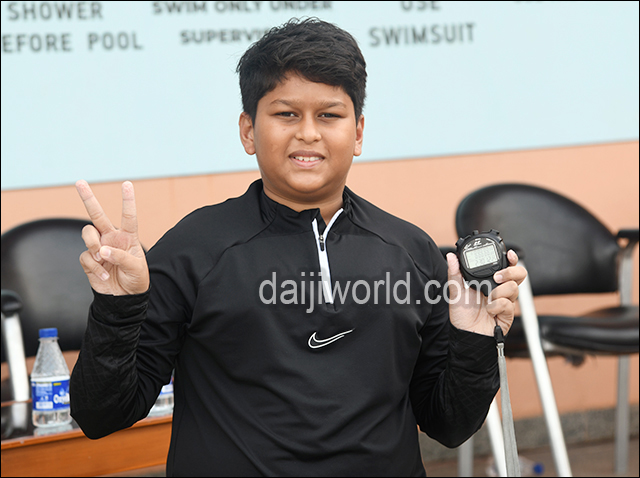
Safin Mustafa from Mangaluru made an entry into the Noble Book of World Records for floating on water for 2 hours 30 minutes and 13 seconds, on Saturday January 13.
The previous best was by Karanam Snehit Simha of Andhra Pradesh in 2023, who clocked 2 hours 21 minutes 53 seconds.
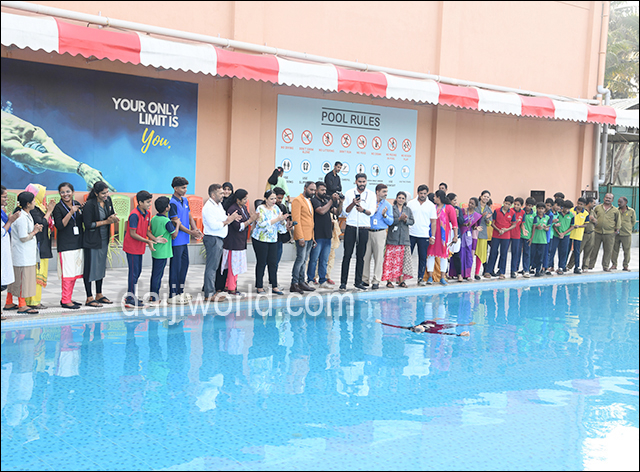
The record breaking event was held at the swimming pool of Prestige International School, Jeppinamogaru here in the wee hours of Saturday. The 14 year old Safin is class 8 student of Prestige International School, one of the reputed educational institutions in the city.
Displaying the clock to the reporters, Safin said that he was coached by Aromal A S. He also thanked the teachers and the management of Prestige International School for their support and guidance in making the achievement.
Speaking to media, coach Aromal said, “Unexpectedly, I discovered swimming talent in Safin. During the learning phase, he demonstrated remarkable proficiency, comfortably swimming for 15-30 minutes. Inspired, I extended his training hours, and today he has set a world record. I am thrilled by his performance and incredibly proud of him.”
Expressing his joy over Safin’s world record, Haider Ali, chairman, Prestige International School said, “The management, staff and students of our school are proud of Safin Mustafa. He is the icon for us all. Our institution always supports and encourages the students to exhibit and to be experts in their talents. Along with academics, the generation should enjoy their age and climb heights in their fields of interest.”
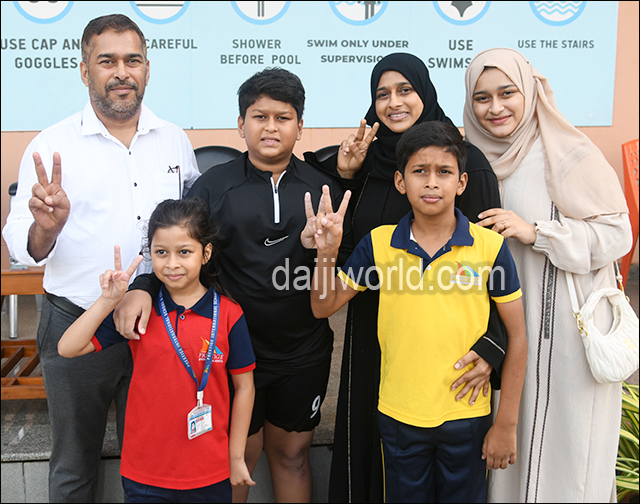
Safin’s parents Abdul Lathif and Safiya Banu, officials of Noble Book of World Records, witnessed the record breaking moment.
source: http://www.daijiworld.com / DaijiWorld.com / Home> Top Stories / by DaijiWorld Media Network -Mangaluru (SB) / pix by Dayanand Kukkaje / January 13th, 2024
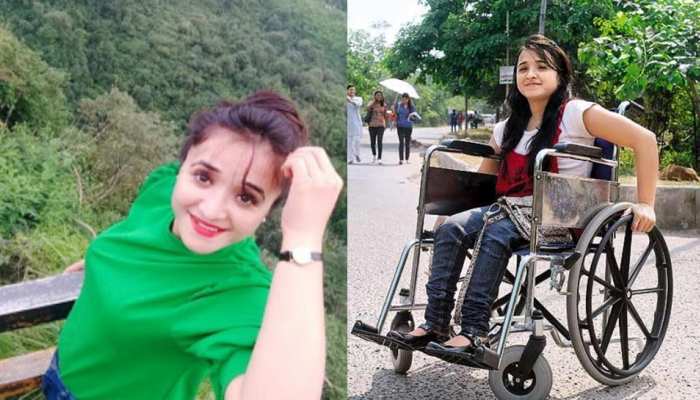
The inspiring story of Ummul Kher, a 28-year-old fragile girl who defeated all odds to achieve her dream. Ummul Kher was born in a Muslim conservative family that belonged to Marwar, Rajasthan. She faced several hardships to reach her goal. She fought a disease called Fragile Bone Disorder from childhood which caused her 16 fractures and underwent 8 surgeries. But that couldn’t break her determination of becoming an IAS officer.
Ummul was five when she migrated to Delhi with her parents and lived in the slums of Nizamuddin, Delhi. Her father was a street vendor. Their family was displaced when the slums of Nizamuddin were demolished and moved to the slums of Trilokpuri.
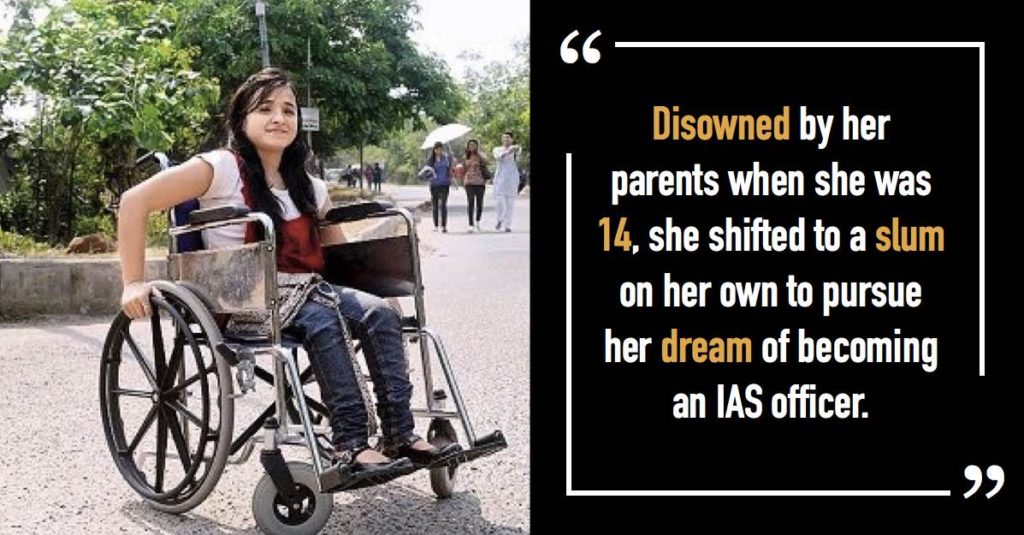
Ummul Kher went to Pt. Deendayal Upadhyay Institute for the Physically Handicapped for schooling till 5th Class and continued her education till 8th in a Government-run Charitable Organisation Trust, Amar Jyoti. Much to her dismay, her family forced her to discontinue her studies after 8th but Ummul decided to move out of her parent’s home and continue her education and started living alone in Jhuggi Jhopri(JJ) cluster, Trilokpuri. She started giving tuitions to slum children to support her living who paid her not much than rs 50-100.
Unfazed, She completed her graduation from Gargi College, Delhi, and got admission to JNU for Masters in International studies. She secured Junior Research Fellowship at JNU which helped her in getting a stipend of Rs 25,000 per month. To serve as an IAS was a dream of Ummul Kher that’s why despite pursuing a Ph.D. she appeared in the UPSC exam and cracked it in her first attempt and bagged All India rank 420.
She Got the posting in IRS Indian Revenue services, where she was posted as the DC, i.e Deputy Commissioner in Indian Revenue Service.
Highlights:
UmmulKher lived alone after 8th std due to her family disowning her for education. During this time, it was Amar Jyoti Charitable Trust that financed her education and also funded her tuition for classes IX and X.
In class XII, Kher achieved 91% and secured admission into a prestigious Delhi University college, Gargi College.
She continued to take tuitions to fund her college education. She also got much-needed money by winning debate competitions in college. She graduated in Psychology (Hons).
Tragedy struck in 2012 when a small accident confined her to a wheelchair for one year.
After completing graduation, Ummul Kher cleared an entrance exam for a master’s in International Studies at JNU. This gave her sufficient money which meant that she no longer had to give tuition.
In 2013, she secured a Junior Research Fellowship at JNU under which she started getting a stipend of Rs.25, 000 per month.
Since September 2014, Ummul was working as a trainee at Duskin Leadership Training in Shunjuku, Japan.
In 2016, She appeared for UPSC exam first time and cracked it with 420 AIR rank.
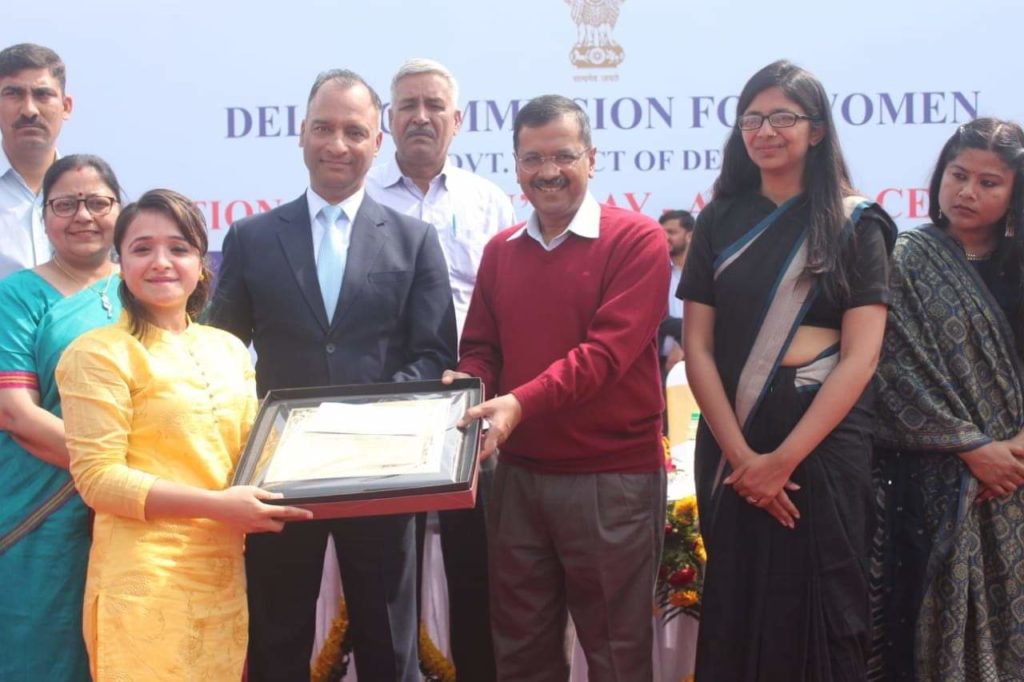
In 2019 She was conferred with Delhi Women Commission’s DCWAward. The Award was handed over by Delhi CM Arvind Kejriwal.
source: http://www.deccandigest.com / Deccan Digest / Home> Featured Sliver, National / by Saba Khan / January 26th, 2022
Seafood production has become a globalised industry and many countries have seafood industries that are being buoyed by overseas migrant workers – hard-working people who left their home countries, and often their entire families, to seek their fortunes abroad.
Aslam Pathiri Originally from India, Pathiri is a passionate commercial finfish aquaculturist and researcher with 15 years of aquaculture experience in Asia and the Middle East
The United Nations Food and Agricultural Organization (FAO) estimates that fishing and aquaculture employs over 60 million people globally. The seafood industry of the United States for example, which employs over 200,000 workers and contributes $38.5 billion to its gross domestic product, has a large share of Mexican, Vietnamese and Filipino workers. In 2017, New American Economy revealed that an astounding 62.8 percent of all seafood processing workers in the United States were immigrants. There are few hard figures available for fish farm workers but it is safe to say that immigrants comprise an increasingly large share of the workforce.
Because of their position, overseas migrant workers can more easily face tough conditions, ranging from loneliness and culture shock to language barriers and potentially unfair working conditions. Their respective experiences can range from the lavish heights of success to nightmarish experiences surprisingly close to medieval forced labour, as has been documented by the International Labour Organization (ILO) on some unscrupulous fishing vessels.
However, the great majority of migrant seafood workers live largely normal and productive lives. To celebrate the importance of these unsung heroes – and to highlight the importance of treating all seafood industry workers fairly – The Fish Site talks to two seafood workers who have made good abroad.
Born and raised in India, Aslam Pathiri is a passionate commercial finfish aquaculturist and researcher with 15 years of aquaculture experience in Asia and the Middle East, while Carlo Dequina hails from the Philippines and has been working in the North American seafood industry for over seven years.
Carlo Dequina Growing up in the Philippines Dequina helped his parents sell dried seafood to friends and family – 30 years later he’s now a sales manager for Kvaroy Arctic, a family run salmon farm in Norway
How did you become interested in aquaculture?
Aslam: My passion for aquaculture grew while I was pursuing my master’s degree at Aligarh Muslim University in my home country of India. The abundance of freshwater bodies in our suburbs, coupled with the fact that they were not being efficiently farmed, ignited something of a spark in me. I eventually worked for the Kerala Ministry of Fisheries before flying off to Umm Al Quwain in the United Arab Emirates (UAE) to work with Mubarak Fisheries. I then moved on to different projects, including a corporate fish hatchery in Saudi Arabia; freelance consultation in India and the UAE; aquaculture research for a Saudi University; and, most recently, as the group production manager of Oceanpick in Sri Lanka.
Carlo: My interest in the seafood space started very early. My father was a sales manager for a pharmaceutical company in Panay, an island in the Central Philippines. He used to bring home various boxes of dried seafood to Manila, where our family lived. Mom and I would repack his boxes to sell to neighbours, friends, even my schoolteachers. The quality of dried seafood from the Panay region was universally well-known. I immigrated to the United States right after graduating from the Ateneo de Manila University in 2003 with a degree in communications. I started in the aquaculture space as a salmon and fresh seafood buyer, working for International Marine Products (a seafood wholesaler) in Los Angeles and moved to Strand Foods (a seafood importer focused on high quality farmed products such as salmon from Scotland, bream and seabass from Cyprus and barramundi from Arizona). I recently joined the team at Kvaroy Artic, which farms salmon in Norway. I never thought that – 30 years after selling dried seafood with my parents – I’d be selling seafood on a much, much larger scale!
I believe there are countless opportunities – such as sales, farm work, marketing and logistics, as well as scholarships – where overseas workers can thrive and succeed.
What sacrifices might an overseas worker face?
Aslam: “Life begins at the end of our comfort zone”, said Neale Donald Walsh. Overseas workers who work over a quarter of a century abroad often lose the community touch back home and might suffer withdrawal syndromes and find difficulty fitting in. This sometimes leads to the loss of peace and happiness, even the loss of life itself in extreme cases. A good way to survive is to ignore the inadequacies, imperfections and weaknesses of your time served abroad while concentrating on the financial security gained, the level of knowledge produced and shared, the diversity of professional contacts made and the level of education extended to your children back home. In all my previous assignments, I always connected with people who shared my vision and interests, generating good results and creative solutions to challenges. I try to create the most congenial settings within and around me to ensure that my colleagues and I constantly work at ease.
Carlo: I think being away from family, friends and one’s typical way of life are among the biggest sacrifices one has to make in order to succeed in any international endeavour. Still, I believe there are countless opportunities – such as sales, farm work, marketing and logistics, as well as scholarships – where overseas workers can thrive and succeed.
Your homegrown skills will definitely get honed and raised to global standards on a transnational stage.
What advantages can overseas workers offer employers?
Aslam: Aquaculture farms are now integrating various disciplines and multinational capabilities. This kind of mutual empowerment generates better learning insights, cultural growth, collaborative intelligence and socio-economic safety. Having to work with diverse people and cultures can force us to fine-tune our skills, especially for multinational-level decision-making. Your homegrown skills will definitely get honed and raised to global standards on a transnational stage.
Carlo: I think the fact that English is a very dominant language in the Philippines as well as the level and standard of education we have back home contributes to the production of highly-skilled employees, managers and business owners. Filipinos have thrived in almost all industries – particularly because of our adaptability and willingness to learn, fit in and innovate in any space.
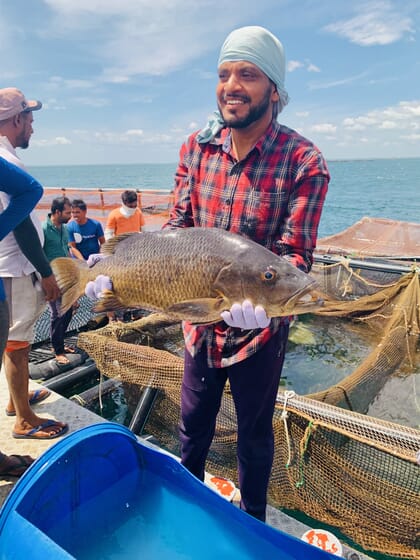
Aslam: Over the past 15 years I have been an active consultant and troubleshooter, actively curating teething larviculture and nursing problems of tropical marine finfish. I am currently the general manager for the hatchery and grow-out operations of Oceanpick, Sri Lanka’s maiden sea cage fish farm, farming primarily barramundi. I am proud to say that we pioneered the South Asian initiative of commercial marine aquaculture. Our ocean-grown barramundi tastes second-to-none and is a healthy alternative to both chicken and red meat.
Carlo: I’m currently the Western regional sales manager for Kvaroy Arctic, a family-owned salmon farm based in Norway. Over the past three years, we’ve successfully promoted and built a reputation of consistency and high quality in the salmon space. I think that, in the future, knowledge from innovative companies such as Kvaroy Arctic can be transferred to aquaculture businesses in the Philippines, helping to someday lift our own tropical seafood portfolio to the world.
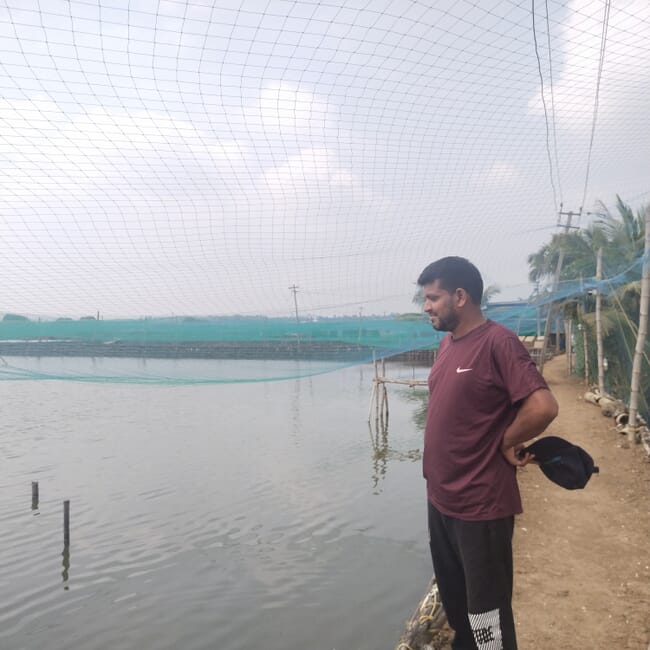
Aslam Pathiri inspects a shrimp farm in his native India Pathiri’s advice is to realise that it’s not always necessary to leave home, knowing you can “shine your light and serve your society anywhere, whether in distant lands or in your home village”
Any advice for future overseas aquaculture aspirants?
Aslam: I love sayings so allow me to end with one from Susan Young: “Connecting with others gives you a sense of inclusion, connection, interaction, safety and community. Your ‘vibe’ attracts your ‘tribe’ so if you want to attract positive and healthy relationships, be positive!” We should look at our future with clarity and optimism. Be a powerhouse of beliefs and values in everything you say and do. Cultivate a collective sense of purpose. Help influence, motivate and enable your peers while ensuring that knowledge is shared. Lastly, realise that you do not always need to leave home. Shine your light and serve your society anywhere, whether in distant lands or in your home village.
Carlo: “The advantage of working in aquaculture is that there will always, always be a need for seafood as a protein source for the world’s ever-growing population. The caveat to this is finding the right companies and programmes that champion raising seafood the right way so we don’t just look at our bottom line, but the larger picture where our planet’s resources are protected for future generations. To those looking to pursue their passion in aquaculture know that – as long as you stay true to your values and your work ethic – then there are companies that will take notice and provide you with the support to grow as aquaculture industry practitioners.
Ensuring equitable conditions for overseas migrant workers
To ensure that ethical and equitable business practices are adopted, certification standards, such as the Aquacultue Stewardship Council (ASC), are paying more attention to the overall welfare of seafood workers, plus the communities affected by seafood production activities.
Among these is strict adherence to fair wages, the abolition of child labour, elimination of discrimination, eradication of forced labour, freedom of association and the ability to have collective bargaining power without the constant fear of being deported. Farsighted fish farms and seafood processing facilities should read and incorporate these relevant measures.
Globalisation is continuously making the aquaculture field a smaller place through the fluid exchange of species, technologies, best practices and of course, talent. Although not everyone will have the same experiences, Aslam and Carlo are two of the millions of hard-working immigrants who have successfully made waves in farms, laboratories and seafood markets across the seven seas.
source: http://www.thefishsite.com / The Fish Site / Home> Media> Atlantic Salmon> Barramundi / by Jonah Van Beijnen and Gregg Yan / July 03rd, 2023