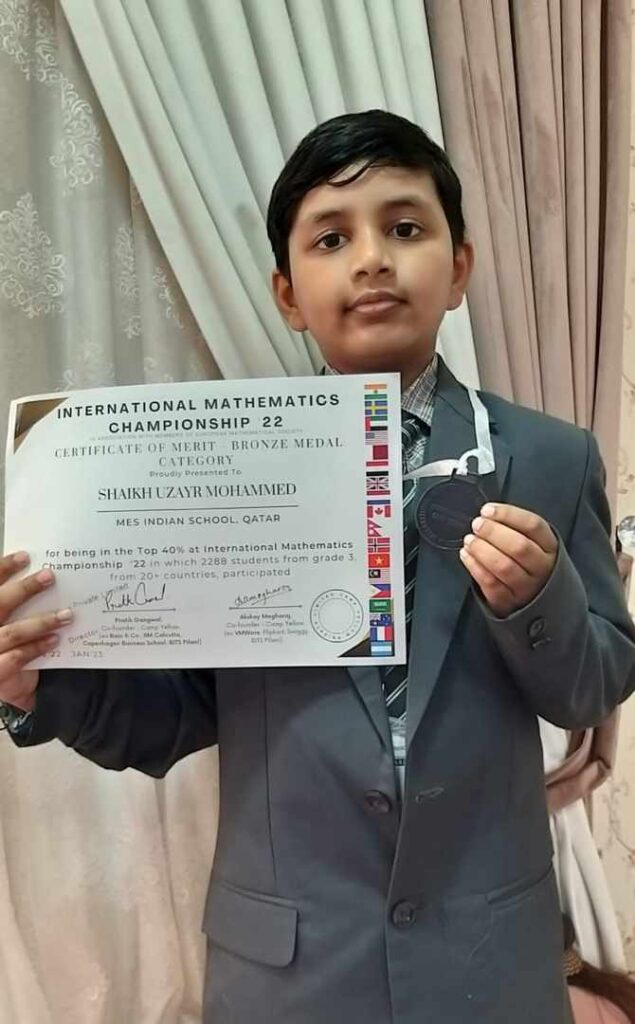
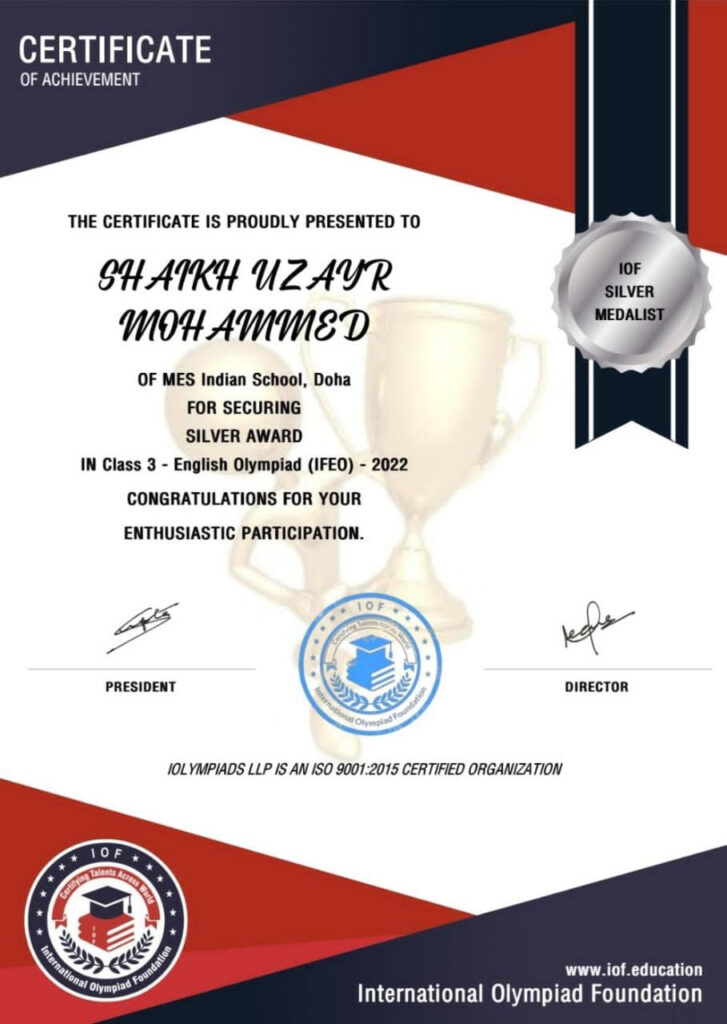
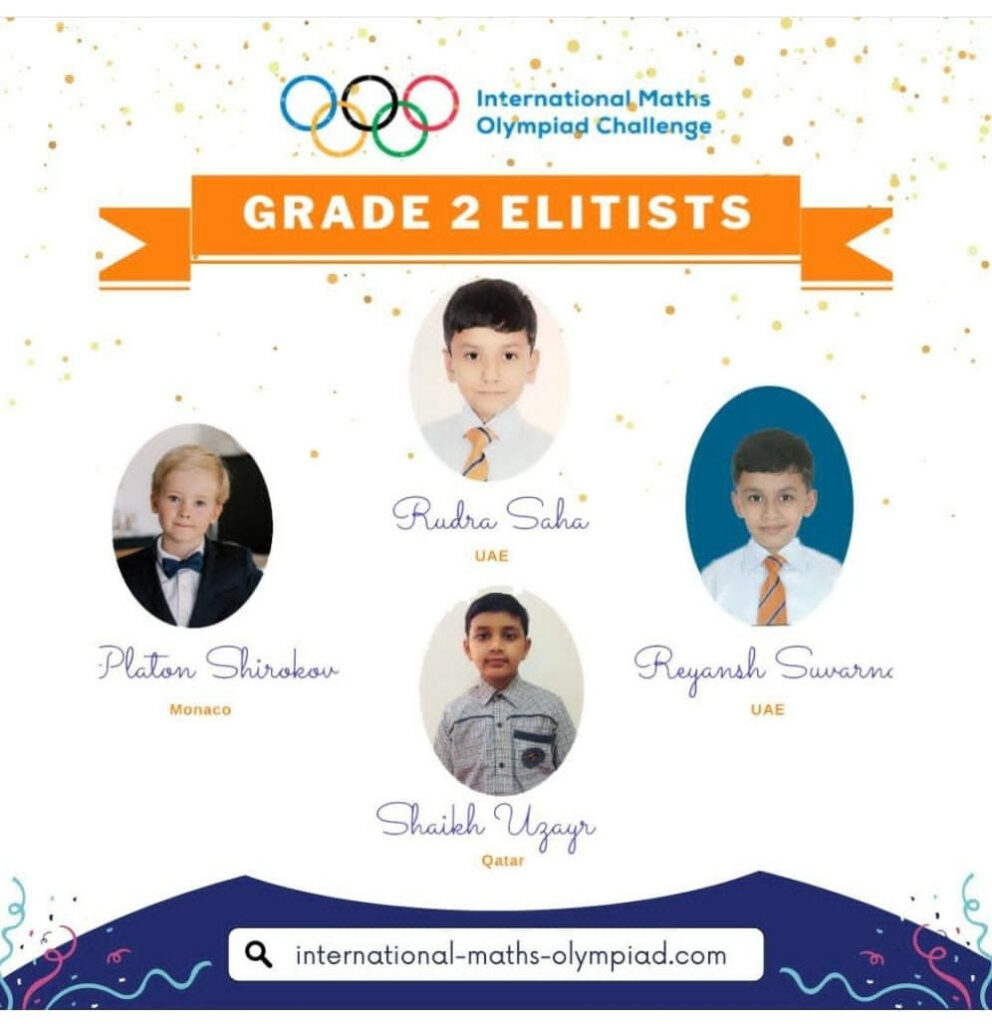
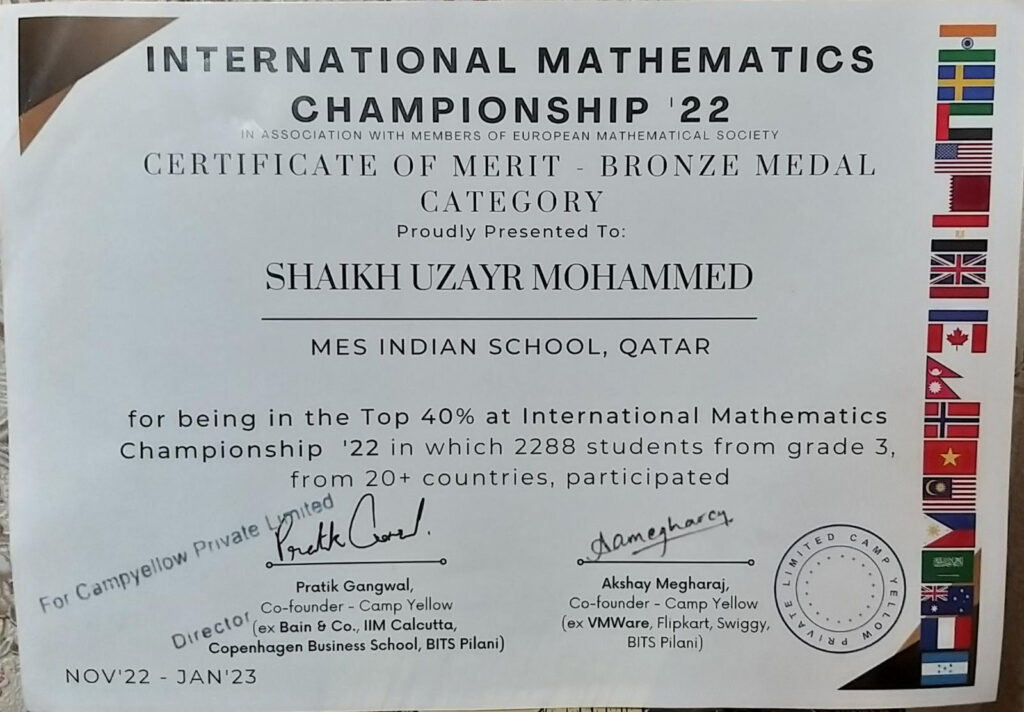
A Mangaluru student, Shaikh Uzayr Mohammed, studying in Qatar has won Bronze Medal at the International Mathematics Championship 2022.
Uzayr is a grade 3 student of MES School, studying in Qatar. He hails from Kankanady in Mangaluru.
The championship was held in December 2022 and the results were announced on Monday, February 20, 2023.
A total of 2288 students from over 20 countries had participated in the championship organised by Champ Yellow, wherein Uzayr secured a place in top 40%, thereby securing a rank in Bronze Medal category.
source: http://www.english.varthabharati.in / Vartha Bharati / Home> Karavali / by Vartha Bharati / February 20th, 2023
Discussions and debates, critiques and readings, held at haunts of Urdu books and writing around the country have been interrupted rudely.
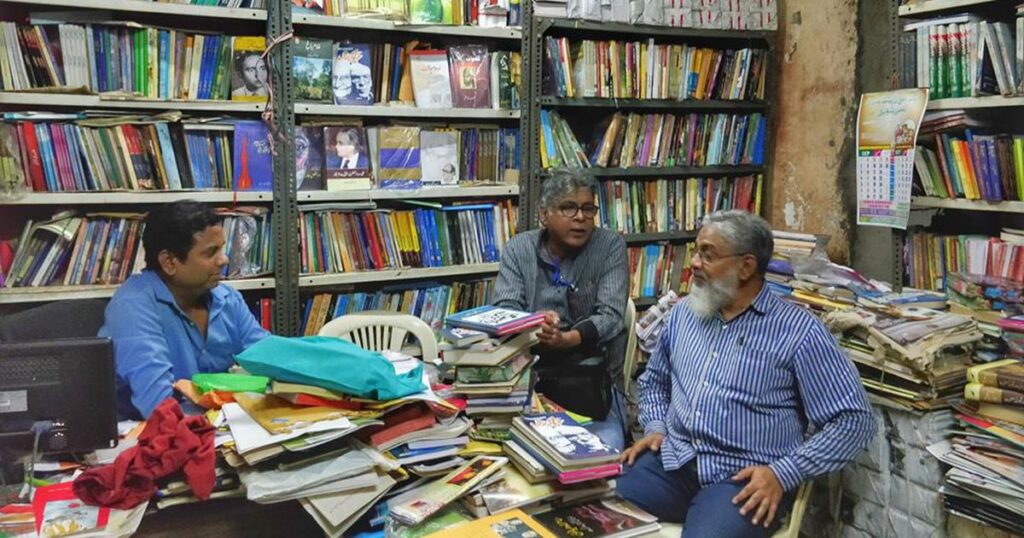
(From left) Shadab Rashid, Urdu drama writer Aslam Parvez, and Shakeel Rasheed at Kitabdaar | Mahtab Alam
In Malegaon
On the first Saturday of every month, the textile city of Malegaon in northern Maharashtra used to become home for lovers of Urdu literature, who meet to discuss, debate and critique new writings in the language, mostly by local writers. Organised under the aegis of Anjuman Muhibban e Adab (Association of Literature Lovers), the gathering began at around 9 pm, and went on till midnight.
Between 30 and 50 people – both writers and readers – would come together, a number that would at times go up to as many as 100 or even 150. Asif Iqbal Mirza, the secretary of the Anjuman, said the practice began 25 years ago on the suggestion of local journalist and editor Samiullah Ansari, who published new Urdu fiction in his weekly, Hashmi Awaz.
Over the years, the publication had emerged as a popular local magazine for young and budding writers to publish their works. The weekly, now in its 35th year of publication, had a considerable fan following and readership at the time. Ansari then suggested that admirers of the magazine form a group comprising readers as well as writers.
The group was initially named Anjuman Muhibban e Hashmi Awaz (Association of Admirers of Hashmi Awaz), but within a few years, its following grew to encompass more than just the readers of the magazine, and in 1998 it was rechristened Anjuman Muhibban e Adab, Malegaon. “Ansari sahib formed the Anjuman so that writers could get their new works critiqued by readers before getting them published in the weekly,” Mirza ssid.
Back then, Mirza himself wrote for a local children’s newspaper called Khair Andesh. But his association with the Anjuman helped him grow into a prolific Afsana Nigar, a short story writer. He was 17 when the group was formed; in the past 25 years, he has written and published more than 200 short stories in different publications.
Apart from Anjuman Muhibban e Adab, there are two more literary groups in Malegaon that held regular meetings until the lockdown was declared in March. No such meetings have been held since then. “Unlike earlier, we now have enough time to read and write. But the irony is we don’t have the opportunity to discuss and publish them,” said Mirza, who also runs a printing business. Several local publications had to halt their issues, including Hashmi Awaz, owing to the lockdown.
According to Mirza, although social media outlets such as WhatsApp and Facebook have, to some extent, helped to keep in touch with fellow writers and readers, the literary life of Malegaon has come to a standstill, since a large number of local writers and readers came from the working class and worked in local looms. “The year 2020 is the silver jubilee of my literary career. I had plans to publish a collection of my short stories, but thanks to the pandemic, that will not happen this year,” Mirza said with a great sense of despair.
In Mumbai
Both readers and writers have felt a deep loss during the pandemic. His love of books took Shakeel Rasheed, editor of the Urdu daily Mumbai Urdu News, to various bookshops in and around the Mohammad Ali Road area of Bombay. “Visiting bookshops was a part and parcel of my life. I feel a deep loss when I don’t visit them,” he said. For him, bookstores are not just spaces to buy books, but they also served as addas for readers and writers. As soon as some relaxations were in place, he rushed to the stores. “Par ab pahle wali baat nahi rahi,” said Rasheed. “Things are not as they were before.” The pandemic has made it more difficult to meet new people.
Shadab Rashid’s Kitabdaar publications and bookstore in Temkar Street of Nagpada was one such adda for Urdu writers in Mumbai, as was Maktaba Jamia on Sandhurst Road West. Today, Kitabdaar and a few other bookshops have opened their stores for a few hours every few days, while Maktaba Jamia remains closed. “Due to lack of public transport and fear of the pandemic, people cannot come to Kitabdaar,” Shadab said. He also edits the quarterly literary magazine Naya Waraq, founded by his late father and noted journalist and writer Sajid Rasheed.
Shadab Rashid said the lockdown brought significant hardships and losses to Urdu publishers and distributors. “It is not that people don’t want to read Urdu books anymore – the problem is they cannot buy them,” he said. “I have received lots of online orders, but I cannot fulfill them because I rely on postal services as they are the cheapest means of delivery, but the services are not fully functional yet.” His online Urdu bookshop kitabdaar.com is one of the few digital distribution platforms for Urdu books exclusively in India. Another such platform, urdubazaar.in, was recently launched from Delhi.
Owing to the discontinuation of physical interactions between readers and writers, people have lost touch with each other, since not all Urdu writers are active on social media, Shakeel Rasheed told me. “We have lost many good writers during this period and found out about their demise several days later,” he added. “Moreover, we could not participate in their last journeys.”
In Hyderabad
Another writer recounted similar thoughts after the death of noted Urdu satirist Mujtaba Hussain in Hyderabad on May 27. Hussain was awarded the Padma Shri in 2007 for his contributions to Urdu literature, but in December 2019, he announced he was returning the award to protest the enactment of the contentious Citizenship Amendment Act. “[T]he democracy for which I fought is under attack now and the government is doing that,” he had said, “that’s why I don’t want to associate the government with me.”
In Hyderabad, another centre of Urdu writing, literary activities have come to a similar halt due to the pandemic. Publications like Shagoofa, a monthly magazine of satirical writing, have been temporarily discontinued since the lockdown.
In Delhi
In Delhi, too, the pandemic has left an adverse impact on Urdu writing. Khan Rizwan, a poet and a known “addebaaz” from Delhi, loved participating in and organizing adabi addas (literary gatherings). He misses visiting the Nai Kitab book store, located in one of the many bylanes of Jamia Nagar, which is one of the famous addas for Urdu lovers in the city. Run by veteran writer and publisher Shahid Ali Khan, Nai Kitab is a haven for young and old writers alike, Rizwan said, as Shahid sahib treated them alike. “It is not just a bookshop but an institution where one got to meet noted writers and lovers of Urdu literature,” he said.
Rizwan would visit the shop at least twice a week, and meet a new literature enthusiast or writer, or find out about a new book or risala /parcha (journal/magazine). “I miss the black tea and chips that Shahid sahib served us with love and affection,” he recalled. “He is a storehouse of information, and several veteran writers were his friends, so he would tell us stories all the time.”
I couldn’t agree more with Rizwan. I have been visiting Nai Kitab once every few months for more than a decade now, and on each of my visits, after asking khabar-khairyat, Shahid sahib would say, “Achcha aap bahut dino baad aayen hain, ye nayi kitaabein aayi hai dekh lein (Since you’ve come after a long time, here are some new books).” Last year, when I visited the bookshop around this time, he directed me towards dozens of books written by noted Urdu satirist Fikr Taunsvi and Shaukat Thanvi. I immediately bought all of them, as they were usually out of print and seldom available.
As the person in charge of the Maktaba Jamia, the publication division of Jamia Millia Islamia in Bombay, Shahid Sahib befriended writers and poets like Jan Nisar Akhtar, Meena Kumari, Sahir Ludhianvi and Jagan Nath Azad. Some of them were regular visitors to the Maktaba Jamia. Though he moved to Delhi after serving the Maktaba for several decades, he did not stop hosting literature lovers. He then founded Nai Kitab publishers and a quarterly journal by the same name.
It was in 2007 at his bookshop that I first chanced upon Shamsur Rahman Faruqi’s celebrated novel Kai Chand The Sare Aasman, later translated into English as The Mirror of Beauty by the author himself. The novel went on to become a major critical and commercial success.
Faruqi was also associated with the Nai Kitab journal as chairperson of its advisory council and would visit the shop once in a while. The journal eventually stopped publication owing to Shahid sahib’s failing health, but he continued with the bookstore as it was like “oxygen for him”, he had once told me.
Waiting for freedom
Some writers have managed to turn the lockdown into a creatively productive period. “Personally, the pandemic has proved as a blessing in disguise as I read books I wanted to for years and finish other important work, such as recording videos of Urdu literature lectures,” says Khalid Mubashir, a poet and assistant professor of Urdu literature at Jamia. He quickly added, however, this was not common, as most writers and poets were stuck at home, either because of their age or in fear of the pandemic. “Moreover, not all writers have access to technology and books like I do. I am fortunate enough to have friends who helped me with technology to do something substantial during this period.”
Mubashir’s videos, as many as 60 of them, are each about 30 minutes long, and cover the history, evolution and development of Urdu and its literature in the subcontinent. Though the lectures are prepared keeping in mind the need and syllabus of Urdu literature students, ordinary Urdu lovers can also benefit from them. All lectures are available on the YouTube channel Safeer e Adab.
Similarly, although younger poets like Mohammed Anas Faizi from old Delhi have been trying to keep Urdu literature gatherings going by using social media, online addas do not have the feel and impact of offline and in-person gatherings. “Technology and social media can only help to a certain extent. Online gatherings, mushairas and addas cannot substitute for the real ones, no matter how well they are done,” he said.
With apologies to Faiz Ahmad Faiz, what the Urdu writers, poets and addebaaz seem to be telling the pandemic is:
Gulon Mein Rang Bhare Baad e Nau Bahar Chale Chale Bhi Jao Ki Gulshan Ka Karobar Chale
Mahtab Alam is a multilingual journalist and until recently was the executive editor of The Wire Urdu. His Twitter handle is @MahtabNama.
This series of articles on the impact of the coronavirus pandemic on publishing is curated by Kanishka Gupta.
source: http://www.scroll.in / Scroll.in / Home> Publishing and the Pandemic / by Mahtab Alam / July 14th, 2020
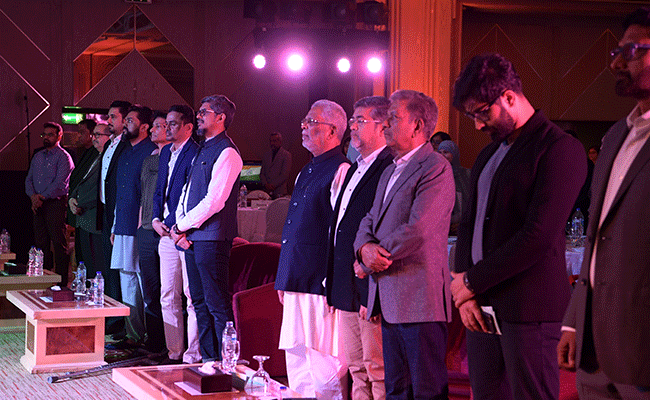
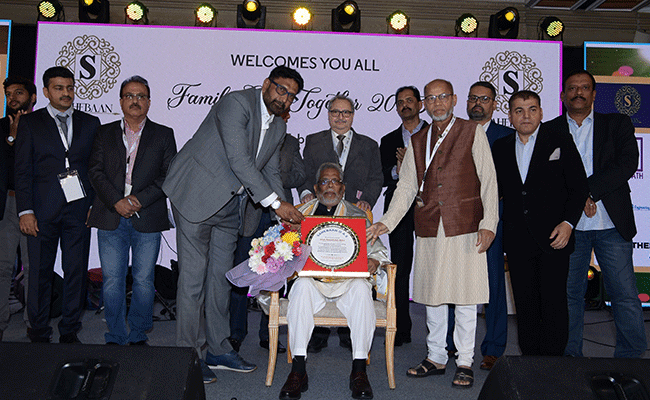
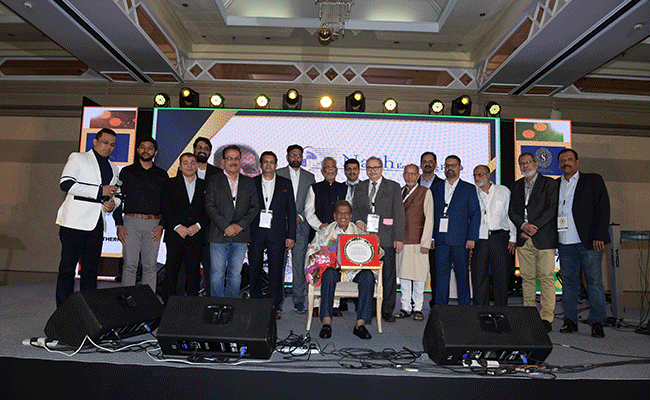
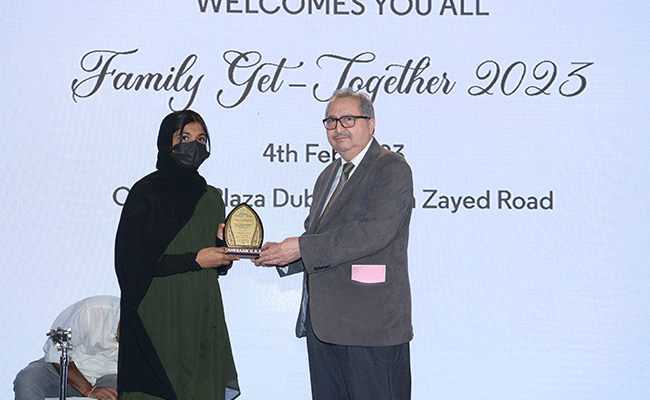
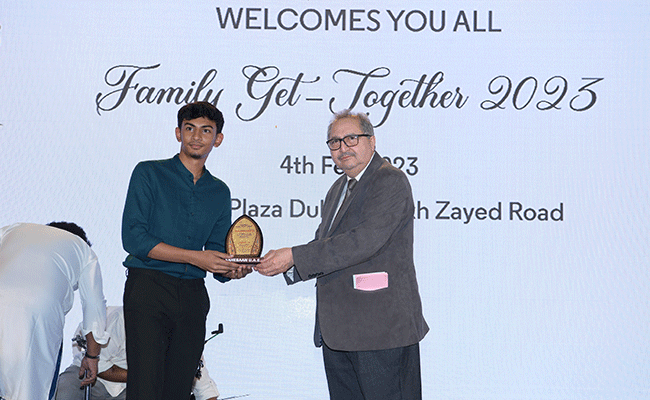
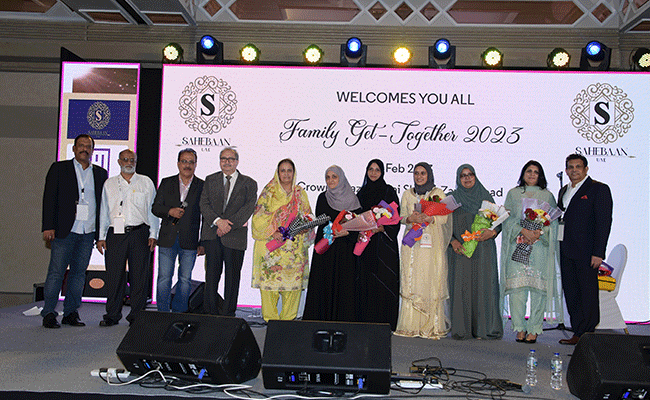
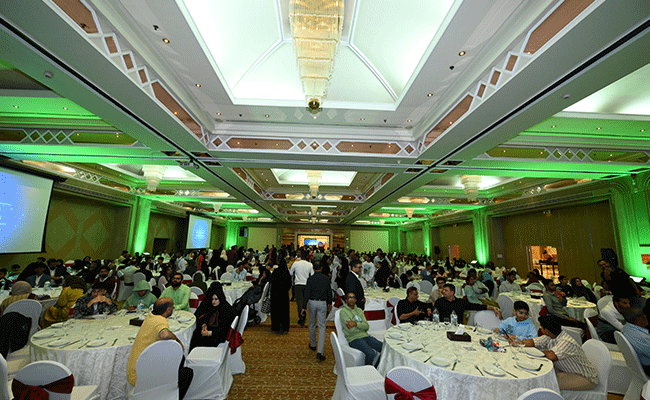
Sahebaan UAE, a premier organization for the Urdu-speaking Muslim Community hailing from the twin districts of DK & Udupi, hosted a grand social family get-together followed by gala dinner at Al Jumairah Ballroom, Crowne Plaza Hotel, Sheikh Zayed Road, Dubai, on 4th February 2023 from 5.30 PM onwards.
The event, sponsored by the Sahebaan Business Community UAE, was a grand success attended by more than 800 community members from all over UAE, neighboring GCC countries and India. Eminent personalities from the Sahebaan Community graced the occasion.
The event commenced with the recitation of verses from Holy Quran by Master Fazil Raheel Ali. Althaf M.S Coordinator, Sahebaan UAE welcomed the gathering and stated that Sahebaan UAE has been providing a platform for the community members to come together, connect and strengthen the brotherly bond.
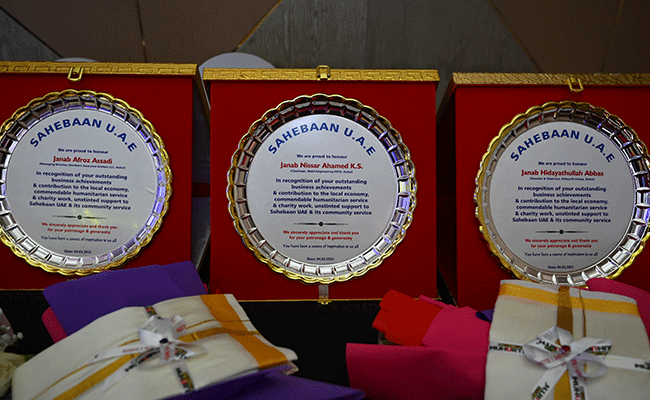
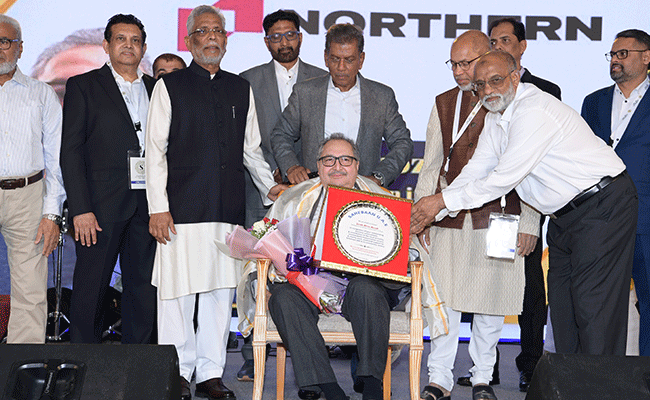
The patrons of the Sahebaan community Janab Hidayathullah Abbas, K.S. Nissar Ahmed and Afroz Assadi were honoured in recognition of their outstanding business achievements and contribution to the local economy, commendable humanitarian service, charity work and unstinted support to Sahebaan UAE and its activities. Janab Syed Siraj Ahmed, Suhail Kudroli, and Althaf Khalife initiated the honoring proceedings.
On behalf of the patrons, Janab Hidayathullah Abbas thanked the organisers and the gathering for the honor bestowed on them. He urged the Community to strive hard for success, prioritize family, help the Community, and give back to society, thus earning goodwill for Sahebaan.
The Chief guest of the evening Janab Kassim Ahmed H.K., founder of Hidaya Foundation Mangalore, while addressing the gathering called for the upliftmemt of the poor and the deprived.
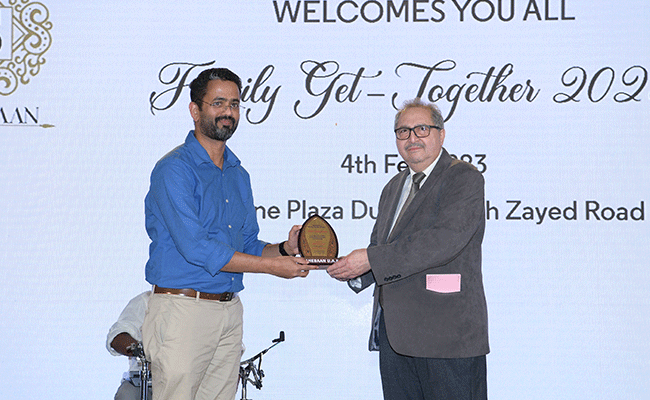
Janab Mohd. Akram, Mohammed Asif, Althaf Khateeb and Irshad Moodbidri conducted the felicitation of Sponsors. Dr. Abdul Rahiman Beig, Professor at Khalifa University, Abu Dhabi & recognised as a top rated scientist by Stanford University and Mrs.Yasmeen Irfan, winner of Foodshala UAE 2022 were honoured on the occasion.
Janab Afroz Assadi Patron and Convenor of Sahebaan UAE presented awards to the talented Sahebaan Youth, namely, Sham Akbar Sheik, Safa Tamadur, Rafa Riyaz Khalife, Daniyal Danish Iqbal, Rafhan Balanthi Baig, Mohd. Rafan, Sheikh Saahir Akbar, Mehek Sheikh, Nuha Riyaz Khalife for excellence in academics.
Anbar Althaf and Saqib Baji for Sports achievement and Anam Aslam for performing arts.
Faizaan Khateeb, Mohd. Samiullaha, Mohd Sufiyan and Abdul Ahad presented a photo journey of Sahebaan UAE through the years.
Well-known bollywood stand-up comedian and mimicry artist Jayvijay Sachan entertained all with his mimicry & comedy. A Sufiana troupe from mumbai mesmerized the crowd throughout the evening with their melodious rendering.
Sahil Zaheer, a fellow Sahebaan and a hugely popular stage & radio artist from Mangalore, compered the program and entertained the crowd with his wit and humor.
Sahebaan Ladies Wing members Sahara Asif, Reena Althaf, Mehek Sheik and Riza Mustafa managed the children’s Program.
The function was sponsored by Hidayath Group, NASH Engineering FZCO, Northern Insurance brokers LLC, Prestige Engineering LLC, Petrosolutions FZCO, Creative House Scaffolding, Advanced Creative Techncial Services, Al Sitara Gulf Contracting, Multiline Technical Co. LLC, Progressive Technology & Services LLC, Sumtech Multiline Trading, Right Choice Trading, Al Bustan Trading, Vertex Engineering, Izza Gold & Diamonds Dubai, Cell Town, Invension Medical Requisities, Core Elements Interior Decoration LLC and Hasmai Mangalore.
The function concluded with a raffle draw and vote of thanks by Syed Mohd. Ajmal.
source: http://www.english.varthabharati.in / Vartha Bharati / Home> Gulf / by Vartha Bharati / February 13th, 2023
Andaleeb Wajid is a Bangalore-based writer who attempts to authentically portray India’s Muslim diaspora through novels that focus on life, food, family and relationships.
The young Indian Muslim writer Andaleeb Wajid has published five books in almost as many years. Courtesy Andaleeb Wajid
Modestly dressed in a pretty headscarf and shalwar kameez, the Bangalore-based writer Andaleeb Wajid smiles as she talks about her short but successful writing career – she has published five books in six years, most of them featuring a Muslim setting and credibly representing the community in India.
Wajid, 36, says she has been writing since she was 10. Her first book, Kite Strings, was released in August 2009 followed by Blinkers Off (August 2011), My Brother’s Wedding (May 2013) and More Than Just Biryani (January 2014). No Time For Goodbyes, released in April this year, is her latest book and the first in the Tamanna Trilogy series, books on time travel targeted at young adults. The other two will be released in September and December this year.
How did you begin writing?
I have been writing stories since I was 10. When I was in Grade 12, I was left very confused about what I would do with my life. There weren’t many options for girls from orthodox Muslim families. Then it occurred to me to take up writing as a career. I was certain that no one would stop me.
Is there a reason why many of your books have been set in a Muslim milieu?
I’m quite amused with the way Muslims are depicted in Bollywood films and on television in India. My stories attempt to show a slice of Muslim life, which is no different from anyone else’s. I wrote More Than Just Biryani only because I strongly felt that the world has labelled us as just biryani-eaters and I wanted them to be aware of the diversity in Muslim cuisine. Kite Strings discusses the issues a young girl from an orthodox Lababin Muslim [a community from Tamil Nadu] family faces. But a large number of non-Muslim fans also reached out to me, saying how much they identified with the character, which proves that some things transcend religious boundaries.
More Than Just Biryani was conceived as a recipe book. What prompted you to turn it into fiction?
My brother and I had thought of writing a culinary memoir but the idea never took off because I realised early that I could never do justice to non-fiction. Instead I wrote about three women and the role food plays in their lives. Nearly every chapter of the book has a recipe, which is woven into the story.
Have you drawn upon your personal experiences to craft stories?
Yes. Like most writers, I started off writing about what I knew best. In Kite Strings, the protagonist Mehnaz is a rebel without a cause and behaves a lot like I did as a teenager. The story is set in Vellore, Tamil Nadu, where as a child I spent several holidays with my grandparents. In More Than Just Biryani, one of the protagonists loses her father. It was the most painful chapter I have ever written.
What else is in the pipeline?
I have one more young-adult novel in my kitty, about a girl whose mother has left the family. Then there’s another about a crochet teacher and the four women who learn this beautiful craft from her and end up baring their lives to her.
• Andaleeb Wajid’s books are available on Amazon
artslife@thenational.ae
source: http://www.thenationalnews.com / The National / Home / by Priti Salian / July 05th, 2014
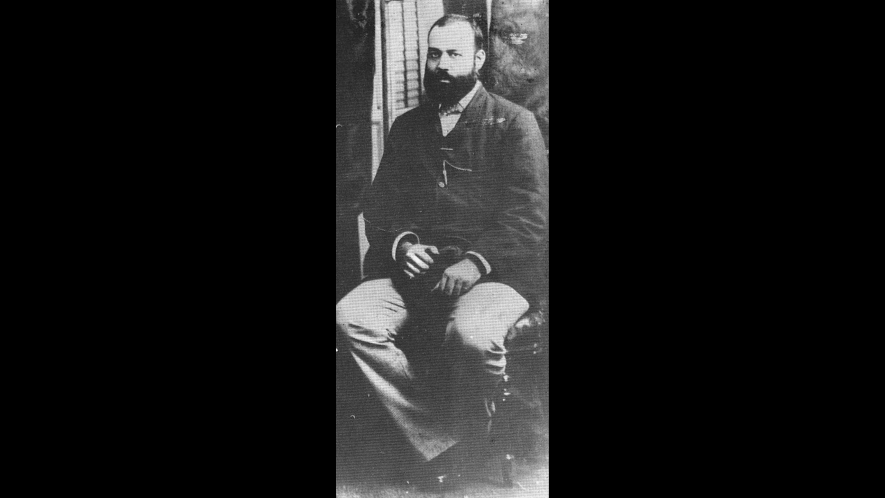
The first Muslim judge of a high court in colonial times, Syed Mahmood’s professional conduct offers a counterpoint to the declining standards in Indian judiciary.
WHEN Justice Abdul Nazeer addressed the 16th national council meeting of the RSS-affiliated Akhil Bharatiya Adhivakta Parishad at Hyderabad last December, he said, “Great lawyers and judges are not born but made by proper education and great legal traditions, as were Manu, Kautilya, Katyayana, Brihaspati, Narada, Parashar, Yajnavalkya, and other legal giants of ancient India.” In the symposium on “Decolonisation of the Indian Legal System”, Justice Nazeer also said the “continued neglect of their great knowledge and adherence to the alien colonial legal system is detrimental to the goals of our Constitution and against our national interests…”.
Perhaps Justice Nazeer should have also recalled 19th-century jurist Justice Syed Mahmood (1850-1903). A pioneer in bold assertions against the colonial judiciary, he produced incisive legal commentaries that reflect an audacious dissenter’s point of view. Writing in an Urdu newspaper, his father, Sir Syed Ahmed Khan, narrates Mahmood’s resignation from the Allahabad High Court in 1893 to “protect the self-respect of Indians against the racism of British judges”.
In that era, conceptions of nationhood were still evolving in India. Indian judges would not muster the courage to contest the racism of the imperial power or fellow European judges. But Mahmood did, in intrepid ways. Khan founded the Mohammedan Anglo-Oriental (MAO) College at Aligarh in 1877 and figures prominently but contentiously, stereotyped as a British loyalist and separatist in debates on contemporary nationalism. Mahmood supported his father’s modern education project, but unfortunately, his contributions are largely ignored by historians and the legal fraternity.
By 1920, MAO College, now Aligarh Muslim University, was the most prominent residential university in the country. Its history department has been a premier centre for advanced studies for a half-century. In 1889, primarily on Syed Mahmood’s initiative and his gifts in terms of books, journals and cash, AMU established a law department. Yet, he was neglected in its research. Only in 1973, seven years after the centenary of the Allahabad High Court, the Aligarh Law Journal brought out Mahmood’s contributions, and legal scholars reflected on his high calibre as a lawyer and judge.
The good news is, in 2004, Alan M. Guenther did his doctoral thesis on Mahmood at McGill University, Canada, which is available online for the public to access. His meticulous and well-researched account touches almost every aspect of Mahmood’s public life. Guenther also published an extended essay in 2011on Mahmood’s views on English education in 19th-century India. (In 1895, Mahmood had written a book on the theme for his speeches at the Educational Conference.)
In 1965, Asaf Ali Asghar Fyzee (1899-1981) complained, “Syed Mahmood’s contributions to the transformation of Muslim law in India have been largely neglected by historians and survive primarily as footnotes in legal texts on Muslim law.” Guenther, too, observes, “…overshadowed by the life and writings of his illustrious father, Ahmad Khan, his legacy has not received the attention it deserves. A large part of his father’s achievements in the reform of education, in fact, would not have been possible without the assistance of Syed Mahmood. But when he reached the age at which his father had made his most significant achievements, [Mahmood] had his life cut short.”
Mahmood had laid out his life plans clearly. S. Khalid Rashid, writing in 1973, reports that Mahmood decided early on that, like his ancestors, he would devote the first third of his life to educating himself, the second to earn a living, and the last to “retired study, authorship and devotion to matters of public utility”. But Guenther writes about how Mahmood’s health had deteriorated through alcohol abuse and disease. He died before he turned 53, broken by forced retirement, estranged from his father (who had died five years previously), stripped of responsibilities at the college he had helped found, separated from wife and son, and in poverty. He was selling personal items to repay debts. “His father’s numerous writings and letters are still republished, but Syed Mahmood’s contributions to Muslim thought are hidden in bound volumes of the Indian Law Reports and brittle files of government correspondence,” Guenther writes.
One aspect of Mahmood’s last years is captured by Prof. Iftikhar Alam Khan’s Urdu books, Sir Syed: Daroon-e-Khana (2006, 2020) and the recent Rufaqa-e-Sir Syed: Rafaqat, Raqabat wa Iqtidar Ki Kashmakash. These accounts expose the smear campaigns of the three companion successors of Sir Syed—Samiullah, Mohsin-ul-Mulk and Viqar-ul-Mulk—against Syed Mahmood as they vied for the secretary’s post at MAO College. Often European members of MAO College conspired with them. Exploiting his weaknesses and eccentricities, they ousted him to get a hold over college affairs, compounding his hurt during his tragic final years.
SYED MAHMOOD’S ROLE IN SIR SYED’S EDUCATIONAL ENTERPRISE
Having returned to India in 1872 after studying in England, Mahmood took time out of his budding legal career to assist his father’s reform work, particularly setting up MAO College. He prepared a detailed plan along the lines of his experiences in Cambridge. His specific aim, explained in February 1872, was to produce future leaders of India through an educational institution whose residential nature would be “as indispensable an education as the course of study itself”. The aim was to create a society of students and teachers quite different from the rest of society.
He travelled with his father to Punjab in 1873 and spoke at a rally to promote the project. In 1889, Sir Syed introduced a motion to nominate Mahmood as joint secretary of the board of trustees of MAO College by highlighting his assistance despite the opposition he faced. In particular, he considered his son’s influence the primary factor that persuaded European professors to come to India and teach there.
European staff members confirmed this around six years later when there was renewed opposition to Mahmood continuing as joint secretary. The principal, Theodore Beck (1859-1899), testified, “Syed Ahmad….acknowledged his reliance on Syed Mahmood for advice in all matters, and his imprint could be noted in the correspondence relating to the school. He declared his firm conviction that Syed Mahmood was the one person who shared his vision for the college, and apart from him, no one would be able to administer the school in keeping with that vision.” However, Samiullah (1834-1908) disagreed with Sir Syed on this count. As a result, a tussle for power began in the college management. The power-play could explain why AMU felt inhibited in bringing out a biography of Mahmood, a research gap that Guenther’s doctoral thesis fills. He has extensively relied on important correspondences of Mahmood preserved in the London India Office (British) Library.
SYED MAHMOOD’S TRYST WITH MUSLIM LAW
Mahmood is a forgotten pioneer of the transformation of Muslim law in modern South Asia. In 1882, at just 32, he became the first Muslim judge of the high courts in British India. He delivered numerous landmark decisions that shaped Muslim law, the law in general, and its administration.
Earlier, he blazed a trail his younger contemporaries followed in their judicial roles in British India. He was one of the first Indian Muslims to study in England and train in the English system of jurisprudence, the first Indian to enrol as a barrister in the High Court of Judicature at Allahabad in 1872, the first appointed as a district judge in the restructured judicial system of Awadh in 1879 and the first Indian assigned as a puisne judge to the High Court at Allahabad. He was the first Muslim in any High Court of India. He cleared a path for Indian Muslims to participate in administering justice in India. But his contribution is not limited to creamy career opportunities for Muslim youngsters. His lasting legacy is how Muslim law is perceived and administered in South Asia today.
CHAMPION OF ACCESSIBLE JUSTICE
An abiding concern of Mahmood was the cost of administration of justice. Court procedures were lengthy and expensive, and the “mass of law” was complicated. Distance from courts was another concern, for which he proposed a network of village courts for “on-the-spot” adjudication. He sought to make justice accessible through unpaid tribunals and honorary munsifs. He prepared a comprehensive draft for this, Guenther informs.
Furthermore, he attacked the [racial] mindset and court fees and stamp duties on legal documents. He ruled in August 1884 and February 1885 that “…if justice costs the same amount [to the] rich and poor, it follows that the rich man will be able to purchase it, whilst the poor man will not.” He declared, more than once, that British judges in India were too quick to find fraud.
In a speech at the Allahabad Bar in April 1885, Mahmood raised the language issue in judicial transactions, saying laws should be in languages intelligible to the masses. He insisted on the vernacular in arguments, pleadings and justice delivery and translated verdicts so that people unfamiliar with English could rest assured that judgments are reasoned. Of course, the issue of judicial language continues to be debated, and for this, acknowledgement is due to Mahmood.
AN INDIAN DISSENTER IN THE HIGH NOON OF BRITISH COLONIALISM
Mahmood is known most for outstanding dissenting judgements. In volume 2 of his 2021 book, Discordant Notes, Justice (retd.) Rohinton F. Nariman writes that Mahmood was known for detailed judgments, some of which stand out for thoroughness and fearless language. Mahmood would refer to the original Sanskrit versions when ruling on Hindu laws and the Arabic texts for Muslim laws, rather than using interpretations of the relevant texts.
From the 1860s to 1880s, during the codification of laws, he sought limits on importing British laws and protested that the local context was getting overlooked. His concern was not just the laws but their efficacy and adaptability within India’s cultural diversity.
Guenther observes, “…throughout his life, he identified himself as a Muslim as well as an Indian and a subject of the British crown, and that he was actively involved in the education and improvement of the Indian Muslim community. At the same time, Mahmood… [made] efforts to promote harmony between people of diverse backgrounds, and…[supported] initiatives that improved the situation of all Indians, regardless of religious affiliation…”
An anecdote from Altaf Hali’s Hayat-e-Javed (1901), cited by Shamsur Rahman Faruqi (2006), is worth sharing. “Contrary to the culture of sycophancy and genuflecting before the English colonial authority….Syed Ahmad Khan and his high-profile and brilliant son Syed Mahmud strived to conduct themselves as if they were equal to the English….Syed Ahmad Khan had stayed away from the [1867 Agra] Durbar because Indians had been given seats inferior to the English. A medal was to be conferred on Syed Ahmad Khan at that Durbar. Williams, the then Commissioner of Meerut, was later deputed to present the award to Syed Ahmad Khan at Aligarh railway station. Willams broke protocol and showed his anger at having to do the task under duress and said that government orders bound him, or he wouldn’t be presenting the medal to Syed Ahmad Khan. Syed Ahmad Khan accepted the medal, saying he wouldn’t have taken the award, except that he too was bound by government orders.”
Indian democracy is an outcome of anti-colonial nationalism, and dissent is its core component: Mahmood’s dissent contributed to nationalism in his time. In 2022, the V-Dem Institute described India as an electoral autocracy where dissent is being criminalised, and the judiciary is failing to contain the majoritarian upsurge. Mahmood’s professional conduct is an encouraging counterpoint to the degeneration in the Indian judiciary.
WHAT DID MAHMOOD THINK OF THE INDIAN NATIONAL CONGRESS?
According to Guenther, though Mahmood never joined the Congress, he was “equally aloof” from the anti-Congress propaganda his father indulged in. “…a rare catholicity characterised his views on most of the controversial questions,” he writes. He adds, “His acceptance among the Hindus [elites] generally was demonstrated by the fact that they tried to send him as their representative to the Imperial Legislative Council, though he never received that appointment.”
Nonetheless, like his father, Mahmood harboured class and regional prejudices. Guenther reveals an article Mahmood wrote in The Pioneer on 4 September 1875, suggesting the government must strive to with the sympathies of the “higher classes of natives”. When challenged to defend his position by “Another Native” in the same newspaper two weeks later, Mahmood responded that people in Punjab and the North-western Provinces [now Uttar Pradesh] were, historically speaking, of “much greater political significance” than those of Lower Bengal. Gunther cites his write-up: “…any educational system that succeeded in ‘attracting the Bengalee and fail(ed) to exercise any influence upon the higher classes of the Rajpoot, the Sikh, and the Mussulman’ must be regarded as a failure.”
Considering the socio-regional composition of top functionaries of AMU, even impartial insiders would testify that it still harbours regional and sub-regional prejudices. The Sir Syed Academy is releasing many publications during the ongoing centenary celebration of AMU. Publishing Guenther’s dissertation may be a fitting tribute to Mahmood, who must be regarded as a prominent co-founder of MAO College.
Mohammad Sajjad teaches modern and contemporary Indian History at Aligarh Muslim University. Md. Zeeshan Ahmad is a lawyer based in Delhi. The views are personal.
First published by Newsclick.
source: http://www.theleaflet.in / The Leaflet / Home> History / by Mohammad Sajjad and Zeeshan Ahmad / April 01st, 2022
Attributing his victory to the trust of the people in his ward, he said: “I am a workaholic and I’m always available to lend ears to people’s grievances in the walled city.”
A seasoned politician, Aaley has had a long career, vacillating between different parties – he contested as an independent in 2012, aged 22; in 2017, on a Congress ticket, and in 2022, after he was fielded by AAP. (Twitter/Aaley Muhammad Iqbal)
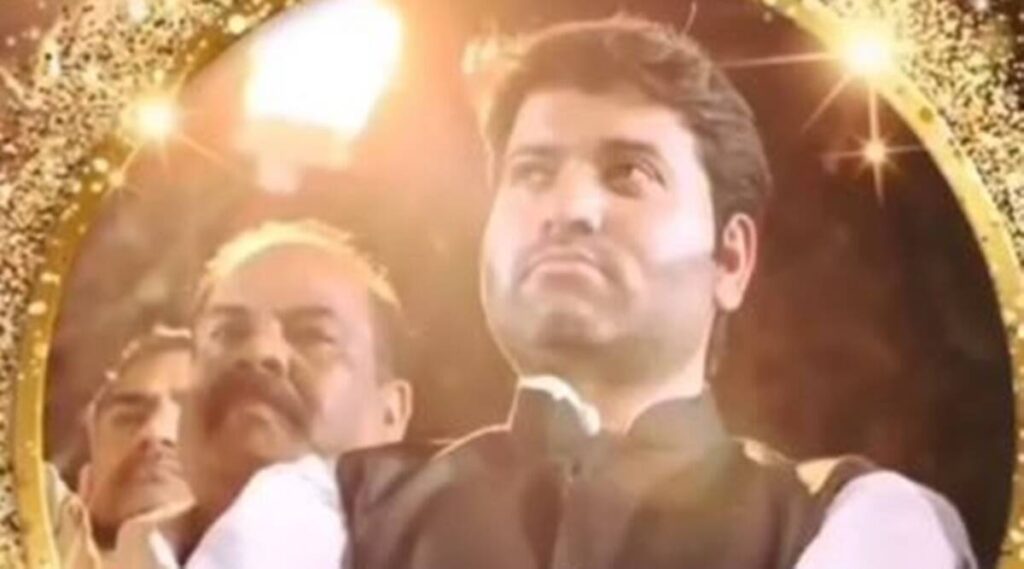
A day after he was selected by the AAP as its deputy mayor candidate in the MCD, three-time councillor Aaley Mohammad Iqbal told The Indian Express he might become the first Muslim to be nominated to the post in many years.
“The last person for the post from our community was in 1977. This sends out a message that AAP is a party Muslims can trust, and their rights will be protected. (CM) Arvind Kejriwal ji chose me because I am a senior councillor; this is my hat trick (election win), and that is not a mean feat. I won with the highest margin (in the MCD polls).
Calling this appeasement or tokenism is not right, it forgoes my achievement, and Kejriwal ji does not play ‘Muslim card,’” he told The Indian Express.
Aaley won from the Chandani Mahal ward with a margin of 17,134 votes, the highest in the MCD polls.
Attributing his victory to the trust of the people in his ward, he said: “I am a workaholic and I’m always available to lend ears to people’s grievances in the walled city. The population is mostly lower and middle class… Like my father, I have always been there for them.” His father is AAP MLA Shoaib Iqbal, a six-time MLA from Matia Mahal who joined the party in 2020, along with his son.
A seasoned politician, Aaley has had a long career, vacillating between different parties – he contested as an independent in 2012, aged 22; in 2017, on a Congress ticket, and in 2022, after he was fielded by AAP.
Aaley said his brief stint with Congress made him realise how powerless they were. “I knew if I had to do something, I would have to join those in power.”
On the AAP’s poor show in Northeast Delhi in the MCD polls – the first election after the 2020 riots – he said there was so much to be done in those wards where the party put up a sub-par performance. “We have to go to the ground, talk to people and analyse what went wrong. Especially in Northeast Delhi. However, AAP managed to pull wards in Chandni Chowk constituency under its sway.”
Of the 19 MCD seats in Northeast Delhi areas hit by the violence, the BJP bagged 12, the Congress two and the AAP four.
Aaley also addressed the complaints surrounding Kejriwal’s absence when other leaders were visiting riot-hit areas. “He was in the Vidhan Sabha speaking about the issue… and constantly talking to the L-G and the Delhi Police commissioner. Since the Delhi government does not have law and order under its jurisdiction, he appealed to the Ministry of Home Affairs to deploy forces,” he said.
source: http://www.indianexpress.com / The Indian Express / Home> Cities> Delhi / by Aiswarya Raj / New Delhi – December 26th, 2022
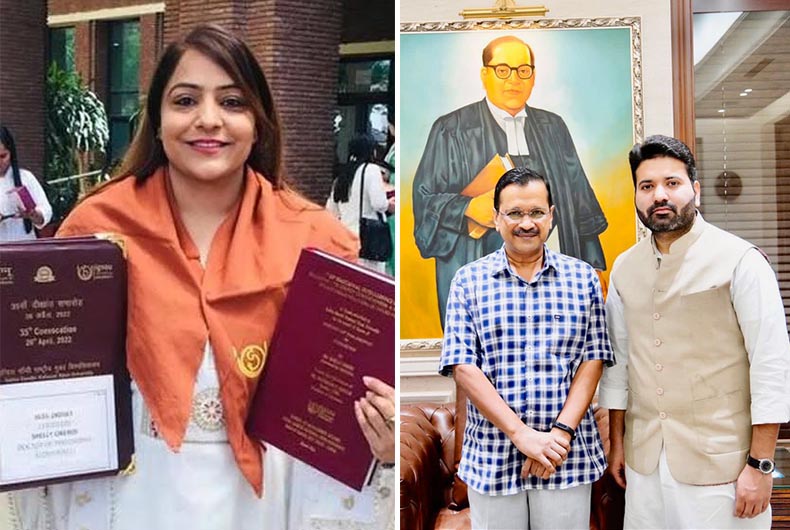
Shelly Oberoi, the councillor from Ward No. 86 in Patel Nagar, is AAP’s Mayoral candidate, while the name of Aaley Muhammad Iqbal has been proposed for the post of Deputy Mayor.
New Delhi:
Weeks after the Aam Aadmi Party (AAP) wrested control of the Municipal Corporation of Delhi (MCD) from the BJP, which was at the helm for three consecutive terms, AAP on Friday announced its candidates for the posts of Mayor and Deputy Mayor.
Shelly Oberoi
Shelly Oberoi, the councillor from Ward No. 86 in Patel Nagar, is AAP’s Mayoral candidate, while the name of Aaley Muhammad Iqbal has been proposed for the post of Deputy Mayor.
Oberoi (39) joined AAP as an activist in 2013 and was the party’s Mahila Morcha vice-president till 2020. As a first time councillor, she registered victory on a BJP stronghold in West Delhi. A former visiting assistant professor at Delhi University and a first-time councillor, Oberoi contested the elections from former Delhi BJP chief Adesh Gupta’s home turf of East Patel Nagar, and defeated her rival Deepali Kumari by 269 votes.
Oberoi holds a PhD in management studies from IGNOU’s School of Management Studies. Along with Delhi University, She also taught at several other universities such as NMIMS, IP and IGNOU.
The first-time councillor, who is a lifetime member of the Indian Commerce Association (ICA), has several awards and accolades to her credit that she received in different conferences.
“I am feeling honoured as it will be a big responsibility. I shall give my best to fulfil the expectations of people and my respected party members”, Oberoi had said after she was named AAP’s Mayoral candidate.
From an ordinary AAP worker to being nominated for the Mayor’s post, her journey has truly been overwhelming, she said in a tweet.
Her main focus, Oberoi said, will be fulfilling the 10 guarantees promised by Chief Minister Arvind Kejriwal by working together with all the councillors to knock off the city’s ‘garbage capital’ tag.
“My eyes are full of dreams to fulfil the committments of Arvind Kejriwal and his 10 guarantees,” she said.
However, it should be mentioned that AAP has named her candidature for only three months.
At the first MCD meeting to be held on January 6, the 250 municipal councillors will take oath and elect the Mayor and Deputy Mayor besides six members of the standing committee. The post of the Mayor is reserved for a female councillor in the first of the MCD’s five-year tenure.
After the Mayor is be elected on January 6, she will remain in office till April. Election for Mayor’s post will be held again in April.
Aaley Muhammad Iqbal Aaley Muhammad Iqbal is 3rd Time Muncipal Councillor of MCD ward Chandni Mahal and former Chairman City Zone MCD.
He is a businessman.
source: http://www.ummid.com / Ummid.com / Home> India / by Ummid.com with inputs from IANS / December 25th, 2022
Two candidates, one each from Maharashtra and Uttar Pradesh, secured 100 percentile and emerged as all India toppers.
Eight students from Karnataka, the highest for any State, have emerged as top scorers in Common Law Admission Test (CLAT-2023) results for undergraduate and postgraduate streams declared by the Consortium of National Law Universities on December 23, Friday.
Two candidates, one each from Maharashtra and Uttar Pradesh, secured 100 percentile and emerged as all India toppers. One candidate from Karnataka secured a percentile of 99.97, two secured 99.96 and one each secured a percentile of 99.95, 99.94, 99.93 and 99.92 in CLAT UG from Karnataka.
Kshitika Tyagi
Kshitika Tyagi of Bengaluru got an All India Rank (AIR) of 12 with 106.75 score and a percentile of 99.97 in CLAT-2023 UG. Speaking to The Hindu, she said she started preparing for the exam and found the subject very interesting. “I want to join the National Law School of India University, Bengaluru,” she said.
Ayesha Khan
Another topper from Karnataka, Ayesha Khan, AIR 17 with 105.75 score and 99.96 percentile, said her dream had come true. “From a very young age, I always wanted to be a lawyer, and I will be one now,” she said.
The CLAT-2023 was conducted at 127 centres in 23 States and two Union Territories. A total of 94.87% of the candidates who enrolled appeared for the examination, of which 56% are females 44% are males and 2 are transgenders.
The duration of the CLAT 2023 UG test was 120 minutes. The test had five sections, with a total of 150 questions. One question was withdrawn in the final answer key. The highest mark secured in CLAT 2023 UG is 116.75. CLAT 2023 PG had one section comprising 120 questions and the highest mark secured is 95.25.
source: http://www.thehindu.com / The Hindu / Home> News> India> Karnataka / by The Hindu Bureau / December 23rd, 2022
Among the patrons of Haziq and Mohi Rare Book Sellers, back when its founder Awad Bafana was running it, also includes author (of White Mughals) William Dalrymple.
An inside view of Haziq and Mohi rare book sellers. (Image: Yunus Lasania)
Hyderabad:
For over four decades, Awad Bin Mohd Bafana ran a book store selling rare books in the Old City. A man of Arab descent, he had inherited the books from his grandfather’s personal library. Over a period of time, it became a go-to place for research scholars, and anyone else looking to buy something interesting and old. Haziq and Mohi Rare Book Sellers today is one of those ‘secrets’ that many love to discover among the city’s heritage.
Awad Bafanna, as he was known, passed away suddenly in 2015 over half a decade ago at the age of 74. He left behind thousands of books in his shop, which only he mentally kept track of. His nephews who run the shop today in Hyderabad, painstakingly have only managed to organise a section of the collection. “There was no inventory but he knew exactly where every book was in his head,” said Ibrahim, one of his nephews.
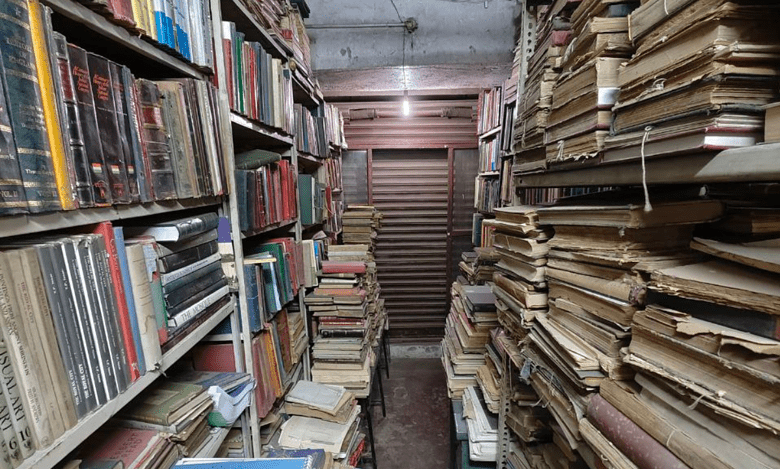
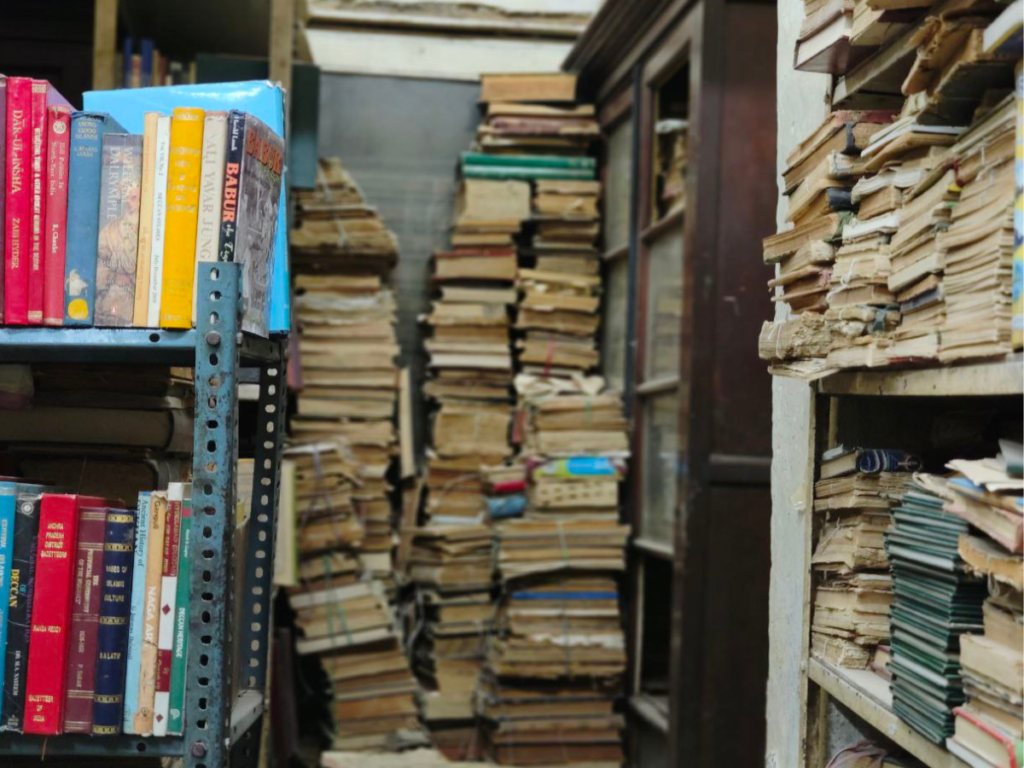
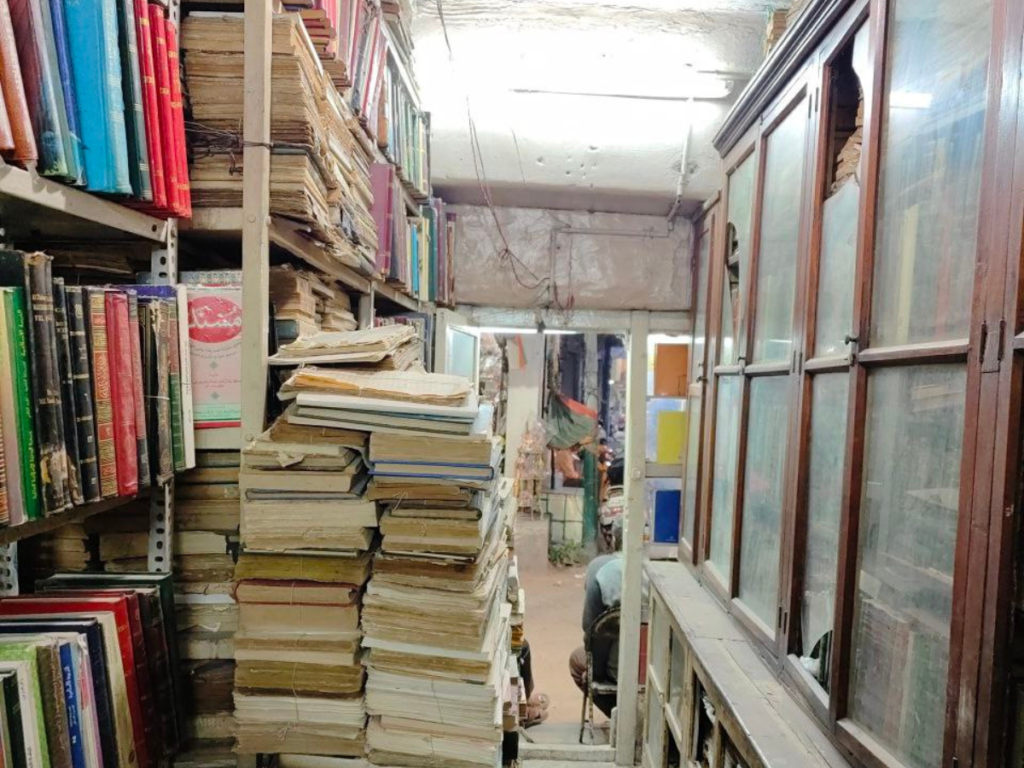
One can understand the enormity of the rare book collection at Haziq and Mohi while walking through it. There is literally space for only one person to walk in its hallway, and to then turn right into another section. Thankfully, Awad Bafana’s family have partially sorted out books based on subjects like history, politics, on Hyderabad etc. The bookstore is a haven for bibliophiles and research scholars who require particular titles.
A favourite of collectors and scholars
Among the patrons of Haziq and Mohi Rare Book Sellers, back when Awad Bafana was running it, also included author (of White Mughals) William Dalrymple. Ibrahim and his brothers still receive calls from abroad for specific books customers want. Awad Bafana’s grandfather had worked as a Jamadar in Barkas. for the Al-Quaiti family that headed the Yemeni community in Hyderabad.
Haziq and Mohi rare book sellers. (Image: Yunus Lasania)
Hyderabad’s Barkas, where their descendants live even today, is believed to be a corrupt word of the word barracks. It is essentially a mini Yemen of sorts and is a go-to place for foodies who want to eat authentic Yemeni cuisine.
Partial book collection up for sale
Now, seven years Mr. Bafanna’s demise, Awad Bafana’s extended family that runs Haziq and Mohi Rare Book Sellers is looking to part with a chunk of its collection. The Bafana family runs the rare book store in Hyderabad’s old city near the Chowk Ki Masjid at Hussaini Alam road. The collection is huge, and the family still has to go through the entire thing in order to catalogue it.
“We are not selling away all our books, nor are we shutting down the store. However, there are some monetary requirements at home due to which we decided to do this. Anyone who is interested can come take a look and discuss it with us,” Ibrahim told Siasat.com.
Haziq and Mohi has a treasure trove of books in mainly Urdu, English, Persian and Arabic. Many book lovers who wander there usually end up sticking around for hours, mostly going back with books they never knew they wanted in the first place. The collection of rare books include several official gazettes, and other publications that are even a century old. One will have to sift through it to even figure out what is there.
Anyone interested in purchasing the collection that is up for grabs can contact the Bafana family for the same (finding it is easy on Google Maps) on +919160161301.
Haziq and Mohi rare book sellers. (Image: Yunus Lasania)
source: http://www.siasat.com / The Siasat Daily / Home> News> Hyderabad / by Yunus Lasania / December 14th, 2022
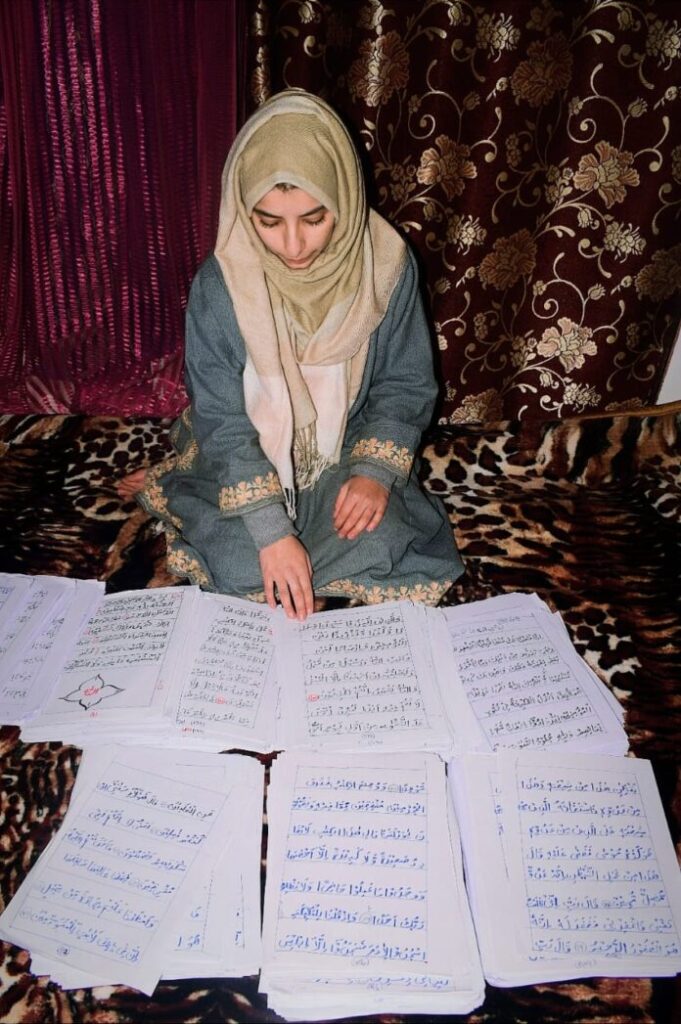
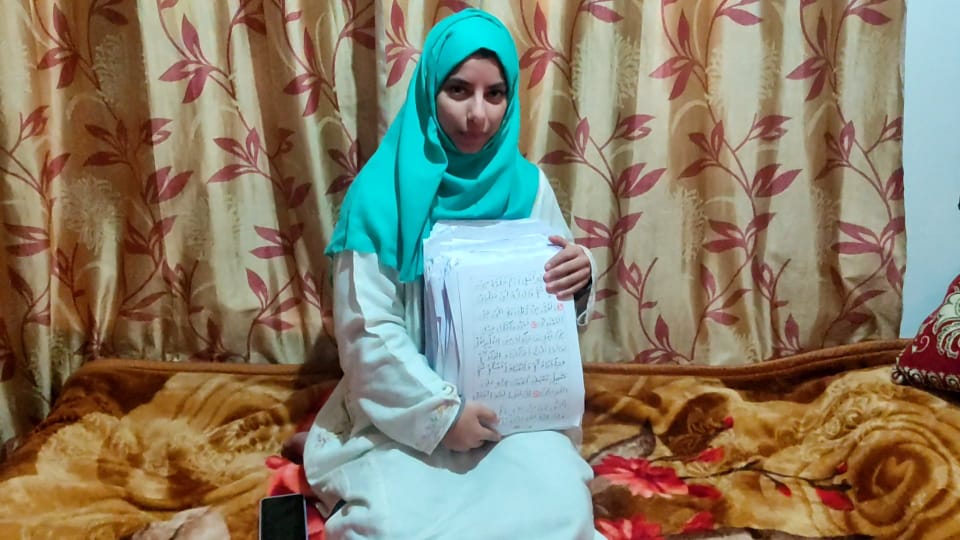
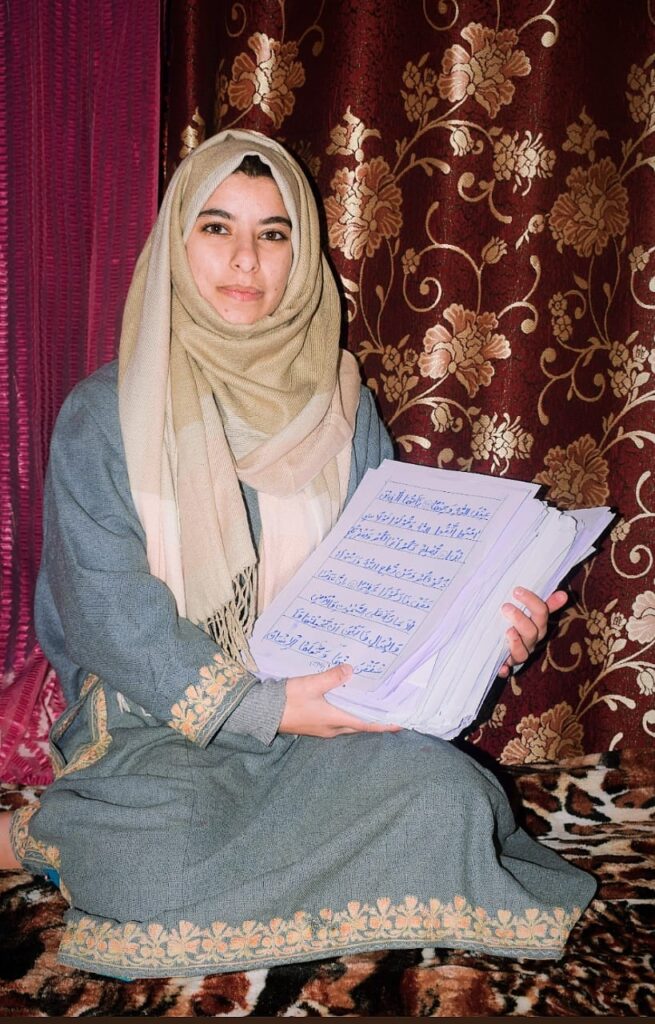
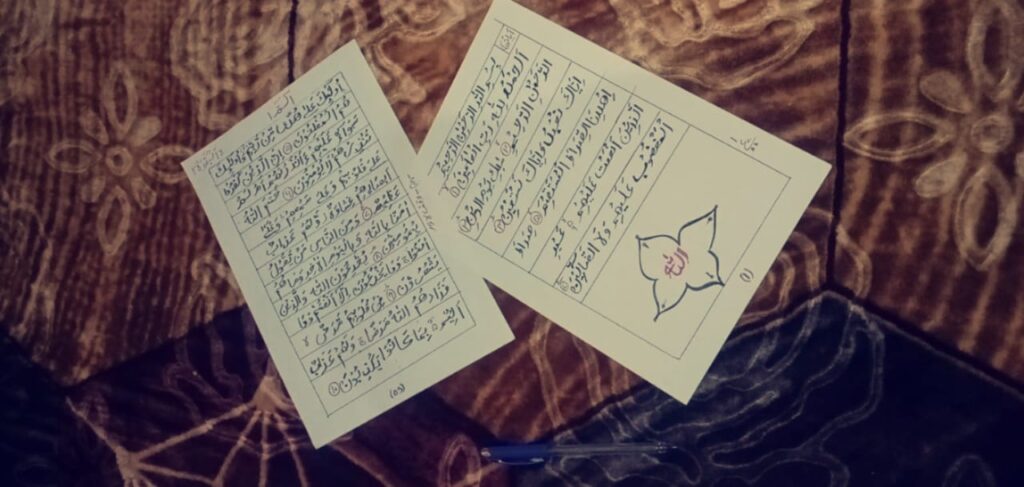
Phones have not stopped ringing at Tahir Ahmed Parray’s home in North Kashmir Hajin after his daughter Arbeen Tahir completed handwriting Holy Quran.
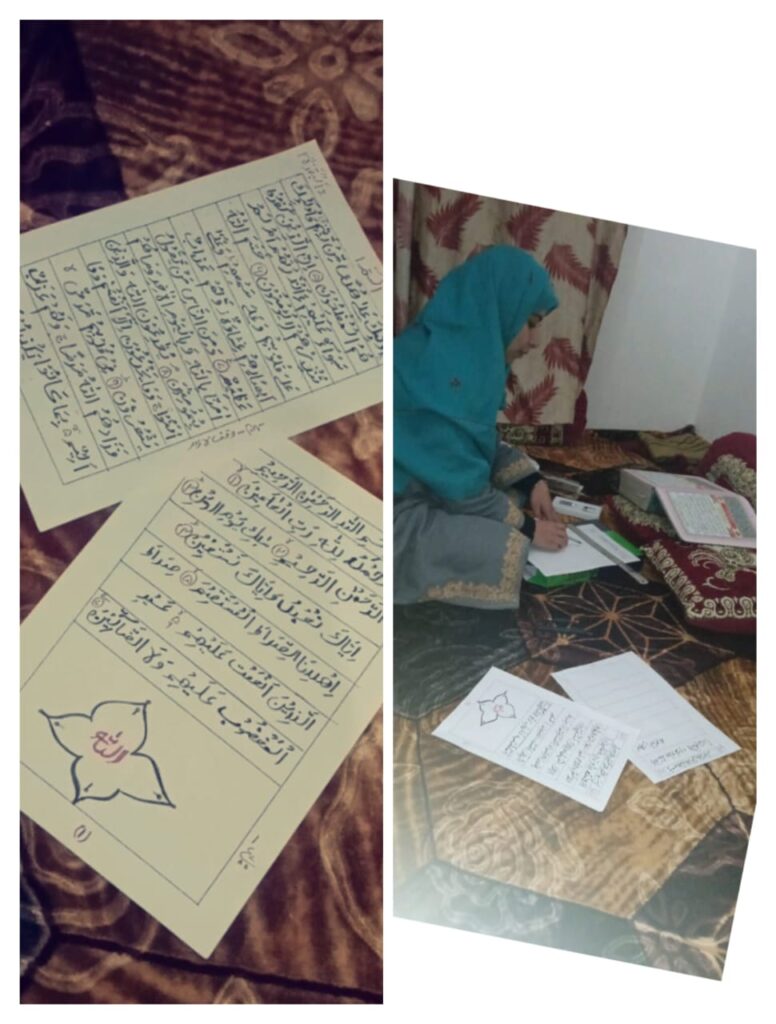
It took Arbeen six months to write the Quran using her calligraphic pen. With no formal training, she learnt calligraphy by watching YouTube videos before she tried her hand at writing the Quran.
“It was my childhood dream to write the holy Quran. I had no experience or training in calligraphy. I started watching videos and trying scribbling on paper before I learnt the art. I started writing the holy Quran in June and completed it in November. I was regularly showing manuscripts to my cousin for any correction,” she said.
Coming from a religious family, Arbeen’s father is a businessman dealing with fruits. She has a younger brother who studies in Class 10. Arbeen is living in a big joint family with all her uncles and cousins under one roof.
Arbeen received religious education from her childhood. Well versed in different languages, she developed an interest in reading theology and religious scriptures.
“I have written the manuscript on 900 pages. Now I plan to preserve this copy for posterity. I plan to bind it and keep it in my study. It is the prized possession,” she said.
Arbeen has become a role model for her clan and society. A student of class XII, she is now preparing for NEET and wants to become a doctor to serve humanity.
“I am working hard to crack NEET. My cousin is a doctor and she is my inspiration. I too want to become a doctor to serve mankind. I am preparing hard to achieve my goal,” she said.
The 18-year-old is also working on her debut book. “I am writing a book. `Tragedy of Innocence’ will soon hit the stands,” she said.
Arbeen is not the first student who has handwritten the Quran in Kashmir. Last year, Adil Nabi Mir of Srinagar completed writing the Holy Book in 58 days. Mir said he wrote the Quran in his handwriting purely for the ‘sake of Allah’ and to inspire the youth to follow Islamic teachings.
Coming from a humble background, Mir’s father is a mason. Mir said he received a lot of encouragement from his father and other family members.
He started writing on January 27, 2021, and it took him 58 days to complete the work. He used to write in his free time and spend 6-7 hours doing this. His fingers would ache a lot, but he persisted. Mir would rarely move out of the house barring visits to the mosque so that he could finish his task.
source: http://www.indiatomorrow.net / India Tomorrow / Home> Religion / by Ishfaq-ul-Hassan (headline edited) / December 13th, 2022
:quality(70)/cloudfront-eu-central-1.images.arcpublishing.com/thenational/ACD5KFPDRSOD3UNOBQCGVOPNHM.jpg)