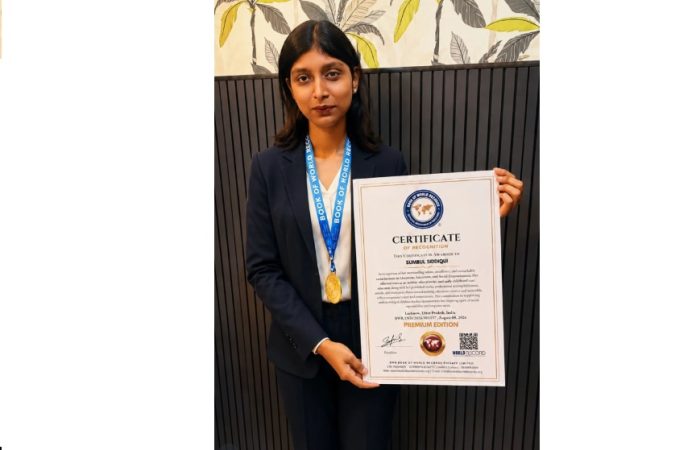
A 28-year-old Muslim author from Lucknow has earned a place in the Book of World Records for her book advocating equal rights for adopted children. Sumbul Siddiqui received her official certificate on August 8 for her book “Echoes of Resilience,” a work she began writing nearly a decade ago.
The book carries a clear social message: when a family adopts a child, that child deserves the same love, care, and equal rights as a biological child. Sumbul draws on her own life to make this case. At the age of 23, she discovered that she was herself an adopted child. By that time, both her parents had already passed away.
She says the love and belonging her parents gave her throughout her life became the foundation of her writing. She wanted to put that experience into words and share it with the world. Her parents never treated her differently, and she believes every adopted child deserves the same treatment.
Sumbul has authored two books so far. “Echoes of Resilience” took her roughly ten years to complete. She works independently in Lucknow and received her entire education in the city. Despite facing considerable personal challenges over the years, she did not step back from her goals.
She grew up with a childhood dream of becoming a Chartered Accountant. Alongside that, she always had a deep interest in reading and writing. That passion eventually led her to write her first book, though she never anticipated the recognition it would bring her.
Through her achievement, Sumbul wants to send a clear message to society. She urges families who adopt children to treat them without any discrimination and to give them the same rights and affection they give their biological children. For her, adoption is not simply about giving a child a home. It is about giving that child a complete sense of belonging.
At 28, Sumbul’s recognition in the Book of World Records marks a milestone she takes pride in, one that validates ten years of dedicated work and personal courage.
source: http://www.radiancenews.com / Radiance News / Home> Latest News> Pride of the Nation> Markers of Excellence> Report / by Radiance News Bureau / August 29th, 2026
It is a great privilege for me to accept this honour from the Shah Waliullah Institute. Honestly, I was reluctant at first and had declined this recognition multiple times.
New Delhi :
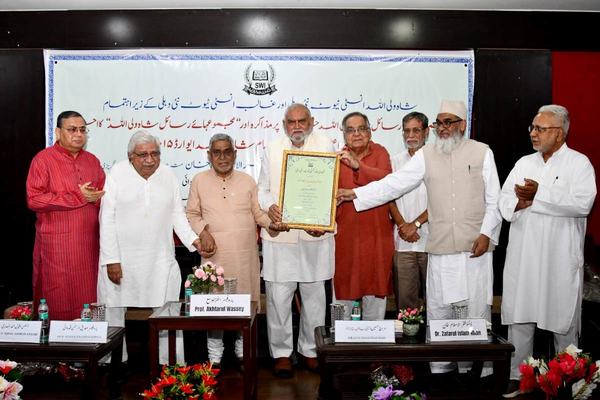
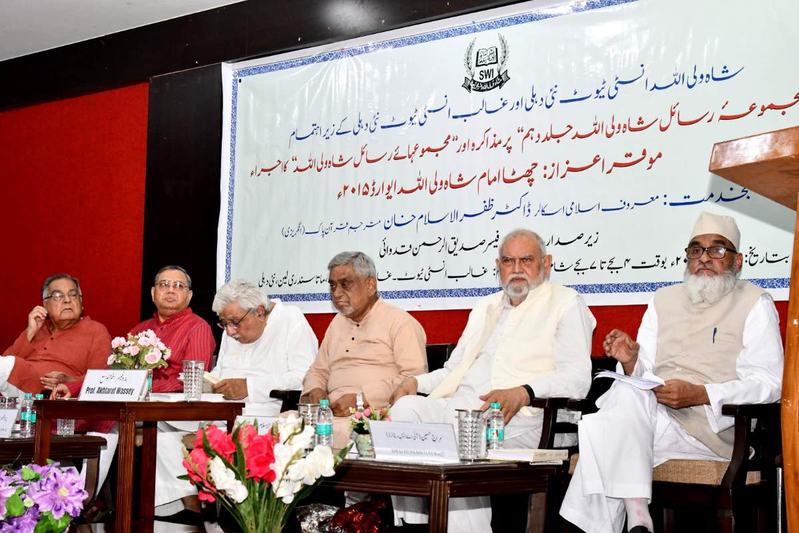
In a momentous event, renowned Islamic scholar, author, senior journalist, and former Chairman of the Delhi Minorities Commission, Dr. Zafarul-Islam Khan, was awarded the prestigious Sixth Imam Shah Waliullah Award here on Monday. The ceremony took place amidst a distinguished seminar on the theme of ‘Epistles of Shah Waliullah’ at the Ghalib Institute here.
Jointly organized by the Shah Waliullah Institute and the Ghalib Institute, the seminar sought to celebrate and highlight the scholarly and intellectual legacy of Imam Shah Waliullah. A special highlight of the event was the launch of the tenth volume of his acclaimed series of epistles, offering attendees an intimate glimpse into his teachings and enduring contributions to Islamic sciences.
A diverse assembly of eminent scholars, intellectuals, and thinkers from across the country participated in the event, engaging in profound discussions about the contemporary relevance of Shah Waliullah’s message, writings and teachings.
Senior journalist Suhail Anjum introduced the Shah Waliullah Institute and provided an overview of the newly launched the tenth volume of Shah Waliullah’s epistles, sharing insights into the publication process, ongoing scholarly discussions and past and future programmes of the Shah Waliullah Institute.
Anjum also felicitated Mufti Ataur Rahman Qasmi highlighting his unwavering dedication to research and publish the scholarly legacy of Shah Waliullah. He highlighted Mufti Saheb’s long-standing scholarly pursuits, first as a teacher for fourteen years at the Dargah Shah Waliullah madrasah near Shah Waliullah’s shrine in Delhi’s Mehdiyan area.
During this period, Mufti Saheb developed a deep spiritual and intellectual bond with the great scholar, gaining profound insights into his contributions to Quranic sciences and other fields. Inspired by this connection, Mufti Saheb established the institute to make Shah Waliullah’s invaluable legacy accessible to all. Some of these writings were published long ago or still lie as manuscripts in libraries. Under this initiative, Mufti saheb has already published ten volumes of Shah Waliullah’s writings. The tenth volume of this series was released during the event.
Expressing humility and honour, Dr Zafarul-Islam Khan said, “It is a great privilege for me to accept this honour from the Shah Waliullah Institute. Honestly, I was reluctant at first and had declined this recognition multiple times. However, I succumbed in the face of Mufti saheb’s insistence for a number of reasons. Paramount among these is my nearly forty-year-long association with Mufti Saheb, dating back to 1984 when I returned from abroad.
At that time I visited Mehdiyan and made a spiritual bond with Shah Waliullah and with Mufti saheb who at the time taught at the madrasah there. He said that another reason is that this award is associated with Shah Waliullah, the greatest Islamic scholar produced by India. In fact, he may be regarded as the greatest non-Arab Islamic scholar of all ages. He said that long ago he wrote a modest book in Arabic on Shah Waliullah trying to attract people’s attention to the ocean of knowledge which he was and remains till this day. He said that Shah Waliullah’s monumental work Hujjatullah al-Balighah stands out as an unparalleled masterpiece in the Islamic literature. It is printed, reprinted and studied in the Arab World till this day. Dr. Khan underscored the importance of Hujjatullah al-Balighah as a treasure trove that provides a deep, balanced and comprehensive understanding of Islamic sciences.
Dr Khan commended Mufti Saheb’s tireless efforts in unearthing and publishing many of Shah Waliullah’s manuscripts and texts that were hidden and forgotten. The current tenth volume stands as a testament to this scholarly dedication. He stated that his personal and scholarly bonds with Mufti Saheb and Shah Waliullah motivated him to accept this award. He added that there is a third reason for accepting the award and that is the fact that the award is given in recognition of the Glorious Quran, his translation of the Islamic holy text which tries to offer an authentic version of the Quran based on most authentic Arabic sources.
Dr Khan said there is a great responsibility on our shoulders: to try to understand and disseminate Shah Waliullah’s teachings and present them in modern language and style. Reflecting on Shah Waliullah’s revolutionary impact, Dr. Khan highlighted his translation of the Quran into Persian—a daring act at the time, which many scholars at the time considered a blasphemy. Even today, some argue that the Quran cannot be translated into any language. But if that was true, how would the 85% of Muslims outside the Arab world understand the divine message? Therefore, it is imperative that the Quran be translated into all languages—be it Assamese, Burmese, Chinese, or any other so that the common Muslim and non-Muslim could read and understand Allah’s last message to humanity. He pointed out that Western scholars, despite their scholarly rigour, often distorted the meanings of the Quran in their translations. Therefore, it is the duty of Islamic scholars to offer correct and accurate rendering of the divine text. Dr. Khan said he dedicated eleven years to accomplish his translation of the holy Islamic text. He said he fully devoted the three years during the COVID19 pandemic to complete this work. He regarded the award as a motivation to himself and all scholars to continue scholarly pursuits.
Mufti Ataur Rahman, chairman of the Shah Waliullah Institute, addressed the gathering sharing insights into how the idea of an institute dedicated to Shah Waliullah was conceived and narrated the journey since founding the institute. He took a moment to acknowledge the previous recipients of the Shah Waliullah Award: the first was given to Maulana Abdul Karim Parekh from Nagpur in 2007; the second and third to Maulana Akhlaq Hussain Qasmi and Maulana Faqihud-Din in 2010; the fourth to Maulana Muhammad Salim Qasmi in 2013; and the fifth to Maulana Qamaruz-Zaman Ilahabadi in 2014.
The event was enriched by the presence of distinguished speakers including Muhammad Adeeb, former Member of Parliament, Mr. Siraj Hussain, former vice chancellor of Jamia Hamdard, Justice Iqbal Ahmad Ansari, former Chief Justice of Patna High Court, Prof. Khalid Mahmood and Khwaja Muhammad Shahid among others.
The proceedings were presided over by the chairman of the Ghalib Institute Prof. Siddiqur Rahman Kidwai who lauded Mufti Ataur-Rahman’s exemplary work and extended warm felicitations to Dr. Zafarul-Islam Khan for his well-earned recognition.
source: http://www.milligazette.com / The Milli Gazette / Home> News> Community News / by Zillur-Rahman Haider / June 30th, 2026
Baare duniyā meñ raho ġham-zada yā shaad raho aisā kuchh kar ke chalo yaañ ki bahut yaad raho (It does not matter whether you are happy or sad, but do something so that you are remembered for long)
— Mir Taqi Mir
This isn’t an obituary. Nor an elegy. For how do you write an obituary for someone so grand in stature and yet so humble in living, that it defies the usual human qualities. These are just pourings of the heart — from a niece to her ‘bade abba’ (uncle) who ever lovingly called her beti (daughter).
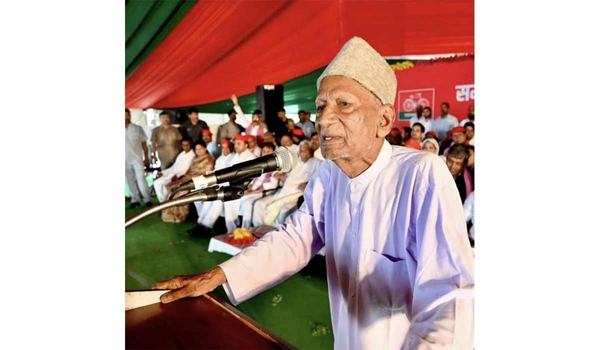
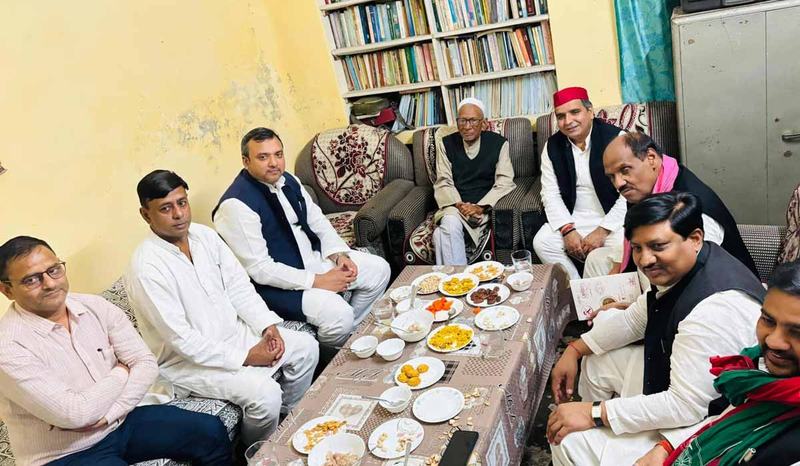
Alam Badi Azmi, the oldest serving member of the Uttar Pradesh Legislative Assembly and a five-time Samajwadi Party (SP) MLA from the Nizamabad constituency in Azamgarh district, died on July 22, 2026, at the age of 90. He was one of the longest-serving legislators from the region.
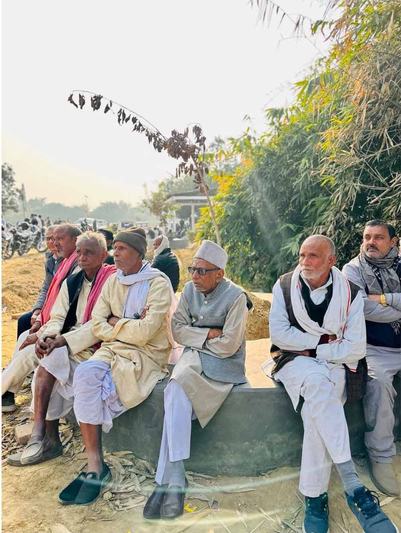
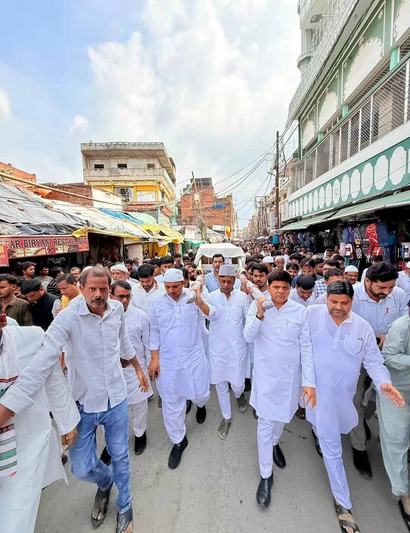
The ‘people’s leader’ breathed his last at his residence, bringing to an end a political career remembered as much for his simplicity as for his honesty and service to the people. Leaders from across parties, even the chief minister of the state, expressed profound grief over his death. Thousands of young and old supporters bid him farewell with tearful eyes, knowing well that a leader like him was a rarity.
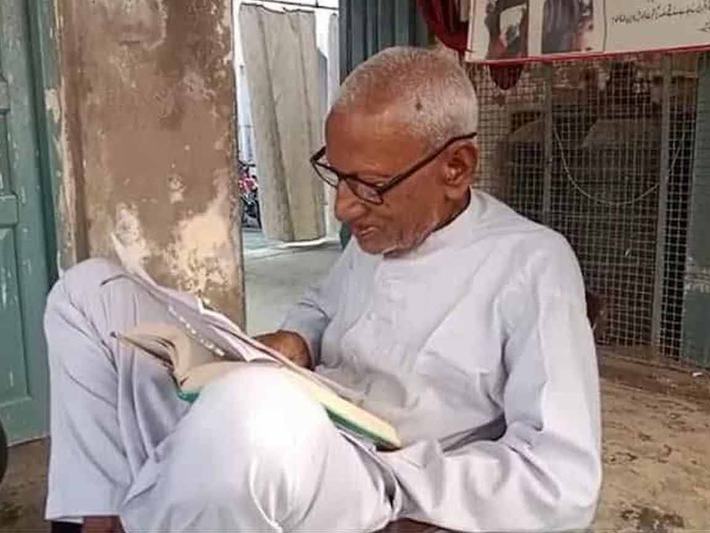
Born on 16 March 1936, much before India’s independence, Alam Badi Azmi lived through every phase of the country’s political journey. He was a trained mechanical engineer and briefly worked in his profession before dedicating himself to public life.
He was fondly called ‘Chacha’ (uncle) by all. People across parties described him as a soft-spoken, compassionate, and honest leader whose values and personal integrity earned him widespread respect. He led a humble life, choosing modesty over political spectacle.
Stories abound of his high moral principles and values. He declined a ministerial position, when SP formed government in UP in 2012, saying he preferred to remain among his people and continue serving them directly. He never believed in political showmanship. During elections, he would refuse to put up posters or banners or indulge in spending money on publicity. He believed people would vote if one worked genuinely and hoenstly. His politics was never that of power and rhetoric, it was only about social service.
He was known for personally inspecting development work in his constituency, ensuring that public money was spent fairly. On his death, a leading national daily reported, “Unlike many public representatives, he lived without security or luxury. Visitors to his home were served black tea in small cups, while his son and grandson personally attended to guests as there were no domestic staff. He met visitors under a tin-shed outside his modest house and was known to travel on foot to interact with people. His clothes were simple – made from fabric costing Rs 30 a metre. He worked for social welfare, founded the Qaumi Ekta Manch in Azamgarh and authored a book focusing on communal harmony and national integration.
On the personal front, he was a committed family man. A loving and doting father to all, including his younger siblings. My memories of childhood and our much awaited summer vacations are majorly about how ‘Bade papa’ made our stay fun-filled ensuring we were served with the tastiest food and our favourite desserts every day.
Those were the times when vacations and outings were not about foreign trips and visits to exotic tourist locales. Vacations, for our generation, was the time to be spent at grandparents’ house, for which we waited year-long, bursting with excitement as the time drew near. Those stays were not just holidays. They were workshops of humanness, giving lessons along a spectrum of emotional vulnerabilities – to learn to live with extended families, cherish bonds, co-exist through highs and lows, lend helping hands, share experiences, and most importantly remain rooted to one’s traditions.
We lost our grandparents early, so the void was filled by bade abba, whose presence as the eldest in the family was that of a permanent guardian angel. When he came back home after his day-long work, he would never withdraw to his room to rest. Instead, he would spend his time talking and eating with all. Being the youngest in our family, I had the unique privilege of getting the best treats from bade abba, who would often silently hand over a candy or cookie pack exclusively meant for me. I distinctly remember the flavour of a peanut mix, which he often got for me, humorously called by him as ‘lighting of the tongue’ because of its very spicy taste.
Sleeping on roof-top with the family through summer nights, waking up unwillingly as the Sun shone on our faces and waiting to eat the most savoury of parathas which our badi ammi (his wife) made, are memories we can never forget. Bade abba’s earnings were meagre but his heart was one of gold. Lingering around him most of the time as his favourite child, I discreetly listened to many of his conversations with badi ammi about how personal finances were to be managed with a houseful of relatives. He never made anyone realise even if it was sometimes difficult catering to everyone. Our plates were always full, our hearts always brimming with joy. Bade abba knew his art. He knew how to keep things rolling and badi ammi supported him through her immaculate household management. He was the pillar which kept the family together – uncles, aunts, cousins everyone.
A noble soul who stood with the common people in their joys and sorrows, he remained steadfast in his values and continued serving people with unflinching dedication. His humility, kindness, and commitment to public concerns earned him respect throughout the region.
He remained an active worker till his last days. Truth and simplicity were the hallmark of his personality. His grassroot politics and connect with the local public made him an extremely popular leader.
With his passing, India has lost a sincere and hardworking people’s leader, the like of whom are so rate these days. He leaves behind a legacy of selfless public service. His life and ideals will continue to inspire generations. The fact that thousands of people of all communities gathered to pay their last respects on his death, speaks volumes about his character. His admirers believe the void left by him can never be filled. His death marks the end of an era.
For me, bade abba will always remain an example of warmth and love. I can still feel his hand on my head – his unique way of blessing his children.
Hazāroñ saal nargis apnī be-nūrī pe rotī hai Badī mushkil se hotā hai chaman meñ dīda-var paidā For thousands of years, the narcissus weeps over its lack of insight, it is with great difficulty that a true visionary is born
— The author is Professor at Faculty of Management Studies & Research, Aligarh Muslim University, Aligarh. She is author of “Strategic Human Resource Management,” published by Cambridge University Press, UK.
source: http://www.milligazette.com / The Milli Gazette / Home> News> Community News / by The Milli Gazette Online / by Feza Tabassum Azmi / August 08th, 2026
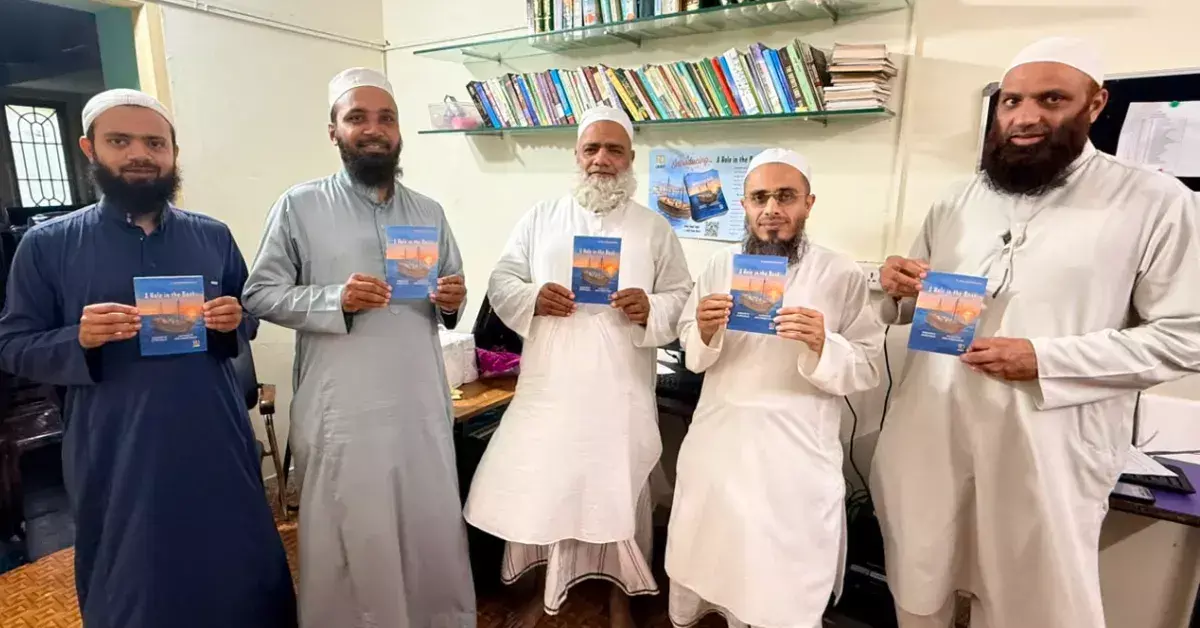
A book release programme was held at Iqra Arabic School for Girls, Melinamogeru, Mangaluru, on Saturday, August 8, marking the release of A Hole in the Boat, authored by Dr. Abdul Hameed Athar Nadwi and published by Iqra Academy of Research & Publication (IARP).
The programme was attended by Ulama, teachers, parents, students and well-wishers.
Addressing the gathering, the keynote speaker highlighted the importance of books in shaping individuals and society, observing that “a book is not only paper, not only ink, not only colour or design; it nourishes the soul.” The speaker emphasized that beneficial books play a vital role in nurturing minds, strengthening character and leaving a lasting impact on readers.
Speaking on the occasion, translator Zainab reflected on her fourteen-year educational journey at Iqra Arabic School, describing it as a period of learning, character formation and spiritual growth. She expressed gratitude to Allah and acknowledged the significant role of her parents and teachers in cultivating her interest in reading and pursuit of knowledge.
Recalling her early years, Zainab said that her father encouraged her to develop the habit of reading and introduced her to literature on Islamic morals, history, Seerah and character building. She emphasized that knowledge becomes truly beneficial when acquired under the guidance of righteous teachers and Ulama.
She also highlighted the importance of translating authentic Islamic literature into languages including English, Kannada, Malayalam, Tamil and Hindi. She noted that language barriers often prevent readers from accessing valuable works and described translation as a means of carrying beneficial knowledge from one heart to another.
Encouraging the students, Zainab urged them to aspire to become translators, authors, researchers, publishers and ambassadors of Islamic knowledge. She also called upon young people to reduce unnecessary use of mobile phones and social media and to devote at least twenty minutes each day to beneficial reading.
The programme concluded with prayers for the success of A Hole in the Boat and for Iqra Academy of Research & Publication and Iqra Arabic School to continue their efforts towards promoting beneficial knowledge, strong character and Islamic values.
Iqra Principal Maulana Salim Nadwi, Vice Principal Maulana Dawood Nadwi, Head of the Arabic Department Maulana Abdur Rafi Nadwi, Mohammed Farhan Nadwi, and Abdul Hameed Khalifa were present.
source: http://www.english.varthabharati.in / Vartha Bharati / Home> Karavali / by Vartha Bharti / August 10th, 2026
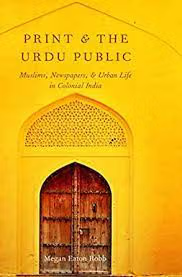
In ‘Print and the Urdu Public’, Megan Eaton Robb writes about the impact and role of popular Urdu newspaper Madinah and how it pushed back against censorship.
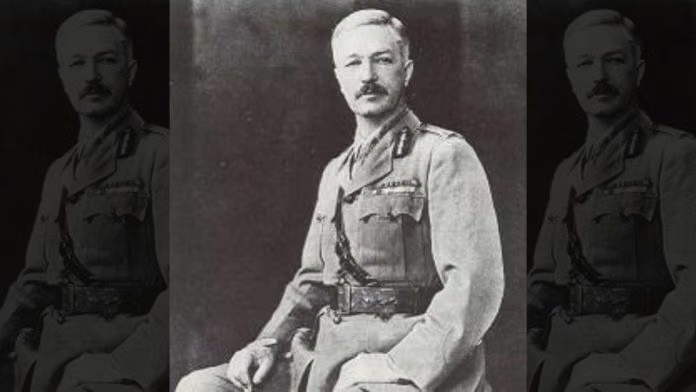
File photo | Gen. Reginald Dyer | Wikimedia Commons
Madīnah’s community of editors, subeditors, and proprietors illustrate the interconnected network of professionals working on newspapers across North India, with a shared commitment to confounding censorship laws. Editors of Madīnah were products of qasbahs and lived in Bijnor or nearby while employed by the publication. At least one assistant editor, Ḥamīd Ḥasan “Fakīr” Bijnorī (1903–1991), was a relative, having married Majīd Ḥasan’s daughter in the 1910s before he became the editor of Madinah Press’s children’s magazine Ghunchah after 1922. Ḥamīd Ḥasan would later be listed as an assistant editor from 1930 to 1935 and even take over as editor for several months when the need arose in 1945. When a new editor took over the work of Madīnah and was not already resident in Bijnor, he would move into the Ḥasan compound, which acted as the administrative office of the paper. Several small apartments attached to the main verandah, so editors could live in comfort with their families, remaining accessible to the newspaper office while maintaining privacy. Maulānā Majīd Ḥasan’s name, along with the name of the current chief editor, always appeared on the paper’s title page. At any given time there could be up to three editors of the paper, with the chief editor being referred to as “mudīr-i mas’ūl.”
Although Majīd Ḥasan’s proprietorship provided continuity for the newspaper, its different editors influenced the paper’s tone and focus. The turnover between editors could be rapid when legal troubles emerged. For instance, in 1924, when the editor Qāẓī Badrul Ḥasan Jalālī (1891–1956) was prosecuted by the British Raj for an article, he resigned his editorship, but he stepped back into his position once the dust of government scrutiny had settled. If Majīd Ḥasan attracted too much scrutiny from government surveillance, he could retreat from view behind the shadow of his prominent editors, continuing to exert the same influence behind the scenes. This allowed his outfit to survive draconian censorship measures while retaining the continuity essential to the newspaper’s success.
When he launched the newspaper in 1912, Majīd Ḥasan had little local influence. The only person of significance attached to the newspaper initially was a prominent journalist of the period, Nūr ul-Ḥasan Zahīn, who wrote for Ṣaḥīfa as well. Colonial censors initially dismissed Madīnah as a “bigoted Muhammadan organ, inclined to make trouble between Hindus and Muhammadans.” Madīnah first earned the ire of colonial administrators by criticizing the headmaster of Bijnor High School for complying with the British Educational Code. This was only the first of many encounters with censorship legislation.
April 1917 marked the beginning of Editor Mazh̤ ar ud-Dīn Shairkoṭī’s tenure, and the newspaper’s shift to publishing more explicitly political, anti-British stances. Shairkoṭī, a novelist as well as a journalist, was born in the Shairkoṭ qasbah of Bijnor in 1888. Initially educated by Maulānā ‘Abdul Qayūm Arshāq and Miyānji Sa‘ad Allah Sahib, he had attended Deoband as a pupil of Maulānā Mahmud ul-Ḥasan Asīr Mālṭā, known as Shaikh ul-Hind. After completing his education at Deoband, Mazh̤ ar ud- Dīn returned to Shairkot, where he worked on the newspaper Dastūr under the management of Ḥakīm Asrār ul-Nabī and on the newspaper Nagīnah.
Maulānā Majīd Ḥasan saw Maz̤har ud-Dīn’s affiliation with the newspaper as the beginning of a new period of commitment to the Muslim community and wrote an illustrious introduction for his new editor. Majīd Ḥasan’s message in his introduction was clear: he had brought in a power player to man the ship of Madīnah, a man who indubitably linked the paper to a network of powerful publications and individuals. The new editor transformed Madīnah into a more explicitly political entity. Maz̤har ud-Dīn associated with prominent political Muslims of the period, including Syed Ḥasan Imām, who presided over the Indian National Congress’s consideration of the Montagu-Chelmsford Reforms in Bombay in 1918. His other associates included Nawab Muḥammad Ismā’il Khān. He was, along with Khalīquzzamān, a key organizer of the UP Muslim League, and a prominent member until 1947; he remained in India after independence.
After the end of World War I in November 1918, discussions of independence and postwar reality in India began in earnest. The state of Islam, and the progress of both national and local branches of organizations such as the Muslim League and Congress, became matters of intense concern. Mohandas Karamchand “Mahātmā” Gāndhī (1869–1948) featured in several articles musing on the way forward for political Muslims. In addition, discussions of the fall out of World War I in Turkey and the caliphate took center stage. Under Mazh̤ ar ud-Dīn’s leadership, the newspaper emphasized the connection between the fate of Indian Muslims and of those in Turkey and other nations with significant ties to Islam.
Mazh̤ ar ud-Dīn presided over Madīnah’s publication of an article critical of the government’s role in the Jallianwallabagh massacre, which led to a dramatic conflict with the British Raj. In April 1919 Madīnah published an article criticizing Lieutenant Governor Sir Michael O’Dwyer’s (1864–1940) endorsement. Putting Madīnah on the Muslim Map of the actions of Colonel Reginald Dyer, who had overseen the disproportionate response at Jallianwallabagh. The article minced no words:
His honour O’Dwyer’s government of Panjab, from the very beginning, kept as the foundation of its policy a despotic course of action [ . . . ] This was his honor O’Dwyer’s last period of government; therefore it was necessary that he make amends for his past course of actions. This was the time when, instead of extinguishing the fire with the water Of gentleness and kindness, he inflamed the hearts of the ahl-i Punjab. Perhaps it could be said that he did not put out the fire with water, but instead doused it with oil. If that were not the case, then why would he at the conclusion of his reign, give orders that were so repellent, so far from resembling affection that they approximated hate?
It was actually illegal at this point in time to question the motives of the colonial government; thus, the final statement of the quotation accusing O’Dwyer of “hate” fell afoul of censorship laws. The government banned Madīnah from circulating in Punjab as a result of this piece. Mazh̤ arud-Dīn and Majīd Ḥasan’s response was defiant: in August 1919 they renamed the newspaper Yasrab, an Arabic synonym of Madīnah, as a bid to evade censorship.64 On the cover of each issue of Yasrab an Iqbal couplet appeared, a knowing wink to its readership base:
The dust of Madinah is better than both worlds. How wonderful is the city where the beloved is.
Khāk-i yas̱rab az do ‘ālam khūshtar ast Ā’e khunak shahre ke ānjā dilbar ast.
The couplet hinted at the paper Yasrab’s true identity, offered praise for the paper’s unpretentious popularity, and emphasized the link between the newspaper and the city Madīnah. Madīnah’s proprietor and editors were men who wore their few educational laurels lightly. More important than formal education was the ability to use that knowledge in the service of Indians generally and Muslims particularly. Unsurprisingly, the attempt at flouting the circulation ban was quickly detected. The paper reverted back to the title Madīnah after a few weeks, and the ban on circulation was lifted eventually.66 Madīnah was a space offering a figurative point of access to the community of Islam, the qaum, and it was a space increasingly under siege of colonial censorship laws.
Madīnah had been only one of many significant voices in the press commenting on the Jallianwallabagh fiasco. As the UP fortnightly report complained, “[The] occurrences in the Punjab [ . . . ] practically absorbed the entire attention of the press.” Along with Madīnah/Yasrab, the British excluded from Punjab al- Khalīl of Bijnor, The Independent of Allahabad (a Nehru paper), Hamdam and Akhuwat of Lucknow (Farangi Mahalli papers), Swadesh of Gorakhpur, and Amrita bazar patrika of Calcutta. The government demanded securities, or large sums of money as surety against future crimes of sedition, from papers in Bengal, Nagpur, Lucknow, and Madras. Madīnah’s inclusion in this censorship was a testament to its growing influence; its subterfuge demonstrated a growing sense of urgency in its mandate to reach readers and an emerging resolve to flout British restrictions.
In the 1920s, Madīnah focused on coverage of the Muslim League and the Indian National Congress, showing a preference for Congress.
It was per- haps Maz̤har ud-Dīn’s affection for the League that motivated him ultimately to resign from Madīnah in 1921. It is also possible that Mazh̤ ar ud-Dīn’s taste for politics pulled him closer to Delhi and toward the League after the political awakening accompanying the Khilafat Movement.
It was common for editors to move around among different qasbah-based newspapers, and after leaving Madīnah, Mazh̤ ar ud-Dīn joined Munshī Safīr Aḥmed’s Naginah-based paper Almān as its first editor; he was instrumental in relocating that paper to Delhi. He later became close to the leadership of the All-India Muslim League, including Muḥammad ‘Alī Jinnāh. In the 1930s he founded a paper entitled Vaḥdat (Unity) in order to assist the propagation of Muslim League ideals. When Maulānā Shabbīr Aḥmed ‘Usmānī, a Deobandi who supported the creation of Pakistan, resigned from the pro-Congress Jam‘īat ‘Ulamā and declared his allegiance to the Muslim League and Jinnah, he did so from Mazh̤ ar ud-Dīn’s office. This demonstrated Madīnah was one node in an important network of political power and publishing prestige in this period and had to make considered choices when it came to balancing shifting political alliances.
This excerpt from Print and the Urdu Public: Muslims, Newspapers, and Urban Life in Colonial India has been published with special permission from Oxford Univerity Press.
source: http://www.theprint.in / The Print / Home> Page Turner> Book Excerpts / by Megan Eaton Robb /May 15th, 2021
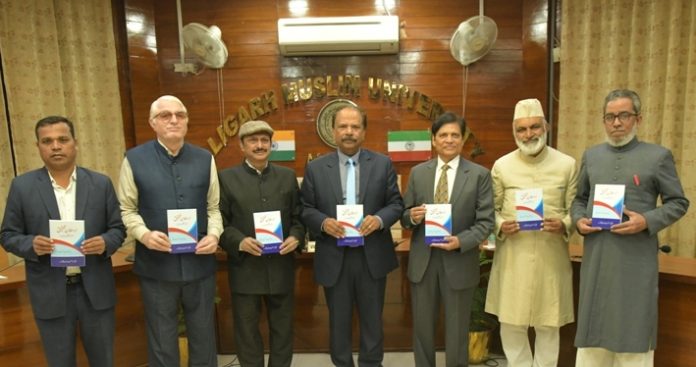
Prof Mohd Gulrez with Prof AR Kidwai, Prof Tariq Chahtari, Prof Siraj Ajmali and others releasing the book of Prof Zia ur Rahman
Aligarh :
Professor Mohammad Gulrez, Vice Chancellor, Aligarh Muslim University released “Armughan-e-Tehqeeq”, a book written by noted Urdu writer and critic, Professor Ziaur Rehman Siddiqui, Department of Urdu, Aligarh Muslim University.
Prof AR Kidwai, Director, Centre for Quranic Studies, AMU, Professor Tariq Chhatari, Professor Mushtaq Ahmed Zargar, Professor Syed Sirajuddin Ajmali and Mr. Tahir H. Pathan were present on the occasion.
Professor Ziaur Rehman Siddiqui has published 20 books, including the History of Urdu Literature, Urdu-Hindi Dictionary and translation of Ruskin Bond’s stories in Urdu, etc.
source: http://www.radiancenews.com / Radiance News / Home> Review Article> Book Review>Latest News / by Radiance News Bureau / March 06th, 2024
Supreme Court Gives Relief to IPS Officer Abdur Rahman, Asks Centre to Revisit VRS Rejection.
New Delhi:
In a significant ruling, the Supreme Court has set aside the Union Home Ministry’s decision rejecting the voluntary retirement request of former Maharashtra cadre IPS officer Abdur Rahman and directed the Central Government to reconsider his application afresh within three months.
A Bench comprising Justice P.S. Narasimha and Justice Alok Aradhe held that the Centre had failed to adequately examine the complaints and disciplinary issues cited while rejecting Rahman’s Voluntary Retirement Scheme (VRS) application in 2019.
The court’s decision comes after a prolonged legal battle initiated by Rahman, who had sought voluntary retirement from the Indian Police Service in August 2019 but was denied permission by the government due to pending disciplinary proceedings and complaints against him.
Supreme Court Sets Aside 2019 Rejection Order
Abdur Rahman had submitted a notice seeking voluntary retirement under Rule 16(2A) of the All India Services (Death-cum-Retirement Benefits) Rules, 1958, in August 2019.
The Ministry of Home Affairs subsequently rejected the request on October 25, 2019, citing pending complaints and disciplinary matters.
Allowing Rahman’s plea, the Supreme Court observed that the Central Government had not undertaken a detailed examination of the complaints before rejecting the VRS application.
“In view of the above discussion and analysis, we are of the opinion that the Central Government has not examined the complaints in detail before taking the decision dated October 25, 2019, of not accepting the notice for voluntary retirement,” the Bench noted.
The Court directed the Centre to reconsider the request in light of all available material and take a fresh decision within three months.
Court Asks Centre to Consider Subsequent Charge Sheets
The Supreme Court also took note of developments that occurred after the original rejection order.
The Maharashtra Government subsequently issued charge sheets against Rahman in three separate matters, including a 2022 case linked to his participation in protests against the Citizenship Amendment Act (CAA).
However, the Court observed that despite the passage of several years, disciplinary proceedings in these cases had not reached a conclusion.
Taking this into account, the Bench directed the Central Government to evaluate both the original complaints and the subsequent disciplinary proceedings while reconsidering the VRS application.
The Court stated that the inability of the authorities to conclude disciplinary proceedings despite the passage of time was an important factor that warranted a fresh review of the matter.
Complaints Against the IPS Officer
According to records placed before the Court, Rahman faced multiple allegations during his service.
These included:
Allegations of torturing a person in 2014.
Contracting a second marriage in 2016 without obtaining the consent of his first wife.
Delivering a public speech in 2019 allegedly in violation of service conduct rules.
Subsequent disciplinary proceedings related to his participation in anti-CAA protests.
The Court did not examine the merits of these allegations but emphasized that the Centre must properly evaluate all relevant facts before arriving at a decision on his retirement request.
Who Is IPS Officer Abdur Rahman?
Abdur Rahman is a former 1997 batch Indian Police Service (IPS) officer of the Maharashtra cadre who served the state police force for more than two decades before emerging as a prominent public voice on issues related to governance, constitutional values, minority rights, and social justice.
Born on January 8, 1973, in West Champaran district of Bihar, Rahman comes from a farming family.
Educational Background
Rahman completed his schooling at Bipin High School in Bettiah and later pursued higher studies in Patna.
He graduated with a Bachelor of Technology (B.Tech) degree in Civil Engineering from the Indian Institute of Technology (IIT) Kanpur in 1995 before qualifying for the Civil Services Examination.
Career in the Indian Police Service
Rahman joined the Indian Police Service on September 7, 1997, and was allotted the Maharashtra cadre.
Over a policing career spanning more than 22 years, he held several important assignments across Maharashtra.
His major postings included:
Assistant Superintendent of Police, Latur
One of his earliest assignments after joining the service.
Superintendent of Police
He served in districts such as:
Dhule
Yavatmal
Chandrapur
During his tenure in Dhule, he reportedly led several anti-dacoity operations targeting criminal gangs operating along national highways.
Principal, Police Training School, Solapur
Rahman later headed the Police Training School in Solapur, contributing to police training and capacity building.
Additional Commissioner of Police, Pune
He served as Additional Commissioner of Police (Administration) in Pune City Police.
Inspector General of Police
His final posting in service was as Special Inspector General at the Maharashtra State Human Rights Commission (MSHRC).
Resignation During Citizenship Amendment Act Protests
Rahman gained national attention in December 2019 after publicly opposing the Citizenship Amendment Act (CAA).
On December 11, 2019, shortly after the Citizenship Amendment Bill was passed in Parliament, he announced his resignation from service, describing the legislation as unconstitutional and discriminatory.
He stated that his decision was an act of “civil disobedience” and a protest against what he viewed as a threat to India’s pluralistic and secular character.
However, by that time, his earlier request for voluntary retirement was already under consideration and later became the subject of legal disputes.
Long Legal Battle Over Retirement Status
Following the rejection of his VRS application, Rahman challenged the government’s decision before judicial forums.
The dispute continued for several years, creating uncertainty regarding his formal separation from government service.
The Supreme Court’s latest order does not automatically grant voluntary retirement but requires the Central Government to reassess the application and take a reasoned decision after examining all relevant facts and subsequent developments.
Author, Public Speaker and Social Activist
After stepping away from active policing, Rahman increasingly focused on public engagement, research, and writing.
He has authored several books examining issues related to governance, social inclusion, and political representation.
His notable works include:
Denial and Deprivation: Indian Muslims after the Sachar Committee and Ranganath Mishra Commission Reports
A study examining socio-economic challenges faced by Indian Muslims.
Absent in Politics and Power: Political Exclusion of Indian Muslims
An analysis of minority representation in political institutions.
Communal Crimes and National Integration
A work exploring governance, communal harmony, and national integration.
Brief Foray into Electoral Politics
Ahead of the 2024 Lok Sabha elections, Rahman briefly entered electoral politics.
He was announced as a candidate for the Dhule parliamentary constituency by the Vanchit Bahujan Aghadi (VBA), led by Prakash Ambedkar.
However, legal uncertainty surrounding his retirement status reportedly affected his candidature, and he did not emerge as a major electoral contender.
What Happens Next?
Following the Supreme Court’s ruling, the Ministry of Home Affairs will now be required to conduct a fresh examination of Abdur Rahman’s voluntary retirement application.
The Centre has been given three months to take a final decision after considering the original allegations, subsequent charge sheets, and the prolonged pendency of disciplinary proceedings.
The outcome of the review will determine whether Rahman’s long-pending request for voluntary retirement is finally accepted or rejected once again after detailed scrutiny.
source: http://www.indianmasterminds.com / Indian Masterminds / Home> News> IPS>News / by Indian Masterminds Bureau /June 03rd,2026
Can a stable and just democracy flourish on foundations of wilful amnesia and erasure?
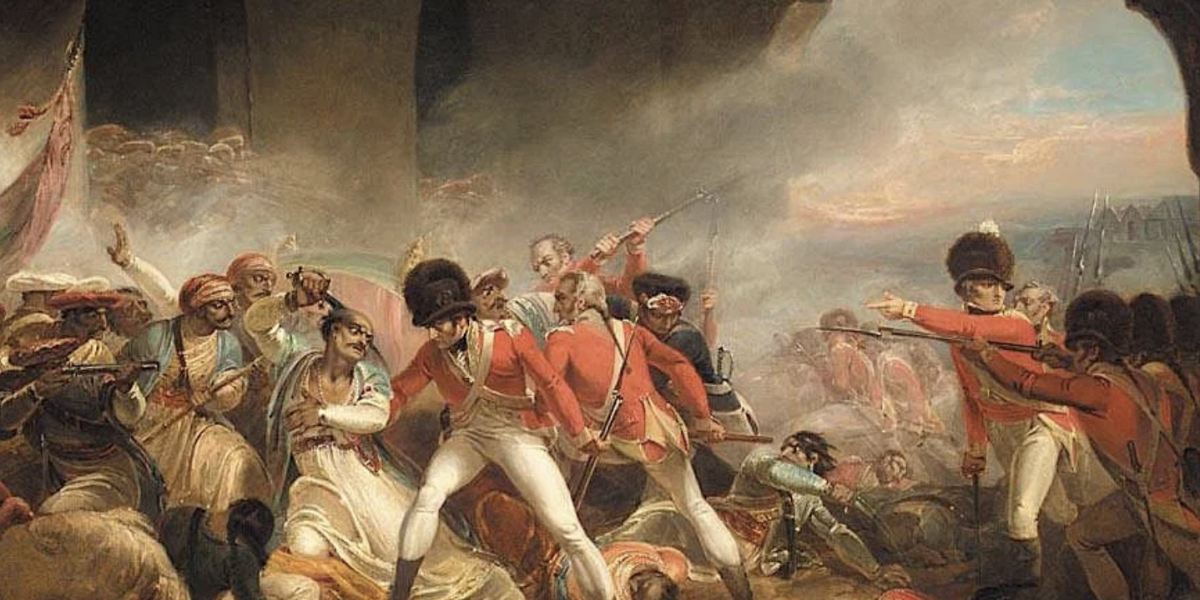
A c. 1800 painting showing the last stand of Tipu Sultan, ruler of Mysore in 1799 at the end of the Anglo-Mysore Wars with the East India Company. Photo: Henry Singleton/Public domain.
Many will ask why a book about Muslims who fought for India’s freedom? There’s no answer to such questions except another question. Had we been better memory keepers as a nation, could we have avoided the peak disinformation and stupidity which normalises reviling ordinary Muslims as outsiders, infiltrator and insurgents?
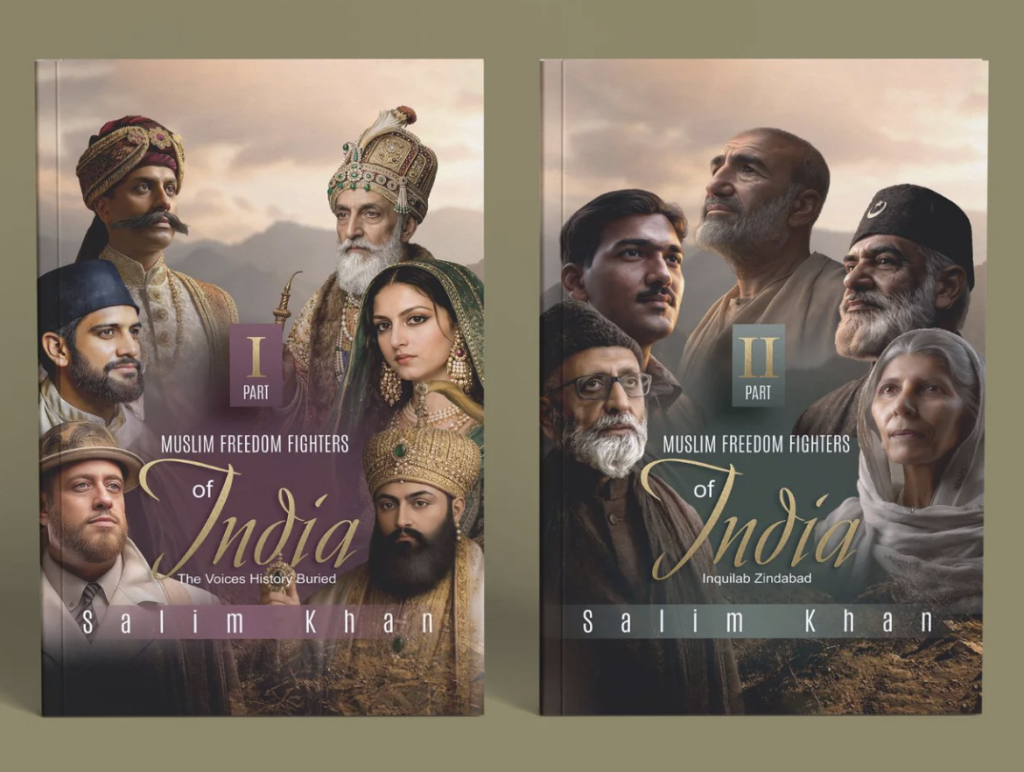
Muslim Freedom Fighters of India is a two-volume biographical compilation by Salim Khan on less-known, mostly forgotten and hardly known Muslim figures. The books aim to clear the fog around Muslim freedom fighters whose names are heard of without them being extensively known and this requires us to understand why this fog exists. Written in an extremely readable and accessible format, these biographical accounts embed the historical figures in the context of their times, responding to unprecedented events with foresight, clarity and conviction that sealed their fate and shaped and the nation’s destiny.
Whether we are reading about Generals of 1857 – Bakht Khan and Khan Bahadur Khan – or the Cambridge-educated Rampur scion Mohammad Ali Juahar of Khilafat moment and his fiery mother Bi Amma, the larger questions seething beneath the stories keep rising to surface. Who does a society and nation choose to remember and celebrate? Whose memories are deemed worthy of preserving? History is always shaped by those who control archives, narratives and memorialisation and hence memory.
Reading about Tipu’s dazzling reign through the three Anglo Mysore wars where he proved superior to British forces, I was reminded of the controversy sparked by the late Girish Karnad’s suggestion of naming the Bengaluru airport after Tipu Sultan. Karnad had said, “It is true that Tipu Sultan was not born in Bengaluru, but he was a son of this soil and a freedom fighter. Had Tipu been a Hindu, he would have achieved the status of Shivaji, and the airport would have been named after him.” I recalled Karnad because his play Dreams of Tipu Sultan echoes the same theme that this two-volume tribute to erased, obscured and deliberately unremembered historical figures echoes: that when politics lays down who should be forgotten, remembering the erased becomes a duty, an affirmation and a political act.
It is important to clarify that this is not a compilation of eulogies but well-researched fact based account of people who had the uncommon clarity to resist colonial domination even before the nationalistic narratives took shape. That they happened to be Muslims is important today because of the distortions that have obscured and erased them. But back then when they fought and resisted, they were simply rallying for the cause of their soil and their watan. From the earliest times they understood that freedom from foreign domination required Hindus and Muslims to put up a united front as in the war of 1857, the Khilafat movement, and the period between 1919 and 1924. Back then too, traitors cut across religious lines – Jagat Seth, Mir Jafar, and Ilahi Baksh.
Muslim Freedom Fighters of India: Part 1 and Part 2’, Salim Khan, Qalam Aur Kaagaz Books.
From Siraj ud Daulah to Tipu to Shahzada Firoz Shah, the book shows how the fog around these personalities is not accidental but meticulously designed – initially by the colonial mind, then picked up by early nationalists and woven into simplistic narratives. The macabre dance of history further stifled Muslim voices. Cataclysmic events like the ‘end’ of the Mughal Dynasty in 1857 and the Partition in 1947 sundered clans, erased family histories, legacies crumbled with no one is around to defend and uphold them. Today, even people who don’t know history have heard of Lakshmi Bai, but many who read history may not have heard about Shahzada Firoz Shah, the Mughal Emperor’s grandson who in August 1857, led a band of armed soldiers to rally the rebels in Rohilkhand and Malwa and who fought alongside Tatia Tope and called for a united Hindu-Muslim front against the Company.
The British understood the dangerous potential of popular memory and subverted any potential for memorialisation of hugely influential figures. No one knows if Shahzada Firoz died in battle or escaped to West Asia. The Maulavi Ahmadulla of Faizabad whose authority and fearlessness scared the British so much that they kept a reward on his head, was likewise interred in an unmarked grave. Knowing that even his memory could become a node to unite the rebels, the British saw to it that no commemoration was permitted or possible. Zafar, the last Mughal was exiled to Rangoon for the same reasons.
In her book, India, 5,000 years of history on the subcontinent, Audrey Truschke, elucidates how Muslim rulers like Nawab Siraj ud Daulah and Tipu Sultan to Zafar felt a responsibility for their subjects no matter what their religion. For example, Siraj ud Daulah actively intervened in times of famines and drought in Bengal. But after the British took over they did nothing to alleviate human suffering, so that 20% of Bengal’s population died in the famine of 1768 and the small-pox epidemic of 1769-70 following it. This had never happened during earlier episodes of failed harvests. Truschke says, British historians initiated the custom of categorising Indian rulers as tyrannical, effete and incompetent, reducing them to their religion and writing in terms of Hindu rulers and Muslim rulers. The British needed to demonise Muslim rulers who were their immediate predecessors in subcontinent so that they might look good by comparison, Truschke notes. It was a part of the colonial propaganda.
Another pattern Salim Khan’s compilation brings out is that from mid-18th century onwards, the first responders and the most committed crusaders resisting colonial domination – the kings, queens, princes, preachers, noblemen – were Muslims. Not only because the British had wrested from them the power they had wielded for centuries (howsoever fragmented or diluted it may have become); but also, because they were looked upon as leaders. In Awadh, for example, the Shia elite took it as their moral-ethical duty (see Chapter 7, volume I: Shia Ullema and Noblemen of Awadh)
Even in the 20th century, Muslim freedom fighters like Hasrat Mohani of the Inquilaab Zindabad fame and Asfaqullah Khan of the Kakori conspiracy who was an icon for Bhagat Singh, remain in the shadows, seen only in a hazy half-light. Were their contributions any less or only less remembered? One of the most important projects post-Independence should have been to restore memory and affirmation to those whom the British put on the wrong side of history, no matter what their religion or caste. But we know this is not what happened.
Since the arrival of the political controversy over Tipu Sultan, we have entered in an era of deliberate distortion of history. The larger question that these accounts refrain from asking but that jumps to any thinking person’s mind is this: can a stable and just democracy flourish on foundations of wilful amnesia and erasure? Should the memory of Muslim freedom fighters be kept only by the Muslims? The heritage and memory of Indian Muslims needs to be reclaimed by them. But equally, these volumes are required reading for the casually miseducated, hopelessly disinformed or simply ignorant Hindus who have been stupefied into denying and distorting their composite history.
Varsha Tiwary is a Delhi-based writer and translator. She has recently published 1990, Aramganj a translation of the best-selling Hindi novel Rambhakt Rangbaz.
Seohar Town (Bijnor District), BRITISH INDIA / NEW DELHI :
For too long, a handful of names have dominated the history of the years leading up to 1947 with Gandhi, Nehru, Jinnah, Patel being the most-often cited.
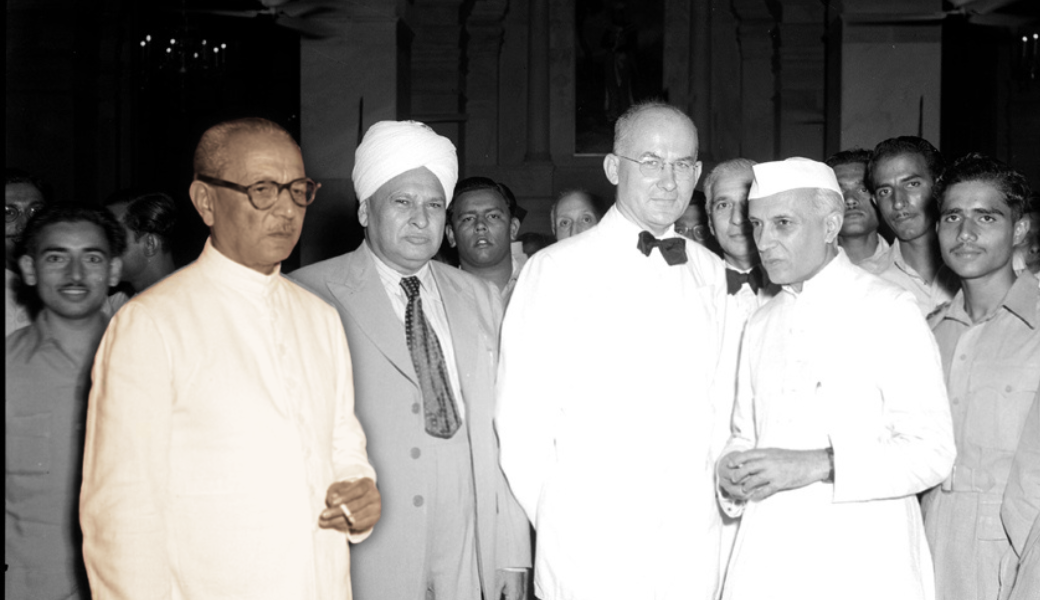
Pandit Jawaharlal Nehru and others at Governor-General‘s Dussehra reception held at Government House, New Delhi on September 29,1949. At extreme left is Asaf Ali, the then Governor of Orrisa. Edited via Canva. Photo: Photo Division, Govt. of India
For several years I worked in a publishing company situated on the bustling Asaf Ali Road, a road that serves as a cordon sanitaire between the squalor of Old Delhi and the (relative) order of New Delhi. Once an important business hub, by the time I went to work there in the late 1980s, this long stretch of colonnaded corridors with a warren of densely-packed offices wore an unmistakably grubby, down-at-heel look. At the head of the road, stood the statue of Asaf Ali in a derelict enclosure near Delhi Gate (or Dilli Gate as the locals pronounced it). The dark statue, generously speckled with startlingly white droppings from the many pigeons that frequent this neighbourhood, looked forlorn, especially so with the shervani-clad, bespectacled figure standing with hands clasped in a peculiarly supplicatory posture.
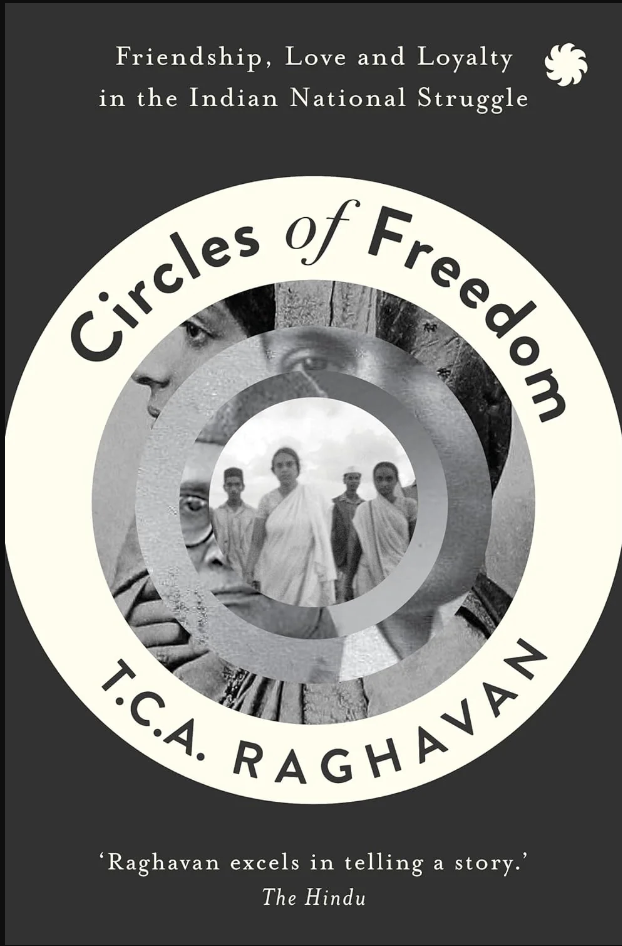
TCA Raghavan, Circles of Freedom: Friendship, Love and Loyalty in the National Freedom Struggle, Juggernaut (2024)
I must confess that in the four years I worked at Asaf Ali Road and passed this statue twice a day, morning and evening, it evoked no curiosity in me and I knew virtually nothing about Asaf Ali. Perhaps, his wife Aruna Asaf Ali’s name seemed more familiar given that she was still alive and active. I suspect I was not alone in this. For most people in Delhi, Asaf Ali is a forgotten footnote from long-ago history lessons, one of the many ‘obscure’ people who were part of the national freedom struggle. If the situation is so dismal in Delhi, where he had lived and worked, a city that had been home to his ancestors, I suspect it can only be worse in the rest of the country.
In writing Circles of Freedom: Friendship, Love and Loyalty in the National Freedom Struggle, TCA Raghavan corrects an old wrong. For far too long the tall poppies of the freedom movement have overshadowed the countless others who devoted their entire lives to the cause of independence and struggle against colonial rule. For too long, a handful of names have dominated the history of the years leading up to 1947 with Gandhi, Nehru, Jinnah, Patel being the most-often cited.
Over the past decade, with history being rewritten by new, dominant players, new names are being invoked and icons fashioned from often slender resources. In this unseemly clamour for space and recognition, some names have almost slipped through the crevices of the popular imagination, neglected and overlooked by the professional historian or, at best, relegated to the lowest rungs in a carefully crafted hierarchy of heroes. A park or a road named after the lesser-known evokes neither curiosity nor interest in their lives and the place they occupied in the shaping of a young nation. Asaf Ali (1888-1953) is one such person.
Raghavan’s book, however, is not a straightforward biography for it is not about Asaf (as the author calls him) alone. Instead, he chooses to tell his story through five protagonists who were inextricably tied by the threads of friendship and solidarity: Asaf Ali, Sarojini Naidu, Syud Hossain, Syed Mahmud and Aruna Asaf Ali. While Aruna enters this narrative quite late when she marries the much older Asaf, the other four meet in England just before the Great War where the three men have gone to study and Naidu, recuperating from an illness, is the erudite diva, eloquent poet, ardent nationalist and a veritable magnet for impressionable young men dreaming impossible dreams.
Over the next four decades, they meet, write long letters to each other, take a lively interest in each others’ lives and careers but ‘what gave meaning to their lives,’ as Raghavan notes in his conclusion, ‘was the great enterprise they chose to become part of’. And so it was the freedom struggle that not just formed the core of their relationship but also, in effect, shaped their lives. Were it not for this one singular, overwhelming zeal to seek freedom for their country, they could very well have lived other lives: Naidu would have remained a dulcet-voiced poet, both Asaf and Mahmud successful and wealthy barristers, Hossain a journalist and Aruna a do-gooder with no special qualifications. But such were the exigencies of the times that all five were caught up in different ways and different degrees with the national freedom struggle and that singular ‘great fight’ defined their lives.
With three extremely well-received books behind him – Attendant Lords: Bairam Khan and Abdur Rahim – Courtiers and Poets in Mughal India, The People Next Door: The Curious History of India’s Relations with Pakistan and History Men: Jadunath Sarkar, G. S. Sardesai, Raghivir Sinh and Their Quest For India’s Past – Raghavan, a former diplomat, can recreate history with the aplomb of a master story-teller and the meticulousness of a professional historian. Here, he weaves the events of the tumultuous years leading up to Independence with the lives of his five principal characters, keeping Asaf at the centre of his concern. Through Asaf, he teases out the nuances and dilemmas of the moderate Muslims in India who refused to be enamoured by the lures and promises of the Muslim League and remained steadfast in their devotion to the Congress and, by extension, Nehru.
The extreme deference that the nationalist Muslim leaders displayed towards Nehru is noted; each time a Muslim leader attempted to bring the ‘communal problem’ to Nehru’s notice, the latter would brush aside these concerns by saying, ‘The real problem is a political problem – the conflict between an advanced organisation like the Congress and a politically reactionary organisation like the League.’ Concerns of leaders such as Asaf who believed ‘self determination was preferable to a union that was forced’ were disregarded. Mindful of the suspicion that Muslim leaders within the Congress evoked amongst their colleagues, Raghavan notes, ‘Because he was a Muslim, the impression among some was that he was a fifth columnist for the League’. The coming of independence didn’t make it any easier for those Muslims who chose to stay on in India. Nationalism increasingly began to mean thinking and living in the Congress way and none other. Those who lived or thought another way came to be regarded as anti-national, a phenomena we see repeated in the New India that is Bharat, except that it is the ruling Bharatiya Janata Party that has replaced the ideological hegemony of the Congress.
Different readers will possibly take different things from this book: the broad brush strokes that delineate milestone moments from modern Indian history, Gandhi’s irresistible call to Quit India, the unfurling of the national flag at Gowalia Tank by a young Aruna that catapults her to national fame, the detailed account of jail-life for a group of high-profile, political prisoners inside the Ahmadnagar fortress, a meticulous dove-tailing of accounts from different sources and disparate perspectives to create a bright, colourful and immensely readable patchwork quilt of modern Indian history, and much else in this engrossing book.
I, however, was left with an ineffable sadness and a sense that the more things change, they remain the same – at least for India’s Muslims. Despite his many sterling qualities of heart and mind, despite a fine legal education, Asaf neither made a mark as a lawyer or a politician. Though seemingly destined for greatness, having aided fate by preparing himself assiduously for a life devoted to the larger good, Asaf never quite scaled the heights he aspired to. The few successes that came his way, such as a seat in the Constituent Assembly (from Delhi) or fighting high-profile cases such as those of Bhagat Singh or Shaikh Abdullah, were marred by controversy or a smaller share in the limelight than he felt he deserved. The mantle of statesmanship that should have fallen on him with the passing of Dr Ansari and Hakim Ajmal Khan, both national leaders from Delhi like him, and a seat at the high table that should have been offered to him as a veteran Muslim leader, did not happen.
Given the price paid by far taller leaders in the Congress – such as C. Rajagopalachari and Bhulabhai Desai – for showing initiative and thus offending the party high command, shows the extent to which the Congress, not unlike the League, was becoming a personality-dominated organisation. Asaf’s case was compounded – to use a modern expression – by the optics; his timorousness, his ‘going to pieces’ fretting with worry over his wife during his long years of incarceration, his marital woes, the shadow of mistrust and suspicion that clung to him all his life combined to create a persona that failed to inspire confidence.
For all his loyalty to Nehru, Asaf was not chosen for any cabinet position or placed on any important committee. Instead, he was sent as Ambassador to Washington, brought back to serve as Governor of Orissa and then sent again as Ambassador to Sweden where he died barely a few months into his tenure.
Just as being a moderate Muslim defined Asaf’s public persona, so did his marriage to Aruna. From a political novice she rapidly transformed into a stormy petrel causing immense anxiety, consternation and eventually a sadness in her husband. Raghavan is to be credited for staying steadfastly away from prurient gossip and portraying the changing contours of the marriage objectively: ‘… in fact the relationship had started changing quite early in the marriage and here Aruna’s own political journey was the driving factor.’ Reading between the lines of Raghavan’s carefully crafted text, one picks up the whiff of misogyny in the higher echelons of our national leadership. While acknowledging Aruna’s bravery and patriotism, Gandhi saw her as a ‘perpetual rebel’ and Nehru went so far as to call her ‘hysterical’ on one occasion – something Aruna never forgot.
Incidentally, Gandhi, who was vehemently opposed to inter-religious marriages and had opposed his son Manilal’s relationship with Fatima (a Gujarati Muslim) and Hossain’s alliance with Nehru’s sister Sarup Rani (later known as Vijay Lakshmi Pandit), endorsed Asaf’s marriage to Aruna. Read Circles of Friendship to find out why.
Rakshanda Jalilis a Delhi-based writer, translator and researcher.
source: http://www.thewire.in / The Wire / Home> Books / by Rakshanda Jalil / August 29th, 2024
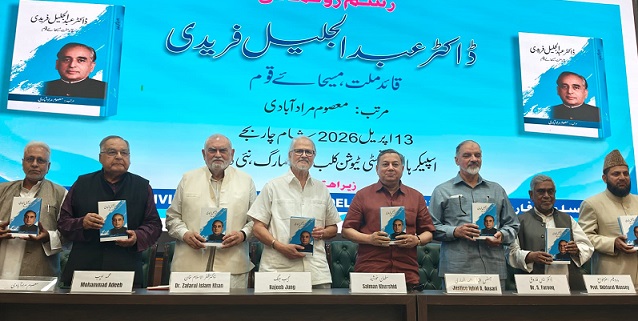
An impressive book launch ceremony was held at Constitution Club here to mark the release of a new book titled ”ڈاکٹر عبد الجلیل فریدی: قائدِ ملت، مسیحائے قوم“ “Dr. Abdul Jalil Faridi: Leader of the Community, Healer of the Nation,” compiled by senior journalist and author Masoom Moradabadi. The event was organized in collaboration with the Indian Muslims for Civil Rights.
The function was presided over by former Member of Parliament Mohammad Adeeb, while former Lieutenant Governor of Delhi Najeeb Jung attended as the chief guest. The book was formally released by Zafarul Islam Khan, President of the All India Muslim Majlis-e-Mushawarat, along with other distinguished dignitaries.
Among the guests of honour were former Chief Information Commissioner Wajahat Habibullah, former Chief Justice of Patna High Court Justice Iqbal Ahmed Ansari, Member of Parliament Maulana Mohibbullah Nadvi, Padma Shri awardee Akhtarul Wasey, and Dr. S. Farooq. The programme commenced with a recitation from the Holy Quran by Maulana Mohibbullah Nadvi.
Conducting the proceedings, Masoom Moradabadi noted that biographical writing has long been his passion and that he has authored sketches of hundreds of personalities. He explained that while substantial material on Dr. Faridi already existed, the book aims to present fresh insights by drawing upon extensive research conducted across multiple libraries. The work brings together Dr. Faridi’s speeches, writings, and ideas, including an Urdu translation of his historic address delivered at the National Integration Council.
Moradabadi highlighted that nearly 150 pages of the book are devoted to a comprehensive account of Dr. Faridi’s vision, mission, struggles, and contributions.
Speaking on the occasion, Zafarul Islam Khan recalled that during his childhood, Dr. Faridi was widely regarded as one of India’s foremost specialists in tuberculosis, who dedicated his life to the service of the nation and the community. Referring to the early days of the Majlis-e-Mushawarat, he noted Dr. Faridi’s prominent role and his consistent advocacy for strengthening the collective position of Muslims as a community.
In his address, Najeeb Jung reflected on the challenges faced by Muslim leadership in post-Independence India, stating that their political dependence on the ruling establishment often constrained their ability to speak freely. He observed that while leaders engaged with riot-affected areas and participated in various commissions, they struggled to effectively articulate community concerns. According to Jung, Dr. Faridi recognized this gap and stressed the need for an independent organization capable of engaging the government without fear.
In his presidential remarks, Mohammad Adeeb stated that independent India has yet to witness a leader of Dr. Faridi’s stature. He expressed regret that such a significant figure has largely been forgotten and congratulated Masoom Moradabadi for compiling the book, expressing hope that it would usher in a renewed interest in the life and legacy of Dr. Faridi.
Prof. Akhtarul Wasey shared his personal experiences of learning directly from Dr. Faridi, emphasizing that he taught the importance of presenting Muslim concerns as national issues rather than sectional ones.
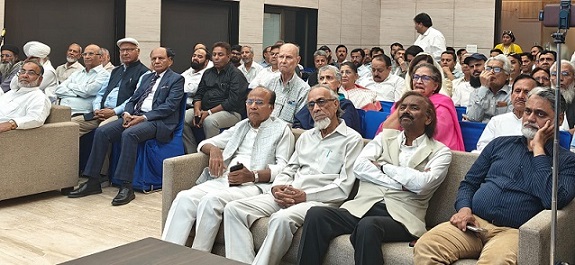
Other speakers, including Justice Iqbal Ahmed Ansari, Wajahat Habibullah, and Dr. S. Farooq, also shared their views. The event was attended by several prominent personalities, including M. Afzal, Qurban Ali, Saleem Qidwai, Khalid Siddiqui, Shabih Ahmad, Imran Qidwai, Dr. Zaheer Ahmad, Prof. Mohsin Usmani, Prof. Khalid Mahmood, and Dr. Syed Ahmad Khan, among others.
source: http://www.theindianawaaz.com / The Indian Awaaz / Home> Books> Qaumi Awaaz /by Staff Reporter, Indian Awaaz / April 13th, 2026