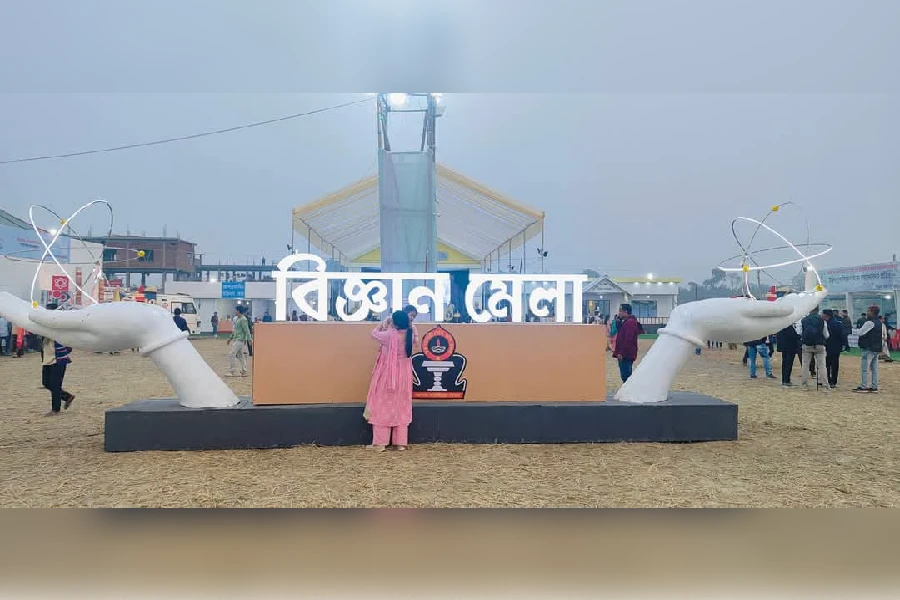
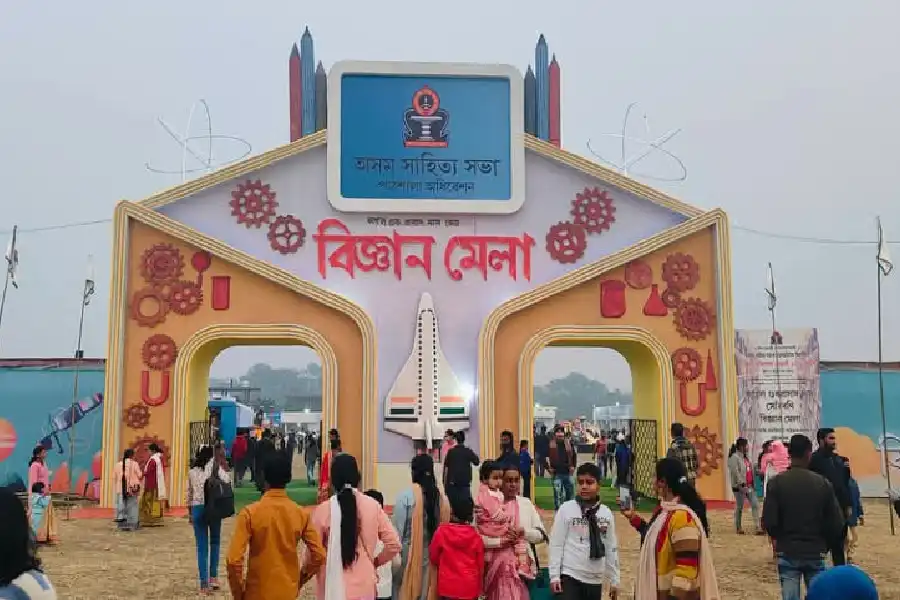
Nuruddin Ahmed standing in front of the arch of Science Fair
Two decades ago, Nuruddin Ahmed created a stir by bringing the sinking of the Titanic to life on stage in live theatre.
Over the years, he has also brought to life the 5,000-year-old Maya civilization and Indraprastha, the capital of the Pandava kingdom from the Mahabharata, in Durga Puja mandaps.
A National Award-winning sculptor and art director, Ahmed is currently leading the Pathsala session of the Assam Sahitya Sabha. He has previously made headlines for displaying models of iconic structures like the Taj Mahal, the Colosseum, and the Great Wall of China during Durga Puja.
Nuruddin Ahmed played a significant role in organising the 77th Pathsala session of the Assam Sahitya Sabha. The first-ever Science Fair held on the Sahitya Sabha grounds from January 31 to February 4 attracted lakhs of visitors from across India and abroad.
For those unfamiliar, the Assam Sahitya Sabha is a key guardian of Assam’s cultural and literary heritage, playing a vital role in promoting the language, culture, literature, and dignity of the northeastern state.
A scene inside the Science Fair
The organization, founded in 1917 by pioneers like Padmanath Gohanibarua and Sarat Chandra Goswami, is celebrating its 108th year by hosting a science fair alongside its literary activities for the first time.
In an interview with Awaz-the Voice, Assam, Nuruddin Ahmed shared that, while he has been involved in sculpture and art direction for decades, this is his first time organizing such a large-scale science fair.
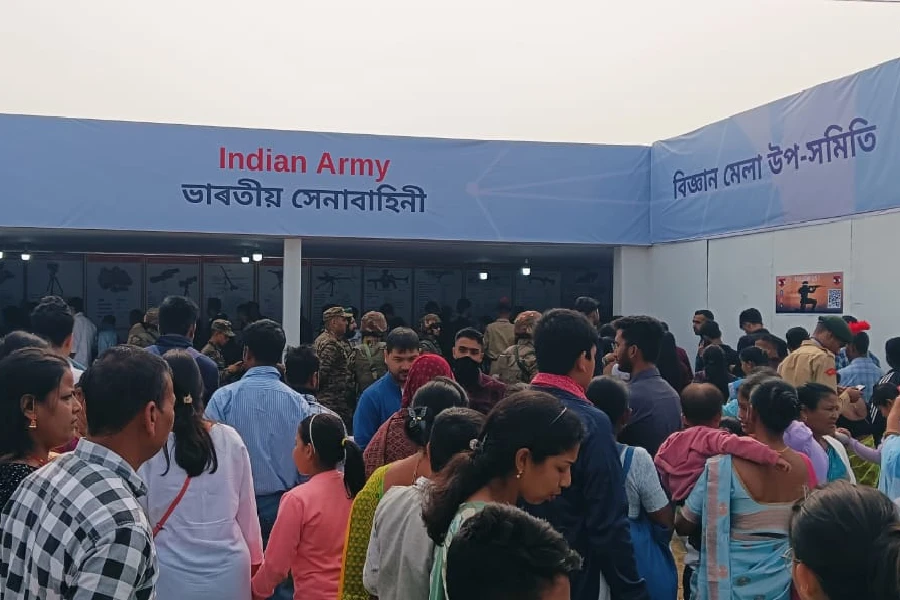
“I have organized many science fairs and also worked with the Assam Science Technology & Environment Council. The Pathsala session of the Assam Sahitya Sabha features 21 departments related to science and technology,” he said. These include institutions such as the Indian Army, National Science Centre, Aryabhatta Science Centre, Oil Corporation of India, Numaligarh Oil Refinery, Assam Agricultural University, North Eastern Space Application Centre, Tezpur University, Gauhati University, and the Shipping Corporation of India.
“This initiative by the Assam Sahitya Sabha is a welcome move and will play a crucial role in fostering a scientific mindset among the youth,” said Nuruddin Ahmed, a Sangeet Natak Academy Award winner.
Science Fair at Pathsala
Nuruddin Ahmed has been designing arches for the venue of the Assam Sahitya Sabha sessions held in different parts of Assam for the past three decades. He was also closely involved during the 1987 session at Pathsala, Bajali district.
At that session, Nuruddin worked on the museum and archway. He is proud of his association with the Pathshala Sahitya Sabha session after 38 years and thanked the local MLA and Minister Ranjeet Kumar Dass for this.
“I have a special passion for the Pathsala session. The Sahitya Sabha session was held here in 1987. “I am grateful to the welcoming committee president and Minister Ranjeet Kumar Dass for giving me this opportunity this time”, Ahmed said.
The art director told Awaz that he began decorating the venue on January 19 and completed the work by January 30 and handed it over to the management committee. A group of 16 artists collaborated to decorate the Science Fair for the public, with Nuruddin Ahmed’s two sons, Dwip and Raj Ahmed, also contributing to success of the event..
Nuruddin Ahmed, who has revived the traditional arches of temples and sculptures in various parts of Assam, has prepared the tableau of the state of Assam for several Republic Days.
Nuruddin Ahmed has been creating and painting idols of Hindu Gods and Goddesses for many years. Despite facing challenges at the beginning, as idolatry is forbidden in Islam, his works are now embraced with love and reverence by both Hindus and Muslims.
The Pandal of Indian Army at the Science Fair
During the Sharadiya Durga Puja last year, Nuruddin Ahmed brought Indraprastha, the capital of the Pandava kingdom in the ancient Hindu epic Mahabharata, to life. His creation received praise at the Athgaon Public Durga Puja Mandap in Guwahati. Indraprastha, which means “The city of Indra,” is believed to have been located in the area where present-day New Delhi stands.
The Assam Sahitya Sabha is the guardian of Assam’s cultural and literary heritage. It has played a great role in promoting the language, culture, literature and dignity of the North Eastern Space Application Centre.
The organization was founded in 1917 by pioneers like Padmanath Gohanibarua and Sarat Chandra Goswami. In its 108th year for the first time a science fair is being organized along side literary activities.
source: http://www.awazthevoice.in / Awaz, The Voice / Home> Stories / by Mukut Sharma, Guwahati / February 05th, 2025
From technology to hospitality, Muslim businessmen are raising India’s stature on the global stage
New Delhi :
In the ever-evolving world of business, several prominent figures are not just shaping the Indian economy but also placing the country on the global map. Among them, six Muslim businessmen stand out, with their remarkable ventures spanning across various sectors, such as technology, healthcare, retail, and hospitality. These influential entrepreneurs are enhancing India’s image worldwide, further solidifying its position in the global business arena.
Azim Premji – The Tech Magnate Azim Premji, often regarded as the richest Muslim businessman in India, has played a pivotal role in the growth of India’s technology sector. As the chairman of Wipro, one of the country’s largest IT companies, Premji’s leadership has helped the company expand its reach across various international markets. His contributions extend beyond the business world as well. “India’s rise in the global tech landscape is closely tied to Wipro’s innovation and excellence,” said Premji. Through Wipro, Premji has established himself as a philanthropist, with substantial donations to charitable causes.
Meraj Manal – The Herbal Business Visionary Meraj Manal, the driving force behind the success of ‘Himalaya,’ India’s prominent herbal company, is known for his dedication to promoting natural wellness. His business expertise has helped Himalaya expand into a globally recognised brand, selling products in over 90 countries. Manal attributes his success to innovation and a commitment to quality. “We’re not just selling products; we’re selling a way of life,” he shared. His continued success has played an essential role in reinforcing the global appeal of Indian herbal and natural products.
Rafiq Malik – Footwear Industry Leader Rafiq Malik, founder and owner of ‘Metro,’ one of India’s leading footwear brands, has seen significant international growth. His entrepreneurial vision has positioned Metro as a key player in the retail space, both in India and abroad. Under his leadership, Metro has expanded its footprint, contributing to the growing demand for Indian brands in global markets. “Metro is about more than just shoes; it’s about delivering quality and style to every customer,” said Malik.
Yusuf Ali – Hospitality and Retail Mogul Yusuf Ali, owner of ‘Lulu,’ one of the largest retail chains and shopping malls in many world countries and in India, has firmly placed his mark in the retail and hospitality sectors. With Lulu Mall’s presence in multiple countries, his business is recognised globally. From large-scale shopping centres to luxury hotels, Yusuf Ali’s diverse portfolio is a testament to his entrepreneurial prowess. “Our mission is to provide an unparalleled shopping experience for our customers, no matter where they are,” Yusuf Ali explained.
Other Notable Names While Premji, Manal, Malik, and Yusuf Ali are among the most prominent, several other Muslim businessmen are also contributing significantly to India’s economic growth. Their ventures span multiple industries, from healthcare to infrastructure, highlighting the diversity and dynamism of Muslim entrepreneurs in India.
These businessmen not only continue to lead successful ventures but also serve as role models for the younger generation, proving that entrepreneurship knows no bounds. Through their business acumen, these individuals are ensuring that India continues to grow as an economic powerhouse on the global stage.
source: http://www.clarionindia.net / Clarion India / Home> Editors Pick> India / by Team Clarion / December 07th, 2025
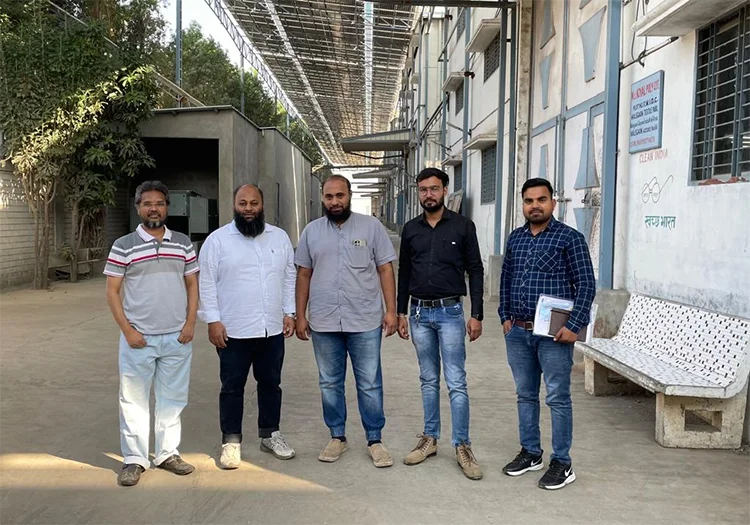
Three textile manufacturers operating in Malegaon Textile Park Wednesday January 29, 2025 became the first from the City to apply for the Zed Certification.
Tarique Faizee and Zahid Faizee of Dilip Industries with MD Geete Infosis Ashwin Geete and President MIMA Aleem Faizee after taking oath of Zed Peldge Wednesday January 29, 2025. (Photo: ummid.com)
Malegaon :
Three textile manufacturers operating in Malegaon Textile Park Wednesday January 29, 2025 became the first from the City to apply for the Zed Certification.
The MSME Sustainable (ZED) Certification is an extensive drive by the Ministry of Micro, Small & Medium Enterprises (MSME) to create awareness amongst the MSMEs about Zero Defect Zero Effect (ZED) practices, and motivate and incentivise them for ZED Certification.
Zed Workshop
Malegaon Industries & Manufacturers Association (MIMA) and Geete Infosis India had joined hands to spearhead the Zero Defect Zero Effect (ZED) Certification Scheme in Malegaon and the neighboring districts.
Malegaon Industries & Manufacturers Association (MIMA) has been instrumental in the establishment of the Textile Park in Malegaon and modernisation of the textile industry in the City whereas Geete Infosis is one of the leading Accredited Assessment Agencies working for the Zed Certification Scheme in different states of India including Uttar Pradesh, Madhya Pradesh and Maharashtra.
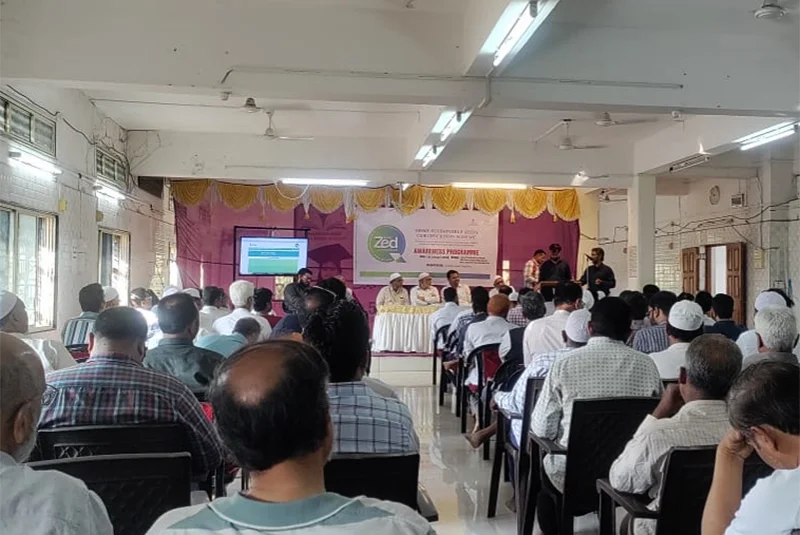
To create awareness about the Zed Certification Scheme, Malegaon Industries & Manufacturers Association (MIMA) and Geete Infosis had with the support from the All India Momin Conference Malegaon and other organisations working for powerloom, plastic, and soap manufacturing sectors organized a workshop in the Textile City on January 28, 2025. The workshop was attended by all the leading industrialists and manufacturers of the City.
MIMA, Geete Infosis joint workshop on Zed Certification held in Malegaon on January 28, 2025. (Photo: ummid.com)
Zed Certification of three industries
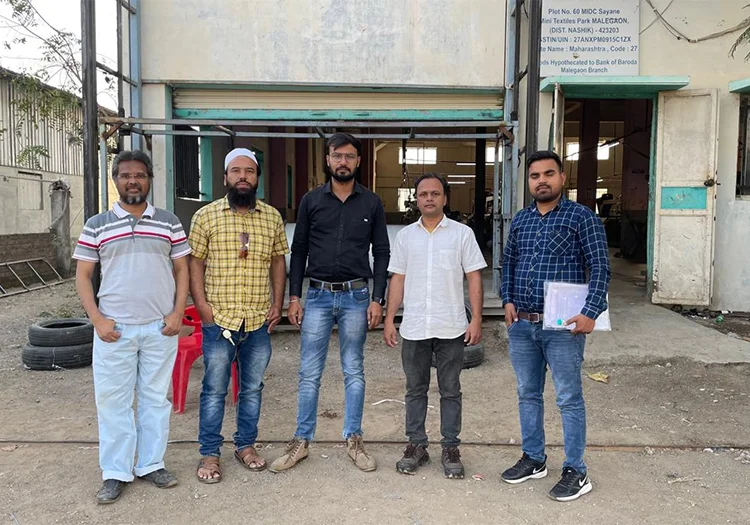
Following the launch of the Zed Certification Scheme in Malegaon Tuesday, Ashwin Geete, Founder and Managing Director of Geete Infosis, led his team to formally start the necessary inspection of factories and manufacturing units running at Malegaon Textile Park in Sayane MIDC Area of the City.
“We conducted the necessary inspection of three textile industries as per the Ministry of MSME and Quality Council of India guidelines on Wednesday and registered them for Zed Certification”, he told ummid.com.
“They are Dilip Industries, Gold Coin Fabrics and Awaz Creation. These industries have registered for Zed Certificate Bronze – the basic and first level of the scheme”, he said.
Sajid Ghulam Jaffer of Gold Coin Fabrics and Aleem Faizee of Awaz Creation with MD Geete Infosis Ashwin Geete after taking oath of Zed Peldge Wednesday January 29, 2025. (Photo: ummid.com)
All the three are members of Malegaon Industries & Manufacturers Association (MIMA) and operating at Malegaon Textile Park in Sayane MIDC area since 2014.
He further said that a team of 12 Zed Facilitators and Field Officers will start working in Malegaon from February 01, 2025 in order to bring more industries and manufacturers under the Zed Certification Scheme.
Zed Pledge
As a first step to enroll for the Zed Certification, the three industrialists of Malegaon Textile Park were administered the oath of “Zed Pledge” as the Ministry of MSME and Quality Council of India guidelines for the guidelines. The Zed Pledge said:
“We undertake to conform to the values of Zero Defect Zero Effect in our enterprise and ensure that our processes shall be environmentally sound and socially responsible with safe and high quality products.
“We will give back, in every way we can, to our people, our community and to our planet”, the Zed Pledge reads.
Envisioned by Prime Minister Modi, the Zed Certification Scheme was launched in 2022. So far thousands of industries, including over 525,000 in Gujarat alone, have received the Zed Certificates.
source: http://www.ummid.com / Ummid.com / Home> Business & Economy / by ummid.com staff reporter / January 30th, 2025
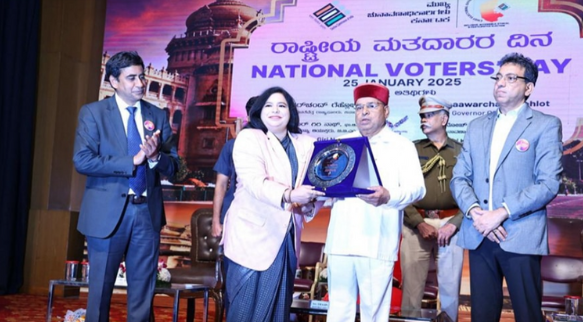
Anjum Tabassum, Tahsildar of Humnabad in Bidar district of Karnataka was presented with an award for her excellent performance as Assistant Electoral Registration Officer during Parliamentary elections 2024.
State governor Thawarchand Gehlot gave away the award to her on National Voters’ Day in Bengaluru on January 25.
This prestigious recognition is a testament to her outstanding efforts and dedication during the Lok Sabha Elections 2024. Her hard work has paid off, and this award is a well-deserved acknowledgment of her commitment to ensuring free and fair election.
Anjum Tabassum Lashkari from Gulbarga cracked the Karnataka Administrative Services (KAS) in 2014. She did her masters from Gulbarga University and had schooling earlier in Shahbad town.
source: http://www.radiancenews.com / Radiance News / Home> Pride of the Nation> Awards> Latest News / by Mohammed Atherulla Shariff / January 27th, 2025
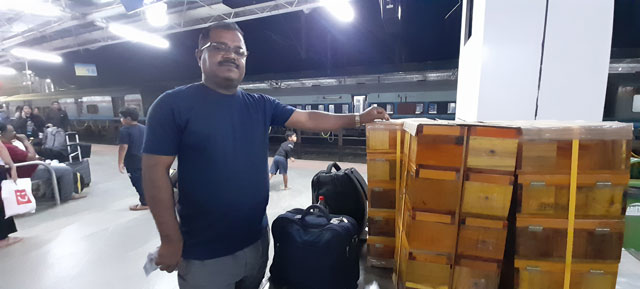
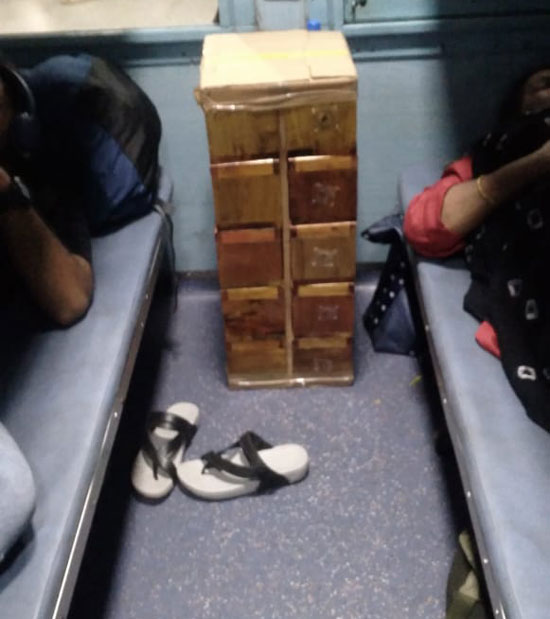
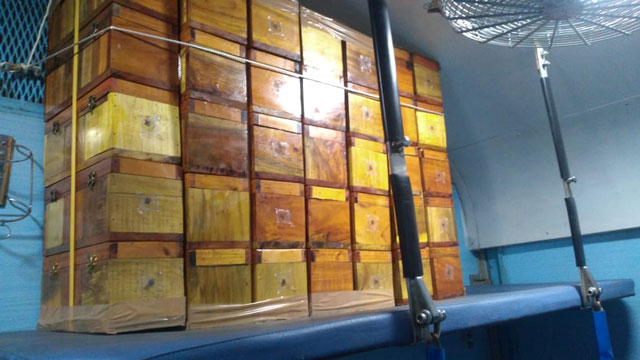
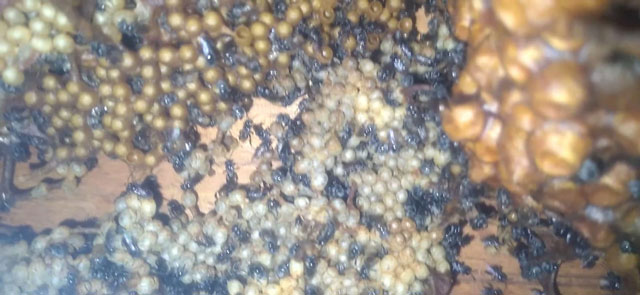
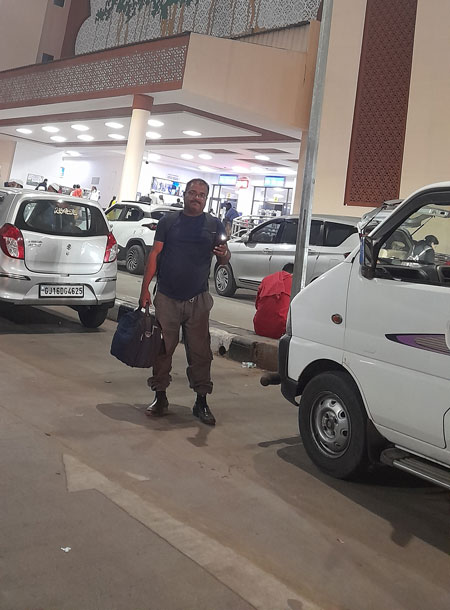
In a significant achievement, Abdul Gaffar, a resident of Berikey House, Nekkilady, Uppinangady, has successfully transported 100 stingless bee colonies along with bees to Gujarat. The transportation was carried out via train from Mangaluru to Gujarat, passing through Bengaluru.
A Gulf returnee, Gaffar initially took up beekeeping as a hobby during the COVID-19 pandemic. However, his passion soon turned into a full-time profession. He attributes his success to the guidance of Manmohan Arambya, who directed him to RUDSETI Ujire for scientific training in beekeeping.
Today, Gaffar manages an extensive collection of bee colonies, including 2,000 stingless bee colonies, 500 cerana bee colonies, and 10 white stingless bee colonies, known as Lisotrigona.
Notably, he is the only beekeeper in Karnataka to own Lisotrigona colonies. As part of his contribution to research, he has also donated one Lisotrigona colony to the University of Agricultural Sciences, Bengaluru.
Gaffar has expanded his work beyond beekeeping. He now deals in high-quality honey, bee pollen, beeswax, bee comb, and bee propolis. Additionally, he has designed innovative beehives tailored for stingless bees, making beekeeping more accessible and efficient. With the increasing demand for stingless bee colonies due to their medicinal benefits, his work has gained widespread recognition.
Acknowledging his journey, Gaffar expressed gratitude to his mentor Manmohan Arambya, RUDSETI Ujire, and senior researchers from the University of Agricultural Sciences, Bengaluru—Dr Shashidhar and Dr K T Vijayakumar—for their unwavering support and guidance.
His remarkable success stands as an inspiration, highlighting the potential of beekeeping as a promising profession and contributing to the preservation of these essential pollinators.
source: http://www.daijiworld.com / Daijiworld.com / Home> Karnataka / by Media Release / January 29th, 2025
An inspirational example of how tourism can be a force for good, Roots Ladakh is empowering local communities and preserving the cultural and natural heritage of Kargil.
Roots Ladakh aims to change the preconceived notion of Kargil as a war zone and bring it to the world map as a responsible tourism destination
Against the rugged mountains of the north, Kargil’s troubled history shines bright even today. The town, which has much to offer to discerning travellers, is often overshadowed by the tourist hotspot of Leh and remains mired in its past. Nonetheless, shrugging off its bloody war-torn memories, Kargil is trying to reinvent itself as a tourist destination. And help has come from the people that call it home.
Laying Down Roots
It is undeniable that there is much more to Kargil than is perceived. And this is precisely what Muzammil Hussain and Tafazzul Hussain—founders of Roots Ladakh, a travel social enterprise —are trying to achieve. As youngsters, they witnessed the Indo-Pak conflict of 1999 and were sent away to complete their education. But love and belief in their beloved land brought them back home.
Tafazzul Hussain(left) and Muzammil Hussain(right) organise treks through Roots Ladakh
“At the time (of war), I was in 7th, and my brother was in 2nd Grade. We spent many years away from home, only visiting during summer breaks. During that period, I always used to get asked where I was from, and my answer would always stir awe. It would then be followed up by questions that I used to find very bothersome at that time. I used to get very bothered by the fact that people had a very narrow and skewed understanding of Kargil. Most people thought it was a garrison town in Kashmir; few even thought it was in Pakistan. For me, it became a question of identity. I always struggled to define who I am and where I am from,” expresses Muzammil. Perturbed by these miserable notions of his hometown, the brothers decided there was only one way to change the perception: to bring people to Kargil.
Roots Ladakh
Founded in 2013, Roots Ladakh had a simple vision: to change the preconceived notion of Kargil as a war zone and bring it to the world map as a responsible tourism destination.
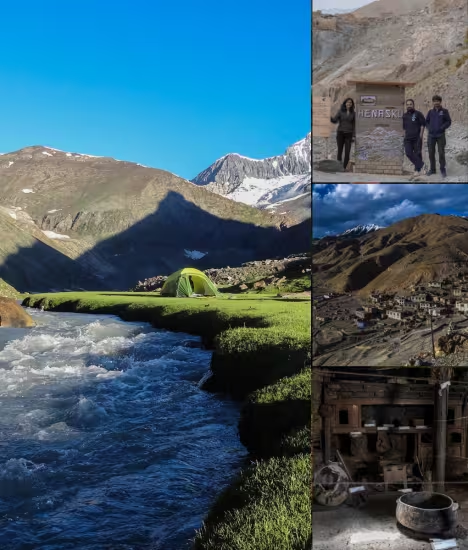
The community-run cultural heritage museum in Henasku, Kargil
Through the enterprise, the Hussain brothers promote the lesser-known part of Ladakh, i.e. Kargil and Zanskar. Since its inception, they have taken up various initiatives to document Kargil’s natural and cultural landscape extensively.
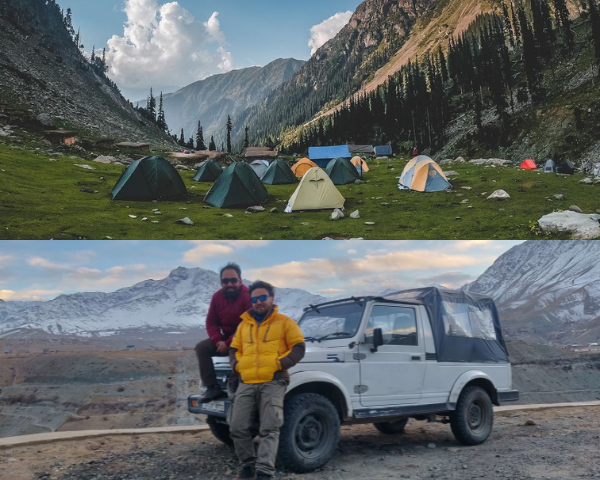
They offer travel products such as treks and hikes, climbing, wildlife tours, travel-based design and architectural workshops, rural experiences, homestays and luxury getaways, catering to a broad segment of travellers.
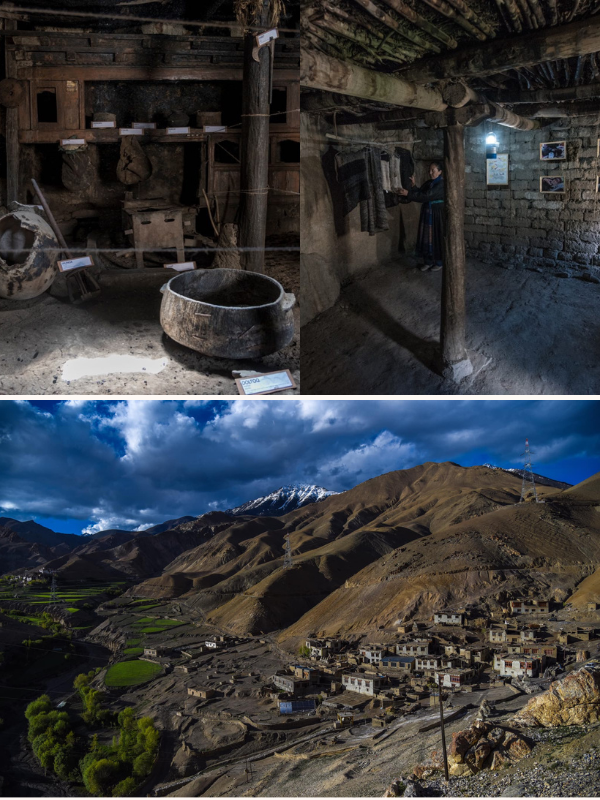
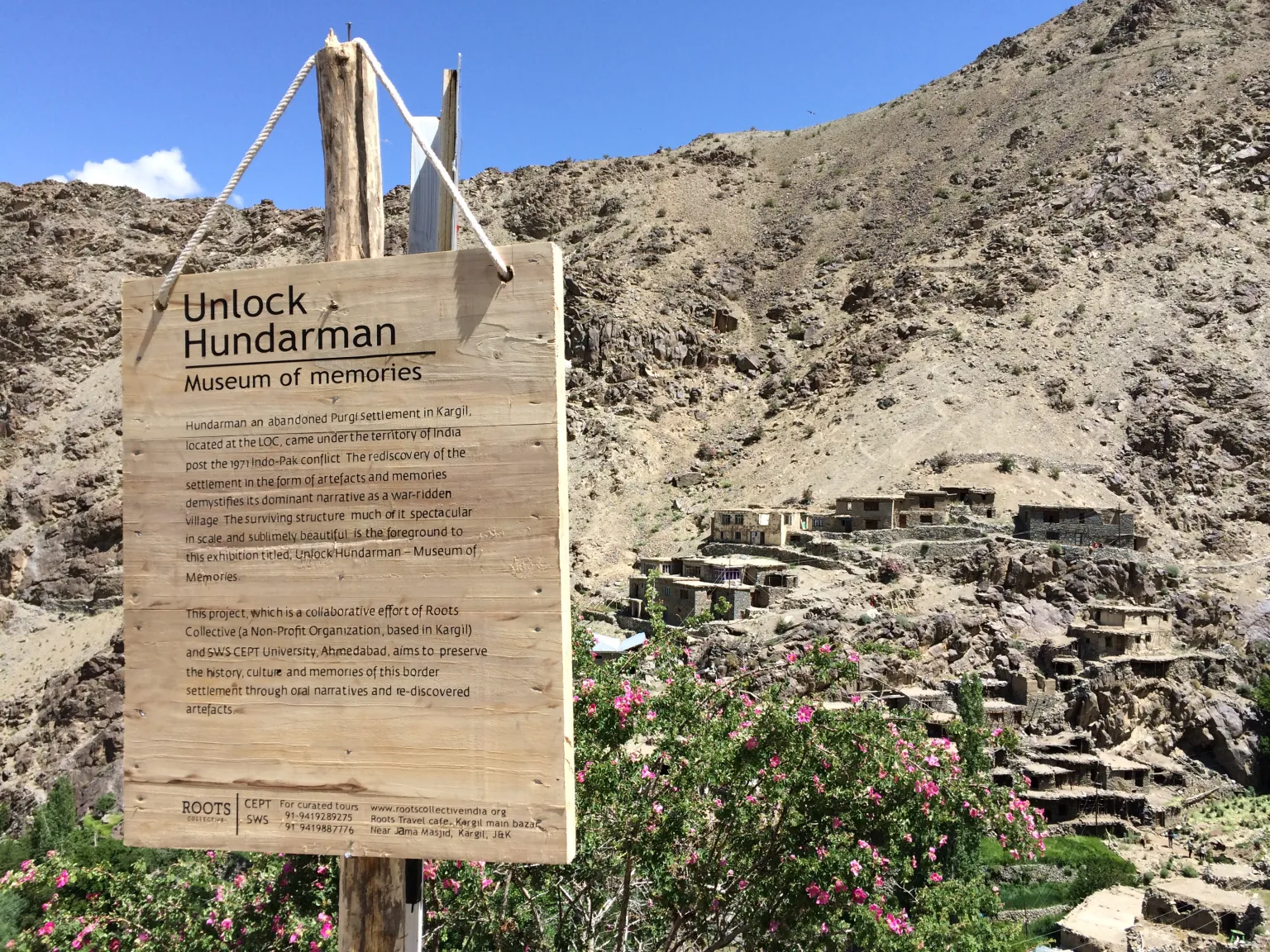
Hunderman is a small village where the Museum of Memories showcases the long forgotten stories of the region
But why focus on Ladakh? Muzammil has a simple explanation. “Ladakh is a well-known destination worldwide, and in the last decade, it has also become a very popular destination amongst domestic travellers. The tourism business is currently highly seasonal and only focuses mainly on popular destinations like Leh, Nubra and Pangong. This not only creates an inequitable income distribution from tourism but also puts a lot of strain on the ecology. Water scarcity and waste management are real threats,” he says. Hence, the bouquet of their travel offerings brings value to the communities living in Ladakh’s remote and lesser-known corners.
Experiences Galore
Perhaps, the most essential aspect of Roots Ladakh’s work is its commitment to sustainability. If you head to Ladakh with Roots, you can trust that your trip will be sustainable and immersed in natural and cultural heritage. One of their highlight projects is Unlock Hundurman – Museum of Memories, a community-run museum in a 300-year-old abandoned settlement along the Indo-Pak LoC in Kargil. These homes were opened to unfold the lives and stories of the people living here through the narratives of war, arts and crafts, lifestyle and culture.
Roots Ladakh organises treks and hikes, wildlife tours, travel-based design and architectural workshops
Another initiative, Project Drenmo, focuses on wildlife conservation activities for Himalayan Brown Bear. “We wish to address the issue of the Human-Himalayan Brown Bear conflict in the region through a sustainable conflict mitigation and conservation model through community engagement. We focus on outreach, sensitisation, capacity building and wildlife tourism promotion within the community,” Muzammil shares.
One of the most popular programs Roots Ladakh offers is the homestay program, which allows visitors to stay with local families in traditional Ladakhi homes. This not only provides visitors with a unique and authentic cultural experience but also provides income to the families and helps to preserve the local way of life. An extension of that program is Black Sheep, a boutique bed and breakfast in the heart of Kargil, with a view of the beautiful Suru River as it snakes along the city. Here, you can immerse yourself in the culture and heritage of the region as you learn more about the city and its people.
Moreover, the enterprise promotes voluntarism and offers volunteer opportunities for individuals and groups in various parts of Ladakh to promote sustainability and responsible tourism. The road to success, much like the meandering roads of Ladakh, is challenging to navigate, but the brothers are committed to their cause. “Our vision is to set a road map for the coming generations to appreciate and embrace our local heritage, ethics and values. We want to inspire businesses to be conscious about creating shared value,” he says.
source: http://www.indianexpress.con / The Indian Express – Express et.al / Home> Responsible Tourism / by Mallika Bhagat / by IE Online Media Services
Zillur Rahman, a professor, poet and hakim, has established a museum-cum-library in Aligarh to preserve books and artefacts that tell the story of Delhi of yore.
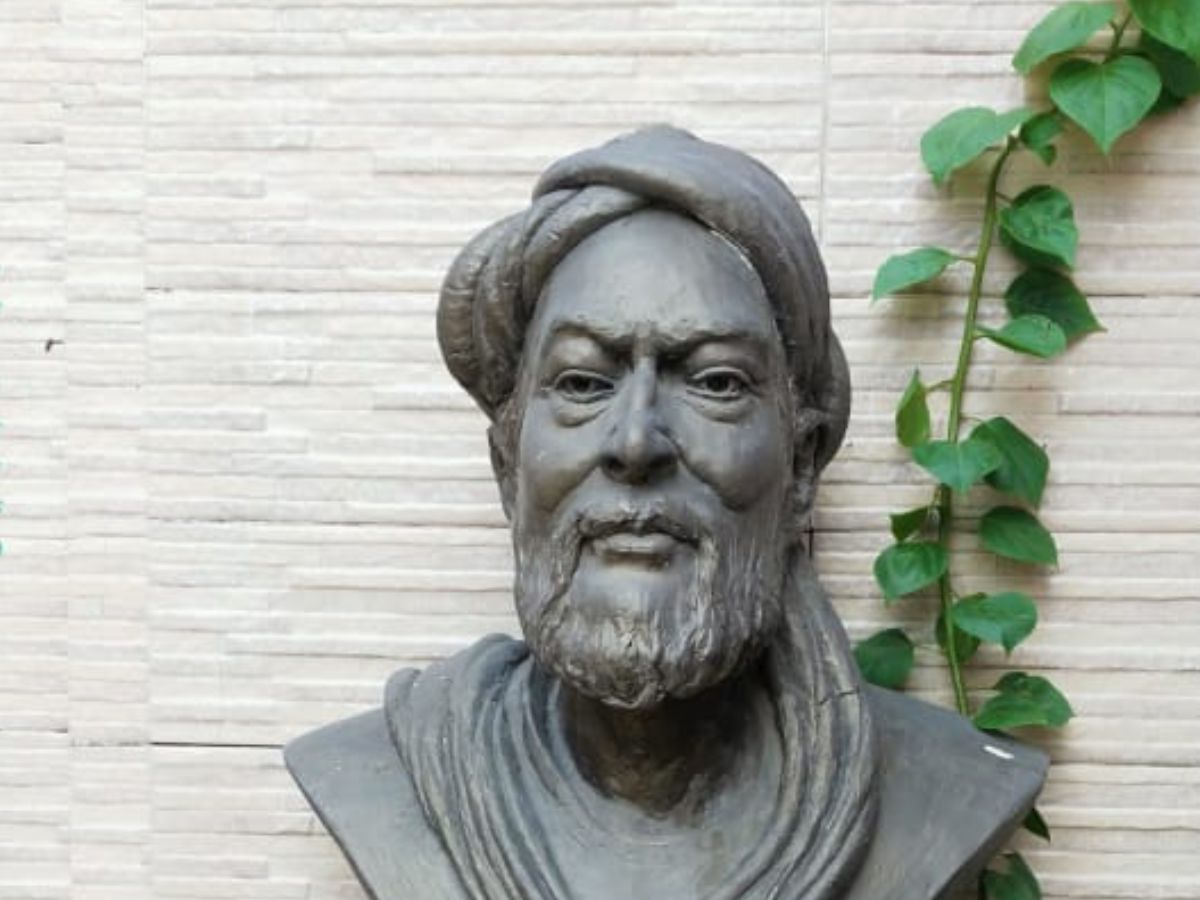
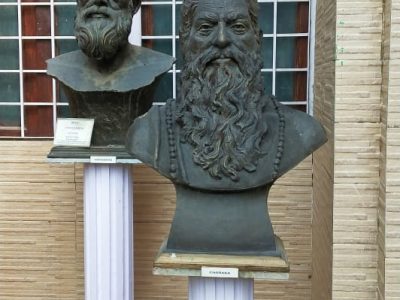
PIONEER: A bust of Ibn Sina, a physician and philosopher, who lived over a thousand years ago, at the Ibn Sina Academy in Aligarh
Nestled in the heart of the city of Aligarh, Uttar Pradesh, is Ibn Sina Academy of Medieval Medicine and Sciences, named after famous scholar of philosophy and medicine Abu Ali Ibn Sina (980 -1037), who lived over a thousand years ago.
Located at Tijara House, the non-profit, non-government and non-political academy was established in the year 2000 by Professor Syed Hakim Zillur Rahman, an academic and a litterateur from Aligarh.
A one of its kind museum and library, it was aimed at encouraging and promoting researches and studies in medieval sciences, especially Ibn-Sina’s, as well as arts, culture, poetry among other subjects.
Notably, Ministry of Ayush, Government of India gave accreditation to the academy in 2004 and promoted it as a Centre of Excellence in 2008. The professor had a mammoth personal library that he had established in 1960s. After Ibn Sina Academy was born, the library became a part of it.
The specialty of this museum lies in its varied collection that includes sofas, crockery, jewels, armours, stamps, mirrors, outfits of princesses, queens and kings as well as turbans worn during battles by historical legends.
The Zillur Rahman Library houses 32,000 rare books and magazines, 1,100 manuscripts apart from paintings, sketches, citations, artefacts and much more.
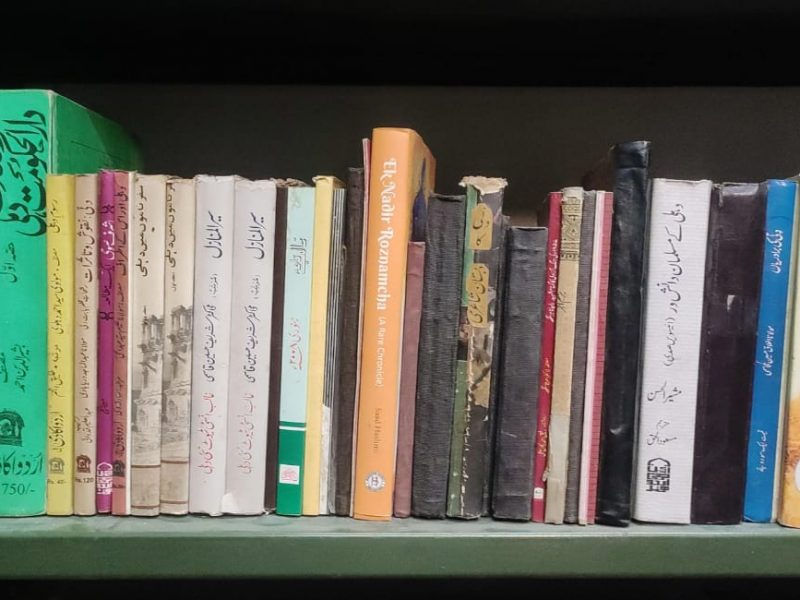
RARE: A collection of books on Delhi
The Delhi connection
There are 7,500 books on Delhi of yore in the library, including on poet Iqbal, dictionaries as old as 150 years, authentic diwaan on Ameer Khusrau, books dating back to 1893, on and by the last Mughal emperor Bahadur Shah Zafar, British Raj–Victorian Era with pictures in lithographs and more.
But considering Delhi is dry without the ‘zikr’ (mention) of the poetic legacy of Asadullah Khan ‘Ghalib’, the library has dedicated a special space for the poet: “Ghalib Study Centre”.
A galaxy in itself, this part has 1,350 rare books in Urdu, Persian, English and Hindi on Ghalib apart from several special issues in different magazines (called risala in Urdu) which are now available only in this museum.
For instance, an important old publication called Sooraj (meaning sun) had special Ghalib edition.
One of the books has illustrations of most of the ghazals he had penned, while in his own Deewan (collection of his authentic shayri) there, Ghalib’s original ghazals had no pictures or illustrations.
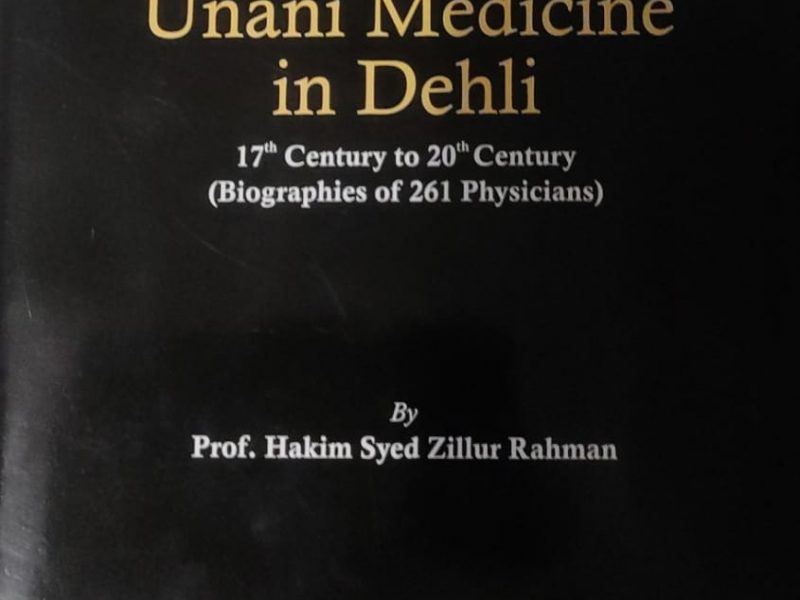
MASTERPIECE: The translation of the book written by Hakim Zillur Rahman
One of the most important collections here is a book by renowned author Shakeel ur Rahman called Mirza Ghalib aur Mughaliyaat, which has illustrations from Muraqqa-i-Chughtai, an illustrated selection of Ghalib’s work by AR Chughtai, a renowned artist of early last century. The illustrations are based on an important topic or issue that the poet raised in his couplet (sher).
Rare books with names like Jihad-e-Ghalib, Ghalib Satrung, Soz-e-Ghalib, his letters in Persian and many more ornate the archive.
Additionally, a book called Naqsh-e-Rung from Pakistan which was brought to India by scholar Urdu litterateur and poet professor (late) Shamsur Rehman Farooqui enriches the book shelves.
Tehqeeq-nama Ghalib, Ghalib’s ghazal in Persian called Ghazaliayat-e-Farsi, Ghalib, few rare and special issues of magazines like Shama, Nuqoosh, Hunoon, Taar-e-Nau, film magazines, Al-Ilm, Shayar, Kaarvaan with special edition on Ghalib are the other charms.
A rare pocket-sized edition on Ghalib is a popular one.
Travels to Delhi
Another section on Delhi consists of travels and trips done in Delhi by the authors, travellers and poets of old times. Rare books like Safarnama Dehli and Sair-ul-Manazir provide an inside view of Delhi in the 18th century.
LEGEND: Bust of a renowned Indian physician Charaka at the academy in a section dedicated to physicians and medicinal plants
Also, over 200 rare books on Delhi’s poets (shayars) in Urdu and important personalities form another gallery here. For instance, there is Aslam Parvez’s award-winning book on Bahadur Shah Zafar, and his another one called Meri Dilli. There is also a book on Hamare Zamane Ki Dehli, Charagh-e-Dilli, Dilli Wale by famous author Salauddin, Aalam mein intekhab-e-Delhi among others.
Rare and significant books on personalities include those on Hakim Ajmal Khan, Sir Ross Masood, former India President Zakir Hussain, Sir Syed Ahmad Khan, Raja Mahendra Pratap and many more.
An entire unit is also devoted to all the journals that came out of Delhi during the War for Independence “and those from late 17th century to beginning of 19th century. The Delhi College was established in 1824, with it, all these journals rose to a great height. These form an enticing collection in the museum,” apprises Aftab Najmi, the coordinator and convener at Ibn Sina Academy.
On enquiring why such a large collection in Urdu finds space here, Professor Rahman adds, “Our own language and culture is much better described only in Urdu and Persian. So, it was very important to have a different section on Urdu to give a peep into what Delhi was in olden times.”
However, countless notable oldest books in English and Hindi on Delhi also enrich the collection on the Capital.
A legacy himself
Professor Zillur Rahman has 56 books to his credit. The subjects are related to Tib (Unani medicine) and Urdu literature. His books on medical sciences with oldest references (100 to 200 years old) are immensely popular. He is also a poet and an ardent admirer of Urdu poets of yore. He has also edited Diwan-e-Ghalib and many books on Urdu shayri. So far, 11 books have been written on him by students from different parts of India and globe in Arabic, Urdu and English. There are two academies, in Meerut and Bhopal, named in his honour. A part of the library has books on Zillur Rahman’s own family and their contribution to academics, medicine, poetry and culture.
For the next generation
On why he decided to make such a rare museum and library under one roof, Rahman says, “I was just a teacher at AMU. I had no money like businessmen to construct roads and hospitals so I decided to build this museum and library to help those who want to study but have neither books nor a place for the same. I want the current generation to know that books on all our glorious histories and personalities were penned in Urdu before 1947.
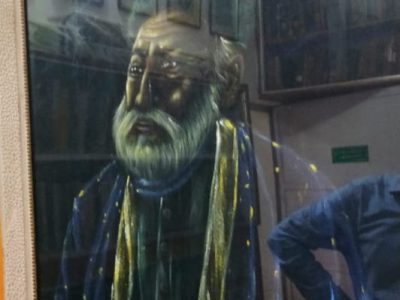
ICONIC: A portrait of Mirza Ghalib at the library, which boasts of rare works on the Delhi-based poet
“So, our generation has to know Urdu to understand their buzurgs (elders) and what charismatic works they had done. Our current generation, which doesn’t know Urdu, is like a blackboard. Anyone can write anything on it and it doesn’t impact them because they are so ignorant of legacies of their own language.”
Professor Rahman has travelled abroad 44 times. He visited Greece, including its capital Athens, Samarkand and Bukhara in Uzbekistan, Spain, Turkey, Germany and other countries.
“I went to Iran 11 times to gather books and study how it has preserved its arts and culture, literature, medicine and environment,” he says adding that children of every country know their mother tongue and can read and write in it.
“India’s children, especially the new Muslim community, is ignorant of its own legacy in Urdu.”
The Ibn Sina Academy has a tremendous collection of Islamic sciences and Islamic medicines. The professor has procured them from across the globe.
“Some are bought, some gifted and some requested and begged for. Hamaare 3,200 hazaar kitaabon mein, Ghalib ka collection jo hamaare paas hai vo duniya mein kisi ke paas nahi hai (No one in the world has the rare collection on Ghalib that we have among our 32,000 books). Even Delhi’s own Ghalib Institute and Ghalib Academy visit us and take photocopies of the rare material they require. We have made our academy work on Delhi’s poets, littérateurs, historical buildings and monuments,” he adds.
Most books, he adds, are from Iran, Samarkand and Bukhara.
“The richest in education, philosophy, medicine and culture is Uzbekistan but it could not present it to the world, the way Iran did.”
Why Delhi in Aligarh?
Why Delhi forms a special section at his library, has its reasons.
“Delhi was always the capital of India, be it during the Mughal, British eras or post-Independence period. So, it has always been not only a melting pot of cultures but also an abode for the best of poets, authors and travellers. The number of academics, authors, sufis, litterateurs, shayars (poets), lovers of arts and music and academic institutions that Delhi had, no other capital in the world has it till date,” he reasons with pride.
To know Delhi better, he suggests books penned by the renowned Dehlvi family.
For instance, there is Dilli jo aik shahar thaa by Shahid Ahmad Dehlvi, who was born in Delhi in 1902.
He wrote extensively on vanishing culture of Delhi which was a symbol of Indo-Muslim culture ruined by violence and blood of the War of Independence. Post Independence, he went to Pakistan and died in 1967.
Waqyaat-e-Darool Hukoomat in three volumes by Bashiruddin Ahmad Dehlvi published from Urdu Academy, Delhi in 1990, and books on 1857 revolution are also there in the academy.
Delhi just got richer by another book by Zillur Rahman — Dilli aur Tibbi Unani which has just come out in Urdu. It is translated in English by Toronto-based Zakaria Virk, titled ‘History of Unani Medicine in Delhi – 17th Century to 20th Century – Biographies of 261 physicians’.
source: http://www.thepatriot.in / The Patriot / Home> Delhi NCR / by Rana Siddiqui Zaman, Delhi NCR / November 15th, 2023
Badruddin Tyabji, the grandson of freedom fighter and third Congress President by the same name, was entrusted with arrangements for the inaugural Republic Day celebrations in 1950.
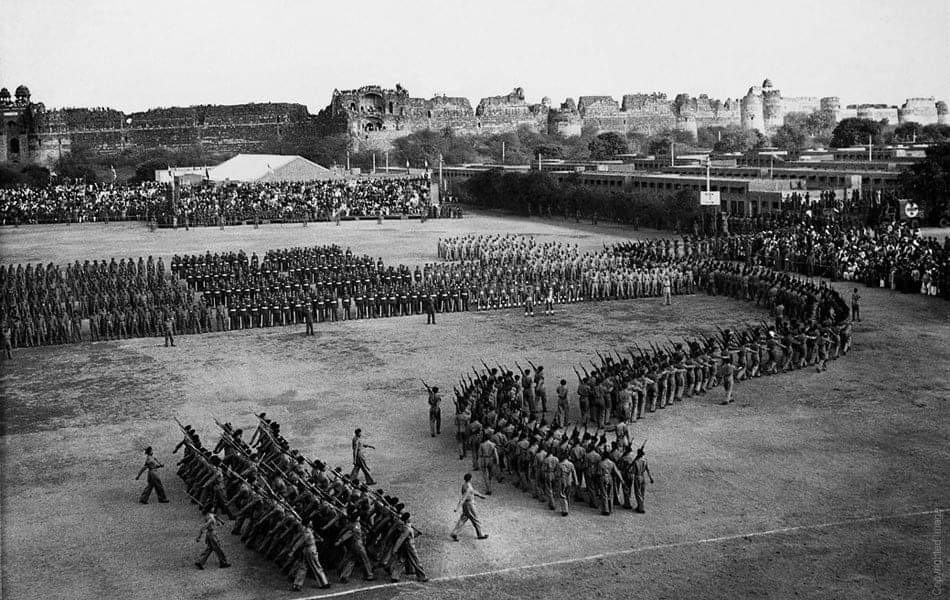
HISTORIC: National Stadium during the first Republic Day Parade. Old Fort is also visible
Every year on January 26, the Tyabji family sit together in their posh West End Colony house (near Vasant Vihar) to watch the Republic Day Parade which holds special significance for them.
Their late patriarch Badruddin Tyabji, a 1936 batch Punjab cadre Indian Civil Service officer, was responsible for looking after the arrangements of January 26, 1950 functions: first at the President House and later at Irwin Stadium (now Major Dhyan Chand National Stadium).
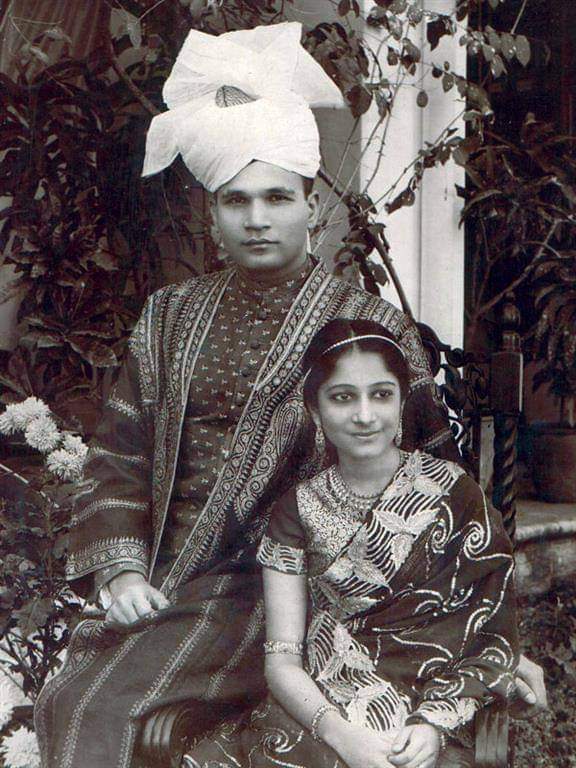
Tyabji’s painter wife Surayya Tyabji made the prototype of the Tri-colour on paper based on which the flag of cloth for Republic Day was made in Connaught Place.
“Just a couple of weeks before the first Republic Day, Prime Minister Pandit Jawaharlal Nehru entrusted me to look after the arrangements of the January 26 functions,” Tyabji told this writer in his south Delhi house in 1994.
He was also member secretary of the Constituent Assembly.
“I was called by Pt. Nehru and he gave me the huge responsibility for the historic day. I used to live at Sujan Singh Park during those days.”
From that day onwards, the tall and gracious Tyabji moved from the President House (now Rashtrapati Bhavan) to Irwin Stadium several times a day to finalise the arrangements as time was running out for the big day.
HAPPY FAMILY: The Tyabji clan including Laila Tyabji (centre, front row), who is a social worker, designer, writer and crafts activist
The big day for which Tyabji had worked so hard was also hectic for Rajendra Prasad, the soon-to-be first President of independent India. He marked the momentous occasion with a visit to Raj Ghat to pay homage to Gandhiji. He remained there for around 15 minutes.
But before the would-be President of India could get to the President House, C Rajagopalachari, the Governor General of India, had already reached there. The latter used to live in the double-storeyed bungalow at the then 10, Hastings Road, which was later renamed after him as Rajaji Marg. Edwin Lutyens, the chief architect of New Delhi, also lived in the bungalow, and so did Pranab Kumar Mukherjee, who also lived in that house after demitting his office of President of India.
“Dr Rajendra Prasad was sworn in as the country’s first President at around 9 am by the Governor General of India, C. Rajagopalachari. Rajvanshi Devi, his wife, and other family members were also there. The swearing-in ceremony was attended by over 500 guests, who had assembled inside the Durbar Hall. President Sukarno of Indonesia and several members of the Diplomatic Corps, members of the Constituent Assembly and prominent citizens had graced the occasion. The President was dressed in black achkan, white churidar and a white Gandhi cap. Pandit Nehru and his other Cabinet colleagues were sworn in soon after Rajendra Prasad,” recalled Tyabji, who was named after his grandfather, the third President of Indian National Congress.
Immediately after returning from Raj Ghat, Rajendra Prasad was sworn in. The Chief Justice of India, Sir Hiralal Kania, read the oath of office in Hindi. President Prasad repeated it sentence by sentence.
“The outgoing Governor General, C. Rajagopalachari; our first Prime Minister, Pandit Jawaharlal Nehru, beaming with pride and joy; the Deputy Prime Minister, Sardar Patel; cabinet ministers, judges of the Supreme Court and the Auditor-General of India, were present in the hall to witness the historic moment of India’s history. Pandit Nehru and his other cabinet colleagues were sworn in soon after.”
The national emblem of Ashoka Pillar with three lions was placed in the Durbar Hall for the first time near the throne where the British Viceroys used to sit.
A smiling statue of Lord Buddha was also placed behind the throne for the first time. Rajendra Prasad, the President, who greeted the large gathering smilingly with folded hands, made a short speech in Hindi and English, stating that it was a memorable day in our annals.
“Let us begin by offering our thanks to the Almighty Power who has enabled us to see this day; to the Father of the Nation who showed us and to the world at large his infallible method of Satyagraha, and led us on along it to freedom and to the numberless men and women, whose suffering and sacrifice have rendered the attainment of independence and establishment of this sovereign democratic Republic possible.”
The birth of the Republic was celebrated by the masses in the Capital through Prabhat Pheries (early morning movement of people singing patriotic songs). Outside the Durbar Hall, there were unforgettable scenes of jubilation. Large crowd of men, women and children had assembled in the forecourt of President House.
People raised slogans of Gandhiji-ki-jai and Vande Mataram.
After a dignified ceremony was held at the President House, the scene shifted to Irwin Stadium. The new President travelled to the stadium in a horse-drawn carriage and Delhi’s roads were lined up with enthusiastic crowd standing along the five-mile route with the Tri-colour in their hands. A huge crowd greeted the President’s entourage when it reached the vicinity of Connaught Place. And when the first President of India reached the stadium, he was welcomed with a booming 31-gun salute.
According to Tyabji, “Rajendra Prasad made a brief speech at the stadium. Later, students from various schools of the Capital presented cultural programmes.”
Old timers still recall that there were very few policemen guarding the VIPs inside the stadium. After the programme, the leaders mingled with the people. Nehru was mobbed by his admirers. He spent a good 20 minutes with them.
Tyabji, who could not sleep for several days ahead of the big occasion, was there managing the affairs carefully with his colleagues. Following very cold weather days in Delhi, brilliant sunshine greeted the Capital on January 26, 1950.
It was India’s defining moment, the day India truly freed itself from the shackles of colonialism to become a Republic. A truly sovereign state.
The talk of the first Republic Day cannot be complete without discussing the role of Tyabji’s wife, Surayya, in the making of the first Tri-colour.
According to Tyabji, “Once the Constituent Assembly finalised our Tri-colour with Ashok Dharma Chakra inside the flag, I was asked to furnish the model of Tri-colour on both paper and cloth.”
Without wasting any time, Badruddin Tyabji went straight to his Sujan Singh Park residence and asked his wife Surayya to make the Tri-colour on paper. She did not disappoint her husband. Once she made it on paper, Tyabji carried the design to the now defunct SC Tailors at Regal building of Connaught Place and asked them to make the Tri-colour in cloth. The rest, as they say, is history.
After retirement from government service, Tyabji also served as the Vice-Chancellor of Aligarh Muslim University in the 1960s.
He finally settled in Delhi and passed away in 1999. His wife, Suraiya, had died before him.
During one of our meetings, Tyabji had told me that when he came to Delhi from Hyderabad to appear for ICS examination, he was staying in Daryaganj.
He used to take a tonga to reach Metcalfe House in Civil Lines to appear for his examinations.
“Delhi was a very small city then. Except for old Delhi and villages, there was not much here. New Delhi was coming up,” he had said.
When India was divided on the basis of religion in 1947, he was perhaps one of the only two Muslim ICS officers who opted to stay in India instead of accepting Islamic Pakistan.
OFFICER RANK: Badruddin Tyabji was a 1936-batch ICS officer of Punjab cadre. His wife, Surayya was a painter
Tyabji’s first son, Hindal Ahmad, was an IAS officer. He passed away last year.
Tyabji’s daughter, Laila Tyabji is a noted social worker, designer, writer and crafts activist. She is one of the founders of Dastkar, a Delhi-based non-governmental organisation working for the revival of traditional crafts in India.
Like in the past, the Tyabji family would watch the annual parade this year too. After all, they are the true and proud first family of India’s Republic Day. Yet, they are so self-effacing.
source: http://www.thepatriot.in / The Patriot / Home> Cover Story / by Vivek Shukla / January 26th, 2024
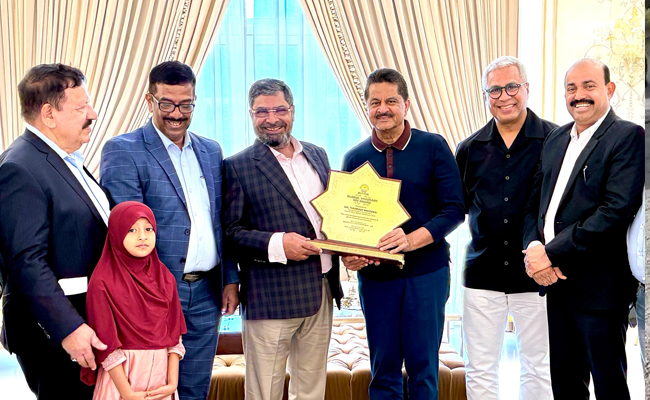
Dr. Thumbay Moideen, Founder President of Thumbay Group and Patron of Bearys Cultural Forum (BCF), has been conferred the distinguished “Global Visionary NRI Award” by Bearys Cultural Forum (BCF) – UAE. The award was presented by Naseer Ahmed, Member of the Legislative Council and Political Secretary to the Chief Minister of Karnataka, India, during a grand event held at Thumbay Medicity, Ajman.
The “Global Visionary NRI Award” is a recognition of Dr. Moideen’s unparalleled contributions to global healthcare, education, and innovation. A celebrated entrepreneur and philanthropist, Dr. Moideen has successfully transformed Thumbay Group into a global brand, driving growth through innovation and serving as a beacon of inspiration for Non-Resident Indians worldwide, a press statement from Thumbay Group added.
Speaking at the ceremony, Naseer Ahmed commended Dr. Moideen’s visionary leadership and his efforts in building Thumbay Medicity as a hub of excellence in healthcare, education, and research. The event also featured a visit by Naseesr Ahmed to Thumbay Medicity, where he witnessed the state-of-the-art facilities and cutting-edge advancements that have placed it on the global map.
Dr. Thumbay Moideen, upon receiving the award, expressed his gratitude to Bearys Cultural Forum (BCF) for this recognition and reaffirmed his commitment to fostering innovation, global citizenship, and community welfare.
“This award is a testament to our collective efforts in making a positive impact globally. I dedicate this honor to my incredible team, whose unwavering dedication has been the cornerstone of our success,” said Dr. Moideen during his acceptance speech.
source: http://www.english.varthabharati.in / Vartha Bharati / Home> Gulf / by Press Release / January 20th, 2025
Mir was among 139 Padma awardees announced on Saturday, making him one of only two Padma Shri awardees from Jammu and Kashmir this year
Farooq Ahmad Mir’s 60 years of artistry earn Padma Shri
Srinagar :
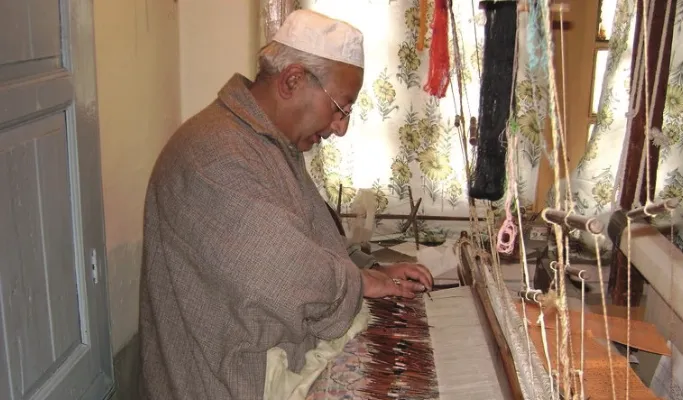
In a heartfelt tribute to the art of craftsmanship, Farooq Ahmad Mir, a master shawl weaver from Srinagar, was conferred the prestigious Padma Shri award on January 25. At 73 years old, Mir embodies the spirit of dedication, having devoted over six decades to a craft that intertwines patience with artistry.
Mir was among 139 Padma awardees announced on Saturday, making him one of only two Padma Shri awardees from Jammu and Kashmir this year.
Starting his journey at the tender age of 10, Mir’s story resonates through generations. “Pashmina artisans require patience, much like education. It teaches us about the intricate nuances of our craft,” he reflects, drawing parallels between learning and weaving. Hailing from a lineage of artisans, Mir has not only preserved but revitalised the Kani shawl tradition, once favored by Mughal, Afghan, Sikh, and Dogra rulers.
Mir’s influence extends beyond his family; he has painstakingly taught the art of Kani shawl weaving to over many individuals in Srinagar’s old city.
“In a world where modern careers are alluring, many aspiring artisans are deterred by societal perceptions and a lack of patience for traditional craft,” he notes. Yet, Mir’s commitment to his heritage has inspired not only his children, skilled weavers in their own right, but countless young men and women in his community.
“Your work should speak for itself,” Mir shares humbly when asked about his relative anonymity in a world that often celebrates flashy accolades over dedication. His contributions, however, haven’t gone unnoticed. He has received multiple national and state awards, including recognition from Prime Minister Narendra Modi himself.
The exquisite Kani shawls, woven using cane needles rather than shuttles, can take between four to eighteen months to create. However, the beauty of this art form is in jeopardy. As younger generations lean towards more modern occupations, the skills required to produce these heirlooms risk fading away. Mir’s tireless efforts aim to ensure this heritage is not lost.
Born into a weaver’s family in Srinagar, Mir’s start was modest. Despite barriers to formal education, he channeled his passion into honing his skills, becoming one of the finest artisans in Kashmir. Alongside his successful weaving career, he managed to educate his siblings and inspire a new wave of artisans dedicated to preserving Kani shawl weaving.
In an age driven by industrialisation, the importance of handmade products is gaining renewed appreciation globally. Mir stands as a pioneer in safeguarding this cultural legacy, instilling pride in his craft and ensuring its continuation across generations. His handcrafted Kani shawls have not only found a place in the hearts of locals but also captured the attention of international clientele, including the Ambani family and major corporations like Tata and Aditya Birla Group.
Farooq Ahmad Mir’s journey exemplifies resilience and dedication. As an unsung hero of the Kani shawl tradition, he reminds us that true artistry thrives in the shadows, waiting for the right moment to emerge into the light.
Director Handicrafts and Handloom, Mussarat Islam in a tweet on social media extended heartfelt congratulations to Farooq Ahmad Mir on being awarded #PadmaShri 2025 for his significant contributions to Kani Shawl weaving and the preservation of Jammu and Kashmir’s rich cultural heritage.
source: http://www.greaterkashmir.com / Greater Kashmir / Home> Business / by Mukeet Akmali (headline edited) / January 26th, 2025