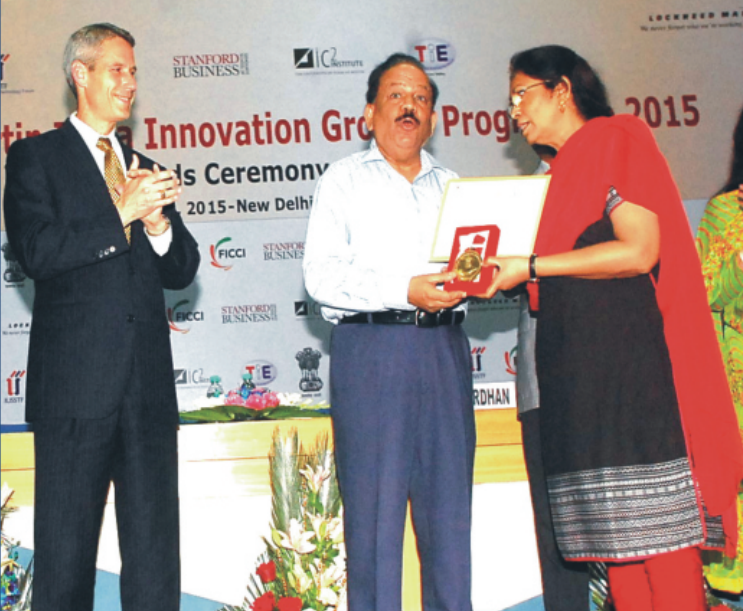
The award presented by Dr. Harsh Vardhan, Hon’ble Minister of Science & Technology & Earth Sciences, Govt. of India on 13 May 2015 in a ceremony held in DRDO Bhavan, New Delhi.13th May 2015
Congratulations Dr. Nahid Ali for achieving Top 10 Innovators award for Dipstick Technology by the DST jointly with FICCI and Lockheed Martin corporation and Indo US Science and Technology Forum 2015.
Dr. Nahid Ali, Chief Scientist, Infectious Diseases and Immunology Division, CSIRIICB, was awarded the Gold Medal and a certificate at the “Innovators Competition” for DST-Lockheed Martin India Innovation Growth Programme 2015. The award was given by Dr. Harsh Vardhan, Hon’ble Minister of Science & Technology & Earth Sciences, Govt. of India on 13 May 2015 in a ceremony held in DRDO Bhavan, New Delhi.
Dr. Ali’s innovation, a dipstick device for the diagnosis of Kala-azar and PKDL, has been selected among top 10 technologies out of 1500 applications received this year. The technology has already been filed for patent and also published in the Journal of Emerging Infectious Diseases (Saha et al, 2011; 17: 1304-06).
source: http://www.iicb.res.in / CSIR-Indian Institute of Chemical Biology
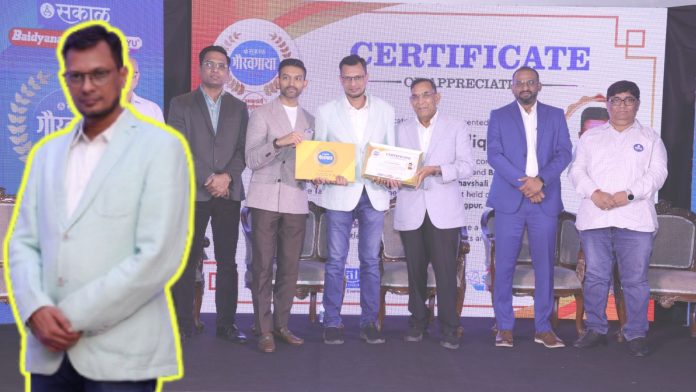
Dr Anwar Siddiqui, head of Panchakarma at Shri KR Pandav Ayurveda College and founder of Kerala Ayurveda & Panchakarma, received the Influential Ayurvedacharya Award from Sakal and Baidyanath. The award recognized his contributions to Ayurvedic medicine and social service.
The event was attended by Union minister Nitin Gadkari, Baidyanath’s managing director Suresh Sharma, and 45 leading Ayurveda doctors from across India. Dr Siddiqui, a BAMS and MD in Panchakarma from Poddar Government Ayurveda College in Mumbai, also holds a Master’s degree in Sanskrit. He has authored the book Ayurvedic Detoxification in Obesity, published in Germany.
With more than two decades of practice, Dr Siddiqui has gained recognition for treating chronic illnesses through Panchakarma therapy. During the Covid-19 pandemic, he helped set up a free hospital in Pachpaoli, strengthening his reputation for service to both healthcare and the community. Dr Siddiqui is a prominent leader associated with Jamaat-e-Islami Hind and a member of its Maharashtra State Advisory Council.
source: http://www.radiancenews.com / Radiance News / Home> Latest News> Report / by Radiance News Bureau / August 24th, 2025
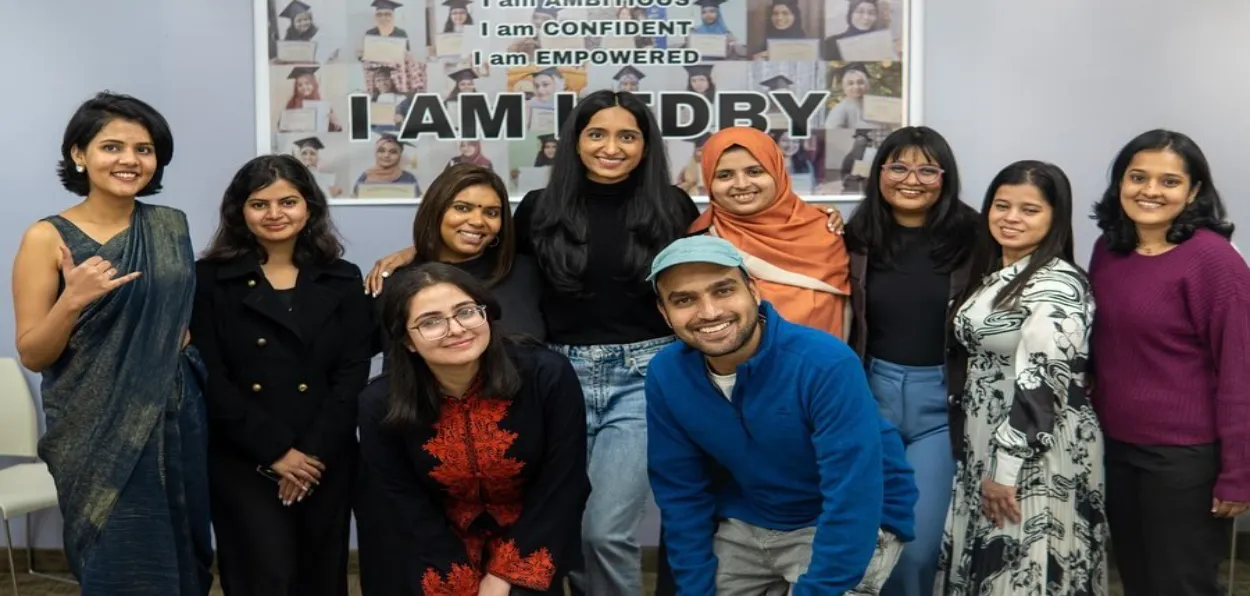
Ruha Shadab in the center (Wearing black top and jeans) with her team
Ruha Shadab acquired a degree in medicine from the Lady Harding Medical College, New Delhi, before joining Harvard University for higher studies. She along with her team at Ledby Foundation are working towards empowering Indian Muslim women to be gainfully employed and become independent. Awaz-The Voice Editor-in-Chief Atir Khan spoke to her about her work. Excerpts:
What was the intent behind starting Ledby Foundation?
There were many reasons why we started Ledby Foundation. The primary reason was that I hardly saw any Muslim women in the offices that I had worked in. Also, the overall socioeconomic indicators of our community made me feel compelled to start this. But the story most close to my heart is that of my mother, who, I think is one of the most intelligent people that I know. Many people like her are there in a community who weren’t able to realize their intellect and develop their professional dreams.
So that was something that influenced me as I started my early career and then went on to do better at Harvard. But I got time to think about what I want to do with my life, and what kind of social impact I needed to create. And I always knew that I wanted to create a social impact for the Muslim community, especially for women. As I spent more time thinking about what I could do for the community I ended up on the idea of professional empowerment of Indian Muslim women and supporting them in the workforce.
Sky was the limit for you at Harvard; you could have chosen to work in any other field. Why did you choose to do what you’re doing?
Even my medical background of becoming a doctor had to do with creating social impact. That was my goal from the beginning. The progression from doing medicine to doing global health to working on policy and helping improve Indian society has just been a natural transition to what I think can have the most impact. And as to why Muslim women, it is one of my core identities, I thought there is a strong need, and if we don’t do it, who else will? I remember when I was 14-year-old I used to tell my mother that I wanted to go to Africa to help people who were suffering from poverty and hunger.
And she said why don’t you first fix your own backyard first? There is so much that needs to be done in India, so much that needs to be done in our community. So, that made me pause and reflect and that’s what brought me here.
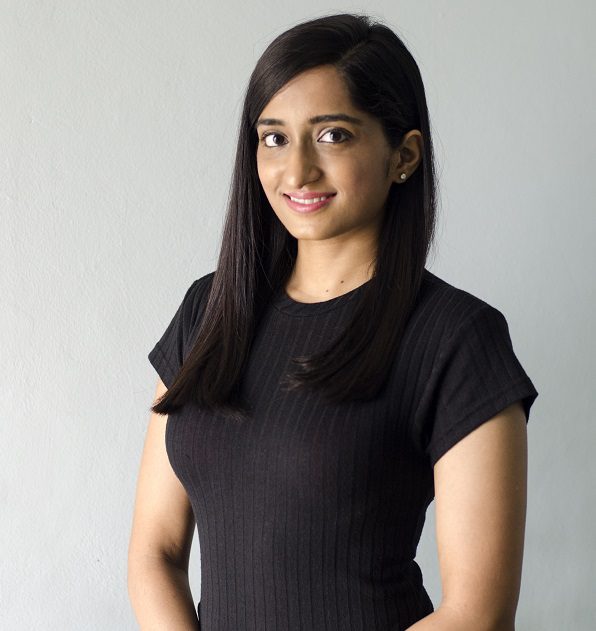
Ruha Shadab
Many people must be asking you why you only choose to work to empower Muslim women. Why not others?
Yes, there have been all combinations of questions. Why Muslim women? Why not Muslim men? Why not Hindu women, and X, Y, Z combination? Right. The truth is that I think of this almost from a doctor’s mindset. So, what is the issue that you’re trying to solve? The issue that we’re trying to solve is underemployment, the lack of job opportunities, and the lack of converting your education into employment.
As a Muslim woman, somebody might say, why don’t you work for the education and employment of women from other communities in India? Why only focus on Muslim women? And that’s true. India has one of the lowest female labor force participation rates in the world. And my answer to that is to think of it as seeing two patients in your clinic.
If both patients show up you can give them paracetamol. But as a doctor, I’m also going to run diagnostic tests on them and try to understand what is the underlying cause, what is the underlying disease that they have and then give them specific treatment.
One might have a bacterial infection; one might have a viral infection. Under different segments, different combinations of communities might be suffering from some of the macro issues we have in India with unemployment and job availability. But the reason is that they are not able to realize those opportunities or those unknown opportunities before us.
Ruha Shadab (extreme right) with her team members
So, the root causes differ. And then building on this, you don’t have targeted interventions focused on these root causes. You will not be able to meaningfully address them and solve them. You need to have at least focused approaches to solving that unique set of root causes that is hindering them from getting full participation in India’s workforce.
The constitution of your Ledby foundation is quite interesting. Your team members are Hindu and you have people from other faiths for the cause of empowering Muslim women. Isn’t it great? In today’s world where every community is looking inwards and they’re busy thinking about themselves?
It’s very validating. My chief operating officer is not from the Muslim community. 20% of our 120 advisers and residents are non-Muslims. 100 out of 500 of our volunteers are non-Muslims. And that just goes to show that the narrative that we are told about our country and our brethren in the country is not entirely true.
If you put your head, you will be surprised to see how many people are willing to stand up and support you. And I think that is what this shows. It also shows that supporting Indian Muslim women is not just important if you are an Indian Muslim woman, but it is in the interest of every Muslim woman, and every Indian to ensure that this unity can realize its dreams today.
Absolutely. Very important point. You know, it’s the intent and the good leadership, that you have, these are the things that matter the most. And when reach out to people irrespective of their faiths people come and support you. You have to have a good cause; people are always there to support you. Tell us more about your programs at Ledby Foundation.
Sure. So, our programs are completely virtual fellowships that we offer to Muslim women who are either in college or in the early stages of their careers. Think of it as if you are 18 to 20 years old and an Indian Muslim woman, then getting into one of the best professional development programs is probably in your best interest to expedite your professional career. There are several components to it. So, one component is online training programs that help you with, your interpersonal skills, your communication skills, and some of the basics of being able to find jobs, reach out to people, submit an excellent CV, and do interview preps.
Another workshop modules look at improving your negotiation skills. Our negotiation curriculum is developed in conjunction with Harvard professors who interviewed Indian women and developed case studies with Indian Muslim women as protagonists that we use to teach negotiations to our fellows. And then the third part, which is often cited as one of the long-lasting effects of the fellowships is our mentorship program. And our mentorship program is a 360-degree framework so each young Muslim woman who joins gets mentored.
The other aspect of the mentorship program is that each Muslim woman has to then have sessions with people in her class. And I would just say women are from across India. So, we have a very diverse group, even though we say Muslim women, it’s a very diverse Muslim women group and we get to speak to each other. The last part of this mentorship program is coaching at the school level over six months.
Ruha Shadab with the team of Ledby Foundation at a function
That’s amazing. Tell us how you make these students or candidates job-ready.
Our fellowship is very much about teaching people how to fish rather than giving them fish. So, we teach them how to identify the right opportunity, how to network with folks, and how to help them with an interview. And then we also have them practice interviews with us. They have access to facilitators, who help practice as you continue to progress.
So who are your stakeholders? Of course, the students, then you have the policymakers who are others you reach out to?
So, we try to bridge that supply-demand gap. We are creating a supply of highly skilled professional Indian Muslim women. And then we’re also making sure that there is a demand from companies to intentionally recruit and create a diverse workforce within their organizations. We bridge the gap between our fellows and companies that want to promote religious inclusion in India.
What is the kind of feedback you get from, say, policymakers and the corporate world when you approach them with this kind of information?
So, we usually try to approach them from a very fact-based point of view. We also carry out research to identify what are the barriers to entry and retention of Muslim women in India’s workforce. The research we conduct help a lot of companies see through a fresh perspective. So even if you educate Muslim women, that does not necessarily mean they have the same chances at employment. The company officials tell us that they never thought about this, they were never made to confront this reality. So, we meet them just to reflect.
Ruha Shadab with a support group of her Foundation
So what kind of support and responses you’re getting from people that you’re reaching out to?
Well, overall, it’s been positive. People are interested in understanding what we do, supporting us in even exploring the talent pool that we are creating. And we have several stories of women who’ve gotten recruited through our own pipeline to companies.
That’s wonderful. And there must be some very bright candidates you come across. We see there is an awareness among Muslim families even in small towns for pursuing higher education.
That’s true. There is a very strong drive and fire within the women that we meet. And we try to move more away from urban centers.
Right now, we are more focused on urban centers and ensure that we are able to move farther away from that in the future. And yes, we do see that. See, I think in addition to being pleasantly surprised at how many people from outside of the Muslim community are willing to help us, with very positive insights.
I’m sure that you inspired a lot of Muslim girls, you’re a big success story from India, an Indian who’s doing so well. Do you also think that we need to convey more such success stories to these aspiring girls to inspire them?
Absolutely. And I think what helped was having people believe in me, and we’re trying to make more Muslim women feel that they are heard and that somebody believes in their talent.
You’re doing deep thinking and you’re working in this field, what would be your appeal to the government and the corporate sector for improving the employability chances of Indian Muslim women?
My appeal would be to have intentionality behind getting more Muslim women into the workforce. The truth is that we shy away from talking about religious inclusion in India, which is strange. Because so much of our lived reality is a function of our religious identity. There is no distinction between the personal, the political, and the professional and it is incorrect to create these artificial distinctions.
source: http://www.awazthevoice.in / Awaz, The Voice / Home> Stories / by Atir Khan / February 29th, 2024
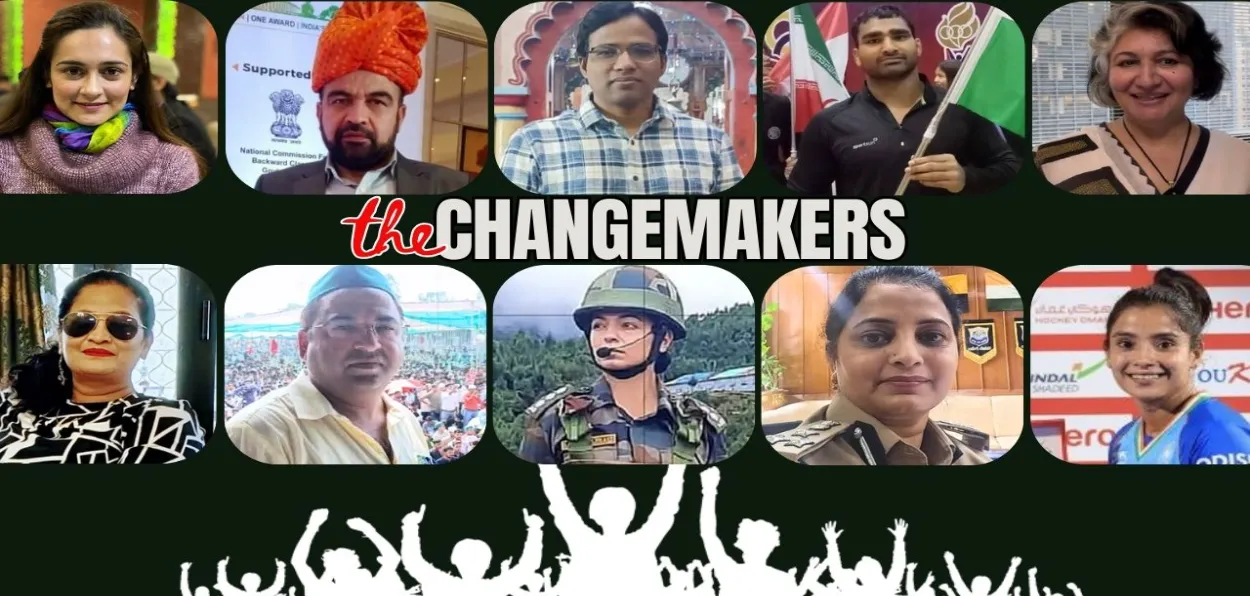
While media spotlight often shines on celebrities and politicians, the real engine of India’s progress runs on the resolve of countless unsung heroes who, away from limelight, quietly transform society.
From national defense to grassroots education, sports, science, and civil service, these individuals from Uttar Pradesh show how courage, compassion, and conviction can drive extraordinary change. Here are 10 such trailblazers whose stories deserve to be heard:
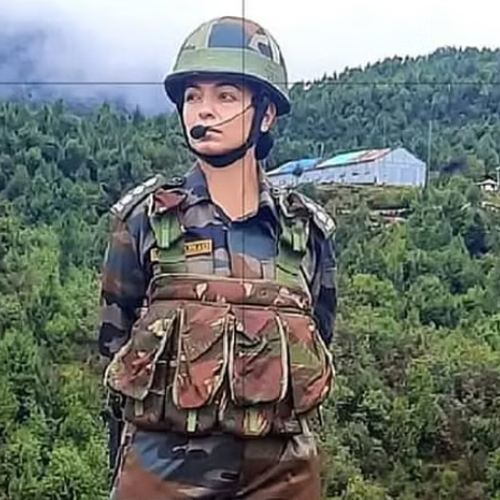
Captain Sariya Abbasi: A Woman in Uniform on the Frontlines
Hailing from a small city of Gorakhpur, Uttar Pradesh, Captain Sayria Abbasi broke every convention to join the Indian Army. A graduate in Genetic Engineering and with plenty of job offers and career opportunities from big companies was not enough for her to pursue in life. The call of service for the motherland was too strong to be sacrificed.
The world noticed her as a soldier deployed at the Line of Actual Control (LAC), India-China temporary border, manning an Air Gun. Today, Sariya leads drone-killer teams and operates L-70 anti-aircraft guns on the border. Her journey from an academic achiever to a defender of the nation’s borders is not just about military precision; it’s about shattering glass ceilings and reshaping how India imagines women in uniform.
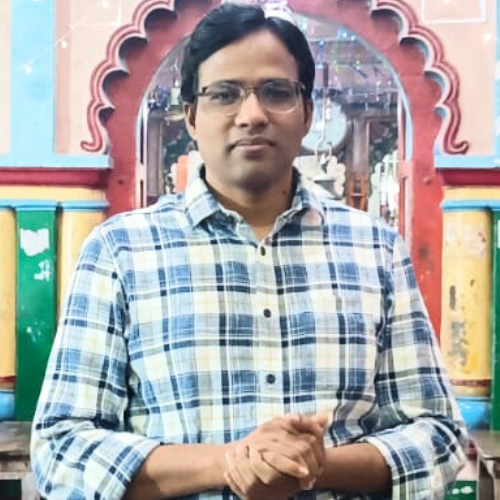
Dr. Faiyaz Ahmad Fyzie: Voice for the Voiceless Pasmanda Community
Dr. Faiyaz Ahmad Fyzie, an AYUSH physician, is more than a healer—he is a public intellectual, columnist, translator, and relentless advocate for the Pasmanda (socially backward) Muslim community. Raised in modest conditions, his rise to national recognition is built on fearless writing and tireless grassroots work.
When even the Prime Minister refers to Pasmanda voices, Fyzie’s years of advocacy resonate. His pen continues to empower those whose struggles were long silenced. His work is a call to conscience—and a roadmap for inclusive discourse.
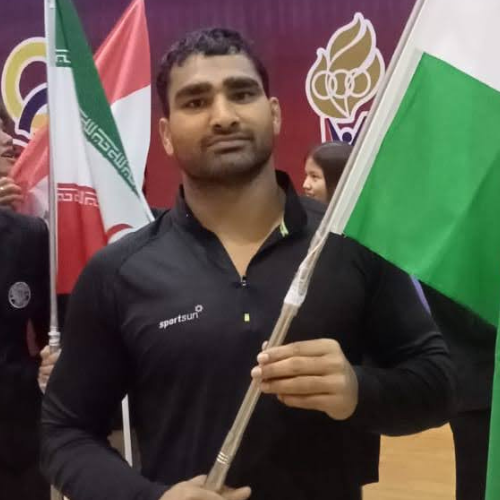
Mohammad Luqman Ali: Wrestling His Way to Glory and Degree
Wrestler Mohammad Luqman Ali, a student of Social Work at Jamia Millia Islamia, is balancing body and brain. Born in Amroha’s tiny village of Mohraka Patti, his father worked on the railways, and his mother gave him religious grounding. Despite limited resources, Luqman’s grit has earned him recognition in India’s wrestling circles.
From the mat to the classroom, his dual commitment shows that excellence doesn’t require compromise. It requires discipline, heart—and a family’s belief in you.
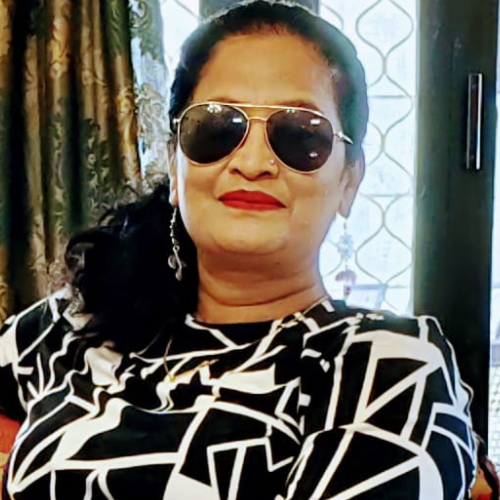
Rubina Rashid Ali: Reviving Mughal-Era Art with a Modern Mission
In a sun-drenched corner of Aligarh, Rubina Rashid Ali has quietly built a movement. Her work in floral appliqué embroidery, a legacy of Mughal art, now supports dozens of women in Aligarh and Rampur. What was once an undervalued craft monopolized by middlemen has been transformed by Rubina into a vehicle for women’s economic empowerment.
Her home resonates not only with the sound of needles and threads but also with the hum of independence. “Real artists were reduced to laborers,” she says. Today, she ensures their hands are not just working — but also earning.
Babban Mian: A Gaushala Keeper Inspired by His Mother’s Love
At Madhu Sudan Gaushalla in Bulandshahr, Babban Mian tends to cows not out of ritual, but reverence — inspired by his late mother Hamidunnisa Begum. “She loved cows like her own children,” he recalls. After she passed away in 2015, Babban vowed to preserve her legacy.
Despite being a Muslim in a Hindu-dominated tradition, he runs a government-recognized shelter rooted in compassion, not controversy. For him, animal welfare is a universal value — not a communal issue. His work quietly redefines what shared culture and interfaith harmony look like.
Khushboo Mirza: From Amroha to the Moon with ISRO
Khushboo Mirza, scientist at ISRO and part of the Chandrayaan-1 and Chandrayaan-2 missions, is a stellar example of perseverance. After her father’s death when she was just seven, her mother raised three children alone, running a petrol pump and defying social norms.
Khushboo earned a Gold Medal in Electronics Engineering from AMU and was the youngest member of the Chandrayaan-1 checkout team. A practicing Muslim and a symbol of India’s scientific aspirations, she turned down corporate offers to reach for the stars—and took a whole generation of girls with her.
Zaheer Farooqui: A People’s Leader with a Vision for Purkazi
In western UP’s Purkazi, Zaheer Farooqui is rewriting what local leadership means. As Nagar Panchayat Chairperson, he donated land worth ₹1.5 crore for the area’s first Intermediate College and modernized local schools into PM Shri-certified institutions.
His initiatives go beyond classrooms. From India’s first double-storey government-run cow shelter to a gym for Muslim women, and one of the most sophisticated rural CCTV networks in the region — Farooqui’s governance is a blend of tradition and tech, equity and empowerment. His Tiranga Yatra revives local history, reminding citizens that patriotism is inclusive and action-oriented.
Dr. Farah Usmani: From AMU to Global Health Leadership
On a cold morning in New York, Dr. Farah Usmani stood outside an apartment, a folder in hand, her eyes bright with resolve. The daughter of Uttar Pradesh, she is today a formidable presence in global health policy.
n M.D. in Obstetrics & Gynecology from AMU, Farah sought impact beyond hospital walls. Armed with a Master’s in Health Policy from LSE and the London School of Hygiene & Tropical Medicine, she’s led transformative health initiatives around the world. Her journey is one of intellect guided by idealism — a doctor who chose not just to heal individuals but to reform systems.
Anjum Ara: Bridging Communities Through Compassionate Policing
Hailing from Azamgarh’s Kamharia village, Anjum Ara, a 2012-batch IPS officer, has redefined the image of policing with a human touch. A computer engineer by training, her journey from Integral University to Senior Superintendent of Police in Shimla has been marked by integrity and reform. Known for her work in cybercrime and her community-focused policing model, Anjum is also a fierce advocate for girls’ education.
Together with her husband, IAS officer Yunus Khan, Anjum adopted the cause of Khushdeep, the daughter of a martyred soldier, pledging to support her upbringing. This act of empathy mirrors her professional ethos, proactive, principled, and deeply people-centered.
Mumtaz Khan: From Vegetable Stall to World Hockey Stage
From the bustling alleys of Lucknow’s Cantt area to the turf fields of South Africa, Mumtaz Khan’s journey is pure grit. Once helping her father at a vegetable stall, a single race at school changed her life when Coach Neelam Siddiqui noticed her speed. That moment set her on a course to become a leading forward in India’s Junior Women’s Hockey Team.
Her standout performance at the 2018 Youth Olympics, where she scored 10 goals, earned her national acclaim. Yet, Mumtaz remains rooted, balancing hope and humility as she eyes the Olympics. She is proof that dreams born in dusty streets can blaze across international arenas.
These ten changemakers hail from Uttar Pradesh, from narrow village lanes to bustling metros, from battlefields to laboratories. But they are united by one thing: quiet, relentless courage. In their lives, we find the India that persists, uplifts, and transforms—not with headlines, but with hard work.
The All India Muslim Development Council (AIMDC) has officially unveiled the final list of “40 Under 40 Leaders” — a landmark initiative aimed at identifying, nurturing, and empowering the next generation of Muslim leaders in India. The announcement follows one of the most exhaustive and merit-based selection processes in the nation’s recent history, spanning a year-long journey and involving multiple stages of evaluation.
From 950 Applications to 40 Leaders
The initiative drew an overwhelming response, with approximately 95 applications from across the country. Candidates came from diverse fields — education, politics, corporate leadership, engineering, medicine, activism, journalism, law, research, academia, entrepreneurship, economics, Shariah scholarship, counselling, motivational speaking, Ulemas, students and governance.
The journey began with a meticulous application process, requiring detailed documentation of qualifications, achievements, contributions to society, and personal background. Based on rigorous assessment criteria, 215 applicants were shortlisted for personal interviews.
An expert panel then conducted comprehensive interviews, narrowing the field to 112. Following further scrutiny, 105 exceptional candidates earned a place in the in-person finale for 4 days.
Four Days of Intense Evaluation in Bengaluru
In India’s startup capital, Bengaluru, hosted the four-day in-person selection event.
Candidates participated in group discussions, parliamentary-style debates, and collaborative tasks designed to assess both individual brilliance and teamwork capabilities.
Organizers also closely evaluated their commitment to nation-building, sincerity towards the Community, Human Relations and personal discipline
From this stage, 70 leaders were selected, each awarded a Certificate of Leadership in addition to a Certificate of Participation.
Silent Assessment for the Final 40
On July 1, 2025, the same day as the 70 Leaders’ announcement, AIMDC formed an Adhoc (Consultation) Committee of 40 Under 40 Leader blending self-nominated leaders and organizer nominations.
They were asked to pick two projects of their interest from a curated list of initiatives aligned with Community and nation-building. The objective: evaluate their decision-making capabilities, foster team bonding, spark brainstorming, and plant the foundational seeds of advanced leadership skills.
Unbeknownst to many participants, this period doubled as an “invisible” final evaluation. Organizers monitored sincerity, akhlaaq (good character), ikhlaas (pure intentions), punctuality, and the ability to follow through on commitments. Participation in educational events, organizational skills, and collaborative spirit were also critical factors in determining who would advance.
The Final 40 — India’s Muslim Leaders of Tomorrow
After months of observation, assessment, and engagement, AIMDC has now announced the final 40 Under 40 Leaders — individuals under the age of 40 whose vision, expertise, and dedication position them as catalysts for positive change.
We were truly overwhelmed by the remarkable talent, dedication, and vision demonstrated by all 70 leaders who participated in the process. After a rigorous evaluation, the final 40 leaders selected under the 40 Under 40 Initiative will form the National Executive, serving as the strategic and driving force of the initiative.
Recognizing the immense value and potential of the remaining 30 outstanding leaders, we have proudly welcomed them as members of the National 40u40 Team. They will play a pivotal role in executing projects and events at all levels, ensuring our mission reaches communities across the country and contributes meaningfully to nation-building.
“This initiative is more than a recognition program — it is the foundation of a Change,” said an AIMDC Gen Secretary. – Mohammed Imthiyaz “These leaders represent the intellectual, moral, and strategic strength needed to guide our community and contribute meaningfully to the nation.”
“I came here thinking I would meet other young leaders. I leave knowing I am part of a network, a brotherhood and sisterhood of purpose,” said one of the selected leaders from Maharashtra.
“The process was humbling. It wasn’t just about our CVs — it was about our character, our sincerity, and our ability to work for something bigger than ourselves,” added another finalist from Kerala.
Sidebar: Fields of Expertise Represented in the Final 40
• Education Specialists
• Politicians & Policy Advocates
• Corporate Leaders & Entrepreneurs
• Engineers & Doctors
• Activists & Journalists
• Legal Experts & Researchers
• Shariah Scholars & Counsellors
• Motivational Speakers & Coaches
• Economic Policy Experts
• Ulemas
• Students
Names of the Selected Candidates:
Afza Khan
Imaan Hawwa Hafiz
Amreen Farooq
Juveriya Sarkar
Amrin Ayaz Shaikh
K. HAJIRA SULTHANA
Areefa ali
Ramsa Jaan
B Seeni Rahfu Nisha
Raniya Zulaikha
Fathima Saba
Rikza Pervez
Gulzar Karishma Malik
Shabnam Mohammed Akbar Khan
Hina Fatima Sarfraz Ali Sayed
Zulekha S Rajani
Mufti Yahya Moin Samar
Mohd Imad Ali
Abdul Gani Nadeem Punjabi
Mohd Ovais
Adil kampoo
Mohd Zeeshan
Afsar Rayeen
Mossab Mustafa Khan
Asadullah Waliullah Khan
Muhammed Rafi KE
Asiruddin Shaikh
Mujtaba Muneeb
Dr Bilal Sheth
Nawaz S
Dr Mirza Alamdar Ali Baig
Nouman Alam
Fahad Abdul Basit Hani
Ramiz Abdul Wadood
Khan Abdur Rehman
Reyaz Haider
Md Faizan
Sarfaraz Khan
Md Faizan Ahmad
Sarfraj Nawaj
Md Faizul Bari
Seemab Qayyum
Md Fateen Raza
Shaaz ahmed faruqui
Md Hifzur Rahman
Shaik Shabeer
Md Osama
Sharukh Syed
Md Sadaf Kamran
Sheikh Khurshid Alam
Md Saleh Umar
Suhaim ul islam
Md Yazdani Feroze
Syed Ansar Ali
Meer Faisal
Syed Hamid Ali Moin
Mohamed Maaz
Syed Shoaib Qasim
Mohammad Aamir Ansari
Syed Umar Ahmed
Mohammad Abdul Ahad
Tariq Abdullah Akhon
Mohammed Aftab Ahamed
Umar Farooq Masoodi
Mohammed Feroz
Wafi Shihad
Mohammed Gulam Ahmed Khan
Yusuf Mohamedy
Mohammed Ismail
Zubair Ahmed
About AIMDC’s Vision
The All India Muslim Development Council (AIMDC) is committed to fostering leadership that serves both the Community and the nation with excellence, integrity, and unity. The 40 Under 40 Leaders Initiative is envisioned as an incubator for change-makers, equipping them with networks, mentorship, and the moral compass required to navigate the complex challenges of modern society with Collective Efforts
source: http://www.muslimmirror.com / Muslim Mirror / Home> Indian Muslims> Positive Story / by Muslim Mirror Network / August 16th, 2025
Bhoothpur Town (Mahbubnagar District), TELANGANA :
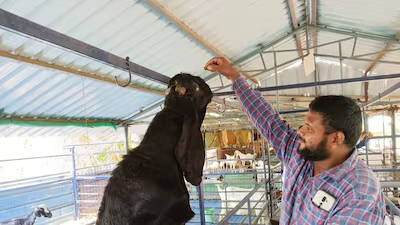
Anwar, a native of Bhoothpur town in the Mahbubnagar district, opened a private goat breeding farm in his native town in 2018, with the intention to rear goats of different breeds.
A private goat breeding farm in Telangana has been rearing goats of different breeds with utmost care. Anwar, a native of Bhoothpur in the Mahbubnagar district, opened a private goat breeding farm in his native town in 2018, with the intention to rear goats of different breeds.
They include African Boer, a breed developed in India after being imported from South Africa, Mewati of Haryana, Hyderabadi and other domestic and foreign breeds of goats.
The farm has been developing new breeds by mating a male goat of one breed with a female goat of another breed.
In a first of its kind in the state, the farm has implemented a cage system, where the goats are kept in cages according to their breed. The cage system is built on a plastic floor with holes three to four feet height from the ground for the disposal of waste from the goats. The cage system is built in a way that helps keep the cages clean and the goats safe from diseases, Bhoothpur animal husbandry development officer Madhusudan said.
In order to develop a new breed, one male goat has to mate with female goats of three generations. The process takes almost two-and-a-half years depending upon the preparedness of the female goat to mate with the male.
“We bought goats and sheep from different places and performed some experiments in which we succeeded. We are not selling them as we aim to supply the best breeds to the farmers. It is a costly procedure but we are doing it for the farmers,” Anwar told News18.
The farm has been mating breed couples such as Mewati – Sojat, Mewati – Hyderabadi, Domestic breed – African Boer and so on.
Anwar told News18 that he has spent Rs 25 lakh on the farm so far. Currently, the farm has 160 goats, but Anwar aims to rear as many as 10,000 goats on his farm.
source: http://www.news18.com / News18.com / Home> English edition / by Mohd Rafi Ahmed Ahmed / April 01st, 2024
Among the change makers from Kerala are pioneers and achievers in various fields of life. They have either been trying to bring about changes in society or the fields of business. They have used music, literature, and sometimes love to bring humanity closer, to spread joy and peace.
The list includes social activists, singers, spiritual mentors, lawyers, teachers, and even IAS officers.
Ayisha Abdul Basith
Ayisha sings Naat or Islamic devotional songs, and at the age of 20, she has enthralled listeners in over 80 countries. Born in Kerala, Ayisha has migrated to Abu Dhabi, where she is pursuing spiritual music as a way to universal peace and joy, as she puts it.
Safna Nazruddin
She dreamt of becoming someone who could help the disadvantaged sections of society. Safna Nazruddin thought being an IAS officer would help her achieve that goal.
And she took her dream so seriously that at the age of 23, she became Kerala’s youngest Muslim IAS officer.
PC Musthafa
He wanted to pull his family out of their poverty. Growing up in rural Wayanad, watching his father toil in the fields as a farm labourer, he wanted to change his parents’ lives for the better.
When he completed his studies at IIM, he started small with his cousins in a 500 square feet room, selling 100 packets of idli batter to 30 shops in Bangalore.
Today, he is the king of idli batter supplying in more than 10 countries outside India and reigning over a 4000 crore business.
VP Suhara
VP Suhara has been fighting for changes in the Muslim personal law and is one of the petitioners appealing for equality of gender in the matter of succession rights.
She says she is not very optimistic, but she is not ready to give up her fight.
Kadeeja Mumtaz
Kadeeja is a novelist who won the Sahitya Academy award for her novel. But today she has taken to activism on a full-time basis, and her main preoccupation is with bringing different religious communities together to improve mutual understanding and communication.
Advocate Sukkur
Advocate Sukkur did the unthinkable when he remarried his legally wedded wife just to make a point to all his fellow Muslims.
He wanted to tell them that they can overcome the barriers to succession rights of their daughters by remarrying their spouses under the Special Marriages Act.
Noor Jaleela
Noor means light, and the luminous smile on Noor Jaleela’s face echoes her name. She was born without her four limbs. But her smile does not betray any such disability. She has been a model for courage and creativity in the worst circumstances.
She has been an influencer and also an artist, and a singer.
Padma Shri Mumtaz Ali
Mystic and spiritual mentor Padmashri Mumtaz Ali, or Sri M as his followers call him, hails from Thiruvananthapuram and heads a spiritual group called Satsang Foundation. His spiritual pursuits and his work among the people as a symbol of the oneness of humanity and the divine have made him transcend all man-made boundaries and divisions.
He has become an example of universal oneness and love as his life’s work and teachings appeal to people of different nationalities and religions. He asks them to continue following their religion while practising meditation and other spiritual pursuits to realise themselves.
Hadiya Hakeem
Can a football mean anything other than a game? Well, Hadiya Hakeem has turned a football into a statement for the empowerment of women.
She is a freestyle football performer born in Kozhikode who has overcome all possible barriers of gender, nationality, and religion through her talents and her hard work in excelling in a unique kind of performance.
Onampally Faisy
Progressive scholar and Sanskrit enthusiast Onampally Faisy has tried to transcend boundaries by promoting interfaith education in his madrassa. A well-known scholar from Thrissur in Kerala, he has been working towards building bridges of understanding and communication between Muslims and other communities in Kerala.
Since he believes in becoming the change he wants, he started teaching holy texts of other religions in his madrassas in order to remove the veil of ignorance and bring communities closer.
source: http://www.awazthevoice.in / Awaz, The Voice / Home> The Changemakers / by Sreelatha Manon / August 17th, 2025
Abdul Jabbar Siddiqi, a key leader of Karunya Society, addressing the event titled Community Connect Mission & Vision in Bidar
Bidar:
In a remarkable example of ethical finance and grassroots development, small and medium traders in Bidar have demonstrated exemplary financial discipline by repaying their loans promptly and in full. This achievement, driven by the Karunya Society’s interest-free microfinance programme, was celebrated at a recent city event titled Community Connect Mission & Vision.
Abdul Jabbar Siddiqi, a key leader of Karunya Society, revealed a striking figure – 98% of loans issued to small traders have been repaid on time. To him, the statistic is more than a financial milestone; it reflects the honesty, sincerity, and perseverance of the beneficiaries.
“These traders were once trapped in debt cycles with exploitative moneylenders,” Siddiqi said. “Today, they are finally enjoying the full rewards of their hard work.”
Karunya Society operates 47 branches nationwide, disbursing nearly ₹1.25 crore in loans each day and supporting around 1.25 lakh families.
Branch head Mujtaba Khan detailed the local outcomes: over the past seven years, around 3,500 families in the district have benefitted from ₹60 crore in business loans and ₹2.4 crore in emergency hand loans. Beneficiaries – such as Panchsheela Garments, Pramila Tailor, Ravi Kani Footwear, Shiv Kumar Udaygir, and Faheem Qureshi – shared heartfelt testimonies of how the programme transformed their livelihoods.
Karnataka Minister for Municipal Administration and Hajj, Rahim Khan, praised the effort, admitting he had doubts when the society launched seven years ago.
“Many banks were struggling back then, and I wondered whether this interest-free model could survive,” he said. “But its growth and impact are nothing short of a miracle.” He commended the society’s volunteers for their selfless service, noting none take personal profit.
Former Managing Director of Bidar District Credit and Cooperative Bank, S. Kudre, underlined the programme’s significance, pointing out that many interest-based microfinance institutions are now in crisis. “An interest-free society with 3,500 active members thriving like this shows the model works – and India needs it now more than ever,” he said.
Dr. Abdul Qadeer, Chairman of Shaheen Group of Institutions, urged affluent community members to deposit surplus funds into Karunya Society to enable more interest-free lending. Similarly, Jamaat-e-Islami Hind’s city president, Mohammed Muazzam, proposed opening of a new branch in Bidar’s New Town to widen the reach.
Karunya Society’s model is proving to be more than a financial service – it is a movement built on trust, compassion, and shared prosperity. By empowering small traders to escape debt traps and build sustainable businesses, it offers a credible, humane alternative to conventional interest-based finance.
source: http://www.radiancenews.com / Radiance News / Home> Latest News / by Mohamed Atherulla Shariff / August 13th, 2025
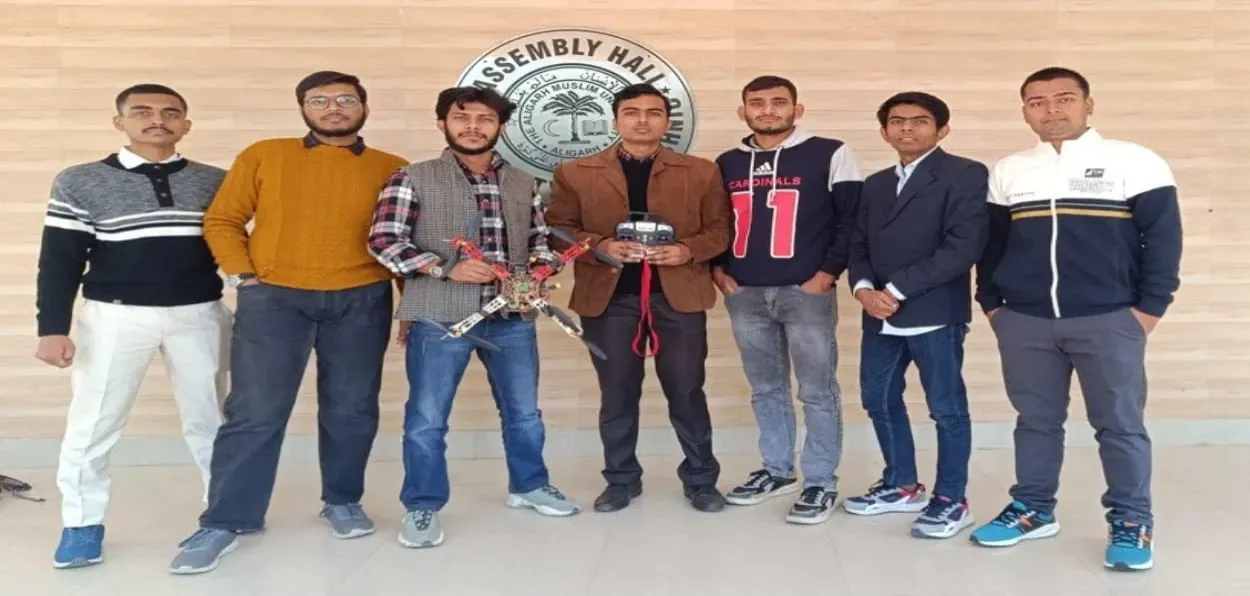
Students of AMU with their delivery drone prototype
Aligarh :
Showcasing creativity and technological ingenuity, a team of final-year students from the University Polytechnic, Faculty of Engineering and Technology, Aligarh Muslim University (AMU), has developed a Delivery Drone Prototype, a promising step towards autonomous aerial delivery systems.
Guided by former Principal of University Polytechnic, Prof. Arshad Umar and Dr. Tanveer Hasan, Associate Professor at the Polytechnic, the student team comprising Saubaan Ahmad Siddiqui, Ehtesham Ahmad, Shabab Khan, Ankit Tomar, Anas Khan, Muzaffar Hussain, and Omaan Ahmad Ansari successfully carried out six autonomous delivery missions within the university campus over a span of two months.
Equipped with real-time video streaming, autonomous navigation, gesture-controlled backup, and a custom dashboard to track flight data and delivery paths, the drone highlights the university’s commitment to hands-on, interdisciplinary learning.
This initiative is part of AMU’s larger vision to promote student-led innovation and applied research in emerging technologies. The project has received wide appreciation in academic circles for its relevance to real-world logistics, emergency response, and smart campus solutions.
Although this is a prototype for academic use, the team plans to enhance the system with AI-based object detection and an expanded operational range, reflecting the university’s emphasis on innovation-driven education and future-ready skills.
source: http://www.awazthevoice.in / Awaz, The Voice / Home> Stories / by Aasha Khosa, ATV / July 28th, 2025
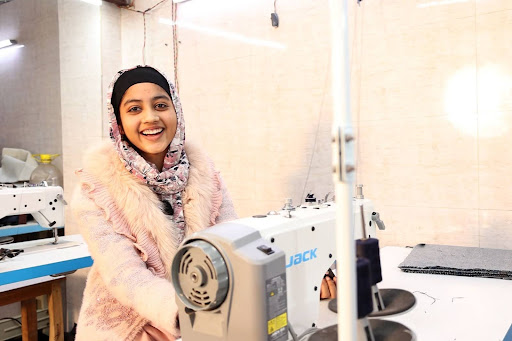
Women at the Sabaat Center share a moment of joy, building community through their shared work
New Delhi:
Shiv Vihar carries the silence of broken dreams. The 2020 Delhi riots swept through this northeast Delhi neighbourhood. Homes were burned, shops looted and lives uprooted. Among the soot and rubble, 19-year-old Shumayla and her family lost everything. Their house was reduced to memories.
Today, she sits at a sewing machine in the Sabaat Centre, threading fabrics into full-grown suits. “I began at ground level. Now I can make entire suits. It feels nice to create something on my own,” she said.
For her, the needle of her sewing machine is like a compass guiding her towards hope.
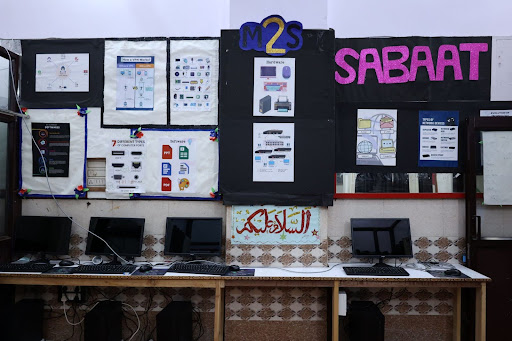
The Sabaat Center at Shiv Vihar
Sewing Stories with Sabaat
An initiative of the Miles2Smiles Foundation, the centre was born from the same flames that destroyed Shumayla’s world. Its founder, Aasif Mujtaba, witnessed firsthand how survivours in Shiv Vihar held together their shattered worlds.
“I saw women in Shiv Vihar holding their worlds together with grace, and I knew they deserved more than just pity,” he said.
From this empathy came Sabaat, a place where women learn to stitch, create and rebuild their identities.
Shabnam, a mother of three, leaves behind her home chores for a few hours to learn something creative at the centre.
“While managing the house along with the work is difficult, I love coming here,” she says.
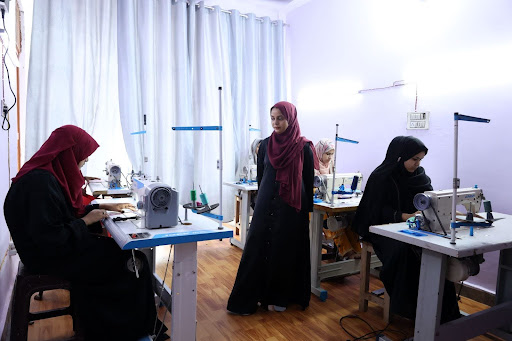
At the center, women thread, stitch and craft, turning cloth into outfits, tote bags, pouches, magnets, mugs and keychains.
Women work at sewing machines in the Sabaat Center, crafting outfits and other merchandise
Aasif calls their work a story: “Every tote bag, keychain, magnet or cup has a story of survival, strength and hope.”
Farheen Ansari, a fashion designer who leads the training, ensures their skills match market demands. The women attend morning sessions from 9 am to 11 am, growing from beginners to masters over six months or more, depending on their pace.
“We get orders from local boutiques,” she told TwoCircles.net.
Their crafts are sold through the Sabaat Store, returning income directly to the women who made them.
Beyond Stitching
But Sabaat’s work is not limited to sewing. Women learn how to handle orders, set prices, brand products and even promote them online. Acquiring these skills are essential to turn trainees into entrepreneurs.
“Whenever a student learns something new, I tell her to implement it at home,” says Farheen, adding that some do just that.
Sabaat empowers women by providing emotional support alongside practical skill training
Women like Sangeeta, Daraqshan, Saiba and Gulafshan have started their own small businesses.
Initiated for survivors of hate violence, widows and women from marginalised and economically vulnerable groups, Sabaat has already trained 70 women.
“Impressively, at least 70% of them have achieved financial independence, whether working within Sabaat or starting their own ventures,” claims Aasif.
Women at the center undergo an extensive training program for manufacturing products
In addition to offering skill-based training, the programme is also bridging trauma and offering dignity, trust and a voice. Most days end in shared smiles. The women’s laughter fills the centre, evidence that even broken neighbourhoods can teach courage.
Amid ongoing struggles for justice and pending compensation, Sabaat brings healing where paperwork lags. Plans are underway to expand, bringing this safe space to more women and more neighbourhoods.
source: http://www.twocircles.net / TwoCircles.net / Home> India News> Indian Politics> Indian Muslim> Lead Story> Women / by Maryam Hassan & Unzila Sheikh, TwoCircles.net / August 10th, 2025