All is not well in paradise. Rumblings indicate legal firecrackers on Hyderabad’s skyline.
Hyderabad:
In a belated move, Prince Azmet Jah has come out with a declaration that he is the successor to his father, Prince Mukarram Jah Bahadur who passed away on January 15, 2023.
At that time, Mukarram Jah’s body was flown in from Turkey where he was living and died, to Hyderabad and laid to rest at the Royal Cemetery located within the courtyard of Makkah Masjid.
He was given the Guard of Honour by the Telangana State government.
Public notice
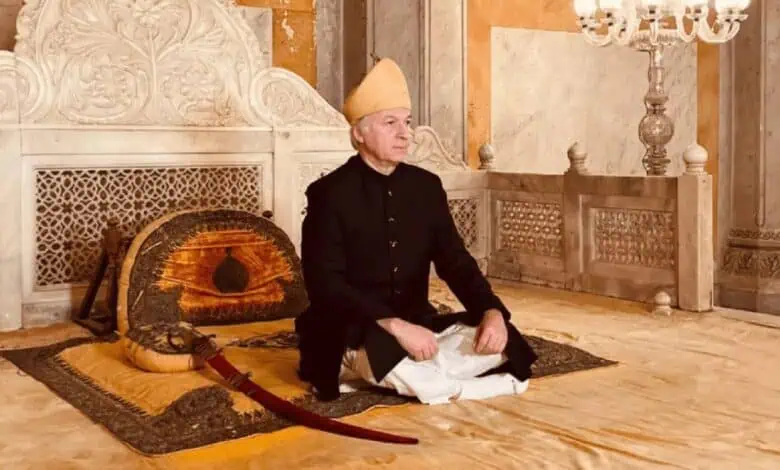
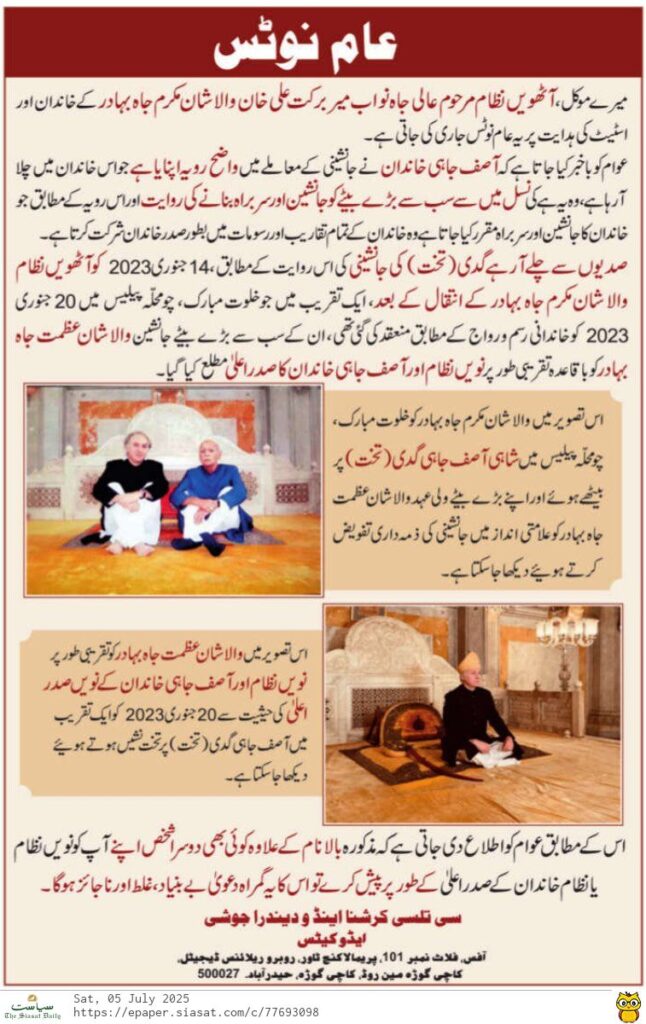
In a public notice published on the front page of Siasat Urdu daily on Saturday (July 5, 2025), Azmet Jah has claimed that on January 20, 2023, he was declared the titular head of the Asaf Jahi family. The notice carried his photograph with father Prince Mukarram Jah sharing the ‘gaddi’ (throne or chair).
The caption to the photograph does not say when the picture was taken but mentions that it was taken at Chowmahalla Palace to informally declare his son as heir.
The advertisement also carries another photograph in which he can be seen sitting alone on the same gaddi, and the caption reads that the photograph was taken on January 20, 2023.
The breaking of silence by Azmet Jah on the succession after over two years of the death of his father is intriguing. Some of the senior citizens of Hyderabad and observers of the ‘Royal Family’ are wondering why this time was chosen to make a public statement.
There could be two main reasons. One, that his brother from another mother, Ayesha (formerly Helen) Sikandar (Alexander) Jah has given him a legal notice a few months ago staking claim over the wealth left behind by Mukarram Jah (Siasat.com had carried the details of the notice at that time). He has said in the notice that he too is a shareholder in the properties left behind by his father.
Huge assets
The assets left behind by Mukarram Jah are huge. They include Chowmahalla Palace, Falaknuma Palace (which has been leased out to Taj Group of Hotels), a portion of Chiran Palace (which has been renamed by the state government as Kasu Brahmananda Reddy Park in Banjara Hills), King Koti Palace and other sundry properties.
The allegedly penniless Sikandar Jah is said to be in the city pursuing the case he has filed by lawyers who have their office in Secunderabad. It is not known in what state that case is.
There is another twist in the tale. Raunaq Yar Khan, a scion of the Nizam family, has staked claim to the ‘kursi’ a little after the demise of Mukarram Jah. Some members of the Nizam family who describe themselves as Sahebzadas (sons) of the persons who were closely related to the Nizam have gathered around him and declared him as successor to Mukarram Jah, the eighth Nizam.
Raunaq is a claimant
Raunaq Yar Khan mostly carries a bundle of documents with him to prove that he is actually the current Nizam. Many people, including those in the media, toe his line.
According to the Royal Family sources, even the legitimacy of the Eighth Nizam, Mukarram Jah Bahadur is questionable. They cite the episode where Princess Ahmad Unnisa alias Shahzadi Pasha, daughter of the Nizam Seventh had questioned the legitimacy of the title bestowed or taken away by Mukarram Jah. She claimed rights to the title and assets as she was the true heir of her father. She took her claim to the High Court of Andhra Pradesh and won. The verdict was challenged by Mukarram Jah in the Supreme Court. It was there that the aunt and nephew reached an understanding (it is not known at what cost), and the matter was declared closed.
source: http://www.siasat.com / The Siasat Daily / Home> Opinions / by Mir Ayoub Ali Khan / July 05th, 2025
That women’ s bodies and choice of clothing are ostracized and politicized, is not new discourse. Much discussion on the subject has ensued in recent decades by liberals, feminists, progressives and conservatives alike. Add to that visible religious practices, such as head covers (Hijab) and face veiling (Niqab) among Muslim women, and the scrutiny is further exponentialized. So much so, that it disrupts the principles of liberal and western feminists, and suddenly women’s rights to choose what they want to wear begins to be rephrased, and women’s agency to choose to cover themselves is questioned and looked down upon as ignorance or backwardness. As such, Muslim women who practice various degrees of visible modesty, from Hijab to Niqab navigate feelings of discomfort, unwelcome, as well as (c)overt violence when accessing public spaces, including schools, workplaces, markets, restaurants and more. They are often perceived as beings without agency and intellect, and far removed from the mainstream intellectual public realm. Their choice to dress themselves in accordance with their religious and spiritual goals makes their presence in public unwelcome and politicized.
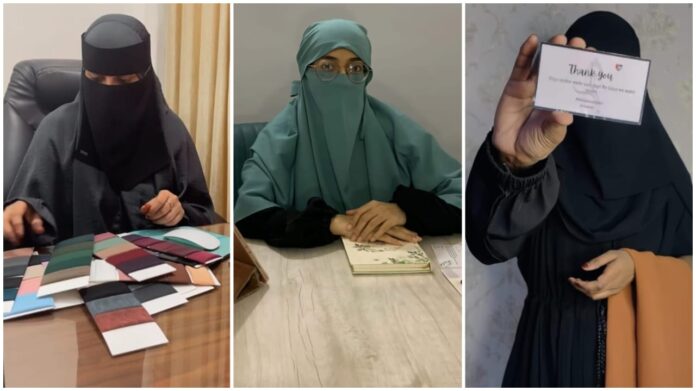
In this article, through interviews with three Niqab-observing Muslim women who have successfully curated , established, and operate their own faith-based businesses primarily selling products through digital means,we draw attention not only on the discomfort and challenges faced by Muslim women in public spaces and traditional office workplaces, but we also highlight the agency embodied by these women to pursue their professional goals in accordance with their personal religious beliefs.
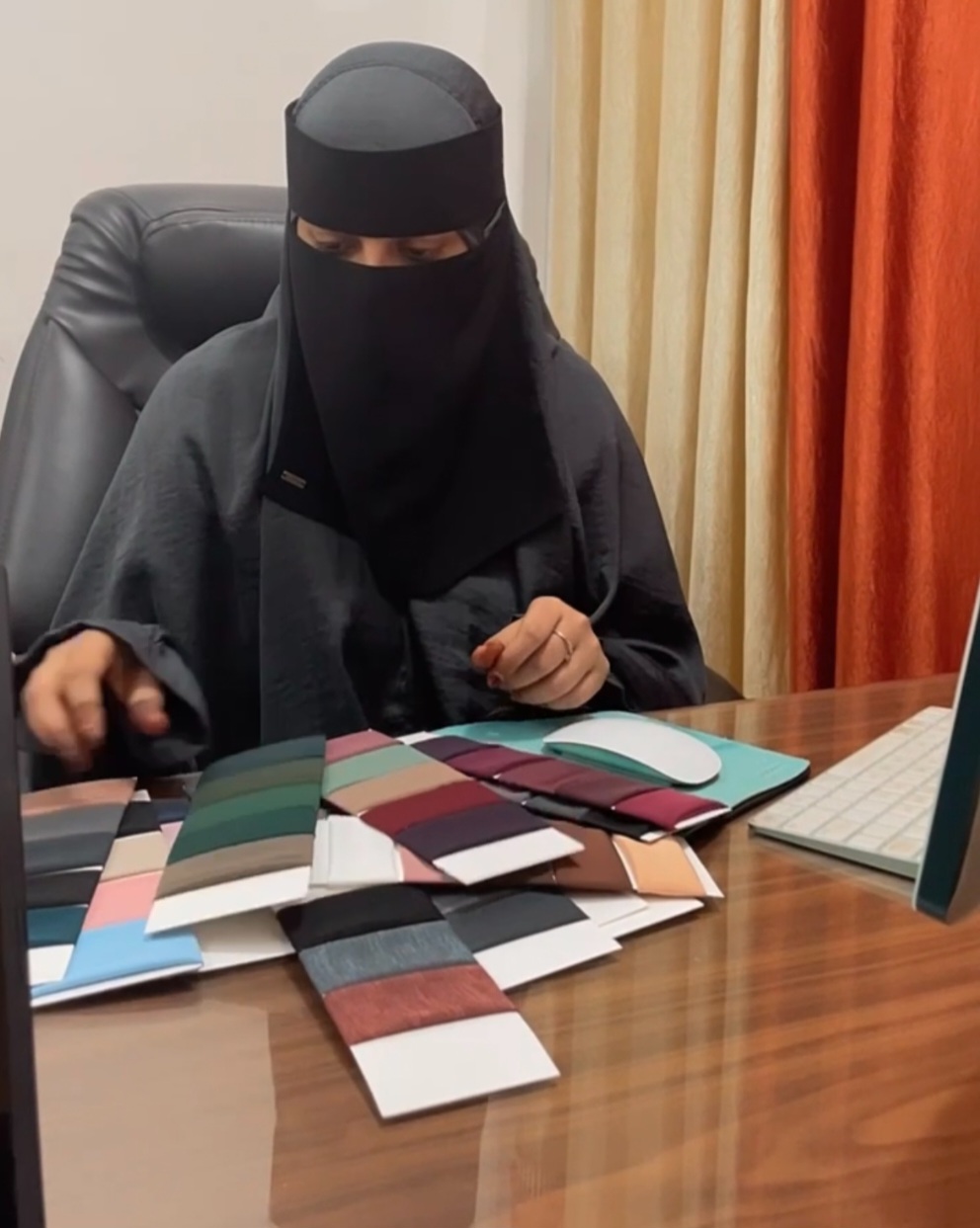
Residing and operating their businesses in India, our interviewees – Kehkashan, Asma Nafis Ansari and Mantasha– have been able to capitalize on the growing adaptation of digital technologies in recent years and produced workspaces for their businesses that offer them the safety and flexibility to pursue their multifaceted aspirations holistically. Rather than waiting for space to be given to them or created for them, they have taken the initiative upon themselves, and are doing so with grit, faith and vision. In doing so, they not only benefit themselves, but also provide employment opportunities, inspiration, and alternative workplace options to others who may find themselves facing similar challenges of discomfort in the public realm.
Faith as an anchor
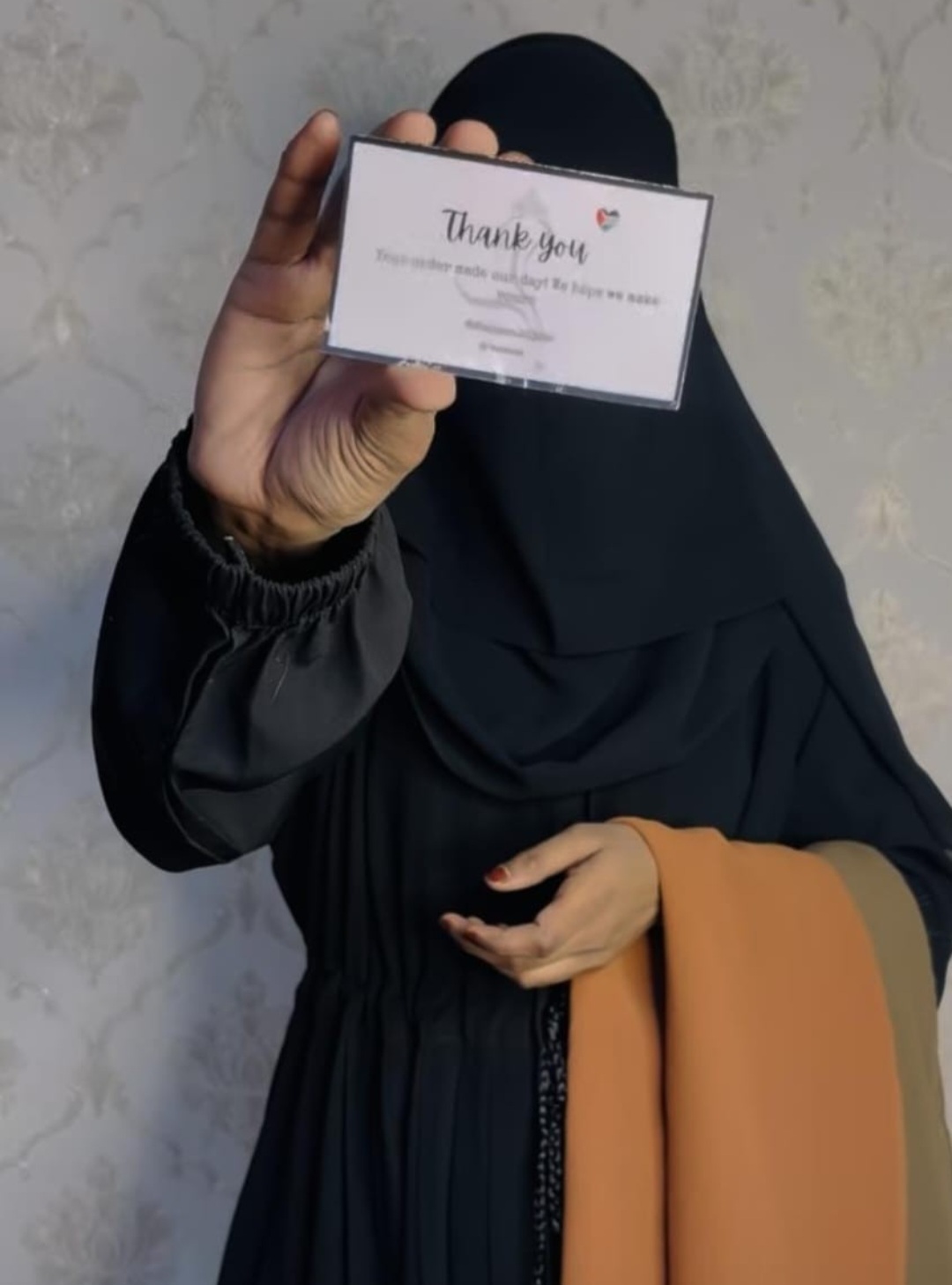
For these three muslim women, faith is not just a silent actor, but the compass that guides their journeys. Kehkashan, who co-founded ‘Shop Taaseen’ with her business partner Saida Moin, says that they started with a small product, an Umrah dua card in 2024. Today, Shop Taaseen offers a range of faith-based lifestyle products—designed to make Islamic knowledge and reminders part of everyday routines, especially for young Muslims in India. Early on in her academic life, Kehskashan says, she recognized a desire in her to create something of her own but did not know what it would be. She describes herself as someone who has always leaned into creativity with a strong sense of self – “Whatever I do, I want it to be for the sake of Allah.” she shares. That clarity guided her decisions, especially when the spaces around her were not accommodating to her identity. When asked what helped her stay rooted in her vision, Kehkashan said, “the Niqab became my north star. It shaped how I wanted to show up in the world.”
Kehkashan co-founder of Shop Taaseen
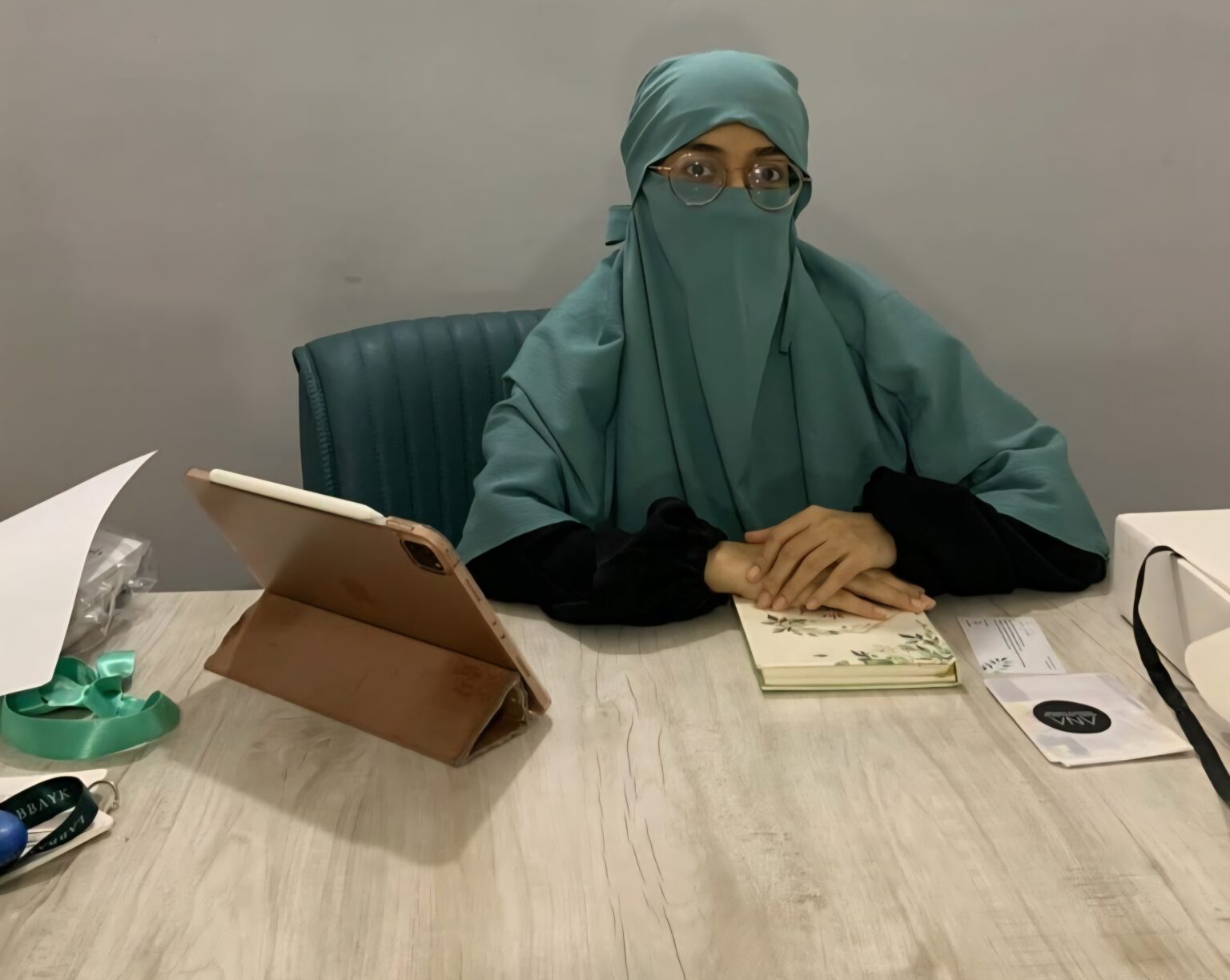
Similar to Kekhashan, our second interviewee, Asma Nafis Ansari, founder of ANA, a modest wear brand, spoke of her strong aesthetic sense, shaped by her training at the National Institute of Fashion Technology (NIFT) Kolkata. As a student at NIFT, Asma developed a signature style for her designs over the years, eventually winning her school’s Graduation Award in her final year, for her knitwear collection inspired by the mid-20th century style, Brutalism. Before launching ANA, Asma began a more intentional journey of reconnecting with the Qur’aan. It was during her study of Surah An-Nur, she says, that her personal understanding of purdah or veiling/modesty deepened. “That connection with the Qur’aan gave me clarity…” she says, “… I didn’t just want to work in fashion —I wanted to create something deeply rooted in modesty and meaning.” Today, ANA is not just a clothing brand, but a value-aligned space for modest fashion.
Asma Nafis Ansari the founder of ANA.
Our third interviewee, Mantasha, who holds a postgraduate degree in development communication from Jamia Millia Islamia, launched Shaheen Hijabs after realizing that mainstream, traditional workspaces would not be welcoming of her niqab. After post-graduation, she accepted a position in the development sector that involved extensive fieldwork. While her supervisor remained supportive, she realized that navigating public-facing roles as a Niqabi came with quiet, persistent tensions. “In that environment, personal identity played a critical role…” she reflects, “… people advised me to remove my niqab temporarily—saying it was not obligatory. But no matter how practical their advice sounded, I could not bring myself to do it.” She underscores that, “My niqab is not just a piece of cloth, it is a reflection of my faith.” What followed was a phase of uncertainty, reflection, and quiet resistance. Eventually, she decided to start something of her own and launched Shaheen Hijabs.
Mantasha, the owner of Shaheen Hijabs
For these women, faith is not just their religious belief. It is the guiding principle in their work. They refused to be reduced to stereotypes or forced into palatable molds, and instead have each chosen to build businesses that reflect their aspiration, purpose, religious, spiritual, and personal values.
(In)visible Practices of Faith
For Muslims, religious faith is embodied and practiced in a myriad of ways. Some aspects remain quietly held within—like Taqwa (consciousness of God) or Tawakkul (trust in divine will) – are inward practices that guide one’s principles.
However, there are other religious practices that present more visibly, like offering Salah or dressing modestly in accordance with religious guidelines. Similarly, for many Muslim women who adorn the hijab or niqab, their choice to do so is rooted in faith, devotion and identity.
For Kehkashan, the tension between her visible and invisible religious practices became apparent during a fellowship she had joined before Shop Taaseen. She recalls, “Her cohort of Fellowes were mostly non-Muslim, but they were respectful and very welcoming towards me. I felt seen.” But that feeling did not last long for her. She goes on to say, “[However,] The founder would question my practices, compare me to other Muslims. Many times I was subjected to tokenism disguised as inclusion.” She says that her choice to wear the niqab was repeatedly framed as a limitation – “I was told that niqab will hinder my growth. That it would isolate me and hold me back professionally.” It was in these moments of subtle exclusion — more than overt rejection —that she became more certain that her faith would not be negotiable.
In such ways, niqab-practicing women face exclusion, rejection, humiliation and suppression in traditional workplaces, particularly from those in higher and more powerful positions. These unwelcoming experiences inevitably discourage women from either practicing their faith wholeheartedly, or pursuing their professional aspirations wholeheartedly, pushing them to pick between one or the other.
In Asma’s story, we see a higher degree of exclusion from the public realm. After her graduation from NIFT, Asma was placed at a company in Gurgaon along with two other peers. The three of them then began to look for housing in the vicinity of their new workplace. Through an online portal, they found a potential apartment, and one of her two peers visited the flat, viewed it, and sent a video of the apartment to Asma. Satisfied with the place, Asma and her peers agreed to put down a deposit on the flat. Asma emphasizes that the management knew that someone named ‘Asma’, a common Muslim name, would be moving in. However, when she arrived with her sister at the apartment on a rainy day, they were stopped at the gate and denied entry because of their appearance as veiled Muslim women. “There are many Muslims here… ” the guard told her, “… but they do not dress like you.” It did not matter that she was a skilled designer or that she was simply looking for a place to live. Her Niqab and possibly her Abaya/Burqa ascribed her a communal and/or political identity, and that identity was decidedly excluded . She recalls being told, “If you want to live here, you can’t wear these things.” In that moment, Asma became a symbol of something “other,” something unwanted. Eventually, Asma had to find other housing accommodations. This is the quiet violence many veiled Muslim women face: being tolerated only if they erase or soften visible parts of their identity. It is an expectation that to belong, one must visibly look less Muslim or act less Muslim, and appear more as everyone else. This kind of politics of visibility relies on the erasure of visible culture and tradition that is not just harmful to Muslims, but all social groups and cultures that present more visibly. These stories give us an insight into the direct co-relations between degrees of unwelcome in public space and degrees of visible practice of religious faith. Therefore, much dialogue is needed on the reception of visible practices of faith in a society that portrays itself as a democratic and egalitarian one.
Agency X (Niqabi) Women
Women’ s struggles for agency are multifold. On the one hand, historically, women have had to fight for the right to vote, to be in the workforce, for banking rights, financial freedom, and more. On the other hand, women who exercise agency over their lives have to deal with persistent undermining of their achievements and independent decision making. This kind of undermining is further exacerbated for Niqabi Muslim women, with the most common assumption made about them that they wear it on orders from a male member of family – like a father, husband, or brother – rather than of their own convictions. They are often presumed to be voiceless, passive, or lacking autonomy. To be visibly Muslim, for veiling women, is to constantly push back against the erasure of one’s intellect and agency.
The veil has widely been painted as a symbol of restriction and oppression. Like the other two interviewees, Asma rejects this thinking and instead describes her choice to veil as an expression of deep personal identity. “People see me with respect,” she says, describing how clients and collaborators from across India engage with her during business travel. Her presence, veiled, carries authority. But that authority is also questioned and undermined by others. For instance, at an award ceremony where she was being honored as women entrepreneur of the year, a senior government official turned to her husband and asked, “She is doing such good work, why have you made her cover her face? “, to which her husband responded, “This is her choice. It wasn’t imposed on her by me.” This attitude is not uncommon, and is reflective of how, even in spaces meant to celebrate her success, the assumption of male control and female subservience still lingers. These narratives uncover deeper problems concerning women’s rights, often held by those with saviour complexes, without a true commitment to the cause. It victimizes the Muslim woman and villainizes the Muslim man, framing the problem as ‘saving muslim women from muslim men’. Not only does it misrepresent social issues, it further exacerbates the actual problems Muslim women face by consciously ignoring them. Furthermore, in denying women their proven potential, it highlights the discomfort society still holds about women who achieve success while staying true to their self and not following orders set by and within patriarchal frameworks – that a woman can be successful and devout, that she can lead and be veiled, that she can dress in faith and still possess sharp, unshakeable agency.
Although this article highlights the stories of three Niqab-wearing Muslim women, similar experiences are faced by the broader veiling, Muslim women community. From unwelcoming experiences to rejections, Niqabi women are forced to navigate a number of identity-based hindrances in their personal, professional, and spiritual journeys.
To compensate for their perceived incompetence, many feel forced to overperform, overachieve in comparison to their peers for the same level of acceptance.
Our three interviewees have shown that they do not seek validation in the language or frameworks of others. Their choices are not compromises—their decisions anchored in faith, and carried out with purpose. Agency, for them, is not about abandoning identity to gain access. It is about bringing their whole selves into every space—and reshaping what power, intellect, and leadership look like. What sets these women apart is not just their ability to navigate exclusionary spaces, but their refusal to be defined by them. In centering their faith, they have not only claimed their agency but have also carved out paths of success that are deeply rooted in service to their communities. Women like Asma, Kehkashan, and Mantasha are writing a different story—one where agency is not hidden beneath their veil, but asserted through it.
Kehkashan, through Shop Taaseen, is cultivating a space of belonging. The Taaseen Tribe, a growing digital initiative, brings together Muslim women from across the walks of life to reflect, learn, and connect.
It is a community that echoes Kehkashan’s own journey—a space for young Muslim women to feel seen, intellectually engaged, and emotionally supported.
Asma, from her small town of Mau in Uttar Pradesh, established ANA, that not only reaches customers across India and abroad but also creates livelihood for a team of about 30, consisting of kaarigars, accountants, managers, and assistants. In a world that often parades notions of diversity and inclusivity, but then almost exclusively produces urban, English-speaking workspaces and equates them with success, Asma’s journey redefines what inclusivity looks like. ANA prides itself in maintaining a balance of 1:1 ratio of men to women across their workforce. She is proof that one can build while holding fast to faith, staying rooted in place, and uplifting others along the way.
Mantasha’s story is one of resilience, where she was willing to risk uncertainty to preserve her identity and stay true to herself, rather than diluting her identity to fit in. With no prior business experience, she started Shaheen Hijabs teaching herself the ropes of the business along the way. “I rushed into it… ” she says. “… there were mistakes. I’m still learning. But I’m doing it in a way that doesn’t require me to compromise on who I am or how I want to live my faith.”
So, what then does it mean, to navigate public spaces where one is made hyper-aware of themselves, simply for living in accordance with their faith, which in a democracy, is apparently their fundamental right? What does it mean to carry the weight of assumptions—about agency and intellect—before one even speaks? What could our society look like if we stopped incessantly asking Muslim women to prove their worth, and instead, started paying attention to how they are already building, leading, and transforming the world around them? And more importantly, what could our society look like if we stopped tokenizing identity in the name of (pseudo) diversity and (pseudo) inclusivity, and started creating truly inclusive and democratic spaces for all?
****
About the Authors
Aazeen Ghaus is a Development Communication practitioner & freelance writer, based in India. Saba Fatima is an architect based in Albuquerque, USA. She is an incoming PhD student (Fall 2025) in the Built Environments program at the University of Washington, Seattle
source: http://www.muslimmirror.com / Muslim Mirror / Home> Exclusive Reports> Positive Story> Women / by Aazeen Ghaus and Saba Fatima / July 03rd, 2025
Office of the Commissioner for Entrance Examinations (CEE) Government of Kerala published on its official website ‘cee.kerala.gov.in’ KEAM 2025 Pharmacy (B Pharm) Rank List and toppers’ name and score.
KEAM 2025 Pharmacy Rank List:
Office of the Commissioner for Entrance Examinations (CEE) Government of Kerala published on its official website ‘cee.kerala.gov.in’ KEAM 2025 Pharmacy (B Pharm) Rank List and toppers’ name and score.
The Office of the Commissioner for Entrance Examinations (CEE) Government of Kerala released the KEAM 2025 Pharmacy and Engineering Rank List and Toppers details on Tuesday July 01, 2025.
The KEAM Entrance Test for Engineering and Pharmacy was held from April 24 to 28, 2025. It will be followed by entrance exam for Architecture and Medical Courses.
KEAM 2025 Pharmacy Rank List – Top 10
According to the KEAM Pharmacy Rank List published Tuesday, Anakha Anil is the state topper with a score of 290.0000/300.
Hrishikesh Shenoy and Fathimathu Zahra have respectively secured the 2nd and 3rd ranks in KEAM Pharmacy Merit List 2025, both scoring 290.0000/300 marks.
Besides Fathimathu Zahra, the KEAM Pharmacy Merit List 2025, has names of three more Muslims.
Among them is Hadiya Afnan from Palakkad district who scored 282.2757/300 marks and secured the 6th rank.
Hisana P, Mohammed Arshad and Sanoobiya – all from Malappuram district of Kerala have scored 282.2757/300 marks to secure the 7th, 8th and 9th ranks in the KEAM 2025 Pharmacy Merit List.
Fathimathu Zahra, who stood 3rd in the state merit list is also among female toppers.
KEAM 2025 Pharmacy Rank List – Key Highlights
According to the KEAM 2025 B Pharm Result Data published on the CEE Kerala website, a total of 33,425 candidates – including 25,257 females and 8,168 males, appeared in the Pharmacy entrance exam. Out of them, 27,841 – including 21,606 females and 6,235 males, qualified and included in the rank list.
Thiruvananthapuram is the district topper where a total of 72 candidates are in the first 1000 rank holders followed by Kollam (63 candidates) and Pathanamthitta (17) candidates.
Tope 3 districts from where candidates appeared in KEAM 2025 Pharmacy Top 100 List are Malappuram (51), Kozhikode (10) and Palakkad (8).
After successfully conducting the KEAM 2025 for Engineering and Pharmacy (B Pharm), the CEE Kerala had released the Provisional Answer Keys on April 29, 2025, and asked candidates to raise objections and challenge answer key before 05:00 PM on May 03, 2025.
Saying it has recieved some objections, the CEE Kerala published on May 9, 2025, KEAM 2025 Final Answer Key and Candidates’ Responses (OMR Sheet) on its official website, and is now set to declare the KEAM result.
Candidates should note that KEAM B Pharm Counselling and Seat Allotment will be held based on the rank obtained by the candidates. KEAM Pharmacy Counselling schedule of the year 2025 will be available on the website soon.
Adhakparia Village (East Champaran District), BIHAR :
Motihari:
A village in East Champaran which was infamous for guns being pulled out on trivial matters and for fights, the village where last year a sarpanch was not only strangled by fearless criminals but also shot dead, now this same village will be known for the stories of Shafqat Amna becoming an IAS.
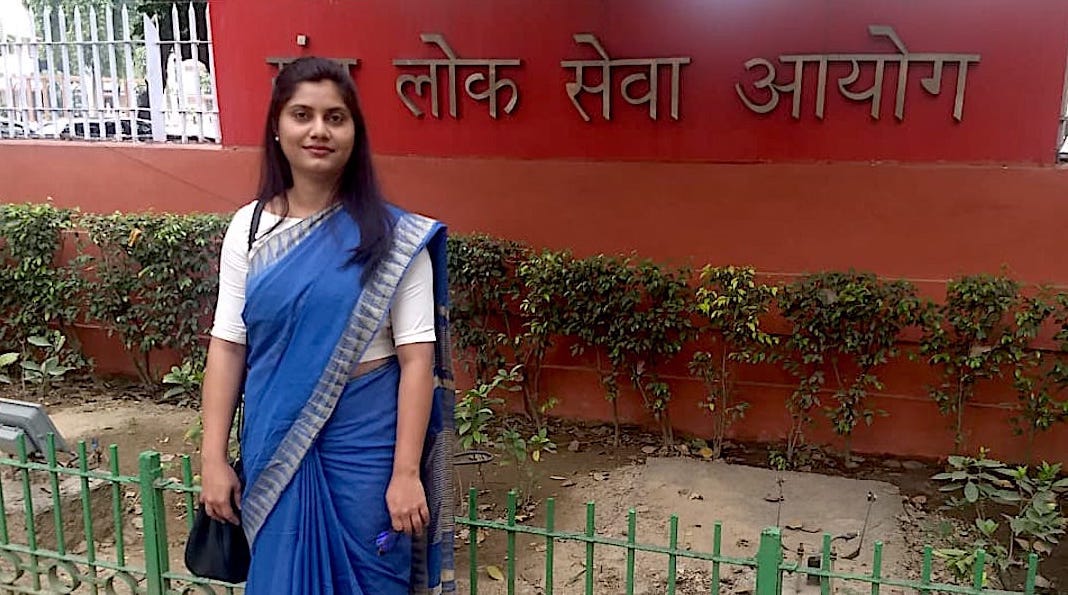
Shafqat Amna, daughter of retired teacher Mohammad Zafir Alam of Adhakparia village of East Champaran, has not only brought glory to her family by securing 186th rank in the UPSC Civil Services exam, but has also shown a path to lakhs of Muslim girls with the light of education.
The whole village is rejoicing at Shafqat’s success. 65-year-old Zafir is not tired of thanking people for this success.
In an exclusive conversation with BeyondHeadlines, Zafir Alam says, ‘We would like my daughter to work as an honest servant. She should strive for peace and prosperity in the society. And most importantly, she should take today’s new generation forward in the field of education.’
Let us tell you that Zafir Alam has retired as a teacher from an Urdu middle school in Agarwa village near Motihari.
24-year-old Shafqat Amna says in an exclusive interview with BeyondHeadlines that the backwardness of the village and the lack of infrastructure always bothered me. That is why since childhood I wanted to live among the people and do something for them so that I could change their thinking and circumstances. My father, sensing this desire of mine, inspired me to join the civil service.
Aamna says that my first choice is IAS and I am hopeful that I will definitely get IAS Insha Allah.
When asked what will you do first after becoming an IAS?
In response to this question, Aamna says that my first effort will be that whichever district I go to, I will first try to focus on education in the village. Since my father was a teacher, I understand the politics of teachers very well. I will inspire them to teach children honestly, away from that politics.
What if I get IPS instead of IAS?
On this question, Aamna pauses for a while and then after thinking says – I am hopeful that I will get IAS and I have not thought of anything else apart from this. But still if I get IPS instead of IAS then first of all I will pay special attention to law and order. I will try to maintain communal harmony in my district at all costs. I will try my best that there is never any fight or quarrel in my district, there is always mutual harmony.
When asked about preparing for civil services, Aamna says that, I would definitely like to tell those who want to join civil services that they should not start preparing for it suddenly, but first understand the syllabus well. If possible, try to take guidance from an IAS or IPS. Then start preparing for it thoughtfully with full courage and passion. Try to study smartly instead of studying like donkeys.
However, she also says that everyone’s way of preparing is different. The positive thing for me was that I had read NCERT books properly in school itself. So all the concepts were clear. I studied Geography very well in graduation as well. And yes, during my entire studies, I always had the habit of making short notes. These notes were very useful in my preparation. I paid full attention to its revision. Apart from that, I participated a lot in test series.
Let us tell you that Shafqat Amna passed 10th from Jawahar Navodaya Vidyalaya in Bettiah, West Champaran. Then she went to Bokaro for 12th, passed 12th from DPS there. After that, circumstances became such that she had to return to the village. Here she got a BA Honors degree in Geography from a college of Bhimrao Ambedkar University in Motihari. After that, she came to Delhi in 2016 to prepare for civil services. Here she prepared by staying in the residential coaching of Jamia Millia Islamia and after failing twice, she succeeded this time in the third attempt.
Apart from her parents, Shafqat Amna’s family also has three sisters and a brother. Her younger sister is pursuing BA LLB from Jamia Millia Islamia. Her two elder sisters have completed B.Ed and are currently living with their mother in the village.
Aamna says that the situation at home was never good. My father was the only breadwinner in the house. But he never neglected our education. Whatever I am today is because of my father.
What would you like to say to the girls of the country?
On this question, Aamna says that I would like to say that it is very important for you to get educated. And never underestimate yourself. Your hard work, your efforts can change your fate. But yes, for success you will have to make your own policy and your own routing. You will have to decide for yourself what things matter in your life…
source: http://www.beyondheadlines.in / Beyond Headlines / Home> India> Real Heroes / by Afroz Alam Sahil, Beyond Headlines / April 06th, 2019
Everything cannot always be in your hands. But working hard to achieve something is definitely in your hands. Rena Jameel also had to work hard, and today she has become an IAS because of her hard work.
Born in Chhatabad village of Katras area of Dhanbad district of Jharkhand, Rena Jamil has secured 380th rank in the UPSC Civil Service Examination this time. Whereas in the year 2016 examination, she had secured 882 rank.
Rena Jameel says that she got Indian Information Service in 2016. But she had dreams of becoming an IAS. It was also necessary to join training. That is why she gave UPSC again in 2017 along with training, but failed in the prelims itself. Still, I did not give up. I took a few days off and prepared. And as a result, I got 380 rank and now I have become an IAS.
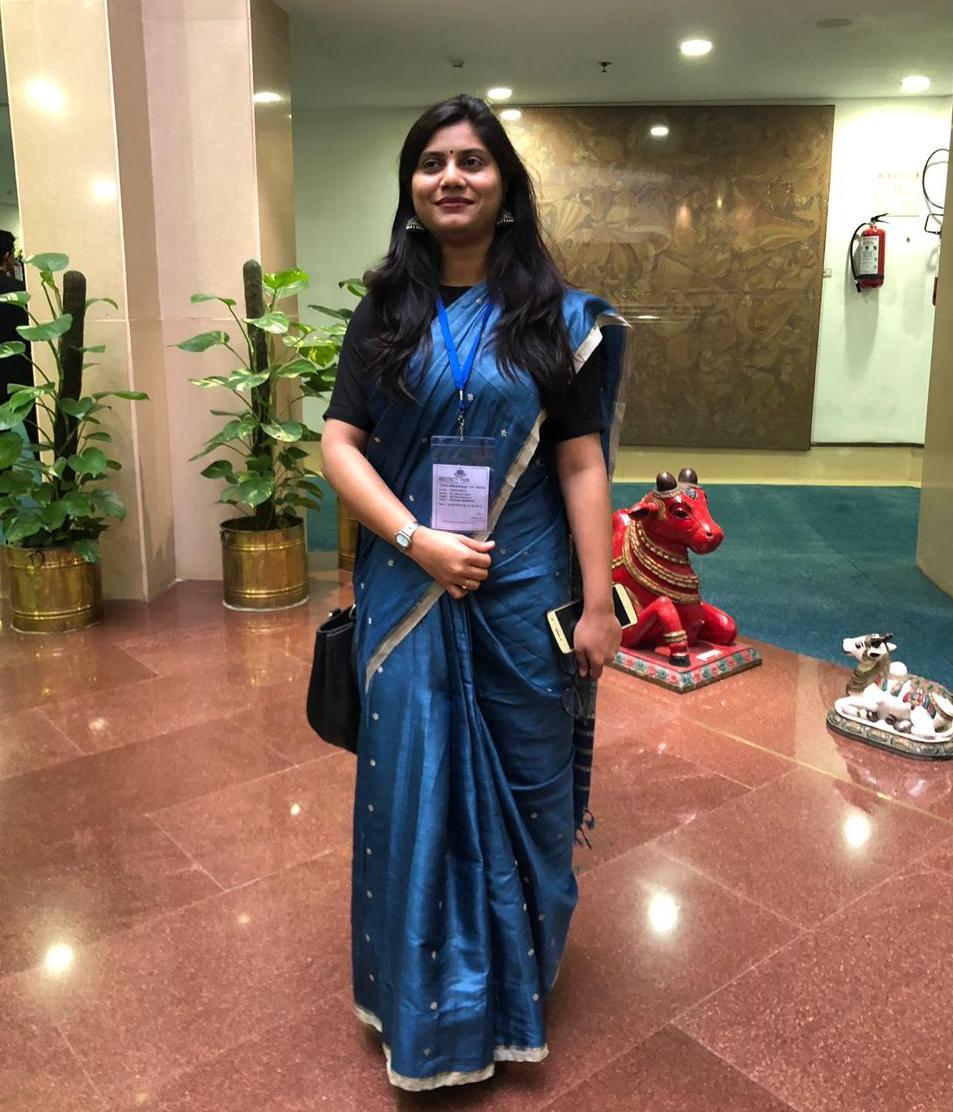
Rena Jamil, UPSC Rank -380
Rena Jameel’s father Mohammad Jameel Ansari has retired from Tata Company. He was a mechanical engineer in Tata. While mother Naseem Ara is a home maker. She has four siblings. Elder brother Raunak Jameel Ansari is in Indian Revenue Service. He had secured 763 rank in 2014. Younger brother is an engineer and is currently working with Prasar Bharati. While younger sister is doing her masters and is preparing for admission in PhD.
Rena studied in Urdu medium from Chhatabad Urdu Middle School till class 8. Then she completed her 10th and 12th from the same school. After that she did BSc in Zoology from S.S.L.N.T. Mahila Mahavidyalaya and M.Sc from P.K. Roy Memorial College. After this she also did B.Ed.
Rena says, Ammi was always motivating for me. She never made me do household chores, rather she always insisted on studying. However, all this was not so easy for me. Just to study in college, I had to travel about 50 kilometers every day. Sometimes by bus, sometimes by auto or sometimes by walking for hours… I would leave in the morning and reach home only at night.
When asked that now you are an IAS, what will be your first task in the district you go to after training, Rena says that every district has its own problems. But my special focus will be on education and health sector. Because my experience with both these sectors has been very bad. I would not want that in my district someone loses his life due to health service and someone’s daughter’s education gets interrupted just because the college is very far away.
Rena Jameel loves Urdu poetry. She has been reading Faiz, Ghalib and Iqbal in particular. The special thing is that Rena herself has written about 50 poems so far. All these poems are in Urdu language.
What was the reason that made you decide that I have to join the civil service?
In response to this question, Rena says that, generally, there is not much focus on the education of girls in our society. Even if the family is educating them, the only purpose is that they will get married in a good family. I also had many friends who were very sharp in studies, but somewhere they could not study further. Could not go ahead. Due to family pressure or other reasons. Many were not sent to college only because the distance to the college was too much, but in my case my family was a little supportive. In such a situation, I started thinking that I have to do something that becomes an example for others. Such people should listen to me who educate their girls only for marriages or do not educate them at all. Then I decided that I have to do something big so that I can become an inspiration for girls.
How and where did you prepare for the exam?
On this, Rena Jameel says that in 2014, my elder brother succeeded in this exam. I came to Jamia on his guidance. Before this, I had read NCERT thoroughly. I also used to read newspapers regularly. I took Zoology for this exam because I had done BSc and MSc in this subject.
In a long conversation, Rena tells about her struggles that there were many ups and downs in my life journey. I could not succeed even after reaching the mains twice. I succeeded the third time but did not get what I wanted. Despite this, I had confidence in myself and kept working towards my goal. Today I am successful because of this. Although I was happy with this service too, but it was not my aim or goal. That is why I kept preparing along with the service. I only wanted to become an IAS and I became one.
What message would you like to give to those preparing for UPSC?
On this question, Rena says that many things are not in your hands. Only hard work is in your hands. And yes! The fruit of hard work is always sweet. I also faced many problems. I also failed. All things kept happening with me. But I kept working hard continuously. I will tell you the same thing that always think about fulfilling your dreams. If I had not done this, then I would definitely not have been an IAS. I would have been doing the service of 2016. Therefore, patience is very important for success in this exam.
Also I would like to say that you must read newspapers because it is important to read people’s thoughts, it helps you to develop your own thoughts. And yes! You should always keep your resources limited. If you keep yourself busy reading everything then you will never be able to complete your syllabus. Whatever you read, read it with all your heart and give it enough time.
What would you like to say to the youth of the country, especially the girls of your community?
On this, Rena says that education is everything today. So pay attention to education at all costs. Never shy away from working hard. If I can do it, then believe me anyone can do it. But for this you will have to come forward and work hard.
She especially tells girls that you need to come forward and work hard. It is also the responsibility of the society to stop looking at girls with narrow mindedness. Rather, they should be encouraged. Girls have a lot of talent. If we just become a little open minded, they will go far ahead. It is also the responsibility of girls to work hard and fulfill their dreams… and yes, the dreams should be a little big.
source: http://www.beyondheadlines.in / Beyond Headlines / Home> India> Real Heroes / by Afroz Alam Sahil, Beyond Headlines / June 19th, 2019
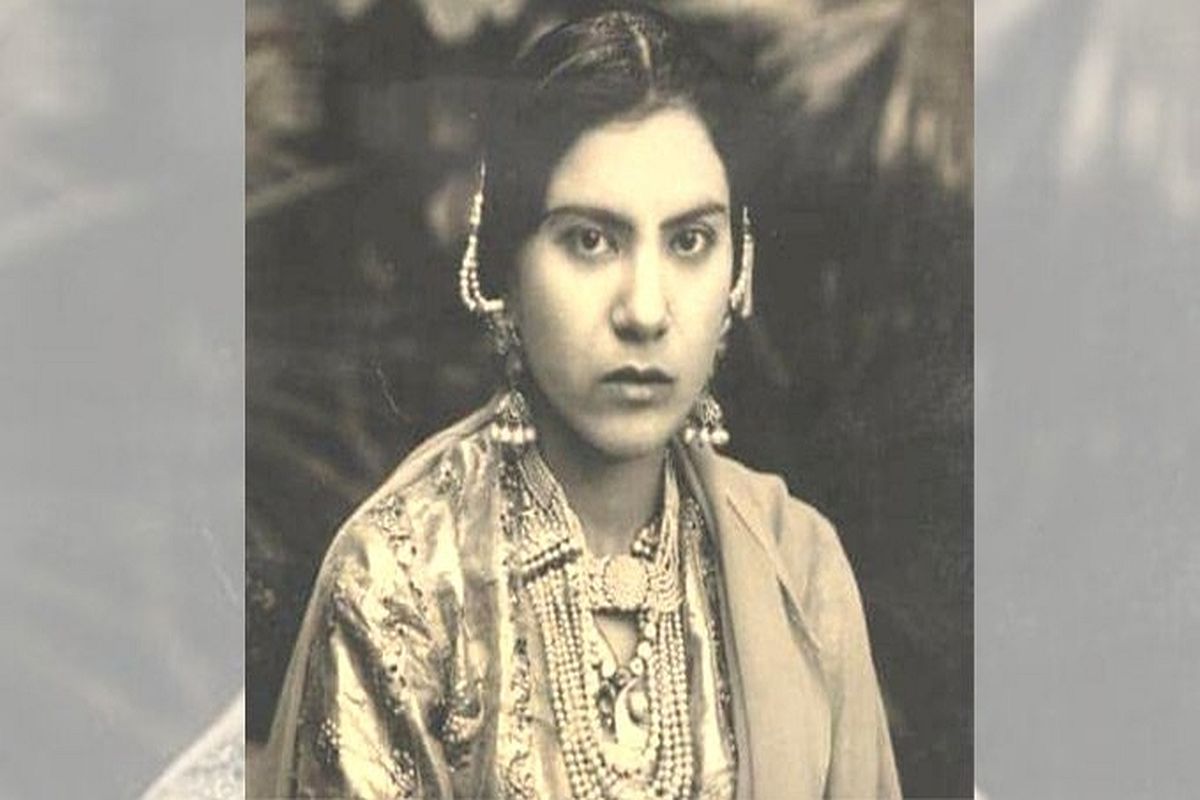
Sahebzadi Basheerunnisa Begum, the last surviving heiress of Nizam Mir Osman Ali Khan.
Last surviving offspring of Hyderabad Nizam passes away (Image: IANS)
Last surviving offspring of Hyderabad Nizam passes away
Sahebzadi Basheerunnisa Begum, the last surviving heiress of Nizam Mir Osman Ali Khan, the last ruler of erstwhile Hyderabad State, passed away on Tuesday. She was 93.
She breathed her last at her home in Purani Haveli on Tuesday morning. She is survived by her only daughter Rasheedunnisa Begum.
Nizam’s grandson and president of Nizam Family Welfare Association Nawab Najaf Ali Khan, told IANS “It’s a big loss to the family as Sahebzadi Basheerunnissa Begum Saheba was an epitome of Hyderabadi culture, tradition, and values,”.
She was buried at the Dargah Hazrat Yahiya Pasha in the old city of Hyderabad. Many members of the Nizam’s family participated in the funeral.
Basheerunnissa Begum was married to Nawab Kazim Yar Jung, better recognized as Ali Pasha, he passed away in 1998.
Mir Osman Ali Khan was featured on the cover of ‘TIME – The Weekly Magazine’ along with other princely state rulers, he was also declared the world’s richest man of his time, his net worth was equal to America’s economy at that time. He died in 1967.
The last Nizam had refused to accede to India after the country’s independence on August 15, 1947. He wanted to remain an independent state or join Pakistan.
The princely state ultimately merged with the Indian Union in September 1948 after an operation by the Indian Army.
source: http://www.thestatsman.com / The Statesman / Home> India / by SNS, New Delhi / July 28th, 2020
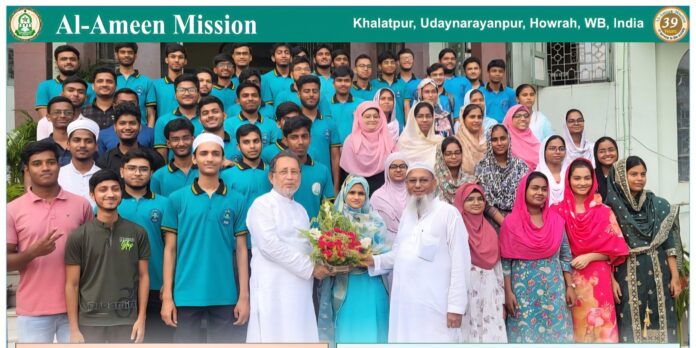
M. Nurul Islam with some of the future doctors at Al Ameen Mission Khalatpur campus
M. Nurul Islam is a proud man as 472 students of Al Ameen Mission have qualified for free medical seats in government medical colleges across West Bengal through NEET (UG) 2025.
Muslims remain one of the most disadvantaged communities in India. In West Bengal—among the more underdeveloped states—their educational and socio-economic struggles are even more pronounced. Districts like Murshidabad and Malda, with significant Muslim populations, rank among the most backward in the country.
When the NEET results were announced, 154 students from Murshidabad and 77 from Malda scored above 500 marks, making them eligible for free medical education in the state’s government colleges.
What stands out is the socio-economic background of these students. Of the 472 successful candidates, 278 (59%) come from modest backgrounds: 194 (41%) belong to middle and upper-middle-income families, 152 (32%) to lower-middle-income groups, and 126 (27%) are from poor and Below Poverty Line (BPL) families.
The success of these students reflects not only academic excellence but also the transformative impact of Al Ameen Mission in empowering underprivileged communities through education.
“This year’s exam was comparatively tougher than in previous years, but by the grace of Allah, our students performed even better,” said M. Nurul Islam, founder general secretary of Al Ameen Mission, while speaking to Muslim Mirror.
Nurul Islam, the visionary general secretary of Al-Ameen Mission—often referred to as the Sir Syed of West Bengal—is widely recognized among the 100 most influential Indian Muslims. He pioneered an educational movement aimed at uplifting underprivileged Muslim students in West Bengal, significantly increasing their representation in medical colleges, even exceeding their population proportion in the state.
Born in 1959 in the small village of Khalatpur in Howrah district, Nurul Islam came from a humble background. His passion for education and community service became the foundation of a lifelong mission. In 1986, while he was a student, he started a hostel with just seven students inside the madrasa building. This initiative was sustained by a grassroots campaign—collecting a fistful of rice from every household in the village. In January 1987, this effort took shape as Al-Ameen Mission.
Today, the Mission has 77 branches across 23 districts of West Bengal, housing nearly 23,000 residential students. Over 49,000 students have passed from Al Ameen Mission, which follows the WBBSE, WBHSE, and CBSE curricula. In 2015, the West Bengal government honored M Nurul Islam with the Banga Bhushan Award for its contributions to education.
The Mission also engages in charitable work, offering financial aid and scholarships to unemployed Muslims. Under Nurul Islam’s leadership, it has become a beacon of holistic education, blending academic excellence with Islamic ethical values. The institution has produced hundreds of successful NEET and JEE candidates, changing the lives of many.
Nurul Islam’s resolute commitment to education and empowerment continues to inspire generations, reshaping the future of Muslim youth in Bengal and beyond.
source: http://www.muslimmirror.com / Muslim Mirro / Home> Education> Indian Muslim> Positive Story / by Jasmine Nehar / June 25th, 2025
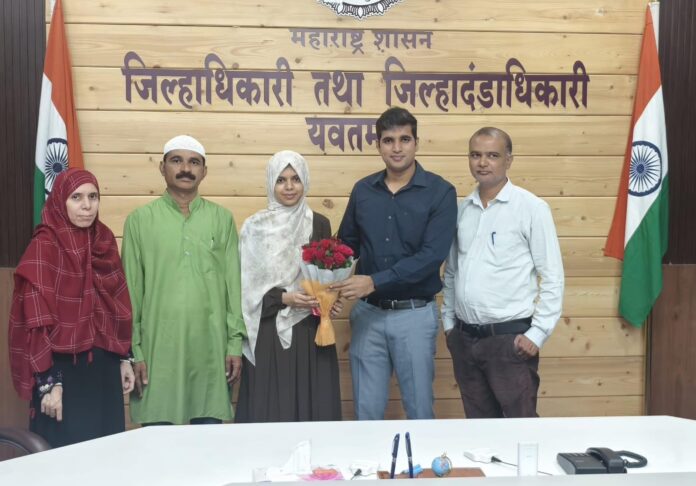
The Union Public Service Commission (UPSC) declared the results of the 2024 Civil Services Examination on April 22, with 1009 candidates clearing one of India’s most competitive exams. Among them, Adiba Anam has made history by becoming the first Muslim woman from Maharashtra to be selected for the Indian Administrative Service (IAS).
Hailing from Kalam Chowk in Yavatmal, a small town in eastern Maharashtra, Anam secured an all-India rank of 142. Her achievement has been widely hailed as a breakthrough for both women and minorities in the state. Her father, Ashfaq Ahmed, earns a living by driving an auto-rickshaw.
Raised in modest circumstances, Anam completed her schooling in Urdu medium from a local Zilla Parishad school. Despite limited resources, she consistently excelled academically—scoring 94% in her Urdu board exams and 92% in 12th grade with a science stream.
Speaking to India Tomorrow, Anam recounted her journey through UPSC. Her first attempt in 2021 ended at the preliminary stage. Undeterred, she progressed to the mains in her second attempt, and finally, in her fourth attempt, clinched success with a rank likely to earn her an IAS cadre.
“My parents never asked me to give up on my education. There were people who suggested I take up a small job to ease our financial burden, but my parents never let those voices affect me,” she said.
Anam noted the social barriers women often face in her community. “Yes, girls do face restrictions. But these challenges only overpower us if we allow ourselves to feel weak. Once we build our mental strength, those obstacles lose their power,” she said. Her message to young women: “Stay mentally strong. Chase your dreams with courage and determination.”
Initially aspiring to become a doctor, Anam couldn’t clear the NEET exam. It was then that her uncle, Nizamuddin Sheikh—a local NGO secretary in Yavatmal—encouraged her to consider civil services as a way to serve the public.
Adiba Anam draws inspiration from the poetry of Allama Iqbal. Two couplets, in particular, fuel her determination:
“Khudi ko kar buland itna ke har taqdeer se pehle, Khuda bande se khud pooche, bata teri raza kya hai, ” meaning, “Elevate your selfhood to such heights that even destiny, before shaping your fate, is compelled to ask you: ‘Tell me, what is it that you desire?’”
This powerful verse emphasizes self-empowerment, urging individuals to strengthen their character and willpower to such an extent that even fate bows before their determination.
“Amal se zindagi banti hai jannat bhi jahannam bhi, Yeh khaaki apni fitrat mein na noori hai na naari hai.” This translates in English as “Through actions, life can become either a paradise or a hell. This being (the human) made of dust is by nature neither angelic nor demonic.”
The couplet underscores the idea that our actions determine the quality and direction of our lives. Human beings are not inherently good (like angels) or evil (like demons); it is their actions (amal) that shape their destiny and define their identity.
Explaining the two couplets, she said, “These lines remind me of the power of action. If you just sit still, nothing will change. But if you act, if you try to change your situation, something will definitely happen,” she said.
Anam’s journey—from a small-town Urdu-medium student to a future IAS officer—stands as a powerful story of resilience, ambition, and the transformative potential of education.
Here is the list of 26 Muslim candidates who cleared the UPSC Civil Services Examination this year, with their ranks written in front of their names.
• Iram Chaudhary – Rank 40
• Farkhanda Quraishi – Rank 67
• Mohammad Muneeb Bhatt – Rank 131
• Adiba Anam Ashfaq Ahmed – Rank 142
• Wasim ur Rehman – Rank 281
• Md. Nayab Anjum – Rank 292
• Mohammad Haris Mir – Rank 314
• Mohammad Shaukat Azeem – Rank 345
• Alifa Khan – Rank 417
• Nadia Abdul Rashid – Rank 429
• Najma Salam – Rank 442
• Shakeel Ahmed – Rank 506
• Shah Mohammad Imran Mohammad Irfan – Rank 553
• Mohammad Aftab Alam – Rank 560
• Mohsina Bano – Rank 585
• Syed Mohammad Arif Moin – Rank 594
• Ghulam Haider – Rank 633
• Hasan Khan – Rank 643
• Ghanchi Gajala Mohammad Hanif – Rank 660
• Mohammad Salah T.A. – Rank 711
• Sadaf Malik – Rank 742
• Yasir Ahmed Bhatti – Rank 768
• Javed Mev – Rank 815
• Nazeer Ahmed Bijran – Rank 847
• Arshad Aziz Quresh – Rank 993
• Iqbal Ahmed – Rank 998
source: http://www.indiatomorrow.net / India Tomorrow / Home> Education / by Mohammad Akram / April 2025
Noushaba Jeelani, popularly known as the ‘Saffron Queen of Kashmir’, has turned a traditional crop into a global sensation, with an aim of women’s empowerment. Her saffron brand ‘Noush’ exports saffron in Europe and the Middle East.
Jeelani involved hundreds of local women in saffron harvesting, packaging, and quality control, turning saffron cultivation into a sustainable livelihood. Her startup has collaborated with global e-commerce platforms and luxury wellness brands, putting Kashmir’s saffron back on the worldwide map.
Speaking to ANI, Noushaba Jeelani said, “We shifted to Saudi Arabia for five years. Seeing a decline in the saffron business, we thought to come back and give a new identity to an already running business. We did a survey and found that people did not know about adulteration.”
She said that the firm has a network of 600 farmers, and growing and sowing are done by women, as the initiative aimed at empowering them.
Discussing the challenges they faced initially, she said the lack of education among people, as they could not differentiate between Kashmiri and foreign saffron.
“We have our in-house production and processing, so quality control is in our hands, so we make sure we give unadulterated saffron. In the survey, the farmers said their monetary return isn’t included in the business. We wanted to show the process to the farmers so they get a return on their money,” she said.
She said, “We want the women who grow and process saffron to feel empowered and build a community. Basic vision is to grow more saffron, we want to take it forward and want more women to join.”
Giving a message to young girls, Jeelani said, “Today, girls are brave and focused. I would say, do what you want and take the first step. You will evolve as you enter the process… Be fearless.”
Her husband, Afan Basu, told ANI, “We took the initiative to support my wife. In families, women control the work of saffron. In parallel to our B2B business, we wanted to have a women-led, women-empowered business. In Kashmir’s culture, women don’t open up to men, so we wanted to build a society of empowered women and transparency from top to bottom.”
Basu is an alumni of the BITS Pilani and he identifies himself as “chief farmer with an experience of six decades.”
On building a Kashmir brand, Basu said, “In India, there are a lot of brands which sell foreign saffron. Here we have the GI tag also, but if you go out of Kashmir and ask for saffron, they will name brands which do not belong to Kashmir… This is our identity, like apples and walnuts.”
source: http://www.awazthevoice.in / Awaz, The Voice / Home> Stories / by ANI / June 14th, 2025
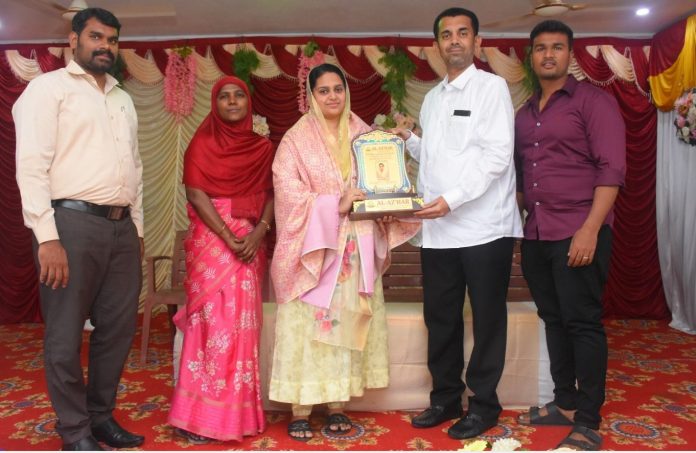
A Nabila, native of Cumbum in Theni district made the town proud in cracking the TNPSC Group I services exam in getting a posting as Assistant Commissioner (Commercial Taxes). Her alma mater Al Azhar Matriculation Higher Secondary School correspondent Nainar Mohamed and principal Ahamed Meeran felicitated for her achievement and presented a memento. Also present is her mom and husband Mohamed Afzal.
“Consistent effort and simple strategy is the mantra for success,” said 28-year-old A. Nabila, who cracked the TNPSC Group I services exam with 27th rank for the position as Assistant Commissioner (Commercial Taxes).
Hailing from Cumbum, a picturesque town nestled in the backdrops of Western Ghats known for its serene atmosphere, vibrant culture and rich history in Theni district, the enterprising young woman is on cloud nine thereby bringing laurels to her hometown.
To be precise, she brought to the fore that there is no shortcut for victory, be it course or career. In fact, she has proved that more than hard work, smart work will definitely fetch fruitful results. Giving useful tips in a lucid style to government job aspirants through a YouTube channel (Geethasamy Publishers), she made it clear that candidates must make it a point to complete question papers within the timeframe more importantly legibly while ensuring neat presentation.
Great to infer that the promising young woman had earlier cleared Group II services to become the State topper to join the subordinate services in the Tamil Nadu Agri and Farmers Welfare department at the Secretariat. Even while serving, she had a vision to scale new heights as to the inspiring words of American General and Diplomat Colin Powell – There are no secrets to success. It is the result of preparation, hard work and learning from failure. Undoubtedly, she romped home to victory through dedication and determination.
Armed with her BSc (2014-2018 batch) from Madurai Agriculture College and Research Institute (a constituent college under Tamil Nadu Agricultural University), she prepared for the competitive exams soon after her graduation without any second thought with a firm belief to excel in her vision.
Lady luck failed to smile at her in her first attempt in 2019.After getting into wedlock, she took a break only to continue her TNPSC Group II exam in 2022 and emerged successful. She dedicated her success to her parents, in-laws, brother Faizal and more particularly her hubby Mohammed Afzal while not to speak of her director and the faculty at the coaching institute. Her dad, A Ahamed Kabeer, is serving as Sanitary Inspector at Bodinayakanur Municipality.
At an event held yesterday, Cumbum Al Azhar Matriculation Higher Secondary School correspondent Nainar Mohamed and principal Ahamed Meeran felicitated Nabila for her achievement and presented a memento. Later, she addressed the students narrating the road she had travelled to be what she is now and urged them to have an ambition in life to reach dizzy heights in their chosen line of interest.
It is learnt that Nabila had her schooling from LKG to 8th at Cumbum Al Azhar Matriculation Higher Secondary School and continued her 9th and 10th at Theni MelaPettai Hindu Nadar Uravinmurai Saraswathy school and completed her Plus One and Plus Two at Tiruchengode Vidyaa Vikas school.
Quite encouraging to witness many female candidates from the rural background cracking UPSC civil services and TNPSC exams.
[The author is former Indian Express and Deccan Chronicle chief]
source: http://www.radiancenews.com / Radiance News / Home> Muslims World> Asia / by M Rafi Ahmed / June 20th, 2025