Tag Archives: Indian Muslim Women

2022: 10 must-read stories on Muslim women

INDIA :

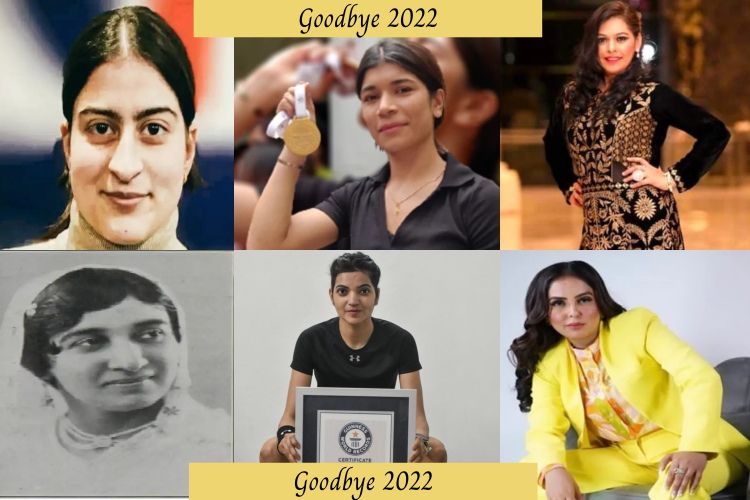
Influential Muslim Women of 2022

As we gear up to bid goodbye to the year 2022, here’s an about-turn to look at the most influential Muslim women who with their girt and strength have embedded their names in history.

Meet Mehr Sheikh from being a news anchor working with a company in Noida, Uttar Pradesh, to setting up her office in front of the same company, she has come a long way. She is presented as one of India’s youngest mainstream female motivational speakers, founder-director of Papr Network, and Editor-in-Chief of Nikology, a YouTube channel with nearly 2 million subscribers.

From being routed in regular corporate life to breaking the barriers and taking running as a full-time profession Sufiya Sufi set many records. From being the fastest female to run the Indian Golden Quadrilateral Road in 6 days, 12 hours, and 6 minutes to taking up the challenges of running continuously 200 km in Qatar and later running across the globe she has come a long way.

With many beauty pageants coming back to India in 2022, Tabassum took the podium a notch up when she represented India as one of the jury members in a beauty event held in South Korea’s Seoul

In the field of sports, Nikhat brought laurels to India as apart from winning the gold at the world championship, she won gold at the National Championship, the CWG and the Stranjde Memorial championship.

Do not marry your sisters, daughters, and other relations to men as their second wives or to those who are inclined on marrying another woman for no reason.” Hundreds of Muslim women unanimously passed the above resolution moved by Begum Jahanara Shahnawaz at the 7th All India Muslim Ladies Conference in 1920.

The All India Muslim Ladies Conference was established in 1914 under the presidentship of Begum Sultan Jahan, the ruler of Bhopal, and the leadership of women like Begum Waheed, Abru Begum, and Begum Shafi to bring social, educational, and economic reforms among Muslim women. Within six years of its inception membership of the Conference increased from a few dozens to hundreds. These women raised money to open and maintain girls’ schools in different parts of India and formed a public opinion in support of education.

Apart from the white robe of a doctor and the operation theatre, Dr. Jahanara Begum, a prominent obstetrician of Assam, also dons colourful costumes and has a wide stage to perform. Away from the hospitals and clinics, Dr. Begum has made theatre a part of her life despite her hectic professional schedule. While she has healed thousands of people as a doctor, she has also impressed numerous playwrights and audiences as an actor. 

Syeda Salva Fatima – Amazed at her confidence, he decided to give wings to her dreams and she was enrolled in the Andhra Pradesh Aviation Academy in 2007. Despite failures, she remained undeterred and finally completed her training. She logged in 200 hours of flying in the Cessna 152 aircraft and 123 Hours of solo flight. She says,My best moment was when I flew for the first time. Also, every time I fly the big bird Airbus 320 in command, that’s the best feeling ever!

Farida Jalees, the founder of Lucknow Mahila Sewa Trust, who had boldly four startups during the Covid-19 lockdown to sustain the livelihoods of some 2.5 lakh women associated with her self-help group, said, “we have never felt these two (festivals) are different. We endeavor to make Jeevika Bakers viable and for this, I have been making use of every festival to sell baked foods under a canopy in marketplaces.”

Dr.Muhammad Raziul Islam Nadvi is a renowned Urdu author advocates Muslim women’s participation in mosques and namaz

Naseem Shafaie, the only Kashmiri woman to get the Sahitya Akademi award and the recipient of this year’s State Award for Literature rues that the Kashmiri language is being ignored by natives who prefer to speak with their children in Urdu (Hindustani) and not in their mother tongue. She laments that the language was not getting due treatment by its natural speakers. “Let all read it and be it our language,” she told Awaz-the Voice. She said there is a general trend among people in Kashmir to speak in the Urdu (Hindustani) language to their children at their homes.

source: http://www.awazthevoice.in / Awaz, The Voice / Home> Stories / by Shaista Fatima, New Delhi / December 29th, 2022
I had confidence in myself and kept working hard, that is why today I am an IAS…

Chhatabad Village (Dhanbad District), JHARKHAND :

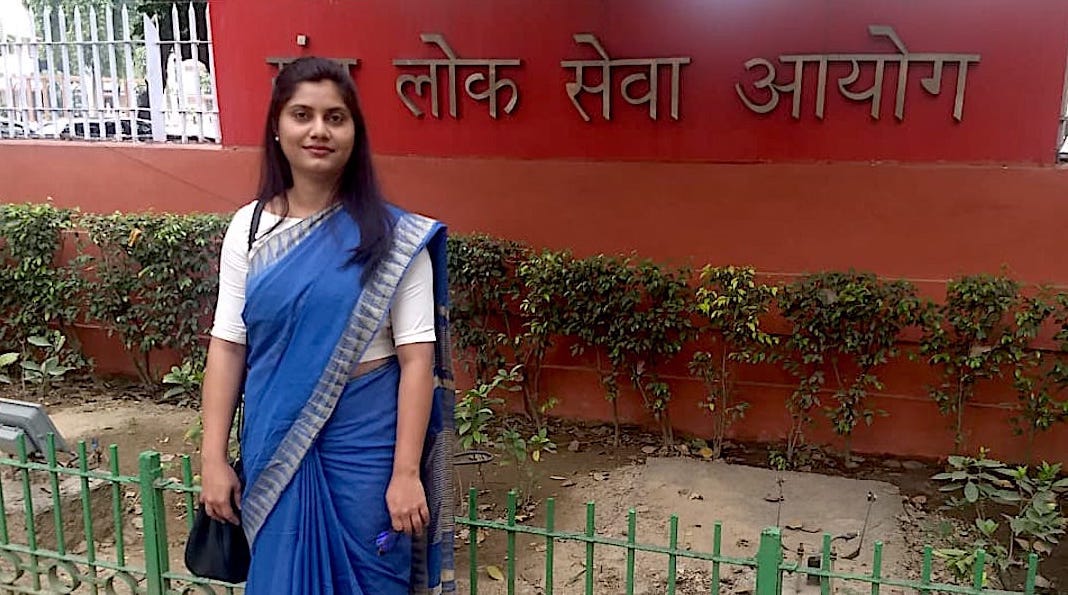
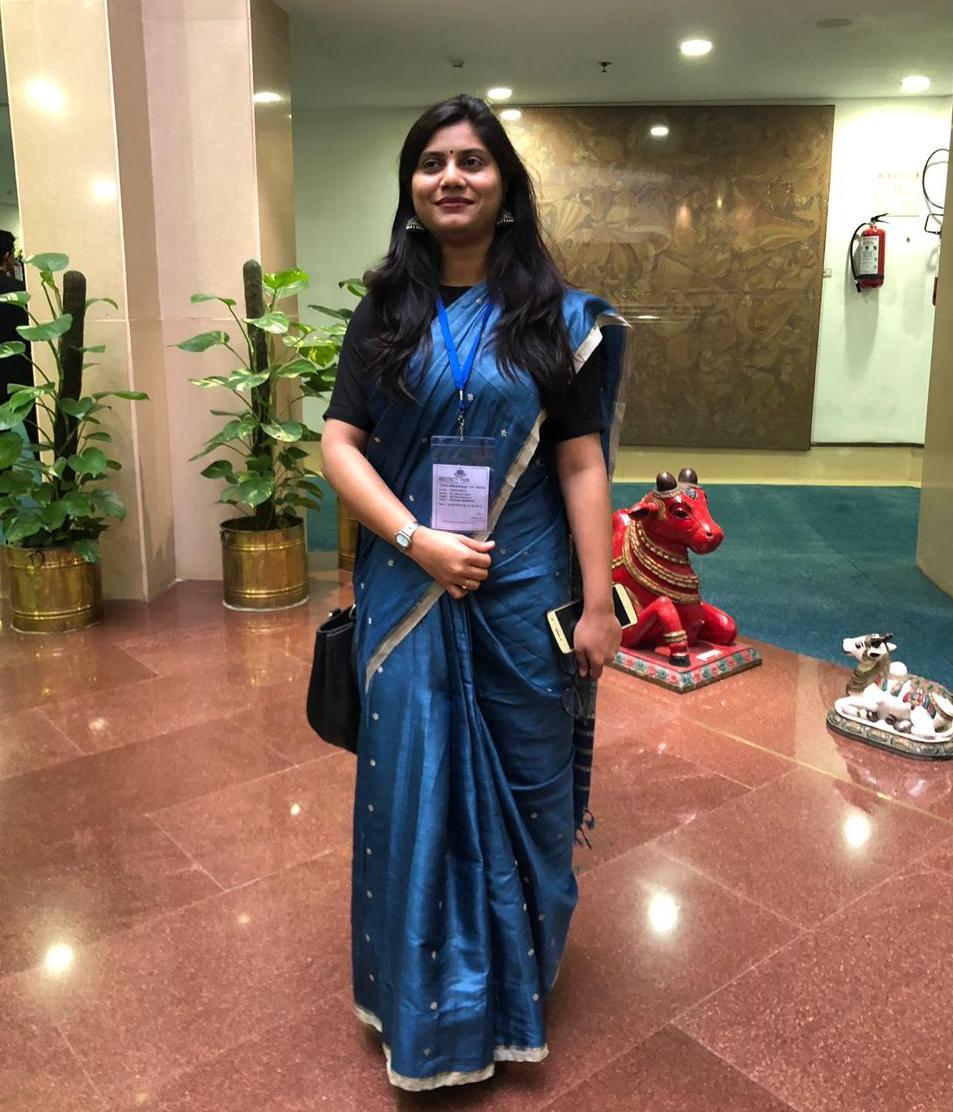
Everything cannot always be in your hands. But working hard to achieve something is definitely in your hands. Rena Jameel also had to work hard, and today she has become an IAS because of her hard work. 

Born in Chhatabad village of Katras area of ​​Dhanbad district of Jharkhand, Rena Jamil has secured 380th rank in the UPSC Civil Service Examination this time. Whereas in the year 2016 examination, she had secured 882 rank.

Rena Jameel says that she got Indian Information Service in 2016. But she had dreams of becoming an IAS. It was also necessary to join training. That is why she gave UPSC again in 2017 along with training, but failed in the prelims itself. Still, I did not give up. I took a few days off and prepared. And as a result, I got 380 rank and now I have become an IAS.

Rena Jamil, UPSC Rank -380

Rena Jameel’s father Mohammad Jameel Ansari has retired from Tata Company. He was a mechanical engineer in Tata. While mother Naseem Ara is a home maker. She has four siblings. Elder brother Raunak Jameel Ansari is in Indian Revenue Service. He had secured 763 rank in 2014. Younger brother is an engineer and is currently working with Prasar Bharati. While younger sister is doing her masters and is preparing for admission in PhD. 

Rena studied in Urdu medium from Chhatabad Urdu Middle School till class 8. Then she completed her 10th and 12th from the same school. After that she did BSc in Zoology from S.S.L.N.T. Mahila Mahavidyalaya and M.Sc from P.K. Roy Memorial College. After this she also did B.Ed.  

Rena says, Ammi was always motivating for me. She never made me do household chores, rather she always insisted on studying. However, all this was not so easy for me. Just to study in college, I had to travel about 50 kilometers every day. Sometimes by bus, sometimes by auto or sometimes by walking for hours… I would leave in the morning and reach home only at night.

When asked that now you are an IAS, what will be your first task in the district you go to after training, Rena says that every district has its own problems. But my special focus will be on education and health sector. Because my experience with both these sectors has been very bad. I would not want that in my district someone loses his life due to health service and someone’s daughter’s education gets interrupted just because the college is very far away.  

Rena Jameel loves Urdu poetry. She has been reading Faiz, Ghalib and Iqbal in particular. The special thing is that Rena herself has written about 50 poems so far. All these poems are in Urdu language. 

What was the reason that made you decide that I have to join the civil service? 

In response to this question, Rena says that, generally, there is not much focus on the education of girls in our society. Even if the family is educating them, the only purpose is that they will get married in a good family. I also had many friends who were very sharp in studies, but somewhere they could not study further. Could not go ahead. Due to family pressure or other reasons. Many were not sent to college only because the distance to the college was too much, but in my case my family was a little supportive. In such a situation, I started thinking that I have to do something that becomes an example for others. Such people should listen to me who educate their girls only for marriages or do not educate them at all. Then I decided that I have to do something big so that I can become an inspiration for girls.  

How and where did you prepare for the exam? 

On this, Rena Jameel says that in 2014, my elder brother succeeded in this exam. I came to Jamia on his guidance. Before this, I had read NCERT thoroughly. I also used to read newspapers regularly. I took Zoology for this exam because I had done BSc and MSc in this subject. 

In a long conversation, Rena tells about her struggles that there were many ups and downs in my life journey. I could not succeed even after reaching the mains twice. I succeeded the third time but did not get what I wanted. Despite this, I had confidence in myself and kept working towards my goal. Today I am successful because of this. Although I was happy with this service too, but it was not my aim or goal. That is why I kept preparing along with the service. I only wanted to become an IAS and I became one.

What message would you like to give to those preparing for UPSC? 

On this question, Rena says that many things are not in your hands. Only hard work is in your hands. And yes! The fruit of hard work is always sweet. I also faced many problems. I also failed. All things kept happening with me. But I kept working hard continuously. I will tell you the same thing that always think about fulfilling your dreams. If I had not done this, then I would definitely not have been an IAS. I would have been doing the service of 2016. Therefore, patience is very important for success in this exam. 

Also I would like to say that you must read newspapers because it is important to read people’s thoughts, it helps you to develop your own thoughts. And yes! You should always keep your resources limited. If you keep yourself busy reading everything then you will never be able to complete your syllabus. Whatever you read, read it with all your heart and give it enough time. 

What would you like to say to the youth of the country, especially the girls of your community? 

On this, Rena says that education is everything today. So pay attention to education at all costs. Never shy away from working hard. If I can do it, then believe me anyone can do it. But for this you will have to come forward and work hard.  

She especially tells girls that you need to come forward and work hard. It is also the responsibility of the society to stop looking at girls with narrow mindedness. Rather, they should be encouraged. Girls have a lot of talent. If we just become a little open minded, they will go far ahead. It is also the responsibility of girls to work hard and fulfill their dreams… and yes, the dreams should be a little big. 

source: http://www.beyondheadlines.in / Beyond Headlines / Home> India> Real Heroes / by Afroz Alam Sahil, Beyond Headlines / June 19th, 2019

Muslim Women, Waqf, and the Power of Charitable Legacy: A Forgotten Force in the Shadows of Reform

INDIA :

A New Law, A Timeless Legacy

The Waqf Amendment Act 2025, recently passed by the Government of India, has stirred a wave of public discourse. Promising to regulate and modernize the administration of waqfproperties across the country, the law is being introduced as a means to improve transparency and benefit marginalized communities, especially Muslim women.

However, in this swirl of policy language, governance reform, and bureaucratic oversight, we must not forget a foundational truth: Muslim women have always been central to the waqftradition—not as passive recipients, but as active architects of community transformation.

Waqf as a Tool of Empowerment—Before the State Claimed It

Before governments created waqf boards, before institutional frameworks shaped their regulation, and long before women were officially recognized in policy narratives, Muslim women in India were shaping societies through charitable endowments.

They:

• Founded schools and madrasas for girls and boys alike

• Donated lands and properties for the construction of mosques, shrines, and Sufi lodges

• Built hospitals, water fountains, and orphanages

• Funded scholarships, welfare kitchens, and even public rest-houses for travelers.

This was not mere charity—it was strategic social intervention, embedded in Islamic ethics and guided by a vision of communal upliftment.

👑 Queens of Waqf: A Glimpse into Heroines of Charity and Community Leadership

🏛️ Razia Sultana (1205–1240, Delhi)

India’s only woman Sultan, Razia established educational and civic institutions supported by state waqf. Her leadership emphasized justice, learning, and infrastructure.

🏛️ Jahanara Begum (1614–1681, Delhi)

Daughter of Shah Jahan, she created waqf endowments for Sufi shrines, caravanserais, and public gardens. Her waqf documents are among the earliest female-authored ones preserved in India.

🏛️ Roshanara Begum (1617–1671, Delhi)

Sister to Jahanara, she built Roshanara Garden and a Sufi lodge. She maintained religious institutions through royal waqf.

🏛️ Sultan Jahan Begum (1858–1930, Bhopal)

The last Begum of Bhopal, she modernized education, built hospitals, supported madrasas, and legally registered many waqf properties to support her reforms.

🏛️ Begum Hazrat Mahal (1820–1879, Lucknow)

Regent of Awadh, she protected the city’s religious institutions and supported waqf-based welfare during the 1857 Rebellion.

🏛️ Khair-un-Nissa Begum (18th c., Hyderabad)

Established Khairtabad Mosque and other public works through her waqf. One of the early noblewomen to invest in education and water supply systems.

🏛️ Begum Rokeya Sakhawat Hossain (1880–1932, Kolkata)

A visionary educationist, she established the Sakhawat Memorial Girls’ School using her own resources and informal waqf practices. A true reformer of women’s rights.

🏛️ Begum Sughra Humayun Mirza (1884–1958, Hyderabad)

Urdu novelist and educationist who established the Safdariya Girls School through personal endowment. One of India’s earliest women school founders.

🏛️ Princess Durru Shehvar (1914–2006, Hyderabad)

Ottoman princess and daughter-in-law of the Nizam. Founded the Durru Shehvar Hospital, a major maternity and child-care waqf.

🏛️ Princess Niloufer (1916–1989, Hyderabad)

Ottoman royal by birth and philanthropist. Established Niloufer Hospital for women and children in response to maternal health tragedies.

🏛️ Dr. Uzma Naheed (Contemporary, Mumbai)

Thinker and leader who founded the IQRA International Women’s Alliance. Created vocational and educational centers for women through charitable trusts and waqf-like models.

🏛️ Begum Abadi Bano (Bi Amma) (1850–1924)

Mother of freedom fighters Maulana Mohammad Ali and Shaukat Ali, she supported the Khilafat movement and women’s education through charity and informal waqf support.

🏛️ Begum Qudsia Aizaz Rasul (1909–2001)

Only Muslim woman member of the Indian Constituent Assembly. Promoted educational waqfs and women’s legal rights in independent India.

🏛️ Hamida Habibullah (1916–2018, Lucknow)

Educator, politician, and philanthropist who helped establish Talimgah-e-Niswan, a leading girls’ school, partially supported by endowments and community waqf models.

🏛️ Tayyaba Begum (early 1900s, Hyderabad)

Co-founder of Anjuman-e-Khawateen-e-Deccan, she organized women’s welfare through educational trusts and neighborhood charities alongside Sughra Humayun Mirza.

These women are not anomalies in history. They are evidence of a forgotten mainstream—a rich legacy of Muslim women using waqf, education, and philanthropy to shape the public sphere.

What the Law Misses

The 2025 Amendment claims to create better access for women and transparency in waqfgovernance. Yet, many community members raise concerns about:

• Increased government control over waqf boards

• Reduced autonomy of local Muslim stakeholders

• Weak representation of women in decision-making roles

If reform is truly meant to benefit women, it must not just focus on current access. It must honor and preserve the legacy of those women who built the system through vision, sacrifice, and faith.

Reclaiming the Narrative

As students of history and as researchers in the contributions of Muslim women across disciplines—al-Muhaddithat, scholars, judges, educators, warriors, nurses, and philanthropists—we find it essential to reclaim and highlight this tradition in the current discourse.

This document delves into the intersections of gender, history, law, and social development, spotlighting women’s roles in charitable work and community building through waqf and related institutions.

Our goal is not just to preserve history, but to activate it: to inspire current and future generations to recognize the power of service, leadership, and waqf in reshaping communities. The struggle for recognition today stands on the shoulders of those who built with purpose and gave with dignity.

Conclusion: From Past to Future

Muslim women in India have been pioneers of welfare through the waqf system for centuries. Their work wasn’t performed for applause or public acclaim. It was done with quiet resolve, deep faith, and a vision for lasting impact.

As new policies reshape the landscape of waqf, let us not merely react—we must respond with wisdom, rooted in history and hope. Let the legacy of women like Razia, Jahanara, Durru Shehvar, Niloufer, Sughra, and Uzma guide us in reimagining waqf as a tool not only for preservation—but for progressive, inclusive development.


The author is a Social Worker, Student of History and Educator

source: http://www.muslimmirror.com / Muslim Mirror / Home> Education> Positive Story> Waqf> Women / by M A Lateef Atear / June 04th, 2025

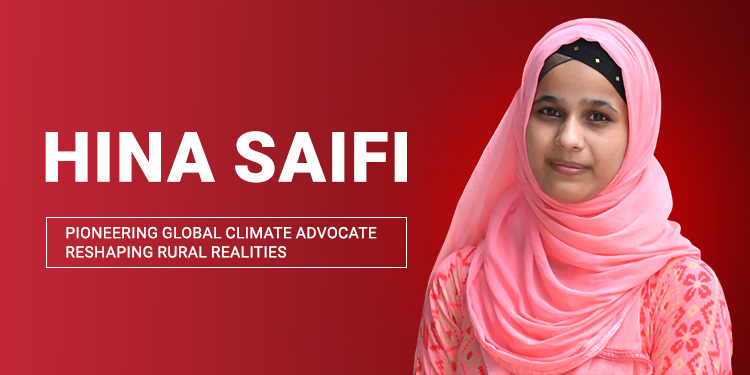
Hina Saifi, a Climate Change Champion, Unearthing Hope from Village Dweller to Climate Visionary

Sisola Village (Meerut District), UTTAR PRADESH :

Hina Saifi’s remarkable journey from rural roots to Climate Change Champion is an inspiring example of empowering change.

Hina Saifi pioneering Global Change Advocate reshaping rural realities

A youthful dreamer and a climate change activist named Hina Saifi has lit the route to long-term reform in the heart of Uttar Pradesh. She was born and reared in Sisola, a humble village in Meerut district. Her journey from a low-income family to a trailblazing advocate for climate education and action exemplifies the spirit of leadership that crosses borders. Hina Saifi’s United Nations association in the campaign known as #WeTheChangeNOW led her to be part and face of the campaign among the list of 17 climate change leaders.

Early Life and Education

  • Hina Saifi, Meerut’s resident, hails from Sisola, where education for girls is a formidable challenge.
  • Hina, the young climate leader, is currently pursuing MBA from the Bharti Institute of Technology, Meerut. She has reached this stage in life with her true dedication and willingness to break the stereotypical barriers of her village and change the existing mindsets.
  • Considering the situation of Sisola, an underdeveloped village in Uttar Pradesh, Hina couldn’t even imagine pursuing her studies post-8th grade, over a decade ago.
  • Managing to achieve complete school education, along with higher studies, Hina has showcased her limitless power and outshined on a national level for Women Climate Crusaders among 16 other women.
  • Hina Saifi, Women Climate Collective’s crucial member, has made a remarkable turn in her life. Her trajectory seemed predestined by the harsh realities of her village, where education was a luxury and the pursuit of higher learning was rare.
  • However, against all odds, Hina’s mother recognized the value of education and facilitated her journey to knowledge.
  • At such a young age, her thoughts align with personal as well as environmental growth and sustainability, which sets her apart from today’s youth.

“Poverty is rampant in my underdeveloped village, and child labor is common here. I, too, was advised to stop studying after I finished the eighth standard. However, I stuck to my decision to study further. To support myself through school and to help my family, I also worked part-time in a football factory”.

         —– Hina Saifi

Hina Saifi: Championing Climate Education

  • 22-year-old Hina Saifi’s journey into climate advocacy began with a realization that education was the cornerstone of addressing the multifaceted challenges troubling her village.
  • Armed with this insight, she set out on a quest to motivate children to attend school, thereby causing a small wave of awareness.
  • Partnering with local NGOs and the ‘Women Climate Collective’ (WCC), she found her voice in discussions about climate change, clean energy, and sustainability.
  • She was the first one from her village to move to Lucknow and be part of the Climate Agenda Initiative 2018.
  • Proud to be a member of Women Climate Collective, she supports the notion that addressing the climate crisis and fighting climate change is a collective responsibility of the people and not just that of the government alone.
  • Hina has also achieved an international recognition by her association with #WetheChangeNOW campaign by United Nations(UN) in India. The campaign showcases the climate based solutions devised by 17 young Indians that are innovative, sustainable and equitable, further focusing on strengthening engagements with governments and society.

The Hina Saifi Chronicles of Grassroots Change

  • Hina’s endeavors extended beyond education, culminating in the ‘Suraj Se Samriddhi’ campaign, launched by herself that spotlights solar power’s potential and advocates for cleaner energy solutions.
  • Her grassroots approach, encompassing workshops, speeches, and dialogues, has led to tangible change: cleaner streets, waste-free water bodies, and enhanced greenery. She acknowledges the intrinsic link between education and climate, recognizing their mutual capacity for transformation.
  • Hina’s belief in micro-behaviors as agents of monumental transformation underscores her leadership philosophy. By engaging with the village Pradhan and initiating innovative projects, she showcases the potential of individual actions to revolutionize communities.
  • Her involvement in the ‘100% Uttar Pradesh’ initiative reflects her dedication to the larger cause, emphasizing that collective progress stems from local commitment.

Hina Saifi: Empowering Change Through Climate Advocacy

Hina Saifi’s journey, stemming from her village’s challenges, inspires hope for a greener future. As a catalyst for change, her efforts stimulate broader dialogues concerning the representation of women’s voices in climate advocacy. Through platforms like the Women Climate Collective, her voice resonates beyond geographical boundaries, exemplifying the power of unity in tackling global challenges. From her humble origins in Sisola to her pivotal role within the Collective, Hina embodies the leadership needed for a brighter tomorrow. Her story showcases how determination and knowledge can bring about significant change.

source: http://www.leaderbiography.com / Leader Biography / Home> Featured> Featured Women / by Rahul Iyer

Farhana I M: A Triumph of Perseverance and Passion

Kundapra (aka Kundapura), Udupi District, KARNATAKA :

Kundapur :

In a remarkable display of dedication, Farhana I M has secured second rank in M.Tech Computer Science and Engineering under Visvesvaraya Technological University (VTU).

What makes her achievement extraordinary is not just academic excellence but the journey behind it. A mother of three, she balanced family responsibilities while pursuing higher education, proving that determination breaks barriers. Her story is a testament to the boundless nature of passion for learning.

Born to Ismail Kundapur and married to Imran Kundapur, Farhana shares a close bond with her brother-in-law, Mohammed Ashif Karnire, CEO of Expertise Contracting Company in Saudi Arabia.

Reflecting on her journey, Farhana credits her love for education and the desire to set an example for her children as her driving forces. She hopes her success inspires other mothers and students to pursue their aspirations despite challenges.

Her accomplishment stands as a beacon of motivation, encouraging students and professionals alike to chase their dreams with dedication and perseverance.

source: http://www.radiancenews.com / Radiance News / Home> Focus> Markers of Excellence / by Radiance News Bureau / February 16th, 2025

Pulwama in the news again, for Simrah who scored 99.39 percentile in JEE

Pulwama (Kashmir), JAMMU & KASHMIR :

Simrah Mir, a Kashmiri student, beat the odds to score 99.39 percentile in JEE Mains, inspiring countless students.

Simrah Mir, a JEE topper from Kashmir. | Photo by Special Arrangement

She comes from a region where resilience is a way of life. When Simrah spoke over the phone, her voice exuded conviction which only comes with a sense of achievement.

“At one point, I felt like giving up,” she began. Yet even her recall of desperation was in an unwavering tone.

Hailing from Kashmir’s Pulwama, a town often making the headlines for more negative than positive news, Simrah Mir has given a reason for the region to shine bright. Defying all odds stacked up against her, this young woman has brought immense joy and pride to the valley by scoring 99.39 percentile in the recently concluded JEE Mains this year.

Simrah’s is not just a personal victory but may well be an inspiration for countless students across Kashmir. Simrah, a student of a local government school, attended RISE coaching classes in Srinagar for JEE.

RISE is a coaching institute in Srinagar started by three former IITians: Salman Shahid and Imbesat Ahmad, both alumni of IIT Kharagpur, and Mubeen Masudi of IIT Bombay. Mubeen is a Kashmiri, says Mr. Shahid. “We started our institute in 2015 since we wanted to do something for Kashmir. When we started out, only a handful enrolled in our classes. Today, every year, some three to four students from our institute go to IIT and 70 to 80 students go to NIT. Twenty percent of these students are girls,” says Mr Shahid.

In an interview with The Hindu, Simrah spoke about her challenges, triumphs, and her fresh optimism for the road ahead.

She says: “At times, there were internet shutdowns, and many times it was a fearful environment at my hometown. My parents sheltered me from everything, even from what happening around our near vicinity. Then I moved to Srinagar. It was difficult to travel up and down daily from Pulwama every day for the coaching classes. It’s a long distance.”

Unlike many students who set their sights on JEE early on, Simrah’s decision to pursue engineering evolved over time. “It was a big step. Initially, I didn’t know much about JEE. I joined the RISE Institute, and there I got to know about the exam and started looking at engineering as a career. Later, I faced difficulties in my preparation. I felt like giving up, but my parents constantly supported and motivated me,” she continued.

What kept you motivated? What were the reactions of your parents, friends, and teachers to your preparations?

 Initially, when I was searching for an interest, my parents and relatives were pushing me towards medicine. I didn’t like Biology and I’m not interested in Medicine. From an early age, I was interested in Physics and Mathematics; I wanted to know about the subjects. I studied by myself. I used to read books other than my textbooks. Physics and Maths interested me.
Later on, I decided that it is a stream for me. I decided I had to take Mathematics and Physics as a career.

Any obstacles or resistance you came across while preparing for JEE? Did you ever think about what would happen if you didn’t get selected?

 There were definitely moments of doubt. And I used to have them often. As I said, I felt like giving up. JEE is a tough exam. I did think about what would happen if I didn’t get selected. But every time I felt low, my parents supported me. That helped me stay focused and push through the tough times.

I recently spoke to some people in Assam and learned that language, infrastructure, and cultural barriers can be obstacles in education. Did you face any challenges like that?

 Shifting to Srinagar was a big deal for me. I’m from Pulwama, and it was getting difficult. There were no coaching classes specifically for JEE preparations

I did think of going to Delhi or another State initially because there are good institutes there. But then I realised it might not be beneficial for me. I have never lived alone, and I felt like I should be close to my parents.

In Kashmir, students usually prefer medicine and becoming doctors, especially girls. It’s rare for a girl to take engineering as a career.

Did your school play any role in your success? Did they provide career counselling or extra classes for JEE aspirants?

 There was enough career counselling but no extra classes specifically for JEE aspirants. Most students in my school focused on board exams.

Nobody actually introduced the subject to me. I was inquisitive. There were some other students too who were genuinely interested to study and were inquisitive like me.

Which branch of engineering attracts you the most? And why? And have you thought about any specific college you would like to join?

 I have not thought about it. Of course, I want to go to the best college. I want to go to IIT.

Personally, I want to take Computer Science Engineering, but I don’t know exactly what will happen in the future. I haven’t researched much yet. It also depends on my rank and how I perform in the JEE Advanced exam.

What do you wish to become eventually?

 As of now, my goal is to pursue Computer Science Engineering. I would see where my passion takes me eventually.

What advice and tips you would want to give to JEE aspirants from your region?

 In Kashmir, many students, especially girls, hesitate to choose engineering because it’s not the common path. But if you genuinely enjoy Mathematics and Physics, you should give it a chance. It’s important to be practical.

JEE is tough, and there will be challenges. But if you take it step by step and stay disciplined, you can do it.

source: http://www.thehindu.com / The Hindu / Home> Education / by Mantasha Ahmed / February 15th, 2025

AMU Mourns the Demise of Prof Seemin Hasan

Aligarh, UTTAR PRADESH:

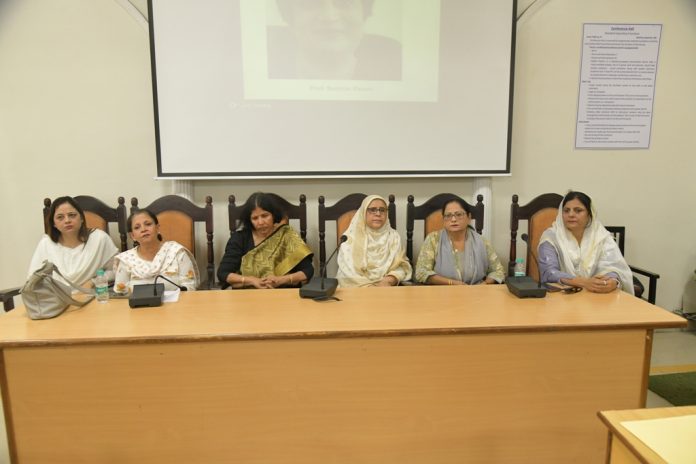
Prof Naima Khatoon, Dr Hamida Tariq, Prof Subuhi Khan and others during the condolence meeting of Seemin Hasan

Aligarh :

The Aligarh Muslim University (AMU) community gathered to honor the memory of the late Prof Seemin Hasan, who passed away on May 23.

During a heartfelt condolence meeting organized by the AMU Women’s Club, Vice Chancellor Prof Naima Khatoon paid rich tributes to Prof Hasan, reminiscing about their days together in Abdullah Hall. She prayed for Prof Hasan’s soul to find peace in Jannah and offered solace to her family and friends.

Prof Hasan, a senior faculty member in the Department of English and a valued member of the AMU Women’s Club, was remembered fondly by her colleagues and friends.

Dr. Hameeda Tariq, the founding Patron of the Club, highlighted Prof Hasan’s exceptional abilities as a professional, a friend, and her remarkable culinary skills.

Prof Azarmi Dukh Safavi, former President of the Club and former Dean of the Faculty of Arts, spoke of Prof Hasan’s caring and generous nature. Prof Syeda Nuzhat Zeba, current President of the AMU Women’s Club, praised Prof Hasan’s exemplary character and recounted their long-standing professional and personal relationship.

Prof Subuhi Khan, Secretary of the AMU Women’s Club, expressed the profound sense of loss felt by the community, describing Prof Hasan as a great source of inspiration. Dr. Faiza Abbasi, Director of the UGC MMTTC and founding Joint Secretary of the Club, lauded Prof Hasan as an outstanding English scholar and gracious teacher, emphasizing her role as a diligent role model.

On behalf of the family, Prof Hasan’s son, Dr. Saif, paid rich tributes to his mother and thanked the club members for their support during this difficult time. He mentioned that AMU was integral to her identity and announced the family’s intention to establish an endowment in her name. This endowment will fund commemorative lectures, literary and scholastic events, and quality publications at the university.

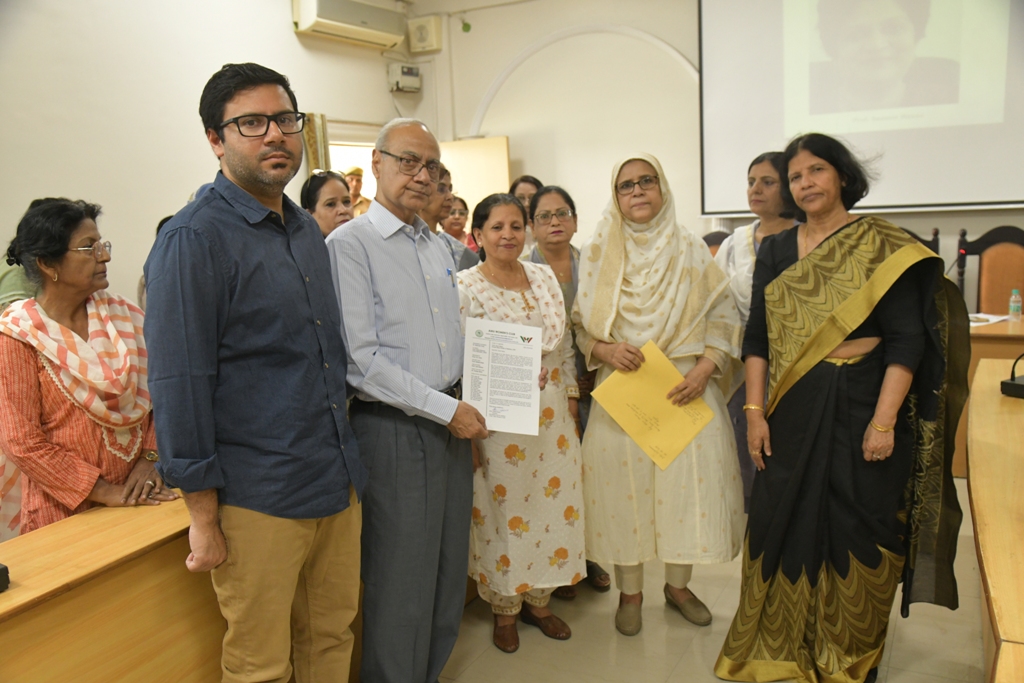
The condolence message was handed over to Prof Abrar Hasan, Prof Seemin Hasan’s husband and former Dean of the Faculty of Medicine, by Vice Chancellor Prof Naima Khatoon, Secretary Prof Subuhi Khan, and other club members.

A two-minute silence was observed in memory of Prof Hasan.

Prof Seemin Hasan is survived by her husband, Prof Abrar Hasan, and her sons, Dr. Saif and Dr. Shabih.

source: http://www.radiancenews.com / Radiance News / Home> Latest News / by Radiance News Bureau / June 10th, 2024

Malkapur Student Nazifa Namus Wins Top Prize in District Speech Competition

Malkapur (Buldhana District) , MAHARASHTRA :

Malkapur, Buldhana :

In a district-level speech competition organized by the Umeed Foundation, Malkapur’s Al-Huda Urdu Girls School and Junior College student, Nazifa Namus, emerged victorious, securing the first position.

Daughter of Tariqullah Khan, Namus impressed judges and spectators alike with her eloquence.

She was awarded an honorary certificate and a cash prize of eleven thousand rupees.

The event, held on Sunday, garnered attention from dignitaries such as Abdul Karim Salar, President of the Education Society, and Rajesh Akde, a prominent member of the Provincial Assembly.

Also present were Maulana Ashfaq Qasmi, Haji Rasheed Khan and senior police officials from the city.

source: http://www.radiancenews.com / Radiance News / Home> Education / by Zaina Aman (headline edited) / Radiance News Bureau / March 06th, 2024

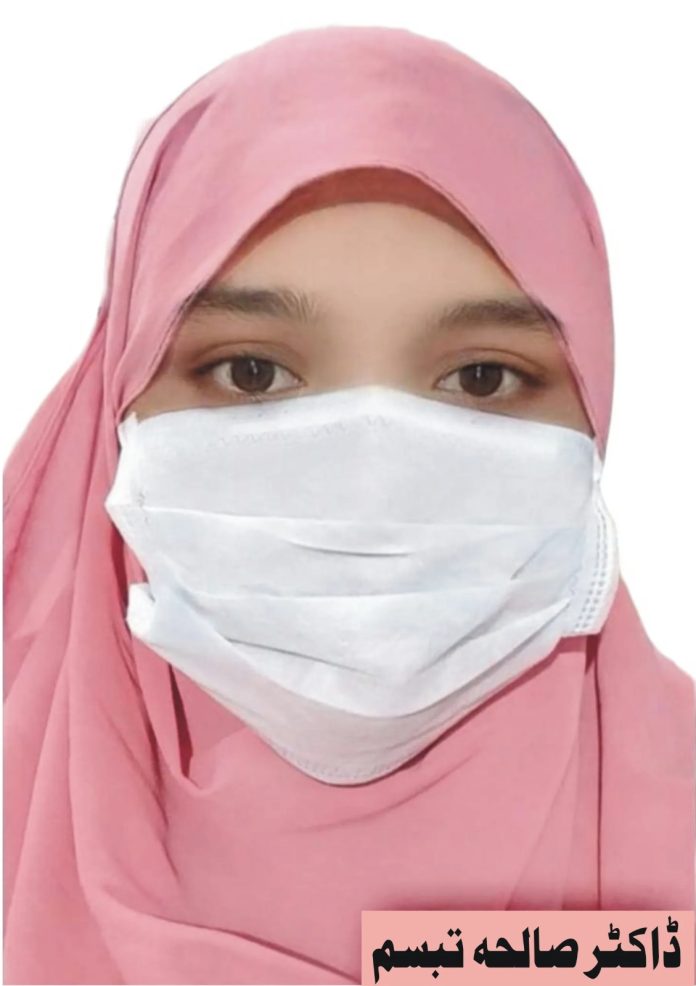
Salihah Tabassum Earns Ph.D. in Zoology: Exploring Seasonal Health Implications

Adilabad, TELANGANA:

Adilabad :

Salihah Tabassum, daughter of Muhammad Waheed Ahmed and wife of Muhammad Atiqur Rahman, has achieved a remarkable milestone. She has obtained a Ph.D. degree in Zoology from Glocal University, Saharanpur.

Her doctoral dissertation, titled “Implications of Seasonal Variations on Global Health: An Examination through the Lens of the United Nations,” explores crucial aspects of global health in relation to seasonal changes.

Salihah’s research was conducted under the supervision of Dr. Banshidhar Singh. She successfully completed her research and underwent a viva voce examination on February 23, 2024. The examination, which was attended by Dr. Vinod Kumar, Associate Professor, and Dr. Banshidhar Singh, Assistant Professor, as well as other Zoology experts, affirmed the quality and significance of her work.

Salihah, Correspondent of Naunehal Urdu High School, Adilabad,  is grateful to the Almighty for her success and acknowledges the unwavering support and guidance of her father Muhammad Waheed Ahmed and her husband Muhammad Atiqur Rahman, who are her pillars of strength.

source: http://www.radiancenews.com / Radiance News / Home> Education / by Radiance News Bureau / April 02nd, 2024

Pune couple run Roti Bank and send children of poor to school

Pune Kondhwa, MAHARASHTRA :

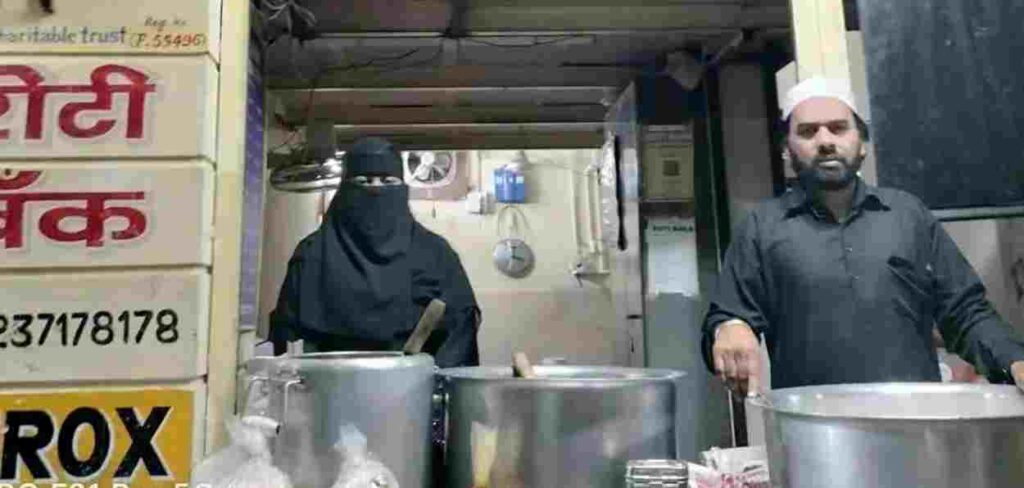
Aliya and Nasir Shaikh serving food

Following the Islamic principle that ‘if your neighbors sleep hungry while you are there, then you are not a true Muslim,’ neighbours in Pune Kondhwa in Maharashtra have replicated the initiatives of “Roti Bank” (bread bank) across many Indian cities and soup kitchens run by religious organization in the West, to address the hunger in the IT hub.

“Ark Charitable Trust’ was launched in August 2019 when many people in the city had lost jobs or livelihoods due to the COVID and hunger was rampant.

The trust was set up by a Kondhwah couple Aliya Shaikh and Nasir Shaikh from their house. The trust has been running a “Roti Bank” to and feeding widows and destitute women who are forced to wander around in search of food of alms to buy it.

Gradually, the Shaikhs realized that feeding people was a temporary solution to the problem of poverty and they started focusing on its root – lack of education. The trust got involved in educating children wandering on streets picking trash and leftover food and enrolled them in various schools

The trust has also provided job works to many widows whom they came in contact with while distributing food.

The Trust distributes food among people of all castes and religions.

Aliya Shaikh says she completed her 12th from Abeda Inamdar College in Lashkar area of ​​Pune.

“I wanted to study, but I got married early, so I could not and then I realized what if I did not study? I can teach the girls living around me. My children today are doing well; studying in schools but what about those who do not have money? That is why I am trying to ensure that no one’s education stops due to financial constrains.”

Nasir also completed his schooling from Moledina High School in Lashkar area. Though he joined class eleventh he had to drop out due to financial problems at home. He started working as a commercial painter.

Nasir says, “Food satisfies the hunger of the stomach, while education satisfies the hunger of the mind. That is why both are considered basic needs.” 

After seeing the work of Nasir and Aliya, a neighbor Ayesha Shaikh also joined them.

Ayesha, 65 has retired from a good position in a multinational company. Aliya, 30, works as a beautician and Nasir, 40, is a building contractor. All three work for ‘Ark’ while handling their business and family responsibilities.

In many weddings a lot of food is left over. To ensure this food doesn’t end in trash bins of the city, the Trust has displayed boards in key points in the city with this statement printed on these: ‘If you have leftover food, contact us… We will deliver this food to the hungry stomachs.’

‘Ark’ also gets financial support from various people and institutions on their auspicious occasions.

The three started this work from their homes without any funds. For the first eight days, Aliya used to cook food while Nasir distributed it. For the next eight days, Nasir took to cooking and Aliya to distribution. They would alternate their responsibilities ensuring that no single person has to take workload.

Aliya says, “We kept reaching out to the needy. As the work progressed, other people came forward to help us. Some started helping us financially, other by donating rations like oil, grains, etc.”

Soon many others more people had joined Ark.

Nasir empathises more with poor and says they are very sensitive. Instead of doling out food, the trio started a ‘Roti Bank’ to give dignity to those needing food.

Nasir says, “The work of ‘Roti Bank’ is not a one-day job. We cannot do one program in one month and then do the next program the next month. It has to be continuous work.

“It’s a challenge to feed their children and send them to school. But it’s also satisfying to see that someone’s life is changing because of you.”

“We have seen people cooking using paper as the only fuel. We have seen them struggling to satisfy their hunger,” says Ayesha. Food is provided to 50 families every day through ‘Ark’. Children’s education fees are paid.”

Aliya, Ayesha and Nasir deliver food to the people of Kondhwa, Bhagyodayanagar area. But the needy people of Hadapsar and Katraj area are not able to reach them every day, nor is it possible for Aliya, Ayesha and Nasir to take food boxes there every day.

So all three of them go to that area and distribute enough ration for at least two months on the basis of the given identity card. They also offer ‘Sehri’ and ‘Iftari’ facilities during Ramzan. A satisfied Ayesha says,

“It is a pleasure to be able to reach out and help the needy. Because of the work of Aliya and Nasir, I am associated with a good organization.”

source: http://www.awazthevoice.in / Awaz, The Voice / Home> Stories / by Chhaya Kavire, Pune / April 04th, 2024