Tag Archives: Muslims of India – Positive News

Dr. Hussaini founder chancellor of Khaja Bandanawaz University conferred with “Mohsin-E-Millat Award”

Kalaburagi, KARNATAKA :
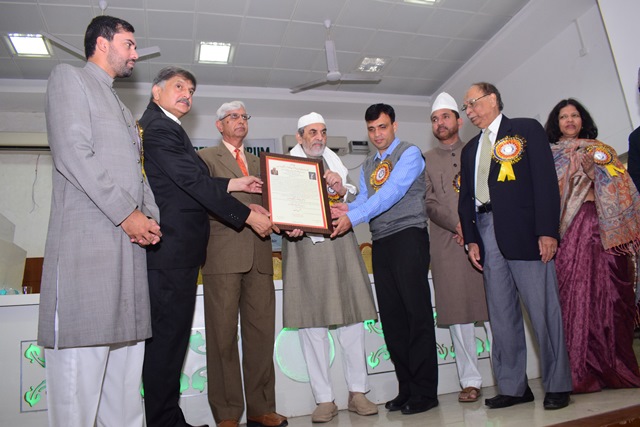
Mohsin E Millat Award being presented to Dr. Syed Shah Khusro Hussaini by Prof. Shakeel Samdani

Aligarh :  

Dr. Syed Shah Khusro Hussaini, Founder and Chancellor, Khaja Bandanawaz University was conferred with  “Mohsin-E-Millat Award” by Sir Syed Awareness Forum (SAF) during a function which was attended by many prominent personalities from the field of education at  University Polytechnic Auditorium, Aligarh Muslim University (AMU).

During the occasion  a seminar on “Modern Education and Muslims” was also organised by the Forum.

Addressing the seminar  Dr. Syed Shah Khusro Hussaini said that education is necessary for Muslims throughout the world. He said that, Islam is a modern religion and if the principles of Islam are followed honestly, then everyone can achieve success in their lives. He further said that he is the admirer of Sir Syed Ahmad Khan and he is trying his best to carry forward the mission of Sir Syed by establishing a university. He appealed to the Muslims to focus on education as it is the key to success. In the last he said that division on the basis of school of thought is causing harm to the Muslims. It should be avoided by them.

Presiding over the seminar, Prof. Mohd. Hanif Beg, Pro Vice Chancellor, AMU said that in today’s world it is very important to discuss on the issues of education. He congratulated the SAF for organizing the seminar on modern education. He further said that Sir Syed has always given importance to modern education. At the end he requested the students to work hard for civil services and judicial examinations.
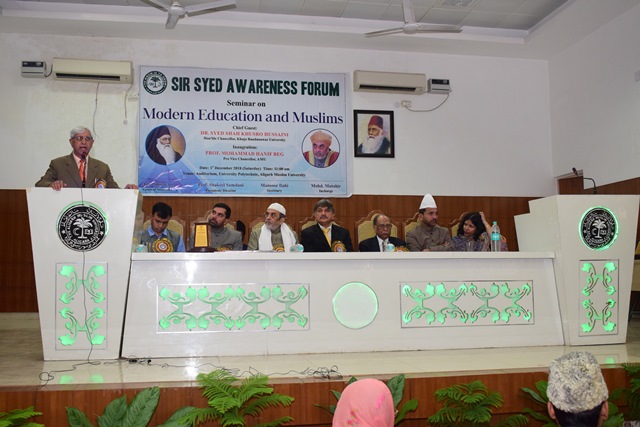
Prof. M H Beg, PVC, AMU delivering Speech sitting IPS Abdul Hamid, Dr. Khusro Hussaini, Prof. Shakeel Samdani, Prof. Pathan and others

Guest of Honor, Mr. Abdul Hamid, IPS and Registrar, AMU said that today Muslims are lagging behind in the field of modern education. Sachar Committee report has confirmed that the educational status of Muslims in India is lower than Scheduled Castes and Scheduled Tribes. He said that higher education is the only solution of this problem. He requested the students of AMU to focus on their education and keep themselves away from unnecessary activities. At the last he congratulated Prof. Shakeel Samdani, President SAF for organizing a wonderful seminar on a very important topic.

President of the forum, Prof. Shakeel Samdani, while delivering his speech, said that Muslims have dominated the world in the field of education, science, literature, etc for about 600 years and this was only possible because they focused more on education and research. He congratulated the South India for carrying forward the mission of Sir Syed Ahmad Khan. South Indian Muslims have established much more education institutions as compared to Muslims of North India. He further said that Dr. Khusro Hussaini has established 24 educational institutions and the most important among them is the Khaja Banda Nawaz University. He said that the work of Dr. Hussaini is appreciable as he has helped the poor sections of the society by establishing educational institutions. At the last he said that it is the pleasure of SAF that Dr. Hussaini has accepted the Mohsin-E-Millat Award.

Principal of Abdullah College, Prof. Naima Gulrez said that North India is lagging behind in establishing educational institutions as compared to South India. She gave the example of Parsis that although they are numerically less in population but they are one of the most prosperous community in the country. It is because they are educationally advanced and they focus very much over modern education. She expressed her sorrow about the condition of Muslim women in the society.

Vice Chancellor of Khaja Banda Nawaz University, Prof. Abdul Jaleel Khan Pathan congratulated SAF for conferring ‘Mohsin-E-Millat Award’ on Dr. Hussaini. He said that it is the need of hour to carry forward the mission of Sir Syed and to provide quality education to Muslims.

Dr. Mohib Ul Haque, said that the time has come for Muslims to focus on modern education if they want to succeed. He congratulated Prof. Shakeel Samdani and SAF for their contribution in establishing Tipu Sultan Block at AMU.

Anjum Tabassum Lashkri (Karnataka) and Mr. Tariq Hussain, AMU were felicitated with “SAF Excellence Award”. Ayesha Samdani conducted the seminar and Mansoor Ilahi proposed the vote of thanks. Sarah Samdani also spoke on this occasion. Poetess Rehana Shaheen recited a Nazm on Sir Syed.

Wajahat Jilani welcomed the guests and Aman highlighted the objectives of the Forum.

On this ocassion, Mr. Syed Ali Hussaini, Pro Chancellor of Khaja Banda Nawaz University, Mr. Haider Pasha Qadri, Sajjada Nasheen, Dr. Moinuddin, Superintendent, KBN Medical College, Gulbarga, and Maulana Syed Abdur Rasheed were present.

Seminar was made a great success with the tireless work and efforts of Adv. Shoeb Ali, General Secretary, SAF, Dr. Haider Ali, Abdullah Samdani, Mohd. Muthair, Hunain Khalid, Danish Iqbal, Sarim Ali, Hamza Noman Masood, Saad Asad, Pawan Varshney, Himanshu Singh, Ajay Singh, Hamda, Kashif Sultan, Ayesha Farheen, Razia Chauhan, Talat Anjum, Rubia, Fauzia, Faiz, Adeel Shervani, etc.

Many prominent figures who attended the program include  Prof. Tariq Chattari, Chairman, Dept. of Urdu, Prof. Humayun Murad, Dr. Iqbal Siddiqui, Prof. Zafar M. Nomani, Prof. Kamil, Prof. Khalid Azam, Prof. Ashar Ansari, Prof. Mujeeb Ansari, Prof. K. Khalil Ahmad, Prof. Shakeel Ahmed, Dr. Nazar Abbas, Dr. Ayesha Munira, Dr. Raihan Akhtar, Dr. Rahat Abrar, Dr. Masood Anwar (Shahjahanpur), Dr. Yameen Ansari (Delhi), Syed Ikram Ul Haq (Hapur), Dr. Raghib, Dr Wasim Ali, Mohd Nasir, Dr. Kalimullah, Dr. Rahmat Ullah, Dr. Qaiser Ansari, Dr. Obaid Iqbal Asim, Dr. Iqbal Hadi, Dr. Naseem Ahmad Khan, Dr. Ali Nawaz Zaidi, Dr. Zafar Ahmad, Dr. Mohsin Khan, Adv. Khan Wajahatullah, Rabab Khan, Dr Zeba Azmat, Dr  Tabassum Chaudhary, Huzaifa Amir, Secretary, AMUSU, Khalid Masood, Ex President, AMUSU, Raas Masood Khan, Court Member and a large number of students were also present in the seminar.

source: http://www.muslimmirror.com / Muslim Mirror / Home> Exclusive Reports> Indian Muslims / by Muslim Mirror Networks / December 10th, 2018
Collective efforts lead to the betterment of the nation: Farooq Siddiqui

UTTAR PRADESH :

Lucknow :

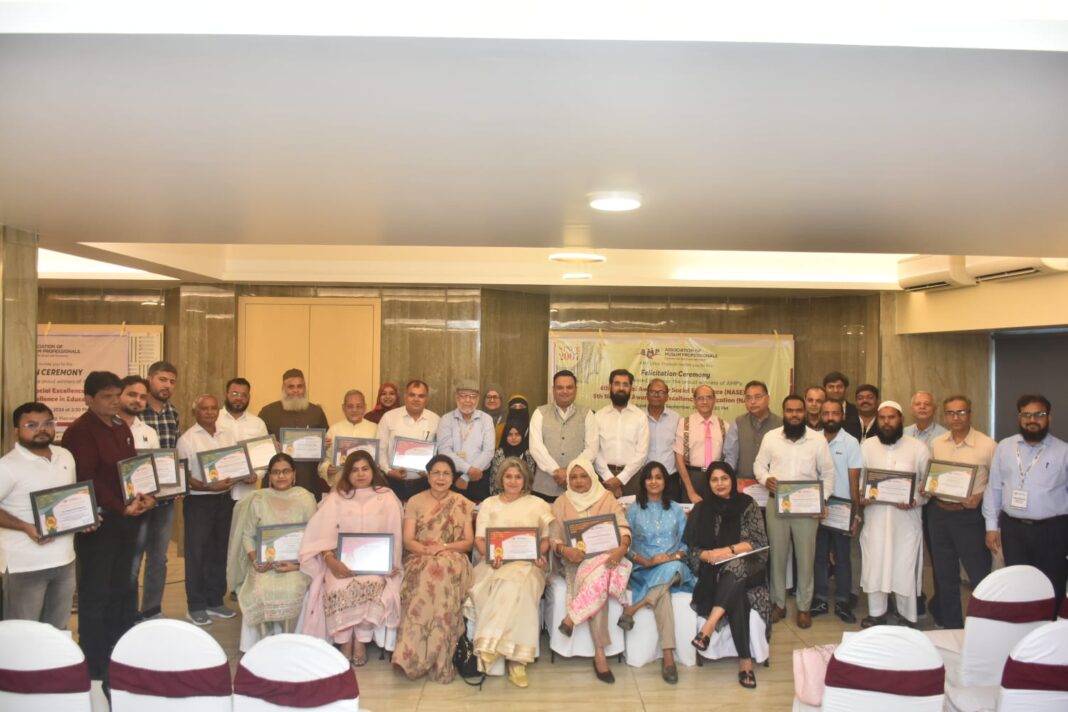
The Uttar Pradesh Chapter of the Association of Muslim Professionals (AMP) organized an ceremony at Hotel Arif Castle for the recipients of the 4th National Awards for Social Excellence and the 8th National Awards for Excellence in Education from Uttar Pradesh.

Among special guests were senior gastro surgeon Dr. Waliullah Siddiqui from Apollo Hospital and Mirza Mubeen Baig from Gautam Budh Nagar. Distinguished educationist and career counsellor Dr. Amrita Das was to attend as the chief guest but could not participate due to health issues, so former senior bureaucrat Zahra Chatterjee filled the role.

The programme began with a recitation from the Holy Quran by Maulana Muhammad Rehan Qasmi.

The welcome address was delivered by AMP’s Zonal Head for Central Zone, Syed Shoaib. AMP’s State Head, Shaheen Islam, introduced the audience to AMP’s objectives and activities, mentioning that this non-governmental, non-political, and non-profit organization was founded in 2007. Over the years, AMP has been engaged in educational, social, economic, and developmental activities aimed at empowering marginalized communities.

Guest of honour Mirza Mubeen Baig emphasized that working for NGOs is becoming increasingly challenging, and only those organizations that serve selflessly and with sincerity will succeed. He stressed the need for collaboration among serious NGOs to benefit from each other’s experiences.

Dr. Waliullah Siddiqui congratulated the awardees for their contributions to education and social services, highlighting that the responsibility for educating and nurturing children lies with both parents and teachers. In today’s changing times, this responsibility has grown even more significant. He shared personal lessons from his life, crediting his parents for playing a central role in his achievements.

Speaking as the chief guest, retired IAS officer Zahra Chatterjee praised AMP’s work and said that every individual’s contribution is crucial for the nation’s development. She stressed the need to reach out to the last individual to ensure educational awareness and economic stability.

Farooq Siddiqui, Head of AMP’s National Coordination Team, addressed the audience, stating that these awards aim to encourage individuals and organizations committed to transforming the nation through their selfless services. He emphasized the importance of collective efforts and mutual cooperation, noting that the welfare of the country and nation lies in unity and partnership.

The vote of thanks was delivered by Mohammad Mohiuddin, Chapter Head of AMP Lucknow, and the event was hosted by Dr. Sumbul Shakeel.

The recipients of the National Awards for Social Excellence included the Best NGO awardees:

Tauheedul Muslimeen Trust, Institute of Social Harmony and Upliftment.

Among the Change Maker Awardees were:

Professor Dr. Nuzhat Hussain from Lucknow, Dr. Mohammad Mubashir, Sabiha Ahmed, Balbir Singh Maan, Dr. Kaleem Ahmed Khan from Kanpur, Dr. Saba Yunus, Shahid Kamran Khan, Sagheer Khaksar from Balrampur, Dr. Saleem Mohammad Khan and Naseem Ahmed Khan from Aligarh, and Ramesh Chandra Srivastava from Ayodhya.

The recipients of the National Awards for Excellence in Education included:

Professor Mirza Mohammad Sufiyan Baig, Professor Naseem Ahmed Khan, Ausaf Azeem Kirmani from Aligarh, Mohammad Shahid Khan, Dr. Mohammad Shamim, Samiullah Ansari from Kanpur, Chitra Maheshwari from Lucknow, Dr. Roohi, and Maulana Mohammad Rehan Qasmi.

Lifetime Achievement Awardees included senior teacher Sheila Lawrence from Lucknow and Jamaluddin Khan from Kanpur.

A large number of attendees were present at the event, including Dr. Anis Ansari (former IAS), Mohammad Khalid Ashu, Mujtaba Khan, Najm-ul-Hasan Rizvi Najmi, Dr. Uzma Mubashir, Syed Abrar, Rizwan Ansari, Mohammad Zeeshan, Mohammad Imran, Javed Akbar Khan Lodi, Shahenshah Ansari, Fahad Mahmood, Ayesha Mahmood, Alma Siddiqui, Ayesha Alvi, Zaheer Baig, and Aqib Rauf.

source: http://www.indiatomorrow.net / India Tomorrow / Home> Education / by India Tomorrow / September 03rd, 2024

‘Mini Brazil of India’ Was Once Infamous for Illegal Liquor: How One Man Transformed a Village

Bicharpur Village (Shahdol District), MADHYA PRADESH :

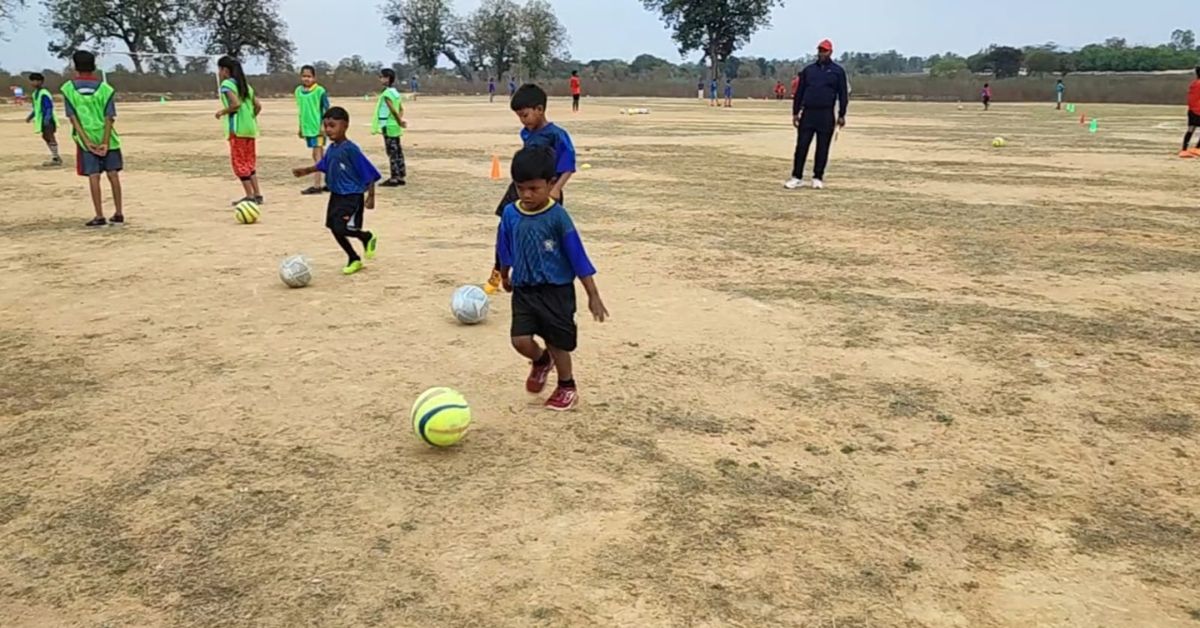
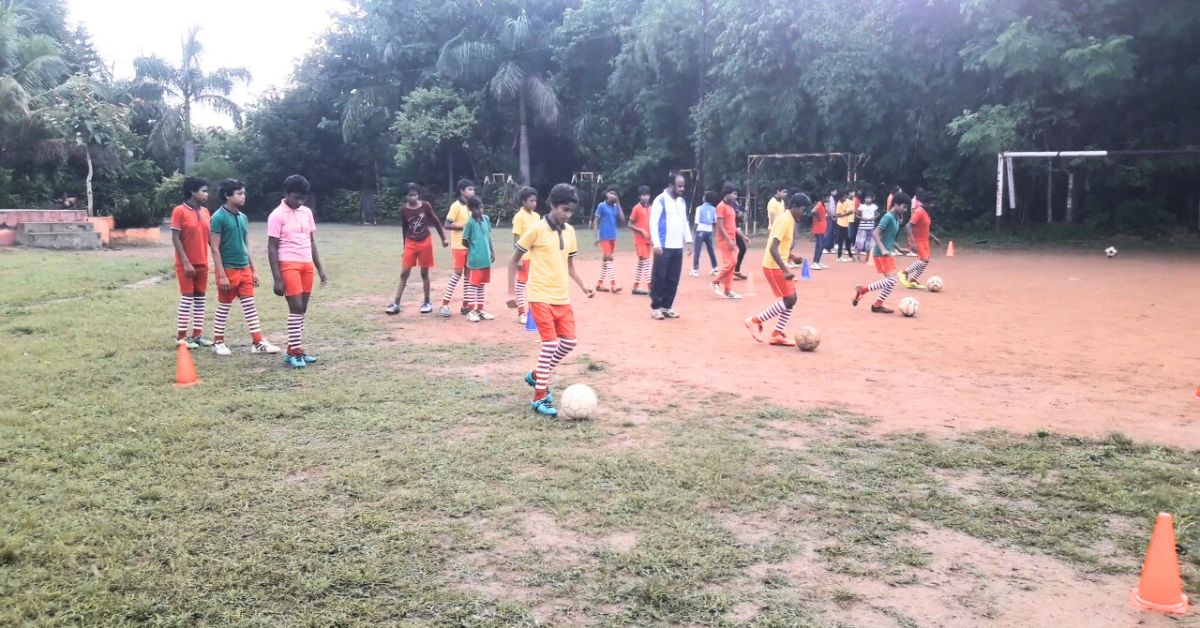
Once known for illegal liquor, Bicharpur village in Madhya Pradesh is now a football hub, producing around 45 national players.

Learn how coach Raees Ahmed’s efforts kickstarted this transformation.

Almost a decade ago, Bicharpur — a village in the tribal-dominated Shahdol district of Madhya Pradesh — was notorious for its rampant production of illicit liquor and narcotics. The primary source of income for many families was the production of liquor from the locally available mahua fruit.

“In this village, every house has been making kachhi shat (mahua liquor) for generations. They did not consider it wrong or illegal since it was deeply ingrained in their culture for a long time. Even children, regardless of their ages, were involved in this work. In fact, the villagers, including children, consumed liquor regularly; it was like their everyday tea and the medicine for any disease,” Raees Ahmed tells The Better India.

However, today the village has undergone a remarkable transformation, emerging as a hub for the rising stars of football . It has produced around 45 state and national-level football players — including Sanya Kunde, Rajni Singh, Laxmi Sahis, Anil Singh Gond, and Hanuman Singh.

Because every household in the village has a football player, it has come to be known as the ‘Mini Brazil’ of Madhya Pradesh. The journey of Bicharpur village from its miserable state to ‘Mini Brazil’ was orchestrated by former footballer and coach Raees Ahmed.

An unlikely football hub

Raees says that the Shahdol division has been a football hub for nearly three generations. The tribal children grew up playing football but without any formal training. Raaes, who has been playing football since the age of 10, was one of them.

“We used to learn football by seeing players in tournaments. But we did not have any formal training or guidance in the sport,” says the 53-year-old who grew up following Diego Armando Maradona — a professional football player from Argentina.

Earlier, the tribal children grew up playing football but without any formal training.

When Raees was in Class 8, he recalls, he played in the ‘under 19’ category at the national level. He went on to play football professionally at the national level seven times during his career. After graduating with a Bachelor of Arts in 1995, he secured a job as a sports teacher at a higher secondary school in Shahdol.

Then in 1997, he took formal training from the National Institute of Sports (NIS) in Kolkata. “To be a player and to be a coach are two different things. Since I was a national-level player, I thought I was an expert, but I was under the wrong impression. There [at NIS], I realised I had very limited knowledge. I realised if I had known these professional techniques, I could have played at the international level,” he says.

Coming back home, Raees went back to his old job. A couple of years later in 2001, he visited the nondescript village of Bicharpur, roughly three kilometres from his workplace.

“I saw many children in this village playing football. They had the fitness of an athlete but lacked training and techniques. They did not know how to pass the football and when to hit the ball to score a goal. After speaking to them, I realised that they did not know much about the outside world, and suddenly, I remembered my childhood!” he adds.

That day, Raees decided to be the support he desired when he was a child.

Where there’s a will…

Every evening, post his office hours, Raees would set out for the village on his bicycle. He started training children in the age group of 8–12 years. But there was no formal set up for the ground and tribal children lacked basic amenities like shoes and jerseys. “Initially, I would dedicate half of my salary to arrange basics for them,” he says.

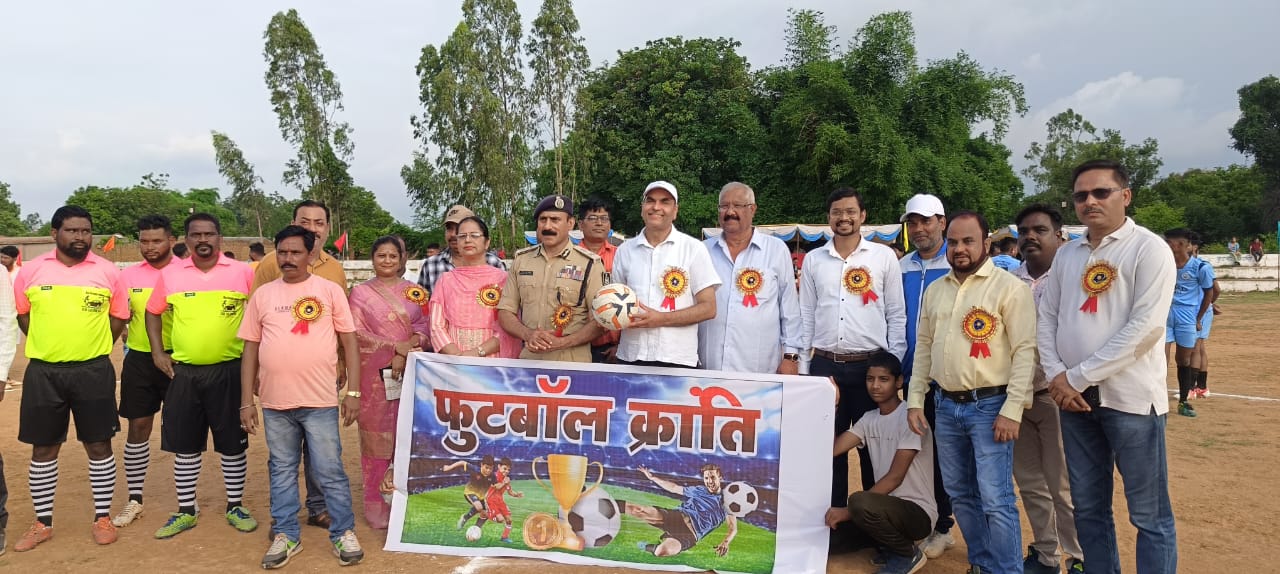
Raees says, Shahdol divisional commissioner Rajeev Sharma established at least 1,200 clubs in all villages across the Shahdol division.

Seeing a good response from the children, the coach also encouraged them to quit the mahua work if they wanted to seriously dedicate themselves to building a career in sports. “These children helped their families quit nasha khori (alcoholism) and switch to other works like labour jobs,” he informs.

Raees adds that by 2003, these children started playing in the ‘under 14’ category at the state and national level, and by 2004, girls also started participating in the sport. So far, the coach has trained at least 1,500 children, and of these, 45 have made it to the state and national level competitions.

One of his students, Laxmi Sahees, has been playing football since she was 12. She would tag along with her brothers to the football ground after school. She tells The Better India, “Initially, we went out of curiosity and for fun, but soon, we became so interested that we would rush to the ground for daily practice after finishing all household work.”

She continues, “Raees Sir told us about the tournaments for the women’s team. And within a year, in 2007, I participated in the national level competition and was selected in the first round. We competed with Kerala, Tamil Nadu, and UP and reached the quarter-finals.”

“Football has given me an opportunity to learn about the outside world. If I had not been into football, I guess I would have been married off at an early age and had a few kids like my elder sisters,” adds the 27-year-old who, so far, has played at nine national level competitions.

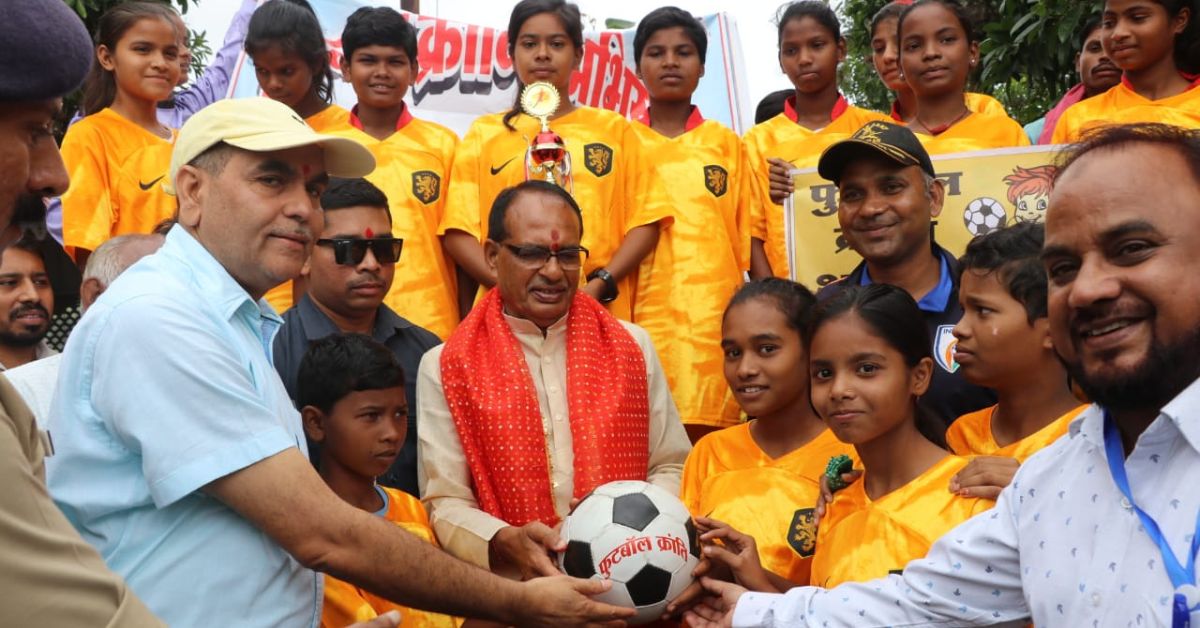
Raees and his students with Chief Minister Shivraj Singh Chouhan.

Currently, Laxmi coaches 40 students from Bicharpur and nearby villages. In the recent Khelo MP Youth Games 2023, her students bagged gold.

Laxmi’s coach sir is extremely proud of her and her students. “It is a matter of extreme pride to be able to compete and be a state champion coming from a small village,” remarks Raees.

Over the years, Raees says, Shahdol divisional commissioner Rajeev Sharma also recognised the talent in Bicharpur and established at least 1,200 clubs in all villages across the Shahdol division. “Today, 80 to 85 football tournaments are organised in the division every year. By 2022, there had been a noticeable improvement in the local people’s quality of life. They now enjoy facilities like electricity, a professional ground, and an open gym. Additionally, the government provides a dedicated budget for the sport in the area,” he adds.

Recently, Prime Minister Narendra Modi also highlighted the budding footballing talent of Bicharpur on Mann Ki Baat. “Just imagine — a tribal area, which was known for illicit liquor and was infamous for drug addiction, has now become the ‘football nursery’ of the country. That is why it is said, ‘Where there is a will, there is a way’. There is no dearth of talent in our country, but there is certainly a need to find and nurture them,” said the PM.

Raees still coaches students in the division, and now he’s joined by national players from Bicharpur who are mentoring new talent in the Shahdol division. For him, the village’s transformative journey has been emotionally inspiring.

“Whenever I watch my students on TV, competing against other skilled players, I feel nervous throughout the match. When our students win, it is not just their victory but also a win for me as their coach. It brings happy tears to my eyes. Now, my students are also training other children, and the happiness cannot be expressed in words. Over the past few years, the entire village’s atmosphere has transformed. We hope to produce many more national players from the entire Shahdol division,” says Raees.

Edited by Pranita BhatAll photos: Raees Ahmed.

source: http://www.thebetterindia.com / The Better India / Home> English> Stories> Football> Rural India / by Shivani Gupta / October 09th, 2023

Raffat Begum: How a begum’s emergence from the harem changed the lives of Rampur’s women

Rampur, UTTAR PRADESH :

Raffat Begum was a gifted poet and wrote with the pen name ‘Asmat’ and took advice from Azhar Inayati, a renowned poet of Rampur. She also wrote several barsaati folk songs celebrating monsoons as did Nawab Raza.

The names of brides have vanished from wedding cards in Rampur. So, we are cordially invited to the wedding of ‘Arif Khan, S/o Samiullah Khan to the daughter (no name) of Wahidullah Khan’. Even the names of women are concealed from vocalization by disrespectful male lips. The nameless miasma enveloping our girls is a recent trend in Muslim etiquette of this erstwhile princely state. It negates the ninety year journey the women of the city have traversed–all the tiny and large steps of emerging out of the zenanas, educating themselves and finding a voice. Maybe the unnamed daughter getting married was educated at one of the local women’s colleges established by the erstwhile Nawabs and has ambitions that involve a becoming.

The emancipative journey of Rampur women began with the decision of a queen – Raffat Zamani Begum, wife of Nawab Raza Ali Khan– to leave the confines of the harem and become something more than a name. Nawab Raza (1930-1947), an enlightened ruler fully supported his wife in her decision and was possibly influenced by her in his very western and ‘modern’ outlook.  As the princesses and female members of the royal family followed Begum Raffat, there was a filtered down liberation among the women and girls of upper classes, and over the years a snowball effect that touched the lives of the of all classes of Rampur women.

Raffat Begum was the daughter of Sir Abdus Samad Khan, Prime Minister of Rampur under the colonial rule, an impeccable gentleman who traced his antecedents from the Najibabad royal family.  She was married to the crown prince, Raza Ali Khan, when she was five and he was six years old. The little bride sat on her grandmother’s lap, her heavy nath supported by her grandmother’s palm as the nikah ceremony was performed. The young daughter in law was granted all the paraphernalia of the future queen while still living with her father and had to attend court on special occasions. At a time when brides were given a new name and a title, her name was changed from Askari Begum to Raffat Zamani Begum.

When Raffat was thirteen, her father in law, Nawab Hamid Ali Khan (1894-1930) demanded that the rukhsati (going away ceremony) be performed. Raffat’s father insisted that they wait at least till the groom had completed his education. Raffat Begum wrote, and is quoted in her sister Jahanara Begum’s memoir, that the relations between the two gentlemen became strained. Finally, Nawab Hamid walked on foot from his Khas Bagh palace to the bride’s house, ‘Rosaville’, and the ceremony which usually took days was performed in a few hours; Raffat Begum left her paternal home amidst  songs extolling the valiant Rohilla Nawabs and martyrs of ancient battles.

The teenage couple began their married life often separated by the political intricacies and rules of the harem. Oral history says that they were not allowed to live together for seven years and Raffat Begum was declared infertile after her first son was born. Raza was forced to take a second wife by his father and stepmother. The women of Raffat Begum’s family did not practice strict purda. Her mother was the daughter of the regent of Rampur, General Azamuddin Khan (1888-1891) who had earned the ire of the maulvis of the time for his ‘kristaan’ viewpoint and his championing of female education. Some say he was murdered because of his radical outlook. It is therefore unsurprising that the educated Raffat Begum rejected the claustrophobic harem life she had endured for the first ten years of her married life as soon as Nawab Raza came to power. The couple showed a proclivity towards the ‘modern’ and western lifestyle in all areas and Raffat Begum became a major mover in the drastic transformation of the Rampur durbar, the zenana and Rampur culture. Though not documented in written histories, the influence of Raffat Begum on the dress, cuisine and court etiquettes finds testimony in oral history.

We get a vivid description of the Begum in her stepdaughter , Mehrunnisa Begum’s memoir, ‘An Extraordinary Life.’

Home tutored in English, Persian and Urdu, Raffat Begum entertained distinguished guests at royal banquets and sat for official pictures­­––the first pictures of women from the royal family. She wore latest western dresses, make up and was a chain smoker –– a ‘modern’ thing to do. In fact, she encouraged her children to smoke as it was considered fashionable. However, some women continued to live in the royal zenana ––more out of lack of choice and under confidence–– but there was no constraint on their movement. Given that Nawab Raza’s predecessor, Nawab Hamid confined his women to a sequestered life behind the laal purda, this was the beginning of a drastic change in the thought process and lifestyle of elite Rampur women.

The young princesses were sent to a boarding school after being brought up by British nannies in a strictly regimented nursery. Emulating the new trend, the elite landowning families and those associated with the court started educating their sons and daughters at boarding schools. So, my mother and her siblings were sent to La Martinere in the 1950s. The 1960’s saw Rampur’s first female doctors, teachers, writers and lawyers ––aspirational models for young girls studying in government colleges now housed in the old palaces and zenanas of yore. Nawab Raza gave a lot of emphasis to education particularly female education and the girls from ordinary families were now sent to girls’ schools in the city after initial misgivings. Covered rickshaws and thelas (carts) transported the burqa clad young ladies to schools. My mother became a doctor in 1967 and the women of my family practiced a flexi-veil where they would cover their heads, sit in curtained cars in Rampur and don sarees and bellbottoms outside of Rampur.

Raffat Begum was a gifted poet and wrote with the pen name ‘Asmat’ and took advice from Azhar Inayati, a renowned poet of Rampur. She also wrote several barsaati folk songs celebrating monsoons as did Nawab Raza. Some of her poetry was published.

Begum Noor Bano, her daughter in law and ex-Member of Parliament, recalls the after-dinner dastan sessions with the children and grandchildren gathered around their beloved ‘Mummy’.  The dastans were later written down by a scribe.

Mapara Begum, a court singer, says she would give importance to the lowliest person and welcome everyone with warmth. Which is why she was fondly called Raaj Maata, the queen mother of Rampur.

A few years after Nawab Raza’s death in 1966, Raffat Begum moved back to her father’s place, Rosaville, with her retinue of servants. It was an empty house. Her parents had passed away and her brothers and sisters had left in pursuit of their lives and careers. Life had come a full circle. She passed away at Rosaville in 1986 – an elegant begum, spirited and dignified till the end. Her plaintive lines are still echo on the lips of old timers:

“Aisey beemaar ki dava kya hai,jo batata nahi hua kya hai;

Kaun suntan hai is zamaney mein, kis se kahiye iltija kya hai.”

How can a person who cannot describe her ailment find a cure?

Even if I could find words for my pleas, would my entreaties find listeners.

Receiving yet another invite to the marriage of an anonymous daughter, I tried to remember the names of the wives of acquaintances and distant relatives. I came up with Naeem mamu ki biwi, Munney sahib ki ammi etc. etc. We are all guilty of using the blanket term bhabhi or khala to address the married women of various ages; we are introduced as wives, mothers and granddaughters. I used to laugh at the old style of explaining connections––‘Munney mian ki beti Shaddan Khan ke ghar mein hai’, indicating that Munney mian’s nameless daughter is married to Shaddan Khan. We have accepted an anonymous existence here and it is only logical that our girls get shrouded in namelessness on their wedding day.

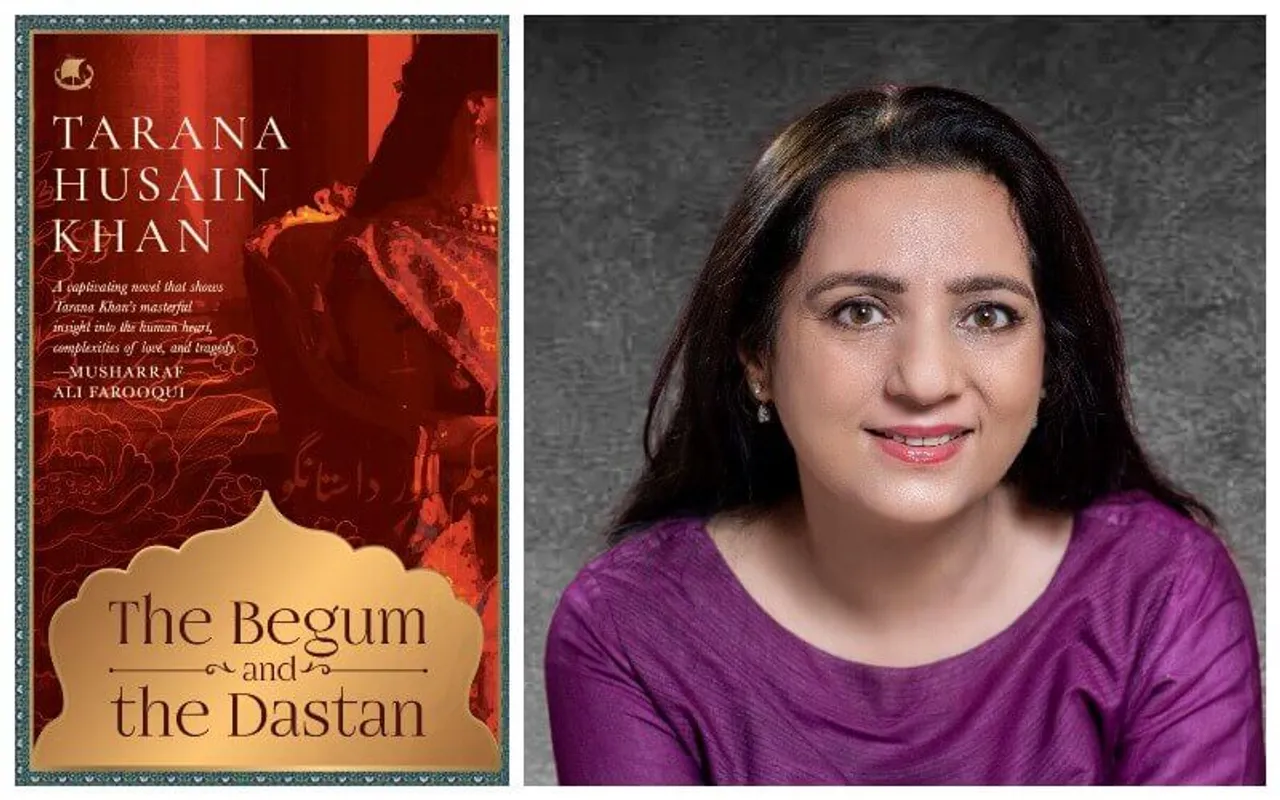
Tarana Husain Khan is a writer and researcher based in Rampur. Her historical fiction ‘The Begum and the Dastan’ has been recently published by Tranquebar. The views expressed are the author’s own.

source: http://www.shethepeople.com / SheThePeople / Home> Books / by Tarana Husain Khan / March 02nd, 2021

Renowned Scholar and Educator Dr. V. Abdur Rahim Passes Away

Vaniyambadi, TAMIL NADU / Madinah, SAUDI ARABIA :

He has written scores of books in Arabic, English and Urdu. One of his unique books is Attibyan which helps in teaching Qur’an to neo-Muslim brothers and sisters.

New Delhi :

Dr. V. Abdur Rahim, world renowned Islamic scholar, multilinguist, author, teacher and translator passed away in the holy city of Madinah on Thursday.

Author of several popular books on teaching Arabic language, Dr. Abdur Rahim was laid to rest in Jannat al Baqi cemetery near the Prophet’s Mosque after Friday noon prayers, reports reaching here said.

Dr. Abdur Rahim has written scores of books in Arabic, English and Urdu. One of his unique books is Attibyan which helps in teaching Qur’an to neo-Muslim brothers and sisters. The scholar was closely associated with Chennai-based Islamic Foundation Trust (IFT) and a majority of his books have been published by it. 

Dr. Abdur Rahim was born in the small town of Vaniyambadi in Tamil Nadu in 1933. After completing his secondary school studies, he joined Presidency College, University of Madras where he majored in English language and literature. He graduated in 1957. In 1964, he joined the prestigious Al-Azhar University in Cairo, from where he completed his M.Phil. and Ph.D. in Arabic philology.

Dr. Abdur Rahim adopted innovative teaching methodologies and pedagogical approaches, which revolutionised the teaching of Arabic. He joined the Islamic University of Madinah in 1969, where he played a pivotal role in the program of teaching Arabic as a foreign language. He also imparted his knowledge at various institutions, including the Islaamic University Omdurman Sudan, Khartoum University Sudan, and Arabic Institutions in Germany, Washington D.C., and British Guyana.

His most significant contribution to Arabic education was the development of the renowned Madinah Arabic Course. This comprehensive series of textbooks and audiovisual materials simplified the complexities of the Arabic language, making it accessible to learners from diverse linguistic backgrounds. His teaching not only facilitated learning but also promoted intercultural dialogue and understanding.

Beyond his teaching endeavors, Dr. Abdur Rahim served as the Director of the translations section at the King Fahad Qur’an Printing Press in Madinah, where he contributed to translating and interpreting the Qur’an into various languages, ensuring its accessibility to people worldwide.

In recognition of his exceptional contributions to Arabic language education, Dr. V Abdur Rahim was honored with the prestigious President of India Award. This recognition celebrated his tireless efforts in promoting Arabic language learning and fostering cultural understanding through linguistic knowledge.

source: http://www.clarionindia.net / Clarion India / Home> India / by Team Clarion / October 21st, 2023

Motivational Speaker Extraordinaire Saeed Ahmed Changes Lives of Depressed Individuals

Sholapur / Pune, MAHARASHTRA :

Meet the man who is on a mission. He even gave up his lucrative job to completely devote himself to this cause. His goal is to inspire the next generation to become responsible and productive citizens by raising their level of awareness about education. He has been crisscrossing the length and breadth of the country since 2006.

The man is Syed Saeed Ahmed, a distinguished motivational speaker with a multifaceted personality who inspires and motivates others and unearths their hidden potential. He has an amazing sense of spontaneity, an inquisitive mind, and a captivating personality.

Throughout India, he has conducted countless personality development programs for the student fraternity, diverse academic community stakeholders involved in the teaching-learning process, the corporate sector, workers in extremely stressful work environments, and the group of people who accept their fate as pseudo-failures.

Saeed Ahmed’s workshops are widely recognized for their great content and distinctive, compelling style of delivery.

Ranked as one of the leading motivational speakers in India, Saeed Ahmed’s workshops are widely recognized for their great content and distinctive, compelling style of delivery. His energizing classes are intuitive, inspiring participants to realize their full potential, release their innate energy, and develop a burning drive for achievement and personal excellence. They are intended to provide participants with a great deal of energy and vitality, enabling them to advance both personally and professionally.

His successful endeavors to bring back to life pseudo-failures, particularly those with low motivational factors and a criminal past, have grabbed significant media attention. The last few years have seen the frequent publication of pieces celebrating these accomplishments in prominent newspapers, and multiple news channels have aired his pre-recorded interviews on the subject.

Born in Sholapur, a textile town in Maharashtra, Saeed Ahmed did his schooling through the Urdu medium and graduated in geography and political science. He went on to pursue higher learning. After completing his studies in library and information science, he did his post-graduation in the Urdu literature from Shivaji University in Kolhapur. He started his career in a modest capacity as an assistant librarian at a reputable college in Pune.

His early and modest profession served as a palette for shaping him into a multifaceted personality, as he was surrounded by antique and modern books, newsletters, and printed reference material of inter-disciplinary content. Gradually and steadily, he began to embody the roles of an actor, director, dramatist, journalist, writer, peace activist promoting global fraternity, and, most recently, a student. He is currently pursuing a doctorate at Pune University on the extremely relevant subject of “Hindustani stage and tradition of Urdu drama in Maharashtra.”

He is an expert at improving life skills, including stress management, time management, positive thinking, emotion management (for overcoming fear, grief, sorrow, rage, boredom, etc.), and a number of other crucial areas that participants may reveal themselves in. The contents change based on the situation, the amount of time available for engagement, and the participants’ overall characteristics, expectations, and concerns.

The evolution of a nationally renowned motivational speaker can be summed up by examining the thirty years of his career. This shows how a person’s life experiences, some natural and some others artificially created, play a crucial role in shaping a flexible personality that can handle any circumstance with ease. What makes the one and only “Saeed Ahmed” is a combination of his varied experiences with controversial topics and his recording of the algorithms used to address them.

Having spent a significant portion of his career working for an organization, he has encountered the typical challenges that all workers face in today’s cutthroat and materialistic workplace. As he began his dazzling career, he experienced moments of rivalry, envy, and unpleasant camaraderie from coworkers, superiors, and even higher authorities. To nearly all of them, he answered with forbearance, patience, and strengthened willpower. In actuality, they functioned as an oven to solidify his supple clay and imparted to him free psychological counseling, stress management techniques, and elegant interpersonal interactions.

Saeed Ahmed is not just a motivator of the highest caliber; he is also an actor, director, writer, documentary filmmaker, and journalist.

He was connected to several prominent theaters in Lahore, Pakistan, as well as Prithvi (Mumbai), Nehru Centre (Mumbai), Rangshankara (Bangalore), Hamdard University, Delhi, Balgandharva (Pune), and Punjab Naat-shala (Amritsar). He performed widely for an Indian audience with these theater groups, and three of his shows, which were shown consecutively for three years in a row at the “World Performing and Visual Arts Festival” in Lahore, were acclaimed internationally (2004, 2005, 2006). These were “Naquab” by Rafi Peerzada, “Jis Lahore Naee Dekhya” by Dr. Asghar Wajahat, and “Portrait” by Ratnakar Matkari.

Prior to this, most of the plays he directed and performed across the country were “Dhilli Khaat” by Naseem Mannan, “Portrait” by Ratnakar Matkari, “Najat” by Abdul Wahab Lunje, “Nafrat ke Rang” by Kazi Mushtaque Ahmed, and a few plays he wrote himself, including “Sir Sayyed Ahmed Khan (Founder of Aligarh Muslim University)”, “Toba Tek Singh,” a drama based on Saadat Hassan Monto, “Kahain Hai,” and “Dilli Ka Thagh” have received favorable reviews from critics and audiences alike. He made his acting debut as a character actor in the “Sunita” serial that was broadcast on Doordarshan. His drama “Sare Jahan Se Accha” had more than forty performances in Maharashtra.

An audio presentation in the form of an audio cassette, followed by audio CDs, and is currently in the process of creating a documentary directed, produced, and narrated by him about the life of Sir Sayyed Ahmed Khan. He also wrote the book “Sare Jahan Se Accha,” released by the Haji Ghulam Mohammed Azam Educational Trust, Pune.

In addition, he has contributed his expertise to the production of multiple documentaries for Pune-based organizations and cable networks.

Alongside his involvement in theater and the arts, he pursued a career as a professional journalist. From 1995 to 2001, he worked as a correspondent for Mumbai’s daily Inquilab and Munsif of Hyderabad and  Pune’s Urdu fortnightly Usool. He had also interviewed prominent figures.

When asked what inspired him to pursue a career in motivational speaking, he admitted with honesty that I was a shy boy in school with an inferiority complex who was accustomed to self-analysis.

Life is a “give and take” proposition, and the previous decades of my diverse work helped me learn enough to be ready for a “second innings” or platform change, in which I now hope to “give,” and in 2002, I made a lifestyle change, he said. In the year 2006, I left the well-secured job to venture into the turbulent waters of lending my ‘know-how’ for the personality development of all, he added.

About his experiences, he pointed out that materialism is prevalent in Muslim society, and there is a wrong notion prevailing in the society that education is for seeking a job. He stresses the need for “Taleem ke saath Tarbiat.”

Under his All India Educational Awareness 93-day tour, last year he traveled 10,000 km across the seven states and conducted 179 workshops in 134 cities. In the second part of the tour, starting on November 11, 2023, he will travel to 13 states.

source: http://www.radiancenews.com / Radiance News / Home> Focus> Pride of the Nation / by Abdul Bari Masoud / November 01st, 2023

Former National Footballer Syed Ahmed Khan Passes Away at 64

Hyderabad, TELANGANA :

Hyderabad:

Former national footballer Syed Ahmed Khan passed away at the age of 64. He is survived by two daughters and a son.

Ahmed was a prominent player who represented the Police team for nearly three decades. His long career and consistent performance earned him respect in the football community. Teammates and officials remember him as a disciplined player who dedicated his life to the sport.

The Telangana Football Association expressed condolences to his family and acknowledged his contribution to the game. Football lovers in the region recalled his role in strengthening the Police team and inspiring younger players during his career.

His death is a significant loss for the local sporting fraternity. Community members paid tribute to his achievements and extended support to his family.

source: http://www.radiancenews.com / Radiance News / Home> Latest News> Report / by Radiance News Bureau / September 01st, 2025

Faraz Ahmed Elected SIO Telangana President for 2025-26

TELANGANA :

Hyderabad:

The Students Islamic Organisation (SIO) Telangana conducted its elections for the term 2025-26 here Tuesday. Chaired by Dr. MKM Zafar, President of JIH Telangana, and Abdul Hafeez, National President of SIO India, the meeting elected Mohd Faraz Ahmed, a Political Science graduate from MANUU, as Zonal President for the term 2025-26. Faraz Ahmed has a notable record of service, having previously served as State Secretary, SIO Telangana, and Secretary SIO Nizamabad. His contributions to SIO’s organ, Rafeeq-e-Manzil, have also been widely recognised.

Mohd Hammaduddin, a student of M. Pharm, was appointed Zonal Secretary. He brings with him extensive experience, having served as President of SIO Hyderabad and as a member of ZAC.

The Zonal Advisory Council (ZAC) members for the 2025-26 are Ashfaq Ahmed, Dr. Osaid Waseem, Suhaib Ahmed Khan, Umar Shahroz, Adv. Ghiyasuddin, Musab Abdul Rahman, Sohail Rizwan, Irfan Khan, Hussain Shahbaz, Abdus Salam Shakir, Samaan Rafid, Qayamuddin, Abdul Khaliq Subhani, Faheemuddin Sufi, Faizan Khan, Azeem Khan, Faisal Khan, Fazl-ul-Bari Irfan.

These leaders took their oath of responsibility during the event, with Dr. MKM Zafar offering prayers for their success.

source: http://www.radiancenews.com / Radiance News / Home> Latest News> Report / by Radiance News Report / December 04th, 2024

Ghulam Dastagir, the Unsung Hero of Bhopal Gas Tragedy

Bhopal, MADHYA PRADESH :

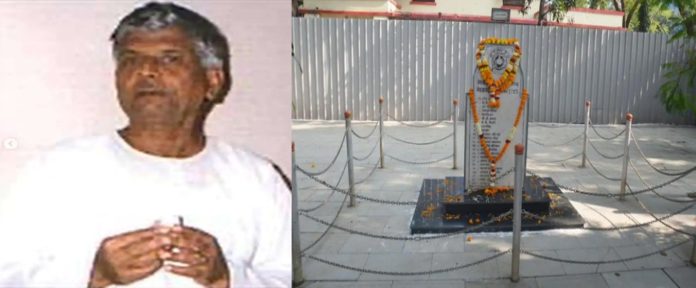
FORGOTTEN HERO OF BHOPAL GAS LEAK TRAGEDY: The saviour Ghulam Dastagir, the Deputy Station Superintendent at Bhopal Railway Junction who saved thousands of lives on December 2 and 3 went unrecognised and was buried in the history.

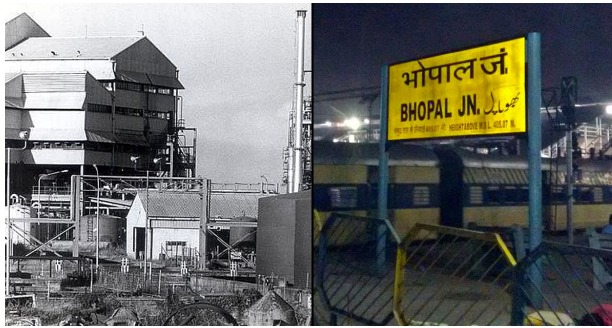
Much has been said and written about the fateful Bhopal Gas Leak Tragedy in 1984 that claimed around 5,479 lives while affecting over six lakh people with serious skin disorders. However, the saviour Ghulam Dastagir, Deputy Station Superintendent at Bhopal Railway Junction, who saved thousands of lives on December 2 and 3,1984 went unrecognised and was buried in history.

Ghulam Dastagir’s case isn’t an isolated one as thousands of Muslim freedom fighters who sacrificed their lives for the cause of Indian freedom struggle were more often than not either concealed or forgotten by the Union Government on one pretext or the other. This scribe flipped through the pages of history to zero in on the world’s deadliest industrial tragedy which sent shockwaves among the people across the globe.

Even after four decades after the Union Carbide Factory gas leak episode, the scars still remain in the hearts of the victim families.  What is irking is the fact that a memorial erected at Bhopal Railway Junction for 23 railway men, who lost their lives while rescuing people, have been inscribed but there is hardly any mention about Ghulam Dastagir who played a pivotal role in the rescue operations on the dreadful day.

Sources from various news portals revealed that a deadly gas leak from the Union Carbide factory engulfed the Bhopal city, killing thousands and injuring many more. Amidst the chaos and panic, one man acted swiftly and bravely to save lives: Gulam Dastagir, Deputy Station Superintendent at Bhopal Railway Junction. Few people know that during the Bhopal gas tragedy, a heroic stationmaster risked his own life to save others. But for him the causalities in the catastrophe would have been much higher.

On the fateful night of December 2, 1984, Ghulam Dastagir found himself in the midst of routine paperwork. Little did he know that this night would forever alter the course of his life. As the Bombay-Gorakhpur Express was due to arrive, Dastagir’s routine took a drastic turn when he sensed something was amiss. His swift action would soon prove to be the difference between life and death for many. Upon stepping out of his office, Dastagir experienced burning eyes and a bitter throat – a tell-tale sign that something was terribly wrong. Shockingly, he discovered the lifeless form of Dhurva, the station superintendent, in his cabin. Acting swiftly, Dastagir communicated with nearby stations to halt incoming trains, potentially saving countless lives. Despite the looming danger, he ordered the immediate departure of the Gorakhpur-bound train, ensuring the safety of its passengers.

As the deadly gas claimed the lives of 23 station staff members, including Dastagir’s own son, he and his team worked tirelessly to manage the crisis. Despite struggling to breathe, Dastagir remained composed, coordinating medical help, and providing a ray of hope in the face of impending doom. The station became a scene of chaos as large crowds desperately sought escape from the poisonous air, and Dastagir’s leadership became a beacon of strength.

While Dastagir’s selfless actions spared countless lives, the tragedy took a heavy toll on him personally. The toxic gas led to health issues, with a lump forming in his throat, and subsequent years were marked by frequent hospital visits. The heavy personal cost included the loss of his son to the gas and another developing a permanent skin infection. Despite the challenges, Dastagir continued to exhibit resilience until his demise in 2003.

At Bhopal Junction, a memorial stands in honour of 23 railway personnel who lost their lives on that tragic night. Unfortunately, Ghulam Dastagir’s name doesn’t grace the memorial, as his demise occurred nearly two decades later. However, during those critical hours in December 1984, Dastagir exemplified the truth in Gerard Way’s famous quote, proving that heroes emerge from ordinary people who rise to extraordinary challenges.

Meanwhile, Netflix’s series, “The Railway Men” made headlines based on the Bhopal gas tragedy of 1984. Amidst the widespread acclaim for the show, this review reflects on one of the unsung heroes of that tragic night – the deputy station master of Bhopal railway station, Ghulam Dastagir. His extraordinary actions saved lives and offered a glimmer of hope in the face of an unimaginable disaster.

Shadab Dastagir, youngest son of late Dastagir, while speaking to a media in 2023, said that his father’s heroic role in the entire episode on Bhopal Railway Junction on the night intervening December 2 and 3, 1984, has mainly remained unsung.

“Little official acknowledgment and appreciation came his way in these four decades. And now when an OTT series has been made on the episode, it is upsetting that we were never consulted about the actual happenings,” he told The Week.

“I have watched the teaser and the official trailer and I can make out that the character being portrayed by Kay Kay Menon is based upon my father. But then we are highly apprehensive as to how much close to truth the character has been made,” Shadab, who is into the family business of chemicals and fertilisers, said.

He also mentioned that the family had already sold out the copyright of a script on Dastagir’s life and work – based on narration by his father himself during his lifetime – to a production house called Small Box Media. The Mumbai-based production house was planning a full-length movie based on the script when YRF cut in with the miniseries.

A forgotten hero whose sense of duty and commitment saved countless lives, Dastagir’s story deserves to be recognised and remembered by his fellow countrymen.

[The author is former Indian Express and Deccan Chronicle chief]

source: http://www.radiancenews.com / Radiance News / Home> Focus> Social Service / by M Rafi Ahmed / September 02nd, 2025

Kargil MMA players win 3 national medals, coach Mahdi upbeat

Kargil, LADAKH :

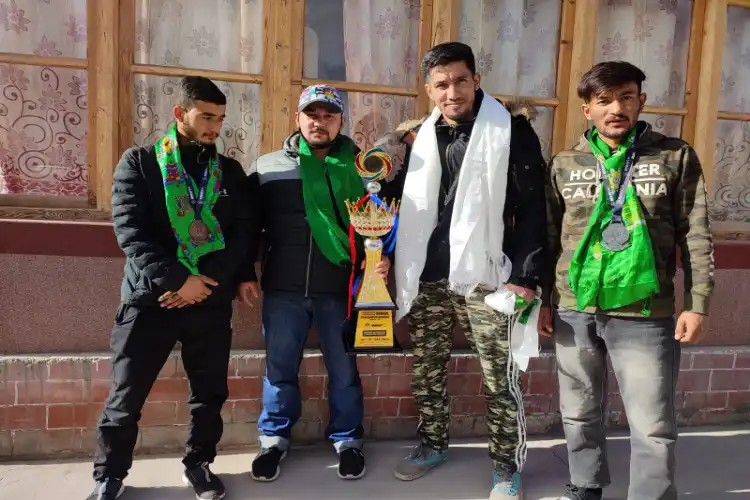
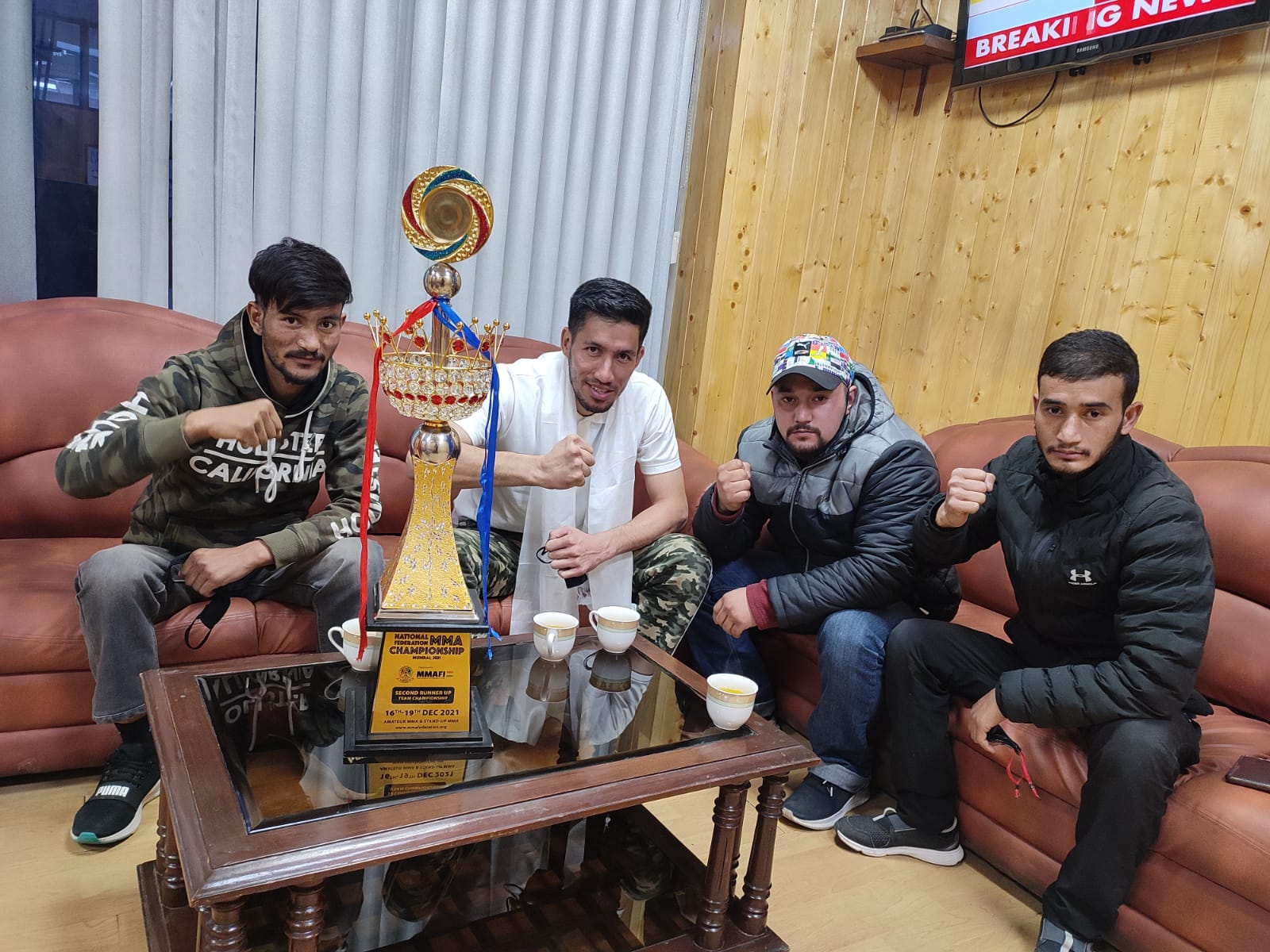
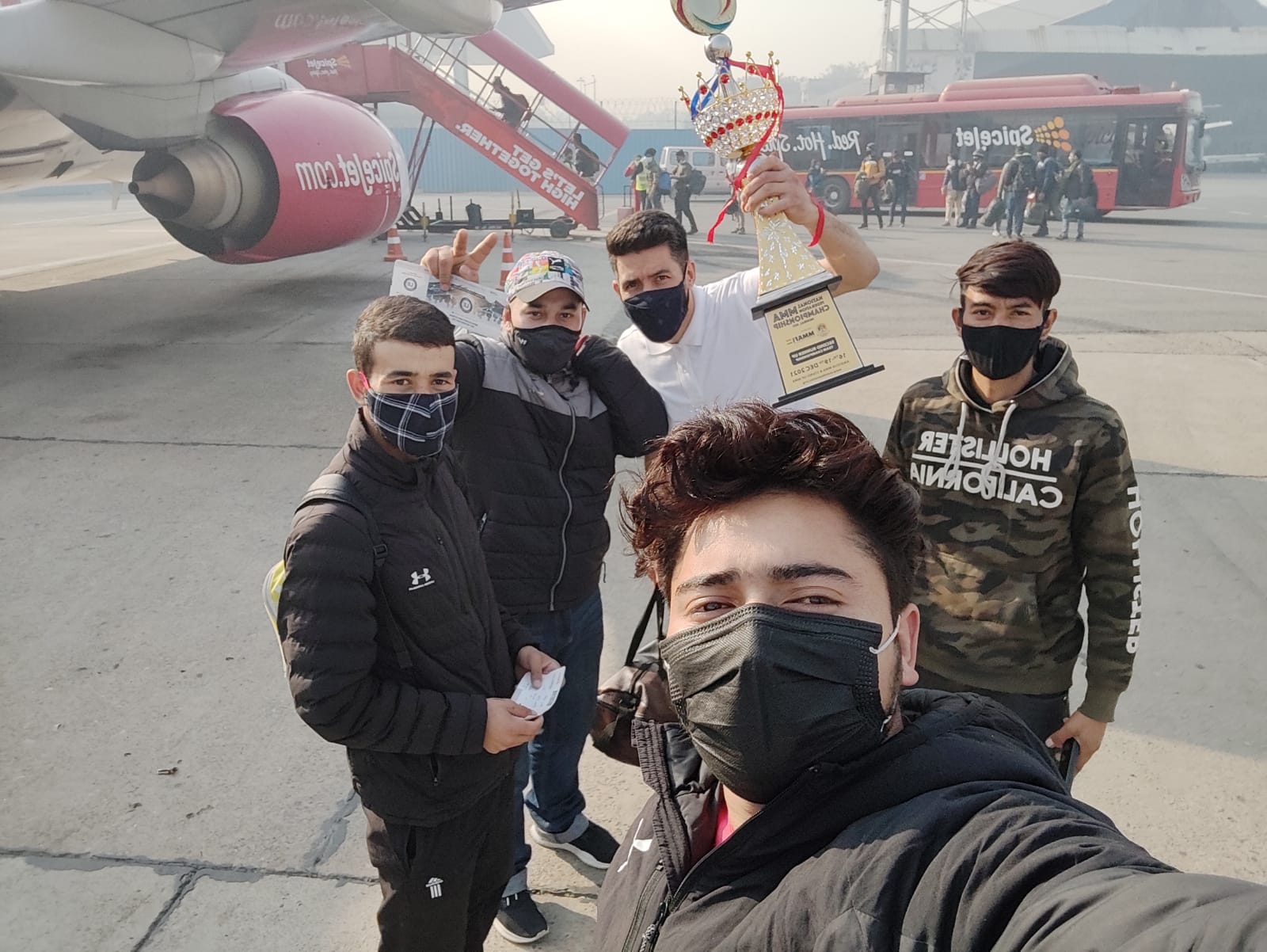
Coach Mahdi Nasiri (In the center) flanked by Murtaza Ali Khuddam, Ali Akbar and Mohammed Hasnain.

Ladakh, now the Union Territory, has registered its name on the national stage for reasons other than the Kashmir conflict and continued Line of Actual Control (LAC) standoff with China. A three-member team from the UT has gained the third position at the National Mixed Martial Arts Championship held in Mumbai this week. The team won a total of four medals — one gold, one silver, and two bronzes.

Murtaza Ali Khuddam has won the Gold Medal in the 79 kg category by knocking down his opponent in the 1st round of the final match. Other medalists are Ali Akbar and Mohammed Hasnain.

Their success is due to their grit, determination, and willpower. This reporter spoke with the Gold medalist Murtaza Ali Khuddam and his coach Mahdi Nasiri on their journey.

The Winners and the coach with their trophy and medals

Nasiri and Khuddam hail from the Kargil district. Mahdi said that he has been a UFC Mixed Martial Arts fighter for long and now coaches and mentors youth who are attracted to the sport. “I developed a passion for this game by watching and reading about international stars and started to self-train in my teenage years. Slowly, I gained confidence and got in touch with known sportsmen of my region.

“They were impressed with my skills and coached me further. Then, on someone’s advice, I went to Iran and spent five years learning and participating in various competitions there,” said Nasiri.

He added that when Bollywood personalities, Raj Kundra and Shilpa Shetty, organised Super Fight League in 2012, he participated in it and won a gold medal. “Besides, I also won medals in some other events, but my life didn’t change as this sport is not widely played and promoted in India. Plus, the required facilities are scarce. I used to practice alone in a makeshift arena and by watching videos. There was no support from the government or a private organisation. Yes, some individuals used to lend support,” said Mahdi.

The winning team being received at Airport

Mahdi shared with us some videos that showed him practicing and training in a makeshift arena covered with polyethylene sheets to secure players against cold.

Mahdi has become a professional coach. “I hope our performance in MMAFI would improve things. It has already caught the attention of the government.

“Lieutenant Governor RK Mathur in a tweet has appreciated the team for the brilliant performance, particularly of Murtaza Ali Khuddam. Local federation for MMA too is upbeat and would help in uplifting the game and lives of players,” said Mahdi.

Murtaza Ali Khuddam, the gold-medallist, and star of the tournament said, “We grew up watching international star Khabib and Mahdi Bhai playing this very difficult sport. They have been our inspiration. Whatever know about fighting, I have learned from Mahdi Bhai, whether it is elbow strike, ground, and pound, back control, armbar, sprawl, etc.

The team waiting to fly – at the airport

“We had nothing in the name of facilities except a makeshift arena but, we had a lot of determination to prove our mettle. We knew that once we make our mark, our path will be illuminated. See, today as we returned to our hometown, around 200 vehicles had come to receive us. We hope this euphoria will earn attention for MMA in our country too,” Khuddam said.

He also said that for becoming an MMA fighter, the most important is physical strength. “I had built that by following a certain diet regime suggested by Mahdi Bhai,” he said.

The Mixed Martial Arts championship was organised by the Mixed Martial Arts Federation of India (MMAFI).

Khuddam, who is the youngest of his three siblings, said he or the other MMA players from Kargil did not receive any support from the Ladakh Sports authorities. “But, we were not hopeless. Our medal-earning performance will pave the way for a better future. The government will wake up too,” he said.

source: http://www.awazthevoice.in / Awaz, The Voice / Home> Stories / by M Anas, New Delhi / December 25th, 2021