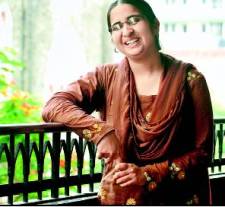
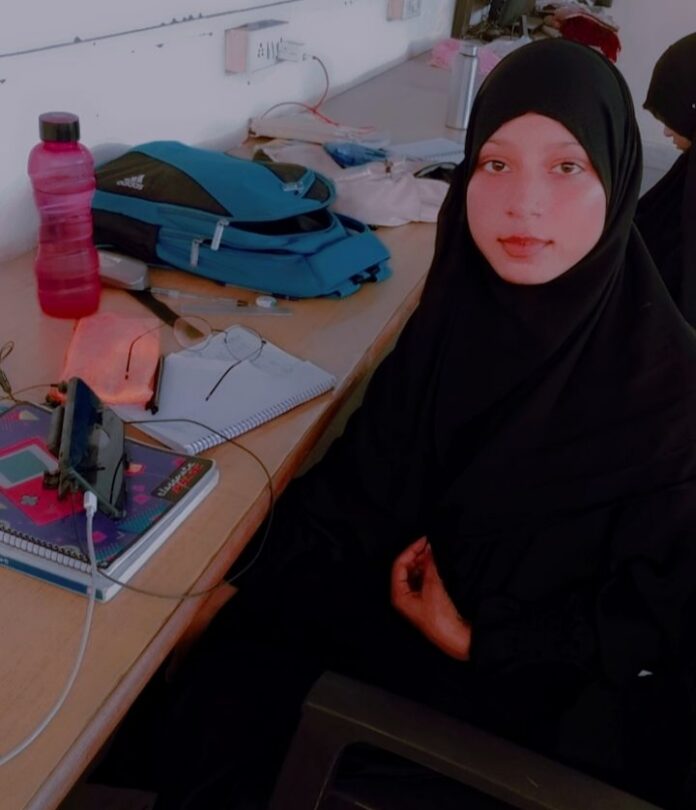
Hijab-clad Alfiya Ansari allegedly faced discrimination at NG Acharya College, the first educational institution in the city that banned wearing headscarves and veils on the campus. Despite the decision reportedly forcing several Muslim women to drop out or discontinue attending classes, she remained dedicated to her education.
Her perseverance and determination led her to achieve the top rank in her class, serving as a powerful testament to her resilience and a strong rebuke to those who “discriminated” against her.
Alfiya’s achievements highlight her unwavering commitment to her goals, demonstrating that “bias” and “prejudice” cannot diminish true talent and hard work.
A Dream of Becoming a Doctor
Living with her parents and two siblings in Mumbai’s Govandi slum, Alfiya’s story is one of remarkable resilience and determination. Her father, a tailor earning Rs 20,000 per month, worked hard to support his family.
As the eldest sibling, Alfiya took her role seriously. She completed senior secondary school from a local English medium school, scoring an impressive 85% and chose to enroll in an aided college for further studies.
From a young age, she aspired to become a doctor. This ambition led her to choose the science stream in junior college, where she began preparing for the National Eligibility-cum-Entrance Test (Undergraduate) or NEET examination.
However, as she advanced to her second year, she decided to focus primarily on her board exams, dedicating much of her time to studying in the library to achieve her academic goals.
Despite facing health issues from eating outside food while spending long hours in the library, Alfiya’s family, particularly her mother, provided unwavering support. Her mother ensured she had home-cooked meals and timely medication, allowing her to maintain her focus.
Alfiya credits her success to her mother’s support, highlighting the crucial role her family played in her academic achievements.
‘Harassment’ at College
Initially cooperative, the staff at Acharya College allegedly changed their attitude drastically once the hijab issue arose. Teachers purportedly began harassing Muslim girls, making them stand outside during lectures and using various other methods.
Alfiya was mentally disturbed for many days. Fifteen-twenty girls, she alleged, stopped attending college.
However, she could not easily give up on her dream of becoming a doctor. With her parents unable to afford another college, she continued at Acharya, removing her hijab outside but still wearing a dupatta.
“This is how I struggled,” she told TwoCircles.net.
Maintaining Focus Amidst Adversity
Alfiya remained focused on her goals despite the challenges. “Life brings many issues, sometimes in the form of the hijab and sometimes due to narrow-minded views about girls,” she said, adding, “When we are focused, problems do not seem as overwhelming.”
She stayed focused on her aim and plans to continue facing challenges head-on without stepping back from her goals.
A Message to Girls
Alfiya has a powerful message for girls: “If we want to change our current situation, education is the most important part. Achieve it, but always remember the importance of both academic and religious knowledge. Only then can you become a better role model in this society. Your identity should be defined by your character, which for a girl is always defined by her modesty. Be whatever you want to be, but stay within the bounds of modesty.”
Advice for Youth
To the youth, Alfiya advises, “You are your own saviours, and your own adversaries. Keep yourself engaged in productive activities, or else negative influences will keep you busy with useless and immoral activities. Use your mobile phones positively but within a specific time limit. Learn skills to keep pace with the present situation.”
Family’s Joy and Support
After the results, Alfiya’s family was overjoyed. “Before 12th grade, I did not receive much financial support from anyone; but after 12th grade, I received immense support from an elder sister, whom I consider an angel. She has been a great source of motivation for me,” she said, though she could not mention her name due to her sister’s request for anonymity.
source: http://www.twocircles.net / TwoCircles.net / Home> Careers / by K K Ahmed, TwoCircles.net / June 10th, 2024
Bengaluru, KARNATAKA / New York, U.S.A / Mumbai, MAHARASHTRA :
Rummana Hussain’s conceptual artistic imprint on the state of India is relevant now more than ever. Dealing in the currency of feminist expression, postcolonial thought and perennial ideas, Rummana’s India is both doubly colourful and doubly dark.
In an inaugural show in its new West Village location, New York’s Institute of Arab and Islamic Art presents The Tomb of Begum Hazrat Mahal an exhibition encapsulating Rummana Hussain’s artistic ruminations about the space our bodies occupy in present and past through one of India’s most prominent Muslim woman.
Bangalore-born Rummana Hussain (1952-1999) was a pioneer in conceptual and performance-based political art in India during the 1980s and 1990s.
She was part of the Sahmat collective, a platform for liberal, secular engagés multidisciplinary artists including Safdar Hashmi, Bharti Kher, and Manjeet Bawa among others.
In this recreation of The Tomb of Begum Hazrat Mahal (1997), the respectful visitor enters a one-room shrine.
“In seeing The Tomb of Begum Hazrat Mahal today, I remembered Hussain’s bold feminist reclamation of her Muslim body through the reincarnated aura of Begum Hazrat Mahal to question monolithic identity, national narratives, and systemic marginalisation”
Various objects signify a site of lamentation, pride, and remembrance.
On the floor, occupying a central location, 12 votive-like papaya halves sit atop a mattress of uncooked rice, evoking both an altar to womanhood and fertility, and a symbolic funerary pyre.
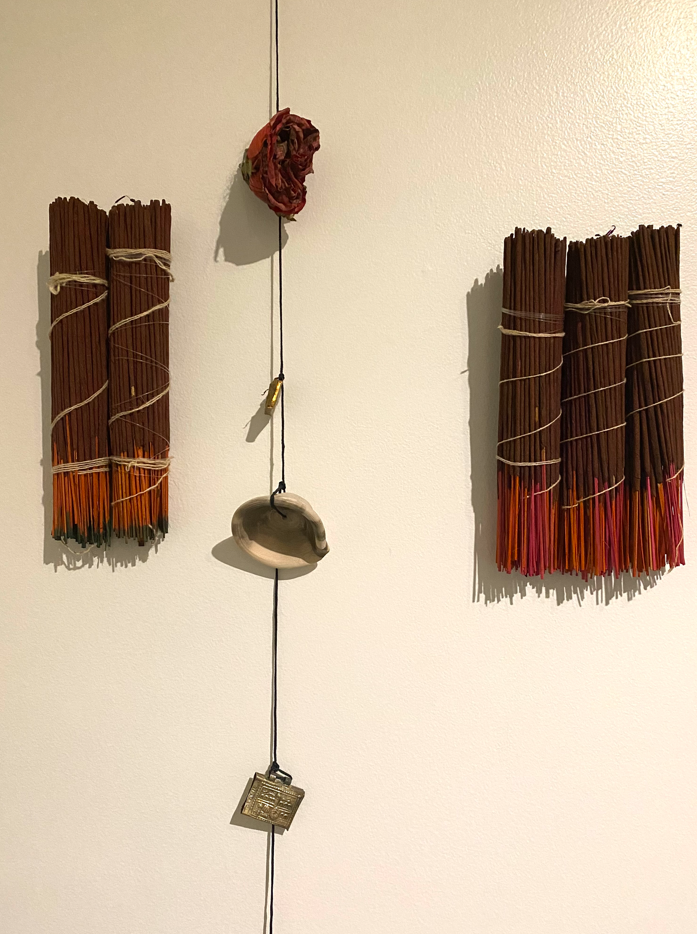
In front of them stands an installation of offerings comprising amulets, dried roses, shells, and incense sticks, tied in a rope.
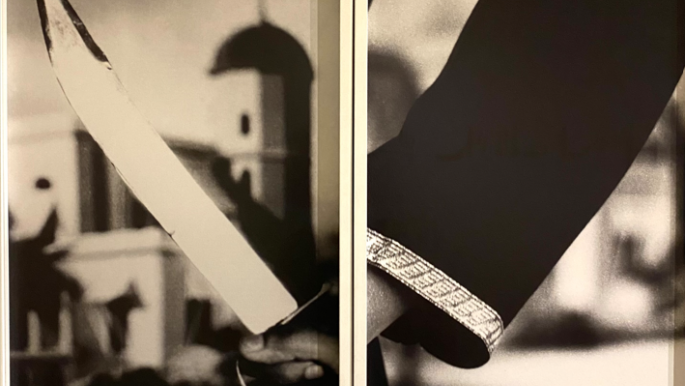
Against the three other walls is a calligraphic sculpture from rusty metal that reminds of a sacred spell and the embodiment of time, and an image frieze of detailed black and white triumphant photographs showing a woman’s arms, wrists, and hands.
In one of these frames, a woman raises her fist up as if calling others to join in. In another, she holds an ominous knife. Images of flames are interjected between the simulacra of archives.
The room is devoted to a woman, an invisible physical body which radiates from each of the static objects. Begum Hazrat Mahal (1820-1879), née Muhammadi Khanum, was born into a poor family.
She was sold and entered the royal harem of art-loving Wajid Ali Shah, the last king of Awadh, a kingdom that occupied the area of the present-day northern Indian state of Uttar Pradesh. Trained as a harem attendant, she would eventually rise to become the king’s concubine – one of his favourites. Beyond her charms, Begum Hazrat Mahal owes her entrance on the historical stage foremost to her political prowess and courage.
The British-owned East India Company operated in Awadh since the early 19th century. The Company increased its grip in 1856, when it directly seized control of Awadh, citing poor governance and the need to uphold the rule of law to justify their annexation (an excuse known as the “Doctrine of Lapse”).
A Chief Commissioner was rapidly appointed. This caused the king to leave Lucknow and seek refuge in Calcutta. The Queen Mother of Awadh petitioned Queen Victoria in person for her son’s rights, in vain. Wives, including Begum Hazrat Mahal were left behind in occupied Lucknow.
After this brutal annexation, discontent grew in several parts of India against the British and the interference of the Company, culminating in a mutiny and revolt in May 1857. Rebels looked to Awadh’s Crown Prince as a successor to his absent father when they captured Lucknow.
But Birjis Qadr, the son of Begum Hazrat Mahal and Wajid Ali Shah, was still a child then, too young to assume power. In his stead, Begum Hazrat Mahal took over Awadh’s revolutionary affairs, actively leading the armed revolt during her regency, towards the reinstatement of Indian rule over Awadh in July 1857.
She continued resisting British rule well after the retaking of Awadh by the occupying troops in 1858, as she refused various offers of collaboration. She died in exile in Kathmandu, Nepal, as an unwavering freedom fighter. Today, a humble stele near Kathmandu’s Jama Masjid marks her tomb.
Rummana Hussain, Living on the Margins, 1995, performance at the National Centre for Performing Arts, Mumbai
When Rummana Hussain first showed The Tomb of Begum Hazrat Mahal to the public in 1997, it was during a period marked by the tragic aftermath of inter-communal violence.
During the 1980s, radical Hindu nationalists campaigned to build a temple on the site believed to be the birthplace of Rama, where a mosque had been erected since the 16th century.
They took to the streets of Ayodhya, Uttar Pradesh, en masse in 1992. Security lost control of the crowd which eventually stormed into the site, demolishing the mosque.
This ignited weeks of violent clashes between Hindu and Muslim communities, causing the deaths of thousands. A later investigation on the destruction of Babri Masjid in Ayodhya pointed out the responsibility of leaders and supporters of the right-wing Bharatiya Janata Party (BJP), the political party of India’s incumbent Prime Minister, Narendra Modi.
Babri Masjid launched a turning point in Hussain’s artistic journey towards a more intimate, politically-conscious form of expression. In Dissected Projection (1993), she explored the multilayered meaning of ruins and dislocation through an allegorical work that exposes a fracture, a shattered piece of terracotta.
In her show Multiples and Fragments (1994), Hussain engaged with historical and domestic oppression in an installation of pigmented pieces of fabric on a clothesline, to denounce the colonial extraction of indigo in India and unpaid housework traditionally performed by women and girls. Labour is always physical and violence first hurts the most vulnerable.
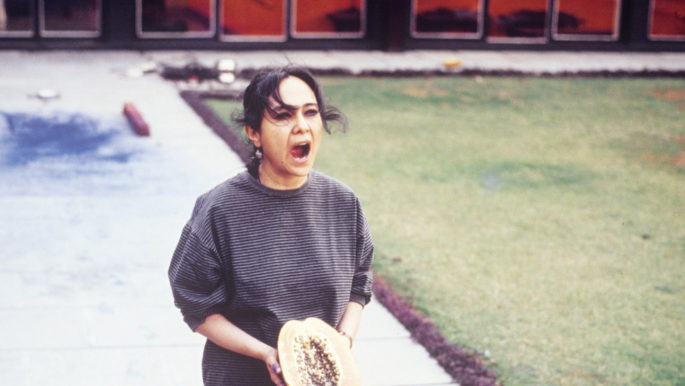
In her 1995 performance Living on the Margins, Hussain screamed while holding papaya halves, shapes that represent a universal vessel and the female anatomy.
Her works have been exhibited in the India Pavilion of the Venice Biennale in 2019, and in multiple institutions across India, Canada, Australia, Mexico, the United Kingdom and the United States during her lifetime and posthumously.
In seeing The Tomb of Begum Hazrat Mahal today, I remembered Hussain’s bold feminist reclamation of her Muslim body through the reincarnated aura of Begum Hazrat Mahal to question monolithic identity, national narratives, and systemic marginalisation. She wanted to say, we can turn the hate in love, we can turn the oppressed, the victims, into heroes they will one day celebrate. We can tell our own stories. They matter.
Outside, scores of brunch-goers live, love, laugh. If it’s dissonance we are meant to acknowledge, I acknowledge it. I closed my eyes in the silent white cube of the Institute of Arab and Islamic Art and saw images of the relentless violence and bullying Muslim women continue to face in Narendra Modi’s India.
In this reconstituted tomb, it’s hard to feel alone. Around me swarmed many other ghosts, of ordinary Muslim women – from Afghanistan to Iran and beyond – crushed and slain in their contemporary defence of freedom and justice against oppressors. Many have been killed in their fight.
A shrine calls for a quiet prayer, I realised.
Farah Abdessamad is a New York City-based essayist/critic, from France and Tunisia.
In the midst of electioneering cacophony, I received an invitation from the moving spirit and ever agile Founder-Chairperson of Mysuru Book Clubs-2015 Shubha Sanjay Urs for an evening of conversation and informal interaction with Saeed Akhtar Mirza yesterday morning. I did not know who this celebrity worthy of Shubha’s attention was but Shubha was quick to throw in a ‘guarantee’ at me of a dinner that would follow the event. The invite was like welcome summer’s rain for me to give a second thought before accepting. I said yes. It was at the Club House of Mysore Race Course.
Out of curiosity, I asked Shubha about the person whose ‘darshan’ I was going to have and also hear the oracle. She simply said, “Uncle, you remember the popular television serial Nukkad? He is the Director of that TV serial.”
Yes indeed, I could instantly connect to this very interesting filmwallah from Mumbai and his achievements with a National Film Award under his belt. What I did not know, however, was that he is also an author of books, rather queer ones — as I heard of the synopsis of them from his talk. He is branded (and touted) as a pioneer of the ‘New Wave’ progressive cinema in India. (One may conclude ‘left liberal of the Lutyen’s Club kind). Other appendices found in his genius are as a writer, traveller and a teacher.
Traveller indeed he is one. After all, the nature of his work would require him to travel. But what left me wondering was that at past 80 years of age he chose to travel by an SUV from Mumbai to Mysuru with one overnight halt at Belagavi. He broke his journey in our city for an overnight stay and the flycatcher of our Mysuru Book Clubs-2015 Shubha succeeded in catching him while on his way to Wayanad in Kerala. I asked him, “Are you on an election survey mission to Rahul Gandhi’s Constituency?” “No” was his response and mumbled about attending a meeting connected with films etc.
One of Mirza’s well remembered film was ‘Albert Pinto Ko Gussa Kyon Aata Hai’? of 1980. I felt nostalgic to learn that he was a student of the Film and Television Institute of India (FTII), Pune, where I used to frequent while in Pune to see the future stars and, of course, the art films by foreign directors like Ingmar Bergman of Sweden who directed ‘Seventh Seal’ or Vittorio De Sica of Italy who produced the all-time classic ‘The Bicycle Thief’.
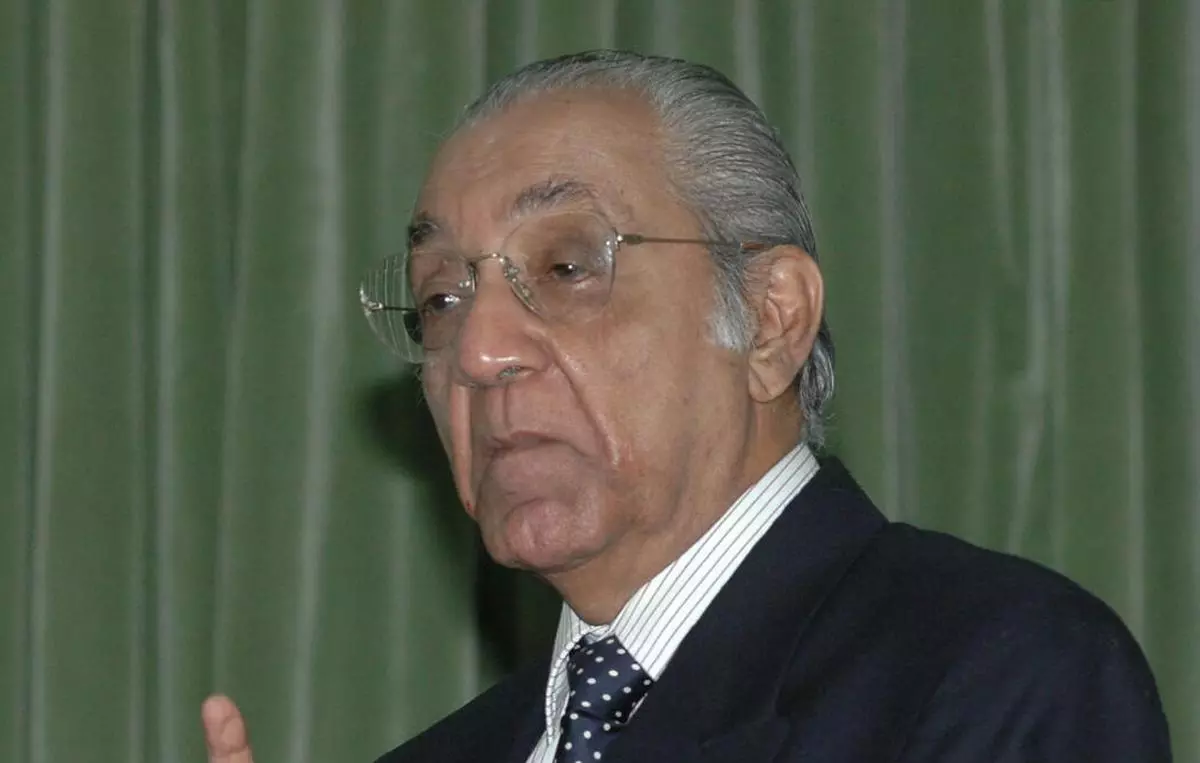
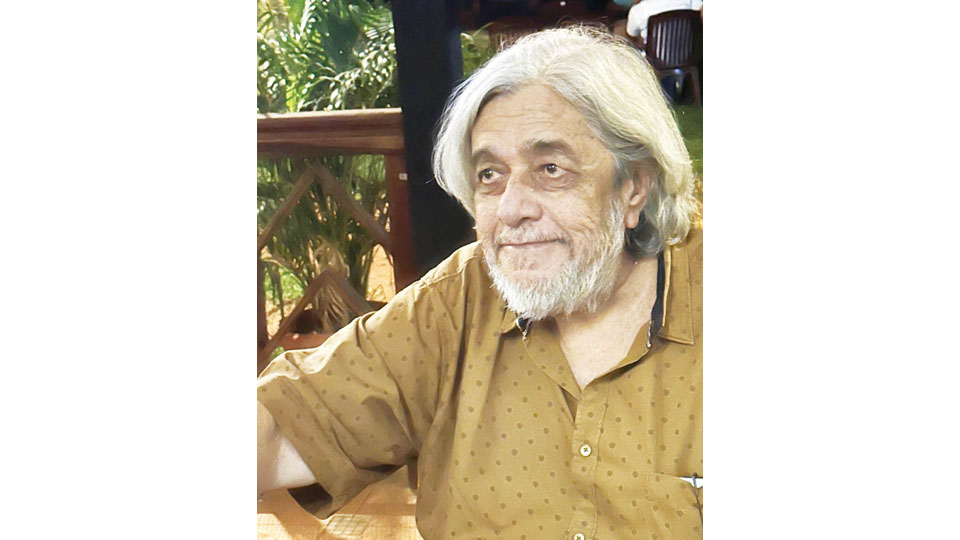
Be that as it may, Mirza Saab ensconced himself on a chair, walking stick by his side and mike in hand. Introduction, mercifully brief and platitudes over, Saeed (I guess he is always addressed as Saeed) began his monologue that revealed succinctly his films and books across the gamut. He is a soft spoken person. He may be an intellectual and a creative person but he indeed has the demeanour with a persona of a philosopher-poet (see picture).
He mourned the 1984 massacre following Indira Gandhi’s assassination. Simultaneously, he alluded to Babri Masjid and its aftermath. The past is the grandfather, the future the grandchild and we witness the passing of an era, he mused kissing into the table-tennis ball of the hand-held microphone. The films are produced like a family tale where facts and fictions are mixed while his books, three of them, are revivalist, he revealed. Then, after a pause, he averred that in the world every civilisation has contributed to the growth of mankind. No one civilisation can claim to be the sole contributor and gave the example of Abbasid civilisation (considered Islamic golden age).
Saeed droned about al-Biruni who wrote and spoke of medieval mathematics, astronomy and astrology of India mentioning the names of Brahmagupta and Aryabhatta of 11th century while reflecting on the past civilisation of mankind. He opined there was much myth-making and also study of science during those bygone days. He said he did not write books as literature, but rather as ideas — whatever it means! Dilating on the theme, he took a jibe at the often heard lament by religious fanatics that their religion is in danger, ‘khatre me hai’ and said it is not true.
At the close of his talk he spoke movingly of his intimate, genius of a friend Kundan Shah who is no more. They were together one evening talking about this mundane world and Saeed mentioned of the peace that prevailed around them. Kundan Shah suddenly got up and urged Saeed to move out with him to the balcony. ‘Dear Saeed, look at the sky. What do you see? A star-studded beautiful, peaceful sky. Right?’
Saeed said, ‘Yes. Indeed.’
‘No, my dear friend. It may be beautiful to look at from here and even appear peaceful. But in reality no. There is turbulence, there is motion and there is no peace.’
Well, I could not fathom what Kundan Shah meant when he said that. But I presume that it was about the inner turmoil of an individual that robs him of peace. Apparently the peace Saeed mentioned to Kundan Shah was unreal, Maya. Let it be.
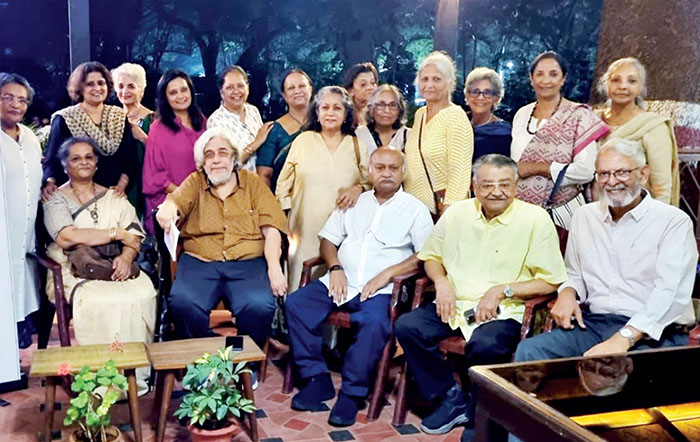
This said, Saeed was ready to field questions from the audience that comprised charming, though not so young, ladies. I counted just four men that included yours truly, Saeed of course, Ravi Joshi and Ashvini Ranjan (see picture).
As for Shubha Sanjay Urs, she kept her words. There was indeed a sumptuous dinner washed down with spirit that elevated our mood.
e-mail : voice@starofmysore.com
source: http://www.starofmysore.com / Star of Mysore / Home> Columns> Abracadabra / by K B Ganapathy / April 22nd, 2024
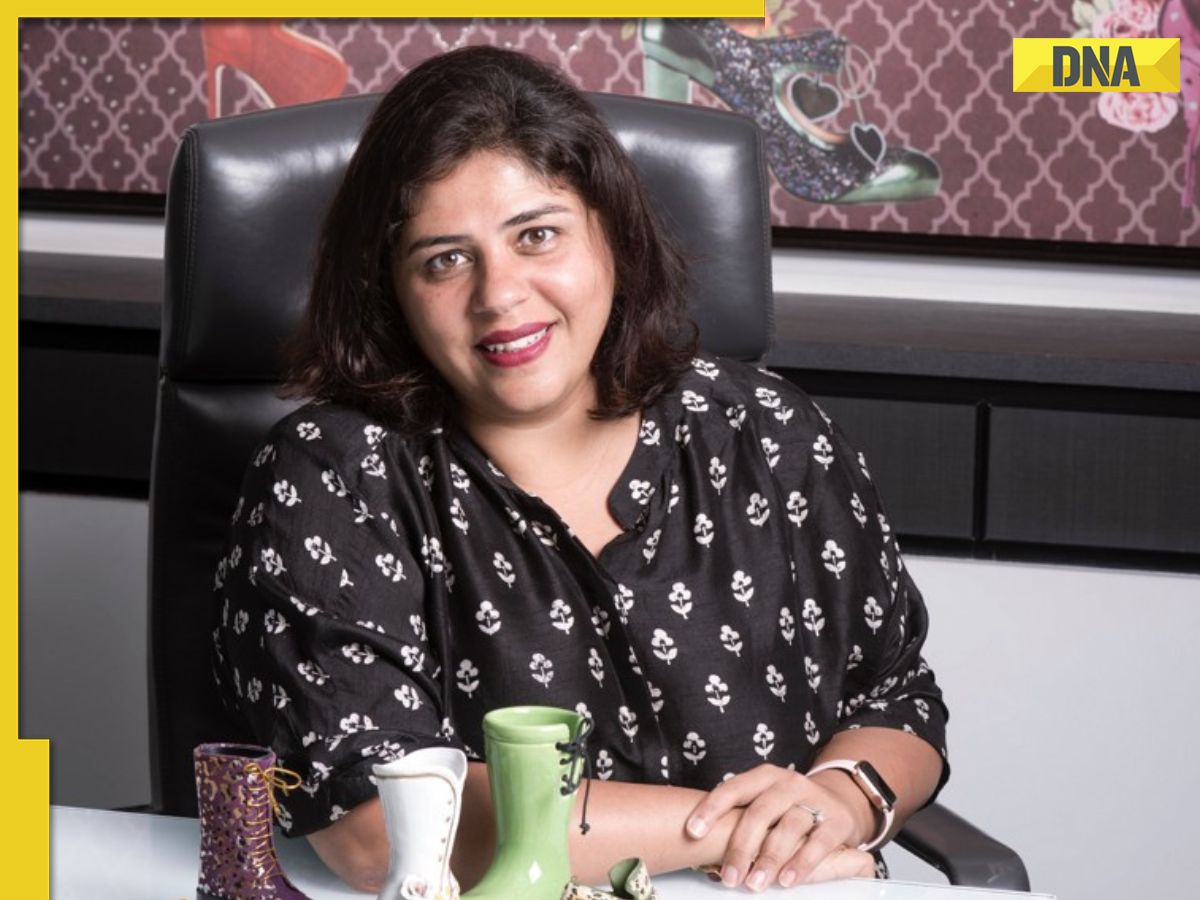
She is the daughter of billionaire Rafique Malik, the company’s chairman. Her grandfather, Malik Tejani, founded it in 1955 in Mumbai. Farah has guided Metro Shoes into a new era of modern retail. The company’s brands include Mochi, Metro, and Walkway.
(Image source: LinkedIn)
Eid Ul Fitr was celebrated throughout the country. Amid celebrations, you may be left wondering if you are asked about the wealthiest Muslim woman in the country. The name of the country’s richest Muslim woman is Farah Malik Bhanji. She is the managing director of the Metro brand, which sells premium shoes. Her net worth is more than Rs. 26000 crore. Farah Malik plays an important role in giving the Metro brand a new identity.
She is the daughter of billionaire Rafique Malik, the company’s chairman. Her grandfather, Malik Tejani, founded it in 1955 in Mumbai. Farah has guided Metro Shoes into a new era of modern retail. The company’s brands include Mochi, Metro, and Walkway.
As of December 8, the company’s market capitalisation was Rs 35,117 crore. Farah is the second of five daughters. His father, Rafique, has a real-time net worth of Rs 21697 crore as of 12 April.
Farah has more than 20 years of experience in the footwear industry. She has played a key role in reimagining the company for the new era. She began her career in marketing before moving on to revamp Metro Brands Limited’s technology roadmap and supply chain. The company was listed in December 2021. The late billionaire investor Rakesh Jhunjhunwala’s wife, Rekha, owns a minority stake in Metro Brands.
She pays close attention to detail, is well-versed in business, and has a sense of style. The footwear company has experienced growth for both the company and its employees under her leadership. She has played a crucial role in forging connections with international companies like Skechers, Crocs, and Clarks in addition to forging close bonds with more than 250 reliable vendors. She contributed to the network’s growth from 100 stores in 2010 to 598 locations across 136 Indian cities.
At the close of trading on Wednesday, Metro Brands Ltd. saw a rise to Rs. 1058. Rs. 1,440.45 is the stock’s 52-week high level, and Rs. 784.45 is its 52-week low. Metro Brands’ shares opened at Rs 1044 at the start of the trading session on Wednesday. Subsequently, it increased by over 20 rupees, closing at 1058. The company cap is of Rs 28,773 crore.
source: http://www.dnaindia.com / DNA / Home> Business / by Varnika Srivastava / April 12th, 2024
Mumbai based Hamid Farooqui , is a serial entrepreneur who is the CEO of a fast growing SaaS (Software as a Service) company called SoGoSurvey that he co-founded in 2012. SoGoSurvey offers powerful, user-friendly, and affordable online survey software. SoGoSurvey is changing how feedback is collected in a secure, collaborative setting, and moving forward the process of understanding the feedback gathered from customers, employees, and other stakeholders.
Hamid started his tech career as a geeky programmer during the dot com boom and has expertise in all its related technologies, from Software as a Service (SaaS), cloud computing and mobile applications. He was an early member of the technology team that designed, built, and launched Oracle’s e-Travel’s corporate travel tool using C++ and the then brand-new WAP.
In recognition of his strong performance and technology management skills, Hamid rose through successive promotions to serve as the division’s Director of Engineering. After e-Travel was acquired by Amadeus, Hamid led the integration of two complex technology platforms in both the U.S. and Europe.
Hamid is co-founder, CTO of K12Insight, which offers cloud-based solutions to enhance communication between educators and community members. K12Insight’s tools are helping school leaders build stronger relationships among parents, teachers, students, and staff. He also co-founded India’s most successful consumer review site mouthshut.com, considered a pioneer of the Internet revolution in India.
Hamid is a frequent speaker at technology conferences and startup events. Among his favorite topics are the startup scene in emerging markets and the future of autonomous cars.
Besides technology, Hamid is very actively involved in philanthropic work. He and his family runs and funds a school for poor children in a remote part of India, where more than 500 children study for free.
Hamid earned an engineering degree from Bombay University in India and a Master’s degree in Computer Science from State University of New York, Binghamton.
Mr. Farooqui believes that Indian organizations just like their global counterparts need a strong survey tool in order to understand the pulse of their audience. Companies have to ensure that they know their customers so they can rectify or retain the quality of services or products. Also, for retention of employees, companies must conduct Employee Satisfaction Survey that helps in creating a suitable work environment that meets and exceeds their expectations.
About SogoSurvey:
When it came to online survey software, users have had two difficult options:
the affordable, low-end, low-power solution, and
the more powerful solution that breaks the bank
This world has just been disrupted: you can now have really powerful, highly user-friendly online survey software at a super-low cost. And it comes with training and support that existing customers are raving about. We’re changing not just how you collect feedback in a secure, collaborative setting, but also how you fundamentally view feedback from customers, employees and other stakeholders. Our solution is easy for the beginner and powerful for the expert.
SoGoSurvey is a software company which provides one of the best enterprise feedback system/ survey tool as SaaS model. SoGoSurvey was founded by Hamid Farooqui and Suhail Farooqui in beta/stealth mode in 2012. The company came out in its full existence in the year 2013. It is a USA based company with the offices in India and UAE. Target market for SoGoSurvey is all small, medium and large businesses who need to conduct different types of surveys such as Employee satisfaction Survey, Customer Satisfaction Survey, Employee Engagement Survey and others.
Marketing Strategy of SogoSurvey is to have an awesome product and website which is appealing to the user. They also offer a free version of our tool so that users who want to use the tool for basic purpose can also access the same. The freemium model gives the access to a great amount of people who turn into loyal users eventually.
source: http://www.muslimmirror.com / Muslim Mirror / Home> Indian Muslim> Positive Story> Sci-Tech> Youth / by Muslim Mirror Special Correspondent / January 04th, 2019
Minoo Mumtaz aka Malikunnisa Ali, the veteran Hindi actor and comedian Mehmood’s sister, died in Toronto in Canada on Saturday.
She was recently diagnosed with cancer and her health deteriorated quickly, leading to her demise, ETimes reported.
Mumtaz’s nephew Naushad, confirming the news to the publication, said, “Since she was old, 80 plus, there wasn’t much to be done. She was one of the loveliest people I had ever met”.
Her younger brother Anwar Ali, who is also part of the film industry and is now a producer, wrote, “Regret to inform that my loving sister Minoo Mumtaz, passed away (in Canada) a few minutes ago… Deep gratitude to the film fraternity, press, media, fans, friends, for decades of love and adulation showered upon her.”
Born to a family of four brothers and four sisters, Mumtaz was the daughter of Mumtaz Ali, a dancer and character artiste in Hindi films in the 1940s. She was renamed Minoo by actor Meena Kumari, her sister-in-law and Mehmood Ali’s wife.
While she started her career as a stage dancer, Mumtaz appeared in several Hindi films in the 1950s and 1960s as a dancer and character actor. She made her debut with Sakhi Hateem, and moved on to play the lead opposite Balraj Sahni in Black Cat (1959) and appeared in several Guru Dutt films including Kaagaz Ke Phool (1959), Chaudhvin Ka Chand (1960) and Sahib Bibi Aur Ghulam (1962). Other Hindi films that she appeared in include Taj Mahal, Alibaba,Ghoonghat, Ghar Basake Dekho, Insan Jaag Utha, Sindbad, Jahanaara, Aladin, Gazal, Dharmaputra. She also appeared in the 2002 television serial Chalo Chale Pardes.
Expressing her condolences on the late actor’s demise, author Bhawana Somaaya wrote, “#MinooMumtaz lead dancer of Hindi movies in the 50s and the 60s dies in Canada. Condolences to #AnwarAli family.”
Actor Nasirr Khan also mourned Mumtaz’s death.
Mumtaz is survived by her husband Sayyed Ali Akbar, son and three daughters who lived with her in Toronto.
Namrata Ganguly is a Correspondent at Silverscreen India, and can be reached by email at namrata@silverscreen.in
source: http://www.silverscreenindia.com / SilverScreen India / Home> Hindi> News / by Namrata Ganguly / October 23rd, 2021
Success comes to those who believe in hard work and this sentence fits the case of Dr Shaikh Muna Afroz, who is all set to join the All India Institute of Medical Sciences (AIIMS) and probably become the first Muslim female Gastroenterologist (GI) surgeon in India.
In a message to the youth, Dr Muna says, “Perseverance and determination are the keys to success. I have experienced that my consistent efforts have enabled me to surmount every obstacle on my path to success.” Intending to become an academic surgeon, she struck an optimum balance between patient care, teaching, and research. She has authored more than five indexed research publications.
Dr Muna has presented her research papers at numerous conferences and won many accolades. Her inspiration is her grandfather, who is a General Surgeon and has been serving the community since 1967.
Dr Afroz hails from Maharashtra’s Aurangabad and bagged the All India Rank (AIR) third in MCh GI-HPB Surgery in the INI-SS 2023 and she also secured an All India Rank (AIR) – 10 for the Minimal Invasive Surgery Fellowship in 2021.
Prior to it, she aced CET-UG by securing the 93rd rank and completed her MBBS in 2017 from GMC Aurangabad.
In 2022, she acquired the Membership of the Royal College of Surgeons (MRCS) in Edinburgh, UK. Having cleared the licensing examination from Dubai Health Authority (UAE) in 2022, Dr Muna is currently licensed to practice medicine in India, the United Arab Emirates, and the United Kingdom.
This report is filed by ANI news service.
source: http://www.thenewsmill.com / The News Mill / Home / by ANI / pix: edited / June 04th, 2023
Ayesha had started preparing for the UPSC in her 12th grade, when a professor spotted her as a potential candidate. He made a case for it to her and her parents and convinced them.
Mumbai: Anjuman-I-Islam President, Dr Zahir I. Kazi felicitates Sayyed M. Hussain (Alumni – A.I’s Allana Jr. College of Science & Commerce, CST) All India ranking 570 and Kazi Ayesha Ibrahim, All India ranking 586, for successfully qualifying UPSC Exam 2023, at Anjuman-I-Islam’s Ahmed Zakaria Hall, CST, in Mumbai on Friday, 26 May 2023. (Photo by Bhushan Koyande)
Mumbai:
Two success stories coming out of the UPSC exams this year, Kazi Ayesha Ibrahim (rank 586) and Sayyed M Hussain (rank 570) have broken through the stereotypes and have emerged as a hope and inspiration for their community.
Ayesha had started preparing for the UPSC in her 12th grade, when a professor spotted her as a potential candidate. He made a case for it to her and her parents and convinced them.
Then came the years-long struggle, starting in 2017. “It takes a lot of hard work, there’s no doubt about that. But it is possible to study for 15 to 16 hours a day. I’ve done it,” said Ayesha.
Despite being a Muslim woman and stereotyped at every turn, she stuck to her books, using the disadvantages her way to study more and get better.
“My parents have always emphasised gaining knowledge. And there is no better match for gaining knowledge than the UPSC, with the diverse subjects we have to learn,” she said.
“What happens to girls is that many of them have a lack of exposure. All my sources of information were only from books,” said Ayesha.
Ayesha also lost the support of her institute after the prelims due to a change in administration, leaving her to study alone in the confines of her home, without any outside guidance.
She will be attempting the UPSC exam again, hoping to get a rank fit to get her into the Indian Foreign Services (IFS). In the meantime, she will accept the post she is offered.
After the results were released on Tuesday, Ayesha was felicitated for the achievement along with Hussain at an event organised by the Anjuman-I-Islami, of which Hussain is a former student.
Hussain, too, has a long history of struggle that ended in his scoring the 570th rank. He got through the prelims exam four times, only to fail in the main exam. He was fifth time lucky.
“It was very difficult at first. I repeated my mistakes,” he said. “Then I started teaching others for the exam, making some money so I could support myself and my family. That helped me.”
The son of a dock worker, who earns ₹18,000 a month, he said, “I’ve seen my dad struggle in the hot sun for 18 hours a day, so I found my situation easy.”
The journey was a lot more emotionally fraught for him than financial, dissuading him with every failure. But he persevered. “I am satisfied with my results, but now that I’ve gotten so much love from so many people, I wish I’d studied a little more.”
Hussain recounts a story of a call he received from a fellow resident of his area, Dongri, resounding with hope that he too could pass the exams after a few failures. His success has inspired the community.
source: http://www.hindustantimes.com / Hindustan Tims / Home> Cities> Mumbai News / by HT Correspondent / May 27th, 2023
Discussions and debates, critiques and readings, held at haunts of Urdu books and writing around the country have been interrupted rudely.
(From left) Shadab Rashid, Urdu drama writer Aslam Parvez, and Shakeel Rasheed at Kitabdaar | Mahtab Alam
In Malegaon
On the first Saturday of every month, the textile city of Malegaon in northern Maharashtra used to become home for lovers of Urdu literature, who meet to discuss, debate and critique new writings in the language, mostly by local writers. Organised under the aegis of Anjuman Muhibban e Adab (Association of Literature Lovers), the gathering began at around 9 pm, and went on till midnight.
Between 30 and 50 people – both writers and readers – would come together, a number that would at times go up to as many as 100 or even 150. Asif Iqbal Mirza, the secretary of the Anjuman, said the practice began 25 years ago on the suggestion of local journalist and editor Samiullah Ansari, who published new Urdu fiction in his weekly, Hashmi Awaz.
Over the years, the publication had emerged as a popular local magazine for young and budding writers to publish their works. The weekly, now in its 35th year of publication, had a considerable fan following and readership at the time. Ansari then suggested that admirers of the magazine form a group comprising readers as well as writers.
The group was initially named Anjuman Muhibban e Hashmi Awaz (Association of Admirers of Hashmi Awaz), but within a few years, its following grew to encompass more than just the readers of the magazine, and in 1998 it was rechristened Anjuman Muhibban e Adab, Malegaon. “Ansari sahib formed the Anjuman so that writers could get their new works critiqued by readers before getting them published in the weekly,” Mirza ssid.
Back then, Mirza himself wrote for a local children’s newspaper called Khair Andesh. But his association with the Anjuman helped him grow into a prolific Afsana Nigar, a short story writer. He was 17 when the group was formed; in the past 25 years, he has written and published more than 200 short stories in different publications.
Apart from Anjuman Muhibban e Adab, there are two more literary groups in Malegaon that held regular meetings until the lockdown was declared in March. No such meetings have been held since then. “Unlike earlier, we now have enough time to read and write. But the irony is we don’t have the opportunity to discuss and publish them,” said Mirza, who also runs a printing business. Several local publications had to halt their issues, including Hashmi Awaz, owing to the lockdown.
According to Mirza, although social media outlets such as WhatsApp and Facebook have, to some extent, helped to keep in touch with fellow writers and readers, the literary life of Malegaon has come to a standstill, since a large number of local writers and readers came from the working class and worked in local looms. “The year 2020 is the silver jubilee of my literary career. I had plans to publish a collection of my short stories, but thanks to the pandemic, that will not happen this year,” Mirza said with a great sense of despair.
In Mumbai
Both readers and writers have felt a deep loss during the pandemic. His love of books took Shakeel Rasheed, editor of the Urdu daily Mumbai Urdu News, to various bookshops in and around the Mohammad Ali Road area of Bombay. “Visiting bookshops was a part and parcel of my life. I feel a deep loss when I don’t visit them,” he said. For him, bookstores are not just spaces to buy books, but they also served as addas for readers and writers. As soon as some relaxations were in place, he rushed to the stores. “Par ab pahle wali baat nahi rahi,” said Rasheed. “Things are not as they were before.” The pandemic has made it more difficult to meet new people.
Shadab Rashid’s Kitabdaar publications and bookstore in Temkar Street of Nagpada was one such adda for Urdu writers in Mumbai, as was Maktaba Jamia on Sandhurst Road West. Today, Kitabdaar and a few other bookshops have opened their stores for a few hours every few days, while Maktaba Jamia remains closed. “Due to lack of public transport and fear of the pandemic, people cannot come to Kitabdaar,” Shadab said. He also edits the quarterly literary magazine Naya Waraq, founded by his late father and noted journalist and writer Sajid Rasheed.
Shadab Rashid said the lockdown brought significant hardships and losses to Urdu publishers and distributors. “It is not that people don’t want to read Urdu books anymore – the problem is they cannot buy them,” he said. “I have received lots of online orders, but I cannot fulfill them because I rely on postal services as they are the cheapest means of delivery, but the services are not fully functional yet.” His online Urdu bookshop kitabdaar.com is one of the few digital distribution platforms for Urdu books exclusively in India. Another such platform, urdubazaar.in, was recently launched from Delhi.
Owing to the discontinuation of physical interactions between readers and writers, people have lost touch with each other, since not all Urdu writers are active on social media, Shakeel Rasheed told me. “We have lost many good writers during this period and found out about their demise several days later,” he added. “Moreover, we could not participate in their last journeys.”
In Hyderabad
Another writer recounted similar thoughts after the death of noted Urdu satirist Mujtaba Hussain in Hyderabad on May 27. Hussain was awarded the Padma Shri in 2007 for his contributions to Urdu literature, but in December 2019, he announced he was returning the award to protest the enactment of the contentious Citizenship Amendment Act. “[T]he democracy for which I fought is under attack now and the government is doing that,” he had said, “that’s why I don’t want to associate the government with me.”
In Hyderabad, another centre of Urdu writing, literary activities have come to a similar halt due to the pandemic. Publications like Shagoofa, a monthly magazine of satirical writing, have been temporarily discontinued since the lockdown.
In Delhi
In Delhi, too, the pandemic has left an adverse impact on Urdu writing. Khan Rizwan, a poet and a known “addebaaz” from Delhi, loved participating in and organizing adabi addas (literary gatherings). He misses visiting the Nai Kitab book store, located in one of the many bylanes of Jamia Nagar, which is one of the famous addas for Urdu lovers in the city. Run by veteran writer and publisher Shahid Ali Khan, Nai Kitab is a haven for young and old writers alike, Rizwan said, as Shahid sahib treated them alike. “It is not just a bookshop but an institution where one got to meet noted writers and lovers of Urdu literature,” he said.
Rizwan would visit the shop at least twice a week, and meet a new literature enthusiast or writer, or find out about a new book or risala /parcha (journal/magazine). “I miss the black tea and chips that Shahid sahib served us with love and affection,” he recalled. “He is a storehouse of information, and several veteran writers were his friends, so he would tell us stories all the time.”
I couldn’t agree more with Rizwan. I have been visiting Nai Kitab once every few months for more than a decade now, and on each of my visits, after asking khabar-khairyat, Shahid sahib would say, “Achcha aap bahut dino baad aayen hain, ye nayi kitaabein aayi hai dekh lein (Since you’ve come after a long time, here are some new books).” Last year, when I visited the bookshop around this time, he directed me towards dozens of books written by noted Urdu satirist Fikr Taunsvi and Shaukat Thanvi. I immediately bought all of them, as they were usually out of print and seldom available.
As the person in charge of the Maktaba Jamia, the publication division of Jamia Millia Islamia in Bombay, Shahid Sahib befriended writers and poets like Jan Nisar Akhtar, Meena Kumari, Sahir Ludhianvi and Jagan Nath Azad. Some of them were regular visitors to the Maktaba Jamia. Though he moved to Delhi after serving the Maktaba for several decades, he did not stop hosting literature lovers. He then founded Nai Kitab publishers and a quarterly journal by the same name.
It was in 2007 at his bookshop that I first chanced upon Shamsur Rahman Faruqi’s celebrated novel Kai Chand The Sare Aasman, later translated into English as The Mirror of Beauty by the author himself. The novel went on to become a major critical and commercial success.
Faruqi was also associated with the Nai Kitab journal as chairperson of its advisory council and would visit the shop once in a while. The journal eventually stopped publication owing to Shahid sahib’s failing health, but he continued with the bookstore as it was like “oxygen for him”, he had once told me.
Waiting for freedom
Some writers have managed to turn the lockdown into a creatively productive period. “Personally, the pandemic has proved as a blessing in disguise as I read books I wanted to for years and finish other important work, such as recording videos of Urdu literature lectures,” says Khalid Mubashir, a poet and assistant professor of Urdu literature at Jamia. He quickly added, however, this was not common, as most writers and poets were stuck at home, either because of their age or in fear of the pandemic. “Moreover, not all writers have access to technology and books like I do. I am fortunate enough to have friends who helped me with technology to do something substantial during this period.”
Mubashir’s videos, as many as 60 of them, are each about 30 minutes long, and cover the history, evolution and development of Urdu and its literature in the subcontinent. Though the lectures are prepared keeping in mind the need and syllabus of Urdu literature students, ordinary Urdu lovers can also benefit from them. All lectures are available on the YouTube channel Safeer e Adab.
Similarly, although younger poets like Mohammed Anas Faizi from old Delhi have been trying to keep Urdu literature gatherings going by using social media, online addas do not have the feel and impact of offline and in-person gatherings. “Technology and social media can only help to a certain extent. Online gatherings, mushairas and addas cannot substitute for the real ones, no matter how well they are done,” he said.
With apologies to Faiz Ahmad Faiz, what the Urdu writers, poets and addebaaz seem to be telling the pandemic is:
Gulon Mein Rang Bhare Baad e Nau Bahar Chale Chale Bhi Jao Ki Gulshan Ka Karobar Chale
Mahtab Alam is a multilingual journalist and until recently was the executive editor of The Wire Urdu. His Twitter handle is @MahtabNama.
This series of articles on the impact of the coronavirus pandemic on publishing is curated by Kanishka Gupta.
source: http://www.scroll.in / Scroll.in / Home> Publishing and the Pandemic / by Mahtab Alam / July 14th, 2020
A one-of-its-kind campaign is providing deserving students personalised free training to appear for civil service exams
Students appear for a mock UPSC exam in May. Pic/Bipin Kokate
For 28-year-old Shabina Khan, joining the IAS always seemed like a distant dream. Born into a poor family, she had to struggle to complete her education. On Sunday, Khan, who will be sitting for the UPSC exam, will be a step closer to fulfilling her dream, thanks to the Dr APJ Abdul Kalam IAS-IPS Exam campaign, initiated in 2018.
Actively supported by Anjuman-I-Islam and All India Khilafat Committee, the campaign is providing deserving students personalised coaching, guidance and free training for the MPSC and UPSC exams. After a brief lull during the pandemic, which forced them to move all their classes online, the initiative formally launched in February this year. “Since February, 125 students have enrolled with us,” said Gulam Nabi Idrisi, founder chairman of the initiative.
According to Idrisi, several government officials are associated with the campaign, and are helping set mock test papers. The students already gave three mock tests in the month of May, and will be appearing for the UPSC preliminary exams scheduled today.
Speaking with mid-day, Shabnam Shamim Choudhary, 25, resident of Jari Mari, Kurla, said, “I wanted to become an IAS officer, but my family couldn’t afford the fees of the institute or even pay for the study material. This initiative has come as a blessing. I have managed to get at least basic training, so that I can take a shot at the UPSC exam.” Out of the 125 students enrolled with the campaign, 60 hail from Dongri. “We have been providing them with free food and accommodation. The students living in our facility belong to marginalised minority communities,” said Idrisi. The campaign is currently supporting Muslim, Buddhist, Jain, Christian, Parsi and Sikh students, who wish to appear for civil service exams.
Dr Zahir Kazi, President, Anjuman-I-Islam, said, “The administration must have representation of all sects and religions. Unfortunately, due to lack of facility and funds most of the students cannot pursue this dream.”
Sarfaraz Arzu, chairman, All India Khilafat Committee, shares his sentiments. “If we have to solve community issues, the presence of marginalised and minority officials [in administration] is a must.”