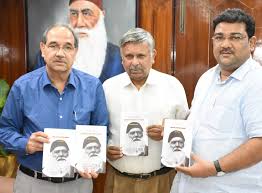
Aligarh Muslim University (AMU) Vice Chancellor, Professor Tariq Mansoor today released the Hindi translation of Sir Syed Ahmad Khan’s ‘Asbab-e-Baghawat-e-Hind’ along with a special reprint of the book in Urdu. The translation has been done by Dr Jasim Mohammad.
The book was released in the presence of Professor Shafey Kidwai (Member-in-Charge, Public Relations Office, AMU).
On the occasion, the Vice Chancellor said that Sir Syed Ahmad Khan took upon himself the challenge of educating the masses by pushing ahead common people towards over all development with the most modern and scientific education. He added that it is imperative that the teachings Sir Syed should reach all corners of world through translations in various languages.
Dr Jasim said that the idea behind the translation of ‘Asbab-e-Baghawat-e-Hind’ is to educate people on how Sir Syed with his nationalistic approach towards problems and controversies prevailing at that time took the unimaginable step of speaking against the British rule.
Dr Jasim has authored 26 books including ‘Sir Syed Ahmad Khan aur Aligarh Movement’, Aligarh Muslim University Minority Character: A Comprehensive Study’ and ‘Urdu Mass Media aur Rabta-e-Aama’. He regularly writes articles and opinion pieces in Hindi, Urdu and English languages for national dailies. Dr Jasim is also a recipient of Bharat Gaurav Samman, Acharya Hasthi Karuna Institutional Award and Rais Uddin Rais Award.
source: http://www.indiaeducationdiary.com / India Education Diary / Home> Academics> Competition> Edu Events> National News / by India Education Diary Bureau / pic: edited – facebook.com/proamuofficial / September 09th, 2017
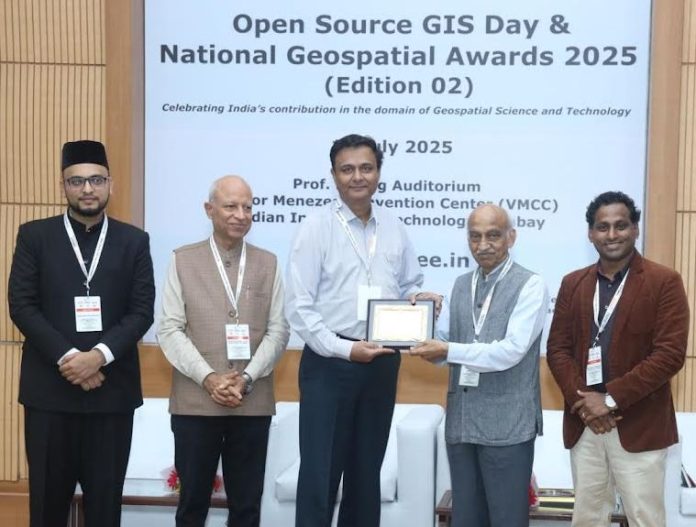
Prof Shahab Fazal of the Department of Geography, Aligarh Muslim University (AMU), has been conferred the prestigious National Geospatial Faculty Fellow Award at the Indian Institute of Technology (IIT) Bombay.
The award was presented in recognition of Prof Fazal’s significant contribution to advancing geospatial education through his textbooks and Massive Open Online Courses (MOOCs) on remote sensing and Geographic Information Systems (GIS). His work has played a vital role in popularising geospatial technologies and making them accessible to students across the country.
Padma Shri Prof Kiran Kumar, Former Chairman of the Indian Space Research Organisation (ISRO), presented the award during a special ceremony held at the Prof B. Nag Main Auditorium of IIT Bombay.
The award ceremony was a key highlight of the Open Source GIS Day Celebrations, organised by the FOSSEE GIS project of IIT Bombay. This initiative falls under the National Mission on Education through ICT (NMEICT), Ministry of Education, Government of India.
source: http://www.radiancenews.com / Radiance News / Home> Pride of the Nation> Awards> Latest News / by Radiance News Bureau / July 18th, 2025
Inquilab and Mid-Day founder Abdul Hamid Ansari is an inspiration not just for journalists but millions of youngsters … A special report by Siraj Ali Quadri.
Indian journalist and Muslim nationalist Abdul Hamid Ansari founded Inquilab, an Urdu daily in Mumbai in l937. The newspaper soon became a landmark in Urdu journalism which caught the attention of Muhammad Ali Jinnah, the founder of Pakistan. But when Jinnah asked Ansari to come to Karachi to publish the newspaper in the new country, Ansari said that he would prefer to live in India like the many million Muslims who would rather stay in the country than join Jinnah. Those who joined Jinnah undoubtedly left everything behind. Some flourished while others got established. But that’s another story, which has never ended since l947.
Today’s story is about the veteran journalist, publisher and businessman Khalid A.H. Ansari, son of Abdul Hameed. After passing out from St. Xavier’s in Mumbai, Khalid did his master’s at Stanford University in the US.
Khalid returned to Mumbai to establish Sportsweek, a weekly sports magazine, which became a huge success soon after its launch. The magazine’s immediate success can be attributed to the fact that its founder was himself an excellent sportsman and did a great job with the magazine, in addition to his father’s paper Inquilab.
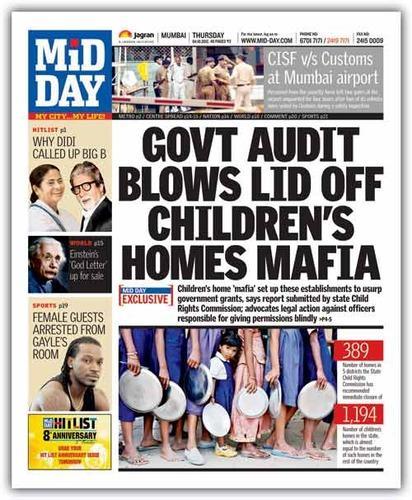
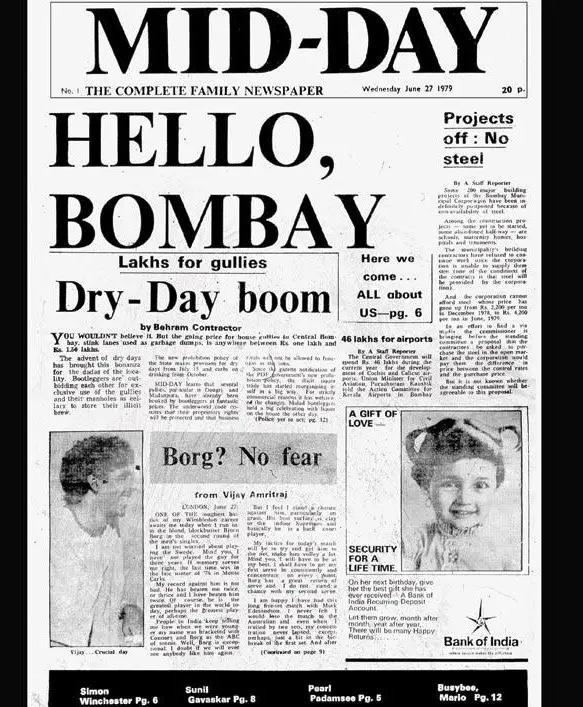
Meanwhile, the idea came to launch India’s first daily tabloid, Mid-Day, which he modelled in many ways after the English tabloids from Fleet Street. During the planning phase of their new venture, he spent hours discussing it with staff and mulled over its format to ensure success, especially since there were already two eveningers in Mumbai, one by The Times of India and the other by the Indian Express. Both suffered from a lack of innovation to attract large numbers of readers. So when Mid-Day appeared with a new face and content, the two old ones just collapsed. Although the ToI eveninger protested the pace of time for a while, it eventually perished as it had already become obsolete.
Mid-Day became a resounding success, with many comparing it to the British Daily Mirror and Daily Mail. However, being an Indian tabloid, it was much quieter and a whole lot more civilized, without the British fondness for nudity and sex, and nonsensical stories of stupidity.
Khalid was helped by his wife, Rukaya. She was very active on the administrative side and contributed to the editorial content and layout, which helped the paper sustain itself in the demanding market of Mumbai. She knew what was going on in the office and in the newspaper that was fast becoming India’s flagship eveninger.
Meanwhile, Khalid accepted an offer to become editor-in-chief of the Dubai-based Khaleej Times, and handed over the paper to his son, Tariq. After a few years in Dubai, Khalid returned to Mumbai and launched Mid-Day in Bangalore and Delhi and a regional Gujarati version for millions of Gujaratis in the country.
He has been involved in various programmes with the Indian government during conferences in Delhi and New York, launching and editing newspapers, and was awarded the Padma Shri in 2001 while continuing to play and write about his old passion, cricket.
Writing about his eveninger, Khalid says, “Mid-Day is a light-hearted, easy-to-read, entertaining, and ‘naughty’ paper that now has a new purpose which is to make work fun. Gives young professionals an entertaining newsbreak. The focus is on young, urban, mobile professionals across India and the company is leaving no stone unturned to engage with them. Today’s workplace’s fast-paced work style and crazy deadlines are full of stress and pressure. Mid-Day as a brand believes in spreading the message of reducing stress and making work fun.”
“What’s on, a host of addictive, fun sections like Hit List Crosswords, Horoscopes, and Fun at Work ensure that the newspaper remains a welcome diversion for young professionals,” he adds.
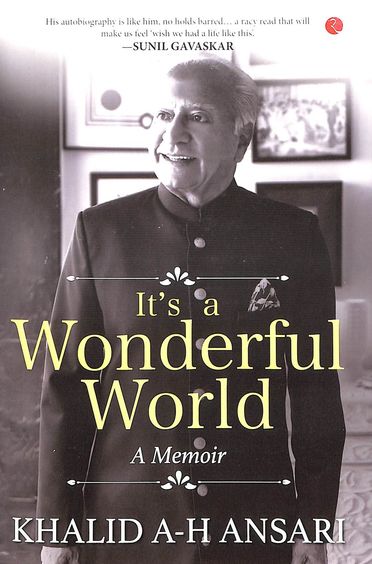
Khalid’s Sportsweek later was shut down with the television boom making it hard to garner advertisements and interest. Khalid has also published his memoir (It’s A Wonderful World) and continues to inspire a stream of journalists apart from various generations to keep the boat afloat and touch new heights.
(The Author is Journalist & associated with Dainik Bhaskar)
source: http://www.asianlite.com / Asian Lite / Home / by Siraj Ali Quadri / October 10th, 2022
Indian envoy and AMU vice chancellor grace the occasion
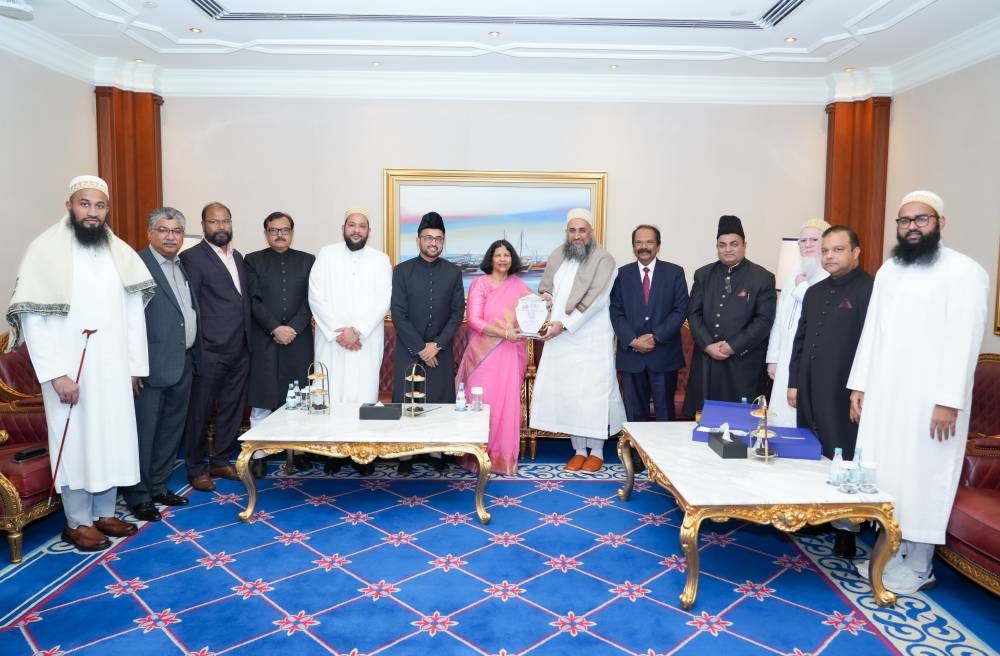
The Aligarh Muslim University (AMU) alumni in Qatar, under the banner of AMUAAQ, celebrated the annual Sir Syed Day on December 27, 2024 at the Sheraton Grand Doha Resort & Convention Hotel.
Prof Naima Khatoon, the first female Vice-Chancellor of AMU, graced the occasion as the chief guest, while the Indian Ambassador to Qatar HE Vipul presided over the gala ceremony.
Other guests of honour included former Vice-Chancellor of AMU Prof Mohammad Gulrez, Moez Wajihuddin and Patron of AMUAAQ Sophia Bukhari. Mustafa M Hariyanawala, Yashir Nainar, Haroon Sataj Khan and Anwar Karim were special guests.
The programme began with the recitation of the Holy Quran, followed by a two-minute silence to mourn the passing of the former prime minister of India Dr Manmohan Singh.
Ghazala Yasmeen welcomed the guests, while Dr Ashna Nusrat and Dr Nayeem Aman conducted the programme as Masters of Ceremony. Dr Ashna Nusrat read a message of appreciation from the former Chancellor of AMU, Syedna Mufaddal Saifuddin, addressed to the members of the AMU Alumni Association Qatar.
President of AMUAAQ Dr Nadeem Zafar Jilani, in his address, paid rich tributes to Sir Syed Ahmed Khan. He recalled how Sir Syed travelled to England to study the British education system and established the MAO College based on the models of Oxford and Cambridge universities.
Prof Naima Khatoon spoke on the selected theme of the event, ‘One Team, One Dream’. She praised the unwavering love of alumni worldwide for their alma mater and its founder, Sir Syed Ahmed Khan.
Former Vice-Chancellor Prof Mohammad Gulrez delivered the keynote address on ‘Jobs and Career Opportunities in the 21st Century’.
HE Vipul congratulated Aligarians on the Founder’s Day celebrations and acknowledged the contribution of great visionary Sir Syed Ahmed Khan in nation building.
Other dignitaries who spoke on the occasion included Sophia Bukhari and Anwar Karim.
As in previous years, AMUAAQ presented five achievement awards to eminent personalities. The first award, for lifetime achievement in the field of education, was presented to Prof Naima Khatoon. The award for outstanding community service was given to Safeerurahman, while Haroon Sartaj Khan, President of the AMU Alumni Association Oman, was named Aligarian of the Year. The Media Personality of the Year award was presented to RJ Aafrin of Radio Mirchi. Additionally, Akhtar Mehdi of the renowned Mehdi Hasan Tailors received a lifetime achievement award for his sartorial excellence in crafting traditional sherwanis, which have attracted many celebrities and former heads of state to his shop in Aligarh.
Er Jawed Ahmad, chairman of AMUAAQ, announced the formation of a pan-GCC Federation of AMU Alumni Associations to unite and bring together all Aligarians residing in the GCC countries—Bahrain, Kuwait, Oman, Qatar, Saudi Arabia and the UAE.
Vice-President of AMUAAQ Faisal Naseem presented a vote of thanks to the sponsors, as well as the executive and advisory committee members of AMUAAQ.
Jawed Ahmad, chairman of AMUAAQ, proposed that the Vice-Chancellor Prof Naima Khatoon become the ex-officio patron of AMU alumni to strengthen AMUAAQ.
Another proposal regarding the establishment of an offshore AMU campus in Doha was also revisited. He further informed the audience that the AMUAAQ will sign MoUs with several companies to provide students with training and job opportunities.
AMU alumni from all walks of life attended the function with their families in large numbers. Many prominent residents of Doha were also present, including literary personalities such as Ateeq Anzer, Aziz Nabeel, Ahmad Ashfaq, Ashfaq Deshmukh, Wasi ul Haq Wasi, and Obaid Tahir, to name a few.
A raffle draw, sponsored by Malabar Gold, was held and won by Farhana, Imran, Kainat and Shoyeb.
An MoU was signed between AMUAAQ and Hind Guru Academy to support and guide NRI students during their stay in India.
In addition to thought-provoking speeches, the programme also featured an interactive ‘Kahoot Quiz’ on AMU and the Aligarh Movement.
Prizes were awarded to the top three winners, with Faisal Abdullah securing first place, Ayan as the first runner-up, and Ashfaque Deshmukh as the second runner-up. The quiz and IT support were expertly managed by Almas Ahmad.
Mementos and certificates were presented on behalf of AMUAAQ to the guests and notable achievers.
source: http://www.qatar-tribune.com / Qatar Tribune / Home> Nation / by Tribune News Network, Doha / January 02nd, 2025
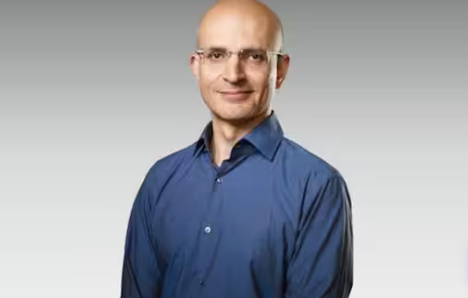
Indian origin Sabih Khan, a native of Moradabad in Uttar Pradesh brought laurels to India in general and his hometown in particular on being appointed as the new Chief Operating Officer (COO) at Apple. He replaces Jeff Williams. Currently, Khan serves as Senior Vice President of Operations. Indeed, an honour to Sabih Khan, known for his extraordinary skill and a brilliant strategist besides an architect of Apple’s supply chain.
Bringing glory to his native Moradabad in Uttar Pradesh, Sabih Khan (58) has been honoured with the post of Chief Operating Officer (COO) at Apple, marking a significant step in the company’s ongoing leadership transition. Notably, Khan has been with Apple for three decades and currently serves as Senior Vice President of Operations and will take over from Jeff Williams later this month, the iPhone maker announced in a statement.
Before joining Apple’s procurement group in 1995, he worked as an applications development engineer and key account technical leader at GE Plastics. A quick look into his biodata revealed that he was born in 1966 in Moradabad, Uttar Pradesh and later moved to Singapore during his school years before settling down in the US. Interestingly, he is armed with dual bachelor’s degrees in economics and mechanical engineering from Tufts University, and a master’s in mechanical engineering from Rensselaer Polytechnic Institute (RPI).
Sabih Khan’s father Saeed Ullah Khan was a resident of Rampur who had settled down in Singapore decades ago. Sabih received his primary education there, after which he moved to America and received higher education from there. Apple CEO Tim Cook described him as “a brilliant strategist and one of the central architects of Apple’s supply chain.”
“Sabih leads with heart and values, and I know he will make an exceptional chief operating officer,” Cook added. “He helped ensure that Apple can be nimble in response to global challenges.”
Moreover, Khan has been playing a vital role in shaping the global supply chain that powers Apple’s operations around the world. In 2019, he was promoted to Senior Vice President of Operations, reporting directly to Jeff Williams. In this role, he led key initiatives in advanced manufacturing, expanding Apple’s global footprint, and navigating complex supply chain challenges, especially during turbulent global events.
According to sources, Khan has also been a major force behind Apple’s environmental efforts. Under his leadership, the company has reportedly reduced its carbon footprint by over 60 per cent, thanks to stronger supplier partnerships and green manufacturing practices.
Further, he also oversees Apple’s supplier responsibility programmes, which aim to improve labour conditions, and provide education and training for workers at production facilities globally. In his new role, Khan will be playing a vital role in shaping the global supply chain that powers Apple’s operations around the world. He has also been a major force behind Apple’s environmental efforts. Under his leadership, the company has reportedly reduced its carbon footprint by over 60 per cent, thanks to stronger supplier partnerships and green manufacturing practices.
Jeff Williams, who has been with Apple for 27 years, will continue to report to CEO Tim Cook and oversee Apple’s design team and health initiatives until his planned retirement later this year. His transition also signals a shift in the structure of Apple’s leadership, with the design team set to report directly to Tim Cook after Williams steps down. Sabhih Khan has made not only his native Moradabad but also his home country India proud.
[The author is former Indian Express and Deccan Chronicle chief]
source: http://www.radiancenews.com / Radiance News / Home> Latest News> Pride of the Nation / by M Rafi Ahmed / July 10th, 2025
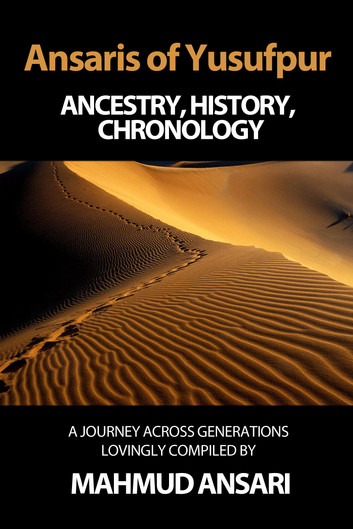
A fascinating history of Ansaris who began their journey in this mortal world a few thousand years ago in the peninsula of Arabia, then called Araba.
As Islam grew and took in its fold various other lands and nations, Ansars, being valiant warriors, became part of just about every major battle that took place from Badr to Constantinople, Qandahar, Herat, and finally to India.
Ansaris were not mere bystanders as history unfolded; they played significant roles and made valuable contributions in the fields of religion, medicine, literature, law, politics and media, no matter which part of the world they chose to settle in.
Since this book is about a branch of Ansaris who arrived in India, i.e. the Ansaris of Yusufpur, they will be covered in depth.
However, as the first book on Ansaris in English language, it would also be of interest to all Ansaris whose ancestors moved from Madinah-e-Munawwara to other countries of the Gulf, Middle East, Iran, Afghanistan, India, Pakistan and other parts of the world.
It is, after all, a common lineage and history that all Ansaris share from the pre-Islamic era and this book provides a ready reference to the origin and history of their ancestors.
This book is a fascinating history of Ansaris who began their journey in this mortal world a few thousand years ago.
As the first book on Ansaris in English language, it would also be of interest to all Ansaris whose ancestors moved from Madinah-e-Munawwara to other countries of the Gulf, Middle East, Iran, Afghanistan, India, Pakistan and other parts of the world.
source: http://www.kobo.com / Rakuten Kobo / Home> Biography & Memoir / by Mahmud Ansari
Yusufpur (GhazipurDistrict), UTTAR PRADESH / NEW DELHI / London, U. K :
Begum Zohra Ansari sold away ‘Dar-us-Salam’ to raise party funds and worked for the victory of the candidates of the Indian National Congress and for the defeat of the candidates of the Muslim League, who wanted partition.
Begum Zohra Ansari, an activist of the Indian National Movement whom Mahatma Gandhi addressed as “Vasthad Bi, was born in Delhi. She was the adopted daughter of freedom fighters, Dr. Mukhtar Ahmed Ansari and Begum Shamsunnisa Ansari.
Besides playing an important role in the National Movement, her parents provided hospitality to leaders and a cadre of the Indian National Movement and scholars and people of repute in different walks of life in their residence ‘Dar-us-Salam’. It was very spacious like a royal palace.
While Begum Shamshunnisa Ansari was busy in these responsibilities, Zohra helped her. Thus she had an opportunity to see from close-quarters leaders such as Mahatma Gandhi, Pandit Motilal Nehru, and the Ali Brothers and to serve them. Right from childhood she evinced interest in literature, history, and social sciences. She also gained proficiency in Urdu, Arabic, Persian, and Hindi.
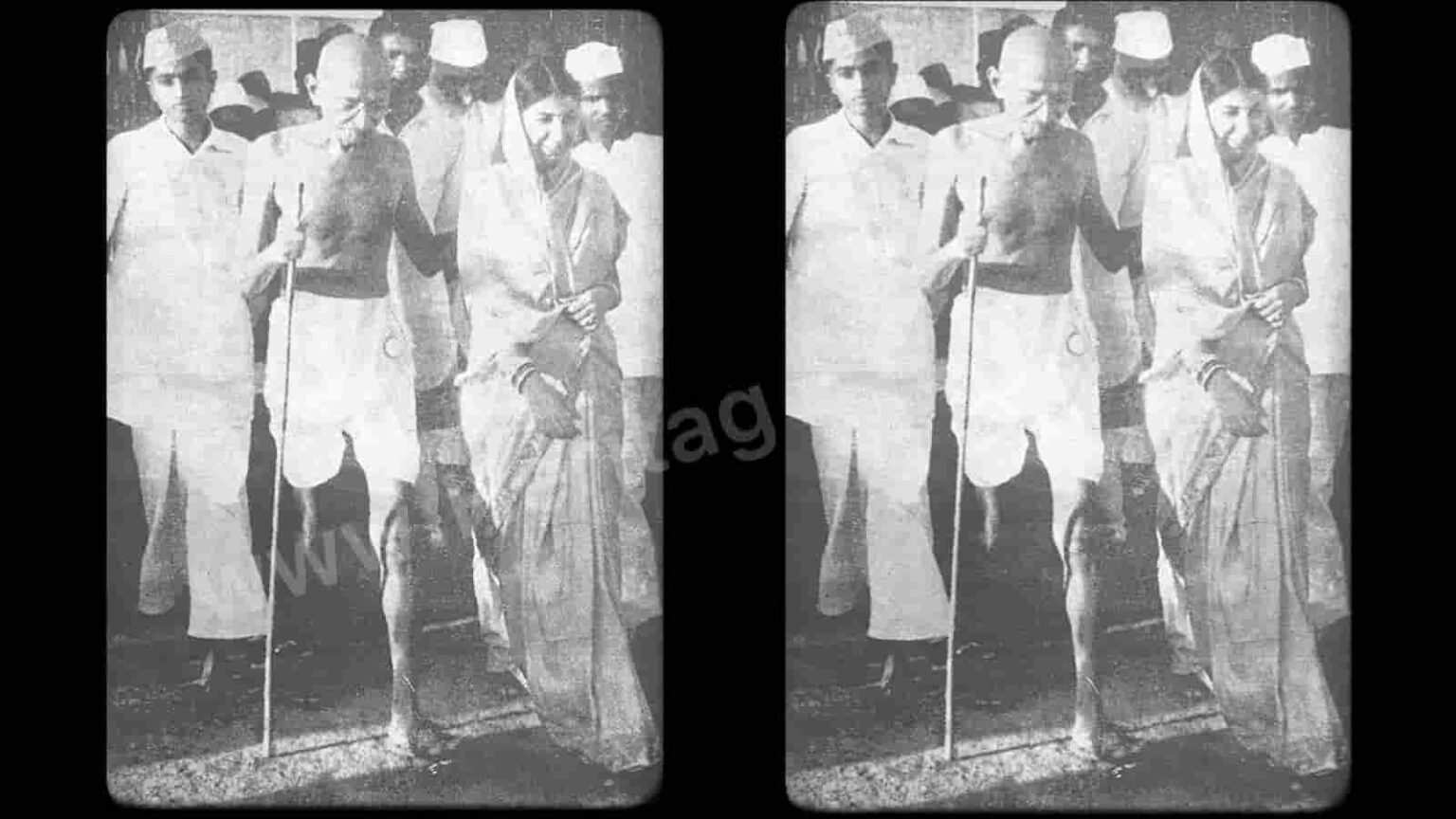
Zohra Ansari and Mahatma Gandhi
Zohra Ansari rendered her services in Wardha Ashram for a long time. Mahatma Gandhi came to know about her command over Urdu and started learning the language from her. He used to address her in his letters as ‘Vastad Bi’ and ‘Beti.
Zohra Ansari and Mahatma Gandhi used to have regular correspondence on various issues. In his letter dated 22 December 1932 to Dr Ansari, Gandhiji remarked that he used to look forward to Zohra’s letter every week. When Zohra expressed her desire to go to jail as a part of the National Movement, like her parents, Gandhiji asked her to wait and promised to allow her to go to jail.
Begum Zohra Ansari married Dr Shaukatulla Shah Ansari (1908-1972) who was her relative and leader of the Indian National Movement. Begum Zohra Ansari lost her father in 1936 and mother in 1938. She took an active part in the Freedom Struggle along with her husband. Both wife and husband opposed the partition of India.
She sold away ‘Dar-us-Salam’ to raise party funds and worked for the victory of the candidates of the Indian National Congress and for the defeat of the candidates of the Muslim League, who wanted partition. Post Independence, Begum Zohra Ansari led a simple life and passed away on 28 July 1988 in England.
source: http://www.heritagetimes.in / Heritage Times / Home / by Syed Naseer Ahamed / December 12th, 2023
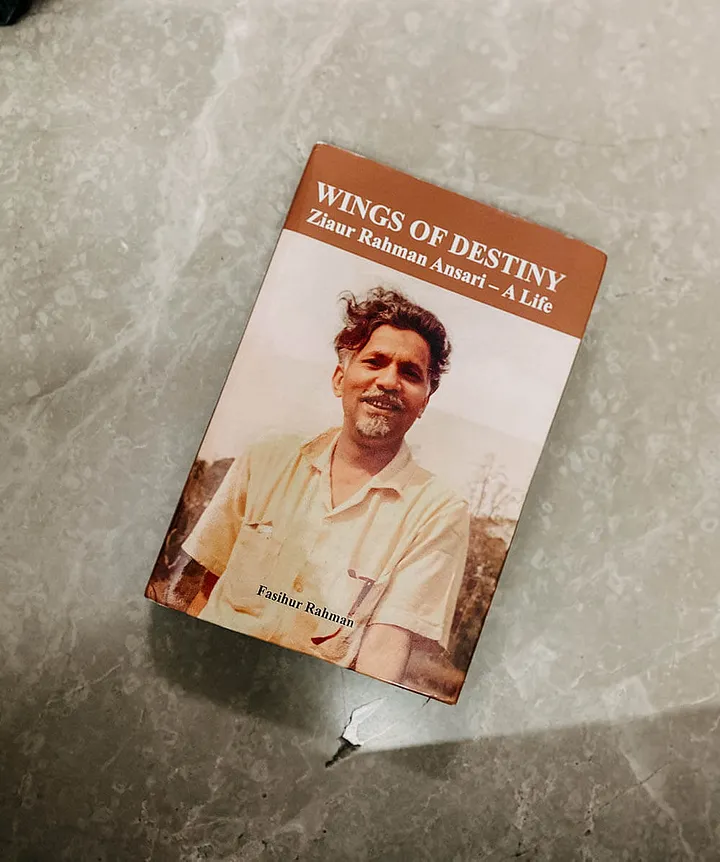
Ziaur Ansari was a prominent political figure, having served as the Union minister in the council of 2 Prime ministers Indira and Rajiv Gandhi. Wings of Destiny written by his son Fasihur Rahman is an ode to his entire political career spanning more than three decades and highlights the stalwart’s remarkable, inspirational life as well as clears the air around the controversies surrounding him.
When the truth stands coy in a corner, visible and yet under the pretence of being unknown and unacknowledged, you know that something somewhere is unfair.
Indeed, many times in life, there comes a threshold where one needs to understand and realize that truth which is the most supreme of all, can be an eye opener, as well as a beautiful and also a terrible thing, many a time. Terrible because there may be more to the situation than what meets the eye.
Yes, we all know and have read about the countless hardships that all of us underwent during the Indian freedom struggle. But, surely not all has come to light as far as the involvement of all parties, be it left or right is concerned. Yes, Muslims too were an integral part of the struggle towards Independence, their contribution being extremely indispensable. A prominent figure among them is Ziaur Rahman Ansari who served as Union minister from 1973 to 1977 and from 1980 to 1989 during the council of two Prime Ministers -Indira Gandhi and Rajiv Gandhi, this book which is written by his nephew Fasihur Rahman is a memoir cum biographical sketch of Ziaur Ansari’s life.
Ziaur Ansari was primarily in the spotlight in the year 1985, when he participated in a debate on a private Member Bill related to the SC judgement on the Shah Bano case, which to date remains one of the most debated issues in India as well as abroad. Having been often misquoted, misinterpreted and improperly perceived, Fasihur has taken it upon himself to finally take the opportunity to tell the world the true story behind Ziaur’s life.
The book which began with giving an ancestral account of Ansari primarily spoke about his father Habibur Rahman Ansari’s invaluable contribution to the freedom movement. What followed was the journey through Ziaur Rahman’s pursuit of politics which was turbulent and spanned a period of almost three decades, showing how he contested 9 elections.
Ziaur, not only being a man of strong ethics and politics, nevertheless was a man with a passion for fine arts, poetry, literature and music too. Ziaur was also inspired by Abul Kalam Azad’s legacy which was one of the cores of Rahman’s life. The hardships suffered by the Ulamas aka the religious scholars after the Mutiny of 1857 have also been explored by Fasihur here highlighting the true role of Darul Uloom Deoband in the Indian freedom struggle. I, for once, was amazed by this one since like mentioned earlier, I realized that many religious scholars, many freedom fighters have remained unsung, unacknowledged in their role in the struggle against the British rule for reasons which were, are and perhaps will always be something we shall never be able to comprehend fully. Racism, unfortunately, in the most erred way possible, nevertheless, Fasihur has brought forth a lot of undeciphered and unknown details forward.
Have you ever known or read about the famous Shah Bano case and the subsequent judgement of 1985? Well, the book explores the same in its entirety giving us Ziaur’s intervention in the Parliamentary debate on the SC judgement.
Ziaur Rahman was the president for a tenure of almost three decades at the All India Momin conference. The book provides a complete walk through the evolution, historical significance, mandate, and contribution of the conference in the complete socio-economic upliftment of the Muslim artisans. It also highlights their contribution to the freedom movement in India.
The last two years of Ziaur’s life were traumatic as Amyotrophic Lateral Sclerosis, an incurable neurological disorder, marked them. Characterized by loss of speech this is one of the most painful possible diseases and indeed Ziaur’s pain and anguish must have been sheer agony.
Lagate ho jigar pe teer par hum kuch nahi kehte. Zabaan hote hue ye bezabaani dekhte jao…
This Urdu couplet which was used by Ziaur himself to express the trauma of the condition he was reduced to was something that shook me personally, making me fathom and realize the kind of inability and pain the disease might have led him to. It was heartbreaking to read the complete scenario, especially since Fasihur has revealed how even being the prominent voice he had been, Ziaur was unable to speed track the path to going abroad and procuring the treatment which would have cured him.
A brilliantly written book, this one is a memoir you surely should not miss. Fasihur Rahman is impeccable in detail, immaculate in expression, not shying away from portraying facts as well as refraining from giving any kind of a judgmental tonality to any of the data he has provided. A crisp narration, this one will give you a lot of detail especially as it delves into pre as well as post-independence happenings and thus will be of interest as well as use to readers and historians too alike.
Maulana Shahabuddin Razvi New Book: Maulana Shahabuddin Barelvi’s historical book ‘Tarikh-e-Islam Mukammal’ was released in Bareilly.
This book, prepared after 10 years of hard work, was described as the heritage of the Muslim society and it was announced to be published in many languages.
Maulana Shahabuddin’s new book released in Bareilly
BareillyNews Today :
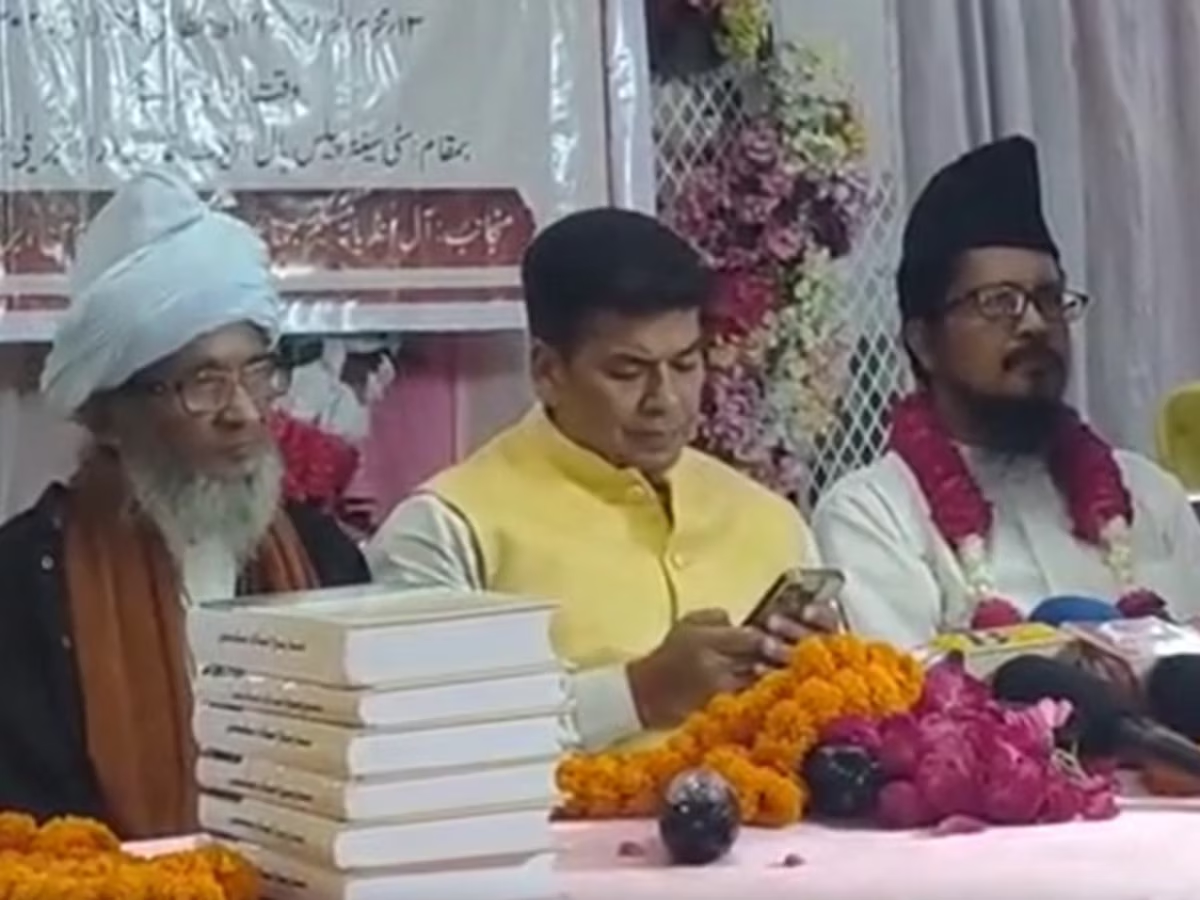
A grand launch program of the historical book ‘Tareekh-e-Islam Mukammal’ by the National President of All India Muslim Jamaat, Maulana Shahabuddin Barelvi was organized in Bareilly. On this occasion, the Chairman of Uttar Pradesh Waqf Development Corporation Shafakat Hussain was present as the chief guest. At the same time, Bharatiya Janata Party (BJP,Bareilly Mayor Umesh Gautam also participated specially.
On this occasion, National President of All India Muslim Jamaat Maulana Shahabuddin said that ‘Tarikh-e-Islam Mukammal’ mentions in detail the events from the beginning of Islam to the present time. He said that it took him 10 long years to prepare this book and for this he had to travel to many parts of the world.
Many eminent personalities participated in the program
Chief guest Shafqat Hussain praised Maulana’s hard work and historical research and said that this book will become an important source for the new generation to understand Islamic history. At the same time, BJP Mayor Umesh Gautam said that Maulana’s book will give a new direction to the society and will prove helpful in strengthening mutual brotherhood. Many intellectuals, religious leaders and social workers also participated in the program.
History of Islam in six volumes
,’Tarikh-e-Islam Mukammal’ is based on a total of six volumes and 3500 pages. This detailed book contains documentary details of Islamic movements, events and important periods from the birth of the Prophet of Islam, Hazrat Muhammad Sallallahu Alaihi Wasallam to today.
Maulana Shahabuddin Razvi said that it took about 10 years to prepare this book.
For this, he visited the big libraries of India as well as 12 foreign countries and made a deep study of the major Arabic, Persian and English books there.,This book is based on extensive research and historical facts.,
It will be published in several languages
In the program, Maulana also told that ‘Tarikh-e-Islam Mukammal’ will soon be published in many languages including Hindi, English and Arabic, so that more and more people can read it. On this occasion, many dignitaries including Idara-e-Shariah’s Chief Mufti Qazi Abdul Mannan Kalimi from Patna (Bihar), Bareilly Mayor Umesh Gautam and Waqf Development Corporation Director Shafaat Hussain called this book a milestone for the Muslim community.
source: http://www.zeenews.india.com / Zee News / Home> Salaam Zee News / by Raihan Shahid (translated from Hindi into English) / July 10th, 2025
The acclaimed Urdu and Hindi writer from Allahabad exposes how poverty forced him to ghostwrite 1,065 novels.
New Delhi :
In the decades before television became a household staple in India and Pakistan, millions turned to novels filled with mystery, romance, and detective tales for entertainment.
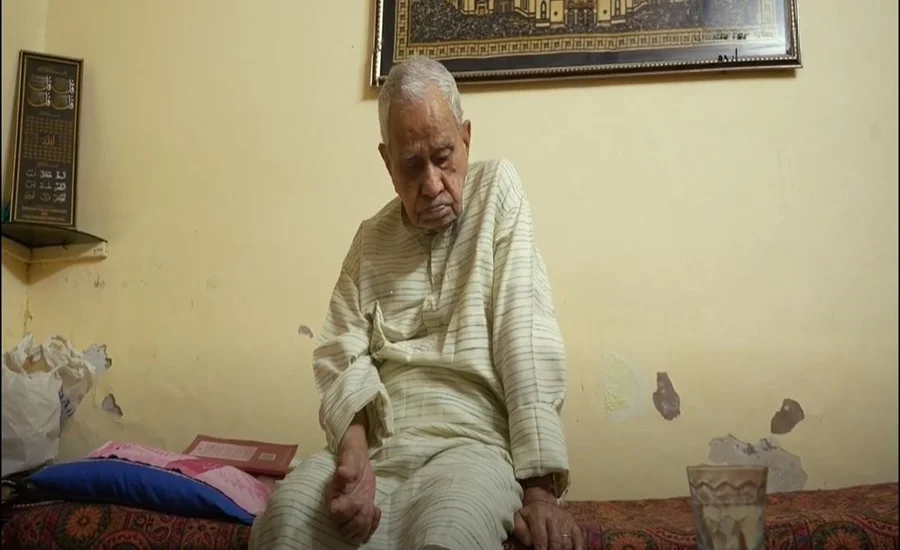
One Muslim writer’s story reveals the untold hardship and exploitation faced by many like him during that time. Mujawar Hussain, a prolific Urdu and Hindi author from Allahabad, has exposed the difficult truth behind the 1,065 novels he ghostwrote for Hindu publishers, many under pseudonyms.
Now in his elderly years but still sharp, Hussain shared his painful journey of writing stories for survival rather than pride. “The number of such books combined is 1,065,” he told Clarion India recently. “But the books I consider a source of pride are my research paper, Elements of National Unity in Urdu Poetry, and a collection of my religious essays,” he said.
Hussain’s writing career began in the 1950s when major publishers churned out fiction in bulk to satisfy growing demand. Muslim writers like him were often paid meagre sums to produce thick novels under pseudonyms for Hindu authors and publishers, including names such as Janardan Prasad Jaiswal, Shambhu Prasad Jain, Ashok BA, and the mysterious “Neqab Posh Bedi.” Hussain estimates he wrote 30 to 32 novels under Bedi’s name alone.
“Some of them were non-Muslims,” Hussain said, naming former students turned authors. “I wrote in their names because I had to. The money kept my family alive.”
His words underline the economic hardship faced by many Indian Muslims, forced to work behind the scenes without recognition while Hindu publishers reaped profits. Hussain recalls the pressure of poverty pushing him to write constantly. “I remember those days when I’d enter the house, and my wife would tell me food and drinks would last until the next evening. I’d sit down with a pen, write, and hand over the manuscript to the publisher. I’d take money — 30 rupees at first, then 60, then 100, and finally up to 2,500 rupees. With that, household expenses were met.”
Hussain’s experience highlights the sidelining of Muslim talent in the Indian literary scene, where Hindu publishers held most of the power. “That forced me,” he said. “The memory of that time is painful, and the work was painful. After that, I put down the pen.”
He also revealed working for Nikhat Publications, famous for publishing the works of legendary Urdu detective novelist Ibne Safi. When Ibne Safi’s manuscripts stopped coming to India due to political tensions between India and Pakistan, Hussain was asked to fill the void by writing novels under his name. “When I realised the institution was going to close, I started writing under his name,” he said. “I wrote very few novels in Urdu under his name — half partridge, half quail, meaning some was his, some I mixed.”
In Hindi, Hussain wrote extensively in Ibne Safi’s style, including the novel The Barrister’s Wife, though he remains uneasy about these works. “Even now, I don’t feel good about them,” he admitted. “I didn’t consider them a source of pride.”
Despite his difficult path, Hussain’s academic achievements stand tall. He earned an MA in Urdu in 1958 with two gold medals, a silver medal, a Victoria Gold Medal, and another prize he cannot recall. “No one has ever scored higher than me,” he said proudly. Yet this success did not shield him from the economic hardship that forced him into ghostwriting.
Dr Ayesha Khan, a literary historian specialising in the pre-television literary world, explains that Hussain’s story reflects a larger pattern of exploitation faced by Muslim writers. “Many Muslim authors like Mujawar Hussain were sidelined, forced to write under pseudonyms or for others to survive,” she said. “Hindu publishers often held the power, dictating terms and profiting from their work.”
Hussain’s reflections carry a sense of regret. Quoting a poem, he said, “Remembering the past is a punishment.” He sees much of his commercial writing as a compromise born of necessity, not passion. “Due to the compulsion of circumstances, I wrote some books that I do not consider a source of pride,” he said. “I was writing incessantly.”
Today, Hussain hopes that sharing his story will reveal the struggles of Muslim writers who toiled behind the scenes while others took credit. “I wrote for survival,” he said quietly. “But I want people to know the real story behind those books.”
source: http://www.clarionindia.net / Clarion India / Home> Editor’s Pick> Featured> India / by Mohammed Bin Ismail / May 26th, 2025