Tag Archives: Positive Stories of Indian Muslims

The story of Shahid Ahmed becoming IPS from IRS

Kanpur, UTTAR PRADESH :
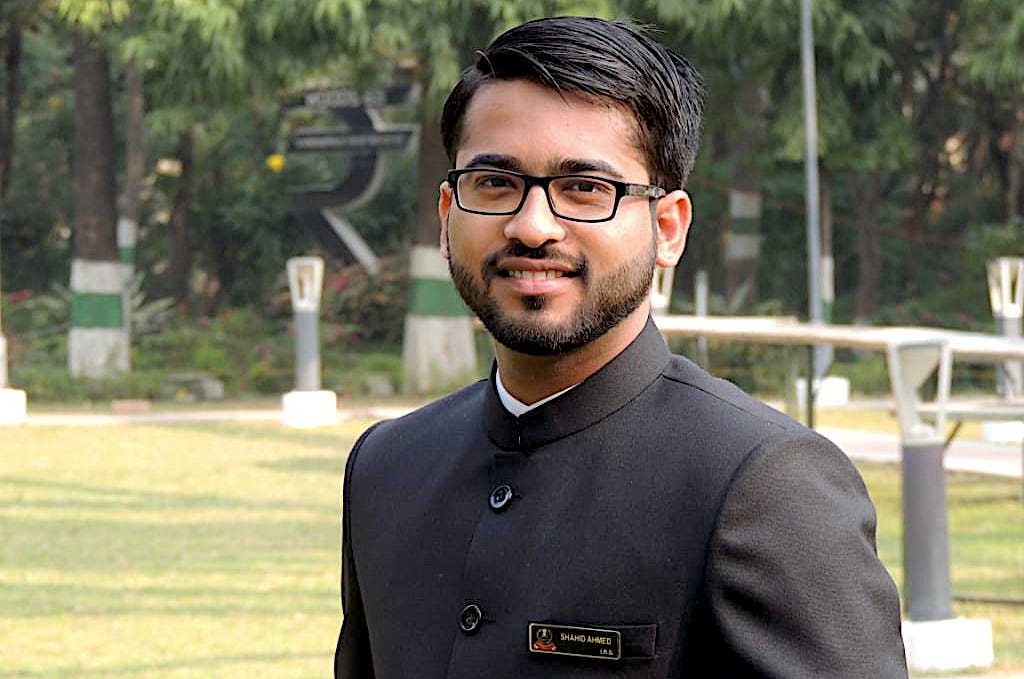
If we have faith in ourselves, we can do anything. Shahid also believed that if everyone can do it, then I can also do it. And today Shahid is successful. This time he has got 475 rank in UPSC Civil Service Examination. Whereas in the previous examination he had secured 695 rank. 

Talking to BeyondHeadlines, Shahid says that last time I got IRS. But I want to become an IAS, so I continued my preparation. However, it is not so easy to prepare along with training, so this time I could only get 475 rank. On this rank you will get IPS. 

But you have to become an IAS? 

On this Shahid says, ‘Absolutely! I have to become an IAS. Insha Allah, I will continue my efforts next time as well. However, he also says that it may be difficult to appear in the exam next time because my training is going on in Nagpur right now. And it is almost impossible to appear in the exam during this time.’ But Shahid’s spirits are definitely high. 

It was not so easy for Shahid Ahmed of Kanpur city of Uttar Pradesh to do this. In 2016, his father suddenly passed away. The burden of responsibilities fell on him, despite this Shahid kept on preparing and succeeded in his second attempt last year. And now in the third attempt, he has also improved his rank. He is hopeful that in the future he will definitely become an IAS along with getting a good rank.

Shahid’s family earlier lived in Kidwai Nagar in Kanpur, but now they have shifted to Jajnu area. His father Haji Jameel Ahmed was a businessman. His mother Bano Ahmed takes care of the household chores. He is the fifth child in a family of six members. He has four elder sisters and a younger brother.

Shahid completed his 10th and 12th from Virendra Swaroop School in Kanpur. Then he came to Delhi for further studies. In 2015, he completed his BSc degree in Chemistry Honours from St. Stephen’s College, Delhi University. And now he is studying law from Delhi University. He is currently in the final year of BA LLB.

Shahid says that when I was in school, I had decided that I wanted to join the civil service because I always liked administrative things. I was a captain in the school. I used to manage many things in the school. That’s when my teachers told me that I should join the civil service. From there, I tried to learn about it. I read about it on the internet, then I decided that this is what I want to do.

Shahid had taken law as his subject. He says, because I am also studying law. This helps me a bit in other papers as well. That is why I thought it was better to take this.
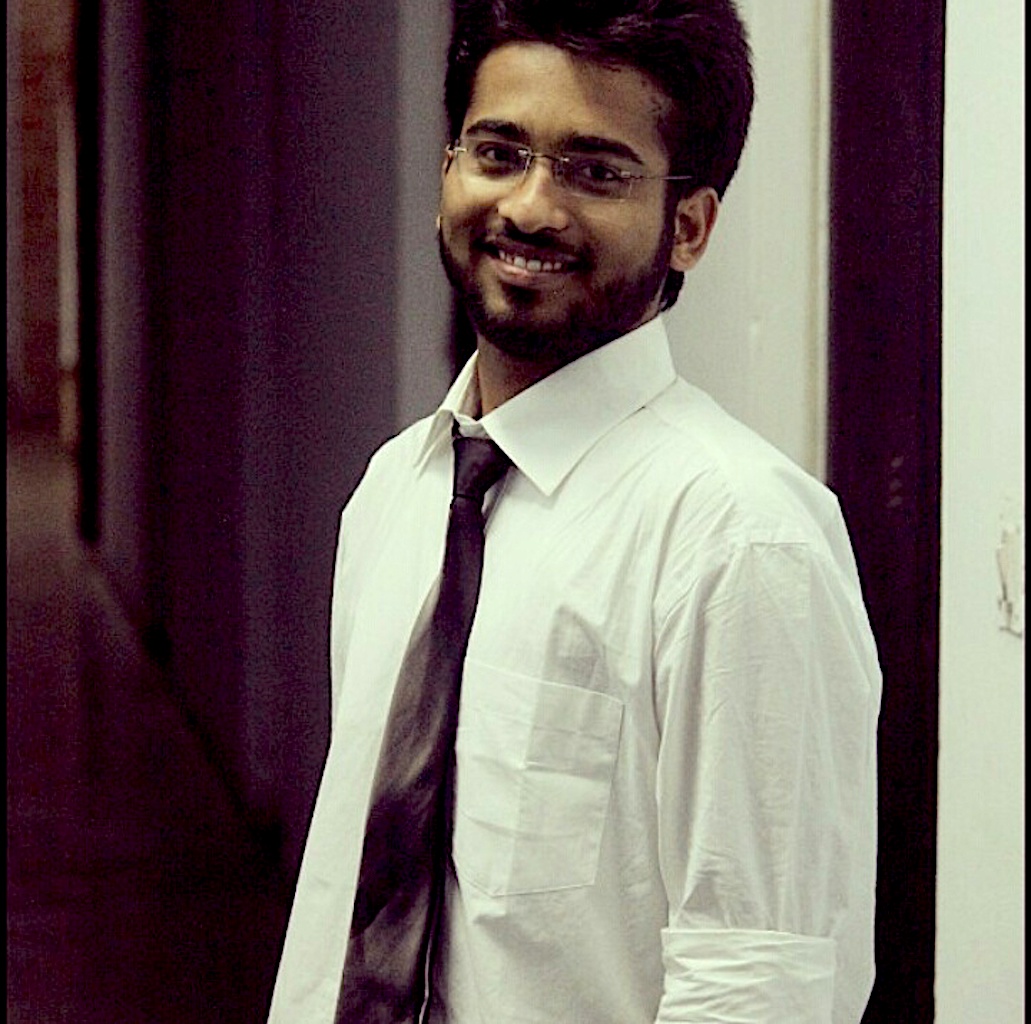
Talking about his preparation, Shahid says, “I joined a coaching institute in 2016, but left it within a month. I did not think coaching was going to be of any use. I gave the test of Hamdard Study Circle and got selected. Then I stayed here and studied on my own. Here I got a chance to meet good people. I made friends with good people. The atmosphere here is very good. In 2017, I came to Jamia Millia Islamia. Here too I got a lot of guidance and help.

Shahid tells those who want to join civil service that before starting preparation, it is most important to research the syllabus and previous year question papers and understand them. Because there is a lot of material to study. But we have to study according to the syllabus very thoughtfully and with planning. It is also important to understand the demand of the exam.

He further says that, along with studying, it is also important that you know how to write. Whatever you have studied, if you are not able to write it in the mains paper, then there is no use. Nothing is going to happen to you.

Shahid is very interested in cricket. He also reads a lot of non-fiction books. Shahid says that this will not directly help you in the exam, but it definitely makes a difference to your personality. In such a situation, it can be beneficial for the interview. However, it is not necessary that it is beneficial for everyone. But it is certain that it creates a perspective to look at things.

Shahid says to the youth of his community, have you ever thought why we are less in government jobs. Ask yourself what is our percentage in civil service. Have you ever thought that there are not as many people here as there should be. What is the reason for this? Actually, lack of education is the real reason for this. The religion in which the importance of education has been emphasized the most, today the people of the same community are giving the least importance to education.

He further says that, my parents were also not educated, but they understood the importance of education and got all the brothers and sisters educated. In such a situation, it is important that all parents pay special attention to the education of their children. There is a need to pay special attention to the education of girls. They have a lot of potential. They just need to be allowed to move forward. If you support them a little and promote them to study, then in the future they will do the best. 

He further tells the youth that, first of all, you should believe in yourself that if everyone can do it, then we can also do it. Do not think that this is a very difficult exam. We will not be able to study. This thing should be removed from the heart and mind.

Finally Shahid says that, I always regret that if my father was here, he would have been happy with this success. He has educated me after a lot of struggle. I will have this regret in my heart throughout my life that I wish I could have seen my son doing this work or I could have achieved this success during his lifetime.

source: http://www.beyondheadlines.in / Beyond Headlines / Home> India> Real Heroes / by Afroz Alam Sahil, Beyond Headlines / April 20th, 2019
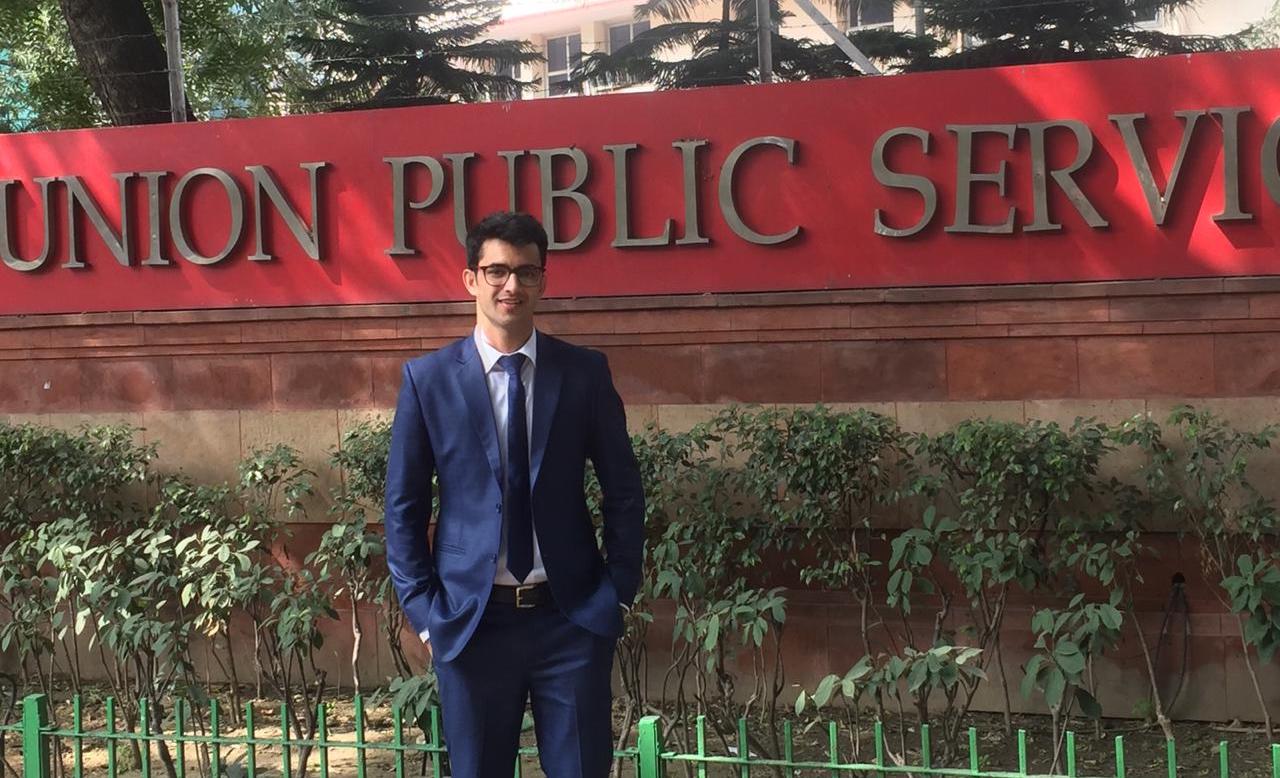
Spread your wings and the world watches you fly – Babar Ali Chaggatta

Tehsil Mahore, Baddar Village(Gulabgarh), (Reasi District), Jammu, JAMMU & KASHMIR :

If someone decides to change the same conditions and backwardness about which you keep crying your whole life, then surely his name will be Babar Ali Chagatta. 

Babar Chagatta has achieved great success in the UPSC Civil Services Examination this year. His rank is 364th. According to Babar, he may get IPS at this rank, but he wants to become an IAS. Therefore, he has started preparing to become an IAS once again.

24-year-old Babar is from Tehsil Mahore and village Baddar (Gulabgarh) of District Reasi in Jammu region of the state of Jammu and Kashmir. This area is considered to be the most backward area of ​​Jammu, which is still deprived of many basic facilities. 

Babar says that a paved road has not yet reached my village. Till one and a half to two years ago, my village remained in darkness because electricity had not reached there. Now my village has been illuminated by electric light.

Babar studied till 5th standard while living in the village. In the sixth class, he went to Jawahar Navodaya Vidyalaya, where he studied till 12th standard. He scored 90% in 10th standard and 86% in 12th standard. Then he went to Aligarh for further studies and obtained BA Honours degree in Political Science from AMU in the year 2014. After this, Babar took admission in the Political Science Department of Jamia Millia Islamia, Delhi to obtain MA degree. However, he could not complete this course due to his desire to join the civil service.

When and why did you think of joining the civil service? 

In response to this, Babar says, when I was about to go to the sixth class, my father introduced me to the civil service. When I went to Navodaya, I saw an IAS officer for the first time in the school’s annual program. His words also inspired me a lot. Also, the backwardness of the area especially inspired me to become an IAS and remove the misery and backwardness of my village. In this way, it was always in my mind that I can change the condition of this village by becoming an IAS.

Let us tell you that Babar’s father Ghulam Qadir was an officer in the forest department in Jammu. When Babar was in the 9th class, he left this world forever. Amma Ghulam Fatima is a homemaker. Babar is the youngest among five brothers. He also has a younger sister. All his brothers are in government jobs. 

Babar started his preparation in 2015. When he felt that MA classes were becoming an obstacle in his preparation, he left MA studies. He achieved this success in the third attempt. He wrote Mains in the first attempt. But in the second attempt, he failed in the prelims itself. Babar says that he was a little disappointed but this time I had decided that I must fulfill my childhood dreams and my father’s wish. All the things I remembered about my father kept inspiring me. 

Which subject did you choose for this exam and why? 

In response to this Babar says, I chose Political Science. The reason is that I have done my graduation in this subject and I am also very interested in International Relations. 

He says that in the last 4-5 years the results of Political Science have been very good. Now this subject has become very scoring. 

How and where did you prepare for the exam? 

On this Babar says, I did not take any coaching. I stayed in the residential coaching of Jamia Millia Islamia. However, I did not attend many classes there either. I focused more on self study. On being asked that your name is also in the list of Zakat Foundation, Babar says that after passing the mains, I went there for a mock interview. 

What message would you like to give to those preparing for civil services?  

On this question, Babar says that, first of all you have to always be ready that no matter what the result is, never lose hope. If you are ready for this, then first of all look at its syllabus and try to understand it in a better way. Then definitely look at the papers of the last few years. From there you will understand what UPSC wants from you. Although UPSC does not have a fixed pattern, every year something or the other changes.

The second important thing is that you must be honest for this. You cannot prepare for this under pressure from anyone. The most important thing is that you yourself should be interested in it. That is, self-motivation is very important. If it is clear why you want to join the civil service, then no one can stop you from being successful.  

He further says that initially read NCERT thoroughly. Along with this, you have to read the newspaper every day. Always keep yourself updated. Do as many test series as possible. Most of the study material is available online. There is a lot of material here, but you should not get confused, rather you have to read smartly by being selective. 

Babar likes playing cricket and watching issue based films. He says that even while staying in Jamia, he never forgot to play cricket every Saturday-Sunday. He also likes watching films. When asked which film he has watched, he says that ‘Stree’ is my last film. This film not only entertains people but also gives the message of what a woman wants from the society. Babar likes Shahrukh Khan a lot. On the other hand, he gets a little shy when asked about his favourite actress. Then he says that he definitely likes Priyanka Chopra’s acting a little bit.

Babar says that my father is my ideal. I wish he were here, he would have patted me on the back for my success. Babar wants to give credit to his entire family for this success. He especially wants to thank his mother, because she always filled Babar with courage and passion. 

Babar, while giving his message to the youth of the country, especially the youth of his community, says that if you really want to come into the mainstream, then you should definitely think about joining the civil service. What is needed is that instead of cursing the system, you should come into the system and understand it and work accordingly or change yourself. There is also a need to connect those who have become successful with the society. 

Apart from this, Babar wants to give his message to the youth of his community through this verse of Shakeel Azmi –

Spreading out the wings the world watches the flight 

What does one see in the sky while sitting on the ground? 

If you have got beauty then protect this beauty 

Walk carefully, the whole world is watching you… 

source: http://www.beyondheadlines.in / Beyond Headlines / Home> India> Real Heroes / by Afroz Alam Sahil, Beyond Headlines / April 20th, 2019
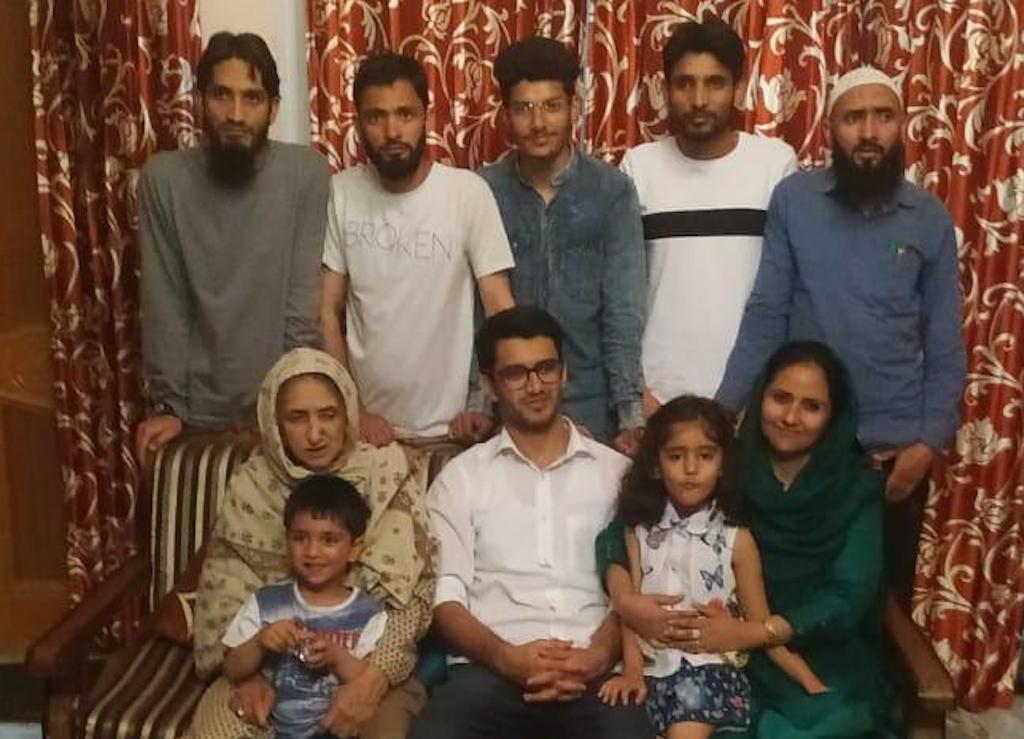
I had confidence in myself and kept working hard, that is why today I am an IAS…

Chhatabad Village (Dhanbad District), JHARKHAND :

Everything cannot always be in your hands. But working hard to achieve something is definitely in your hands. Rena Jameel also had to work hard, and today she has become an IAS because of her hard work. 

Born in Chhatabad village of Katras area of ​​Dhanbad district of Jharkhand, Rena Jamil has secured 380th rank in the UPSC Civil Service Examination this time. Whereas in the year 2016 examination, she had secured 882 rank.

Rena Jameel says that she got Indian Information Service in 2016. But she had dreams of becoming an IAS. It was also necessary to join training. That is why she gave UPSC again in 2017 along with training, but failed in the prelims itself. Still, I did not give up. I took a few days off and prepared. And as a result, I got 380 rank and now I have become an IAS.

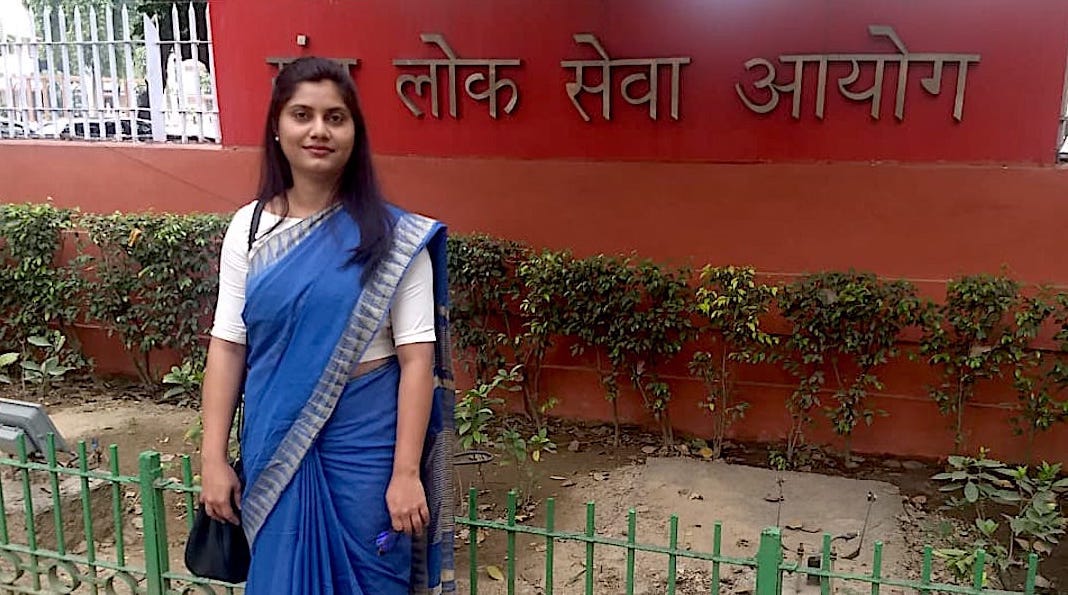
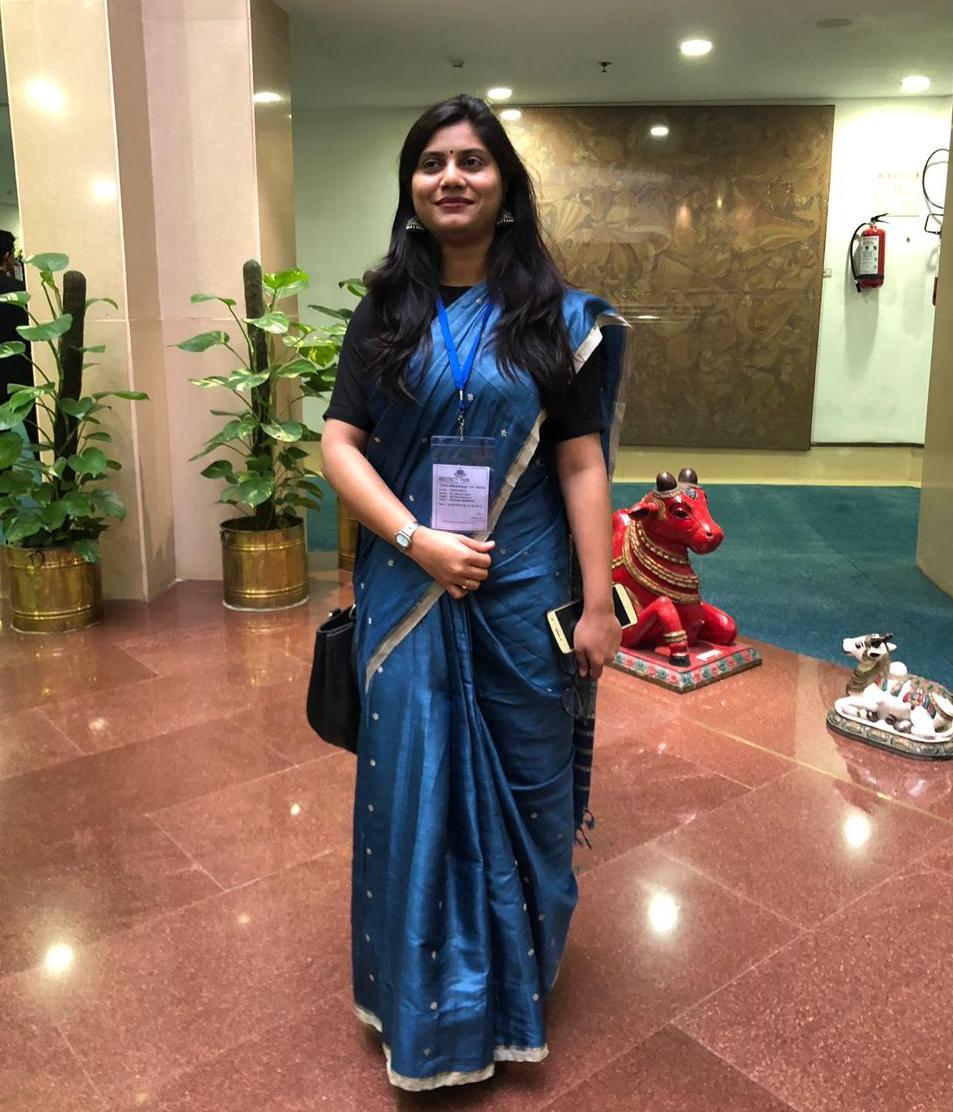
Rena Jamil, UPSC Rank -380

Rena Jameel’s father Mohammad Jameel Ansari has retired from Tata Company. He was a mechanical engineer in Tata. While mother Naseem Ara is a home maker. She has four siblings. Elder brother Raunak Jameel Ansari is in Indian Revenue Service. He had secured 763 rank in 2014. Younger brother is an engineer and is currently working with Prasar Bharati. While younger sister is doing her masters and is preparing for admission in PhD. 

Rena studied in Urdu medium from Chhatabad Urdu Middle School till class 8. Then she completed her 10th and 12th from the same school. After that she did BSc in Zoology from S.S.L.N.T. Mahila Mahavidyalaya and M.Sc from P.K. Roy Memorial College. After this she also did B.Ed.  

Rena says, Ammi was always motivating for me. She never made me do household chores, rather she always insisted on studying. However, all this was not so easy for me. Just to study in college, I had to travel about 50 kilometers every day. Sometimes by bus, sometimes by auto or sometimes by walking for hours… I would leave in the morning and reach home only at night.

When asked that now you are an IAS, what will be your first task in the district you go to after training, Rena says that every district has its own problems. But my special focus will be on education and health sector. Because my experience with both these sectors has been very bad. I would not want that in my district someone loses his life due to health service and someone’s daughter’s education gets interrupted just because the college is very far away.  

Rena Jameel loves Urdu poetry. She has been reading Faiz, Ghalib and Iqbal in particular. The special thing is that Rena herself has written about 50 poems so far. All these poems are in Urdu language. 

What was the reason that made you decide that I have to join the civil service? 

In response to this question, Rena says that, generally, there is not much focus on the education of girls in our society. Even if the family is educating them, the only purpose is that they will get married in a good family. I also had many friends who were very sharp in studies, but somewhere they could not study further. Could not go ahead. Due to family pressure or other reasons. Many were not sent to college only because the distance to the college was too much, but in my case my family was a little supportive. In such a situation, I started thinking that I have to do something that becomes an example for others. Such people should listen to me who educate their girls only for marriages or do not educate them at all. Then I decided that I have to do something big so that I can become an inspiration for girls.  

How and where did you prepare for the exam? 

On this, Rena Jameel says that in 2014, my elder brother succeeded in this exam. I came to Jamia on his guidance. Before this, I had read NCERT thoroughly. I also used to read newspapers regularly. I took Zoology for this exam because I had done BSc and MSc in this subject. 

In a long conversation, Rena tells about her struggles that there were many ups and downs in my life journey. I could not succeed even after reaching the mains twice. I succeeded the third time but did not get what I wanted. Despite this, I had confidence in myself and kept working towards my goal. Today I am successful because of this. Although I was happy with this service too, but it was not my aim or goal. That is why I kept preparing along with the service. I only wanted to become an IAS and I became one.

What message would you like to give to those preparing for UPSC? 

On this question, Rena says that many things are not in your hands. Only hard work is in your hands. And yes! The fruit of hard work is always sweet. I also faced many problems. I also failed. All things kept happening with me. But I kept working hard continuously. I will tell you the same thing that always think about fulfilling your dreams. If I had not done this, then I would definitely not have been an IAS. I would have been doing the service of 2016. Therefore, patience is very important for success in this exam. 

Also I would like to say that you must read newspapers because it is important to read people’s thoughts, it helps you to develop your own thoughts. And yes! You should always keep your resources limited. If you keep yourself busy reading everything then you will never be able to complete your syllabus. Whatever you read, read it with all your heart and give it enough time. 

What would you like to say to the youth of the country, especially the girls of your community? 

On this, Rena says that education is everything today. So pay attention to education at all costs. Never shy away from working hard. If I can do it, then believe me anyone can do it. But for this you will have to come forward and work hard.  

She especially tells girls that you need to come forward and work hard. It is also the responsibility of the society to stop looking at girls with narrow mindedness. Rather, they should be encouraged. Girls have a lot of talent. If we just become a little open minded, they will go far ahead. It is also the responsibility of girls to work hard and fulfill their dreams… and yes, the dreams should be a little big. 

source: http://www.beyondheadlines.in / Beyond Headlines / Home> India> Real Heroes / by Afroz Alam Sahil, Beyond Headlines / June 19th, 2019

‘With technique, not muscle’: How kettlebell lifting helped a 28-year-old flip the script

Kolkata, WEST BENGAL :

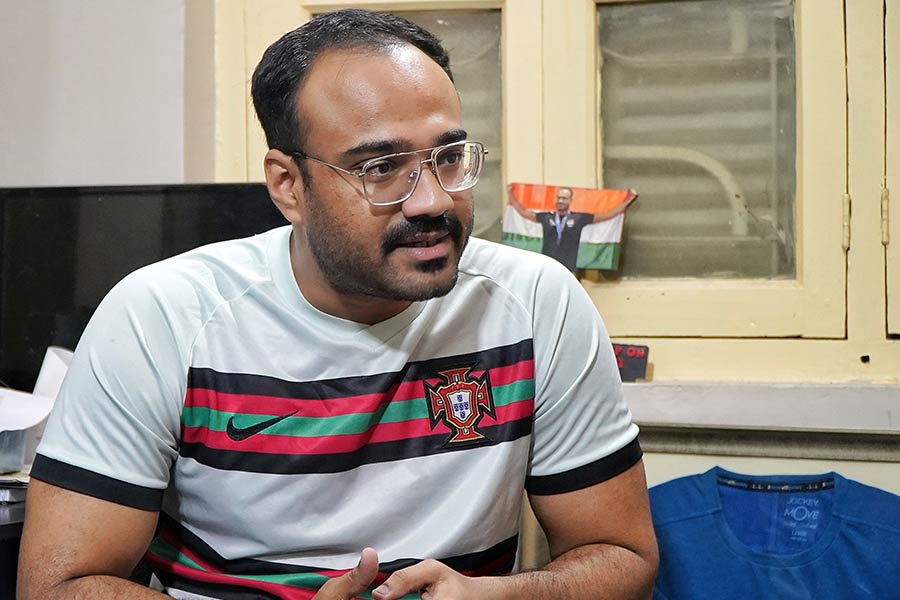
From a modest Kolkata gym to the world podium, kettlebell champion Danish Naushad lifts dreams without the weight of support — just sheer will.

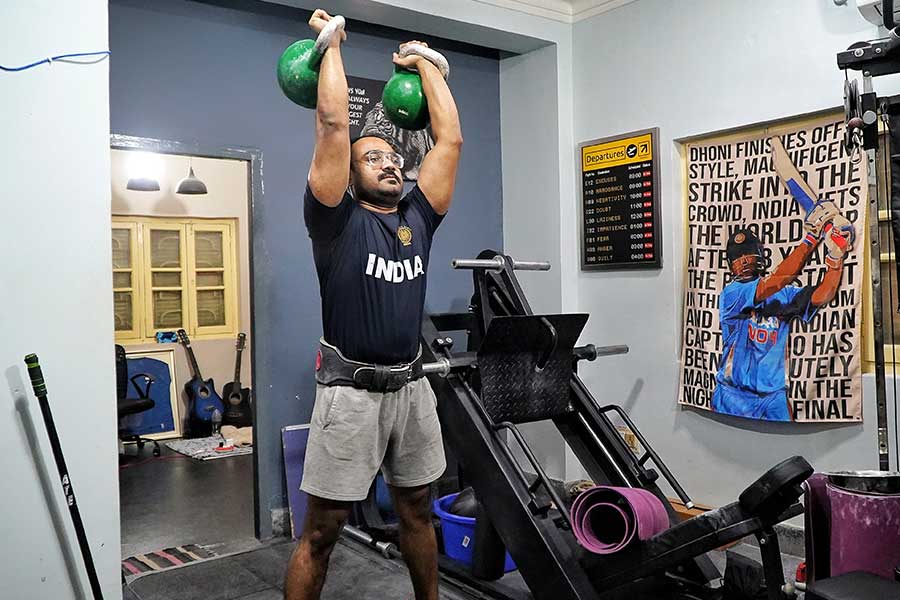
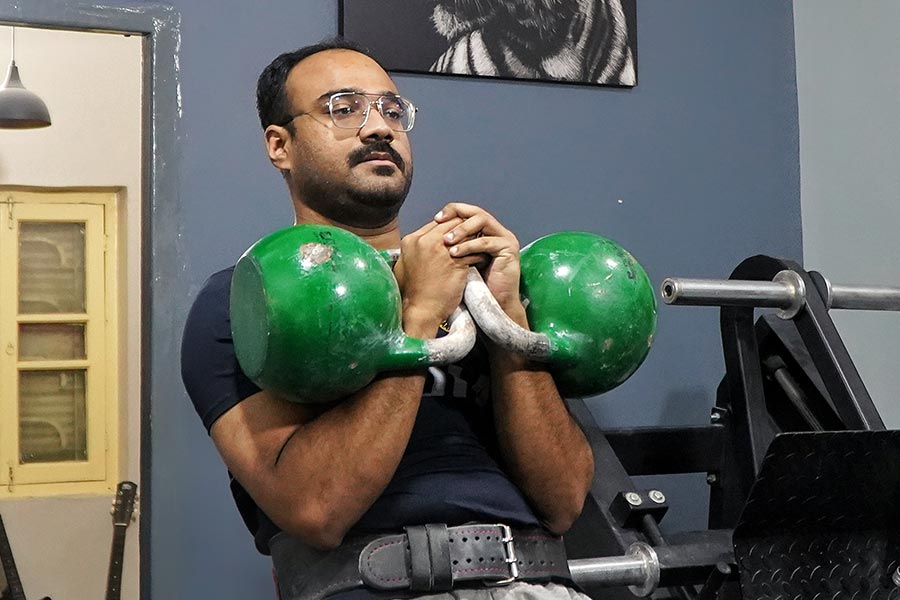
Danish Naushad is raising the tricolour at an international level, one lift at a time / All pictures by Soumyajit Dey

In 2017, Danish Naushad was training for the National Defence Academy (NDA) and following standard hypertrophy routines at a modest Kolkata gym. It was there that a chance encounter with a little-known piece of equipment — a kettlebell — set him on a path he had never imagined.

“A trainer named Saikat introduced me to it. It was kept in a dusty corner. We started with swings, and I found it refreshing, different,” said 28-year-old Danish.

Kettlebell: The unseen sport

Kettlebell lifting — or Girevoy Sport as it’s known in Russia — is an endurance-based strength sport. Unlike Olympic weightlifting that focuses on one-rep max lifts, kettlebell events run for 10 minutes or more, demanding relentless reps without setting the weight down.

Danish Naushad practicing at his home gym

“You need technique, lungs, and legs — not just muscle. That’s what people don’t understand,” Danish explained.

From NDA dream to a new calling

Danish was on track to join the NDA but couldn’t pursue it due to personal reasons. He fell into depression and briefly left home. But his family pulled him back — and his gym community, too. “My gym owner said, why not go ahead with fitness? That changed my life.”

He became a certified trainer under NASM (National Academy of Sports Medicine) and began coaching clients worldwide. Danish is also a certified strength training specialist under ISSA (International Sport Sciences Association). He reinvested his earnings into his athletic journey — even selling his dream Kawasaki Z900 to build a home gym.

Early Failures and the Ego Check

Danish’s raw strength took him through his first competitions, but failure at a 2018 state meet — where he only received a participation certificate — deeply affected him. “That shook me. I was overconfident, relying only on my shoulders.”

Danish built his home gym by selling off his dream bike, a Kawasaki Z900

That humbling led him to coach Arnab Sarkar, a pioneer of the kettlebell sport in India. “From 2019, real training began. I learnt that patience and technique matter more than brute strength.”

National records and online competitions

Danish’s breakthrough came in 2020 with a national record of 155 jerks using double 16 kg bells. When Covid hit, he embraced the new normal — online competitions.

“We hosted the world’s first online kettlebell championship from India. Judged live over video calls. Over 100 athletes joined. It kept the sport alive.”

Setbacks and redemption

In 2022, a missed visa meant he couldn’t compete at the IGSF (International Gira Sport Foundation) World Championship in Greece. But luck turned when the IUKL(International Union of Kettlebell Lifting) hosted a world event in Delhi later that year. Danish won bronze — his first world medal.

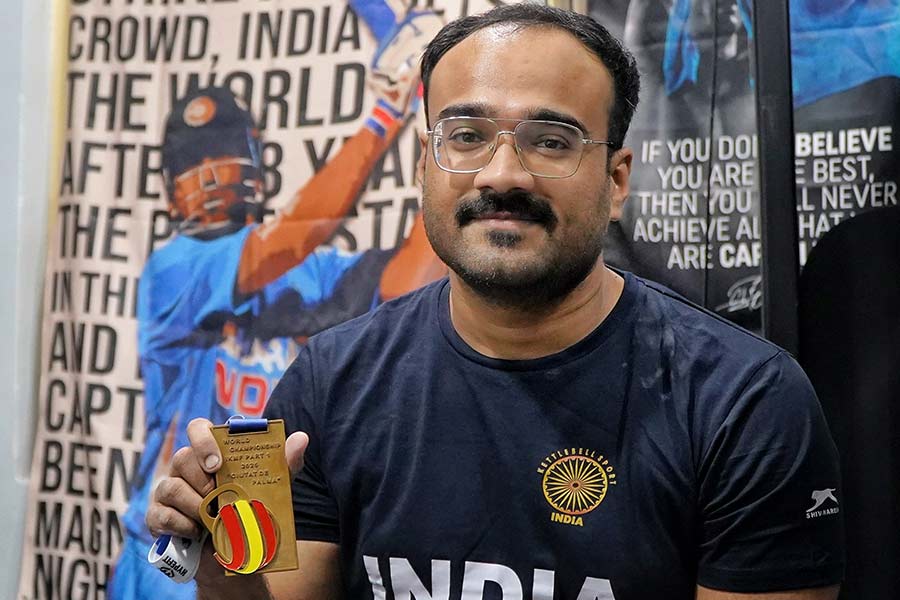
From missing a tournament due to visa issues to securing gold at the next, Danish’s story is an inspiring one

He followed that up with an emotional win at the 2024 IKMF (International Kettlebell Marathon Federation) World Championship in Denmark, clinching gold in the double pentathlon — an event he hadn’t prioritised. “I was shocked. I was going to the washroom and heard my name being called.”

Spain 2025: Against the odds

Preparing for Spain’s 2025 IKMF Championship, Danish dropped nearly 8kg in weight and doubled down on training. He lifted 52 reps in the 40 kg event — a personal best, finishing fourth against heavier European lifters.

Danish posing with his most recent gold won at Spain’s IKMF Championship 2025

But once again, it was the pentathlon — the side event — where he struck gold. “The event I didn’t bet on gave me the biggest reward. It’s always like that.”

Kettlebell in India: No support, all heart

Despite multiple international medals, Danish receives no government support. “There’s no funding, no recognition. We pay for our own visas, travel, gear.”

He dreams of a future where kettlebell lifters are backed by the government like in Russia — where athletes are promoted in the army or railways for their achievements. “Here, we don’t even get a pat on the back. But we keep going.”

Training the next generation

Danish now coaches aspiring athletes, including those who can’t afford international travel. “I’ve taken athletes to nationals on my own dime. One under-60 kg lifter I train could be among India’s best.”

He sustains himself as a full-time online coach, training clients across the US, Mexico, and Canada via Zoom. “I do assessments, build personalised programs — some people just have a rope or dumbbell at home. I make it work.”

Faith, focus and Bernabeu dreams

Danish credits his spiritual journey — one that deepened post-Ramzan in 2024 — for helping him stay grounded. “I pray before every event. Not to win, but to not come back sad. That matters more.”

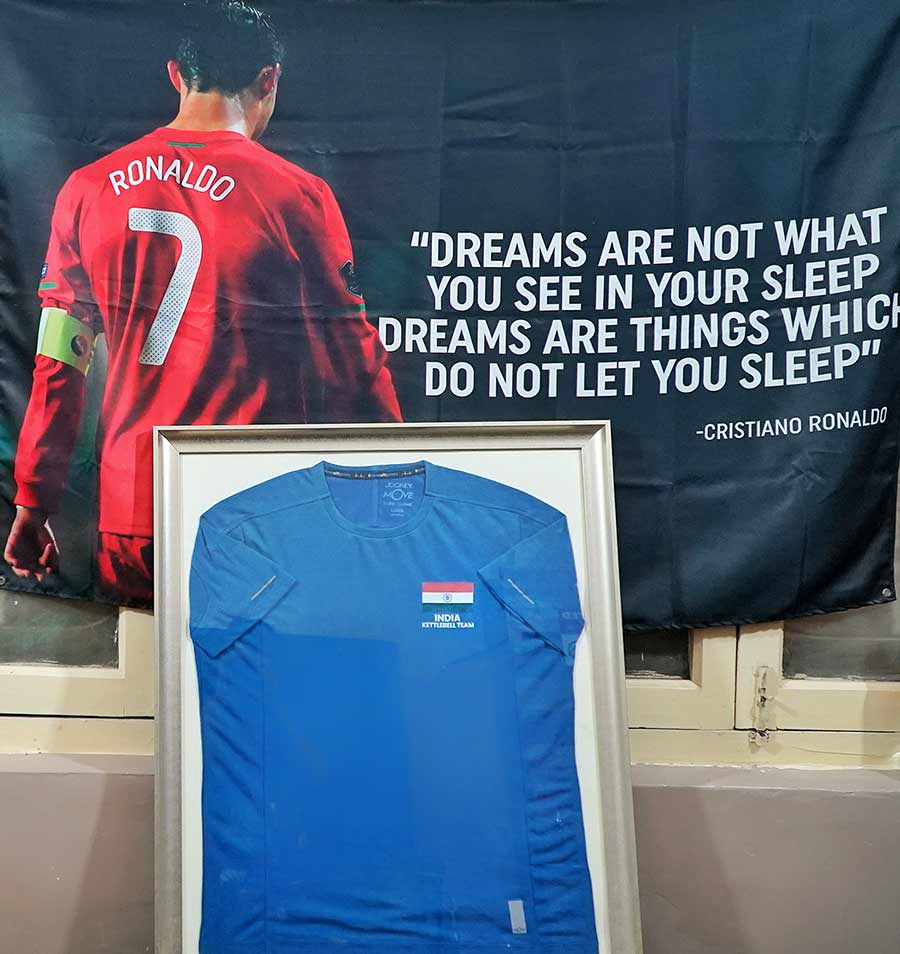
Danish has his gold winning jersey from Denmark framed. His idol is Cristiano Ronaldo and being able to see Real Madrid’s stadium was a dream come true for him

In Spain, he fulfilled a childhood dream — visiting Real Madrid’s Santiago Bernabeu stadium. “The quote I remember is, ‘The jersey can be stained with blood, sweat, and mud — but never with shame.’ That’s how I see my Indian jersey too.”

The road ahead: Hungary and beyond

Next stop: Hungary, for the IKMF World Championship in November 2025. For now, he’s training without a coach — building his own programs and aiming to hit CMS (Candidate for Master of Sport) and then MSWC, the highest global kettlebell rank.

“We dream of beating a Russian in Russia one day,” he says with a smile. “That’s the moment we’ll know we’ve done something.”

A final word

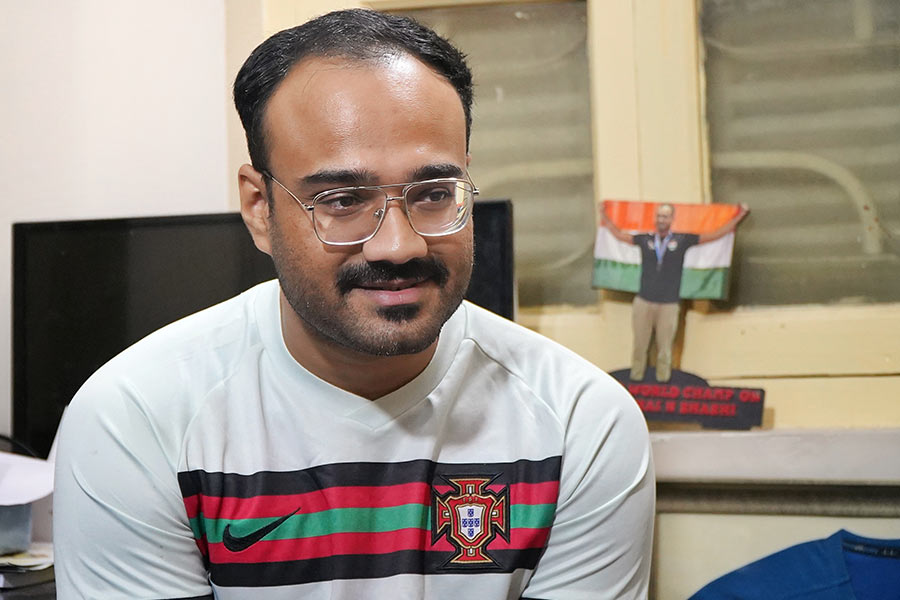
Danish has made his aspirations clear and he hopes backing will come at some point in his career

Eight years into his journey, Danish Naushad still doesn’t consider himself accomplished. “When I win a world medal under the Indian flag — with government recognition — only then will I say I’ve made it.”

Until then, the man from Kolkata will keep lifting. Not just weights — but the hopes of a sport still struggling for a place under India’s sporting sun.

source: http://www.telegraphindia.com / The Telegraph Online / Home> My Kolkata> People / by Debrup Chaudhuri / June 25th, 2025

Sir Fakhruddin (1868-1933): An Educational Visionary of Bihar

Dumri (Patna), BIHAR :

While working on my two books (soon to come: one on Muslim Politics in Bihar and another on Muzaffarpur Muslims, 1857-2011), while looking into primary and secondary sources I came across many personalities and institutions. One such person was Sir Fakhruddin whose contributions towards public life may interest many people. Hence I crave the readers’ indulgence.

[Sir] Syed Mohammad Fakhruddin [Khan Bahadur, 1868-1933] of Patna is credited to have the distinction of being the first Muslim Minister of Bihar and Orissa.

His father Md. Ali of the village Dumri, near Patna, took special care of his quality education. Having imparted elementary education in Arabic, Persian, and Urdu in the village Maktab, Fakhruddin was put under the tutelage of Md. Yahya, advocate, a big rais of Patna, with deep interest in music and literature. Yahya was the husband of Rasheedun Nesa (1855-1926, the author of the Urdu novel, Islahun Nesa, 1881/94, and a pioneer of modern education to women in Patna).

Fakhruddin did his BA from the Patna College in 1891, and B.L. in 1893, and started court practice under the guidance of Yahya in the district court of Patna. He was also associated with the Bihar Provincial Association.

Having earned good reputation as advocate he was elected member Bengal Council in 1910, which Fakhruddin quit after becoming the government pleader (1917-20) in the High Court of Patna, established in 1916-7. In 1921 he was elected member of the Bihar and Orissa Legislative Council, and he kept winning the elections till his death in 1933.

Thus, during 1921-33 he also served as minister of education besides few other significant departments. His contribution as minister in pushing the cause of education is distinctive. His efforts towards promoting primary and secondary education are noteworthy.

 The Deputy Directors of Public Instruction were made to undertake tours of Bihar and open schools. Fakhruddin worked hard towards enhancing the budgetary allocation for education. He also made efforts towards charkha operation in the government schools but remained largely unsuccessful in that. He mobilized funds for construction of college buildings and hostels. He was passionate about it.

Reconstruction of Patna’s BN College building and its three storeyed hostel, the imposing building of the Science College (Patna), two storyed hostel for the Science College, the Patna College Hostel (later became famous as Iqbal Hostel), two storeyed PostGraduate Hostel of Ranighat (Patna), Patna Training College are his creations.

Besides, he also allocated fund for the buildings and hostels of the Muzaffarpur’s GBB (LS) College, Cuttack’s Ravenshaw College, Bhagalpur’s TNB Colllege, two big buildings for the Madrasa Shams-ul-Hoda, which was taken over by the government, and eight professors’ quarters in Ranighat (Patna) are also his creations. For the cause of Urdu, he set up a Madrasa Board in 1922.

Madrasa Shams-ul-Hoda

Fakhruddin had also prepared an ambitious plan of converting the Patna University in a big residential university for which he also influenced the Nathan Committee to make favourable recommendations. This was to be established in the Phulwari Sharif. But it did not see the light of the day as a large number of the members of the Bihar and Orissa Legislative Council opposed it on the arguments that the campus will go far beyond the city; a member went on to allege that Fakhruddin was taking the University to the doors of his Pir. The Searchlight is said to have regretted this myopic opposition as the Bihar’s capital city was deprived of quality residential university.

He created and institutionalized Bihar Educational Service Class I, and went on talent hunt to recruit meritorious teachers for the Patna University.

With these efforts he brought in Dr Gyan Chand as professor of Economics, Prof. Taraporewala (History), Prof. Jamuna Prasad (Psychology), Prof. Hill (English), Prof. Shiv Parvati Prasad (Physics). They were posted on handsome salaries.

There used to be an insistence by the colonial regime to recruit only those candidates as Class I teachers who had obtained degrees from Europe.

Prof. Nayyar Laeeq Ahmad (who later became Principal, Andheri College, Bombay), and Prof. Jadunath Sarkar were also recruited. Sir Fakhruddin resisted this racism, without much success at the time, even though it was diluted subsequently in 1940s when Prof. K K Datta (History, 1944) was taken in.

Sir Fakhruddin brought a bright professor of Law from BHU to make him Principal, Law College, and Prof. Boman Sanjana of Bombay was brought in the Civil Engineering.

In order to overcome the dearth of talented teachers he also instituted State Scholarship programme on which promising students of BA and MA were sent oxford and Cambridge for higher degrees and they had to return back to teach in the colleges of Patna University.

Kishori Prasad Sinha, Fazlur Rahman, and Kalimuddin Ahmad for English literature; Ghanshyam Das for History, Balbhadra Prasad and Qamruddoja for Chemistry, Bhairavnath Rohtagi for Economics were few such luminaries. Sadly, with the death of Sir Fakhruddin this bright scheme also died.

The Bihar School of Engineering was upgraded to ‘College’ by him. He also established the Veterinary College of Patna and recruited many teachers from outside.

Besides education, he also held the portfolio of cooperative and he made it a movement of sorts, more particularly in Tirhut. He convened a conference of Cooperatives in Hajipur when Ahmad Husain (1886-1948), an Aligarh graduate of Muzaffarpur, was posted as SDO in Hajipur.

For all these unforgettable contributions, Dr Rajendra Prasad held him in very high esteem.

Sir Fakhruddin, a bearded, fair-skinned fellow was a devout practicing Muslim with punctualities of namaz. Sherwani, pajama, Turkish cap was his preferred dress. The masjid near the Patna Railway Junction was reconstructed by him by investing around Rs. 20-25 thousand, which is now the Jama Masjid of Patna; for long it was called ‘Sir Fakhruddin Masjid’.

As a minister, he never used government quarters; rather he preferred to work from his own house in Patna, nor did he accept police protection. He was a good orator in both English and Urdu.

His sons- Azizul Haq was a renowned advocate of Patna High Court, Anisul Haq was Deputy Collector, Habibul Haq was in judicial services.

(Mohammad Sajjad, Assistant Professor at Centre of Advanced Study in History, AMU, Aligarh)

source: http://www.twocircles.net / TwoCircles.net / Home / by Mohammad Sajjad / October 13th, 2025

Almost Jailed, Now a Future Doctor: How a Kashmiri Teen Escaped PSA to Clear NEET

Khumrail Village (Kupwara District) , JAMMU & KASHMIR :

Nineteen-year-old Zubair-ul-Islam Bhat had every reason to give up. A teenager from the remote village of Khumrail in north Kashmir’s Kupwara district, he found himself in police custody last year, dangerously close to being booked under the harsh Public Safety Act (PSA) – a move that could have shattered his future. But fate had other plans.

Given a second chance, he did not waste a moment. He buried himself in his books, held onto hope and has now cleared National Eligibility cum Entrance Test (NEET), a national-level medical entrance examination.

Zubair was granted a second chance by the Jammu and Kashmir Police, who ultimately decided not to book him under the stringent PSA. Seizing the opportunity, he focused on his studies and went on to excel in NEET, the results of which were announced on June 14.

Just nine months ago, the 19-year-old was in police custody. He had been arrested in September on suspicion of using a VPN and engaging in what authorities deemed suspicious phone activity. A PSA dossier was even prepared. His future hung by a thread – until Sajad Lone, the chairman of the People’s Conference, stepped in.

Sharing the story on social media, Lone recalled how Zubair’s family had reached out to him in desperation.

“I was convinced Zubair is special. The Kupwara SSP was understandably cautious. I personally assured them of Zubair’s good conduct. We had multiple discussions, often disagreeing, but eventually, the SSP called back and said, ‘I am convinced Zubair needs a chance.’ And he was released,” Lone wrote.

Zubair said that he was arrested after police discovered he had been using a VPN. “I was kept in custody for two days. I explained that I used VPNs for studying, gaming and saving data. They checked my phone but found nothing incriminating. Once Lone Sahib got involved, I was released,” he added.

This was his second attempt at NEET, and he scored 535 out of 720.

A proud Lone later posted Zubair’s pictures on X (formerly Twitter) and congratulated him, writing, “He is much more than a young boy who cracked NEET. I share a special bond with him. From the depths of despair a year ago, Zubair has bounced back and will soon begin a career in medicine. I don’t know what it was, but I just knew Zubair had to be given a chance. I believed he had the potential to excel academically and build a bright future.”

Lone also thanked the Kupwara SSP, saying, “His decision to release Zubair means he has added a doctor to society. I would never have spoken publicly about this, but Zubair’s journey is a story of hope, love, and compassion. Perhaps there’s a message in all this—a message I hope our decision-makers hear. My thanks also go to @OfficeOfLG J&K. Without the consent of senior officials, this would not have been possible. In Kashmir, true victory lies in love and compassion.”

source: http://www.twocircles.net / TwoCircles.net / Home> Education / by TCN News / June 23rd, 2025

NEET (UG) 2025: 472 Students of Al-Ameen Mission Qualify for Free Medical Seats in Government Medical Colleges Across West Bengal

Khalatpur Village (Howrah), WEST BENGAL :

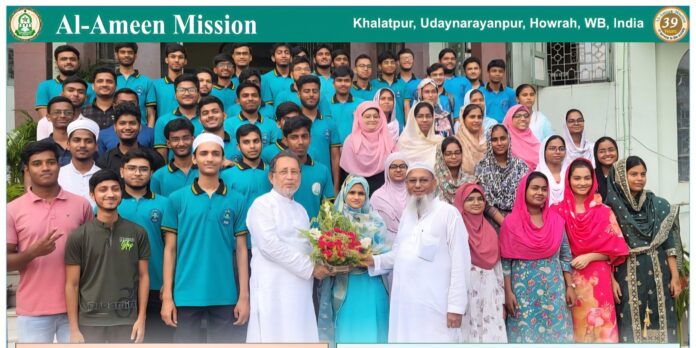
M. Nurul Islam with some of the future doctors at Al Ameen Mission Khalatpur campus

M. Nurul Islam is a proud man as 472 students of Al Ameen Mission have qualified for free medical seats in government medical colleges across West Bengal through NEET (UG) 2025.

Muslims remain one of the most disadvantaged communities in India. In West Bengal—among the more underdeveloped states—their educational and socio-economic struggles are even more pronounced. Districts like Murshidabad and Malda, with significant Muslim populations, rank among the most backward in the country.

When the NEET results were announced, 154 students from Murshidabad and 77 from Malda scored above 500 marks, making them eligible for free medical education in the state’s government colleges.

What stands out is the socio-economic background of these students. Of the 472 successful candidates, 278 (59%) come from modest backgrounds: 194 (41%) belong to middle and upper-middle-income families, 152 (32%) to lower-middle-income groups, and 126 (27%) are from poor and Below Poverty Line (BPL) families.

The success of these students reflects not only academic excellence but also the transformative impact of Al Ameen Mission in empowering underprivileged communities through education.

“This year’s exam was comparatively tougher than in previous years, but by the grace of Allah, our students performed even better,” said M. Nurul Islam, founder general secretary of Al Ameen Mission, while speaking to Muslim Mirror.

Nurul Islam, the visionary general secretary of Al-Ameen Mission—often referred to as the Sir Syed of West Bengal—is widely recognized among the 100 most influential Indian Muslims. He pioneered an educational movement aimed at uplifting underprivileged Muslim students in West Bengal, significantly increasing their representation in medical colleges, even exceeding their population proportion in the state.

Born in 1959 in the small village of Khalatpur in Howrah district, Nurul Islam came from a humble background. His passion for education and community service became the foundation of a lifelong mission. In 1986, while he was a student, he started a hostel with just seven students inside the madrasa building. This initiative was sustained by a grassroots campaign—collecting a fistful of rice from every household in the village. In January 1987, this effort took shape as Al-Ameen Mission.

Today, the Mission has 77 branches across 23 districts of West Bengal, housing nearly 23,000 residential students. Over 49,000 students have passed from Al Ameen Mission, which follows the WBBSE, WBHSE, and CBSE curricula. In 2015, the West Bengal government honored M Nurul Islam with the Banga Bhushan Award for its contributions to education.

The Mission also engages in charitable work, offering financial aid and scholarships to unemployed Muslims. Under Nurul Islam’s leadership, it has become a beacon of holistic education, blending academic excellence with Islamic ethical values. The institution has produced hundreds of successful NEET and JEE candidates, changing the lives of many.

Nurul Islam’s resolute commitment to education and empowerment continues to inspire generations, reshaping the future of Muslim youth in Bengal and beyond.

source: http://www.muslimmirror.com / Muslim Mirro / Home> Education> Indian Muslim> Positive Story / by Jasmine Nehar / June 25th, 2025

Fasihuddin Balkhi: the forgotten historian of Bihar

Patna, BIHAR :

Fasihuddin Balkhi was born in 1885 in Bakshi Mohalla of Patna city. | Picture: Rekhta

Born in Patna, Bihar during the British era, Fasihuddin Balkhi made a tremendous contribution to history-writing in Urdu. Despite this feat, he remains largely unknown to this day. 

Many historians have written about the history of Bihar. After taking a cursory overview of the works written by different scholars, one finds that history writing on Bihar, especially in the Urdu language has not yet received due attention in academic circles. Among many others who have written on Bihar and its history, the notable ones include Fasihuddin Balkhi (1885-1962); Taqi Rahim (1921-99); and Shad Azimabadi (1901-1978).

This piece is an attempt to highlight the life and works of Fasihuddin Balkhi. His work has received scant attention from those working in the Bihar region. His contribution remains largely under-acknowledged and under-explored in the existing literature of the Bihar province.   

Balkhi was born in 1885, the same year that the Indian National Congress (INC) was founded, in Bakshi Mohalla of Patna city. After receiving his early education at home, he went to Calcutta where he completed his higher education. He became a teacher and initially taught at Poona Military School and later in Calcutta Fort William. Later on, he passed the law examination and was employed in the Bihar government. In 1914, he opted for military service which enabled him to visit different parts of the world like Palestine, Egypt, Iraq and Lebanon. 

As India’s independence movement was drawing more followers, Balkhi too joined the movement. In 1921, he became part of the non-cooperation movement. After refusing to accept the post of deputy in Jaunpur, he had to face many hardships. Between 1926-27 he worked as the revenue officer and magistrate in Sarai Kela state.

After retirement, he left his ancestral home and lived the rest of his life till 1962 in his new house in Guzri Bazar Patna city (just behind the present Mohammedan Anglo Arabic school). In the last two years of his life, he worked at Patna University in the department of manuscripts. His hardworking and organizational abilities infused a new spirit in the department. 

Although Balkhi was known as a good teacher and a successful officer, he was primarily a historian and researcher, as he stepped into some areas of research that were hitherto almost invisible. Even the noted Bihar-based historian, Syed Hasan Askari (1901-1990) has acknowledged Balkhi’s scholarly and literary abilities. Unfortunately, most of the works of Balkhi could not reach their desired audience. Some of his works remain unpublished even now.  

Balkhi’s first book Tarikh-e-Magadh was published by Anjuman-e-Taraqqi-Urdu-Hind (Delhi) in 1944. The second book, Tazkira, was published as Tazkira-e-Niswane Hind (1956).

According to one source, he wrote his first work at the age of 25 in 1910 in Urdu on astrology, a rare case in Urdu, titled as Ilmi-e-Najoom. This work is not easily available or accessible to the readers. A pamphlet on the poetry of Shad Azimabadi titled as Inshad-e-Shad (Qaumi Press Bankipore, Patna, 1939) is his signature piece. The pamphlet demonstrates his power of critique. 

Balkhi’s work only gained wider attention after his death. Well-known Urdu publisher Nadeem Bhatti published one of Balkhi’s works Tazkira-e-Hindu Shora-e-Bihar (Poets in Bihar/Urdu) in 1962. Some of Balkhi’s unpublished works such as Dastur-e-Sukhan, a collection of his works on historical places of Bihar province, Aasar-e-Balkhiya, are collected in the book. Several of his scholarly, literary and historical articles are also available in different magazines and journals. A well-researched article on Balkhi’s personality and research guidance was written by Qayyum Khazar for ‘All India Radio Patna.’ Khazar states that “Fasihuddin Balkhi was a great historian and researcher as well as a good poet.”  

Balkhi’s work as historian
Tarikh-e-Magadh is the first book that earned Balkhi fame as a historian. This seminal work in Urdu was published in 1944 by Anjuman Taraqqi Urdu (Delhi), which was then under the supervision of Maulvi Abdul Haq (Baab-e-Urdu). The book chronicles the history of Bihar province from the earliest times (642 BC) up to the second World War in 1943. The book contains as many as twenty chapters. The book is considered one of the most reliable accounts of the history of Bihar in the Urdu language. The work was constructed from authentic historical sources. 

Patna-based historian Imtiaz Ahmad, commenting on the significance of Tarikh-e-Magadh, has said, “It is written authentically and professionally, with proper references from sources (Persian texts).” 

Balkhi also wrote another significant work entitled Wahabi Movement, posthumously published in 1983. This book along with Qeyamuddin Ahmad’s seminal work The Wahhabi Movement in India (1966, reprinted 1994) are the most cited works on the history and role of the Wahhabi movement in India.

Balki’s slim book, despite being confined to the Bihar region, is distinctive in many new ways. The sources he cited are primary and useful, such as letters of Syed Ahmad Shah, Calcutta Review, Indian Muslim by Wilson Hunter, Tazkira-e Sadiqa and biographies of Syed Ismail and Syed Ahmad, the founding fathers of the movement in India.

Emphasizing the legacy left behind by the Wahhabi movement, Balkhi writes, “It is highly interesting to note that the use of three great weapons, namely, non-cooperation, passive resistance and establishing of parallel Govt. which the Congress leaders adopted in their fight against the bureaucracy, was originally advocated and preached by the Wahhabis in 1854.” (p. 16).

Apart from these historical accounts, Balkhi wrote another path-breaking book Tazkirah Niswan-e-Hind (1956) in which he documents the short biographical accounts of the notable women of India. He starts his book with Raziya Sultan of the early 13th century and covers the women from various fields across India such as Askari Begum ‘Hijab’ (Lucknow), Chander Mukhi Bose (Bengal), Lal Ded (Kashmir), Raziya Sajjad Zahir (Rajasthan/Bombay), Bibi ‘Tahira’ (Bihar), etc. This book serves as an important source of information on Indian women and their role in different times of history. 

Balkhi has also written about the lesser-known aspects of Bihar. This can be gauged from his book Patna Ke Katbe in Urdu, published by Khuda Bakhsh Library, Patna in 1993. This book is a unique study of inscriptions found on graves, mosques, and tombs located in Patna. 

Balkhi has made a tremendous contribution to writing the history of Bihar in Urdu. His work serves as a guiding light on the lesser known and under-explored aspects of Bihar. His work needs to be revisited and re-assessed to throw light on many ignored dimensions of Bihar history.

Mohd Hussain Ganie is a PhD student at Aligarh Muslim University (AMU). He tweets at  @GanaiHussain1

source: http://www.twocircles.net / TwoCircles.net / Home> Art-Culture / by Mohd Hussain Ganie, TwoCircles.net / August 12th, 2022

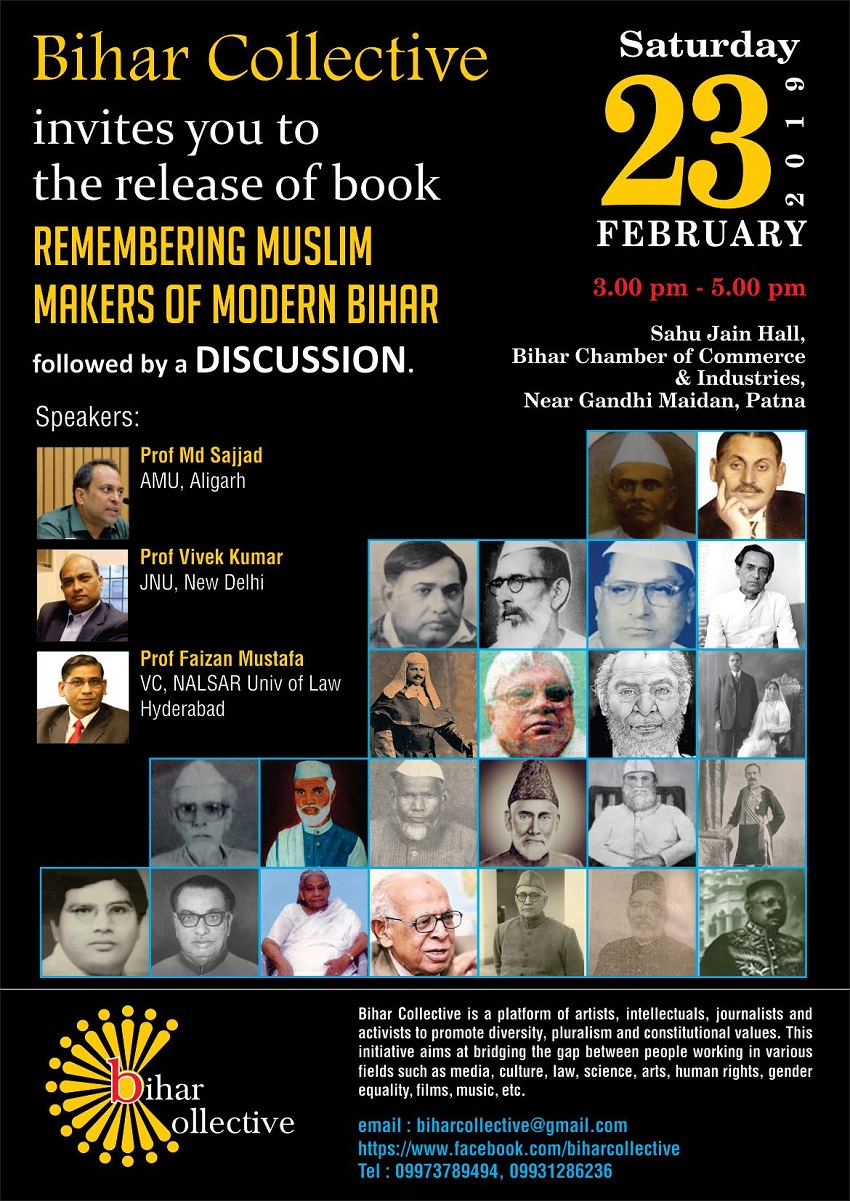
Bihar Collective to Release Booklet “Remembering Muslim Makers of Modern Bihar” in Patna on Feb 23

Patna, BIHAR :

Patna :

In an era of unprecedented majoritarian ascendance and anti-Muslim hatred, Bihar Collective, a platform of intellectuals and activists, has brought out a booklet highlighting the contribution of eminent Muslims in making the modern Bihar in the last 200 years.

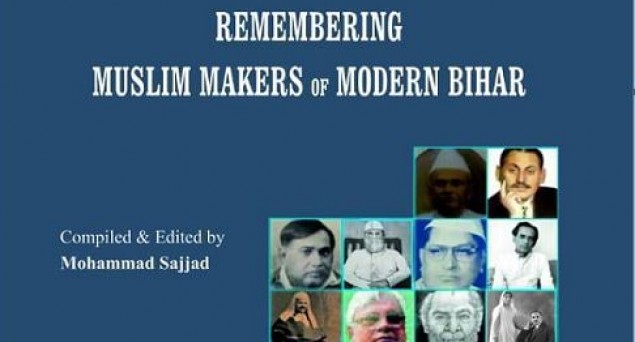
The booklet titled Remembering Muslim Makers of Modern Bihar has been compiled and edited by renowned academician and writer Prof. Mohammad Sajjad on the initiative of Bihar Collective.

The booklet will be released at an event in Patna on Saturday (February 23).

On the occasion, a discussion will also be held with Prof Faizan Mustafa, Vice Chancellor, NALSAR University of Law, Hyderabad; Prof Vivek Kumar, JNU, New Delhi; and Prof Mohammad Sajjad, AMU, Aligarh as panelists.

A Brief about Booklet:


Pre-empting a reasonable question about the title of the booklet, Prof Sajjad, who has compiled and edited it, writes in its preface: “A simple and obvious question that may readily arise is: why only Muslim makers of modern Bihar? Why not others too? This is indeed a valid and pertinent question.”

Responding to the question, he further says: “Candidly put, this is because of an unprecedentedly menacing rise of majoritarianism, bigotry, and anti-Muslim hatred, with open support of the state.

The Muslim identities are ominously threatened. There are also unabated attempts to dilute (or even take away) whatever little accomplishments have been made by the forces of social justice and secularism.

Only the Muslim segment however is threatened by the jingoist, exclusionary, violent nationalists, to be thrown out to another country. As if the other country is a dustbin, owned by these bigots, into which they can throw away everything they dislike! As if only the religious majority constitutes the nation! Notably, these jingoists had aligned with the British and had stayed away from the national movement.”

“Muslim contributions in the nation-making (and in the freedom movement) remain under-acknowledged, forgotten or even omitted. Erasure of their histories and memories seem to have become even more pronounced and vociferous, now, than ever before…The Bihar Collective therefore decided to compile a short profile of these inspiring role models, history-makers…This is small and humble step towards retrieving and restoring the nationalist provincial pantheons bearing Muslim identities,” says Prof Sajjad.

He, however, admits that the list of Muslim heroes of Bihar given in the booklet is not exhaustive as “…many have been left out essentially because of lack of documentations and researches. Not many have left their own accounts/memoirs; the available memoirs/accounts have not written much about all the personalities. In many cases, even otherwise “resourceful” descendants and/or associates of the history-makers have not been able to provide us with adequate (and credible/verifiable) details.”

Prof Sajjad hopes this small exercise may lead to some big academic work on these history-makers. “In short, this kind of venture may be said to be an ongoing exercise. This effort may hope to open up (and obtain) more details about such history-makers and would also get to know about many more of such peoples and processes, we failed to include here in this hastily prepared tiny volume, amidst constraints of resources and time.”

Names of Muslim Makers of Modern Bihar Mentioned in Booklet:
1. Syed Imdad Ali (d.1886]
2. Khuda Bakhsh (1842-1908)
3. Syed Amir Husain (1843-1910)
4. Imdad Imam Asar (1849-1934)
5. Shah Badruddin(1852-??)
6. Syed Ali Bilgrami (1853-1911)
7. Rasheed-un-Nesa (1855-1926)
8. Syed Noorul Huda (1855-1939)
9. Justice Syed Sharfuddin (1856-1921)
10. Shaikh Gulab (1857-1920)
11. Sarfaraz Husain Khan (1860-1931)
12. Maulana Mazharul Haque (1866-1930)
13. Batakh Miyan Ansari (1867-1957)
14. Sir Fakhruddin (1868-1933)
15. Syed Ali Imam (1869-1932)
16. Syed Hasan Imam (1871-1933)
17. Salahuddin Khuda Bakhsh (1875-1931)
18. Shafi Daudi(1875-1949)
19. Khwaja Md. Noor(1875-??)
20. Abdul Wadood (d.1955)
21. Syed Abul Hasan (1878-1960)
22. Sir Sultan Ahmad (1880-1963)
23. Maulana Sajjad (1880-1940)
24. Pir Mohammad Munis (1882-1949)
25. Abdul Bari (1882-1947)
26. Syed Sulaiman Nadvi (1884-1953)
27. Mohammad Yunus (1884-1952)
28. Shah Md. Zubair (1884-1930)
29. Syed Abdul Aziz (1885-1948)
30. Zubaida Begum Daudi (1886-1972)
31. Syed Tafazzul Karim (1886-1964)
32. Mr. Mohammad Shafi (1888-1955)
33. Qazi Ahmad Husain (1889-1961)
34. Dr. Syed Mahmud (1889-1971)
35. Ali Husain Aasim Bihari (1890-1953)
36. Shah Mohammad Umair (1894-1978)
37. Abdul Ahad Mohammad Noor (1894-1975)
38. Hakeem Md. Kabiruddin (1894-1976)
39. Maulana Usman Ghani (1896-1977)
40. Manzoor Ahsan Aijazi (1897-1969)
41. Shah Md Ozair Muni’mi (1899-1961)
42. Maghfur Aijazi (1900-1966)
43. Syed Jafar Imam (1900-1965)
44. Syed Badruddin Ahmad (1901-1983)
45. Mohammad Tahir (1903-???)
46. Syed Jafar Imam (1903-1979)
47. Syed Fida Husain (1904-80)
48. Abdul Qaiyum Ansari (1905-1974)
49. Wajihuddin Minhaji (1907-1984)
50. Syed Md. Aiyub (1910-1964)
51. Abdul Sami Nadvi (1913-????)
52. Abul Hayat Chand (1914-1958)
53. Ahad Fatmi(1915-1980)
54. Zawwar Husain (1916-80)
55. Shafiqullah Ansari (1917-1980)
56. Shah Mushtaq Ahmad (1917-2002)
57. Abdul Ghafoor (1918-2004)
58. Col. Mahboob Ahmad (1920-1992)
59. Taqi Raheem (1920-1999)
60. Zahra Daudi(1923-2003)
61. Shakoor Ahmad (1924-1981)
62. Syed Hasan (1924-2016)
63. Yunus Lohia (1925-2019)
64. Ghulam Sarwar (1926-2004)
65. Syed Shahabuddin (1935-2017)

A Brief about Author:


Prof Mohammad Sajjad teaches late-colonial and post-independent Indian history at the Centre for Advanced Study in History, Aligarh Muslim University. He has written several books including Muslim Politics in Bihar: Changing Contours; and Contesting Colonialism and Separatism: Muslims of Muzaffarpur since 1857.

His articles are published in reputed academic journals from Routledge, Sage, EPW etc. and also in anthologies from the Oxford University Press and Cambridge University Press.

Bihar Collective:
It is a platform of artists, intellectuals, journalists and activists to promote diversity, pluralism and constitutional values. It aims at bridging the gap between people working in various fields such as media, culture, law, science, arts, human rights, gender equality, films, music, etc.
Email: biharcollective@gmail.com
Facebook: https://www.facebook.com/biharcollective

source: http://www.indiatomorrow.net / India Tomorrow / Home> Society / by India Tomorrow / February 21st, 2019

Mohammad Hafeez Furqanabadi: Harbinger of education, harmony, social change

Ghat Village (Doda Town, Chenab Valley) JAMMU, JAMMU & KASHMIR :

Mohammad Hafeez Furqanabad

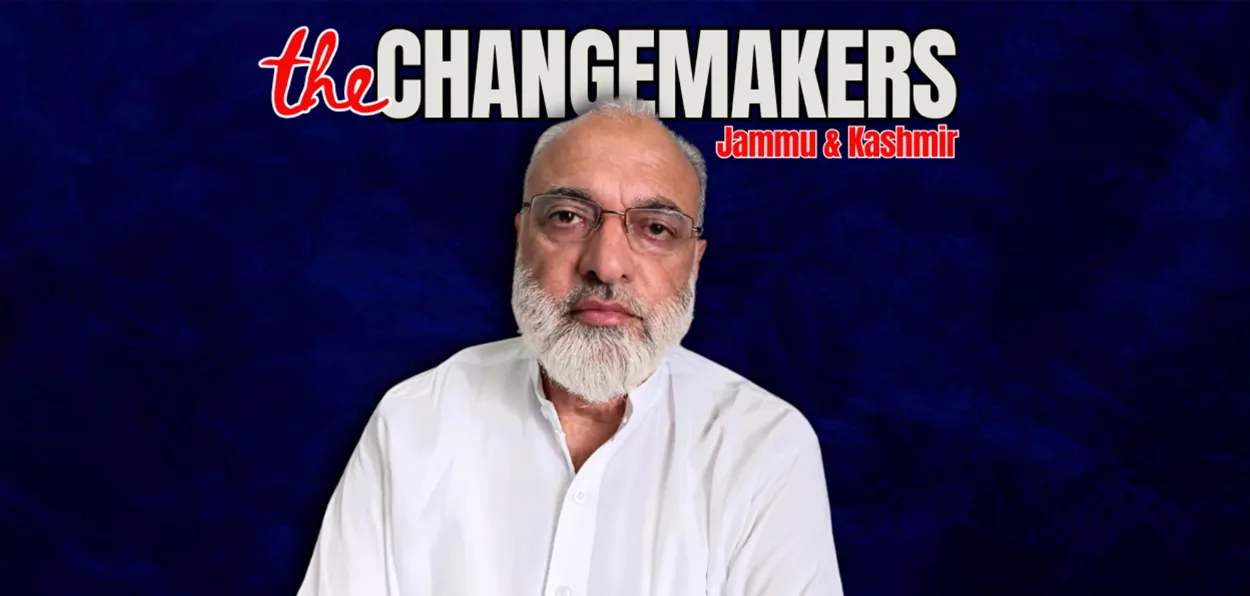
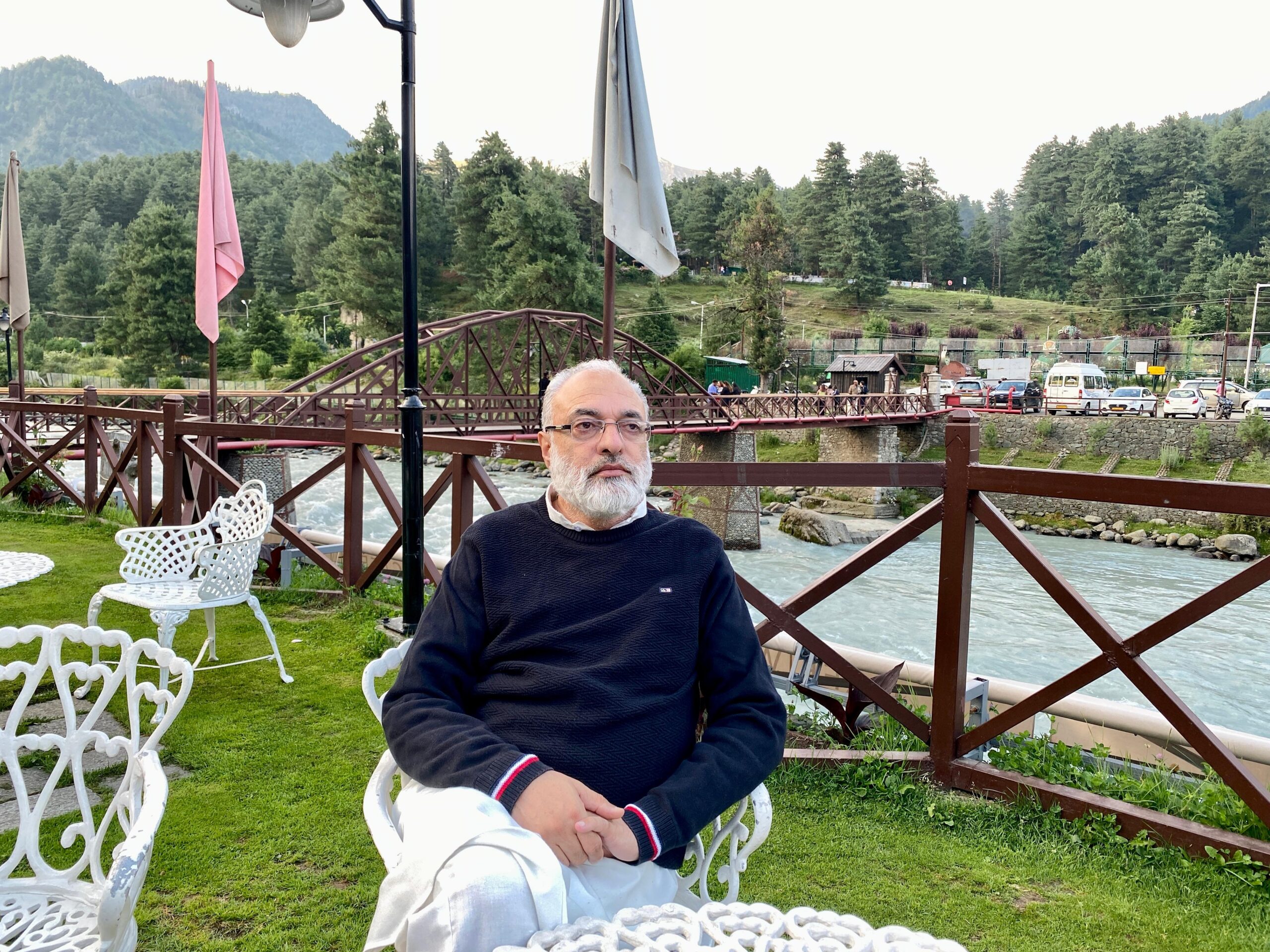
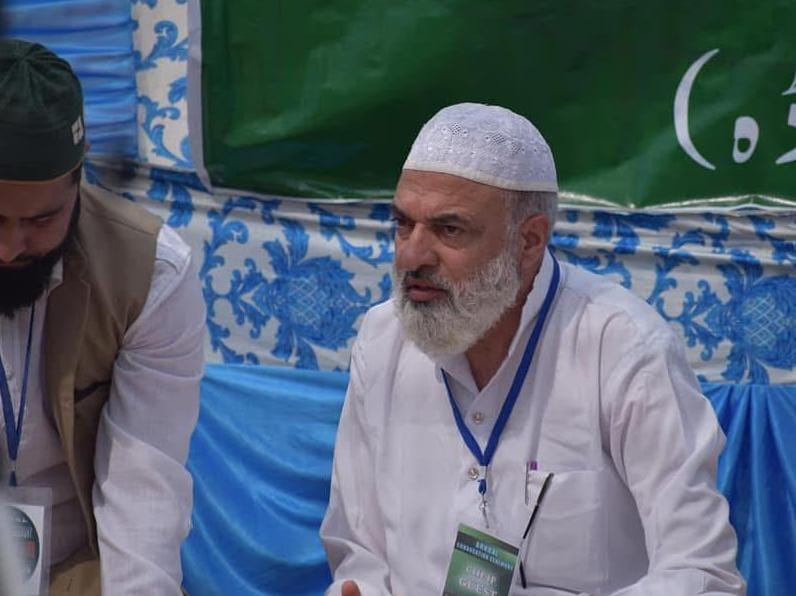
In the picturesque Chenab Valley’s Doda township in the Jammu region of Jammu and Kashmir, lives a man whose life is the epitome of service to humanity. Although a teacher by profession, Mohammad Hafeez Furqanabadi has changed the lives of many underprivileged boys and girls by leading them on the path of enlightenment through education.

Furqanabadi, 64, born in Ghat village, five km from Doda town, has been shaping young minds and uniting communities through education for four decades.

With a Master’s degree in Arabic (1989), Hafeez started teaching at the Royal Academy, a private school in Doda, after completing his 12th standard. Later, he moved on to teach Arabic, Urdu, and English at various other private institutions.

Mohammad Hafeez Furqanabad

For him, education is not just a profession, but a mission that goes beyond official responsibilities.

His life changed after he was appointed a government teacher in 1995 and posted at the Hanch High School in Doda, where he taught Arabic, Urdu, and English.

To his shock, he found most of the classrooms half-empty — especially of girls.

He decided to change this.

He began visiting families across Doda, urging parents to educate their daughters. “Education is not just a right — it’s a light,” he would often say.

Mohammad Hafeez Furqanabad

Gradually, mindsets shifted. Hafeez became more than a teacher — he was a reformer, a motivator, and a beacon of change.

His dedication extended far beyond school walls. With a few close friends, Hafeez founded a charitable trust in Doda, focused on educating underprivileged children of all religions.

The trust provided free education, school uniforms, shoes, and books to the students. His home became a refuge for learning as he offered free tuition to students from economically disadvantaged backgrounds.

In 2011, the Government of Jammu and Kashmir honoured him for his contributions by presenting him with the State’s One of the Best Teacher Award.

Perhaps what defines Hafeez Furqanabadi most is his unwavering commitment to communal harmony. In a region often marred by religious tensions, Hafeez worked tirelessly to promote Hindu-Muslim unity.

His efforts earned him respect from all communities. “He teaches humanity before anything else,” one of his former students, now a government officer, told Awaz-The Voice.

Beyond teaching, Hafeez has also made his mark as an author and poet. His three books — TanzeelMomin Ki Namaaz, and Intekhaab — are widely read and appreciated across Jammu for their spiritual and literary depth.

Mohammad Hafeez Furqanabad

Moreover, many of his poetic compositions are regularly recited in morning assemblies in schools throughout Jammu and Kashmir. His verses reflect not only sensitivity but also the deeply spiritual and humanistic values he lived and taught.

After a distinguished career, Mohammad Hafeez retired from government service in December 2022. His farewell was an emotional tribute, attended by hundreds of students, teachers, and community members, who shared moving stories of his life’s work — a testament to the legacy he leaves behind.

Even after his superannuation, Hafeez has been actively pursuing his mission — teaching the under, counseling, and inspiring others. He believes that one can retire only after one ceases to contribute to society. For Mohammad Hafeez Furqanabadi, that day is nowhere near.

Mohammad Hafeez Furqanabadi stands tall in the collective memory of Doda and Jammu for his lifelong commitment to building a kinder, more educated, and more united society.

source: http://www.awazthevoice.in / Awaz, The Voice / Home> The Changemakers / by Danish Ali, Doda / June 24th, 2025