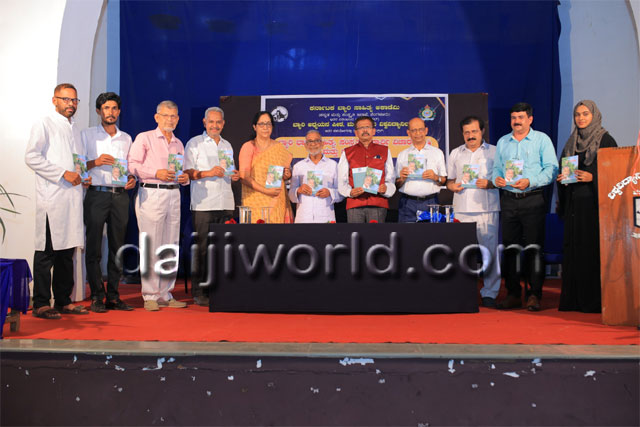
Dr Aboobaker Siddique, coordinator of Mangaluru Byari study forum said that the study that is done on Byari language, literature, art and culture should touch the grassroot level. Then only it is possible to extend the work of Byari field.
Dr Siddique spoke after releasing ‘Byari: Nanu Kandanthe’ Kannada book authored by senior literatteur Haji T A Aliabba Jokatte at the Ravindra Kalabhavana of Mangaluru university campus on Friday.
Dr Siddique further said, “Many variations of literature have arrived in the Byari language. However, there is lack of grassroot level study. In this context the study bench will give more priority to field work. Let the book of experiences of Aliabba be a model book for research students.”
B A Mohammed Hanif, former president of Byari academy presided over the function. The programme was inaugurated by retired principal of Badriya college Dr Ismail N. Aliabba Jokatte, author of the book shared his experience with regards to the writing of the book. Journalist Hamza Malar gave introduction of the book.
Students Mohammed Swadik, Ayisha Zahima, Mohammed Simak and Nausheena presented their thoughts on Byari language, literature and culture.
Guests Dr Anusooya Rai, principal of University college, Basheer Baikampady, editor of Byari Varthe, Khalid Ujire, president All India Byari Parishad, Ashiruddin Sarthabail, president Melthene and R Manohar Kamath, registrar of Byari academy spoke on the occasion.
Sameera K A, member of study bench welcomed the gathering. Kahlid Tannirubhavi rendered vote of thanks. Shahala Rehman compered the event.
source: http://www.daijiworld.com / DaijiWorld / Home> Karnataka / by Daijiworld Media Network – Mangaluru (MS) / March 02nd, 2024
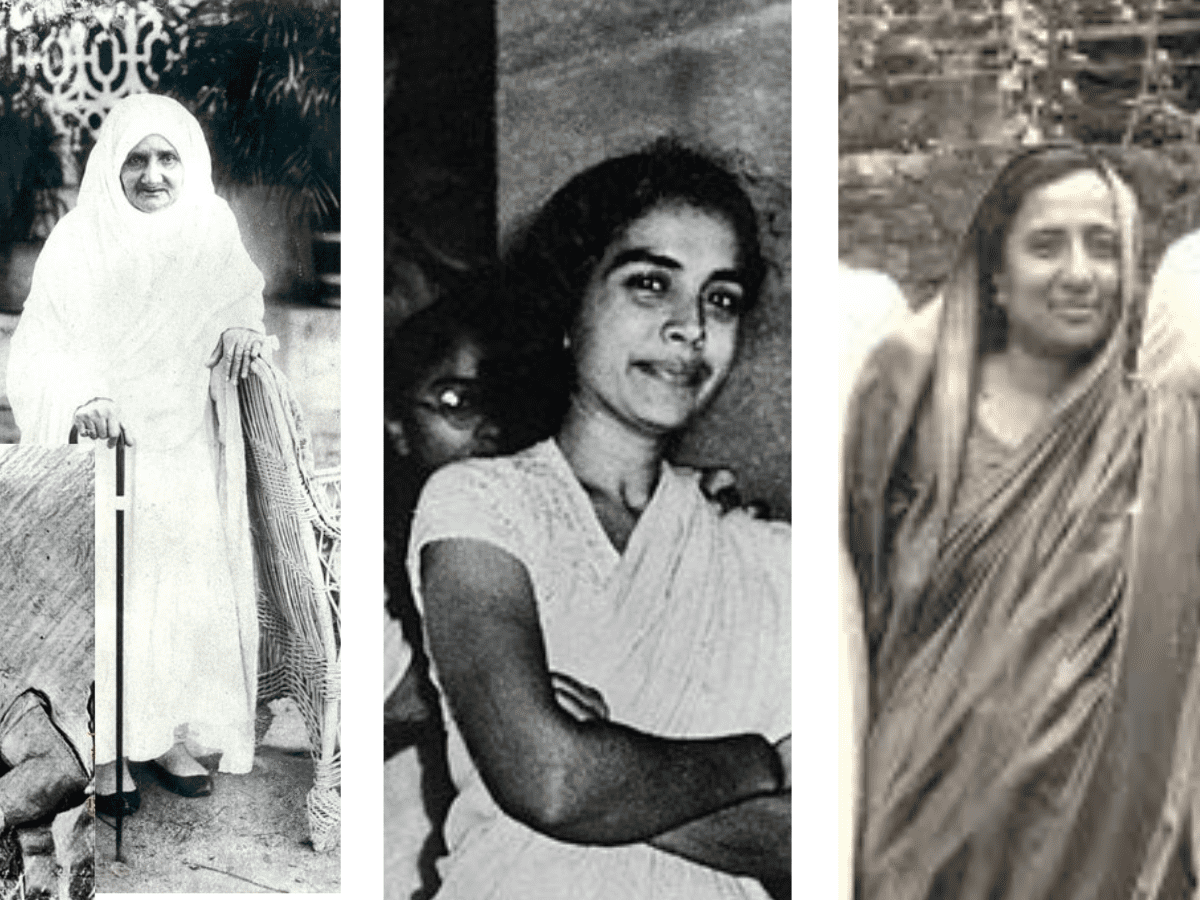
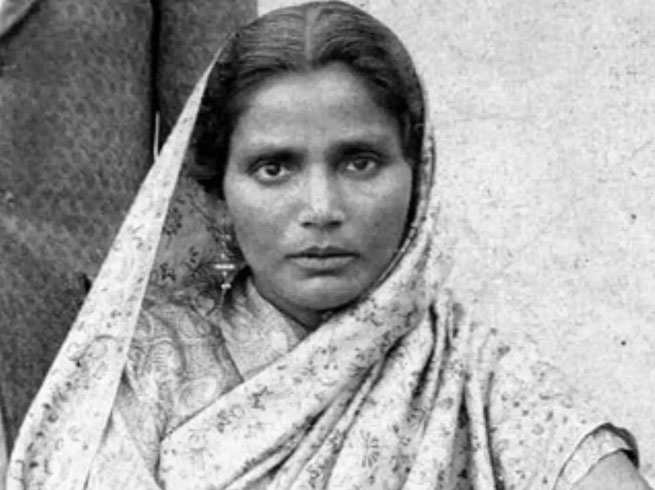
Several Muslim women were an active part of India’s freedom struggle, some of whom emerged from Hyderabad.
The list includes Abadi Bano Begum, Bibi Amtus Salam, Begum Anis Kidwai, Begum Nishatunnisa Mohani, Baji Jamalunnisa, Hajara Beebi Ismail, Kulsum Sayani, and Syed Fakrul Hajiya Hassan.
As India celebrates 75 years of Independence the country often recalls those that were instrumental in the country’s freedom struggle. But often those who aren’t talked about enough evanesce into the archives of history.
As men who took lead roles in the movement were put behind bars, the women ensured that the movement would not die down and the country attained the freedom a vast majority of it’s residents and citizens enjoy today.
The country’s Prime Minister Narendra Modi in his Independence Day speech, on Monday, hailed women and the part they played during the times including, Rani Laxmibai, Jhalkari Bai, Durga Bhabhi, Rani Gaidinliu and Begum Hazrat Mahal among others.
These are a few among the many names that are a part of the country’s Independence struggle. Apart from Begum Mahal, who made it to the list of the PM’s speech, today, Muslim women have made their mark in Indian history.
Abadi Bano Begum, Bibi Amtus Salam, Begum Anis Kidwai, Begum Nishatunnisa Mohani Baji Jamalunnisa, Hajara Beebi Ismail, Kulsum Sayani, and Syed Fakrul Hajiya Hassan are among those who are often forgotten or lost in public memory.
Abadi Bano Begum (Born 1852- Died 1924)
Abadi Bano Begum was the first Muslim woman who actively took part in politics and was also a part of the movement to free India from the British Raj. Abadi Bano Begum referred to by Gandhi as Bi Amma, was born in 1852, in Uttar Pradesh’s Amroha.
Bi Amman was married to a senior official in the Rampur State, Abdul Ali Khan.
After the death of her husband, Bano raised her children (two daughters and five sons) on her own. Her sons, Maulana Mohammad Ali Jouhar and Maulana Shaukat Ali become leading figures of the Khilafat Movement and the Indian Independence Movement. They played an important role during the non-cooperation movement against the British Raj.
Bi Amma, despite her poor financial condition, from 1917-1921, donated Rs 10 every month to protest against the British Defense Act, after Sarojini Naidu’s arrest.
In 1917, Bano also joined the agitation to release Annie Besant and her sons, who were arrested by the British after their failed attempts to silence her home rule movement in 1917, launched alongside, Bal Gangadhar Tilak.
Despite being a conservative Muslim for the most part of her life Bi Ammah was one of the most prominent faces of Muslim women in India’s freedom struggle.
To get the support of women, Mahatma Gandhi encouraged her to speak in a session of the all-Indian Muslim league, she gave a speech which left a lasting impression on the Muslims of British India.
Bano played an important role in fundraising for the khilafat movement and the Indian Independence movement.
Bibi Amtus Salam (Died 1985)
Mahatma Gandhi’s ‘adopted daughter’ from Patiala Bibi Amtus Salam was a social worker and his disciple who played an active role in combating communal violence in the wake of the partition and in the rehabilitation of refugees who came to India following the partition.
She has on several occasions risked her life by rushing to sensitive areas during the communal riots in Calcutta, Delhi and Deccan.
Bibi Salam was a Muslim inmate of the Gandhi ashram and had over time become an adopted daughter to Gandhi.
After the Noakhali riots, an article published in The Tribune on February 9, 1947, noted that Amtus Salam’s 25-day fast, which was intended to make offenders feel guilty, was one of the most significant outcomes of Gandhi and his disciples’ actions.
To protest the “negligence” of the state authorities in the effort to rescue kidnapped women and children, she sat on an indefinite fast at Dera Nawab in Bahawalpur.
Begum Hazrat Mahal (Born 1820-Died 1879)
An iconic figure of the 1857 uprising, Begum Hazrat Mahal fought against the British East India Company.
Begum, the wife of Nawab Wajid Ali Shah, the ruler of Awadh, refused to accept any favours or allowances from the British. Begum, with the aid of her commander Raja Jailal Singh, battled the British East India Company valiantly.
Muhammadi Khanum, the future Mahal, was born in Faizabad, Uttar Pradesh, in 1830. Gulam Hussain is her father. She had an early understanding of literature. The East India Company’s destruction of mosques and temples to make room for highways served as the catalyst for her uprising.
When the British East India Company invaded Awadh in 1856 and her husband, the last Nawab of Awadh, was exiled to Calcutta, the Begum made the decision to remain in Lucknow along with her son, Birjis Qadir.
On May 31, 1857, they convened in Lucknow’s Chavani neighbourhood to declare Independence and drive the British out of the city.
On July 7, 1857, Begum Hazrat Mahal proclaimed her son, Birjis Khadir, the Nawab of Awadh. She raised 1,80,000 soldiers and lavishly renovated the Lucknow fort as the Nawab’s mother.
She died there on 7 April 1879.
Begum Anis Kidwai (Born 1906- Died 1982)
A politician and activist from Uttar Pradesh (UP) named Anis Kidwai devoted most of her life to serving the newly Independent India, working for peace and the rehabilitation of the victims of the terrible partition of India.
She represented the Indian National Congress (INC) in the Rajya Sabha from 1956 to 1962, serving two terms as a Member of the Parliament.
Anis Begum Kidwai remained active during the Indian National Movement. Despite gaining independence in 1947, India suffered from country division.
By then, her husband Shafi Ahmed Kidwai had been murdered by communal forces for his efforts to promote amity between Muslims and Hindus and to prevent the split of the country. She was deeply devastated by her husband’s passing.
She visited Mahatma Gandhi in Delhi following her husband’s passing as a result of this unfortunate tragedy.
In order to support and assist the women who were suffering similarly to her as a result of the country’s separation, she began working with women leaders like Subhadra Joshi, Mridula Sarabhai, and others under the direction of Mahatma Gandhi.
She also started rescue camps for the victims and supported them in all respects. They affectionately called her ‘Anis Aapa’. She penned her experiences during the division of the Nation in her book ‘Azadi Ki Chaon Mein’.
Begum Nishatunnisa Mohani (Born 1884- Died 1937)
Begum Nishatunnisa Mohani was born in 1884 in Awadh, Uttar Pradesh, and her notion of ultimate freedom was adopted by Gandhiji.
Married to Moulana Hasrat Mohani, a tenacious independence warrior and the one who gave the phrase “Inquilab Zindabad” its origin. Begum, a fierce opponent of British authority, supported the then-hardliner of the liberation struggle, Bal Gangadhar Tilak.
After his imprisonment for publishing an anti-British piece, she wrote to her husband, Hasrat Mohani, encouraging him and raising his spirits by saying, “Face the risks imposed upon you boldly. Do not give me any thought. No sign of weakness should come from you. ‘Be careful’.”
Later, when her husband was in prison, she took over the publication of his daily, Urdu-e-Mualla, and engaged in various legal disputes with the government.
Baji Jamalunnisa, Hyderabad (Born 1915- Died 2016)
Baji Jamalunnisa, who actively participated in the Telangana armed conflict, passed away in this city on July 22 2016, at the age of 101.
Jamalunnisa Baji was born in Hyderabad in 1915 and was a prominent advocate for racial peace and the independence cause.
She began reading the banned journal “nigar” and progressive literature as a young child after being raised by her parents in a liberal/progressive environment.
Despite being raised in the traditional religious traditions of the Nizam regime, a component of the British Raj, she actively participated in the nationalist movement.
She continued to participate in the independence movement despite the oppressive rule of the Nizam and the British rule over her in-laws’ objections.
Later, she met Maulana Hazrat Mohani (the man who coined the phrase “Inquilab Zindabad” and was known as “Thunder Bolt” in the Freedom struggle), who inspired her to join the anti-imperialist movement in the nation.
She provided sanctuary to freedom fighters trying to avoid being arrested by the Imperial Government while being a communist.
Despite lacking basic higher education, she was fluent in Urdu and English and founded the literary society Bazme Ehabab, which held debates in groups on socialism, communism, and unreasonable customs.
She is buried at the Hazrath Syed Ahmed Bad-e-Pah dargah in First Lancer. She was the sister of Syed Akthar Hasan, a former MLA and the founder of Payam Daily, and was better known as “Baji”.
She was a close friend and member of the Communist Party of Maqdoom Mohiuddin. Baji was also a founding member of the Progressive Writers Association and the Women’s Cooperative Society.
Hajara Beebi Ismail, Andhra Pradesh (Died 1994)
Mohammed Ismail Saheb’s wife, Hajara Beebi Ismail, was a freedom warrior from Tenali in the Guntur district of Andhra Pradesh.
Mahatma Gandhi had a significant impact on the pair, who committed themselves to the Khadi campaign movement. In the Guntur district, her husband Mohammed Ismail opened the first Khaddar Store, earning him the moniker “Khaddar Ismail.”
Tenali served as the Muslim League’s headquarters during that time in the Andhra area, where it was particularly active.
Since Hajara and her husband supported Gandhi, they encountered fierce hostility from the Muslim League. Despite her husband’s repeated arrests for his involvement in the national movement, Hajara Beebi never lost spirit.
Kulsum Sayani (Born 1900- Died 1987)
On October 21, 1900, in Gujarat, Kulsum Sayani was born. She participated in the Indian National Movement and battled against social injustices.
Kulsum and her father met Mahatma Gandhi in 1917. Since then, she has travelled Gandhi’s path. Throughout the Indian National Movement, she advocated for social changes.
Dr. Jaan Mohamad Sayani, a well-known liberation fighter, was the man she wed. She participated actively in a number of events of the Indian Freedom Struggle, with her husband’s backing.
She began working with the illiterate and joined the Charkha Class. She also had a significant impact on the Indian National Congress’s “Jan Jagaran” campaigns, which raised public awareness of social ills.
Sayani’s operations included the suburbs and the metropolis of Mumbai.
Syed Fakrul Hajiya Hassan (Died 1970)
Syed Fakrul Hajiyan Hassan, who not only took part in the Indian freedom fight but also urged her children to do so. She was born into a family that immigrated to India from Iraq. She raised her kids to be freedom fighters who later gained notoriety as the “Hyderabad Hassan Brothers.”
Hajiya wed Amir Hassan, who had relocated to Hyderabad from Uttar Pradesh.
She adopted Hyderabadi culture as a result. Amir Hassan, her spouse, had a senior position in the Hyderabad government. He was required to travel to several locations as part of his employment.
She noticed the suffering of women in India while on her visits. She put a lot of effort into the growth of female children.
She lived in Hyderabad, which was governed by the British, yet she actively engaged in the National Freedom Movement since she was a lady with strong national emotions.
She burned foreign clothing at her Abid Manzil in Hyderabad’s Troop Bazaar in response to the demand of the Mahatma Gandhi. She took part in the non-cooperation and Khilafat movements.
She regarded each soldier in the Indian National Army as one of her children. Along with Smt. Sarojini Naidu, and Fhakrul Hajiya put a lot of effort into getting the heroes of Azad Hind Fouz released.
source: http://www.siasat.com / The Siasat Daily / Home> Featured News / by Marziya Sharif / August 17th, 2022
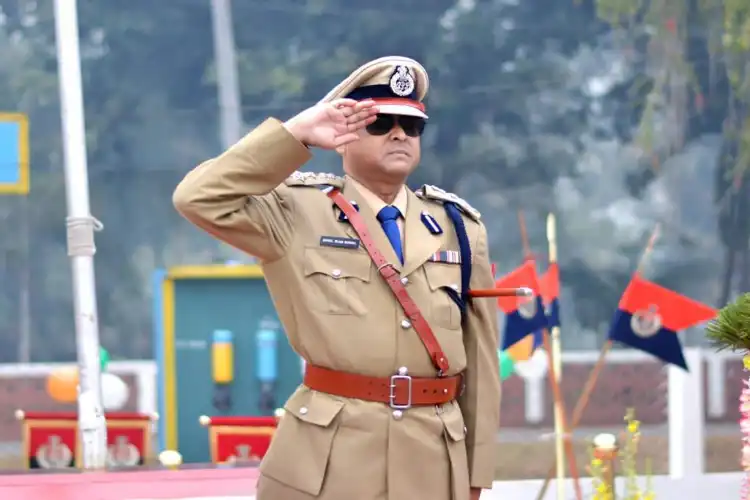
For a cop toughened by years of dealing with criminals, writing soft stories may seem an oxymoron of sorts. But for Moinul Islam Mandal, Deputy Inspector General (DIG), Dergaon Police Training College, there is no antithesis as his writings stem from the core belief that the “Truth will always prevail” and the perception that all religions are in harmony.
Having authored 18 essays that were compiled in a book, Aapun Jibonor Ortho Bisari (Finding the meaning of life). Mandal said that his essays are experiences and ideas that he garnered during his career as a policeman.
“These experiences molded my thought processes. The ideas germinated during my time as a policeman,” he said.
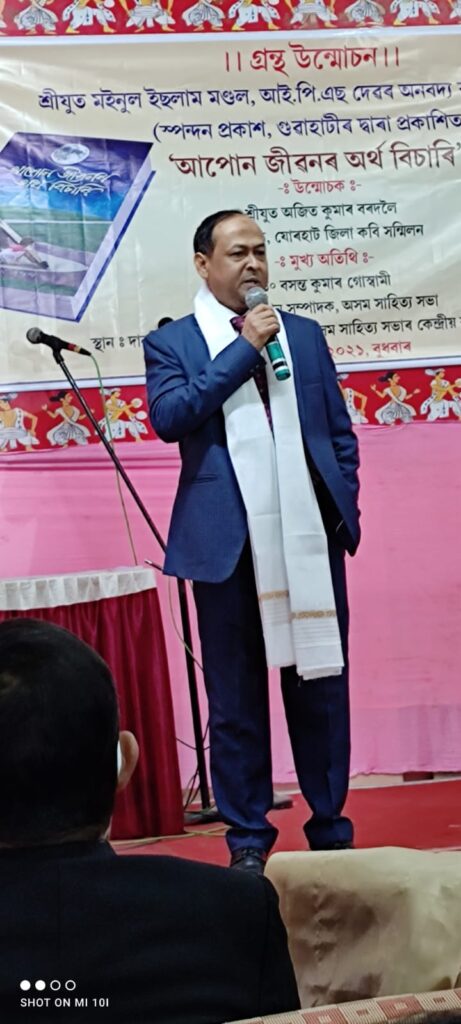
Moinul Islam Mandal during a book release function
Mandal said that most of his essays are based on the premise that the truth would always prevail –and he had attempted to offer both a scientific and philosophical reason behind this in his essays.
Citing an example he said that he had drawn a parallel of the human being with a computer. – “the organs are the hardware, what is imprinted in the brain is the software and our soul is the driver.”
His first essay was on the coronavirus, written during the lockdowns after the pandemic was declared in 2020 and there was plenty of time to write at the Dergaon PTC.
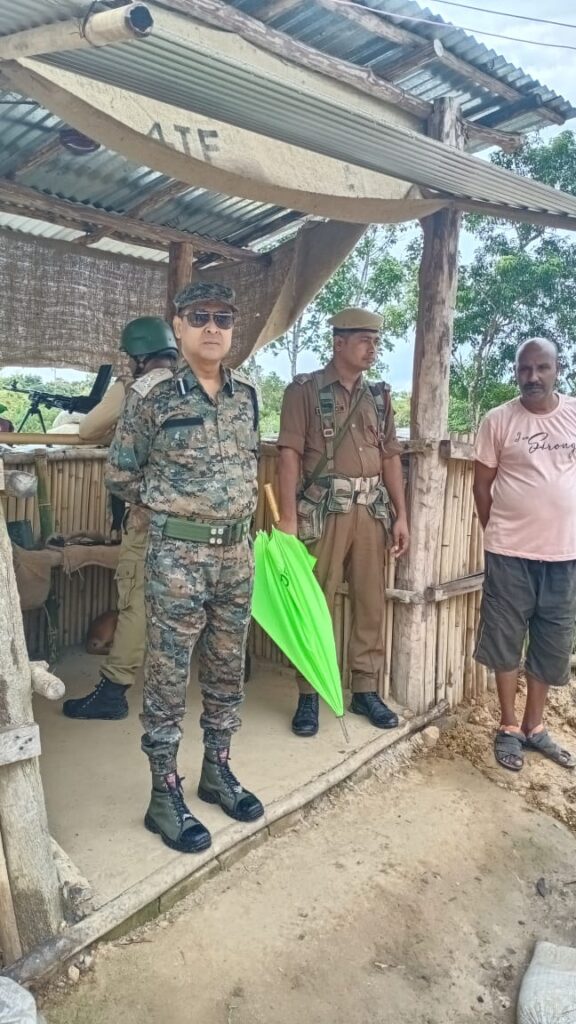
DIG Moinul Islam Mandal during a security operation
Mandal defines the Coronavirus in relation to nature and humans.
“It is about how the universe is run by natural law and that humans are also ruled by this same law. It also depicts how religion cannot be a separate entity from nature but is only an extended part of nature,” he said. This essay received a lot of feedback after it was published in the Asomiya Pratidin, an Assamese language newspaper.
“It encouraged me to write more and he wrote 17 more essays which were published in the newspaper,” Mandal said. And thus from a man who used to dabble in poetry, Mandal evolved into writing in-depth on soul-stirring topics.
Mandal said that he compiled the essays in a book after former IPS officer Pallab Bhattacharyya called him from Delhi to tell him how much he liked one of the essays, The Afghan Snow… “I thought that over time, these essays would get lost, so I decided to preserve them in a book,” he said.
Explaining the title of the book, he said, “I had my perception of what life is. Likewise, everyone has his or her definition of life, and there are similarities of the thought process, a universality which everyone can relate to that I try to bring out in my writings, ” he said. Six of his essays in the book deal with the oneness of Hinduism and Islam.
Former deputy commissioner Ajit Kumar Bordoloi who released the book along with former Asam Sahitya Sabha president Dr Basanta Goswami said that these essays explore the relationship of religion with man, the Hindu Muslim divide, and the 19th essay in the book, Mussalman ne Muslim Manaxikota, needs the courage to write.
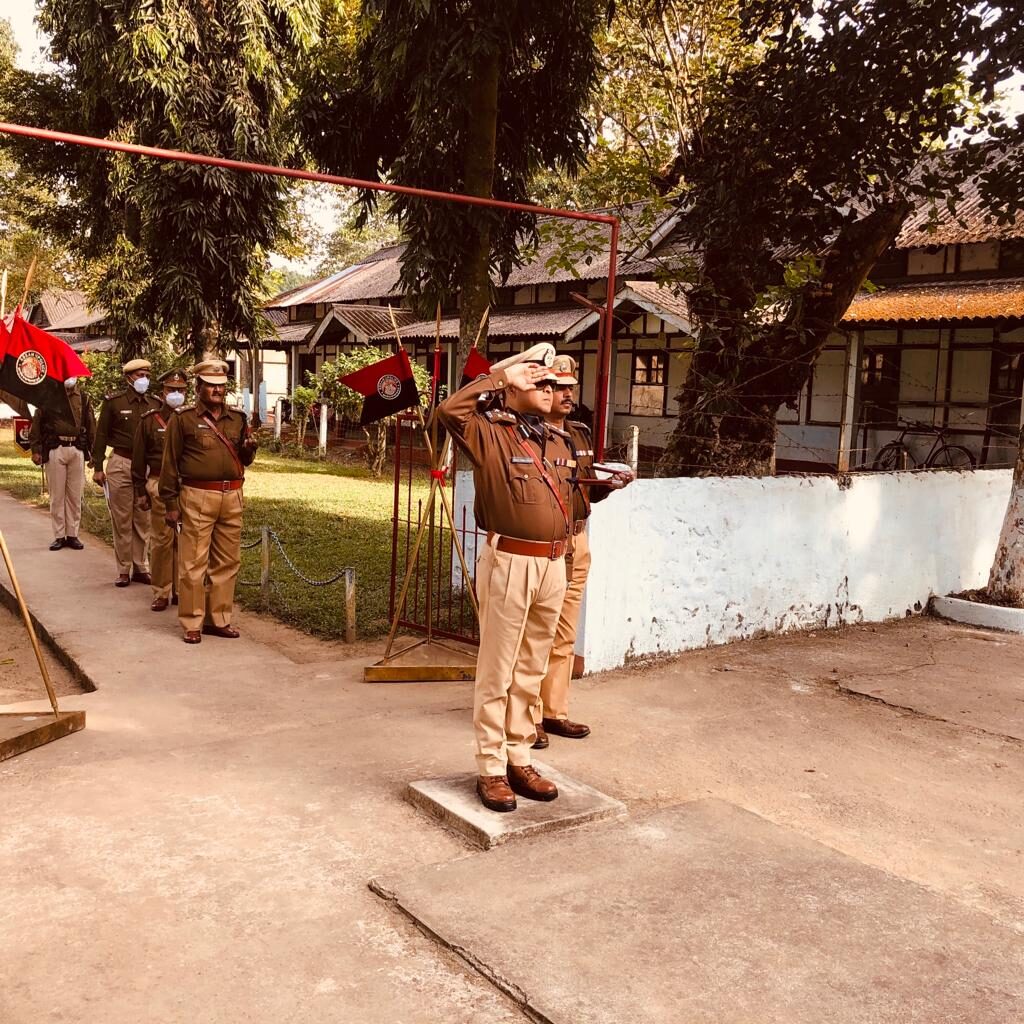
DIG Moinul Islam Mandal saluting the National Flag
“People are now so involved in the religious rituals and this has polluted religion to such an extent that humanity which forms the basis of all religions has been suppressed to near extinction,” he said.
There is nothing different between Hindus and Muslims. With my knowledge of Islam and on the reading of the Gita I did not find anything that was against humanity. We are all humane and equal human beings. It is only after we divide ourselves into castes, religions, or languages that we become polluted,” he added.
Tracing his journey as a writer, he said that it all began during his college days in the Assam Agricultural University when he used to write poems and put them up on the wall of his hostel room. The other students encouraged me to write in the college magazine.
source: http://www.awazthevoice.in / Awaz, The Voice / Home> Stories / by Smita Bhattacharyya, Jorhat / February 2022
Asiya Siddiqi (1928-2019) (Pic Courtesy: Obaid Siddiqi)
Siddiqi also broke new ground by studying 20,000 HC insolvency records to recreate the lives of an array of 19th-century city inhabitants.
In an age that sometimes overrates quantity and is beguiled by grandiloquence, economic historian Asiya Siddiqi, who passed away on Monday morning, went against the grain.
A chronicler of 19th century India, she wrote just two books. But each was a culmination of decades of painstaking original research, presented in prose that many might describe as being quietly elegant. In between working on the two books, she edited a volume on trade and finance in colonial India.
She broke new ground in both her books by closely reading new or underutilised primary sources. In the second book, Bombay’s People, 1860-1898: Insolvents in the City, published in 2017 by the Oxford University Press, she not only tapped a voluminous new source, namely about 20,000 insolvency records in the high court, but also incorporated the innovative conceptual approach of microhistory to illuminate the past.
She admired the work of one of microhistory’s founding scholars, Italian historian Carlo Ginzburg, especially his book ‘The Cheese and the Worms: The Cosmos of a 16th Century Miller’. Microhistory focuses on small units of research, such as a village, a single event or an individual, instead of large ones such as nations, kingdoms and cities. Siddiqi’s chapter, ‘Ayesha’s World’, the story of an unlettered butcher’s wife, is a gem of this genre.
“She was a first-rate historian, approaching her work with a craftlike precision,” said Mariam Dossal, a friend of hers who is an urban and maritime historian of 18th and 19th -century Mumbai and a former professor at the University of Mumbai, where Siddiqi worked for everal years. “In Bombay’s People, her view was so rich and broad that it covered every kind of person who inhabited the city, from the wealthy Jamshetji Jejeebhoy all the way to Ayesha. One marvelled at her beautiful use of language, through which she recreated the worlds of these inhabitants. For Asiya, everybody deserved a history.”
Her early work on the 19th-century opium and cotton trade based in Mumbai was also influential, in particular her article ‘The Business World of Jamshetji Jejeebhoy’, which appeared in the Indian Economic and Social History Review in 1982. She worked for years on the private papers of the merchant who was a central figure in those two trades to offer a finely-etched view of the entrepreneurial climate of that period, while also shedding light on the ways in which Mumbai supported the growth of the British economy.
A large portion of these papers consisted of letters in which Jejeebhoy had recorded both his business dealings and social life in great detail. Because the papers were disintegrating in the heat and humidity of Mumbai, she got them laminated with help from her uncle Saiyid Nurul Hasan, who was then the union minister of state for education, Dossal recalled.
Asiya Siddiqi’s first book, Agrarian Change in a Northern Indian State: Uttar Pradesh, 1819 to 1833, published in 1973 by Oxford Clarendon Press, grew out of the thesis she did for her DPhil at Oxford University. In what became a classic of South Asian economic history, she analysed the relevant records with characteristic rigor, becoming one of of the earliest to show how colonial trade policies contributed to a severe agricultural depression in the region.
She grew up in Lucknow, and from 1962 worked in and on Mumbai for four decades. She moved in the late 1990s to Bangalore, where her daughter said she passed away peacefully in her sleep. Her husband was the eminent biologist Obaid Siddiqi, who founded the biology department at the Tata Institute of Fundamental Research in Colaba and the National Centre for Biological Sciences in Bangalore. He passed away in 2013.
Asiya Siddiqi balanced her research with bringing up four accomplished children: the eldest Imran, a leading plant biologist based in Hyderabad; Yumna, a professor of English in the US; and fraternal twins, Diba, a visual artist and high school social science teacher in Bangalore, and Kaleem, a computer scientist in Canada.
Siddiqi seemed happiest working by herself in the archives, as an independent researcher, although she had two productive teaching stints: one at Aligarh Muslim University, where she met her husband just after getting a bachelor’s degree at Oxford University, and the other at Mumbai University.
She quit teaching when, at one point she found it difficult to commute from her home in south Mumbai to the university campus in Kalina while also keeping up with her research and and raising four children.
Disclaimer: The views expressed here are the author’s own. The opinions and facts expressed here do not reflect the views of Mirror and Mirror does not assume any responsibility or or liability for the same.
source: http://www.mumbaimirror.indiatimes.com / Mumbai Mirror / Opinion > Columnist / by Sumana Ramanan / October 11th, 2019
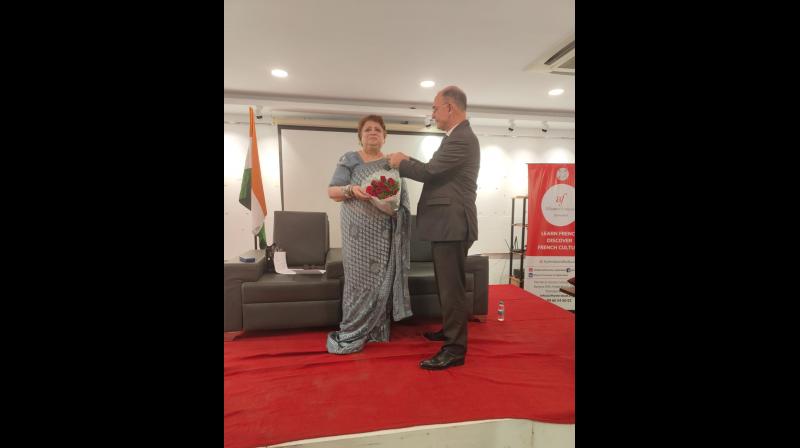
Dr Begum Fatima Shahnaz being conferred the Chevalier dans l’Ordre des Arts et des Lettres (Knight of the Order of Arts and Letters), the second highest French civilian honour by the French ministry of culture for her significant contribution to arts and literature, on Thursday. ( Photo: DC)
Hyderabad:
The multifaceted Dr Begum Fatima Shahnaz was conferred with Chevalier dans l’Ordre des Arts et des Lettres (Knight of the Order of Arts and Letters), the second highest French civilian honour by the French ministry of culture for her significant contribution to arts and literature, on Thursday.
The Jawaharlal Nehru gold medal winner for writing in her teens, Dr. Shahnaz was felicitated at a special investiture ceremony at Alliance Française by Consul General of France, Bangalore, Thierry Berthelot.
The teary-eyed Shahnaz broke into French as she thanked the distinguished guests and shifted to English after a minute or two.
“I didn’t realise I was speaking in French, it comes so naturally to me and I sometimes think in French too,” said the actor, writer, humanitarian, journalist, theatre & art director, professor and journalist.
Talking about the significance of the honour, she said, “France has supported me, and through me, it has supported the Indian people. A Hyderabadi being honoured is an honour to all my people. This places huge responsibility on me, as a citizen of India.”
She also spoke about France and its relationship with Hyderabad and recalled her college years there.
Hailing from royal Indian dynasties, Shahnaz is an actor from the Institut d’Arts Dramatiques Rene Simon in Paris, and is associated with Broadway in New York. She completed her education with a stint at the legendary French school of cuisine, the Cordon Bleu and hopes to bring a new dimension to ‘nouvelle cuisine’ through innovations in Indo-French culinary arts.
Her works include Golconda, Khaki-poems on Pulwama, Saraswati, Shards, Prince of Tears, The New York Poems, Kaleidoscope Eyes, Tiger in the twilight, among several others.
source: http://www.deccanchronicle.com / Deccan Chronicle / Home> Nation / by DC Correspondent / May 19th, 2023
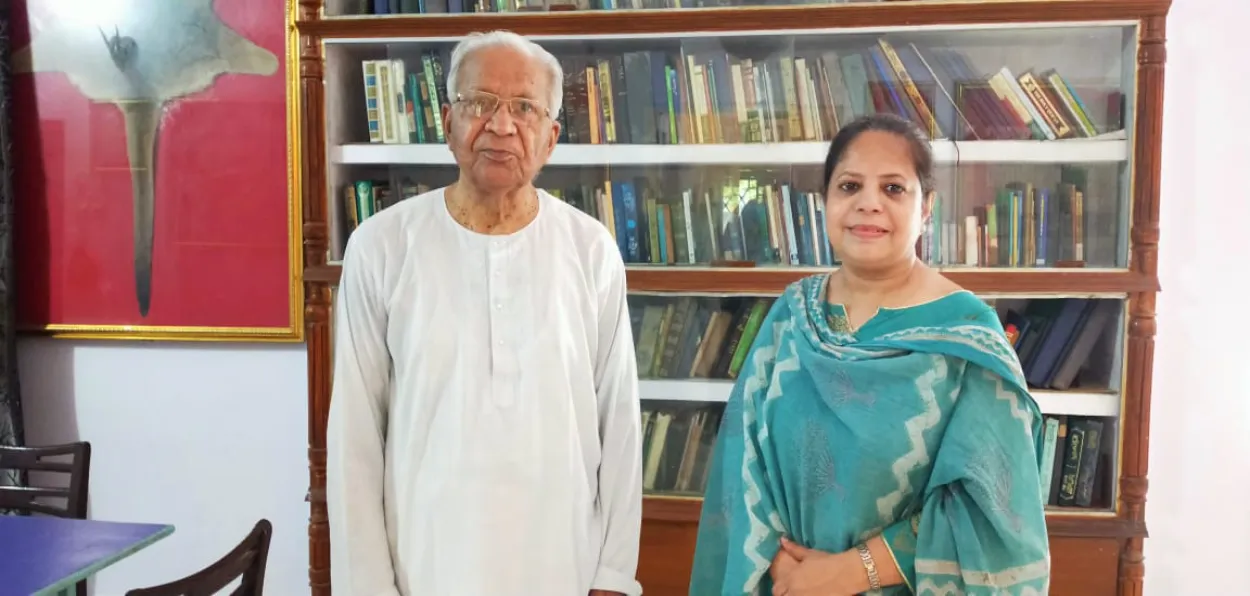
Professor Syed Zillur Rahman, founder,Ibn Sina Academy of Medieval Medicines and Sciences with the author
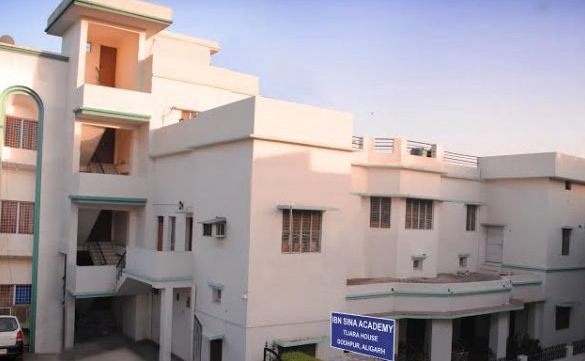
Known for its locks, Aligarh, a city in Uttar Pradesh, has also locked a legacy in its reserve – for generations to benefit from it. It houses a rare academy and museum called Ibn Sina Academy of Medieval Medicines and Sciences.
Located at Tijara House, amid a vibrant market place and residential area, Ibn Sina is hailed as the rarest house of legacies in arts and sciences combined under one roof. Named after the legendary scholar of philosophy and medicine Abu Ali Ibn Sina (980 -1037), this academy was accredited to the Ministry of Ayush in 2004 and promoted to Centre of Excellence in 2008.
The institution was established for encouraging and promoting research and studies in medieval sciences, especially Ibn-Sina’s as well as arts, culture, poetry, and other sciences.
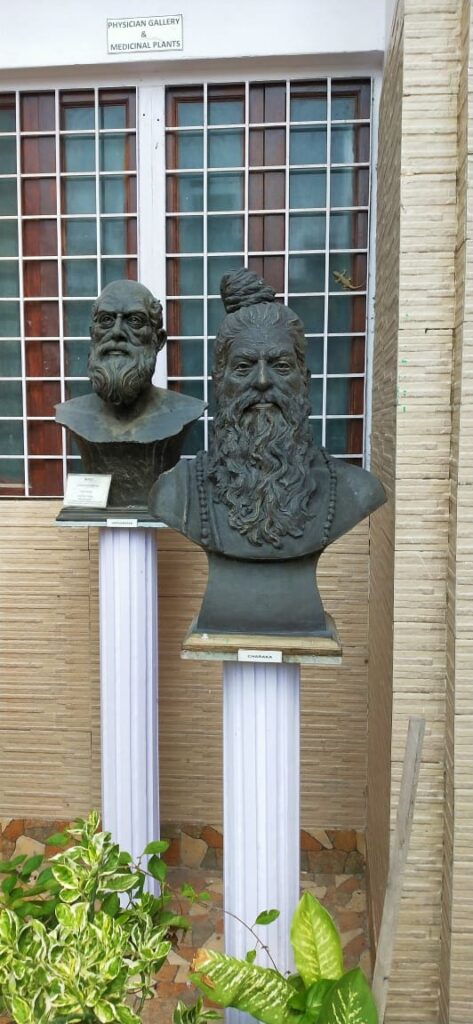
The bust of Ibn Sina with Charak inside the museum
Of Ibn Sina’s four stories, a major attraction is on its second floor which houses the Fazlur Rahman Museum of Orientalism, Art, and Culture.
It has four main galleries; the crockery gallery has a large collection of oriental and British Indian utensils, hammami plates, bowls, tea sets that belong to prominent personalities such as Hakim Ajmal Khan, Nawab Sultan Jahan, Nawab Shahjahan Begum of Bhopal, Nawab Yusuf Ali Khan of Rampur and many others.
The textile gallery is ornate with attires, garments with gold and silver calicos studded with precious stones, one of which has entire Quranic surah Yaseen embroiled in gold zardozi on it, turbans worn in battles, among many other oriental attires. The picture gallery has prominent personalities of AMU’s pictures, drawings, photography, prints, etc.
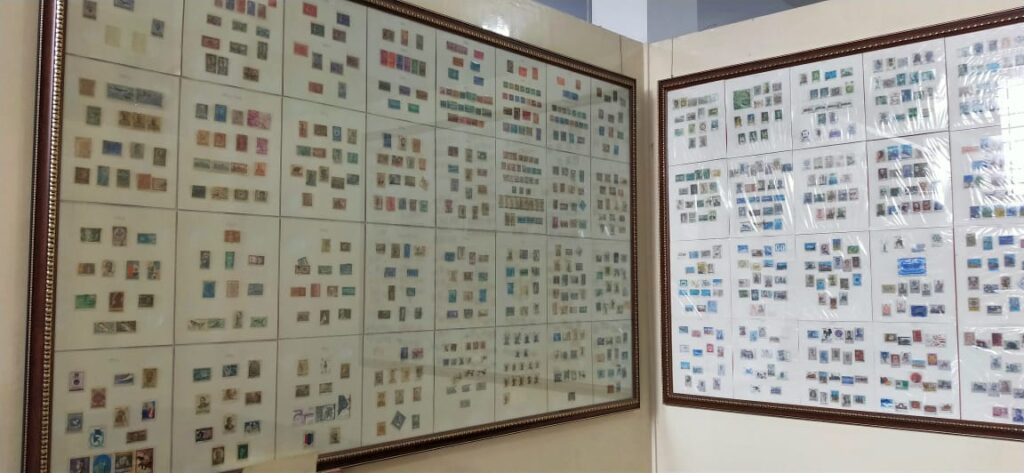
Its miscellaneous gallery has coins, postage stamps, clocks, busts, pens, memes, and relics of prominent personalities.
“We have over 2 Lakh stamps beginning from ever since the stamps started, from all countries and India. People who were pioneers in the world of arts and culture, education, and freedom fighters on whose names, and stamps were released, we have a collection of the same. shares Dr. Aftab who is a convenor at Ibn Sina.
In addition medical manuscripts, medical philately, medical souvenirs memories of physicians especially those of Nobel laureates are well preserved here.
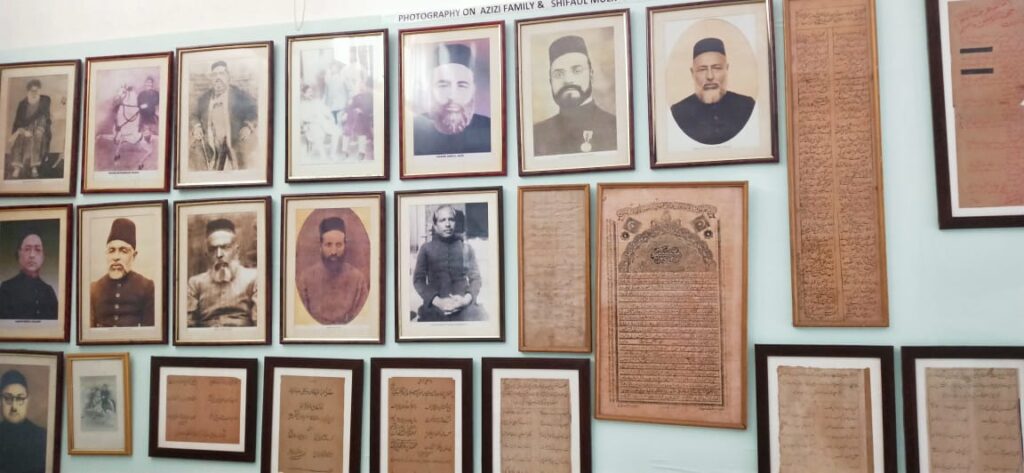
The wall of fame (Pictorial history of some important Muslim families)
The connecting rooms of the galleries welcome you with a sofa of Raja Jai Kishan, a mirror of the times when they were made of iron sheets. The iron sheets called ‘aaina’ were rubbed so many times that they would become sparkling clear and shining to become a mirror. That’s how the mirror got its name ‘aaina’ Later it got a new name –sheesha – with the change of the material..
The academy is rare for numerous reasons. For avid readers of medicine, science, Urdu, Persian, Arabic, literature, poetry, oriental studies, researchers, students preparing for competitions, and scholars IbnSina is a heaven. It boasts of a rare collection of 32000 books, 17000 magazines, 1100 manuscripts, (makhtootaat), 21 rare Qurans including one pocket size in gold, and much more is in store.
Built by professor Syed Zillur Rahman, a medical academic and passionate Urdu litterateur from Aligarh, Ibn Sina was an extension of his colossal library that he had established in 1960 which soon extended into the world’s rare academy and museum of its kind in the year 2000.
Collection of stamps
“Hamare yahn Aurangzeb ke hath ka likha, aur uske bete ke hath ka, likha hua Quran hai,” gleams the professor, sharing the information.
Apart from a separate collection of Muslim women achievers, Ibn Sina boasts of the world’s best collection of Islamic sciences, Islamic medicines, and Islamic philosophy being published across countries such as Iran, Central Asia, Syria, Iraq Turkey, etc. Scholars from across the globe come here to refer to books in this section.
For Ghalib devotees, the academy has a separate section called Ghalib Study Centre. It “Ghalibka collection joh mare paas hai vo duniya mein kisike paas nahi hai,” claims the professor.
Delhi finds a special place here boasting of 7500 books, some as old as 1893, dictionaries as old as 150 years, authentic diwaan on Ameer Khusrau, books on and by the last Mughal Bahadur Shah Zafar, British period –Victorian Era with pictures in Lithographs and much more.
Children using the library
The academy has a library for students especially those preparing for competitive exams. The 100-seater library has the best of books from literature, agriculture, science, math, medicine, etc.
“There is no fee to sit in this library. It opens every day from 10 to 10. This section has over 28000 books including 56 of Professor Rehman on Tibbi and Unnani medicines. there are separate sections for Unani medicine and Sir Syed Movement, biographies,” Dr Aftab Alam, the coordinator of Ghalib Study Centre informed.
There is a reason why the library has most books in Urdu and Persian on Indian history, culture, language, society, education, politics, medicine, etc. “Not much work in English has been done on Muslims. Most work has been done in Urdu and Persian. So this is our helplessness. Our focus is on India – the Hindustan. Indian scholars have done immense work in any domain, philosophy, travelogues, and medicines, especially in Islamic history, the Quran, and hadith that is comparable to anyone in the world, especially the Arabic and Persian world. The problem is we don’t read because we don’t read Urdu,” rues the professor.
Why Ibn Sina was built has an interesting story. As a young man, Professor Rahman used to watch a bird who had made a nest and would bring food for her newborn, just as the routine was with a cat who had given birth to kittens – at his home. After some months, the birds flew, and the kittens grew and went away with their mothers.
“I thought to myself, ‘Is this the life God has created mankind for? Just be born, eat, sleep, and die like animals? God has created a man to not only take care of his family but also society, language, culture, community, and world.”
Ibn Sina Academy of Medieval Medicines and Sciences
So, he decided to create a legacy that he says would be useful for a generation after 80 years! “We are away from civilization by 80 years. A standard time to develop any civilization is 150 years. So, now people are not able to understand the legacy I have created but the students who read it 80 years later will know what it is. By then we would be a civilization.”
People get worried that the graph of Muslim development is going down. But the Professor feels it is nothing to be worried about. “Every civilization has to go through it. Our graph has risen. We were 10 crores in 1947. After Partition, 7 crore left for Pakistan had 3 crore stayed in India. We were nothing in 1947 but our buzurgs worked very hard to study and became scholars. Now we are making educational institutions, universities, hospitals, media houses, and so on. Most important is that girls are getting higher education and they will change the face of the nation,” he says, satisfied while emphasizing reading Urdu to know a legacy called India and the contribution of Muslims to it.
Rana Siddiqui Zaman is a Delhi-based senior columnist and art reviewer
source: http://www.awazthevoice.in / Awaz, The Voice / Home> Stories / by Rana Siddiqui Zaman / January 10th, 2024
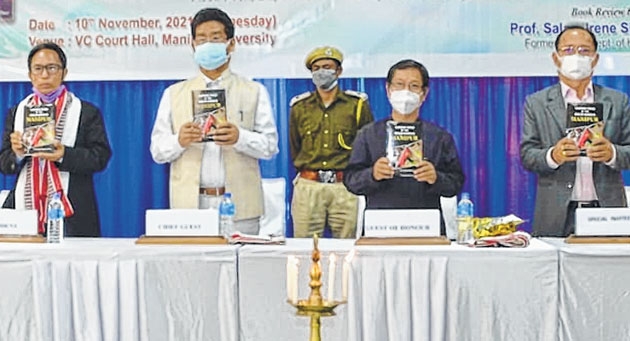
Changing Status of The Muslim Women in Manipur, a book wriiten by Dr Haobam Bidyarani and published by Sunmarg Publishers & Distributors New Delhi was released today at Manipur University.
The author is an Assistant Professor at the Department of History, Kumbi College.
Speaking as the chief of the ceremony, MU Vice Chancellor Professor Naorem Lokendra lauded Dr H Bidyarani for highlighting the social issues of the muslim women in Manipur through her book.
Saying that the author took suggestions from different sources, carried out intensive field work to complete the book, Prof Lokendra maintained that the book focused on the social norms, dress code and other features of the Meitei pangal.
Meitei pangal are a socially and culturally hardworking community, he said and added that the book would be helpful to future scholars and draw the attention of many.
The book was reviewed by Former HoD of Department of History, MU Salam Irene.
Kumbi College Principal Kumam Jugeshor; Manipur University School of Social Science Dean Professor Senjam Mangi and College Development Council (CDC) Director Professor Soibam Jibonkumar also attended the programme.
source: http://www.thesangaiexpress.com / The Sangai Express / by Staff Reporter / November 11th, 2021
A recent study, coinciding with the hearing of the AMU minority status case in the Supreme Court, has revealed that the majority of students in Muslim minority institutions hail from the majority Hindu community.
According to the report, 52.7 per cent of students in the Muslim-run institutions are Hindus and only 42.1 per cent of students are Muslims.
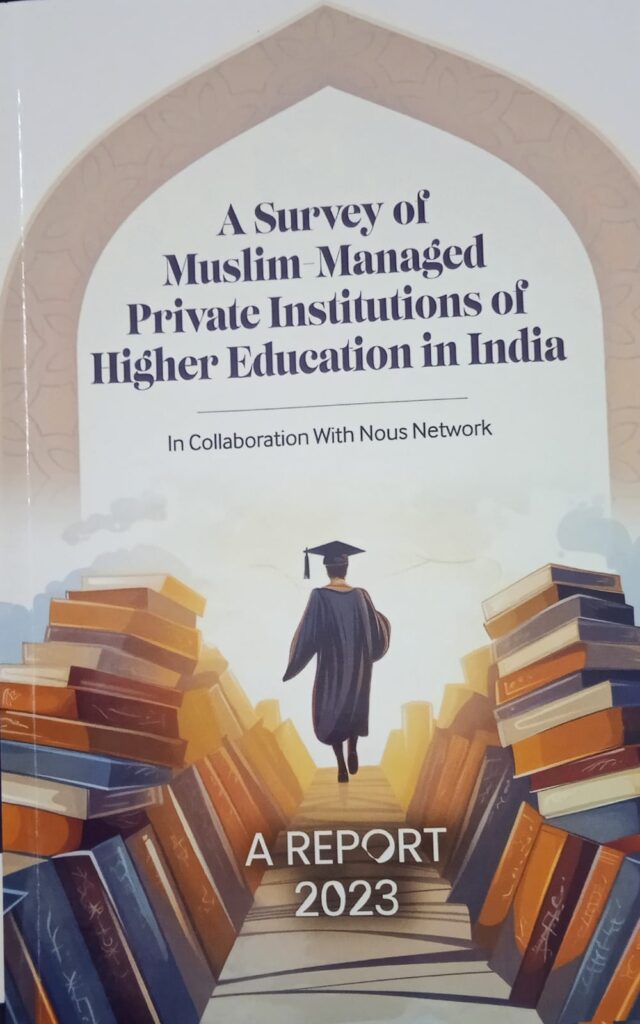
These startling revelations have been made in two reports: “A Survey of Muslim-Affiliated Private Institutions of Higher Education in India” and “Two Decades after Sachar: A Socio-Economic Survey of Indian Muslims”.
These reports have been prepared by the Delhi-based think tank Centre for Study and Research (CSR) in collaboration with NOUS Network.
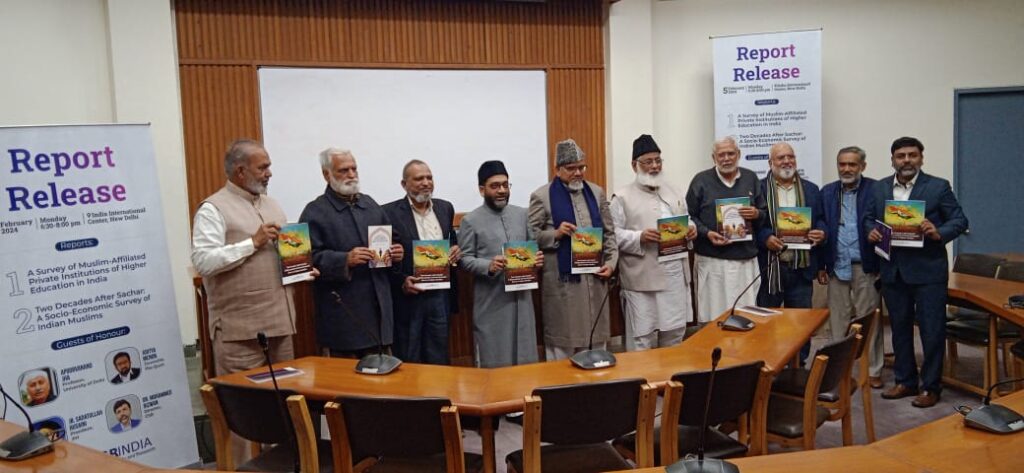
The reports were released by Jamaat-e-Islami Hind President Syed Sadatullah Husaini along with other dignitaries at the India International Centre here two days ago.
CRS is a not-for-profit organisation and aims at knowledge production in domains pertaining to all sciences impacting human civilisation. The CSR survey marks the first attempt of its kind to map the higher education institutes managed by the Muslim minority community across India. The data provides a reference point to track the growth in Muslim institutes over the coming years.
The findings of the report are quite significant to blast the stereotype view held by a section of the majority community having proximity to BJP and other groups who believe that only Muslim students study in the Muslim-run education institutes. This indicates that Muslim institutes not only serve the Muslim community which is educationally very backward but also the Hindu community students. To be exact, while these institutions have the title of minority-run institutions, they perform the role of national and secular institutions that offer education to all communities irrespective of their faith and culture. So, the role of Muslim institutions in spreading education to all communities is second to none.
The report says that Muslim minority manages 23 of India’s 1,113 universities where Hindu students account for 52.7% against 42.1 percent of Muslim students.
Similarly, across the 1,155 colleges managed by Muslim minorities, non-Muslims form the majority, with Hindus constituting 55.1% of enrolled students, followed by 42.1% Muslims and 2.8% belonging to other minority groups.
JIH chief hails reports prepared on Muslim-run institutions
Addressing the audience, JIH chief praised the survey that highlighted the contributions of Muslim-run institutions in not only providing education to Muslims but also to non-Muslims.
He commended their efforts in providing educational opportunities to vulnerable groups, communities, and female students.
With reference to the ongoing legal battle for Aligarh Muslim University’s minority status, Mr. Husaini emphasized the importance of minorities’ right to establish and manage their own educational institutions.
The JIH supremo described the two survey reports as “vital documents” offering valuable insights for government officials, policymakers, scholars, educators, community leaders, and researchers seeking to understand the educational landscape for Muslims in India.
Praising the data’s potential, the JIH President emphasized how it can improve education quality, uplift the Muslim community, and guide policy making towards equal educational opportunities for all.
“These findings, exploring diverse aspects of Muslim education, offer a roadmap for actionable initiatives,” he said.
CSR director Dr. Rizwan highlights Muslim institutions’ role in education
CSR Director Dr. Mohammad Rizwan highlighted the collaborative effort behind the study on Muslim-run institutions. He said, “Prepared with the help of NOUS Network led by CEO Ali Javed, the report examines higher educational institutions managed by Muslim societies and trusts, including those founded by Muslims and currently overseen by government agencies.”
Dr Rizwan, in his address, presented an analysis of student enrolment patterns, gender representation, and the socio-economic background of Muslim students.
In a conversation with this scribe, Dr. Rizwan emphasized the key takeaways from the report. He stressed the importance of understanding the dynamics of Muslim-run institutions for informed policymaking.
The report’s findings, he noted, highlight the unique needs of the Muslim minority in higher education and advocate for targeted interventions.
Speaking about the Indian Muslim community’s educational landscape, Dr. Rizwan reiterated the crucial role of institutions run by the Muslim minority and their significance in not only serving the community’s needs but also those of other communities. He stated that these institutions ultimately contribute to the nation’s educational advancement by uplifting a broader population.
CSR Director hailed the study as a groundbreaking first, highlighting that no previous research has investigated the number of higher education institutions affiliated with Muslim minority groups.
Dr. Rizwan explained the study’s unique methodology, highlighting its use of data from AISHE, AICTE, NCMEI, and NAAC reports to meticulously identify and compile a comprehensive list of Muslim-affiliated higher education institutions in India, ensuring a thorough analysis of the educational landscape.
Highlighting key findings of Muslim institutions survey
A striking finding from “A Survey of Muslim-Affiliated Private Institutions of Higher Education in India,” reveals that despite constituting 73.4% of all minority groups, Muslims manage only 16.6% of colleges run by minority communities. Conversely, other minority groups, representing 26.6% of the population, manage the remaining 83.4% of these colleges.
The survey found that in 1947, at the time of independence, there were only 22 Muslim higher education institutes. In over seven decades, this number has grown to just 1,178, which includes 23 universities and 1,155 colleges. Critics have pointed out that the Muslim community, which comprises over 14% of India’s population, did not undertake concerted efforts to establish educational institutes over this long period.
University Landscape
Among India’s 1,113 universities, 23 are categorized as Muslim minority institutions, according to the 2020-21 AISHE data. The report traces the growth of Muslim minority universities from just five at India’s independence in 1947 to the current 23. Despite the passage of 75 years, the Muslim community established only 18 additional universities. The majority (43.5%) are privately managed, and nearly 70% are located in urban areas, emphasizing the need for rural educational infrastructure.
Among the key findings, Uttar Pradesh, with the largest Muslim population in the country at around 38 million, has the highest number of Muslim universities (6), followed by Karnataka with three.
College Scenario
Among the 43,796 colleges in India, 1,155 are managed by the Muslim minority community. From 17 Muslim colleges in 1947, the number has surged to 1,155 over 75 years. In terms of growth trends, the decade from 2001-2010 saw the highest increase in number of Muslim colleges at 416, while in the most recent decade from 2011-2020, only 316 new colleges were established.
Kerala leads in terms of highest number of colleges at 211, followed by Uttar Pradesh at 209. The survey notes that 10 states – Kerala, Uttar Pradesh, Maharashtra, Karnataka, Telangana, Tamil Nadu, Andhra Pradesh, West Bengal, Bihar and Jammu and Kashmir account for over 90% of all Muslim colleges in the country. However, the majority of these colleges (57.8%) are in rural areas. Despite comprising 73.4% of all minority groups, Muslim minorities hold a mere 16.6% share in colleges, showcasing a significant disparity.
Muslim institutions lack participation in quality assessment
The report has sparked concern about the quality of education at Muslim-affiliated higher education institutions in India, highlighting their low participation in national quality assessment frameworks.
A staggering 90.65% of Muslim colleges and 56.5% of universities lack accreditation by the National Assessment and Accreditation Council (NAAC), a key benchmark for educational quality.
Only 21.7% of universities and a mere 3.1% of colleges participated in the 2023 National Institutional Ranking Framework (NIRF), with 96.4% of Muslim minority colleges entirely absent. Only 36 Muslim colleges participated in the NIRF ranking process of 2023, suggesting a potential need for further investigation and support to improve their standing.
No Muslim minority college secured a spot in the top 100 NIRF rankings, raising further questions about their overall academic standing.
Enrolment Patterns of Muslim students a cause for concern
The latest reports reveal a stark underrepresentation of Muslims in higher education, with only 4.9% enrolment as compared to other religious groups. In institutions of national importance, such as IITs, IIMs, and NITs, the representation drops to a mere 1.92%.
The report reveals that Muslim students predominantly opt for undergraduate programs (90.6%). The survey pegs the total enrolment in Muslim universities at around 98,000 students, while enrolment in Muslim colleges stands at over half a million. However, the majority of Muslim students opt for undergraduate programmes, with just about 8% pursuing Postgraduate courses and less than 1% enrolled in research programmes like MPhil and PhD.
The enrolment figures highlight the need for greater focus on higher education and research among the Muslim community.
The report also highlights gender-wise and social group-wise distribution of students, pointing out the need for increased representation of Muslims in higher education.
Female Enrolment Dominates Muslim Colleges
The survey points out that the share of female students among the Muslim student population is amazingly encouraging at over 52% in colleges and 37% in universities. In terms of social groups, about half of the enrolled Muslim students come from the general category, while around 48% are from OBCs. Representation from STs is negligible at less than 1%.
Females outnumbered males across all programme levels – undergraduate (50.9%), postgraduate (59.43%), and certificate (62.45%) in Muslim run colleges. This female majority even extends to Muslim students enrolled in colleges, with females constituting 52.82% of the total. Higher degree programmes (M.Phil. and Ph.D.) buck the trend, with male representation exceeding female.
Unlike colleges, universities witnessed a stark contrast, with males constituting 63.19% of the enrolled students. Only in the M.Phil. program did females hold a slight majority with 11 students enrolled.
Educators, policymakers see Muslim education report as roadmap for improvement
After launching the reports and briefing about them, a roundtable discussion was held, in which educators, policymakers, and stakeholders applauded the report on Muslim-managed higher education institutions as a valuable resource for addressing existing challenges.
Among those welcoming the report were JIH Markazi Taleemi Board (MTB) chairman Professor Mohammad Salim Engineer, Mr. M. Farooq (who runs various educational institutions in Maharashtra), and researcher Sadat Husain.
They described the survey report as a roadmap for improvement, offering insights and recommendations for policymakers and educators.
They also recommended enhancing access to higher education through scholarships and financial aid mechanisms exclusive for economically marginalized Muslim youths; creating special drives to encourage NAAC accreditation and NIRF participation among Muslim institutes; establishing dedicated cells to promote research publications from Muslim institutes; and exploring public-private partnerships and Resource Centres to elevate standards of existing Muslim colleges.
JIH Markazi Taleemi Board Director Syed Tanveer Ahmed stressed the importance of data collection and research for effective action.
“This report offers valuable insights,” he said, highlighting the need for “affirmative actions” based on data, not just “perceptions.” He urged the community and its NGOs to study the report and suggest concrete steps based on its findings.
Mr. Ahmed expressed the view that a well-informed minority can effectively play a role of majority in a democracy, underscoring the importance of trust in research and data to foster genuine awareness. He urged the Muslim community to actively engage in data collection, citing the commendable efforts of CSR in this regard.
According to Mr. Ahmed, community organizations should closely examine reports generated from surveys and provide valuable inputs on potential actions for both the community and its NGOs. He highlighted the need for strategic efforts in the political domain to advocate for affirmative action, emphasizing that the Muslim community often lacks interest, practice, and seriousness in collecting data.
The data collected, according to Mr. Ahmed, serves as a guide for implementing affirmative actions in the education sector for the Muslim community. He suggested that if the number of universities is insufficient, the government should formulate policies to facilitate the establishment of universities by Muslim NGOs and institutions. Additionally, Mr. Ahmed addressed some threats to the Muslim minority in the education sector, pointing to the misinterpretation of Article 30, particularly in reference to the AMU case.
The MTB director suggested that the two reports be discussed widely across the country at all levels – local, state, and national. He believes distributing the report to stakeholders and government agencies will generate broader discussion and potential impacts.
He also called upon social organizations to actively work towards altering the overall attitude of the Muslim community towards education.
CSR coordinator Syed Ahmed Muzakkir, who coordinated the event, presented a concise summary of the reports verbally.
source: http://www.indiatomorrow.net / India Tomorrow / Home> Education / by Anwarulhaq Baig / February 07th, 2024
By equating Akbar and Aurangzeb, proponents of Hindutva show they prefer to settle present-day disputes with the weapon of history, real or imagined.
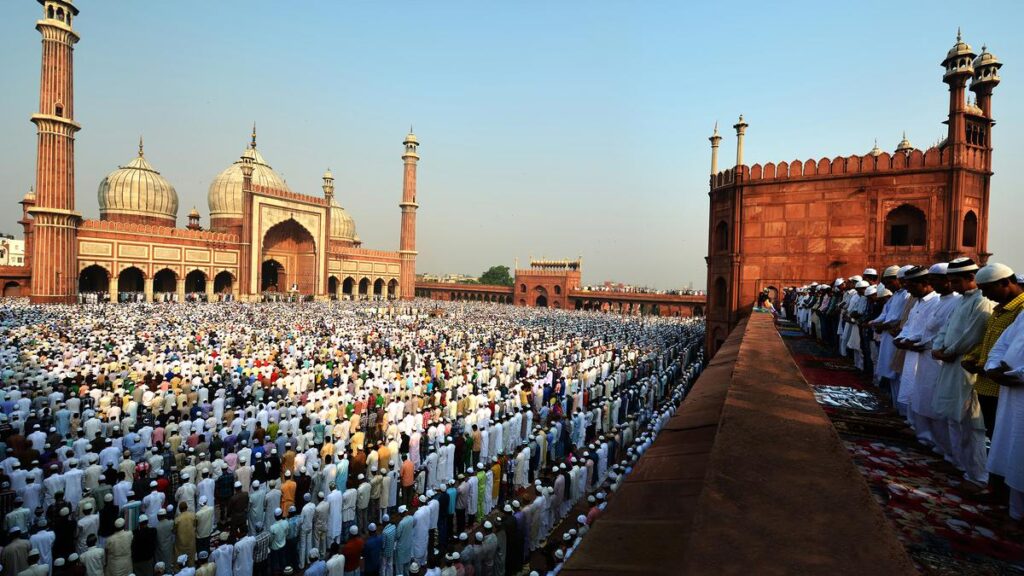
Muslims gather for prayer during Eid Mubarak in Delhi. | Photo Credit: Getty Images/iStockphoto
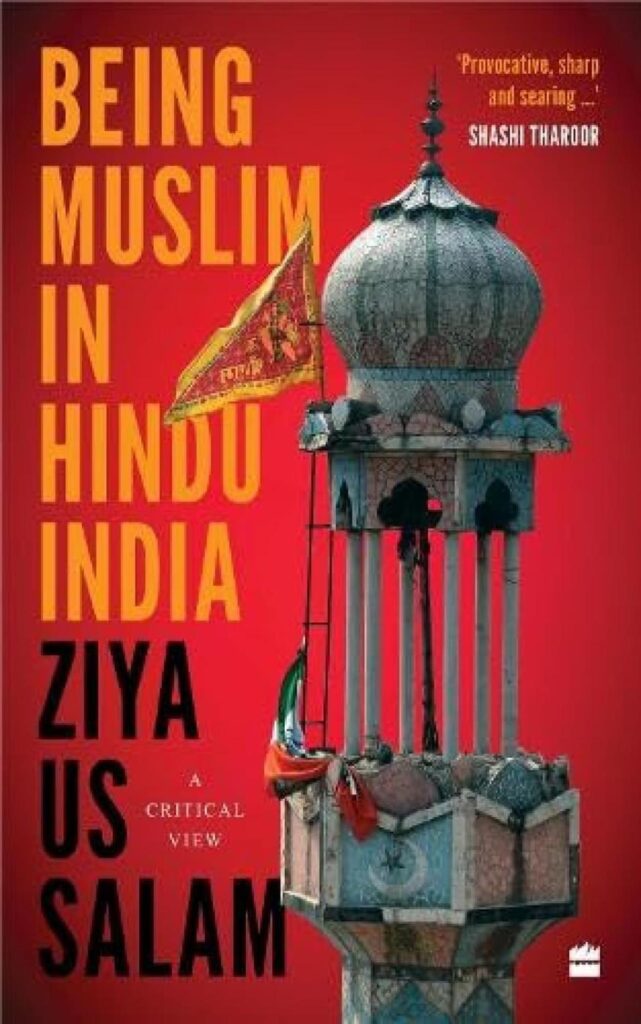
Those who believe in the Hindutva agenda cannot find a distinction between the diverse Muslim Indian leaders of the past. It is in this light that persuasive attempts have been made to link Akbar and Aurangzeb, the two Mughal emperors who should be seen at the opposite ends of the spectrum of religiosity and pluralism. An excerpt from the forthcoming book, Being Muslim in Hindu India.
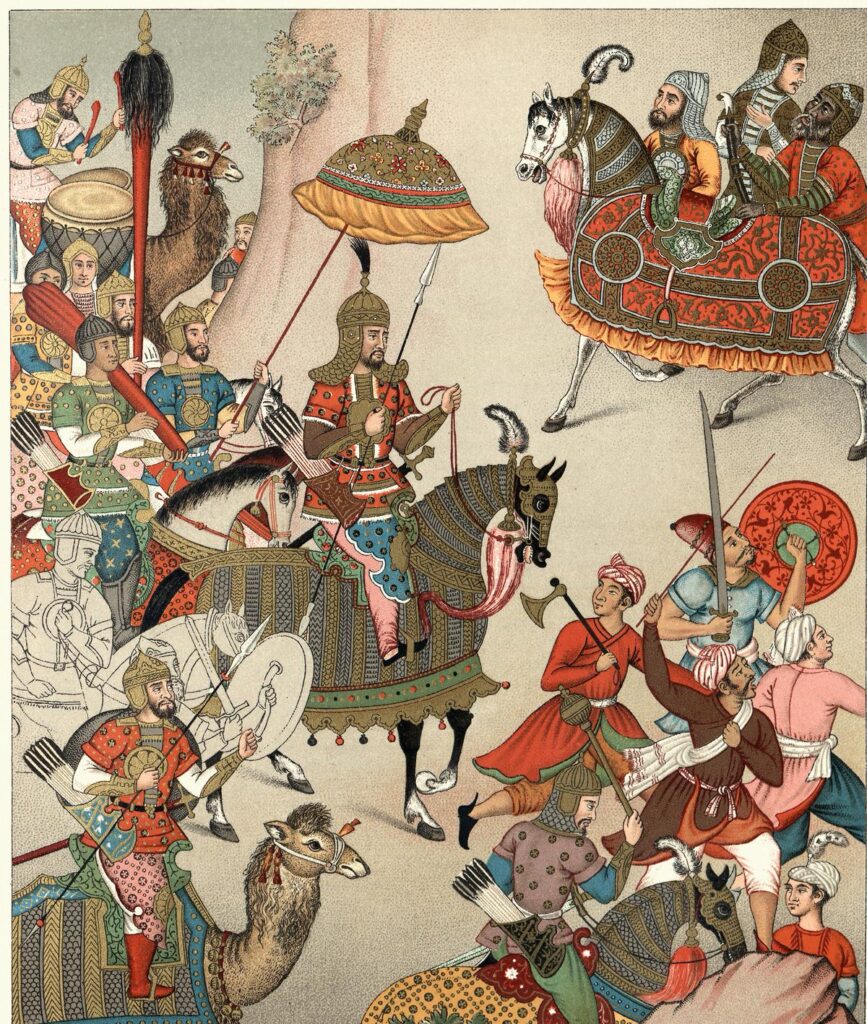
Vintage illustration of the military in 16th Century India. | Photo Credit: Getty Images
For the votaries of Hindutva, all Muslim Indian rulers of medieval India are the same. Be it the rulers of the Delhi Sultanate, the Deccani sultans or the Mughals, their names are incidental, even superfluous. They were all Muslim kings! It does not matter that no Muslim king governed by the principles of Islam and most of their decisions were taken based on political needs. Their alliances and conflicts were all entered for personal aggrandizement. No king waged a jihad, a crusade. The fight was not to uphold the supremacy of any faith, but to expand fiefdom, kingdom or empire. To the rabble-rousing Hindutva brigade, it matters not that there were Muslim commanders of Hindu armies, and Hindu governors in charge of the so-called Muslim armies.
For instance, Raja Jai Singh led Aurangzeb’s armies against Shivaji, just as Raja Man Singh had led the Mughal forces against Rana Pratap in the time of Akbar. At the same time, Hakim Khan Sur led Rana Pratap’s forces against the Mughals! Violence was a regular feature of premodern Indian kingship, and there were no religious divisions when it came to violence. All kings, all dynasties, were violent — right from the Nandas and Mauryas to the Sultanate and Mughals, everyone. From Kalinga to Panipat, the story was the same.
However, these facts are for the discerning. For the Hindutva proponent with a clear agenda of ‘we’ and ‘they’, the important basis for distinction is the name of a Muslim king. It is under this light that persuasive attempts have been made to link up Aurangzeb and Akbar, the two Mughal emperors hitherto seen at opposite ends of the spectrum of religiosity and pluralism.
The former has historically been projected as a bigot, the man who charged jizya, demolished temples and withheld state patronage to arts and culture. The latter has been hailed for the breadth of his vision, his ability to forge matrimonial alliances with the Rajputs — taking their princesses in marriage while they remained practising Hindus — initiating a dialogue with priests and practitioners of all faiths, even collecting the best principles of various religious denominations to come up with Deen-e-ilahi, a new faith that sought to appeal to the broader instincts of the educated.
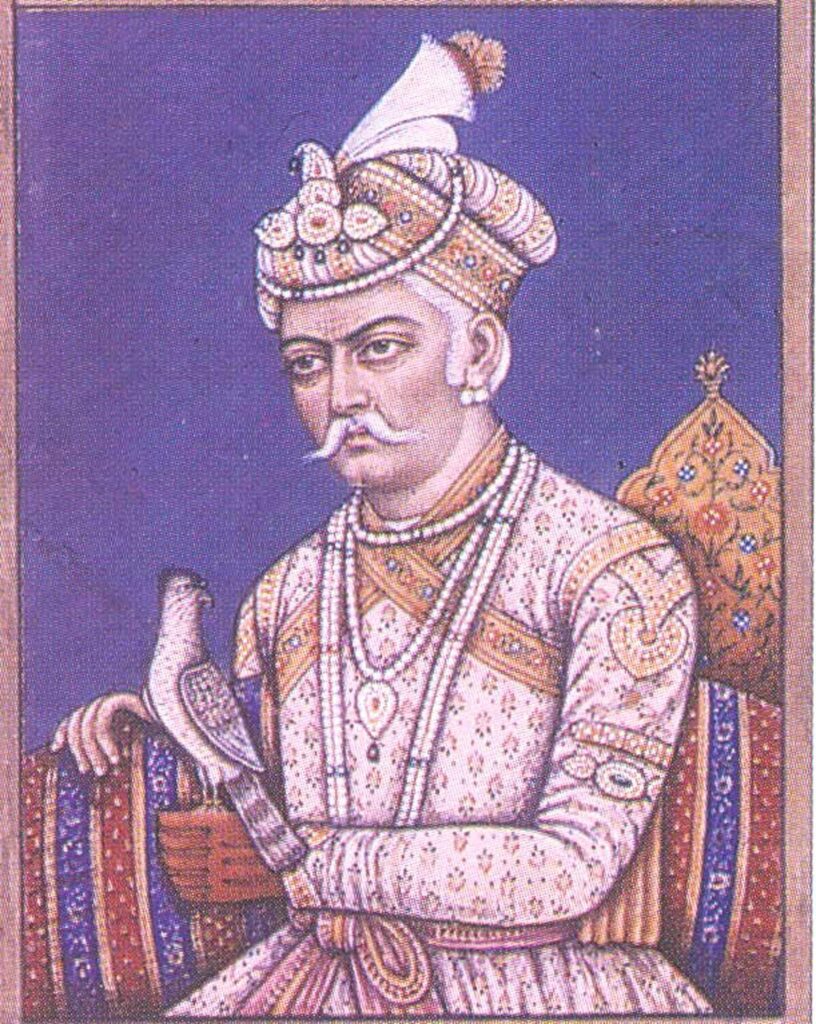
Mughal emperor Akbar | Photo Credit: Wiki Commons
The faith died with Akbar, but the fact remains that Deen-e-ilahi and the underlying principle of Sulh-i-Kul were probably among the earliest attempts at finding a solution to inter-faith differences. ‘Akbar supervised translations of Singhasan Battisi, Atharva Veda, Mahabharata, Harivamsa and other scriptures into Persian,’ says historian Shireen Moosvi, professor at Aligarh Muslim University, adding that Sulh-i-Kul was the result of genuine considerations to suit the needs of a multi-religious country like India. Much before the Indian Constitution made secularism the touchstone of democracy, Akbar had practised it.
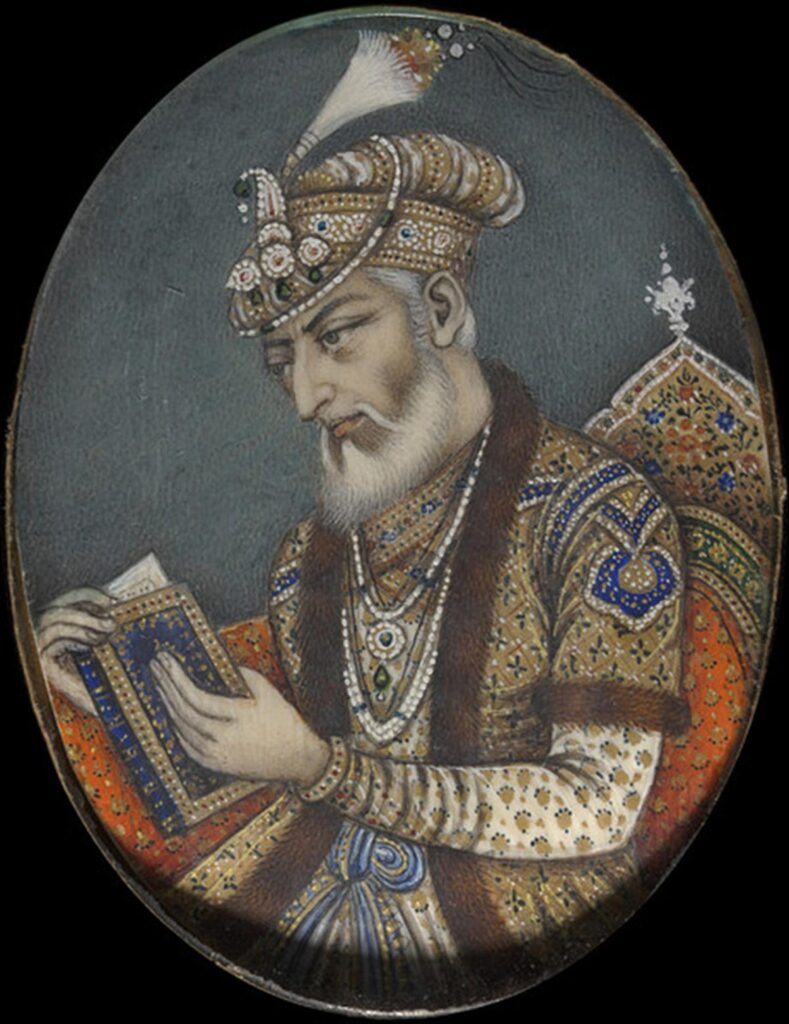
Aurangzeb | Photo Credit: Wiki Commons
Now, the difference between Aurangzeb and Akbar, clear as night from day, is being gradually blurred. No, despite serious attempts by historians, the polity is not looking at Aurangzeb afresh; in the mind of the common man, he continues to be a destroyer of temples, one guilty of regicide, patricide, fratricide and what have you. In February 2023, the name of Aurangabad, the city where he is buried in a simple tomb, was changed to Chhatrapati Sambhaji Nagar, after Chhatrapati Shivaji’s son, who was executed by Aurangzeb in 1689.
Repeated attempts are being made to nibble at Akbar’s greatness, letting us know through an incident here, a rechristening attempt there, that Akbar was not so great after all. That the Rajputs were better, that Akbar was a Mughal and hence incapable of being our hero. The attempt is not only to rewrite history, but also to deprive contemporary Muslims of their heroes, in whose actions they could take pride, and icons they could quote in conversations as their contribution to the nation. The stray barbs about the Taj Mahal or the Ajmer Fort are actually not isolated or spontaneous utterings of a loose cannon, but a deliberate ploy to take the sheen off the accomplishments of the Mughals — and by extension, modern-day Muslims—who are now held accountable for all the battles and bloodshed of the past.
Muslims sit inside a mosque in Bombay, in 1993, following the outbreak of violence in the Babri Masjid demolition incident. | Photo Credit: Getty Images
In the grammar of Hindutva votaries, you see, every Muslim king was a Mughal, and every Indian Muslim of modern India is responsible for the failures and sins of the Mughals…. The derogatory ‘Babur ki Aulad’, a term often heard since the Babri Masjid–Ramjanmabhoomi dispute, stemmed not just from a political mindset, but a much deeper and divisive ideology. It is this ideology that refuses to take a dispassionate look at our past. It prefers rather to settle present-day disputes with the weapon of history, real or imagined…. In their world of binaries, you are either with them or against them. The recycling of Hindutva mythologies is merely an attempt to fuel modern-day bigotry. Nuanced study, not sweeping generalisations, is the need of the hour.
Being Muslim in Hindu India; Ziya Us Salam, HarperCollins, ₹599.
Excerpted with permission from HarperCollins.
ziya.salam@thehindu.co.in
source: http://www.thehindu.com / The Hindu / Home> Books>Review / by Ziya Us Salam / November 17th, 2023
For gender-responsive law-making, it is imperative to have a clear definition of consent.
An advocate at the High Court in Delhi, Aaliya Waziri lives with the horrors of the 2012 Delhi gangrape. In the aftermath of the Nirbhaya case, the J.S. Verma committee’s recommendations led to amendments in Indian criminal law. But why do women still live in fear? Waziri’s collection of essays, In the Body of a Woman, takes stock of the progress that has been made and the long road left to cover, even as she pushes for gender-responsive law-making. Excerpts from an interview.
Aaliya Waziri | Photo Credit: special arrangement
A majority of women and girls live in some sort of fear — they fear for their safety in buses and trains and sometimes even at home. After the Nirbhaya case, a stringent law was put in place. What more needs to be done to make women feel safe?
As women, we carry pain and fear for our safety. Ask any woman walking the street after sunset how many times she looks over her shoulder. Nirbhaya was the tipping point for our insecurities related to our safety. It was also a watershed moment in terms of pointing out the lacunae in the legal framework. It would be false to state that things haven’t changed since Nirbhaya. For example, we now have vulnerable witness deposition complexes in district courts, victim compensation schemes etc. but there is much more to be done. We can do more to strengthen our laws and have a robust system in place that does not allow for procedural lapses. We must have a judicial gender-sensitisation training system that ensures victims are not subjected to re-victimisation. We need to allocate more resources and personnel to fast track courts and precipitate the specialised redressal mechanism in place. We can expand the definition of consent to make it more gender responsive by affirming what consent is.
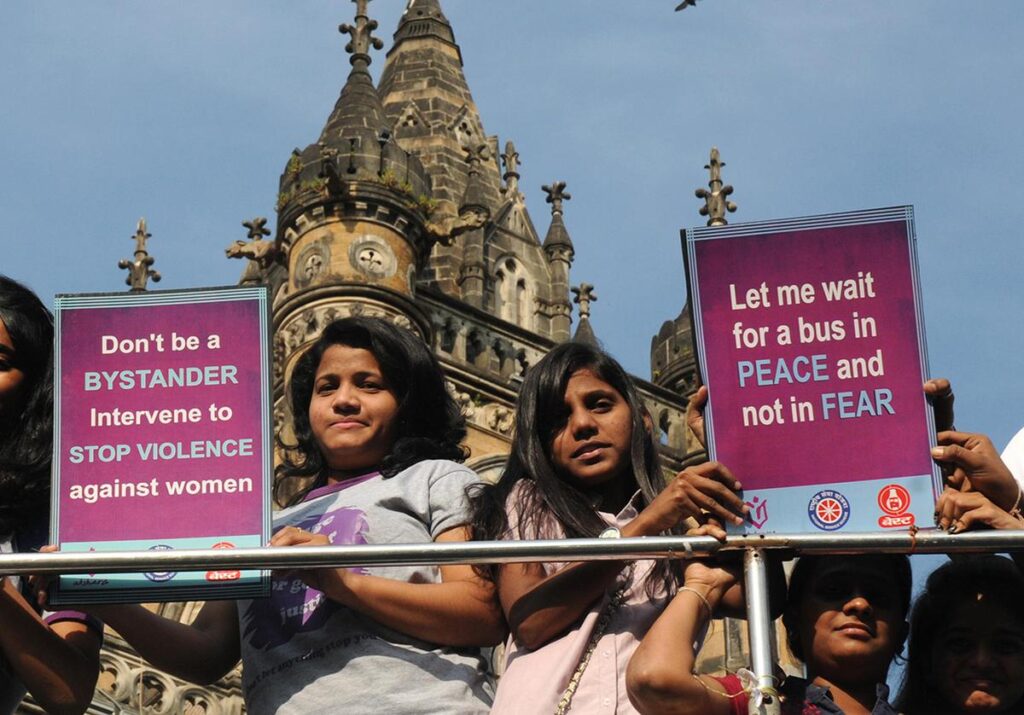
Students with placards emphasising the need for women’s safety at the ‘Freedom from fear’ rally organised in Mumbai. | Photo Credit: Vivek Bendre
Why should consent be at the centre of all discussions on gender sensitivity?
Talking about consent is perhaps the most important conversation when it comes to gender responsive law-making. Right now there is a grey area of offences that are not punishable by law because deciphering consent is tricky. Marital rape is one such example. The law defines consent in negative terms. At the same time, we have a statutory definition that talks about how consent must not be tainted with fear or duress or coercion. But this definition talks about all that consent is not instead of a definition that affirmatively defines what consent is, which is where the problem lies. Without a definition of what consent is, we are all shooting in the dark.
In a poor country like ours, why is it important for women to be equal beneficiaries in every sphere of life?
The answer is parity. Women are not a homogenous group. We are unevenly and disproportionately placed on the starting line. To give women a fair chance at competing with men, we have to first put them on an equal footing with men. Only then can we hope to ensure women are equal beneficiaries of the Indian success story. Unless women are equal recipients of state welfare mechanisms that form a conducive environment for women to participate freely in the open market, how can we expect women to enter, re-enter and exist in the work space? There is no one-step-panacea to put women on an equal footing with men but what is important is to identify and plug operational loopholes with affirmative action, no matter how much some of us might dislike the phrase.
Why do you want the focus to shift from a gender-neutral approach to a gender-responsive one if society and mindsets have to be transformed?
A gender-neutral approach might seek to bridge the differences between different genders. But what we need is an approach that acknowledges and addresses differences between genders and works towards parity and inclusion as opposed to homogenising them. I am not sure if the collective mindset of our society can be changed, that’s a pipedream, but we can take concrete steps towards smaller goals. Law is a mirror to our societal fabric and by inculcating a gender-responsive approach, we recognise that within the subcategory of women, we are not an analogous group, we differ in terms of our access to welfare services, the impact our geographical and marital status has on our socio-economic identities, and so forth. The goal is to target disadvantages that women face, simply by virtue of their gender, and equip them to better respond to these challenges.
In the light of the ‘sulli deals’, what should be done to prevent such cyber bullying?
The anonymous non-confrontational form of violence against women and girls, devoid of physical contact, in cyber space, must be viewed as an impeding factor to gender justice in the 21st century. Essentially, if women are at the receiving end of systemic gender-based violence in real life then the same will translate into an inequitable cyberspace.
With that in mind, we have to first understand the fact that the landscape of violence against women and girls has changed with the advent of technology. To counter this, what we need is targeted legislation that criminalises cyber violence against women and girls. In the absence of any special legislation, both the IT Act and the Indian Penal Code are interim solutions inadequate to contain the magnitude of problems brought on by digital technology.
In The Body of a Woman; Aaliya Waziri, Simon & Schuster India, ₹499.
sudipta.datta@thehindu.co.in
source: http://www.thehindu.com / The Hindu / Home> Books> Author / by Sudipta Datta / October 20th, 2023