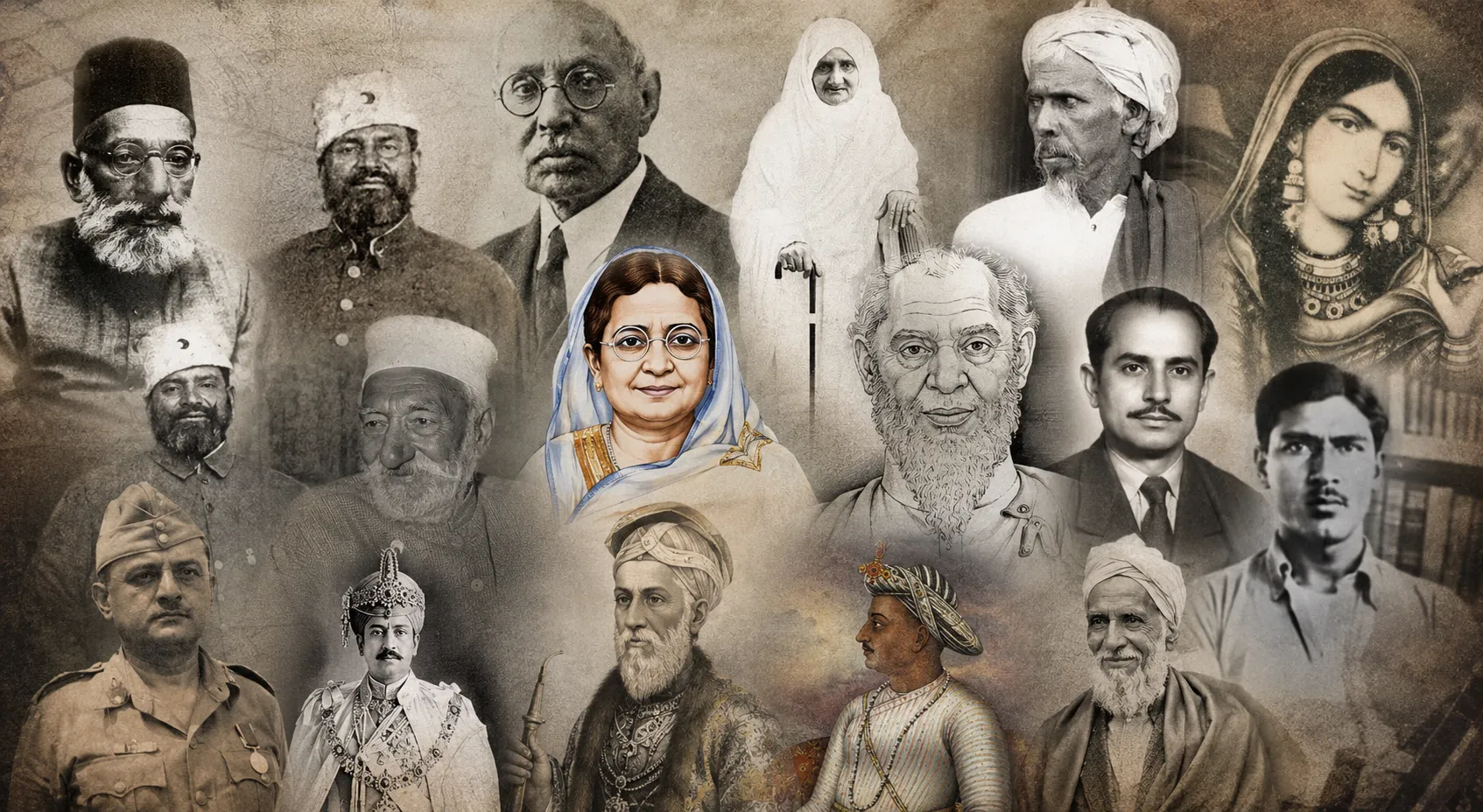
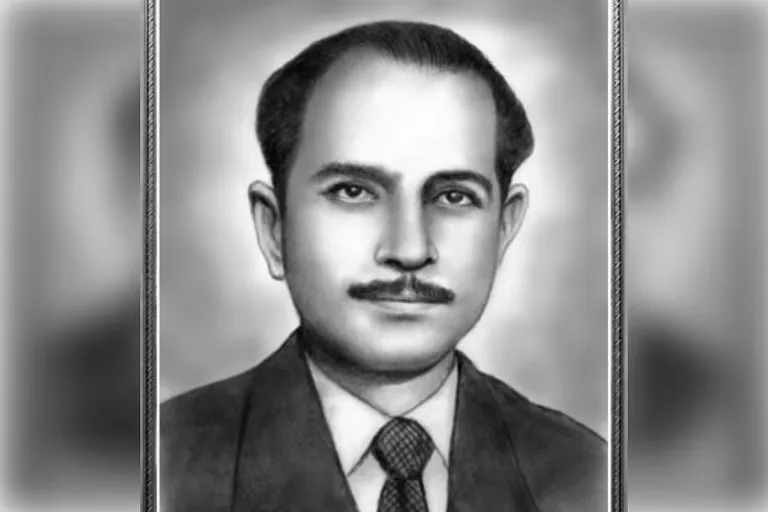
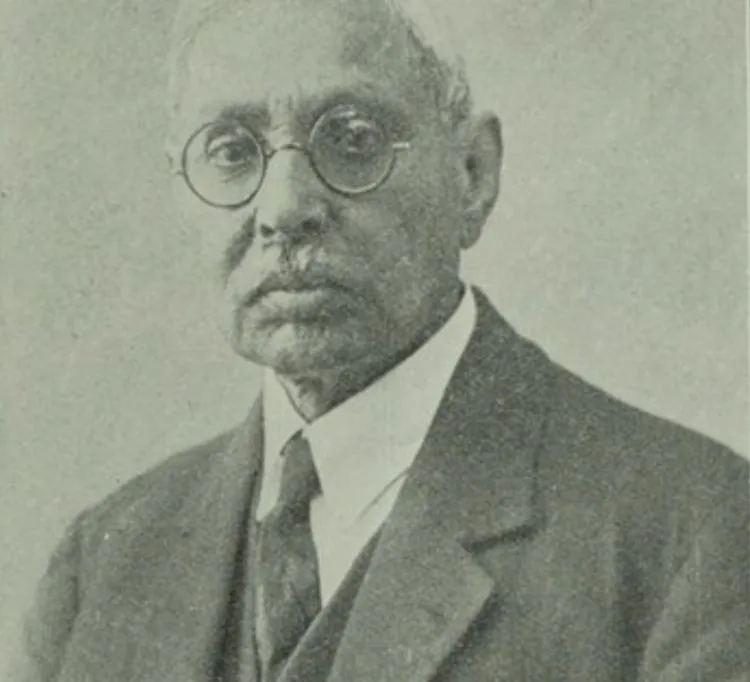
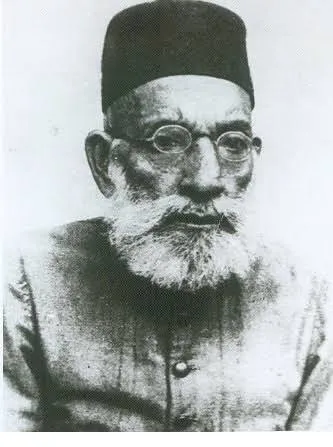
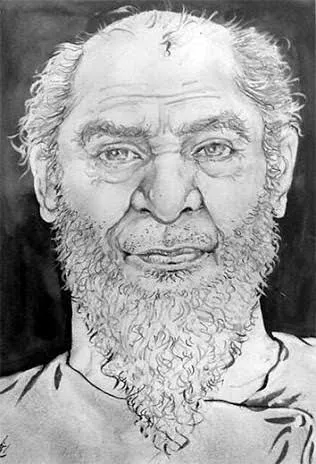
At 80, revisiting the Muslim lives, movements and sacrifices that shaped India’s struggle for freedom, and the politics of forgetting them.
Stroll through the pages of India’s history, because academia has failed to acknowledge some names and contributions in the Indian freedom struggle. From the Taj Mahal, Red Fort, Qutub Minar, Humayun’s Tomb, Gol Gumbaz, Charminar, to Fatehpur Sikri and the bustling lanes of Chandni Chowk, they all speak volumes louder. But the cultural pattern of ‘selectively remembering’ and ‘selectively forgetting’ has downplayed nation’s history into one-dimensional narratives , while external sources of learning like cinemas, textbooks, public places re-branding, etc, are getting colored with contemporary political dynamics, to legitimize their plans and policies.
To fathom India’s past sincerely, we must be willing not only to learn but also to unlearn. Learning involves discovering forgotten contributions, while unlearning requires shedding inherited biases, political narratives, and simplified versions of history. Because, as eminent historians have speculated, the past is constantly reinterpreted in the light of new evidence and new questions. Consequently, the framing of our past will affect the present, which will further be read as a past in the future, thus entrusting us with sheer responsibility of weaving a lineage of conscience, not insidious storytelling.
The lost dots of the Indian freedom movements
Revisit in Indian history afresh because erasure never happens all at once, it happens slowly and systematically.
Independence Movements did not count from the very battles fought, but from the conditions laid down before and after to formulate and fixate Indian society and culture altogether. Resistance to the economization, politicisation, and, ultimately, colonization by the Britishers was confronted by the collective plurality which our country possessed with pride. Testifying that resistance was not always born on the battlefield, often it began with communities refusing to harbor animosity for one another.
Hindu sanyasis and Muslim fakirs whom the British Company wanted to fragmentalise, chose each other instead. Naga ascetics of the Dashnami order like Pandit Bhabani Charan Pathak stood beside Muslim fakirs of the Madari and Burhana sects, Majnu Shah Fakir, Chirag Ali, Musa Shah, and together resisted the oppressive taxation and economic exploitation the Company had imposed. It was one of the earliest organized rebellions against British rule in India, and yet how many of us have even heard these names?
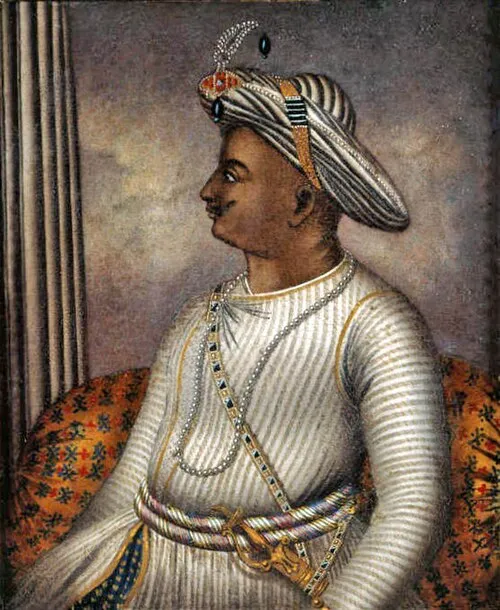
Tipu Sultan
That same defiance carried into Mysore, Tipu Sultan, a name antagonized in recent years that people even slipped away from the fact that he is the man who invented Missiles in India, a ruler who terrified the British. He built iron-cased rockets before most of the world imagined such a weapon, and fought the British across four wars, refusing again and again to let his kingdom bow. And what do we do with that legacy today?
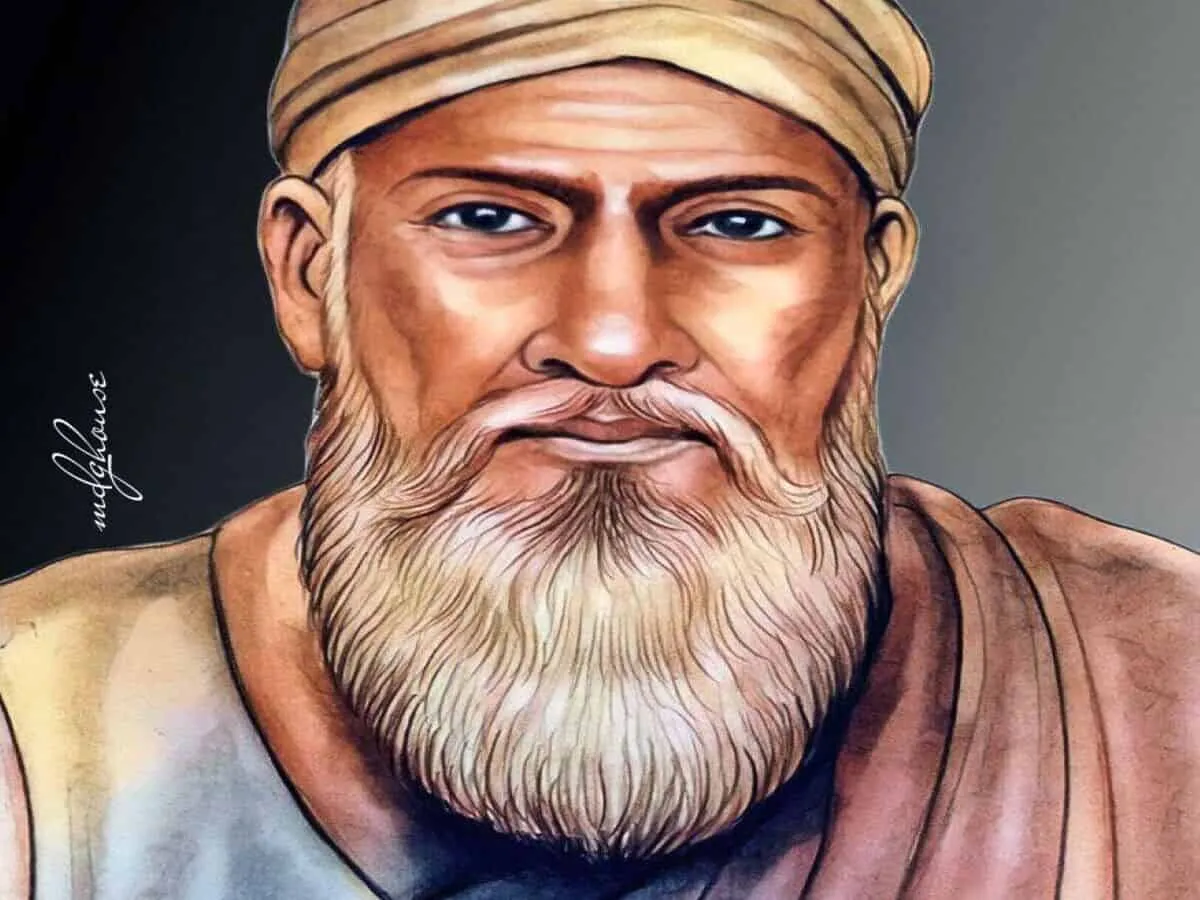
Islamic gallantry didn’t halt there. Moulvi Ahmadullah Shah, one of the key leaders of the First War of Indian Independence in 1857 was called the lighthouse of rebellion in Awadh, an epitome of the Ganga-Jamuna culture of Faizabad. The rebel army of Awadh was led by Barkat Ahmad and Maulvi Ahmadullah Shah, with Barkat Ahmad declared Chief Army Officer of the rebels after the Battle of Chinhat.
Moulvi Ahmadullah Shah
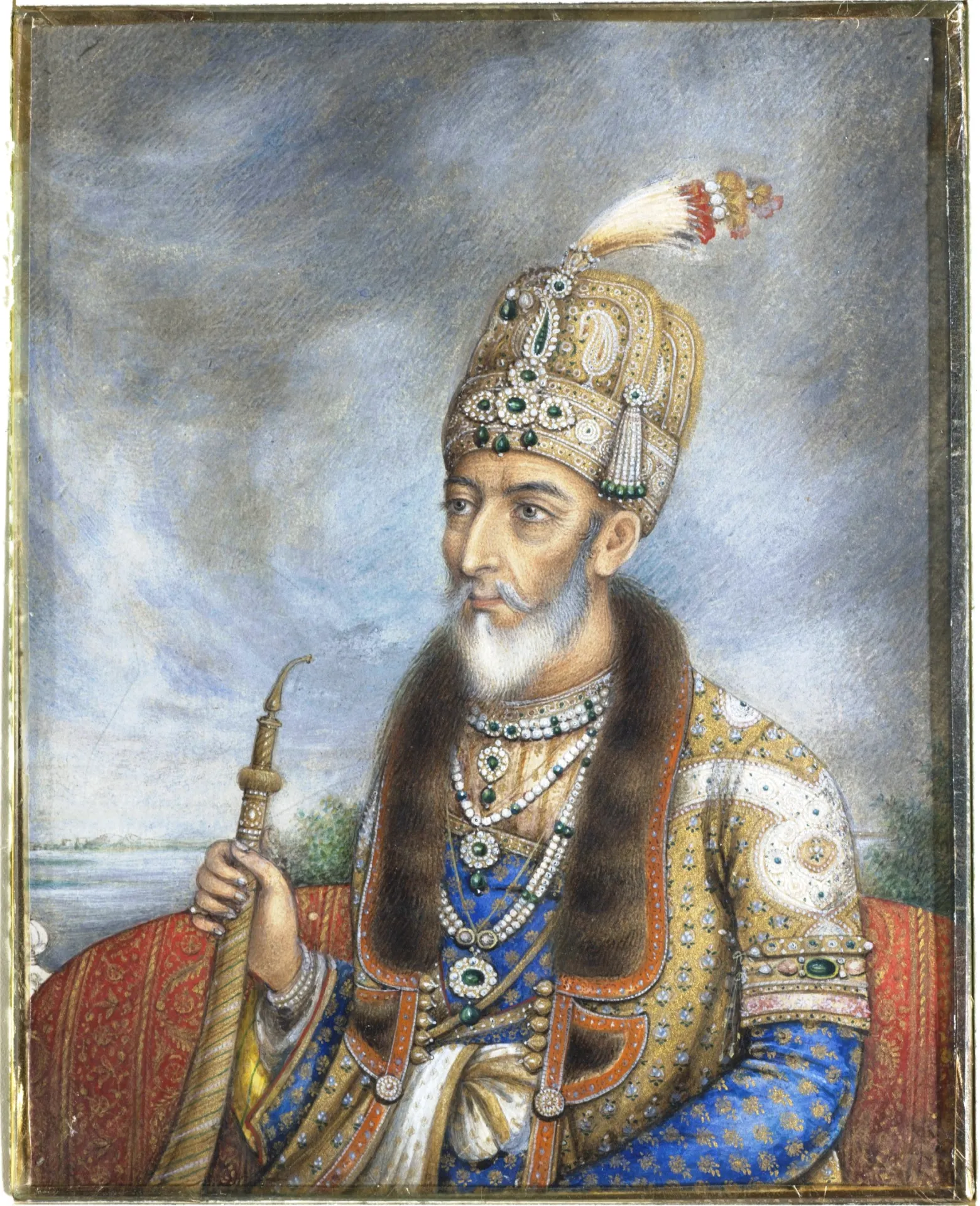
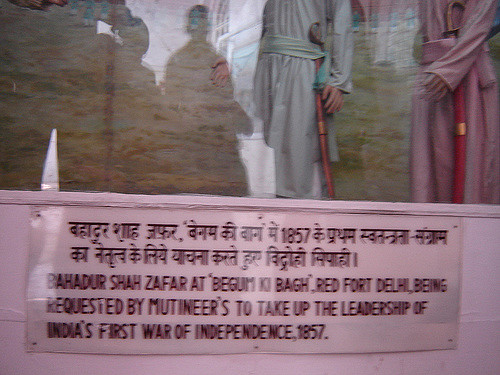
At the head of that same uprising stood Bahadur Shah Zafar, lending his name and his throne to the rebellion we call the Sepoy Mutiny. He gave everything a king could give, and the British broke him in the cruelest way. After his surrender, his sons Mirza Mughal and Mirza Khizr Sultan, and his grandson Mirza Abu Bakr, were stripped and shot in cold blood by Major William Hodson at what is now called Khooni Darwaza, and their severed heads were brought before their own father as a trophy. So many lives were lost in that struggle, so many families broken, and it is widely said that nearly 5 lakh Muslims were martyred, close to 50,000 of them ullema who chose the battlefield over silence. After rotating around 79 years of India’s independence, we are still cynical over the contributions carved by Indian Muslims.
Bahadur Shah Zafar
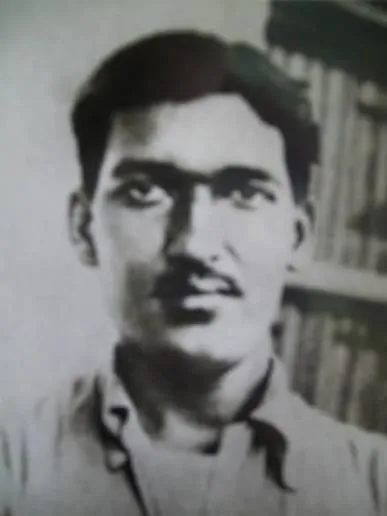
Another buried name is of, Ashfaquallah Khan, was hanged on 19th December 1927, at just 27 years old, along with other Kakori comrades who were sent to the gallows. This Kakori robbery was to pull back the wealth of Indian soil to channelize it for the national struggle. Khan revolutionized nationalist movement with his participation in Hindustan Republican Association (HRA), founded by Ram Prasad Bismil along with two others. Like Kakori robbery, many other raids were rolled out to confront with required force rather than abstracting the notion of peace towards the gruesome tortures. Have we ever lent an ear to these lines of Khan’s ‘Hasrat’ poem- “Kuch aarzoo naheen hai, hai aarzoo to yeh hai, Rakh de koi zara si Khaak-e-watan kafan men” who as his last whim, recited this poem soaked in patriotism. Are we made to remember these lines by a Muslim freedom fighter when we are reminded about the terrified misapplication of the divine slogan “Allah-u-Akbar” to polarize the Islam?
Ashfaqullah Khan
Walking further, Abdul Habeeb Yusuf Marfani, gave away his entire estate for a freedom he’d never see honoured. His courage was never separate from the cause, it was central to it, and it’s long overdue we remember it that way.
Abdul Habeeb Yusuf Marfani
Muslim participation in India’s freedom struggle was not boxed in a specific time or way, it encompassed armed resistance, societal reforms, mass mobilization, revolutionary events, and non-violent protests. The hurls on the invasions done by Muslims are widely made, but onlookers of the contributions by very same people, are tactfully airbrushed.
Sacrifices for the Indian motherland were proven on silent or loud battlefields, not by the mere recital of ‘Patriotic Songs’ such as Vande Mataram as a contemporary reference. That is turned down by Indian Muslims lyrically, not soulfully, because of the religiosity which the Indian Constitution guarantees them. When did the recital of patriotic songs begin to outweigh the very acts of sacrifice they were meant to spring up?
Freedom fighters such as Maulvi Ahmadullah Shah, Begum Hazrat Mahal, Fazl-e-Haq Khairabadi (clarified the Jihad term through his war against the British), and Azimullah Khan were also important in the 1857 uprising. Barely, we learn or are made to learn about them? While vilifying other names of this very same community.
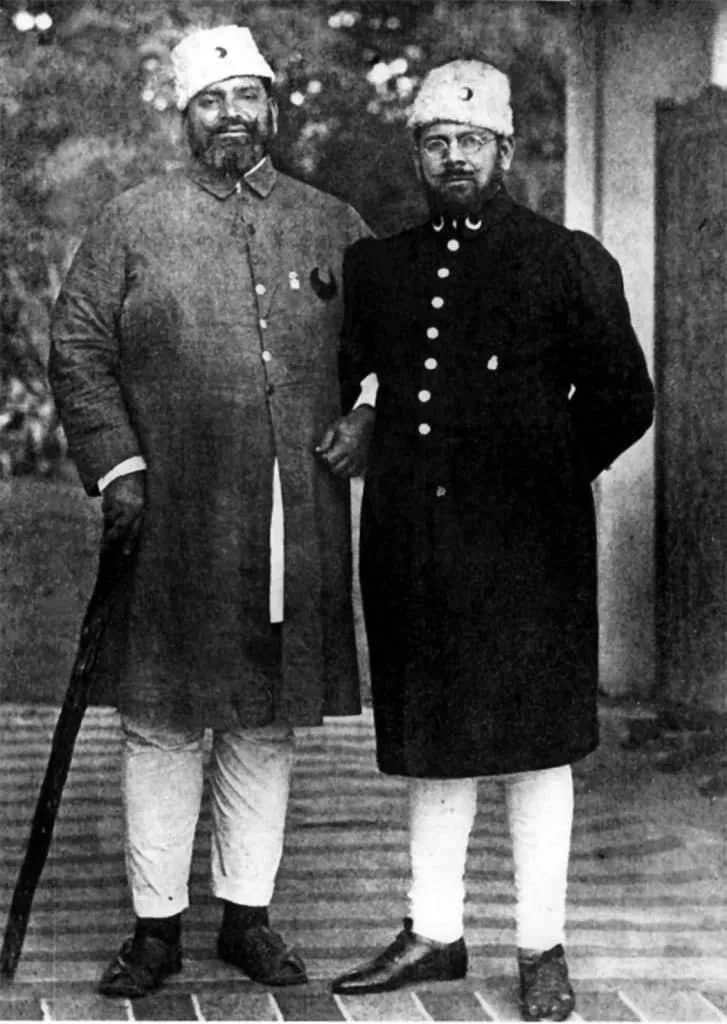
The Ali brothers, Shaukat Ali (1873-1938) and Mohamed Ali Jauhar (1878-1931)
Even the popular moments like the non-cooperation movement and the Khilafat Movement were helmed by some unheeded names: Mohammad Ali Jauhar and Shaukat Ali. Erected on the former’s name, there stands a university in Rampur, U.P. which recently has fallen prey to the communal politics, staking Indian youth’s future at darker stage, thus disregarding the blood of these freedom fighters.
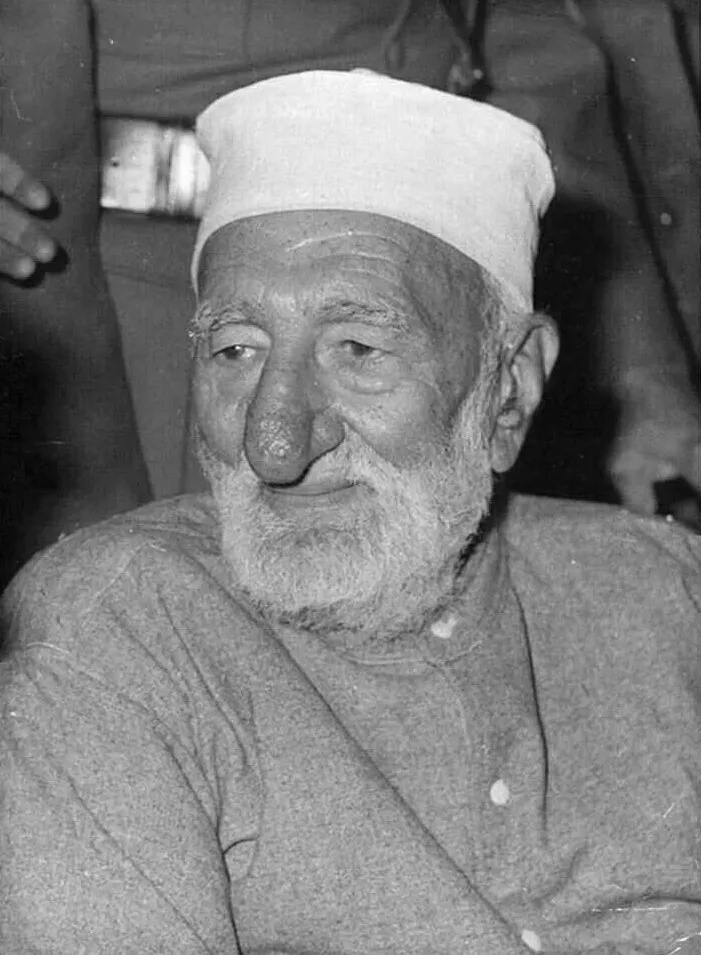
Khan Abdul Ghaffar Khan
Khan Abdul Ghaffar Khan who spent three decades in prison and headed the non-violent Khudai Khidmatgar Movement among Pashtuns against British rule, wherein he combined social reform, service, and discipline. His demise took place during his house arrest in Peshawar.
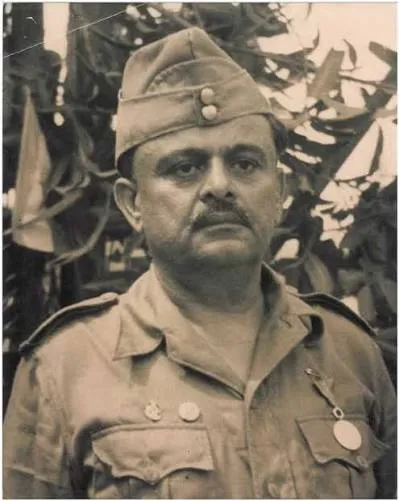
Abid Hasan Safrani
Without a single community-led leader, ideologies often find a loose hand to wrestle for their individual existence rather than collective results. Abid Hasan Safrani, prominent INA member, mobilized the Muslim youth and committed to Subhas Chandra Bose’s movement (Azad Hind Fauj), which underpinned armed resistance in the Indian Freedom Struggle rather than non-violent means, brewing the unity for winning back the motherland.
Having said that, the famous Ghadar Party, founded in 1913, was pioneered by one more buried name- Maulana Barkatullah Bhopali. He was the first Prime Minister of the Provisional Government of India (Government-in-Exile), which was established in Kabul in 1915. He traversed across Europe, Asia, and North America to usher in the momentum for the Indian freedom struggle. His death took place in the US, leaving him deprived of bidding adieu to his motherland one last time.
Maulana Barkatullah Bhopali
Then, “Inquilab Zindabad”, the popular hymn echoed at Jantar Mantar very recently, was originally coined by Urdu poet-politician Hasrat Mohani at the Congress’ Ahmedabad session, while Bhagat Singh solely made it popularized. Mohani had been a soulful Krishna Bhakt, leaving him writing eulogies for ‘Hazrat Krishna’ (Hazrat is not a religious tag; it is an honorary title). He, being the co-prisoner of Gandhi ji, presented him with the USSR idea of federalism for empowering the localized and regional pockets of the agglomerate India. His courage and values proved his patriotism in the debates of the Constituent Assembly and confrontations with the Britishers.
Hasrat Mohani
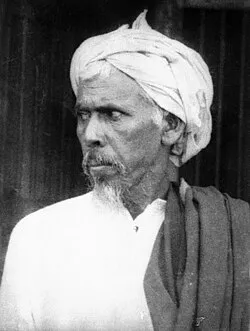
We remember Mahatma Gandhi more than any other freedom fighter, but are we mindful of the fact that the man who saved him was Batak Mian Ansari during the Champaran Satyagraha in 1917? He was the cook deployed by the Britishers, who then ordered Batak Mian Ansari to serve venomous milk to Gandhi ji. His integrity made him stake his life to save Gandhi ji. He sneakily warned Gandhi ji, and, as anticipated, he was kicked out of his job by the Britishers, further leaving him battered by the villagers and ousting him and his family from his residence. To date, his family couldn’t receive what was promised for his courage by India’s first president, Rajendra Prasad. Questioning how much we have honoured the honorable personalities on the ground?
Batak Mian Ansari
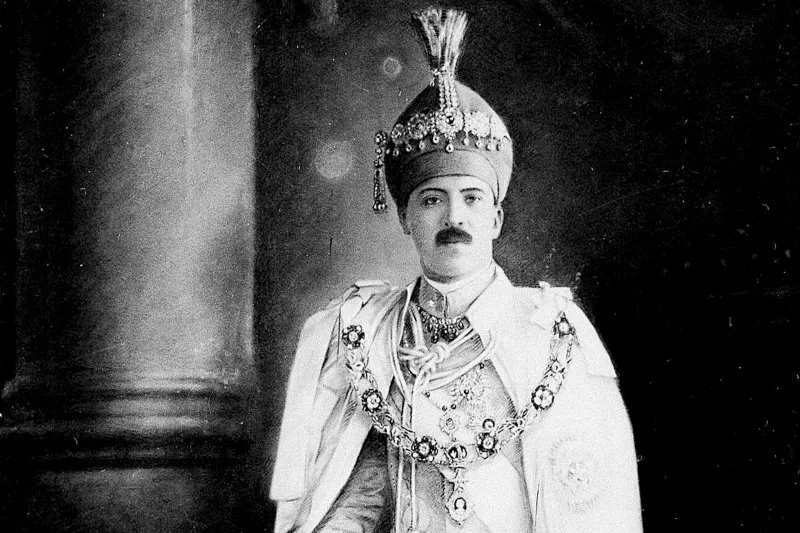
The last Nizam of Hyderabad, Mir Osman Ali Khan, is also in this queue of the buried names. Independence movement is not merely the swing between direct confrontation with colonial regime, it too laps over the pre and post period that either nudged the movements or repaired the damages caused to India. He has reportedly granted mammoth donations across educational and religious institutions. From BHU, AMU, IISc, publication of critical editions of Mahabharata, Golden Temple, Amritsar and many more places . We rewind through cruel rulers who demolished Indian structures, to attack their community and make them accountable in the present, but are we awakened with these submerged realities as well? One-sided history or evolving history, rationality comes with the choices citizens make to discern their roots.
Mir Osman Ali Khan
The history of Muslim resistance to British colonial rule also travelled deep into Malabar in Kerala, where Variyankunnath Kunjahammad Haji, Ali Musliyar , and Sayyid Fazal Pookoya Thangal emerged as formidable names in a long tradition of anti-colonial mobilisation. Fazal Pookoya Thangal, the 19th-century Mappila spiritual leader of Malabar, became an influential voice against British authority and the oppressive agrarian order sustained under colonial rule, eventually being forced into exile in 1852. Decades later, that inheritance of resistance found powerful expression in the 1921 Malabar uprising, with Ali Musliyar, a religious scholar and Khilafat leader, and Variyankunnath Kunjahammad Haji becoming among its most prominent leaders. Haji challenged British authority in parts of Malabar and established a parallel administration in areas under rebel control, while Ali Musliyar mobilised people against colonial rule before being captured and executed by the British. Haji, too, was eventually captured and executed by firing squad in January 1922.
Ali Musliyar
Culture can marginalise women, but religion pours courage
“Khoob Ladi Mardani thi, Wo Jhansi Wali Rani thi”, Whenever we speak of women who took up arms for this land, Rani Lakshmibai of Jhansi is the name that comes to every tongue, and she deserves every bit of that memory. But here’s what gnaws: she was not alone. There were other women just as fearless, standing in the same fire, and history simply didn’t bother to write their names down.
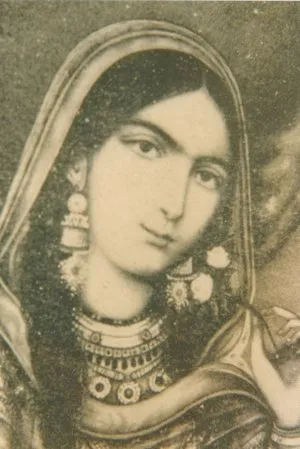
Begum Hazrat Mahal
Begum Hazrat Mahal was one of them, and she wasn’t a side character, she was one of the rebellion’s most formidable forces. Even William Howard Russell, a British correspondent writing for his own side, couldn’t deny her fire. In his My Indian Mutiny Dairy, describing her as a woman of remarkable energy who had stirred all of Oudh into rising for her son’s cause and had herself declared undying war against the British. At Musa Bagh in Lucknow, she didn’t issue orders from a distance, she personally fought alongside and rallied nearly 9,000 rebel soldiers, moving from camp to camp, lifting morale with speeches that set entire camps on fire.
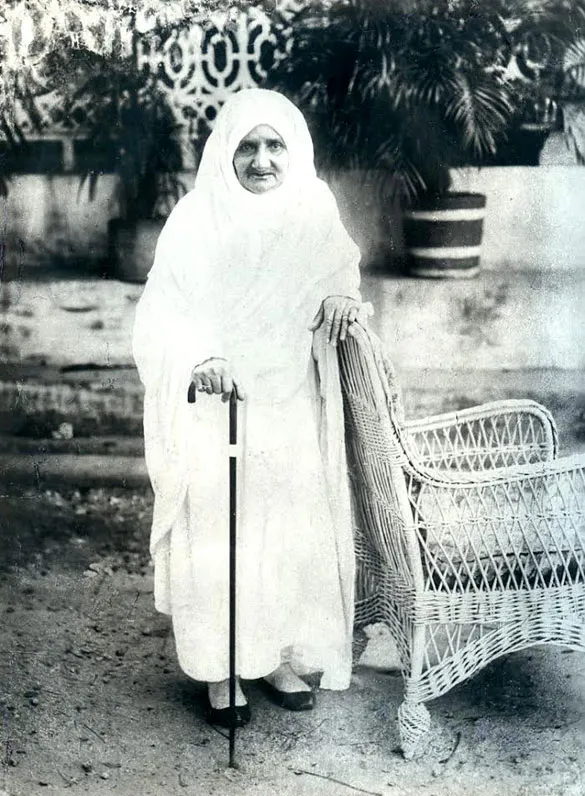
Abadi Bano Begum
And then there’s Abadi Bano Begum- the woman history remembers, if at all, only as “Bi Amma.” A widow with six children, one of the sons Maulana Shaukat Ali, and the other Mohammad Ali Jauhar, above-mentioned together known as the Ali Brothers. She could have used every excuse the world hands a woman to stay silent. widowhood, motherhood, the weight of raising children alone. She used none of them. When the country needed people brave enough to stand up to the British, she stood up too. She became the first woman to address a political rally while wearing a burqa and let that sink in for a moment. She didn’t have to remove a part of her identity to be taken seriously in public life; she broke the idea that a veiled woman couldn’t also be a fighter, a leader, or a voice loud enough to move a crowd. She urged women to stop hiding at home and join the struggle, organizing funds and meetings where they were addressed as political beings for the first time, and taught why boycotting foreign goods mattered. She convinced them to donate to the Tilak Swaraj Fund, set up by Bal Gangadhar Tilak to finance India’s freedom struggle.
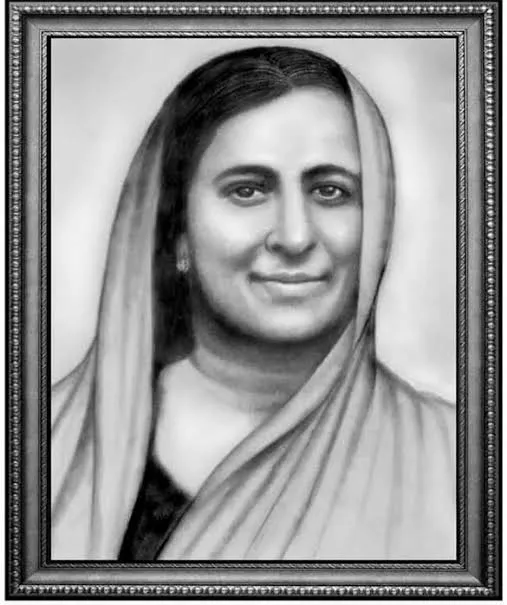
Kulsum Sayani
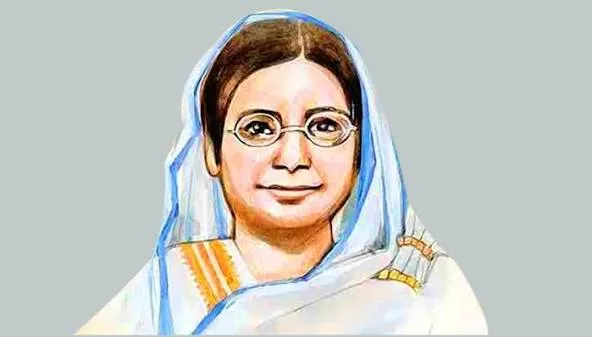
Not every battle was fought with a sword, some were fought with pen and paper. Kulsum Sayani, awarded the Padma Shri in 1960, waged her own war against illiteracy through the Jan Jagran movement, teaching under “each one, teach one” and leading centres for Muslim women that grew from 50 to 600 by sheer will. Begum Rokeya, a fiercely prolific feminist writer at a time when a woman dreaming was seen as rebellion, imagined a world turned upside down in Sultana’s Dream, then built that vision into reality, founding a girls’ school in 1909 and the Muslim Women’s Association in 1916, giving women space to learn and speak.
Begum Rokeya
80th Indian Independence Day’s call to unwind the narratives
As the author of ‘Sare Jahan Sai Achcha, Hindustan Humara’– Allama Iqbal penned- “The freedom lovers of the nation stepped forward with such dignity that even those long imprisoned by deprivation watched in admiration.” It has been shouldered on the present generations to soak in the evolving history to sanitize the present from groans of hatred, rotting the Indian society.
These lost chapters from Indian history wouldn’t have been possible to muster without the effulgent works of Salim Khan, Romila Thapar, Ramachandra Guha, S. Irfan Habib, Mushirul Hasan, A. G. Noorani, Rana Safvi, etc. Grinning us with the fact that the pluralistic framework of India is not only designed by the constituent makers, but it is also originally earned by all the freedom fighters, from pre- to post-independence.
Adeena Navaid is a law student and writer covering legal, social, and feminist issues, with work published in Maktoob, Bar & Bench, The Quint, Siasat, SheThePeople, and other platforms. Aiman Tabassum is a final-year LL.B. student at the University of Mumbai who writes on constitutional law, legal history, and socio-political issues, with work published in Bar & Bench.
source: http://www.maktoobmedia.com / Maktoob Media / Home> Opinion / by Adeena Navaid & Aiman Tabassum / August 14th, 2026
Bijnor, Rohilkhand (Mughal Empire) / BRITISH INDIA :
On India’s independence day we remember a forgotten hero from our history
Bakht Khan: Winner of a lost battle
Second of July 1857, a hot humid day some one hundred and fifty-five summers ago, a contingent of about 250 men in their Bareilly regiment uniforms arrives in Dilli of the time, the world renowned Red Fort to be precise. Mounted on their horses, they march past the Laal Purdah [1][entrance to the private chambers of the last Mughal King]. The General of the regiment marches too albeit without the customary bowing down of his head; much to the outrage of those present at the court. But what happens next would seem rather more sacrilegious. That unbending commander of the arriving regiment, a tall and corpulent man of Rohilla stock appears least caring about the sensation he creates and the protest that comes his way, he moves forward and ‘salaams’ the King as if he is an equal.[2] But the King, Zille Sub-haani, Khaleefatur Rehmani, Khudawand e Majaazi, Hazrat Abul Zafar Sirajuddin Bahadur Shah Zafar is helpless.
The man in the eye of this little storm was General Bakht Khan, Commander of the Neemuch brigade, of the Army of East India Company, among the true heroes of 1857, who had arrived to make a fight against the Company which till now he had served.
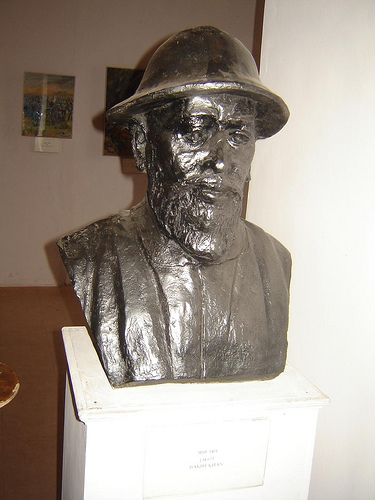
General Bakht Khan’s bust in Red Fort museum.
He was described as “a much garlanded and battle hardened veteran of Afghan wars, with huge handlebar moustache and sprouting sideburns…. Known personally to several of the British officers” [3] His reputation as an able administrator and a shrewd military strategist had reached Delhi much before his arrival.
The poor Mughal King, after much reluctance, decides to award the just landed General ,a royal sword and a buckle but Bakht Khan still refuses to present the ‘nazar’ (a mandatory monetary gift to be offered to the King) when meeting him. Soon after, this Khan then begins to give a piece of his mind to the king, he begins, “Your good for nothing princes [sons] enjoy full powers over your military. Give all the power to me as no one else but I know the norms of the English army, who knows them better than me?” This was blunt and undiplomatic at its best, but the man in question, meant business. He was duly appointed the Governor General of the army, effectively displacing Mirza Mughal the headstrong son of Zafar.
Reading literature about 1857 revolution became quite an obsession with me since a teenager, our shared history of the sub-continent, India, Pakistan and Bangladesh. A familiar heritage we possess, a common thread running through our past. History is journalism with hindsight and this special journalism about 1857 period transports us to a novel world inducing in us a sense of déjà vu. It was through these readings that I ‘discovered,/em>’ Bakht Khan. But it was not love at first sight; I must tell you, what with his being a man with a pot belly that did not make him a fine horseman! Add to it the derision he was subjected to contemptuously for the reason of his being a Wahabi. But more surprising were the contradictions that I began noticing in various descriptions about him. A few, mostly historians from the east, respected him as one of the bravest soldiers and the real hero of 1857 Ghadar while the rest seem to scorn him just for being a Wahabi. This term in itself is quite controversial, even today, just as it was in those days.
Wahabism is the name given to Islamic philosophy instituted by Muhammad ibn Abdul Wahab Najdi[1703-1792] in 7th Century Arabia; the intention was to practice Islam it in its purity just as Prophet Muhommad (peace be upon him) did. William Dalrymple elaborates General Bakht Khan‘s Wahabism thus, “Like a Wahabi ,” he says, “Bakht Khan disdained earthly rulers, whom he regarded as unIslamic, and longed instead for a properly Islamic regime.” [4] He cites his Wahabist thoughts to be a cause of his failure. Interestingly , Bakht Khan fought under a king who was the embodiment of everything a true Wahabi abhors.
What is astonishing is that in almost every account about the man, his being a Wahabi is essentially stressed, perhaps to draw attention to his real or imagined fanaticism. Some of the earlier prominent revolutionary figures like Syed Ahmed Shaheed and Shah Ismaeel Shaheed were self-proclaimed Wahabis. Let’s see what Bakht Khan‘s Wahabism was like.
His Wahabism was said to have been inspired by his spiritual mentor, Moulvi Srafaraz Ali, a master teacher of Algebra and Geometry and with a thorough knowledge of Tafseer[Quranic interpretations] and Hadeeth [Prophet Muhammad‘s sayings]. Moulvi Sarfaraz Ali was entitled as Imam of Mujahideen and his orations exhorted people to join this revolution. It was he who had motivated his initially reluctant disciple Bakht Khan to join this momentous struggle. In the pre- revolution time, Moulvi Sarfaraz Ali was regarded as one of the brightest jewels in Delhi’s intellectual crown, by no less than Sir Sayyed Ahmad Khan himself. So it was Moulvi Sarfaraz Ali who urged Bakht Khan to fight against the infidel Christians for the honor of his country. Interestingly this ‘accusation’ of his being a Wahabi also betrays probable renaissance Islamic nature of the revolution of 1857.
Being a Wahabi, Bakht Khan was against the veneration of Sufi shrines, which was/is quite a rampant practice among a large section of the Indian Muslims. The Wahabis disapprove of it as being nearer to idol worship and a tendency picked up from their Hindu brothers. What is important to be noted and not to be overlooked is; this Wahabism of Bakht Khan and his mentor Moulvi Sarfaraz Ali was borrowed not from Abdul Wahab Najdi of Saudi Arab but from Shah Waliullah Muhaddith Dehalvi [1703-1762], the father of Islamic reform movement in India. This reform movement aimed at eliminating all non-Islamic innovations and practices from the religion and restoring a strict Islamic monotheism, among Indian Muslims. Shah Waliullah, was the first one to translate Quran into Persian and anticipated many modern, social, economic and political thoughts, such as social reform, equal rights, labour protection, and welfare entitlement of all.
Where is Indian account of 1857 war of freedom?
P.C. Joshi in his work, Inquilab 1857 makes a significant observation about this term, Wahabi. He says that, “The use of the term Wahabi is not at all correct, because the political ambitions and social views of allegedly Indian Wahabis , were not based on Abdul Wahab of Najad but on the man who came before him. He was Shah Waliullah [died:1762]. That’s the reason, some supporters of Islamic renaissance like, Ubaidullah Sindhi [1861-1948], Ghulam Sarvar and [Hakeem]Ajmal Khan have preferred to call themselves as Waliullahi or the followers of Shah Waliullah. But I have maintained this word due to its popular use and historical importance.” [6] His Wahabism thus had Indian roots. Hence despising the Rohella Subedar as a Wahabi is to belittle the efforts he made for a unified fight against our former rulers. It is unfair to the man in question who is among the real heroes of the mutiny. Noted historian Irfan Habib too condemns the practice of labeling and cornering him as a Wahabi and describes Bakht Khan as, “the republican minded commander–in-chief in Delhi, who is most unfairly portrayed as a Wahabi in some modern accounts.” [7]. Wahabi or not, what is important to notice, is that he struggled for unity among the different religious sects and led the Fauj-e-Hindustani and fought for a unified and free India. Barun De admires this General of Bareilly for providing the quintessential unity that was severely lacking among the ranks of the rebels. He terms Bakht Khan a true leader and lauds his efforts at unifying different forces of the time, as worth studying. [8]
My attempt here is to present a brief sketch of this Great General as a figure who, till his last struggled for the dream of a Free and Unified India where harmony among the different ethnic groups was his top priority.
His Origins:
Bakht Khan was of Rohilla [Afghan] stock. His grandfather Ghulam Qadir Khan came to Lucknow to make a living. His father Abdullah Khan, said to be a very handsome man, was married to an Awadh Princess. Bakht Khan was formerly a Subedar in the 8th Foot Artillery at Bareilly and had served the British for over forty years and fought bravely in Afghan wars. He had progressed quite rapidly and was appointed in a high-ranking position there. Interesting to note, is his close friendship with many British officers, under whom he had served and imbibed the art of war. Colonel George Bourcheir was educated in Persian by him, and who describes his tutor as, “very fond of English society …..[and] a most intelligent character.”[9] But quite a few disagreed and called him, a fat guy, socially ambitious and an incompetent horseman, probably the worst insult for a soldier, in those times. His commanding officer, Captain Waddy [BHA], describes him thus, “ He is sixty years of age and is said to have served the Company for forty years; his height 5 feet 10 inches; 44 inches round the chest ; a very bad rider owing to a large stomach and thick thighs but clever and a good drill” [10] When the revolution began he was already in his native town of Bareilly and his fame as a fine administrator and a brave and especially able army commander had spread in the country. He had arrived in Delhi with a huge contingent of 7000 [according to another source, 14000] cavalry and hundreds of infantry and a treasure from Bareilly.
Bakht Khan as an Administrator:
It is indeed quite fascinating to know Bakht Khan’s efforts in trying to enforce some kind of sense and sensibility, onto the madness of loot, plunder and sheer chaos of the Delhi of 1857 uprising. He tried every trick in the book to restore law and order amid that disturbing pandemonium .Munshi Jeevan Lal, [11] the overweight Mir Munshi [Chief Assistant] of Resident of Delhi, Sir Thomas Metcalfe [who was working as a British spy, describes how General Bakht Khan went about restoring order amidst that unprecedented anarchy spread after the arrival of the rebels, in the capital. It’s a human thing to love admiration; but when it comes from the enemy, it becomes doubly significant.
Munshi Jiwan Lal in the notes to his British Masters appreciates measures taken by Bakht Khan. There were to be no taxes on salt and sugar, looting [by the just arrived rebel soldiers]had to be stopped else their plundering hands would be cut off, shopkeepers were to be given full protection and even encouraged to use weapons[if they had none, then would be duly provided from the state armory], soldiers were to be removed from the Dilli bazaars as it created difficulties for the general public and relocated in camps outside Delhi gate, their salaries were to be restored and promises of jagirs were made to them in return of their services to the army. He further informs that the General’s men had also killed three spies working for the British [M.Baqar Ali, father of Muhammad Husain Azad, the famous Urdu writer, too, had complained in his first report that, he is followed by the spies of Bakht Khan wherever he goes,[12]
The Metcalfe’s Munshi tells his masters that General Bakht Khan was soft spoken to his men but also remained firm that, they should not cross their line of duty even in the smallest measure. Impressive army parades were conducted by him from Delhi Gate to Ajmeri Gate. Many important petitions from various kings, Nawabs, Rajas, and officials of courts, were forwarded to the King and replies were received through the office of Governor General Bakht Khan; chief among them were, Qudratulla Khan, Risaldar of Awadh, Khan Bahdur Khan, Rao Tula Ram. A ruqqah was also addressed to the Patiala Rajah, conveying pardon of the King for his faults, many other such instances of accessing the King through the General can be found in different accounts of history. [13] Here he was playing the role of a keen diplomat. His honest and sincere attempts at running the administrative affairs efficiently at court and his diplomacy with the men of importance are discernible from these accounts. The steps he took to restore a sense of sanity in those insane times are evidently commendable but somehow go unnoticed by his critics.
Bakht Khan as a military strategist:
The General was a shrewd military strategist. What he achieved at the battle field of Delhi becomes more significant considering the dire circumstances he worked in. He had little support from his own army factions and was constantly attacked and maligned by some hostile elements from within. His strategies on the battle field, his trying to sabotage the passages that took supplies to their camp, invention of rota system and his playing the mind games with the enemy, all are indeed splendid. Richard Barter gives tribute to this great man thus: “Thanks to the system organized by Bakht Khan…..We were scarcely able to stand….” [14] He was speaking, worn out at the battle ground along with his soldiers, thanks to the new General’s machinations. Their frustration grew to the extent that some of the British soldiers seeing no sign of relief wanted to kill themselves on purpose, and some even did.
Be it propelling a contingent to Alipore or setting up a new rota system intended to engage the British forces on a daily basis, and which meant leaving them no respite from the combat, General Bakht Khan always worked on new strategies to defeat his enemy. Soon after his arrival, on the ninth of July he made a massive attempt to destroy the British forces and one of his strategies was to clothe his men in British white uniforms. This took the opponents by surprise and a deep access was gained into their camp. Such regular expeditions by Bakht Khan frustrated the enemy to the extent that, they began losing all hope of capturing Delhi again. He succeeded as he knew the British tactics inside out .His long service to them had at last, paid off.
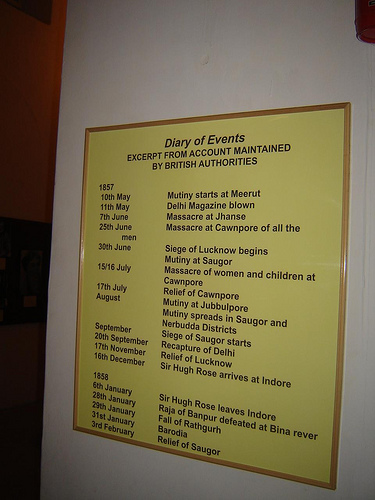
“Mutineers” or Freedom fighters?: Museum at Red Fort continues to insult our heroes by calling them “mutineers.”
But unfortunately the fact that Bakht Khan’s attempts had been gaining success went unreported, unrealized at Delhi court due to the absence of a parallel intelligence system like their adversary had. The British had knit an intricate network of spies throughout the city and at the Red Fort. Reports about every single move of the King, the parleys held at the court, the movements of the rebel forces and their strategies planned for the future attacks, reached the British ears without fail. Many prominent and respected people were on their payroll. But sad to say, no such system was in place, at the other end of the battle camp. W. Dalrymple observes sharply, “The lack of intelligence reaching the city meant that no one among the rebels realized how successful Bakht Khan’s tactics were proving” [15] They didn’t know how fragile the British forces had become and what a tremendous pressure Bakht Khan‘s tactics had put on them. Unfortunately this ignorance about his success was perceived to be his seeming failure and this set his detractors buzzing. Mirza Mughal had nursed a grudge since the General caused his removal from the military affairs. Bakht Khan’s undiplomatic ways too didn’t help. He was ruthless enough to ask the princes to keep away from military and administrative affairs as he believed ‘everyone knew that they were good for nothing fellows’. It was but an ugly truth.
Bakht Khan informed the king that Prince Khizar and others were stashing away the taxes collected from the city traders and due to this salaries of the army could not be paid. Prince Khizar was asked to return the booty. The commoners were pleased with him while the Mughal princes vowed vengeance. Undoubtedly Bakht Khan was a man of the world but he was not at all, worldly. He frequently failed to decipher his detractor’s nasty plans and eventually became a victim to their malice.
The Neemuch brigade-his force- was well-known for its valor; but the two of its generals Ghaus Khan and General Sidhari Singh [supporter of Mirza Mughal] parted ways, from Bakht Khan, as they couldn’t digest the fact that, an officer of the similar rank as theirs should get so much importance from the King. During the battles he was left alone to fend for himself. A most ridiculous charge of his being a British spy also came along. All this put him under great pressure and he had to issue a statement denying all these charges. Whether it was failure to capture the army bastions at Alipur, Manali Bridges and the Ridge and almost all the failures were wrongly attributed to the General. Zafar too now was infected with doubt and the devious designs of his foes resulted in Bakht Khan’s removal as Governor General by the end of July. A Court of Administration was established to run the affairs of the Mughal Darbar. The General and his Bareilly brigade kept their distance from it but their assaults grew weaker and the tremendous pressure that he was able to put on the British began to diminish. Dalrymple remarks, “…the end of Bakht Khan’s military system brought instant relief to the British on the ridge”. [16]. It is indeed saddening that such lowly games of selfishness and rivalry did the good General in and ultimately caused the struggle for freedom, a catastrophic damage, giving a boost to the enemy. Richard Barter joyously announced that, “And so, when we were scarcely able to stand, the attacks ceased, as if by a dispensation of Providence, and gave our force the repose they so much needed.”[17]. The one man who possessed the potential for defeating the enemy was thus, rendered impotent.
As no intelligence about the success of the good General’s methods reached the court and Delhites, it led to huge misgivings about his military forays. Resentments, against this good soldier soon began to build up. As mentioned earlier, he was accused of being a British stooge himself. His own colleague from the Neemuch Brigade Sidhari Singh accused him thus. Other former co-workers too were not far behind. Gauri Shankar [who was himself a British spy] and Talyar Khan, on 20th August, arranged for a Sikh to proclaim that Bakht Khan provides all information about the court happenings to the enemy. But the truth was found out and the witness was rejected for his false claims. The General himself issued a public statement denying this in the presence of Mirza Mughal and other army generals.
The ever eternal quintessential factors of jealousy envy and contempt did this great warrior in. Quite perceptibly his disenchantment began to grow. He became more cautious but continued to be at the forefront of the war and the biggest headache for the British. He marched towards Najaf Garh separate from the Neemuch brigade as his own soldiers refused to take orders from him (and resultantly was smashed by their rivals). Like before, the General was unjustly blamed for this fiasco, as well. Nevertheless Bakht Khan still remained defiant. He was unrelenting and rejected Zafar’s suggestion of opening the gates of Delhi, if the British could not be defeated. He elaborated on some new strategies and it was quickly reported by the spies present at the court to the Gora Sahibs. Needless to add this rendered his plans useless. His failures thus began mounting up. Yet he succeeded in defeating the opponents at the Delhi Gate even in those final hours, and kept a strong vigil at the Ajmeri Gate till the last moments of the war.
Despite his failures, more due to the non co-operation of his team than his own faults, what he did achieve was the delay in recapturing of Delhi by the British, as long as he could. The erstwhile Dilli would have been rounded up, quite early in the day, had it not been for the efforts of General Bakht Khan Rohilla.
Memorial for British soldiers at Delhi Ridge. No memorial for Indian soldiers though.
His military achievements despite the hostilities he faced were amazing; be it capturing three hundreds of British horses taking supplies to their masters, or one of his final determined attacks with his Bareilly and Neemuch troops, which forced the British to make a hasty retreat, from Hindu Rao’s house. Bakht Khan’s advance up to the house of Hindu Rao was no mean achievement; it threatened to cut off the British troops from their camp.[18] Had he been supported efficiently by his own people at the time, his success rate would have been much higher. Miyan Muhommad Shafi , in his famous work, Pehli Jang-e-Azadi-Waaqeyaat wa Haqaayeq, blames this sorry state of affairs on the conspiracies hatched against Bakht Khan by the unfortunate and unreasonable Mughal Princes, who conspired against him, unaware of their approaching terrible end. He says, “The courtiers created havoc each and every time and put blame on him for everything going wrong, without providing him with any kind of general support. All this and the corruption at the court and among the army rank and noncompliance of the troops, disheartened this most able of the fighters, Bakht Khan and after being relieved from his various significant positions , he got reduced to taking care of his own original regiments alone. This turn of events and colossal difference of opinions, among the different elements at the court, led eventually to the downfall of Delhi, the arrest of Zafar and slaughtering of his sons, not to mention hundreds and thousands of Delhites being butchered and displaced, forever.”[19] But in the mayhem of 1857 mutiny what was more tragic perhaps, was the ruin of Shehar e Dilli and its uniquely rich Ganga –Jamuni Tehzeeb. It died forever.
It was but for Bakht Khan‘s efforts that the rebel forces cold hold on for a longer period. It is an irony that they all blamed him; his enemies could be found easily on both sides of the divide. When the scene grew bleaker and the British forces entered the city gates, he continued persuading Zafar to join him in the inevitable retreat as the area outside Delhi was still under the rebel control and help could be at hand. The former Subedar in his last ditch attempt, insisted to Zafar, that, the name and status of Mughal King would surely bring victory to the Indians. Never say die spirit of Bakht Khan is here for all of us to see. The fragile eighty year old King Zafar, last descendant of the Timuri lineage had even agreed initially. But schemers like Hakeem Ahsanullah Khan, the court physician and Mirza Ilahi Bakhsh, father in law of Zafar’s deceased heir Mirza Fakhru, superseded the Khan one more time, eventually leading the last Timur to be a hapless royal British prisoner.
At this juncture, Bakht Khan speculated on the reasons of their defeat. He explicated that, their choosing of Delhi as their bastion of the battle was erroneous from the day one. He also faulted the princes and especially Mirza Mughal who’s imprudent handling of the affairs at the battle field did greater damage to the cause. This Prince was the one who possessed no experience of any war and had taken up the cudgels only for bragging about his bravery.[20]
Bakht Khan’s administrative skills added to his superb military zeal had proved to be a deadly combination for the enemy. Alas, his spirit was broken by his own men and he had to retreat and disappeared. There are different theories about his departure. It is said he went to Awadh and fought against the British, one more time. A few others opine that he was killed in a battle and a few more say he escaped to Nepal, never to be seen again. This last version seems more authentic.
The Hindu-Muslim equation of the time and Bakht Khan’s role in it:
In his legendary fight at Delhi of 1857, Bakht Khan’s zealous efforts at maintaining Hindu-Muslim unity are outstanding. More so as he is accused of being a Wahabi; this becomes doubly significant.
A general peace had always prevailed among the Hindus and Muslims of Delhi. Turmoil seemed to brew when Hindu sepoys killed five butchers for slaughtering some cows. The fear of inter-communal clashes strengthened the already existing general disillusionment among the Delhi masses [especially among the Ashraaf or high class people] about the rebellion and the uncouth rebels, popularly called, Purabiya or Tilanga. The British were sitting with their fingers crossed, hoping for a bloody game to begin on the day of approaching Baqrid. They expected violence, as Muslims would slaughter the cow which would anger Hindus as it is deemed holy in their religion. But to the disappointment of the British, Bahadur Shah Zafar himself assured a group of Hindu generals about his intention of banning the practice of sacrificing a cow, with immediate effect. Bakht Khan through his order of 30th July saw to it that this order was strictly implemented. He thundered that whoever was found guilty of slaughtering cow, ox, or buffalo, would be considered an enemy of the state and of the king respectively, and would be punished with death![21]
He didn’t stop at that. He sent out a written proclamation to Delhi’s Kotwal on 31st July and 2nd of August 1857 to the effect that, every morning and evening, it should be announced to the people that this order against cow slaughter should be strictly followed, and anyone found guilty would be severely punished. He also saw to it that an alleged fanatic Moulvi Muhammad Sayyed found enticing people for jihad was reined in. The restraining of the fanatic elements and banning cow slaughter were big steps towards restoring communal peace and harmony, at the time and proved a great boost to restoring trust. Hindu Muslim enmity had to be avoided at any cost, so as not to allow the enemy to make a profit out of it. Bakht Khan made it the central point of his fight and this is admirable.
However the Good General is also blamed for drawing together Delhi ulemas [supposedly against the wishes of King Zafar ]and making them sign a fatwa to urge the Muslims to fight against the British, taking it to be their religious duty. But it must be noted that, it was a call for a mutual struggle, for the honor of the motherland. Barun De makes a valid point, when he articulates, “All listened to the call of dharma or deen. In this sense, Christianity was the symbol of intrusive colonialism, seen as a bourgeois crusade for market globalization, much as it is being seen by neoconservatives today [22) This was something quite remarkable about the 1857 revolution. We can call it a golden period of proverbial Hindu-Muslim harmony.
1857, Ghadar
Here in lies an amazing story of the people, fighting an enemy hundred times stronger than them. These people were the poor, the workers, the weavers, the peasants; all joined hands together to resist the injustice they were subjected to, since last hundred years or so. More admirable is the fact that, despite huge caste disparities, clan conflicts, geo-ethnic varieties and most of all those bona fide religious differences, Hindus, Muslims and Sikhs became united for the cause of India/Hindostan. Esteemed historian Irfan Habib finds this assimilation exceptional. The astonishing fact, he says is that, “…on many occasions largely Hindu contingents elected Muslim officers and, similarly, contingents with a largely Muslim composition chose Hindus as their officers. The fact that this was not anywhere done consciously makes it a particularly notable example of inter-religious solidarity among the Bengal Army sepoys.” [23]
This message of unity in diversity is indeed the most outstanding lesson; we get to learn from 1857 uprising. The little armies from all over India grouping in Delhi to fight under the leadership of a Muslim King, is a grand testimonial in itself. This Muslim King had been a titular figurehead of the erstwhile India, for quite some time, but still thought to be a figure of authority. It was a matter of belief, of faith, for the Indians. They still believed or wished to believe in Bhadur Shah Zafar being Baadshah-e-Hindostan.
At the risk of digression, allow me to drift and explore this phenomenon a bit more. It was a fact that all army contingents, from all over the erstwhile British Raj territories, moved towards Delhi and gathered at the Lal Qilaa to win blessings from a Muslim king. Today this may seem beyond belief but back then, in 1857; it came most naturally to the Indians of the time. William Dalrymple astutely remarks that, “The rip in the closely woven fabric of Delhi’s composite culture, opened in 1857, slowly widened into a great gash, and at Partition in 1947 finally broke into two. As the Indian Muslim elite emigrated en masse to Pakistan, the time would soon come when it would be almost impossible to imagine that Hindu sepoys could ever have rallied to the Red Fort and the standard of a Muslim emperor, joining with their Muslim brothers in an attempt to revive the Mughal Empire.” [24]
It was due to the unmistakable aura that surrounded the Mughal Empire. Bahadur Shah Zafar possessed that unique trait of being a Benevolent Baadshaah who alone had the power of rendering a sense of strong unity among the varied regions and natives of India.
Now coming back to our General, he proved to be a perfect foil to Bahadur Shah Zafar. H.L.O.Garret, keeper of the records of the government of Punjab, in his 1933 account of the rebellion enlightens us that Bahadur Shah Zafar was only a nominal ruler of a dying Delhi; he duly informs, “The actual military operations were directed by Bakht Khan, on whom a royal decree conferred the title of Commander-in –Chief.” [25] C.T. Metcalfe notes that despite Bakht Khan’s removal from his post at the Delhi Durbar, King Zafar trusted him all along and used to urge him to put up a brave fight as before.[26] Bakht Khan’s endeavors in executing the commands of his king at putting up a unified frontagainst the colonizers, is something fascinating. But strangely enough we do not find many mentions to him in our history books.
The year 1857 strikes a resonance in our hearts even after one hundred and fifty five years. We identify with this first war of independence. The Mughal authority had eroded long before this date; but many critics say, what died in 1857 was hope; hope for freedom, for unity. After 1857, India could never be the same again. The unique aura of Mughal Mystique died too in September of 1857. This aura symbolized a most beautiful land, varied and various in so many ways yet presenting an amalgamation so unique so endearingly rich that the world still fails to offer another such prototype. Bahadur Shah Zafar was an unwilling and hesitant hero standing at complete disparity with the General. The General believed in action. It is this action that makes General Bakht Khan Rohilla a True Hero and those among us who wish to dismiss him as just a sundry character, for them let me quote T.S.Eliot here, They know and do not know, what it is to act or suffer,
They know and do not know, that action is suffering,
And suffering is action.
It is action, our striving for it and the resultant suffering that teaches us the ways of surviving/winning life. It is our action, our Karma that makes our destiny.
In this regard Bakht Khan became a winner of the war, despite losing the battle.
—
Asma Anjum Khan is Assistant Professor of English in Maharashtra
Bibliography:
1-Lal Purdah- the Red colored curtain at the doorway to the Mughal king’s private chambers.
2-Memoirs of Hakeem Ahsanullah Khan-p.8
From:The Last Mughal- William Dalrymple, 284
3-Bourchier, Eight Months,44n],from: The Last Mughal, William Dalrymple,285
4-Ibid-286
5-ibid-285
6-Inquilab 1857, P.C.Joshi, Urdu Translation, pub: Taraqqi Urdu Taraqqi Urdu Bureau ,secondedition1983,105[References]
7-Irfan Habib, History from Below- Frontline, issue dated, June 29,2007,pg.16
8-Baun De ,Frontline issue dated ,June 29,2007,Pg 9 (Scholars Iqbal Husain and Rajat Kanta Roy too endorse his views.)
9-Bourchier-Eight Months,44,[quoted in Last Mughal,285]
10- H.L.O. Garret, The Trial of Bahdur Shah Zafar,King by Committee,8[ quoted in Gimlette’s post script to the Indian Mutiny]
11–Metcalfe,Two Native Narratives, Narrative of Munshi Jeevan Lal
12-William.Dalrymple,The Last Mughal,302
13-H.L.O.Garret, The Trial of Bhadur Shah Zafar, The Physician’s Testimony ,[Hakeem Ahsanullah Khan was the royal physician]
14-Barter Richard, The Siege of Delhi,36, The Last Mughal.
15-William Dalrymple-The Last Mughal,292
16-Ibid,294
17- Barter Richard, The Siege of Delhi ,[from:William.Dalrymple, The Last Mughal, 294]
18-William Dalrymple, The Last Mughal,357
19-Miyan Muhommad Shafi,Pehli Jang e Azadi –Waqyaat wa Haqaayeq,Urdu,288-89, edition,2007
20- Ameer Ahmad Alavi,Bahadur Shah Zafar,[Urdu]Lucknow, 1955,138-9,[ through [P.C.Joshi, Inquilab 1857-112-114,Urdu , ed.1983,Taraqqi Urdu Bureau ]
21-Press List of Mutiny Papers, no.120/143, 7 Zilhaj,21-RY,29 July 1857
and
Press List of Mutiny Papers, no.111,[c] 332,8 Zilhajj 21 –RY,30 July,Spear,pg.207 [from Iqbal Husain]
22-Barun De, The Call of 1857,Frontline ,issue dated, June 29,2007,pg.8-9
23-Irfan Habib, History from below ,Frontline issue dated June 29,2007,pg.14
24-William Dalrymple, The Last Mughal, 484
25-H.L.O.Garret, the Trial of Bahadur Shah Zafar, King by Committee, 7
26-C.T.Metcalfe, Two Native Narratives of the Mutiny in Delhi,[1974] 213
The following books helped too in making of this essay:
1-1857 ke chashm e deed Halaat[Almaroof Daastaan e Ghadar]-Syed Zaheeruddin Dehalvi.ed:2006
2-The Other Side of Medal by Edward Thompson, translated by Shaikh Hassamuddin, first edition,1982,Urdu Academy New Delhi Publication
3-Bakht Khan [Marathi]–by Iqbal Husain,2008, National Book Trust ,edition 2010]
source: http://www.twocircles.net / TwoCircles.net / Home> Articles / by Asma Khan for TwoCircles.net / August 15th, 2012