Tag Archives: Muslims of India – Positive News

Prayagraj Muslims set an example of communal harmony by helping out pilgrims stranded in Maha Kumbh stampede

Prayagraj (Allahabad), UTTAR PRADESH :
New Delhi :

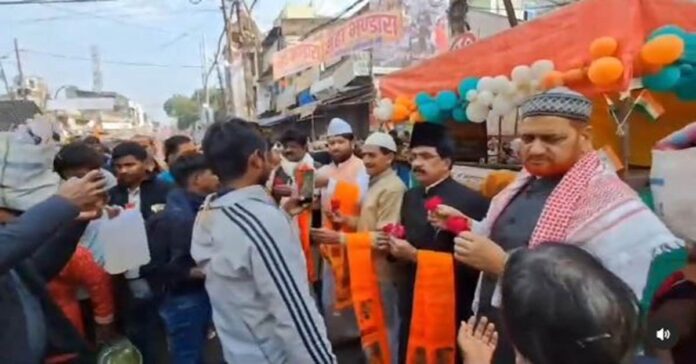
Setting a rare example in communal harmony, the Muslim community in Prayagraj has extended a helping hand to the pilgrims stranded in the city after the stampede in the ongoing Maha Kumbh on Mauni Amavasya, in which more than 30 persons have died.

Muslims have opened their homes, mosques, dargahs and public spaces to accommodate the Hindu pilgrims needing help and depicted the laudable Islamic spirit of compassion during the crisis.

The tragedy of stampede occurred in Prayagraj in the night intervening January 28 and 29 when the pilgrims rushed to participate in the ritual of bathing and taking a dip in the confluence of Ganga and Yamuna rivers during the night. The people sleeping and sitting on the ground near the rivers were trampled by huge swells of devotees coming towards them in the darkness.

Significantly, the selfless service from the Muslim community for the Hindu pilgrims has come when they were facing a financial and social boycott during the Maha Kumbh. Muslims have been kept away from the Kumbh festivities with an open boycott and banned from taking up the event-related employment works. Despite this, the local Muslims have disregarded their exclusion and are providing food, shelter, and medical aid to stranded pilgrims.

Reports emerging from Prayagraj say that Muslims have actively come forward to the rescue of pilgrims caught in distress. They are offering food, water, clothes, medicine, and even shelter to the devotees, displaying an unshaken commitment to humanitarian values. Videos and pictures circulating on social media depict local Muslims distributing essential supplies and aiding the pilgrims, defying efforts to sow division.

The Muslim community in Prayagraj, earlier known as Allahabad, has historically played an active role in Kumbh Mela, which has benefited both Hindus and Muslims socially and economically. The event had long provided business opportunities for Muslim shopkeepers, transporters and labourers. This year, calls for their boycott from certain religious figures led to their exclusion from trade and services at the event. Even Muslim shopkeepers who attempted to operate discreetly were targeted and harassed.

Despite being told that they were not welcome in the Maha Kumbh and the labour force being denied work, Muslims have not turned their back on the Hindus in the hour of need. Following the stampede, several mosques, including Jama Masjid at Chowk and another in Khuldabad, were opened to house distressed pilgrims.

Moreover, Muslim volunteers have set up food stalls and medical aid stations to assist the injured and hungry. A community-run ‘bhandara’ (free meal service) has been organised, serving hundreds of devotees irrespective of religion. Even the Muslim medical professionals have also stepped forward to help, and a local physician, Dr. Naz Fatima, has turned her clinic into a relief centre, offering free treatment to injured devotees.

The stampede in Maha Kumbh led to a complete collapse of arrangements made for the devotees and their entry to the venue was stopped. Whoever had reached at a nearby point, he was stopped there. In such a situation, Muslims living in more than 10 areas in the city showed a big heart and opened the doors of mosques, shrines, dargahs, imambaras and their homes for 25,000 to 26,000 devotees. Arrangements were made for people to stay and food, water and tea were provided to them, while those who needed medicines were taken care of.

A news report carried in ‘Dainik Bhaskar’ newspaper stated that ‘bhandaras’ were organised for pilgrims in more than 10 areas. On the night of January 28, there were 8 crore people in the 10 km area of the Maha Kumbh. After the stampede, the highways got jammed and all the vehicles carrying the pilgrims came to a halt. A large number of people had to spend the night on the roads.

The devotees had to spend the night of January 29 also on the road. In this situation, the Muslims accommodated the Hindu pilgrims in Khuldabad Sabzi Mandi Mosque, Bada Tazia Imambara, Himmatganj Dargah and Chowk Mosque, 10 km away from the fair area. Some pictures and videos of this were also circulated on the social media platforms.

People of the Muslim-dominated localities, such as Nakhas Kohna, Roshanbagh, Himmatganj, Khuldabad, Ranimandi and Shahganj, accommodated the devotees in their homes. A local resident, Irshad, said: “They were our guests, we took full care of them.” Bahadur Ganj locality’s Mohammed Irshad said: “After the stampede that night, we realised that a large number of people were in trouble. Where would they go in the cold night? After this, mosques and dargahs were opened. Many people were given shelter in Muslim homes. Arrangements for their stay and food were made. Later, bhandaras were organized. They were guests of Prayagraj; we tried to take full care of them.”

The news report in ‘Dainik Bhaskar’ quoted a Muslim man, Masood Khan, as saying: “Muslims were following their religion by helping out the people in need.” Masood Ahmed, a teacher from Chowk area, said: “Such a big event is being organised in Prayagraj. That night when it was time to help, we all worked together. Food stalls were set up. Muslims came forward to help as a gesture of humanity.”

“Our aim was that the people who have come here should not face any problem of accommodation. There should not be any problem of food and water. This is our responsibility. The elderly people walking on foot were helped, they were taken to the places for stay. We just wanted that whoever goes back from here should take the message of humanity with them,” Masood Ahmed said.

Another local resident, Afsar Mahmood, living in Khuldabad area, said: “While earlier it was announced that Muslims should not enter Maha Kumbh, ultimately the fair itself came to the Muslim localities.” Moinuddin of Chowk area said: “The Muslims of Prayagraj only wanted that whoever is coming here should not spend the night under the open sky, so everyone opened the doors of their homes. This is an example of harmony.”

Mohammed Azam of Civil Lines area said: “Food was arranged at night in front of Hari Masjid. People were suffering from cold that night. As many blankets and quilts as possible were made available. We only wanted that they should not face any problem. Arrangements for their food were also made at night.”

The spirit of mutual support was not limited to providing shelter, as the arrangements were made for food, water, and medicines for those in need. Hundreds of blankets were distributed to protect people from the cold. Local Muslim organisations, social activists, and common citizens actively participated in this initiative, making the relief efforts even more effective.

The assistance provided by Muslims in Prayagraj was not just a humanitarian aid, but it also sent a strong message of communal harmony, unity, and human values to the society. The devotees not only appreciated this generosity but also described it as a symbol of India’s rich composite culture, where different communities consider each other’s hardships as their own responsibility.

source: http://www.indiatomorrow.net / India Tomorrow.net / Home> News / by Correspondent India Tomorrow / February 02nd, 2025
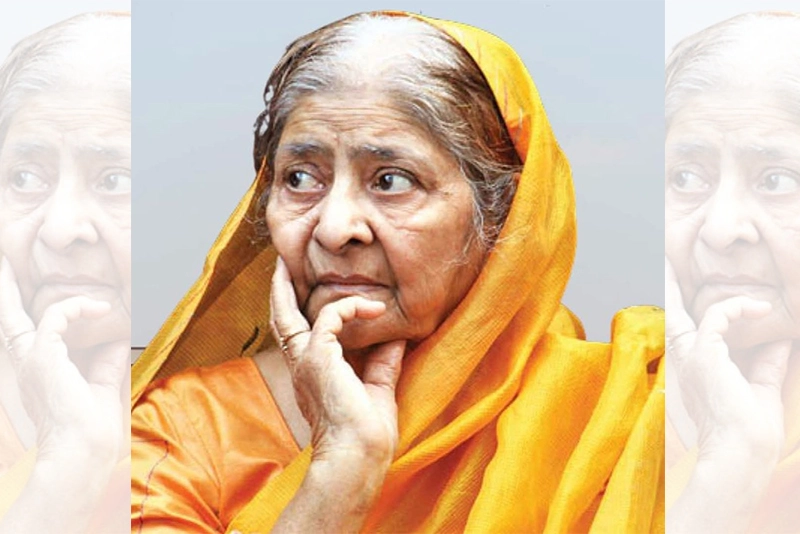
Zakia Jafri, A Symbol of Resistance, Passes Away

Khandwa District, MADHYA PRADESH / Ahmedabad, GUJARAT :

Zakia Jafri, wife of former Congress MP Ehsan Jafri – the Legal Crusader who became a Symbol of Resistance, died at her residence in Ahmedabad Saturday February 01, 2025.

Mumbai: 

Zakia Jafri, wife of former Congress MP Ehsan Jafri – the Legal Crusader who became a Symbol of Resistance, died at her residence in Ahmedabad Saturday February 01, 2025.

Zakia Jafri was 86.

Zakia Jafri is survived by sons Tanveer and Zubair, and daughter Nishrin. “Mom passed away at around 11:30 AM”, she told media.

Zakia Jafri’s sad demise was later shared with the world by Rights Activist, Journalist and Author, Teesta Setalvad.

“Zakia Appa a compassionate leader of the Human Rights Community passed away just 30 minutes ago!” Teesta Setalvad wrote on her X account around 01:30 PM Saturday.

“Her visionary presence will be missed by the nation, family. friends & world! Rest in Power and Peace Zakia appa!” Teesta wrote while condoling Zakia Jafri’s death.

Originally from Khandwa district of Madhya Pradesh, Zakia Jafri had shifted to Ahmedabad, Gujarat in 1971. This after living in a refugee camp after her home in Khandwa was burnt during the 1969 communal riots.

Zakia Jafri’s husband Ehsan Jafri was a freedom fighter and Member of Parliament.

Ehsan Jafri and his family had provided shelter to dozens of Muslim families at their Gulbarg Society in Ahmedabad during the 2002 Gujarat riots.

But, the society, considered to be a safe haven because of Jafri family’s stature, too was targeted by the rioters who burnt alive and killed at least 68, including Ehsan Jafri.

Zakia Jafri later fought a long legal battle to seek justice for the 2002 Gujarat riot victims. She had also challenged the SIT clean chit given to Prime Minister Narendra Modi, who was Chief Minister Gujarat, during the riots.

During the long legal battle she was threatened and later cajoled by different means and tactics. She however remained firm.

Zakia Jafri is likely to be laid to rest beside her husband in Ahmedabad.

Condolences pour in

Meanwhile, condolences are pouring in from different circles after the demise of Zakia Jafri.

Kerala Chief Minister, Pinarayi Vijayan, in his condolence message said, “Zakia Jafri, an unwavering voice for the victims of the 2002 Gujarat riots, is no more. The widow of former MP Ehsan Jafri, who was brutally murdered by a Sangh Parivar-led mob, she dedicated her life to the pursuit of justice. Her relentless fight leaves behind a legacy of courage and resilience. Her memory will continue to inspire us in our fight against communalism and divisive forces.”

Congress Spokesperson, Pawan Khera, wrote, “Zakia Jafri died today. Her Hope for justice had died in her life time. She chronicled the history of ‘New India’ through her tears, her sobs, her fight and her defeat.”

Hyderabad MP and AIMIM Chief Asaduddin Owaisi in his condolence message wrote, “Zakia Jafri watched her husband being murdered by a mob in 2002. For nearly two decades, she fought a lonely legal battle against some of India’s most powerful men, never showing fear. She passed away today. May Allah grant her peace and strength to her loved ones.”

Sanjiv Bhatt (IPS) who was posted in Gujarat during the 2002 Godhra Riots condoled Zakia Jafri’s death in these words.

“Zakia Jafri Ji was an unshakable voice of truth against power. For decades, she fought not just for justice, but for truth, dignity and the very soul of our democracy. Her strength in the face of unimaginable loss will forever inspire us. Today, India has lost a true warrior, but her courage will live on! Rest in power, Zakia Ji!!”

Condoling the death of Zakia Jafri, Journalist and TV Anchor Rajdeep Sardesai worte: “Sad news: Zakia Jafri, whose husband and former Cong MP Ehsan Jafri was brutally killed in the 2002 Gujarat riots passed away today. For years, she fought a valiant battle for justice. When even an MP’s wife struggles to be heard, imagine the plight of an ordinary citizen. And yet, she remained steadfast and courageous till the end. Refused to give up.”

Mumtaz Patel, daughter of Congress leader Ahmed Patel, condoled Zakia Jafri’s death in these words.

“Zakia Jafri ji, symbol of resilience and an unwavering voice for justice, is no more. Her fight for truth and accountability in the face of unimaginable tragedy will always be remembered. May she rest in power.”

My heart goes out to the brave lady #ZakiaJafri who fought against these devils and those three judges who betrayed you . But they all will have to pay for their karmas before they depart from this world,this also includes the supreme leader . pic.twitter.com/JQUZTueTuI— Ravinder Kapur. (@RavinderKapur2) February 1, 2025.

“Zakia Jafri, widow of former parliamentarian Ehsan Jafri, who was killed by a Hindutva mob in the 2002 Gujarat genocide, Zakia Jafri Survived in genocide and become the relentless voice of Justice”, Noor Mahvish, a lawyer, wrote on X.

“Zakia Jafri . A life time of a fight for justice 23 years out of the 85 she spent on this earth ,waiting for justice for the killing of her husband along with the people they tried to protect inside Gulberg Society in Gujarat 2002”, a social media user, who identifies her as Realm of Bohemia, wrote.

“Brave and fearless, she fought for Justice till the end”, an activist wrote.

“She left this world fighting for justice and showing the whole world how to never give up”, Razia Pathan, an activist, wrote.

source: http://www.ummid.com / Ummid.com / Home> India / by ummid.com News Network / February 01st, 2025

Tahsildar of Humnabad Anjum Tabassum Honoured on National Voters’ Day

Kalaburagi (Gulbarga) / Humnabad (Bidar District), KARNATAKA :

Humnabad:

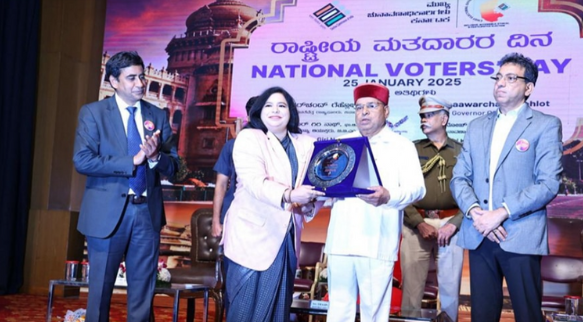
Anjum Tabassum, Tahsildar of Humnabad in Bidar district of Karnataka was presented with an award for her excellent performance as Assistant Electoral Registration Officer during Parliamentary elections 2024.

State governor Thawarchand Gehlot gave away the award to her on National Voters’ Day in Bengaluru on January 25.

This prestigious recognition is a testament to her outstanding efforts and dedication during the Lok Sabha Elections 2024. Her hard work has paid off, and this award is a well-deserved acknowledgment of her commitment to ensuring free and fair election.

Anjum Tabassum Lashkari from Gulbarga cracked the Karnataka Administrative Services (KAS) in 2014. She did her masters from Gulbarga University and had schooling earlier in Shahbad town.

source: http://www.radiancenews.com / Radiance News / Home> Pride of the Nation> Awards> Latest News / by Mohammed Atherulla Shariff / January 27th, 2025

Uppinangady’s Abdul Gaffar successfully transports 100 stingless bee colonies to Gujarat

Uppinagady (Puttur Taluk, Dakshina Kannada Distric), KARNATAKA :

Puttur :

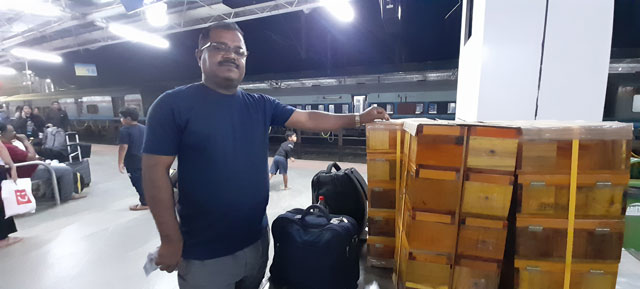
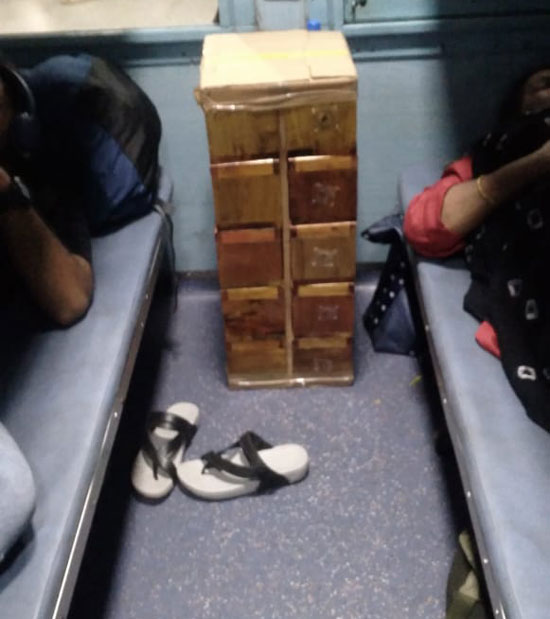
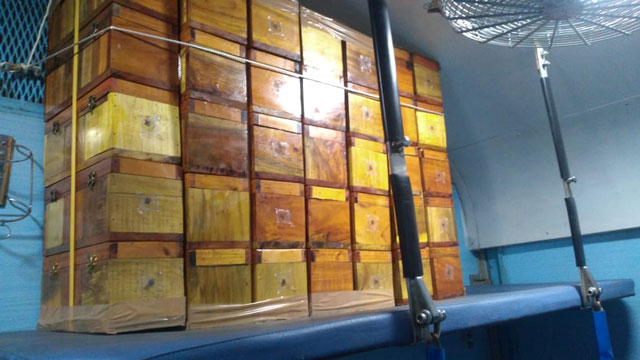
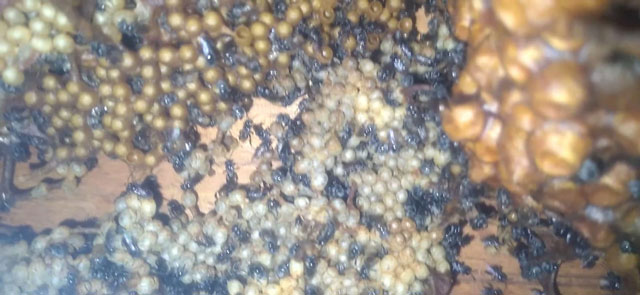
In a significant achievement, Abdul Gaffar, a resident of Berikey House, Nekkilady, Uppinangady, has successfully transported 100 stingless bee colonies along with bees to Gujarat. The transportation was carried out via train from Mangaluru to Gujarat, passing through Bengaluru.

A Gulf returnee, Gaffar initially took up beekeeping as a hobby during the COVID-19 pandemic. However, his passion soon turned into a full-time profession. He attributes his success to the guidance of Manmohan Arambya, who directed him to RUDSETI Ujire for scientific training in beekeeping.

Today, Gaffar manages an extensive collection of bee colonies, including 2,000 stingless bee colonies, 500 cerana bee colonies, and 10 white stingless bee colonies, known as Lisotrigona.

Notably, he is the only beekeeper in Karnataka to own Lisotrigona colonies. As part of his contribution to research, he has also donated one Lisotrigona colony to the University of Agricultural Sciences, Bengaluru.

Gaffar has expanded his work beyond beekeeping. He now deals in high-quality honey, bee pollen, beeswax, bee comb, and bee propolis. Additionally, he has designed innovative beehives tailored for stingless bees, making beekeeping more accessible and efficient. With the increasing demand for stingless bee colonies due to their medicinal benefits, his work has gained widespread recognition.

Acknowledging his journey, Gaffar expressed gratitude to his mentor Manmohan Arambya, RUDSETI Ujire, and senior researchers from the University of Agricultural Sciences, Bengaluru—Dr Shashidhar and Dr K T Vijayakumar—for their unwavering support and guidance.

His remarkable success stands as an inspiration, highlighting the potential of beekeeping as a promising profession and contributing to the preservation of these essential pollinators.

source: http://www.daijiworld.com / Daijiworld.com / Home> Karnataka / by Media Release / January 29th, 2025

Beyond The Memories Of War: How An Initiative Is Changing The Face Of Tourism In Kargil

Kargil, LADAKH :

An inspirational example of how tourism can be a force for good, Roots Ladakh is empowering local communities and preserving the cultural and natural heritage of Kargil.

Roots Ladakh aims to change the preconceived notion of Kargil as a war zone and bring it to the world map as a responsible tourism destination

Against the rugged mountains of the north, Kargil’s troubled history shines bright even today. The town, which has much to offer to discerning travellers, is often overshadowed by the tourist hotspot of Leh and remains mired in its past. Nonetheless, shrugging off its bloody war-torn memories, Kargil is trying to reinvent itself as a tourist destination. And help has come from the people that call it home. 

Laying Down Roots

It is undeniable that there is much more to Kargil than is perceived. And this is precisely what Muzammil Hussain and Tafazzul Hussain—founders of Roots Ladakh, a travel social enterprise —are trying to achieve. As youngsters, they witnessed the Indo-Pak conflict of 1999 and were sent away to complete their education. But love and belief in their beloved land brought them back home.

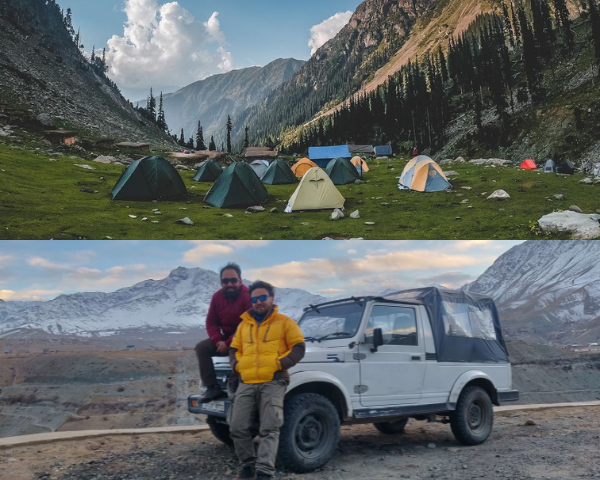
Tafazzul Hussain(left) and Muzammil Hussain(right) organise treks through Roots Ladakh

“At the time (of war), I was in 7th, and my brother was in 2nd Grade. We spent many years away from home, only visiting during summer breaks. During that period, I always used to get asked where I was from, and my answer would always stir awe. It would then be followed up by questions that I used to find very bothersome at that time. I used to get very bothered by the fact that people had a very narrow and skewed understanding of Kargil. Most people thought it was a garrison town in Kashmir; few even thought it was in Pakistan. For me, it became a question of identity. I always struggled to define who I am and where I am from,” expresses Muzammil. Perturbed by these miserable notions of his hometown, the brothers decided there was only one way to change the perception: to bring people to Kargil. 

Roots Ladakh

Founded in 2013, Roots Ladakh had a simple vision: to change the preconceived notion of Kargil as a war zone and bring it to the world map as a responsible tourism destination. 

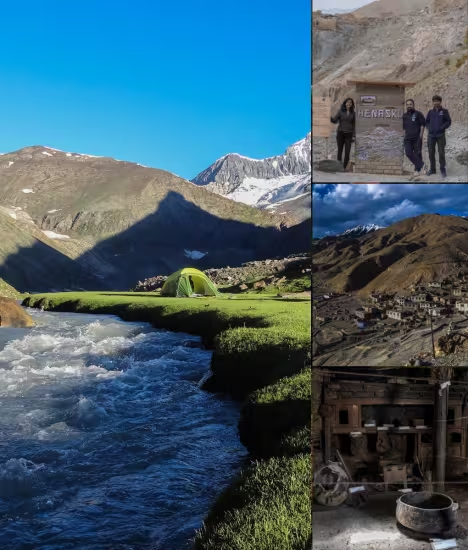
The community-run cultural heritage museum in Henasku, Kargil

Through the enterprise, the Hussain brothers promote the lesser-known part of Ladakh, i.e. Kargil and Zanskar. Since its inception, they have taken up various initiatives to document Kargil’s natural and cultural landscape extensively.

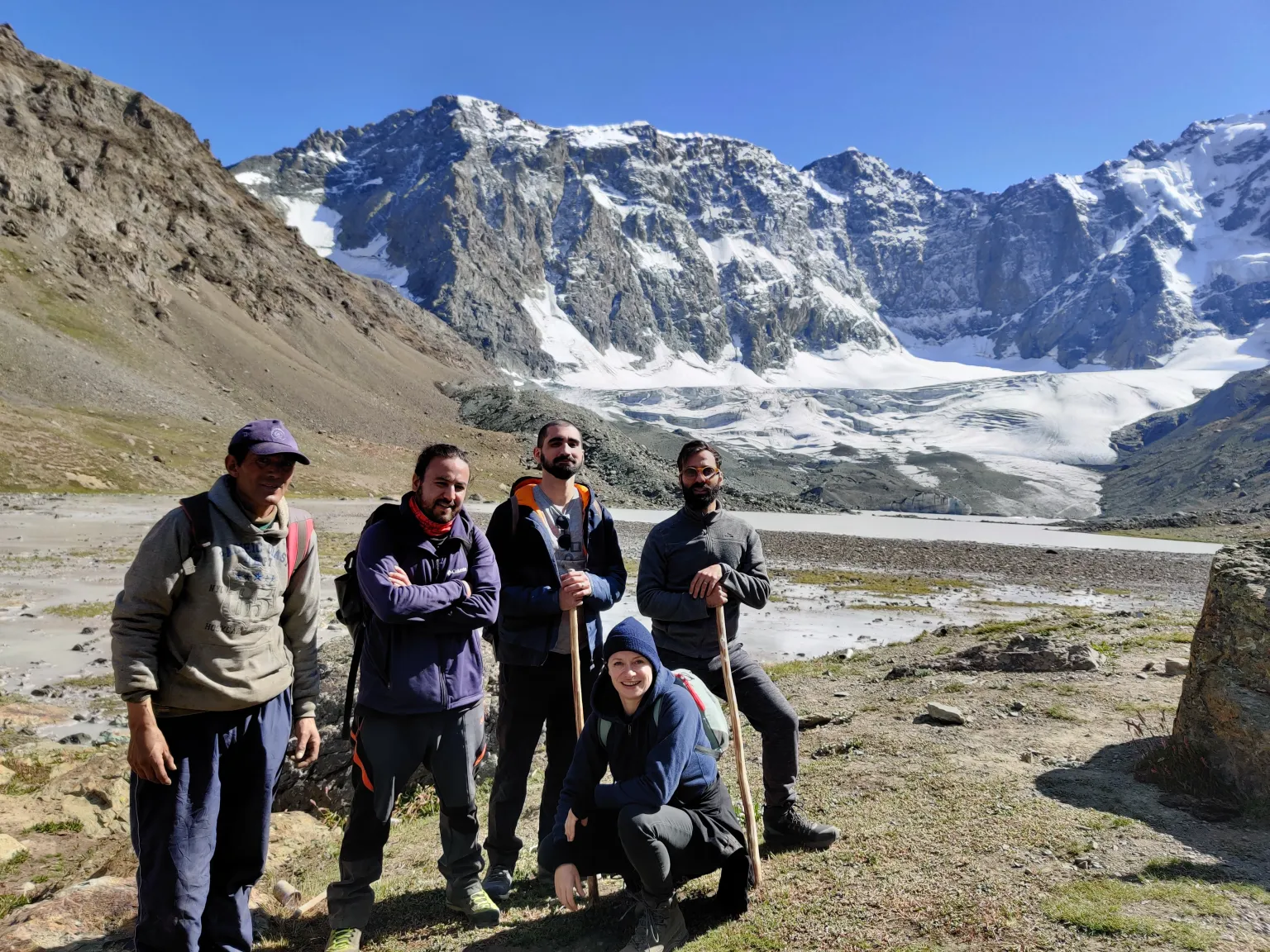
They offer travel products such as treks and hikes, climbing, wildlife tours, travel-based design and architectural workshops, rural experiences, homestays and luxury getaways, catering to a broad segment of travellers.

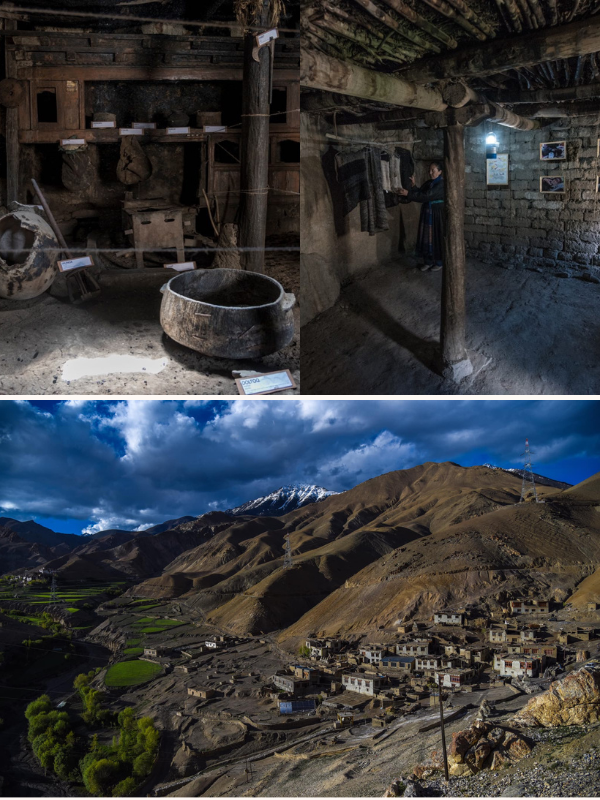
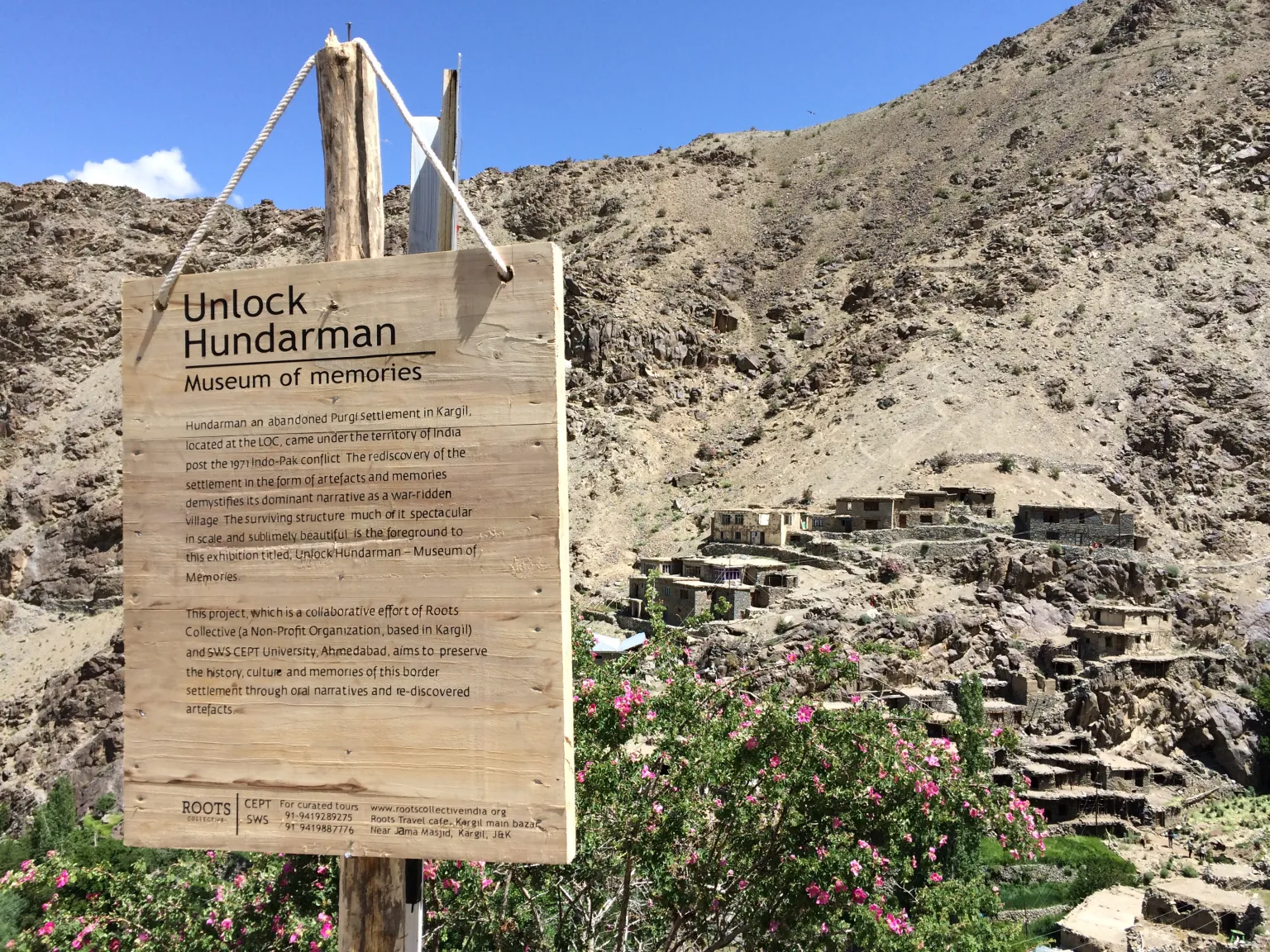
Hunderman is a small village where the Museum of Memories showcases the long forgotten stories of the region

But why focus on Ladakh? Muzammil has a simple explanation. “Ladakh is a well-known destination worldwide, and in the last decade, it has also become a very popular destination amongst domestic travellers. The tourism business is currently highly seasonal and only focuses mainly on popular destinations like Leh, Nubra and Pangong. This not only creates an inequitable income distribution from tourism but also puts a lot of strain on the ecology. Water scarcity and waste management are real threats,” he says. Hence, the bouquet of their travel offerings brings value to the communities living in Ladakh’s remote and lesser-known corners.

Experiences Galore

Perhaps, the most essential aspect of Roots Ladakh’s work is its commitment to sustainability. If you head to Ladakh with Roots, you can trust that your trip will be sustainable and immersed in natural and cultural heritage. One of their highlight projects is Unlock Hundurman – Museum of Memories, a community-run museum in a 300-year-old abandoned settlement along the Indo-Pak LoC in Kargil. These homes were opened to unfold the lives and stories of the people living here through the narratives of war, arts and crafts, lifestyle and culture. 

Roots Ladakh organises treks and hikes, wildlife tours, travel-based design and architectural workshops

Another initiative, Project Drenmo, focuses on wildlife conservation activities for Himalayan Brown Bear. “We wish to address the issue of the Human-Himalayan Brown Bear conflict in the region through a sustainable conflict mitigation and conservation model through community engagement. We focus on outreach, sensitisation, capacity building and wildlife tourism promotion within the community,” Muzammil shares.

One of the most popular programs Roots Ladakh offers is the homestay program, which allows visitors to stay with local families in traditional Ladakhi homes. This not only provides visitors with a unique and authentic cultural experience but also provides income to the families and helps to preserve the local way of life. An extension of that program is Black Sheep, a boutique bed and breakfast in the heart of Kargil, with a view of the beautiful Suru River as it snakes along the city. Here, you can immerse yourself in the culture and heritage of the region as you learn more about the city and its people. 

Moreover, the enterprise promotes voluntarism and offers volunteer opportunities for individuals and groups in various parts of Ladakh to promote sustainability and responsible tourism. The road to success, much like the meandering roads of Ladakh, is challenging to navigate, but the brothers are committed to their cause. “Our vision is to set a road map for the coming generations to appreciate and embrace our local heritage, ethics and values. We want to inspire businesses to be conscious about creating shared value,” he says. 

source: http://www.indianexpress.con / The Indian Express – Express et.al / Home> Responsible Tourism / by Mallika Bhagat / by IE Online Media Services

The forgotten treasure that brought a Silk Road city back to map: ‘Changing notions of a warzone’

Kargil, LADAKH :

In the aftermath of the Kargil War, Muzzamil Hussain’s family unearthed a treasure of Silk Road artefacts in their ancestral property near Kargil’s bazaar.  

At the request of Hussain’s ailing grandfather, the family inspected an old property near Kargil’s bazaar.(Pixabay)

In 1999, during the violent onset of the Kargil War, Muzzamil Hussain and his family fled their hometown in Ladakh and sought refuge in the remote Suru Valley. The conflict, which left a lasting imprint on the region, marked a turning point in Hussain’s life. Upon returning to Kargil after India claimed victory, a significant discovery awaited the family, changing their lives forever.

At the request of Hussain’s ailing grandfather, the family inspected an old property near Kargil’s bazaar, originally built by his great-grandfather, Munshi Aziz Bhat. Behind hand-carved wooden doors sealed with a rusty latch, they discovered a trove of artefacts, including silks from China, Persian rugs, silver cookware from Afghanistan, Tibetan turquoise, and luxury items from London and New York. The collection would later be recognised as one of India’s finest private Silk Road relics.

Preserving the past

Initially unsure how to handle the artefacts, the family received guidance from anthropologists Dr. Jacqueline Fewkes and Nasir Khan from Florida Atlantic University in 2002. Recognising the collection’s historical significance, they encouraged its preservation, according to the BBC.

This advice led to the establishment of the Munshi Aziz Bhat Museum in central Kargil, overseen by Hussain’s uncles. The museum showcases hundreds of Silk Road artefacts, such as 18th-century Ladakhi sheep-horn bows and 19th-century Chinese copper pipes.

“The Munshi Aziz Bhat [museum] doesn’t have to, and should not, be the British Museum or the Smithsonian because it offers its own perspective that is invaluable to both local and global audiences,” Dr. Fewkes stated. “The stories are focused on identities that are significant to the descendants … family and local histories provide an alternative understanding about the past.”

Carrying forward a legacy

While his uncles manage the museum’s daily operations, Hussain dedicates his efforts to researching and tracing his family’s Silk Road heritage. He believes these initiatives help reconnect the local community with its roots.

“In places impacted by war, like Kargil, there is often an identity crisis and lack of pride,” Hussain remarked. “Tourism can be a powerful tool for healing. When visitors appreciate your history and heritage, it fosters a sense of pride.”

Born in Leh in 1866, Munshi Aziz Bhat—Hussain’s great-grandfather—studied in Skardu, now in Pakistan. He later established a thriving trade hub in Kargil, featuring shops, an inn, and stables for long-distance traders arriving from places such as Lhasa and Yarkand.

At its peak, this hub connected Central Asia, mainland India, China, Europe, and the Americas. However, the 1948 partition between India and Pakistan shut down trade routes, effectively ending Bhat’s prosperous business. The property remained locked for nearly half a century.

In 2013, Hussain and his brother Tafazzul launched Roots Ladakh, a travel company promoting the region’s cultural and natural heritage. While most tourists visit Leh, Hussain aims to highlight Kargil’s historical significance.

“Our vision is to change the preconceived notion of Kargil as a warzone through the lens of heritage,” Hussain explained.

Hussain frequently travels along the perilous Zoji La pass, connecting Kashmir to Ladakh—a route still considered one of the world’s most dangerous.

A new chapter for Kargil

The family’s efforts continue to reshape Kargil’s image. Hussain’s engagement with visitors mirrors the legacy of his ancestors, who once hosted traders from across the globe.

“I reminisce a lot about my ancestors and the interesting people they must have met. Kargil today is still a transit location, just like in the past, and I feel like I am continuing that legacy by hosting travelers and guests,” Hussain shared.

source: http://www.hindustantimes.com / Hindustan Times / Home / by Simran Singh / January 30th, 2025

Mission Milk: Helping Underprivileged Children In Times Of Hardship

Bengaluru, KARNATAKA :

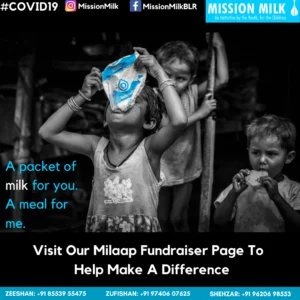
In an interview with The Global Hues, three cousins from Bengaluru – Zeeshan Javid, Zufishan Pasha, and Shehzar Sheriff shared their incredible journey of mission milk ensuring milk supply to impoverished kids in their city since the onset of the first lockdown in April 2020.

In what would arguably be the largest mass exodus in the history of independent India, the plight of migrant workers and their kids  — stranded, exhausted, physically battered, mentally drained, forced to travel hundreds of miles on foot, often on hungry stomachs and with no money to get by — brought to the fore the vulnerability, dread, and agony of millions. As the centre and state governments tried their best to ensure the supply of essentials to the needy, milk (a basic source of nutrition for kids ) was being overlooked.

Realizing the urgency of this salient requirement, these young cousins from Bengaluru began Mission Milk in April 2020. The idea of Mission Milk originated with a ration distribution drive that was conducted by the families of this trio. Zufishan recounts how once while conducting these drives, a group of really poor migrant workers had approached them with the woes of their children who often had to go to bed hungry as it wasn’t always plausible to make arrangements to cook the dal and rice that they would receive through the ration kit distribution. 

“We are lucky enough to be in a situation where we don’t necessarily have to worry about basic needs such as food,” says Zeeshan. It was a sense of empathy and personal responsibility they felt regarding the condition of poverty-stricken children going hungry during the pandemic that birthed the idea of “Mission Milk”. Today, they are distributing about 500 liters of milk a day throughout the city.

Why Milk?

While brainstorming ways to help out these kids, they came up with the idea of distributing milk. Compared to ration kits, which would sometimes cost up to 3000 rupees per kit, milk was relatively cheap. Moreover, distributing milk which costs around rupees 37 per liter would allow for more people to help out at their capacity. Even a child could help out the needy with milk by saving up some money from his weekly allowances. This would allow for a wider network to join hands with the initiative and amplify its reach.

Remaining faithful to their tagline “By the youth, For the children”, they aspired to take the mission in a direction that surged youth participation, not only for the sake of the children but also for their personal growth as humble individuals. Mission Milk believes in giving back to society by helping the distraught in times of need, such as the pandemic. It teaches one humility and compassion and makes one feel grateful about their own situation.

A Movement To Inspire

Zeeshan, the co-founder of Mission Milk tells us that their goal was to spark a nationwide movement where people felt stirred enough to organize similar initiatives in their cities to help out the needy. He tells us that theirs is not an organization with any secrets which aspires for popularity or recognition. They have put up several videos on their platform showcasing methods to implement such initiatives anywhere in the country. The idea behind its inception is to galvanize people, especially the youth, to take prompt actions in improving the condition of their immediate neighborhoods.

The goal is to allow this movement to set off the build-up of similar organizations like theirs which work dedicatedly in their areas & capacities for the benefit of those hit severely by the pandemic. In the words of Shehzar (co-founder, Mission Milk) “It has been the immense motivation received from donors, milk angels ( anybody who has been involved with mission milk), and the joy on children’s faces that has kept them going at it tirelessly”.

Functioning Of Mission Milk 

The first step involves the collection of funds which is followed by a survey to analyze the number of families and kids in a designated area who could benefit from the initiative. To make this happen, local volunteers are chosen who have a better idea about the demographics of the area and are aware of the location of dairy points. An agreement is set up with the dairy partner regarding the designated packets that the local volunteers would be buying to distribute.

A decentralized and adaptable approach is used whereby the local volunteers are free to buy and distribute milk as per the requirement of the community. For example, migration workers who were leaving for train stations as the lockdown was announced last year, were provided with tetra milk packets that guaranteed longevity and did not require refrigeration or heating to be consumed. Taking assistance from the already available databases of various NGOs, they could ensure better reach to those in need. It helped them nearly double their reach. 

A decentralized approach of Mission Milk makes local and NGO volunteers work hand in hand in surveying new places and estimating their requirements.

After getting repeated requests from orphanages throughout Bangalore, they have recently started distributing milk to around 5 orphanages in different parts of the city during the second wave of the pandemic. 

source: youtube.com

COVID-19 Care :

Their job simply doesn’t end at distributing milk. With the help of local volunteers, information regarding covid-19 safety is spread throughout the communities they serve. The volunteers make sure to make use of masks, sanitizers, and gloves not just for their own safety but also to set an example for these communities.

Overcoming Barriers

“Funding was a roadblock initially but things fall in place once you get into the thick of things and begin the work”

Zeeshan exclaimed. Updates about their activities are regularly given to the donors through texts to maintain accountability and trust. The creation of a fundraising page was premier in helping them gather enough funds to get the mission started. With the second wave of the pandemic hitting people much closer to home, it was not feasible to gather enough volunteers to do the job. This situation was grappled with by seeking help from local NGO volunteers who were dedicated enough to carry out these services during the pandemic.

Delivering milk before it gets spoiled was another challenge that was overcome by coordinating timings with the local milk vendor and making timely deliveries. Future plans of this organization involve getting registered as an authentic company or a trust to spread their reach nationwide and help as many as possible.

source: http://www.theglobalhues.com / The Global Hues / Home> Interview> Magazine / by The Global Hues / May 31st, 2021

A day in the life of a ‘hiss’torian

Bengaluru, KARNATAKA :

pix: facebook.com/foundersnakerescue

Bangalore :

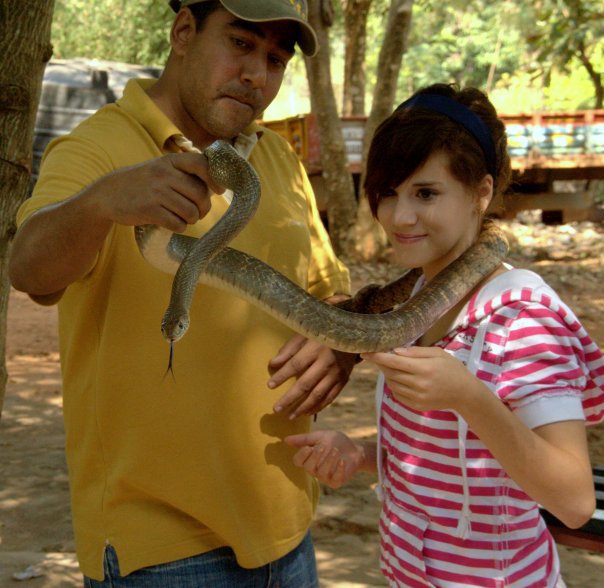
After catching thousands of snakes (venomous and non-venomous), featuring in several shows on Animal Planet, Discovery and National Geographic, shooting one-hour documentaries on snakes for the same channels and having acquired the status of a celebrity snake-catcher over 20 long years, what reason could Mohammed Anees have to be slightly bitter about it all? In his words, ‘the lack of respect people have for the profession’.

His passion for snakes began as a child, and he trained himself over the years through various books by respected herpetologists and experts and despite opposition from his family, he made long trips on his bike in the early days to follow up on calls from bite victims and people who wanted snakes removed from their property.

But Anees is quite upset with the government’s approach towards snakes and snake- catchers.

“They are not supporting them at all.

All their pleas have fallen on deaf ears for so long now. Unlike other professions, here you have to put in money from your own pocket to survive. I can’t pin the blame on a single person, it is the system to blame which doesn’t respect snakes or snake-catchers,” says Anees.

“It’s a thankless job, but I have stuck to it for the sake of the many lives which are at risk from snakes, and of course for the snakes too,” he says. It never did and still doesn’t pay enough to clear his overheads, and he addresses that problem with his construction business and by manufacturing billiards tables.

His life is a heady mix of many things, of course snakes figure predominantly, despite him not being able to go out on calls often due to a niggling back problem.

He loves cats and has several Persian cats, besides his beloved Lost-2, the cat he is most attached to. His son Shoaib, is following his footsteps, as is evident from a picture of the spirited kid with large snakes hanging from his body.

Just like any other day in his life which is flooded by calls from people wanting his expert advice regarding snakes, Tuesday began with a call from Tumkur at 6 am, from a family who wanted him to help their daughter, who was suspected to have been bitten by a snake. He gave them real-time advice and asked them to send him pictures of the bitten area. This was followed by a slew of calls from JP Nagar, HSR Layout and a lot of other places.

Yellagiri hills – Reptile awareness camp / pix: facebook.com/foundersnakerescue

He now has a team of four boys he has trained personally, who go out on regular calls. When it comes to training people and raising awareness about the reptiles, he has trained over 300 people till now, who are now practising snake catchers across the state. One more thing that he is proud of is the fact that none of his students have ever got bitten.

“By god’s grace till now I have never been bitten by snakes and I have never even killed one in my life.” says Anees.

“A snake-catcher who knows his profession will never need to kill one,” he signs off. 

source: http://www.newindianexpress.com / The New Indian Express / Home> Bengaluru / by The New Indian Express – Online Archive / pixs edited from facebook.com / May 16th, 2012

The Snake Charmer from Coles Road

Bengaluru, KARNATAKA :

Mohammed Anees was in the 3rd standard and on his way to Baldwin Boys high School, where he studied, when he laid eyes on the first one. It was run over by a truck and the hind part of its tail smashed on the tarmac.


But, little Mohammed, picked it up, put it in his school bag and took it to school. During class, somehow it managed to wriggle out. In no time the whole class was screaming, and Mohammed got beaten by his class teacher, his Principal, and later in the day by his parents and then his uncles, in that order.


It was Mohammed’s first encounter with the species.

The snake.

Since that fateful day, which he remembers with a sheepish grin, Mohammed has rescued caught and rehabilitated more than 2500 snakes, earning him the title ” The Snake Charmer of Bangalore”.


From Majestic to Shivajinagar, residents remember him fondly as the man who ‘charmed’ hundreds of poisonous snakes out of their compounds and houses.

Online Bangalore met up with this extraordinary human who snaked his way into our hearts. He talks fondly of his undying love for snakes, their habitats and our relationship with the most misunderstood of God’s creatures.
As we seated ourselves on his balcony, and sipped tea, Mohammed unwraps a cloth covered glass tank, and displays to us two baby snakes, each about 15 centimeters long.


With one eye on these beautiful specimens, and the other on Mohammed, their guardian,
we start the conversation.

What Snakes are these?
These are baby Trinkets. And this is for the first time in India that they are being bred in captivity. I found their mother almost dead. I brought her home, and nurtured her. She laid 8 eggs. These are the two which hatched ( He tosses in a baby lizard into the tank as feed).


Contrary to what the reptile theoreticians assume, it took 85 days for them to hatch. They said 45 to 50 days. I have proved them wrong. Until you do it by yourself, you’ll never know for sure.

Have you bred any other snakes in captivity before?
Yes. I have incubated, hatched and raised 17 cobras in captivity.

When and where was your earliest contact with snakes?
On my uncles farm in Chickballapur. It was punishment transfer according to my folks, ‘coz I’d fared badly in my 10th standard exams. But for me, it was some of the greatest days of my life, as I would catch lots of snakes and then release them in the nearby forests. I guess I became an expert from those days on the farm.

How did you become popular as a snake catcher in Bangalore?
After I moved to Bangalore after the farm days, I used to help catch snakes initially from the houses of my friends and relatives. Gradually the word spread and then people from all parts of the city started calling me.

Which parts of Bangalore are most infested with snakes?
The whole of Bangalore actually. But, the most densely infested areas are Kamanahalli, Bashweshwar Nagar, HAL – Indiranagar, Rajarajeshwari Nagar and Giri Nagar areas.

Which were your biggest and memorable catches upto date?
The biggest catch was 57 snakes from the compound of the Drug Testing Laboratory and 21 snakes from the compound of the residence of the Chief Judicial Magistrate, then Mr. Bhaskar Rao, both on the same road.

What is the reaction of the people after you catch the snakes.
Relieved naturally. But, I’m surprised at the concern that the people of Bangalore have for snakes. In some cases, after they find out that the snake is not poisonous, they have requested me to release it there itself. Having a non poisonous snake in your yard is actually a prevention against poisonous ones and they also get rid of all the rodents.

Do you have anybody to assist you?
Earlier, I was alone, but now I have about 16 persons who have been trained by me.

What is your ‘modus operandi’ so to speak?
We are alerted of the presence of snakes by phone calls. We then reach the spot immediately and trace out the snake. The catch is made usually with bare hands, but we use the hook at times when we have to get them out of holes or crevasses. We then put them into specially made snake bags that are 4 feet long and then bring them to my house where they are then placed in snake boxes. After a gap of 7-8 days, we then take them to the Banerghatta forest where they are released in the presence of the Government Forest officer.

Where do these snakes normally tend to hide?
Almost anywhere actually. I have caught them from ceiling fans, inside car bonnets, motorbikes, suitcases…..practically everywhere.

What are the varieties common to Bangalore?
Cobras, which are poisonous and rat snakes which are non-poisonous. In all there are 19 varieties of snakes in Bangalore, (though the theoreticians wrongly state 21) including the big four poisonous snakes.
In fact after all these years I can tell where the snake is from when I see it. The ones from Bashweshwar Nagar area have a dark tinge to their skin, while those from other areas bear different characteristics.

What are the Big Four?
They are the four most poisonous snakes in the world, and Bangalore has all four of them. The Cobra, Krait, Russell’s Viper and the Saw-scaled Viper.

Why do snakes attack humans?
Actually snakes never attack unless they are provoked or attacked. So if you see a snake, just keep still and look at it in the eye. Don’t ever make a move towards it.
65% of all snake bite cases are those that take place when the snake is attacked.
25% when they are stamped upon unknowingly in the dark.
5% when people roll over them in their sleep, especially in the villages where the snake snuggles up to keep warm.
And only 5% to so called ‘freak’ causes.
Remember,snakes never bite that which they cannot swallow and all they know is eating, mating and hiding!

How do you manage without any public support?
I love snakes. Somehow I feel it my duty to protect these lovely creatures from unwanted killing. By the grace of God or by the strangest of coincidences, every time I rescue a snake after a call, I manage to get an order for making a Billiard table, which is my line of business. So, touch wood, so far I have not felt the pinch. But I sincerely wish someone would come forward with help. It is always welcome. But somehow it is not in me to go around asking for it.

Have you won any awards for your meritorious service?
One Government official has been telling me for the last 3 years that they propose to give me the Rajyotsava Award for the service I’m doing for the public.
Nothing has happened. Nothing will, even for the next 3 years. ( He laughs)
The S.P.C.A. gave me an award last year for my service .I attend to snake calls for the S.P.C.A. also.

Do you have any future plans?
Yes. I have a lot of plans. But without funding It’s helpless.
I have compiled all my experiences with snakes into a book, which I feel can be read and understood by both 3rd standard school kids as well as medical professionals. I hope to publish it someday, if somebody is willing to fund it.

As we thank him and get up to go, one of his assistants arrive with a cobra, caught that morning from Kamanahalli. Mohammed is suddenly alert as he inspects the snake and instructs the man to put it in one of the snake boxes.

We wonder if the cobra is aware that in a week’s time, it will be free again, in its own habitat, thanks to a 29 year old, who became their protector and guardian since that fateful morning 21 years ago.

Interviewed by Monu D. Surendran

If you wish to donate to the cause of rescuing and rehabilitating snakes or for snake rescue:

Contact:
Mohammed Anees / No.15 Coles Road,/ Opp. Bank of Baroda
Frazer Town / Bangalore 560 005 / Ph: 5487424, Mobile: 98440 37424

source: http://www.onlinebangalore.com / Online Bangalore.com / Home / by Monu B Surendran

Umair Manzar recalls days he was teaching Urdu to Rekhta Founder Saraf

Lucknow, UTTAR PRADESH / NEW DELHI :

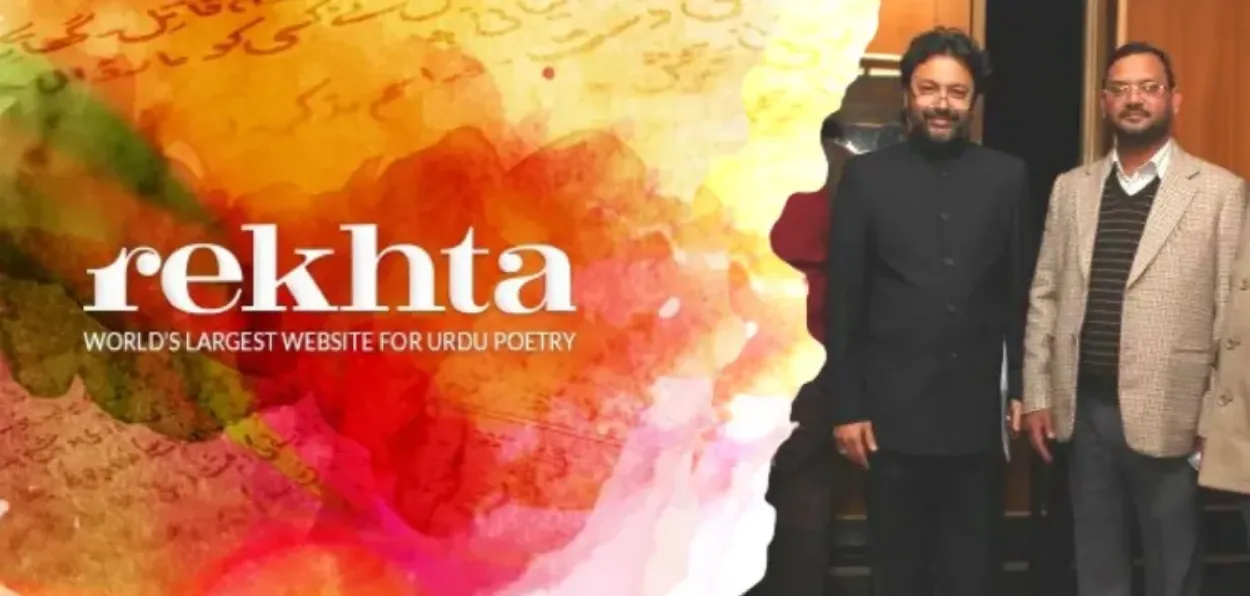
Founder of the Rekhta Foundation Sanjeev Saraf (left) with Dr Umair Manzar

“Umair Manzar was the first to join me in my journey of Rekhta,” said Sanjeev Saraf, the founder of the Rekhta Foundation. He said this before a smaller audience at the launch of the first Jashn-e-Rekhta, the festival of literature and performing arts in 2012.

The festival has become a major annual cultural event in Delhi, and the Rekhta Foundation portal is a key resource for Urdu language and literature and a peg for the online and offline community of Urdu literature lovers.

This year the three-day Jashn-e-Rekhta is being held in Delhi from December 13.

Saraf said Umair was his first Urdu teacher. He was the one who proposed the name Rekhta for the website and became the first member of the online community of Urdu aficionados on Rekhta Foundation.

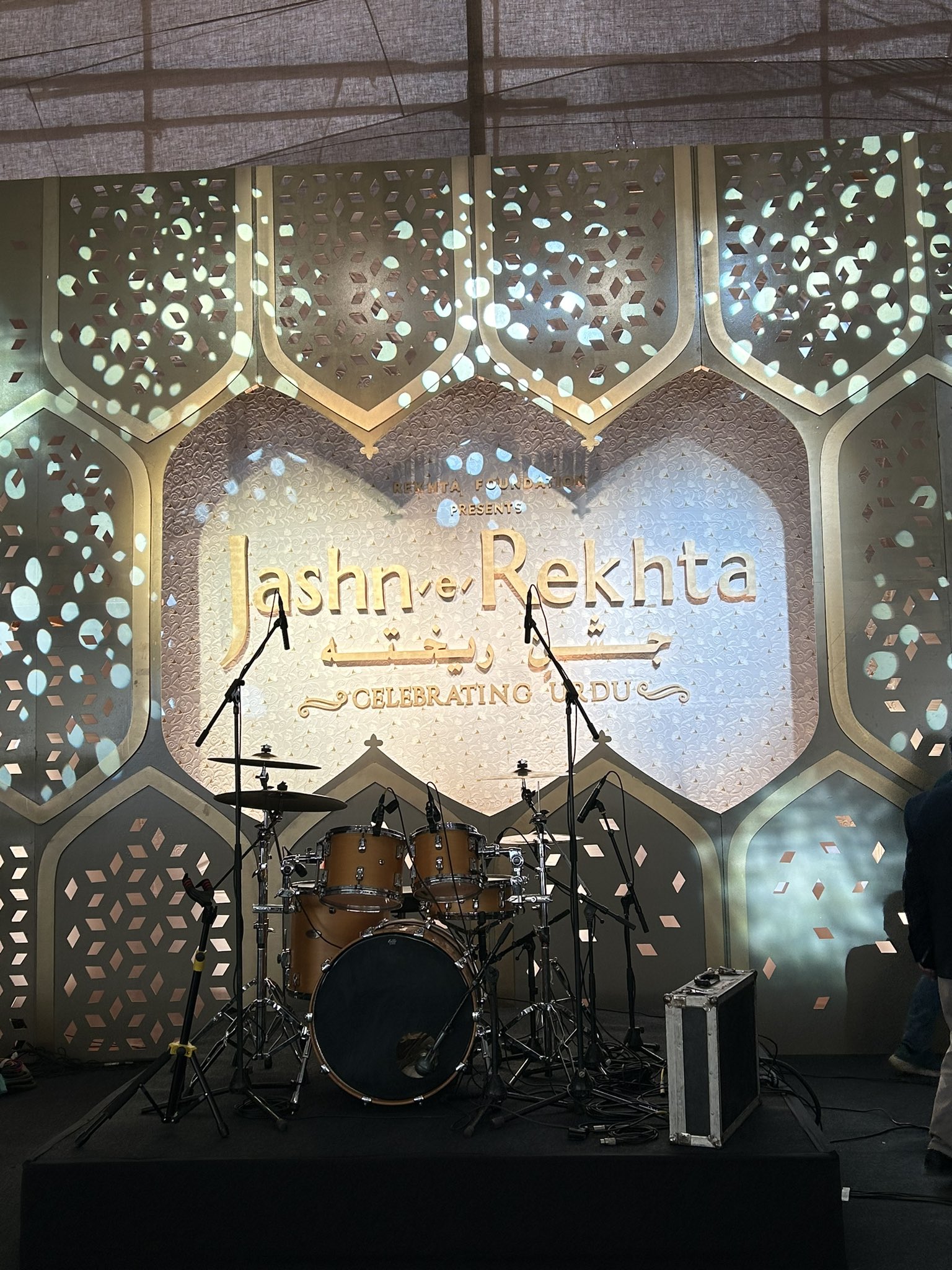
Stage for artists to perform in Jashn-e-Rekhta

Today, Dr. Umair Manzar is an Assistant Professor in the Urdu Department of Maulana Azad National Urdu University, Lucknow Campus When Awaz-the Voice contacted him, he was surprised at his name being mentioned by Safar.

Awaz-The Voice contacted Umair Mazhar on the phone. He came across as a simple and humble person not too keen to take credit for his key role in setting up Rekhta.

After initial reluctance, Umair Manzar agreed to share his interaction with Sanjeev Saraf.

Manzar’s version of the initial days of Rekhta threw up many more characters in this journey. He says many other people also played their part in helping Sanjeev Saraf concretize what was his passion for the language.

Umair Manzar said that he met Saraf during the 2010 spring.”Summer had not started.”

One day Vice Chancellor Jamia Millia Islamia Najeeb Jung called Urdu’s Head of Department Professor Khalid Mahmood and asked him to send a tutor to a particular person to teach Urdu. At that time, Umair was teaching at the university. His HOD gave him a piece of paper with a name and a telephone number scribbled on it and asked him to contact him.

“The name was Sanjeev Saraf. I called that number, we fixed a time for the tuition class.”

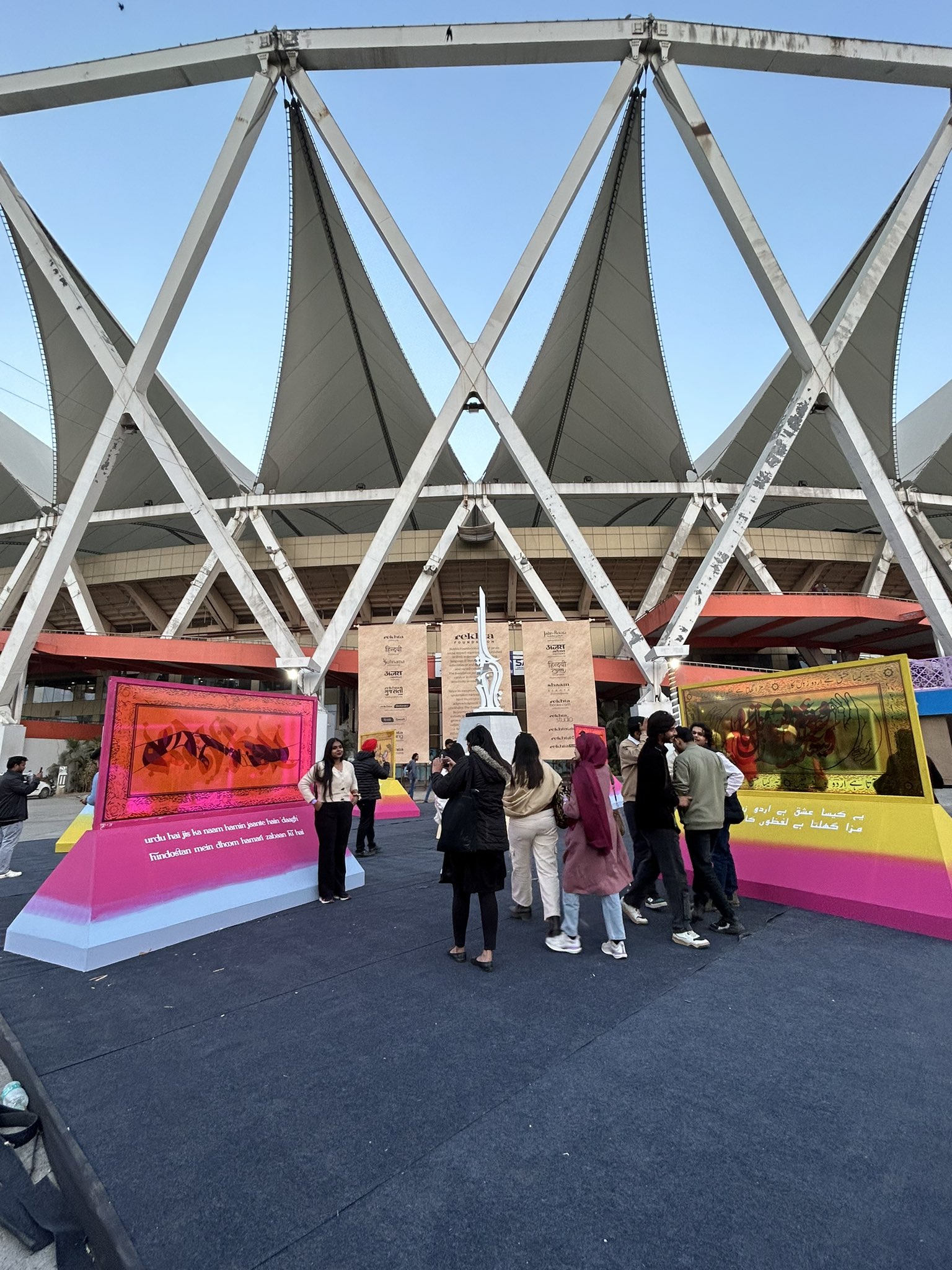
Jashn-e-Rekhta festival

“The first time I met him at his home. I had no idea who he was. Yet I found him a serious person; there was a certain calm in his way of speaking.”

“I liked him instantly as he spoke candidly. After a few meetings, he told me that he was very fond of Urdu and wanted to learn it.

“He especially wanted to understand poetry. In a few meetings, I realized that apart from learning the language, he was also interested in creating an Urdu website. He has nursed a dream of starting an Urdu website for many years,” Manzar said

Sanjeev Saraf seemed to be learning the language out of love for it. He also thought Urdu could become a bridge among diverse people of India who loved the language.

He thought the website of this idea could increase their love for Urdu. Thousands of people want to learn the language because of its poetry. However, there is no one to help them. Sanjeev Saraf had faced this problem and therefore empathized with others. He had the resources, including time to learn Urdu. However, everyone could not do it.

Manzar told Awaz that he soon realized Sanjeev Saraf wanted to do something beyond learning Urdu.

After a few days, he said, “Every person needs a teacher; my website can fulfill the needs of all such people.”

Manzar said, “This got me thinking seriously about this issue. By now I was visiting the Noida office of Mr Saraf. One day he said that we can start Urdu work in a part of that office.”

Umair Manzar also did not realize that he had become a part of the initiative to establish a website that would help Urdu lovers all over the world and bind them in a community.”

He also realized that he was dealing with a passionate lover of Urdu and not a mere learner. 

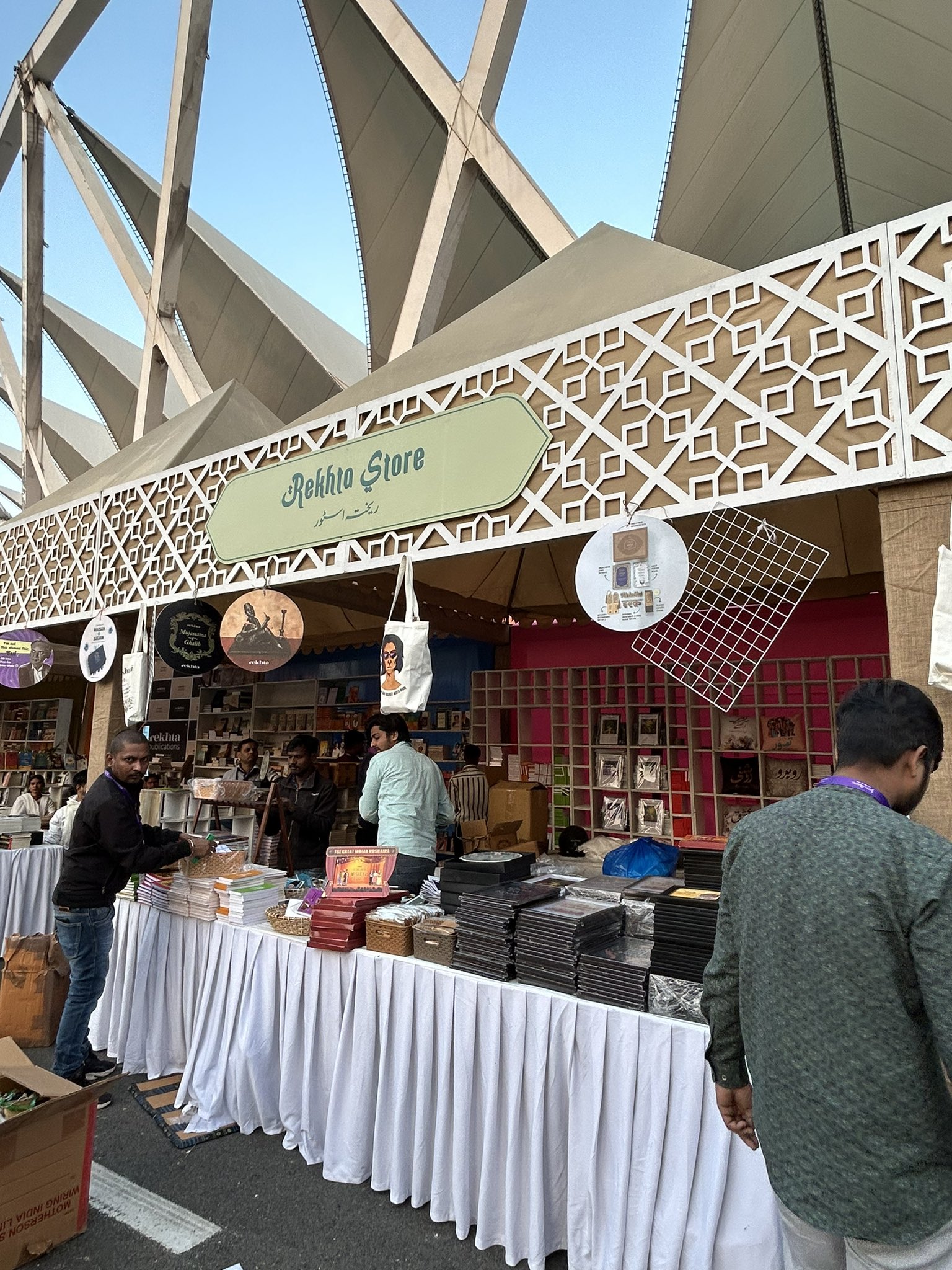
A bookshop in Jashn-e-rekhta

One day Safar spoke formally to him. We decided to discuss it in detail.

And finally one day Sanjeev Saraf asked him to start work on the website,

The first name for the website he suggested was Kavita. This was already bought by someone. The same was the case with many other titles. “I also felt if we had to buy the already registered name for the website, the prices were ridiculously high.”

He suggested ‘Rekhta’ to Sanjeev Saraf. ”He asked me its meaning. When I explained it to him he was happy. Soon we registered rekhta.org as the domain name. I remember he liked the harmony of the words. He was sitting with us during the entire process of registration online.”

Thereafter the work on the website started and many targets were achieved before the scheduled time. This was the journey of paper preparation for the Rekhta Foundation.”

Umair Manzar says he had met Sanjeev Saraf with the sole purpose of teaching him the language but he got involved in his mission.

When asked about the preparations after naming, Umair Manzar said, “After the name was decided, work on the website started. In the summer of 2011, I officially launched the website. The first step was to choose poems of classical poets and the unanimous choice was Mirza Ghalib.”

The selection of contemporary poets started from Jamia Millia Islamia and other libraries. Their compositions were recorded. Saraf hired composers and they worked out of the Noida office. It started slowly and then it gained momentum.”

Umair Manzar said, he also contacted Professor Ahmed Mahfooz and Professor Abdul Rashid for their suggestions and advice.”I also arranged a meeting of both gentlemen with Sanjeev Saraf and this meeting lasted for several hours.”

Saraf expressed his intentions and ambitions; the professors also gave their input and suggestions. “Sanjeev Saraf noted every suggestion and tip the two learned professors  offered.”

Prof. Rashid suggested that the way to preserve old books was to scan them and upload them on the website.

Umair Manzar says,” One day when I went to the office, Sanjeev Saraf announced the (scanning) machine had arrived. “Now you people bring the books. The scanning process will begin.”

This was a challenge to all of us. Initially, we tried to upload only selected and important books on the website. Later this also opened a new possibility.

A poster of Jashn-e-Rekhta

Umair Manzar says that initially, people like Rehman Farooqi, Prof. Shamim Hanafi, and Prof. Walwasa ignored the website as another wannabe.

Probably the first column about Rekhta was written by Professor Vasa, Vice President of the Urdu Academy. He also gave Rekhta an award for the promotion of Urdu.

Umair Manzar joined Maulana Abul Kalam Azad Urdu University as an assistant in the early days of Rekhta.

Initially, the Rekhta Foundation was recruited only on the recommendation of a group of like-minded people like Professor Ahmed Mahfooz, Professor Abdul Rashid, and Umair Manzar.

Abdul Rashid, who is from Delhi, had done his research on dictionaries. This year the Ghalib Institute is giving him its prestigious literary and research award. Professor Ahmed Mahfooz is the HOD Urdu Department of Jamia Milia Islamia. He is an expert on poetry.

Professor Abdul Rashid and Dr. Amir Manzar are among the people who have been actively associated with the Rekhta Foundation since its inception.

Dr. Umair Manzar and Prof. Abdul Rashid were included in this team to scan books from Raja Mahmoodabad library and make them part of e-books.

Similarly, access to some private libraries and some important books was very active. Along with them, Professor Abdul Rashid and Dr. Umair Manzar have played a role.

source: http://www.awazthevoice.in / Awaz, The Voice / Home> Stories / by Mansooruddin Faridi, New Delhi / December 12th, 2024