Tag Archives: Muslims of India – Positive News

Keeper of the lost culture

Bhopal, MADHYA PRADESH / Aligarh, UTTAR PRADESH :

Zillur Rahman, a professor, poet and hakim, has established a museum-cum-library in Aligarh to preserve books and artefacts that tell the story of Delhi of yore.
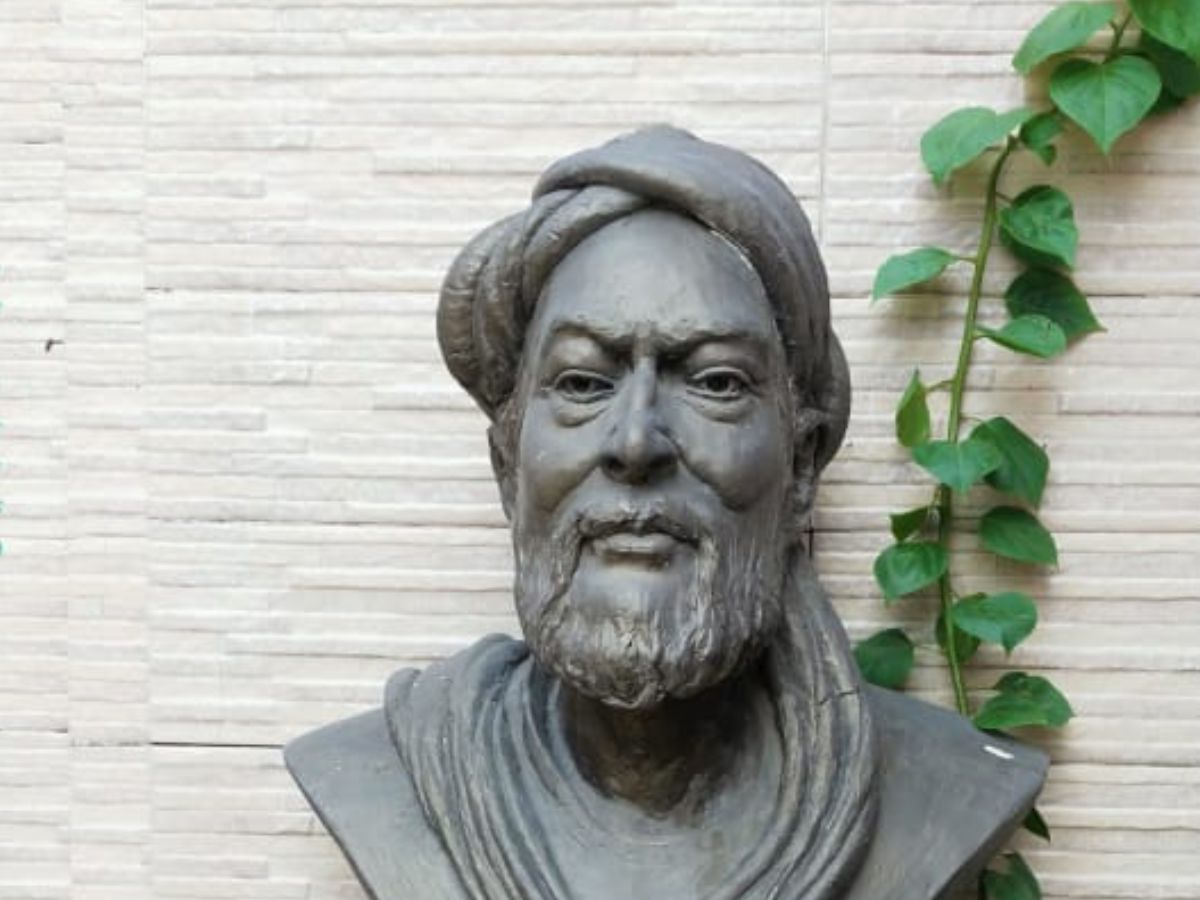
PIONEER: A bust of Ibn Sina, a physician and philosopher, who lived over a thousand years ago, at the Ibn Sina Academy in Aligarh

Nestled in the heart of the city of Aligarh, Uttar Pradesh, is Ibn Sina Academy of Medieval Medicine and Sciences, named after famous scholar of philosophy and medicine Abu Ali Ibn Sina (980 -1037), who lived over a thousand years ago. 

Located at Tijara House, the non-profit, non-government and non-political academy was established in the year 2000 by Professor Syed Hakim Zillur Rahman, an academic and a litterateur from Aligarh. 

A one of its kind museum and library, it was aimed at encouraging and promoting researches and studies in medieval sciences, especially Ibn-Sina’s, as well as arts, culture, poetry among other subjects. 

Notably, Ministry of Ayush, Government of India gave accreditation to the academy in 2004 and promoted it as a Centre of Excellence in 2008. The professor had a mammoth personal library that he had established in 1960s. After Ibn Sina Academy was born, the library became a part of it.

The specialty of this museum lies in its varied collection that includes sofas, crockery, jewels, armours, stamps, mirrors, outfits of princesses, queens and kings as well as turbans worn during battles by historical legends. 

The Zillur Rahman Library houses 32,000 rare books and magazines, 1,100 manuscripts apart from paintings, sketches, citations, artefacts and much more.
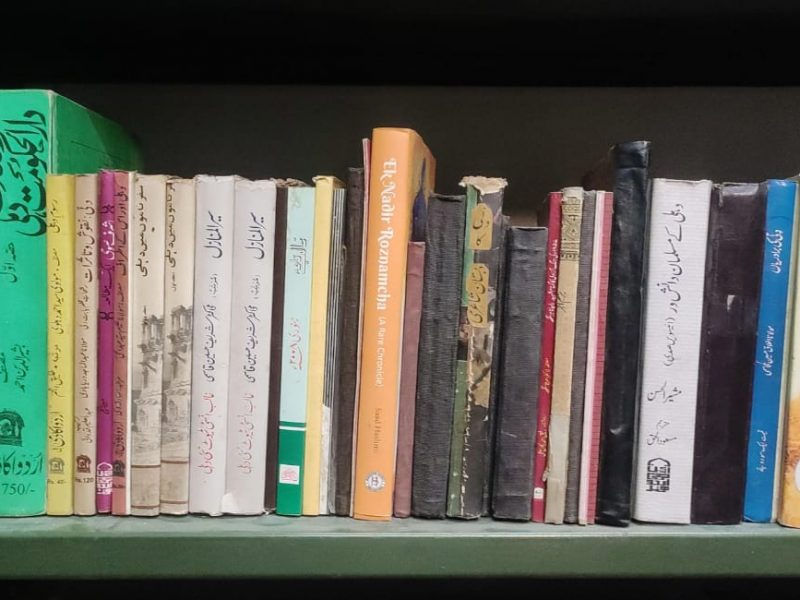
RARE: A collection of books on Delhi

The Delhi connection 

There are 7,500 books on Delhi of yore in the library, including on poet Iqbal, dictionaries as old as 150 years, authentic diwaan on Ameer Khusrau, books dating back to 1893, on and by the last Mughal emperor Bahadur Shah Zafar, British Raj–Victorian Era with pictures in lithographs and more. 

But considering Delhi is dry without the ‘zikr’ (mention) of the poetic legacy of Asadullah Khan ‘Ghalib’, the library has dedicated a special space for the poet: “Ghalib Study Centre”.

A galaxy in itself, this part has 1,350 rare books in Urdu, Persian, English and Hindi on Ghalib apart from several special issues in different magazines (called risala in Urdu) which are now available only in this museum. 

For instance, an important old publication called Sooraj (meaning sun) had special Ghalib edition. 

One of the books has illustrations of most of the ghazals he had penned, while in his own Deewan (collection of his authentic shayri) there, Ghalib’s original ghazals had no pictures or illustrations. 
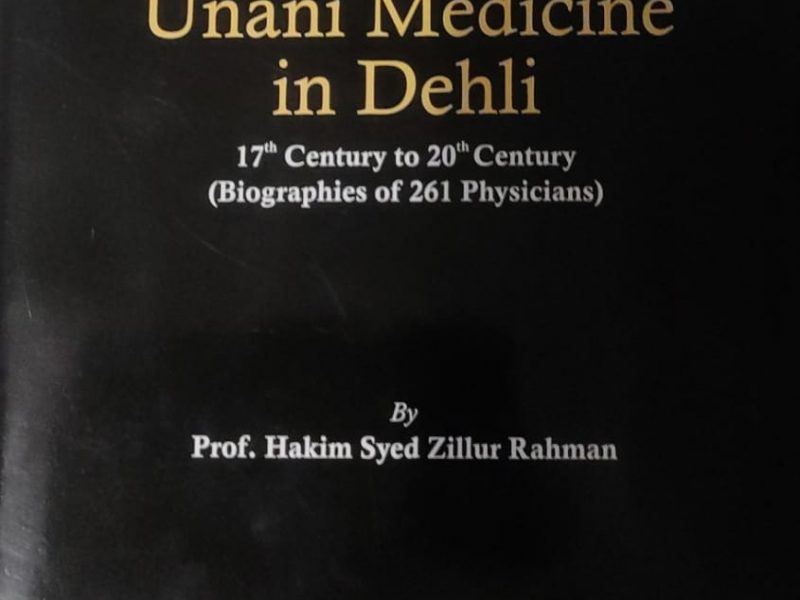
MASTERPIECE: The translation of the book written by Hakim Zillur Rahman

One of the most important collections here is a book by renowned author Shakeel ur Rahman called Mirza Ghalib aur Mughaliyaat, which has illustrations from Muraqqa-i-Chughtai, an illustrated selection of Ghalib’s work by AR Chughtai, a renowned artist of early last century. The illustrations are based on an important topic or issue that the poet raised in his couplet (sher).

Rare books with names like Jihad-e-Ghalib, Ghalib Satrung, Soz-e-Ghalib, his letters in Persian and many more ornate the archive.

Additionally, a book called Naqsh-e-Rung from Pakistan which was brought to India by scholar Urdu litterateur and poet professor (late) Shamsur Rehman Farooqui enriches the book shelves. 

Tehqeeq-nama Ghalib, Ghalib’s ghazal in Persian called Ghazaliayat-e-Farsi, Ghalib, few rare and special issues of magazines like Shama, Nuqoosh, Hunoon, Taar-e-Nau, film magazines, Al-Ilm, Shayar, Kaarvaan with special edition on Ghalib are the other charms.

A rare pocket-sized edition on Ghalib is a popular one.

Travels to Delhi  

Another section on Delhi consists of travels and trips done in Delhi by the authors, travellers and poets of old times. Rare books like Safarnama Dehli and Sair-ul-Manazir provide an inside view of Delhi in the 18th century. 
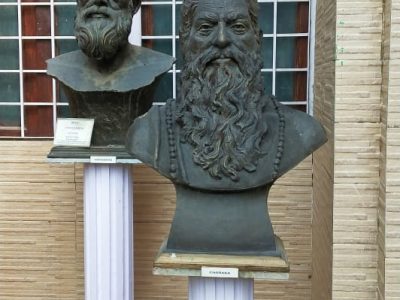
LEGEND: Bust of a renowned Indian physician Charaka at the academy in a section dedicated to physicians and medicinal plants

Also, over 200 rare books on Delhi’s poets (shayars) in Urdu and important personalities form another gallery here. For instance, there is Aslam Parvez’s award-winning book on Bahadur Shah Zafar, and his another one called Meri Dilli. There is also a book on Hamare Zamane Ki Dehli, Charagh-e-Dilli, Dilli Wale by famous author Salauddin, Aalam mein intekhab-e-Delhi among others.  

Rare and significant books on personalities include those on Hakim Ajmal Khan, Sir Ross Masood, former India President Zakir Hussain, Sir Syed Ahmad Khan, Raja Mahendra Pratap and many more. 

An entire unit is also devoted to all the journals that came out of Delhi during the War for Independence “and those from late 17th century to beginning of 19th century. The Delhi College was established in 1824, with it, all these journals rose to a great height. These form an enticing collection in the museum,” apprises Aftab Najmi, the coordinator and convener at Ibn Sina Academy.

On enquiring why such a large collection in Urdu finds space here, Professor Rahman adds, “Our own language and culture is much better described only in Urdu and Persian. So, it was very important to have a different section on Urdu to give a peep into what Delhi was in olden times.” 

However, countless notable oldest books in English and Hindi on Delhi also enrich the collection on the Capital.

A legacy himself 

Professor Zillur Rahman has 56 books to his credit. The subjects are related to Tib (Unani medicine) and Urdu literature. His books on medical sciences with oldest references (100 to 200 years old) are immensely popular. He is also a poet and an ardent admirer of Urdu poets of yore. He has also edited Diwan-e-Ghalib and many books on Urdu shayri. So far, 11 books have been written on him by students from different parts of India and globe in Arabic, Urdu and English. There are two academies, in Meerut and Bhopal, named in his honour. A part of the library has books on Zillur Rahman’s own family and their contribution to academics, medicine, poetry and culture. 

For the next generation

On why he decided to make such a rare museum and library under one roof, Rahman says, “I was just a teacher at AMU. I had no money like businessmen to construct roads and hospitals so I decided to build this museum and library to help those who want to study but have neither books nor a place for the same. I want the current generation to know that books on all our glorious histories and personalities were penned in Urdu before 1947. 
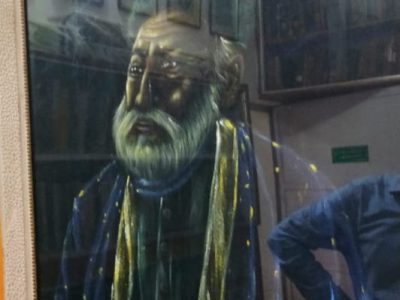
ICONIC: A portrait of Mirza Ghalib at the library, which boasts of rare works on the Delhi-based poet

“So, our generation has to know Urdu to understand their buzurgs (elders) and what charismatic works they had done. Our current generation, which doesn’t know Urdu, is like a blackboard. Anyone can write anything on it and it doesn’t impact them because they are so ignorant of legacies of their own language.”

Professor Rahman has travelled abroad 44 times. He visited Greece, including its capital Athens, Samarkand and Bukhara in Uzbekistan, Spain, Turkey, Germany and other countries. 

“I went to Iran 11 times to gather books and study how it has preserved its arts and culture, literature, medicine and environment,” he says adding that children of every country know their mother tongue and can read and write in it. 

“India’s children, especially the new Muslim community, is ignorant of its own legacy in Urdu.”

The Ibn Sina Academy has a tremendous collection of Islamic sciences and Islamic medicines. The professor has procured them from across the globe. 

“Some are bought, some gifted and some requested and begged for. Hamaare 3,200 hazaar kitaabon mein, Ghalib ka collection jo hamaare paas hai vo duniya mein kisi ke paas nahi hai (No one in the world has the rare collection on Ghalib that we have among our 32,000 books). Even Delhi’s own Ghalib Institute and Ghalib Academy visit us and take photocopies of the rare material they require. We have made our academy work on Delhi’s poets, littérateurs, historical buildings and monuments,” he adds. 

Most books, he adds, are from Iran, Samarkand and Bukhara. 

“The richest in education, philosophy, medicine and culture is Uzbekistan but it could not present it to the world, the way Iran did.”

Why Delhi in Aligarh?

Why Delhi forms a special section at his library, has its reasons. 

“Delhi was always the capital of India, be it during the Mughal, British eras or post-Independence period. So, it has always been not only a melting pot of cultures but also an abode for the best of poets, authors and travellers. The number of academics, authors, sufis, litterateurs, shayars (poets), lovers of arts and music and academic institutions that Delhi had, no other capital in the world has it till date,” he reasons with pride. 

To know Delhi better, he suggests books penned by the renowned Dehlvi family. 

For instance, there is Dilli jo aik shahar thaa by Shahid Ahmad Dehlvi, who was born in Delhi in 1902. 

He wrote extensively on vanishing culture of Delhi which was a symbol of Indo-Muslim culture ruined by violence and blood of the War of Independence. Post Independence, he went to Pakistan and died in 1967.

Waqyaat-e-Darool Hukoomat in three volumes by Bashiruddin Ahmad Dehlvi published from Urdu Academy, Delhi in 1990, and books on 1857 revolution are also there in the academy.

Delhi just got richer by another book by Zillur Rahman — Dilli aur Tibbi Unani which has just come out in Urdu. It is translated in English by Toronto-based Zakaria Virk, titled ‘History of Unani Medicine in Delhi – 17th Century to 20th Century – Biographies of 261 physicians’.

source: http://www.thepatriot.in / The Patriot / Home> Delhi NCR / by Rana Siddiqui Zaman, Delhi NCR / November 15th, 2023
Remembering the person behind the first Republic Day of India

NEW DELHI :

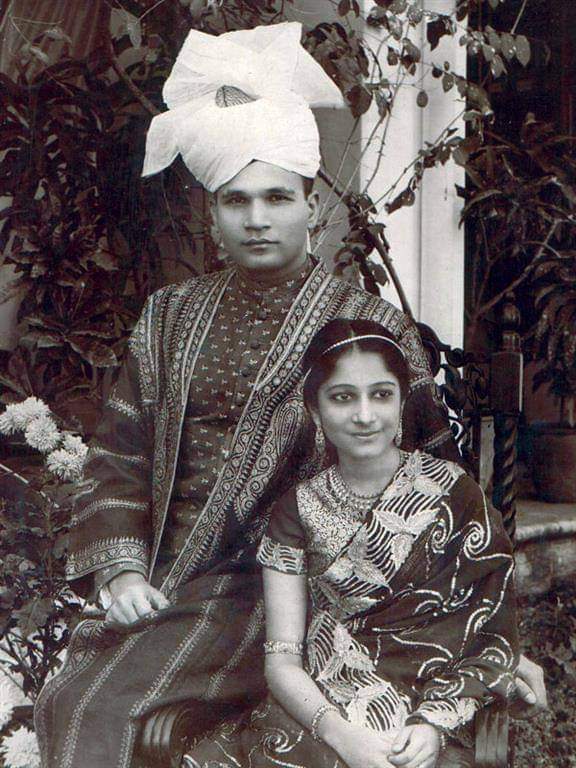
Badruddin Tyabji, the grandson of freedom fighter and third Congress President by the same name, was entrusted with arrangements for the inaugural Republic Day celebrations in 1950.

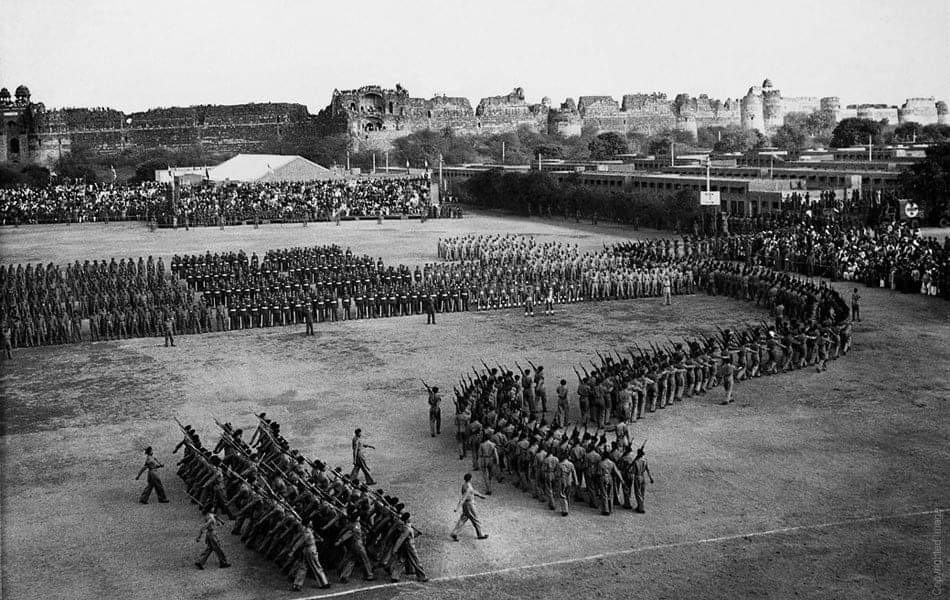
HISTORIC: National Stadium during the first Republic Day Parade. Old Fort is also visible

Every year on January 26, the Tyabji family sit together in their posh West End Colony house (near Vasant Vihar) to watch the Republic Day Parade which holds special significance for them.  

Their late patriarch Badruddin Tyabji, a 1936 batch Punjab cadre Indian Civil Service officer, was responsible for looking after the arrangements of January 26, 1950 functions: first at the President House and later at Irwin Stadium (now Major Dhyan Chand National Stadium). 

Tyabji’s painter wife Surayya Tyabji made the prototype of the Tri-colour on paper based on which the flag of cloth for Republic Day was made in Connaught Place.

“Just a couple of weeks before the first Republic Day, Prime Minister Pandit Jawaharlal Nehru entrusted me to look after the arrangements of the January 26 functions,” Tyabji told this writer in his south Delhi house in 1994. 

He was also member secretary of the Constituent Assembly.  

“I was called by Pt. Nehru and he gave me the huge responsibility for the historic day. I used to live at Sujan Singh Park during those days.” 

From that day onwards, the tall and gracious Tyabji moved from the President House (now Rashtrapati Bhavan) to Irwin Stadium several times a day to finalise the arrangements as time was running out for the big day.

HAPPY FAMILY: The Tyabji clan including Laila Tyabji (centre, front row), who is a social worker, designer, writer and crafts activist

The big day for which Tyabji had worked so hard was also hectic for Rajendra Prasad, the soon-to-be first President of independent India. He marked the momentous occasion with a visit to Raj Ghat to pay homage to Gandhiji. He remained there for around 15 minutes. 

But before the would-be President of India could get to the President House, C Rajagopalachari, the Governor General of India, had already reached there. The latter used to live in the double-storeyed bungalow at the then 10, Hastings Road, which was later renamed after him as Rajaji Marg. Edwin Lutyens, the chief architect of New Delhi, also lived in the bungalow, and so did Pranab Kumar Mukherjee, who also lived in that house after demitting his office of President of India.

“Dr Rajendra Prasad was sworn in as the country’s first President at around 9 am by the Governor General of India, C. Rajagopalachari. Rajvanshi Devi, his wife, and other family members were also there. The swearing-in ceremony was attended by over 500 guests, who had assembled inside the Durbar Hall. President Sukarno of Indonesia and several members of the Diplomatic Corps, members of the Constituent Assembly and prominent citizens had graced the occasion. The President was dressed in black achkan, white churidar and a white Gandhi cap. Pandit Nehru and his other Cabinet colleagues were sworn in soon after Rajendra Prasad,” recalled Tyabji, who was named after his grandfather, the third President of Indian National Congress. 

Immediately after returning from Raj Ghat, Rajendra Prasad was sworn in. The Chief Justice of India, Sir Hiralal Kania, read the oath of office in Hindi. President Prasad repeated it sentence by sentence. 

“The outgoing Governor General, C. Rajagopalachari; our first Prime Minister, Pandit Jawaharlal Nehru, beaming with pride and joy; the Deputy Prime Minister, Sardar Patel; cabinet ministers, judges of the Supreme Court and the Auditor-General of India, were present in the hall to witness the historic moment of India’s history. Pandit Nehru and his other cabinet colleagues were sworn in soon after.”

The national emblem of Ashoka Pillar with three lions was placed in the Durbar Hall for the first time near the throne where the British Viceroys used to sit. 

A smiling statue of Lord Buddha was also placed behind the throne for the first time. Rajendra Prasad, the President, who greeted the large gathering smilingly with folded hands, made a short speech in Hindi and English, stating that it was a memorable day in our annals. 

“Let us begin by offering our thanks to the Almighty Power who has enabled us to see this day; to the Father of the Nation who showed us and to the world at large his infallible method of Satyagraha, and led us on along it to freedom and to the numberless men and women, whose suffering and sacrifice have rendered the attainment of independence and establishment of this sovereign democratic Republic possible.”

The birth of the Republic was celebrated by the masses in the Capital through Prabhat Pheries (early morning movement of people singing patriotic songs). Outside the Durbar Hall, there were unforgettable scenes of jubilation. Large crowd of men, women and children had assembled in the forecourt of President House. 

People raised slogans of Gandhiji-ki-jai and Vande Mataram

After a dignified ceremony was held at the President House, the scene shifted to Irwin Stadium. The new President travelled to the stadium in a horse-drawn carriage and Delhi’s roads were lined up with enthusiastic crowd standing along the five-mile route with the Tri-colour in their hands. A huge crowd greeted the President’s entourage when it reached the vicinity of Connaught Place. And when the first President of India reached the stadium, he was welcomed with a booming 31-gun salute. 

According to Tyabji, “Rajendra Prasad made a brief speech at the stadium. Later, students from various schools of the Capital presented cultural programmes.” 

Old timers still recall that there were very few policemen guarding the VIPs inside the stadium. After the programme, the leaders mingled with the people. Nehru was mobbed by his admirers. He spent a good 20 minutes with them. 

Tyabji, who could not sleep for several days ahead of the big occasion, was there managing the affairs carefully with his colleagues. Following very cold weather days in Delhi, brilliant sunshine greeted the Capital on January 26, 1950. 

It was India’s defining moment, the day India truly freed itself from the shackles of colonialism to become a Republic. A truly sovereign state. 

The talk of the first Republic Day cannot be complete without discussing the role of Tyabji’s wife, Surayya, in the making of the first Tri-colour.  

According to Tyabji, “Once the Constituent Assembly finalised our Tri-colour with Ashok Dharma Chakra inside the flag, I was asked to furnish the model of Tri-colour on both paper and cloth.” 

Without wasting any time, Badruddin Tyabji went straight to his Sujan Singh Park residence and asked his wife Surayya to make the Tri-colour on paper. She did not disappoint her husband. Once she made it on paper, Tyabji carried the design to the now defunct SC Tailors at Regal building of Connaught Place and asked them to make the Tri-colour in cloth. The rest, as they say, is history.

After retirement from government service, Tyabji also served as the Vice-Chancellor of Aligarh Muslim University in the 1960s. 

He finally settled in Delhi and passed away in 1999. His wife, Suraiya, had died before him.

During one of our meetings, Tyabji had told me that when he came to Delhi from Hyderabad to appear for ICS examination, he was staying in Daryaganj. 

He used to take a tonga to reach Metcalfe House in Civil Lines to appear for his examinations. 

“Delhi was a very small city then. Except for old Delhi and villages, there was not much here. New Delhi was coming up,” he had said. 

When India was divided on the basis of religion in 1947, he was perhaps one of the only two Muslim ICS officers who opted to stay in India instead of accepting Islamic Pakistan.

OFFICER RANK: Badruddin Tyabji was a 1936-batch ICS officer of Punjab cadre. His wife, Surayya was a painter

Tyabji’s first son, Hindal Ahmad, was an IAS officer. He passed away last year. 

Tyabji’s daughter, Laila Tyabji is a noted social worker, designer, writer and crafts activist. She is one of the founders of Dastkar, a Delhi-based non-governmental organisation working for the revival of traditional crafts in India. 

Like in the past, the Tyabji family would watch the annual parade this year too. After all, they are the true and proud first family of India’s Republic Day. Yet, they are so self-effacing.

source: http://www.thepatriot.in / The Patriot / Home> Cover Story / by Vivek Shukla / January 26th, 2024

Mangaluru student from Bhatkal wins two Bronze Medals at State Karate Selections

Bhatkal (Uttara Kannada District) / Mangaluru, KARNATAKA :

Bengaluru:

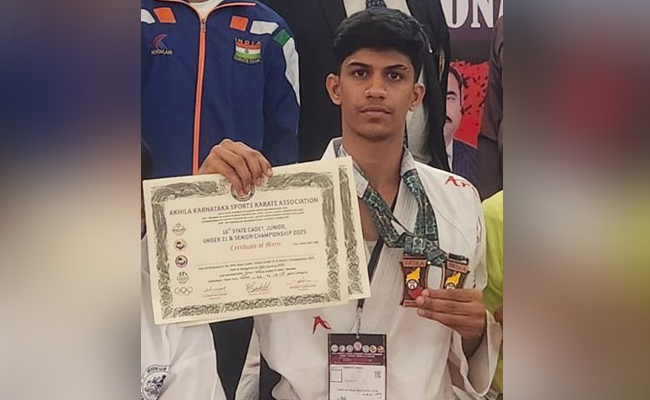
Ismail Nameer, a ninth-grade student at Huda Islamic School, Mangaluru, won two bronze medals at the State Karate Selections held at Koramangala Indoor Stadium, Bengaluru, on January 26, 2025.

The event was organized by Akhila Karnataka Sports Karate Organization.

He secured bronze in the 14-15 years below 63kg category and another in the under-21 years below 65kg category. The event had around 650 participants from across Karnataka.

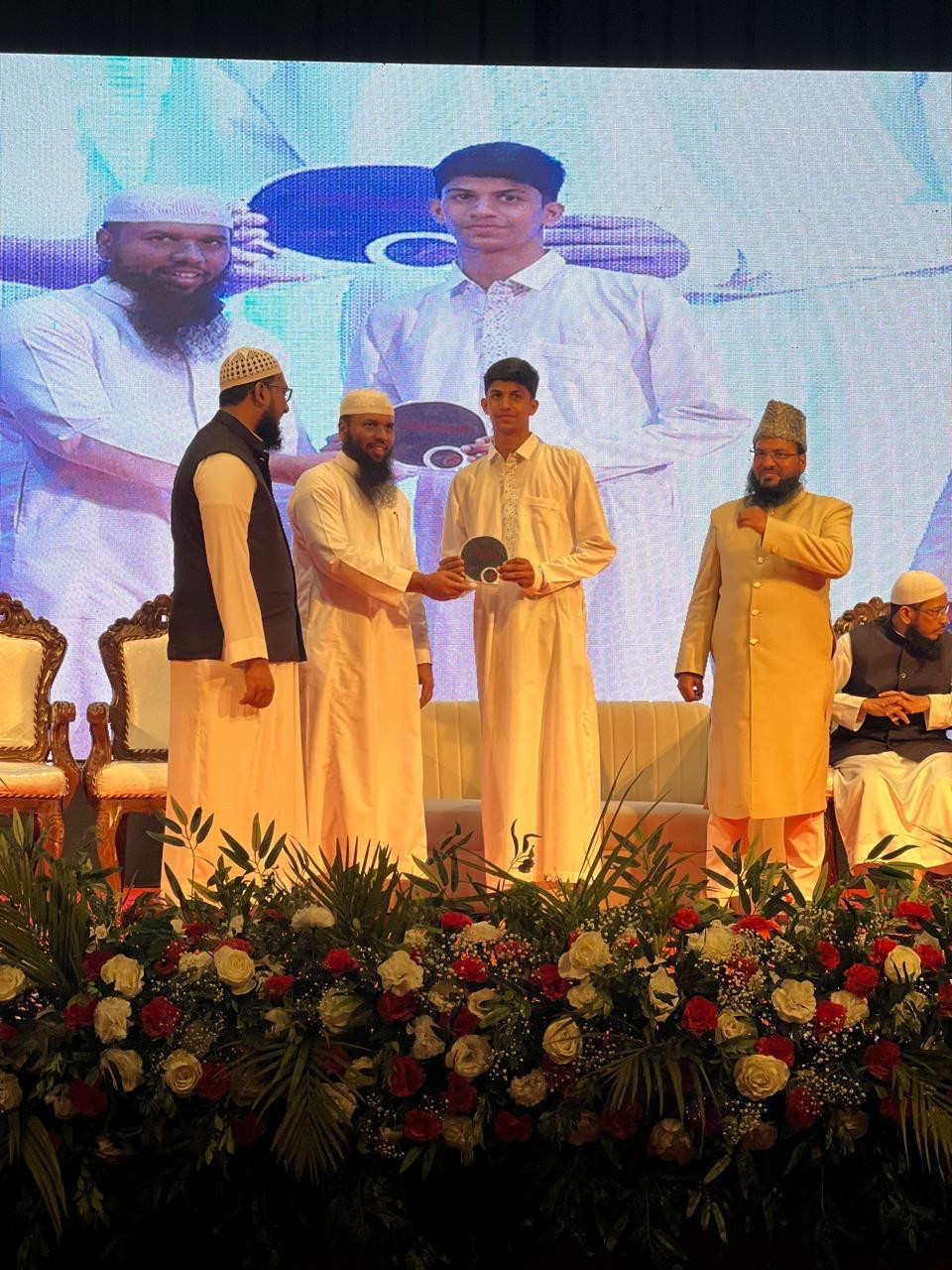
Originally from Bhatkal in Uttara Kannada district, Nameer has been living in Mangaluru with his family for the past few years. His school recognized his achievement during its annual day celebrations on Monday with a special award.

In previous competitions, Nameer had won first place in kata and kumite at a national-level event in 2023, organized by Guru Goju Ryu Karate Academy India. He also secured third place at the 24th Asian/International WFSKO Open Karate Championship in Mumbai in 2019. In 2020, he won first place in kata and third in kumite at the 5th National Level Open Karate Championship in Moodbidri.

source: http://www.english.varthabharati.in / Vartha Bharati / Home> Karavali / by Vartha Bharati / January 26th, 2025

Bhatkal’s Mohammed Zaid secures gold at State Karate Selection, will represent K’taka at Nationals

Bhatkal (Uttara Kannada District) , KARNATAKA :

Bhatkal:

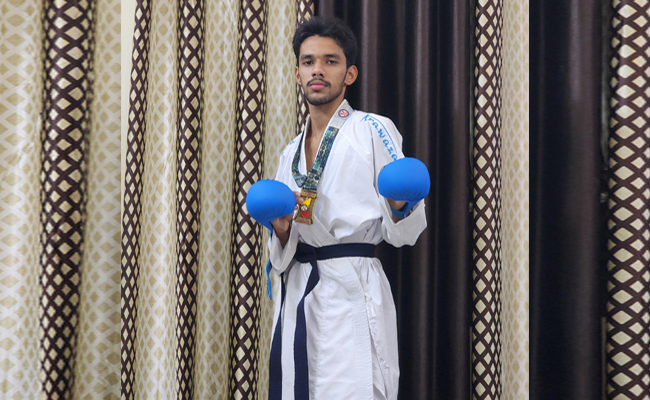
Mohammed Zaid, a student of Anjuman Boys’ High School, Bhatkal, and a trainee at Alliance Martial Arts Academy, Bhatkal has secured first place at the Akhila Karnataka Sports Karate Association State-Level Selection held at Koramangala Indoor Stadium, Bengaluru.

With this achievement, Zaid has earned a place in the National Karate Championships in Hyderabad, where he will represent Karnataka. This is a significant moment for Uttara Kannada district, as there have been very few instances in the championship’s 16-year history where a participant from the region has represented the state at the national level.

Zaid, the son of Mohammed Mohsin Raja, has been training under Alliance Martial Arts Academy, Bhatkal, which he said played a key role in his success.

source: http://www.english.varthabharati.in / Vartha Bharati / Home> Karavali / by Vartha Bharati / January 28th, 2025

Dr. Thumbay Moideen honored with the prestigious “Global Visionary NRI Award”

Mangaluru, KARNATAKA / Dubai / Ajman, U.A.E :

Dubai, UAE :

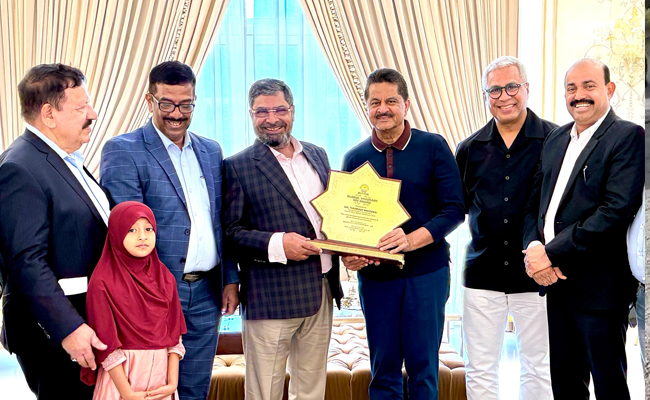
Dr. Thumbay Moideen, Founder President of Thumbay Group and Patron of Bearys Cultural Forum (BCF), has been conferred the distinguished “Global Visionary NRI Award” by Bearys Cultural Forum (BCF) – UAE. The award was presented by Naseer Ahmed, Member of the Legislative Council and Political Secretary to the Chief Minister of Karnataka, India, during a grand event held at Thumbay Medicity, Ajman.

The “Global Visionary NRI Award” is a recognition of Dr. Moideen’s unparalleled contributions to global healthcare, education, and innovation. A celebrated entrepreneur and philanthropist, Dr. Moideen has successfully transformed Thumbay Group into a global brand, driving growth through innovation and serving as a beacon of inspiration for Non-Resident Indians worldwide, a press statement from Thumbay Group added.

Speaking at the ceremony, Naseer Ahmed commended Dr. Moideen’s visionary leadership and his efforts in building Thumbay Medicity as a hub of excellence in healthcare, education, and research. The event also featured a visit by Naseesr Ahmed to Thumbay Medicity, where he witnessed the state-of-the-art facilities and cutting-edge advancements that have placed it on the global map.

Dr. Thumbay Moideen, upon receiving the award, expressed his gratitude to Bearys Cultural Forum (BCF) for this recognition and reaffirmed his commitment to fostering innovation, global citizenship, and community welfare.

“This award is a testament to our collective efforts in making a positive impact globally. I dedicate this honor to my incredible team, whose unwavering dedication has been the cornerstone of our success,” said Dr. Moideen during his acceptance speech.

source: http://www.english.varthabharati.in / Vartha Bharati / Home> Gulf / by Press Release / January 20th, 2025

PADMA SHRI : Farooq Ahmad Mir’s 60 years of artistry earn Padma Shri

Srinagar, JAMMU & KASHMIR :

Mir was among 139 Padma awardees announced on Saturday, making him one of only two Padma Shri awardees from Jammu and Kashmir this year

Farooq Ahmad Mir’s 60 years of artistry earn Padma Shri

Srinagar :

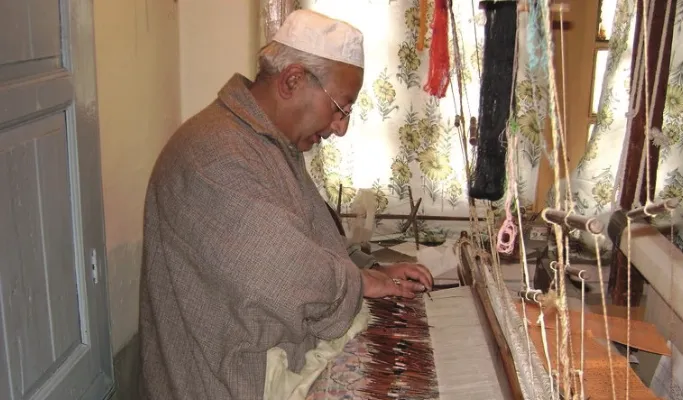
In a heartfelt tribute to the art of craftsmanship, Farooq Ahmad Mir, a master shawl weaver from Srinagar, was conferred the prestigious Padma Shri award on January 25. At 73 years old, Mir embodies the spirit of dedication, having devoted over six decades to a craft that intertwines patience with artistry.

Mir was among 139 Padma awardees announced on Saturday, making him one of only two Padma Shri awardees from Jammu and Kashmir this year.

Starting his journey at the tender age of 10, Mir’s story resonates through generations. “Pashmina artisans require patience, much like education. It teaches us about the intricate nuances of our craft,” he reflects, drawing parallels between learning and weaving. Hailing from a lineage of artisans, Mir has not only preserved but revitalised the Kani shawl tradition, once favored by Mughal, Afghan, Sikh, and Dogra rulers.

Mir’s influence extends beyond his family; he has painstakingly taught the art of Kani shawl weaving to over many individuals in Srinagar’s old city.

“In a world where modern careers are alluring, many aspiring artisans are deterred by societal perceptions and a lack of patience for traditional craft,” he notes. Yet, Mir’s commitment to his heritage has inspired not only his children, skilled weavers in their own right, but countless young men and women in his community.

“Your work should speak for itself,” Mir shares humbly when asked about his relative anonymity in a world that often celebrates flashy accolades over dedication. His contributions, however, haven’t gone unnoticed. He has received multiple national and state awards, including recognition from Prime Minister Narendra Modi himself.

The exquisite Kani shawls, woven using cane needles rather than shuttles, can take between four to eighteen months to create. However, the beauty of this art form is in jeopardy. As younger generations lean towards more modern occupations, the skills required to produce these heirlooms risk fading away. Mir’s tireless efforts aim to ensure this heritage is not lost.

Born into a weaver’s family in Srinagar, Mir’s start was modest. Despite barriers to formal education, he channeled his passion into honing his skills, becoming one of the finest artisans in Kashmir. Alongside his successful weaving career, he managed to educate his siblings and inspire a new wave of artisans dedicated to preserving Kani shawl weaving.

In an age driven by industrialisation, the importance of handmade products is gaining renewed appreciation globally. Mir stands as a pioneer in safeguarding this cultural legacy, instilling pride in his craft and ensuring its continuation across generations. His handcrafted Kani shawls have not only found a place in the hearts of locals but also captured the attention of international clientele, including the Ambani family and major corporations like Tata and Aditya Birla Group.

Farooq Ahmad Mir’s journey exemplifies resilience and dedication. As an unsung hero of the Kani shawl tradition, he reminds us that true artistry thrives in the shadows, waiting for the right moment to emerge into the light.

Director Handicrafts and Handloom, Mussarat Islam in a tweet on social media extended heartfelt congratulations to Farooq Ahmad Mir on being awarded #PadmaShri 2025 for his significant contributions to Kani Shawl weaving and the preservation of Jammu and Kashmir’s rich cultural heritage.

source: http://www.greaterkashmir.com / Greater Kashmir / Home> Business / by Mukeet Akmali (headline edited) / January 26th, 2025

From a Village to Google: Zoriz Ahmed’s Journey of Perseverance and Success

Jalwara Village (Darbhanga), BIHAR :

The success story of a villager in Bihar reflects the transformative power of education. secured a prestigious position at Google with an impressive annual package of ₹39 lakh

Jalwara, BIHAR :

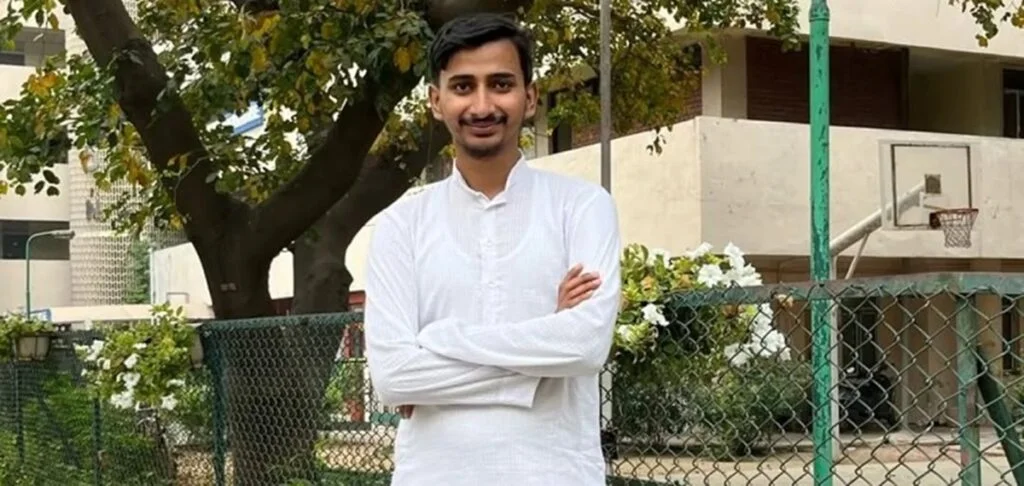
Zoriz Ahmed, a bright student from Rahmani30 educational movement started in Bihar state’s capital city of Patna, has recently achieved a remarkable milestone. After completing his engineering degree at IIT Delhi, Zoriz secured a prestigious position at Google with an impressive annual package of ₹39 lakh. His journey, marked by perseverance and dedication, has become a beacon of hope for others.

Hailing from Jalwara, a small village in Darbhanga, Zoriz’s path to success was anything but easy. The QT assembly constituency, where his village is located, has historically struggled with low educational attainment. Despite these challenges, Zoriz’s parents, Shakeel Ahmed and his wife, a homemaker, prioritised their son’s education. Shakeel rented a room in Darbhanga to ensure Zoriz had better schooling.

Zoriz’s aptitude for mathematics and problem-solving became apparent early on, and in 2019, he was selected for Rahmani30, the institution focused on preparing underprivileged students for the IIT Joint Entrance Examination (JEE).

At Rahmani30, Zoriz found the environment that would shape his future. “The teachers at Rahmani30 were exceptional, but what truly set it apart was the combination of a disciplined, religious atmosphere and a laser-sharp focus on academic excellence,” Zoriz shared. The institution’s rigorous training, combined with its focus on values, helped Zoriz hone both his technical skills and personal growth, ultimately leading him to IIT Delhi.

Zoriz’s family faced constant financial difficulties. “There were times when we struggled to make ends meet, but my father never let me feel the burden. His sacrifices and unwavering belief in my potential kept me going,” Zoriz recalled. Despite these hardships, he remained committed to his education, believing that challenges foster growth. “The darkest moments of the night come just before the dawn,” he said, quoting a Chinese proverb that mirrors his journey.

Now, Zoriz stands at the threshold of a new chapter with Google, where he will work with an annual package of ₹39 lakh. “It’s not just about succeeding academically,” Zoriz emphasised. “Education shapes us into better individuals and that is the true measure of success.”

His success is not only a reflection of his academic excellence but also of his values, discipline, and hard work. “The teachers, the values, the hard work — it all comes together to shape the person you become,” Zoriz said.

Zoriz’s journey reminds us of the power of education and perseverance. He encourages others, especially those from underprivileged backgrounds, to remain dedicated to their goals. “If I can make it, so can others. The road may be tough, but it’s worth every bit of effort,” he said.

Zoriz’s success highlights the critical role of institutions like Rahmani30 in shaping the futures of talented youth from underserved communities. “Rahmani30 allowed me to realise my potential. Without it, I wouldn’t be where I am today,” he said, emphasising the importance of mentorship and access to quality education.

Zoriz Ahmed’s story is a powerful testament to the transformative power of education and the importance of perseverance. His success is not just his own; it is a symbol of the potential that lies within every young mind, regardless of background.

source: http://www.clarionindia.net / Clarion India / Home> Featured> India> Indian Muslim / by Team Clarion / December 26th, 2024

Assam: Elias Hossen Ansari’s journey from Madrassa to London law firm

Chakla Village (Bongaigaon District) ASSAM / London, U.K :

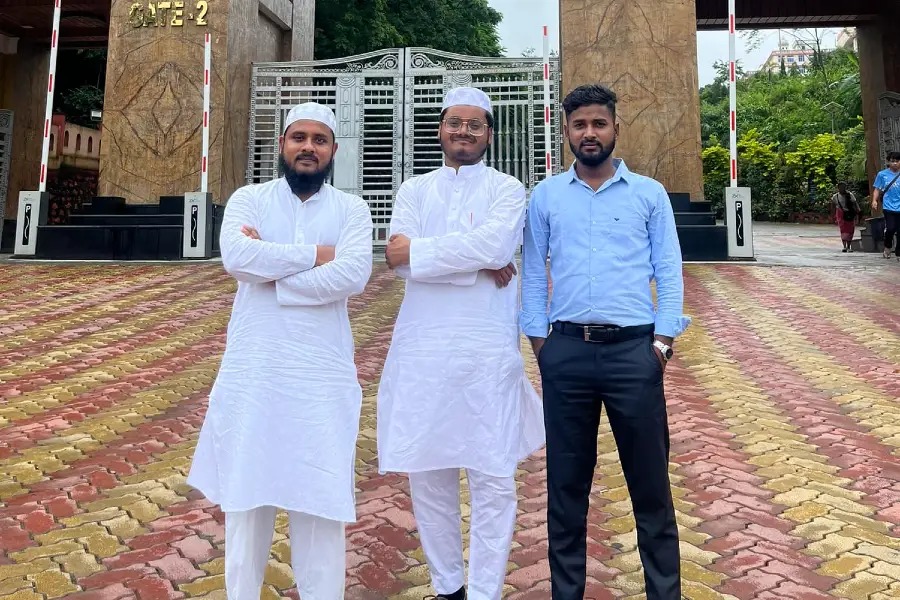
Elias Hossen Ansari in London

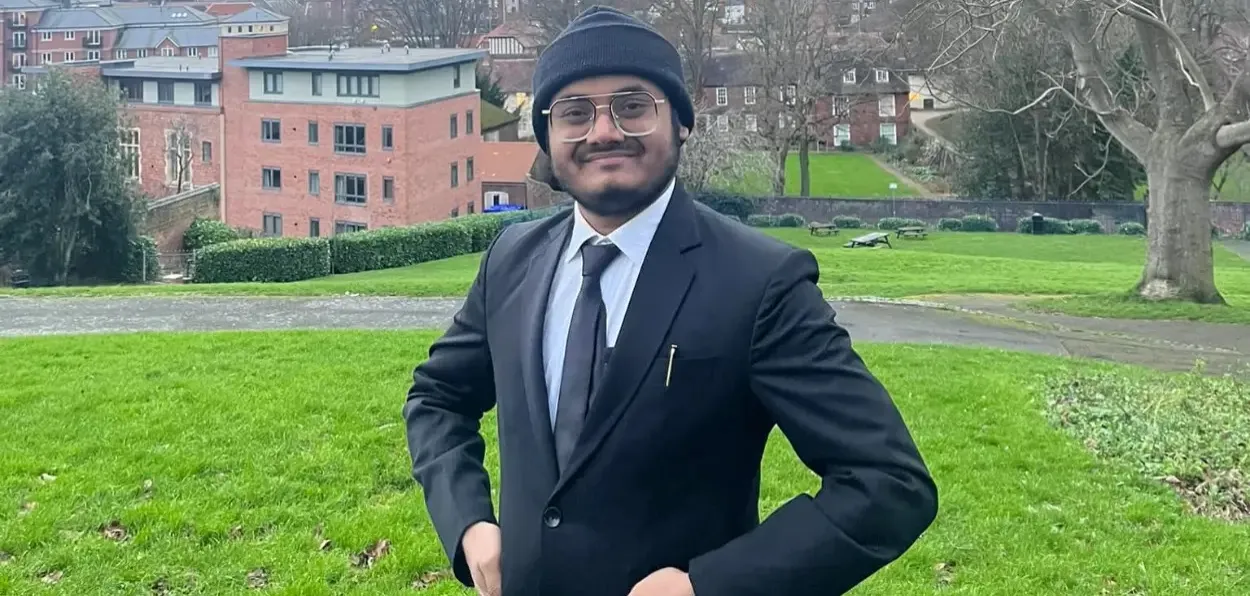
A madrassa student has smashed the myth about education in Islamic seminaries. Elias Hossen Ansari of village Chakla in the Bongaigaon district has secured his dream job; he has been appointed a paralegal officer at an Oyini firm in London, United Kingdom.

Elias Hossen Ansari comes from a financially poor family. His parents sent him to a small madrasa in the nearby Bajali district from where he completed his Hifz (Quranic study) course followed by the Maulana course.

As luck would have it, the Ajmal Foundation picked him up in Hojai for regular academic studies. He obtained his Bachelor of Laws degree from the University of Science and Technology Meghalaya (USTM), Meghalaya close to Guwahati, and later a Master of Laws degree from Jamia Millia Islamia, Delhi. Elias excelled in all the examinations he wrote.

Elias Hossen Ansari (Center) with classmates at the USTM

However, Elias did not end his higher education with Jamia Milia. He explored chances of securing a legal job in London, the city of his dreams. To raise money for his education, Elias taught religious prayers (Tarawih) at the Station Mosque in Rangia near Guwahati every year during the month of Ramazan. This also helped him revise his leaning at Madrassa.

“Besides, I believe that the Almighty has always guided me to the right path in pursuing my dreams because I have always served Him the way He has commanded,” Ansari told Awaz – The Voice joining in from London on an internet conversation.

Ansari shifted to London nearly two years ago to pursue higher studies in international law and has since been also performing as an imam leading the Friday congregation and other prayers in local mosques along with his studies.

On January 23, he joined as a paralegal officer at Barristers and Solicitors Legal Firm and AA Homes and Housing Ltd in London on a salary that his peers back home can only dream of. His annual emolument comes to around ₹37 lakh Indian Rupees.

“I’m happy that my prayers have been answered! My job here will be to assist the barristers, and solicitors, and other seniors in drafting and pursuing various legal matters, including those of immigration, visa, and a lot of other things … Migrating to England is not so easy for someone like me who hails from a middle-class family, because the cost of living here is exceptionally high. I’ve never left any stone unturned to find sponsorship for my stay in the UK which is very essential, and finally, I’ve got a permanent sponsorship by the grace of God,” a beaming Ansari said.

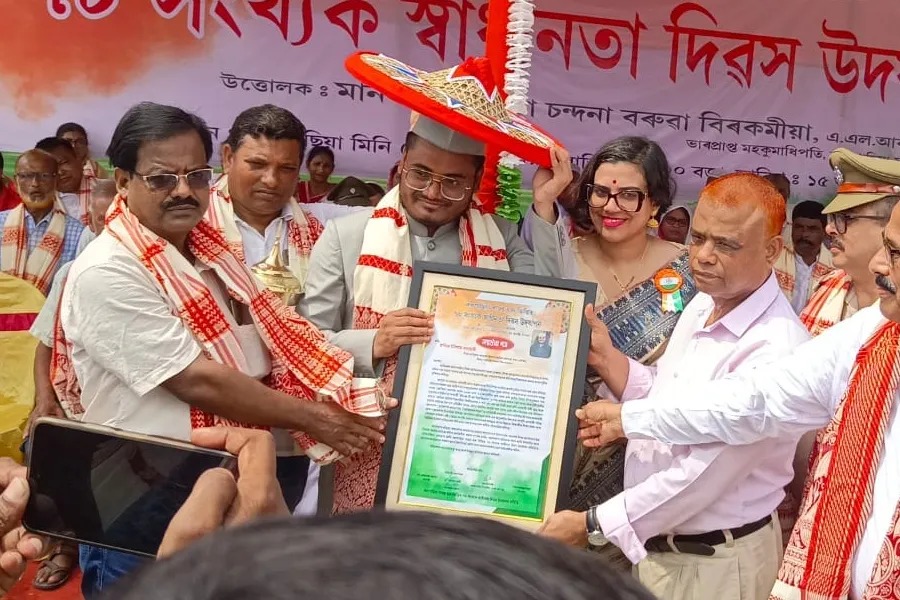
Elias Hossen Ansari being felicitated on Independence Day at USTM

Asked if his initial madrasa education posed any hurdle in chasing his dream, Ansari said: “Not at all. Nowhere, neither in my own country India, nor abroad. I’ve travelled to around 20 countries on study tours, and I’ve never come across anything as such … I am grateful to the makers of our Constitution where Articles 29 and 30 guarantee freedom of education of one’s own choice even for minorities. Here, in London also, I face no hurdle in offering five times Salah a day reciting the Holy Quran, or following my religious commandments. What I’ve seen in my life is that everyone is free to follow his/her faith. In this respect, India is the greatest country as far as peaceful coexistence is concerned.”

He also said that he does not believe in the narrative that madrassas are breeding grounds for fundamentalism or radicalism. “Religious educational institutions are no different from modern educational institutions, except that there are few extra subjects in religious studies which help in holistic development of students. And, no religion teaches hatred or violence. Religion always teaches love and compassion. So, I don’t believe in such negative narratives,” Ansari said, adding that there happen to be moles in every beautiful thing, but that should not be generalized.

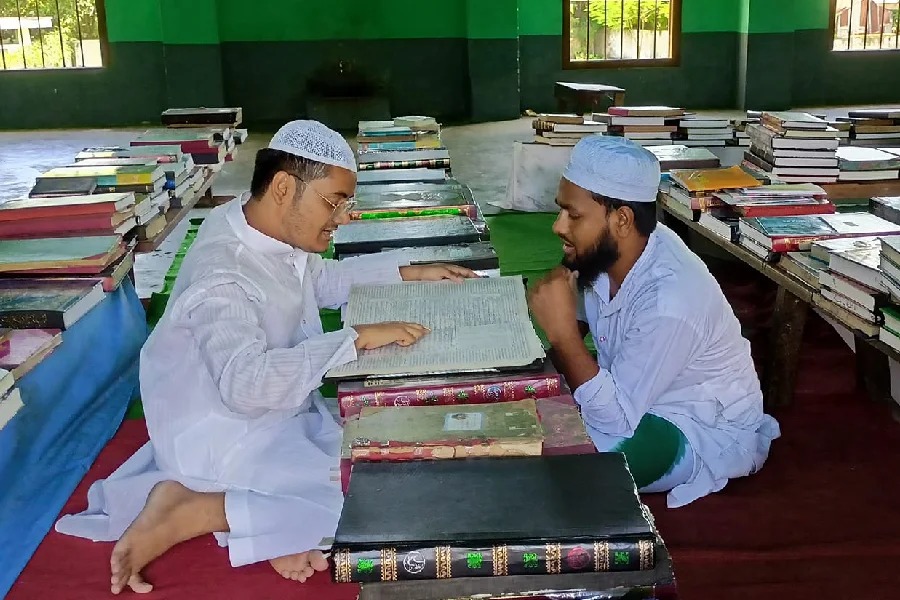
Elias Hossen Ansari during his Madrassa days

About his life’s struggles to pursue such higher education, Ansari said: “I am grateful to many people, including (chairman of Ajmal Foundation Badruddin) Ajmal Saheb, (USTM Chancellor) Mahbubul Hoque Sir, (USTM academician) Baharul Islam Sir and many others whom I can’t name because they don’t want me to name them in public, but have helped me a lot. It would not have been possible for me to dream so high without their benevolence. I’m always grateful to all who have helped me so selflessly. Besides, I believe in the philosophy of greats like Napoleon Bonaparte and Dr APJ Abdul Kalam that everything can be achieved through hard work and perseverance, which helped me a lot.”

This is not the end of Ansari’s dream though. He has even higher dreams – to serve the people among whom he grew up. “Everybody asks me the same question; will you ever return to India or Assam? I’ll return and I nurture a hope to serve my people back home. I want education to spread in our country. I want to set up accessible and affordable schools and colleges in my country. I want colleges and universities in every town and district of our country. I’ll certainly go back and work for the people of my land,” he said.

Asked what he would like to suggest to the younger generation to pursue difficult dreams like himself, Ansari said: “The only way to success is hard work and burning midnight’s oil. Read the biographies and autobiographies of great people, you can draw all the inspiration. All the great people, including Mahatma Gandhi, Pt Jawaharlal Nehru, Dr APJ Abdul Kalam, and others have worked exceptionally hard to be such great leaders. Everything is possible if you persevere to achieve it and keep focus.”

source: http://www.awazthevoice.in / Awaz, The Voice / Home> Story / by Imtiaz Ahmed, Guwahati / January 27th, 2025

Muslim Ambulance Society’s 93-yr Legacy of Compassion and Service

Mumbai (South), MAHARASHTRA :

Established in 1932, the South Mumbai-based organisation continues to serve humanity with dedication and inclusivity

Mumbai :

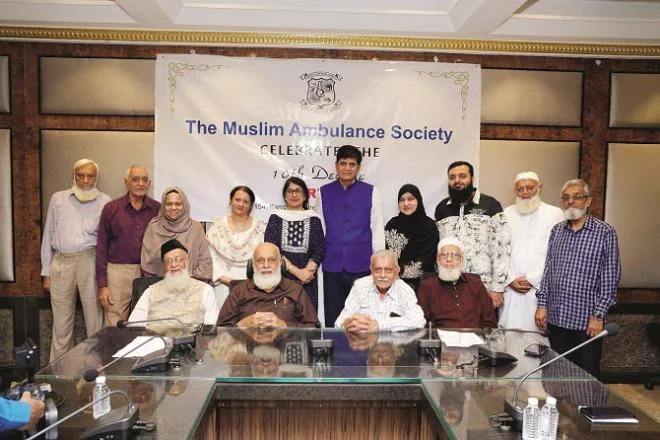
The Muslim Ambulance Society, a renowned medical and social service organisation based in South Mumbai, has completed 93 years of unwavering dedication to the welfare of people, irrespective of religion or caste. Established on 24th July 1932, the organisation has evolved from a small shop on Chakla Street, Muhammad Ali Road, into a respected pillar of support for those in need.

To commemorate this milestone, a grand function was organised on Friday (January 24) at the Islam Gymkhana in Marine Lines.

Dr Abdul Rauf Samar, President of the Muslim Ambulance Society, highlighted the organisation’s rich history and core objectives, emphasising its inclusive approach. “The society aims to provide social and medical services to the poor and the needy regardless of religion and caste. A clear example of this was in the early days when a fellow countryman injured during Ganpati immersion was transported to the hospital by one of our ambulances,” he shared.

The society has also been instrumental during emergencies, including epidemics and communal riots. “We have consistently provided aid without discrimination, setting an example of humanity and service,” Dr Samar added.

He further introduced other key officials of the society, including Vice President Anwar Pashuri, Honorary Secretary Tanveer Hawa, Honorary Treasurer Iqbal Mauledina, and Ibrahim Kolsawala. Together, they carry forward the vision of the society’s founders: Ibrahim Haroon, Ayub Haroon, Noor Muhammad Dhyan, Muhammad Hussain Samar, Akbar Ali Khan, and Abdul Rahim Bachuseth.

The society’s impact is not confined to Mumbai. “Apart from Mumbai, our branches are also providing medical services in other provinces of the country. A new branch is set to open on Duncan Road in South Mumbai,” Dr Samar announced.

Highlighting their ongoing efforts, he said, “Since 1973, we have provided free treatment to TB patients. We also arrange free vaccinations for children under our supervision. These initiatives have been possible due to the generous support of philanthropists, and we hope to continue serving humanity with the same dedication in the future.”

The Muslim Ambulance Society’s 93-year journey of compassion and service stands as a testament to the power of community-driven initiatives and their ability to uplift society at large. The event aimed to celebrate this legacy while inspiring future generations to continue the noble mission.

source: http://www.clarionindia.net / Clarion India / Home> Editor’s Pick> India> Indian Muslim / by Team Clarion / January 26th, 2025

Ramsha Ansari of Bhopal Becomes DSP, Inspires Muslim Girls to Join Civil Services

Bhopal, MADHYA PRADESH :

Beating all odds, the girl with a humble background secures a position in the top 10 of the Madhya Pradesh State Public Service Commission MPPSC exam

New Delhi :

In a remarkable achievement, Ramsha Ansari has made it to the top 10 in the Madhya Pradesh State Public Service Commission (MPPSC) exam, securing sixth position with a score of 878 out of 1575 marks. This accomplishment not only marks a significant milestone in her life but also serves as an inspiration for Muslim girls and women, breaking barriers and challenging the belief that higher education is out of their reach.

Ramsha, who hails from an ordinary family in Bhopal, will soon contribute to law and order in the state as a Deputy Superintendent of Police (DSP). “It is a matter of great pride and responsibility. I’m excited to serve my state and work for justice,” she said during a conversation with the media at her residence.

Ramsha’s success is a beacon of hope for many young Muslim girls, who often face societal and familial pressures limiting their opportunities in education. “We need to invest in education the most,” Ramsha emphasised. “It is the only weapon with which we can uplift our families, society, and country.”

Belonging to a family with limited financial resources, Ramsha’s journey is one of determination and perseverance. Her father, Ashraf Ansari, is a retired clerk from the Agriculture Department, while her mother, Sanjeeda Ansari, is a homemaker. Despite financial challenges, her family always emphasised the importance of education. “The support of my family has been invaluable,” Ramsha said, adding that her elder sister, who is a chartered accountant, has been a major source of inspiration for her.

Ramsha began her journey toward civil services after completing her BA in Economics Honours from Excellence College, Bhopal. She later completed an MA in History through distance learning at IGNOU and cleared the UGC-NET-JRF exam. Initially, Ramsha focused on preparing for the Union Public Service Commission (UPSC) exams but later shifted her focus to the MPPSC after facing setbacks.

Her journey wasn’t without obstacles. “I attempted the MPPSC exam multiple times. I cleared the preliminary and main exams twice but couldn’t get selected due to the interview scores. However, I never gave up,” Ramsha shared. It was after seven years and four attempts that she finally achieved her dream.

When asked about the time commitment needed for such an exam, Ramsha advised that aspiring candidates must dedicate 8 to 10 hours of study every day. “While the exact duration depends on personal ability and guidance, if you prepare with full focus for 2 to 3 years, it should be sufficient. But even if you don’t succeed initially, you must keep going with double the effort,” she stressed.

Apart from her studies, Ramsha also helped prepare students for the MPPSC exam at a coaching institute in Bhopal. “The positive environment created by my teachers, family, and even my students was a constant source of motivation,” she said.

Ramsha’s message to the Muslim community, especially to girls, is simple but powerful: “Education is the key to change. It can better not only our lives but also the lives of others around us. I urge Muslim youth and girls to aim for civil services. We must be a part of the progress of our nation.”

Ramsha Ansari’s success story is a testimony to the resilience and the transformative power of education. Through her achievements, she has not only changed her own life but has become a role model for many girls who now dare to dream big.

source: http://www.clarionindia.net / Clarion India / Home> Editor’s Pick> India> Indian Muslim / by Clarion India / January 24th, 2025