Tag Archives: Positive Stories of Indian Muslims

‘A powerful urge to be useful to other women’: What Ashrafunnisa Begum’s life revealed to CM Naim

Bijnor, UTTAR PRADESH :

CM Naim’s translation of 19th-century reformer Ashrafunnisa Begum’s biography was published in 2021. Naim, a translator and scholar of Urdu, died on July 9.
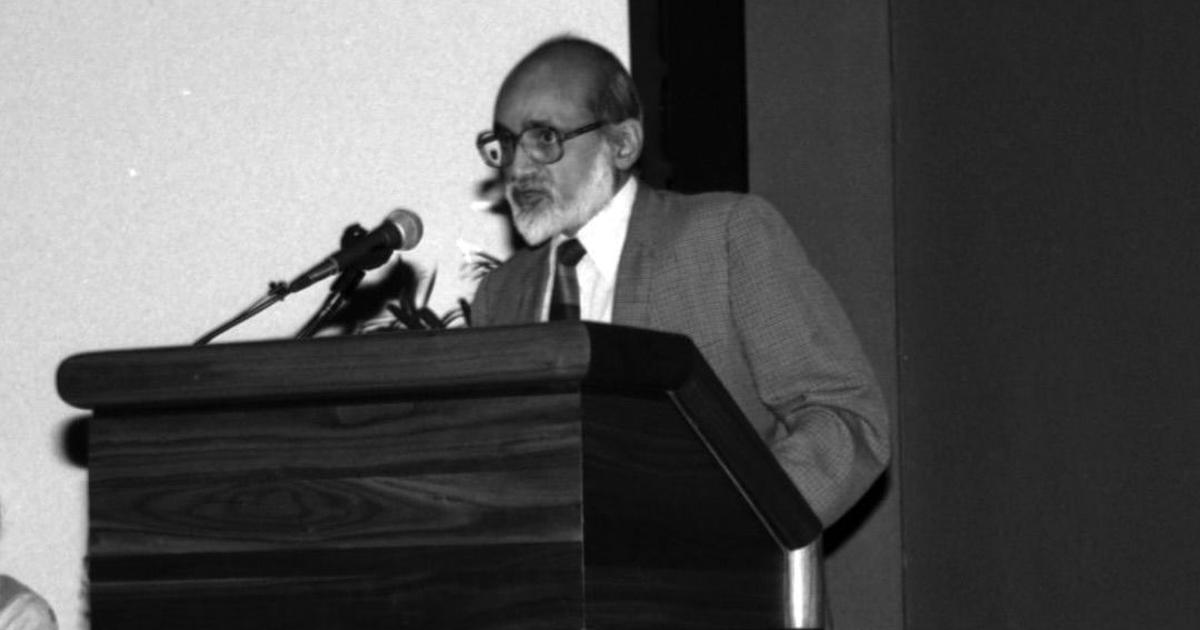
CM Naim (1936-2025). | The World of Girish Karnad on Facebook

Choudhri Mohammed Naim, aka CM Naim, a prominent scholar of Urdu language and literature, died on July 9 at the age of 89. He was a professor emeritus at the University of Chicago.

Naim was also the founding editor of the Annual of Urdu Studies and Mahfil (now Journal of South Asian Literature), as well as the author of the definitive textbook for Urdu pedagogy in English.

He was born on June 3, 1936, in Barabanki, Uttar Pradesh and educated at Lucknow University, Lucknow, Deccan College, Poona, and the University of California, Berkeley. In 1961, he joined the faculty of the Department of South Asian Languages and Civilizations at the University of Chicago, which he chaired from 1985 to 1991. He retired in 2001. He was a national fellow at the Indian Institute of Advanced Study, Shimla, in 2009, and a visiting professor at the Jamia Millia Islamia, New Delhi, in 2003.

Some of his best-known works are Ambiguities of Heritage (1999), Urdu Texts and Contexts (2004), and The Muslim League in Barabanki (2013). He also translated Urdu writings into English some of which are Ghalib’s Lighter Verse (1972), Inspector Matadeen on the Moon: Selected Satires (1994), Curfew in the City (1998), and A Most Noble Life: The Biography of Ashrafunnisa Begum (1840–1903) (2021).
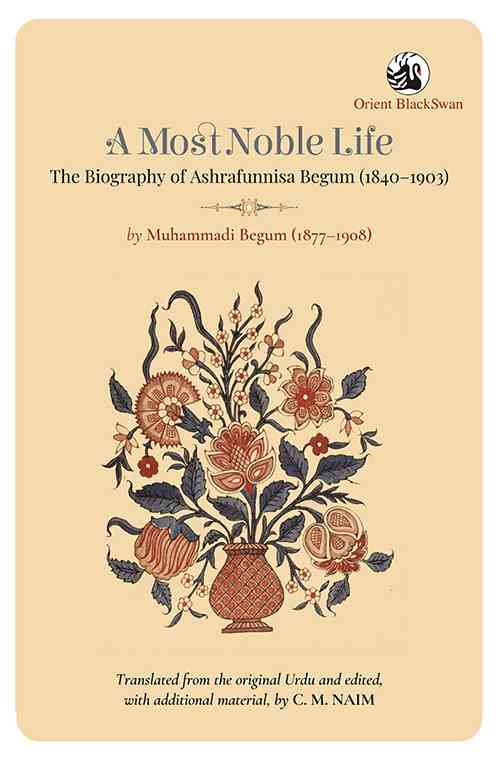
A Most Noble Life: The Biography of Ashrafunnisa Begum (1840–1903) by Muhammadi Begum (1877–1908) is the first complete English translation of Hayat-e Ashraf (1904), the extraordinary story of Ashrafunnisa Begum. Ashrafunnisa, born in a village in Bijnor, Uttar Pradesh, taught herself to read and write in secret, against the wishes of her elders and prevailing norms. She went on to teach and inspire generations of young girls at the Victoria Girls’ School – the first school for girls in Lahore. Her unusual life was written about with great poignancy by Muhammadi Begum – the first woman to edit a journal in Urdu, the weekly Tahzib-i-Niswan. Muhammadi Begum was a prolific writer of fiction and poetry for adults and children, and instructional books for women during her brief life. She aptly titled the biography Hayat-e Ashraf: it echoes the name of her subject, but also means “the noblest life”. Indeed, both biographer and subject may be described, says Professor CM Naim, as “noble lives”.

The two women, who met by chance at a wedding, instantly developed a strong mutual affinity, which grew into a lifelong bond. In Ashrafunnisa Begum, Muhammadi Begum saw not only the mother she had lost as a child, but also an inspiring role model who had led a principled life of her own making, and shown amazing grace and strength against grave odds.

This annotated translation by CM Naim, an eminent scholar of Urdu literature and culture, also provides the first detailed study of the life and works of its author, Muhammadi Begum, and highlights, in an “Afterword”, two key social issues of the time, women’s literacy and widow remarriage, which remain as relevant today.

In this conversation with writer Githa Hariharan (in 2022), CM Naim spoke of the lives and times of Muhammadi Begum and Ashrafunnisa Begum, their work, and the unique friendship that nurtured both of them.

Let me begin with asking you to comment on the ways in which this slim biography of Ashrafunnisa by Muhammadi Begum dispels the gloomy image of the silent and secluded Muslim woman of the 19th and possibly 20th century.

The trouble, as I see it, lies in the “totality” and “exclusivity” we allow to these claims. In the 19th century, a huge number of Muslim men were not literate, just as a huge number of Muslim women were not secluded, or not any more secluded than the non-Muslim women of the same class, occupation or region. The wives of Muslim weavers and barbers and food-sellers may have kept their faces covered while toiling alongside men but their lives were not secluded the way we assume them to be – rightly – for the women of the upper classes. Then there were the differences we see in Bibi Ashraf’s life. Her family was Shi’ah; the women of the household held weekly majlis where they read out texts from religious books. She lost her mother when she was only eight; otherwise, she would have learnt to read and write the way other girls in the family did. We also see a young Muslim widow, a Pathan, taking up employment with the family as a Qur’an instructress.

I found A Most Notable Life a fascinating entry point into the lives of two women I want to know more about. But I also want to know more about the context of their times and work. Ashrafunnisa’s account of how she learnt to read and write is, for me, the most moving section of the book. She encounters obstacles in learning how to read, but the challenges she faces in learning how to write seem far more severe. I am curious about this. Is it far-fetched to conclude that a writing woman presents a greater threat to the patriarchal establishment, because she assumes the power of an “inscriber” rather than merely being a body (or mind) to be inscribed upon?

The chief obstacles are the wilful grandfather and uncle. The grandfather holds the most authority, and the uncle is more immediately present in the lives of the women in the household. The grandfather is not against female literacy in principle. He willingly allows it until the widowed female teacher gets remarried. That is a worse “sin” in his eyes than reading and writing. But then he considers the fact of his son, Bibi Ashraf’s father, taking up a pesha, a profession – he moved to Gwalior and became a lawyer – an equal threat to his honour. The family’s attitude toward writing is complex. Her grandfather tolerated some girls in the family learning writing from their mothers; her father rejoiced when he learned that Bibi Ashraf could read and write so well, but her uncle became more furious and punitive. I feel writing in the upper classes, where seclusion was more closely observed, was seen as an instrument that could make it possible for women to break out of that seclusion. We should not assume that writing was then considered an integral element of education. Transmission of essential or requisite knowledge to a majority of males and females could be done orally. Or so, arguably, the society believed at the time.

I am amazed by the use of multiple genres by both women – poetry, essays, memoir, biography, novels, stories for children, “instruction” manuals. Was this characteristic of the “educated” of the times, or was it driven by the need to be useful to a range of readers? And would you say that in the case of women, or these two women at least, the autobiographical element links all the genres they make use of?


That’s a very interesting question, and I don’t have a clear answer. I can only assert with some confidence that before the 20th century, most prose writings also contained verses. Very often, these were original verses by the author of the text, alongside quoted verses by well-known or obscure poets. The purpose could have been to emphasise a point by reiteration in a more memorable form, or adding the authority of the past to the point being made. The same is done, for instance, by using proverbs. Nazir Ahmad, the reformist novelist, was a great versifier and public orator. His lectures and long poems at the annual sessions of the organisations he supported were hugely popular. So, anyone who learned to read in those days encountered poetry from day one. And if you had creative impulses, you trained yourself to write verses as well as sentences. In the case of Muhammadi Begum, she was indeed driven by a powerful urge to be useful to other women – her sisters, bahneñ – in particular her contemporaries, i.e. young wives, and girls, and wrote in several genres.

Since the education of women is so crucial in the context of the two women’s lives and work, the writing does a balancing act between the creative and the expression of the self on the one hand, and the didactic on the other. To what extent does such didactic literature – or “instructional books” – differ when authored by men (such as Nazir Ahmad, whose work took up women’s education as well as conduct), and women such as Ashrafunnisa and Muhammadi Begum? My friend, writer and critic Aamer Hussein, writes that “Muhammadi Begum reworks and amends, with affection and insight, the reforms suggested by Nazir Ahmad.” In what ways do the women, Muhammadi in particular, take the project forward, not only as writers, but as journalists, teachers and publishers?

What we now label “didactic fiction” was not thought of as merely instructional by its authors; they meant it to entertain too. It would have been Khel khel meñ kam ki bateñ, “useful words in playtime”. The authors simply called them novels. And this applies to female writers and readers too, until they began to learn English.

As for your core question, I can best answer it by exaggerating my response. Nazir Ahmad, Hali and other male reformists wanted to educate women so that they would be good mothers to their children and proficient in managing their homes. Bibi Ashraf and Muhammadi Begum prize these goals too, but they also prize education as a means of mental and spiritual self-improvement. For better self-expression, even. But the most important thing with Muhammadi Begum is that she lays great emphasis on a commonality of sorts, on a sisterhood of peers. She also wishes to make women proficient beyond her kinfolk, and even beyond the threshold of her own home. To that extent, it may be more the aspiration of an upper-class woman. But it also suggests that for her, female literacy was a given. As indeed it was by that time for the salaried middle-class.

It’s clear that propriety is the framework within which these two women, and others like them, have to work to reap some gains. Keeping this in mind, may I ask you to unpack the word “hayat” for us? The biography is called Hayat-e Ashraf, and you have translated it as A Most Noble Life. I am thinking of the difference in English between “respectable” and “noble” when I ask you to explain “hayat” for those of us who do not know Urdu.

“Unpacking” hayat would require explaining what “life” meant to Muhammadi Begum or to an Urdu writer in the 19th century – a tall order. I can only say that Muhammadi Begum seems to have chosen the most apt title for her book. It echoes the title of Altaf Husain Hali’s iconic biography of Sir Syed, Hayat-i-Javaid (An Everlasting Life), published only three years earlier. Hayat-i-Ashraf can be read as “The Life of Ashraf[unnisa Begum]” or as “An Ashraf Life,” i.e. “A Most Noble Life.” Ashraf is the superlative of sharif, and the latter, of course, is a marker of numerous presumed personal attributes, ranging from nobility of birth to modesty in speech and much more. Muhammadi Begum organised her book in a similar manner: first, a chronological account, followed by short sections on what she considered her subject’s exemplary traits or, as she put it, her “Disposition, Habits and Manners.” Throughout the text, she never fails to remind her readers – her “sisters” – to exert themselves and follow Bibi Ashraf’s example.

Pioneers have to be remembered not only for what they did – given their times – but also in connection with their descendants. Would you speculate on the ways in which Muhammadi opened doors for the Urdu women writers who came after her in the 20th century?

Muhammadi Begum was not the first woman poet in Urdu, nor the first fiction writer. She was, however, the first in several other ways. She was the first woman to edit an Urdu journal and to write on many of the issues that were of great concern to women of her community and class. She also wrote “manuals” for women – on writing letters, on managing the household, or on meeting their peers outside the kinship network. In everything she wrote, she made it clear there were no limits to women’s abilities. And most importantly, she made it clear that women can help each other in discovering and putting to use these abilities. I should emphasise one point here. It was her husband’s dream to publish a journal for sharif women that was also edited by a sharif woman – contra the two journals that had appeared earlier and failed. Mumtaz Ali was a champion of Muslim women’s causes, and he strongly believed in gender equality. No doubt he viewed himself as a wise guide, and never hesitated to publish in the journal his own views on some subjects of concern; but what impressed me was his readiness to give space to opposing views, never adopting a patronising or dismissive tone in his responses.

Coming back to your question, Muhammadi Begum’s journal, Tahzib-i-Niswan, gained wide circulation, though subscriptions were slow in coming. But it soon became the journal of choice for aspiring female writers. Hijab Imtiaz Ali, Qurratulain Hyder and Rasheed Jahan made their debut in its pages. And Ismat Chughtai made her first appearance in print as an excited reporter from Aligarh informing the “Tahzib Sisters” that Rasheed Jahan had completed her medical course. So I think it is not so much the matter of opening doors that makes Muhammadi Begum’s journal important; it is the spirit of confident sisterhood that she identified and fostered.

I don’t want the two women, Ashrafunnisa and Muhammadi, to get lost in the jungle of history though, whether it is the history of women’s education or journalism or literature. I want to pay a tribute to their friendship – which allowed them to have a rich relationship that encompasses a role model, a colleague and a surrogate family. And this despite their age difference, despite one being Sunni and the other, Shia. Would you say their friendship gives an edge to their interest in writing memoir and biography?

Their close friendship, their deep trust in each other, was to my mind the most thought-provoking and inspiring thing about them. No doubt, they both had very painful childhoods – having lost their mothers at a tender age. But they also seemed to see in each other a kind of partner-in-arms, joined in some cause. The much older Bibi Ashraf unhesitatingly treated Muhammadi Begum, barely out of her teens, almost as her leader in a cause that concerns all women.

We should also recall that the “seclusion” of sharif women in those days was stricter. It even meant seclusion from the company of a great many females within the extended families as well their neighbourhoods. Muhammadi Begum started her journal Tahzib-i-Niswan in 1898, and amazingly, from the very beginning, she thought of it as a gathering place where women, previously strangers to each other, could meet and become “sisters”. She coined the expression tahzibi bahnen, ‘Tahzibi Sisters’, to describe this coming together. Then, acutely aware of the larger issue, she quickly proceeded to write a manual on the art of Mulaqat, explaining how a sensible woman should behave in the company of other women outside her own family, complete strangers. It was, of course, the time when men in government jobs at all levels, including the salariat middle- and lower-middle class jobs, were liable to be transferred from one district to another, requiring their wives to also move from place to place with them. They led a very lonely life unless they made an effort to know their neighbours – strangers or peers – with no past experience to guide them.

This interview was originally published on Indian Cultural Forum.

source: http://www.scroll.in / Scroll.in / Home> Literary Tribute / by Githa Hariharan / July 13th, 2025
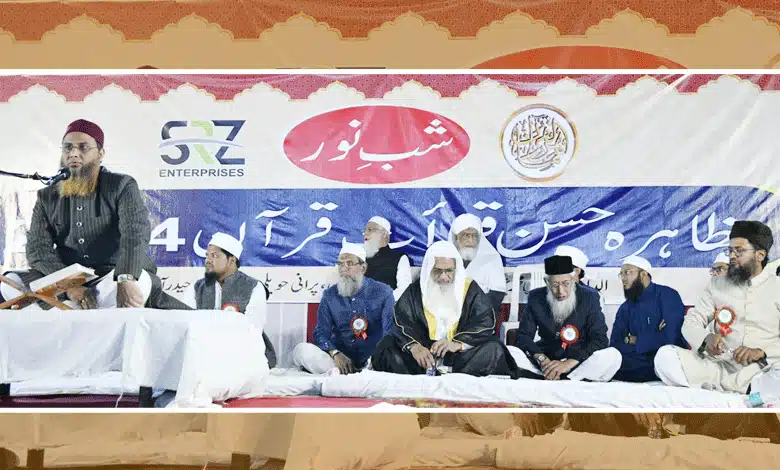
An exemplary achievement by SRZ Maahir-ul-Quran Hyderabad’s founder and president, Hazrat Qari Muhammad Abdul Rahman Shahid

Hyderabad, TELANGANA :

Hazrat Maulana Ghiyas Ahmad Rashadi Sahib, President of Safah Bait-ul-Mal and Manbar-Mihrab Foundation, was felicitated for his completion of the Tafsir al-Quran by Qari Muhammad Abdul Rahman Shahid Sahib and his brothers.

On the evening of December 31, 2024, a grand “Shab-e-Noor” Quranic Recitation event was held at the vast Dar-ul-Shifa Football Ground in the city. The event was presided over by Ustaad-ul-Qura’ Hazrat Maulana Qari Muhammad Ali Khan Sahib (may his blessings last) with the patronage of Mufti Hafiz Sadiq Mohiuddin Sahib (may his blessings last). The event featured renowned internationally acclaimed Qaris from the city, who presented their recitations.

Hazrat Maulana Jafar Pasha Sahib, Hazrat Maulana Hassan Farooq Sahib, respected Mir Zulfiqar Sahib (Charminar MLA), and respected Riyaz-ul-Hassan Afandi Sahib (MLC) participated as distinguished guests.

The Qaris presented their remarkable recitations until 2 AM, with a large crowd of both common people and elites in attendance.

Hazrat Maulana Ghiyas Ahmad Rashadi Sahib, President of Safah Bait-ul-Mal and Manbar-Mihrab Foundation, was felicitated for his completion of the Tafsir al-Quran by Qari Muhammad Abdul Rahman Shahid Sahib and his brothers.

The program concluded with a special prayer from Ustaad-ul-Qura’ Hazrat Maulana Qari Muhammad Ali Khan Sahib.

source: http://www.munsifdaily.com / Munsif News 24×7 / Home> Hyderabad / by Syed Mubashir / January 01st, 2025

Two books on Seemanchal’s writers released in Delhi

Seemanchal, BIHAR :

New Delhi:

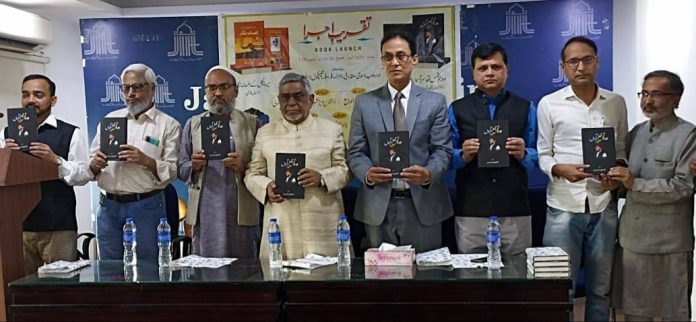
A sense of ‘Think global, act local’ prevailed at the launch of two significant books “Who jo Shams tha Sar-e-Aasmaan” and “Seemanchal ke Afsana Nigar.” The launch was jointly organized by Forum for Intellectual Discourse and Idara Adab-e-Islami, Delhi on Sunday, 7 November, 2021 at the headquarters of Jamaat-e-Islami Hind.

The book “Who Jo Shams tha Sar e Assmaan” was compiled by Dr Noman Qaisar and Mohd Islam Khan and has 41 Urdu articles and six poems on the life and services of journalist Dr Abdul Qadir Shams who died during Covid-19 on 25 August, 2020. It also has four write-ups in English.

Another book “Seemanchal ke Afsana Nigar” is an effort to document the life and works of dozens of fiction writers of Seemanchal.

Presiding over the programme renowned Islamic scholar and former President of Maulana Azad University, Jodhpur, Prof Akhtarul Wasey said that the work done by Abdul Qadir Shams was ‘unusual’. “Shams used to sleep in Delhi but dreamed of Seemanchal.” The void left with his demise would always be felt in my life, said Wasey, who is also the Professor Emeritus of Islamic Studies at Jamia Millia Islamia. Seemanchal ke Afsana Nigar will be an indispensable work in the history of short-story writing. Prof Wasey also congratulated the Forum for Intellectual Discourse stating that the need for such an organization like the Forum could never be felt more strongly than the present times. He wished the Forum success.

Special guest, editor general at NCERT, Dr Perwaiz Shaharyar expressed happiness over organizing a meeting for a journalist in which a large number of people from media were present whose responsibility had grown manifold as the nation was confronted with difficult situations. He called the book a ‘valuable addition to literature’. Prof Abu Bakar Abbad had his reservations for confining any segment of Urdu literature to a specific region as Urdu was a global language. The protagonists, however, had their own arguments for identifying geographical regions, as was also the case with Seemanchal, a region long ignored by most literary aficionado.

Abdul Mannan, editor of monthly Yojana reasoned that the creative facets of Seemanchal remained shrouded because their writers usually shied away from the limelight. In that context, he considered Ehsan Quasmi’s work exceptional.

Chief guest, senior journalist Siraj Naqvi, who had worked with Abdul Qadir Shams for over a decade said that Shams new the art of maintaining relationships. Despite all the difficulties, the smile on his face would dispel worries. Author, critic and famous litterateur Haqqani Al-Qasmi paid a glowing literary tribute to his childhood friend Abdul Qadir Shams which moved the audience. He said Woh jo Shams tha… is not merely a collection of articles but teardrops flowing directly from the hearts.

Dr Waris Mazhari, Assistant Professor, Jamia Hamdard; Dr Khalid Mubashshir, Assistant Professor, Jamia Millia Islamia; Dr Ahmad Ali Jauher, Assistant Professor, Indira Gandhi National Open University; Dr Jasim Uddin Qasmi of Delhi University, Jamshed Adil Alig and Dr Zain Shamsi also shared their views. Uzma Shaheen, daughter of late Abdul Qadir Shams paid a rich tribute to her father.

Manzar Imam of Forum for Intellectual Discourse moderated the three-hour long programme which had begun with Qur’anic recitation of Abdur Rahman, followed by welcome remarks of Dr Mohammad Ajmal, Assistant Professor, Centre for Arabic and African Studies, Jawaharlal Nehru University. It ended with a vote of thanks by journalist Abid Anwar.

source: http://www.muslimmirror.com / Muslim Mirror / Home> Books / by Manzar Imam / November 10th, 2021

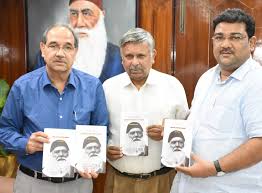
AMU VC releases Hindi translation of ‘Asbab-e-Baghawat-e-Hind’

Aligarh, UTTAR PRADESH :

pix: facebook.com/proamuofficial

Aligarh :

Aligarh Muslim University (AMU) Vice Chancellor, Professor Tariq Mansoor today released the Hindi translation of Sir Syed Ahmad Khan’s ‘Asbab-e-Baghawat-e-Hind’ along with a special reprint of the book in Urdu. The translation has been done by Dr Jasim Mohammad.

The book was released in the presence of Professor Shafey Kidwai (Member-in-Charge, Public Relations Office, AMU).

On the occasion, the Vice Chancellor said that Sir Syed Ahmad Khan took upon himself the challenge of educating the masses by pushing ahead common people towards over all development with the most modern and scientific education. He added that it is imperative that the teachings Sir Syed should reach all corners of world through translations in various languages.

Dr Jasim said that the idea behind the translation of ‘Asbab-e-Baghawat-e-Hind’ is to educate people on how Sir Syed with his nationalistic approach towards problems and controversies prevailing at that time took the unimaginable step of speaking against the British rule.

Dr Jasim has authored 26 books including ‘Sir Syed Ahmad Khan aur Aligarh Movement’, Aligarh Muslim University Minority Character: A Comprehensive Study’ and ‘Urdu Mass Media aur Rabta-e-Aama’. He regularly writes articles and opinion pieces in Hindi, Urdu and English languages for national dailies. Dr Jasim is also a recipient of Bharat Gaurav Samman, Acharya Hasthi Karuna Institutional Award and Rais Uddin Rais Award.

source: http://www.indiaeducationdiary.com / India Education Diary / Home> Academics> Competition> Edu Events> National News / by India Education Diary Bureau / pic: edited – facebook.com/proamuofficial / September 09th, 2017

Hussain Mansuri: An ambassador of humanity

Mumbai, MAHARASHTRA :

Hussain Mansuri

After a difficult childhood and early careers in aviation and the hotel industry, Hussain Mansuri found his true calling—serving humanity. Today, he stands as a prominent social media influencer and a beacon of hope for many in need.

Widely recognized for his philanthropic efforts, especially in supporting children battling cancer, Mansuri’s heartfelt videos have touched millions on Instagram. “Main sirf insaniyat ka farz ada kar raha hoon,” he says emotionally. “I am only fulfilling the duty of humanity.”

Mansuri’s life journey is a testament to resilience. He completed his schooling at Cardinal Gracious High School in Mumbai and later graduated from Rizvi College. Even as a child, he had a deep passion for photography and storytelling. However, financial struggles meant he had to work while still in primary school.

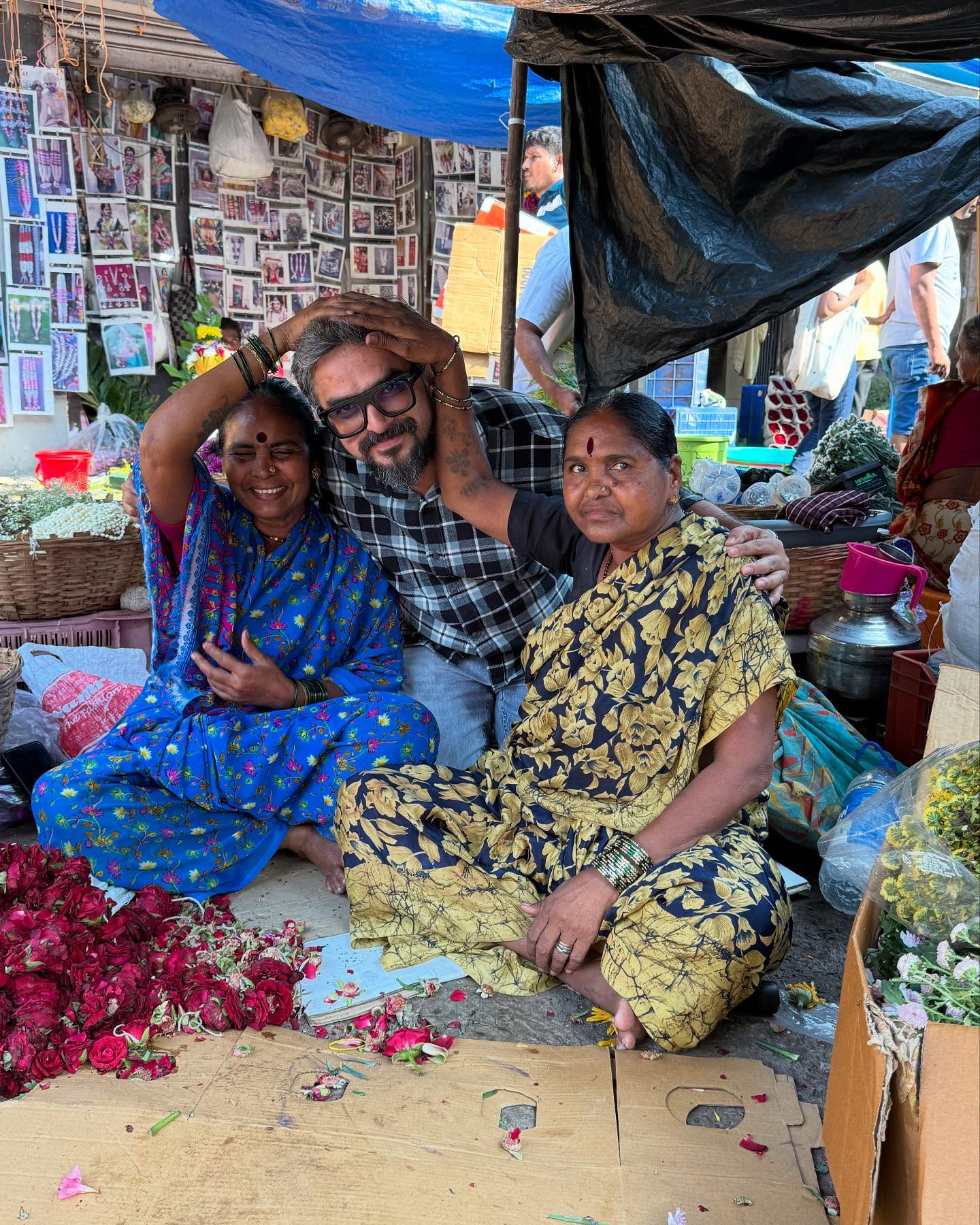
Hussain Mansuri with flower sellers

“I remember those days when I wore second-hand clothes just to get by,” he recalls. “But I focused on my education and eventually landed a job with Jet Airways.”

To support his family, Hussain also worked as a waiter and took on various odd jobs. During this time, he developed a profound sense of compassion and a desire to help those less fortunate.

“I saw people chasing wealth endlessly, yet they lacked true satisfaction,” he says. “And very few were willing to help strangers without expecting anything in return.”

Hussain lives by the principle: “Tu bas dua kama, phir tujhse amir koi nahi”—Just earn blessings, and then no one is richer than you. Guided by this philosophy, he began helping those in need—even when his means were limited.

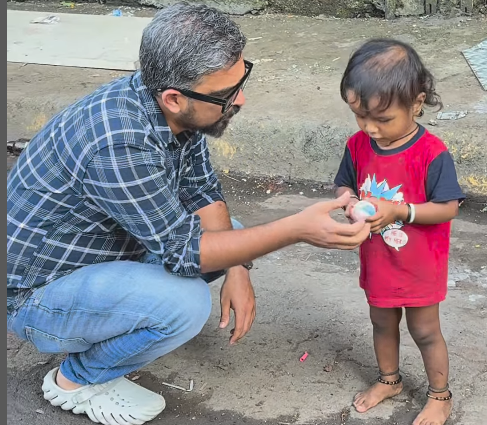
Hussain Mansuri with a child

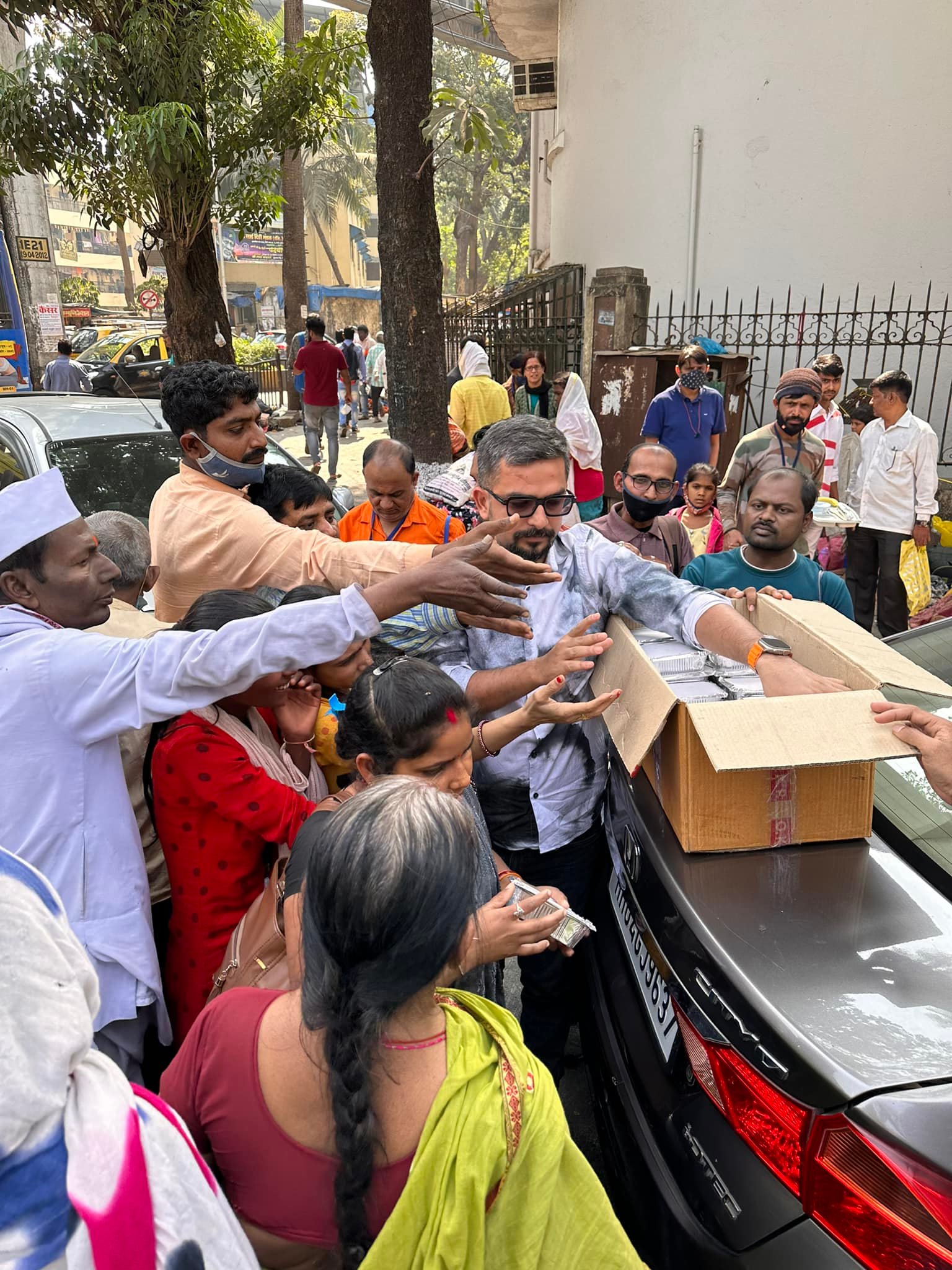
During the COVID-19 pandemic, when many were left without food or medical support, Hussain stepped up. He distributed essentials to the homeless, sick, and starving.

He continues to offer financial aid to cancer patients, particularly at Tata Memorial Hospital, supports underprivileged children’s education, and provides food, clothing, and care to the elderly, regardless of caste, religion, or background.

It is this unwavering dedication that has earned him the title, Ambassador of Humanity.

Though his actions are modest in scale, their impact is profound. His videos not only provide immediate relief to those in need but also inspire millions to develop empathy and a sense of social responsibility.

Hussain Mansuri distributing food packets

In one powerful video, Hussain is seen picking up discarded images of Hindu deities from the roadside and respectfully immersing them in water. This simple act of communal respect resonated deeply with viewers across faiths, earning widespread admiration and sending a message of unity at a time when it’s most needed.

With a growing community of over 12.3 million followers on Instagram, Hussain’s digital presence serves as a platform for social change. “When I started, I used to share some photos and personal stories,” he says. “People started connecting with them. Over the years, that small start has grown into something beautiful—like a second family.”

source: http://www.awazthevoice.in / Awaz, The Voice / Home> The Changemakers, Maharashtra / by Fazal Pathan / July 16th, 2025

IPS Officer Abdul Ahad Promoted to SSP

Moodbidri (Dakshina Kannada), KARNATAKA :

Bengaluru:

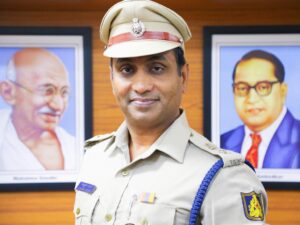
Senior IPS officer Abdul Ahad has been promoted to the grade of Senior Superintendent of Police (Selection Grade) with effect from January 1, 2025. He will continue serving in his current role as Director of Security and Vigilance at the Bengaluru Metropolitan Transport Corporation (BMTC) until further orders.

This promotion places Ahad in Level 13 of the IPS Pay Matrix as per the IPS (Pay) Rules, 2016, reflecting his distinguished service in the force.

Ahad, who hails from Moodbidri in Dakshin Kannada district, has held several important positions throughout his career. Before his appointment to BMTC, he was serving as the Deputy Commissioner of Police (DCP) for Bengaluru’s Crime Branch (CCB). In September last year, he took over the role of Director for BMTC’s Security and Vigilance wing.

The senior officer’s tenure includes noteworthy stints as the DCP of Bengaluru’s Whitefield division, SP at the Coastal Security Police, SP of Anti-Corruption Bureau (ACB) Bengaluru, SP of Economic Offences Wing at CID, and Commandant at KSRP.

Ahad’s extensive experience in tackling economic crimes, corruption cases, and city crime has been instrumental in his rise through the ranks, marking another milestone in his illustrious career with this promotion.

Ahad is the younger brother of Abdus Salam Puttige, founder of popular Kannada daily Vartha Bharati, published from Bengaluru, Mangaluru and Shivamogga simultaneously. Fluent in Kannada, Urdu and Beary language, Ahad completed memorising the Quran from a local Madrasa in Karkala town at young age.

source: http://www.radiancenews.com / Radiance News / Home> Latest News> Report / by Mohammed Atherulla Shariff / January 01st, 2025

Hamd Foods expands footprint with fourth outlet in Udupi’s Kaup

Mangaluru, KARNATAKA :

Udupi:

Hamd Foods, a rising name in the natural food products sector, inaugurated its fourth exclusive outlet in Kaup on Thursday, reinforcing its commitment to the brand’s vision, ‘Healthy Food, Healthy Life.’ The launch was spearheaded by Founder Shahida A, Co-founder Mariyam Shahira, and Branch Manager Khairunnisa.

Following the success of its earlier outlets in Falnir, Krishnapura, and Thokkottu, the Kaup branch marks a significant step in the company’s expansion journey. With over 150 natural food and personal care products on offer, the outlet provides customers with options ranging from spice blends, stone-ground pastes, and frozen snacks to flour varieties and skincare items, all free from artificial colours and chemical preservatives.

“In today’s fast-paced world, many people struggle to find time to prepare healthy meals. Through this outlet, we aim to make wholesome, ready-to-use natural products easily accessible to everyone,” said Shahida A, addressing the gathering.

The launch event was attended by several prominent women including Reshma Thota, Prameela Jatanna, Alia Sayyed, and Nilofer Parveen, who expressed their appreciation for the brand’s consistent growth.

“Your consistency and hard work over the past seven years has led you to launch your fourth store today,” noted Reshma Thota. “For working women like us, Hamd’s products are a real support. In a market full of choices, it’s rare to find ones that are both hygienic and chemical-free — Hamd is a brand we truly trust.”

source: http://www.english.varthabharati.in / Vartha Bharati / Home> Karavali / by Vartha Bharati / July 13th, 2025

AMU’s Prof Shahab Fazal Conferred National Geospatial Faculty Fellow Award at IIT Bombay

Aligarh, UTTAR PRADESH :

Aligarh:

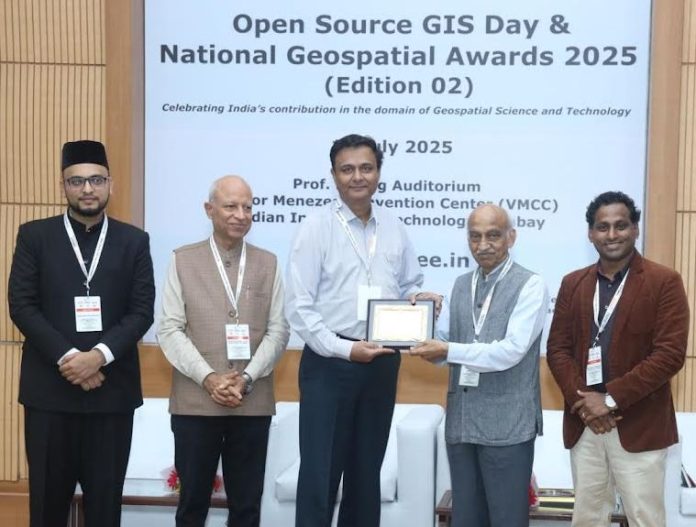
Prof Shahab Fazal of the Department of Geography, Aligarh Muslim University (AMU), has been conferred the prestigious National Geospatial Faculty Fellow Award at the Indian Institute of Technology (IIT) Bombay.

The award was presented in recognition of Prof Fazal’s significant contribution to advancing geospatial education through his textbooks and Massive Open Online Courses (MOOCs) on remote sensing and Geographic Information Systems (GIS). His work has played a vital role in popularising geospatial technologies and making them accessible to students across the country.

Padma Shri Prof Kiran Kumar, Former Chairman of the Indian Space Research Organisation (ISRO), presented the award during a special ceremony held at the Prof B. Nag Main Auditorium of IIT Bombay.

The award ceremony was a key highlight of the Open Source GIS Day Celebrations, organised by the FOSSEE GIS project of IIT Bombay. This initiative falls under the National Mission on Education through ICT (NMEICT), Ministry of Education, Government of India.

source: http://www.radiancenews.com / Radiance News / Home> Pride of the Nation> Awards> Latest News / by Radiance News Bureau / July 18th, 2025

Dungarpur’s Noor Mohammad Makrani: True Symbol of Humanity, Brotherhood

Dungarpur, RAJASTHAN :

At 59, a motor mechanic in Rajasthan dedicates his life to helping 19,000 poor families, distributing free ration kits and gifts to Hindus and Muslims alike, proving that service knows no religion.

New Delhi / Dungarpur :

In the heart of Dungarpur city in Rajasthan, a remarkable story of selfless service and unity is quietly unfolding. Haji Noor Mohammad Makrani, a car mechanic by trade, has become an inspiring figure of humanity and brotherhood, breaking barriers of religion and caste with his unwavering dedication to the poor and needy.

For many years, Noor Mohammad has devoted himself to social service through the public welfare group “MMB Group,” inspired by the spirit of the Mastan Shah Baba Dargah, where he is actively involved. His mission has touched the lives of over 19,000 families, distributing free ration kits and providing essential support during every festival, including Holi, Diwali, Eid, Bakrid, and Ramadan.

“Service is the biggest religion,” says Noor Mohammad, whose commitment has not waned even at the age of 59. His efforts go beyond just ration distribution; he has donated blood 40 times and regularly distributes clothes, food, and daily necessities to the destitute across Dungarpur. He also cares for animals and birds, ensuring they have food and water.

“Noor Mohammad does not see anyone’s caste or religion. His heart is open to all,” shares Asrar Ahmed, former minister of state, praising the man whose actions unite communities. Non-Muslim residents of Dungarpur also express deep respect and support for him, showing that goodwill crosses all divides.

“As long as I live, I will continue this service,” Noor Mohammad states firmly, embodying the true spirit of brotherhood in a time when such examples are rare.

At the Mastan Shah Baba Dargah, Noor Mohammad regularly collaborates with government officials, social workers, and local leaders to organise public welfare programmes. His work stands as a shining example in an age where division often dominates headlines.

This story of Noor Mohammad Makrani is a reminder that humanity and kindness can prevail over differences. His life’s work inspires many to see beyond religion and caste and to embrace the shared responsibility to care for the less fortunate.

“Noor Mohammad’s service has helped our family during hard times. His help is given without any conditions,” says Rahim Khan, a beneficiary.

“In these times, it’s rare to find someone who works for all communities alike. He truly represents brotherhood,” remarks Suman Patel, a local Hindu resident.

Noor Mohammad’s journey shows that compassion and dedication can build bridges where others see only walls.

source: http://www.clarionindia.net / Clarion India / Home> India> Indian Muslims / by Mohammad Bin Ismail / July 15th, 2025

Dr. Parveez Ubed’s makes eye-care accessible, affordable across NE India

ASSAM :

Dr Pervez Uber with his staff

On July 10, a significant milestone in Northeast India’s healthcare landscape unfolded as Dr. Parveez Ubed inaugurated the 7th Hub Hospital of ERC Eye Care in Abhayapuri, Bongaigaon district, Assam.

The ceremony represents more than just another hospital opening—it symbolizes the transformative vision of a social entrepreneur who chose to stay in his homeland over greener pastures in metropolitan cities.

Dr. Parveez Ubed’s story begins in Jorhat, Assam, where, after completing his ophthalmology specialization from the Gauhati Medical College in 2007, he decided to change lives.

His classmates left for bigger cities for attractive offers, but Dr. Ubed chose to stay put in Assam to serve his people. His decision was driven by his understanding of the region’s healthcare challenges.

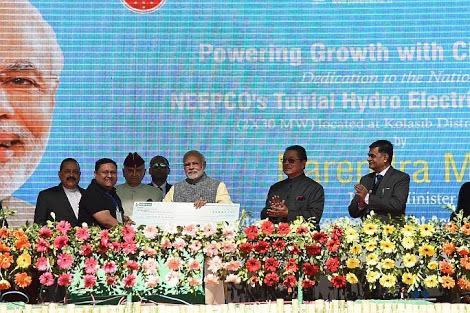
Prime Minister Narendra Modi Presenting an award to Dr Perveez Ubed

His entrepreneurial journey started in June 2011, when he founded ERC Eye Care in a converted kitchen space with just Rs 4 lakhs borrowed from his mother.

What began as a single-man mission has now evolved into a phygital (physical + digital) eye care network spanning across Northeast India with 267 full-time employees and 190 part-time staff.

Dr. Ubed’s venture addresses a critical healthcare gap in Northeast India, where the statistics paint a sobering picture.

Assam has a blindness prevalence of 3.03% against the national average of 1.99%, with an estimated 92% preventable blindness. The World Health Organization reported that 18.8% of Indians suffer from vision impairment due to cataract in Assam alone, making it one of the most affected regions in the country.

Bad roads and difficult terrain, lack of information, poor overall health status, and absence of escorts are barriers that limit access to eye care services in the region.

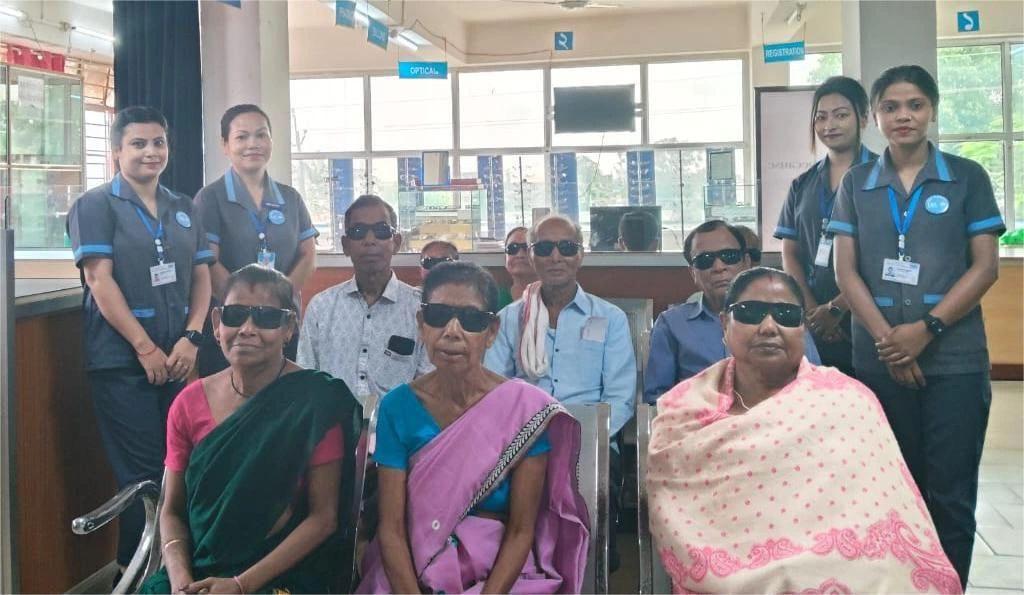
The beneficiers of Dr Perveez Ubed’s eyecare facilities

With only 0.6 ophthalmologists per 100,000 population in Assam, the doctor-patient ratio represents a massive healthcare infrastructure deficit.

Dr. Ubed’s entrepreneurial genius lies in his innovative hub-and-spoke business model that tackles the three critical healthcare challenges: affordability, accessibility, and availability. The model operates through: Hub Hospitals: (i) Equipped with surgical and diagnostic facilities serving as main centres in Sivasagar (2015), Nagaon, Silchar, Guwahati, Tezpur, Boko (6th hospital, January 2025), and now Abhayapuri (7th hospital, July 2025).

(ii) Spoke Centres: Satellite vision centres and mobile units extending basic eye care to remote areas, bringing services directly to patients’ doorsteps. (iii) Digital Integration: The organization leverages AI and IoT technology through their digital platform erclens.com, making them the world’s first phygital eye care company.

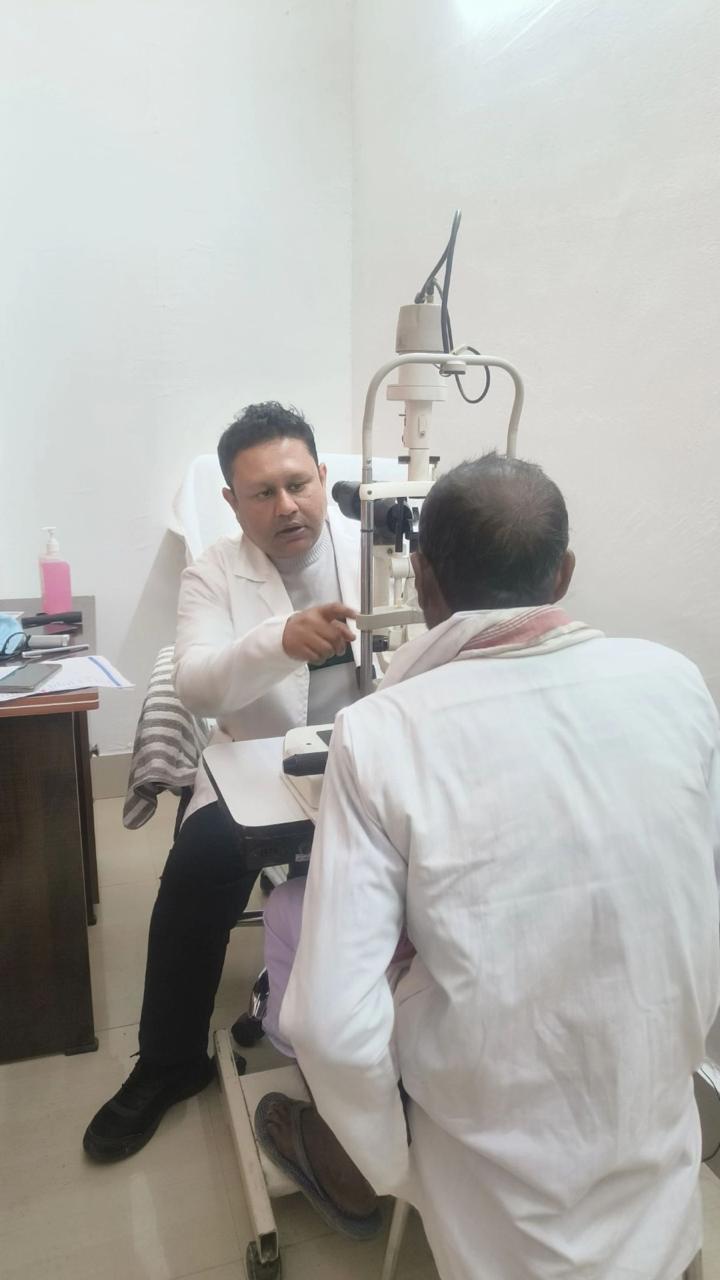
Dr. Perveez Ubed with a patient

Dr. Ubed’s transformation from a medical professional to a successful social entrepreneur showcases remarkable business acumen. “All my nights were spent reading MBA books to find a business plan,” he recalls with characteristic humility.

This self-directed learning was later complemented by formal business education at Stanford University Graduate School of Business (2019-2021), where he completed the Stanford Seed Transformation Programme Certificate.

Dr. Ubed’s work has garnered prestigious recognition, underscoring his impact as a changemaker. He received several awards and recognition in India and abroad.

Dr. Ubed’s vision extends far beyond numbers, though the statistics are impressive: over 1.1 million patients served, 500,000 eyeglasses distributed, and 43,000 cataract surgeries performed. Each figure represents a life transformed, a livelihood restored, and hope renewed.

The organization’s pricing model reflects its social mission: eye consultations for Rs 50, optical retail starting at Rs 99, and cataract surgeries from Rs 3,500. Studies referenced by ERC indicate that good vision can increase incomes by 30% and productivity by 25%, making eye care not just a medical intervention but an economic empowerment tool.

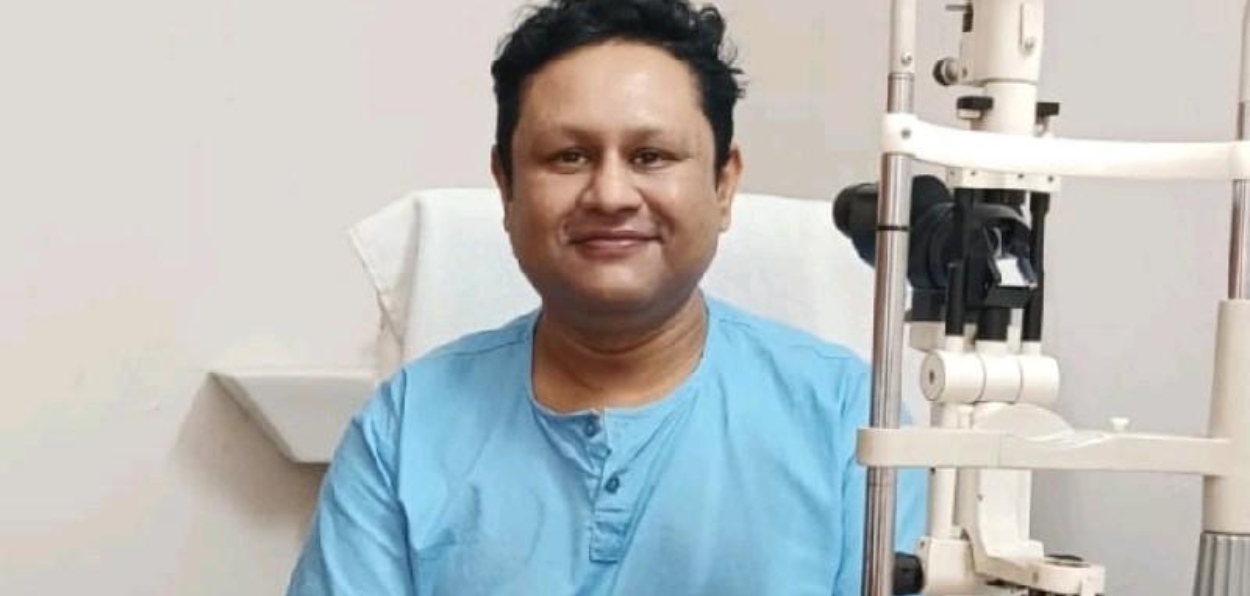
Dr. Parveez Ubed

Dr. Ubed’s forward-thinking approach incorporates artificial intelligence, machine learning, and IoT technologies to create scalable healthcare solutions. The digital platform erclens.com offers teleconsultation services, online appointments, and home eye testing, making ERC a pioneer in tech-enabled healthcare delivery for underserved markets. The organization’s expansion plans extend beyond India to Southeast Asia and Africa, positioning ERC as a global model for affordable healthcare delivery.

Dr. Parveez Ubed stands as living proof that one person’s commitment to serve can illuminate the path for millions. In a world where success is often measured by personal wealth, Dr. Ubed has chosen a different metric—the number of people who can see clearly enough to dream again, work productively, and live with dignity.

His story reminds us that true entrepreneurship lies not in creating unicorns, but in nurturing phoenixes—taking communities from the ashes of neglect and helping them rise to their full potential.

As thousands more patients walk through the doors of this new hospital in Abhayapuri, they will not just be receiving medical treatment; they will be touching the legacy of a man who saw beyond the obvious, dreamed beyond the conventional, and dared to stay when leaving would have been easier.

In the annals of social entrepreneurship, Dr. Parveez Ubed’s name will be etched not just as a successful businessman but as a visionary who gave vision to the visually impaired and hope to the hopeless, proving that sometimes, the greatest journey is not about going far but about going deep into the heart of what truly matters.

The author is the former DGP of the Assam Police

source: http://www.awazthevoice.in / Awaz, The Voice / Home> Stories / by Pallab Bhattacharyya / July 17th, 2025