University Women’s Polytechnic Students Shine at National Project Competition, Win First Prize at MITAOE, Pune
Aligarh:
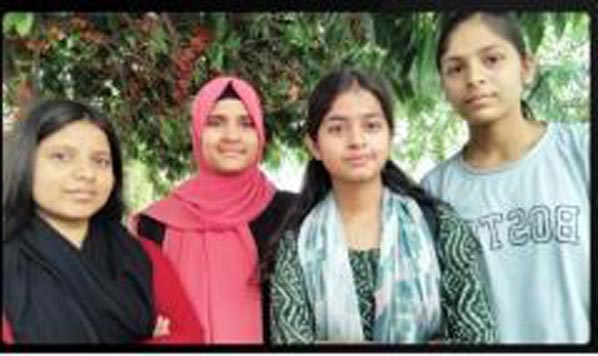
Students from the University Women’s Polytechnic, Aligarh Muslim University (AMU), made a mark at the 8th National Level Poster Presentation and Project Competition, TechnoPHILIA’25, held recently at MIT Academy of Engineering, Pune.
Competing against participants from over 25 institutions across India, the AMU team, “LISA VocalTech,” clinched the first prize in the Diploma Category, along with a cash award for their innovative project titled “LISA: A Voice-Controlled Lift.”
The team comprised final-year Diploma in Electronics and Communication Engineering students – Shalini Kumari, Kashish Khushi, Nargis Khatoon, and Shailly Bhardwaj – who developed the project under the mentorship of Mr. Mohd Kashif. Their creation, a voice-activated lift system, is designed to improve accessibility for the elderly, visually impaired, and physically disabled, earning praise from judges for its practical utility and inventive design.
This achievement highlights AMU’s commitment to academic excellence and its encouragement of student participation in national-level technical events.
source: http://www.radiancenews.com / Radiance News / Home> Education> Focus / by Radiance News Bureau / April 09th, 2025
When he is not writing a novel, he writes stories for children. And, when he is not penning these stories, he may compose poetry for a change of taste or suddenly come up with a book on personalities of his city.
Wakeel Najeeb is not just among the most prominent authors, he is the most prolific writer in the region. For people interested in Urdu litrature across the country, when the conversation shifts to this region, it’s his name that instantly comes to minds.
And a visit to Nagpur is incomplete until one meets him. In the serpentine lanes near his house, ask anyone–an elderly man or a young boy, everyone knows him and can guide you about the address or directly take you to his house.
Th writer is at the centre of Urdu literary activities in Nagpur. On my visit to the town, I tried to locate his house and almost everyone I came across on way, was ready to take me to his place. Apart from novels, he has several collections of stories and short-stories, poems and two travelogues to his name. Also, there is a collection of plays and hold your breath–20 novels.
He is among the few authors who have focused on writing for the children. Many of his novels are for children apart from nazms and stories. Though he started his literary journey with ‘afsana’ [short story], he got more fame because of writing for children as he also gets published in the magazines across India.
“Somehow a label was put on me that I write stories for children and a I am writer exclusively for kids, though I have collections of short stories and have written fiction, not just for children”, he explains. Of course, Najeeb, has written extensively and also writes critical pieces, essays and articles.
His most recent work is a book, ‘Meri Basti, Mere Log’. The book contains his write-ups on interesting personalities he saw around him as he grew up and others in his city. The profiles include people from diverse fields–wrestlers to clerics and writers to sufis. Already hundreds of copies of the book have been sold.
“Frankly, I do my best to publicize my books. When I write, my aim is to make people aware about the book. You see this, he points towards the banner outside his house, which announces publication of his book. People come to know, arrive and buy”, he further says.
That’s a far cry from the writers who bemoan lack of readers or rue that there books are not being sold. Born on July 1, 1946, Wakeel Najeeb, studied at the local Urdu school. He went on to become a teacher and retired as principal of Islamia School. He is socially active, associated with institutions, literary groups and attends their meets. And, literally holds the literary fort in the region.
source: http://ww.newsbits.in / Newsbits.in / Home> Special / by Shams Ur Rehman Alavi, Bhopal / December 22nd, 2021
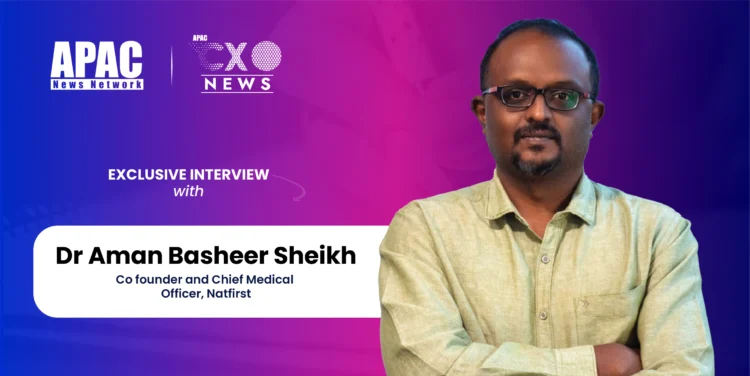
In an exclusive conversation with CXO News and APAC News Network, Dr Aman Basheer Sheikh, Co founder and Chief Medical Officer, Natfirst outlines how they are leveraging AI and data science to disrupt the health tech industry
NatFirst is the parent company of the TruthIn͏͏ app, India’s first consumer product intelligence app, which is the go-to source for understanding packaged food labels. It employs advanced AI,͏͏ including vision models and optical character recognition,͏͏ to͏͏ decode͏͏ product͏͏ labels͏͏ and͏͏ provides consumers with insights͏͏. It analyses the nutritional͏͏ content,͏͏ additives,͏͏ processing level and͏͏ ingredient͏͏ quality by decoding the information disclosed on food labels. A simple barcode scan allows users to access this information. At͏͏ the͏͏ heart͏͏ of͏͏ this͏͏ is͏͏ the͏͏ TruthIn͏͏ Rating͏͏ System,͏͏ which͏͏ translates͏͏ the data͏͏ from labels into͏͏ clear,͏͏ science-backed͏͏ health͏͏ scores.͏͏ These͏͏ insights͏͏ help͏͏ users͏͏ navigate͏͏ a͏͏ market͏͏ flooded͏͏ with͏͏ ultra-processed͏͏ foods͏͏ (UPFs)͏͏, ensuring͏͏ that they͏͏ can͏͏ confidently͏͏ distinguish͏͏ between͏͏ genuinely͏͏ healthy͏͏ options͏͏ and͏͏ deceptive marketing claims.
Natfirst comprises of a multi-disciplinary team of experienced doctors, nutritionists, and tech engineers. This team of experts has developed the TruthIn Rating System (TIRS) by studying best practices of global systems such as Nutri-Score, a nutrition labelling adopted by a few EU countries such as France, Belgium, Germany, Luxembourg, Netherlands, Spain and Switzerland. Other international systems studied include the Health Star Rating system used in Australia and NZ, and Nutri-Grade utilised in Singapore. It has also empanelled an advisory board of eminent multi-disciplinary experts who include, K. Sunitha Premalatha, MSC, RD, PHD, (Cancer Nutrition) and Padmashree awardee Dr Manjula Anagani MBBS, MD (Pathology), MD (Obstetrics & Gynecology), FICOG to ensure the TruthIn Rating methodology is as scientifically accurate as possible. Features in the TruthIn app such as the Match Meter help consumers access personalised guidance by aligning portion sizes with individual health goals, making choosing healthier products much easier.
The innovations͏͏ being developed at Natfirst coincide with the evolving needs of consumers and the demand for healthier, cleaner food products.͏͏ Unlike͏͏ the͏͏ USA or͏͏ EU,͏͏ India͏͏ lacks͏͏ a͏͏ centralized͏͏ database͏͏ of͏͏ packaged͏͏ food͏͏ products. This forced NatFirst͏͏ to build its product dataset͏͏s manually from͏͏ scratch which was a significant challenge but also differentiates Natfirst as one of the few startups in India with such an extensive database.͏͏ With millions of products circulating in the Indian market, the user base of TruthIn has also played an extremely vital͏͏ role in grassroots data͏͏ collection to͏͏ form͏͏ a͏͏ dynamic͏͏ database͏͏ of over͏͏ 16,000͏͏ products which is now set to grow exponentially.͏͏ In that sense, Natfirst is a pioneer in the Indian market with many industry firsts.
Natfirst has also differentiated itself by building a loyal community of users based on trust and consistently promotes its scientifically validated scoring system. Today its flagship product TruthIn, has more than 5 lakh downloads. The brand ambassador of TruthIn is Revant Himatsingka (Food Pharmer), a staunch promoter of scientifically validated information, who has embarked on a mission to educate the average Indian consumer on label literacy. The TruthIn Rating System (TIRS) was specifically designed to help consumers with the most accurate and validated information available to make healthier food choices.
Lastly, to accelerate the process of ensuring that consumers have access to transparent information about all the products, a feature innovation which is very technically challenging is currently being beta-tested. It will enable consumers to analyse products in real-time and TruthIn will become the first app globally to launch such a feature once it goes live.
The 2024 Healthy Snacking report showed that consumers In India are increasingly scrutinising labels. However, the findings of an ICMR NIN report highlighted͏͏ that͏͏ while͏͏ many͏͏ Indians͏͏ read͏͏ food labels,͏͏ they͏͏ rarely͏͏ look͏͏ beyond͏͏ manufacturing͏͏ and͏͏ expiry͏͏ dates—leaving͏͏ them͏͏ vulnerable͏͏ to͏͏ misinformation, unwanted additives͏͏ and͏͏ inaccurate claims.͏͏ This underscores the importance of tech-driven consumer-focused solutions like TruthIn to navigate hundreds of complex food labels that consumers encounter daily.
By analysing product labels͏͏ factoring in things like fats,͏͏ sugars,͏͏ salt,͏͏ chemical additives,͏͏ artificial flavourings, the͏͏ TruthIn͏͏ Rating͏͏ System͏͏ helps users understand their food better. The product rating system developed by TruthIn analyses a lot of complex information and distils it into a 0-5 score that is easily understandable and helps consumers save countless hours deciphering͏͏ complicated͏͏ labels.
An example of this is the flavoured͏͏ yoghurt category; which is very often͏͏ marketed͏͏ as͏͏ a healthy͏͏ snack. However, it may contain synthetic͏͏ colours such as e102, or͏͏ an excess of added sugar.͏͏ TruthIn͏͏ clearly lists all such information,͏͏ connects͏͏ it to͏͏ reputable͏͏ research,͏͏ and͏͏ offers͏͏ healthier alternatives.͏͏ By emphasising transparency, accuracy,͏͏ creation of simplified visuals and decoding complex jargon, TruthIn͏͏ empowers͏͏ consumers to cut͏͏ through any confusion while choosing products.
The importance of tech-driven tools such as TruthIn is becoming evident where over 11% of the population suffers from diabetes and 25% are classified as obese as per the ICMR. NatFirst͏͏ marries͏͏ cutting-edge͏͏ AI͏͏ with͏͏ the͏͏ insights͏͏ of͏͏ doctors,͏͏ nutritionists,͏͏ and͏͏ engineers͏͏ to͏͏ ensure͏͏ that͏͏ health͏͏ recommendations͏͏ are͏͏ both͏͏ scientifically͏͏ solid͏͏ and͏͏ easy͏͏ to͏͏ understand.͏͏ While͏͏ AI-driven͏͏ vision͏͏ models͏͏ decode͏͏ labels͏͏ in͏͏ real-time—exposing͏͏ harmful͏͏ additives͏͏ like͏͏ INS͏͏ 102,͏͏ a͏͏ coal-derived͏͏ dye͏͏ linked͏͏ to͏͏ hyperactivity—human͏͏ experts͏͏ validate͏͏ the͏͏ nutritional͏͏ frameworks͏͏ that͏͏ power͏͏ these͏͏ evaluations. The synergistic approach ensures the recommendations are accurate, easily understandable, and actionable. The nutritional framework under which the TruthIn Rating System (TIRS) has been developed by an expert team of nutritionists and doctors and output including the score is further validated by empanelled experts on an ongoing basis. This is the unique way in which TruthIn blend͏͏s human͏͏ expertise͏͏ and͏͏ AI͏͏ innovation͏͏ to help users͏͏ make͏͏ truly͏͏ informed͏͏ choices͏͏ tailored͏͏ to͏͏ their͏͏ unique͏͏ dietary requirements.
NatFirst͏͏ is͏͏ pushing͏͏ boundaries͏͏ by͏͏ developing͏͏ real-time͏͏ product͏͏ analysis͏͏ and͏͏ looking ahead integrating͏͏ it with Generative͏͏ AI͏͏ (GenAI)͏͏ for͏͏ conversational͏͏ interfaces is something we’re all looking forward to exploring.͏͏ GenAI will enhance the user experience by automating responses, providing instant feedback, and improving decision-making capabilities. This͏͏ will allow users to interact with it seamlessly for real-time guidance. This will solve for efficiency at scale enables͏͏ instant͏͏ insights͏͏ into͏͏ nutritional͏͏ content,͏͏ ingredient͏͏ implications,͏͏ and͏͏ personalized͏͏ dietary͏͏ recommendation. The tech architecture at Natfirst has been developed for quick category expansion to support the rapid addition of new product categories, ensuring timely updates to meet evolving user needs. Expanding͏͏ on the features of the MatchMeter͏͏ and͏͏ adding͏͏ more͏͏ nuanced͏͏ dietary͏͏ filters͏͏ will͏͏ help͏͏ users͏͏ navigate͏͏ the͏͏ explosive͏͏ growth͏͏ of͏͏ UPFs͏͏ and͏ aid consumers to make much more informed decisions.͏͏
By͏͏ staying͏͏ at͏͏ the͏͏ forefront͏͏ of͏͏ AI-driven͏͏ transparency,͏͏ NatFirst͏͏ aspires͏͏ to͏͏ set͏͏ new͏͏ industry͏͏ standards͏͏ and͏͏ guide͏͏ Indian͏͏ consumers͏͏ toward͏͏ healthier,͏͏ more͏͏ informed͏͏ choices. By focusing on these priorities, NatFirst will ensure it stays ahead of trends while remaining aligned with its vision of enabling healthier, more informed choices.
source: http://www.apacnewsnetwork.com / APAC Media / Home> Healthcare & Wellbeing> Interview / by Bhavya Bagga, APAC News Network / December 21st, 2024
Mumbai student overcomes cramped living conditions to achieve national success in the prestigious entrance exam.
Mumbai:
Ayan Sheikh, a 20-year-old student from a modest 96-square-foot house in Byculla, has achieved an extraordinary feat by securing the 12th rank in the Graduate Aptitude Test in Engineering (GATE) in his first attempt. Ayan, currently in his third year of a computer science degree, hopes to follow in his elder brother’s footsteps and secure admission to IIT Bombay for his master’s degree.
Living in a cramped chawl in Mustafa Bazaar’s Haji Alana with his parents and elder brother, Ayan’s journey to success is a testament to determination and hard work. With limited space at home, Ayan and his brother Aman, who previously cracked the Joint Entrance Examination (JEE) and graduated from IIT Bombay, often studied on a makeshift platform built in their small house.
“My success is the result of my parents’ prayers and their constant hard work,” Ayan told Clarion India. “Even with a limited income, my father tried his best to give both of us brothers a better and higher education. Despite the lack of space, we made the most of what we had. This platform has been our study spot for years, and it holds a special place in our hearts.”
Ayan scored an impressive 89.04 percent marks in the exam, which is considered one of the toughest national-level entrance tests for postgraduate engineering courses. Out of 1.8 lakh candidates who appeared for the exam, Ayan’s 12th rank is a remarkable achievement.
His father, Akhtar Sheikh, a senior fitter at BEST’s Mumbai Central Depot, expressed his joy and pride. “Ayan’s result is like the blessings of Ramadan for us,” he said. “One lakh 80 thousand students appeared for the GATE exam, and Ayan secured the 12th position. This is a huge achievement for our family.”
Ayan’s academic journey has been marked by consistent excellence. He scored 90% in his SSC exams from Enza English High School in Byculla and 78% in his HSC exams from Peace College in Dadar. He is currently pursuing a computer science degree at DJ Sanghvi College in Vile Parle and will complete his four-year course next year.
Ayan’s elder brother, Aman Sheikh, is an inspiration for the family. Aman secured 90% in SSC and 89% in HSC before cracking the JEE exam with a rank of 1,023 out of 1.5 lakh candidates. He went on to complete his B.Tech and M.Tech in electrical engineering from IIT Bombay and now works for an American company in Bengaluru with an annual package of Rs 12 lakh.
“I hope to get admission to IIT Bombay, just like my brother,” Ayan said. “This platform in our house has been our study corner for years. Even today, I sit here and study for three to four hours daily. It’s a part of our lives.”
Ayan’s story is a shining example of how perseverance and family support can overcome even the most challenging circumstances. As he prepares to take the next step in his academic journey, his family and community are filled with pride and hope for his future.
source: http://www.clarionindia.net / Clarion India / Home> India> Indian Muslim / by Team Clarion India / March 24th, 2025
Kazi Jalil Abbasi was a leader, freedom fighter and politician who witnessed key events of twentieth century–not just as an observer but as someone who took active part in public life, participated in movements and after independence went on to fight elections and become a legislator, minister and Parliamentarian.
When a large number of Muslims from Uttar Pradesh including elite and the community leaders, were leaving the country, he remained committed to his political ideology, kept opposing communalism and led from the front–fighting and raising his voice democratically in independent India.
Uttar Pradesh, the heartland and the most populous state in the country, had been the battleground for Congress and Muslim League before 1947. It had seen competitive communalism, inter-religious tensions and riots. On the ground, situation in UP was complex and different from other states.
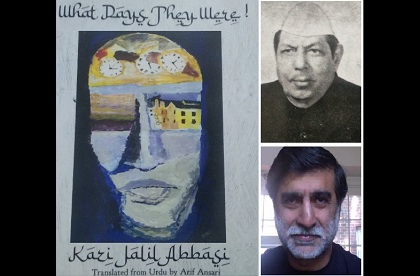
Kazi Jalil Abbasi’s autobiography is insightful and reveals a lot about the period and the struggles. Abbasi was born in Bayara in Basti district in1912. He studied in different schools in Gonda, Unnao and Basti before he joined the Aligarh Muslim University (AMU) from where he was expelled.
All these circumstances, his idealism, role in freedom struggle are part of the book. He was against the political stand of Muslim League. The books also provides information about Congress’ organisation and the politics in UP, its leaders. There are interesting anecdotes about top leaders, ranging from Rafi Ahmad Kidwai to Indira Gandhi.
The autobiography titled ‘Kya Din The!’ was originally published in Urdu.
Arif Ansari has now translated it in English. Ansari is settled in Washington DC. The book that runs into nearly 350 pages is a must-read for anyone who is interested in the era, important events and the post-partition situation in Uttar Pradesh.
Remarkable achievements highlight talent and determination in Bihar’s intermediate results.
New Delhi :
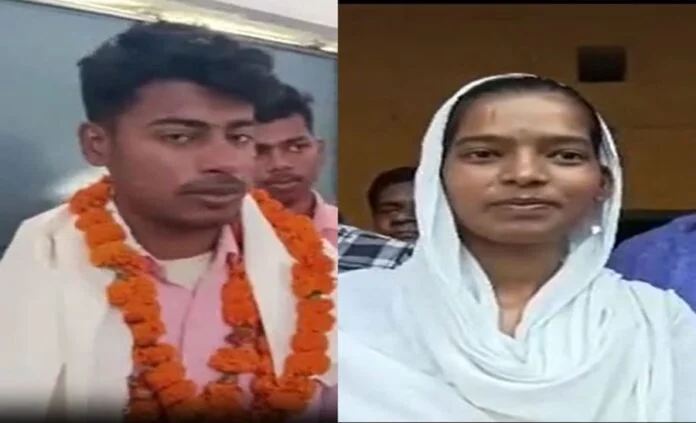
The Bihar School Examination Board (BSEB) on Tuesday revealed the 2025 Class 12 exam results, and this year, two Muslim students from modest backgrounds have made headlines by securing the first and second positions. Shakib Shah from Buxar district and Rukaiya Fatima from Begusarai have not only made their families proud but also demonstrated the power of hard work and ambition in overcoming challenges.
Shakib Shah, a student at Plus Two High School Koransarai in Buxar, achieved an impressive 473 out of 500 marks, securing the top position in the Arts stream. His 94.6% score has ignited celebrations in his village, with locals and teachers praising him as a source of inspiration. “I studied hard every day, and my teachers supported me throughout. My dream is to crack the Bihar Public Service Commission (BPSC) exam and serve as an administrative officer,” Shakib told Zee Media, his determination evident in his words.
Following the announcement of his results, Shakib received a flood of congratulations at his home in Koransarai. Teachers from his school, along with the District Education Officer, visited the school to honour their star student. “Shakib has always been a focused student. His success is a testament to his hard work and the guidance he received here,” said one of his teachers, beaming with pride.
Meanwhile, Rukaiya Fatima, a student at BN High School Teyai in Begusarai’s Teghra subdivision, earned the second position with 471 marks, achieving 94.2% marks. The daughter of Mohammad Abu Salem, a bidi trader from Kolkata, Rukaiya comes from a family of seven sisters, where she is the third child. Despite her father’s modest income and the challenges of supporting a large family, Rukaiya’s resolve to excel never wavered. “I want to become an IAS officer and work for the poor. Education is my way to change my family’s future,” she shared with local reporters.
Rukaiya’s success has brought joy to her community in Begusarai. Her school principal described her as a diligent and bright student who balanced her studies with household responsibilities. “She would often stay back after classes to clear her doubts. Her success shows what girls can achieve with determination,” the principal remarked.
The Bihar Board 12th exams, held between 1 and 15 February 2025, saw over 12.92 lakh students appear across 1,677 centres in the state. This year’s results reflect an overall pass percentage of 86.50%, with the Arts stream recording 82.75%. Shakib and Rukaiya’s stellar performances stand out, not only for their academic brilliance but also for their powerful message of resilience and hope.
For Shakib, topping the state is just the beginning. Growing up in a simple family in Koransarai, he credits his family’s encouragement and his own disciplined routine. “My parents never let me feel any pressure. They just told me to do my best,” he said. His ambition to join the administrative services stems from a desire to uplift his community and tackle local issues like education and employment.
Rukaiya’s journey is equally inspiring. Despite growing up in a family with limited resources, she often studied by candlelight during power cuts. Her father, Mohammad Abu Salem, expressed his pride over the phone from Kolkata: “I always knew Rukaiya was special. She has made us all proud, and I hope she achieves her dream of becoming an IAS officer.” Rukaiya’s six sisters also look up to her, with the youngest saying, “I want to study hard like Rukaiya Apa.”
The success of these two students has also highlighted the untapped potential within Bihar’s Muslim community, which often faces socio-economic challenges. Local leaders and educators have hailed their achievements as a beacon of hope. “Shakib and Rukaiya have shown that talent knows no boundaries. Their success will inspire countless others,” said a senior official from the BSEB during the result announcement press conference in Patna.
However, their triumphs stand in contrast to the broader narrative in Bihar, where tensions between communities have occasionally erupted. Critics have often pointed to the state’s history of communal friction, exacerbated by divisive politics and economic disparities. Some have accused Hindu groups of marginalising minority achievements in educational settings. Yet, Shakib and Rukaiya’s success challenges these narratives, proving that merit and perseverance can overcome prejudice.
To celebrate their achievements, the BSEB has announced cash prizes and scholarships for the toppers, with Shakib set to receive £2 lakh and Rukaiya £1.5 lakh, along with laptops to support their future academic pursuits. These rewards, doubled from last year, reflect the state’s commitment to nurturing talent. “We are proud of all our students, and these two have set an exceptional standard,” said BSEB Chairman Anand Kishore.
As Bihar celebrates its top achievers, the stories of Shakib Shah and Rukaiya Fatima resonate beyond their exam results. Their journeys embody the dreams of millions in a state where opportunities are scarce, and their success serves as a shining example of the transformative power of education. For now, the spotlight remains on these remarkable individuals, whose stories are only beginning to unfold.
source: http://www.clarionindia.net / Clarion India / Home> Editor’s Pick> Indian Muslim / by Mohammad Bin Ismail, Clarion India / March 26th, 2025
Solapur man turns passion into business, crafting custom Cricket Bats for players across India.
Wadala Village (Solapur) :
Khwaja Tamboli’s story is one of grit, determination, and an unshakable belief in hard work. Hailing from a modest family in Wadala village, North Solapur, the 28-year-old entrepreneur has turned his childhood love for cricket into a thriving business—’KT Bats’—producing high-quality tennis ball cricket bats tailored to players’ needs across India.
Khwaja’s journey was far from easy. His father, Ajmuddin Tamboli, had to stop working 14 years ago due to mental illness, leaving his mother, Rashad, as the sole breadwinner. “I’ve seen many difficulties,” Khwaja recalls. “My mother sold household items and managed weekly markets just to keep us afloat. Poverty doesn’t stop dreams, but hard work is needed to fulfil them.”
After completing a B.Sc in Chemistry, Khwaja developed an allergy to chemicals, closing doors to traditional employment. But his passion for cricket opened another. “I was always fascinated by bats,” he says. “When I couldn’t find a job, I decided to start small—selling sports goods from a shop given by the Gram Panchayat.”
Initial struggles tested his resolve. Big companies refused to supply goods without bulk orders, and his first attempt at rebranding cheap bats with his own stickers failed. “Customers didn’t like them, and I faced losses,” he admits. Undeterred, Khwaja travelled to Kashmir to study wood types and bat-making techniques.
Returning with newfound knowledge, he invested in a machine and began crafting bats himself. “I realised if market bats weren’t good, I’d make better ones,” he says. The gamble paid off—his business took off, with players appreciating the customised quality.
Khwaja doesn’t just sell bats; he engineers them. Studying player preferences, he adjusts weight and balance based on playing style. “A 970-gram bat suits aggressive players hitting all around the ground,” he explains. “For those who play ‘V’ shots, a heavier bat (1030-1050g) with weight at the bottom works best.”
His bats now cater to players in Maharashtra, Karnataka, Uttar Pradesh, Chhattisgarh, Gujarat, and Jharkhand. But success hasn’t made him forget his struggles. “I’ve seen poverty, so if a player can’t afford a bat, I give it at a lower price,” he says, recalling how he recently gifted a ‘Player Edition’ bat to a needy cricketer from Gujarat.
Rashad Tamboli, Khwaja’s mother, beams with pride. “He loved cricket since childhood. I invested my savings in his dream, and he proved himself,” she says.
Today, ‘KT Bats’ sells 100-200 bats monthly, priced from ₹2,000 to ₹3,500. But Khwaja dreams bigger. “I want ‘KT Bats’ stores across India,” he says. “My brand should be recognised in every state.”
From a struggling student to a role model for young entrepreneurs, Khwaja Tamboli’s journey proves that with perseverance, even the most humble beginnings can lead to extraordinary success.
source: http://www.clarionindia.net / Clarion India / Home> India> Indian Muslim / by Team Clarion / April 04th, 2025
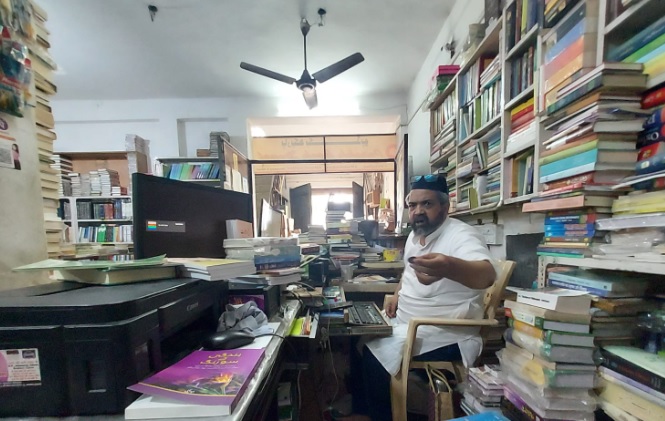
Every city in India has many iconic bookshops and Lucknow too has a few. However, in recent years, a bookshop has drawn attention of book lovers because of the variety and collection of books, particularly, in Urdu.
This bookshop has drawn readers from other states and cities too and people buy from him online as well. But the most unique aspect about this bookshop is that the passion of the owner who has been running it purely for the love of books.
Imagine, you go and find a good book and want to buy it. The bookshop owner appears sad that you chose the particular book. “I have just one copy of this book and I want to keep it”, says the man, who owns this shop. Or going to the extent of telling the visitor that they can take a look and buy from any shop elsewhere or telling the location or suggesting how to get a particular book.
But first about the uniqueness of the bookshop. Unlike other Urdu bookshops, the owner Shahood Ul Hasan Khan keeps a very wide range of books. It’s not limited to a few publishers but he keeps books of all publications and also ensures that books ranging from all the topics are available in Urdu, ensuring a collection.
From literature to language, and law politics to philosophy, history to Islam, Hindusim and other religions, fiction, non fiction, other than books in English and Hindi too, everything is available under one roof. He tries to put on display maximum books of all variety in his shop.
“I wanted to be among books, own them and have them around me”, he says. That’s the reason he started the bookshop even though people are always suggesting that he should switch to some other business. “It’s true that I put lot of money, because it’s my hobby and passion. However, it is not a very lucrative business.
He gets lot of unwanted advices and people have finally reconciled that he would not switch to anything else, except, keeping himself amid books. People and relatives keep advising that I should give this big space to someone and the rent would be more than my current earnings, but this is my passion”, says Khan, 42, who started Parekh Book Depot, and has totally dedicated himself in this work.
“I do it for the sake of books, not for profit. I always wanted to do this and hence I am happy doing what I do”, he further adds. In a city that has iconic Danish Mahal in Aminabad and many other bookshops, the emergence of Parekh Book Depot and it’s growing popularity, has drawn attention of people.
Urdu readers who come to Lucknow, try to take time out of their schedule and visit the place, as they know they might get a surprise, a rare book that was not available for long, translation of a famous English or French book or latest ones that have just been out of printing press.
As I select the books and am about to pay, he tells me that I can get these books online or from another particular place too. When I asked him why was he not keen on selling it and giving me the suggestion, he said that, ‘this set of books is not an ordinary one and we don’t know when it again gets printed and comes to market, hence, I am having a hitch and can feel that I am losing something.
At least, the set of books was with me till now”, Shahood Ul Hasan says. It was subsequently that I spoke to him and he told me about his life and his passion that has earlier been described in the report. Hailing from Rohtas in Bihar, he had come to Lucknow as an infant. He studied in the famous Nadwatul Ulema and his bookshop is also close to the gate of the seminary in Lucknow.
Many bookshops are selling just religious texts or literature. Also, there are different models. But he has shown a way, how a bookshop can thrive in an era when people keep ruing about lack of readership. “I am happy that I make enough to run my household. What else do I wish for?”.
One thing is sure, he has put in efforts and money but his passion has resulted in this bookshop emerging as an institution. It is remarkable that he opened the bookshop in 2016, and within a couple of years, it was too well known and in direct contact with readers who get details on their Whatsapp accounts about news books’ arrival and then order them through post as well.
source: http://www.newsbits.in / NewsBits.in / Home> Special / by Shams Ur Rehman Alavi / July 11th, 2023
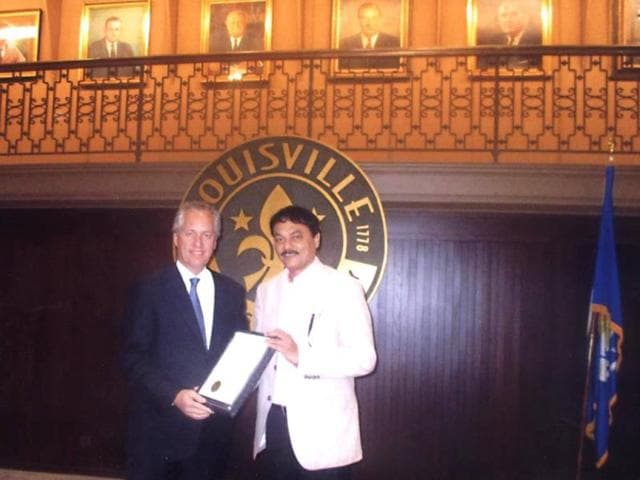
Manzar Bhopali felicitated by Greg Fischer, the mayor of Louisville, US
In a rare honour, eminent poet Manzar Bhopali was felicitated in Louisville in US and was handed over keys of the city. Louisville is also known as the birthplace of boxing legend Muhammad Ali.
The mayor of Louisville, Greg Fischer, handed over the keys to the Bhopal-based Urdu poet. This is probably the first time an Indian poet has been handed over the keys to an American city.
He was also proclaimed honorary citizen of the city. The poet has been honoured for his contribution towards promoting peace through his poetry.
The honour has been given as the town appreciates the power of a poet to touch people’s hearts and minds, reads the citation. Manzar Bhopali had gone to US recently to participate in ‘mushairas’. “It’s a big honour and I feel humbled,” said Manzar Bhopali.
In an email conversation with Hindustan Times, Louisville mayor Greg Fischer said art connects all people and it is an honour to recognise this global citizen for peace and justice.
“We honour all leaders in arts. They bridge our common humanity and remind us that we are all connected in making our communities and the world a better place,” he further said.
“Compassion is a top value of my administration. Compassion means we respect all of our citizens and work together so that human potential flourishes. We bring compassion to life in many ways including service to others, curriculum in our schools, and being a signatory to, and living the values of, the charter for compassion.”
Manzar Bhopali is a renowned Urdu poet who has more than half-a-dozen collections of poetry to his name. He is a regular at mushairas in Gulf, America, Australia, UK and other foreign countries.
source: http://www.hindustantimes.com / Hindustan Times / Home / by Shams Ur Rehman Alavi, Bhopal / October 10th, 2014
More than seven decades after India achieved independence, the role of innumerable martyrs and freedom fighters who gave their blood and offered lives for the motherland, needs to be remembered.
Many of them got harsh punishments, didn’t get proper last rites, remain forgotten and even those whose sacrifices are known, don’t have monuments or memorials built in their memory.
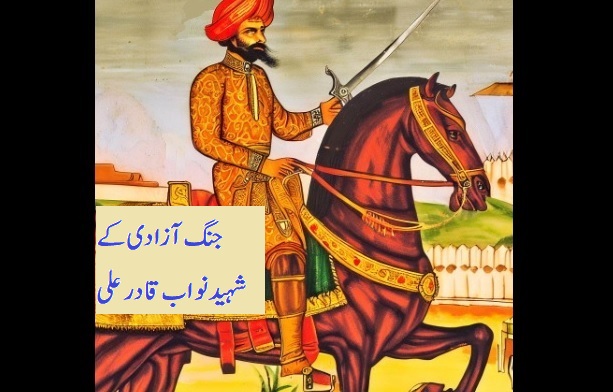
The martyrdom of Nawab Kadar Ali, and his companions, who planned attack on residency and to take on the East India Company forces in Nagpur, also needs to be recalled. They were hanged here for their role in 1857–the first war of independence.
Though there is no monument named after them and no big memorial, they remain heroes in public memory. The fort that had been a base of 118 Infantry Battalion for years, is opened on three days including August 15 and January 26. Thousands of people arrive on these days, and also pay visit to the grave and offer their respects.
The flame for independence was already lit. History books mention that soon after Meerut, the anger was palpable among soldiers and citizens in this region too. On June 13 1857, a large gathering took place near Mission High School. The soldiers too were anxious and ready.
Scared, some of the East India Compnay officials ran towards Kamptee Cantonment, while others went inside the Sitabuldi Fort. It was due to treachery that the attack plans had been leaked and the news reached British officers. More EIC forces were called from other places to control and overpower the rebels.
Rani Baka Bai, wife of late Raghoji II, was supporting the British and issued a warning that anyone abetting or aiding the revolutionaries would be arrested and handed to the East India Company. It’s a long story and how the soldiers and citizens suffered, refused to name the leaders of the movement.
Historical texts say that the signal of a fire balloon was decided. But after the traitors gave information to East India Company officers, Plowden, the commissioner, ordered a regiment to move into the city. The irregular calvary at Tali was dismayed. Major Arrow tried to get information from ring leaders but no one gave names.
Baka Bai summoned all her relations, and dissuaded them with threats. This chilled the spirit of public. However, later when Company officials’ strengthened their hold, the rebels were identified. Arms were collected and after inquiry, Dildar Khan, Inayatullah Khan, Vilayat Khan and Nawab Kadar Ali were tried and executed.
KILLED, HANGED, BURIED IN A COMMON PIT
The Gazetteer briefly mentions that ‘tucked away between the easter walls of the inner fort and the barracks is a large grave known as Nav Gazah Baba…the grave of Nawab Kadar Ali…and his eight associates..who were killed and hanged by the ramparts of the fort due to their role in the war of independence”.
“They were all buried in a common pit, nine yards long. The fort recalls to our mind the memory of the brave soldiers who fought in an attempt to preserve the independence of the mother land”. It was treachery that was responsible for the arrests and the punishment. Those who helped the British, got ‘jagirs’ as rewards.
Ghulam Rasool ‘Ghamgeen’, the poet, wrote these lines in Farsi :
Choo.n Qadar Ali Khan Ameer Kabeer Shud-az-tohmat, ahl-e-balwa aseer
Duaa’e shahaadat ba-raahe Khuda shab w roz mi kard aa.n mahtada … … Khirad guft ee.n misra-e-silk-e-noor Za-daar-e-jafaa shud ba-daar-e-suroor
The last couplet of this long Persian verse, brings out the ‘tarikh’, the year of execution. The complete verse is mentioned in Dr Mohammad Sharfuddin Sahil’s book ‘Tarikh-e-Nagpur’. It shows the impact of the hangings on the people in the region. Nagpur is geographillcally considered to be a part of Central India and is the biggest city in Vidarbha region of Maharashtra.
The fort for a long period remained the base of 118 Infantry Battalion of Territorial Army. Every year, on August 15 and January 26, fort is opened for public so that it can pay respect to the freedom fighters. It’s also opened on May 1 i.e. Maharashtra Day. [Illustration is representive]
source: http://www.newsbits.in / NEWS Bits / Home> Top News / by Shams Ur Rehman Alavi / August 15th, 2021