Bouncing back from adversity with indomitable resilience and willpower, Asif Iqbal helps others with disabilities as he pushes the limits. Ejaz Kaiser shares his story.
Since 2021, Iqbal has run 10 km each on 12 different races.
Chhattisgarh :
A life well lived is a life worth talking about. With complete vision loss, Mohammed Asif Iqbal’s life can force anyone to rethink disability.
A Kolkata resident, who had a successful stint in Central government’s smart city projects for digital inclusion initiative at Nava Raipur in Chhattisgarh, Iqbal (46) had partial vision loss since birth due to a genetic disorder called retinal degeneration. By the time he turned 16, he had turned completely blind.
He moved to the United States and managed complete his high school and partial college education in Oregon, USA. Iqbal returned to India in 1995 to later become the first visually challenged commerce graduate of St Xavier’s College Kolkata and got his MBA in human resources from Symbiosis Institute, Pune.
Around six years back, he was diagnosed with high blood pressure. Having given a choice to either change his lifestyle or be on medicines all his life, Iqbal decided to lead a life worth living. “I thought my health shouldn’t be a hurdle towards my contribution to nation-building. Just the thought of doing something to ensure I remain healthy. I was overweight. I began visiting the playground and park with the help of friends. It was there the idea clicked to participate in marathons and began preparing for the race to build my confidence”, Iqbal said.
Running became a routine; starting from 100 metre, he increased the length slowly to 300 and later to a few kilometres with the support of volunteers. Gradually, he learnt navigation on his own.
“I was competing with myself to enhance my performance”, he added. Since 2021, Iqbal has run 10 km each on 12 different races and has also been recognised by former Indian cricket skipper master blaster Sachin Tendulkar for his brave initiative.
But his biggest moment came on December 18, 2022 when he accomplished TSK-25 km (15.53 miles) marathon run in Kolkata only through voice guidance. He was blind-folded and had zero physical touch or physical assistance from anyone. He set a record and entered into Asian Book of Records, as the first Indian Asian blind runner to complete a marathon in 3:32 hours with voice navigation support from Dibyendu Mondel and Prakash Singh who piloted his run.
“While I run on voice guidance (talking GPS) issued by fellow buddy runners who run at the same speed, the mission of 25km marathon in Kolkata was well achieved,” Iqbal said.
He is also the recipient of a national award, West Bengal state role model award and the extraordinary citizen of Kolkata award among others.
During his career spanning over 15 years, he has designed and implemented social inclusion strategy for AADHAR enrollment, accessible income tax, and accessible telecom under Telecom Regulatory Authority of India (TRAI) among others.
He is presently an associate director at PricewaterhouseCoopers (PwC) India Ltd. In 2000, he filed a public interest litigation (PIL) for implementation of reservation quota in government-run universities including the IIMs and IITs.
source: http://www.newindianexpress.com / The New Indian Express / Home> Good News / by Ejaz Kaiser, Express News Service / January 29th, 2023
Warangal, TELANGANA / Longrove Village Board (Illinois), U.S.A :
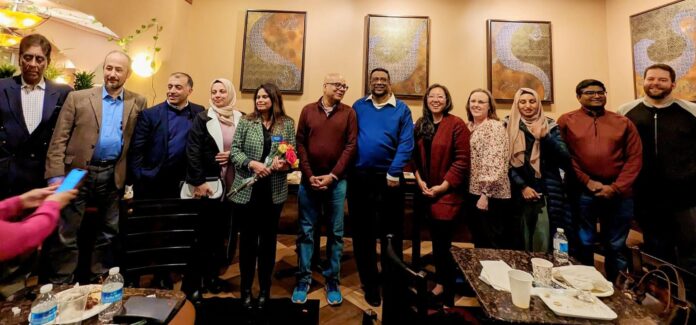
Dr Mohammed Jameel NRI has become the First Indian American Muslim to be elected for LongGrove village Board elections.
Speaking on this occasion in winning celebrations in Long Grove Dr. Jameel thanked the voters of Long Grove who voted for him and urged the community to increase participation in civic activities and build a strong community which thereby can lead to more participative and inclusive participation in all levels of Government.
Lake County Treasurer Holly Kim was the Chief Guest and congratulated him .
Dr Jameel is very active in Local politics heads the Americans Democratic Forum and has supported in win of the first Indian Muslim woman Nabeela Syed as a state representative in the state of Illinois.
Dr Jameel is also very active in all spheres of engagement socially and politically in India as chairman of the Indian Americans forum .
He belong to warangal India and graduated from Deccan medical college.
Many eminent personalities both from India and USA congratulated him on his success prominent amongst them is the President of DAANA Moizuddin.
Alumni association from his school Y SUNITHA, Inner wheel president Dr. Ashish Chauhan MD, Tarun Joshi IPS, Zaheeruddin Ali Khan Editor Siasat, Padmaja Shaw former prof of communications OU .
From the US Dr. Rehan khan ISPJ Washington, Holly Kim Lake county Treasurer, CK Schmidt chief Ela democrat, Roy Manthena Dalit activist Newyork, Irshad khan ex-chairman CIOGC congratulated him on being elected and wished him all success .
source: http://www.thehindustangazette.com / The Hindustan Gazette / Home> News> Election / by Shifa (headline edited) / April 06th, 2023
As the results of II PU were announced, the department has released the list of students who became the toppers in the district.
In arts stream, Hanumanth, Swami Vivekananda PU College in Gurmitkal, secured 577 marks with 96.17%, Maheboob Shaikh Sahir from commerce stream, who is studying in Don Bosco PU College Yadgir, secured 560 marks with 93.33%, while Prajna B.M. from science stream, who is studying in Sairam PU College Shahapur, has secured 588 marks with 98%.
The other toppers in arts stream are: Amaresh secured 575 marks (95.83%), Chaitanya 575 marks (95.83%), Arunkumar 569 marks (94.83%), and Nagamma 569 marks (94.83%).
In commerce stream: Ishwarya secured 547 marks (91.16%) and Nagaraj secured 546 marks (91%).
In science stream: Abhishek secured 588 marks (98%), Savitri 580 marks (96.66%), Akash 580 marks (96.66%), Shruti secured 580 (96.66%), and Surendra secured 577 marks (96.16%), respectively.
source: http://www.thehindu.com / The Hindu / Home> News> India> Karnataka / by The Hindu Bureau / April 22nd, 2023
Guru Dutt’s masterpiece ‘Pyaasa’ (1957), just before its soulful dirge on relationships, shows two poets reciting ‘shers’.
The elder one later also politely reprimands a guest for his snide remark at the “servant” (Dutt), who had begun humming “Jaane woh kaise log the..”, declaring: “Mian, shayri koi daulat-mando ke jagir thodi hai”. Though unnamed, his appearance, sher, and comment were enough to identify him.
Urdu Poetry and Social Reach
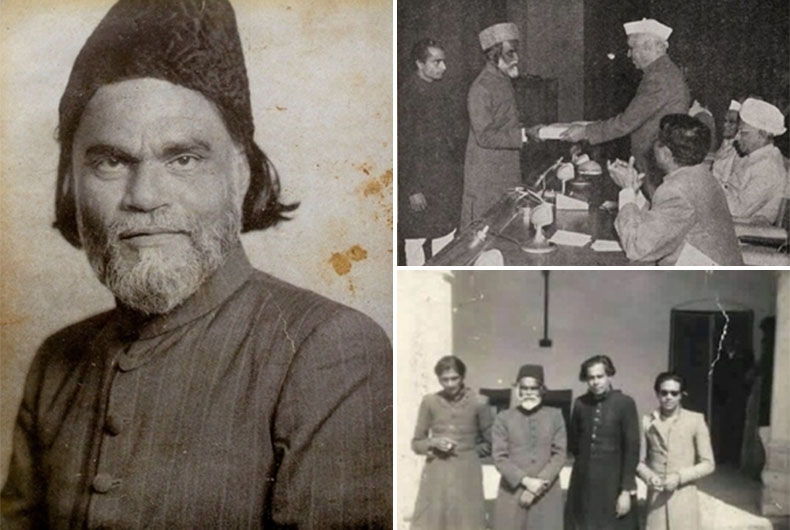
The unnamed actor was representing Ali Sikandar ‘Jigar Moradabadi’, who, in his heyday, was so known by his persona – an intense gaze but an air of absent-mindedness too, groomed beard but slightly unkempt long hair, traditional garb and courtly behaviour, as well as poetry, that he could be shown without being named.
‘Jigar’ is seen as the last standard-bearer of the classical ghazal, or the ghazal’s classical tradition, but was rather a ‘bridge’, between its highpoint in the mid-19th century and its transition to the 20th century and beyond.
He was also a connecting link between Urdu poetry and its widening social reach as the dialogue the character utters shows – and is followed by him encouraging Dutt to continue:
“Tum kuch keh rahe the, barkhurdar. Chup kyun ho gaye. Kaho, kaho..”
Jigar Moradabadi – Real Life
This was true in real life too – a young Jigar took instruction from Nawab Mirza Khan ‘Dagh Dehlvi’ – who had participated in mushairas with Ghalib and Zauq – and himself later, mentored poets like Asrar-ul-Hasan Khan ‘Majrooh Sultanpuri’, Jan Nisar Akhtar, and others.
And then like many contemporaries, he did not write for films, yet his work willy-nilly figured in them. While “Kaam aakhir jazba-e-beikhtiyar aa hi gaya/Dil kuch is surat se tadpa unko pyaar aa hi gaya” was used in ‘Pyaasa’, in ‘Daag’ (1952), the Hasrat Jaipuri-written “Ham dard ke maaron ka, itna hi fasana hai/Peene ko sharaab-e-gam, dil gam ka nishana hai” seemed inspired by his “Ham ishq ke maaron ka itna hi fasana hai/Rone ko nahi koi hasne ko zamana hai”.
Then, ‘Be-Raham’ (1980) used this sher – along with most of its ghazal which begins: “Ik lafz-e-mohabbat ka adna yeh fasana hai/Simte to dil-e-aashiq phaile to zamaana hai”. Another master sher in this is “Yeh ishq nahi aasan itna hi samajh lijiye/Ek aag ka darya hai aur dub ke jaana hai.”
Before that, Shyam Benegal’s ‘Junoon’ (1979), the 1857 drama starring Shashi Kapoor, used his ghazal, “Ishq ne todi sar par qayamat.”
How Jigar’s Prime Couplets became popular in films?
But, the prime example was how the prime couplet of ‘Jigar’ became most known to film buffs after actor Raj Kumar made it a dialogue, delivered in his bombastic, drawling style: “Ham ko mita sake yeh zamaane mein dam nahi/Ham se zamana khud hai zamaane se ham nahi.”
Born in April 1890 in Moradabad, ‘Jigar’ was the son of Syed Ali Nazar, who worked in the Law Department and was inclined to poetry too, being a disciple of Khwaja ‘Wazir Lakhnavi’.
After elementary education, including in English, he worked as a salesman for a local spectacles dealer. Later, he turned to poetry full-time, settling in the town of Gonda, where he found in noted poet Asghar Hussain ‘Asghar Gondvi’ a mentor of sorts. He was a familiar face in mushairas all over the country till the mid-1950s, when he began slightly distancing himself from shayri, ahead of his death in September 1960.
‘Jigar’, as mentioned, was a paladin of the classical tradition, and as such, his shayri usually dwelt on love and other facets of the human condition. As he said:
“Un ka jo farz hai vo ahl-e-siyasat jaane/Mera paigham hai mohabbat jahan tak pahunche.”
Yet, while he used the usual tropes associated with the topic, he imparted his own stamp on them with his own stylistic variations.
One of these was paradox. Take:
“Atish-e-ishq woh jahannum hai/Jis mein firdaus ke nazaare hai”, or “Kamaal-e-tishnagi hi se bujha lete hai pyaas apni/Isi tapte huye sahra ko ham darya samajhte hai”, or even “Mohabbat mein yeh kya maqam aa rahe hai/Ki manzil pe hai aur chale jaa rahe hai” and “Usi ko kehte hai jannat usi ko dozakh bhi/Woh zindagi jo haseenon ke darmiya guzre”.
“Abad agar dil na ho to barbad kijiye/Gulshan na ban sake to bayaban banaiye” is another example.
Then, ‘Jigar’ frequently resorted to some deft wordplay and situations: “Tere jamaal ki tasveer khinch doon lekin/Zabaan mein aankh nahi aankh mein zabaan nahi”, “Suna hai hashr mein aankh use be-parda dekhegi/Mujhe dar hai na tauheen-e-jamal-e-yaar ho jaaye”, and “Aghaaz-e-mohabbat ka anjaam bas itna hai/Jab dil mein tamanna thi ab dil hi tamanna hai.”
Vivid imagery was another strength: “Baithe huye raqeeb hai dilbar ke aas-paas/Kaaton ka hai hujum gul-e-tar ke aas-paas” and “Har taraf chaa gaye paigham-e-mohabbat ban kar/Mujh se achhi rahi qismat mere afsanon ki.”
And ‘Jigar’ could use rhetorical devices, like repetition to good effect, as in: “Dil hai kadmon par kisi ke sar jhuka ho ya na ho/Bandagi to apni fitrat hai Khuda ho ya na ho”, “Kabhi un mad-bhari aankho se piya tha ik jaam/Aaj tak hosh nahi, hosh nahi, hosh nai” and sometimes, alliteration: “Hai re majbooriyan mahroomiyan nakaamiyan/Ishq aakhi ishq hai tum kya karo ham kya karen.”
At other times, he could be engagingly simple: “Garche ahl-e-sharab hain ham log/Yeh na samjho kharab hain ham log”, or “Pehle sharab zeesht thi ab zeesht hai sharab/Koi pila raha hai piye ja raha hoon main.”
And a philosophical outlook can always be discerned. It may be active like: “Kya husn ne samjha hai kya ishq ne jaana hai/Ham khaak-nashinon ki thokar mein zamana hai” and “Apna zamana aap banate hai ahl-e-dil/Ham vo nahi jin ko zamana bana gaya”, or a bit resigned: “Jo un pe guzarti hai kis ne use jaana hai/Apni hi musibat hai apna hi fasaana hai”, “Maut kya ek lafz-e-bemaani/Jisko mara hayat ne maara”, and “Yeh misraa kaash naqsh-e-har-dar-o-deewar ho jaaye/Jise jina ho marne ke liye taiyar ho jaaye.”
There is much more to enjoy in the extensive corpus of ‘Jigar’, whose own epitaph could be: “Hami hab na honge to kya rang-e-mahfil/Kise dekh kar aap sharmaiyega.”
source: http://www.ummid.com / Ummid.com / Home> International / by Vikas Datta / IANS / April 16th, 2023
Sikri Village (Nagar Pahari Tehsii, Bharatpur District),RAJASTHAN:
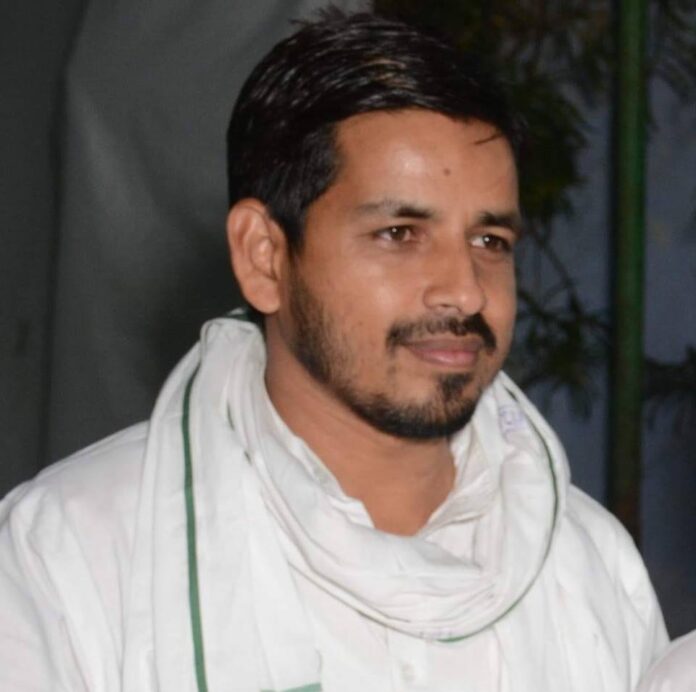
Wajib Ali.
Jaipur:
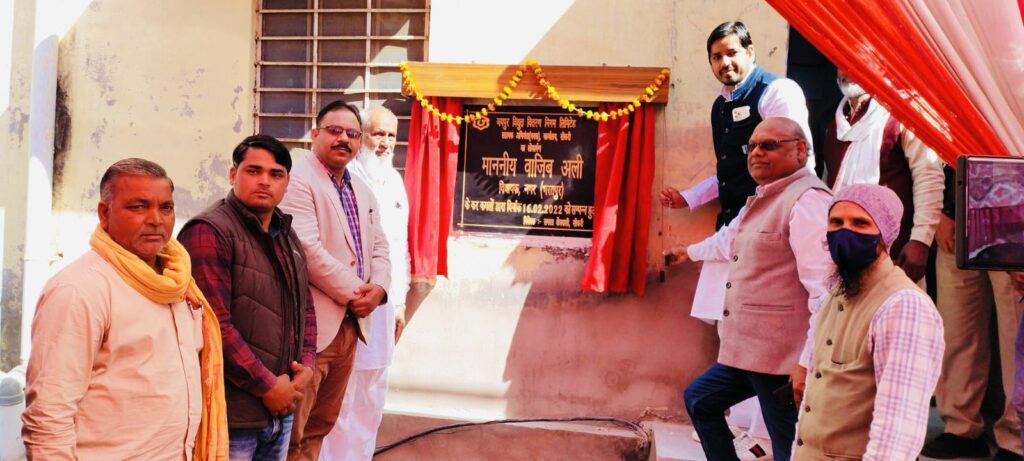
A successful young Indian Muslim educationist from Australia, who has made his way into the Rajasthan Assembly as an MLA with the dream to bring about a change at his native place, has made a mark by improving social conditions in the Meo-dominated region in the eastern part of the state. The MLA from Nagar constituency in Bharatpur district, Wajib Ali, 40, defies the image of typical politicians.
Born in a Meo Muslim family of Nagar block’s Sikri village, Ali had left his native place to pursue higher studies in 2005, when he first went to New Delhi’s Jamia Millia Islamia and later migrated to Australia. He came back to Bharatpur in 2013 and contested the State Assembly election as a National People’s Party candidate, but he lost to Bharatiya Janata Party’s sitting MLA Anita Singh.
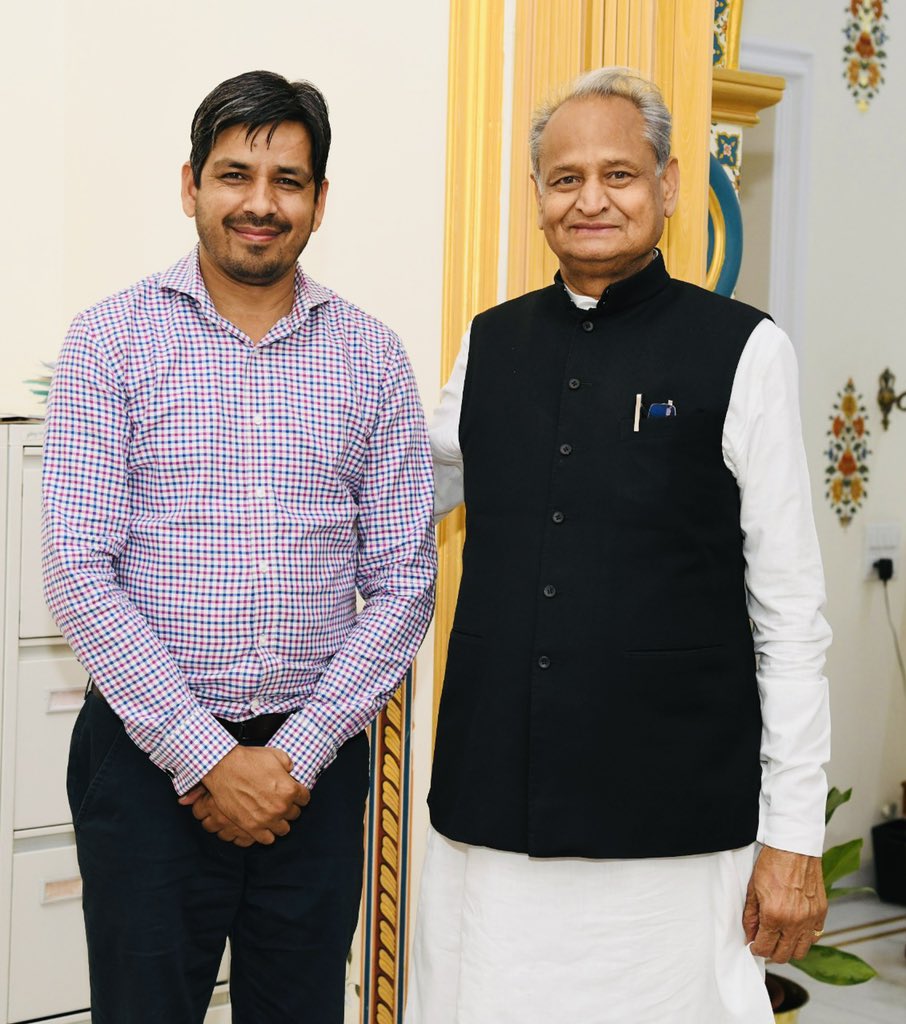
MLA from Nagar constituency Wajib Ali with Chief Minister Ashok Gehlot
Ali has a thriving real estate business in Australia and he runs eight colleges and a school, along with his two brothers, in the cities such as Sydney, Melbourne and Brisbane. He led a successful election campaign in the rural heartland during the December 2018 Assembly polls and was elected an MLA on the Bahujan Samaj Party’s ticket from the Nagar seat.
In 2019, Ali defected to the ruling Congress along with five other BSP MLAs while declaring that all of them wanted to ensure the State Government’s stability. The move came amid reports of the BJP trying to lure the BSP MLAs in a bid to repeat a Karnataka-type upheaval in Rajasthan. Ali and his fellow MLAs also supported Chief Minister Ashok Gehlot during the political crisis in 2020, caused by the rebellion of the then Deputy Chief Minister Sachin Pilot, and voted for the Congress candidates in the Rajya Sabha elections held in June 2022.
Ali was later appointed the Chairperson of the Rajasthan State Food Commission in August 2022. He has been active in the Meo-dominated region since 2013, extending support to the people’s struggles and raising their issues with the Government authorities.
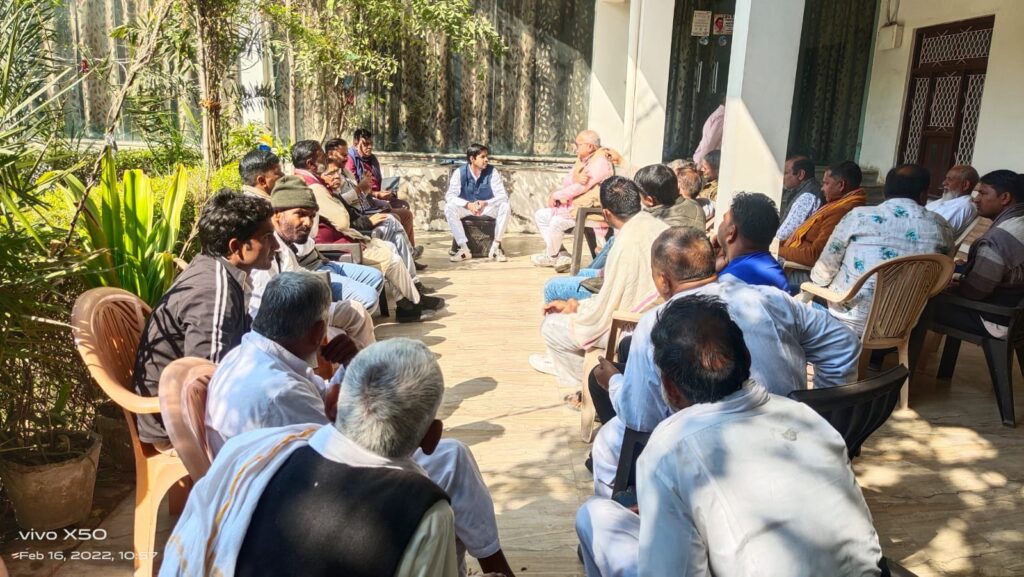
Ali says that he had come back to India with the desire to make a difference in people’s lives and improve the social conditions in eastern Rajasthan. “This is the most backward area in Rajasthan and the basic facilities are lacking here. Moreover, the people belonging to the Meo Muslim community are treated with suspicion,” he says.
In his election campaign, Ali succeeded in convincing the voters about his honest intentions. “People from all castes voted for me in Nagar constituency, where Muslims comprise 20% of population. The voters were convinced that I had sacrificed my comforts in Australia to do something for them,” he says with a sense of satisfaction.
“Moreover, I have defeated the idea of communalism and hate campaign, which is used for climbing up the ladder in politics. Common people have reposed faith in me,” Ali says. In the election results, BJP’s Anita Singh was relegated to the third position, while Samajwadi Party’s Nem Singh was the runner-up. Having secured 62,644 votes, Ali won with a margin of 25,467 votes.
Ever since his election, Ali has focused on education and health in his constituency in order to raise the standard of living of the villagers. “I have been working for improving the quality of Government education system. Private education is not a solution. Even if I open schools and colleges in Nagar, it cannot serve the numbers. Only a robust Government education set-up can benefit everyone,” he points out.
As regards the health sector, the condition of Government facilities was earlier pathetic in the villages, where 95% of the women’s delivery cases were referred to private hospitals. Ali’s interventions at various levels have helped improve the situation. He has also brought relief to Muslims and other marginalised groups by raising their issues on various forums.
Ali has drawn the attention of Government authorities to the law and order situation and corruption in various offices with public dealing. He has sought to utilise his position as an MLA for betterment of society and setting the things correct on various occasions. He recently raised the issue of suspension of an Urdu teacher, Amin Kayamkhani, with the Education Minister when the teacher drew the Minister’s attention to the Urdu subject being sidelined in the schools.
As a result of Ali’s sustained efforts, a large number of announcements were made for the development of the Nagar Assembly constituency in the 2023-24 State Budget presented in the Assembly last month. The announcements included construction of a hostel for girls belonging to minority community and a new sub-district hospital, establishment of an Agriculture College, installation of a faecal sludge treatment plant and upgradation of Khoh and Jaluki village panchayats as sub-tehsils.
The selfless and dedicated work by Ali in the eastern Rajasthan region both before and after his election as an MLA has set an example of how the young educated Muslims can bring a change by entering the multifarious fields of public service. The common people in Nagar constituency, who have reposed faith in Ali’s leadership, are hopeful that he will set new standards of public service and bring a new identity to the backward region.
source: http://www.indiatomorrow.net / India Tomorrow / Home> News> Society / by India Tomorrow Correspondent / March 31st, 2023
Prof. Muzaffar Assadi, former acting Vice-Chancellor and currently Dean of the Faculty of Arts and senior-most Professor at the University of Mysore, was elected unopposed as the President-Elect of the Indian Social Science Academy for the year 2024-2025. He was formerly its Vice-President.
Indian Social Science Academy (ISSA) was founded in 1974 with the goal of evaluating, integrating and disseminating scientific knowledge about man, society and nature in relation to India’s specific circumstances and fostering harmony between social sciences, natural sciences and technology. ISSA is the only institution in the world that defines science as social and encompasses all fields of natural, social and behavioural sciences.
ISSA organises the Indian Social Science Congress (ISSC) every year with the goal of discovering, developing and disseminating science of Nature. The UGC, DST, ICSSR, ICHR, ICPR, INSA, ISRO, CSIR and ICMR are supporting ISSA.
Prof. V.K.R.V. Rao, one of the greatest economists in India and founder of the Delhi School of Economics, Institute of Economic Growth, and Institute of Social and Economic Change in Bengaluru, is among its former Presidents.
A Professor in the Department of Studies in Political Science, Prof. Assadi is also the Chairperson of the Department of Studies in Public Administration, University of Mysore and in-charge Chairperson, Department of English.
Prof. Assadi is a native of Shirva, Udupi Taluk, and a former student of St. Mary’s Institutions and Hindu Higher Elementary School in Shirva. He graduated from Mangalore University, JNU, New Delhi and University of Chicago.
source: http://www.starofmysore.com / Star of Mysore / Home> News / (headline edited) / April 10th, 2023
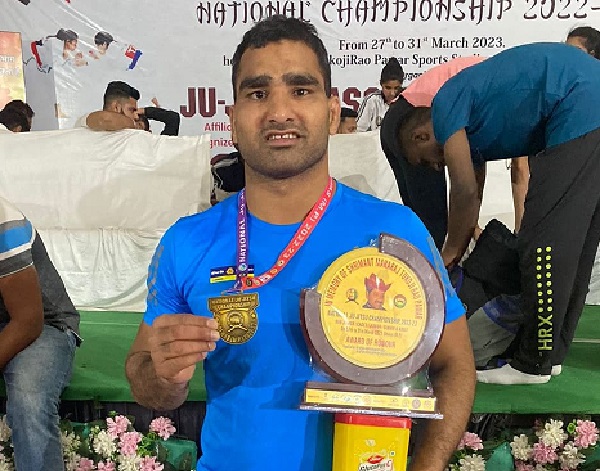
Mohd. Lukman Ali, a first year student of Master of Social Work (MSW), Jamia Millia Islamia has won the gold medal in National Ju-Jitsu Championship 2023.
This championship was organized by Indian Ju-Jitsu Association in Madhya Pradesh recently.
On this occasion, Lukman said, “My dream is to win medals for India at the international level in Olympics, World Championships, Commonwealth Games and Asian Games.
Most recently, Lukman represented India in the seventh edition of Asian Championship 2023 held in Thailand in the month of February and secured the sixth rank.
JMI Vice Chancellor Prof. Najma Akhtar (Padma Shri) congratulated Luqman for these achievements and wished him success in his future endeavours.
Prior to his Master of Social Work (MSW), Lukman also studied BA (Hons) Hindi from Jamia.
source: http://www.jmi.ac.in / Jamia Millia Islamia / Home> Public Relations Office, JMI / April 06th, 2023
“I dedicated my second life to specially-abled people; especially helping the wheel-chair bound cricketers make their careers. Nowadays they are the talk of the town; they are scoring runs and playing well,” Ghazal Khan, CEO of Divyang Cricket Control Board of India (DCCBI), says.
Ghazal Khan, 28, from Agra, Uttar Pradesh, is the youngest woman in the world to be involved in the promotion of wheelchair cricket. She is also the Vice Chairperson of the International Council of Wheelchair Cricket and the Secretary of International Affairs of the International Cricket Council for the Physically Challenged.
Ghazal Khan narrated an incident from her childhood that changed the course of her life,
At the age of 21, Ghazal had a close shave with death. “On 22 December 2015 when I was preparing for the examination of the second semester of the MBA my blood pressure suddenly fell. I was riding a scooter when it happened. I fainted and fell off it. I opened my eyes after 9 days in the ICU of a hospital in Agra.”
Ghazal Khan with the winning team after a tournament
Ghazal spent 20 days in the ICU. He was told that she was in critical condition and on a ventilator for 2 days. Doctors had declared her almost dead and given her only a 2% chance of survival.
“I was reborn on December 24 that year on my birthday. I had been in a coma for 9 days. My face was sewn up to close the injuries. I lost the beauty of my face. When I looked in the mirror, I couldn’t recognize myself.”
After this experience, Ghazal wondered why she survived even after doctors had given her a 2 percent chance.
“I asked myself, why did He (Allah) save me..? During this period, I received several calls from disabled cricketers from my father’s association.”
Ghazal Khan with her father Haroon Rashid (right) and another official
Ghazal’s father Haroon Rashid was a famous pacer of the Indian team. He too met with a mishap and had to give up cricket on doctors’ advice.
He founded the Divyang Cricket Control Board of India (DCCBI) to enable cricketers facing disabilities to pursue their interests. He is the general secretary of the Board and Ghazal the CEO.
Ghazal says, “I volunteered to help them during the first Asia Cup in 2015. It also helped me develop a good relationship with disabled cricketers.
“I realized that I had lost the beauty of my face, but they lost their body parts and yet they are very happy and thankful to the almighty. So, why should I be ashamed of my ugly face?
“I realized that Allah has saved me for a reason; I decided to prepare for UPSC civil services examination and become an IFS officer.
“I was sure of cracking the examination on the first attempt. However, I day before my preliminary exam, I fought with my fiancé. Thereafter I became depressed and was diagnosed with severe clinical depression.
Ghazal Khan posing with officials and the winning team
“Suddenly I behaved like a child of 8-9 years’; had a loss of memory. Biologically, I was 23 but mentally I was 8 years old. I had lost all senses.
“One day while playing with the wheelchair cricketers before the IWPL tournament, a miracle happened. I felt normal. It was a pleasant shock for my family.”
Ghazal decided to work for the disabled cricketers. “This was the moment when I realized why Allah saved me. From that day till now I have given all my time and energy to Divyangjan’s cricket.
Ghazal is also Vice President of the International Council for Wheelchair Cricket (ICWC) and is secretary, International Affairs in the International Council for the Physically Challenged Cricket (ICPCC).
Almost four years ago she launched the Divyang Premier League DPL T-20.
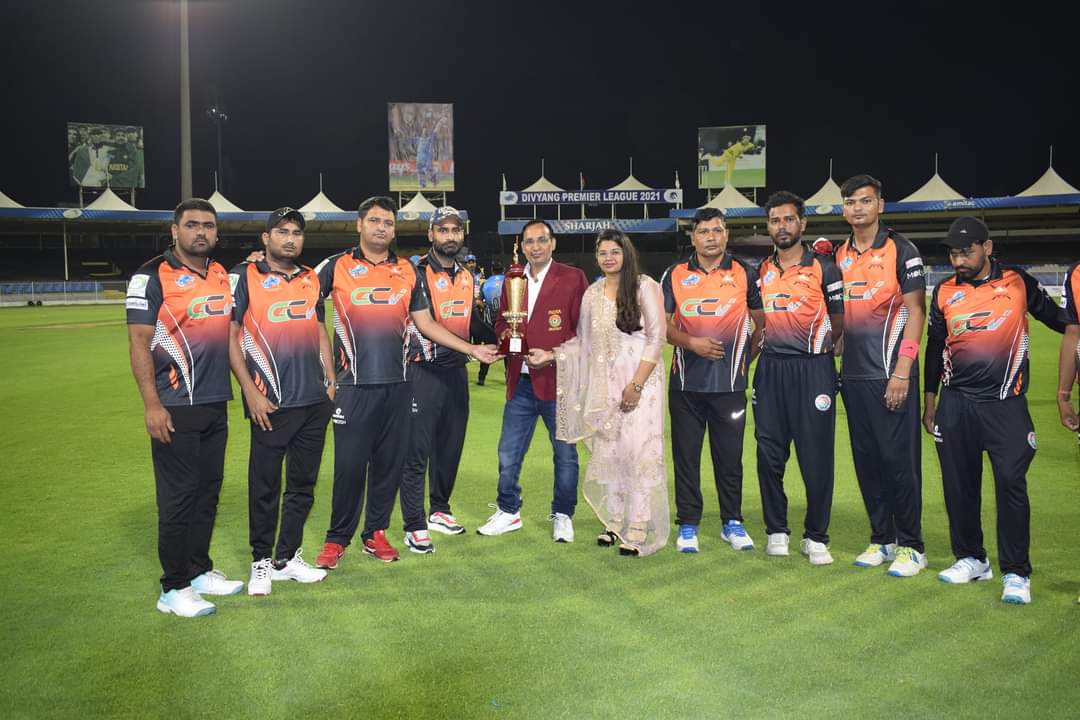
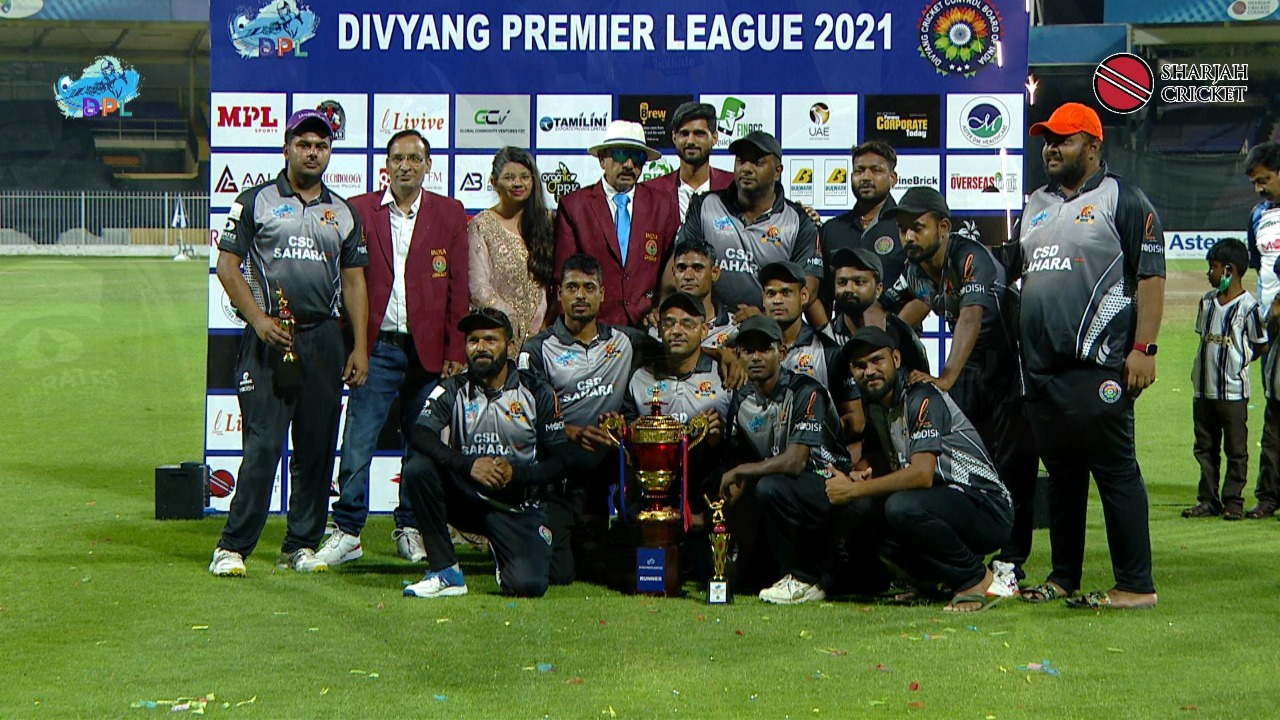
Ghazal says she aims to elevate disabled cricketers to the status of others. Due to her efforts, on the lines of IPL, the Divyang Premier League IPL was played between 6 teams in 2021 at the Sharjah International Cricket Stadium in Dubai.
Ghazal Khan with players
She gives the credit for her success to her father.
Ghazal Khan said she is also influenced by Prime Minister Narendra Modi. She was impressed by Modi’s remarks in o address ‘Mann Ki Baat’ on December 27, 2015, which said that physically challenged people have a divine ability and for this, they should be called Divyangjan and not disabled.
Ghazal Khan recently received the Global Excellence Award from the Samarth Seva Sansthan of Rajasthan. Last year she received the Icons of Asia Award.
Ghazal Khan told Awaz-The Voice that she is also planning to work for women’s disability cricket, improving the commentary of the game and setting up a sports business industry.
source: http://www.awazthevoice.in / Awaz, The Voice / Home> Story / by Onika Maheshwari, New Delhi / March 29th, 2023
Discussions and debates, critiques and readings, held at haunts of Urdu books and writing around the country have been interrupted rudely.
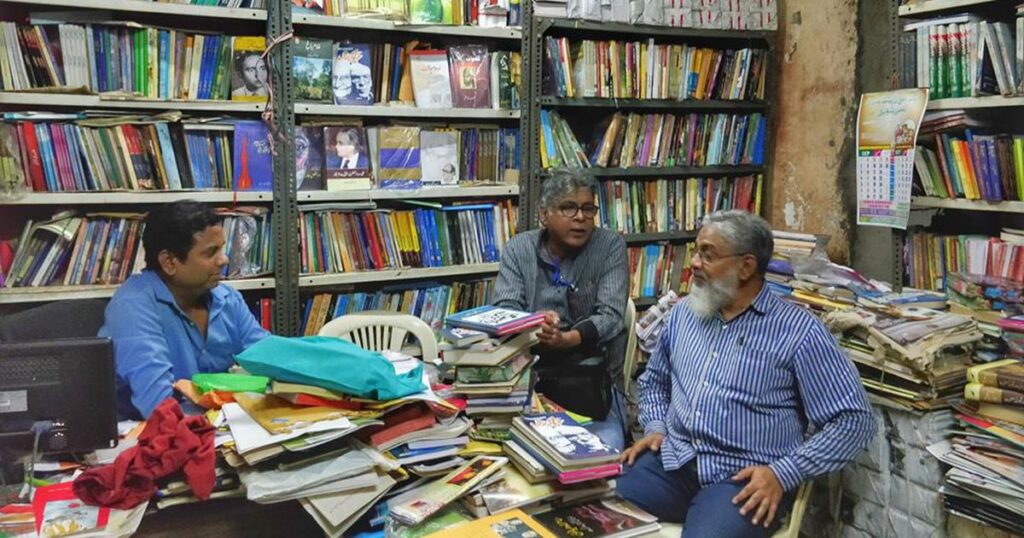
(From left) Shadab Rashid, Urdu drama writer Aslam Parvez, and Shakeel Rasheed at Kitabdaar | Mahtab Alam
In Malegaon
On the first Saturday of every month, the textile city of Malegaon in northern Maharashtra used to become home for lovers of Urdu literature, who meet to discuss, debate and critique new writings in the language, mostly by local writers. Organised under the aegis of Anjuman Muhibban e Adab (Association of Literature Lovers), the gathering began at around 9 pm, and went on till midnight.
Between 30 and 50 people – both writers and readers – would come together, a number that would at times go up to as many as 100 or even 150. Asif Iqbal Mirza, the secretary of the Anjuman, said the practice began 25 years ago on the suggestion of local journalist and editor Samiullah Ansari, who published new Urdu fiction in his weekly, Hashmi Awaz.
Over the years, the publication had emerged as a popular local magazine for young and budding writers to publish their works. The weekly, now in its 35th year of publication, had a considerable fan following and readership at the time. Ansari then suggested that admirers of the magazine form a group comprising readers as well as writers.
The group was initially named Anjuman Muhibban e Hashmi Awaz (Association of Admirers of Hashmi Awaz), but within a few years, its following grew to encompass more than just the readers of the magazine, and in 1998 it was rechristened Anjuman Muhibban e Adab, Malegaon. “Ansari sahib formed the Anjuman so that writers could get their new works critiqued by readers before getting them published in the weekly,” Mirza ssid.
Back then, Mirza himself wrote for a local children’s newspaper called Khair Andesh. But his association with the Anjuman helped him grow into a prolific Afsana Nigar, a short story writer. He was 17 when the group was formed; in the past 25 years, he has written and published more than 200 short stories in different publications.
Apart from Anjuman Muhibban e Adab, there are two more literary groups in Malegaon that held regular meetings until the lockdown was declared in March. No such meetings have been held since then. “Unlike earlier, we now have enough time to read and write. But the irony is we don’t have the opportunity to discuss and publish them,” said Mirza, who also runs a printing business. Several local publications had to halt their issues, including Hashmi Awaz, owing to the lockdown.
According to Mirza, although social media outlets such as WhatsApp and Facebook have, to some extent, helped to keep in touch with fellow writers and readers, the literary life of Malegaon has come to a standstill, since a large number of local writers and readers came from the working class and worked in local looms. “The year 2020 is the silver jubilee of my literary career. I had plans to publish a collection of my short stories, but thanks to the pandemic, that will not happen this year,” Mirza said with a great sense of despair.
In Mumbai
Both readers and writers have felt a deep loss during the pandemic. His love of books took Shakeel Rasheed, editor of the Urdu daily Mumbai Urdu News, to various bookshops in and around the Mohammad Ali Road area of Bombay. “Visiting bookshops was a part and parcel of my life. I feel a deep loss when I don’t visit them,” he said. For him, bookstores are not just spaces to buy books, but they also served as addas for readers and writers. As soon as some relaxations were in place, he rushed to the stores. “Par ab pahle wali baat nahi rahi,” said Rasheed. “Things are not as they were before.” The pandemic has made it more difficult to meet new people.
Shadab Rashid’s Kitabdaar publications and bookstore in Temkar Street of Nagpada was one such adda for Urdu writers in Mumbai, as was Maktaba Jamia on Sandhurst Road West. Today, Kitabdaar and a few other bookshops have opened their stores for a few hours every few days, while Maktaba Jamia remains closed. “Due to lack of public transport and fear of the pandemic, people cannot come to Kitabdaar,” Shadab said. He also edits the quarterly literary magazine Naya Waraq, founded by his late father and noted journalist and writer Sajid Rasheed.
Shadab Rashid said the lockdown brought significant hardships and losses to Urdu publishers and distributors. “It is not that people don’t want to read Urdu books anymore – the problem is they cannot buy them,” he said. “I have received lots of online orders, but I cannot fulfill them because I rely on postal services as they are the cheapest means of delivery, but the services are not fully functional yet.” His online Urdu bookshop kitabdaar.com is one of the few digital distribution platforms for Urdu books exclusively in India. Another such platform, urdubazaar.in, was recently launched from Delhi.
Owing to the discontinuation of physical interactions between readers and writers, people have lost touch with each other, since not all Urdu writers are active on social media, Shakeel Rasheed told me. “We have lost many good writers during this period and found out about their demise several days later,” he added. “Moreover, we could not participate in their last journeys.”
In Hyderabad
Another writer recounted similar thoughts after the death of noted Urdu satirist Mujtaba Hussain in Hyderabad on May 27. Hussain was awarded the Padma Shri in 2007 for his contributions to Urdu literature, but in December 2019, he announced he was returning the award to protest the enactment of the contentious Citizenship Amendment Act. “[T]he democracy for which I fought is under attack now and the government is doing that,” he had said, “that’s why I don’t want to associate the government with me.”
In Hyderabad, another centre of Urdu writing, literary activities have come to a similar halt due to the pandemic. Publications like Shagoofa, a monthly magazine of satirical writing, have been temporarily discontinued since the lockdown.
In Delhi
In Delhi, too, the pandemic has left an adverse impact on Urdu writing. Khan Rizwan, a poet and a known “addebaaz” from Delhi, loved participating in and organizing adabi addas (literary gatherings). He misses visiting the Nai Kitab book store, located in one of the many bylanes of Jamia Nagar, which is one of the famous addas for Urdu lovers in the city. Run by veteran writer and publisher Shahid Ali Khan, Nai Kitab is a haven for young and old writers alike, Rizwan said, as Shahid sahib treated them alike. “It is not just a bookshop but an institution where one got to meet noted writers and lovers of Urdu literature,” he said.
Rizwan would visit the shop at least twice a week, and meet a new literature enthusiast or writer, or find out about a new book or risala /parcha (journal/magazine). “I miss the black tea and chips that Shahid sahib served us with love and affection,” he recalled. “He is a storehouse of information, and several veteran writers were his friends, so he would tell us stories all the time.”
I couldn’t agree more with Rizwan. I have been visiting Nai Kitab once every few months for more than a decade now, and on each of my visits, after asking khabar-khairyat, Shahid sahib would say, “Achcha aap bahut dino baad aayen hain, ye nayi kitaabein aayi hai dekh lein (Since you’ve come after a long time, here are some new books).” Last year, when I visited the bookshop around this time, he directed me towards dozens of books written by noted Urdu satirist Fikr Taunsvi and Shaukat Thanvi. I immediately bought all of them, as they were usually out of print and seldom available.
As the person in charge of the Maktaba Jamia, the publication division of Jamia Millia Islamia in Bombay, Shahid Sahib befriended writers and poets like Jan Nisar Akhtar, Meena Kumari, Sahir Ludhianvi and Jagan Nath Azad. Some of them were regular visitors to the Maktaba Jamia. Though he moved to Delhi after serving the Maktaba for several decades, he did not stop hosting literature lovers. He then founded Nai Kitab publishers and a quarterly journal by the same name.
It was in 2007 at his bookshop that I first chanced upon Shamsur Rahman Faruqi’s celebrated novel Kai Chand The Sare Aasman, later translated into English as The Mirror of Beauty by the author himself. The novel went on to become a major critical and commercial success.
Faruqi was also associated with the Nai Kitab journal as chairperson of its advisory council and would visit the shop once in a while. The journal eventually stopped publication owing to Shahid sahib’s failing health, but he continued with the bookstore as it was like “oxygen for him”, he had once told me.
Waiting for freedom
Some writers have managed to turn the lockdown into a creatively productive period. “Personally, the pandemic has proved as a blessing in disguise as I read books I wanted to for years and finish other important work, such as recording videos of Urdu literature lectures,” says Khalid Mubashir, a poet and assistant professor of Urdu literature at Jamia. He quickly added, however, this was not common, as most writers and poets were stuck at home, either because of their age or in fear of the pandemic. “Moreover, not all writers have access to technology and books like I do. I am fortunate enough to have friends who helped me with technology to do something substantial during this period.”
Mubashir’s videos, as many as 60 of them, are each about 30 minutes long, and cover the history, evolution and development of Urdu and its literature in the subcontinent. Though the lectures are prepared keeping in mind the need and syllabus of Urdu literature students, ordinary Urdu lovers can also benefit from them. All lectures are available on the YouTube channel Safeer e Adab.
Similarly, although younger poets like Mohammed Anas Faizi from old Delhi have been trying to keep Urdu literature gatherings going by using social media, online addas do not have the feel and impact of offline and in-person gatherings. “Technology and social media can only help to a certain extent. Online gatherings, mushairas and addas cannot substitute for the real ones, no matter how well they are done,” he said.
With apologies to Faiz Ahmad Faiz, what the Urdu writers, poets and addebaaz seem to be telling the pandemic is:
Gulon Mein Rang Bhare Baad e Nau Bahar Chale Chale Bhi Jao Ki Gulshan Ka Karobar Chale
Mahtab Alam is a multilingual journalist and until recently was the executive editor of The Wire Urdu. His Twitter handle is @MahtabNama.
This series of articles on the impact of the coronavirus pandemic on publishing is curated by Kanishka Gupta.
source: http://www.scroll.in / Scroll.in / Home> Publishing and the Pandemic / by Mahtab Alam / July 14th, 2020
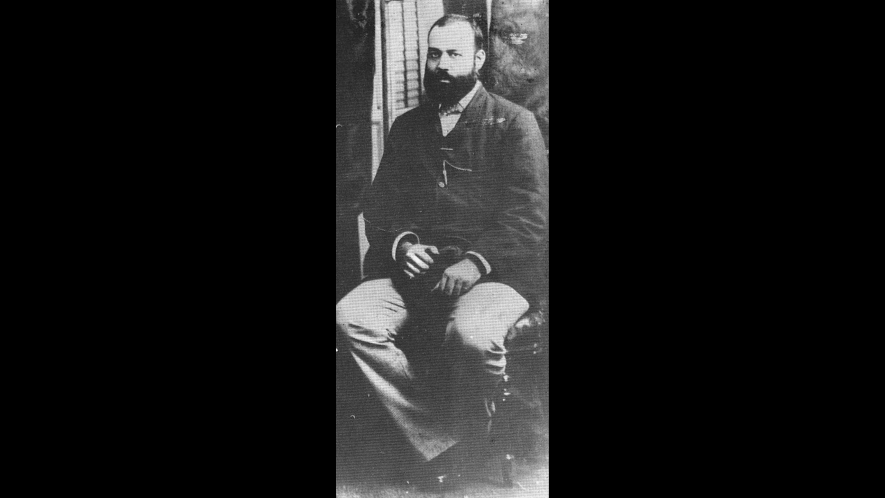
The first Muslim judge of a high court in colonial times, Syed Mahmood’s professional conduct offers a counterpoint to the declining standards in Indian judiciary.
WHEN Justice Abdul Nazeer addressed the 16th national council meeting of the RSS-affiliated Akhil Bharatiya Adhivakta Parishad at Hyderabad last December, he said, “Great lawyers and judges are not born but made by proper education and great legal traditions, as were Manu, Kautilya, Katyayana, Brihaspati, Narada, Parashar, Yajnavalkya, and other legal giants of ancient India.” In the symposium on “Decolonisation of the Indian Legal System”, Justice Nazeer also said the “continued neglect of their great knowledge and adherence to the alien colonial legal system is detrimental to the goals of our Constitution and against our national interests…”.
Perhaps Justice Nazeer should have also recalled 19th-century jurist Justice Syed Mahmood (1850-1903). A pioneer in bold assertions against the colonial judiciary, he produced incisive legal commentaries that reflect an audacious dissenter’s point of view. Writing in an Urdu newspaper, his father, Sir Syed Ahmed Khan, narrates Mahmood’s resignation from the Allahabad High Court in 1893 to “protect the self-respect of Indians against the racism of British judges”.
In that era, conceptions of nationhood were still evolving in India. Indian judges would not muster the courage to contest the racism of the imperial power or fellow European judges. But Mahmood did, in intrepid ways. Khan founded the Mohammedan Anglo-Oriental (MAO) College at Aligarh in 1877 and figures prominently but contentiously, stereotyped as a British loyalist and separatist in debates on contemporary nationalism. Mahmood supported his father’s modern education project, but unfortunately, his contributions are largely ignored by historians and the legal fraternity.
By 1920, MAO College, now Aligarh Muslim University, was the most prominent residential university in the country. Its history department has been a premier centre for advanced studies for a half-century. In 1889, primarily on Syed Mahmood’s initiative and his gifts in terms of books, journals and cash, AMU established a law department. Yet, he was neglected in its research. Only in 1973, seven years after the centenary of the Allahabad High Court, the Aligarh Law Journal brought out Mahmood’s contributions, and legal scholars reflected on his high calibre as a lawyer and judge.
The good news is, in 2004, Alan M. Guenther did his doctoral thesis on Mahmood at McGill University, Canada, which is available online for the public to access. His meticulous and well-researched account touches almost every aspect of Mahmood’s public life. Guenther also published an extended essay in 2011on Mahmood’s views on English education in 19th-century India. (In 1895, Mahmood had written a book on the theme for his speeches at the Educational Conference.)
In 1965, Asaf Ali Asghar Fyzee (1899-1981) complained, “Syed Mahmood’s contributions to the transformation of Muslim law in India have been largely neglected by historians and survive primarily as footnotes in legal texts on Muslim law.” Guenther, too, observes, “…overshadowed by the life and writings of his illustrious father, Ahmad Khan, his legacy has not received the attention it deserves. A large part of his father’s achievements in the reform of education, in fact, would not have been possible without the assistance of Syed Mahmood. But when he reached the age at which his father had made his most significant achievements, [Mahmood] had his life cut short.”
Mahmood had laid out his life plans clearly. S. Khalid Rashid, writing in 1973, reports that Mahmood decided early on that, like his ancestors, he would devote the first third of his life to educating himself, the second to earn a living, and the last to “retired study, authorship and devotion to matters of public utility”. But Guenther writes about how Mahmood’s health had deteriorated through alcohol abuse and disease. He died before he turned 53, broken by forced retirement, estranged from his father (who had died five years previously), stripped of responsibilities at the college he had helped found, separated from wife and son, and in poverty. He was selling personal items to repay debts. “His father’s numerous writings and letters are still republished, but Syed Mahmood’s contributions to Muslim thought are hidden in bound volumes of the Indian Law Reports and brittle files of government correspondence,” Guenther writes.
One aspect of Mahmood’s last years is captured by Prof. Iftikhar Alam Khan’s Urdu books, Sir Syed: Daroon-e-Khana (2006, 2020) and the recent Rufaqa-e-Sir Syed: Rafaqat, Raqabat wa Iqtidar Ki Kashmakash. These accounts expose the smear campaigns of the three companion successors of Sir Syed—Samiullah, Mohsin-ul-Mulk and Viqar-ul-Mulk—against Syed Mahmood as they vied for the secretary’s post at MAO College. Often European members of MAO College conspired with them. Exploiting his weaknesses and eccentricities, they ousted him to get a hold over college affairs, compounding his hurt during his tragic final years.
SYED MAHMOOD’S ROLE IN SIR SYED’S EDUCATIONAL ENTERPRISE
Having returned to India in 1872 after studying in England, Mahmood took time out of his budding legal career to assist his father’s reform work, particularly setting up MAO College. He prepared a detailed plan along the lines of his experiences in Cambridge. His specific aim, explained in February 1872, was to produce future leaders of India through an educational institution whose residential nature would be “as indispensable an education as the course of study itself”. The aim was to create a society of students and teachers quite different from the rest of society.
He travelled with his father to Punjab in 1873 and spoke at a rally to promote the project. In 1889, Sir Syed introduced a motion to nominate Mahmood as joint secretary of the board of trustees of MAO College by highlighting his assistance despite the opposition he faced. In particular, he considered his son’s influence the primary factor that persuaded European professors to come to India and teach there.
European staff members confirmed this around six years later when there was renewed opposition to Mahmood continuing as joint secretary. The principal, Theodore Beck (1859-1899), testified, “Syed Ahmad….acknowledged his reliance on Syed Mahmood for advice in all matters, and his imprint could be noted in the correspondence relating to the school. He declared his firm conviction that Syed Mahmood was the one person who shared his vision for the college, and apart from him, no one would be able to administer the school in keeping with that vision.” However, Samiullah (1834-1908) disagreed with Sir Syed on this count. As a result, a tussle for power began in the college management. The power-play could explain why AMU felt inhibited in bringing out a biography of Mahmood, a research gap that Guenther’s doctoral thesis fills. He has extensively relied on important correspondences of Mahmood preserved in the London India Office (British) Library.
SYED MAHMOOD’S TRYST WITH MUSLIM LAW
Mahmood is a forgotten pioneer of the transformation of Muslim law in modern South Asia. In 1882, at just 32, he became the first Muslim judge of the high courts in British India. He delivered numerous landmark decisions that shaped Muslim law, the law in general, and its administration.
Earlier, he blazed a trail his younger contemporaries followed in their judicial roles in British India. He was one of the first Indian Muslims to study in England and train in the English system of jurisprudence, the first Indian to enrol as a barrister in the High Court of Judicature at Allahabad in 1872, the first appointed as a district judge in the restructured judicial system of Awadh in 1879 and the first Indian assigned as a puisne judge to the High Court at Allahabad. He was the first Muslim in any High Court of India. He cleared a path for Indian Muslims to participate in administering justice in India. But his contribution is not limited to creamy career opportunities for Muslim youngsters. His lasting legacy is how Muslim law is perceived and administered in South Asia today.
CHAMPION OF ACCESSIBLE JUSTICE
An abiding concern of Mahmood was the cost of administration of justice. Court procedures were lengthy and expensive, and the “mass of law” was complicated. Distance from courts was another concern, for which he proposed a network of village courts for “on-the-spot” adjudication. He sought to make justice accessible through unpaid tribunals and honorary munsifs. He prepared a comprehensive draft for this, Guenther informs.
Furthermore, he attacked the [racial] mindset and court fees and stamp duties on legal documents. He ruled in August 1884 and February 1885 that “…if justice costs the same amount [to the] rich and poor, it follows that the rich man will be able to purchase it, whilst the poor man will not.” He declared, more than once, that British judges in India were too quick to find fraud.
In a speech at the Allahabad Bar in April 1885, Mahmood raised the language issue in judicial transactions, saying laws should be in languages intelligible to the masses. He insisted on the vernacular in arguments, pleadings and justice delivery and translated verdicts so that people unfamiliar with English could rest assured that judgments are reasoned. Of course, the issue of judicial language continues to be debated, and for this, acknowledgement is due to Mahmood.
AN INDIAN DISSENTER IN THE HIGH NOON OF BRITISH COLONIALISM
Mahmood is known most for outstanding dissenting judgements. In volume 2 of his 2021 book, Discordant Notes, Justice (retd.) Rohinton F. Nariman writes that Mahmood was known for detailed judgments, some of which stand out for thoroughness and fearless language. Mahmood would refer to the original Sanskrit versions when ruling on Hindu laws and the Arabic texts for Muslim laws, rather than using interpretations of the relevant texts.
From the 1860s to 1880s, during the codification of laws, he sought limits on importing British laws and protested that the local context was getting overlooked. His concern was not just the laws but their efficacy and adaptability within India’s cultural diversity.
Guenther observes, “…throughout his life, he identified himself as a Muslim as well as an Indian and a subject of the British crown, and that he was actively involved in the education and improvement of the Indian Muslim community. At the same time, Mahmood… [made] efforts to promote harmony between people of diverse backgrounds, and…[supported] initiatives that improved the situation of all Indians, regardless of religious affiliation…”
An anecdote from Altaf Hali’s Hayat-e-Javed (1901), cited by Shamsur Rahman Faruqi (2006), is worth sharing. “Contrary to the culture of sycophancy and genuflecting before the English colonial authority….Syed Ahmad Khan and his high-profile and brilliant son Syed Mahmud strived to conduct themselves as if they were equal to the English….Syed Ahmad Khan had stayed away from the [1867 Agra] Durbar because Indians had been given seats inferior to the English. A medal was to be conferred on Syed Ahmad Khan at that Durbar. Williams, the then Commissioner of Meerut, was later deputed to present the award to Syed Ahmad Khan at Aligarh railway station. Willams broke protocol and showed his anger at having to do the task under duress and said that government orders bound him, or he wouldn’t be presenting the medal to Syed Ahmad Khan. Syed Ahmad Khan accepted the medal, saying he wouldn’t have taken the award, except that he too was bound by government orders.”
Indian democracy is an outcome of anti-colonial nationalism, and dissent is its core component: Mahmood’s dissent contributed to nationalism in his time. In 2022, the V-Dem Institute described India as an electoral autocracy where dissent is being criminalised, and the judiciary is failing to contain the majoritarian upsurge. Mahmood’s professional conduct is an encouraging counterpoint to the degeneration in the Indian judiciary.
WHAT DID MAHMOOD THINK OF THE INDIAN NATIONAL CONGRESS?
According to Guenther, though Mahmood never joined the Congress, he was “equally aloof” from the anti-Congress propaganda his father indulged in. “…a rare catholicity characterised his views on most of the controversial questions,” he writes. He adds, “His acceptance among the Hindus [elites] generally was demonstrated by the fact that they tried to send him as their representative to the Imperial Legislative Council, though he never received that appointment.”
Nonetheless, like his father, Mahmood harboured class and regional prejudices. Guenther reveals an article Mahmood wrote in The Pioneer on 4 September 1875, suggesting the government must strive to with the sympathies of the “higher classes of natives”. When challenged to defend his position by “Another Native” in the same newspaper two weeks later, Mahmood responded that people in Punjab and the North-western Provinces [now Uttar Pradesh] were, historically speaking, of “much greater political significance” than those of Lower Bengal. Gunther cites his write-up: “…any educational system that succeeded in ‘attracting the Bengalee and fail(ed) to exercise any influence upon the higher classes of the Rajpoot, the Sikh, and the Mussulman’ must be regarded as a failure.”
Considering the socio-regional composition of top functionaries of AMU, even impartial insiders would testify that it still harbours regional and sub-regional prejudices. The Sir Syed Academy is releasing many publications during the ongoing centenary celebration of AMU. Publishing Guenther’s dissertation may be a fitting tribute to Mahmood, who must be regarded as a prominent co-founder of MAO College.
Mohammad Sajjad teaches modern and contemporary Indian History at Aligarh Muslim University. Md. Zeeshan Ahmad is a lawyer based in Delhi. The views are personal.
First published by Newsclick.
source: http://www.theleaflet.in / The Leaflet / Home> History / by Mohammad Sajjad and Zeeshan Ahmad / April 01st, 2022


.webp)
.jpeg)
.jpeg)