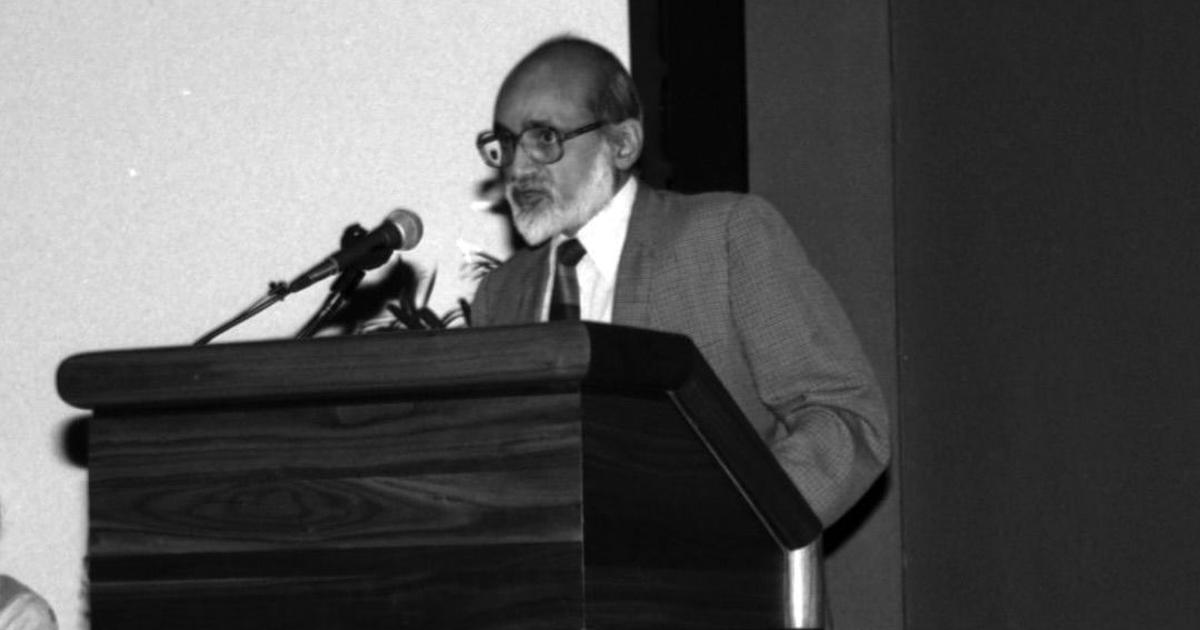
The Assamese version of Maulana Abul Kalam Azad’s Tarjuman Al Quran, Volume-I Al Fatiha, translated by Komoruzzaman Ahmed, was released here yesterday by educationist and former vice chancellor of Rajib Gandhi University, Arunachal Pradesh, Dr A C Bhagabati.
Maulana Azad, besides being a well-known political figure, is a scholar of Islamic learning and Quran. He had translated the Quran into Urdu with commentary as Tarjuman Al Quran to help the common people understand the holy book, as it was understood by the people during Prophet Mohammad’s lifetime.
The book had originally been translated to English by Dr. Syed Abdul Latif during the life time of Maulana Azad. The book, released on June 2, is an Assamese translation of the main Volume-I, Al Fatiha of the Tarjuman Al Quran, where Maulana Azad presented the main principles of the Quran by analyzing each of the Seven Sentences of Sura Al Fatiha in detail.
The meeting was presided over by film-maker Abdul Majid.
The welcome address was made by Wasbir Hussain, author and journalist.
Addressing the meeting, Dr Ayesha Ashraf Ahmed, author and former professor of Shillong College talked about the core philosophy of the Quran. Author Ahmed also addressed the gathering.
source: http://www.assamtribune.com / The Assam Tribune / Home> Archives / by Staff Reporter / September 15th, 2010
Let us not forget him in a hurry. Let us not reduce him to a paragraph in history books. Instead, let us pass on his memory like a worn volume of Pavangal, read and reread, loved and lived, whispered from one generation to the next.
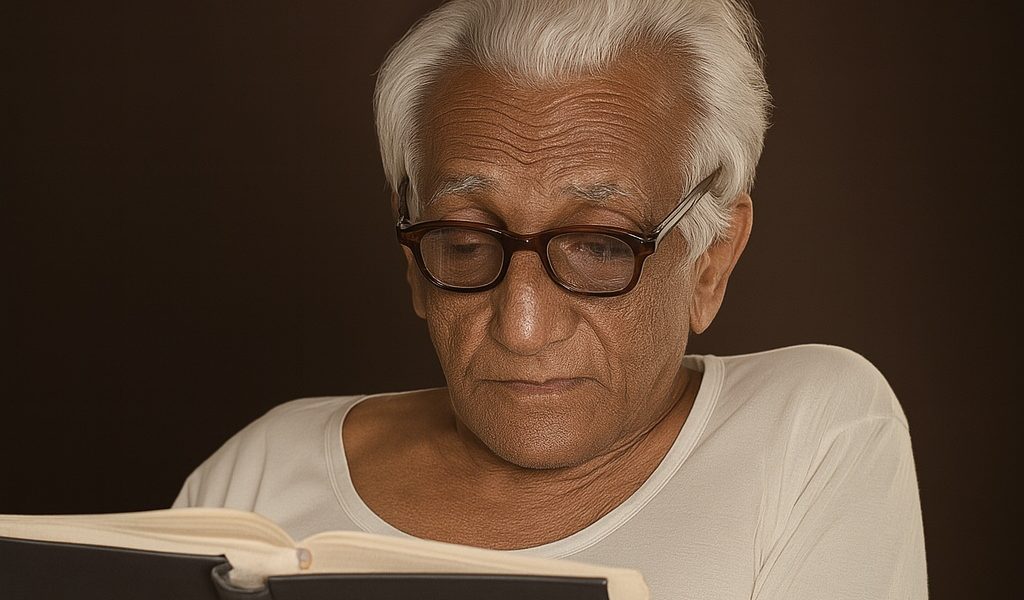
Vakkom Majeed (1909-2000). Photo: From KM Seethi’s archive.
Vakkom Majeed passed away on July 10, 2000.
“He never went out without a book under his arm, and he often came back with two.”
— Victor Hugo, Les Misérables
In the long and rolling corridors of memory, some lives stay like verses, opening out slowly, sentence by sentence, chapter by chapter, never quite closing. Vakkom Majeed’s was one such life. A life commemorated not only by its fearless engagement with history, but by its quiet, intense companionship with books. On the 25th anniversary of his passing, as we also mark the 100th year of Pavangal, the Malayalam translation of Victor Hugo’s Les Miserables , it feels almost providential to recall him through the pages he so often inhabited.
Majeed Sahib, as many called him with reverence, moved with a book always kept under his arm, a bulwark against ignorance, a lamp in times of doubt. And among the many volumes he read and reread, Pavangal held a sacred space. Nalapat Narayana Menon’s 1925 translation of Hugo’s masterpiece was more than literature to him. It was revelation. He had devoured the original edition in his youth, and its characters never left him – Valjean’s anguish, Javert’s moral rigidity, the revolt in the streets of Paris, the quiet dignity of suffering souls. When he spoke of Pavangal, it was with a fervour one reserves for scripture. He did not read the novel, rather he lived it.
A.P. Udayabhanu, a veteran freedom fighter of Kerala, once described Majeed as a “moving encyclopaedia with at least one book in his hands.” But Majeed Sahib was more than a repository of knowledge. He was a seeker, a provocateur of conscience, a gentle fire that never flickered out. I have the sweetest of memories of my time spent with him, from childhood itself, I remember the rhythm of his voice as he discussed Bertrand Russell’s three-volume autobiography, Churchill’s sprawling accounts of World War II, or the 10-volume correspondence of Sardar Patel. There was never a trace of vanity in his learning. He read not to impress but to illuminate. And when he shared his readings – Azad’s Tarjuman al-Qur’an, Muhammad Asad’s Road to Mecca, M. N. Roy’s The Historical Role of Islam, Arthur Koestler’s The Yogi and the Commissar, or Hugo’s Pavangal, like many – he spoke with the urgency of a man who felt truth must never be hoarded.
Born on December 20, 1909, in the storied Poonthran Vilakom family of Vakkom near Chirayinkil (Travancore), S. Abdul Majeed inherited a legacy of reform and resistance. His uncle, Vakkom Abdul Khader Moulavi, had already lit the flame of renaissance among Kerala Muslims. From his schooldays at St. Joseph’s High School, Anjengo, young Majeed was pulled into the vortex of reform movements and the call of the Indian freedom struggle. By the time the Quit India movement broke out, he was already a marked figure in Travancore, arrested, jailed, and later jailed again for resisting the plan of “Independent Travancore.”
But what set him apart – what made him more than just another freedom fighter – was the deep moral imagination that animated his politics. His understanding of rebellion was not ideological. It was profoundly ethical. Like Victor Hugo, he believed that human dignity must stand unshackled before the majesty of any state or creed. He condemned the ‘two-nation theory’ not because it was politically inconvenient but because it was morally vacuous. To him, the soul of India was plural, secular, and indivisible.
In 1948, he was elected unopposed to the Travancore-Cochin State Assembly from Attingal. But when his term ended in 1952, he walked away from practical politics, choosing instead the solitary path of reading, reflection, and moral clarity. While others sought power, Majeed Sahib sought wisdom. And in doing so, he became more relevant with age. Over the next decades, he would immerse himself in the philosophical and historical writings of Bertrand Russell, the radical humanism of M. N. Roy, and the emancipatory visions of Narayana Guru. He called for a “return of Ijtihad”, a freedom of thought within Islamic traditions, and dreamed of a society beyond caste and creed.
He never became rigid in doctrine. His politics was never a fixed ideology, but a conversation between ideas and reality. In our many conversations, I recall his thoughtful analysis of the Malabar Rebellion. He agreed with the thesis that it was fundamentally a revolt born of agrarian injustice but he was deeply saddened by its later communal turn. For him, the tragedy of history was when righteous anger was manipulated into sectarian hatred.
And always, there was a book in his hand. Always, a passage to quote. Always, a memory to share.
The last three decades of his life were his most contemplative. He reread the classics, interrogated nationalist histories, and engaged with young minds who came to him for guidance. To them, he gave not slogans but questions. When he spoke of Jean Valjean’s redemption, it was a commentary on our prison system. When he discussed Javert’s suicide, it became a parable about the dangers of legalism without compassion. When he recalled Fantine’s fall, it was a scathing critique of social hypocrisy.
He never forgot the moment when he visited the Indian National Army hero Vakkom Khader in the Madras Central Jail. It was Majeed Sahib who brought back Khader’s last letter to his father before his hanging, a task that broke his heart and steeled his resolve.
In 1972, when the nation celebrated the silver jubilee of independence, Majeed was awarded the Tamrapatra by Prime Minister Indira Gandhi. Later he was deeply perturbed by the excesses of Emergency.
There was no trace of ceremony in his life. No pursuit of fame or favours. He lived in quiet dignity, read in solitude, and died in obscurity, on July 10, 2000. He left behind not an estate, not a political dynasty, but an idea of what it means to live ethically, read deeply, and act justly.
Today, as we remember him, the centenary of Pavangal seems to carry the tenor of prophecy. One hundred years since Jean Valjean entered Malayalam letters, and twenty-five since Vakkom Majeed left this world, the two seem braided, one fictional, one real, both intensely human. Majeed Sahib was Kerala’s own Valjean: hunted by regimes, misunderstood by many, but ultimately redeemed by the fire of truth and the grace of humility.
Let us not forget him in a hurry. Let us not reduce him to a paragraph in history books. Instead, let us pass on his memory like a worn volume of Pavangal, read and reread, loved and lived, whispered from one generation to the next.
For in remembering Vakkom Majeed, we remember the best of what we once hoped to be.
K.M. Seethi is director, Inter University Centre for Social Science Research and Extension (IUCSSRE), Mahatma Gandhi University (MGU), Kerala, India. Seethi also served as Senior Professor of International Relations, Dean of Social Sciences at MGU and ICSSR Senior Fellow.
source: http://www.thewire.in / The Wire / Home> History / by K.M. Seethi / July 11th, 2025
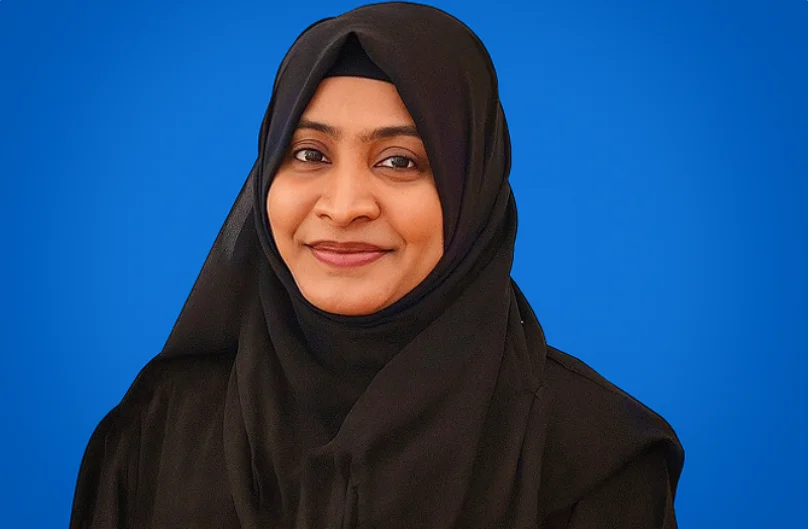
“This Too Shall Pass,” a debut poetry collection by Muskan Sufi, a young Kodagu student studying in Mysuru, has earned international recognition after being nominated for the prestigious Indie Authors Award 2025, held in memory of American poet Emily Dickinson. The book is now available for purchase online on Amazon.
Muskan Sufi, a student of English Literature and Psychology at St. Philomena’s College, Mysuru, hails from Virajpet in Kodagu and belongs to the Kodava Muslim community. Her literary achievement has drawn attention not only for its quality but also for the quiet determination that brought her recognition at a young age.
Published by the internationally acclaimed Bookleaf Publication, This Too Shall Pass was born out of Muskan’s participation in the publisher’s “21 Poems in 21 Days” challenge. She surpassed expectations by writing more than 28 poems, which resulted in a 50-page collection of emotionally rich, thought-provoking verse.
Her poems explore themes of pain, healing, nature, death, and the complexities of human emotion. With modern and socially conscious subjects, Muskan’s writing brings to life the inner turbulence of individuals and the beauty of life’s fleeting moments. She uses simple yet powerful language, aiming to connect souls and provide hope to those facing life’s darkest times.
Thousands of poets participate in Bookleaf’s global poetry initiatives, and the top entries are selected for book publication and nomination to the Indie Authors Award. Muskan’s nomination has created a ripple in the English literary community, marking a proud moment for the Kodava Muslim community.
Expressing her joy, Muskan said, “I joined the challenge after coming across the campaign on social media. I’ve always loved writing English poetry, but I never imagined my poems would be published or nominated for such a prestigious award. It’s given me great motivation to pursue more literary work.”
Muskan is the daughter of Duddiyanda H. Sufi and Masuda Sufi, who head the DHS Group of Companies in Virajpet. Her father also serves as the president of the Kodava Muslim Association (KMA).
Muskan’s poetry book, This Too Shall Pass, is now available for purchase on Amazon.
source: http://www.hindustangazette.com / The Hindustan Gazette / Home> News> Latest News / by The Hindustan Gazette / pix:kannada.hindustangazette.com / July 21st, 2025
18 Muslim Women Made It To Lok Sabha Since Independence; 13 Of Them Dynasts: Book
New Delhi :
That women were always under-represented in the Lok Sabha is a known fact, but Muslim women members have been a greater rarity with only 18 making it to the Lower House since independence, according to a new book.
And while dynastic politics may not be conducive for democracy to deepen its roots, it has played a positive part in giving chances to Muslim women, with 13 out of the 18 being from political families.
pix: sapnaonline.com
From royalty to a tea vendor-turned-politician’s wife and from a first lady to a Bengali actress, the 18 Muslim women who treaded the hallowed corridors of power in the Lok Sabha are an eclectic mix, with each of them having an interesting backstory, but one common thread — their path to power was always strewn with struggle and hurdles.
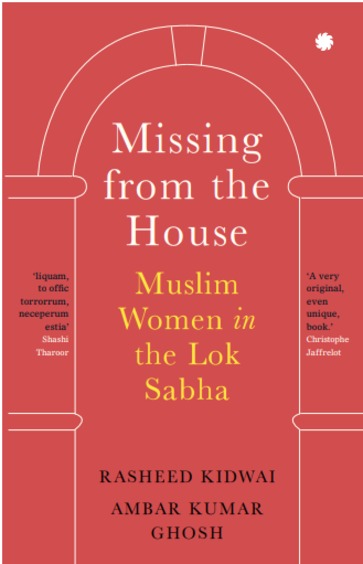
The story of these 18 Muslim women has been chronicled in an upcoming book– ‘Missing from the House — Muslim women in the Lok Sabha’ by Rasheed Kidwai and Ambar Kumar Ghosh. Kidwai says he wanted to document the profile of 20 Muslim women who made it to the Lower House, but two of them — Subhasini Ali and Afrin Ali — had openly proclaimed that they did not follow Islam.
“Only eighteen Muslim women have made it to the Lok Sabha since the first parliamentary polls in 1951-52. It is a shockingly abysmal figure, considering Muslim women are about 7.1 per cent of India’s 146 crore population. Out of the 18 Lok Sabhas constituted till 2025, five times the Lok Sabha did not have a single Muslim woman member,” Kidwai and Ghosh write in their book, published by Juggernaut and will be released next month.
Equally shocking is the fact that the number of Muslim women elected to Parliament in one tenure never crossed the mark of four in the 543-seat lower house of Parliament, the book points out. The book also notes that none of the five southern states — Kerala, Tamil Nadu, Karnataka, Andhra Pradesh and Telangana — otherwise known for better political representation than the North and with better literary levels and other socio-economic indicators, have not yet sent a single Muslim woman MP to the Lok Sabha.
The 18 Muslim women who made it to the Lok Sabha include Mofida Ahmed (1957, Congress); Zohraben Akbarbhai Chavda (Congress, 1962-67); Maimoona Sultan (Congress, 1957-67); Begum Akbar Jehan Abdullah (National Conference, 1977-79, 1984-89); Rashida Haque (Congress 1977-79); Mohsina Kidwai (Congress, 1977-89); Abida Ahmed (Congress, 1981-89); Noor Bano (Congress, 1996, 1999-2004); Rubab Sayda (Samajwadi Party, 2004-09); and Mehbooba Mufti (People’s Democratic Party, 2004-09, 2014-19).
The other Muslim women who entered the Lower House are Tabassum Hasan (Samajwadi Party, Lok Dal, Bahujan Samaj Party 2009-14); Mausam Noor (Trinamool Congress 2009-19); Kaisar Jahan (Bahujan Samaj Party, 2009-14); Mamtaz Sanghamita (Trinamool Congress 2014-19); Sajda Ahmed (Trinamool Congress 2014-24); Ranee Narah (Congress, 1998-2004, 2009-14); Nusrat Jahan Ruhi (Trinamool Congress, 2019-24); and Iqra Hasan (Samajwadi Party, 2024-present).
A dominant political figure who made an indelible mark on Indian politics was Mohsina Kidwai. She not only entered the Lok Sabha but also went on to join the council of ministers and hold several portfolios, including labour, health and family welfare, rural development, transport and urban development.
Another fascinating personality that the book talks about is the wife of Mohammad Jasmir Ansari, a tea vendor-turned-politician. In 2009, Kaisar Jahan, wife of Ansari, won a fiercely fought four-corner contest even though she had barely thirty-five days to prepare and campaign. As 2009 Lok Sabha polls neared, Mayawati summoned MLA Jasmir and Kaisar Jahan to Lucknow. “Jasmir and Kaisar stopped at ‘Sharmaji ki Chai’ in Hazratganj before heading to the chief minister’s residence. Jasmir was anticipating a ministerial position, but instead, Mayawati came straight to the point by asking him to contest the polls. The lingering taste of chai vanished quickly as Jasmir struggled, looking tentatively at his wife for an answer. Mayawati, a politician among politicians, sensed his unease. She directly asked Kaisar: ‘Tu ladegi? The answer came immediately and spontaneously from both Jasmir and Kaisar-yes,” the book narrates.
There is also a first lady among the 18 Muslim women – Begum Abida Ahmed, wife of the country’s fifth president, Fakhruddin Ali Ahmed.
Over four years after Ahmed passed away in 1977, Abida Ahmed agreed to fight a Lok Sabha by-election from Bareilly, Uttar Pradesh, in 1981 and won, becoming the first and only First Lady of India to have entered the competitive arena of politics. She won again in 1984, making it two in a row from Bareilly.
Begum Noor Bano, originally Mahatab Zamani and the widow of the former ruler of Rampur, was royalty who was a key figure in the political landscape of that area and fought many battles with Azam Khan of the Samajwadi Party and Jaya Prada, who also contested on an SP ticket. Her husband, Nawab Syed Zulfikar Ali Khan Bahadur, belonged to the Rohilla dynasty and was popularly addressed as ‘Mickey Mian’. He was killed in a freak road accident in 1992 while returning from New Delhi to Rampur.
Noor Bano won the 1996 and 1999 Lok Sabha polls, but her electoral battles with Jaya Prada in 2004 and 2009 ended in defeats.
Among the 18 Muslim women, Bengali actress Nusrat Jahan Ruhi also broke a number of glass ceilings as she went on to win the Lok Sabha polls on a TMC ticket in 2019.
In the current Lok Sabha, there is just one Muslim woman MP, and that is SP’s Iqra Hasan Choudhury. From earning the distinction of being one of the youngest MPs after defeating a veteran leader from the BJP to becoming the centre of social media discussion as a young, London-educated Muslim woman leader, Iqra Hasan has appeared to have carved out a space for herself in the public imagination.
In his foreword to the book, Congress MP Shashi Tharoor writes, “Nearly seventy-eight years have passed since that portentous stroke of midnight on 15 August 1947, when Pandit Jawaharlal Nehru proclaimed a ‘tryst with destiny’ and India awakened to ‘life and freedom.’ …Yet even after almost eight decades, a shameful reality, which should deflate our self-congratulatory fervour over our democratic track record, still haunts us.”
“Not everyone has found ‘utterance’ in the world’s largest democracy, many of whose towering leaders eulogize it as the ‘Mother of Democracy.’ This self-serving description is enabled, in part, by a too-pliant news media, an ineffectual civil society and a menaced academic class, so that no one dares point out the irony inherent in the claim,” Tharoor says.
“Although we depict India as a doting mother nurturing and nourishing a clamorous, combative and chaotic republic, corrupt and inefficient, perhaps, but nonetheless flourishing, the truth is that throughout our democratic history, we have consistently failed our women citizens: failed to afford them, in the thoroughfares of our country, a life of dignity and decency,” he says. (Agencies)
source: http://www.dailyexcelsior.com / Daily Excelsior.com / Home> Latest News / by DailyExcelsior.com / book pix edited: sapnaonline.com / July 20th, 2025
The Muslim girl from a modest middle-class family in the village’s Waja Mohalla tops Mumbai University with 87% in LLB
New Delhi :
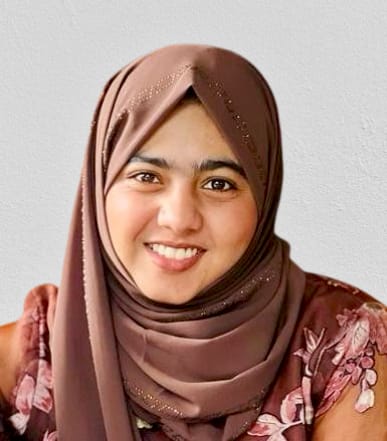
In a proud moment for the Muslim community of Sopara, the ancient port and trade centre of Maharashtra, Benji Mehwish Abdul Rehman has etched her name in the annals of history as the first Muslim woman lawyer from the village. Her remarkable achievement includes topping Mumbai University with an outstanding 87% in the LLB examination is a testament to her relentless hard work and dedication.
Mehwish’s journey is not just about academic success but also about breaking social barriers. Coming from a modest middle-class family — her father, Abdul Rehman, works as an electrician — Mehwish’s path was filled with financial challenges. Yet, these hardships never dimmed her spirit or determination to succeed.
“I belong to the middle class. My father is an electrician, and I was aware of this from the beginning, so I always focused on studying hard. To make a unique identity in the society by working hard, that was my motto,” Mehwish told Clarion India over the phone. She recalled how financial struggles made her educational journey tough, but the unwavering support from her family helped her overcome every obstacle. During this time, many problems came up, but with the help of my family, I faced these problems with a smile. In this journey, my grandfather, grandmother and parents always stood by me like a rock. I secured the first position in every class.”
Her academic record speaks for itself: after passing her SSC in 2015 from Anjuman Khairul Islam Urdu High School, with 84%, she continued to shine with 80% in HSC from RB Harris Junior College and 84% in BCom from AE Kalsekar College in 2021. Clearing the bar examination from Viva College, Virar, with 87% (CGPA 9.2), she secured first position in both Mumbai University and Viva College.
Mehwish’s success carries extra significance as it comes from a community often overlooked and sidelined in mainstream narratives. Sopara, a village with deep historical roots, now celebrates this milestone that challenges the stereotypes around Muslim women and their place in education and professional fields.
Mehwish’s grandfather, Benji Rizwan Muhammad, a respected social activist in the region, played a vital role in guiding and encouraging her career choice. “The decision of which field to choose after graduation was difficult for me because all the courses were very expensive. In such a situation, by the grace of Allah Almighty, my grandfather guided me and encouraged me to become a lawyer,” she said.
She also credits the financial help from the Waja Mohalla Juma Masjid Trust and the Sidha Educational, Social and Cultural Organisation. “If these two trusts had not supported me financially by providing scholarships, this success would have been difficult,” she said gratefully.
Abdul Rehman, Mehwish’s father, expressed his pride: “My daughter is committed to discipline in her studies. We always encouraged her and provided her with whatever we could.” The support from the family, often the backbone for Muslim girls pursuing education, is a reminder that strong family encouragement can overcome societal pressures and economic difficulties.
Local social worker Zubair Ahmed Butke praised Mehwish’s achievement. “Mehwish has increased the glory of Sopara village and our Waja Mohalla by passing the bar exam. She is a role model for our community and shows that with hard work and determination, Muslim girls can reach great heights,” he said.
Mehwish now plans to practice law at Vasai Court and is preparing for her LLM. She also aspires to practice in the Bombay High Court, showing ambition that goes beyond personal success, reflecting a commitment to serve and uplift her community through the legal system.
Her story comes at a time when Indian Muslims, especially women, face various challenges related to education, economic opportunities, and social acceptance. Mehwish’s success is a beacon of hope, breaking through the barriers set by a society where many still hold biases and misunderstandings about Muslims, particularly Muslim women.
Her rise is a clear rebuttal to those who underestimate Indian Muslims or limit their potential by social or religious stereotypes. This achievement demands recognition and respect for the many silent struggles Muslim families endure in supporting their daughters’ education and professional dreams.
Community leaders and activists hope Mehwish’s story will inspire more families in Sopara and beyond to invest in girls’ education and help dismantle the barriers that have held back many Muslim girls. It also raises a call for greater institutional support to provide scholarships and opportunities to deserving students from minority communities.
Mehwish’s journey highlights a broader issue: while India prides itself on secularism and equal opportunity, the lived reality for many Muslims is often marked by discrimination and neglect. Success stories like hers push against this narrative and remind the nation of the rich talent and determination within Muslim communities waiting to be nurtured.
In contrast, some sections of the Hindu majority, especially in surrounding areas, have often failed to create an environment conducive to the educational and professional growth of Muslims. Many Muslim students face discrimination and a lack of resources, making achievements like Mehwish’s even more remarkable.
In conclusion, Mehwish’s story is not just her personal victory but a triumph for the entire Indian Muslim community. It sends a strong message that Muslim girls from modest backgrounds can break social barriers, excel academically, and contribute meaningfully to society when given support and opportunity.
Her rise deserves to be celebrated widely — as a beacon of hope and a clear example that when families and community come together to support girls’ education, the results can be extraordinary.
source: http://www.clarionindia.net / Clarion India / Home>Editor’s Pick> Indian Muslims> Women / by Mohammad bin Ismail / July 14th, 2025
Umar Sheikh’s determination and the school’s support have been vital to his academic achievements
New Delhi :
The Maharashtra State Examination Council’s recent 5th and 8th class scholarship exams witnessed remarkable achievements from students across the state. Among them, 954 students from the Brihanmumbai Municipal Corporation (BMC) schools secured places on the district merit list, with Muslim student Muhammad Umar Sheikh standing out as the top scorer in the 8th class scholarship exam with an impressive 72.79% marks.
This achievement is particularly significant given the exam’s difficulty and the fierce competition from students all over Maharashtra. The 8th class scholarship exam was held on February 9, drawing hundreds of participants. In the 5th class category, Ridhi Kamlesh Mishra from Vakola BMC Hindi Medium school topped with 79.19% marks.
Muhammad Umar Sheikh, a student of Deonar Colony MPS School No. 4 and currently in the ninth grade, secured 236 out of 300 marks, making him the highest scorer in all BMC schools for the 8th grade. This year, out of the 954 successful candidates, 536 were from the 5th grade and 418 from the 8th grade. This is a sharp increase compared to last year’s 405 students who cleared the exams.
Speaking to the media, Muhammad Umar’s father, Muhammad Saleem, shared the challenges their family has faced. “My son has been topping his class in mathematics and science since the beginning. He loves these subjects and has been very focused,” said Saleem. He added that Umar had also topped the 5th class scholarship exam.
Saleem narrated the difficulties faced by the family during the COVID pandemic. “Before COVID, my two children studied at DY Patil School in Nerul, Navi Mumbai. However, due to the loss of income during the pandemic, I could not pay their school fees, and the school stopped their studies. The school even refused to give their transfer certificates because of unpaid fees,” he explained.
With limited options, Saleem moved his family to Govindi in 2021 and struggled to find admission for his children. “It was not easy, but with persistence, I managed to get them admitted to a school here,” he said. Despite the hardships, Saleem is proud of his children’s resilience and achievements. “They are intelligent, and their performance at the new school has been excellent,” he remarked.
When asked about his son’s ambitions, Saleem said, “Umar wants to become a scientist. He has been saying this since the first grade, and with the way he is studying, I believe he will achieve it.”
The school’s principal and staff have expressed great pride in Muhammad Umar’s success. Principal Menal Chaudhary, along with teachers Uday, Ravi, Balu, Prateek, Nitin, and Smithia Madam, congratulated Umar and praised his dedication and hard work. “His success is a source of pride for the entire school,” they said.
This story highlights not only the academic excellence of Indian Muslim students in Mumbai’s government schools but also the obstacles faced by economically weaker families. It also reflects the support provided by committed teachers and principals who encourage students to reach their full potential.
Muhammad Umar Sheikh’s story serves as an inspiration for many young students facing financial hardships, demonstrating that determination and support can lead to success. His achievement, along with the rise in the number of successful students from BMC schools, reflects a positive change in the educational opportunities for Indian Muslim children, who often face social and economic challenges.
In a city known for its diversity, such stories emphasise the need to acknowledge and support the talents and ambitions of minority communities. This achievement sends a message to all that education is the key to overcoming barriers and achieving dreams, regardless of one’s background.
source: http://www.clarionindia.net / Clarion India / Home> Indian Muslims / by Clarion India / July 14th, 2025
He shone the spotlight on the often-ignored role of the 2.5 million members of the British Indian Army who had served during the Second World War.
Historian Ghee Bowman. | https://www.forcek6.org.uk/about
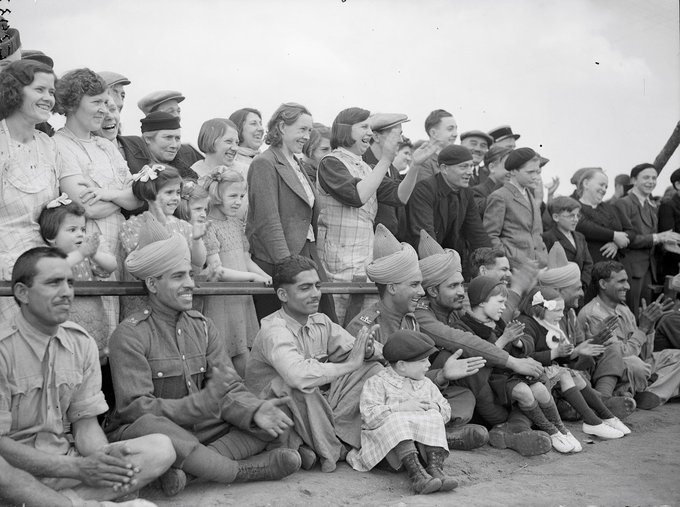
One day in 2013, when Ghee Bowman was working on a project on the city of Exeter’s multicultural history, he found a book featuring three photographs of Indian soldiers in the English county of Devon during the Second World War.
It piqued his curiosity.
“I thought I knew about the Second World War, but I’d never imagined that there were Indian soldiers with turbans and mules in Devon,” he wrote.
Though he had a BA in drama, Bowman decided to start an MA in history – and went on to write a PhD dissertation on the 4,227 men of Force K6 contingent who spent most of the war in England.
Through their stories, he shone the spotlight on the often-ignored contribution of the 2.5 million men and women of the British Indian Army who had served during the Second World War.
When Bowman started digging, he found that the British Army arrayed against Nazi Germany in Europe early in the war needed mules to transport artillery and supplies. The men of Force K6 and their mules were shipped in from India, more than 11,000 km away.
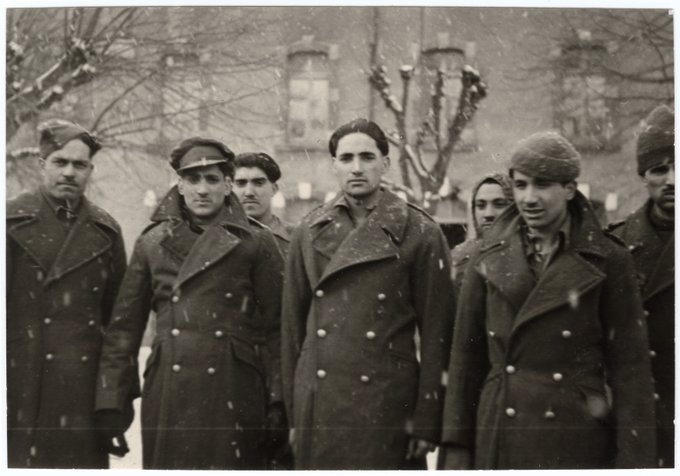
Several had been evacuated from Dunkirk in France in 1940 when the Allied defense collapsed and spent years in England.
source: youtube.com
Before Bowman died on May 10, he had spent the previous 12 years researching the Indian Army in Europe during the Second World War. His two books on the subjects are superbly researched and cracking reads.
pix: google.co.in/books
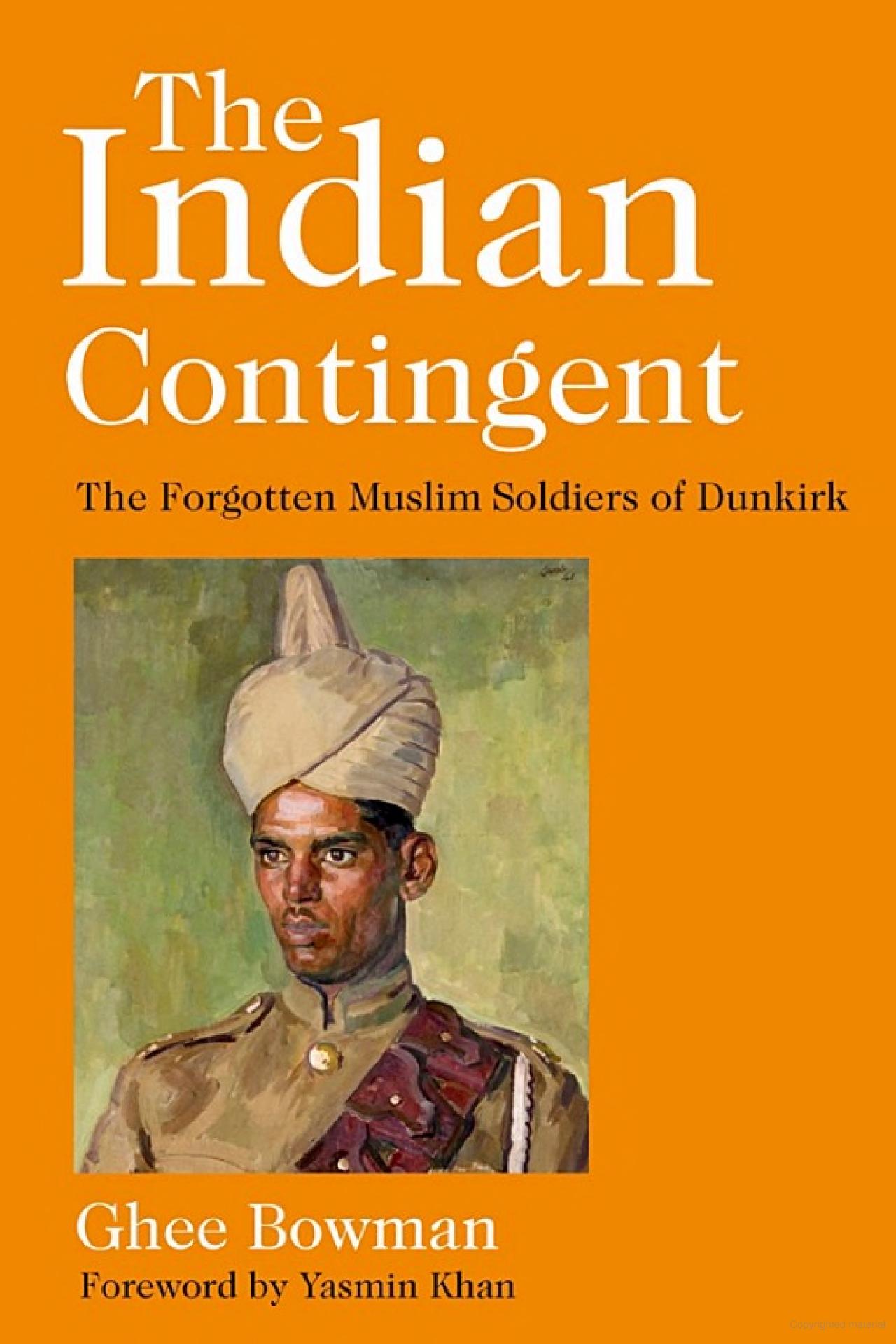
Bowman’s first book was The Indian Contingent – The Forgotten Muslim Soldiers of the Battle of Dunkirk, published in 2020. It is the story of the 299 men of the 25th Animal Transport Company of the Royal Indian Army Service Corps.
Because the British used to group men of the same religion and creed together, these men were mainly Muslim. The role of Indian soldiers fighting in North Africa and Italy during the war had been documented. But little was known about the men who were in France.
The Great Epinal Escape – Indian Prisoners of War in German Hands was published in late 2024. Bowman had been toying with the title The Greatest Escape, a reference to the popular movie about the war, The Great Escape. It was about the escape of 500 Indian prisoners of war from a camp at Epinal in France in 1944.
On May 11, 1944, American planes bombed a camp at Epinal in France housing 3,000 Indian prisoners, breaking some walls. Several hundred escaped, of whom 500 reached Switzerland. It was the largest PoW escape during the Second World War.
Though the Indians were conspicuous in the middle of France, they managed to make their way across the border through their grit and the bravery of civilians who helped them along the way.
#OTD 11th May 1944; a sunny day in Épinal, a small town on the river Moselle, close to the Vosges mountains and Germany. The scene is set: nobody knows that this quiet French place, untouched by war since 1940, will become the site of the largest POW escape of #WW2
1:21 PM . May 12, 2024· / 18.7K View
________________________
Very little has been written about the experience of individual Indian soldiers in the Second World War. With his micro-histories, Bowman took a step towards filling this gap – and pointed the way for other researchers to do so too. Besides, in a time of rising xenophobia in the UK, Bowman’s work serves as a reminder of the long presence of South Asians – and Muslims – in the country and their contributions to keeping it secure at one of its most vulnerable moments vulnerable moments .
After submitting the manuscript for his second book, Bowman wondered how he could do more to tell the story of Indian soldiers during the Second World War. About six months ago, he decided that he had he hit upon the best and most gratifying way of doing this – not by writing more books or articles and making podcasts but by helping families get to know more about a grandfather or uncle who had fought in the conflict.
This would not result in thousands of social media posts and perhaps only one family would get to know about the work. But to Bowman, helping even one person trace their family history was priceless.
“I’m very happy to share what I already know with families and the wider Indian public,” he wrote. “I’ve got letters, photos, recommendations for medals that I’ve found in archives and newspapers. I would love to be able to restore these to the descendants of these brave men.”
He decided to co-opt the willing and reached out to researchers across the world. He created a page on his website listing useful resources. I was proud to be his man in India and Southeast Asia.
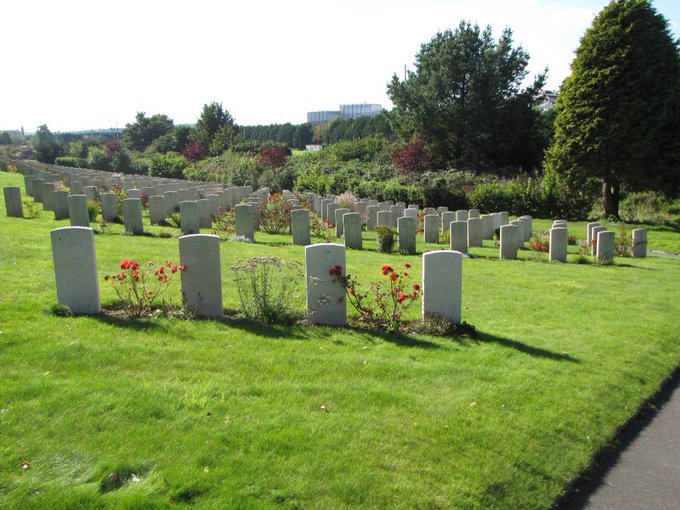
To the good people of #Plymouth. As you think about Muslims in the city this morning, you might like to know about the 4 Muslim graves at Weston Mill Cemetery, 3 miles from where the #plymouthriots happened last night.
These four men were soldiers of the Indian Army, part of #ForceK6 – Muslim Punjabis sent 7000 miles to help the British in its hour of need. Here are some of their officers inspecting coastal defences in November 1941.
I had the privilege of getting to know Bowman in June 2023, when I reached out to him as I had just begun researching the Indian Army in World War II Singapore. He helped me find sources, to write a book proposal and introduced me to his publishers and others who turned out to be crucial for my own book.
Even as he was trying to help family members trace their relatives, Bowman had been going through a grave personal health crisis. In his regular newsletter in May 2024, he mentioned that he had a fall. His last newsletter was on February 1. He said he had been diagnosed with a brain tumour, was undergoing radiation and chemotherapy and doing well.
He died three months later. Bowman once described himself as “a historian, teacher and story teller…a Quaker and a lifelong learner”. He was all that and much more – he helped others without any gain for himself.
Gautam Hazarika is a Singapore-based author whose book The Forgotten Indian Prisoners of World War II is being published by Penguin India and Pen & Sword UK later this year. He can be contacted at ghazarika70@yahoo.com.sg
source: http://www.scroll.in / Scroll.in / Home> Tribute / by Gautam Hazarika / May 27th, 2025
CM Naim’s translation of 19th-century reformer Ashrafunnisa Begum’s biography was published in 2021. Naim, a translator and scholar of Urdu, died on July 9.
Choudhri Mohammed Naim, aka CM Naim, a prominent scholar of Urdu language and literature, died on July 9 at the age of 89. He was a professor emeritus at the University of Chicago.
Naim was also the founding editor of the Annual of Urdu Studies and Mahfil (now Journal of South Asian Literature), as well as the author of the definitive textbook for Urdu pedagogy in English.
He was born on June 3, 1936, in Barabanki, Uttar Pradesh and educated at Lucknow University, Lucknow, Deccan College, Poona, and the University of California, Berkeley. In 1961, he joined the faculty of the Department of South Asian Languages and Civilizations at the University of Chicago, which he chaired from 1985 to 1991. He retired in 2001. He was a national fellow at the Indian Institute of Advanced Study, Shimla, in 2009, and a visiting professor at the Jamia Millia Islamia, New Delhi, in 2003.
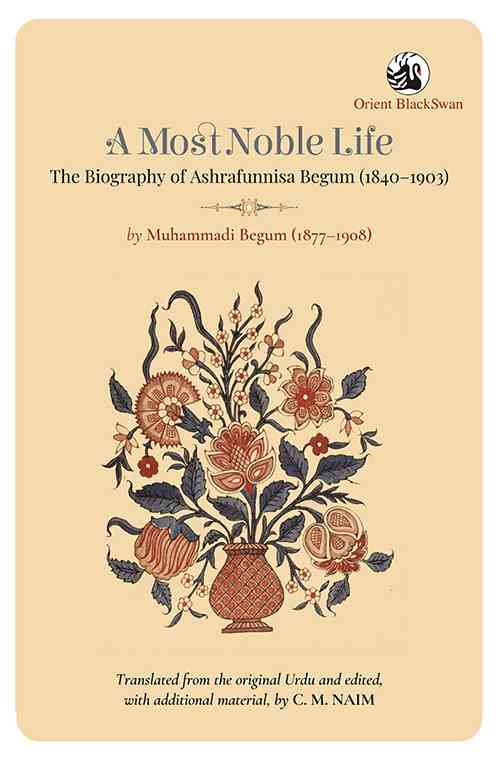
Some of his best-known works are Ambiguities of Heritage (1999), Urdu Texts and Contexts (2004), and The Muslim League in Barabanki (2013). He also translated Urdu writings into English some of which are Ghalib’s Lighter Verse (1972), Inspector Matadeen on the Moon: Selected Satires (1994), Curfew in the City (1998), and A Most Noble Life: The Biography of Ashrafunnisa Begum (1840–1903) (2021).
A Most Noble Life: The Biography of Ashrafunnisa Begum (1840–1903)by Muhammadi Begum (1877–1908) is the first complete English translation of Hayat-e Ashraf (1904), the extraordinary story of Ashrafunnisa Begum. Ashrafunnisa, born in a village in Bijnor, Uttar Pradesh, taught herself to read and write in secret, against the wishes of her elders and prevailing norms. She went on to teach and inspire generations of young girls at the Victoria Girls’ School – the first school for girls in Lahore. Her unusual life was written about with great poignancy by Muhammadi Begum – the first woman to edit a journal in Urdu, the weekly Tahzib-i-Niswan. Muhammadi Begum was a prolific writer of fiction and poetry for adults and children, and instructional books for women during her brief life. She aptly titled the biography Hayat-e Ashraf: it echoes the name of her subject, but also means “the noblest life”. Indeed, both biographer and subject may be described, says Professor CM Naim, as “noble lives”.
The two women, who met by chance at a wedding, instantly developed a strong mutual affinity, which grew into a lifelong bond. In Ashrafunnisa Begum, Muhammadi Begum saw not only the mother she had lost as a child, but also an inspiring role model who had led a principled life of her own making, and shown amazing grace and strength against grave odds.
This annotated translation by CM Naim, an eminent scholar of Urdu literature and culture, also provides the first detailed study of the life and works of its author, Muhammadi Begum, and highlights, in an “Afterword”, two key social issues of the time, women’s literacy and widow remarriage, which remain as relevant today.
In this conversation with writer Githa Hariharan (in 2022), CM Naim spoke of the lives and times of Muhammadi Begum and Ashrafunnisa Begum, their work, and the unique friendship that nurtured both of them.
Let me begin with asking you to comment on the ways in which this slim biography of Ashrafunnisa by Muhammadi Begum dispels the gloomy image of the silent and secluded Muslim woman of the 19th and possibly 20th century.
The trouble, as I see it, lies in the “totality” and “exclusivity” we allow to these claims. In the 19th century, a huge number of Muslim men were not literate, just as a huge number of Muslim women were not secluded, or not any more secluded than the non-Muslim women of the same class, occupation or region. The wives of Muslim weavers and barbers and food-sellers may have kept their faces covered while toiling alongside men but their lives were not secluded the way we assume them to be – rightly – for the women of the upper classes. Then there were the differences we see in Bibi Ashraf’s life. Her family was Shi’ah; the women of the household held weekly majlis where they read out texts from religious books. She lost her mother when she was only eight; otherwise, she would have learnt to read and write the way other girls in the family did. We also see a young Muslim widow, a Pathan, taking up employment with the family as a Qur’an instructress.
I found A Most Notable Life a fascinating entry point into the lives of two women I want to know more about. But I also want to know more about the context of their times and work. Ashrafunnisa’s account of how she learnt to read and write is, for me, the most moving section of the book. She encounters obstacles in learning how to read, but the challenges she faces in learning how to write seem far more severe. I am curious about this. Is it far-fetched to conclude that a writing woman presents a greater threat to the patriarchal establishment, because she assumes the power of an “inscriber” rather than merely being a body (or mind) to be inscribed upon?
The chief obstacles are the wilful grandfather and uncle. The grandfather holds the most authority, and the uncle is more immediately present in the lives of the women in the household. The grandfather is not against female literacy in principle. He willingly allows it until the widowed female teacher gets remarried. That is a worse “sin” in his eyes than reading and writing. But then he considers the fact of his son, Bibi Ashraf’s father, taking up a pesha, a profession – he moved to Gwalior and became a lawyer – an equal threat to his honour. The family’s attitude toward writing is complex. Her grandfather tolerated some girls in the family learning writing from their mothers; her father rejoiced when he learned that Bibi Ashraf could read and write so well, but her uncle became more furious and punitive. I feel writing in the upper classes, where seclusion was more closely observed, was seen as an instrument that could make it possible for women to break out of that seclusion. We should not assume that writing was then considered an integral element of education. Transmission of essential or requisite knowledge to a majority of males and females could be done orally. Or so, arguably, the society believed at the time.
I am amazed by the use of multiple genres by both women – poetry, essays, memoir, biography, novels, stories for children, “instruction” manuals. Was this characteristic of the “educated” of the times, or was it driven by the need to be useful to a range of readers? And would you say that in the case of women, or these two women at least, the autobiographical element links all the genres they make use of?
That’s a very interesting question, and I don’t have a clear answer. I can only assert with some confidence that before the 20th century, most prose writings also contained verses. Very often, these were original verses by the author of the text, alongside quoted verses by well-known or obscure poets. The purpose could have been to emphasise a point by reiteration in a more memorable form, or adding the authority of the past to the point being made. The same is done, for instance, by using proverbs. Nazir Ahmad, the reformist novelist, was a great versifier and public orator. His lectures and long poems at the annual sessions of the organisations he supported were hugely popular. So, anyone who learned to read in those days encountered poetry from day one. And if you had creative impulses, you trained yourself to write verses as well as sentences. In the case of Muhammadi Begum, she was indeed driven by a powerful urge to be useful to other women – her sisters, bahneñ – in particular her contemporaries, i.e. young wives, and girls, and wrote in several genres.
Since the education of women is so crucial in the context of the two women’s lives and work, the writing does a balancing act between the creative and the expression of the self on the one hand, and the didactic on the other. To what extent does such didactic literature – or “instructional books” – differ when authored by men (such as Nazir Ahmad, whose work took up women’s education as well as conduct), and women such as Ashrafunnisa and Muhammadi Begum? My friend, writer and critic Aamer Hussein, writes that “Muhammadi Begum reworks and amends, with affection and insight, the reforms suggested by Nazir Ahmad.” In what ways do the women, Muhammadi in particular, take the project forward, not only as writers, but as journalists, teachers and publishers?
What we now label “didactic fiction” was not thought of as merely instructional by its authors; they meant it to entertain too. It would have been Khel khel meñ kam ki bateñ, “useful words in playtime”. The authors simply called them novels. And this applies to female writers and readers too, until they began to learn English.
As for your core question, I can best answer it by exaggerating my response. Nazir Ahmad, Hali and other male reformists wanted to educate women so that they would be good mothers to their children and proficient in managing their homes. Bibi Ashraf and Muhammadi Begum prize these goals too, but they also prize education as a means of mental and spiritual self-improvement. For better self-expression, even. But the most important thing with Muhammadi Begum is that she lays great emphasis on a commonality of sorts, on a sisterhood of peers. She also wishes to make women proficient beyond her kinfolk, and even beyond the threshold of her own home. To that extent, it may be more the aspiration of an upper-class woman. But it also suggests that for her, female literacy was a given. As indeed it was by that time for the salaried middle-class.
It’s clear that propriety is the framework within which these two women, and others like them, have to work to reap some gains. Keeping this in mind, may I ask you to unpack the word “hayat” for us? The biography is called Hayat-e Ashraf, and you have translated it as A Most Noble Life. I am thinking of the difference in English between “respectable” and “noble” when I ask you to explain “hayat” for those of us who do not know Urdu.
“Unpacking” hayat would require explaining what “life” meant to Muhammadi Begum or to an Urdu writer in the 19th century – a tall order. I can only say that Muhammadi Begum seems to have chosen the most apt title for her book. It echoes the title of Altaf Husain Hali’s iconic biography of Sir Syed, Hayat-i-Javaid (An Everlasting Life), published only three years earlier. Hayat-i-Ashraf can be read as “The Life of Ashraf[unnisa Begum]” or as “An Ashraf Life,” i.e. “A Most Noble Life.” Ashraf is the superlative of sharif, and the latter, of course, is a marker of numerous presumed personal attributes, ranging from nobility of birth to modesty in speech and much more. Muhammadi Begum organised her book in a similar manner: first, a chronological account, followed by short sections on what she considered her subject’s exemplary traits or, as she put it, her “Disposition, Habits and Manners.” Throughout the text, she never fails to remind her readers – her “sisters” – to exert themselves and follow Bibi Ashraf’s example.
Pioneers have to be remembered not only for what they did – given their times – but also in connection with their descendants. Would you speculate on the ways in which Muhammadi opened doors for the Urdu women writers who came after her in the 20th century?
Muhammadi Begum was not the first woman poet in Urdu, nor the first fiction writer. She was, however, the first in several other ways. She was the first woman to edit an Urdu journal and to write on many of the issues that were of great concern to women of her community and class. She also wrote “manuals” for women – on writing letters, on managing the household, or on meeting their peers outside the kinship network. In everything she wrote, she made it clear there were no limits to women’s abilities. And most importantly, she made it clear that women can help each other in discovering and putting to use these abilities. I should emphasise one point here. It was her husband’s dream to publish a journal for sharif women that was also edited by a sharif woman – contra the two journals that had appeared earlier and failed. Mumtaz Ali was a champion of Muslim women’s causes, and he strongly believed in gender equality. No doubt he viewed himself as a wise guide, and never hesitated to publish in the journal his own views on some subjects of concern; but what impressed me was his readiness to give space to opposing views, never adopting a patronising or dismissive tone in his responses.
Coming back to your question, Muhammadi Begum’s journal, Tahzib-i-Niswan, gained wide circulation, though subscriptions were slow in coming. But it soon became the journal of choice for aspiring female writers. Hijab Imtiaz Ali, Qurratulain Hyder and Rasheed Jahan made their debut in its pages. And Ismat Chughtai made her first appearance in print as an excited reporter from Aligarh informing the “Tahzib Sisters” that Rasheed Jahan had completed her medical course. So I think it is not so much the matter of opening doors that makes Muhammadi Begum’s journal important; it is the spirit of confident sisterhood that she identified and fostered.
I don’t want the two women, Ashrafunnisa and Muhammadi, to get lost in the jungle of history though, whether it is the history of women’s education or journalism or literature. I want to pay a tribute to their friendship – which allowed them to have a rich relationship that encompasses a role model, a colleague and a surrogate family. And this despite their age difference, despite one being Sunni and the other, Shia. Would you say their friendship gives an edge to their interest in writing memoir and biography?
Their close friendship, their deep trust in each other, was to my mind the most thought-provoking and inspiring thing about them. No doubt, they both had very painful childhoods – having lost their mothers at a tender age. But they also seemed to see in each other a kind of partner-in-arms, joined in some cause. The much older Bibi Ashraf unhesitatingly treated Muhammadi Begum, barely out of her teens, almost as her leader in a cause that concerns all women.
We should also recall that the “seclusion” of sharif women in those days was stricter. It even meant seclusion from the company of a great many females within the extended families as well their neighbourhoods. Muhammadi Begum started her journal Tahzib-i-Niswan in 1898, and amazingly, from the very beginning, she thought of it as a gathering place where women, previously strangers to each other, could meet and become “sisters”. She coined the expression tahzibi bahnen, ‘Tahzibi Sisters’, to describe this coming together. Then, acutely aware of the larger issue, she quickly proceeded to write a manual on the art of Mulaqat, explaining how a sensible woman should behave in the company of other women outside her own family, complete strangers. It was, of course, the time when men in government jobs at all levels, including the salariat middle- and lower-middle class jobs, were liable to be transferred from one district to another, requiring their wives to also move from place to place with them. They led a very lonely life unless they made an effort to know their neighbours – strangers or peers – with no past experience to guide them.
Hazrat Maulana Ghiyas Ahmad Rashadi Sahib, President of Safah Bait-ul-Mal and Manbar-Mihrab Foundation, was felicitated for his completion of the Tafsir al-Quran by Qari Muhammad Abdul Rahman Shahid Sahib and his brothers.
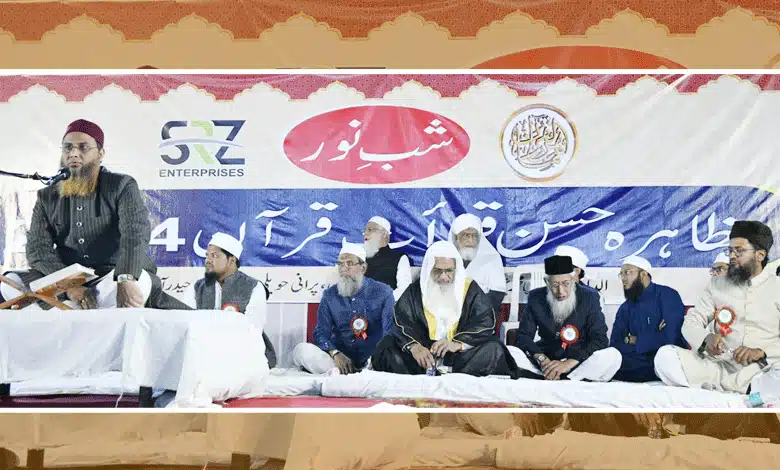
On the evening of December 31, 2024, a grand “Shab-e-Noor” Quranic Recitation event was held at the vast Dar-ul-Shifa Football Ground in the city. The event was presided over by Ustaad-ul-Qura’ Hazrat Maulana Qari Muhammad Ali Khan Sahib (may his blessings last) with the patronage of Mufti Hafiz Sadiq Mohiuddin Sahib (may his blessings last). The event featured renowned internationally acclaimed Qaris from the city, who presented their recitations.
Hazrat Maulana Jafar Pasha Sahib, Hazrat Maulana Hassan Farooq Sahib, respected Mir Zulfiqar Sahib (Charminar MLA), and respected Riyaz-ul-Hassan Afandi Sahib (MLC) participated as distinguished guests.
The Qaris presented their remarkable recitations until 2 AM, with a large crowd of both common people and elites in attendance.
Hazrat Maulana Ghiyas Ahmad Rashadi Sahib, President of Safah Bait-ul-Mal and Manbar-Mihrab Foundation, was felicitated for his completion of the Tafsir al-Quran by Qari Muhammad Abdul Rahman Shahid Sahib and his brothers.
The program concluded with a special prayer from Ustaad-ul-Qura’ Hazrat Maulana Qari Muhammad Ali Khan Sahib.
source: http://www.munsifdaily.com / Munsif News 24×7 / Home> Hyderabad / by Syed Mubashir / January 01st, 2025
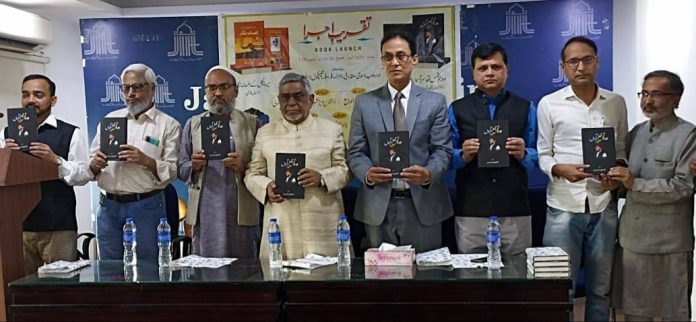
A sense of ‘Think global, act local’ prevailed at the launch of two significant books “Who jo Shams tha Sar-e-Aasmaan” and “Seemanchal ke Afsana Nigar.” The launch was jointly organized by Forum for Intellectual Discourse and Idara Adab-e-Islami, Delhi on Sunday, 7 November, 2021 at the headquarters of Jamaat-e-Islami Hind.
The book “Who Jo Shams tha Sar e Assmaan” was compiled by Dr Noman Qaisar and Mohd Islam Khan and has 41 Urdu articles and six poems on the life and services of journalist Dr Abdul Qadir Shams who died during Covid-19 on 25 August, 2020. It also has four write-ups in English.
Another book “Seemanchal ke Afsana Nigar” is an effort to document the life and works of dozens of fiction writers of Seemanchal.
Presiding over the programme renowned Islamic scholar and former President of Maulana Azad University, Jodhpur, Prof Akhtarul Wasey said that the work done by Abdul Qadir Shams was ‘unusual’. “Shams used to sleep in Delhi but dreamed of Seemanchal.” The void left with his demise would always be felt in my life, said Wasey, who is also the Professor Emeritus of Islamic Studies at Jamia Millia Islamia. Seemanchal ke Afsana Nigar will be an indispensable work in the history of short-story writing. Prof Wasey also congratulated the Forum for Intellectual Discourse stating that the need for such an organization like the Forum could never be felt more strongly than the present times. He wished the Forum success.
Special guest, editor general at NCERT, Dr Perwaiz Shaharyar expressed happiness over organizing a meeting for a journalist in which a large number of people from media were present whose responsibility had grown manifold as the nation was confronted with difficult situations. He called the book a ‘valuable addition to literature’. Prof Abu Bakar Abbad had his reservations for confining any segment of Urdu literature to a specific region as Urdu was a global language. The protagonists, however, had their own arguments for identifying geographical regions, as was also the case with Seemanchal, a region long ignored by most literary aficionado.
Abdul Mannan, editor of monthly Yojana reasoned that the creative facets of Seemanchal remained shrouded because their writers usually shied away from the limelight. In that context, he considered Ehsan Quasmi’s work exceptional.
Chief guest, senior journalist Siraj Naqvi, who had worked with Abdul Qadir Shams for over a decade said that Shams new the art of maintaining relationships. Despite all the difficulties, the smile on his face would dispel worries. Author, critic and famous litterateur Haqqani Al-Qasmi paid a glowing literary tribute to his childhood friend Abdul Qadir Shams which moved the audience. He said Woh jo Shams tha… is not merely a collection of articles but teardrops flowing directly from the hearts.
Dr Waris Mazhari, Assistant Professor, Jamia Hamdard; Dr Khalid Mubashshir, Assistant Professor, Jamia Millia Islamia; Dr Ahmad Ali Jauher, Assistant Professor, Indira Gandhi National Open University; Dr Jasim Uddin Qasmi of Delhi University, Jamshed Adil Alig and Dr Zain Shamsi also shared their views. Uzma Shaheen, daughter of late Abdul Qadir Shams paid a rich tribute to her father.
Manzar Imam of Forum for Intellectual Discourse moderated the three-hour long programme which had begun with Qur’anic recitation of Abdur Rahman, followed by welcome remarks of Dr Mohammad Ajmal, Assistant Professor, Centre for Arabic and African Studies, Jawaharlal Nehru University. It ended with a vote of thanks by journalist Abid Anwar.
source: http://www.muslimmirror.com / Muslim Mirror / Home> Books / by Manzar Imam / November 10th, 2021