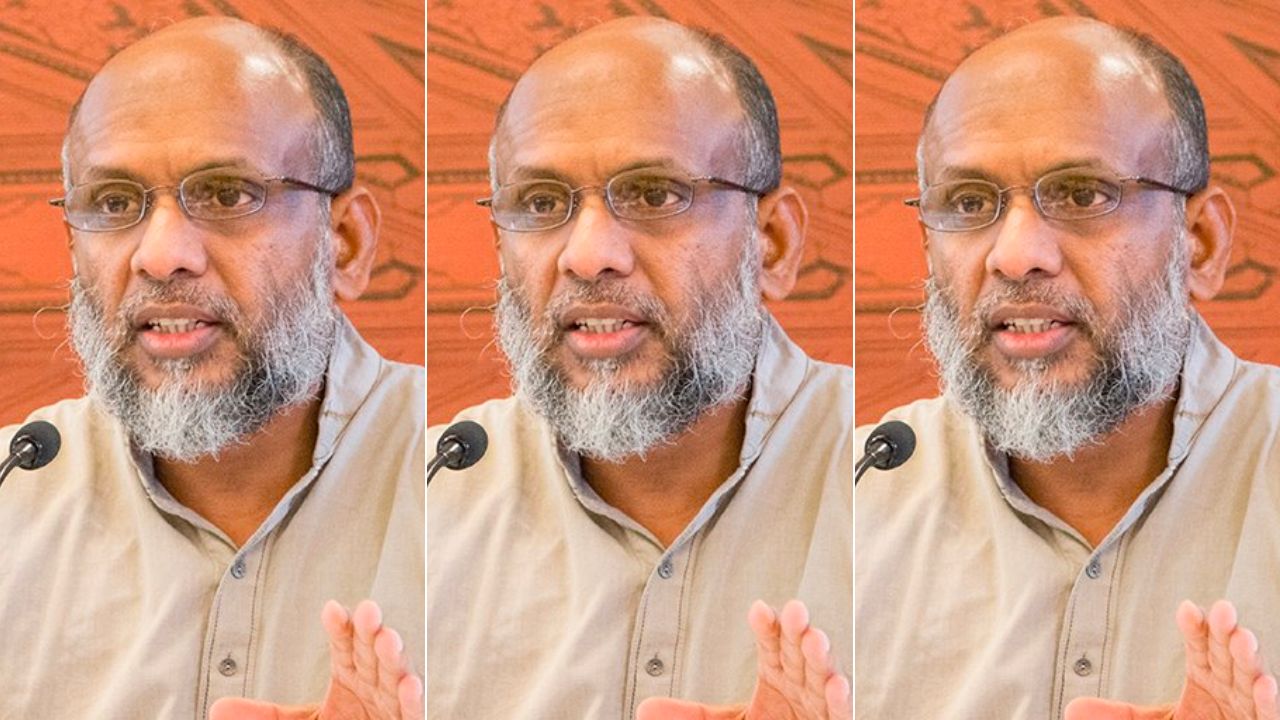
Author of several Odia books, Hussain had also translated the Hindi novel ‘Rani Laxmi Bai’ into Odia which was later published by the National Book Trust in 2012.
Litterateur Hussain Rabi Gandhi
Bhubaneswar :
Eminent Odia writer, former president of Odisha Sahitya Akademi and politician Hussain Rabi Gandhi passed away at Cuttack on Saturday. He was 75 and undergoing treatment for old age-related ailments at SCB Medical College and Hospital.
Author of several Odia books including ‘Mukta Purbasa’, ‘Hajijaithiba Manisa’ and ‘Punsacha Salabega’, Hussain had also translated the Hindi novel ‘Rani Laxmi Bai’ into Odia which was later published by the National Book Trust in 2012. His story ‘Galpa Samaraha’ was included in the Odia syllabus of Plus II.
At the Odisha Sahitya Akademi, he served as the vice-president from 2005 to 2008 and then as the president of Akademi from 2008 to 2010. Hussain was also the former editor of the state government’s ‘Utkal Prasanga’.
Inspired by the legendary Biju Patnaik, Hussain had joined the undivided Janata Dal in 1988 and was appointed its general secretary. He served as the general secretary of Biju Janata Dal from 1998 till 2005 and the ruling party’s observer for Deogarh and Sambalpur elections.
He was conferred the title of Biplabi Loka Kabi by the mayor of Cuttack in 1994. He was also awarded Utkala Jyoti and Gangadhar Meher Kabita awards for his notable contributions to the field of Odia poetry. People from all walks of life condoled his death. Expressing grief at Husain’s demise, Governor of Odisha Prof Ganeshi Lal said Odia literature will forever be in debt for his contributions.
Mourning his death, Chief Minister Naveen Patnaik said Gandhi had a long association with Biju Patnaik and later with BJD. “He has contributed immensely in strengthening the Biju Janata Dal and promoted the values of Biju Babu and BJD.” An established writer, who contributed immensely to Odia literature, his death is a great loss to the state, Naveen added.
“I am saddened to hear the news of the passing away of Hussain Ravi Gandhi, a prominent literary figure of Odisha and former president of the Odisha Sahitya Akademi. May the immortal soul rest in peace,” Union Education Minister Dharmendra Pradhan tweeted.
source: http://www.newindianexpress.com / The New Indian Express / Home> Cities> Bhubaneswar / by Express News Service / January 28th, 2023
Does it ring a bell? Yes. Film buffs couldn’t forget this line from Kalicharan. Spoken in a cool and collected manner some four decades ago, it still has a chilling effect.
How about this one: Kutta jab pagal ho jaata hai toh use goli mar dete hain. Apni umar se badkhar baatein nahi karte. Shakaal jab baazi khelta hai .. toh jitne patte uske haath mein hote hain utne hi uki aasteen mein.
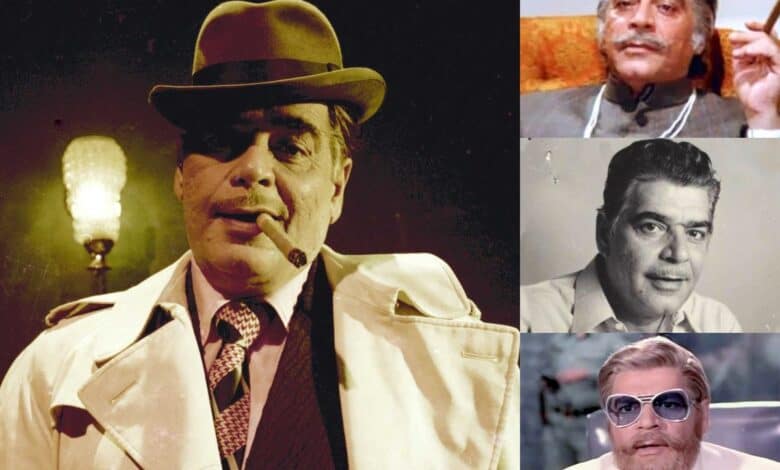
The soft-spoken villain, Ajit Khan, who delivered these memorable lines, turns 101 today. To mark his birth centenary celebrations, his family is launching his biography in Urdu and Hindi languages on Friday evening. The book, authored by Iqbal Rizi, is appropriately titled – Ajit the lion.
Born Hamid Ali Khan, he took the screen name, Ajit Khan, when he ran away from his house in Hyderabad and landed in Mumbai. Though he acted in over 200 films, he came into the limelight when he turned a baddie. The polished suited booted look he sported coupled with his unique dialogue delivery, deadpan expression and mannerism made him a superstar in his own way.
Ajit did support roles in scores of films like Shah-e-Misr, Hatimtai, Sone ki Chidiya but mostly went unnoticed. However, when he chose to do an image makeover and turned baddy cine-goersoers started taking note of him. Ajit brought a rare freshness to the portrayal of negative roles with his suave looks, tuxedo white suites, polka-dotted ties and brylecreemed hair. Gone was the savage loud-mouthed villain of Bollywood. In his new avatar Ajit, as an underworld don, is seen in most of the films reclining on a chaise lounge with a buxom babe tucked into one arm. In the movie, Zanjeer, when a blood-dripping Amitabh Bachchan confronts him after getting out of prison, the don, Teja, reacts very casually sipping his drink. Unfazed he drawls “Hayllo”.
That was Ajit at his suavest best. His career skyrocketed in 70s and 80s with blockbusters like Zanjeer, Yaadon ki Barat, Kalicharan, Jugnu, Patthar aur Paayal. His typical one-liners like Mona Darling, Lilly don’t be silly, and Loin are a rage even now.
More than his dialogue the ‘Ajit jokes’ have added to the legend. Names such as Mona, Peter, Michael and Raabert (Robert) came into common parlance. Some of the famous jokes are: Robert: Boss, Tony to bhaag gaya hai Mona ke saath. Ajit smirks: Raabert, my bway, Mona kaise bhaag sakti hai. Uske kapde to mere pass haiN. Ajit: Raabert iss ko liquid oxygen mein daal do, Liquid isse jeeney nahi deygi aur oxygen isse marne nahin degi.
Interestingly, Ajit himself was unaware about these jokes. He didn’t know who invented them. But they gained currency and spread like wildfire since they have a sharp wit. From a C-grade hero to a polished villain, Ajit’s career turned a full circle when he sported a suave and westernised image. People liked this suited and booted baddie who never loses his cool even in most trying times.
The 221-page biography traces the early days of Ajit in Golconda, Hyderabad, his school life and his struggles in the film industry when he landed in Mumbai and little-known things about his real life. The book makes an interesting read, especially for the ‘lion’ fans. The book priced Rs. 230 is scheduled to be released in the Western Block of Salar Jung Museum at 4.30 pm on Friday. Siasat Managing Editor, Zaheeruddin Ali Khan, MANUU Vice-Chancellor, Syed Ainul Hasan, Nawab Ehteram Ali Khan, Board Member, Dr. A. Nagender Reddy, Director, Salar Jung Museum, and Ajit family members will grace the occasion.
source: http://www.siasat.com / The Siasat Daily / Home> Featured News / by J S Ifthekhar / January 26th, 2023
“Material culture is the history and philosophy of objects and the myriad relationships between people and things.” Bernard Herman, material culture scholar.
I have always had a fascination with old homes. I grew up in one – Abid Manzil in Aligarh, built in 1935. Well-known as the home of Aligarh Muslim University, the town in western Uttar Pradesh saw many Indian Muslims migrate there in the early 1900s from different parts of the erstwhile United Provinces. This included the Muslim zamindar elites who came from neighbouring principalities as well as working-class and middle-class families from eastern Uttar Pradesh. Many wanted to give their children the chance of a good education at the university. These people brought their cultures and histories with them, blending with the Islamic yet liberal intellectual philosophy propagated by AMU and spearheaded by its founder, Sir Syed Ahmed Khan. The homes of these people, mostly built in the 1930s, are evidence of this syncretic tradition.
On my most recent visit to Aligarh I realised that these pre-Partition houses were gradually disappearing. I met with some of the remaining families, who wanted to talk about the rich history of their homes, the culture and ways of life they embodied, and the measures they were currently taking to secure a future for their homes and themselves. This photo essay tells the story of these homes and the people who live in them.
Ibne Sahab was born in 1923. He lost his mother when he was just a month old and was raised by his father. Ibne Sahab’s childhood was spent in Chattari and he moved to Aligarh to pursue his formal education when he was 15 years old. He studied Persian and Psychology at Mohammedan Anglo Oriental College.
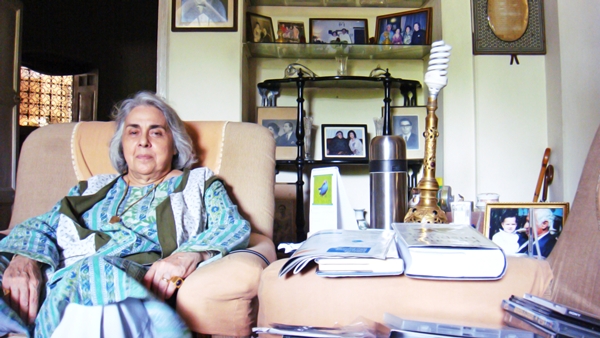
Sir Syed Ahmed Khan, the founder of Aligarh Muslim University (AMU) was Scheherazade Alim’s paternal great, great-grandfather. She spent her childhood in Aftab Manzil, named after her maternal great-grandfather Aftab Ahmed Khan, who built the house in 1904. Scheherazade Begum studied law at Oxford and became a barrister and has taught law at AMU. After two decades of living and working in Dubai, Scheherazade Begum and her husband Abdul Alim Khan returned to Aligarh and to Aftab Manzil in 1997, and have lived there since.
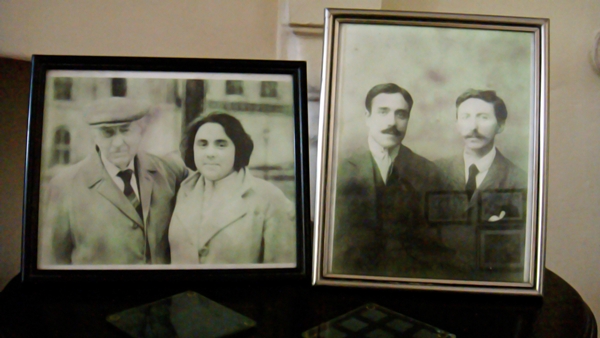
Aftab Manzil saw the comings and goings of influential men and women. One of them was E M Forster. Scheherazade Alim’s grandfather Sir Ross Masood was a close friend of the writer, who dedicated A Passage to India to him. Masood became the Vice Chancellor of AMU in 1929, a position he held for three years. The photograph on the right was taken in Italy in 1911. The photograph on the left shows Scheherazade Begum with Forster. It was taken in England in 1962. She herself cultivated a deep bond with the writer, calling him “Forster Chacha”.
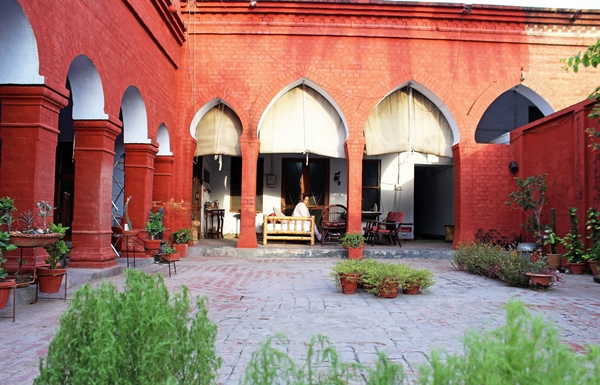
Aftab Manzil was built using bricks manufactured by Ford and MacDonald, the company responsible for supplying red bricks for the building of AMU. Other homes such as Habibullah Manzil were also constructed using surplus material from AMU. Courtyards like this, at Habibullah Manzil, are typical features in old homes. They are public spaces that allow family members to socialise, yet at the same time are private and separated from the outside world.
Professor Tariq Gilani, who lives in Habibullah Manzil, says that it is difficult to secure an old house, especially since there is no one, single uninterrupted wall, each room having several doors. David Lelyveld, in Aligarh’s First Generation, explains that this was the case “so that different sorts of people might come and go without crossing paths.” The architecture, therefore, reflected the norms of social interaction in the early 20th century.
These norms dictated that spaces within a household be separated on the basis of gender. Purdah was adhered to, especially among the elite. To enter the ladies’ quarter, or zenanah, male servants and visitors had to announce themselves first. In the case of Rahat Manzil’s haveli, non-related males would have entered through a zigzag corridor, preventing them from directly viewing the zenanah.
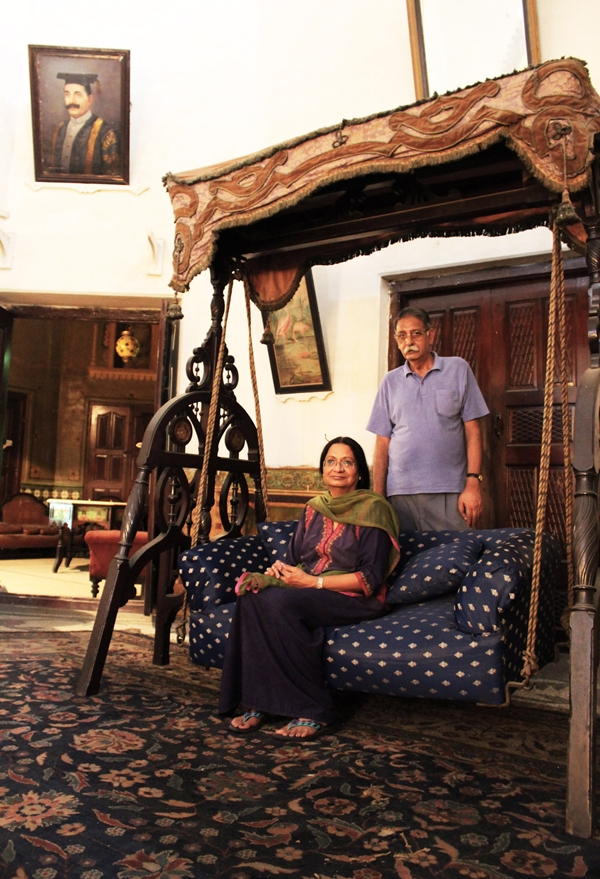
Farrukh Said Khan with his wife Faizana Said Khan in their formal living room in Rahat Manzil. Faizana Said Khan is the great, great-granddaughter of the Nawab of Jaipalguri. The swing is about ninety years old. The photograph of Ahmed Said Khan on the wall is from when he received an honorary doctorate from AMU. Farrukh Sahab recounts that his grandfather, Ahmed Said, was born in 1889. He was an orphan. His parents died in Saudi Arabia in the early 1890s. After the Sepoy Mutiny of 1857, Mahmud Ali was unwilling to stay under British rule. But when his son (Ahmed Said’s father) and daughter-in-law died, he had to return to take care of his grandson. Ahmed Said was eight years old when his grandfather passed away. He was sent to English House (AMU’s old guest house) by the British, who had taken control of Chhatari – Ahmed Said’s ancestral zamindari. When he turned 21, Ahmed Said was made the Nawab of Chhatari. He built Rahat Manzil in 1920 as a guesthouse to accommodate his family when they travelled to Aligarh from Chhatari.
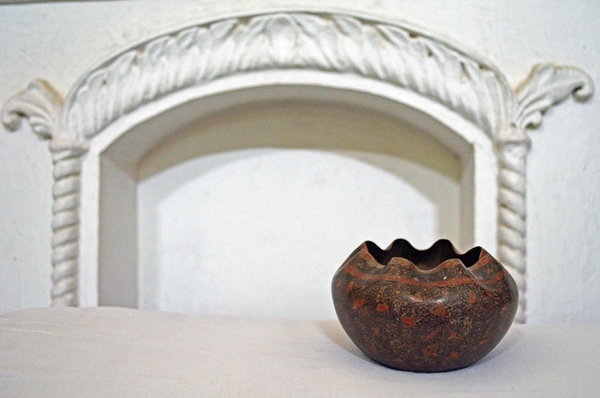
Raja Masudul Hasan, also known as the Raja of Asgharabad, supervised the building of Hasan Manzil. He was a keen collector, and according to Zafar Sahab (his son and current owner of Hasan Manzil), he bought this copper ashtray from Chinese traders who frequented Aligarh in the 1930s. He moved to Aligarh in 1925 from Asgharabad, where he was a zamindar, and died in 1954.
Over the years, the landscape of Aligarh has undergone dramatic changes. Where there were once independent bungalows and havelis surrounded by orchards, now stand three or four storey apartment buildings. Many more people have migrated to Aligarh in search of education or employment. This changed landscape, although inevitable and positive in some ways, has imposed stress upon those who live in old homes in Aligarh. Some are uncertain about what will happen to their homes after they are gone. Will their children come back and take charge of things or will their homes, like many others, be broken down and apartment buildings erected in their place?
People have coped with these challenges in different ways. Ibne Said Khan has transformed Rahat Manzil’s formal dining room into a museum dedicated to the life and career of his father, statesman Ahmed Said Khan. He says that one winter evening, after his father’s death in 1982, he saw that his servant was bringing bundles of old paper to feed the angethi (brazier). He asked the servant where he was getting these papers and discovered stacks of old documents and photographs in the storage area. He rescued these and set to work, chronologically organising documents and photographs that captured the breadth of his father’s work. With more than a hundred photographs and documents mounted in the main dining area, Ibne Sahab says that there are still many photographs and documents to be sorted and incorporated into this museum.
The Sherwanis of Muzammil Manzil have renovated a section of their house and transformed it into a school, which they run. Blossoms started in 2001 in a rented house and later shifted to Muzammil Manzil. What was once an aangan (courtyard) is now a school playground. The school has over 800 students.
The Sherwanis also maintain a library in one section of their house named after Syed Sherwani’s grandfather and the original owner of Muzammil Manzil – Nawab Muzammil Ullah Khan. The library started with 500 books but Sherwani Sahab’s father, Rahmatullah Khan Sherwani, expanded it over four decades. It now holds 16,000 books and 2400 rare manuscripts.
This door was hand painted by Rashid Sahab’s nephews. Like Zafar Sahab, Rashid Sahab says that the family has inculcated a sense of responsibility in the next generation to take care of Saman Zaar. For the future, he adds, “We should try to come back to this place and live together (as a family).”
~ Meher Ali is a freelance journalist from Aligarh. She is currently based in Ahmedabad.
source: http://www.himalmag.com / Himalmag, South Asia / Home> Culture> Photo Essay / by Meher Ali / December 19th, 2013
Popularly known as Frontier Gandhi, Badshah Khan, Bacha Khan and Fakhr-e-Afghan, his indomitable political spirit has found a place in all of his names.
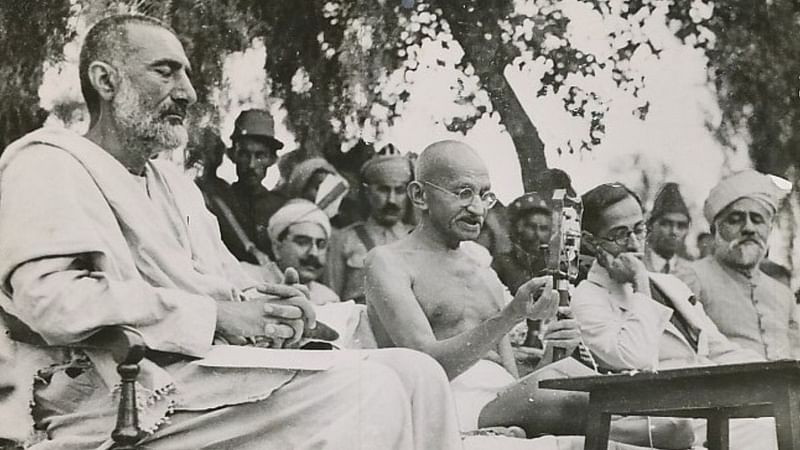
Khan Abdul Ghaffar Khan (L) with Gandhi at King Edward’s College, NWFP, in 1938 | Wikimedia commons
Buried under the historical violence of Pakistan’s tribal belt is a sliver of peace—and it is because of Khan Abdul Ghaffar Khan, a lifelong pacifist who mobilised Pathans against British colonialists in India. Popularly known as ‘Frontier Gandhi’, Badshah Khan, Bacha Khan and Fakhr-e-Afghan, his indomitable political spirit has found a place in all of his names, a reminder of peace, secularism and unity even 35 years after his death in January 1988.
Born into a wealthy Sunni Pashtun family in Pakistan’s Utmanzai in 1890, Khan hailed from the landowning Mohammadzai clan. He devoted his life and resources to upending poverty and promoting education and Hindu-Muslim harmony. But his biggest contribution to the Indian subcontinent, perhaps, came with the ‘Khudai Khidmatgar’, or Servants of God, movement in 1929—the beginning of mass mobilisation against an exploitative British Raj.
Khan’s innate ability to unite the masses non-violently turned him into a ‘powerhouse Muslim leader’ from the erstwhile North West Frontier Province (NWFP). Crackdowns, custodial violence and imprisonment only hardened his anti-colonial stance, laying the foundations for a spiritual resilience which is talked about to this day.
“It is my inmost conviction that Islam is amal, yakeen, muhabat – selfless service, faith, and love,” Khan had said. He had also urged Pathans to “arise and rebuild” their “fallen house.”
Powerhouse Pathan
While Khan’s life was fraught with hurdles and clashes with the colonial government, his political fervour refused to die. For instance, in 1921, he was asked to lead the Khilafat Committee in Peshawar as its president. During his tour of the province, he delivered speeches and emphasised the need to eliminate British imperialism in South Asia. He was subsequently jailed and tortured by the British for three years.
“When Abdul Ghaffar came out of jail in 1924, he was frail and worn-out in body, but his spirit was unvanquished. His blue eyes were proud of their suffering, determined and cold. The Pathans looked at Abdul Ghaffar with admiration; they had found their leader, thanks to the British,” writes documentary filmmaker Dinanath Gopal Tendulkar, in his book Abdul Ghaffar Khan: Faith is a Battle.
Khan led the Khudai Khidmatgar movement with the call to lay down arms and use civil resistance to challenge British rule. This massive movement involved 100,000 Pathans who took an oath to join the movement: “Since God needs no service, I promise to serve humanity in the name of God. I promise to refrain from violence and from taking revenge. I promise to forgive those who oppress me or treat me with cruelty. I promise to devote at least two hours a day to social work.”
Within a short time, they established a network in the province, particularly in neglected rural areas.
The leaders of the Khudai Khidmatgar movement put great emphasis on discipline. The volunteers were organised and drilled in a military fashion, given the ranks of generals, colonels, captains, etc. They even wore identical shirts in shades of brown or dark red. This move invited extensive propaganda from the British Indian government, which equated Khidmatgars to the Bolsheviks. But Khan never left his non-violent ideals.
“There is nothing surprising in a Muslim or a Pathan like me subscribing to the creed of non-violence. It is not a new creed,” Khan had once declared, as per his biographer Eknath Easwaran.
Friendship with Gandhi, relationship with Congress
Khan is also often remembered in history for his curious and close friendship with M.K. Gandhi. The link that connected the two has its roots in the 1919 Rowlatt Act. Khan stood up against the Act—which promoted indefinite imprisonment without a trial—and mobilised 50,000 people in Utmanzai to raise their voices in protest.
Scholars have differentiated how Khan and Gandhi approached their respective philosophies of non-violence. In popular discourse, it is often portrayed that Gandhi heavily inspired Khan’s ideals of non-violence. But J.S. Bright, a biographer of Khan, thinks differently.
Bright also said that in Gandhi’s case, his ideals received more publicity and that he should be called “Indian Khan” instead.
Khan never supported Partition
In December 1929, Ghaffar Khan and other prominent members of the Khudai Khidmatgar attended the Lahore Session of the Indian National Congress to raise awareness of the volatile situation in the NWFP.
Impressed with the Congress’s support, Khan endorsed the party’s programme of complete independence and non-payment of taxes and revenues.
But when it came to the issue of Partition, Khan felt “betrayed” by the Congress Working Committee. Owing to the violence and realpolitik, most Congress leaders agreed to the Partition plan laid out by British viceroy Louis Mountbatten, with the Congress Working Committee overwhelmingly ratifying it. Only four leaders held out – Gandhi, Khan, Ram Manohar Lohia and Jayaprakash Narayan.
“You have thrown us to the wolves,” Khan said in resentment, according to an article about his death published in Los Angeles Times.
The Pashtuns were only given the choice of going with India or Pakistan; independence was out of the question. Convinced that his participation in the decision-making referendum would lead to violence and bloodshed among Pathans, Khan and the Khudai Khidmatgars left the ball in the Muslim League’s court.
The NWFP eventually voted to join Pakistan, where Khan fought for a better deal for the frontier region and advocated for the province’s autonomy. For this, he spent years in prison.
After 17 years of isolation and imprisonment in Pakistan, Khan went on to live in Kabul in the mid-1970s.
He spent his last years in the Afghan city of Jalalabad, visiting India occasionally for medical treatment, mainly for arthritis. Khan died on 20 January 1988 of complications from a stroke while under house arrest in Peshawar and was laid to rest in Jalalabad.
(Edited by Zoya Bhatti)
source: http://www.theprint.in / The Print / Home> The Print Profile / by Shania Mathew / January 20th, 2023
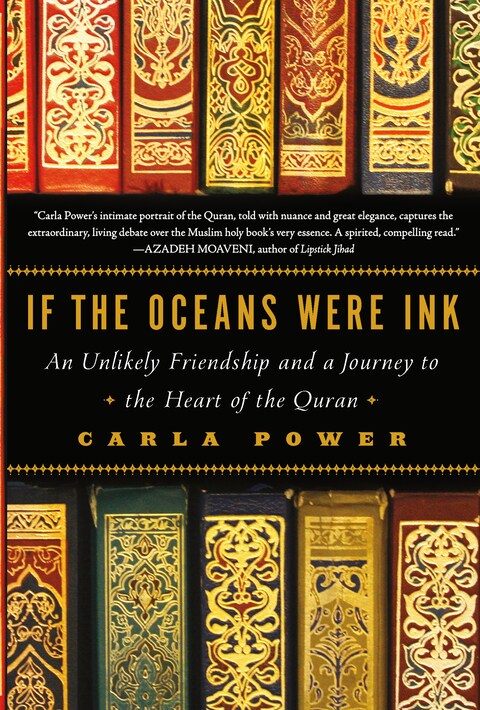
An Unlikely Friendship and a Journey to the Heart of the Quran
by Carla Power
Henry Holt. 336 pp. Paperback, $19
Since Sept. 11, 2001, popular media has tended to represent Islam as monolithic and menacing, a faith whose adherents spend their time plotting to murder infidels, oppress women and instill sharia law in Western democracies. While the actions of groups like the Islamic State seem to confirm the worst stereotypes, the worldviews of extremists do not account for the belief systems of the majority of the world’s 1.6 billion Muslims, who are, by journalist Carla Power’s account, “people as diverse as Pathan tribals and Kansan surgeons.”
Weary of the stereotypes and “blithe generalizations about ‘the Islamic world’ and ‘the West,’ ” Power, who holds a degree in Middle East studies from Oxford and has worked as a foreign correspondent in Muslim countries, decided to strike back. “If the Oceans Were Ink” is a unique account of the Islamic faith that focuses on the perspective of Sheikh Mohammad Akram Nadwi, a scholar and imam whom Power has known for more than 20 years. It is an unusual book, simultaneously an exploration of faith and of Islam as it is lived by those who know it most intimately.
The journalist became acquainted with the imam in the 1990s, when both were conducting research on Islamic scholars and mystics at a think tank, the Oxford Centre for Islamic Studies. Their paths crossed during the intervening years, as Akram achieved renown as a religious scholar and Power established herself as a successful journalist. After years of reporting on strongmen, politics and identity in Muslim societies, Power decided that she wanted “to explore the beliefs behind that identity and to see how closely they matched my own.” She asked Akram if he would take her on as a student. Over the years, Power had developed great respect for his scholarship, particularly his extensive biographical dictionaries on early Islam’s female scholars, whose lives have almost disappeared from the scholarly record. Through this work, Akram hopes to remind Muslims of the importance of women’s education and contributions to society.
Power turns what could have been a dry account of a series of interviews into a vibrant tale of a friendship and of her search for meaning through the contemplation of another religious tradition. Above all, her goal is to gain a deeper understanding of the importance of the Koran, whose “limitless possibilities” are best represented in the words of the Sura that give her book its name: “If the oceans were ink, for (writing) the words of my Lord, the ocean would be exhausted, before the words of my Lord were exhausted.”
Akram and Power meet regularly at Akram’s office, at an Oxford coffee shop, and at the study groups and lectures he leads for the local community. She gets to know his family and his followers well, and is particularly impressed by a group of outspoken, educated Muslim women who debate Akram and even cause him to change his position on controversial issues. Inspired by their time together, Power writes that “studying with a man who saw everything from tea leaves to algebra as gifts from God, I was struck by a new seam of gratitude running through me. I’d emerge from a lesson not with faith, but with what I suppose a fashionable guru would call mindfulness.”
Power skillfully navigates multiple layers of cultural interpretation that make subjects such as veiling so controversial in the West. Akram explains to her that, in Islam, modest dress is not meant to make women invisible but rather allows them “to be present and visible, with the power of their bodies switched off.” However, geopolitics has added additional layers of complexity. From the time of Algerian colonialism until 21st-century Afghanistan, Western military occupation has often been linked to the unveiling of Muslim women. “In the months after the Taliban’s fall, the Western press would rush to capture women shedding their veils. It was as though this transition from burqaed lump to woman was a 21st-century Pygmalion myth: a breathing of life into Afghanistan’s people.”
In contrast to some of his students, Akram eschews politics. He urges his students to focus solely on taqwa, or God-consciousness. Throughout the book, Akram disdains the idea of Islam as a tool to reach political ends, believing that those Muslims with the goal of a state governed by sharia law have a “deep envy of the West’s power and geopolitical supremacy.” Not all of his students agree with him, especially those espousing the need to participate in the revolutions against dictatorships that have wracked the Middle East since 2011. Yet to Akram, the concerns of this world are insignificant compared with the importance of becoming close to the divine.
As Power wraps up her studies with the imam, she concludes that they share many values, including ethics, democracy, equality and human rights. She envies Akram the feeling that prayer “could feel like returning to ‘the arms of your mother, when you are a child.’ ” For Akram, she writes, “existence was a circle, with God at its end, beginning, and every point in between.” For the pious individual, life, from birth to death, is a cycle of return, with the words of God at the center. Yet although the year leaves her with an enhanced appreciation of the complexity of the Koran — even to call the Koran a book is to limit it; “it is a place to which the faithful return, again and again,” she writes — she is ultimately unable to embrace Akram’s sense of religious conviction.
“If the Oceans Were Ink” should be mandatory reading for the 52 percent of Americans who admit to not knowing enough about Muslims. Years of anti-Muslim rhetoric in the media are beginning to take a toll on Muslims in the United States. According to a 2011 poll by the Pew Research Center, 6 percent said they had been victimized by hate crimes in the preceding year. FBI statistics for reported hate crimes against Muslims are five times higher since 9/11. Most recently, the killing of three Muslim students in North Carolina, ostensibly over a parking dispute, has also been alleged to be a hate crime. A Zogby poll released by the Arab American Institute in 2014 showed that only 27 percent of Americans reported favorable opinions of Muslims, down eight points from a poll in 2010. Yet among those polled who reported knowing Muslims firsthand, favorability was 33 percent higher.
Akram, steeped in religion but also thoughtful and open to dialogue, emerges from these pages as a complex and likable man, and it is hard to imagine readers not being moved by Power’s humanistic, evenhanded portrayal of him. “If the Oceans Were Ink” is a welcome and nuanced look at Islam through the eyes of an individual who lives his faith with every breath. It goes a long way toward combating the dehumanizing stereotypes of Muslims that are all too common in the United States today.
By Rachel Newcomb / Rachel Newcomb is associate professor of anthropology at Rollins College, where she also directs the Program in Middle Eastern and North African Studies.
source: http://www.washingtonpost.com / Washington Post / Home> Opinion / by Rachel Newcomb / April 30th, 2015
Jamdahan Village (Jaunpur District), UTTAR PRADESH / London, U.K. :
Mohammad Akram Nadwi is a renowned Islamic scholar, theologian, author and professor of Arabic and Islamic studies. He is known for his extensive knowledge of the Quran, Hadith, and Islamic law, as well as his ability to convey complex concepts in a clear and accessible manner.
Early Life and Education
Mohammad Akram Nadwi was born in India in 1963. He comes from a family with a long tradition of Islamic scholarship, and from a young age, he showed a strong interest in Islamic studies. He began his formal education by studying the Quran and Hadith under the guidance of local scholars and his father.
In 1975, Nadwi traveled to the city of Lucknow, India to study at the famous Nadwatul Ulama, an Islamic university and seminary. He studied under some of the most renowned scholars of his time, including Maulana Abul Hasan Ali Nadwi and Maulana Sayyid Abul Hasan Ali Hasani. He earned a degree in Islamic studies and later completed his PhD in Islamic theology from the University of Lucknow. Thereafter he was sent to England as Abul Hasan Ali Nadwi’s representative, becoming a Research Fellow at the Oxford Centre for Islamic Studies.
Personal Life
Mohammad Akram Nadwi is married and has children. He is known for leading a simple and humble lifestyle, and is dedicated to spreading the teachings of Islam to as many people as possible.
Career
After completing his studies in India, Nadwi began teaching at various universities and Islamic institutions in the United Kingdom, including the Oxford Centre for Islamic Studies and the Markfield Institute of Higher Education. He has also taught at universities in India and the United States.
In addition to his academic work, Nadwi is also a respected speaker and lecturer. He has delivered speeches and lectures at various conferences and events around the world, and is known for his ability to convey complex Islamic concepts in a clear and accessible manner.
Muhammad Akram Nadwi is also a founder of Al-Salam Institute, UK where he also serves as a principal. The Institute is dedicated to the traditional Islamic sciences and provide a platform for the authentic Islamic scholarship to be studied and transmitted.
Books
Mohammad Akram Nadwi is a prolific author, who has written several books and articles on various Islamic topics. Some of his most notable works include:
“Al-Muhaddithat: The Women Scholars in Islam” – This is a 43-volume biographical dictionary of female scholars of Hadith, and is considered one of the most comprehensive works on the subject. It is the first book of its kind in the Muslim world, and provides valuable insight into the role of women in the study and transmission of Islamic knowledge.
Madrasah Life: A Student’s Day at Nadwat al-‘Ulamā’
Al-Fiqh Al-Islāmī According to the Hanafi Madhab Rites of Purification, Prayers and Funerals Vol 1
Abū Ḥanīfah His Life, Legal Method & Legacy
Shaykh ‘Abū al-Ḥasan ‘Alī Nadwī: His Life & Works
Ibn Ḥazm on the Lawfulness of Women Attending Prayers in the Mosque
Journey to Andalus – Translated and edited by Dr. Abu Zayd.
Lessons Learned: Treasures from Nadwah’s Sages
Remembering Beautiful Days In Jerusalem
Foundation To Ḥadīth Science: A Primer on Understanding & Studying Hadith – Translated and edited by Dr. Abu Zayd.
He is also the subject of the best-selling book: If the Oceans Were Ink: An Unlikely Friendship and a Journey to the Heart of the Qur’an (2015).
Overall, Mohammad Akram Nadwi is a respected and influential Islamic scholar, known for his extensive knowledge of the Quran, Hadith, and Islamic law, as well as his ability to convey complex concepts in a clear and accessible manner. His work has helped to promote understanding and harmony within the Muslim community, and his lectures and writings continue to inspire and guide people on their spiritual journey.
source: http://www.thecognate.com / The Cognate / Home> Famous Muslims / by The Cognate News Desk / January 12th, 2023
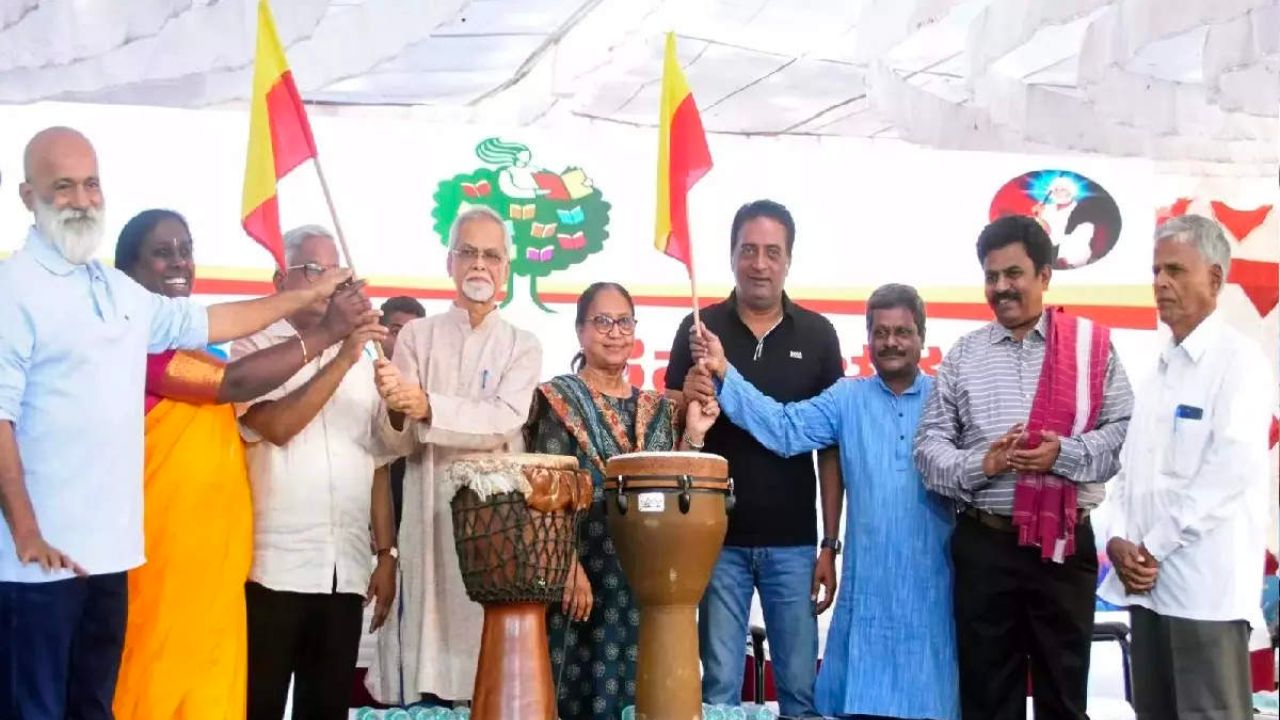
A parallel literary conference was held in Bengaluru on January 8, 2023, in response to the alleged exclusion of Muslim writers from the Kannada Sahitya Sammelana organised by the Kannada Sahitya Parishat, a non-profit organisation, funded by the Karnataka government.
Activists and writers in Karnataka expressed their disappointment at the lack of diversity at the Kannada Sahitya Sammelana, leading a group of them to organise a more inclusive event, the ‘Jana Sahitya Sammelana’. Banu Mushtaq and Dr. Mudnakudu Chinnaswamy were the chief guests at the Jana Sahitya Sammelana.
Dalit writer and Sahitya Akademi award winner Mudnakudu Chinnaswamy highlighted the threat of the imposition of Hindi on classical languages such as Tamil, Kannada, Telugu, and Odia. He also spoke about the attempts to erase Mahatma Gandhi’s legacy, and the exclusion of Muslims from every sphere of public life. “The exclusion of Muslim writers from the literary fest in Haveri was part of a wider agenda of pushing out Muslims from the mainstream,” he said.
Purushottama Bilimale, a prominent Kannada scholar, criticised Kannada writers and representative organisations for their lack of action in addressing the various crises facing the Kannada language and the state of Karnataka. Bilimale specifically mentioned the attacks on syncretic culture as a crisis that needs attention. He pointed out the lack of proper platforms for discussing these issues and expressed disappointment towards the Kannada Sahitya Sammelana for not addressing them. He suggests the organization of conventions like the Janasahitya Sammelana in various regions of the state of Karnataka to help address these issues.
The conference featured poetry, speeches, and panel discussions that focused on resistance and inclusion.
The Jana Sahitya Sammelana was put together by members of various organisations such as Samudaya, Democratic Youth Federation of India, AIDWA, Dalita Sangharsha Samiti, Ondede, Journalist Study Centre, and many others. Actors and activists like Prakash Raj and Dr. Akkai Padmashali were also present as guests and speakers at the conference. The conference was held at the Alumni Hall of the University of Visvesvaraya College of Engineering.
source: http://www.thecognate.com / The Cognate / Home> News / by The Cognate News Desk / January 12th, 2023
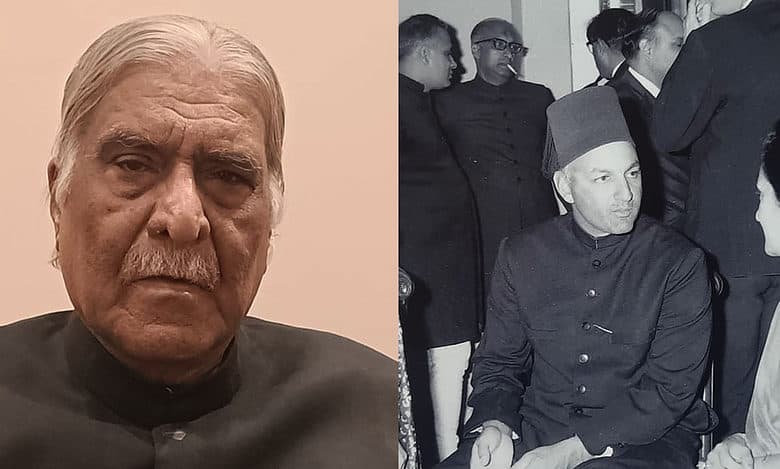
There might be numerous people grieving the passing away of Nawab Mir Barakat Ali Khan who is popularly known as Mukarram Jah Bahadur. But I know at least one person, Shahid Husain Zuberi who is weeping inconsolably since the news of the death of Prince Mukarram Jah hit him in the early hours of Sunday.
Jah had passed away at around 10-30 pm in Istanbul on Saturday night.
Royals usually have loyal followers. They incidentally also have more turncoats that change colours according to changing times. Shahid Hussain represents the first category with élan.
He left his formal association with the Prince in 1989 after serving him for 20 long years in various capacities. People close to Hussain said that he has been living off and on in a mood of melancholy since then. He remembers Jah.
That is true because when I phoned him on Sunday he said in a choked voice, “Ayoob Ali Khan Saheb, I have become a yateem (orphan) today.”
He added, “I would do anything for Sarkar anytime he asks me. I have always said this.”
His overwhelming attachment to the Prince is spread all over the pages of the Auraq e Maazi (Pages from the Past) which he wrote in Urdu and published in 2019. The book was released at the Salar Jung Museum Hall which was overflowing with people. He has almost finished working on the English version of this book which he plans to publish soon.
Shahid Hussain was only 23 (now he is 76) when he joined the service of Jah. Over the years, Jah noticing his dedication and work, began giving him more responsibilities and finally made him his GPA or General Power of Attorney.
Perhaps Hussain is the only person who has not made any money illegally while working with Jah.
Husain met Jah in 1961 when he was only 14. That was a brief encounter but it never left his memory. He never thought that he would be joining his service formally eight years later.
The last time Hussain met Jah was at the inaugural ceremony of the Falaknuma Palace Hotel. The palace is still the property of Jah that has been given on lease to the Taj Group of Hotels.
Jah loved Hyderabad because it was Hyderabad that had given him the lineage and the status. He treated his elders like Basalat Jah Bahadur and Hashim Jah Bahadur with respect they deserved as seniors in the family. He also cared about members of his entourage with care and affection. At the same time, he never allowed anybody to take liberties with him while in his presence. He maintained a dignified distance with all. That had put everybody his The passing away of Nawab Mir Osman Ali Khan in 1967, Hyderabad turned out to be a “massive problem” for him.The government would hunt and haunt him for taxes that he had never dreamt of and bother him for small things. He had to give away a large portion of the King Kothi Palace in lieu of the reported taxes to the government.
The government is now running a ramshackle hospital from there.
Besides the government numerous cases were filed against him by the members of the Nizam’s family and few others. Soon he realized that he has lost the ability to make a difference between a foe and a well-wisher within the family.
In spite of these difficulties, he managed to get his tax slate cleaned up by 1989.
Husain believes that Jah loved Hyderabad and its people. At one time when he was in Hyderabad communal riots broke out. Following that a delegation came to him for help for the affected Muslims. He told that delegation politely that Hindus and Muslims are equal in his eyes. If they are addressing to him as the Eighth Nizam, they should seek help for both affected parties. But if they wish to seek assistance only for the Muslims they should address him as Barakat Ali Khan, not the Nizam. The delegation went away disappointed.
The Prince moved to Australia within four years of becoming the Seventh Nizam. He had bought huge track of land there and became involved in sheep farming. He met Helen Simmons in Australia. He has a son with her who is variously called Azam Jah and Alexander Jah.
“I was not present in any of his weddings,” declares Husain.
Husain said that Jah took interest in the affairs of the city and established Princess Esra Hopital, Princess Durru Shehvar Hospital. He gave the land for these hospitals and also extended financial assistance.
There is also another college in the name of his daughter Shahkyar which is run by the Anwarul Uloom Educational Society.
Jah also gave away a portion of his land for the expansion of road near Makkah Masjid and Charminar.
Finally he established Mukarram Jah School in 1987 over eight acre land in Purani Haveli, the old quarters of Hyderabad. The school campus hosts five buildings with 15-18 classrooms each.
The school is run by Mukarram Jah Trust for Education and Learning. Faiz Khan, a member of the Paigah family, is an active member of its managing committee.
Husain left his job with the Prince in 1989. Husain had some difference of the opinion with the other associates of the Prince who wished to sell his properties.
Husain expressed deep feelings about the departed soul and believed that God would be granting him place in paradise.
source: http://www.siasat.com / The Siasat Daily / Home> Featured News / by Mir Ayoob Ali Khan / January 16th, 2023
She was one of the first girls in her community of Muslim families in Kasargod to be educated, graduating from a local Kannada school.
Renowned Kannada novelist, essayist, and translator Sara Abubakar.
Mangaluru :
Renowned Kannada novelist, essayist, and translator Sara Abubakar passed away on Tuesday. She was 86. She died around 1 pm at a private hospital due to illness.
Some of her noted works include Chandragiriya Theeradalli, Hottu Kanthuva Munna, and more. Her novels deal with trials and tribulations in Muslims’ lives as well as women’s empowerment.
Sara was born in a Malayalam-speaking family from Kasaragod to advocate P Ahmad and Zainabi on June 30, 1936. She was one of the first girls in her community of Muslim families in Kasargod to be educated, graduating from a local Kannada school.
She bid goodbye to her studies after her marriage with Abu Bakar, an engineer. But Sara was always interested in reading and addicted to the writings of Shivaram Karantaru, Inamdar, Bhairappa, Ananthamurthy and Vaikom Basheer.
Sara had once stated that her desire to pursue her education was constrained by community norms that restricted female access to higher education.
Her mortal remains will be kept for public viewing at her residence at Hathill in Mangaluru and final rites will be held at 8 pm today.
Many dignitaries have mourned the death of Sara Abubakar, including leader of the opposition party, Siddaramaiah who tweeted about the death of the veteran writer.
Sara has won several awards, including the Karnataka Sahitya Akademi award of honour, the Karnataka Rajyotsava award, and the Daana Chintamani Attimabbe award from the Karnataka Government.
She is survived by four sons and many relatives.
(With inputs from Online Desk)
source: http://www.newindianexpress.com / The New Indian Express / Home> States> Karnataka / by Divya Coutinho / Express News Service / January 10th, 2023
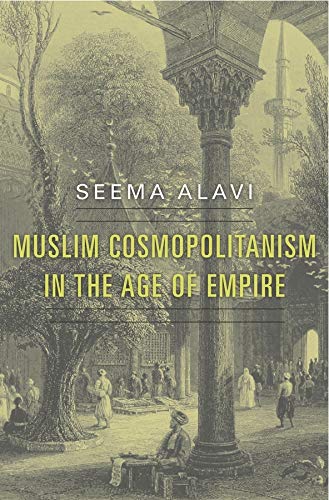
Seema Alavi’s narrative is about the little known stories of five Islamic men of learning who played key roles in the 1857 rebellion against the British, fled India and made their way to west Asia, notes Dr Asiya Alam.
Book: Muslim Cosmopolitanism in the Age of Empire Author: Seema Alavi Publisher: Harvard University Press Pages: 504 Price: Rs 495
In Muslim Cosmopolitanism in the Age of Empire, Seema Alavi makes an admirable and successful attempt to rethink some key assumptions of South Asian and global history. Specifically, the book inserts into history five important Muslim men of religion, including Sayyid Fadl, Rahmatullah Kairanwi, Haji Imdadullah Makki, Nawab Siddiq Hasan Khan and Maulana Jafer Thanesri, who were hounded by the British government for their role in 1857 and fled India to seek their fortunes in different cities of the Ottoman Empire.
Alavi’s broader aim is to challenge the paradigms of empire-based, global history. The “contours of global history need to be redrawn at the porous intersection of the British and Ottoman Empires” she argues. By focusing on Indian Muslims instead of Britons as key players, she offers new insights into the understanding of imperialism. Located at the cusp of British and Ottoman empires, these men became significant actors in trans-Asia politics of the 19th century involving the British, Arab polities, Ottomans and the Russian Empire.
Alavi skilfully demonstrates how Mughal pathways of trade and Sufi networks along with later British and Ottoman imperial connections and technological innovations in print, communications and shipping enabled these men to flee in the aftermath of 1857 and travel across the Indian Ocean.
To contextualise the lives of these five men, Alavi hypothesizes the emergence of a ‘Muslim cosmopolis’ in the 19th century, characterized by an intellectual sensibility as well as global networks that allowed these men to navigate imperial boundaries. The cosmopolitan sensibility constituted the eclecticism and compromised of Delhi Naqshbandi Sufi Shah Waliullah reflecting the social diversity of India; proficiency in Arabic, Persian and Urdu that aided these men to access both Indo-Persian society and Middle Eastern Arabic world; and support for Ottoman reforms that advocated ideas of science, reason and rationality. Alavi writes that the Muslim cosmopolis provided a ‘perfect global canvas’ for Ottoman Caliph Abd-al Hamid II to execute his reforms. Muslim emigres, in turn, brought back their cosmopolitanism to India, creating global interconnectedness between Middle-Eastern and South Asian societies.
Alavi also adds new discoveries to South Asian history. The multilingualism of these religious scholars isn’t accidental but an outcome of the Arabicist cultural and intellectual grid that emerged in South Asia in the late 18th and early 19th century. Exemplified by Shah Waliullah, Alavi argues it was based on compromise between the “more liberal Sufi saint Ibn-i Arabi and the conservative Naqshbandi Sufi sheikh Ahmad Sirhindi” which “produced an India-specific Arabic tradition with its stress on the individual, scriptures and social leveling” so that “religious knowledge was slowly disembodied from its hitherto inaccessible encasings: the person of the king, the body of the Sufi saint and single-copy Persian manuscripts”. Alavi attributes this gradual transition to the larger Mughal crisis, its disintegration in the late 18th century.
After laying out this rich, historical backdrop, Alavi foregrounds the individual, devoting a separate chapter to each of the five men, who have their own brand of Muslim cosmopolitanism. The life of Sayyid Fadl highlights the large presence of Arabs — immigrant and Deccan born — in Hyderabad, and signifies ethnic ambiguity and territorial connections of the ‘Indian Arab’, a category coined by the British. Rahmatullah Kairanwi’s life suggests a concern with cosmopolitan education. He started a madrasa in Mecca to combine religious and scientific learning offering a critique of the intellectual environment of the Hijaz that would later become a model for the Deoband seminary.
Haji Imdadullah Makki’s career suggests a vibrant culture of Muslim cosmopolitanism in Mecca, blending different Sufi orders, Naqshbandi reformism and a middle ground on religious issues. Nawab Siddiq Hasan Khan was based in Bhopal and his political career and publications indicate his use of imperial networks and print technologies to further his ideas and connections with the Ottoman world.
Finally, Maulana Jafer Thanesri’s writings highlight a notion of ‘mulk’ or ‘felt community’ and his ideas of ‘Hind’ produced a proto-nationalist critique of British discrimination. In each of these lives, Alavi questions a pan-Islamic approach and repeatedly shows that they weren’t only motivated by religion but operated within imperial rivalries and opportunistically pushed their careers, ambitions and desires.
This excellent book subverts dominant frameworks of our past and should be necessary reading for anyone interested in South Asian and global history.
(Dr Asiya Alam is an Islamic Studies scholar at Nirmala Niketan College.)
source: http://www.dnaindia.com / DNA / Home> Lifestyle / by Asiya Aslam / December 05th, 2017