Category Archives: Freedom Fighters (under research project)

Less known Muslim Women Freedom Fighters

INDIA :

Sultana Saleem was one of the officers of Azad Hind Fauj, or INA, of Subhas Chandra Bose.
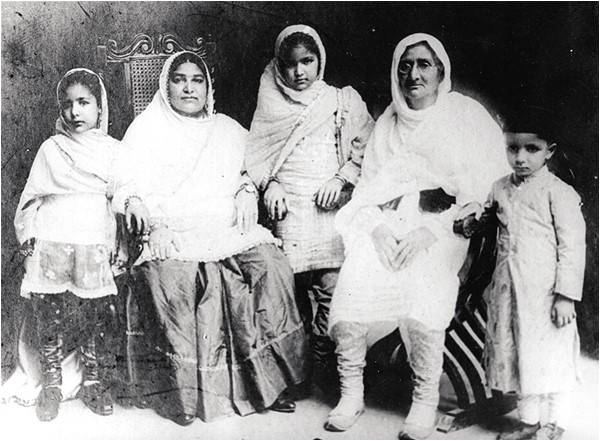
It is a concise compilation of a few of less known Muslim women who took part in the Indian Freedom Struggle. 

Begum Mahboob Fatima: On 13 April 1932, two women were arrested at Chandni Chowk in Delhi by the police for commemorating the anniversary of the massacre at Jallianwala Bagh. These two were Begum Mahboob Fatima and Satyawati. On 21 April 1932, Begum Mahboob was sentenced for six months of Rigorous Imprisonment and Rupees 50 of fine. With this she became the first Muslim woman to have been sentenced during the freedom struggle in Delhi.

Sultana Saleem: Sultana Saleem was one of the officers of Azad Hind Fauj, or INA, of Subhas Chandra Bose. Her husband Colonel Saleem, whom she met during the war, also served the INA and Sultana was an officer of Rani Jhansi Regiment. Sultana reached India as part of the first contingent of captured soldiers of Rani of Jhansi Regiment in February 1946. The Indian Express reported on 22 February 1946, “Mrs Sleem felt that there was only one country for her- Hindusthan – and only one nation – Hindustani. She did not believe in either communalism or provincialism. It was the oneness of India that appealed to her most. In East Asia, she said there was no consciousness at all of religious or provincial differences and no untouchability problem. She believed that if India had freedom her many problems could be solved without much difficulty.”

Asghuri Begum: In 1857, when somewhere else Rani of Jhansi and Begum Hazrat Mahal were fighting against the colonial army of the English East India Company, in Muzaffarnagar and Shamli, peasant women had organised themselves in armed bands. The leader was Asghuri Begum. The region had been liberated by the Indian revolutionaries where the women contingent was being led by Asghuri. When Major Sawyer conquered Thana Bhawan, a town in Shamli, in October 1857, Asghuri was also captured. British troops tied her to a pole at a public place and set fire to her alive. 

Nishat-un-Nisa: “I appeal to the youth of this country that they sit at the feet of this goddess (Nishat un Nisa Begum) to learn the lessons of independence and perseverance.” These were the words of famous Urdu poet Pandit Brij Narayan Chakbast. Nishat was the first Muslim woman to address a Congress Session and that too without a purdah. Hasrat Mohani, who coined Inquilab Zinadabad, was her husband. Nishat attended the public political meetings without her husband. She wrote articles, led delegations to Viceroy, participated in strikes and was the first woman to move a resolution for complete independence at a Congress session.

Saadat Bano: Saadat Bano whose husband Saifuddin Kitchlew is known as the hero of Jallianwala Bagh was a writer, poet and political activist much before her marriage. She wrote extensively for women rights, patriotism and education. It is a well known fact that people gathered at Jallianwala on 13 April 1919 to protest the arrest of Saifuddin but it is often overlooked that they came to listen to a public address by Saadat. Saifuddin was in jail but Saadat did not sit at home in those times. She used to address meetings, meet political leaders, attend Congress sessions, write in papers and take part in All India Women Conference activities. She was considered orator par excellence.

Amjadi Begum: How important a person would be if Gandhi himself wrote in one of his articles that this ‘brave woman’ led the ‘fundraising campaigns’ from the front ? Almost no history student in India knows Amjadi Begum. They know her as the wife of Maulana Muhammad Ali Jauhar. Gandhi in one of his articles wondered whether she could teach her husband the art of public oratory, where one impressed upon the hearts of the audience in a few words. She is believed to have single handedly led the fundraising campaigns and managed affairs of Jamia Millia Islamia when her husband was in prison.

Moondar:  Rani of Jhansi’s movement had an important Muslim woman, viz. Moondar. She was a close aide and assisted her during battles. Robert Hamilton, agent of Governor General to Central India, informed the British government on 30 October 1858, “Rani was riding a horse. There was another Muslim woman riding with her, who used to be her servant as well as companion since many years. Both fell down from the horse with the bullet wounds simultaneously.” Another British officer John Venables Sturt claimed that the body recovered by the British was not of Rani but Moondar’s. 

Nani Hakko: Nani Hakko was a jolaha (weaver) woman from Panipat who was impressed by Mahatma Gandhi’s idea of boycott and swadeshi. The she first heard him, Hakko started weaving her own shroud. She willed to be buried in a khadi shroud. When someone asked her what she was weaving, she would reply, ““I am weaving a kafan (shroud) for myself”. 

Hakko left this world only the day after completing this khaddar ka kafan. She asked people to bury her in this handwoven shroud (khaddar ka kafan) and boycotted the foreign made cloth even in her death. According to Khwaja Ahmad Abbas, she was the first person to have been buried in khaddar ka kafan as a result of Gandhi’s call to charkha. Khwaja wrote, “she was the first one to be buried in a khaddar ka kafan — a patriot unto death!”

source: http://www.heritagetimes.in / Heritage Times / Home / by Saquib Salim / March 08th, 2025
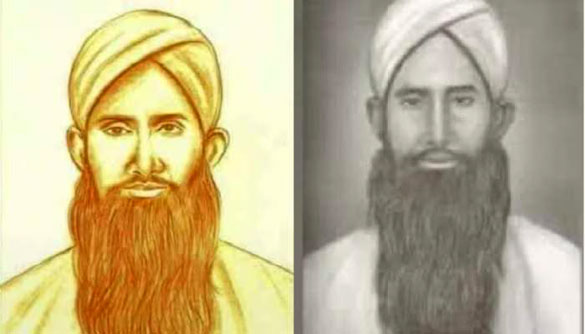
Maulvi Liaquat Ali Qadri (1817–1892): A Stalwart of India’s Freedom Struggle

Mehndauri Village (Chail Pargana, Allahabad District), UTTAR PRADESH :

Maulvi Liaquat Ali Qadri, a religious scholar, led the 1857 Allahabad rebellion, uniting communities against British oppression. Declaring jihad, he fought for India’s freedom, faced exile, and died in Kala Pani in 1892, leaving a lasting legacy.

Main Points:

1.    Maulvi Liaquat Ali Qadri (1817–1892), born in Allahabad, was a revered religious scholar and freedom fighter.

2.    He led the 1857 rebellion in Allahabad, uniting Hindus and Muslims against British rule.

3.    Declared jihad, organized public gatherings, and hoisted Bahadur Shah Zafar’s flag.

4.    Fought British oppression, faced exile, and continued guerrilla warfare.

5.    Sentenced to life in Kala Pani; died in 1892.

———-

Maulvi Liaquat Ali Qadri was born on October 15, 1817, in the village of Mehndauri, Chail Pargana, Allahabad district, to Syed Meer Ali and Aamna Bibi. He was a revered religious figure of his time, embodying the spirit of both spiritual and national liberation. During that era, Islamic scholars viewed the country’s independence and religious freedom as inseparable causes. This conviction led a significant number of religious scholars to participate in the Indian Rebellion of 1857, many of whom attained martyrdom in their fight for freedom.

Maulvi Liaquat Ali was a simple man deeply connected to the struggles of the common people in his region. He was acutely aware of the hardships faced by the masses under British colonial rule. Alongside his profound religious knowledge, he harbored an intense passion for liberating his country from the shackles of foreign oppression. Leading a life of piety and integrity, he consistently advised others to uphold honesty, empathy, and mutual support in times of distress. He considered it the duty of every Indian to strive for the nation’s independence.

The Rebellion in Allahabad

Following widespread looting and arson, Allahabad fell under the control of the rebel Indian forces. Maulvi Liaquat Ali, accompanied by a large number of his followers, threw himself into the struggle against British rule. Seizing the opportunity, he declared jihad against the British, galvanizing thousands to join the fight. Under his leadership, the people of Allahabad (now Prayagraj) united to drive the British out of the city. Maulvi Liaquat Ali delivered a powerful message of unity to both Hindus and Muslims from a public platform in Allahabad. In his sermon, he emphasized, “We are all one. Together, we must confront the foreigners.” With this spirit of unity, he proclaimed the establishment of an independent government in the region and hoisted the flag of Bahadur Shah Zafar, the last Mughal emperor.

The British were not only plundering India’s wealth but also subjecting its people to relentless oppression. Beyond economic exploitation, Christian missionaries, backed by colonial authorities, were attacking India’s religious traditions and sacred texts. They propagated Christianity while attempting to demean Hindu and Muslim scriptures.

Unable to tolerate these affronts, Maulvi Liaquat Ali organized a massive public gathering on June 7, 1857, at Khusro Bagh in Allahabad. The event drew a large number of patriotic Hindus and Muslims. In a fiery speech, he condemned the British for their atrocities, including looting, arson, and desecration of holy texts. Declaring that such oppressors could not be tolerated, he called for jihad against the “sinners.” His impassioned address stirred the hearts of the audience, who were already exasperated by the British’s sacrilegious actions.

Under his leadership, a week-long uprising against the British began on June 9, 1857. Rebels set fire to British bungalows, inflicted casualties, and damaged government property. The widespread unrest created panic among the colonial authorities. However, the British retaliated with heavy shelling and arson, driven by a desire for vengeance. Entire settlements were razed, forcing residents to flee their homes. Maulvi Liaquat Ali, too, was compelled to leave Allahabad and sought refuge in Kanpur.

A Champion of Communal Harmony

Maulvi Liaquat Ali was a firm advocate of Hindu-Muslim unity and cooperation, despite his opposition to Christian missionaries, whose actions, fuelled by colonial arrogance, insulted Indian religions and scriptures. He was among the few leaders who demonstrated through their revolutionary actions that they were fully aware of the socio-political realities of their time. The British, he believed, were not only exploiting India’s resources but also undermining its social fabric. He tirelessly worked to counter their divisive tactics, raising his voice for the dignity of women, religious communities, and the upper classes, earning widespread admiration for his efforts.

Despite his religious persona, Maulvi Liaquat Ali was always ready to take risks for the sake of his country and faith. He never feared for his life or shied away from potential losses. His revolutionary activities were driven by a singular goal: to free India from British rule and rid the sacred land of their oppressive presence. When a Muslim shrine, Bakhtiar Bakhtiyar, and the Telegraph Band were seized by the British, Muslim youths fought to protect them, resulting in losses on both sides. Clashes between Indian rebels and British forces continued across various regions, making it increasingly difficult for the British to maintain their grip on India.

A Lifelong Struggle for Freedom

Maulvi Liaquat Ali swore to dedicate his life to the cause of India’s independence. After leaving Allahabad, he moved to Muzaffarnagar, a stronghold of the freedom struggle, where he joined other revolutionaries. His authority was such that no orders were issued without his approval. Whenever British forces attempted to suppress the rebellion, Maulvi Liaquat Ali, alongside another freedom fighter, Azimullah, embarked on a perilous journey on foot toward Gujarat. Despite facing numerous hardships along the way, they reached their destination and launched guerrilla warfare against the British. For years, their tactics kept the colonial administration on edge.

According to Rakesh Verma, technical assistant at the Regional Archives, “Administrative records written in Urdu titled Naksha Bagiyan Kotwali Allahabad, listing police constables who forcibly took their salaries for May and June 1857 and participated in the revolt, including Hanuman Prasad, Imdad Ali, Ashraf Ali, etc. were hung by Major Henry Court on July 14, 1857,” (From the HT)

The British resorted to various conspiracies to capture him, but Maulvi Liaquat Ali’s stature among freedom fighters only grew. He continued to plan large- and small-scale operations against the British, opening new fronts in the fight for independence.

Imprisonment and Legacy

Ultimately, the Allahabad court sentenced Maulvi Liaquat Ali to life imprisonment in the Andaman Islands, infamously known as “Kala Pani.” Enduring the harsh conditions of imprisonment, this brave son of India passed away on May 17, 1892, bidding farewell to his beloved homeland and the world.

Maulvi Liaquat Ali Qadri’s sacrifices for India’s freedom struggle remain an enduring legacy. His contributions must be remembered and celebrated as an inspiration for future generations, reflecting the indomitable spirit of a man who fought tirelessly for his country’s liberation.

References:

https://www.hindustantimes.com/cities/others/maulvi-liaquat-ali-to-mass-killings-hanging-of-cops-1857-revolt-in-allahabad-101749063190844.html

Bhatnagar, A. P. (2009). Maulvi Liaqat Ali: Icon of 1857 uprising at Allahabad. Shubhi Publications.

https://timesofindia.indiatimes.com/india/unsung-heroes-of-the-freedom-struggle-maulvi-liaqat-ali/articleshow/93492245.cms

Khan, K. M. (2019). Jang-e Azadi aur Musalman. Pharos Media.

https://www.qaumiawaz.com/social/maulvi-liaquat-ali-the-pioneer-of-the-war-of-independence-special-offer-on-the-occasion-of-the-anniversary-shahid-siddiqui-ali

source: http://www.newageislam.com / New Age Islam / Home> Islamic Personalities / by Sahil Rizvi / August 05th, 2025

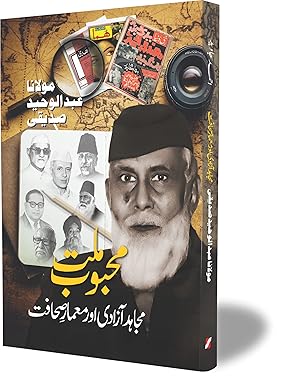
Maulana Abdul Waheed Siddiqui Mujahide-Azadi aur Meyma’re-Sahafat

DELHI :

The alternative historiography and discovery of real heroes of the society is always important in any age or any society.

The compilation and publication of “Maulana Abdul Waheed Siddiqui: Mujahide-Azadi Aur Meyma’re-Sahafat” is the result of this realisation.

The book and authors have tried to explore his personality and achievements in the broader context of history and developments of his times.

The contents of the book are documentary in nature.

The commentaries of Maulana Imdad Sabri are the personal observations and experiences of an eminent scholar and historian of Urdu journalism.

Similarly, the articles by Maulana Anzar Shah Kashmiri of Daryl Ulum Deoband, Mr. Parwana Rudaulavi , a senior journalist, Maulana S M Wali Rahmani, Dr. Khalique Anjum, Mr. G D Chandan, Mr. Shariful Hasan Naqvi, Sardar Rachpal Singh, Maulana A M Siddiqui Rahi, Ms. Surayya Siddiqui and Mr. Shahid Siddiqui are observations and experiences of those who saw and experienced him closely. These are also opinions of eminent critics and experts of language, literature, journalism, politics and history.

History and biographies open the windows of experiences and observations to human beings, and gives them the ability to discover themselves, understand their surroundings, see the impact of situations and events, look inside them and build future paths. History is the name of the waves and splashes of water in the river of time from which people emerge and nations are formed.

Maulana Abdul Waheed Siddiqui, the journalist and freedom fighter is a milestone, a bridge and a delicate and difficult chapter of modern Indian history, which holds many lessons, for present and future generations.

Maulana was a visionary, a man with deep roots in Muslim culture and religious ethos but with a very modern and enlightened outlook.

He laid the foundations of free press in post independence India. He gave the confidence to Indian Muslims to stand up and fight for their rights under the Constitution and not.

source: http://www.amazon.in

1965 War: A Tale of War and Three Brothers

Mangrol (Gandhinagar District), GUJARAT :

About 28 years ago, I learnt one of the most fascinating tales of what military rivalry between India and Pakistan has meant for some families.

At a dinner party in New Delhi, an elegant gentleman walked up to me and asked if I was serving in the Indian Army. My haircut perhaps gave this away, as I answered in the affirmative (I was then an instructor at the Indian Military Academy, Dehradun). When I enquired if he had any military connections, he replied ‘yes’; his two elder brothers had both been officers. To this, my natural response was, “What were their regiments?” He then said with a sad smile, “Let me tell you a story.”
 
And this was the story he narrated to me:

Several years earlier, he had run into the Pakistani military attaché, Brigadier Beg, in India at a circuit house (Dak Bungalow) while driving on the Delhi-Ahmedabad highway. Apparently the attaché had upset him earlier in the day with his lack of road manners, and when informed of the same, to make up, the Pakistani Brigadier invited him for a drink. During the course of their conversation, and on learning that his guest (the gentleman who was narrating the incident to me) was an Indian Muslim, the Pakistani Brigadier said to him that it was only in the 1965 war that he learnt that Muslim officers were also serving in the Indian Army.
 
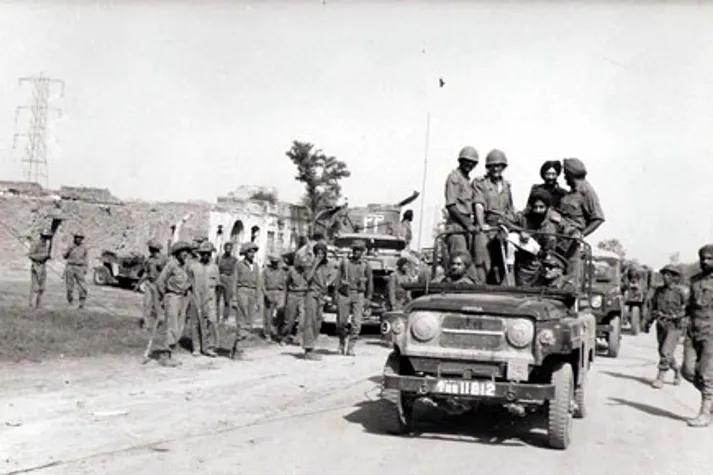
(The Indian Army’s armoured (tank) units had made substantial gains in fierce battles in the Sialkot sector of Pakistan’s Punjab. Many well known armoured regiments were part of India’s 1st Armoured Division’s thrust lines, such as Poona and Hodson’s Horse, 2nd Lancers, 3rd, 16 and 18 Cavalry. Many thought it was only a matter of time that Sialkot would fall to Indian troops, as Pakistan’s Armoured Division, despite its apparently superior tank units, was in retreat. Pakistan’s commanders desperately needed a tactical break to regain some of the momentum of battle.)
 
It was at this stage of the war—around 8 September 1965—that the Pakistani Brigadier, then a young Lieutenant, was summoned by his Brigadier Commander. He was asked plan and undertake a commando raid that would take him into Indian frontline positions around Sialkot. His task was to eliminate one or more Indian tank commander(s). This would leave that Indian unit briefly without a commander and give Pakistan that brief window of opportunity to break through India’s formidable frontline.
 
So this Pakistani officer (then a Lieutenant, now a Brigadier) set about preparing for the raid, to sneak in amongst Indian tanks, during darkness, and kill an Indian tank commander who was giving Pakistani troops a rough battle. So, on 8/9 September before dawn, Lieutenant Beg sneaked into his target area as Indian tanks were preparing for another day’s battle around Sialkot. (In those days, in the absence of night vision devices, tank battles were largely fought during day light). He soon identified a Squadron Commander’s tank, and climbed atop it unnoticed in the loud roar of tank engines as they were warming up for battle.
 
Peering inside the open cupola, he saw a Major in his radio headset who was poring over his maps, planning for another day’s battle. With no time to lose, Lieutenant Beg shot the Indian Major through the head. But before leaving the wounded Indian officer, Lieutenant Beg decided to take along some proof of having accomplished his mission. He quickly unbuttoned the shoulder flaps of  the Indian Major, and pulled out the cloth epaulets of his ranks from his shoulders. On this was also embroidered ‘16 CAV’, the title of his regiment. And in the breast pocket of the Major, he also found a holy pendant that some Muslims carry on them as a good luck charm. His job done, this young Lieutenant with his raid party then quickly crossed back over into the territory that Pakistani troops were still holding onto, before dawn broke.

Lieutenant Beg then immediately went to see his Brigade Commander, who had sent him on the raid. He met him in the early hours of the morning, where he proudly reported that he had accomplished his mission. His Brigade Commander asked him if he had any proof of it. The young Lieutenant pulled out the epaulettes of the rank badges of the Indian Army Major he had shot, and handed it over to his Brigade commander. Then he suddenly saw the Brigadier become tense. Lieutenant Beg said to the Brigadier that he had possibly killed an Indian Muslim officer, as he handed over the holy pendant he had recovered from the dead Major’s pocket. As an afterthought, he added that he was quite surprised that India’s army also had Muslim officers who were fighting with such commitment and valour against Pakistan.

At that point his Brigade Commander’s hands began to shake and he couldn’t control his emotions any more. His voice became heavy and his eyes filled with tears as he slumped into a chair. Lieutenant Beg asked the Brigadier, with due respect, what the problem was. In a voice choked with emotion, he replied: “Young man, I have just realised from the evidence you have provided that I had tasked you to kill my younger brother.” The Commander kept shaking his head and then went on to add, “I hadn’t the foggiest idea that it was the 16 Cavalry that was directly pitted against us, because Major MAR Sheikh, whom you have just killed, was my younger brother and one of its squadron commanders. And he was their only Muslim officer.” Lieutenant Beg could say little else, as he saluted and took his commander’s leave.

And when Lieutenant Beg finished telling this story to the man who had related it to me, this gentleman told the Pakistani officer, “Brigadier, it may surprise you to know that the two brothers you have spoken about were both older to me… I am the youngest of the three brothers.”

And as the Brigadier stared at him in disbelief, the narrator of this tale requested Brigadier Beg to visit his family home—which was only a few hour’s drive from where they were—to meet his aged mother, who had always wanted to meet someone who had fought against her son! When the Pakistani Brigadier met the old begum the next day (who didn’t know that her son had died of wounds inflicted by the Brigadier), she seemed pleased that the enemy thought well of him!

Records show that Major Sheikh died of wounds in his head sustained in battle near Sialkot on 10 September 1965. He was posthumously awarded the gallantry award of a Vir Chakra. His brother, the Brigadier, rose on to become a General in Pakistan.

source: http://www.openthemagazine.com / Open / Home> Web Exclusive / by Maroof Raza / August 27th, 2015

‘The Last of the Just’: Remembering Vakkom Majeed Through ‘Les Misérables’

KERALA :

Let us not forget him in a hurry. Let us not reduce him to a paragraph in history books. Instead, let us pass on his memory like a worn volume of Pavangal, read and reread, loved and lived, whispered from one generation to the next.

Vakkom Majeed (1909-2000). Photo: From KM Seethi’s archive.

Vakkom Majeed passed away on July 10, 2000.

“He never went out without a book under his arm, and he often came back with two.” 

— Victor Hugo, Les Misérables

In the long and rolling corridors of memory, some lives stay like verses, opening out slowly, sentence by sentence, chapter by chapter, never quite closing. Vakkom Majeed’s was one such life. A life commemorated not only by its fearless engagement with history, but by its quiet, intense companionship with books. On the 25th anniversary of his passing, as we also mark the 100th year of Pavangal, the Malayalam translation of Victor Hugo’s Les Miserables , it feels almost providential to recall him through the pages he so often inhabited.

Majeed Sahib, as many called him with reverence, moved with a book always kept under his arm, a bulwark against ignorance, a lamp in times of doubt. And among the many volumes he read and reread, Pavangal held a sacred space. Nalapat Narayana Menon’s 1925 translation of Hugo’s masterpiece was more than literature to him. It was revelation. He had devoured the original edition in his youth, and its characters never left him – Valjean’s anguish, Javert’s moral rigidity, the revolt in the streets of Paris, the quiet dignity of suffering souls. When he spoke of Pavangal, it was with a fervour one reserves for scripture. He did not read the novel, rather he lived it.

A.P. Udayabhanu, a veteran freedom fighter of Kerala, once described Majeed as a “moving encyclopaedia with at least one book in his hands.” But Majeed Sahib was more than a repository of knowledge. He was a seeker, a provocateur of conscience, a gentle fire that never flickered out. I have the sweetest of memories of my time spent with him, from childhood itself, I remember the rhythm of his voice as he discussed Bertrand Russell’s three-volume autobiography, Churchill’s sprawling accounts of World War II, or the 10-volume correspondence of Sardar Patel. There was never a trace of vanity in his learning. He read not to impress but to illuminate. And when he shared his readings – Azad’s Tarjuman al-Qur’an Muhammad Asad’s Road to Mecca, M. N. Roy’s The Historical Role of Islam, Arthur Koestler’s The Yogi and the Commissar, or Hugo’s Pavangal, like many – he spoke with the urgency of a man who felt truth must never be hoarded.

Born on December 20, 1909, in the storied Poonthran Vilakom family of Vakkom near Chirayinkil (Travancore), S. Abdul Majeed inherited a legacy of reform and resistance. His uncle, Vakkom Abdul Khader Moulavi, had already lit the flame of renaissance among Kerala Muslims. From his schooldays at St. Joseph’s High School, Anjengo, young Majeed was pulled into the vortex of reform movements and the call of the Indian freedom struggle. By the time the Quit India movement broke out, he was already a marked figure in Travancore, arrested, jailed, and later jailed again for resisting the plan of “Independent Travancore.”

But what set him apart – what made him more than just another freedom fighter – was the deep moral imagination that animated his politics. His understanding of rebellion was not ideological. It was profoundly ethical. Like Victor Hugo, he believed that human dignity must stand unshackled before the majesty of any state or creed. He condemned the ‘two-nation theory’ not because it was politically inconvenient but because it was morally vacuous. To him, the soul of India was plural, secular, and indivisible.

In 1948, he was elected unopposed to the Travancore-Cochin State Assembly from Attingal. But when his term ended in 1952, he walked away from practical politics, choosing instead the solitary path of reading, reflection, and moral clarity. While others sought power, Majeed Sahib sought wisdom. And in doing so, he became more relevant with age. Over the next decades, he would immerse himself in the philosophical and historical writings of Bertrand Russell, the radical humanism of M. N. Roy, and the emancipatory visions of Narayana Guru. He called for a “return of Ijtihad”, a freedom of thought within Islamic traditions, and dreamed of a society beyond caste and creed.

He never became rigid in doctrine. His politics was never a fixed ideology, but a conversation between ideas and reality. In our many conversations, I recall his thoughtful analysis of the Malabar Rebellion. He agreed with the thesis that it was fundamentally a revolt born of agrarian injustice but he was deeply saddened by its later communal turn. For him, the tragedy of history was when righteous anger was manipulated into sectarian hatred.

And always, there was a book in his hand. Always, a passage to quote. Always, a memory to share.

The last three decades of his life were his most contemplative. He reread the classics, interrogated nationalist histories, and engaged with young minds who came to him for guidance. To them, he gave not slogans but questions. When he spoke of Jean Valjean’s redemption, it was a commentary on our prison system. When he discussed Javert’s suicide, it became a parable about the dangers of legalism without compassion. When he recalled Fantine’s fall, it was a scathing critique of social hypocrisy.

He never forgot the moment when he visited the Indian National Army hero Vakkom Khader in the Madras Central Jail. It was Majeed Sahib who brought back Khader’s last letter to his father before his hanging, a task that broke his heart and steeled his resolve.

In 1972, when the nation celebrated the silver jubilee of independence, Majeed was awarded the Tamrapatra by Prime Minister Indira Gandhi. Later he was deeply perturbed by the excesses of Emergency. 

There was no trace of ceremony in his life. No pursuit of fame or favours. He lived in quiet dignity, read in solitude, and died in obscurity, on July 10, 2000. He left behind not an estate, not a political dynasty, but an idea of what it means to live ethically, read deeply, and act justly.

Today, as we remember him, the centenary of Pavangal seems to carry the tenor of prophecy. One hundred years since Jean Valjean entered Malayalam letters, and twenty-five since Vakkom Majeed left this world, the two seem braided, one fictional, one real, both intensely human. Majeed Sahib was Kerala’s own Valjean: hunted by regimes, misunderstood by many, but ultimately redeemed by the fire of truth and the grace of humility. 

Let us not forget him in a hurry. Let us not reduce him to a paragraph in history books. Instead, let us pass on his memory like a worn volume of Pavangal, read and reread, loved and lived, whispered from one generation to the next.

For in remembering Vakkom Majeed, we remember the best of what we once hoped to be.

K.M. Seethi is director, Inter University Centre for Social Science Research and Extension (IUCSSRE), Mahatma Gandhi University (MGU), Kerala, India. Seethi also served as Senior Professor of International Relations, Dean of Social Sciences at MGU and ICSSR Senior Fellow. 

source: http://www.thewire.in / The Wire / Home> History / by K.M. Seethi / July 11th, 2025

AMU VC releases Hindi translation of ‘Asbab-e-Baghawat-e-Hind’

Aligarh, UTTAR PRADESH :

pix: facebook.com/proamuofficial

Aligarh :

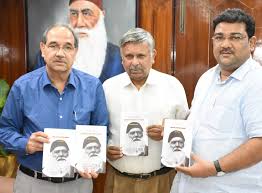
Aligarh Muslim University (AMU) Vice Chancellor, Professor Tariq Mansoor today released the Hindi translation of Sir Syed Ahmad Khan’s ‘Asbab-e-Baghawat-e-Hind’ along with a special reprint of the book in Urdu. The translation has been done by Dr Jasim Mohammad.

The book was released in the presence of Professor Shafey Kidwai (Member-in-Charge, Public Relations Office, AMU).

On the occasion, the Vice Chancellor said that Sir Syed Ahmad Khan took upon himself the challenge of educating the masses by pushing ahead common people towards over all development with the most modern and scientific education. He added that it is imperative that the teachings Sir Syed should reach all corners of world through translations in various languages.

Dr Jasim said that the idea behind the translation of ‘Asbab-e-Baghawat-e-Hind’ is to educate people on how Sir Syed with his nationalistic approach towards problems and controversies prevailing at that time took the unimaginable step of speaking against the British rule.

Dr Jasim has authored 26 books including ‘Sir Syed Ahmad Khan aur Aligarh Movement’, Aligarh Muslim University Minority Character: A Comprehensive Study’ and ‘Urdu Mass Media aur Rabta-e-Aama’. He regularly writes articles and opinion pieces in Hindi, Urdu and English languages for national dailies. Dr Jasim is also a recipient of Bharat Gaurav Samman, Acharya Hasthi Karuna Institutional Award and Rais Uddin Rais Award.

source: http://www.indiaeducationdiary.com / India Education Diary / Home> Academics> Competition> Edu Events> National News / by India Education Diary Bureau / pic: edited – facebook.com/proamuofficial / September 09th, 2017

Maruthanayagam, alias Yusuf Khan, who equalled Clive and Hyder Ali in warfare

Panniyur (Ramanathapuram District) / Madurai, TAMIL NADU :

He was a servant of the British East India Company and the Nawab of the Arcot before turning against them.

He started his military career as Yusuf Khan, a Muslim convert, and fought in the early wars between the English and the French for the possession of southern India. It was through a conspiracy that the British captured him.

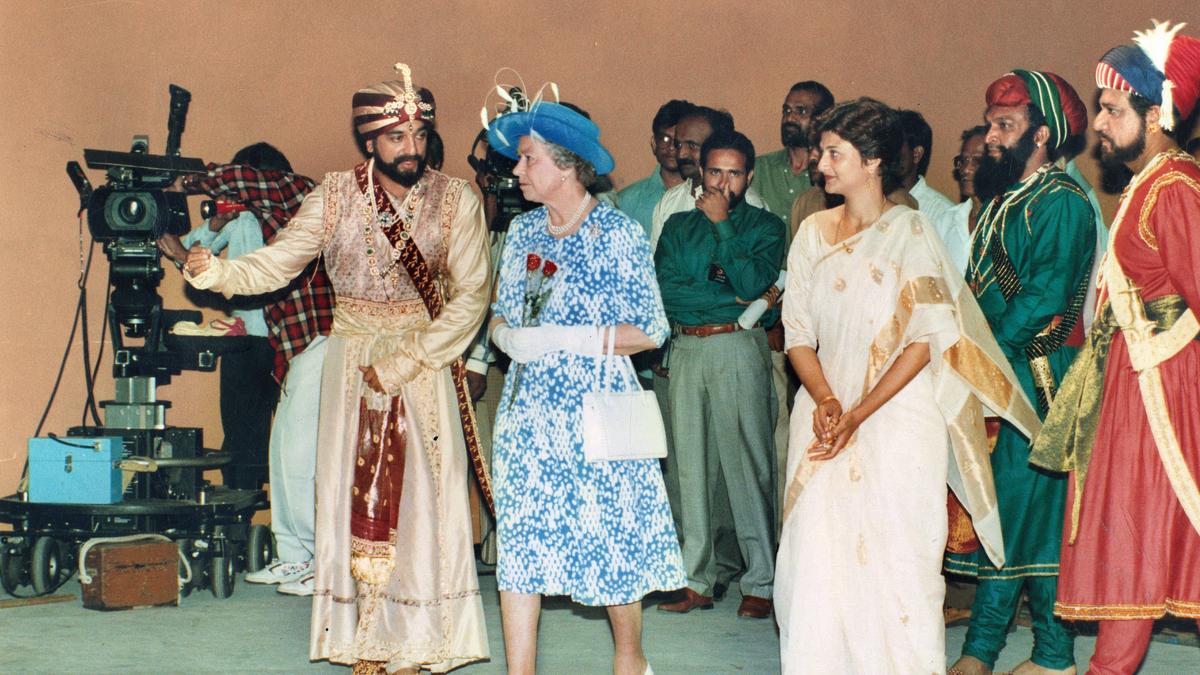
A surprise engagement: Kamal Haasan, director and actor of the film Marudhanayagam, explains a point to Queen Elizabeth on the sets on October 16, 1997. The Queen launched the shooting. | Photo Credit: THE HINDU ARCHIVES

Many were surprised when the visiting Queen Elizabeth launched actor Kamal Haasan’s dream film, Marudhanayagam, in 1997. It was a time when there was a demand for an apology for the Jallianwala Bagh massacre. But Maruthanayagam was a servant of the British East India Company and the Nawab of the Arcot before turning against them. It is a misnomer to call him Maruthanayagam as he built his military career as Yusuf Khan, a Muslim convert.

“Muhamed Yusuf — better known in his time as Yusuf Khan — was by far the ablest of the Indian soldiers who fought in the early wars between the English and the French for the possession of Southern India,” writes S.C. Hill, author of Yusuf Khan: The Rebel Commandant. Hill, an Indian Educational Service officer, was in charge of the records of the Government of India. Published in 1914, the book draws heavily on the Madras Records, the Orme Collection of Manuscripts in the India Office, The French and Dutch Archives, the Tamil poem, The War of the Khan Sahib, and documents at the British Museum.

A man of genius

“Yusuf Khan was, in fact, of the same type as Haidar Ali [Hyder Ali] — one of those men of genius who naturally comes to the front in times of great social and political unrest. Had he been left without outside interference to settle scores with his quarrel with his native suzerain, like Haidar Ali with the Raja of Mysore, there is absolutely no doubt that he would have succeeded in establishing his independence,” writes Hill. Historians depended on the memoirs of Ponnusami Tevan, manager of the Ramnad Zamindari, to trace the background of Maruthanayagam Pillai. The title, Pillai, became part of his name as he was born in the Vellala caste at Paniyur in Ramanathapuram district.

In his youth, he was wild and disobedient to his parents, and ran away to Pondicherry and served under a European for three years and a half. Then, he was dismissed for theft. According to the French account, his ears were cut off as a punishment. Hill, however, dismissed the accusation as groundless, saying it was never mentioned until after the death of Yusuf Khan and then only by those who, if not actually hostile, were certainly biased against him.

After leaving Pondicherry, he joined the army of the King of Thanjavur and subsequently Nawab Muhammed Ali of Arcot. According to another account, he joined another European, Brunton, after his dismissal. Brunton had him instructed in several languages. He entered the services of the British by joining a company of sepoys which he had raised himself in Nellore, under Robert Clive, shortly before the Battle of Kaveripakkam.

According to British officer Major-General Stringer Lawrence, Yusuf Khan was “brave and resolute but cool and sensible in action — in short, he is a born soldier and better of his colour I never saw in the country.”

Freed from trammels

It is not clear why he chose to become a Muslim, and Hill has a theory. Maruthanayagam Pillai wanted to avoid what befell Aryanatha Mudali, the great general of the 16th Century and founder of the Poligar (Palayakar) system in Madurai. J.H. Nelson, the author of The Madura Country Manual, says Aryanatha Mudali, despite being a great warrior and administrator, was dissuaded by his family from becoming the king because he was a Vellala. “For Yusuf Khan then to rise to the position to which he attained, it was necessary for him to be freed from whatever trammels might be imposed upon him by his religion. This was effected by conversion — voluntarily or by force is unknown — to Muhammadanism,” writes Hill. But the Nawab objected to the elevation of Yusuf Khan, though to a Muhammadan, the “lowly birth” was “no hindrance to his success”.

Appointed Governor

Yusuf Khan, however, was appointed a Governor by the British. He ensured peace in the provinces of Madurai and Tirunelveli, which belonged to the Nawab, but had been placed by him under the control of the Madras Council.

“The name of this hero, for such he was, occurs almost as often in the pages of the English historian (Robert Orme) as that of Lawrence of Clive,” Sir John Malcolm writes about Yusuf Khan, who later rebelled against the Nawab and declared his alliance to the French. This led to a war between Yusuf Khan and an alliance of the British and the Nawab, and the seizure of Madurai. The British captured Yusuf Khan through a conspiracy and one of the participants in the conspiracy was Srinivasa Rao, his diwan and chief adviser.

The British officer Marchand, who went with the conspirators, says he was seized in his darbar. But the Dutch account says the capture occurred in a private room. Bishop Caldwell, quoting a native account, says he was arrested at his prayers by Moossoo Marsan and his Hindu diwan Srinivasa Rao “He begged them to kill him there and then rather than deliver him to the Nawab. He was carried under guard to Marchand’s quarters,” says Hill.

On October 15, 1764, the Nawab wrote to Madras that the “Rebel was hung at five o’clock in the evening, which struck terror into the hearts of our enemies”. His body was dismembered. The head was sent to Tiruchi, the limbs were sent to Thanjavur, Palayamkottai, and Travancore. The trunk was buried at Sammatipuram, where the Khan Sahib’s ‘pallivasal’ still stands.

source: http://www.thehindu.com / The Hindu / Home> News> India> Tamil Nadu> In Focus / by B. Kolappan / August 09th, 2024

Tipu Sultan’s sons engineered the Vellore Mutiny

Srirangapatna (Mysore) KARNATAKA :

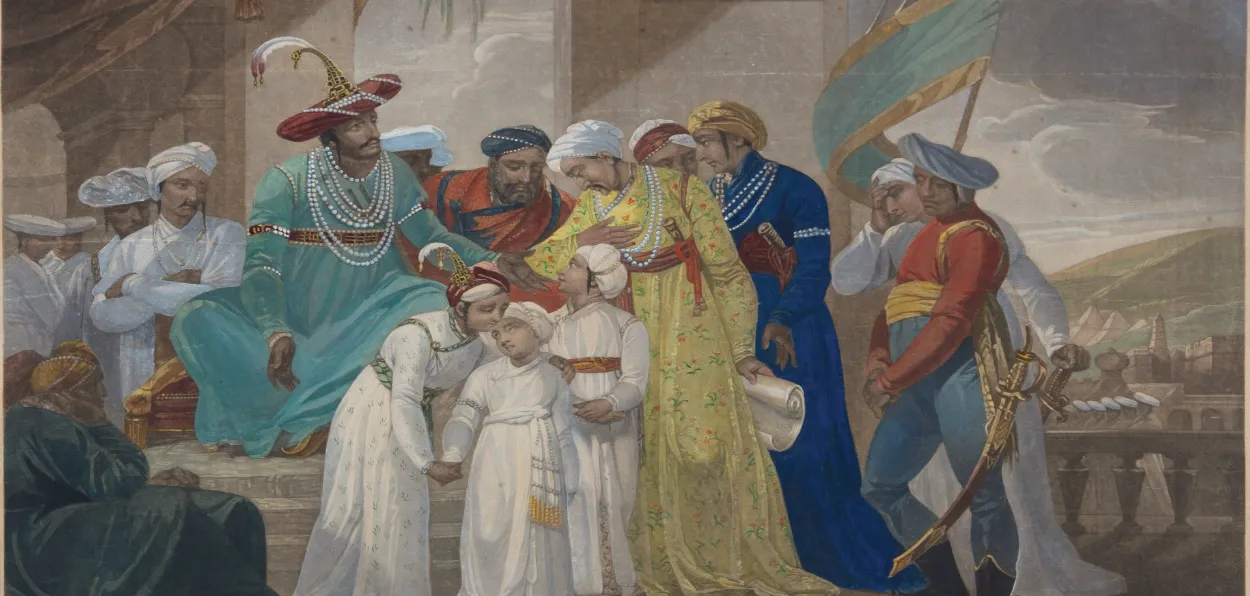
Tippoo Sultaun delivering to Gullum Alli Beg the Vakeel his sons who are taking leave of their brother previous to their departure from Seringapatam (1793) Painting by Henry Singleton

“The Christian drummers were seized, taken to the palace where Tippu’s sons were confined, and made to beat the “general” ; lights flashed in the palace, refreshments were brought out; a mob of sepoys called on the princes to place themselves at their head; Tippu’s own flag, green stripes on a red field, was nailed to the flagstaff. Prince Muizuddin (son of Tipu Sultan) ordered his horse to be saddled, and told off a party of sepoys to go and seize the principal hill fort; when that was captured and the dead body of Colonel Marriott, paymaster of stipends, brought before him, he promised he would mount his horse and ride through the native town proclaiming the restoration of the Mahommedan power.”

A Slice of History

This is the account by Colonel Alfred Keene of the night of 10 July 1806 at Vellore. The rising, popularly known as the Vellore mutiny, was a dress rehearsal of a sort of what would happen in May 1857 at Meerut.

Keene pointed out, “In the mutinies of Vellore and the greater one of 1857, two points of similarity stand out prominently. In each is the unreasoning fear of an attack on the institutions of religion and of caste; for the greased cartridges in the latter mutiny had as much to do with the outbreak as had the new head-dress in 1806, and the presence of the remnants of the Moghul Dynasty at Delhi acted in 1857 precisely as had the presence of Tippu’s family at Vellore in 1806.”

After the fall of Tipu Sultan in 1799, the English East India Company shifted his children to Vellore. In early 1806, the Commander-in-Chief ordered a new headgear and, the removal of beards, tilaks, earrings, or any mark of caste identity.

The Indian sepoys of the 2nd Battalion 4th regiment showed dissatisfaction in May 1806 and disobeyed the orders. These sepoys were tried in army court and 21 of them were found ‘guilty’. Of them, one Hindu leader and other Muslims were discharged from the duty and sentenced to receive 900 lashes each. The other 19 were not discharged but ordered  500 lashes each. The order was passed on 29 June and published to the army on 2 July 1806.

The wife of a serving English officer at Vellore, F. W. Blunt, wrote in a letter to her family in England, “Nine of the ringleaders, as they were called, were brought down to Madras and here passed publicly through the streets in irons, destined to receive the most dreadful military punishment…… The nine men in irons awaiting a most severe punishment was made use of by the sons of Tippoo, who have been kept prisoners in the Palace at Vellore since the taking of Seringapatam and served to ripen a design that had been long formed. A conspiracy was formed by the Sepoys to murder all the Europeans and take possession of that Fort.”

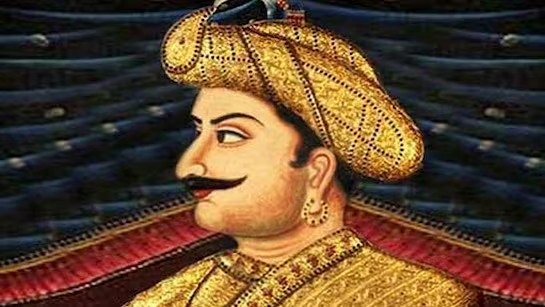
Tipu Sultan

On the night of 10 July 1806, Shaikh Kasim, a sepoy, led the English East India Company sepoys in starting a general massacre of the English troops.

Lt. Col. W. J. Wilson in ‘History of the Madras Army’ wrote, “The sepoys went away shortly afterward, and were heard to call out “Come out, Nawab, come out, Nawab, there is no fear.” This was supposed to be addressed to Futteh Hyder, the eldest of the four Mysore Princes.”

Of the 372 Englishmen present at Vellore, 128 were killed that night by the Indian sepoys. The English flag was replaced with the flag of Tipu Sultan, which was handed over by Moizuddin, the eldest son of Tipu. He was proclaimed the leader of the revolutionaries.

Though the immediate cause was the headgear and other orders, the revolt had been planned for a long time. Charles Macfarlane wrote, “The splendour which the sons of Tippoo were enabled, by the liberality of the Company, to keep up, attracted a continual influx of visitors, including all that came to Vellore from the countries which had once belonged to their father. Among these men were very many who had lost by the change which had taken place in Mysore, who hated the tranquillity which we had introduced into their country, and who longed for the old days of rapine and violence. It is believed that these desperadoes contributed to a regular conspiracy and facilitated the execution of the daring design.

It is said that the confederates intended that all who were brought to join in the insurrection should act upon a preconcerted plan, which had been digested and privately circulated by some of the turbulent Marawa chiefs; and that in connection with these desperadoes were some few Frenchmen, disguised as fakeers or dervishes, who went about the country inveighing everywhere against the English as robbers and tyrants. It is also stated that placards were fixed up within the mosques and Hindu temples, where Europeans never entered, to excite a general spirit of revolt among the whole native population of Madras.”

The English Government set up an enquiry commission headed by Major General Pater which submitted its report on 9 August 1806. The report said, “There are two principal causes which appear to us to have led to the mutiny. The late innovations in the dress and appearance of the sepoys, and the residence of the family of the late Tippoo Sultan at Vellore.”

Sir J. F. Cradock, the Commander-in-Chief, disagreed with these findings and argued in his submission that change in dress was a pretext and the real objective was to restore the rule of Tipu Sultan’s family. 

The Court of Directors after the investigation declared that the “immediate cause of the discontent among the sepoys was the introduction of certain innovations in their dress, which were offensive, and, as they held, degrading to them; and that the captive sons of the late Tippoo Sultan, with their adherents and abettors, took occasion, from the dissatisfaction of the sepoys, to instigate them to insurrection and revolt, with the view of effecting their liberation, and the restoration of the Mahomedan power.”

The mutiny was suppressed by noon on 10 July. Colonel Gillispie stationed at Arcot came to rescue the Englishmen at Vellore before 7 am. His forces, which also included Indian sepoys, killed more than 500 Indians in the fort within a few hours.

At least 15 English officers including, Colonel Fancourt, H.M.’s 34th regiment, commanding the garrison, Lieutenant-Colonel McKerras, Captain Willison and Lieutenants Winchip and Jolly of the 23rd, Captain Miller, Lieutenants O’Reilly, Smart, and Tichbourne of the 1st, and Lieutenants Eley and Popham of the 69th, Mr. Mann Deputy Commissary of Stores, Mr. Gill Conductor of Ordnance, Mr. Smith the Military Paymaster and Major Armstrong of the 16th N.I. were killed.

Among the captured sepoys, six were blown away with cannon guns, five were shot by firing squads, eight were hanged, and several others were transported for life. Out of the retainers of Mysore Princes, one was sentenced to death, two to transportation for life, one to imprisonment for life, and one to imprisonment for ten years. The sons of Tipu Sultan were sent to Kolkata with stricter vigilance.

Lord William Bentinck, Governor, and Sir J. F. Cradock, C-in-C, were removed from their respective offices by the Court of Directors.  

source: http://www.awazthevoice.in / Awaz, The Voice / Home> Stories / by Saquib Salim / July 10th, 2025

Zohra Ansari, the Freedom Fighter Who Taught Urdu to Mahatma Gandhi and Sold Her House to Fund Congress

Yusufpur (GhazipurDistrict), UTTAR PRADESH / NEW DELHI / London, U. K :

Begum Zohra Ansari sold away ‘Dar-us-Salam’ to raise party funds and worked for the victory of the candidates of the Indian National Congress and for the defeat of the candidates of the Muslim League, who wanted partition.

Begum Zohra Ansari, an activist of the Indian National Movement whom Mahatma Gandhi addressed as “Vasthad Bi, was born in Delhi. She was the adopted daughter of freedom fighters, Dr. Mukhtar Ahmed Ansari and Begum Shamsunnisa Ansari.

Besides playing an important role in the National Movement, her parents provided hospitality to leaders and a cadre of the Indian National Movement and scholars and people of repute in different walks of life in their residence ‘Dar-us-Salam’.  It was very spacious like a royal palace.

While Begum Shamshunnisa Ansari was busy in these responsibilities, Zohra helped her. Thus she had an opportunity to see from close-quarters leaders such as Mahatma Gandhi, Pandit Motilal Nehru, and the Ali Brothers and to serve them. Right from childhood she evinced interest in literature, history, and social sciences. She also gained proficiency in Urdu, Arabic, Persian, and Hindi.

Zohra Ansari and Mahatma Gandhi

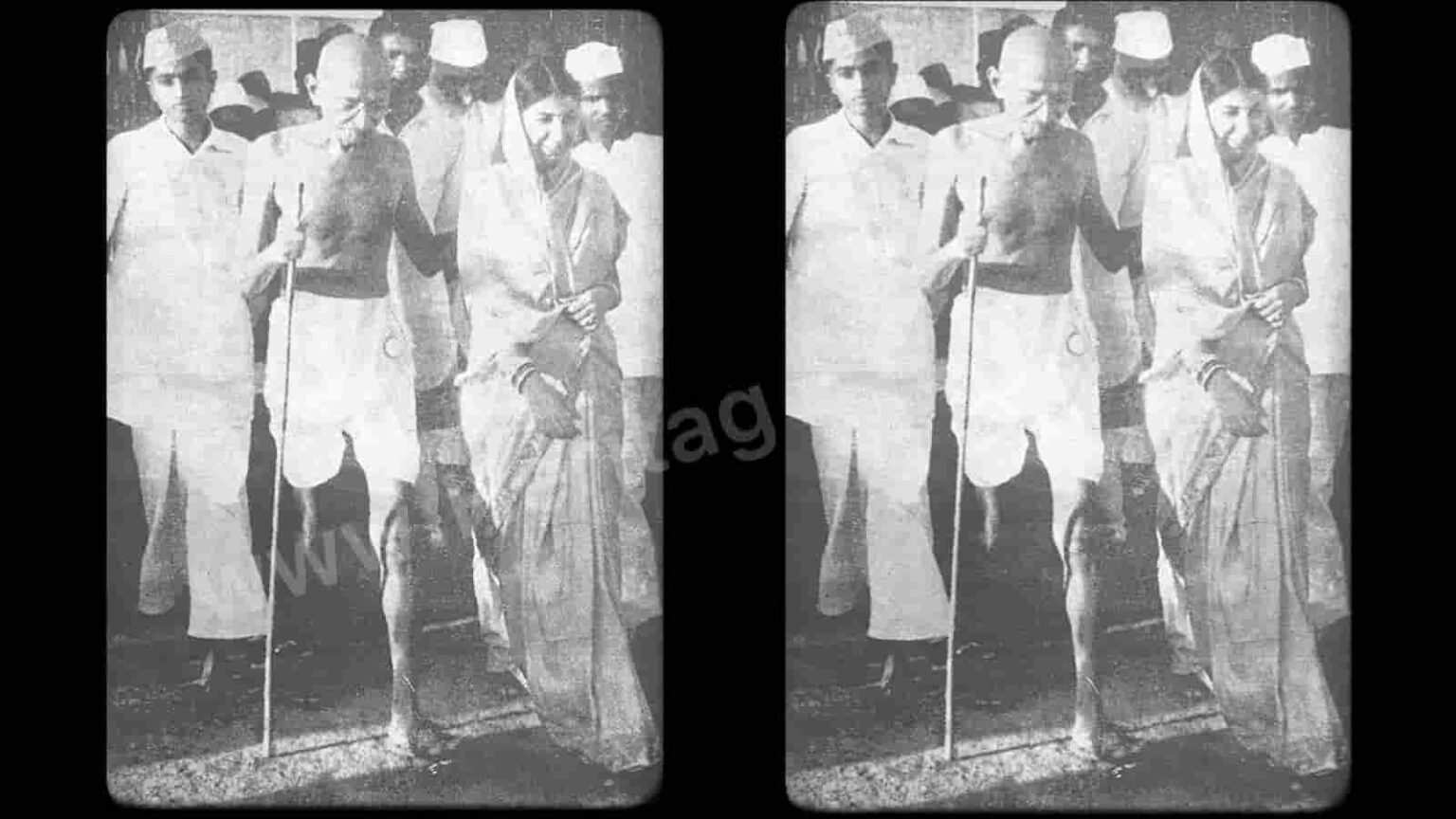
Zohra Ansari rendered her services in Wardha Ashram for a long time. Mahatma Gandhi came to know about her command over Urdu and started learning the language from her. He used to address her in his letters as ‘Vastad Bi’ and ‘Beti.

Zohra Ansari and Mahatma Gandhi used to have regular correspondence on various issues. In his letter dated 22 December 1932 to Dr Ansari, Gandhiji remarked that he used to look forward to Zohra’s letter every week. When Zohra expressed her desire to go to jail as a part of the National Movement, like her parents, Gandhiji asked her to wait and promised to allow her to go to jail.

Begum Zohra Ansari married Dr Shaukatulla Shah Ansari (1908-1972) who was her relative and leader of the Indian National Movement. Begum Zohra Ansari lost her father in 1936 and mother in 1938. She took an active part in the Freedom Struggle along with her husband. Both wife and husband opposed the partition of India.

She sold away ‘Dar-us-Salam’ to raise party funds and worked for the victory of the candidates of the Indian National Congress and for the defeat of the candidates of the Muslim League, who wanted partition. Post Independence, Begum Zohra Ansari led a simple life and passed away on 28 July 1988 in England.

source: http://www.heritagetimes.in / Heritage Times / Home / by Syed Naseer Ahamed / December 12th, 2023

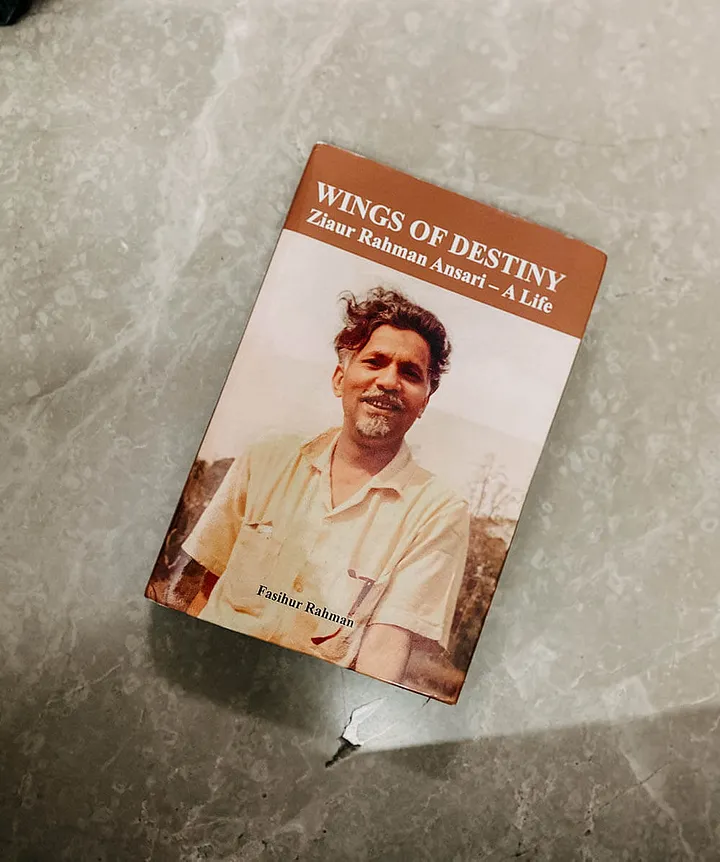
Book Review of ‘Wings of Destiny — Ziaur Rahman Ansari — A life’ by Fasihur Rahman

UTTAR PRADESH / NEW DELHI :

Ziaur Ansari was a prominent political figure, having served as the Union minister in the council of 2 Prime ministers Indira and Rajiv Gandhi. Wings of Destiny written by his son Fasihur Rahman is an ode to his entire political career spanning more than three decades and highlights the stalwart’s remarkable, inspirational life as well as clears the air around the controversies surrounding him.

When the truth stands coy in a corner, visible and yet under the pretence of being unknown and unacknowledged, you know that something somewhere is unfair.

Indeed, many times in life, there comes a threshold where one needs to understand and realize that truth which is the most supreme of all, can be an eye opener, as well as a beautiful and also a terrible thing, many a time. Terrible because there may be more to the situation than what meets the eye.

Yes, we all know and have read about the countless hardships that all of us underwent during the Indian freedom struggle. But, surely not all has come to light as far as the involvement of all parties, be it left or right is concerned. Yes, Muslims too were an integral part of the struggle towards Independence, their contribution being extremely indispensable. A prominent figure among them is Ziaur Rahman Ansari who served as Union minister from 1973 to 1977 and from 1980 to 1989 during the council of two Prime Ministers -Indira Gandhi and Rajiv Gandhi, this book which is written by his nephew Fasihur Rahman is a memoir cum biographical sketch of Ziaur Ansari’s life.

Ziaur Ansari was primarily in the spotlight in the year 1985, when he participated in a debate on a private Member Bill related to the SC judgement on the Shah Bano case, which to date remains one of the most debated issues in India as well as abroad. Having been often misquoted, misinterpreted and improperly perceived, Fasihur has taken it upon himself to finally take the opportunity to tell the world the true story behind Ziaur’s life.

The book which began with giving an ancestral account of Ansari primarily spoke about his father Habibur Rahman Ansari’s invaluable contribution to the freedom movement. What followed was the journey through Ziaur Rahman’s pursuit of politics which was turbulent and spanned a period of almost three decades, showing how he contested 9 elections.

Ziaur, not only being a man of strong ethics and politics, nevertheless was a man with a passion for fine arts, poetry, literature and music too. Ziaur was also inspired by Abul Kalam Azad’s legacy which was one of the cores of Rahman’s life. The hardships suffered by the Ulamas aka the religious scholars after the Mutiny of 1857 have also been explored by Fasihur here highlighting the true role of Darul Uloom Deoband in the Indian freedom struggle. I, for once, was amazed by this one since like mentioned earlier, I realized that many religious scholars, many freedom fighters have remained unsung, unacknowledged in their role in the struggle against the British rule for reasons which were, are and perhaps will always be something we shall never be able to comprehend fully. Racism, unfortunately, in the most erred way possible, nevertheless, Fasihur has brought forth a lot of undeciphered and unknown details forward.

Have you ever known or read about the famous Shah Bano case and the subsequent judgement of 1985? Well, the book explores the same in its entirety giving us Ziaur’s intervention in the Parliamentary debate on the SC judgement.

Ziaur Rahman was the president for a tenure of almost three decades at the All India Momin conference. The book provides a complete walk through the evolution, historical significance, mandate, and contribution of the conference in the complete socio-economic upliftment of the Muslim artisans. It also highlights their contribution to the freedom movement in India.

The last two years of Ziaur’s life were traumatic as Amyotrophic Lateral Sclerosis, an incurable neurological disorder, marked them. Characterized by loss of speech this is one of the most painful possible diseases and indeed Ziaur’s pain and anguish must have been sheer agony.

Lagate ho jigar pe teer par hum kuch nahi kehte. Zabaan hote hue ye bezabaani dekhte jao…

This Urdu couplet which was used by Ziaur himself to express the trauma of the condition he was reduced to was something that shook me personally, making me fathom and realize the kind of inability and pain the disease might have led him to. It was heartbreaking to read the complete scenario, especially since Fasihur has revealed how even being the prominent voice he had been, Ziaur was unable to speed track the path to going abroad and procuring the treatment which would have cured him.

A brilliantly written book, this one is a memoir you surely should not miss. Fasihur Rahman is impeccable in detail, immaculate in expression, not shying away from portraying facts as well as refraining from giving any kind of a judgmental tonality to any of the data he has provided. A crisp narration, this one will give you a lot of detail especially as it delves into pre as well as post-independence happenings and thus will be of interest as well as use to readers and historians too alike.

source: http://www.booxoul.medium.com / Medium.com / Home> Booxoul / December 14th, 2022