On Thursday, the Secretary-General at a press conference announced the creation of a new Artificial Intelligence Advisory Body on risks, opportunities and international governance of Artificial Intelligence (AI) . That body will support the international community’s efforts to govern artificial intelligence.
Among the members of AI Advisory Body, two are from India — Sharad Sharma (iSPIRT) and Nazneen Rajani (Hugging Face).
Sharad Sharma is a co-founder of iSPIRT, a non-profit think tank that wants India to be a product nation. He was the CEO of Yahoo India R&D and dubbed as the architect of Indian software products ecosystem.
About Nazneen Rajani, she is a Research Lead at Hugging Face, which is building an open-source alternative to ChatGPT called H4, a powerful LLM, “aligning language models to be helpful, honest, harmless, and huggy”.
U.N. Secretary-General Antonio Guterres on Thursday launched this 39-member advisory body of tech company executives, government officials and academics from countries spanning 6 continents.
The panel aims to issue preliminary recommendations on AI governance by the end of the year and finalize them before the U.N. Summit of the Future next September.
The full members list are as below:
Anna Abramova, Director of the Moscow State Institute of International Relations-University AI Centre, Russian Federation
Omar Sultan al Olama, Minister of State for Artificial Intelligence of the United Arab Emirates, United Arab Emirates
Latifa al-Abdulkarim, Member of the Shura Council (Saudi Parliament), Assistant Professor of Computer Science at King Saud University, Saudi Arabia
Estela Aranha, Special Advisor to the Minister for Justice and Public Security, Federal Government of Brazil, Brazil
Carme Artigas, Secretary of State for Digitalization and Artificial Intelligence of Spain, Spain
Ran Balicer, Chief Innovation Officer and Deputy Director General at Clalit Health Services Israel, Israel
Paolo Benanti, Third Order Regular Franciscan, Lecturer at the Pontifical Gregorian University, Italy
Abeba Birhane, Senior Advisor in AI Accountability at Mozilla Foundation, Ethiopia
Ian Bremmer, President and Founder of Eurasia Group, United States
Anna Christmann, Aerospace Coordinator of the German Federal Government, Germany
Natasha Crampton, Chief Responsible AI Officer at Microsoft, New Zealand
Nighat Dad, Executive Director of the Digital Rights Foundation Pakistan, Pakistan
Vilas Dhar, President of the Patrick J. McGovern Foundation, United States
Virginia Dignum, Professor of Responsible Artificial Intelligence at Umeå University, Portugal/Netherlands
Arisa Ema, Associate Professor at the University of Tokyo, Japan
Mohamed Farahat, Legal Consultant and Vice-Chair of MAG of North Africa IGF, Egypt
Amandeep Singh Gill, Secretary-General’s Envoy on Technology
Dame Wendy Hall, Regius Professor of Computer Science at the University of Southampton, United Kingdom
Rahaf Harfoush, Digital Anthropologist, France
Hiroaki Kitano, Chief Technology Officer of Sony Group Corporation, Japan
Haksoo Ko, Chair of Republic of Korea’s Personal Information Protection Commission, Republic of Korea
Andreas Krause, Professor at ETH Zurich, Switzerland
James Manyika, Senior Vice-President of Google-Alphabet, President for Research, Technology and Society, Zimbabwe
Maria Vanina Martinez Posse, Ramon and Cajal Fellow at the Artificial Research Institute, Argentina
Seydina Moussa Ndiaye, Lecturer at Cheikh Hamidou Kane Digital University, Senegal
Mira Murati, Chief Technology Officer of OpenAI, Albania
Petri Myllymaki, Full Professor at the Department of Computer Science of University of Helsinki, Finland
Alondra Nelson, Harold F. Linder Professor at the Institute for Advanced Study, United States
Nazneen Rajani, Lead Researcher at Hugging Face, India
Craig Ramlal, Head of the Control Systems Group at the University of The West Indies at St. Augustine, Trinidad and Tobago
He Ruimin, Chief Artificial Intelligence Officer and Deputy Chief Digital Technology Officer, Government of Singapore, Singapore
Emma Ruttkamp-Bloem, Professor at the University of Pretoria, South Africa
Sharad Sharma, Co-founder iSPIRT Foundation, India
Marietje Schaake, International Policy Director at Stanford University Cyber Policy Center, Netherlands
Jaan Tallinn, Co-founder of the Cambridge Centre for the Study of Existential Risk, Estonia
Philip Thigo, Adviser at the Government of Kenya, Kenya
Jimena Sofia Viveros Alvarez, Chief of Staff and Head Legal Advisor to Justice Loretta Ortiz at the Mexican Supreme Court, Mexico
Yi Zeng, Professor and Director of Brain-inspired Cognitive AI Lab, Chinese Academy of Sciences, China
Zhang Linghan, Professor at the Institute of Data Law, China University of Political Science and Law, China
“The transformative potential of AI for good is difficult even to grasp,” Guterres said. He pointed to possible uses including predicting crises, improving public health and education, and tackling the climate crisis.
However, the UN Secretary-General cautioned, “It is already clear that the malicious use of AI could undermine trust in institutions, weaken social cohesion and threaten democracy itself.”
source: http://www.indianweb2.com / Indian Web2 / Home> AI Governance / by Indian Web2 / October 27th, 2023
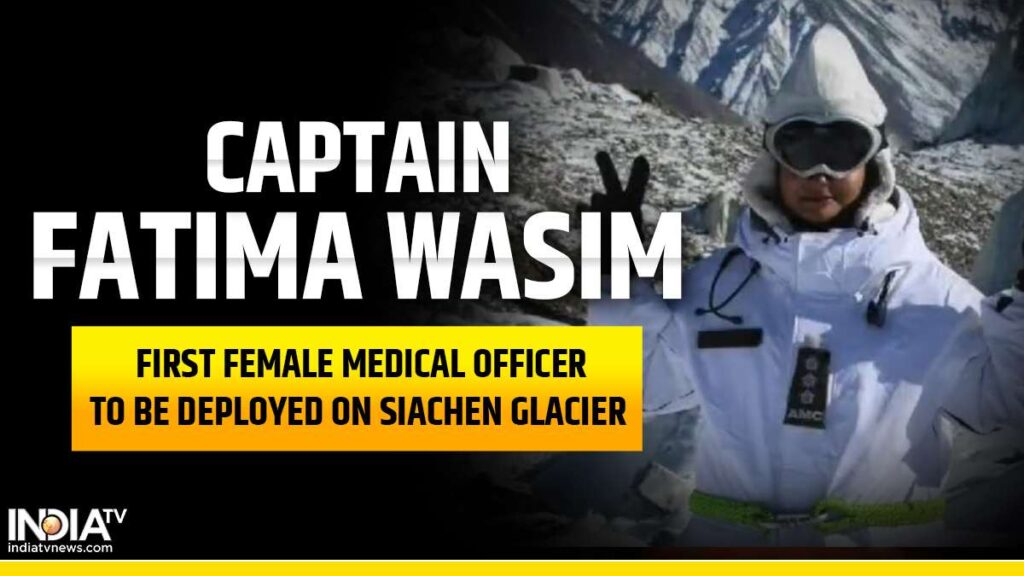
Captain Fatima Wasim’s historic role as the first female medical officer in an operational post at the Siachen Glacier is a remarkable achievement. The nation commends Captain Fatima Wasim for her groundbreaking accomplishment.
Captain Fatima Wasim makes history as the first female medical officer deployed at Siachen Glacier. / Image Source : INDIA TV /
Captain Fatima Wasim has etched her name in history by becoming the first female medical officer to be deployed on an operational post at the formidable Siachen Glacier. After undergoing rigorous training at the Siachen Battle School, she received her posting at an operational post situated at an altitude of 15,200 feet.
Historic deployment
Captain Fatima Wasim’s appointment as the first woman medical officer on an operational post at Siachen Glacier is a groundbreaking achievement. Following intensive training at the Siachen Battle School, she assumed duties at the operational post located at a challenging altitude of 15,200 feet.
Siachen warriors’ Captain
The Fire and Fury Corps of the Indian Army shared a video on social media platforms, underscoring the milestone achieved by Captain Fatima Wasim. The video celebrated her as the first medical officer to be stationed at an operational post on the Siachen Glacier, emphasising her indomitable spirit and high inspiration.
Captain Fatima Wasim’s deployment at 15,200 feet is a testament to her resilience and serves as a source of immense inspiration. The challenging conditions of Siachen Glacier make this assignment not only historic but also a reflection of her unwavering dedication.
Acknowledgment by the Indian Army
The Fire and Fury Corps of the Indian Army acknowledged Captain Fatima Wasim’s historic posting through a video shared on social media platforms. The caption emphasised her role as a Siachen warrior and celebrated her as the first female medical officer in an operational post at the Siachen Glacier.
Inspiration and determination
Captain Fatima Wasim’s deployment at such a formidable altitude symbolises her unyielding determination and serves as an inspiration for others. Her historic posting is not only a personal achievement but also a significant stride in breaking gender barriers within the armed forces.
source: http://www.indiatvnews.com / India TV / Home> English News> India / by Nitin Kumar / December 11th, 2023
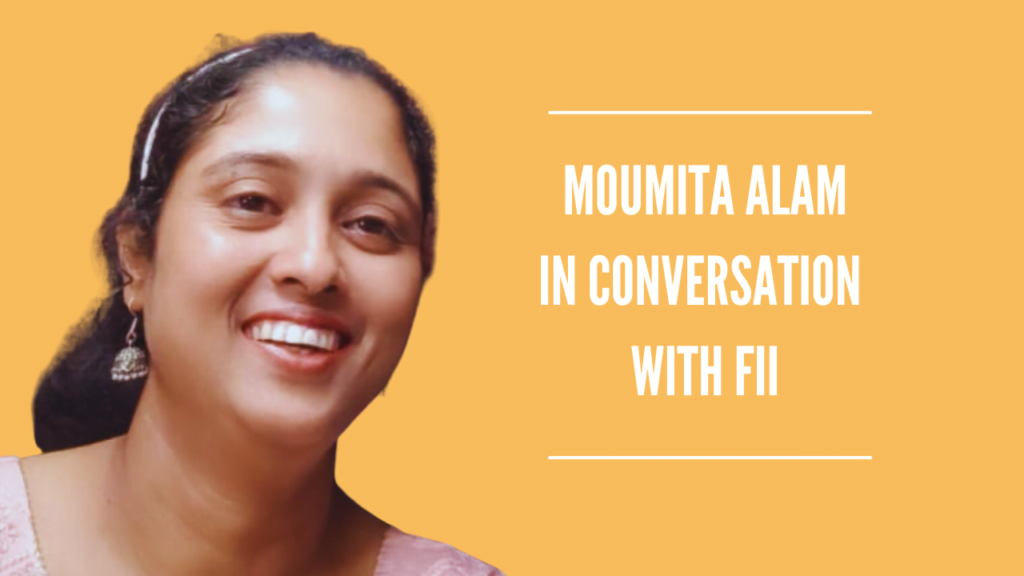
In a conversation with FII, Moumita Alam discusses how she began writing poetry, and what it is like being a Muslim woman in a Hindu majoritarian state and how the voices of certain minorities have been silenced throughout Indian history.
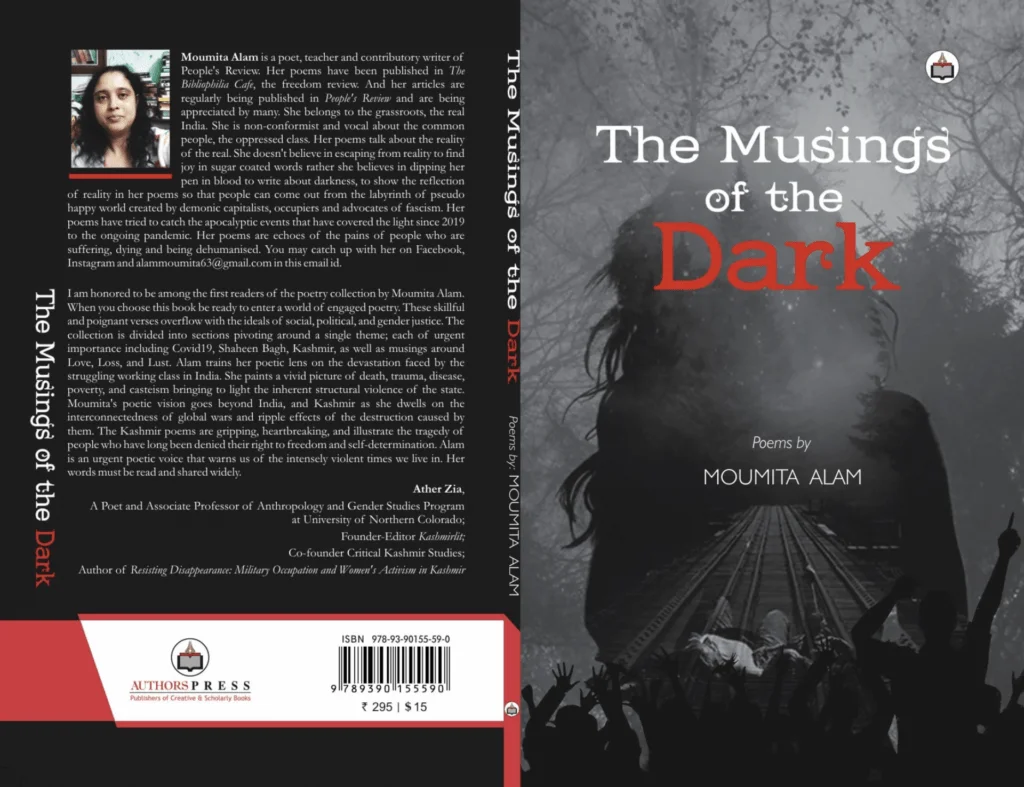
Moumita Alam is a teacher based in West Bengal whose political poetry, over the past few years, has gained incredible popularity in South Asia due to its powerful messages and themes. As a Muslim woman, through her poems, essays and opinion pieces, she attempts to bring out the atrocities faced by the women of her community alongside critiquing the larger issue of rising Islamophobia in India. Her first and only book, The Musings of the Dark was published in 2020.
In a conversation with FII, Moumita Alam discusses how she began writing poetry, what it is like being a Muslim woman in a Hindu majoritarian state and how the voices of certain minorities have been silenced throughout Indian history, particularly in West Bengal ever since the 1947 partition.
FII: You have, over the past few years, used your poetry to both raise awareness about and protest against the Islamophobia propagated by the ring wing in our country. Would you like to shed some light on what your writing journey has been like?
Moumita: I began my poetic journey after 2019. In 2019, on the 5th of August, the abrogation of Article 370 happened. I had a friend who lived in Kashmir, so I lost connection with him. He was an aspiring advocate who would regularly speak with me. I, as a teacher and a single mother, would share my life journey with him in return. But in 2019, when I could no longer talk to him, a sense of guilt began haunting me — how could a land become a prison where the people couldn’t even make a phone call to the ones in the outside world?
At some point in time, I thought of writing a letter to him, but receiving a letter from here could land him in trouble. He was much younger than me but was my only friend who would listen to my feelings, my happiness, my sorrows. So, I began writing.
I am against the use of the term “migrant labourers,” because India is our own country, so how can its citizens be called migrants? — to come on the grounds and walk for miles and miles to reach their homes.
Moumita Alam
That same year, in December 2019, the Anti-CAA-NRC movement started and we suddenly became aware of our religious identities. Everyone around me would ask me, “Are you legal? Are you a Bangladeshi?” But, believe me, I was born and raised in West Bengal. I have never even seen or visited Bangladesh. Every Muslim I know — whether practising or non-practising — was being asked this question. So, after my Kashmiri friend, I lost my other friends too because their questions would hurt me. I wrote about those feelings too.
Source: Moumita Alam’s FB
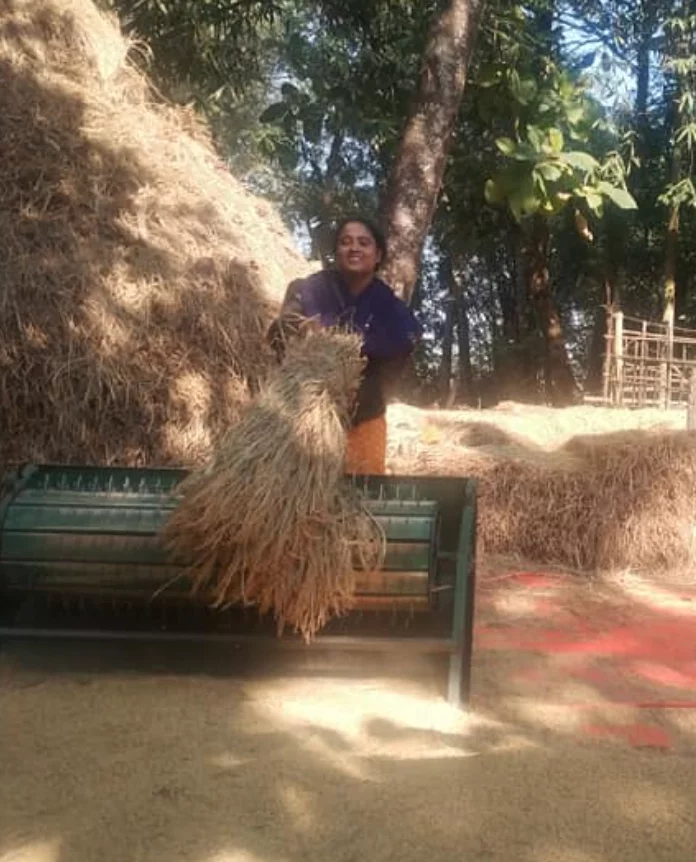
And then again in March 2020, we saw how the unplanned lockdown forced the workers of the unorganised sector — I am against the use of the term “migrant labourers,” because India is our own country, so how can its citizens be called migrants? — to come on the grounds and walk for miles and miles to reach their homes. I could not sleep for days because I live in a village and many of my relatives and fellow villagers used to work in Kerala and Delhi as labourers. So, I also started to write poems about their plights and sufferings.
One of my friends asked me to send my poems for publication, which had never crossed my mind because I stay far away from Delhi and its so-called “English literary circle.” But I still emailed a publisher who agreed to publish and then, my first and only book, The Musings of the Dark came out in August 2020.
FII: Since your poems usually focus on the theme of gendered Islamophobia or the issues that Muslim women face in our country, what is it like being a Muslim woman in a country governed by the right-wing?
Moumita: In 2021, I got to know that a few right-wing fanatics had created an app to sell Muslim women and had named it ‘Bulli Bai.’ I was so disturbed after reading the news about this because this is such a heinous thing to do — how can anyone do this in a democratic country like India?
So, I wrote this poem, “I am a Muslim woman and I am not for sale.” This poem was translated into many languages — in Telugu, Assamese, Bengali, Tamil, Kannada, and others — and was also published on various platforms.
If you follow the news, you would know that in 2022, hijab was banned in schools across the country. Even if I don’t wear hijab, you can’t ban other women who do from getting an education. As women, we are a minority in many ways — first, as Muslims in this country and then, because of our gender. We have to bargain our choices and sometimes, we have to compromise in front of our families by saying, “I will work hard, I will wear a hijab, please let me go to the doors of education.”
When a man is interpreting religious scriptures for you, he will — whether consciously or unconsciously — view religion through a patriarchal lens. They might not allow us to gain an understanding of the equal rights that Islam gives to Muslim women.
Moumita Alam
After becoming independent, I, as a Muslim woman, can decide for myself whether or not I wish to wear a hijab. But, you can’t put a blanket ban on hijab like that.
While I do write poems on the rising Islamophobia in our country, I also write about the oppression we Muslim women face within our own communities. Look, our society is based on patriarchal notions which means that even a lot of religious preachers are men. When a man is interpreting religious scriptures for you, he will — whether consciously or unconsciously — view religion through a patriarchal lens. They might not allow us to gain an understanding of the equal rights that Islam gives to Muslim women.
FII: Have you ever faced censorship for having political themes and highlighting the various injustices particularly on the basis of religion, in your work?
Moumita: Thankfully, we still have some platforms that provide a space to people like me where we can raise our voices. I am thankful to the Editor of LiveWire, who recently resigned. She was an immense pillar of support for me because she never censored my work — she either accepted it or denied it from being published, but never censored it. Even the Editor of Outlook is brilliant that way.
Source: Moumita Alam’s FB
Sometimes, however, my poems get rejected by other platforms because they say my work is too political, but I think we are living in a time during which one can’t be apolitical. If you are, then you are indirectly standing with people who are unleashing injustice towards minorities.
FII: As a poet who writes in both English and Bengali, you have often talked about how the voices of certain minorities have been neglected even within Bengali literature and poetry — an example of which can be the Marichjhapi massacre in 1979. Is there anything that you would like to discuss about the domination of certain elite classes and castes in Bengal?
Moumita: You might have noticed that for the non-Bengalis, West Bengal is equal to Kolkata — all of Bengal is just Kolkata for most people who aren’t from Bengal. This suggests a very Kolkata-centric attitude that most people have about Bengal. The literary world is, of course, not an exception — it’s so Kolkata-centric that people like me who are living in the margins find it almost impossible to reach the centre that is Kolkata.
Also, the Bengali literary world has been dominated by upper-class, upper-caste people for a very long time. So, they write about only those issues that they know about and that suit their narrative. Things are changing, some voices are getting spaces. However, we still have a long way to go. »
FII: When we usually talk about the India-Pakistan partition, the discussion inevitably gets centred around the division of what is present-day Punjab with little being said about how the refugees of Bengal, particularly the oppressed even among the displaced, were impacted. As someone who has written articles on this theme for both English and Bengali publications, can you tell us a little about your understanding of the same?
Moumita: Yes, I agree with you that the pains and sufferings of the Bengali refugees haven’t found expression in the so-called mainstream literature, particularly English literature. When I’m talking about “Bengali,” I mean both Hindus and Muslims. The plights of the oppressed class like the Namasudra community who were forced to migrate to West Bengal from the then East Pakistan is missing from the literary narrative. Equally, even the traumas and voices of the Muslims who stayed back while the other members migrated to East Pakistan are missing from the literary imagination.
Source: Moumita Alam’s FB
Most importantly, after partition, no political establishment tried to heal the wounds of the refugees. We all understand how the various European governments attempted to heal the wounds of the holocaust survivors after the second world war, but the same did not happen in India, even though the partition is often compared to the Holocaust.
Instead, every political party tried to gain political mileage from the religious fault lines. If I am not mistaken, nothing much has yet been written about internal migration. How many partition museums do we have?
FII: Every time your poems about the Babri Masjid demolition or about Kashmir get published, there are a lot of derogatory things that are often said by right-wing people— such as a lot of Kashmiri Pandits who end up claiming that their own stories need to be heard over yours. Since you have been doing what you believe in for so many years, is there any advice that you’d like to give to the young girls of our country about how they can voice their thoughts fearlessly even when they are intimidated?
Moumita: We are living in a critical juncture of time. As witnesses of this time, we can’t let the fascists win. How are they winning? They are winning through their narrative — a narrative of hatred towards minorities, towards women. We have to tell our own stories, we have to counter their narrative by our narrative.
So, here is my message for all women:
I wish you,
Oh women,
A savage fury
To throw all the
Dos and don’ts
Under a ravaging bus.
And begin from the beginning
All-new, all equal.»
FII: You write and publish your creative works and political thoughts as a freelancer, which means there is very little for you to gain from it as a poet. If anything, your poems and articles have mostly just led people to threaten you. What is it that motivates you to continue writing even when things don’t entirely work in your favour?
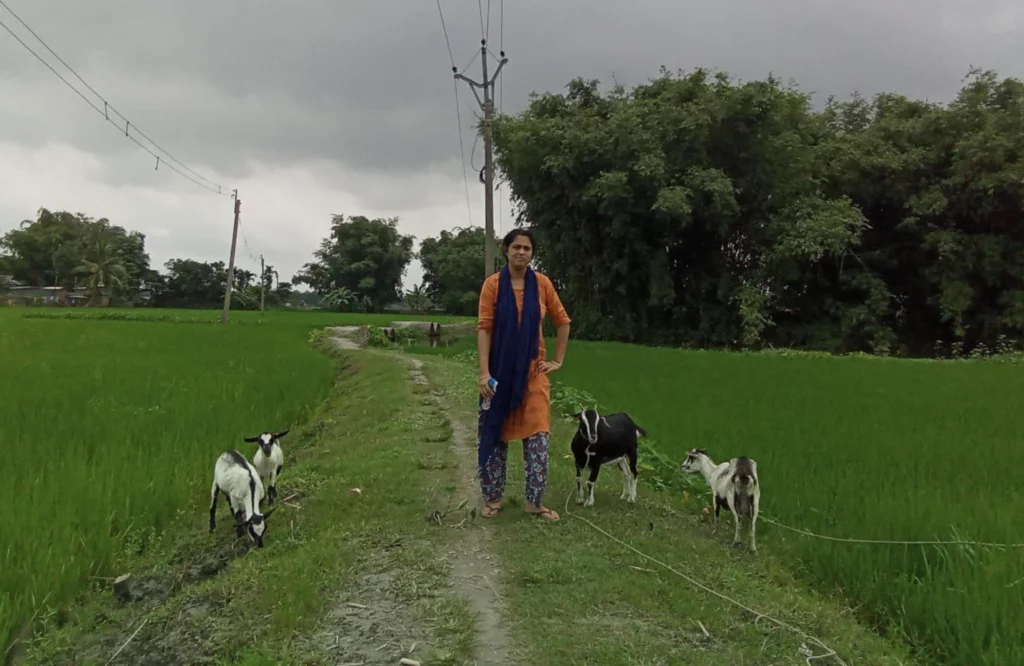
Moumita: Silence is not an option. The hatred that engulfed my friends still haunts me. I am a villager and I know how common people are suffering every day. The silence of the intellectual people saddens me. I want to jolt them, wake them up from their hibernation.
I am a villager and I know how common people are suffering every day. The silence of the intellectual people saddens me. I want to jolt them, wake them up from their hibernation.
Moumita Alam
You know, potatoes are the only profitable crop in my village. This year, the poor farmers incurred a heavy loss and couldn’t repay the loans they had to take from private microfinance companies at heavy interest rates. I asked a very old farmer how they plan to survive after this loss? And he replied, “Next year we will get some profit.” I was just amazed at his belief and relentlessness. I believe we can bring a change. We have to hope because we don’t have any other option.
The interview has been paraphrased and condensed for clarity.
source: http://www.feminisminindia.com / Feminism In India / Home> Interview / by Upasana Dandano / June 09th, 2023
A total of 33 students from various districts of Uttar Pradesh have found their place in the Class Xth 2020 list of top ten.
Uttar Pradesh 10th Result 2020:
Three Muslim students – Alisha Ansari, Arshad Iqbal and Arshima Sheikh, have cracked the 2020 UP Matric High School Class 10 exam 2020 and have been included in the list of Top Ten.
A total of 33 students have found their place in the 2020 list of top ten. While Alisha Ansari secured 9th rank, Arshad Iqbal and Arshima Sheikh have bagged the 10th rank in Uttar Pradesh Class 10 Merit List 2020.
Alisha Ansari Mohd Rizwan Fazli of Bal Nikunj Inter College Lucknow has got 564 marks (94%) out of the total 600 marks and jointly shared the 9th rank with five other students
Arshad Iqbal Iqbal Hussain of PT RN MHSS Shahjahanpur and Arshima Sheikh Aftab Ahmad of St Xaviers School Kanpur have got 563 marks (93.83%) and secured the 10th rank with 02 other students.
Uttar Pradesh Class 10 result was Uttar Pradesh Madhyamik Shiksha Parishad (UPMSP) Saturday at 12:30 pm by Dy CM and UP Education Minister Dinesh Sharma.
The overall pass percentage of Uttar Pradesh board Class 10 this year is 83.31 percent – an improvement by more than 3% as compared to last year. In 2019, the overall pass percentage was 80.07%.
Riya Jain Bharat Bhushan of Shri Ram SM Inter College Bagpat has topped the Uttar Pradesh board in 2020 High School or Class 10 (UPMSP Class X) exam result of which is declared today.
Ria Jain has secured 96.67 percent marks to secure the 1st position in the 2020 Merit List.
Abhimanyu Verma Ramhut Verma of Shri Sai Inter College Barabanki came 2nd with 95.83% marks and Yogesh Rajendra Pratap Singh of Sadhbhavna Inter College Barabanki came 3rd with 95.33%.
“All toppers will get laptops and cash rewards”, Dy CM Dinesh Sharma and UP Education Minister said while declaring the result.
source: http://www.ummid.com / Ummid.com / Home> Education & Career / by Ummid.com News Network / June 27th, 2023
Siddiqui Masroor Azar and his family have lived in their Dh85,000 apartment for two years.
Siddiqui Azar and wife Nikhar Khan live in a two-bedroom apartment in Jumeirah Garden City with their two-year-old daughter. All photos: Chris Whiteoak / The National
My Dubai Rent takes you inside a reader’s home to have a look at what they get for their money, how much they pay and asks them what they like and don’t like.
Two years ago tourism boss Siddiqui Masroor Azar decided to swap his Abu Dhabi apartment for Dubai life.
The Indian citizen, who works as a lead data scientist at a bank, pays Dh85,000 ($23,140) for a two-bedroom apartment in Jumeirah Garden City, which he shares with his wife, Nikhar Khan, who owns a tourism company, and their two-year-old daughter.
The couple also run a YouTube channel, Indians Abroad, which they launched during the Covid-19 pandemic, that shares guides to Dubai with their followers.
They speak openly about the cost of living in the emirate, as well as the rules and regulations around visa applications.
One of their videos, in which they share a six-day itinerary for Dubai, as well as the most affordable places to eat and visit, has already garnered more than 1.2 million reviews.
Here, the 36-year-olds invited The National to take a tour of their property to show us why Dubai is the city for them.
What can you tell us about your apartment?
It’s a two-bedroom apartment that has a living room and a kitchen.
It’s around 1,500 square feet.
The building also has a rooftop pool, where we have great views of the Burj Khalifa.
Where did you live before?
This is our fourth apartment since we moved to the UAE in 2016.
Our first apartment was in the Al Nahda area in Dubai.
Then we moved to Abu Dhabi for work and rented an apartment in Al Nahyan.
Two years ago, we returned to Dubai.
Why did you choose this district?
We came back to Dubai because my office moved from Abu Dhabi to Dubai.
The best thing about Jumeirah Garden City is that I don’t get stuck in traffic.
My office is in Jaddaf, so it’s only a 10-minute drive from our apartment.
What kind of facilities do you have around you? We are in the middle of everything.
It takes us around 10 minutes to reach several places including the Dubai Mall, Old Dubai where they have all the restaurants we love, and La Mer Beach.
The Museum of the Future is also two minutes away.
The best thing about Jumeirah is that during winter time we can take our two-year-old daughter to Satwa Park, and it’s about a 10-minute walk.
We also have a pharmacy and supermarket nearby.
The couple brought their blue sofa to Dubai from their Abu Dhabi apartment. Chris Whiteoak / The National
Is it a sociable neighbourhood? It’s a bit difficult to make friends since we live in a city and everyone is busy with their own lives.
We do have a few friends but it’s hard to catch up. If you have time, you can make friends.
How have you made your house a home and personalised it? Before furnishing our apartment, we watched a lot of YouTube videos and explored many websites to find what suited us best.
We brought our blue sofa from our previous apartment as we love how bright and joyful it looks.
We also bought a wooden dining table, as well as plants to put in the living room as it adds a sense of cosiness to the apartment.
Any features you would change? The view from our balcony could have been better. Unfortunately it’s obstructed by surrounding buildings.
Do you think living here delivers good value for money? The rent is high everywhere in Dubai.
Location-wise it’s great because it’s close to all the places that we like to visit, so it makes it worth it.
If you compare our apartment to others that are older, you’ll understand that it’s completely reasonable for its price.
Do you plan to stay in the property?
We’ve been paying rent for years and we wanted to have our own apartment.
So last year we bought a two-bedroom apartment in Jumeirah Village Circle and we will be moving next year.
It took us around three years to save to buy the property but we’re excited.
source: http://www.thenationalnews.com / Th National / Home> Living in the UAE / by Eiman Alblooshi / October 08th, 2023
Khushboo has been practising different forms of martial arts for about 11 years.
Leaving her home and family behind in Uttar Pradesh, 23-year-old Khushboo Nishad secretly travelled to Hyderabad two years ago under the guise of a job transfer to become a mixed martial artist. Within a short period of time, she earned a silver medal at a national-level amateur Mixed Martial Arts (MMA) tournament.
A native of Allahabad, Khushboo has been practising different forms of martial arts for about 11 years now. She started with Judo at the age of 12, moving on to master the South Korean art of Taekwondo for another three years. Khusboo’s father taught her Karate.
Mastering different styles of fighting consequently developed her interest in the fastest-growing combat sport- Mixed Martial Arts. Khushboo said she tried learning MMA in UP, however,”I couldn’t find the level of training I was looking for,” she told Siasat.com.
She started her own research, some ‘asking around,’ and concluded that the best training she could find was in Hyderabad under the guidance of Sheikh Khalid. Moreover, Khalid taught MMA in a traditional form.
Khusboo never told her family about her dream to become a mixed martial artist. “I worked for Radisson in Ludhiana for eight months in order to save money and persue my goals,” she added.
Knowing very well her family would not allow her to go to Hyderabad, Khusboo told them she was transferred to the city of pearls by her company.
Narrating an incident that led to this decision Khushboo said, “One day my father saw a video where I was punched on my face by my coach. Disturbed, he immediately called me back.”
Khusboo was studying at Amity University, Lucknow at that time.
To keep her father happy, Khusboo studied hard and secured a top rank in her college. However, she still nourished the dream of becoming a mixed martial artist.
“I am extremely grateful to the person who recommended Sheikh Khalid to me. I have learned so many new things here,” she concludes adding that she has fallen in love with the city.
source: http://www.siasat.com / The Siasat Daily / Home> News> Hyderabad / by Usama Hazari / July 28th, 2022
Also present at the event were Gujarat Congress MLAs Amit Chavda and Imran Khedawala, former Congress MLA Gyasuddin Shaikh, AMC leader of Opposition Shehzadkhan Pathan, and late Congress Rajya Sabha MP Ahmed Patel’s daughter Mumtaz Patel.
Arnazbanu Sipahi from Mehsana at the IMCR event on Saturday. (Express File Photo)
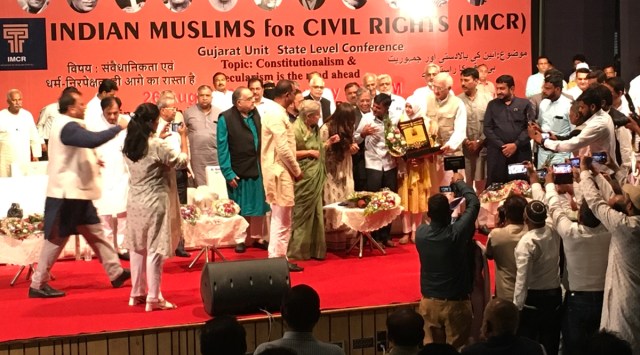
The Indian Muslims for Civil Rights’ (IMCR) Gujarat unit on Saturday felicitated 15-year-old Arnazbanu Sipahi from Mehsana, who was not called for a felicitation ceremony by her school despite holding the first position in the Class X board exams at her school, on Independence Day.
A former student of K T Patel High School, who had topped her school in Class X state board exams in March, Sipahi has now shifted to a nearby grant-in-aid school for her Class XI studies.
K T Patel High School principal has maintained that the August 15 award ceremony was organised by the school staffers and the school would felicitate Sipahi instead on January 26, next year.
Speaking to The Indian Express , Mehsana District Education Officer A K Modhpatel had earlier said, “I had checked with the school and learnt that the August 15 award ceremony for first three toppers from Class X and XII was organised by the teachers. They had collected funds to motivate school students. The girl and those who were not studying in the school (when the felicitation ceremony was held on August 15), will be awarded on January 26.”
Maintaining that she was “wronged” by the school, the IMCR – at a state-level conference on constitutionalism and secularism held in Ahmedabad – called Sipahi on stage to felicitate her in the presence of a host of Muslim leaders. Azam Baig, national general secretary (organisational) of IMCR, announced that he would personally fund Sipahi’s education, including higher studies.
Handing her a plaque and a flower bouquet on stage were former IMCR trustee and Congress leader Salman Khurshid, former member of Planning Commi-ssion, Syeda Saiyidain Hameed, as well as Samajwadi Party MLA Abu Azmi, among others.
Addressing the conference on the topic of ‘constitutionalism and secularism and the way forward’, Hameed cited Arnazbanu’s “experience” and the recent viral purported video of a Muslim boy being hit by his classmates upon being goaded by their teacher at a Muzaffarnagar school, as “examples where children are being discriminated against (on religious lines).” “We have to build a common front… work in an organised way (to counter the polarisation)… The Gujarat riots’ blueprint, which is now being attempted to be implemented elsewhere in India, we must not let it succeed.”
K Rehman Khan, former deputy chairman of Rajya Sabha , urged Muslims to be “givers” and not “seekers”, emphasising that they must empower themselves and “saving the Constitution should be the first priority”. “Only if the Constitution and secularism is saved, can we live a life of dignity,” Khan added.
Former Union minister Salman Khurshid said that “it is not acceptable that rule of law is replaced by rule of bulldozer”. He added that the “public must understand that what is happening today at someone else’s household can also happen at your household”. “We want that the majority speaks for the minority and the minority speaks for the majority,” Khurshid said.
Also present at the event were Gujarat Congress MLAs Amit Chavda and Imran Khedawala, former Congress MLA Gyasuddin Shaikh, AMC leader of Opposition Shehzadkhan Pathan, and late Congress Rajya Sabha MP Ahmed Patel’s daughter Mumtaz Patel.
source: http://www.indianexpress.com / The Indian Express / Home> News> Cities> Ahmedabad / by Express News Service, Ahmedabad (headline edited) / August 27th, 2023
Ayesha had started preparing for the UPSC in her 12th grade, when a professor spotted her as a potential candidate. He made a case for it to her and her parents and convinced them.
Mumbai: Anjuman-I-Islam President, Dr Zahir I. Kazi felicitates Sayyed M. Hussain (Alumni – A.I’s Allana Jr. College of Science & Commerce, CST) All India ranking 570 and Kazi Ayesha Ibrahim, All India ranking 586, for successfully qualifying UPSC Exam 2023, at Anjuman-I-Islam’s Ahmed Zakaria Hall, CST, in Mumbai on Friday, 26 May 2023. (Photo by Bhushan Koyande)
Mumbai:
Two success stories coming out of the UPSC exams this year, Kazi Ayesha Ibrahim (rank 586) and Sayyed M Hussain (rank 570) have broken through the stereotypes and have emerged as a hope and inspiration for their community.
Ayesha had started preparing for the UPSC in her 12th grade, when a professor spotted her as a potential candidate. He made a case for it to her and her parents and convinced them.
Then came the years-long struggle, starting in 2017. “It takes a lot of hard work, there’s no doubt about that. But it is possible to study for 15 to 16 hours a day. I’ve done it,” said Ayesha.
Despite being a Muslim woman and stereotyped at every turn, she stuck to her books, using the disadvantages her way to study more and get better.
“My parents have always emphasised gaining knowledge. And there is no better match for gaining knowledge than the UPSC, with the diverse subjects we have to learn,” she said.
“What happens to girls is that many of them have a lack of exposure. All my sources of information were only from books,” said Ayesha.
Ayesha also lost the support of her institute after the prelims due to a change in administration, leaving her to study alone in the confines of her home, without any outside guidance.
She will be attempting the UPSC exam again, hoping to get a rank fit to get her into the Indian Foreign Services (IFS). In the meantime, she will accept the post she is offered.
After the results were released on Tuesday, Ayesha was felicitated for the achievement along with Hussain at an event organised by the Anjuman-I-Islami, of which Hussain is a former student.
Hussain, too, has a long history of struggle that ended in his scoring the 570th rank. He got through the prelims exam four times, only to fail in the main exam. He was fifth time lucky.
“It was very difficult at first. I repeated my mistakes,” he said. “Then I started teaching others for the exam, making some money so I could support myself and my family. That helped me.”
The son of a dock worker, who earns ₹18,000 a month, he said, “I’ve seen my dad struggle in the hot sun for 18 hours a day, so I found my situation easy.”
The journey was a lot more emotionally fraught for him than financial, dissuading him with every failure. But he persevered. “I am satisfied with my results, but now that I’ve gotten so much love from so many people, I wish I’d studied a little more.”
Hussain recounts a story of a call he received from a fellow resident of his area, Dongri, resounding with hope that he too could pass the exams after a few failures. His success has inspired the community.
source: http://www.hindustantimes.com / Hindustan Tims / Home> Cities> Mumbai News / by HT Correspondent / May 27th, 2023
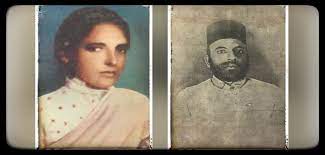
“I appeal to the youth of this country that they sit at the feet of this goddess (Nishat un Nisa Begum) to learn the lessons of independence and perseverance.” Famous Indian writer Brij Narayan Chakbast wrote this in 1918 about the freedom fighter Nishat un Nisa Begum.
People knew more about her husband Maulana Hasrat Mohani, who coined the slogan Inquilab Zindabad (Long live revolution). Historians have kept Nishat, like many other women, at the margins of historical narratives. She existed not as a protagonist but as a supporting actor in a play that had her husband as the protagonist.
This happened even though Hasrat admitted that he would have remained an apolitical editor if he had not married her. Maulana Abul Kalam Azad likened her to “a mountain of determination and patience.” Mahatma Gandhi also acknowledged a key role in the Non-Cooperation Movement. By no stretch of the imagination, she was a dependent woman and owed her existence to Hasrat.
Born in Lucknow in 1885, Nishat was home tutored, as was the custom of those times. She knew Urdu, Arabic, Persian, and English. Even before she married Hasrat in 1901 was teaching girls from backward sections of the society at her home. Marriage exposed her to the world of politics. Nishat and Hasrat were among the first Muslims in India to join Bal Gangadhar Tilak’s extremist group of Congress and open a Swadeshi shop in Aligarh. In 1903, the couple started a nationalist Urdu newspaper ‘Urdu e Mualla’. The British did not like it and jailed Hasrat in 1908. After his release, the couple resumed the newspaper. The newspaper had only two employees – Nishat and Hasrat.
Hasrat was again jailed during the First World War. Nishat, who like other Muslim women of her times, used to take a veil, came out in public to defend her husband in the court trial. She wrote letters to leaders, and articles in newspapers, and removed her veil while visiting courts. To go out of one’s house without a purdah was a courageous act.
Hasrat’s friend Pandit Kishan Parshad Kaul wrote, “She (Nishat) took this courageous step at a time when the veil was a symbol of dignity not only among Muslim women but among Hindu women as well”.
In those times Congress and other organizations used to raise public funds to help the families of jailed freedom fighters. Nishat declined to accept her share from it. Pandit Kishan Parshad recalled later that in 1917 when he once visited her in Aligarh he saw her living in abject poverty. Being a friend of Hasrat, he offered her money. Nishat told him, “I am happy with whatever I have”. She later asked him if he could help her in selling the Urdu books printed by their defunct press.
Kishan Parshad told Shiv Prasad Gupta, another prominent freedom fighter from Lucknow about Nishat’s condition. Gupta didn’t take a moment to write a cheque to purchase all the books from Nishat.
When Edwin Montagu visited India in 1917, Nishat was among the representatives of the All India Women’s Conference (AIWC) to meet him. In the meeting, she demanded that all the freedom fighters be released from jail.
Nishat had abandoned the purdah for good. In 1919, she attended the Amritsar Congress session after the Jallianwala Massacre and impressed everyone with her passionate speeches. A Muslim woman, without purdah and participating in politics at par with her husband, she was noticed as a “comrade of Hasrat.”
Nishat and Hasrat were sure that asking for concessions from the British was futile. They moved a resolution for Purna Swaraj (Complete Independence) and not a dominion status at the Ahmedabad session of Congress in 1921 as the party’s goal. Nishat spoke in support of the motion. The resolution was defeated as Mahatma Gandhi opposed the idea. Eight years later, Congress adopted the Purna Swaraj as its goal.
Hasrat was again jailed in 1922 and this time Nishat attended the Congress Session at Gaya without him. She eloquently opposed the participation of Congress members in the Legislative Councils. She said those who wanted complete independence from British rule could not dream of entering the assemblies formed by them.
According to Prof. Abida Samiuddin, Nishat’s politics did not depend on Hasrat alone. She was the first Muslim woman to address a Congress Session. Her work for the popularisation of Swadeshi, the All India Women Conference, correspondences with the nationalist leaders, articles in newspapers, public speeches, and other political activities are proof that she carried her identity in the Indian Freedom Struggle. She was active in workers’ movements till her death in 1937.
source: http://www.awazthevoice.in / Awaz, The Voice / Home> Stories / by Saquib Salim / May 14th, 2023
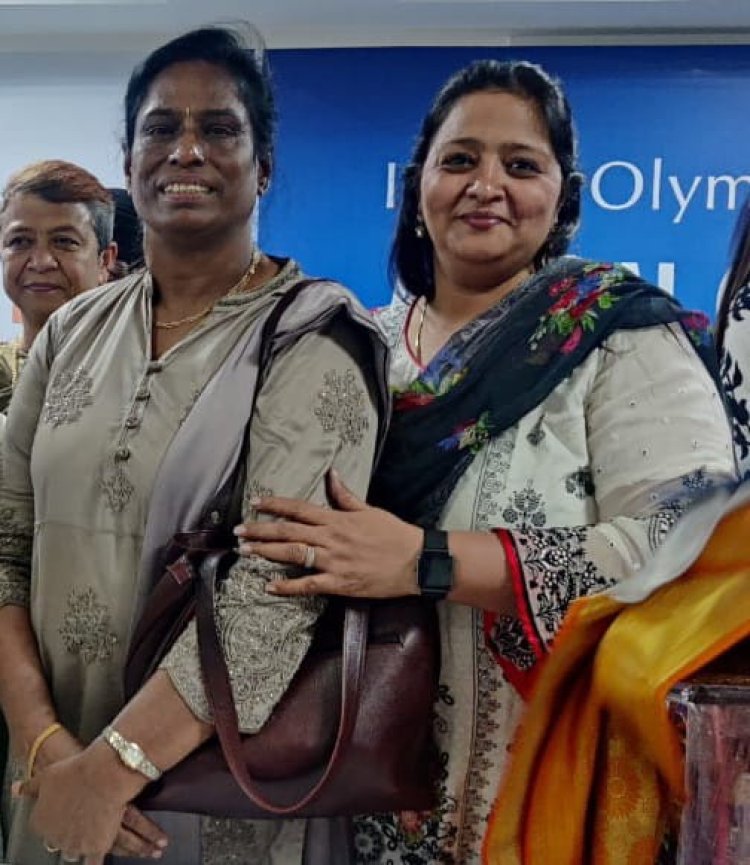
Mrs. Aaesha Munawar, General Secretary, U.P. Judo Association, has been nominated as a member of the Infrastructure Committee of the Indian Olympic Association.
Mr. Amitabh Sharma is the Chairman of this Committee. Apart from Aaesha Munawar, the other members are Mr. Bhola Nath Singh, Mr. Vaghish Pathak, Mr. Akhil Kumar, Mr. Ravi Bengani and Dr. Amit Bhalla. This Committee will serve till the year 2026.
This is for the very first time that a female Judoka from U.P. has been nominated in an IOA committee.
Mrs. P.T. Usha , President,IOA ; Mrs. Alaknanda Ashok , Joint Secretary, IOA; Mr. Harpal Singh and Mr. Bhupendra Singh Bajwa – Executive Council Member, all congratulated Mrs. Aaesha on her nomination.
Munawar Anzar, CEO, U.P. Judo Association.
source: http://www.ismatimes.com / Isma Times / Home> News> National / by Afzal Shah Madudi / March 13th, 2023

:quality(70)/cloudfront-eu-central-1.images.arcpublishing.com/thenational/ZIX32OMOXFAGHBMOQZBRIABAWM.JPG)
:quality(70)/cloudfront-eu-central-1.images.arcpublishing.com/thenational/ITDY7EFQXVBYVJKHSACRJ73EIE.JPG)