Tag Archives: ‘Muslim Freedom Fighters – Contribution of Indian Muslims in the Independence Movement’

Maulvi Liaquat Ali Qadri (1817–1892): A Stalwart of India’s Freedom Struggle

Mehndauri Village (Chail Pargana, Allahabad District), UTTAR PRADESH :
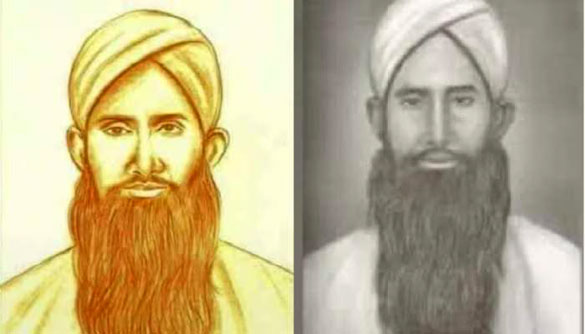
Maulvi Liaquat Ali Qadri, a religious scholar, led the 1857 Allahabad rebellion, uniting communities against British oppression. Declaring jihad, he fought for India’s freedom, faced exile, and died in Kala Pani in 1892, leaving a lasting legacy.

Main Points:

1.    Maulvi Liaquat Ali Qadri (1817–1892), born in Allahabad, was a revered religious scholar and freedom fighter.

2.    He led the 1857 rebellion in Allahabad, uniting Hindus and Muslims against British rule.

3.    Declared jihad, organized public gatherings, and hoisted Bahadur Shah Zafar’s flag.

4.    Fought British oppression, faced exile, and continued guerrilla warfare.

5.    Sentenced to life in Kala Pani; died in 1892.

———-

Maulvi Liaquat Ali Qadri was born on October 15, 1817, in the village of Mehndauri, Chail Pargana, Allahabad district, to Syed Meer Ali and Aamna Bibi. He was a revered religious figure of his time, embodying the spirit of both spiritual and national liberation. During that era, Islamic scholars viewed the country’s independence and religious freedom as inseparable causes. This conviction led a significant number of religious scholars to participate in the Indian Rebellion of 1857, many of whom attained martyrdom in their fight for freedom.

Maulvi Liaquat Ali was a simple man deeply connected to the struggles of the common people in his region. He was acutely aware of the hardships faced by the masses under British colonial rule. Alongside his profound religious knowledge, he harbored an intense passion for liberating his country from the shackles of foreign oppression. Leading a life of piety and integrity, he consistently advised others to uphold honesty, empathy, and mutual support in times of distress. He considered it the duty of every Indian to strive for the nation’s independence.

The Rebellion in Allahabad

Following widespread looting and arson, Allahabad fell under the control of the rebel Indian forces. Maulvi Liaquat Ali, accompanied by a large number of his followers, threw himself into the struggle against British rule. Seizing the opportunity, he declared jihad against the British, galvanizing thousands to join the fight. Under his leadership, the people of Allahabad (now Prayagraj) united to drive the British out of the city. Maulvi Liaquat Ali delivered a powerful message of unity to both Hindus and Muslims from a public platform in Allahabad. In his sermon, he emphasized, “We are all one. Together, we must confront the foreigners.” With this spirit of unity, he proclaimed the establishment of an independent government in the region and hoisted the flag of Bahadur Shah Zafar, the last Mughal emperor.

The British were not only plundering India’s wealth but also subjecting its people to relentless oppression. Beyond economic exploitation, Christian missionaries, backed by colonial authorities, were attacking India’s religious traditions and sacred texts. They propagated Christianity while attempting to demean Hindu and Muslim scriptures.

Unable to tolerate these affronts, Maulvi Liaquat Ali organized a massive public gathering on June 7, 1857, at Khusro Bagh in Allahabad. The event drew a large number of patriotic Hindus and Muslims. In a fiery speech, he condemned the British for their atrocities, including looting, arson, and desecration of holy texts. Declaring that such oppressors could not be tolerated, he called for jihad against the “sinners.” His impassioned address stirred the hearts of the audience, who were already exasperated by the British’s sacrilegious actions.

Under his leadership, a week-long uprising against the British began on June 9, 1857. Rebels set fire to British bungalows, inflicted casualties, and damaged government property. The widespread unrest created panic among the colonial authorities. However, the British retaliated with heavy shelling and arson, driven by a desire for vengeance. Entire settlements were razed, forcing residents to flee their homes. Maulvi Liaquat Ali, too, was compelled to leave Allahabad and sought refuge in Kanpur.

A Champion of Communal Harmony

Maulvi Liaquat Ali was a firm advocate of Hindu-Muslim unity and cooperation, despite his opposition to Christian missionaries, whose actions, fuelled by colonial arrogance, insulted Indian religions and scriptures. He was among the few leaders who demonstrated through their revolutionary actions that they were fully aware of the socio-political realities of their time. The British, he believed, were not only exploiting India’s resources but also undermining its social fabric. He tirelessly worked to counter their divisive tactics, raising his voice for the dignity of women, religious communities, and the upper classes, earning widespread admiration for his efforts.

Despite his religious persona, Maulvi Liaquat Ali was always ready to take risks for the sake of his country and faith. He never feared for his life or shied away from potential losses. His revolutionary activities were driven by a singular goal: to free India from British rule and rid the sacred land of their oppressive presence. When a Muslim shrine, Bakhtiar Bakhtiyar, and the Telegraph Band were seized by the British, Muslim youths fought to protect them, resulting in losses on both sides. Clashes between Indian rebels and British forces continued across various regions, making it increasingly difficult for the British to maintain their grip on India.

A Lifelong Struggle for Freedom

Maulvi Liaquat Ali swore to dedicate his life to the cause of India’s independence. After leaving Allahabad, he moved to Muzaffarnagar, a stronghold of the freedom struggle, where he joined other revolutionaries. His authority was such that no orders were issued without his approval. Whenever British forces attempted to suppress the rebellion, Maulvi Liaquat Ali, alongside another freedom fighter, Azimullah, embarked on a perilous journey on foot toward Gujarat. Despite facing numerous hardships along the way, they reached their destination and launched guerrilla warfare against the British. For years, their tactics kept the colonial administration on edge.

According to Rakesh Verma, technical assistant at the Regional Archives, “Administrative records written in Urdu titled Naksha Bagiyan Kotwali Allahabad, listing police constables who forcibly took their salaries for May and June 1857 and participated in the revolt, including Hanuman Prasad, Imdad Ali, Ashraf Ali, etc. were hung by Major Henry Court on July 14, 1857,” (From the HT)

The British resorted to various conspiracies to capture him, but Maulvi Liaquat Ali’s stature among freedom fighters only grew. He continued to plan large- and small-scale operations against the British, opening new fronts in the fight for independence.

Imprisonment and Legacy

Ultimately, the Allahabad court sentenced Maulvi Liaquat Ali to life imprisonment in the Andaman Islands, infamously known as “Kala Pani.” Enduring the harsh conditions of imprisonment, this brave son of India passed away on May 17, 1892, bidding farewell to his beloved homeland and the world.

Maulvi Liaquat Ali Qadri’s sacrifices for India’s freedom struggle remain an enduring legacy. His contributions must be remembered and celebrated as an inspiration for future generations, reflecting the indomitable spirit of a man who fought tirelessly for his country’s liberation.

References:

https://www.hindustantimes.com/cities/others/maulvi-liaquat-ali-to-mass-killings-hanging-of-cops-1857-revolt-in-allahabad-101749063190844.html

Bhatnagar, A. P. (2009). Maulvi Liaqat Ali: Icon of 1857 uprising at Allahabad. Shubhi Publications.

https://timesofindia.indiatimes.com/india/unsung-heroes-of-the-freedom-struggle-maulvi-liaqat-ali/articleshow/93492245.cms

Khan, K. M. (2019). Jang-e Azadi aur Musalman. Pharos Media.

https://www.qaumiawaz.com/social/maulvi-liaquat-ali-the-pioneer-of-the-war-of-independence-special-offer-on-the-occasion-of-the-anniversary-shahid-siddiqui-ali

source: http://www.newageislam.com / New Age Islam / Home> Islamic Personalities / by Sahil Rizvi / August 05th, 2025
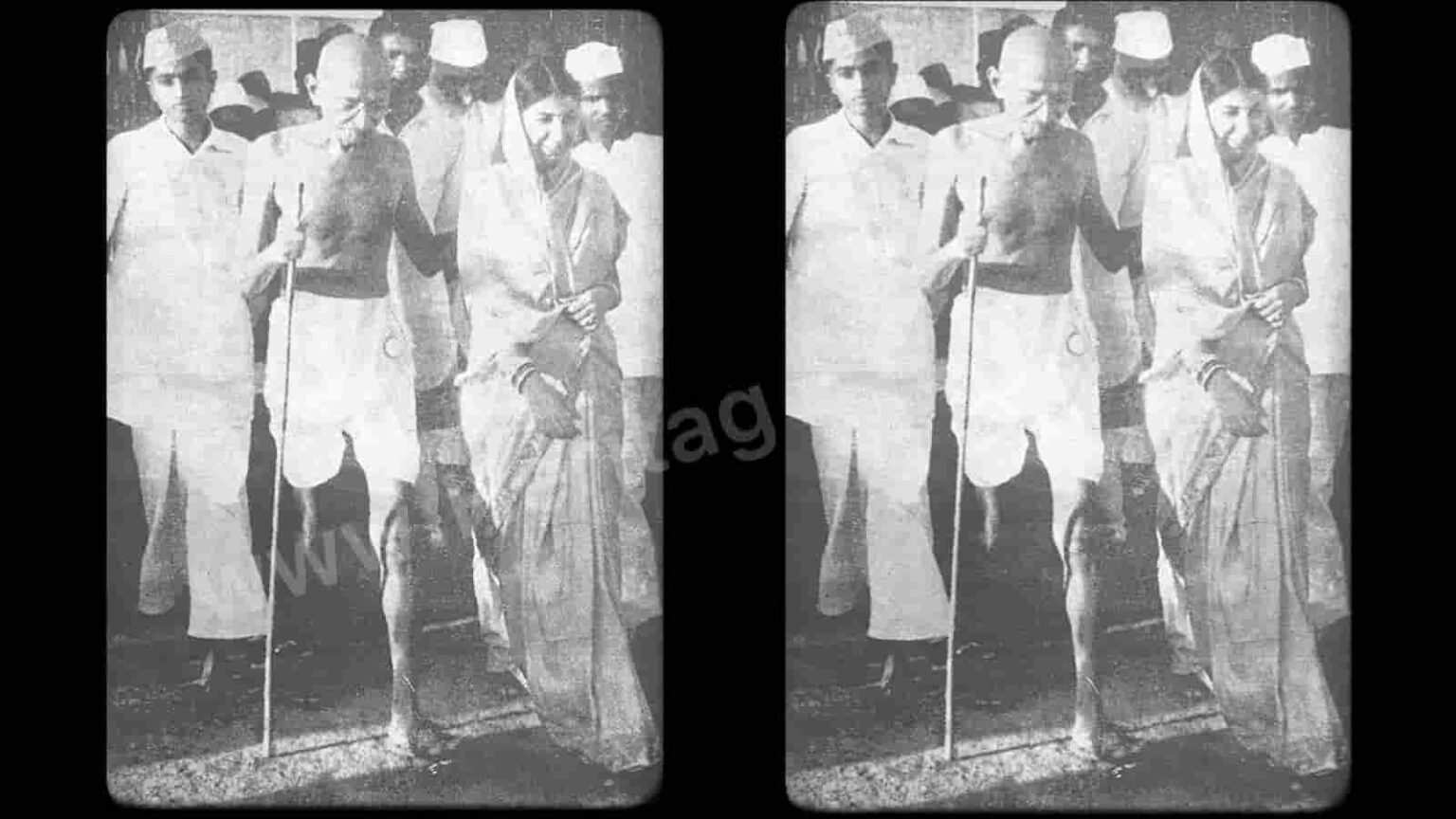
Zohra Ansari, the Freedom Fighter Who Taught Urdu to Mahatma Gandhi and Sold Her House to Fund Congress

Yusufpur (GhazipurDistrict), UTTAR PRADESH / NEW DELHI / London, U. K :

Begum Zohra Ansari sold away ‘Dar-us-Salam’ to raise party funds and worked for the victory of the candidates of the Indian National Congress and for the defeat of the candidates of the Muslim League, who wanted partition.

Begum Zohra Ansari, an activist of the Indian National Movement whom Mahatma Gandhi addressed as “Vasthad Bi, was born in Delhi. She was the adopted daughter of freedom fighters, Dr. Mukhtar Ahmed Ansari and Begum Shamsunnisa Ansari.

Besides playing an important role in the National Movement, her parents provided hospitality to leaders and a cadre of the Indian National Movement and scholars and people of repute in different walks of life in their residence ‘Dar-us-Salam’.  It was very spacious like a royal palace.

While Begum Shamshunnisa Ansari was busy in these responsibilities, Zohra helped her. Thus she had an opportunity to see from close-quarters leaders such as Mahatma Gandhi, Pandit Motilal Nehru, and the Ali Brothers and to serve them. Right from childhood she evinced interest in literature, history, and social sciences. She also gained proficiency in Urdu, Arabic, Persian, and Hindi.

Zohra Ansari and Mahatma Gandhi

Zohra Ansari rendered her services in Wardha Ashram for a long time. Mahatma Gandhi came to know about her command over Urdu and started learning the language from her. He used to address her in his letters as ‘Vastad Bi’ and ‘Beti.

Zohra Ansari and Mahatma Gandhi used to have regular correspondence on various issues. In his letter dated 22 December 1932 to Dr Ansari, Gandhiji remarked that he used to look forward to Zohra’s letter every week. When Zohra expressed her desire to go to jail as a part of the National Movement, like her parents, Gandhiji asked her to wait and promised to allow her to go to jail.

Begum Zohra Ansari married Dr Shaukatulla Shah Ansari (1908-1972) who was her relative and leader of the Indian National Movement. Begum Zohra Ansari lost her father in 1936 and mother in 1938. She took an active part in the Freedom Struggle along with her husband. Both wife and husband opposed the partition of India.

She sold away ‘Dar-us-Salam’ to raise party funds and worked for the victory of the candidates of the Indian National Congress and for the defeat of the candidates of the Muslim League, who wanted partition. Post Independence, Begum Zohra Ansari led a simple life and passed away on 28 July 1988 in England.

source: http://www.heritagetimes.in / Heritage Times / Home / by Syed Naseer Ahamed / December 12th, 2023

Shaukat of INA liberated Manipur on 14 April, 1944

Moirang (Manipur), ASSAM:

INA memorial at Moirang, Manipur

“The Indian National Army (INA) has now crossed the Indo-Burmese border and in the course of the struggle for the liberation of the people of India from the British Yoke, we have now reached Moirang, the ancient citadel of Manipur. Our commitment is the march to Delhi and the unfurling of the Tricolour Flag then at Lal Quila.

Many had died on our way to reach near Moirang and many would die on our way to Delhi. However, the expulsion of the enemy from the sacred soil of India is a compulsion for us… Freedom of India is very near and near at hand. We shall win it and we shall have progress and prosperity of the people of India after it.” Colonel Shaukat Ali Malik of Azad Hind Fauj addressed these words to a large gathering at Moirang in Manipur on 14 April 1944 after hoisting the National Tricolour. In this way, Moirang became the first liberated territory of India, which came under the administration of Azad Hind Sarkar headed by Netaji Subhas Chandra Bose. 

Col. Malik led INA’s victory march over Moirang, liberated the Indian territory, unfurled the national flag, and established a national government.

In his recently published book, Professor Kapil Kumar wrote, “Col. Malik while commanding the Unit, always led from the front and displayed Great feats of Bravery in difficulties achieving successes at various places. Netaji conferred upon him the great honour of Tamgha-e-Sardar-e-Jang.”

Kumar also lists several Indians from Manipur who joined INA forces. Prominent among them were Mairembam Koireng Singh, who later became CM of Manipur, and Naqi Ahmed Chaudhary, an INA soldier from Manipur who helped Col. Malik with the local language and terrain.  

But, the importance of this operation goes beyond the hoisting of the flag and establishment of civilian government. 

In the official newsletter of Azad Hind Fauj, Dr. M. R. Vyas one of the most trusted men of Netaji explained the importance of the victory of Moirang. He wrote, “When the INA first entered India, it appeared as if they would launch a direct assault on Imphal, the capital of Manipur. The British, in this expectation, concentrated powerful forces, consisting of 3 divisions and 2 motorized brigades at Imphal. However, the INA troops avoided any such frontal attack which would necessarily have meant big losses. Instead, the Indian and the Japanese High Command planned for the rendering impotent of a powerful enemy force by encircling it.” 

So, the capture of Moirang “brought about the virtual encirclement of Imphal, thus rendering an entire British force of 60,000 – 80,000 men impotent of launching a major counter-offensive. This force became dependent on air supplies, which, from their very nature, are limited and insufficient for big operations.” 

The plan was to further annihilate this British force with the onset of Monsoons. For more than two months, INA under Col. Malik remained in total control and kept attacking the British posts from there. The British would have faced a humiliating defeat if US Air Force wouldn’t come to their rescue. 

More than 100 US fighter planes bombed Moirang and Bishnupur in Manipur. Fleets of B-25, P-51, and A-31 started bombing INA positions and civilians on 8 May 1944. Hundreds of these US fighter planes bombed civilian areas, INA positions, bridges connecting Myanmar to Manipur, and any supply line available to the Indians. The scale of US operations in Moirang is a testimony to the importance of this victory. 

source: http://www.awazthevoice.in / Awaz, The Voice / Home> Stories / by Saquib Salim / April 14th, 2023

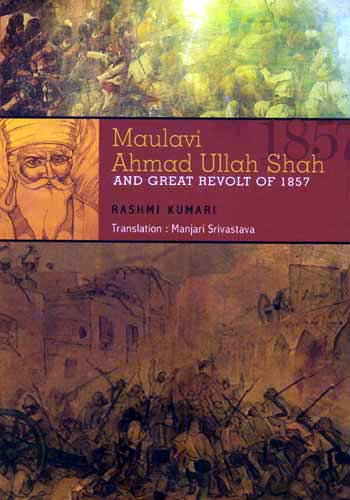
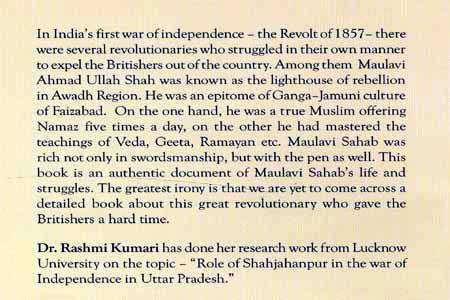
Maulavi Ahmad Ullah Shah and great revolt of 1857

Arcot, MADRAS (now TAMIL NADU ) /  Faizabad, UTTAR PRADESH :

BookAhmedalluhMPOsJAN13mpos2018

BookAhmedalluh02MPOsJAN13mpos2018

source: http://www.nbtindia.gov.in / National Book Trust, India / Home> Books> National Biography

Sify columnist releases book on Indian Muslim freedom fighters

NEW DELHI :

FreedomFightersMPOs22dec2017

Patna:

In a glittering ceremony, two books on the Muslim community’s contribution to the Indian freedom movement were launched in Patna last week. The function was presided over by Harsh Mander, former IAS officer and human rights activist.

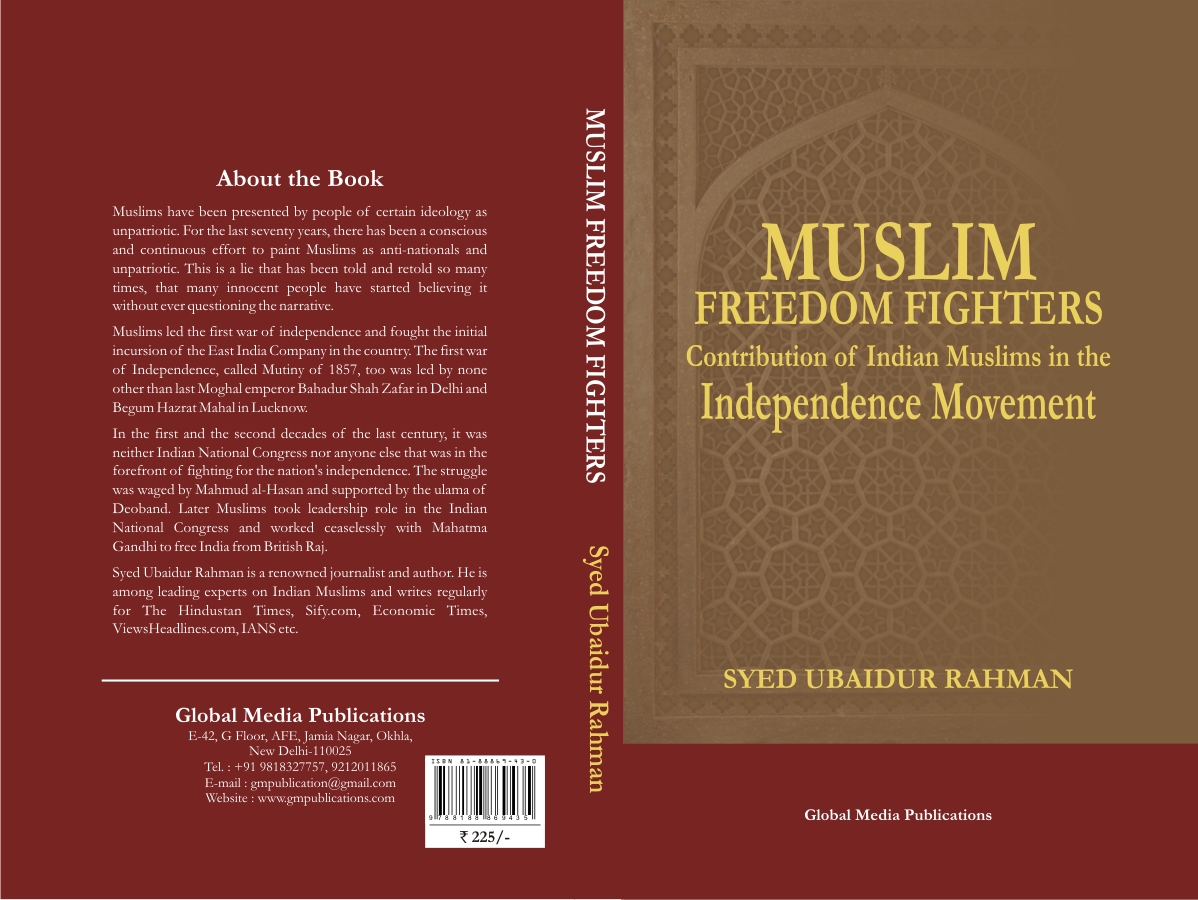
The books ‘Muslim Freedom Fighters: Contribution of Indian Muslims in the Independence Movement’ and its Urdu version ‘Muslim Mujahideen-e-Azadi aur Tehrik-e-Azadi Mein Unki Khidmat’ have been authored by well-known Delhi based author and journalist Syed Ubaidur Rahman.

The two books try to fight the oft-repeated allegations that Muslims are anti-national and have not contributed for the freedom of the nation. The books nail the lie and prove that Muslims not just participated in the freedom movement, they went on to lead the freedom struggle for a long time. The first war of Independence or Mutiny of 1857 was led by Mughal emperor Bahadur Shah Zafar in Delhi and Begum Hazrat Mahal in Lucknow.

The Independence Movement in the first two decades of the twentieth century was led by Mahmud Hasan and ulama of Deoband and they had respect and support of everyone including Hindus and Muslims.

If anyone has any doubt about the Muslim contribution in the freedom movement, the fact that the Indian National Congress had as many as nine Muslims as its president till the year 1947 will remove such doubts.

While speaking on the occasion, Harsh Mander said that the divisive forces in the country are trying to divide the nation on the basis of religion and faith. He said that the danger from such forces for the national fabric and its unity has become grave.

Mander added that the threat to the communal amity in the country was never so high as is today as divisive forces are doing every thing to pit one community against the other and create a fear psychosis among the majority community prompting it to turn it against minorities.

Khursheed Mallick, a Chicago based urologist, philanthropist and director of IMEFNA said that the book is a timely reminder to the nation that Muslims and Hindus both sacrificed for the nation and this fact must be clearly told to our young generation. He said Muslims sacrificed heavily for the cause of the freedom of the nation and efforts must be made to tell the history.

Syed Ubaidur Rahman, the author of the two books, while speaking on the occasion said Muslims have been rather loath to write about the sacrifices they have made for the cause of the Independence and freedom. He said Muslims suffered badly throughout the freedom movement. They were the worst suffers in the wake of the mutiny of 1857 and its aftermath when Muslims were hounded across North India and beyond. Tens of thousands of Muslims lost their lives for the freedom.

Syed added that ulama of Deoband played a stellar role in the freedom movement. Unlike the common perception, they were secular to the core and when they established a government in exile in Kabul in 1915, they appointed Raja Mahendra Pratap as its President and Maulana Barkatullah Bhopali as its Prime Minister.

The book documents the lives of forty renowned Muslim freedom fighters including, Shaikhul Hind Maulana Mahmud al-Hasan, Maulana Barkatullah Bhopali, Hakim Ajmal Khan, Maulana Ubaidullah Sindhi, Maulana Abul Kalam Azad, Maulana Mohammad Ali Jauhar, Dr Maghfoor Ahmad Ajazi, Dr Mukhtar Ahmad Ansari, Ashfaqulla Khan, Maulana Hasrat Mohani, Maulana Muhammad Mian Mansoor Ansari, Asaf Ali, Husain Ahmad Madani, Aruna Asaf Ali (Kulsum Zamani), Peer Ali Khan, Saifuddin Kitchlew, Mohammed Abdur Rahiman, Captain Abbas Ali, Abdul Qaiyum Ansari, Prof. Abdul Bari, Moulvi Abdul Rasul, Nawab Syed Mohammed Bahadur, Rahimtulla Mahomed Sayani, Syed Hasan Imam, Sir Syed Ali Imam, M.C. Chagla, Yusuf Meherally, Justice Fazal Ali, General Shah Nawaz Khan, Allama Fazle Haq Khairabadi, Maulana Shaukat Ali, Syed Mahmud, Maulana Mazharul Haque, Badruddin Tyabji, Col Mehboob Ahmed, Begum Hazrat Mahal, Maulana Shafi Daudi, Rafi Ahmed Kidwai, Syed Mohammad Sharfuddin Quadri, Batak Mian .

The book launch function was organized at Anjuman Taraqqi Urdu and was presided over by Abdul Qaiyum Ansari, chairman of Anjuman Taraqqi Urdu Bihar.

Syed Ubaidur Rahman is a New Delhi based writer and commentator. He has written several books on Muslims and Islam in India including Understanding Muslim Leadership in India.

source: http://www.sify.com / Sify.com / Home> SifyNews> National / by SIFY.com / Friday – December 22nd, 2017