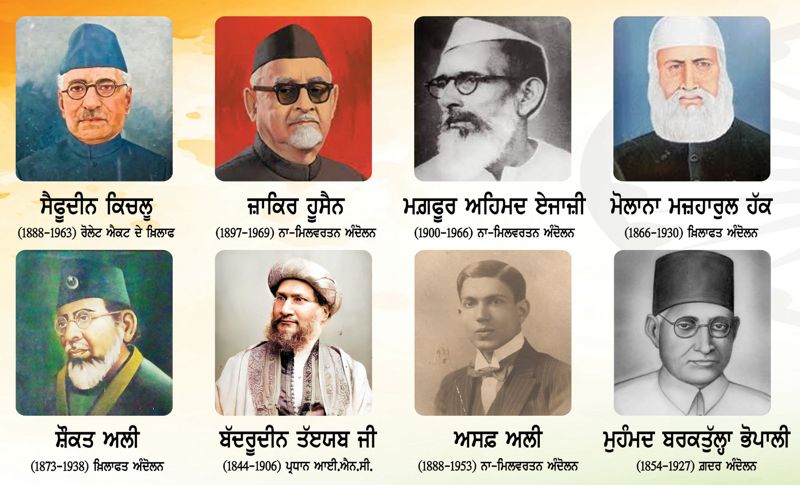
With an intent to highlight the role of Islamic leaders in the pre-independence freedom struggle, a group of Muslim youths have decided to organise a function on the occasion of Republic Day, during which sacrifices of unsung heroes from their community would be highlighted.
Besides organising an elaborate programme after unfurling the Tricolour at the Dehliz Chowk on January 26, the enthusiasts will also install banners displaying portraits of more than 20 prominent Muslim freedom fighters at various locations.
The organisers say the gesture will motivate Muslim youths of the region to come forward and play active in nation building, irrespective of their political, social or religious allegiances.
Zeshan Haidar, the convener of the scheduled event, said youths from various Muslim organisations of the area had been roped in to work in tandem for restoring the lost glory of leaders from their community, who had made supreme sacrifices in struggle against the British Government and played a major role in getting freedom for the country.
“Unfortunately, successive governments have failed to recognise the contributions of Muslim leaders in the freedom struggle and a majority of Muslim freedom fighters and martyrs have remained unsung during functions held to celebrate national events such as Republic Day and Independence Day,” Zeshan Haidar said, adding that these names were also missing from history books.
The enthusiasts have shortlisted names of about 100 Muslim leaders of pre-Independence era and portraits of 20 from them will be displayed in the region.
Maulana Shah Abdul Qadir Ludhianvi (grandfather of Shahi Imam Punjab Maulana Usman Ludhianvi), Zakir Husain, Begum Hazrat Mehal, Maulvi Ahmadullah, Abadi Bano Begam, Ashfaqulla Khan and Husain Ahmed Madni were cited among more prominent Muslim freedom fighters whose portraits figure on the proposed banners.
source: http://www.tribuneindia.com / The Tribune / Home> Ludhiana / by the Correspondent, The Tribune / January 24th, 2023
The first Muslim judge of a high court in colonial times, Syed Mahmood’s professional conduct offers a counterpoint to the declining standards in Indian judiciary.
WHEN Justice Abdul Nazeer addressed the 16th national council meeting of the RSS-affiliated Akhil Bharatiya Adhivakta Parishad at Hyderabad last December, he said, “Great lawyers and judges are not born but made by proper education and great legal traditions, as were Manu, Kautilya, Katyayana, Brihaspati, Narada, Parashar, Yajnavalkya, and other legal giants of ancient India.” In the symposium on “Decolonisation of the Indian Legal System”, Justice Nazeer also said the “continued neglect of their great knowledge and adherence to the alien colonial legal system is detrimental to the goals of our Constitution and against our national interests…”.
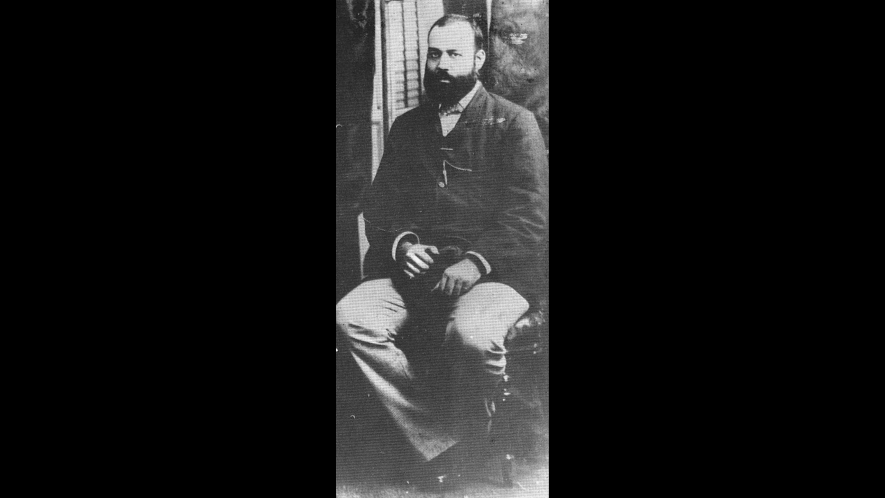
Perhaps Justice Nazeer should have also recalled 19th-century jurist Justice Syed Mahmood (1850-1903). A pioneer in bold assertions against the colonial judiciary, he produced incisive legal commentaries that reflect an audacious dissenter’s point of view. Writing in an Urdu newspaper, his father, Sir Syed Ahmed Khan, narrates Mahmood’s resignation from the Allahabad High Court in 1893 to “protect the self-respect of Indians against the racism of British judges”.
In that era, conceptions of nationhood were still evolving in India. Indian judges would not muster the courage to contest the racism of the imperial power or fellow European judges. But Mahmood did, in intrepid ways. Khan founded the Mohammedan Anglo-Oriental (MAO) College at Aligarh in 1877 and figures prominently but contentiously, stereotyped as a British loyalist and separatist in debates on contemporary nationalism. Mahmood supported his father’s modern education project, but unfortunately, his contributions are largely ignored by historians and the legal fraternity.
By 1920, MAO College, now Aligarh Muslim University, was the most prominent residential university in the country. Its history department has been a premier centre for advanced studies for a half-century. In 1889, primarily on Syed Mahmood’s initiative and his gifts in terms of books, journals and cash, AMU established a law department. Yet, he was neglected in its research. Only in 1973, seven years after the centenary of the Allahabad High Court, the Aligarh Law Journal brought out Mahmood’s contributions, and legal scholars reflected on his high calibre as a lawyer and judge.
The good news is, in 2004, Alan M. Guenther did his doctoral thesis on Mahmood at McGill University, Canada, which is available online for the public to access. His meticulous and well-researched account touches almost every aspect of Mahmood’s public life. Guenther also published an extended essay in 2011on Mahmood’s views on English education in 19th-century India. (In 1895, Mahmood had written a book on the theme for his speeches at the Educational Conference.)
In 1965, Asaf Ali Asghar Fyzee (1899-1981) complained, “Syed Mahmood’s contributions to the transformation of Muslim law in India have been largely neglected by historians and survive primarily as footnotes in legal texts on Muslim law.” Guenther, too, observes, “…overshadowed by the life and writings of his illustrious father, Ahmad Khan, his legacy has not received the attention it deserves. A large part of his father’s achievements in the reform of education, in fact, would not have been possible without the assistance of Syed Mahmood. But when he reached the age at which his father had made his most significant achievements, [Mahmood] had his life cut short.”
Mahmood had laid out his life plans clearly. S. Khalid Rashid, writing in 1973, reports that Mahmood decided early on that, like his ancestors, he would devote the first third of his life to educating himself, the second to earn a living, and the last to “retired study, authorship and devotion to matters of public utility”. But Guenther writes about how Mahmood’s health had deteriorated through alcohol abuse and disease. He died before he turned 53, broken by forced retirement, estranged from his father (who had died five years previously), stripped of responsibilities at the college he had helped found, separated from wife and son, and in poverty. He was selling personal items to repay debts. “His father’s numerous writings and letters are still republished, but Syed Mahmood’s contributions to Muslim thought are hidden in bound volumes of the Indian Law Reports and brittle files of government correspondence,” Guenther writes.
One aspect of Mahmood’s last years is captured by Prof. Iftikhar Alam Khan’s Urdu books, Sir Syed: Daroon-e-Khana (2006, 2020) and the recent Rufaqa-e-Sir Syed: Rafaqat, Raqabat wa Iqtidar Ki Kashmakash. These accounts expose the smear campaigns of the three companion successors of Sir Syed—Samiullah, Mohsin-ul-Mulk and Viqar-ul-Mulk—against Syed Mahmood as they vied for the secretary’s post at MAO College. Often European members of MAO College conspired with them. Exploiting his weaknesses and eccentricities, they ousted him to get a hold over college affairs, compounding his hurt during his tragic final years.
SYED MAHMOOD’S ROLE IN SIR SYED’S EDUCATIONAL ENTERPRISE
Having returned to India in 1872 after studying in England, Mahmood took time out of his budding legal career to assist his father’s reform work, particularly setting up MAO College. He prepared a detailed plan along the lines of his experiences in Cambridge. His specific aim, explained in February 1872, was to produce future leaders of India through an educational institution whose residential nature would be “as indispensable an education as the course of study itself”. The aim was to create a society of students and teachers quite different from the rest of society.
He travelled with his father to Punjab in 1873 and spoke at a rally to promote the project. In 1889, Sir Syed introduced a motion to nominate Mahmood as joint secretary of the board of trustees of MAO College by highlighting his assistance despite the opposition he faced. In particular, he considered his son’s influence the primary factor that persuaded European professors to come to India and teach there.
European staff members confirmed this around six years later when there was renewed opposition to Mahmood continuing as joint secretary. The principal, Theodore Beck (1859-1899), testified, “Syed Ahmad….acknowledged his reliance on Syed Mahmood for advice in all matters, and his imprint could be noted in the correspondence relating to the school. He declared his firm conviction that Syed Mahmood was the one person who shared his vision for the college, and apart from him, no one would be able to administer the school in keeping with that vision.” However, Samiullah (1834-1908) disagreed with Sir Syed on this count. As a result, a tussle for power began in the college management. The power-play could explain why AMU felt inhibited in bringing out a biography of Mahmood, a research gap that Guenther’s doctoral thesis fills. He has extensively relied on important correspondences of Mahmood preserved in the London India Office (British) Library.
SYED MAHMOOD’S TRYST WITH MUSLIM LAW
Mahmood is a forgotten pioneer of the transformation of Muslim law in modern South Asia. In 1882, at just 32, he became the first Muslim judge of the high courts in British India. He delivered numerous landmark decisions that shaped Muslim law, the law in general, and its administration.
Earlier, he blazed a trail his younger contemporaries followed in their judicial roles in British India. He was one of the first Indian Muslims to study in England and train in the English system of jurisprudence, the first Indian to enrol as a barrister in the High Court of Judicature at Allahabad in 1872, the first appointed as a district judge in the restructured judicial system of Awadh in 1879 and the first Indian assigned as a puisne judge to the High Court at Allahabad. He was the first Muslim in any High Court of India. He cleared a path for Indian Muslims to participate in administering justice in India. But his contribution is not limited to creamy career opportunities for Muslim youngsters. His lasting legacy is how Muslim law is perceived and administered in South Asia today.
CHAMPION OF ACCESSIBLE JUSTICE
An abiding concern of Mahmood was the cost of administration of justice. Court procedures were lengthy and expensive, and the “mass of law” was complicated. Distance from courts was another concern, for which he proposed a network of village courts for “on-the-spot” adjudication. He sought to make justice accessible through unpaid tribunals and honorary munsifs. He prepared a comprehensive draft for this, Guenther informs.
Furthermore, he attacked the [racial] mindset and court fees and stamp duties on legal documents. He ruled in August 1884 and February 1885 that “…if justice costs the same amount [to the] rich and poor, it follows that the rich man will be able to purchase it, whilst the poor man will not.” He declared, more than once, that British judges in India were too quick to find fraud.
In a speech at the Allahabad Bar in April 1885, Mahmood raised the language issue in judicial transactions, saying laws should be in languages intelligible to the masses. He insisted on the vernacular in arguments, pleadings and justice delivery and translated verdicts so that people unfamiliar with English could rest assured that judgments are reasoned. Of course, the issue of judicial language continues to be debated, and for this, acknowledgement is due to Mahmood.
AN INDIAN DISSENTER IN THE HIGH NOON OF BRITISH COLONIALISM
Mahmood is known most for outstanding dissenting judgements. In volume 2 of his 2021 book, Discordant Notes, Justice (retd.) Rohinton F. Nariman writes that Mahmood was known for detailed judgments, some of which stand out for thoroughness and fearless language. Mahmood would refer to the original Sanskrit versions when ruling on Hindu laws and the Arabic texts for Muslim laws, rather than using interpretations of the relevant texts.
From the 1860s to 1880s, during the codification of laws, he sought limits on importing British laws and protested that the local context was getting overlooked. His concern was not just the laws but their efficacy and adaptability within India’s cultural diversity.
Guenther observes, “…throughout his life, he identified himself as a Muslim as well as an Indian and a subject of the British crown, and that he was actively involved in the education and improvement of the Indian Muslim community. At the same time, Mahmood… [made] efforts to promote harmony between people of diverse backgrounds, and…[supported] initiatives that improved the situation of all Indians, regardless of religious affiliation…”
An anecdote from Altaf Hali’s Hayat-e-Javed (1901), cited by Shamsur Rahman Faruqi (2006), is worth sharing. “Contrary to the culture of sycophancy and genuflecting before the English colonial authority….Syed Ahmad Khan and his high-profile and brilliant son Syed Mahmud strived to conduct themselves as if they were equal to the English….Syed Ahmad Khan had stayed away from the [1867 Agra] Durbar because Indians had been given seats inferior to the English. A medal was to be conferred on Syed Ahmad Khan at that Durbar. Williams, the then Commissioner of Meerut, was later deputed to present the award to Syed Ahmad Khan at Aligarh railway station. Willams broke protocol and showed his anger at having to do the task under duress and said that government orders bound him, or he wouldn’t be presenting the medal to Syed Ahmad Khan. Syed Ahmad Khan accepted the medal, saying he wouldn’t have taken the award, except that he too was bound by government orders.”
Indian democracy is an outcome of anti-colonial nationalism, and dissent is its core component: Mahmood’s dissent contributed to nationalism in his time. In 2022, the V-Dem Institute described India as an electoral autocracy where dissent is being criminalised, and the judiciary is failing to contain the majoritarian upsurge. Mahmood’s professional conduct is an encouraging counterpoint to the degeneration in the Indian judiciary.
WHAT DID MAHMOOD THINK OF THE INDIAN NATIONAL CONGRESS?
According to Guenther, though Mahmood never joined the Congress, he was “equally aloof” from the anti-Congress propaganda his father indulged in. “…a rare catholicity characterised his views on most of the controversial questions,” he writes. He adds, “His acceptance among the Hindus [elites] generally was demonstrated by the fact that they tried to send him as their representative to the Imperial Legislative Council, though he never received that appointment.”
Nonetheless, like his father, Mahmood harboured class and regional prejudices. Guenther reveals an article Mahmood wrote in The Pioneer on 4 September 1875, suggesting the government must strive to with the sympathies of the “higher classes of natives”. When challenged to defend his position by “Another Native” in the same newspaper two weeks later, Mahmood responded that people in Punjab and the North-western Provinces [now Uttar Pradesh] were, historically speaking, of “much greater political significance” than those of Lower Bengal. Gunther cites his write-up: “…any educational system that succeeded in ‘attracting the Bengalee and fail(ed) to exercise any influence upon the higher classes of the Rajpoot, the Sikh, and the Mussulman’ must be regarded as a failure.”
Considering the socio-regional composition of top functionaries of AMU, even impartial insiders would testify that it still harbours regional and sub-regional prejudices. The Sir Syed Academy is releasing many publications during the ongoing centenary celebration of AMU. Publishing Guenther’s dissertation may be a fitting tribute to Mahmood, who must be regarded as a prominent co-founder of MAO College.
Mohammad Sajjad teaches modern and contemporary Indian History at Aligarh Muslim University. Md. Zeeshan Ahmad is a lawyer based in Delhi. The views are personal.
First published by Newsclick.
source: http://www.theleaflet.in / The Leaflet / Home> History / by Mohammad Sajjad and Zeeshan Ahmad / April 01st, 2022
Contrary to the popular notion that wars are fought by the armies alone, the whole nation including Bollywood personalities and leading artists get involved in the national efforts to fight the enemy.
The Chinese invasion in October 1962 was a shocking moment for India. Traditionally, India had supported China at every international forum for at least half a century. The invasion was the least expected from China and India was not at all prepared for it. Prime Minister Jawaharlal Nehru urged the nation to stand united in that hour of emergency and in response Indians donated generously to the National Defence Fund.
The film industry did not lag. Film Industry’s war efforts were led by legendary filmmaker Mehboob, singer Mohammed Rafi and music composer Mohammed Zahur Khayyam Hashmi (Khayyam).
In less than a week they collaborated to produce two music videos, which were to be played in film theaters, on the radio, and on the roadsides to raise funds for the war.
One of those two songs, “Awaz do hum ek hain…”, by Jaan Nisar Akhtar is now a popular political slogan in India. On Nehru’s call to the nation, Jaan Nissar Akhtar wrote the song to which music was given by Khayyam and the voice by Mohammad Rafi. The song is an invocation to Indians to unite in the face of an invader became a national passion and remains so till today.
The song starts with:
ek hai apni zameen, ek hai apna gagan
ek hai apna jahaan, ek hai apna watan
apne sabhi sukh ek hai, apne sabhi gham ek hai
Aawaz do ham ek hai
(We have a common earth, we have a common sky
We have a common world, we have a common motherland
All our joys are common, all our sorrows are common
Say it aloud that we are one!)
The powerful lyrics were turned into a national rage by the soulful singing of Rafi. Jago watan khatre me hai, sara chaman khatre me hai (wake up our motherland is under threat, whole garden is under siege) and dushman se nafrat farz hau, ghar ki hifazat farz hai (hating your enemy is a duty, to guard your home is a duty), aroused patriotic emotions among millions of Indians. The song asks the youth to join the army and fight the aggressor.
The song was picturized on Rajendra Kumar, Sunil Dutt, Raj Kumar, and Kamal Jeet.
Another song produced along with this was written by Sahir Ludhianvi, “watan ki abroo khatre main hai…” (dignity of the nation is under threat). It was also produced by Mehboob and sung by Mohammed Rafi. The song specifically points to the Panchsheel pact and other friendly gestures made by India towards China. It says,
Wo jinko saadgi mein hamne
Aankhon par bithhaaya thha
Wo jinko bhai kehkar
Hamne seene se lagaaya thha
Wo jinki gardanon mein haar
Baahon ka pehnaaya thha
Ab unki gardanon ke waaste
Talwaar ho jaao
(The people we honoured because of our innocence
The people we embraced and called brothers
The people we received with love
Now, do become swords for their throats)
The song also points toward the internal threats at the time of war.
Khabar rakhna koi gaddaar
Saazish kar nahin paaye ae
Nazar rakhna koi zaalim
Tijori bhar nahin paaye ae
(Be vigilant that no traitor conspires against the nation
Be vigilant that nobody makes money out of our war efforts)
The song was picturized on Dilip Kumar, Rajendra Kumar, Raj Kumar, and Kamal Jeet in a video produced by Mehboob.
Lorries with speakers would roam around playing these songs and prompting people to donate generously. It is said that when one such procession reached the house of Shammi Kapoor his wife actor Geeta Bali started crying. She rushed inside her house and told Shammi that she needed to do something for the nation. Geeta took all her jewelry, even the pieces she wore, and gave it away for war.
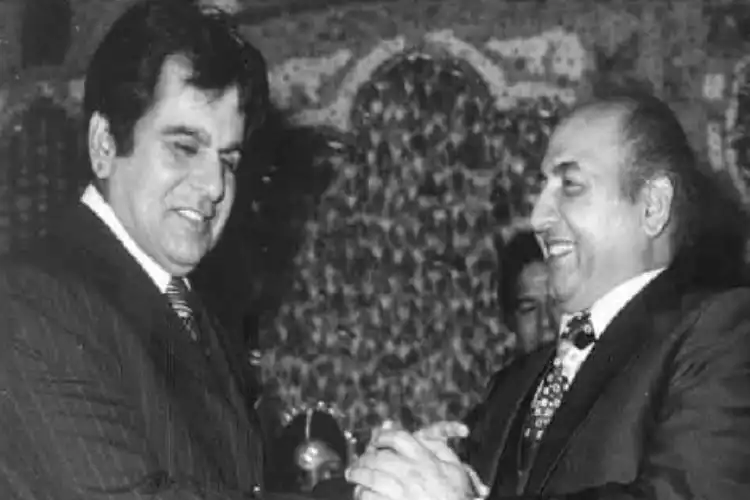
Rafi felt that singing in the safety of Mumbai was a disgrace in the line of his national duty. He discussed with Dilip Kumar and urged PM Nehru to send them to the border. What would they do there? Rafi felt that his songs could boost the morale of Indian soldiers and the presence of Dilip Kumar would assure the troops that the whole nation is standing behind them.
It was a dangerous mission. It was unprecedented for the artists to perform at the war front. In the cold, Rafi and Dilip reached the war frontier. He sang songs, interacted with soldiers, and boosted their morale. Dilip Kumar later recalled, “needless to say he was the star attraction with the jawans and the young newly commissioned officers”.
After the war ended with a ceasefire the collected funds were used to recover the economy and modernizing the Army.
On 27 January 1963, Mehboob organized an event in Delhi where he invited.all the prominent film stars to perform in the presence of President S Radhakrishnan and PM Jawaharlal Nehru. The event is often remembered for the rendition of “Aey mere watan ke logo…” by Lata Mangeshkar and Mohammad Rafi sang two songs. One was written by Shakeel Badayuni and its music was composed by Naushad, “Apni azadi ko hum hargiz mita sakte nahi.” The song was later adapted into the film Leader and the other was “Kar chale hum fida….” written by Kaifi Azmi and composed by Madan Mohan, which was later adopted in Haqeeqat, a movie based on the India-China war.
The fact that Rafi went to the war frontier and stayed there for a few days to play what turned out to be a big morale booster for the troops remains an unprecedented manifestation of one’s sense of responsibility towards his country.
source: http://www.awazthevoice.in / Awaz, The Voice / Home> Culture / by Saquib Salim / December 24th, 2022
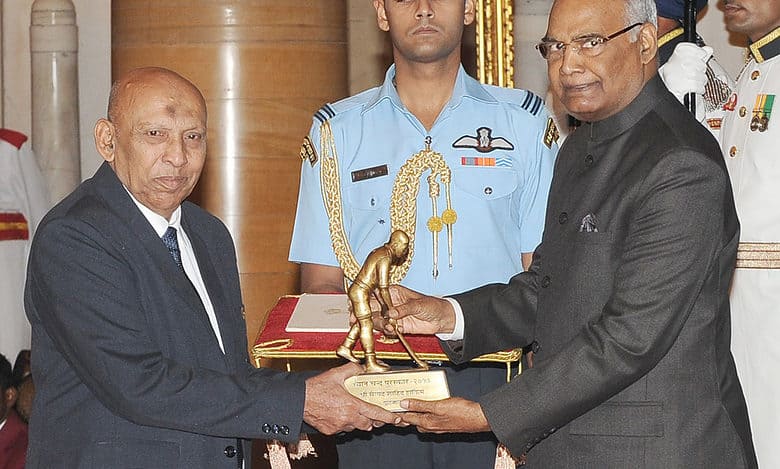
The President, Shri Ram Nath Kovind presenting the Dhyan Chand Award, 2017 to Shri Syed Shahid Hakim for Football, in a glittering ceremony, at Rashtrapati Bhavan, in New Delhi on August 29, 2017. Photo: Wikipedia
The name of Syed Shahid Hakim is familiar to the entire football fraternity of India. He was one of the most accomplished personalities who graced Hyderabad and Indian football as a player, referee and coach. Indeed it would not be wrong to say that there were few people in India who could match his knowledge and acumen about the different aspects of football. Besides being a well known personality in football, he also served as an officer in the Indian Air Force.
Being one of the sons of the great coach S.A. Rahim, he grew up in a football related environment. Hakim belonged to that period when Hyderabad was at the zenith of Indian football. He played with the illustrious players of India. Among his teammates were the famous goalkeeper Peter Thangaraj, D. Kannan, S.A. Latif, Yousuf Khan, S. Narayanan, H H Hamed and others. All these players were from the twin cities of Hyderabad and Secunderabad.
As a player, Hakim’s talent bloomed at an early age. He was at his peak in the late 1950s. He was a member of the Hyderabad state team which won the Santosh Trophy in 1957. Due to his prodigious talent and his rising status in Indian football, he was selected to represent India in the Pre-Olympic tournaments in Jakarta, Singapore and Malaysia.
It was not a surprise when he was also selected in the Indian team for the 1960 Olympic Games in Rome. That was the last time that India qualified for the Olympic Games. Although India narrowly failed to enter the knockout stage of the tournament, the Games were a great learning opportunity for Hakim.
The close interaction that Hakim had with the world’s best players and coaches gave his keen intelligence some valuable insights into the tactics and training of European and South American players. These he later put into use when guiding his own trainees. This is where his education and learning proved to be a big asset. Having studied at All Saints HS, Nizam College and then Osmania University, his level of education was above many other footballers. This enabled him to interact easily with foreigners and learn from everything that he observed.
Later, after he joined the Indian Air Force, he played for the defence services team and went on to be appointed captain of the All India Services team.
After retiring from the game as a player, he continued to serve Indian football in various capacities. He became a well known referee who was among the best in India. Starting from 1970 he continued to serve as a referee for many years. In 1974 he was selected to be a member of the FIFA Referees panel which was a great honour for an Indian referee.
Thereafter, he officiated in 33 international matches and it is a record which is still not broken. No other Indian referee has officiated in 33 international matches.
But that was not the end of his distinguished career. Thereafter, Hakim became a reputed coach and coached the Indian team from 1980 to 1982 for the Merdeka Cup and Delhi Asian Games along with other coaches.
When he was 80, he fell prey to the rampaging COVID pandemic but recovered. However, despite winning the battle against the dreaded virus, his life did not last long thereafter. He suffered two strokes in rapid succession and passed away in Gulbarga where he had been admitted to a hospital in August 2021. His death left a void in Indian football which will perhaps never be fulfilled.
source: http://www.siasat.com / The Siasat Daily / Home> News> Hyderabad / by Abhijit Sen Gupta / December 09th, 2022
Traditional makers of classical Indian string instruments worry about the extinction of their art, with little interest among the younger generation, and most of their clientele now based abroad.
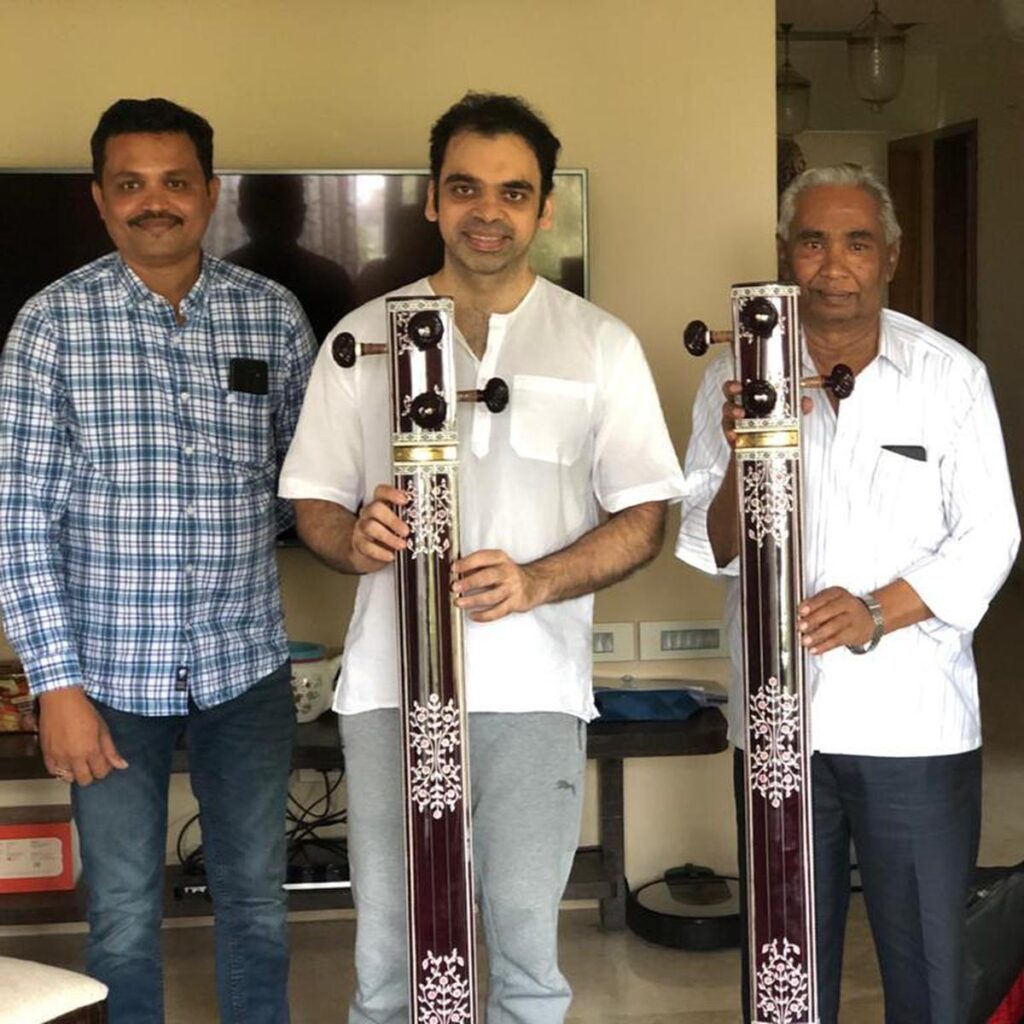
Tanpura artist Altaf Mullah, classical vocalist Rahul Deshpande and Yusuf Mullah (Altaf’s father and Tanpura maker to Bhimsen Joshi). | Photo Credit: Special Arrangement
For generations, Altaf Mullah and his family, residents of Miraj in Goa, have been in the business of tuning the strings and twisting the pegs of Indian string instruments such as the tanpura, surbahar, rudra veena and vichitra veena. They are currently headed for a tour of the United States and the United Kingdom, to hold workshops on how best to keep these instruments tuned, for their clients abroad, a number that now oustrips their domestic market.
On the face of it, it seems as though Mr. Mullah and his family have negotiated the ravages of modernity on traditional businesses quite well, by shifting their client base abroad. But the story is quite different. In fact, the workshop is being sponsored by the Indian Council for Cultural Relations (ICCR) after a distress email from Mr. Mullah, who feared the extinction of this art of making and maintaining string instruments.
“We are the fifth generation making these string instruments. We were given Rajashray (royal patronage) in 1862, but the way things were going, this art would not survive beyond this generation. We make upto ₹500 per day, the younger generation is not that attracted to it,” says Mr. Mullah. His father, Yusuf Mullah, is a much-feted string instrument maker, with Hindustani music maestro Bhimsen Joshi having been a faithful patron.
After having knocked on many doors, Mr. Mullah wrote to ICCR president Vinay Sahasrabuddhe about the systemic and immediate problems faced by his tribe of string instrument makers. “For 1.3 billion people, and countless afficianados abroad, there are only 220 karigars (artisans), mostly concentrated in Goa or Kolkata,” he said.
Mr. Sahasrabuddhe’s response was immediate, and one of the first things he did was to set up a meeting between Mr. Mullah and the Postmaster General of India, in New Delhi. “Our immediate issue was that the parcels of instruments that we used to send abroad [which is the bulk of the business] were through speed post. The department of posts changed it from weighted charges to volumetric post, that raised our costs by three times the amount. We were really struggling,” said Mr. Mullah. The Postmaster General agreed to make an exception for the parcelling of string instruments and some relief was gained.
“Our major problems, however, remained. Our worst period was of course between 1990-2000 with the rising popularity of electronic instruments. Fortunately, acoustic sound made a quick comeback, and our business went up again, but not enough to attract the next generation,” he said.
Mr. Sahasrabuddhe told The Hindu that preserving the tradition of making and maintaining Indian string instruments was important as they were “the tangible and intangible heritage of India, and Indian musical tradition.” In fact, there is now talk of standardising a curriculum via the All India Council for Technical Education (AICTE) for this purpose, to create a base of instrument makers, and prevent the skill from dying.
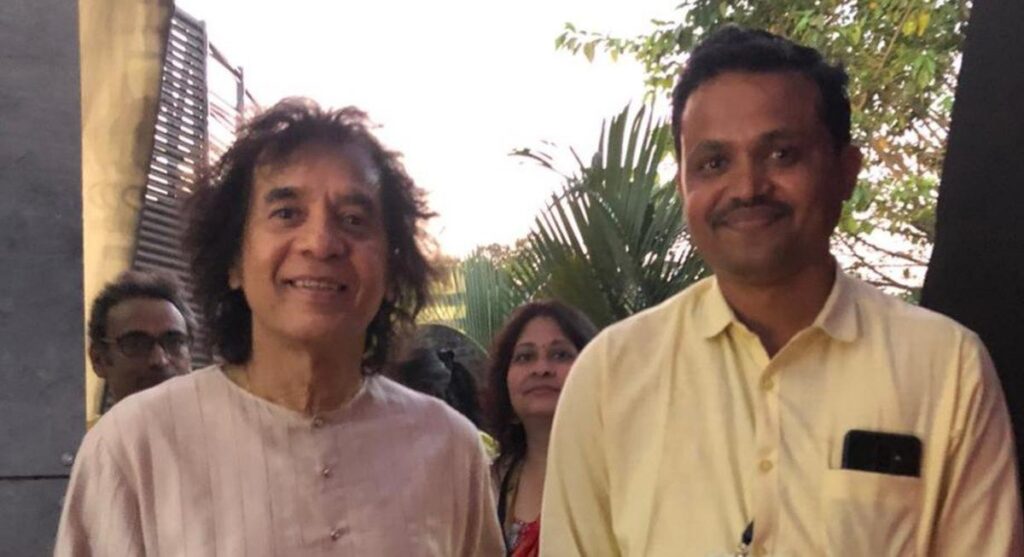
The Mullahs’ client list, ranging from composer A.R. Rahman to India’s nightingale, the late Lata Mangeshkar, to Bhimsen Joshi and tabla maestro Zakir Hussain — reads like the who’s who of Indian music.
Tanpura artist Altaf Mullah with Tabla maestro Zakir Hussain. | Photo Credit: Special Arrangement
Indian string instruments, especially the tanpura, have been historically referenced through much of Indian history. In his devotional song, “O Sadho”, the poet-saint Kabir draws a parallel between the human body and the tanpura. “ Yaha tan thaata Tambure kaa, paanch tatwa ka banaa hai Tambura, khaenchta taar marodata khoonti, Nikalta raag hajure ka, O Sadho” (O seekers, this body is a splendid tanpura, made of five elements, strung together with nine resonances. Tighten the strings, twist the pegs and it sings the song of the Lord).
As the irreplaceable accompaniment to the sound track of India, the tanpura, struggling for breath, was hoping to “get a ventilator soon”, said Mr. Mullah.
source: http://www.thehindu.com / The Hindu / Home> News> India / by Nistula Hebbar / December 04th, 2022
The young nurses believe that more Muslim girls across the country should opt for the nursing profession to serve society.
Patna (Bihar) :
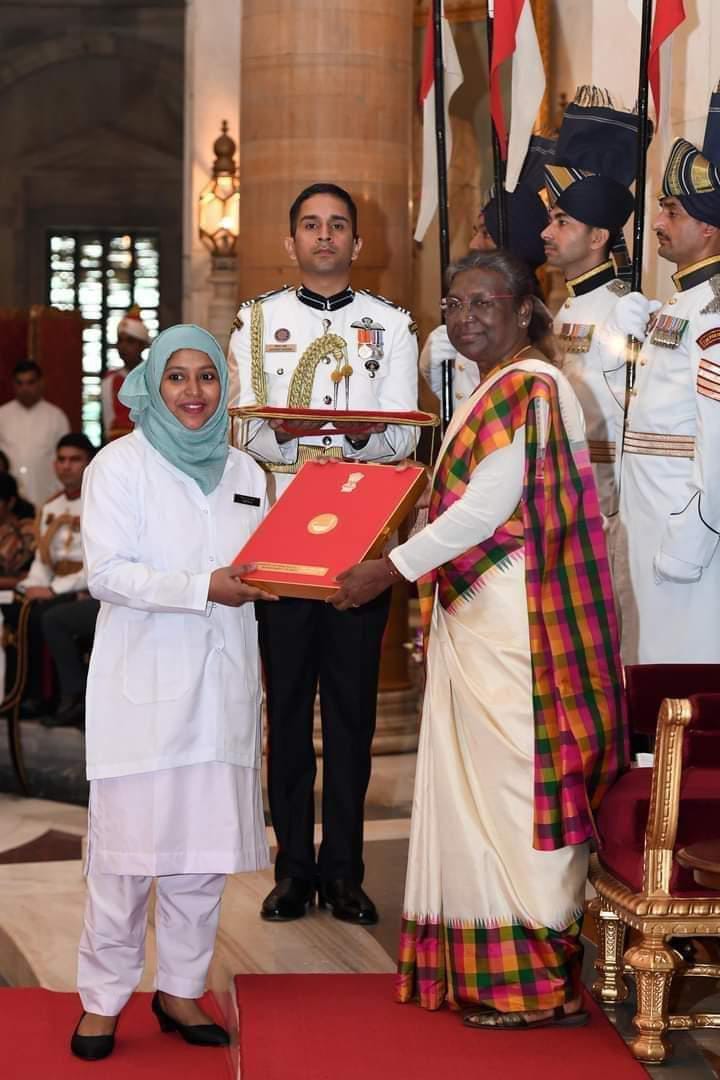
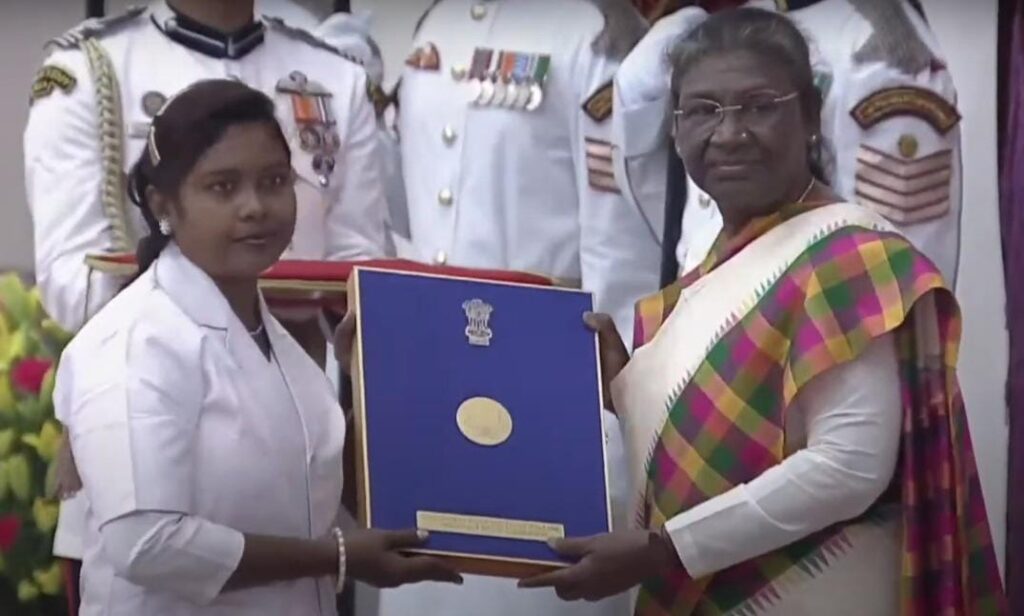
Two Muslim nurses Naziya Parveen and Shabrun Khatun from Bihar were awarded this year’sNational Florence Nightingale Awards (NFNA) by the President of India, Droupadi Murmu at Rashtrapati Bhavan earlier this month.
The National Florence Nightingale Awards (NFNA) were instituted in 1973 by the Government of India’s Ministry of Health and Family Welfare as a mark of recognition for the meritorious services rendered by nurses and nursing professionals to the society.
Sajeeda Banu of Karnataka, Ahmedullah Wani of Jammu & Kashmir, and Mohammed Kasim AB of Lakshadweep are the other Muslims who were awarded this year.
She was among 51 people from around the country who were awarded in different categories by the President. Her citation states that she has contributed to the establishment of the labor room and for helping in preparing the standard operating procedure.
32-year-old Naziya Parveen receiving the award from the President Murmu. | Picture by arrangement
Hailing from Sultanganj, Bhagalpur, Naziya is the eldest of three sisters. She is married to a microbiologist Mohammad Shams of Gaya. After completing her high secondary education in Dumka, Jharkhand she studied nursing for GNM at JawaharLal Medical College, Bhagalpur, and worked with Jamia Hamdard in New Delhi for six years. It was challenging to move from Delhi to Araria but her family supported her as “there isn’t much scope of work in Sadar Hospital.”
“I feel quite proud to be awarded as our society does not recognize the work of nurses. I am elated for being a Muslim awardee as we don’t get nominated for such awards. I was asked if I was from Kashmir as I was wearing a hijab,” she said.
Mother of two kids, Naziya has inspired other Muslim girls to take admission to nursing courses. Local newspapers in the state ran stories featuring her.
“We need to change our attitude towards this profession. It is a good job and one can draw good income from it. The nursing course is such that even if one does not opt for a job, they can get the chance to serve from home and earn. I am of the view that more Muslim girls should study nursing as a profession,” she said.
28-year-old Shabrun Khatun was awarded in the ANM (Auxiliary Nurse and Midwife) category. | Picture by arrangement
28-year-old Shabrun Khatun was awarded in the ANM (Auxiliary Nurse and Midwife) category. She works at Darbhanga Sadar primary health center. She had applied for the award previously but it was her work during Covid-19 that won her an award this year. She recalled how she went for a door-to-door screening of Covid-19 in April 2020 while being on fast and continued to work in 2021.
Shabrun told TwoCircles.net that receiving the award from President Murmu was quite encouraging.
Her journey to success has not been smooth. She had to work in local hospitals to support her family but this experience helped her. “I was good at studies in school and got prizes for my co-curricular activities. I wanted to be a medical doctor. I was selected for MBBS at a private medical college but did not have enough money to take admission. I also wished to be an officer in administration but my father’s proximity to doctors got me into nursing.”
Shabrun’s father Mohammad Akhtar is a tailor who would stitch clothes for operation theaters of hospitals nearby. She had cleared the preliminary test for selection in the police department but finally settled for a nursing course after her graduation in Zoology from her hometown of Rosera Bazar in Samastipur district in Bihar.
Shabrun said that she had to face unfriendly treatment in society after she chose to become a nurse. “But seeing my success now, everyone is happy,” she said.
She is of the view that Muslim girls who are not able to qualify for MBBS should consider nursing as a career as “it gives the satisfaction of serving humanity in one small way.”
In December this year, she would be felicitated on the foundation day of the Darbhanga district.
Sami Ahmad is a journalist based in Patna, Bihar. He tweets @samipkb
source: http://www.twocircles.net / TwoCircles.net / Home> Lead Story / by Sami Ahmad, TwoCircles.net / November 25th, 2022
The less fancied 27-year-old Rahman dished out a cool calculated performance to outshine the experienced Pasha and smoothly cruise to a deserving 25-0, 21-16 without much ado.
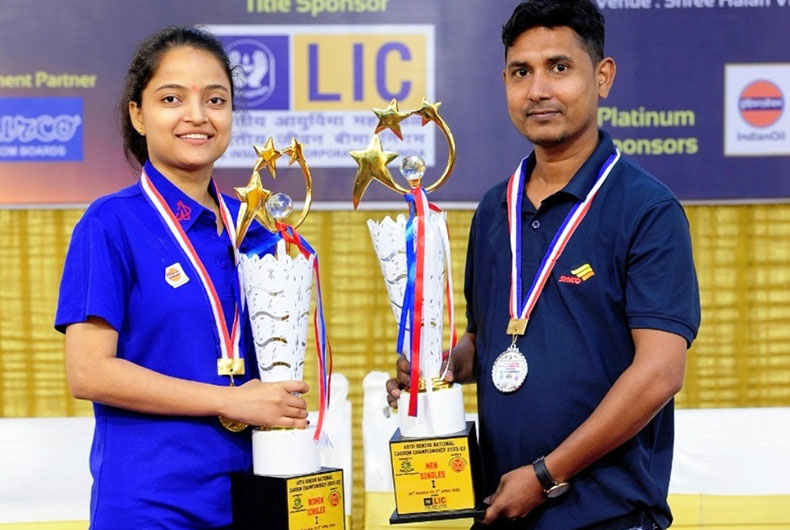
Unassuming sixth seed Abdul Rahman of Uttar Pradesh cornered all the glory recording an authoritative straight sets victory against international and fourth seed Zaheer Pasha of Reserve Bank of India (RBI) in the men’s singles final of the 49th Senior National Carrom Championship on Monday.
The less fancied 27-year-old Rahman dished out a cool calculated performance to outshine the experienced Pasha and smoothly cruise to a deserving 25-0, 21-16 without much ado and clinch his maiden crown in the national championship organised by the All-India Carrom Federation (AICF) and hosted by the Maharashtra Carrom Association (MCA).
In the women’s competition, international and fifth seed Kajal Kumari of PSPB (Petroleum Sports Promotion Board) overcame the spirited challenge from fourth seed Nilam Ghodke of JISL (Jain Irrigation System Limited) snatching victory in two closely-contested sets, 15-12, 17-10 to emerge champion.
Pasha, who had knocked out teammate and top seed Prashant More in the semi-finals, was erratic and surprisingly missed some easy shots which proved to be his downfall.
In contrast, Rahman played steadily and confidently executed his shots and gradually gained the momentum which he hung on to throughout the contest, which turned out to be a one-sided affair.
In the first set, Rahman settled down quickly and won the first six boards to pocket the set 25-0 and open up a 1-0 lead. Pasha showed signs of fighting back as he won the opening two boards to take an 8-0 lead in the second, but Rahman bounced back and steadily won the next three and with the eight points won on the fifth board he jumped to a 20-8 points lead.
Pasha managed to win four points in the sixth to narrow the lead to 12-20, but he lost a close seventh board as Rahman led 21-12 going into the 8th and final board. Pasha was left with an uphill task of getting 10 points from the final board and he tried his best but lacked consistency and with that, his hopes of staying alive faded away. Rahman capitalized on every chance to sink his black coins and ensure his success.
Meanwhile, Mantasha Iqbal of AAI (Airports Authority of India) defeated Debagani Tamuly of DASCB (Defence Accounts Sports Promotion Board) 8-25, 19-15, and 22-11 in the women’s third-fourth place match.
In the men’s third-fourth place match, Maharashtra’s Sandeep Dive defeated World champion and top seed Prashant More of RBI 25-19, 18-1.
The literary work is the fourth translation and the first Urdu work to win the JCB Prize
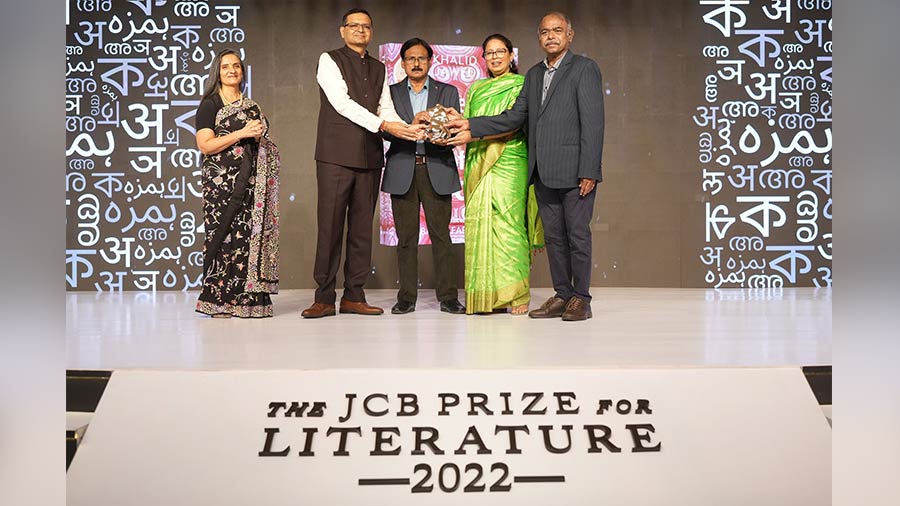
(Left to right) Mita Kapur, literary director, The JCB Prize for Literature; Sunil Khurana, chief operating officer, JCB India; winning author Khalid Jawed; translator of ‘The Paradise of Food’ Baran Farooqi and jury member AS Panneerselvan JCB Prize
Khalid Jawed’s The Paradise of Food has been awarded the JCB Prize for Literature 2022. The book was chosen by a panel of five judges.
The Paradise of Food has been translated into English from Urdu by Baran Farooqi and published by Juggernaut. The Rs 25 lakh prize was awarded to the author virtually by Sunil Khurana, chief operating officer, JCB India, and A.S. Panneerselvan, chair of the jury for 2022, at a hybrid event organised at The Oberoi, New Delhi. Khalid Jawed also received the trophy — a sculpture titled ‘Mirror Melting’ by Delhi artist duo Thukral and Tagra.
The Paradise of Food, which is the fourth translation to win the JCB Prize and the first in Urdu, is a bildungsroman that traces the narrator’s journey through life anchored in a middle-class Muslim joint family.
The jury comprised Panneerselvan, journalist, editor and columnist; author Amitabha Bagchi; J Devika, historian, feminist, social critic and academician; author Janice Pariat and Rakhee Balaram, assistant professor, Global Art and Art History at the University of Albany, State University of New York. The award ceremony began with a welcome note from Mita Kapur, literary director of the JCB Prize, and an address by Deepak Shetty, CEO & managing director, JCB India. Classical dance performances by Shriram Bhartiya Kala Kendra led up to the grand announcement.
Speaking about the merit of The Paradise of Food as a piece of literature, Bagchi commented, “This singular and moving book shines a scintillating light on the violence at the heart of human civilisation. The language contains several beautiful and unusual formulations that are a literary achievement by both the author and the extremely skilled translator. A literary landmark in a less-celebrated genre of Urdu’s grand literary tradition, this work deserves to be widely read in India and beyond.”
Other members of the jury, too, unanimously appreciated Jawed’s book. Rakhee Balaram described the work as a “book of indescribable brilliance” and to J. Devika, it was a “powerful ice-pick in the winter of civilisational crisis that has engulfed the countries of South Asia”.
source: http://www.telegraphindia.com / Telegraph India / Home> My Kolkata> Events> Literary Event / by My Kolkata Web Desk / November 20th, 2022
Farkin Village (Kupwara District), JAMMU & KASHMIR :
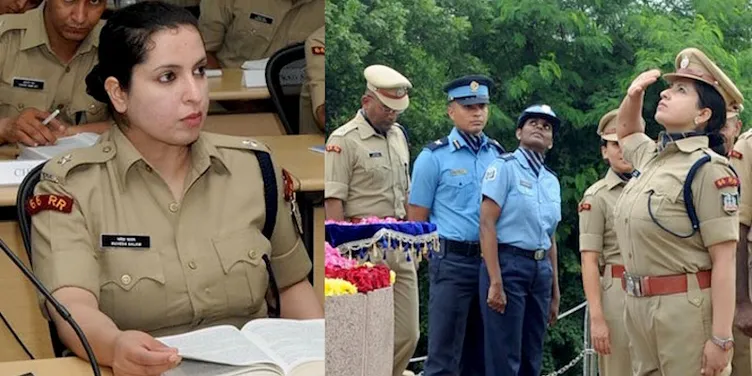
In 2015, Dr Ruveda Salam became the very first woman IPS officer from Jammu & Kashmir. When Ruveda was growing up, her father often used to say that he wanted his daughter to become an IPS (Indian Administrative Service) officer. That’s when she first thought of becoming one. It inspired her and she decided to aim for it.’
“As I have cleared the UPSC (Union Public Services Commission) exam for the second time, I will have to go for training again depending on the cadre. I think I will be posted as a sub-collector. Last year, I was selected to the Indian Police Service cadre. I went for training to Hyderabad. The training was very strenuous. Physically it was very hard. I joined the IPS cadre in Tamil Nadu and was posted as an Assistant Commissioner of Police in Chennai,” Ruveda said in a report in Rediff.com.
Before Ruveda cleared the UPSC (for the first time), she got into medical college, but even while studying medicine she used to read a lot. Ruveda found time to clear the Kashmir State Administrative Service exam. Instead of doing a post graduation in medicine, Ruveda started preparing for the UPSC.
As a young ACP, Ruveda has given motivational speeches to the youth, particularly girls. She encourages them to appear for the IPS exams in Jammu and Kashmir. Ruveda’s role is challenging. It carries a lot of responsibility. “I am in a state where people respect the police. I like it here (Tamil Nadu). When girls see me in uniform they look at me with admiration. I had conducted a workshop for girls in Hyderabad. The girls who attended said they wanted to join the IPS, but were apprehensive about whether their parents will support them,” Ruveda shared.
According to Ruveda, development will lead to peace in Jammu and Kashmir. “Peace and development go together. We should look to the future. Living outside has helped me understand the situation better,” said Ruveda.
source: http://www.yourstory.com / Your Story / Home> Inspiration / by Think Change India / May 11th, 2016
Nellore, ANDHRA PRADESH / Kozhikode, KERALA / SAUDI ARABIA:
Mehad performed Umrah along with his parents immediately after winning the Gold Medal.
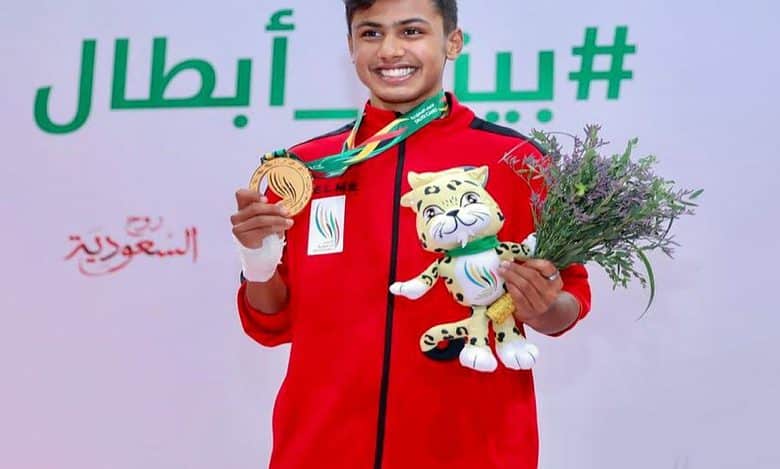
Mohammed Mehad Shah
Jeddah:
The juvenile Andhra badminton player made a strong impact at the ongoing Saudi Games, the prestigious national games of oil rich Saudi Arabia known for its passion for football.
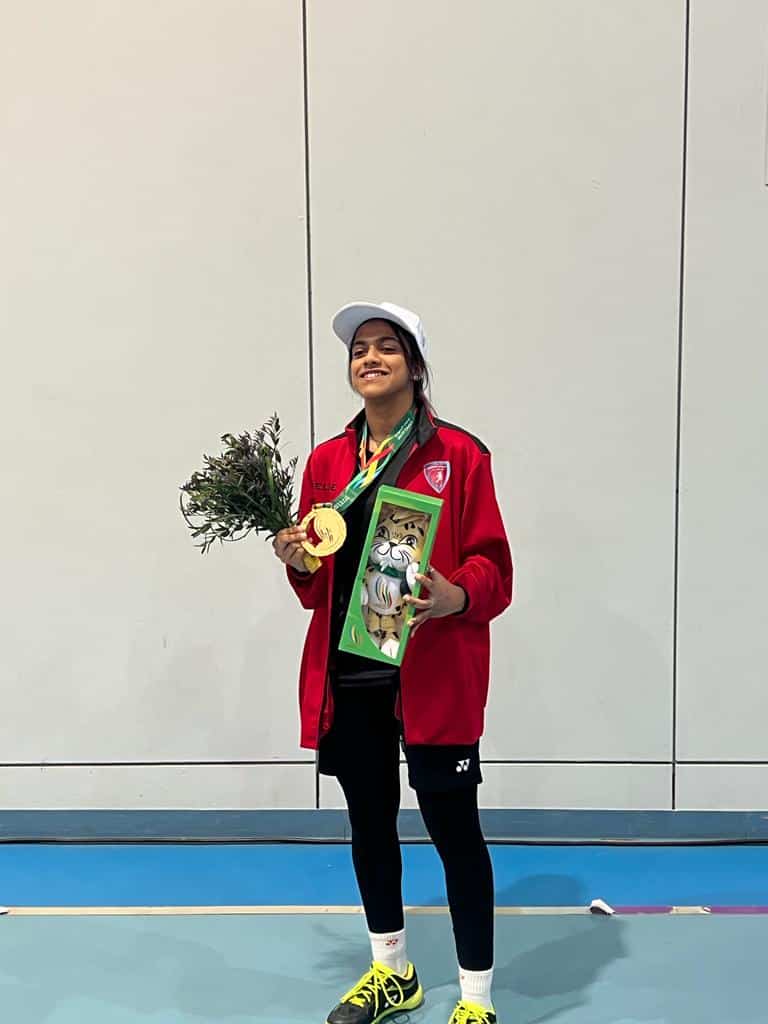
Mohammed Mehad Shah, a native of Nellore in Andhra Pradesh has won a gold medal and one million Riyals in the men’s single category in badminton competition as part of the first edition of the Saudi Games, the largest national sports event of its kind, took place on Friday at King Fahd Stadium in Riyadh in the presence of Prince Faisal bin Bandar bin Abdulaziz, Governor of the Riyadh region, as well as the Saudi public in a grand ceremony filled with lights, fire, and music.
Mehad Sha along with other winners were honored by Prince Fahd bin Jalawi bin Abdulaziz bin Musaed, vice president of the Saudi Olympic Committee and director of the Saudi Games. He was also greeted by Muqrin Al-Muqrin, chairman of the Saudi Badminton Federation, and Mai Obaid Al-Rasheed, vice president of the Saudi Badminton Federation.
Participants competing for a grand total of more than SR200 million: Gold-medal winners to receive SR1 million, and silver-medal winners awarded SR300,000 and SR100,000 respectively. This is the highest prize money dedicated to the sports sector in the history of the region.
The 17-years old native of Nellore district in Andhra Pradesh, who was born and brought up in Riyadh and a student of 11th class at New Middle East International School, has told this correspondent that his aim is to win medals for Saudi Arabia in Olympics and other international tournaments.
Mehad Shah said that the coaching which he takes at Gopichand Badminton Academy in Hyderabad is helpful to achieve success. Gopichand is known as Dronacharya of Indian Badminton. He also expressed his gratitude towards his school principal and PT and Tah, Ralf –both Philippine nationals- coaches who trained him.
Excited Mehad who performed Umrah along with his parents immediately after winning the Gold Medal also thanked his school sports director and trainers.
“When I was receiving the gold medal from Prince Fahd, I remember the days when I was struggling to find a partner to play with me in the badminton court”, he said.
He has been playing the game from 5th standard and his elder brother Faisal Sha also used to play the sport in Riyadh. Faisal is now pursuing medicine in India. Mehad’s sister Khateeja is also studying medicine back home in India. Mehad Sha’s parents, Shahid and Shakera Begum both are engineers.
Muzzamil Shaikh, coordinator of APNRT, AP state government body to look after NRI affairs in Saudi Arabia and noted social worker, has congratulated Mehad.
The only other Indian winner is Kadeeja Kothoor, who also won the gold medal and a million-riyal prize money in women’s single category of badminton. She is also 17 years old and studying in the same school as Mehad.
Kadeeja, native of Calicut in Kerala also born and brought up in Riyadh in a family of full badminton athletes. Sinmar Badminton Academy and Indian Academy- set up by a group of NRIs including her father Latheef – trained her. Coaches Sanjay, Shahin and Wahid shaped her gaming skills.
When she started playing at the age of eight years everyone was expecting that she would make a difference in the game one day which she did, said Latheef, father, who himself is a badminton player. Kadeeja’s other siblings are also badminton players. Her brother Mohammed Nzami is Kerala champion and 6th ranker in All India rating under 13 category; while sister Raya Fatima is Calicut’s St. Joseph Devagiri college team member of badminton team.
“My wife, Shanitha, has encouraged all children into sports” said Latheef.
source: http://www.siasat.com / The Siasat Daily / Home> News> Andhra Pradesh / by Irfan Mohammed / posted by Sameer Khan / November 07th, 2022