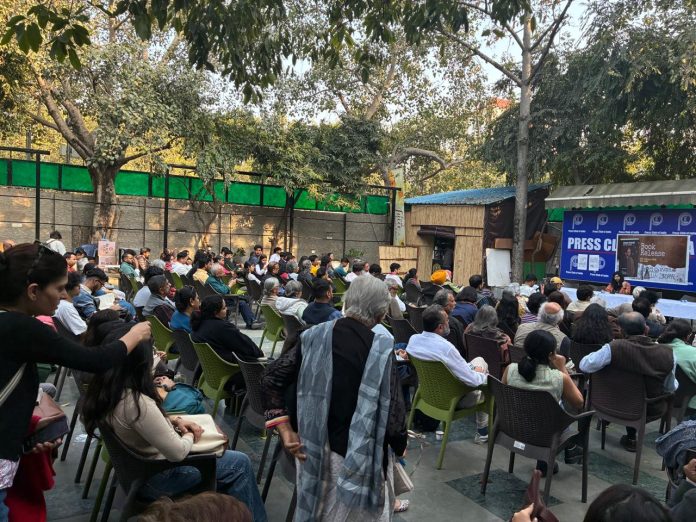
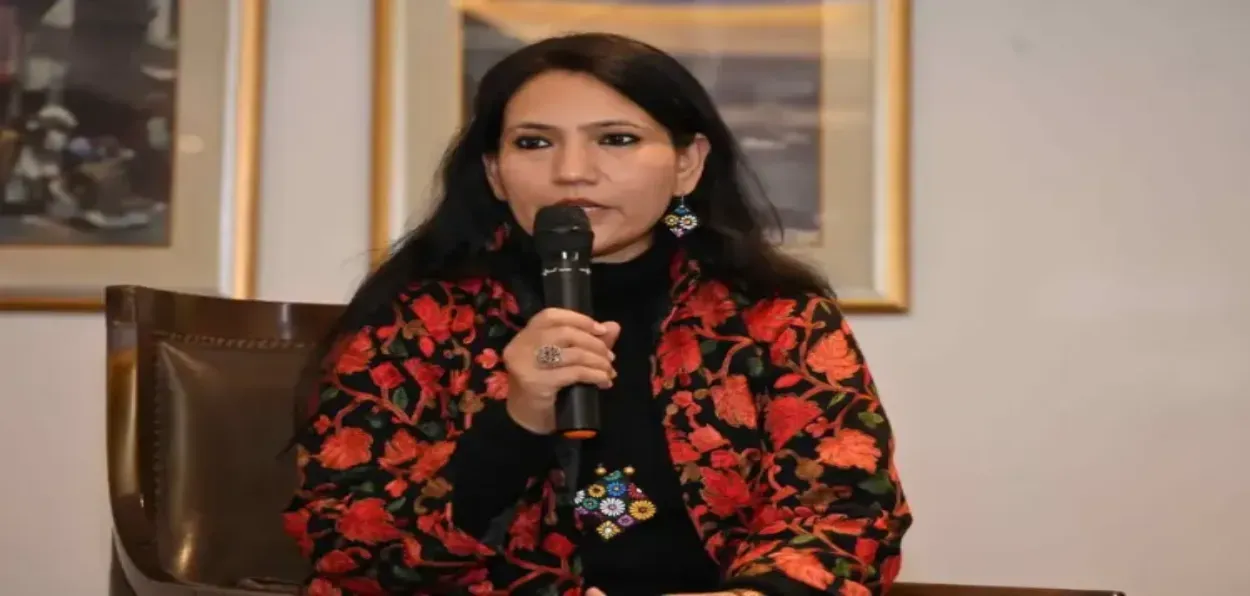
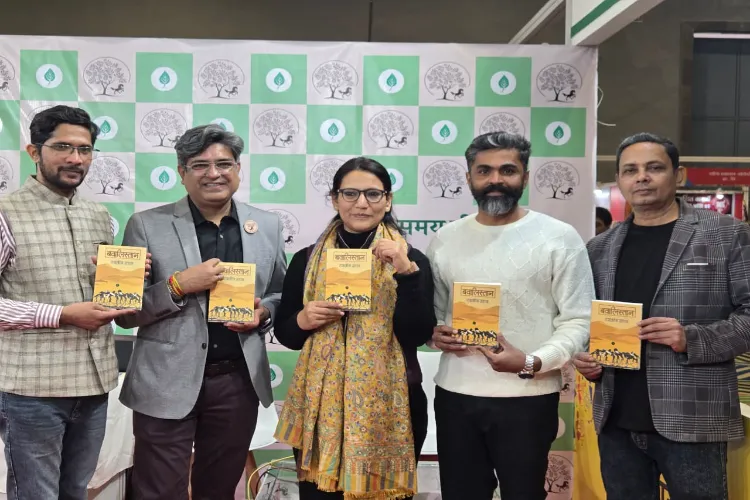
An overflowing audience of the young and the very old at the Press club of India, New Delhi, on Tuesday witnessed the release of a book on Umar Khalid, a JNU scholar now in jail these last six years.
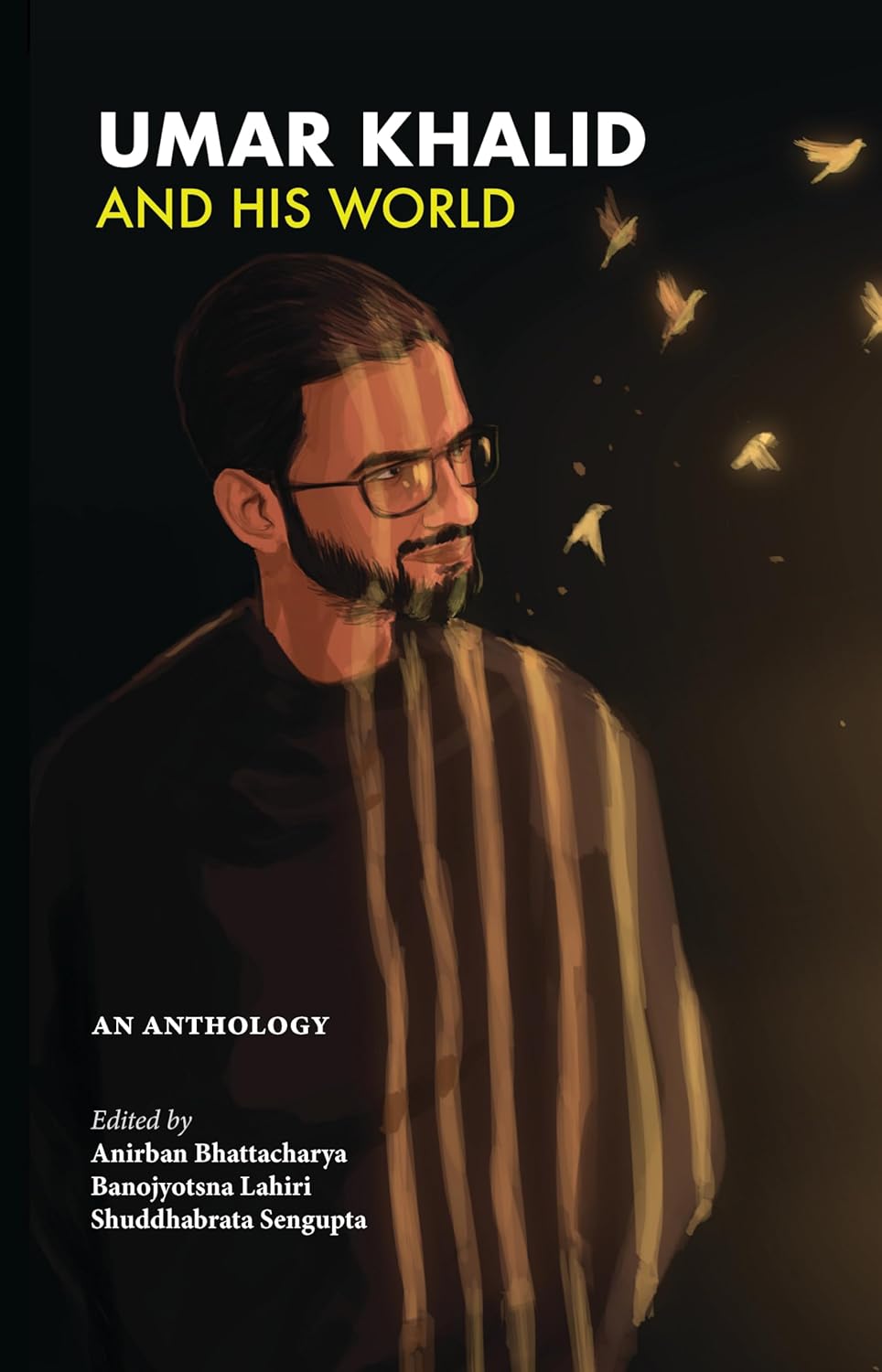
The book titled Umar Khalid and His World: An Anthology, published by Three Essays Collective, is edited by Anirban Bhattacharya, Banojyotsna Lahiri, and Shuddhabrata Sengupta.
It is an anthology of writings by and about the incarcerated activist, featuring contributions from various public figures, intellectuals, and friends. The anthology is curated by researcher/activist Anirban Bhattacharya, writer and activist Banojyotsna Lahiri (who is also Umar Khalid’s partner), and artist/writer Shuddhabrata Sengupta.
The book features letters, essays, and reflections, including writings from Umar Khalid himself, along with contributions from Romila Thapar, Ramachandra Guha, Anand Teltumbde, and Kunal Kamra. It highlights themes of resistance, the injustice of prolonged detention, and the political atmosphere in India.
source: http://www.radiancenews.com / Radiance News / Home> Review Article> Book Release> Focus / by Radiance News Bureau / February 17th, 2026
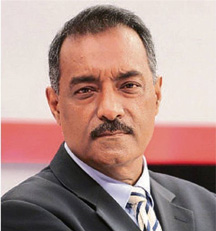
Major Maroof Raza (retd), a respected voice in India’s strategic circles, passed away today, February 27, following a prolonged battle with cancer.
Major Raza, 67, who breathed his last in Gurugram, was an Army officer with ground experience in tackling counter insurgency in the north-east. After leaving the Army, he blossomed as a military historian, a respected strategic affairs commentator and authored several books on Pakistan and China.
Known for his analytical mind he connected the gap between military doctrine and public understanding of military jargon. His work was a ‘bridge’ between academia and the rugged realities of the battlefield. “Maroof had great confidence and oratory skills, the transition towards being a strategic commentator was natural for him,” says Maj Gen Jagatbir Singh (retd), a long-standing friend of Major Raza.
Born into a military family — his father was Brigadier MM Raza from the Grenadiers regiment. Schooled at Mayo College, Ajmer, Major Raza graduated in history honors from the St Stephen’s College, New Delhi.
He joined the Army and was commissioned into the 6th battalion of the Grenadiers regiment and later the battalion was converted into 14 Mechanized Infantry. In his early days, he had extensive involvement in counter-insurgency (CI) operations, in the north -east. He later served as instructor at the Indian Military Academy (IMA), Dehradun, from where had passed out in December 1980.
Major Raza resigned from his commission to pursue a career in strategic studies and media and did his Master’s in War Studies from King’s College, London, and did an MPhil in International Relations from Cambridge University.
Around the same time 24×7 news channels were holding daily shows in the evening and Raza became a household name providing the “soldier’s perspective” on national security issues. His ability to explain the nuances of the Line of Control (LoC) with Pakistan or the Line of Actual Control (LAC) with China was his forte.
His major published books include: Low Intensity Conflicts (1995); Wars and No Peace Over Kashmir (1996); Kashmir’s Untold Story: Declassified (2019); Contested Lands: India, China and the Boundary Dispute (2021).
Prime Minister Narendra Modi said Maroof Raza made a rich contribution to the world of journalism. He enriched public discourse with his nuanced understanding of defense, national security as well as strategic affairs. Pained by his passing.
source: http://www.theindianpanorama.news / The Indian Panorama / Home> United Nations / February 27th, 2026
The half-baked propaganda of communal forces against the Tiger of Mysore is trying to divide communities
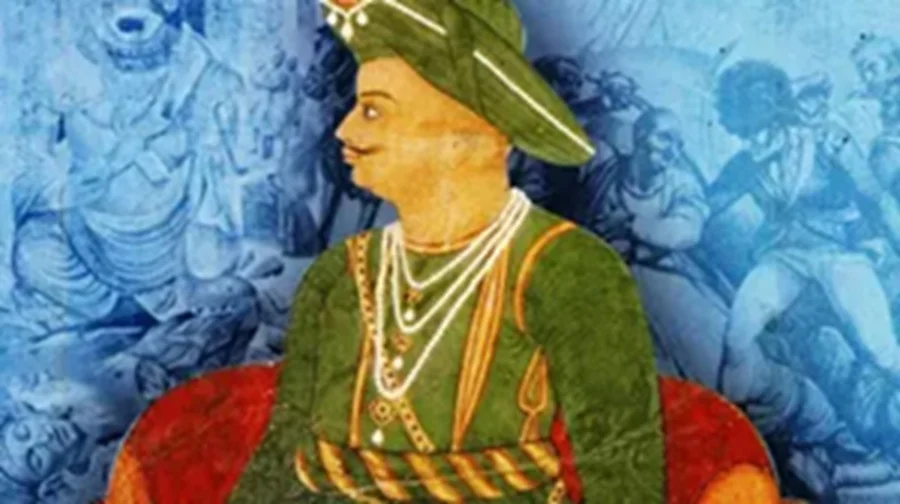
THE Tiger of Mysore (Sher-e-Mysore) Tipu Sultan often finds space in sections of the media, especially in Karnataka. There have been occasions of State-sponsored celebrations of his birth anniversary and the Bharatiya Janata Party (BJP) regularly creates obstacles to these celebrations, resulting in unnecessary ruckus. This time around, Tipu Sultan is in the news from Malegaon in Maharashtra.
The newly elected deputy mayor of Malegaon Shan-e-Hind Nihal Ahmad, put up the portrait of Tipu Sultan in her office, upsetting the Shinde group’s Shiv Sainiks and the BJP. These forces got the portrait removed with the intervention of the authorities. Some protests were also held.
Maharashtra Pradesh Congress Committee President Harshvardhan Sapkal got incensed and defended Tipu Sultan, claiming that the contribution of Tipu Sultan to Mysore is equivalent to that of Chhatrapati Shivaji Maharaj in Maharashtra.
But, Chief Minister Devendra Fadnavis did not like the idea of comparing Tipu Sultan and Shivaji Maharaj, as it was an insult to the latter. Following this absurd comment, the Congress office was pelted with stones by BJP workers and nearly seven people were injured in the ensuing mayhem.
The objection of the BJP to the statement from the Congress leader is that Tipu was a “mass murderer of Hindus” and he tried to convert Hindus to Islam. There are many other charges put against Tipu by Hindutva elements. Most of these try to project Tipu as anti-Hindu and a cruel king. This is far from the truth.
Lots of these myths are part of the communal narrative, accentuated by the British narratives, which are harsher against Tipu in particular. This is because he was one of the few rulers who fought against the British. Tipu had asked Nizam and the Peshwas to oppose the armies of the East India Company. He foresaw the dangers of British power entrenching in India.
Tipu’s administration was a mixed one, with many top officers being Hindus. Purnaiah served him as the Mir Miran (head of a department) and was crucial to his administration. Krishna Rao was his treasurer. Shamaiya Iyengar held a high-ranking ministerial position and Narsimha Iyengar held a position in the postal department. Tipu Sultan reportedly provided grants to the Sringeri Shankaracharya, including for the rebuilding of the temple and the installation of the Hindu goddess Sharada. He granted land and endowments to various temples throughout his kingdom. During his reign, the 10-day Dussehra celebrations were an integral part of the social life of Mysore.
In 1791, Maratha forces led by Raghunath Rao Patwardhan attacked and plundered the historic Sringeri Sharada Peetham, causing the Shankaracharya to flee. Upon learning of this, Tipu Sultan expressed deep anger, stating that those who committed such acts would face consequences, and promptly sent funds, gifts, and letters to restore the temple and reconsecrate the idol. The raid was part of the Third Anglo-Mysore War, during which Maratha forces caused significant destruction to the temple complex, including killing or wounding people and looting property.
Tipu Sultan, who frequently interacted with the Sringeri Jagadguru and addressed him with high respect, immediately ordered the Mysore administration to assist in the restoration, demonstrating his patronage of certain Hindu institutions. Evidence of this restoration is found in several letters in Kannada, preserved in the Sringeri monastery records, where Tipu requested the Jagadguru to pray for the prosperity of his kingdom.
Tipu Sultan was a staunch opponent of the British. There is an accusation against him that he persecuted some Hindu and Christian communities. The reason for this persecution, however, was purely political, not religious. About these persecutions, historian Kate Brittlebank says that “This was not a religious policy but one of chastisement”. The communities targeted by him were seen as disloyal to the State.
The communities Tipu targeted did not belong only to the Hindu stream. He also acted against some Muslim communities, like the Mahdavis. The reason was that these communities were supporting the British and were employed as horsemen in the East India Company’s armies. Another historian, Susan Bayly, says that Tipu Sultan’s attack on Hindus and Christians outside his state is to be seen on political grounds, as at the same time he had developed close relations with these communities within Mysore.
Sarfaraz Shaikh, in his book Sultan-E-Khudad has reproduced the ‘Manifesto of Tipu Sultan’ in which he declares that he would not discriminate on religious grounds and would protect his empire until his last breath. He had a great interest in rocket technology. This finds appreciative mention in Dr APJ Abdul Kalam’s book, Wings of Fire.
It is interesting to note that in the Rashtriya Swayamsevak Sangh’s series for children on Indian history, they had published a book on Tipu in the 1970s. BJP’s Yeddyurappa had adorned Tipu’s headgear to solicit votes in the 2010 elections in Karnataka. Then President, Ramnath Kovind, sent a eulogising message on the occasion of Tipu Jayanti (2017). He has an RSS background. He praised Tipu by saying that “Tipu Sultan died a heroic death fighting the British. He was also a pioneer in the development and use of Mysore rockets in warfare.” Tipu – along with Rani Laxmi Bai – are also depicted as freedom fighters through drawings in Part XVI (page 144) of the original, hand-written and illustrated copy of the Indian Constitution.
Due to his policies, Tipu was popular among the people of Mysore. There are many folk songs, sung in villages, praising him. It is for this reason that one of our greatest playwrights, Girish Karnad, said that had Tipu been a Hindu, he would have the same status that Shivaji Maharaj has in Maharashtra. This is very close to what Sapkal stated, nothing extra.
This whole incident of opposing the portrait of Tipu in the Deputy Mayors’ office is one more instance of communal forces latching on to divisive politics. Kings should not be seen just by their religion; their policies towards people of different religions and people’s welfare should be the major criterion for evaluating them. Tipu stands very tall in this scale of religious tolerance. The half-baked propaganda of the communal forces is trying to divide communities.
A major tribute to Tipu was paid by Subhash Chandra Bose. He adopted Tipu’s ‘springing tiger’ as the insignia of Azad Hind Fauj, which fought against the British. The major contribution of Tipu was to forewarn the Indian rulers about the advancing threat of the East India Company, the British. It was for this that he bravely fought against the British and laid down his life in the fourth Anglo-Mysore War. The communal forces who are out to demonise Tipu belong to the ideology that did not even lift a little finger against the British rule.
source: http://www.clarionindia.net / Clarion India / Home> Opinion / by Prof Ram Punyani / February 18th, 2026
Jubuni Village (Rampurhat subdivision of Birbhum District), WEST BENGAL :
Feroza Begum
Firoza Begum’s language of protest against the harsh realities of rural India, gender inequality, and family adversity is a strong statement. The poet and writer in her, though, has emerged from a phase of struggle.
She was born into a respectable family in Jubuni village of Rampurhat subdivision of Birbhum district, West Bengal. Her parents, Abdul Hakim Mallick and Arestun Bibi, faced poverty, disease, and social uncertainty, due to which her childhood was difficult.
The struggle for survival of her family and relatives during the terrible smallpox epidemic influenced and triggered a humanitarian spirit in her.
In her childhood, when women’s education was neglected in rural society, she completed her schooling. She broke many social barriers. The discrimination and neglect she faced while in school ignited the spirit of rebellion in her, which, in due course, made the language of her writing sharp, protestant and sensitive.
Feroza Begum with an award
In 1974, she married Nurul Haque Mallick, a science-minded teacher. With her husband’s liberal attitude and inspiration, she managed to balance both her family life and pursuit of literature. She made sure her four daughters got educated and financially independent, self-reliant. Although her husband’s death in 2016 left a deep void in her life, she did not stop pursuing literature.
Since 1992, Firoza Begum has been regularly writing poems, songs and essays. Her writings have been published in various literary magazines of Murshidabad, Rampurhat and Kolkata, Pragati, Trinayani, Kalam, Bhabbana, Sangbad Darpan, Roddur, Arpan, etc.
Besides, she is also a regular participant in the radio and television programs and has received recognition beyond her hometown and community.
The poetry collection “Nayantara” published in 2010) and “Aparajita” published in 2014) clearly reflect the struggle of women, the adversities of life, and the human spirit.
She proofread and published the book, despite illness and limitations, and it reflected her perseverance.
Firoza Begum has received several honours and awards in recognition of her contribution to literary endeavours.
The reception by the Bhabna O Anubhavber Dana newspaper of Rampurhat, the Rokeya Award from the Roddur newspaper, certificates from various radio stations in Kolkata and Baharampur, the Ambedkar Shilpi Ratna Award from New Barrackpore, and the recent “Best Bengali” award from the Asha Foundation are important recognitions of her literary and humanitarian activities.
The life of poet Firoza Begum is not just the autobiography of a writer, it is a courageous document of a struggling woman. Her pen still bears witness to the fact that even in the deep darkness of adversity, education, humanity and literature are capable of illuminating the path of humanity.
source: http://www.awazthevoice.in / Awaz, The Voice / Home> Stories / by Dev Kishore Chakraborty / February 03rd, 2026
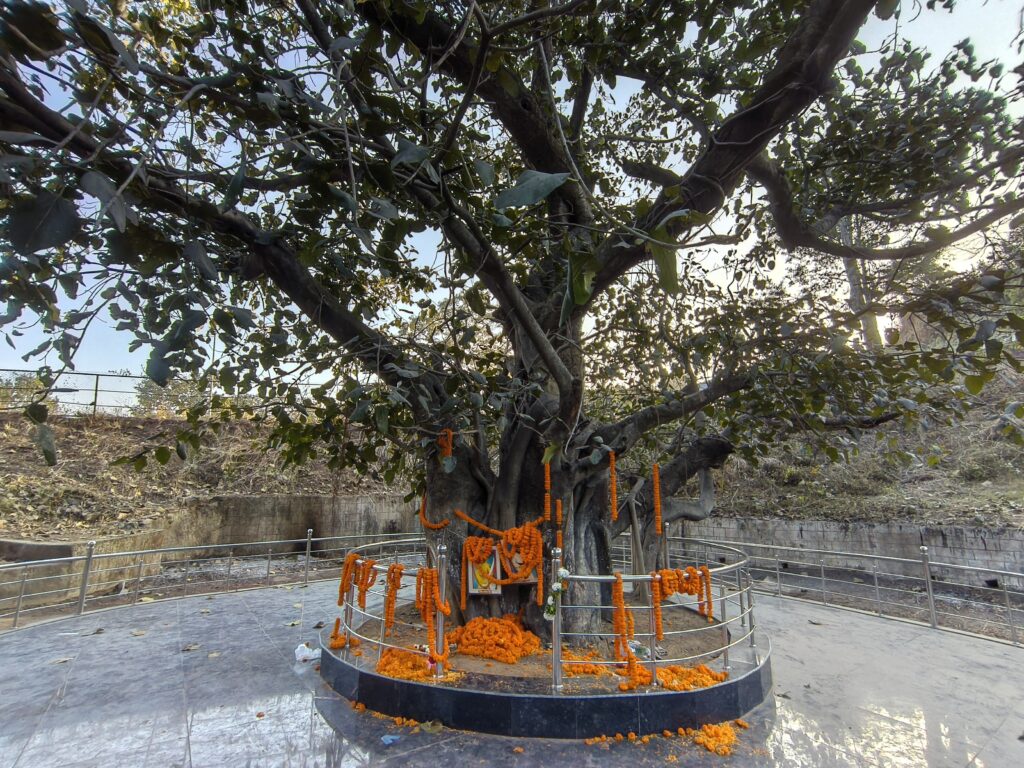
The Banyan tree on which the execution took place. Photo: Ghulam Ahmad Raza
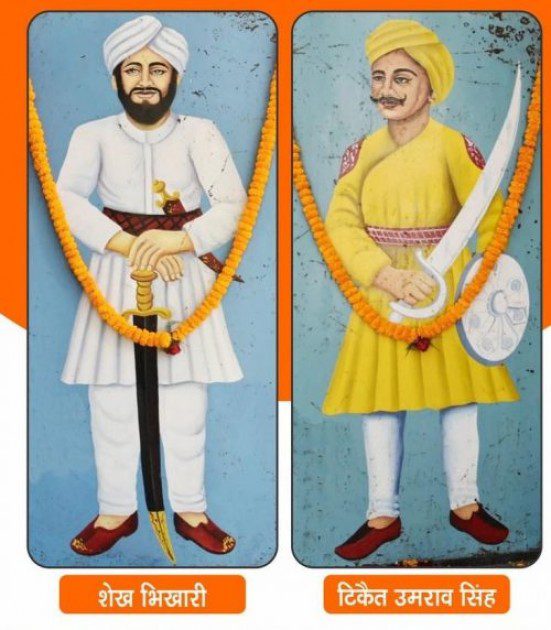
During the 1857 revolt against British rule, Jharkhand too witnessed armed resistance. The rebellion had spread across regions including Ranchi, Hazaribagh, Ramgarh, Palamu and Singhbhum. In the dense forested border areas of Ranchi and Hazaribagh, the rebel forces were led by Shaheed Sheikh Bhikhari Ansari and Tikait Umrao Singh. From the dense jungles of the Chuttu Palu valley, their army fought British troops and prevented Ranchi from falling under colonial control. Both leaders were captured by the British forces on January 6, 1858 and were publicly executed by hanging on January 8, 1858, in the same Chuttu Palu valley.
The banyan tree on which they were hanged still stands today. The Jharkhand government has developed the surrounding area as a martyr memorial with the stated aim of preserving history and keeping alive the legacy of the region’s sites of resistance. Yet even today, many residents of the Chuttu Palu village where the memorial stands remain unaware of who these martyrs were.
Fifty-eight-year-old Nirmal Kumar, who works as a stone breaker near the memorial, often rests inside the premises during breaks. He says he has been coming here since childhood. Despite this, he is unaware of the historical significance of the site and does not recognise the names of Sheikh Bhikhari Ansari or Tikait Umrao Singh.
“I only know that blankets are distributed here every year on January 8,” he said. On the martyrdom anniversary, social workers and officials visit the site to pay tribute and distribute essentials among the poor.
Sanjay Munda, a resident of Chuttu Palu village, said that even today, most villagers do not know about the martyrs or the memorial’s history. “Members of the surrounding Scheduled Tribe (ST) and Scheduled Caste (SC) communities refer to the site in the local language as Fasiyahi Bar (tree where the hanging took place). Most people do not know about the 1857 revolt or the sacrifice of Sheikh Bhikhari and Tikait Umrao Singh,” he told Maktoob.
Despite the lack of awareness, locals often bow their heads in respect when passing the site.
The memory of these two revolutionaries who laid down their lives fighting British rule is slowly fading. Their history has largely been reduced to government files and digital web pages. On martyrdom days, ministers, officials and locals pay tributes, but beyond symbolic gestures, little is done. While the Jharkhand government has taken some steps to acknowledge them, no substantial initiative has been taken by the central government to formally recognise or honour their contributions.
Dr Muzaffar Hussain, researcher and author of Jharkhand ki Muslim Vibhutiyaan, says Muslim, SC and Adivasi martyrs have not received the recognition they deserve. “Jharkhand has produced many revolutionaries who sacrificed their lives for India’s freedom, but recognition has been limited largely to Birsa Munda only,” he said.
He points out that the 1857 revolt took place nearly 40 years before Birsa Munda’s Ulgulan (revolt). “Names like Nadir Ali, Imam Ali, Jatra Tana Bhagat, Sidhu–Kanhu, Phulo–Jhano, Nilambar–Pitambar, Sohbat Miyan, Chandan Miyan, Jaggu Miyan and Najahat Hussain are a part of Jharkhand’s resistance history during the 1857 revolt, yet they remain largely forgotten.”
Hussain argues that the Jharkhand government must project its revolutionaries on a larger scale for the central government to take meaningful steps. “Even platforms like Google and Wikipedia carry very limited information about them,” he said.
He suggests state-funded research, naming welfare schemes and government buildings after revolutionaries and honouring their descendants are ways to restore their place in public memory.
Ruchi Kujur, an activist working on SC and ST rights and a member of the Jharkhand State Commission for Protection of Child Rights, said every state has its own history, and Jharkhand is rich with stories of courage and resistance. “The list of Adivasi and SC heroes is long,” she said.
“People need to be made aware of their ancestors’ sacrifices. When these revolutionaries are honoured, it inspires the younger generation to work for society and the nation.”
Situated amid a valley rich in natural beauty, the martyr memorial complex (Shaheed Sthal) has been developed with basic amenities. Yet, several factors discourage people from visiting the site, further deepening the lack of public awareness about the martyrs. Surrounded by dense forests and hills, the memorial lies in an isolated location, with no human habitation within a radius of nearly five kilometres. This isolation is a major reason why people hesitate to visit the site, either alone or with their families.
The premise includes resting sheds, benches and toilet facilities. However, due to poor maintenance, thick shrubs have grown across the complex. Lights installed in the area and doors of the toilets have reportedly been stolen. Although the police conduct patrols from time to time, the absence of adequate security continues to deter visitors.
Ghulam Ahmad Raza is a Jharkhand-based freelance journalist with over four years of experience. He has worked as a City Reporter with Pratah Awazand as aSub Editor with Prabhat Mantra. His reporting focuses on marginalised communities, forgotten histories and grassroots political narratives.
source: http://www.maktoobmedia.com / Maktoob Media / Home> East India / by Ghulam Ahmad Raza / January 29th, 2026
Kaprin Village (Shopian District), JAMMU & KASHMIR :
Shafi Shauq (Kashmiri poet and academic)
Srinagar :
Eminent Kashmiri scholar, poet, linguist and translator Prof Shafi Shauq has been named among the recipients of the Padma Shri Award 2026, India’s fourth-highest civilian honour, in recognition of his outstanding contribution to education and literature. The award places Shauq at the forefront of this year’s honourees from Jammu and Kashmir and Ladakh, marking a major national acknowledgement of his lifelong work in preserving and enriching the Kashmiri language and its literary heritage.
Born in 1950 in Kaprin village of Shopian district, Shafi Shauq is widely regarded as one of the most authoritative voices in Kashmiri studies. Over a distinguished academic career spanning more than three decades at the University of Kashmir, he authored, edited and translated over 100 books across Kashmiri, Urdu, Hindi and English. His seminal works—including Keeshur Lugaat (Kashmiri Dictionary), Keeshryuk Grammar, and Kaeshir Zaban ti Adibuk Tawaariekh (History of the Kashmiri Language and Literature), are considered foundational texts and remain indispensable to scholars, students and researchers.
The Padma Shri citation recognises not only Shauq’s scholarly output but also his role as a cultural custodian who ensured that Kashmir’s rich Sufi, poetic and intellectual traditions reached both national and international audiences. His celebrated series The Best of Kashmiri Literature, featuring iconic mystic-poets such as Lal Ded and Nund Reshi, played a crucial role in preserving and popularising Kashmir’s spiritual and literary canon beyond linguistic boundaries.
Alongside Prof Shafi Shauq, the Government of India has also announced Brij Lal Bhat (Social Work, Jammu and Kashmir) and Dr Padma Gurmeet (Medicine, Ladakh) as Padma Shri awardees for 2026, recognising exemplary service in their respective fields. However, Shauq’s inclusion has drawn particular attention in literary and academic circles, being seen as a long-overdue national honour for a scholar who devoted his life to safeguarding the linguistic soul of Kashmir.
Social worker Brij Lal Bhat has been conferred the Padma Shri 2026 for his sustained and wide-ranging contributions to social service. Known for his grassroots engagement, Bhat has worked extensively to strengthen spiritual and community institutions through yoga shiksha shivirs, spiritual retreats and Bhandara Seva. He has actively promoted social cohesion and communal harmony by organising inclusive festivals and community programmes, while also contributing to rural development by reclaiming barren land for apple and walnut orchards. His work is widely recognised for combining social service with spiritual outreach and environmental stewardship.
In addition to Shauq and Bhat, Dr Padma Gurmeet of Ladakh has been named a Padma Shri awardee in the field of medicine, underscoring the diverse range of contributions from the region honoured in 2026.
source: http://www.kashmirlife.net / Kashmir Life / Home> Kashmir Latest News / by KL News Network / January 25th, 2026
Coming from a small town and making a mark on the national scene, writer-journalist Tasneem Khan brings women’s concerns to the forefront through her journalism and literature. Her narratives are sensitive, clear, and attempt to offer solutions. Her writing and television programmes do more than narrate women’s struggles; they challenge social mindsets and inspire change.
Here are excerpts from an exclusive conversation with her:
Let’s begin with Bwalistan. What is it about?
Bwalistan is a collection of stories rooted in Rajasthan, particularly its desert life. These stories belong to a distinct literary tradition that deeply portrays the complexities and struggles of life in the Thar Desert. Rajasthan’s desert is not just a physical landscape—it is defined by its people, culture, traditions, and way of life, all of which give it a unique identity.
Coming from a small town, it isn’t easy to make a mark in journalism and literature. How did your journey begin?
A: It’s true that paths have never been easy for women. I come from Didwana tehsil in Rajasthan’s Nagaur district. Though I grew up in a small town, my parents were educated, and our home had a culture of reading and learning. My mother’s love for books shaped me deeply. Growing up among books sharpened my ability to think, debate, and reason. I also won several awards during my school and college years.
When did you choose journalism as a career?
I formally entered journalism in 2005. From the very beginning, I was drawn to women-centric issues. I consistently wrote on gender sensitivity, domestic violence, and women’s social rights. For me, journalism is not just about reporting news; it is about engaging in dialogue with society.
Your television programmes gained special recognition. Could you tell us about them?
A: I hosted a programme called Samar Shesh Hai, which discussed women’s social and political concerns. Later, my regular show on Patrika TV, Aadhi Duniya, Poori Baat – with Tasneem Khan, became quite popular. The aim was to present women not merely as victims, but as thinking, reasoning individuals.
For which report did you recently receive the Ladli Media Award?
I received the award for my show “When Will Domestic Violence Go into Lockdown?”, presented by Population First and UNFPA. The jury felt the report exposed a harsh truththat during lockdown, women faced another terrifying pandemic inside their homes: domestic violence.
Your writing focuses less on complaints and more on solutions. How did this approach develop?
I don’t want to merely describe women’s pain. I believe writing should point toward solutions. If even one woman finds a way forward through my work, I would consider my life meaningful.
You began novel writing in 2015. How special is Mere Rehnuma to you?
A: Mere Rehnuma is extremely close to my heart. Published by the Jnanpith Trust, it was selected in a young writers’ competition. I became the second woman writer from Rajasthan whose debut novel was published by Jnanpith. Through this novel, I tried to establish that women’s empowerment cannot come through financial independence alone without a change in social mindset, empowerment remains incomplete.
Research has been conducted on this novel. How did that feel?
A: It was a matter of great pride that Mere Rehnuma became the subject of PhD and MPhil research. It reaffirmed my belief that my writing has connected at both academic and social levels.
Could you tell us about your other works and awards?
A: My short story collection Dastaan-e-Hazrat Mahal was published in 2019 and earned me the Chandrabai Award. In 2021, I received the Shakuntalam Award from the Rajasthan Progressive Writers’ Association. My stories have been translated into several languages. Rukh-e-Gulzar was translated by the Indian Translation Council, while The Blue of Silence was published in a Pakistani Urdu magazine and won the Mirror Award. My story My Share of Moonlight will soon appear in a collection by Oxford University Press.
What is your writing process like?
I observe people around me very closely their characters, pain, and struggles shake me from within. Until that restlessness finds words, I find no peace. That unrest gives birth to my stories.
What role did your parents play in your life?
My parents have been my greatest support. At difficult turns, they always encouraged me. I firmly believe parents’ education plays a decisive role in shaping a child’s future. I have seen many girls unable to move ahead simply because their parents did not value education.
The heroine of Mere Rehnuma is in search of liberation. How do you view this liberation?
A: For me, liberation is not just personal; it is social. Until society learns to accept strong women, their freedom will remain incomplete. If my writing can guide even one woman in this direction, that will be my greatest achievement.
You recently interacted with readers during the ‘Chaturang #LockdownLive’ session on Facebook. How was that experience?
The Rajasthan Forum organised the session. I spoke openly about my education, career, and literary journey. I emphasised that becoming a writer requires years of preparation, deep reading, and psychological analysis of society. I also read excerpts from my novel Ai Mere Rehnuma. The interaction was deeply personal and immensely inspiring for me.
Tasneem Khan’s journey shows how words, when driven by empathy and purpose, can challenge patriarchy, reshape thought, and quietly spark a revolution, one story at a time.
source: http://www.awazthevoice.in / Awaz, The Voice / Home> Stories / by Onika Maheshwari, New Delhi / January 19th, 2026
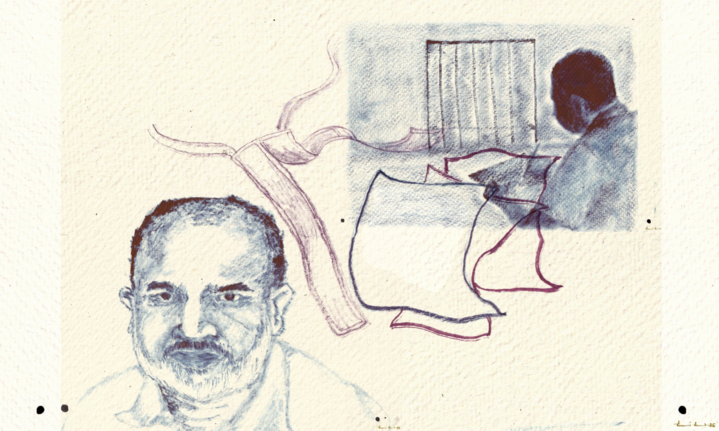
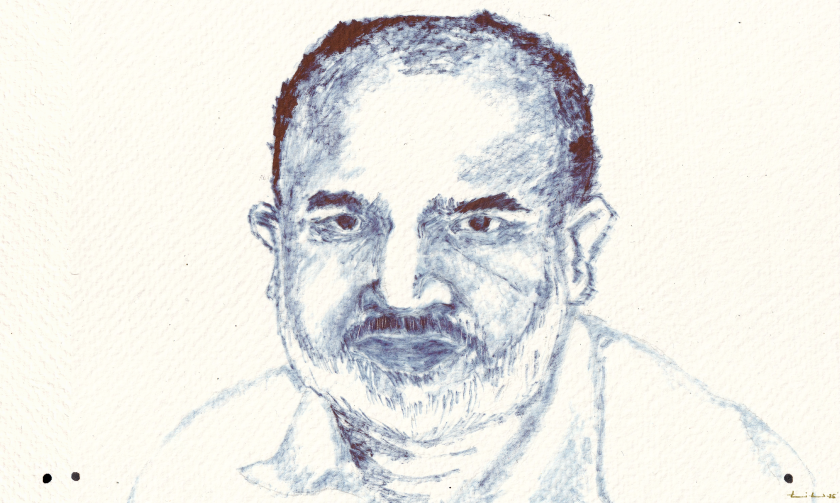
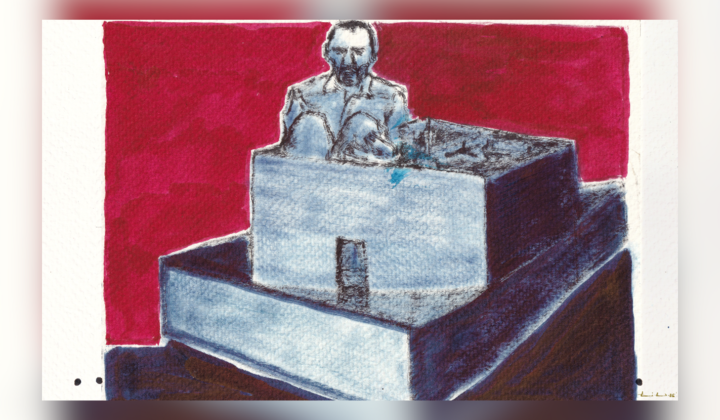
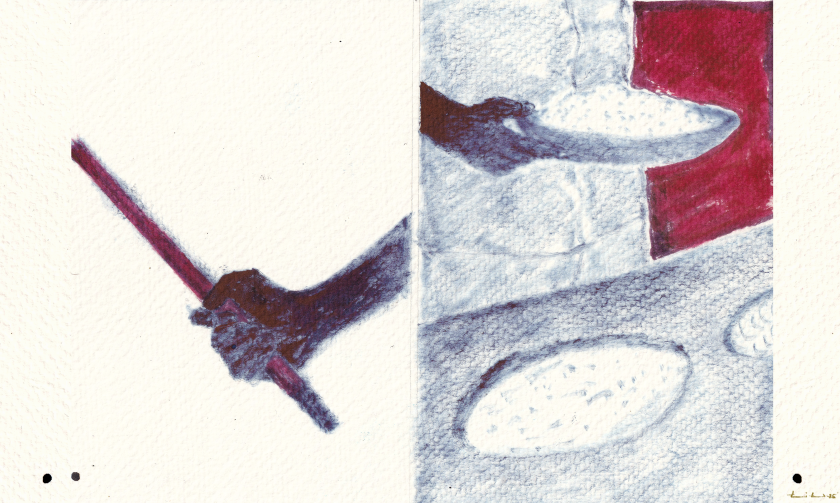
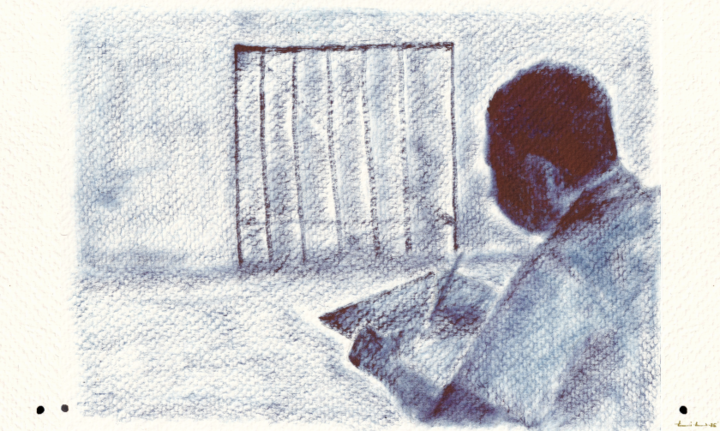
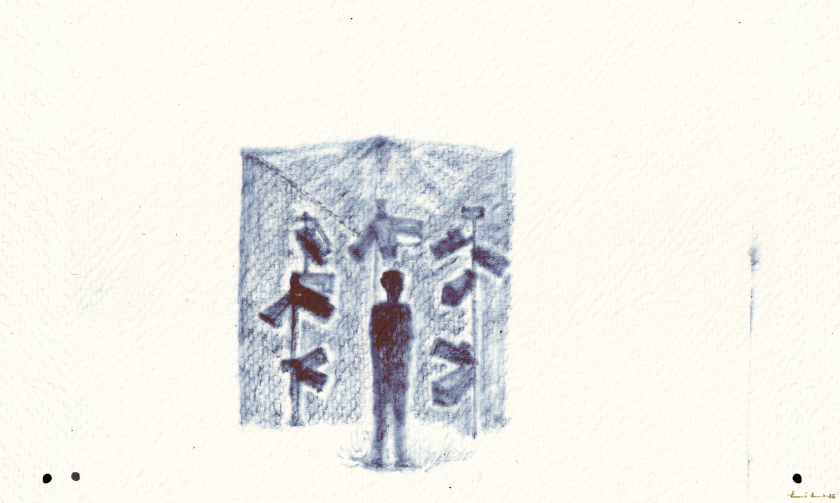
42-year-old Ehtesham Qutubuddin Siddiqui, who was a death row convict for nearly a decade before being acquitted by the Bombay high court earlier this month, reflects on time in prison.
Illustration: Pariplab Chakraborty
A tiny 80-square-feet room, fitted inside a compact V-shaped enclosure known as the phansi yard (gallows yard) of Nagpur Central Prison, served as “home” for 42-year-old Ehtesham Qutubuddin Siddiqui for nearly a decade. In 2015, soon after a special Maharashtra Control of Organised Crime Act (MCOCA) court sentenced 12 individuals – five men, including Siddiqui, to death, and the remaining seven to life imprisonment – in the 2006 Mumbai serial train blasts case, he was transferred to Nagpur jail.
All 12 men were acquitted by the Bombay high court on July 21.
Siddiqui describes his decade-long solitary confinement as a place that made him feel “safe.” “In the existing political atmosphere, especially as Muslim men convicted on terror charges, this isolation was the only way we could have stayed safe in jail,” he feels.
Illustration: Pariplab Chakraborty
An incarceration spanning two decades
Reflecting on his two decades of incarceration – nine years as an undertrial prisoner in Mumbai and then as a death row convict in Nagpur – Siddiqui says that while the trial took nearly a decade, the transition from undertrial to death row prisoner was “quite sudden.”
“One minute, we were jostling for space in the overcrowded prison barracks in Mumbai (until the lower court’s verdict), and suddenly, we were thrown into solitary confinement. It was a very small room but it was still ours. It had an attached bathroom, a ceiling fan and a tubelight,” he says, describing the prison room.
Solitary confinement in India is unconstitutional. Even for death row convicts, it is permissible only after their mercy petition is rejected by the President of India. In the serial train blasts case, the death penalty had not yet been confirmed by the High Court but they were still subjected to solitary confinement. “But none of this really matters. It’s a common practice. The moment a person is given a death sentence, the prison authorities transfer them into the phansi yard,” Siddiqui says, as he recalls the names of many death row convicts housed in the 30 tiny solitary cells near his.
Illustration: Pariplab Chakraborty
“Many lacked proper legal representation and were simply abandoned here after the trial court imposed a death sentence. They would arrive here horrified, thinking this was where they would be hanged the very moment they reached there.”
It became almost a duty of other death row convicts like Siddiqui to explain legal procedures, offer advice, and calm newcomers in the phansi yard. Siddiqui says he saw many come and go over those ten years. “Almost all were eventually acquitted in their appeals before higher courts,” he points out.
Siddiqui’s observation is in sync with different studies on the Indian judicial system and capital punishment. The Death Penalty reports that the NLU- Delhi’s Project 39A (now renamed as The Square Circle Clinic after it shifted its base to NALSAR University of Law, Hyderabad), a criminal justice research and legal aid programme released every year has long established the pattern of death penalties getting either commuted to life or lesser punishment or in many cases, simply ending up in acquittals.
Siddiqui recalls his interactions with five men from the Shinde family, who were sentenced to death by a trial court in a rape and murder case, only to be later acquitted by the Supreme Court. The Shindes, from a Nomadic Tribal community, endured 16 years of incarceration, 13 as death row convicts.
“They would keep asking me what I thought of their case, and I would keep reassuring them they’d be out soon. That simple fact made them so happy.” The Shindes were acquitted in 2019 following a strongly worded Supreme Court judgment. Among them, Ankush Maruti Shinde, was only 17, a minor, at the time of his arrest.
Experienced sustained physical torture
Siddiqui says the hope that their innocence would eventually be proven kept them going. “We too survived prison life on that one hope. After all, how long could justice evade us?” he asks.
Siddiqui experienced both extremes of prison life: sustained physical torture in Mumbai’s Arthur Road Jail (complaints about which led to the transfer of the then-jail superintendent, Swati Sathe) and a relatively calmer existence with better food and living conditions in Nagpur. “I’m not romanticising prison life, but Nagpur’s prison was certainly a lot better. Which also means prisons can be made liveable if one wished,” he says.
Illustration: Pariplab Chakraborty
But his co-defendant Kamal Ansari’s death during the second wave of the COVID-19 outbreak in 2021 shook him. “Everyone around us was falling sick. Kamal fell sick and was moved to the hospital ward. He never returned.”
Illustration: Pariplab Chakraborty
Siddiqui says most of the men implicated in the case were unknown to him at the time of arrest. “But as circumstances brought us together, we eventually became each others’ support system,” he adds. The police and jail officials, he claims, tried hard to turn them against each other. “And the frustration does eventually get to you. So, each time we reached a point of anger or frustration against each other, we would simply stop talking. That helped us cool off, and rework on our relationship,” he shares.
Ehtesham Qutubuddin Siddiqui with his father at their family house in Jaunpur. Photo: By arrangement
In Nagpur, Siddiqui had no trouble accessing writing materials. So he wrote extensively. His book, Horror Saga, which details his prison life and the botched up trial, was published last year. He has a manuscript ready for his next book. He has also translated several others while incarcerated.
How did he access books and research materials in jail? “I deviced a unique method,” he says, with a sense of pride. Siddiqui filed nearly 6,000 Right to Information (RTI) applications over two decades, primarily to gather evidence against the investigating agency, which helped debunk the police’s case, and also to access books published by the government press.
Earned over 20 degrees while in prison
A college dropout at the time of his arrest, Siddiqui has since earned over 20 degrees, including several Master’s, Bachelor’s, and Diplomas. In 2001, while in his third year of a Chemical Engineering program, he was arrested for a few days for alleged involvement with the Students Islamic Movement of India (SIMI), an organisation banned that year, leading to the overnight criminalisation of many men from the Muslim community.
Since then, Siddiqui says he tried several times to complete his education and earn a formal degree, but it didn’t happen. “So, in jail, I made full use of the time to gain as many degrees as I could,” he shares.
As strange as it may sound, among the first undergraduate degrees that Siddiqui enrolled himself was Tourism. “I wanted to keep my brain stimulated somehow and not let the incarceration consume me. So, I went on this rage of enrolling myself for every opportunity that was made available,” he recalls. He knew how to read Urdu, Arabic but didn’t possess a formal degree.
“So, I got one while in jail.” Siddiqui, who worked as a Desktop Publishing (DTP) operator as a local publishing house in Mumbai, now holds an MBA degree, master’s degrees in English Literature, Sociology, Marketing, and Financial Management, and diplomas in Nutrition and Mass Communication, among others. He is in the final semester of a three-year law degree.
Illustration: Pariplab Chakraborty
If not studying, Siddiqui would take care of the small garden outside the barrack. “Those plants were the only pretty thing to look at,” Siddiqui laughs. The prison rules don’t allow assignment of any work to a death row convict. Which means, even though Siddiqui worked, he was not paid for his labour.
According to the Maharashtra state’s revised prison rules, a convicted prisoner is paid up to Rs. 65 per day, although a paltry sum and much lower than the minimum wages standards, yet some money that most incarcerated people look forward to to lead a dignified life in jail or to take back home at the end of their jail term.
Having spent nearly two decades in different prisons of Maharashtra, Siddiqui says the level of surveillance is “simply unnerving” now. “You will find hundreds of cameras loom overhead. Even a slight movement for exercise inside your barrack is instantly tracked, and jail officials confront you with a barrage of questions,’ he says.” Surveillance doesn’t stop here.
Abdul Wahid Shaikh, one of 13 arrested in this case and acquitted in 2015, and several other terror accused have had to install multiple CCTVs inside and outside their homes to simply shield themselves from police harassment.
Illustration: Pariplab Chakraborty
‘Since release, every experience feels new’
On July 21, when the high court acquitted the 12 men, their release orders were immediately executed – an unusual move. In many cases, even after the court order reaches jail authorities, releases are delayed, just to allow the state to file an appeal in the higher court. “Maybe they just wanted us out. The Solicitor General of India, Tushar Mehta, stating before the Supreme Court that the state no longer wanted us in jail is quite telling,” Siddiqui points out.
Illustration: Pariplab Chakraborty
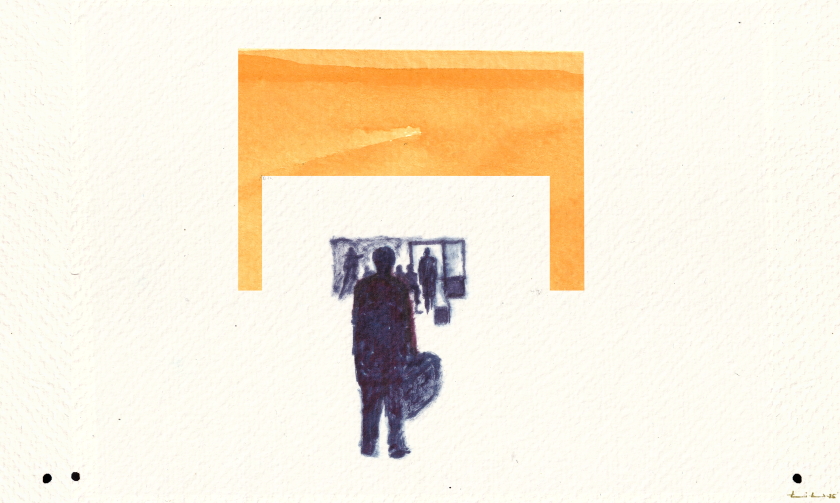
Since his release, every experience feels “new,” Siddiqui says. He and his co-defendant, Shaikh Mohammed Ali Alam Shaikh, boarded a flight from Nagpur to Mumbai. “Hairaan kar diya Mohammed Ali ne (Mohammed Ali exhausted me),” he laughingly shares, as he narrates the experience of tasting freedom for the first time in two decades. “He was so excited he simply couldn’t stop talking. I worried his chatter would draw attention. I told him, ‘Bhai, agle ek ghanta shaant rehna (Brother, stay calm for the next hour).”
At Mumbai airport, they were met by a media frenzy. “We didn’t know how to handle this sudden attention; the last time we experienced anything like this was two decades ago at the time of our arrest,” Siddiqui says. In Mumbai, they had the chance to take a train to reach the Jamiat Ulema-i-Hind (an organisation that provided legal aid to the men all along) office but chose not to. When asked why, Siddiqui pauses but says nothing.
Illustration: Pariplab Chakraborty
At the time of his arrest, Siddiqui lived in Mira Road, but he now stays with his family in Younuspur, Jaunpur district, Uttar Pradesh, where his parents, four siblings, and, most importantly, his wife, Sabina, reside. Siddiqui and Sabina were married for less than a year at the time of his arrest in 2006. Siddiqui was only 23 at the time of his arrest, Sabina even younger.
‘She stood by me, and my parents cared for her as their own’
“In those 19 years, I must have told her many times this could be an endless wait and that I wouldn’t hold it against her if she sought a divorce. But she was steadfast. She stood by me, and my parents cared for her as their own,” Siddiqui says. He calls Sabina the “real hero” of his story. “Her resilience and trust in me was so deep.I can’t express my gratitude enough,” he tells The Wire.
Returning to Younuspur was an emotional homecoming. “When I got home, we just cried. We barely talked; we just cried for many hours.” Relatives and well-wishers have been visiting non-stop. “I don’t recall most faces, but it would be rude to say so, so I simply nod. When I was behind bars, these individuals offered support and solidarity to my family. Now they are here again to celebrate my freedom. It’s all too surreal,” he says.
Siddiqui might have returned with close to two dozen degrees, but the future still looks “uncertain,” he admits. “Finding a job might not be possible. Maybe I will consider pursuing a legal profession,” he thinks aloud. But for now, he says he wants to just return to writing those many stories he has. “The ones I’ve safely kept locked inside me for so many years.”
source: http://www.thewire.in / The Wire / Home> English>Rights / by Sukanya Shantha / July 27th, 2025
Muslim Mirror’s 100 Most Influential Muslims of 2025
New Delhi:
Muslim Mirror has released its much-anticipated annual list of the “100 Most Influential Indian Muslims of 2025,” spotlighting individuals who have made significant contributions to India’s public life across a wide spectrum of fields including politics, culture, education, business, media, religion, sports, and social service. Now in its second edition, the list aims to document influence not merely as power or popularity, but as sustained impact, leadership, and the ability to shape public discourse.
A defining feature of the 2025 edition is the growing prominence of younger achievers, signalling a visible generational shift within Indian Muslim leadership. Alongside established national figures, the list includes emerging voices who have built influence through grassroots activism, professional excellence, digital platforms, legal advocacy, education, and community engagement. Editors associated with the project said this was a deliberate attempt to recognise new centres of influence beyond traditional hierarchies.
The list reflects the diversity and plural character of Indian Muslim society, cutting across geography, ideology, profession, and language. From seasoned politicians and religious scholars to artists, entrepreneurs, academics, and social reformers, the compilation offers a broad snapshot of leadership trends at a time when issues of representation, constitutional values, and social justice remain central to national debate.
Representation Across Sectors
The 2025 list features several eminent academicians and intellectuals who have shaped higher education, policy discourse, and social research. Among them are Abul Qasim Nomani, Ameerullah Khan, Furqan Qamar, Shahid Jamil, and Ubaid-ur-Rahman, recognised for their contributions to education, public policy, and academic leadership.
In the business and entrepreneurship category, the list includes influential names such as Azad Moopan, Azim Hashim Premji, Farah Malik, Irfan Razack, M. P. Ahammed, Mecca Rafiq Ahmed, Meraj Manal, Syed Mohamed Beary, P. Mohammed Ali, Shahnaz Hussain, Tausif Ahmad Mirza, Yusuff Ali, and Ziaullah Sharif. Their inclusion underlines the growing economic footprint of Indian Muslim entrepreneurs, both domestically and globally, spanning sectors from retail and healthcare to infrastructure and consumer goods.
Community leadership remains a strong pillar of the list, with figures such as Arshad Madani, Mahmood Madani, Malik Motasim Khan, Mehmood Pracha, Syedna Mufaddal Saifuddin, Navaid Hamid, Pirzada Md Abbas Siddiqui, Qasim Rasool Ilyas, Sadatullah Husaini, Umer Ahmed Ilyasi, and Yusuf Mohamed Abrahani recognised for their roles in religious guidance, legal advocacy, social mobilisation, and institutional leadership.
Culture, Media, and Public Discourse
In arts and entertainment, globally recognised names such as A. R. Rahman, Aamir Khan, Mammootty, Munawar Faruqui, and Shah Rukh Khan continue to command immense cultural influence, shaping narratives that extend well beyond cinema and music into social consciousness.
The list also acknowledges the growing importance of media and journalism in shaping opinion and challenging dominant narratives. Journalists and commentators such as Arfa Khanam, Irfan Meraj, and Seema Mustafa are recognised for their consistent engagement with issues of democracy, minority rights, and constitutional values.
Religious and Intellectual Scholarship
A significant section of the list is devoted to Islamic scholars and religious thinkers, reflecting their continued influence on moral leadership and intellectual discourse. Names such as A. P. Aboobacker Musliyar, Qasim Nomani, Prof. Akhtarul Wase, Asghar Ali Imam Mahdi Salafi, Asjad Raza Khan, Ibraheem Khaleel Al-Bukhari, Javed Jamil, Khalid Saifullah Rahmani, Khaleelur Rahman Sajjad Nomani, Qamaruzzaman Azmi, Rashid Shaz, Shakir Ali Noori, Shamail Nadvi, and Yasoob Abbas find place for their scholarly work, writings, and public engagement.
Politics and Governance
The political category features leaders cutting across party lines and regions, including Asaduddin Owaisi, Ghulam Nabi Azad, Hamid Ansari, Mehbooba Mufti, Omar Abdullah, Salman Khurshid, Najeeb Jung, Syed Naseer Hussain, Engineer Rashid, Akhtarul Iman, Iqra Hasan, Zameer Ahmed Khan, Rakibul Hasan, K. Rahman Khan, Kadir Mohideen, Mohibullah Nadvi, Md Shafi, Agha Mahadi, Asim Waqar, and Sadiq Ali Shihab Thangal. Their inclusion reflects influence exercised through electoral politics, governance, diplomacy, and legislative advocacy.
Changemakers and Social Reformers
One of the most dynamic sections of the 2025 list is that of changemakers and social reformers, featuring individuals such as Safeena Husain, Shahabuddin Yaqoob Quraishi, Syeda Hameed, Zameer Uddin Shah, Mahbubul Hoque, Sabahat S. Azim, Mehmood Pracha, Faiz Syed, and Zahir Ishaq Kazi, among others. Many of these figures have earned recognition through long-term grassroots work rather than formal authority.
International Booker Prize 2025 winner Banu Mushtaq for Heart Lamp, along with renowned poet Wasim Barelvi, has been placed in the category of Literary Figures.
In sports, iconic names Sania Mirza and Irfan Pathan continue to inspire younger generations through excellence and public engagement beyond the playing field.
Beyond Rankings
The editors emphasised that the list does not claim to be exhaustive, nor does it measure influence solely through fame, wealth, or official position. Instead, it seeks to capture real-world impact, moral authority, intellectual contribution, and the ability to shape conversations within and outside the community.
The annual list has increasingly become a reference point for understanding evolving leadership patterns among Indian Muslims. By foregrounding both established figures and rising talents, the 2025 edition reflects continuity as well as change, underscoring how Indian Muslims continue to contribute meaningfully to India’s democratic, cultural, and social field.
source: http://www.muslimmirror.com / Muslim Mirror / Home> Indian Muslim / by Muslim Mirror / January 15th, 2026
From a small-town reporter in Sathupally to a voice of conscience in the city, Mohammad Mujahid’s journey is a lyrical testament to the power of the written word in an age of discord.
Hyderabad:
In a world increasingly divided by invisible walls, Mohammad Mujahid is a man busy building bridges. His tools aren’t mortar and stone, but the elegant curves of the Telugu script and an unwavering belief in the human spirit.
What began two decades ago as a young man’s quest for truth in the dusty lanes of Khammam district has today blossomed into a significant literary movement – one that seeks to replace prejudice with poetry and fear with understanding.
The Genesis of a Vision
The spark for Mujahid’s odyssey was a profound spiritual mandate. Inspired by the Prophet Muhammad’s ﷺ exhortation – “Convey from me, even if it is a single word” – Mujahid didn’t just find a career; he found a calling.
Starting in 2000 as a contributor for the Eenadu daily, he realised early on that the greatest distance between two communities is often a lack of shared language. He chose to bridge this gap by bringing the essence of Islamic thought to the Telugu masses, stripping away the dense layers of Urdu and Arabic to reveal universal truths in a tongue that felt like home to millions.
Mujahid’s writing is characterised by a rare “soul-to-soul” connection. He doesn’t just inform; he heals.
The Myth-Buster: Through seminal works like ‘Islam Velugu’ (The Light of Islam) and ‘Islam Jeevana Tarangalu’ (The Rhythms of Islamic Life), he has acted as a literary surgeon, delicately removing the tumours of misconception and Islamophobia that often plague social discourse.
The Gardener of Souls: His work ‘Balavanam’ (The Children’s Garden) is perhaps his most tender contribution. It is an investment in the future, teaching children that values like kindness, honesty, and empathy are the true universal languages.
The Social Poet: When the journalist in him meets the poet, the result is a stinging yet hopeful commentary on contemporary issues. His verses don’t just rhyme; they reason.
A Chorus of Approval
It is rare for a writer to find equal resonance among religious scholars and secular literary icons. Mujahid has achieved exactly that.
The legendary Jnanpith Awardee C. Narayana Reddy (CiNaRe) once found his style captivating, while the eminent Qur’an translator Sheikh Hamidullah Sharif saw in him a powerful ally for truth. From historians like Syed Naseer Ahamed to veteran editors like Ejaz Aslam, the consensus is clear: Mujahid’s pen is a social necessity.
For Mujahid, the journey is far from over. He remains a man on a mission, driven by the philosophy that silence in the face of social decay is complicity.
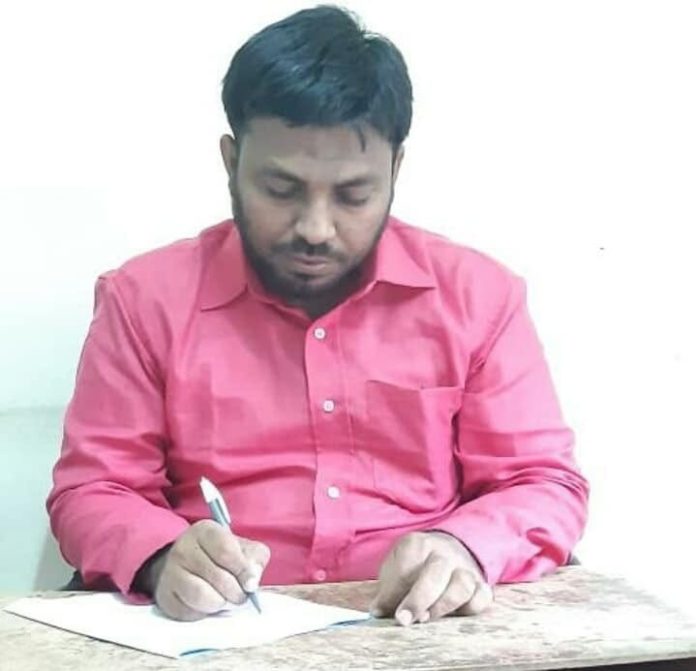
“The message of peace isn’t the property of a religion; it is the inheritance of humanity,” he often says. In his modest workspace, the scratching of his pen continues to be a defiant sound against the noise of hate.
At a time when the fabric of society feels frayed, Mohammad Mujahid reminds us that a single individual, armed with an honest pen and a heart full of harmony, can still rewrite the story of a nation. His life is not just a biography; it is a blueprint for coexistence.
source: http://www.radiancenews.com / Radiance News / Home> Features> Focus / by Saad Mohsin / January 14th, 2026