Lal Mohammad Badshah’s unwavering devotion towards the clean Ganga

Bithoor (near Kanpur) , UTTAR PRADESH :

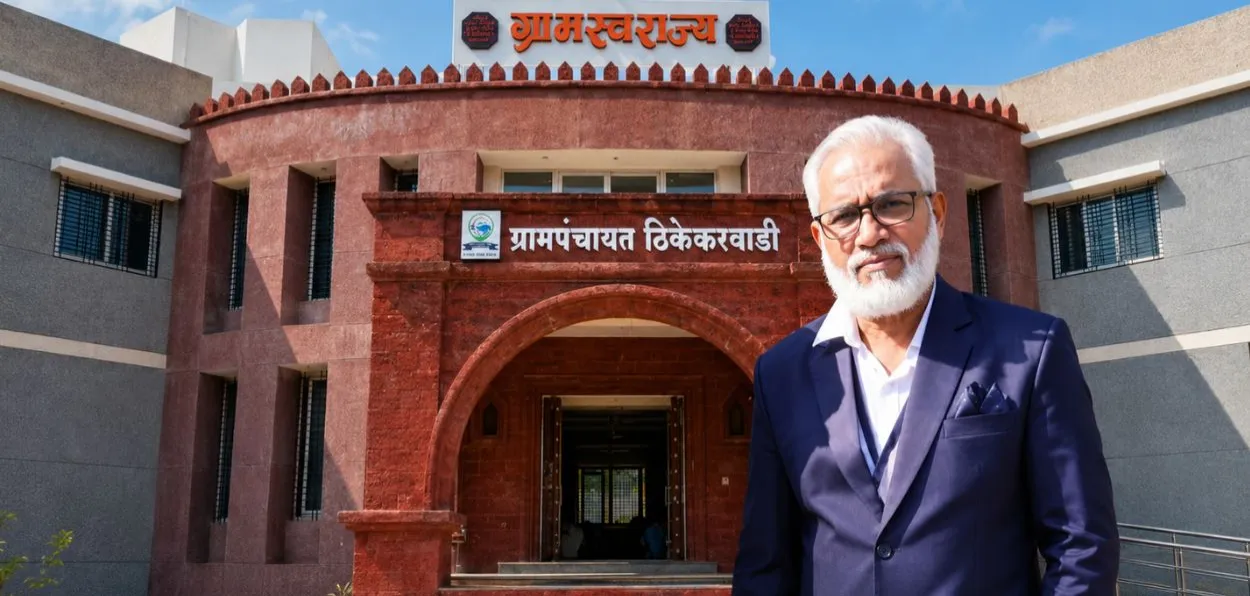
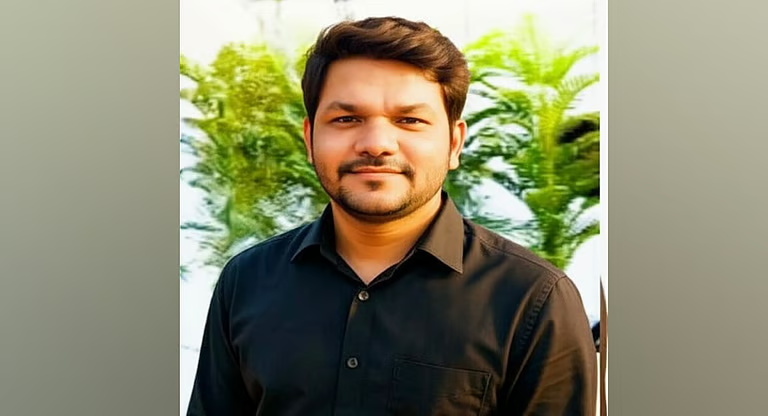
AI-generated image of Lal Mohammad Badshah and his volunteers

Every Sunday morning, a group of volunteers gathers on the banks of the Ganga in Bithoor, near Kanpur in Uttar Pradesh. Armed with bags and baskets, they pick up garbage, plastic waste, discarded offerings, and other debris from the river and its ghats.

Leading this weekly mission is Lal Mohammad Badshah, a man whose life has become synonymous with the protection of the sacred river. For the past 35 years, he has dedicated himself to keeping the Ganga clean. A Muslim by faith, Badshah gave up a well-paying government job, chose to remain unmarried, and devoted his life to serving the river he reveres as Mother Ganga. A few years ago, he even stopped wearing footwear as a mark of respect for the river.

Known locally as the “Guardian of the Ganga,” Lal Mohammad Badshah has broken religious stereotypes and emerged as a symbol of environmental conservation and communal harmony.

Bithoor occupies a special place in Hindu tradition. According to Sanatan beliefs, it is the birthplace of Luv and Kush, the sons of Lord Ram. It is also believed that Maharshi Valmiki composed the Ramayana here. The shrine of Mata Sita Ki Rasoi (Mother Sita’s Kitchen) continues to attract thousands of pilgrims and tourists from across the country.

The Ganga flows past 52 ghats in Bithoor, drawing a steady stream of devotees who come to take a holy dip in its waters. It is this sacred landscape that has become the centre of Lal Mohammad Badshah’s devotion and life’s work.

Sharing his journey with Awaz-The Voice, Badshah said, “I had a secure and well-paying job at a government fertiliser plant. Life was comfortable. But my attachment and reverence for Maa Ganga grew so strong that I decided to leave everything behind and dedicate my life to her service.”

After resigning from his job, he committed himself fully to the cleanliness and protection of the river.

To carry forward his mission, Badshah formed the Ganga Suraksha Dal (Ganga Protection Squad), a group of eight to ten local volunteers. Every Sunday, members of the squad gather at the ghats and undertake extensive cleanliness drives.

As news of their efforts spread, people from neighbouring districts, including Unnao, began joining the campaign. What started as a small initiative has gradually evolved into a community movement.

The group’s work extends beyond cleaning the river and its banks. Members also keep a vigil against poachers and work to protect fish and other aquatic life in the Ganga.

Despite the growing support, Lal Mohammad Badshah has never accepted donations for his mission.

A practising Muslim who is often seen wearing a skullcap, Badshah earns his livelihood by operating a small tourist boat on the Ganga. After leaving his government job, he turned to ferrying pilgrims and visitors along the river.

His boat, furnished with mattresses and cushions, offers tourists a comfortable ride while introducing them to the spiritual and historical significance of Bithoor. The modest income from these rides sustains both his personal needs and his environmental campaign.

Visitors are often surprised to hear him greet people with “Ganga Maiya Ki Jai” (Hail Mother Ganga).

When asked how fellow Muslims reacted to his devotion to the river, Badshah replied, “Faith and devotion are matters of personal conviction. I have a spiritual connection with the Ganga.”

He recalls that in the beginning, some people from his community mocked him and questioned his actions. However, as they witnessed his sincerity, selflessness, and dedication, attitudes began to change.

“Today,” he says, “people respect the work we are doing. Service to humanity and nature is above all divisions.”

Over the years, Badshah’s story has gained widespread attention on social media, where thousands of people have praised his commitment and spirit of service.

Among the many tributes, social media user F.S. Parmar described him as a “King of Kings.” Manoj Kumar wrote that while water cleanses the body, truth purifies the mind, knowledge refines the intellect, and righteousness elevates the soul.

Ashish Sharma commented that true strength lies in devotion and service, while Rajendra Chauhan described Badshah as a “Badshah” (King) not only in name but also in character.

Another user, Rajat, offered a heartfelt prayer: “May Allah grant you a long life, and may Mother Ganga always keep you safe in her embrace.”

Pankaj Thapliyal observed that the Ganga is not merely a religious symbol but a life-giving river for all humanity. Sunita Kumari compared Lal Mohammad Badshah to historical figures such as Raskhan and Rahim—Muslim poets who became celebrated devotees of Lord Krishna.

Today, the historic Rani Lakshmi Bai Ghat in Bithoor has become the Badshah’s permanent base. He spends most of his day there, overseeing cleanliness efforts, meeting visitors, and sharing his message of environmental stewardship and communal harmony.

For many who visit Bithoor, Lal Mohammad Badshah is no longer just a boatman or a volunteer. He has become a living example of how devotion, service, and love for nature can transcend religious boundaries and bring communities together.

source: http://www.awazthevoice.in / Awaz, The Voice / Home> Stories / by Malick Asghar Hashmi, New Delhi / June 10th, 2026

Prof Shabina Nishat Omar: A celebrity academician-administrator of West Bengal

WEST BENGAL :

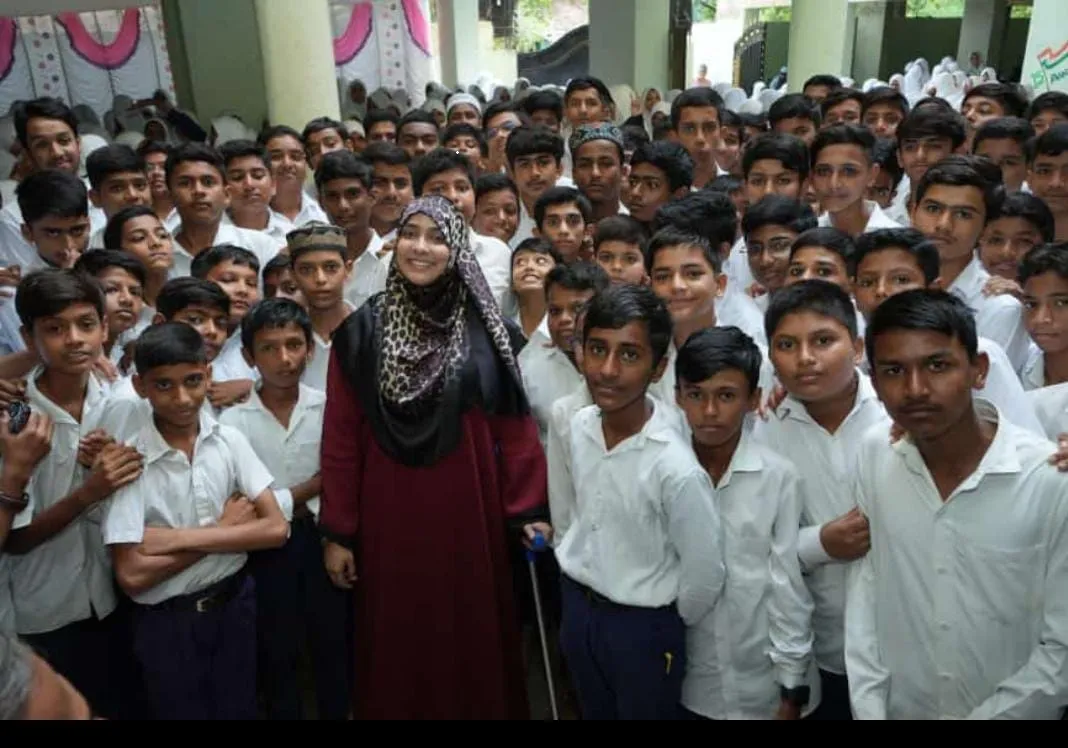
Professor Shabina Nishat Omar

In the broad landscape of society, administration, education, and culture in West Bengal, the progress of Muslim women has ushered in a new chapter today. Overcoming long-standing social barriers, superstition, and gender-based discrimination, they are now taking positions of leadership. One of the brightest faces of this transformation is Professor Shabina Nishat Omar, whose life journey stands as a remarkable example of women’s self-empowerment in modern society.

Active in the academic world for more than 25 years, Prof Omar is not only an educator but also a skilled administrator, inspiring speaker, and fluent multilingual presenter.

She is currently serving as Officer on Special Duty (OSD) in the Directorate of Higher Education under the Government of West Bengal.

Professor Shabina Nishat Omar – the woman of substance

At the same time, her academic leadership as Head of the English Department at Acharya Jagadish Chandra Bose College is equally commendable.

An important chapter of her professional career was her 19 years of teaching at Milli Al-Ameen College for Women, as Principal-in-Charge for 15 years.

During this time, she played a major role in transforming the institution into a modern, well-organized, and student-friendly campus.

Beyond administrative excellence, Professor Omar’s multidimensional activities have given her a distinct identity. She is a skilled debater, eloquent speaker, and outstanding reciter, through which she has expressed her views on various national and international platforms.

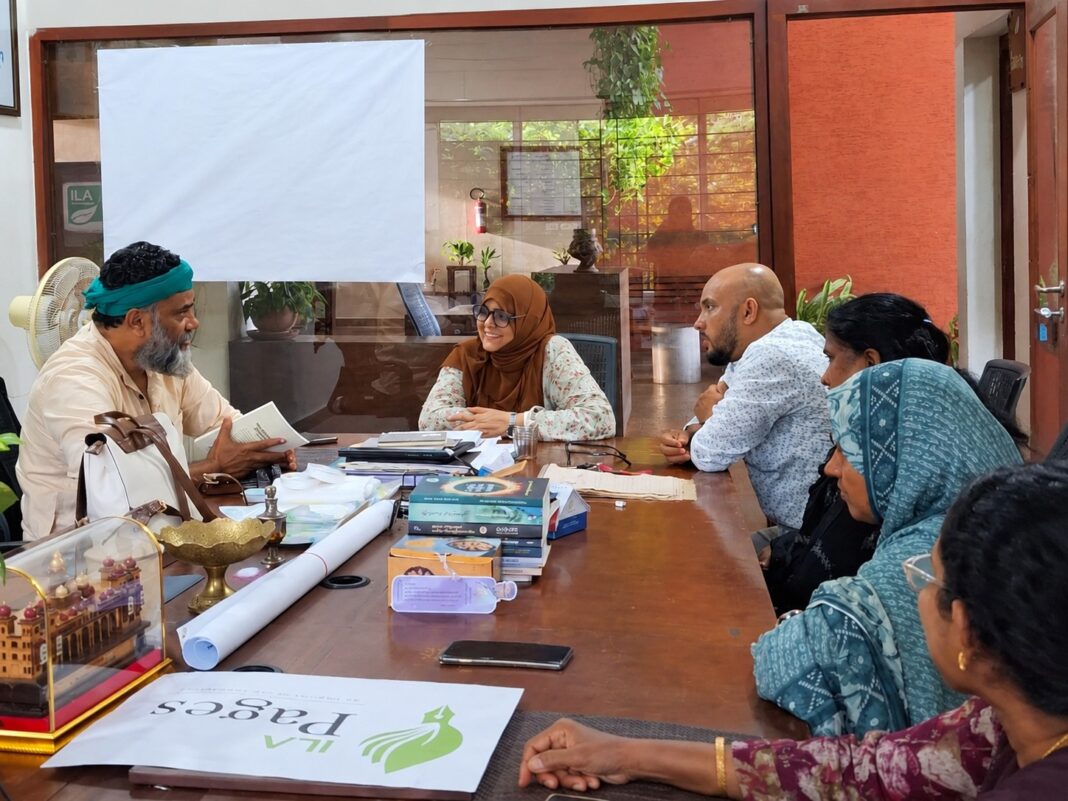
Professor Shabina Nishat Omar (Third from left) at a College function

Her active involvement in promoting women’s empowerment, digital education, gender studies, and inclusive education has established her as an influential thinker in contemporary society.

Her presence in seminars, workshops, and academic platforms carries a powerful message for the younger generation—that education is not merely a profession, but one of the strongest tools for social transformation. As a speaker and trainer, she emphasizes leadership development, women’s self-reliance, language proficiency, and strategies to address modern social challenges.

In recognition of her contributions, she has received several honours, including the Damini SHE Award and the Disrupt Women’s Leadership Award.

Her nomination to the International Visitor Leadership Program of the United States Department of State further strengthened the international recognition of her work.

At present, she is also actively involved in several administrative and academic responsibilities associated with University of Calcutta.

Professor Shabina Nishat Omar

As Bursar and Internship Nodal Officer at the college level, her initiatives in connecting students with practical education are especially noteworthy.

The journey of Professor Shabina Nishat Omar is not merely a story of personal success; it is a blueprint of women’s self-establishment in modern society. Personalities like her prove that with the right vision, dedication to education, and commitment to society, a woman not only creates her own place but also opens the path for others.

Her presence on seminar stages is not just participation as a speaker—it is a source of inspiration, where a woman firmly establishes her position in modern society through knowledge, experience, and leadership.

source: http://www.awazthevoice.in / Awaz, The Voice / Home> Success Story / by Shompi Chakraborty Purkayas / June 09th , 2026

Taufiq Mohammad who saved lives during 26/11, says hang Rana

Mumbai, MAHARASHTRA :

Mohammad Toufiq (Picture grabbed from ANI’s video posted on X)

When Pakistani terrorists targeted Nariman House, Cama Hospital, Taj Hotel, Oberoi Hotel, Chhatrapati Shivaji Terminus, and Leopold Cafe on 11 November, 20 16 years ago, killing 166 people, Mohammad Taufiq Sheikh was one of the lucky persons to have narrowly missed the terrorists’ bullet.

Now famous as Chotu Chaiwala, as he continues to sell tea in front of St. George Hospital, he gets into a pensive mood at the mention of Tahawwur Rana, one of the key planners of the attack who has been extradited to India from the US to face trial.

Toufiq saved many lives as he was present at the Railway station on that fateful day.

Recently, on knowing that Tahawvur Rana was brought to India after 16 years, he said, “He should not be given any relief; instead, hang him.”

Taufiq Mohammad, an eyewitness to the 26/11 attack, looked upset. He said, “The government should not him any facility as he is the main culprit of 26/11. He is not a hero; he is a beast. In the attack, someone’s mother, sister, brother, or father was killed. He should not be shown mercy and should be lodged in a separate cell, the government should take strict action against him. The government should hang this terrorist within 15 days.”

Taufiq said, “The government should make a separate law to take action against terrorists. Pakistan still gives shelter to terrorists as a result the common people also suffer. Punish Rana so severely that the rest of the terrorists start trembling with fear.”

A terrorist has no caste or religion. He should only be called a terrorist, Taufiq says.

“Rana and I have the same religion. Rana, in the name of religion, helped those people who fired bullets at innocent people. Islam does not teach to kill anyone. Islam gives the message of peace and love. Shedding blood in the name of religion is not the teaching of religion. We are proud to be Indian Muslims. Every terrorist should get severe punishment.”

Pakistani terrorists were killing people mercilessly. The entire station was silent. People were saving their lives. No one was there to help them. Talking about that time, Taufiq says, “Seeing the guns with them, I first thought they were commandos. But they were killing people mercilessly. They were not humans, they were monsters. One of them (Kasab) was coming towards me. He abused me. I thought I would be killed too.”

He further says, “The glass of doors and windows were broken due to the firing. The entire station was filled with blood. People were struggling to save their lives. Many people were injured. I wanted to save the injured people. I put the injured people on a cart and took them to St. George Hospital and Byculla Railway Hospital. In this way, many people’s lives were saved.”

This incident was terrifying, but Taufiq handled the situation with courage. Keeping humanity at the top, he saved people’s lives without looking at caste or religion. For this, he was given 27 rewards and some financial help.

Taufiq says, “On the night of 26/11, I went to the railway station to collect money for tea. There were more than 4000 people there. There was a rush to buy tickets, so the ticket master asked me to collect the money after a while. I stood outside the station. I still remember, that day a cricket match between India and England was going on. After a while, suddenly I heard a loud firecracker-like sound from inside the station.”Toufiq continues to sell chai at the same place.

source: http://www.awazthevoice.in / Awaz, The Voice / Home> Success-Story / by Fazal Pathan, Mumbai / April 16th, 2025

Moinul Haque provides healthcare, education to 300 brick kiln workers’ families

Chokapara-Naoda Village (Bilashipara subdivision, Dhubri District), ASSAM :

Moinul Haque at his brick kiln

Moinul Haque of village Bilashipara in Dhubri district of western Assam once lived in appalling poverty and even had to go hungry on many days. Having worked his way to a better life, this man in his late forties is now providing livelihood to 300 families but also ensuring they get basic amenities of life.

Owner of a brick kiln that he set up to address acute poverty in village Takimari, Ranigunj, a Muslim village of Assam

Not only he pays wages to his workers, but he also provides them with the basic facilities of education and health, and he also ensures drinking water, healthcare, and education for the children of brick kiln workers.

In a conversation with Awaz -The Voice, the soft-spoken Moinul Haque alias Baltuk said that as a child he had to work hard to survive.

Brick Kiln owned by Moinul Haque

He was born in Chokapara-Naoda, a backward village in the Lakshiganj area of the Bilashipara subdivision. His father, Sabed Ali, a fish trader, and his mother, Manuwara Bibi, a domestic help, had many dreams for their children yet no means to fulfill them.

Moinul’s parents enrolled him in a nearby government primary school even as the sustenance of a family comprising two sons and four daughters was getting difficult for  Sabed Ali.

As luck would have it, Sabed Ali’s health started falling.

“It was difficult for us to support a family of eight and take care of my father. As a result, sometimes we had to go to sleep hungry. One day, I finally dropped out of school due to poverty. I was eight years old.

“I was thinking about how I could support my family. I started baking papad at the street corners and selling them. After making some money, I started selling betel nuts (Tamol) along with papad on a table perched on the roadside,” he said.

 Within 3-4 years, he expanded his small shop into a grocery store.

Moinul was just beginning to flourish in his trade when his father, Sabed Ali became paralyzed. Now he got worried about the fate of his family.

However, Moinul kept his focus on business and started trading fish.

An under-construction building in which Moinul Haque is involved in

He bought fish from Hatipota, Tilapara, Shalkocha, and other areas riding an old bicycle in the wee hours of the day. He sold it in Bilashipara and Beltali markets.

He did well and after some time, he expanded trading to sand, stone chips, and timber.

 At the age of 20, Moinul got married.

He managed to marry all his sisters within five years. He also worked as an associate of various construction contractors. However, his hunger for success did not end there.

Alongside his business, he also volunteered to get associated with various social activities. He realized that the people of western Assam, especially the Muslims, were backward in many facets of life.

He set up a brick kiln at His enterprise has provided livelihood to about 300 families in the area. Most of these families are economically backward Muslims.

He also provided these families with basic facilities like healthcare, hygienic drinking water, and education.

source: http://www.awazthevoice.in / Awaz, The Voice / Home> Stories / by Malati Sarmar, Bilashipara / March 21st, 2023

Muslims remember Hafiz Manzoor as a leader who worked for youth

Mumbai , Pune / MAHARASHTRA :

Hafiz Manzoor, the Maharashtra Amir (head), Tablighi Jamaat,

Mumbai :

The passing of Hafiz Manzoor, the Maharashtra Amir (head) of the global Islamic reformist movement Tablighi Jamaat, is being mourned as a profound loss for the entire Muslim community. He had dedicated his life to the service of the faith, for the betterment of society, and the service of humanity.

Hafiz Manzoor, who was in his nineties. was laid to rest at the Nigdi cemetery in Pimpri-Chinchwad with thousands of his followers attending the burial on Monday night.

Hafiz Manzoor was active till the very last. He had arrived in Pune on Sunday night and offered his pre-dawn Tahajjud and Fajr prayers.

Following the Fajr prayers, he suddenly felt dizzy inside the mosque where he lived.

He was rushed to the hospital for treatment, where the doctors declared him dead. but was declared dead upon arrival. According to his close associates, he fasted on Mondays and Thursdays, and he was fasting on the day of his death.

Hafiz Manzoor always inspired the youth to acquire a good education, cultivate excellent morals, and walk on the righteous path. His hard work, simplicity, concern for the Ummah, and his unique ability to connect people will always be remembered.

Maulana Saad, the Indian head of the Tablighi Jamaat, and his son specially attended the funeral to pay their last respects. Hafiz Manzoor, who was in his 90s, passed away yesterday (May 18) in Pune. His passing has sent a wave of mourning across the Muslim community in Maharashtra.

Staying away from fame and any kind of ostentation, he dedicated his entire life to social reform and religious service.

Thousands of his followers from all over the country arrived in Pune on Monday night. His mortal remains were kept at the Fatima Masjid for people to pay their final respects.

The mourners moved in complete discipline and peace from the mosque to the cemetery, a true way to pay tribute to a man of religion whose life was an epitome of simplicity.

Residing at the Fatima Masjid in Pune, he served the religion and society for several decades. He worked tirelessly throughout his life to keep the youth away from addiction and to raise awareness against the dowry system in society.

He always strongly advocated for marriages and other ceremonies to be conducted with utmost simplicity. His passing is seen as a massive loss to the community, with many expressing the sentiment of losing a true guiding light.

For the uninitiated, Tablighi Jamaat is a global Sunni Islamic reformist and spiritual movement. The movement was started in 1926 by Maulana Muhammad Ilyas Kandhlawi in the Mewat region of India.

The primary objective of this movement is to bring Muslims back to their fundamental religious values and teachings. They place heavy emphasis on offering regular prayers and living a simple life.

The group stays away from politics, social controversies, and publicity. Its members dedicate a specific number of days to travel from village to village and mosque to mosque, reminding their fellow Muslims to walk on the path of faith.

Within this movement, there is a head designated to guide a state or a country, who is referred to as the ‘Amir’. Hafiz Manzoor was the Amir of the Tablighi Jamaat for the state of Maharashtra.

source: http://www.awazthevoice.in / Awaz, The Voice / Home> Changemakers / by Aasha Khosa, ATV / May 21st, 2026