Educated at Allahabad University, the daughter of a State Bank of India officer credits self-study, family support and disciplined preparation to secure first rank
New Delhi :
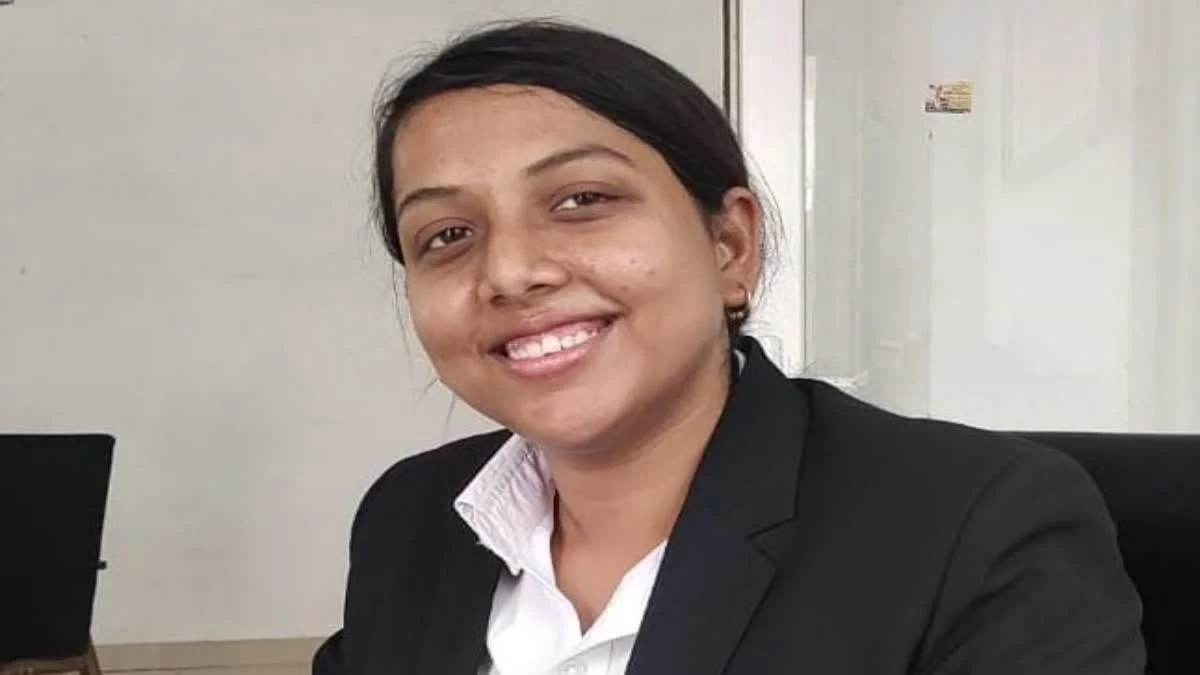
In a story of determination, faith and steady hard work, Anjum Ara from Prayagraj in Uttar Pradesh has secured first rank in the Chhattisgarh Provincial Judicial Service Examination, becoming a judge and bringing pride to her home state. Her success has been widely celebrated in Prayagraj, where neighbours and well-wishers described her achievement as a moment of honour for the city.
Anjum, who comes from an educated Muslim family, said her journey was shaped by a personal loss that changed the direction of her life. Her uncle, whom she lovingly called Bade Abu, served as an Additional District Judge. His death left a deep impact on her and inspired her to choose the path of judicial service. “I used to call him Bade Abu,” Anjum recalled. “After he passed away, I made up my mind that I would become a judge like him and serve society.”
She completed her early schooling at Central Academy in Jhunsi town in Prayagraj District before pursuing her BA and LLB from the University of Allahabad. Reflecting on her university years, Anjum said the Law Faculty played a major role in shaping her approach towards legal studies. “The Law Faculty taught me to understand the law, not just memorise it,” she said. “Our professors focused on practical learning. That helped me a lot in the judicial exams.” She added that because of the strong academic environment at the university, she did not feel the need to rely on costly coaching institutes. “If your basics are clear, you can prepare on your own,” she said.
Her father, Shamim Ahmed, works as an assistant manager at the State Bank of India, while her mother, Akhtari Begum, is a homemaker. Anjum described her parents as her biggest support system. She said her preparation was entirely self-driven and disciplined. “I studied five to six hours every day with full focus,” she explained.
For the mains examination, she focused strongly on judgment writing. She regularly practised answer writing and carefully studied judgments delivered by local courts in Chhattisgarh to understand how decisions are framed. “I practised writing answers regularly. I also studied judgments from local courts in Chhattisgarh to understand how decisions are structured,” she said. She also credited her habit of reading newspapers daily for helping her during the interview stage. “Current affairs helped me respond confidently,” she added.
At home, her family ensured that her studies were never disturbed. “They made sure there was no noise while I studied. They always encouraged me, especially when I failed in the Rajasthan and Delhi judicial exams,” Anjum said. Her father said the family never allowed disappointment to take over. “We always believed in her ability. Failure is part of life. We told her not to lose hope,” he said. Her mother added, “She worked very hard day and night. We only tried to give her a calm environment.”
Before achieving success in Chhattisgarh, Anjum faced setbacks in other states. She admitted that those failures were painful but also important lessons. “Failures taught me where I was lacking,” she said. “Instead of getting upset, I improved my answer writing and strengthened my understanding of the law.” Her perseverance paid off when the results were declared and she secured the top rank in the state.
Residents in Prayagraj expressed pride in her achievement. A neighbour said, “This is a proud moment for the entire area. She has shown that with hard work, anything is possible.” A former teacher from the University of Allahabad said, “Anjum was always sincere and focused. Her success proves that strong academic grounding and discipline make a real difference.”
Now appointed as a judge, Anjum says her goal is to carry out her duties with honesty and integrity. “I want to fulfil my responsibilities towards society through the judiciary with sensitivity,” she said. “Justice should be fair and humane.” Her achievement is being seen as an inspiration, particularly for young women from minority communities who dream of entering the judiciary.
Anjum also shared advice for aspirants preparing for judicial services. She urged students to build a strong grasp of the basic language of law. She advised regular answer writing practice for the mains examination and stressed the importance of understanding how court judgments are read and written. She encouraged students to maintain a routine of five to six hours of focused study daily and not to lose heart in the face of failure. “There is no easy way,” she said. “You have to stay focused and believe in yourself.”
From the classrooms of Prayagraj to securing the top rank in Chhattisgarh, Anjum Ara’s journey reflects discipline, patience and family support. As she prepares to take her place on the bench, many young aspirants now look to her story as proof that steady effort and belief in one’s goal can turn a dream into reality.
source: http://www.clarionindia.net / Clarion India / Home> Editor’s Pick> Indian Muslims / by Mohammad Bin Ismail / February 23rd, 2026
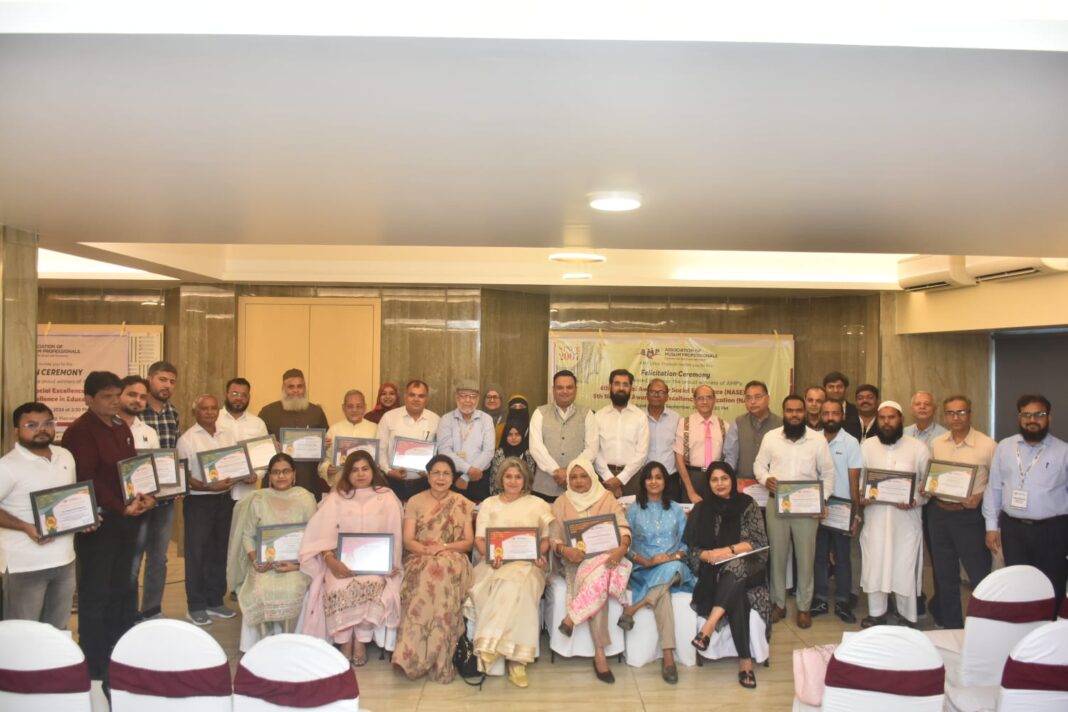
The Uttar Pradesh Chapter of the Association of Muslim Professionals (AMP) organized an ceremony at Hotel Arif Castle for the recipients of the 4th National Awards for Social Excellence and the 8th National Awards for Excellence in Education from Uttar Pradesh.
Among special guests were senior gastro surgeon Dr. Waliullah Siddiqui from Apollo Hospital and Mirza Mubeen Baig from Gautam Budh Nagar. Distinguished educationist and career counsellor Dr. Amrita Das was to attend as the chief guest but could not participate due to health issues, so former senior bureaucrat Zahra Chatterjee filled the role.
The programme began with a recitation from the Holy Quran by Maulana Muhammad Rehan Qasmi.
The welcome address was delivered by AMP’s Zonal Head for Central Zone, Syed Shoaib. AMP’s State Head, Shaheen Islam, introduced the audience to AMP’s objectives and activities, mentioning that this non-governmental, non-political, and non-profit organization was founded in 2007. Over the years, AMP has been engaged in educational, social, economic, and developmental activities aimed at empowering marginalized communities.
Guest of honour Mirza Mubeen Baig emphasized that working for NGOs is becoming increasingly challenging, and only those organizations that serve selflessly and with sincerity will succeed. He stressed the need for collaboration among serious NGOs to benefit from each other’s experiences.
Dr. Waliullah Siddiqui congratulated the awardees for their contributions to education and social services, highlighting that the responsibility for educating and nurturing children lies with both parents and teachers. In today’s changing times, this responsibility has grown even more significant. He shared personal lessons from his life, crediting his parents for playing a central role in his achievements.
Speaking as the chief guest, retired IAS officer Zahra Chatterjee praised AMP’s work and said that every individual’s contribution is crucial for the nation’s development. She stressed the need to reach out to the last individual to ensure educational awareness and economic stability.
Farooq Siddiqui, Head of AMP’s National Coordination Team, addressed the audience, stating that these awards aim to encourage individuals and organizations committed to transforming the nation through their selfless services. He emphasized the importance of collective efforts and mutual cooperation, noting that the welfare of the country and nation lies in unity and partnership.
The vote of thanks was delivered by Mohammad Mohiuddin, Chapter Head of AMP Lucknow, and the event was hosted by Dr. Sumbul Shakeel.
The recipients of the National Awards for Social Excellence included the Best NGO awardees:
Tauheedul Muslimeen Trust, Institute of Social Harmony and Upliftment.
Among the Change Maker Awardees were:
Professor Dr. Nuzhat Hussain from Lucknow, Dr. Mohammad Mubashir, Sabiha Ahmed, Balbir Singh Maan, Dr. Kaleem Ahmed Khan from Kanpur, Dr. Saba Yunus, Shahid Kamran Khan, Sagheer Khaksar from Balrampur, Dr. Saleem Mohammad Khan and Naseem Ahmed Khan from Aligarh, and Ramesh Chandra Srivastava from Ayodhya.
The recipients of the National Awards for Excellence in Education included:
Professor Mirza Mohammad Sufiyan Baig, Professor Naseem Ahmed Khan, Ausaf Azeem Kirmani from Aligarh, Mohammad Shahid Khan, Dr. Mohammad Shamim, Samiullah Ansari from Kanpur, Chitra Maheshwari from Lucknow, Dr. Roohi, and Maulana Mohammad Rehan Qasmi.
Lifetime Achievement Awardees included senior teacher Sheila Lawrence from Lucknow and Jamaluddin Khan from Kanpur.
A large number of attendees were present at the event, including Dr. Anis Ansari (former IAS), Mohammad Khalid Ashu, Mujtaba Khan, Najm-ul-Hasan Rizvi Najmi, Dr. Uzma Mubashir, Syed Abrar, Rizwan Ansari, Mohammad Zeeshan, Mohammad Imran, Javed Akbar Khan Lodi, Shahenshah Ansari, Fahad Mahmood, Ayesha Mahmood, Alma Siddiqui, Ayesha Alvi, Zaheer Baig, and Aqib Rauf.
source: http://www.indiatomorrow.net / India Tomorrow / Home> Education / by India Tomorrow / September 03rd, 2024
The Waqf Amendment Act 2025, recently passed by the Government of India, has stirred a wave of public discourse. Promising to regulate and modernize the administration of waqfproperties across the country, the law is being introduced as a means to improve transparency and benefit marginalized communities, especially Muslim women.
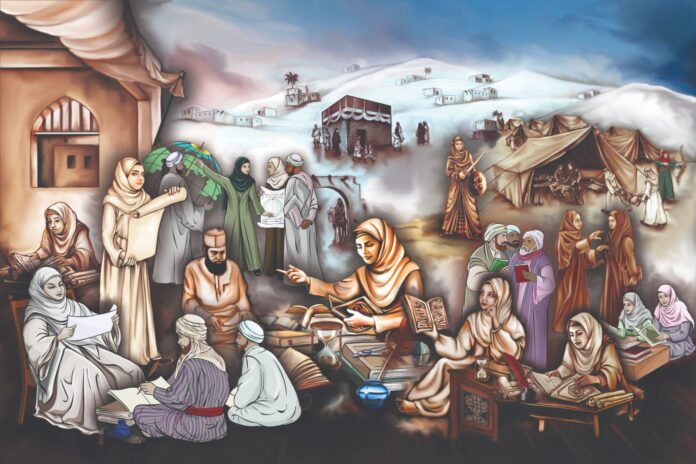
However, in this swirl of policy language, governance reform, and bureaucratic oversight, we must not forget a foundational truth: Muslim women have always been central to the waqftradition—not as passive recipients, but as active architects of community transformation.
Waqf as a Tool of Empowerment—Before the State Claimed It
Before governments created waqf boards, before institutional frameworks shaped their regulation, and long before women were officially recognized in policy narratives, Muslim women in India were shaping societies through charitable endowments.
They:
• Founded schools and madrasas for girls and boys alike
• Donated lands and properties for the construction of mosques, shrines, and Sufi lodges
• Built hospitals, water fountains, and orphanages
• Funded scholarships, welfare kitchens, and even public rest-houses for travelers.
This was not mere charity—it was strategic social intervention, embedded in Islamic ethics and guided by a vision of communal upliftment.
👑 Queens of Waqf: A Glimpse into Heroines of Charity and Community Leadership
🏛️ Razia Sultana (1205–1240, Delhi)
India’s only woman Sultan, Razia established educational and civic institutions supported by state waqf. Her leadership emphasized justice, learning, and infrastructure.
🏛️ Jahanara Begum (1614–1681, Delhi)
Daughter of Shah Jahan, she created waqf endowments for Sufi shrines, caravanserais, and public gardens. Her waqf documents are among the earliest female-authored ones preserved in India.
🏛️ Roshanara Begum (1617–1671, Delhi)
Sister to Jahanara, she built Roshanara Garden and a Sufi lodge. She maintained religious institutions through royal waqf.
🏛️ Sultan Jahan Begum (1858–1930, Bhopal)
The last Begum of Bhopal, she modernized education, built hospitals, supported madrasas, and legally registered many waqf properties to support her reforms.
🏛️ Begum Hazrat Mahal (1820–1879, Lucknow)
Regent of Awadh, she protected the city’s religious institutions and supported waqf-based welfare during the 1857 Rebellion.
🏛️ Khair-un-Nissa Begum (18th c., Hyderabad)
Established Khairtabad Mosque and other public works through her waqf. One of the early noblewomen to invest in education and water supply systems.
A visionary educationist, she established the Sakhawat Memorial Girls’ School using her own resources and informal waqf practices. A true reformer of women’s rights.
Urdu novelist and educationist who established the Safdariya Girls School through personal endowment. One of India’s earliest women school founders.
🏛️ Princess Durru Shehvar (1914–2006, Hyderabad)
Ottoman princess and daughter-in-law of the Nizam. Founded the Durru Shehvar Hospital, a major maternity and child-care waqf.
🏛️ Princess Niloufer (1916–1989, Hyderabad)
Ottoman royal by birth and philanthropist. Established Niloufer Hospital for women and children in response to maternal health tragedies.
🏛️ Dr. Uzma Naheed (Contemporary, Mumbai)
Thinker and leader who founded the IQRA International Women’s Alliance. Created vocational and educational centers for women through charitable trusts and waqf-like models.
🏛️ Begum Abadi Bano (Bi Amma) (1850–1924)
Mother of freedom fighters Maulana Mohammad Ali and Shaukat Ali, she supported the Khilafat movement and women’s education through charity and informal waqf support.
🏛️ Begum Qudsia Aizaz Rasul (1909–2001)
Only Muslim woman member of the Indian Constituent Assembly. Promoted educational waqfs and women’s legal rights in independent India.
🏛️ Hamida Habibullah (1916–2018, Lucknow)
Educator, politician, and philanthropist who helped establish Talimgah-e-Niswan, a leading girls’ school, partially supported by endowments and community waqf models.
🏛️ Tayyaba Begum (early 1900s, Hyderabad)
Co-founder of Anjuman-e-Khawateen-e-Deccan, she organized women’s welfare through educational trusts and neighborhood charities alongside Sughra Humayun Mirza.
These women are not anomalies in history. They are evidence of a forgotten mainstream—a rich legacy of Muslim women using waqf, education, and philanthropy to shape the public sphere.
What the Law Misses
The 2025 Amendment claims to create better access for women and transparency in waqfgovernance. Yet, many community members raise concerns about:
• Increased government control over waqf boards
• Reduced autonomy of local Muslim stakeholders
• Weak representation of women in decision-making roles
If reform is truly meant to benefit women, it must not just focus on current access. It must honor and preserve the legacy of those women who built the system through vision, sacrifice, and faith.
Reclaiming the Narrative
As students of history and as researchers in the contributions of Muslim women across disciplines—al-Muhaddithat, scholars, judges, educators, warriors, nurses, and philanthropists—we find it essential to reclaim and highlight this tradition in the current discourse.
This document delves into the intersections of gender, history, law, and social development, spotlighting women’s roles in charitable work and community building through waqf and related institutions.
Our goal is not just to preserve history, but to activate it: to inspire current and future generations to recognize the power of service, leadership, and waqf in reshaping communities. The struggle for recognition today stands on the shoulders of those who built with purpose and gave with dignity.
Conclusion: From Past to Future
Muslim women in India have been pioneers of welfare through the waqf system for centuries. Their work wasn’t performed for applause or public acclaim. It was done with quiet resolve, deep faith, and a vision for lasting impact.
As new policies reshape the landscape of waqf, let us not merely react—we must respond with wisdom, rooted in history and hope. Let the legacy of women like Razia, Jahanara, Durru Shehvar, Niloufer, Sughra, and Uzma guide us in reimagining waqf as a tool not only for preservation—but for progressive, inclusive development.
The author is a Social Worker, Student of History and Educator
source: http://www.muslimmirror.com / Muslim Mirror / Home> Education> Positive Story> Waqf> Women / by M A Lateef Atear / June 04th, 2025
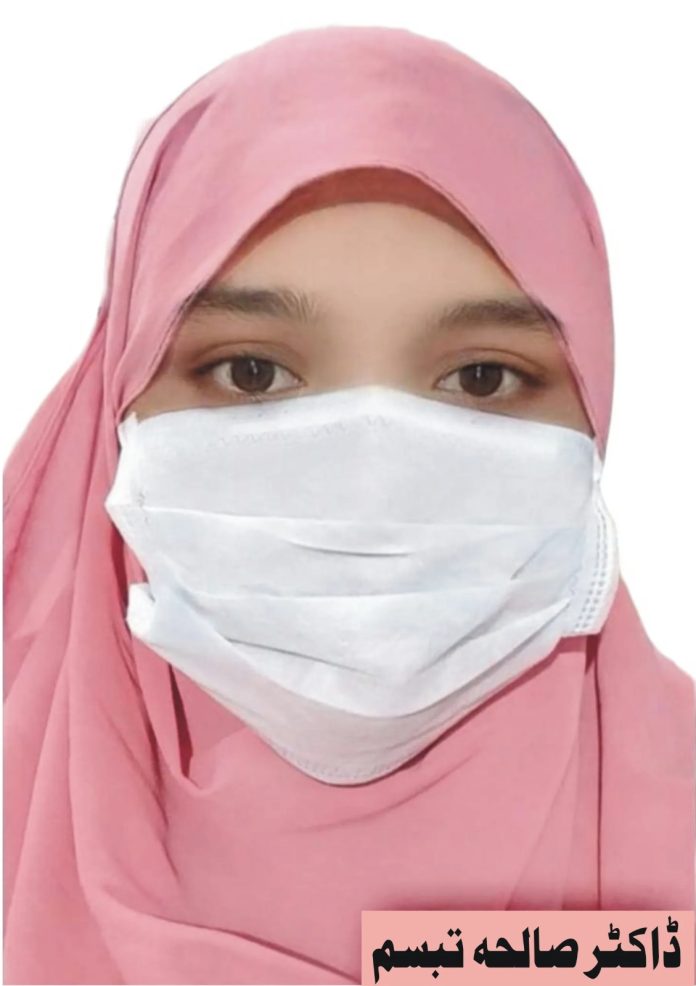
Salihah Tabassum, daughter of Muhammad Waheed Ahmed and wife of Muhammad Atiqur Rahman, has achieved a remarkable milestone. She has obtained a Ph.D. degree in Zoology from Glocal University, Saharanpur.
Her doctoral dissertation, titled “Implications of Seasonal Variations on Global Health: An Examination through the Lens of the United Nations,” explores crucial aspects of global health in relation to seasonal changes.
Salihah’s research was conducted under the supervision of Dr. Banshidhar Singh. She successfully completed her research and underwent a viva voce examination on February 23, 2024. The examination, which was attended by Dr. Vinod Kumar, Associate Professor, and Dr. Banshidhar Singh, Assistant Professor, as well as other Zoology experts, affirmed the quality and significance of her work.
Salihah, Correspondent of Naunehal Urdu High School, Adilabad, is grateful to the Almighty for her success and acknowledges the unwavering support and guidance of her father Muhammad Waheed Ahmed and her husband Muhammad Atiqur Rahman, who are her pillars of strength.
source: http://www.radiancenews.com / Radiance News / Home> Education / by Radiance News Bureau / April 02nd, 2024
Shabnam Shabbir Shaikh of Aambijalgaon, Maharashtra, trashes stereotypes of Indian women. Having picked wrestling as her field, this 28-year-old woman has broken all the shackles that a girl child faces while growing up in a small village.
Hailing from the village Aambijalgaon, Karjat, of the district Ahmednagar Shabnam was born in Jammu where her father Shabbir Sarabhai Shaikh was posted in the Indian Army. She is the third child of her parents and she grew up seeing her mother Rizwana Begum looking after the house and the family. However, Shabnam’s father always wanted his daughter to be brave, self-reliant, and break social stereotypes.
A great votary of women’s education Shabbir Shaikh encouraged his wife Rizwana Begum to complete her MSc degree after their marriage.Due to her father’s frequent postings across the country, Shabnam did her schooling mostly at the Army schools in Ambala, Udhampur, Srinagar, and Ahmedabad. After her father’s retirement, the family settled in their native village and Shabnam joined the local school.
She joined the 11th class in the Dada Patil College, Karjat, in the science stream. despite an irregular and sluggish bus service to Karjat, she somehow managed to study and also attend coaching for wrestling.
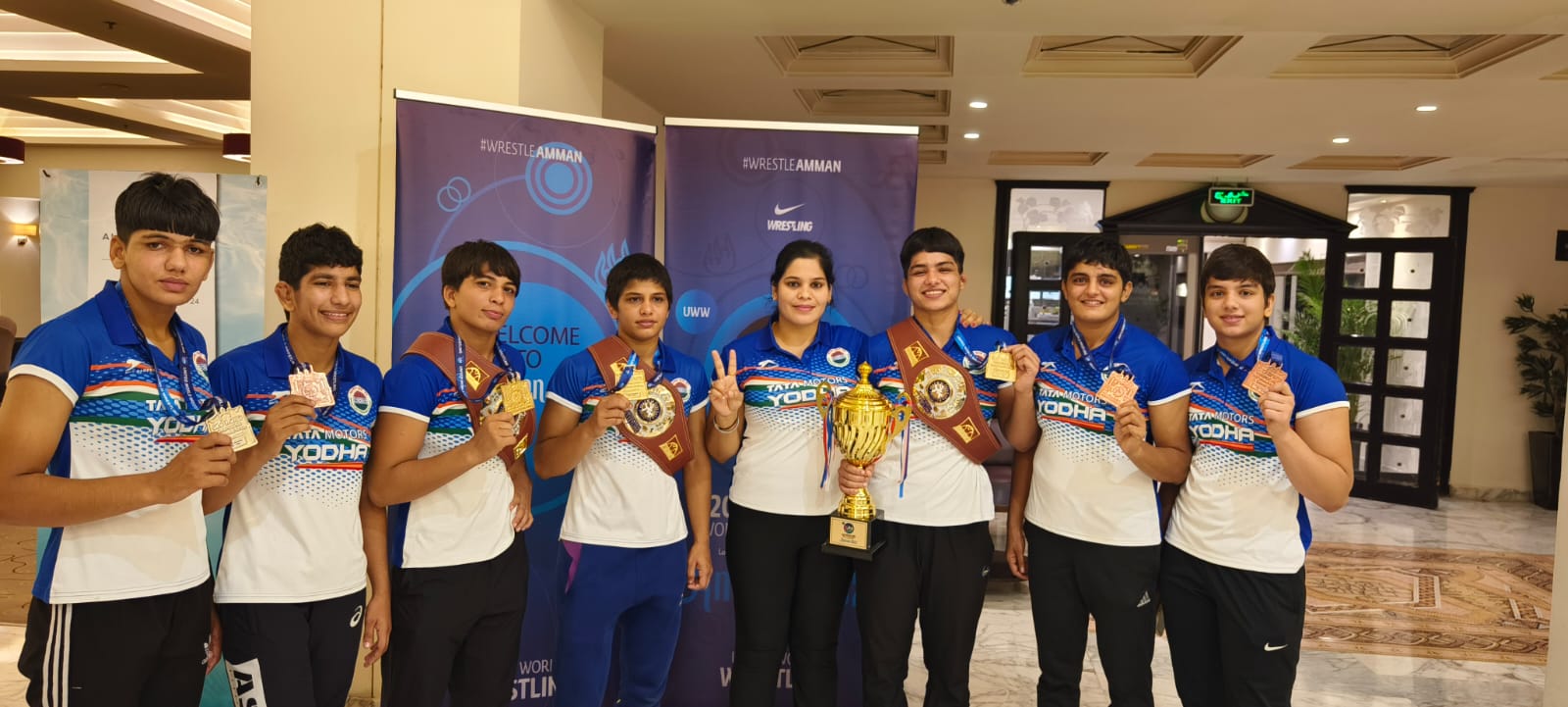
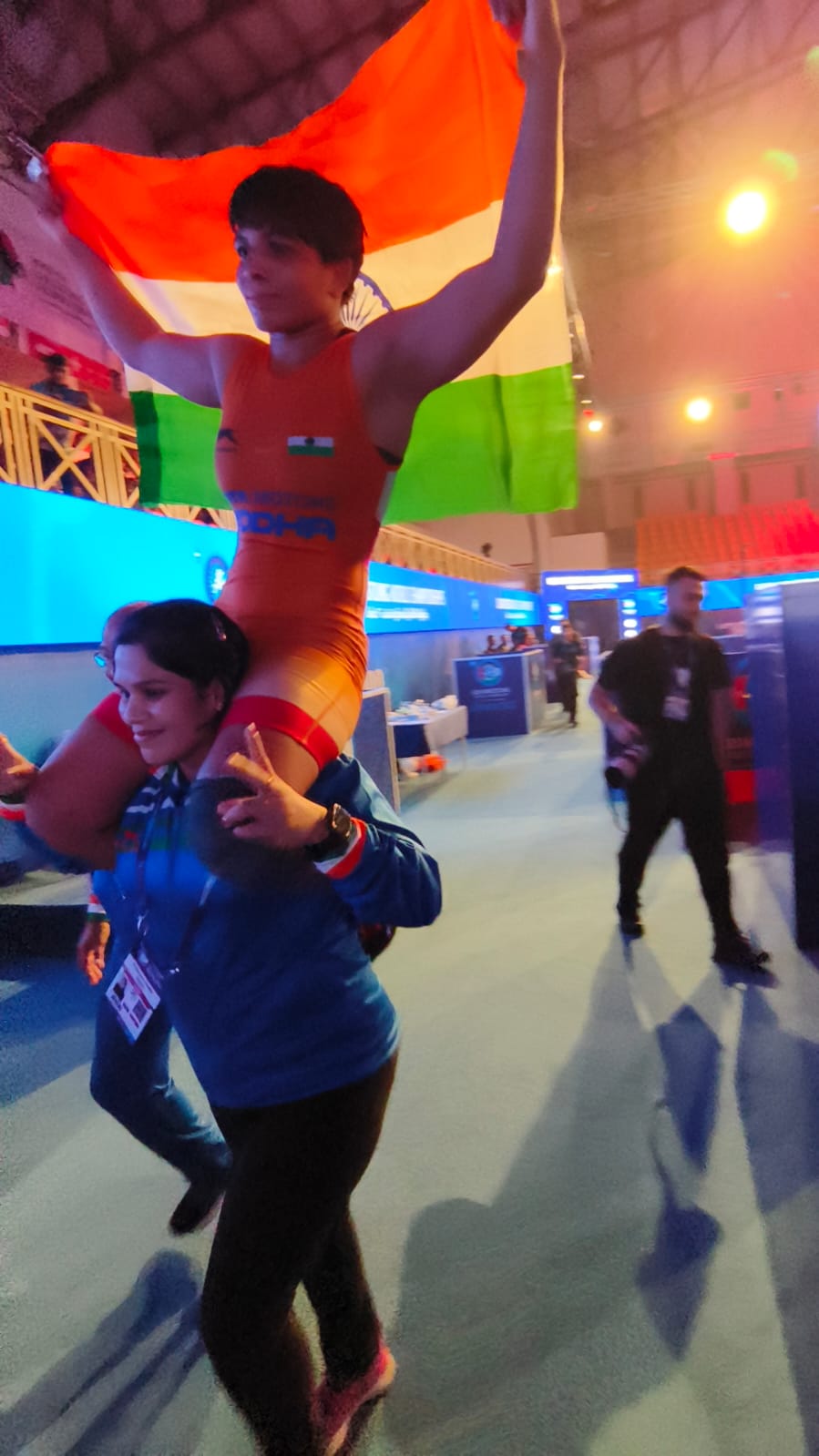
Coach Shabnam with her team
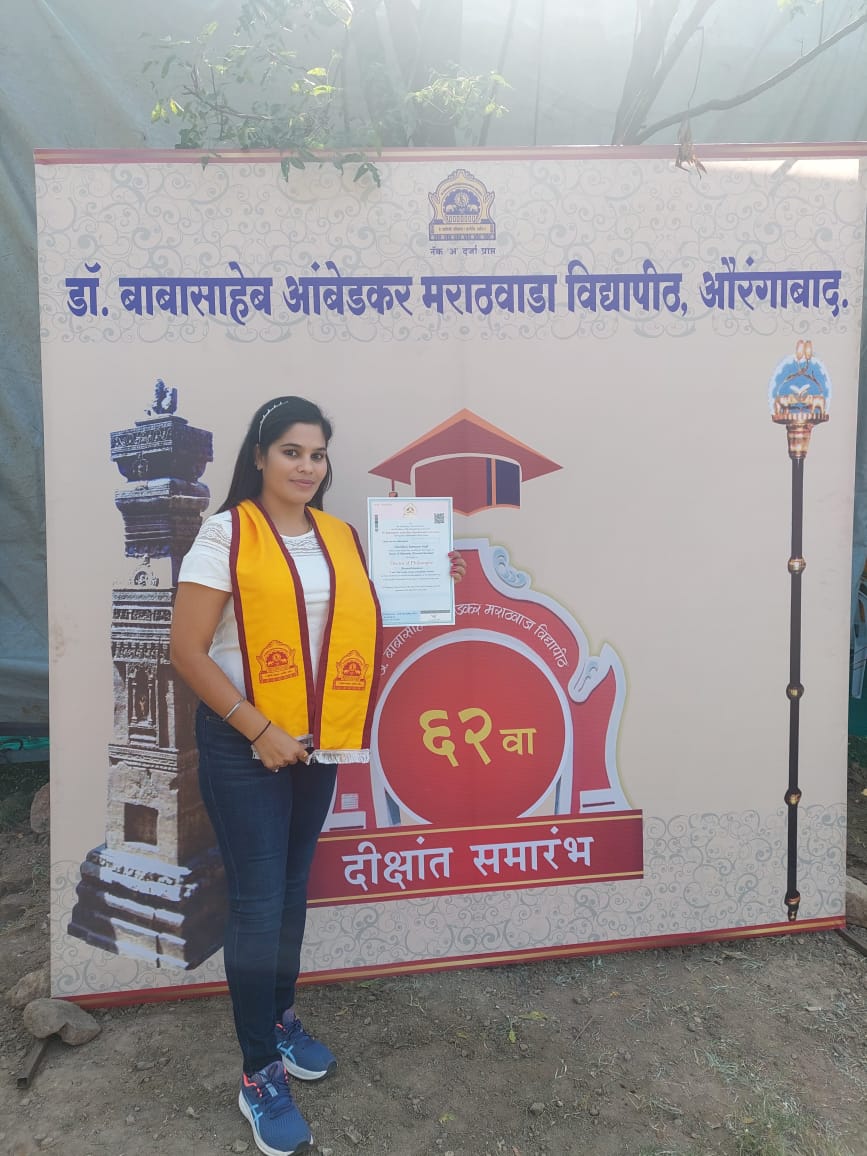
Shabnam completed her Bachelor of Physical Education (BPE) from Aurangabad (Sambhajinagar). She also got a diploma certificate in Coaching from the National Institute of Patiala, Punjab, and later did her Master’s from Babasaheb Ambedkar Marathwada University and then registered for her PhD studies.
Shabnam’s wrestling career began at the age of seven with her father as her coach. Shabnam says, “’My father is my first guru.”
Shabnam came from a family of wrestlers: her grandfather Sadarbhai Shaikh and great-grandfather were well-known wrestlers in the area. Their ancestral house has a wrestling arena where she watched male members of her family and neighbours practice wrestling.
Shabnam had to face the scorn and disapproval of her extended family and relatives when she started practicing wrestling. People even asked her family why she was allowed to wear shorts.
Shabnam at the convocation of the University
Shabnam started with Kabaddi, a game that requires a lot of alacrity and stamina.
Initially, she did not get to enter the arena where her brothers wrestled, so she took to Kabbadi. “I used to think that if I wrestle and win that will be my victory. Even if I lose, it will also be my failure. Will happen… I expressed my desire to wrestle to my father. He responded positively.”
Shabnam’s father had a precondition for training her. He wanted her to concentrate on training and practice for the first two years. She started receiving training from her father and two elder brothers.
Every morning at 4 o’clock she was sent to pick lemons from their farm located about 10 km away. She learned the nuances of wrestling and participated in her first competition in Ludhiana (Punjab). She bagged a silver medal and there started her winning streak.
Shabnam says, “Once in my village, my father came to know about a competition in Delhi. I was just 10 years old at that time. He gave me a paper with the address written on it and a train ticket and wished me good luck for the journey.”
At that time she wondered why she was going alone, ‘Why don’t my parents come with me? But my father always used to tell me that some battles in life have to be fought alone,” she says going down memory lane.
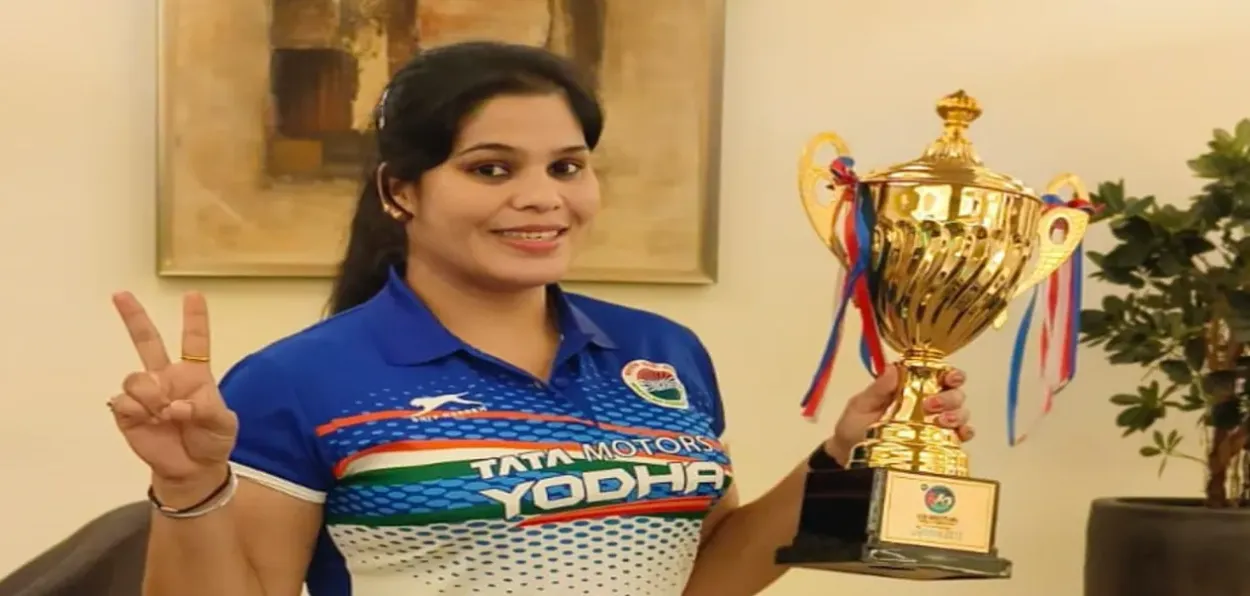
Shabnam Shaikh with her trophy
Shabnam won the title of ‘Women Maharashtra Kesari’ in 2010. She has won the gold medal in ‘Shirdi Kesari’ for three consecutive years since 2009, the gold medal in ‘Latur’ in 2011, gold medal in the ‘Maharashtra State Kustigir Parishad’ competition for six consecutive years.
She has also participated in four inter-university competitions, 10 national competitions, and more than 15 state-level competitions. In the national level ‘Great Bharatkumari Wrestling Competition’, Shabnam is the first winner not only from the Muslim community but also from Maharashtra.
Shabnam says her father taught her that one doesn’t need an outer veil. “Always keep the veil that differentiates between good and bad people in front of your eyes!” he told her.
Shabnam says, “People used to question my parents’ ways. A girl should not play sports like wrestling. Teach her to fast (during Ramazan) and pray. Don’t you want only boys to play wrestling? Hundreds of questions were asked but my parents did not let the pressure of society affect me.
“My father never changed his opinion under the pressure of society. He never let these things affect my game. I always got the support of my parents and my elder brothers.”
Shabnam’s mother Rizwana Begum says, “I have not two, but three ‘sons’! My brothers did not give me a share of our parents’ property. But, I will not let this injustice happen to my daughter. I will give her everything she deserves. Shabnam has brought glory to us. As a mother, I will always be proud of her.”
Shabnam’s thesis for her Ph.D. degree is ‘Comparative study of emotional maturity of rural and urban women wrestlers in Maharashtra’. She toured the entire state for research.
Shabnam is the first woman in India to do a doctorate in sports studies. While doing her Ph.D. in Wrestling, there were often deliberate attempts to embarrass and thwart her effort to earn a doctorate.
In the year 2017, Shabnam was selected as the junior coach of the Wrestling Women’s Association of India; she imparted wrestling training to Anushka Sharma and Salman Khan for the film ‘Sultan‘. Shabnam has represented India in Kazakhstan, and Uzbekistan.
She currently works as a ‘Senior Trainer’ in the ‘Wrestling Women’s Association’ of India. India has never had success in the ‘World Women’s Wrestling Championship’ till now. However, in the ‘Under-20 World Championship’ of 2023 India won seven medals in ‘Women’s Wrestling’. Out of these, three are gold medals.
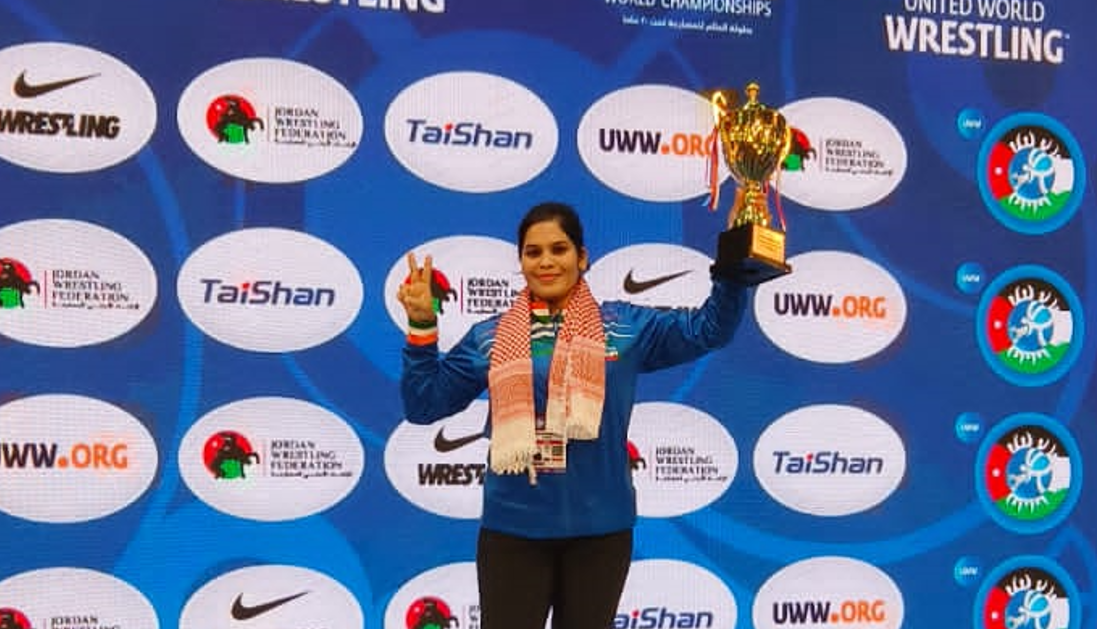
Shabnam Shaikh after her victory in a foreign location
Dr. Shabnam Shaikh is today known as the ‘International Wrestling Coach.
Shabnam says, “I was selected as the coach of ‘Maharashtra Team’ for the national tournament held in Gujarat last year. Twenty-four hours ago, my name was canceled! I was not given any idea about this.”
“Many times, despite having the right credentials and qualifications, I am not given a chance. Probably, because I live with self-respect! I always think that when someone asks me, “How did you get all this?’ I should proudly tell him, ‘I have earned it through my hard work.’
Shabnam says, “Wrestling gave me identity. Sometimes I wonder, ‘Is wrestling a curse or a blessing for me?’ Initially, relatives and other people of the society hated seeing me wrestle.
“Later, when I started winning competitions, people would post the news of my success on their ‘status’ on various social media platforms and write the caption, ‘Congratulations and best wishes to our sister or relative.’
After reading the news of my winning, I became everyone’s relative at that time! But, they speak against me on behind my back! However, now they hesitate to speak against me openly!”
Shabnam says, “Most of the time I am rejected for marriage. I play wrestling. The suitors who come to see as a potential candidate for marriage, see my trophies and see ‘Doctor’ written next to my name. When they go home their answer is, ‘We don’t want such an educated girl.'”
Shabnam continues to work hard to ensure that other girls do not face what she has.
Her advice to the youth: “No matter what happens, do not get tired. Do not give up the fight.” Her dream is to build a wrestling center for girls.
source: http://www.awazthevoice.in / Awaz, The Voice / Home> Story / by Chaya Kaveri / February 29th, 2024
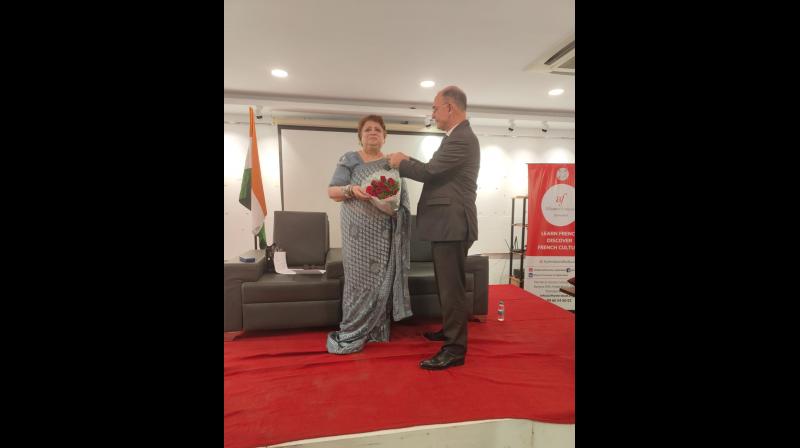
Dr Begum Fatima Shahnaz being conferred the Chevalier dans l’Ordre des Arts et des Lettres (Knight of the Order of Arts and Letters), the second highest French civilian honour by the French ministry of culture for her significant contribution to arts and literature, on Thursday. ( Photo: DC)
Hyderabad:
The multifaceted Dr Begum Fatima Shahnaz was conferred with Chevalier dans l’Ordre des Arts et des Lettres (Knight of the Order of Arts and Letters), the second highest French civilian honour by the French ministry of culture for her significant contribution to arts and literature, on Thursday.
The Jawaharlal Nehru gold medal winner for writing in her teens, Dr. Shahnaz was felicitated at a special investiture ceremony at Alliance Française by Consul General of France, Bangalore, Thierry Berthelot.
The teary-eyed Shahnaz broke into French as she thanked the distinguished guests and shifted to English after a minute or two.
“I didn’t realise I was speaking in French, it comes so naturally to me and I sometimes think in French too,” said the actor, writer, humanitarian, journalist, theatre & art director, professor and journalist.
Talking about the significance of the honour, she said, “France has supported me, and through me, it has supported the Indian people. A Hyderabadi being honoured is an honour to all my people. This places huge responsibility on me, as a citizen of India.”
She also spoke about France and its relationship with Hyderabad and recalled her college years there.
Hailing from royal Indian dynasties, Shahnaz is an actor from the Institut d’Arts Dramatiques Rene Simon in Paris, and is associated with Broadway in New York. She completed her education with a stint at the legendary French school of cuisine, the Cordon Bleu and hopes to bring a new dimension to ‘nouvelle cuisine’ through innovations in Indo-French culinary arts.
Her works include Golconda, Khaki-poems on Pulwama, Saraswati, Shards, Prince of Tears, The New York Poems, Kaleidoscope Eyes, Tiger in the twilight, among several others.
source: http://www.deccanchronicle.com / Deccan Chronicle / Home> Nation / by DC Correspondent / May 19th, 2023
In 2004, she completed her PhD from the Jawaharlal Nehru University (JNU) on “Central Asians in Mughal India: Migration, Settlement and Impact on North Indian Culture”.
Prof Tasneem Suhrawardy (Photo | Twitter)
New Delhi :
Tasneem Suhrawardy, a well-known Indian medieval history academic who was teaching at the Delhi University’s St Stephen’s college , died at the Fortis hospital in Gurugram on Tuesday. She was 58.
Suhrawardy passed away after suffering a cardiac arrest in the morning. She was ailing for some time and was being treated at the hospital for pneumonia.
Suhrawardy graduated with an Honours in History from the St Stephen’s college in 1986.
In 2004, she completed her PhD from the Jawaharlal Nehru University (JNU) on “Central Asians in Mughal India: Migration, Settlement and Impact on North Indian Culture”.
Besides teaching at the St Stephen’s college, she was also invited as a guest teacher in prestigious American and Indian educational institutions.
Suhrawardy was an associate professor at the St Stephen’s college and was well known academically for her specialisation in Indian medieval history.
She was the daughter of late Syed Saeedul Haq and late Shahida Suhrawardy.
Her brother Anis Suhrawardy was a noted lawyer who died in 2012.
She is survived by her sister Nilofar Suhrawardy, a senior journalist, and other relatives.
Her demise was described as a great loss to the academic world by her students and colleagues.
source: http://www.newindianexpress.com / The New Indian Express / Home> Cities> Delhi / by PTI / December 26th, 2023
On Thursday, the Secretary-General at a press conference announced the creation of a new Artificial Intelligence Advisory Body on risks, opportunities and international governance of Artificial Intelligence (AI) . That body will support the international community’s efforts to govern artificial intelligence.
Among the members of AI Advisory Body, two are from India — Sharad Sharma (iSPIRT) and Nazneen Rajani (Hugging Face).
Sharad Sharma is a co-founder of iSPIRT, a non-profit think tank that wants India to be a product nation. He was the CEO of Yahoo India R&D and dubbed as the architect of Indian software products ecosystem.
About Nazneen Rajani, she is a Research Lead at Hugging Face, which is building an open-source alternative to ChatGPT called H4, a powerful LLM, “aligning language models to be helpful, honest, harmless, and huggy”.
U.N. Secretary-General Antonio Guterres on Thursday launched this 39-member advisory body of tech company executives, government officials and academics from countries spanning 6 continents.
The panel aims to issue preliminary recommendations on AI governance by the end of the year and finalize them before the U.N. Summit of the Future next September.
The full members list are as below:
Anna Abramova, Director of the Moscow State Institute of International Relations-University AI Centre, Russian Federation
Omar Sultan al Olama, Minister of State for Artificial Intelligence of the United Arab Emirates, United Arab Emirates
Latifa al-Abdulkarim, Member of the Shura Council (Saudi Parliament), Assistant Professor of Computer Science at King Saud University, Saudi Arabia
Estela Aranha, Special Advisor to the Minister for Justice and Public Security, Federal Government of Brazil, Brazil
Carme Artigas, Secretary of State for Digitalization and Artificial Intelligence of Spain, Spain
Ran Balicer, Chief Innovation Officer and Deputy Director General at Clalit Health Services Israel, Israel
Paolo Benanti, Third Order Regular Franciscan, Lecturer at the Pontifical Gregorian University, Italy
Abeba Birhane, Senior Advisor in AI Accountability at Mozilla Foundation, Ethiopia
Ian Bremmer, President and Founder of Eurasia Group, United States
Anna Christmann, Aerospace Coordinator of the German Federal Government, Germany
Natasha Crampton, Chief Responsible AI Officer at Microsoft, New Zealand
Nighat Dad, Executive Director of the Digital Rights Foundation Pakistan, Pakistan
Vilas Dhar, President of the Patrick J. McGovern Foundation, United States
Virginia Dignum, Professor of Responsible Artificial Intelligence at Umeå University, Portugal/Netherlands
Arisa Ema, Associate Professor at the University of Tokyo, Japan
Mohamed Farahat, Legal Consultant and Vice-Chair of MAG of North Africa IGF, Egypt
Amandeep Singh Gill, Secretary-General’s Envoy on Technology
Dame Wendy Hall, Regius Professor of Computer Science at the University of Southampton, United Kingdom
Rahaf Harfoush, Digital Anthropologist, France
Hiroaki Kitano, Chief Technology Officer of Sony Group Corporation, Japan
Haksoo Ko, Chair of Republic of Korea’s Personal Information Protection Commission, Republic of Korea
Andreas Krause, Professor at ETH Zurich, Switzerland
James Manyika, Senior Vice-President of Google-Alphabet, President for Research, Technology and Society, Zimbabwe
Maria Vanina Martinez Posse, Ramon and Cajal Fellow at the Artificial Research Institute, Argentina
Seydina Moussa Ndiaye, Lecturer at Cheikh Hamidou Kane Digital University, Senegal
Mira Murati, Chief Technology Officer of OpenAI, Albania
Petri Myllymaki, Full Professor at the Department of Computer Science of University of Helsinki, Finland
Alondra Nelson, Harold F. Linder Professor at the Institute for Advanced Study, United States
Nazneen Rajani, Lead Researcher at Hugging Face, India
Craig Ramlal, Head of the Control Systems Group at the University of The West Indies at St. Augustine, Trinidad and Tobago
He Ruimin, Chief Artificial Intelligence Officer and Deputy Chief Digital Technology Officer, Government of Singapore, Singapore
Emma Ruttkamp-Bloem, Professor at the University of Pretoria, South Africa
Sharad Sharma, Co-founder iSPIRT Foundation, India
Marietje Schaake, International Policy Director at Stanford University Cyber Policy Center, Netherlands
Jaan Tallinn, Co-founder of the Cambridge Centre for the Study of Existential Risk, Estonia
Philip Thigo, Adviser at the Government of Kenya, Kenya
Jimena Sofia Viveros Alvarez, Chief of Staff and Head Legal Advisor to Justice Loretta Ortiz at the Mexican Supreme Court, Mexico
Yi Zeng, Professor and Director of Brain-inspired Cognitive AI Lab, Chinese Academy of Sciences, China
Zhang Linghan, Professor at the Institute of Data Law, China University of Political Science and Law, China
“The transformative potential of AI for good is difficult even to grasp,” Guterres said. He pointed to possible uses including predicting crises, improving public health and education, and tackling the climate crisis.
However, the UN Secretary-General cautioned, “It is already clear that the malicious use of AI could undermine trust in institutions, weaken social cohesion and threaten democracy itself.”
source: http://www.indianweb2.com / Indian Web2 / Home> AI Governance / by Indian Web2 / October 27th, 2023
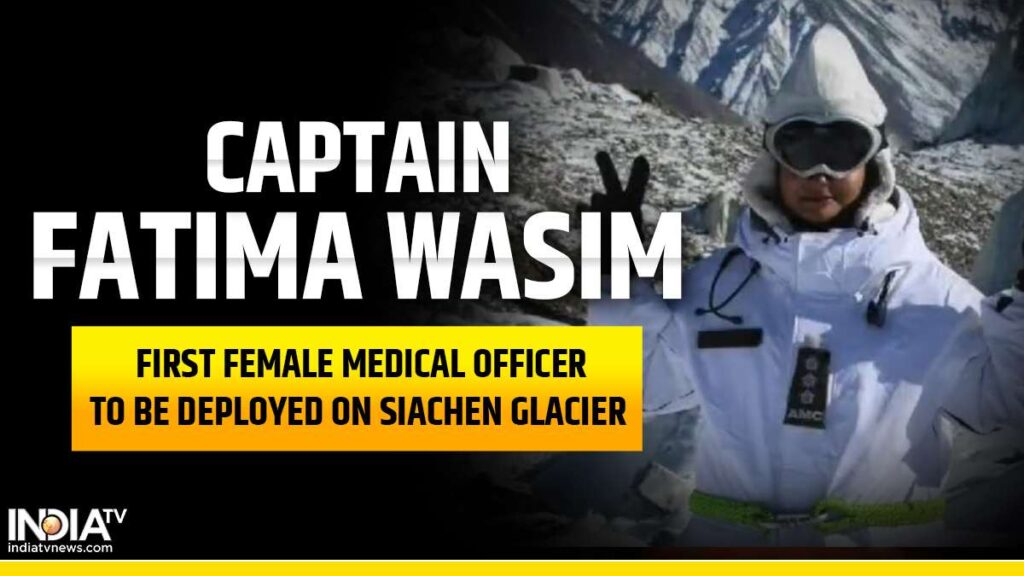
Captain Fatima Wasim’s historic role as the first female medical officer in an operational post at the Siachen Glacier is a remarkable achievement. The nation commends Captain Fatima Wasim for her groundbreaking accomplishment.
Captain Fatima Wasim makes history as the first female medical officer deployed at Siachen Glacier. / Image Source : INDIA TV /
Captain Fatima Wasim has etched her name in history by becoming the first female medical officer to be deployed on an operational post at the formidable Siachen Glacier. After undergoing rigorous training at the Siachen Battle School, she received her posting at an operational post situated at an altitude of 15,200 feet.
Historic deployment
Captain Fatima Wasim’s appointment as the first woman medical officer on an operational post at Siachen Glacier is a groundbreaking achievement. Following intensive training at the Siachen Battle School, she assumed duties at the operational post located at a challenging altitude of 15,200 feet.
Siachen warriors’ Captain
The Fire and Fury Corps of the Indian Army shared a video on social media platforms, underscoring the milestone achieved by Captain Fatima Wasim. The video celebrated her as the first medical officer to be stationed at an operational post on the Siachen Glacier, emphasising her indomitable spirit and high inspiration.
Captain Fatima Wasim’s deployment at 15,200 feet is a testament to her resilience and serves as a source of immense inspiration. The challenging conditions of Siachen Glacier make this assignment not only historic but also a reflection of her unwavering dedication.
Acknowledgment by the Indian Army
The Fire and Fury Corps of the Indian Army acknowledged Captain Fatima Wasim’s historic posting through a video shared on social media platforms. The caption emphasised her role as a Siachen warrior and celebrated her as the first female medical officer in an operational post at the Siachen Glacier.
Inspiration and determination
Captain Fatima Wasim’s deployment at such a formidable altitude symbolises her unyielding determination and serves as an inspiration for others. Her historic posting is not only a personal achievement but also a significant stride in breaking gender barriers within the armed forces.
source: http://www.indiatvnews.com / India TV / Home> English News> India / by Nitin Kumar / December 11th, 2023
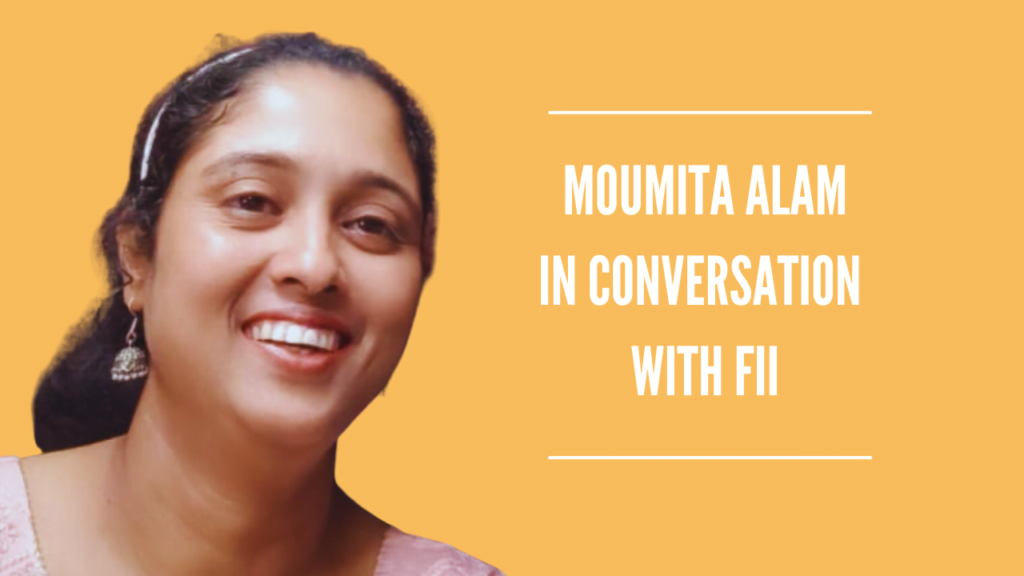
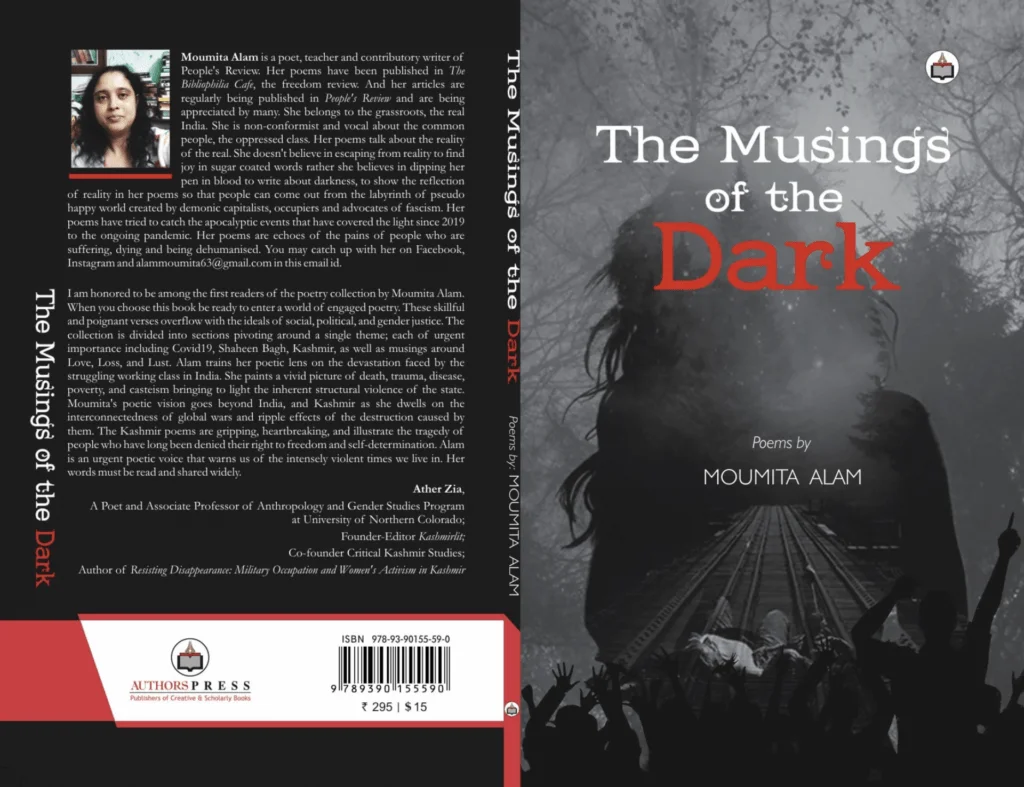
In a conversation with FII, Moumita Alam discusses how she began writing poetry, and what it is like being a Muslim woman in a Hindu majoritarian state and how the voices of certain minorities have been silenced throughout Indian history.
Moumita Alam is a teacher based in West Bengal whose political poetry, over the past few years, has gained incredible popularity in South Asia due to its powerful messages and themes. As a Muslim woman, through her poems, essays and opinion pieces, she attempts to bring out the atrocities faced by the women of her community alongside critiquing the larger issue of rising Islamophobia in India. Her first and only book, The Musings of the Dark was published in 2020.
In a conversation with FII, Moumita Alam discusses how she began writing poetry, what it is like being a Muslim woman in a Hindu majoritarian state and how the voices of certain minorities have been silenced throughout Indian history, particularly in West Bengal ever since the 1947 partition.
FII: You have, over the past few years, used your poetry to both raise awareness about and protest against the Islamophobia propagated by the ring wing in our country. Would you like to shed some light on what your writing journey has been like?
Moumita: I began my poetic journey after 2019. In 2019, on the 5th of August, the abrogation of Article 370 happened. I had a friend who lived in Kashmir, so I lost connection with him. He was an aspiring advocate who would regularly speak with me. I, as a teacher and a single mother, would share my life journey with him in return. But in 2019, when I could no longer talk to him, a sense of guilt began haunting me — how could a land become a prison where the people couldn’t even make a phone call to the ones in the outside world?
At some point in time, I thought of writing a letter to him, but receiving a letter from here could land him in trouble. He was much younger than me but was my only friend who would listen to my feelings, my happiness, my sorrows. So, I began writing.
I am against the use of the term “migrant labourers,” because India is our own country, so how can its citizens be called migrants? — to come on the grounds and walk for miles and miles to reach their homes.
Moumita Alam
That same year, in December 2019, the Anti-CAA-NRC movement started and we suddenly became aware of our religious identities. Everyone around me would ask me, “Are you legal? Are you a Bangladeshi?” But, believe me, I was born and raised in West Bengal. I have never even seen or visited Bangladesh. Every Muslim I know — whether practising or non-practising — was being asked this question. So, after my Kashmiri friend, I lost my other friends too because their questions would hurt me. I wrote about those feelings too.
Source: Moumita Alam’s FB
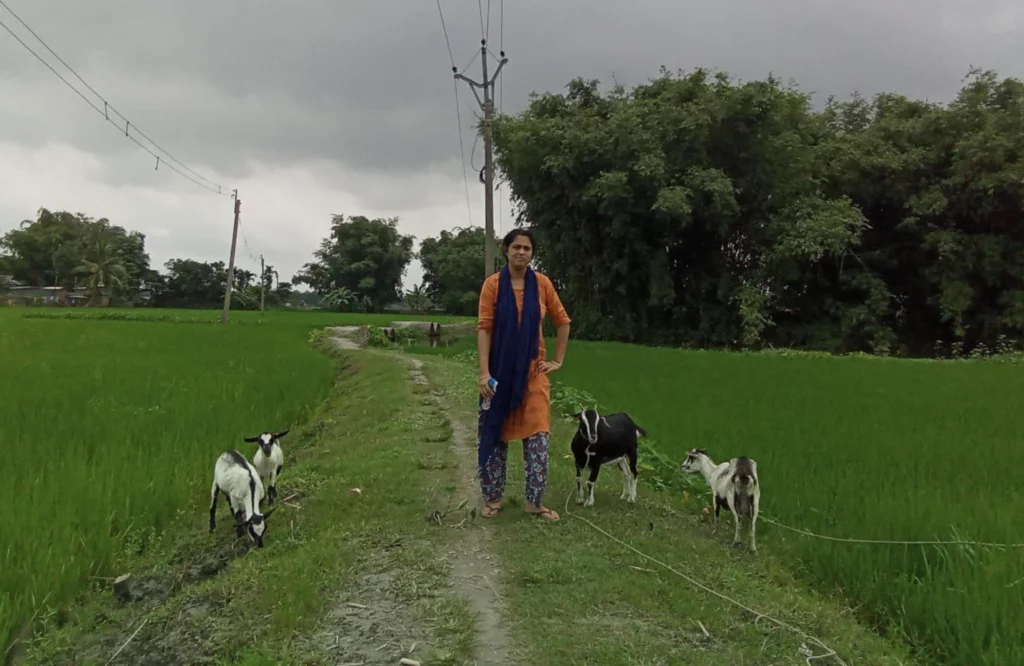
And then again in March 2020, we saw how the unplanned lockdown forced the workers of the unorganised sector — I am against the use of the term “migrant labourers,” because India is our own country, so how can its citizens be called migrants? — to come on the grounds and walk for miles and miles to reach their homes. I could not sleep for days because I live in a village and many of my relatives and fellow villagers used to work in Kerala and Delhi as labourers. So, I also started to write poems about their plights and sufferings.
One of my friends asked me to send my poems for publication, which had never crossed my mind because I stay far away from Delhi and its so-called “English literary circle.” But I still emailed a publisher who agreed to publish and then, my first and only book, The Musings of the Dark came out in August 2020.
FII: Since your poems usually focus on the theme of gendered Islamophobia or the issues that Muslim women face in our country, what is it like being a Muslim woman in a country governed by the right-wing?
Moumita: In 2021, I got to know that a few right-wing fanatics had created an app to sell Muslim women and had named it ‘Bulli Bai.’ I was so disturbed after reading the news about this because this is such a heinous thing to do — how can anyone do this in a democratic country like India?
So, I wrote this poem, “I am a Muslim woman and I am not for sale.” This poem was translated into many languages — in Telugu, Assamese, Bengali, Tamil, Kannada, and others — and was also published on various platforms.
If you follow the news, you would know that in 2022, hijab was banned in schools across the country. Even if I don’t wear hijab, you can’t ban other women who do from getting an education. As women, we are a minority in many ways — first, as Muslims in this country and then, because of our gender. We have to bargain our choices and sometimes, we have to compromise in front of our families by saying, “I will work hard, I will wear a hijab, please let me go to the doors of education.”
When a man is interpreting religious scriptures for you, he will — whether consciously or unconsciously — view religion through a patriarchal lens. They might not allow us to gain an understanding of the equal rights that Islam gives to Muslim women.
Moumita Alam
After becoming independent, I, as a Muslim woman, can decide for myself whether or not I wish to wear a hijab. But, you can’t put a blanket ban on hijab like that.
While I do write poems on the rising Islamophobia in our country, I also write about the oppression we Muslim women face within our own communities. Look, our society is based on patriarchal notions which means that even a lot of religious preachers are men. When a man is interpreting religious scriptures for you, he will — whether consciously or unconsciously — view religion through a patriarchal lens. They might not allow us to gain an understanding of the equal rights that Islam gives to Muslim women.
FII: Have you ever faced censorship for having political themes and highlighting the various injustices particularly on the basis of religion, in your work?
Moumita: Thankfully, we still have some platforms that provide a space to people like me where we can raise our voices. I am thankful to the Editor of LiveWire, who recently resigned. She was an immense pillar of support for me because she never censored my work — she either accepted it or denied it from being published, but never censored it. Even the Editor of Outlook is brilliant that way.
Source: Moumita Alam’s FB
Sometimes, however, my poems get rejected by other platforms because they say my work is too political, but I think we are living in a time during which one can’t be apolitical. If you are, then you are indirectly standing with people who are unleashing injustice towards minorities.
FII: As a poet who writes in both English and Bengali, you have often talked about how the voices of certain minorities have been neglected even within Bengali literature and poetry — an example of which can be the Marichjhapi massacre in 1979. Is there anything that you would like to discuss about the domination of certain elite classes and castes in Bengal?
Moumita: You might have noticed that for the non-Bengalis, West Bengal is equal to Kolkata — all of Bengal is just Kolkata for most people who aren’t from Bengal. This suggests a very Kolkata-centric attitude that most people have about Bengal. The literary world is, of course, not an exception — it’s so Kolkata-centric that people like me who are living in the margins find it almost impossible to reach the centre that is Kolkata.
Also, the Bengali literary world has been dominated by upper-class, upper-caste people for a very long time. So, they write about only those issues that they know about and that suit their narrative. Things are changing, some voices are getting spaces. However, we still have a long way to go. »
FII: When we usually talk about the India-Pakistan partition, the discussion inevitably gets centred around the division of what is present-day Punjab with little being said about how the refugees of Bengal, particularly the oppressed even among the displaced, were impacted. As someone who has written articles on this theme for both English and Bengali publications, can you tell us a little about your understanding of the same?
Moumita: Yes, I agree with you that the pains and sufferings of the Bengali refugees haven’t found expression in the so-called mainstream literature, particularly English literature. When I’m talking about “Bengali,” I mean both Hindus and Muslims. The plights of the oppressed class like the Namasudra community who were forced to migrate to West Bengal from the then East Pakistan is missing from the literary narrative. Equally, even the traumas and voices of the Muslims who stayed back while the other members migrated to East Pakistan are missing from the literary imagination.
Source: Moumita Alam’s FB
Most importantly, after partition, no political establishment tried to heal the wounds of the refugees. We all understand how the various European governments attempted to heal the wounds of the holocaust survivors after the second world war, but the same did not happen in India, even though the partition is often compared to the Holocaust.
Instead, every political party tried to gain political mileage from the religious fault lines. If I am not mistaken, nothing much has yet been written about internal migration. How many partition museums do we have?
FII: Every time your poems about the Babri Masjid demolition or about Kashmir get published, there are a lot of derogatory things that are often said by right-wing people— such as a lot of Kashmiri Pandits who end up claiming that their own stories need to be heard over yours. Since you have been doing what you believe in for so many years, is there any advice that you’d like to give to the young girls of our country about how they can voice their thoughts fearlessly even when they are intimidated?
Moumita: We are living in a critical juncture of time. As witnesses of this time, we can’t let the fascists win. How are they winning? They are winning through their narrative — a narrative of hatred towards minorities, towards women. We have to tell our own stories, we have to counter their narrative by our narrative.
So, here is my message for all women:
I wish you,
Oh women,
A savage fury
To throw all the
Dos and don’ts
Under a ravaging bus.
And begin from the beginning
All-new, all equal.»
FII: You write and publish your creative works and political thoughts as a freelancer, which means there is very little for you to gain from it as a poet. If anything, your poems and articles have mostly just led people to threaten you. What is it that motivates you to continue writing even when things don’t entirely work in your favour?
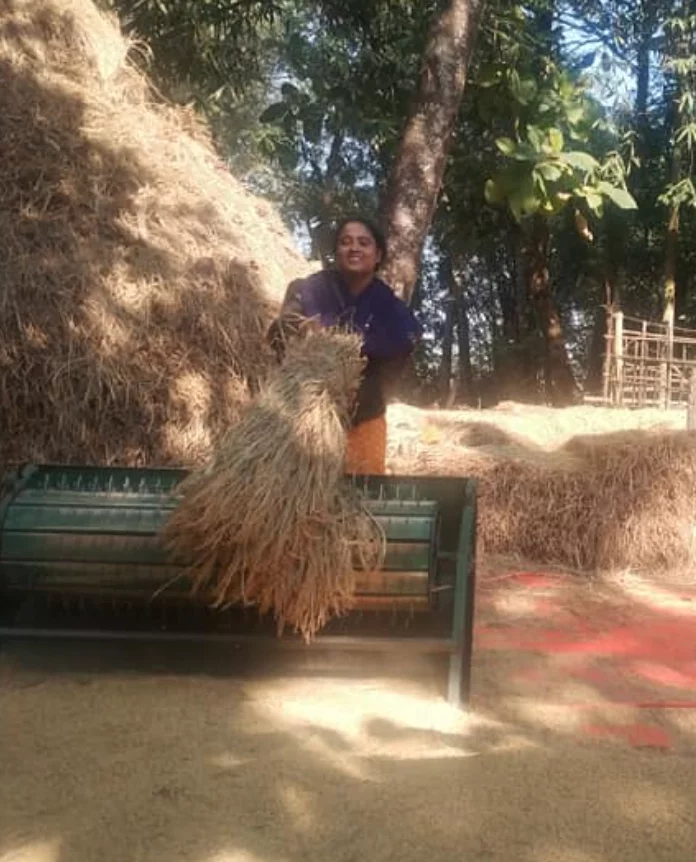
Moumita: Silence is not an option. The hatred that engulfed my friends still haunts me. I am a villager and I know how common people are suffering every day. The silence of the intellectual people saddens me. I want to jolt them, wake them up from their hibernation.
I am a villager and I know how common people are suffering every day. The silence of the intellectual people saddens me. I want to jolt them, wake them up from their hibernation.
Moumita Alam
You know, potatoes are the only profitable crop in my village. This year, the poor farmers incurred a heavy loss and couldn’t repay the loans they had to take from private microfinance companies at heavy interest rates. I asked a very old farmer how they plan to survive after this loss? And he replied, “Next year we will get some profit.” I was just amazed at his belief and relentlessness. I believe we can bring a change. We have to hope because we don’t have any other option.
The interview has been paraphrased and condensed for clarity.
source: http://www.feminisminindia.com / Feminism In India / Home> Interview / by Upasana Dandano / June 09th, 2023