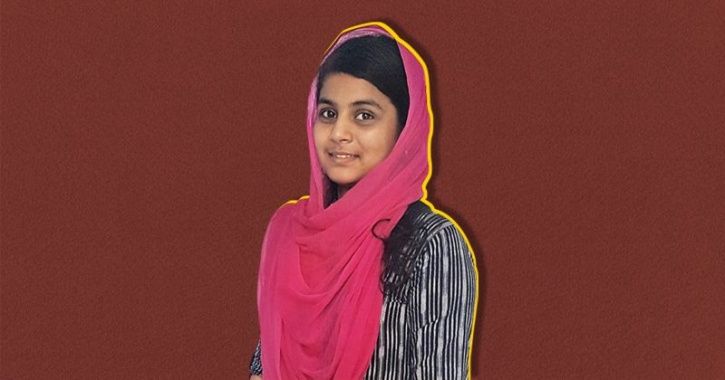
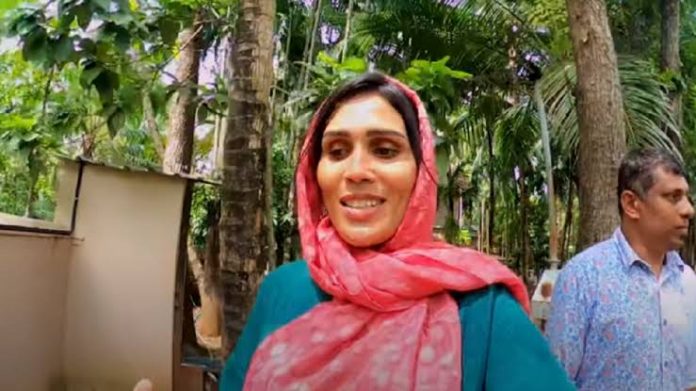
Iram scored 100 percent marks in Mathematics and Physics.
Hyderabad:
The Telangana State Board of Intermediate Education (TSBIE) on Tuesday announced the much-awaited inter 1st and 2nd year results on Tuesday.
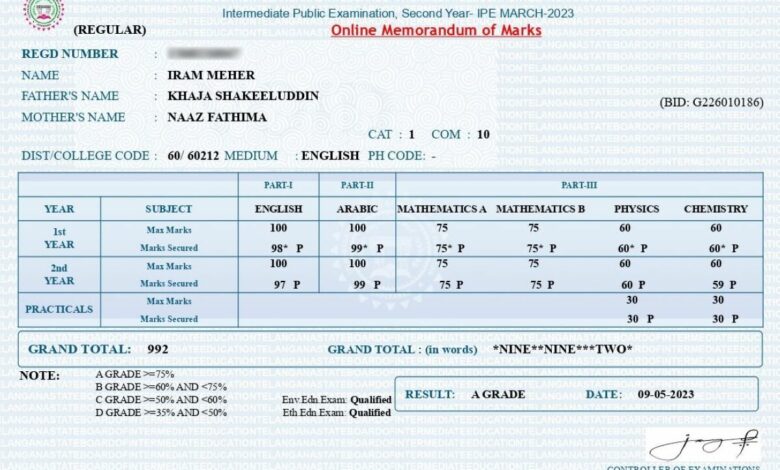
Among the toppers of the intermediate exam, Iram Meher Khaja Sahkeeluddin, a student of St. Joseph’s Junior College in Hyderabad’s Tolichowki branch, has made her mark by scoring 992 out of 1000 marks. This incredible achievement has made her one of Telangana’s intermediate toppers.
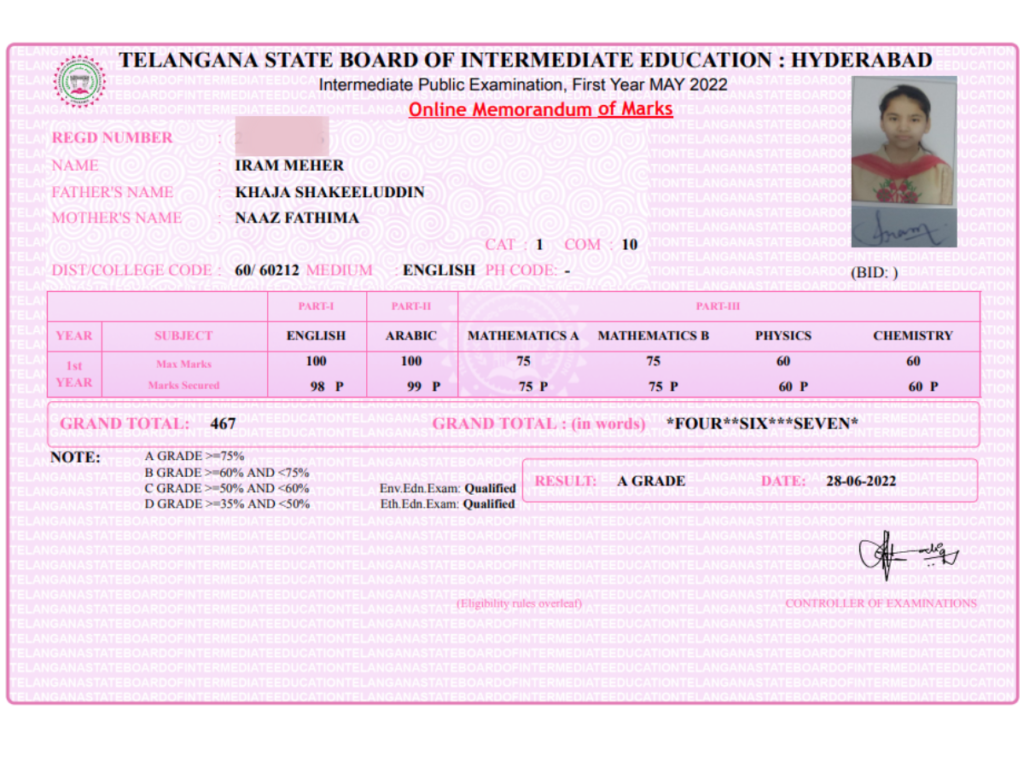
This is not the first time that Iram has shone in her academic career. Last year too, she became one of the toppers of Telangana’s intermediate exam by scoring 467 out of 470 marks.
Iram scored 100 percent marks in Mathematics IA, IIA, IB, IIB, Physics (first and second year) and Chemistry (first year).
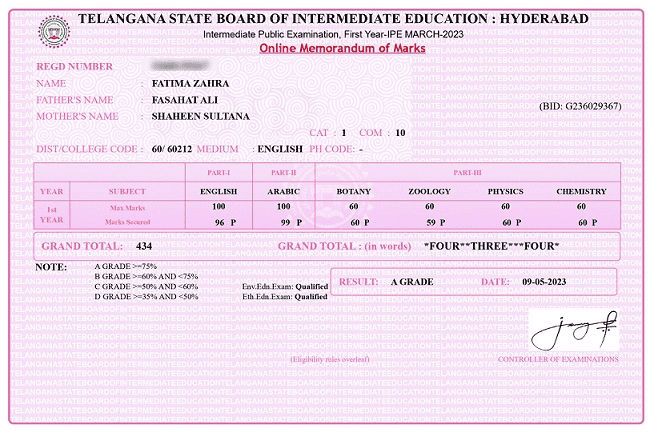
Apart from her, another candidate from the same college, Fatima Zahra, a BiPC student, scored 434 out of 440 marks and became one of the toppers of Telangana’s intermediate first-year exam.
According to the official data released by TSBIE, a total of 948153 students appeared for the examination at 1473 centers. Out of these students, 482675 were of the first year and 465478 were of the second year.
A total of 297741 candidates cleared the first-year exam, whereas 295550 students were successful in the second-year exam.
The incredible achievements of Iram Meher and Fatima Zahra, Telangana’s intermediate toppers, are an inspiration to all students.
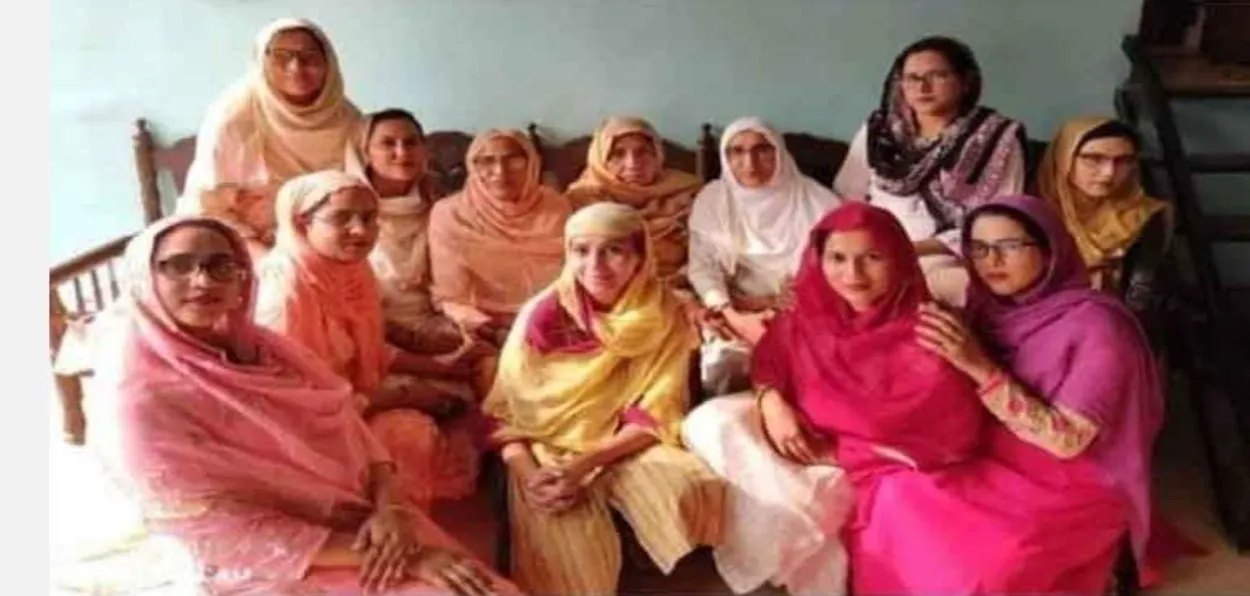
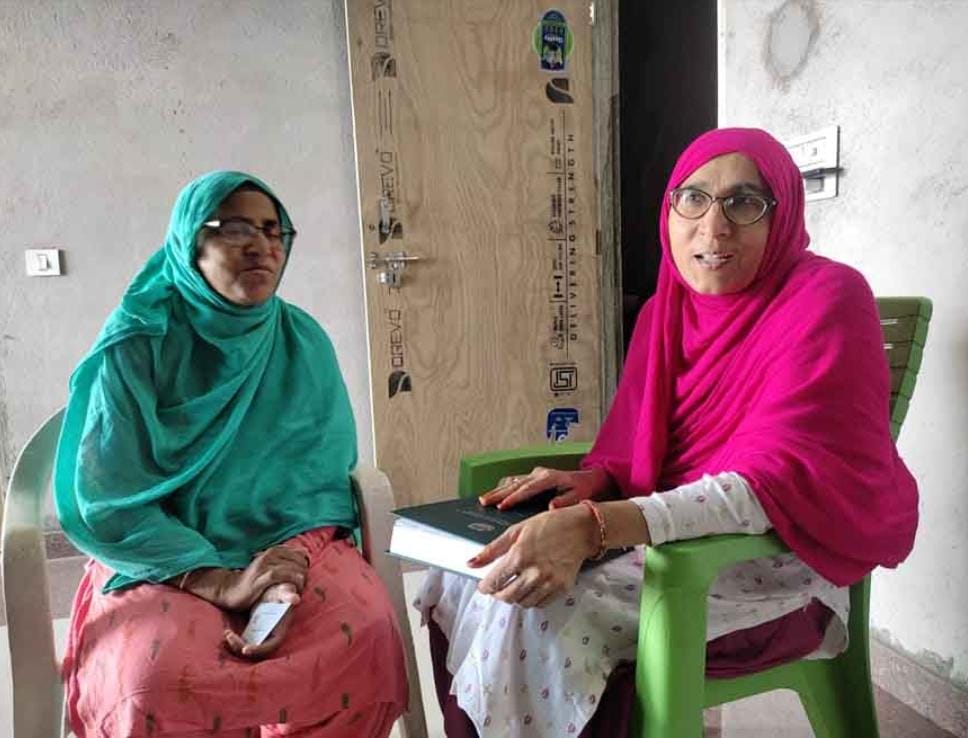
When I met Shabnam and her elder sister Nafisa after a flight of 37 steps of a half-built high-rise building on the Nuh-Tawadu road, I couldn’t gauge the high spirits of these two women, their nine sisters, and late father Niyaz Khan in our brief meeting.
Niyaz Khan, a former revenue officer in the Punjab Waqf Board, has left this world, but he is remembered for bringing about the change in the mindset of Muslims in Nuh through his act of giving a good education to all his 11 daughters.
Not only he educated his daughters but 8 of them became teachers and are carrying on the mission of spreading education in one of the most backward areas of India.
In a conversation with Awaz-The Voice, Shabnam says, “I and my sisters who are teachers make efforts to ensure that girl students in our respective schools do not give up on their studies midway and drop out of school. We also make extra efforts to see that besides retaining the numbers, more girls are enrolled in the school.”
Shabnam says that to retain girl students they call the parents of students to school to make them aware of the importance of education.
Shabnam, who worked in an NGO for a long time before joining the government school, says, “Due to my experience with an NGO, I face lesser difficulties in this job (retaining girl students in school) in comparison to other sisters. My experience of working on child education in an NGO is helping me.”
She says that increasing the number of students helps in upgrading schools. Shabnam is now TGT i.e. Trained Graduate Teacher in Rithoda vuillage. The primary school where she worked earlier has since been converted into a middle school.
Shabnam and Nafisa
Shabnam’s elder sister Nafisa says that many parents come to consult her and all her teacher-siblings. They ask them how to ensure a good future for their daughters. “Many times strangers stop them at the bus stand for paying compliments and telling us that they want their daughters to be like us.”
Nuh remains one of the most backward districts of Haryana, where women are struggling to rise amidst diehard patriarchy, old-fashioned thoughts, rampant illiteracy, and a lack of basic facilities. The dropout rate of girl students is the highest in the state.
Although there are many schools and colleges in Nuh, it has no university and women must go outside for higher education.
Asif Ali Chandaini, General Secretary of Mewat Vikas Manch, says, about 70 to 80 percent of the population of the district survives by doing petty and menial jobs. In such a situation, parents have financial constrains, and safety of daughters as issues in their minds while deciding on educating their daughters. In the end they prefer to keep their girls at home.
Defying such conservative traditions in the decade of nineties, Niyaz Khan decided to send his daughters for higher education.
Nafisa, the eldest of the sisters, who spoke with Awaz-the voice said their father had a transferable job. As long as the family was living outside Mewat, he did not face any problems in educating his daughters. However, after he met with an accident, took voluntary retirement and shifted permanently to Nuh in 1993, he faced stiff opposition to sending his daughters to colleges and universities.
Her father was a resident of Chandaini village, about four kilometers from Nuh. The people there are progressive and clear about the aware of education.
Praising her father and grandfather, Shabnam says, “Both were very great people. Dada (paternal grandfather) never stopped us from going to college and school. In the nineties, when the environment was worse than what you see today, he not only continued to give higher education to his daughters but also sent them out of Nuh for studies.”
Shabnam has also studied law; her husband is a practicing advocate in Sohna.
Despite the regressive environment around them, Niyaz Khan’s eight daughters became teachers. They are employed in government schools. Shabnam says teaching was their choice.
Shabnam has five children. One of her daughters has a Master’s degree in Fine Arts from Banaras. Her other children are also into masters and other higher education courses.
Nafisa’s elder son is pursuing a Ph.D. in Physics.
Shabnam and Nafisa say that they care least about others’ opinions when it comes to their children’s education. “Our children are moving forward by choosing their careers. We are only supporting them,” they said almost in unison.
According to Nafisa, the children of the younger sisters are also pursuing education at different levels.
She tells that things are changing for Mewati Muslims on the education of girls. However, the change is quite slow.
Nafisa says that there is a trend of girls dropping out after fifth or eighth standard and being sitting at home.
Many parents prefer to send their daughters to Maktab, local Madrasa, instead of sending them to school.
Shabnam’s disciple Mohammad Rafiq, who has done his Ph.D. on the topic of Mewat’s female Sarpanch, says that the picture of Mewat can change if the authorities present these eleven sisters as ‘role models’.
The 11 sisters becoming the face of women’s education and empowerment can bring down the dropout rate significantly. However, both the sisters do not agree on this.
They feel the thrust on women’s education has to begin from their homes of Muslims.”Everything cannot be left to the government; the politicians of Mewat have to show willpower,” Shabnam says.
She said once she invited the local politicians to a meeting of Urdu teachers, but none of them came. She also this was the most discouraging since most of them are her relatives.
Despite this, they do not show any special seriousness towards education.
Niyaz Khans’s daughters:
Nafisa: JBT & B.Ed, Govt Teacher
Shabnam: MA, LLB, JBT, government teacher
Afsana: JBT, MA, B.Ed.
Farhana: JBT, MA, B.Ed. government teacher
Shahnaz: JBT, MA, B.Ed teacher in private school
Ishrat: B.A
Nusrat: Lecturer in JBT, MA, MEd and employed in a Polytechnic
Ana: JBT, MA B.Ed, Govt Teacher
Razia: MBA and working in private sector
Nazia: Diploma in Architecture, works in private sector
Bushra: MA, B.Ed
source: http://www.awazthevoice.in / Awaz, The Voice / Home> Stories / by Malick Asghar Hashmi / May 04th, 2023
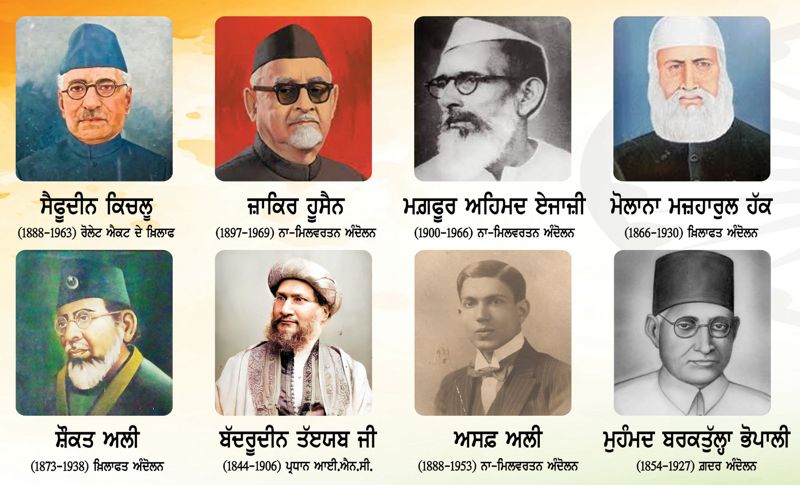
With an intent to highlight the role of Islamic leaders in the pre-independence freedom struggle, a group of Muslim youths have decided to organise a function on the occasion of Republic Day, during which sacrifices of unsung heroes from their community would be highlighted.
Besides organising an elaborate programme after unfurling the Tricolour at the Dehliz Chowk on January 26, the enthusiasts will also install banners displaying portraits of more than 20 prominent Muslim freedom fighters at various locations.
The organisers say the gesture will motivate Muslim youths of the region to come forward and play active in nation building, irrespective of their political, social or religious allegiances.
Zeshan Haidar, the convener of the scheduled event, said youths from various Muslim organisations of the area had been roped in to work in tandem for restoring the lost glory of leaders from their community, who had made supreme sacrifices in struggle against the British Government and played a major role in getting freedom for the country.
“Unfortunately, successive governments have failed to recognise the contributions of Muslim leaders in the freedom struggle and a majority of Muslim freedom fighters and martyrs have remained unsung during functions held to celebrate national events such as Republic Day and Independence Day,” Zeshan Haidar said, adding that these names were also missing from history books.
The enthusiasts have shortlisted names of about 100 Muslim leaders of pre-Independence era and portraits of 20 from them will be displayed in the region.
Maulana Shah Abdul Qadir Ludhianvi (grandfather of Shahi Imam Punjab Maulana Usman Ludhianvi), Zakir Husain, Begum Hazrat Mehal, Maulvi Ahmadullah, Abadi Bano Begam, Ashfaqulla Khan and Husain Ahmed Madni were cited among more prominent Muslim freedom fighters whose portraits figure on the proposed banners.
source: http://www.tribuneindia.com / The Tribune / Home> Ludhiana / by the Correspondent, The Tribune / January 24th, 2023
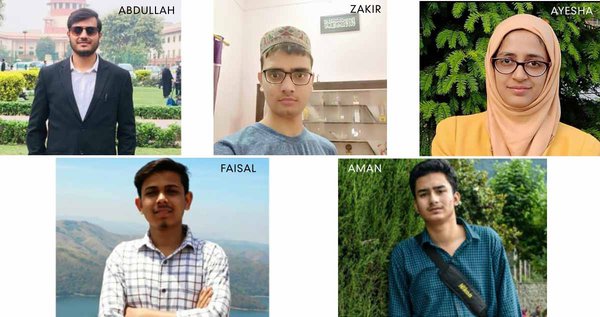
An unintended but welcome consequence of the lockdown to contain the coronavirus has been improved air quality stated the presentation of ALTAIR, a team of Aligarh Muslim University (AMU) students led by MBBS first-year student, Ayesha Samdani, which won the ‘The Judges Choice Award’ in the International NASA Space App Challenge-2020 for presenting a solution in response to the NASA’s Challenge ‘A One Health Approach’.
Ayesha and team members, Mohd Zakir Husain (MBBS), Aman Ahmad Khan (MBBS), Faisal Jamil (B.Tech) and Abdullah Samdani (BA LLB) gave an analysis on air quality of the pre and post lockdown periods in the Indo Gangetic region of Northern India. Their study gave details about how an improvement in the air quality benefited the health of people.
For the presentation, the ALTAIR members also coded an Air Quality Index (AQI) Calculator to measure AQI of a certain region, which is helpful in giving health and cautionary statements and providing guidance to common people on pollution related health issues.
Congratulating the students on the achievement, Prof Shahid Ali Siddiqui, Principal, Jawaharlal Nehru Medical College (JNMC) of the university and Prof Shakeel Samdani, Dean, Faculty of Law said that the work of these AMU students is formative as it provides a clear comparison of average concentration levels during the months before the lockdown and the time period during the lockdown restrictions, showing a reduction in SO2 level.
The event was judged by ISRO and NASA scientists including Tazeen Siddiqui of NASA.
source: http://www.milligazette.com / The Milli Gazette / Home> News> Community News / by The Milli Gazette Online / October 06th, 2020
A woman has made her village proud by reviving the dying art of Wooden Cutlery of Udayagiri in Nellore District of Andhra Pradesh.
Inheriting the craft from her father, Shaik Gousia Begum has trained 400 artisans in woodware. She has now been selected for YSR Award 2022.
Why is Udayagiri famous?
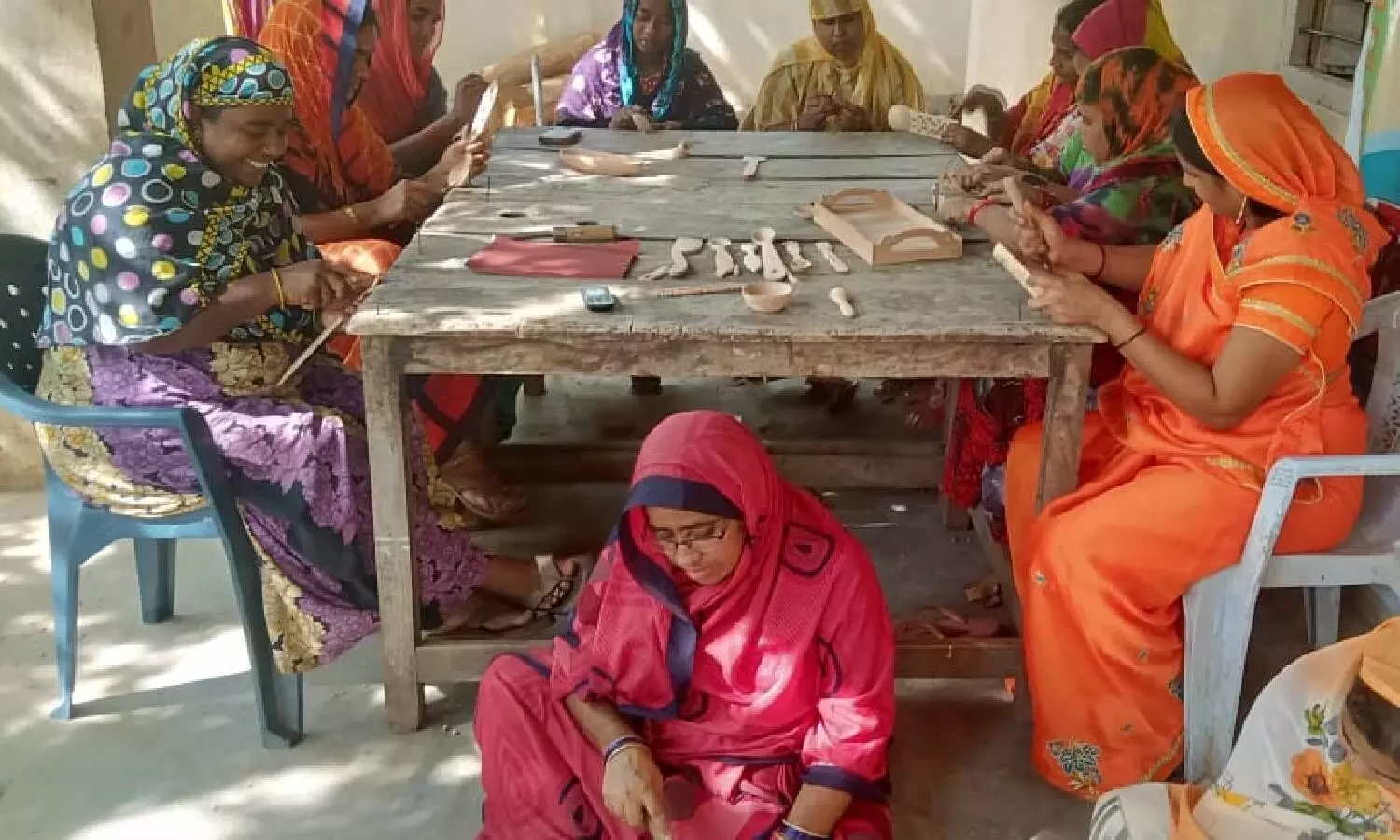
Situated 100 km from Nellore district headquarters, Udayagiri is known for its intricate wooden cutlery, soap cases, and bowls. More than a hundred years ago Sheikh Abdul Bashir was impressed by the softwood cutlery art of Dadasahib, a carpenter. Sheikh Abdul learnt the art and sold his products locally. He soon began improvising with intricate designs and carving. His cutlery caught the eye of tourists visiting Udayagiri and the Handicraft Department, which subsequently began training artisans, particularly women in the craft.
Shaik Gousiya Begum who is the third generation artisan, took up this job after her father fell sick. She trained many craftsmen. Later she also trained her son Zakeer Husain who is now a fourth-generation artisan.
“After my father fell sick in 2005, I took up the profession and started teaching people. From a batch of 5-6 members, now we have 400 artisans who work in the cluster at the village. Everyone is from a poor background. We used to make products and sell them in other states,” said Shaik Gousiya Begum.
She also received the State Award in 2005.
Her son takes it to social media
Begum’s son always wanted to become a police constable. But she wanted him to pursue business and keep the tradition alive. Zakeer Husain who learnt the work from his grandfather also trained other women. However, as time passed, Udayagiri Cutlery saw a downfall due to a lack of marketing. It was Hussain who promoted the products on social media platforms. “Now, my son is responsible for sales and promotion. We send our products to Lepakshi stalls in Hyderabad, and Andhra Pradesh. My son also travels to other countries to sell products in exhibitions”, said Begum.
Much Demand
Begam says their wood cutlery has a great demand. People book their products online. They have designed 150 different products. These include wooden spoons. forks, salad bowls, trays, and combs influenced by Persian motifs and patterns, earrings, toys, lamps, and many more.
How do they make it?
Wood cutlery takes a lot of time and patience for perfection. The local wood of Devadari, Nardi, and Khalidi is sourced from Durgampalli hills and dried for ten days. The wood is then soaked in water for 2 days, and then dried again in the shade for 3 days. The process of making cutlery then begins and takes time depending on the design.
Take it around the globe:
“I want to take this art form to other countries and make my grandfather proud. Previously, my grandfather used to make and sell locally. But later, I started to run the business on social media and set up stalls in every exhibition hosted by the government”, said Zakeer Hussain.
GI tag
Wood cutlery of Udayagiri got its significance when the village was granted Geographical Indications (GI) tag for being the only region with such a craft form in 2016. Then they started selling out at famous exhibitions such as Shilpararnam in Hyderabad. The women later set up the Udayagiri Cutlery Mutually-Aided Cooperative Society.
Need for development
Tucked away in a quaint corner of the Nellore district, the artisans said there is a need for the development of their cluster. They have been regularly asking the government for better space that can accommodate 400 workers.
. “Udayagiri has a great future and many prospective buyers. However, we need better manpower and machinery. Currently, 90% of the work has to be done by hand. Schemes and opportunities for training more people on this craft form are what we need” said Hussain.
source: http://www.m.dailyhunt.in / Daily Hunt / Home / NewsMeter / November 2022
Firdouse Khan, a prominent Muslim activist passed away at her residence on Friday morning in Bengaluru.
Firdouse was the secretary and consultant at the city-based Forward Trust, a family and marital counselling organisation. She was actively involved with Bahutva Karnataka, Communal Friendship Forum, Jamaat-e-Islami Hind and other civic organisations.
Speaking of the demise of Firdous, Bahutva Karnataka activist Adv Vinay Sreenivas told The Cognate, “She cared a lot about society and was a person like who exhibited a lot of goodness. It was her dream to live in a society which is in harmony.”
The 52-year-old previously held the post of manager at HCL. She later resigned from the post and was involved in social activities. She took part in several protests, including the anti CAA/NRC protests. The activist regularly organised legal literacy workshops.
“Firdouse was interested in building bridges across people, faiths, and like, there are different communities. She stayed in touch with everybody and was like a very spirited person. Her life was committed to support others and she did what she could do to ease somebody’s pain,” Vinay said.
“A personification of the kind of values we want in a fraternity, Firdous was a believer and she had made connections with people from other faiths. It’s just it’s a very big loss for the civil society in Bangalore because we have very few people like this.”
The deceased is survived by her husband Waseem Khan, one son and a daughter.
source: http://www.thecognate.com / The Cognate / Home> News / by Rabia Shireen / November 11th, 2022
Ishana Ismail of Coimbatore, Tamil Nadu, used the money saved by her parents for her marriage for starting a boutique, three years ago. She was only 18 years old then. In a year, she had decided to switch over to making sanitary pads.
Today, Ishana commands a sanitary pad-making unit with nearly three dozen women tailors and has regular clients in her hometown and across India. She has also received business inquiries from the domestic and overseas markets.
With an investment of Rs 8 lakh, Ishana has made a name in the market with her brand ‘Ana Cloth Pads’. These cotton pads filled with terry towels are eco-friendly, leak-proof, and can be reused up to 25 times.
Ana Cloth Pads receives orders from companies and also delivers pads by courier to individuals across India.
Her father’s friend, Rajesh who works as a manager, also invested nearly Rs three lakh in the business. Ishana’s 19-year-old brother, Ijas finds time from his hotel job to help her.
Impressed by her healthy initiative, many colleges and universities in Tamil Nadu have invited Ishana to their campus for addressing the students about menstrual hygiene. She has also been honoured by the Rotary Inner Wheel Club, Coimbatore, and many NGOs.
Ishana Ismail
Ishana completed her Class XII from Krishnammal Girls Higher Secondary School, Coimbatore, and a course in Fashion Designing.
She has so far traveled to Karnataka, Kerela, and Tamil Nadu and yet has a global vision.
Keeping in mind the needs of her five full-time workers, Ishana also allows them to bring their children along to the unit. ” Most of the tailors carry the fabric home and only five tailors work from my premises. At present, we are facing a shortage of orders because people don’t want to reuse sanitary pads. At the same time, some people have suffered by using commercially produced sanitary pads and are now preferring to use eco-friendly pads. We are looking for bulk orders that will also support poor women, some of whom are semi-literate. We would like to give employment to 200 women.’’
After completing a course in Fashion Designing, Ishana was clear-sighted about her choice of career. Her conviction about what she wanted to do was so strong that she did not think twice before investing eight lakh saved by her parents for her marriage.
She succeeded in persuading her parents. Starting the business was not easy. She had hardly settled in when the pandemic threw normal life out of gear. Her father’s untimely death a year and a half back was a huge blow and the family had to face several financial hardships.
Ishana says that she started this boutique in 2019 with the blessings and support of her parents. When Ishana made up her mind to start her own business, the family had modest means. Her father was working as a labourer in a grinding company in Chinniyampalayam in Coimbatore and her mother was running a beauty parlour. However, Ishana was determined.
Initially, she tried selling bridal outfits and then switched over to sanitary pads. During the COVID 19 pandemic, Ishana also made facial masks. Her company recorded a net profit of Rs two lakh a month.
Ishana says that till Class XII she was using sanitary pads available in the market. “I was reluctant to use pads that could have been easily made at home because I was embarrassed about what my friends would think. I decided to use homemade pads as I fell sick. The pads available in the market also cause cancer.’’
Sanitary pads made by Ana cloth pads company
Ishana’s initiative is clearly in the public interest. Most of the sanitary napkins available in the market today are loaded with chemicals and are made using plastic, which can affect health after prolonged use. In addition, after each use, they need to be trashed because there is no recycling mechanism, and they end up clogging up landfills.
Every year, there are around 12.3 billion disposable sanitary napkins that need to be disposed of in India alone. According to the Menstrual Hygiene Alliance of India (MHAI), there are around 336 million menstruating women in the country, of whom 36 percent use disposable sanitary pads.
Initially, Ishana made sanitary napkins only for her use, but when she came to know that her friends are facing a similar problem with the use of regular sanitary pads, she began making more napkins and asked them to try the homemade pads.
Ishana said, “ I am doing this for the people of India. Every girl is facing problems because of regular sanitary napkins made of plastic. They cause health problems like rashes. According to Ishana, the pad can be soaked in turmeric powder after washing and has to be dried in the sun. Before using them the following month, I recommend placing a wet cloth over the pads and ironing it for at least two days before using them for added comfort,” she said.
She added, “Many women suffer from various health problems related to periods. This is mainly due to the synthetic fabrics used in disposable sanitary napkins. These napkins are disposable but not biodegradable.. So, I was thinking of an alternative solution to this. The result is reusable napkins.”
Ishana says, “If the pads are properly exposed to the sun, then washing and re-using will not harm our health. This pad is very easy to handle and can be washed in normal water. It should be soaked in water for 30 minutes before washing. It should be dried first in the shade and then once in the sun. It should be ironed for two days before use next time.”
She wants to educate more people about how to make sanitary pads from cotton cloth.
Ishana is also being approached by traders from Hyderabad and Kerala for pads. On her plans, Ishana said, “In the future, I would like to make pads for bedridden people and also baby diapers”.
Ishana is keen to tap CSR opportunities which will help her unit create more work for her 25 full-time tailors and five tailors.
(The Author is Research Scholar at JMI and President of MSO of India. Additional inputs by ATV)
source: http://www.awazthevoice.in / Awaz The Voice / Home> India / by Mohd Modassir Ashrafi / November 03rd, 2022
Mahnaz Faquih teams up with local charities to distribute food parcels at worker accommodation in Al Quoz.
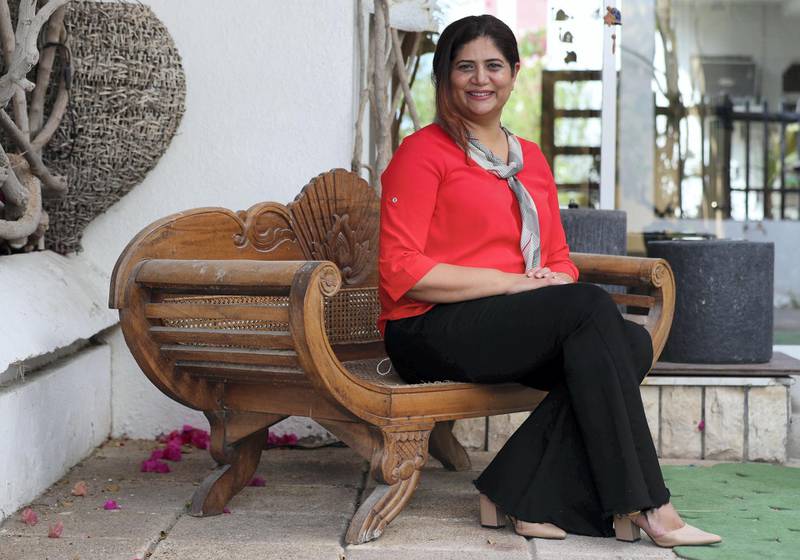
Mahnaz Faquih has helped donate tens of thousands of iftar boxes to the needy in the past 20 years in Dubai. Chris Whiteoak / The National
Dubai resident Mahnaz Faquih, 51, feeds 500 needy people every day during Ramadan.
She started when she moved to Dubai from India in 2002, distributing food during Ramadan to those around her, including the security guard in her building.
In 2018, thanks to the help of her friends and community members, she delivered 500 iftar boxes a day to workers and unemployed people during the holy month.
That trend has continued every year since.
This year, because of Covid-19 restrictions on sharing and distributing food, Ms Faquih joined up with local charities to distribute food parcels at worker accommodation in Al Quoz.
In 2020, she worked with Sahana, a Sri Lankan Welfare Association in the UAE, to help provide meals to those who lost their jobs during the pandemic.
“I moved to the UAE from India where I lived in a joint family of 10 people and there was a lot of Ramadan fervour,” Ms Faquih said.
“For me, Ramadan meant being involved in charity.
“My parents always encouraged me to help others and I wanted to keep that tradition alive.
“I started sending iftar boxes of fruit, laban or juice to my local mosque,” she said.
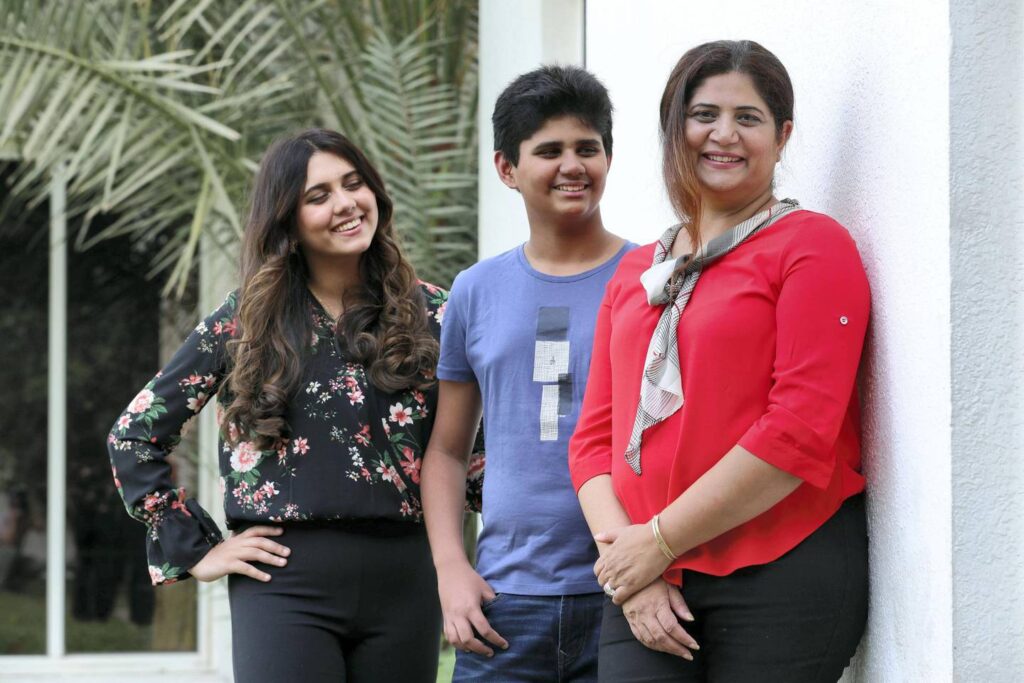
Mahnaz Faquih with her daughter Alina and son Mikhail. Chris Whiteoak / The National
Ms Faquih, an interior designer, said she ensured her children understood the importance of giving while realising their own privilege.
“The initiative has grown so big. It started with a wish to treat others to some good food or a box of biryani,” Ms Faquih said.
“Before the pandemic, I asked my children to give away the food packets so that it touched their hearts.
“I wanted them to have the consciousness that others are needy and they are privileged.
“My parents always gave away money or gifts through us, and I wanted my children to think about others.”
Her daughter, Alina Shaikh, 16, has been helping her mother since she was six and her son, Mikhail Shaikh, 12, also helps to distribute boxes.
“When we were little, we used to bring food and juices to workers every single day during Ramadan,” Alina said.
“We feel happy and grateful that we are lucky enough to help others.
“It’s such an amazing and rewarding feeling.
“It’s allowed us to understand how others live and empathise with them. It has helped us become humble and open-minded to people from different walks of life,” she said.
Mikhail also enjoyed being able to help others.
“In the past, we helped in packing the food boxes, but most of the time we handed out the iftar meals to people,” he said.
“We think that giving back is extremely important and when you have the ability to help others, why not do it?”
Ms Faquih said her friends supported her, too.
Shanu Hathiramani, an Indian from Nigeria living in Dubai, has known Ms Faquih for the past eight years and often helps her with her charitable work.
“Mahnaz is a very giving and helpful person,” Ms Hathiramani said.
“In the past, we have helped feed people during Ramadan. My son also helped out with the charity work.”
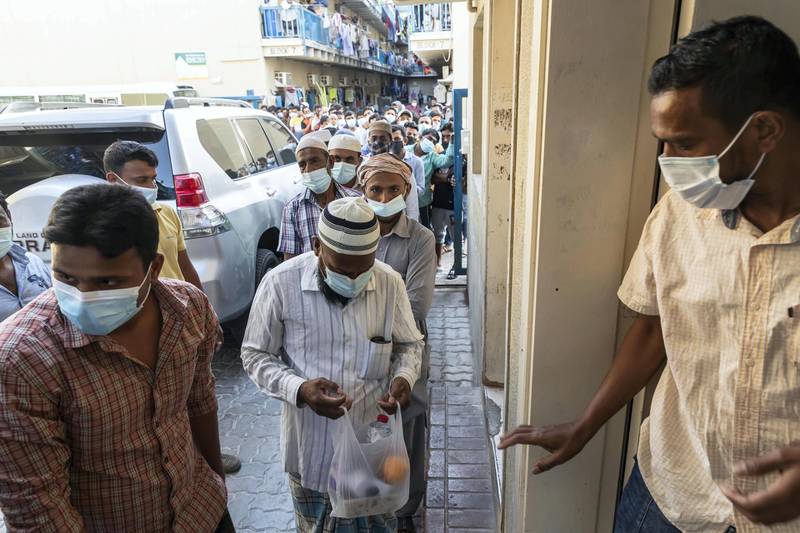
Iftar boxes being distributed at a workers’ accommodation – in picture
Sri Lankan community volunteers hand out meals for 300 people at a labour accommodation block in Sonapur, Dubai. All pictures by Antonie Robertson / The National
source: http://www.thenationalnews.com / The National / Home> UAE / by Anam Rizvi / May 07th, 2021
Sajida Khan has served in many Tamil, Telugu and Malayalam films as a sound engineer over the past 10 years
Hyderabad:
Since the time Indian women got the liberty to pursue jobs, most have fulfilled their ambitions by working in the government sector, banks and multinational companies. However, Sajida Begum from the Maula Ali suburb of Hyderabad, Andhra Pradesh, has broken a new glass ceiling by establishing herself in ‘musical acoustics and audio engineering.’ She has not just learnt the ropes of the industry, but become an expert in her field.
For the same reason, President Ram Nath Kovind presented her the ‘Ladies Award’ recognising her as “India’s first female music technician” in 2018.
Every part of her life journey reflects her love for music.
Interest in sound mixing and engineering
Sajida says she wanted to enter the music industry right from her school days. Alongside pursuing studies, she would often participate in competitions held at Hyderabad’s famous Ravindra Bharathi Theatre. She demonstrated her talent at various programmes and contests on Doordarshan and All India Radio as well.
She recounted an incident when a folk singer from Andhra, once, spotted her passion and told her about the various genres of music — folk, classical, Bollywood, and others. Her interest grew and she became determined to try something new.
Sajida says that she completed an animation course and then a PG diploma in the subject while finishing her XIIth Standard studies.
Meanwhile, she had the opportunity to go to a studio with her friend. Here, she displayed such great technical knowledge of the devices and equipment, that the owners were impressed and offered her a job. She worked here as an assistant to the music director for about five years.
Making a mark in the industry over a decade
Talking about her current projects, Sajida says she aims to bring as many stories on the digital audio format as possible. This allows authors and societies to preserve their knowledge. She has recently helped 40 children record their poems in audio format.
Sajida has served in many Tamil, Telugu and Malayalam films as a sound engineer over the past 10 years. She has done dubbing, background music and complete audio mix. Besides, she is responsible for the success of several jingles, music albums and TV serials.
She has worked with leading film directors like Dasari Narayana Rao, Teja and Puri Jagannadh.
The only female music technician in the country, Sajida has also found her way into the ‘International Audiobook.’ This is a collection of interviews with women achievers in the audio field from across the globe. It’s called ‘Women in Audio.’
Despite this, Sajida says that it will still take some time for India and the world to recognise the contributions of women sound engineers.
Encouraging more women to venture into the field
Sajida says there’s no gender discrimination in the music industry. In fact, she got more work and with more confidence from her employers due to her being a woman. She said families must encourage their girls if they take interest in music, just like her parents did.
For Muslim women she said, a lot of them get into Mehndi application, beautician and tailoring courses; but they can explore fields beyond these as well. Muslim women need to be provided education so they are empowered and made more aware of all the career avenues available to them.
Sajida said she wishes to start her own post-production studio and a music school. She would like to employ as many women as she can in them, she said.
source: http://www.awazthevoice.in / Awaz The Voice / Home> Women / by awazthevoice.in / January 24th, 2021
A Muslim woman from Kerala, Naaji Noushi’s decision to travel solo in her four-wheel car to watch the FIFA World Cup in Qatar shows her craziness towards the game of football and of course her madness towards travelling behind the wheel on hitherto uncharted routes.
As the World Cup fever is slowly gripping people and football fans, Noushi, an avid traveller, YouTuber and vlogger, commenced her journey to Qatar by driving a Mahindra Thar from Kannur, Kerala the other day.
Transport Minister Antony Raju flagged off the trip in the presence of village panchayat authorities, reports PTI. It was a dream come true for this soccer crazy woman who has always loved to take adventurous trips.
After reaching Mumbai via Coimbatore, she and her Thar, which is fondly named “olu” (means woman in local parlance), would land in Oman by ship. From there, she would travel via road and would cover Arab countries including UAE, Bahrain, Kuwait and Saudi Arabia before reaching Qatar, which plays host to the FIFA World Cup this time.
Noushi said it may be for the first time that a woman from Kerala was undertaking an overlanding trip to the GCC nations and that too to watch the football world cup. “My plan is to enter Qatar by December 10 and watch the finale.
I am so excited about this trip. I am a hardcore Argentina fan and Lionel Messi…really want to see my favourite team lifting the cup,” she said. She will continue her stay in Qatar till December 31, according to the report.
Noushi said the trip was expected to be a complete van-life experience as all essential cooking articles were stocked in the vehicle. It is also planned to park the vehicle near toll plazas and petrol pumps and stay within it during nights.
She said she has an Oman driving licence, which has already been converted into an international one.
“I am a person who has been dreaming to see an Indian team playing the FIFA World Cup. Through this innovative trip, I am trying to be a part of the gala by reaching there in an Indian-made vehicle,” she said.
Noushi, who has completed her Plus-Two, married Noushad, an NRI, at a young age and became a mother at the age of 19. Describing the family as the pillar of support, she said her husband and children were her actual cheerleaders and were encouraging her to travel more.
Noushi has already completed four travel series including an all-India trip to Ladakh and shared the photos and videos through her social media pages. Noushi said her youngest child is just two years old but her mother is taking care of her children when children when she is away for travel.
“If a woman like me- a homemaker, a wife and a mother of five- can realise my dreams, any ordinary woman in Kerala can chase her dreams confidently,” she said. — PTI
source: http://www.muslimmirror.com / Muslim Mirror / Home> Indian Muslim> Women / by PTI / October 20th, 2022
.webp)