Tag Archives: Muslims of India – Positive News

Shabnam Shaikh is India’s first doctorate in wrestling studies

Aambijalgaon, Kajrat (Ahmednagar District), MAHARASHTRA:
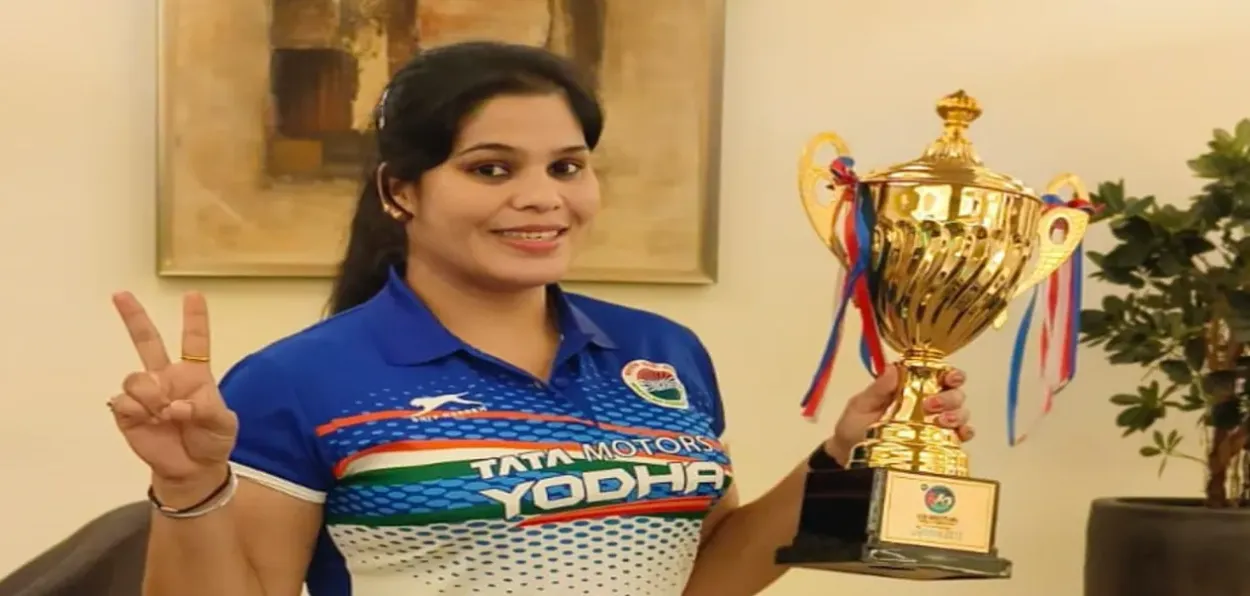
Dr. Shabnam Shabbir Sheikh

Shabnam Shabbir Shaikh of Aambijalgaon, Maharashtra, trashes stereotypes of Indian women. Having picked wrestling as her field, this 28-year-old woman has broken all the shackles that a girl child faces while growing up in a small village.

Hailing from the village Aambijalgaon, Karjat, of the district Ahmednagar Shabnam was born in Jammu where her father Shabbir Sarabhai Shaikh was posted in the Indian Army. She is the third child of her parents and she grew up seeing her mother Rizwana Begum looking after the house and the family. However, Shabnam’s father always wanted his daughter to be brave, self-reliant, and break social stereotypes.

A great votary of women’s education Shabbir Shaikh encouraged his wife Rizwana Begum to complete her MSc degree after their marriage.Due to her father’s frequent postings across the country, Shabnam did her schooling mostly at the Army schools in Ambala, Udhampur, Srinagar, and Ahmedabad. After her father’s retirement, the family settled in their native village and Shabnam joined the local school.

She joined the 11th class in the Dada Patil College, Karjat, in the science stream. despite an irregular and sluggish bus service to Karjat, she somehow managed to study and also attend coaching for wrestling.
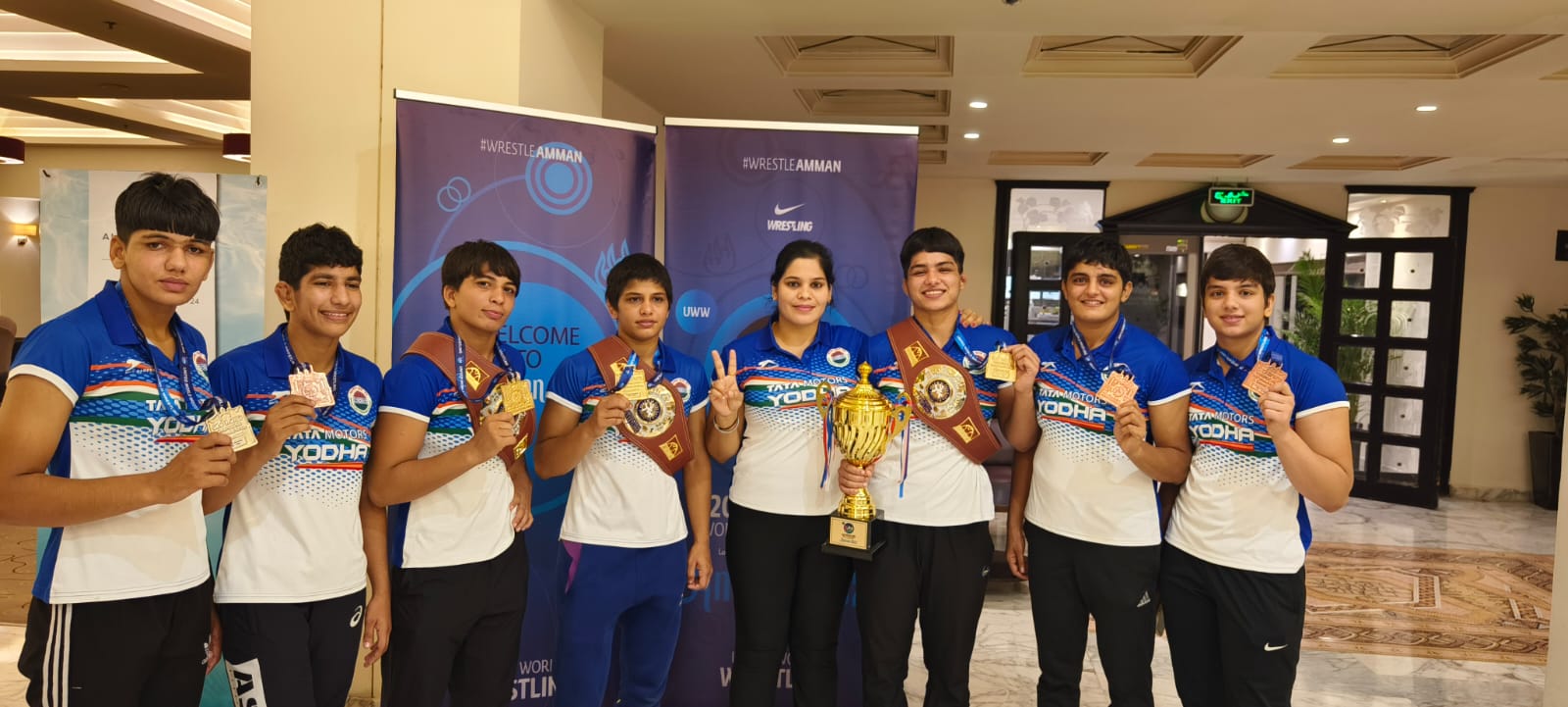
Coach Shabnam with her team

Shabnam completed her Bachelor of Physical Education (BPE) from Aurangabad (Sambhajinagar). She also got a diploma certificate in Coaching from the National Institute of Patiala, Punjab, and later did her Master’s from Babasaheb Ambedkar Marathwada University and then registered for her PhD studies.

Shabnam’s wrestling career began at the age of seven with her father as her coach. Shabnam says, “’My father is my first guru.”

Shabnam came from a family of wrestlers: her grandfather Sadarbhai Shaikh and great-grandfather were well-known wrestlers in the area. Their ancestral house has a wrestling arena where she watched male members of her family and neighbours practice wrestling. 

Shabnam had to face the scorn and disapproval of her extended family and relatives when she started practicing wrestling. People even asked her family why she was allowed to wear shorts.
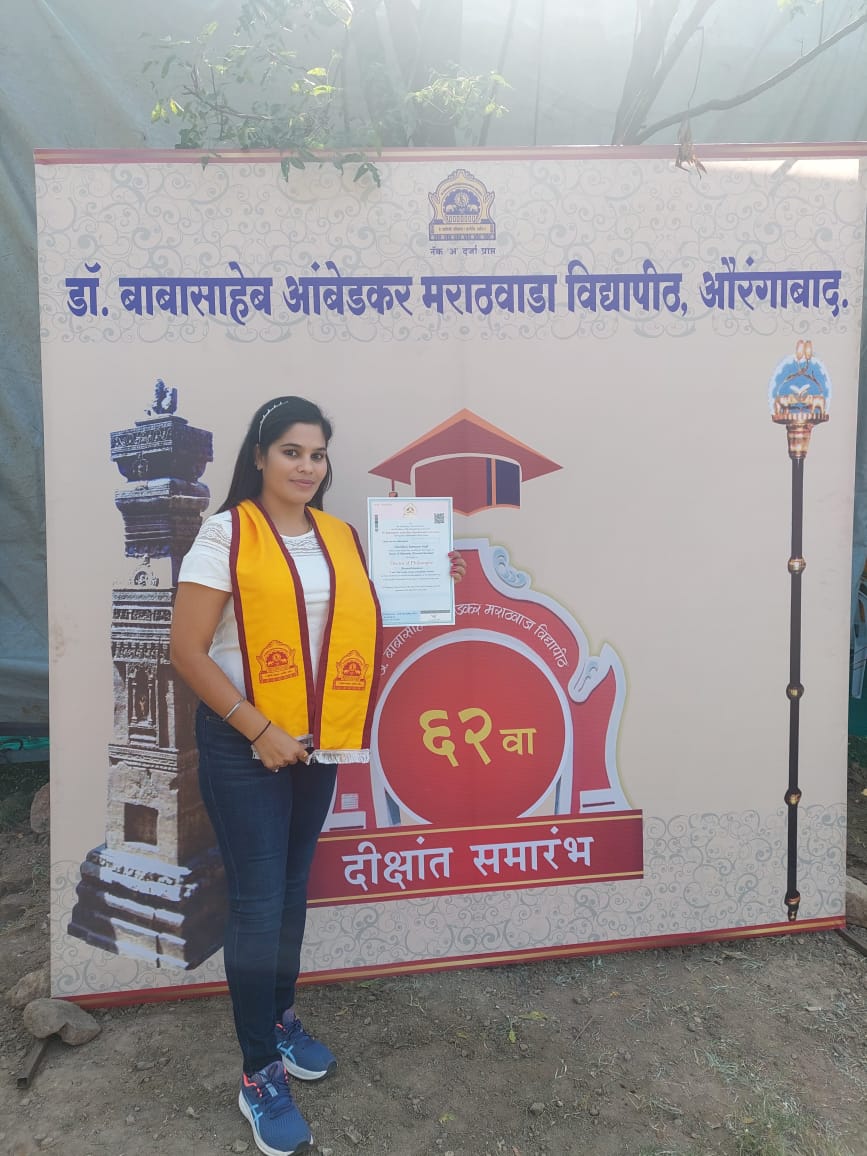
Shabnam at the convocation of the University

Shabnam started with Kabaddi, a game that requires a lot of alacrity and stamina.

Initially, she did not get to enter the arena where her brothers wrestled, so she took to Kabbadi. “I used to think that if I wrestle and win that will be my victory. Even if I lose, it will also be my failure. Will happen… I expressed my desire to wrestle to my father. He responded positively.”

Shabnam’s father had a precondition for training her. He wanted her to concentrate on training and practice for the first two years. She started receiving training from her father and two elder brothers.

Every morning at 4 o’clock she was sent to pick lemons from their farm located about 10 km away. She learned the nuances of wrestling and participated in her first competition in Ludhiana (Punjab). She bagged a silver medal and there started her winning streak.

Shabnam says, “Once in my village, my father came to know about a competition in Delhi. I was just 10 years old at that time. He gave me a paper with the address written on it and a train ticket and wished me good luck for the journey.”

At that time she wondered why she was going alone, ‘Why don’t my parents come with me? But my father always used to tell me that some battles in life have to be fought alone,” she says going down memory lane.
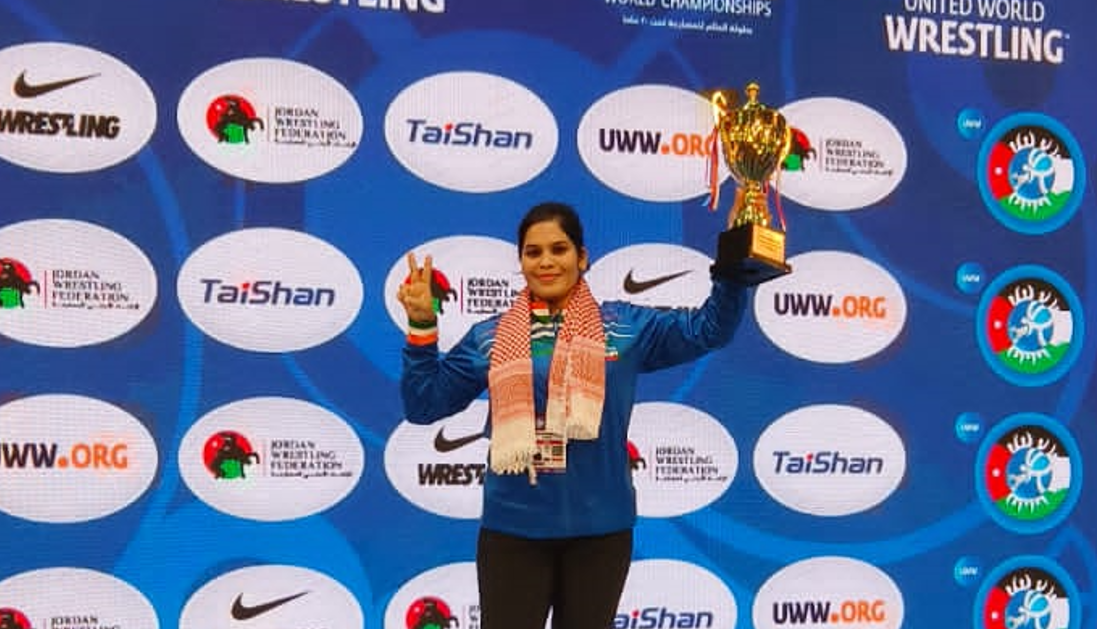
Shabnam Shaikh with her trophy

Shabnam won the title of ‘Women Maharashtra Kesari’ in 2010. She has won the gold medal in ‘Shirdi Kesari’ for three consecutive years since 2009, the gold medal in ‘Latur’ in 2011, gold medal in the ‘Maharashtra State Kustigir Parishad’ competition for six consecutive years.

She has also participated in four inter-university competitions, 10 national competitions, and more than 15 state-level competitions. In the national level ‘Great Bharatkumari Wrestling Competition’, Shabnam is the first winner not only from the Muslim community but also from Maharashtra.

Shabnam says her father taught her that one doesn’t need an outer veil. “Always keep the veil that differentiates between good and bad people in front of your eyes!” he told her.

Shabnam says, “People used to question my parents’ ways. A girl should not play sports like wrestling. Teach her to fast (during Ramazan) and pray. Don’t you want only boys to play wrestling? Hundreds of questions were asked but my parents did not let the pressure of society affect me.

“My father never changed his opinion under the pressure of society. He never let these things affect my game. I always got the support of my parents and my elder brothers.”

Shabnam’s mother Rizwana Begum says, “I have not two, but three ‘sons’! My brothers did not give me a share of our parents’ property. But, I will not let this injustice happen to my daughter. I will give her everything she deserves. Shabnam has brought glory to us. As a mother, I will always be proud of her.”

Shabnam’s thesis for her Ph.D. degree is ‘Comparative study of emotional maturity of rural and urban women wrestlers in Maharashtra’. She toured the entire state for research.

Shabnam is the first woman in India to do a doctorate in sports studies. While doing her Ph.D. in Wrestling, there were often deliberate attempts to embarrass and thwart her effort to earn a doctorate.

In the year 2017, Shabnam was selected as the junior coach of the Wrestling Women’s Association of India; she imparted wrestling training to Anushka Sharma and Salman Khan for the film ‘Sultan‘. Shabnam has represented India in Kazakhstan, and Uzbekistan.

She currently works as a ‘Senior Trainer’ in the ‘Wrestling Women’s Association’ of India. India has never had success in the ‘World Women’s Wrestling Championship’ till now. However, in the ‘Under-20 World Championship’ of 2023 India won seven medals in ‘Women’s Wrestling’. Out of these, three are gold medals.
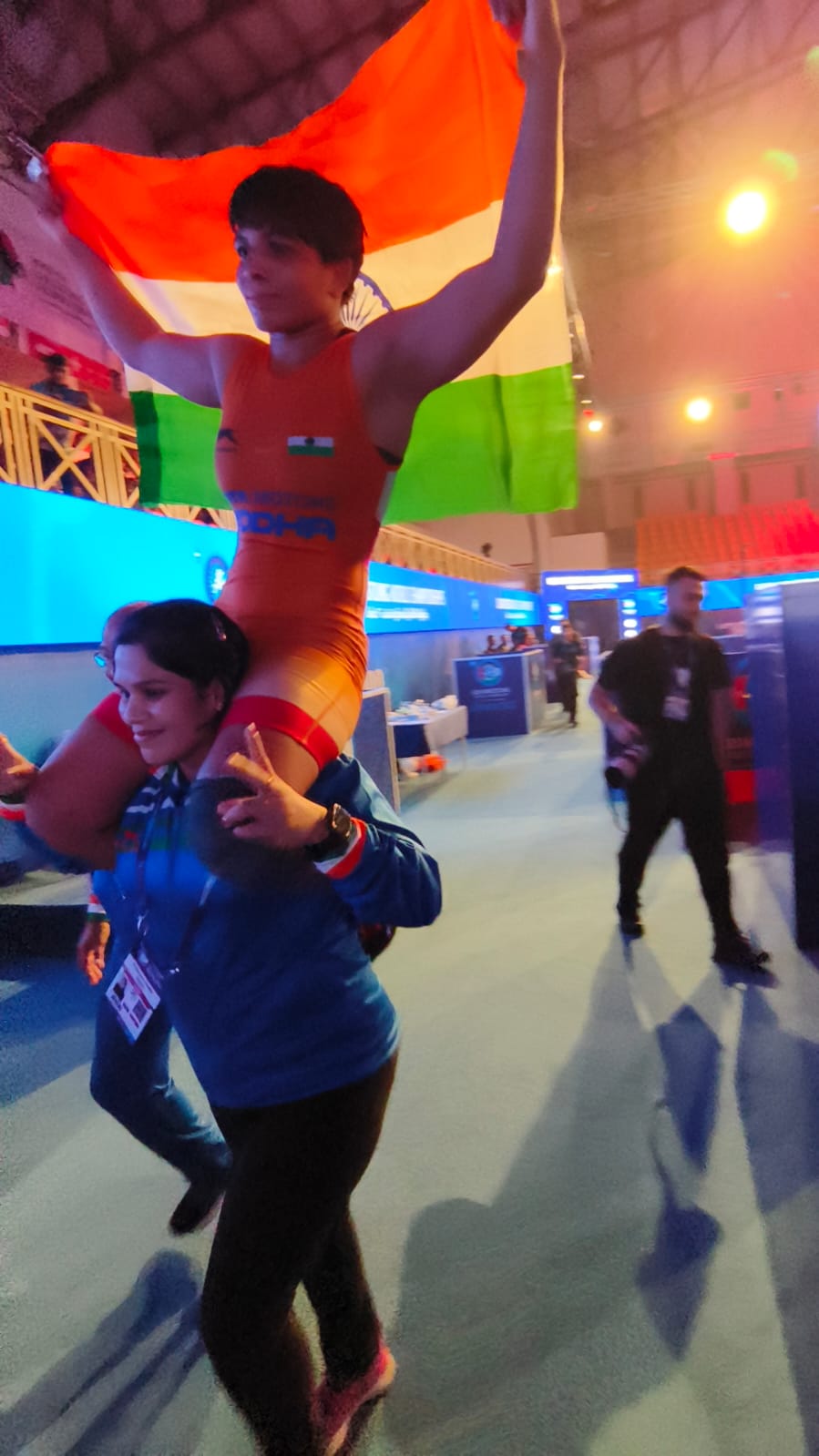
Shabnam Shaikh after her victory in a foreign location

Dr. Shabnam Shaikh is today known as the ‘International Wrestling Coach.

Shabnam says, “I was selected as the coach of ‘Maharashtra Team’ for the national tournament held in Gujarat last year. Twenty-four hours ago, my name was canceled! I was not given any idea about this.”

“Many times, despite having the right credentials and qualifications, I am not given a chance. Probably, because I live with self-respect! I always think that when someone asks me, “How did you get all this?’ I should proudly tell him, ‘I have earned it through my hard work.’

Shabnam says, “Wrestling gave me identity. Sometimes I wonder, ‘Is wrestling a curse or a blessing for me?’ Initially, relatives and other people of the society hated seeing me wrestle.

“Later, when I started winning competitions, people would post the news of my success on their ‘status’ on various social media platforms and write the caption, ‘Congratulations and best wishes to our sister or relative.’

After reading the news of my winning, I became everyone’s relative at that time! But, they speak against me on behind my back! However, now they hesitate to speak against me openly!”

Shabnam says, “Most of the time I am rejected for marriage. I play wrestling. The suitors who come to see as a potential candidate for marriage, see my trophies and see ‘Doctor’ written next to my name. When they go home their answer is, ‘We don’t want such an educated girl.'”   

Shabnam continues to work hard to ensure that other girls do not face what she has.

Her advice to the youth: “No matter what happens, do not get tired. Do not give up the fight.” Her dream is to build a wrestling center for girls.

source: http://www.awazthevoice.in / Awaz, The Voice / Home> Story / by Chaya Kaveri / February 29th, 2024
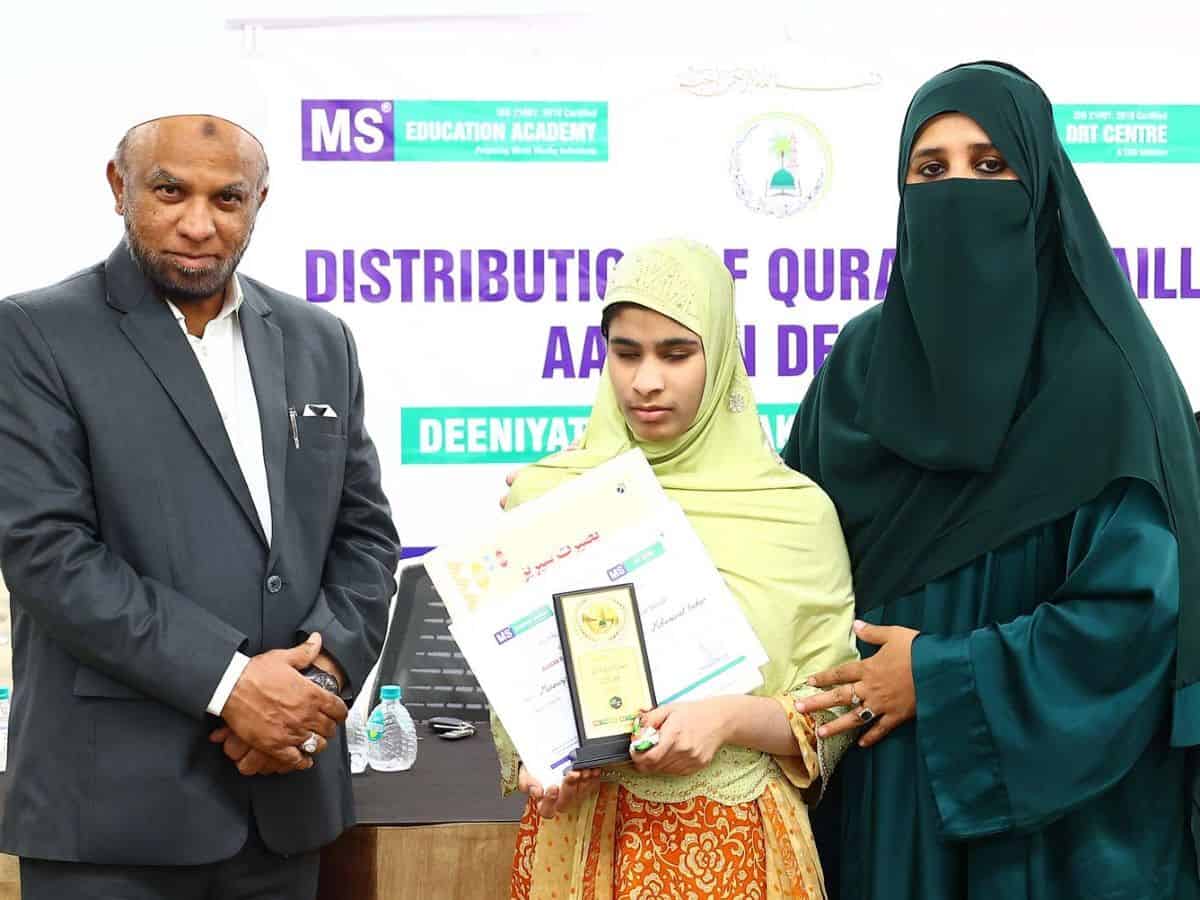
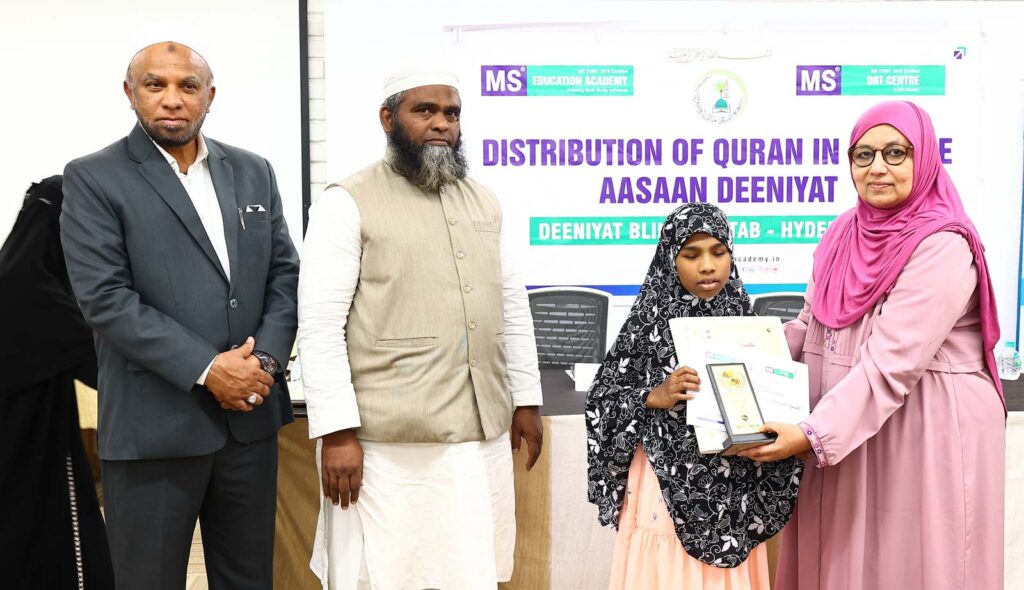
MS Academy empowers visually impaired students with braille Islamic course

TELANGANA:

Since 2014, MS Education Academy has been dedicated to assisting visually impaired students.

Hyderabad: 

In a remarkable initiative aimed at empowering visually impaired Muslim students, MS Education Academy has launched a pioneering project to provide comprehensive Islamic education in Braille format.

Since 2014, MS Education Academy has been dedicated to assisting visually impaired students, initially by distributing Braille versions of the Quran.

Recognizing the growing need for Islamic literature in Braille, the academy embarked on a mission to develop a tailored curriculum accessible to visually impaired students.

Over the years, MS Education Academy has meticulously developed Islamic literature in Braille, tailored to the spoken Urdu language prevalent among Muslims in Telangana.

Comprehensive Deeniyat course

A team of experts was assembled to compile a comprehensive Deeniyat course specifically designed for the visually impaired. This initiative has resulted in the creation of a series of Braille books titled “Asaan Deeniyat”

The first instalment of this groundbreaking endeavour, “Asaan Deeniyat Part 1,” has been successfully implemented with the organization of offline classes in Old city of Hyderabad in 2019.

To further extend their reach and cater to students beyond Hyderabad, MS Education Academy launched an online course titled ‘Deeniyat Visually Impaired Maktab.’ This online platform provides flexibility for students residing outside of Hyderabad or those preferring to learn from the comfort of their homes.

Impact of online initiative

The impact of this initiative has been profound, with 250 visually impaired students having already enrolled in the course and demonstrated remarkable progress in grasping the material. Remarkably, students have been able to complete Part 1 of the course in just six months, underscoring the efficacy of the Braille curriculum developed by MS Education Academy.

In recognition of their achievements, MS Education Academy organized a special event at its corporate Office to celebrate the completion of Part 1 of the course.

Certificates of completion were awarded to students, marking a significant milestone in their educational journey. Additionally, students were provided with copies of “Asaan Deeniyat Part 2” alongside Braille copies of the Quran, further enriching their educational resources.

MS Education Academy’s commitment to inclusive education and empowerment continues to inspire, serving as a beacon of hope for visually impaired Muslim students seeking access to quality Islamic education. Through their innovative approach, MS Education Academy is not only breaking barriers but also fostering a more inclusive and equitable society for all.

source: http://www.siasat.com / The Siasat Daily / Home / by Sameer Khan / February 23rd, 2024

UP Government confers Yash Bharti award to 46 people, list includes nine Muslims

UTTAR PRADESH:

Lucknow:

Uttar Pradesh’s highest honour Yash Bharti award was given to 46 personalities on Monday. Among them, nine Muslims were conferred the award by Chief Minister Akhilesh Yadav in presence of Mulayam Singh Yadav. The award is given annually by Culture Department of UP government.

Yash Bharti comes with a cash prize of Rs 11 lakh, citation and a shawl. The awardees are also eligible for a monthly pension of Rs 50,000 for their life.

Yash Bharti award were constituted in 1994 by the then CM Mulayam Singh Yadav but were discontinued between 2007 and 2012 by Mayawati. It has since been revived by CM Akhilesh Yadav.

1. Ustad Ghulam Mustafa Khan
Classical singing
Born- 3 march 1931, Badaun

Belong to Rampur Sahaswa Gharana in classical singing. Conferred honorary citizenship of Baltimore and Maryland in 1986. Padamshri in 1991, Sangeet Natak Academy Award in 2003, Padam Bhushan in 2006 and Rashtriya Tansen Award in 2008.

2. Professor Irfan Habib
Historian
Born-12, August 1931 in Baroda.
D.Phil from Oxford

Chairman, Indian Council of Historical Research 1987-93, 1993-96. Jawaharlal Nehru Fellowship in 1968-70, D.Lit from BHU (2008), Vishwa Bharti (2008), Kalyani Vishwavidyalaya (2009), North Bengal University (1990) and Ravindra Bharti University (1989). Padam Shree in 2005.

3. Dr Nahid Abedi
Sanskrit literature and philoshophy
Born—12 February 1961, Mirzapur
D. Lit from Lucknow University in 2009. Padam Shree awardee.
Several books and papers published in Sanskrit.

4. Iqbal Ahmed Siddiqui
Ghazal singer
Born—November 9, Allahabad

Performed at All India Radio and Doordarshan. Released 17 cassettes. Sang one song in film Rama O Rama.

5. Anwar Jalalpuri
Urdu poetry and writing
Born—6 July 1947

Several awards on Urdu poetry like UP Gaurav Samman, Mati Ratan Samman, Iftikhar-e-Meer Samman etc.

6. Dr Nawaz Deobandi
Poet and educationist
Born—16 July 1956, Saharanpur

Chairman, UP State Urdu Academy. Established Rafiqul Mulk Mulayam Singh Yadav Urdu IAS Study Center in Lucknow. Several awards like Kaifi Azmi award, Dushyant award, Rotary award etc.

7. Aleemullah Siddiqui
Artist
Born—10 June 1953, Lucknow

Artist using stem of wheat plant, painting on cloth etc. Acted in play Dilli Ka Akhirir Mushaira and Main Urdu Hoon.

8. Imran Khan alias Imran Pratapgarhi
Literature
Born—6 August 1987 Pratapgarh.

Internationally acclaimed poet and attended Mushairas in Oman, Bahrain, Dubai, Sharjah etc. Received Urdu Academy award in Saudi Arab, Red Cross Society Orissa’s Vishist Vidyarthi award and Sadbhavna award by Maharashtra Municipal Corporation.

9. Wazeer Ahmed Khan
Chess
Born—4 February 1947, Rampur

Participated in Chess National B competition in 1972, 1980, 1995, 1999, 2004 and 2008. UP Champion in 2004-2005. First prize in Asian Senior competition in Iran in 2015.

source: http://www.twocircles.net / TwoCircles.net / Home> Arts-Culture / by TCN Staff Reporter / March 22nd, 2016

UPSC Success Story: Meet IAS Officer Who Secured The Highest Marks In Interview Round

Kolkata, WEST BENGAL :

Her hard work paid off and she eventually clinched success on her third attempt. She cleared both her Prelims and Mains and went on to top the interview round as well.

UPSC Success Story: Meet IAS Officer Who Secured The Highest Marks In Interview Round
IAS Zainab Sayeed

New Delhi: 

Do you happen to know who holds the prestigious title for achieving the highest marks in the interview round of the UPSC exam over the last decade? If you’re guessing it’s Tina Dabi, Srushti Deshmukh, Kanishka Kataria, or Shruti Sharma, you might be surprised.

It’s none other than Zainab Sayeed who stands as the record-holder for securing the highest marks in the UPSC interview round. This remarkable individual from Kolkata attained an outstanding score of 220 out of 275 marks in the interview segment. Her remarkable achievement took place in 2014 when she successfully navigated the UPSC Civil Services Exam, amassing 731 marks in the main examination.

Zainab clinched the All-India Rank (AIR-107) and to this day remains unparalleled in terms of interview performance. However, Zainab’s journey with UPSC wasn’t without its challenges. She encountered setbacks in her initial two attempts, failing to clear even the Prelims in her first endeavours.

Despite these early setbacks, Zainab refused to be deterred and remained steadfast in her belief in herself. Her relentless dedication and perseverance eventually paid dividends, culminating in her triumphant success on her third attempt. She not only cleared both her Prelims and Mains but also emerged as the top performer in the interview round.

According to Zainab’s account, the interview lasted for approximately 25 minutes and revolved around a diverse array of topics, including current affairs, international affairs, foreign direct investments, and discussions on the European Union.

It’s noteworthy that Zainab hails from Kolkata and completed her graduation in English literature from St. Xavier’s College. Subsequently, she pursued her MA in mass communication at Jamia University, Delhi, graduating in 2011.

Following her post-graduate studies, Zainab made the decision to embark on the rigorous journey of UPSC exam preparation. Despite facing disappointments in 2012 and 2013, she persisted and ultimately tasted success in 2014.

source: http://www.zeenews.india.com / Zee News / Home> India> UPSC Success Story / by Zee Media Bureau, edited by Mahi Mishra / February 13th, 2024

Ibn Sina Academy of Medieval Medicines and Sciences is a legacy in four walls

Aligarh, UTTAR PRADESH:

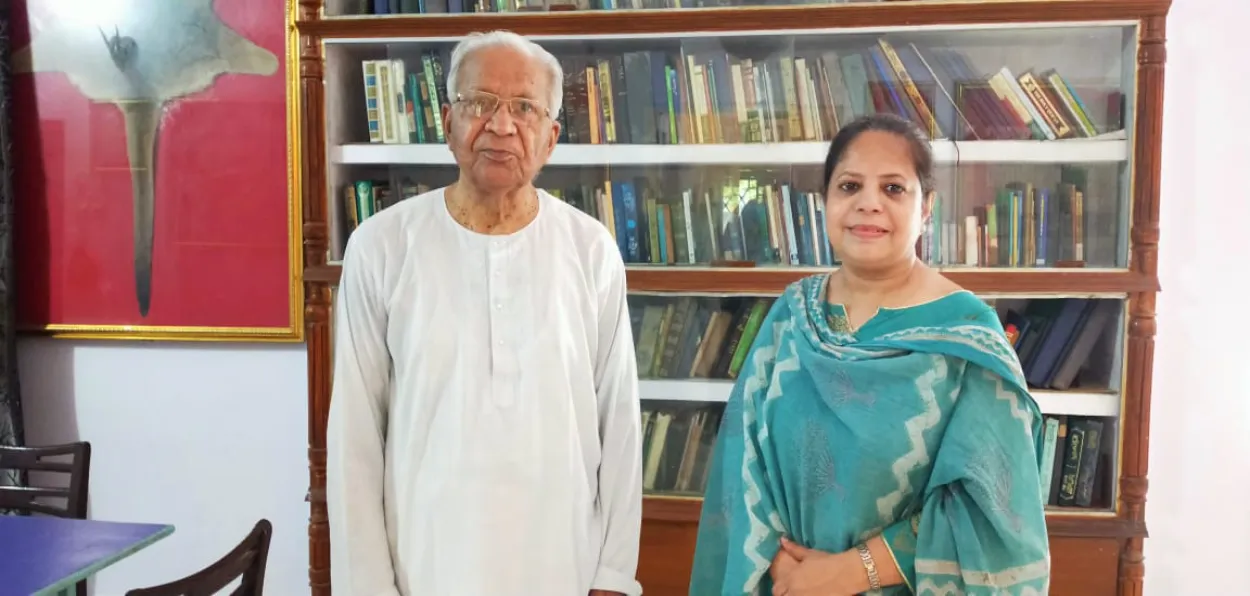
Professor Syed Zillur Rahman, founder,Ibn Sina Academy of Medieval Medicines and Sciences with the author

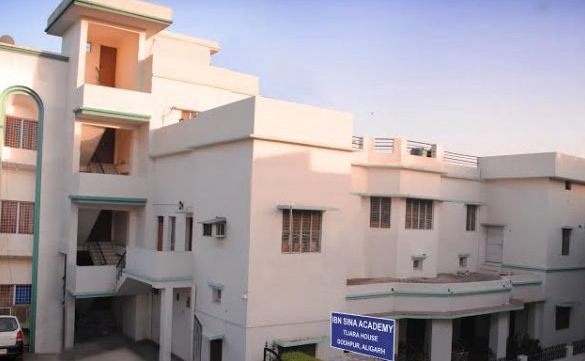
Known for its locks, Aligarh, a city in Uttar Pradesh, has also locked a legacy in its reserve – for generations to benefit from it. It houses a rare academy and museum called Ibn Sina Academy of Medieval Medicines and Sciences. 

Located at Tijara House, amid a vibrant market place and residential area, Ibn Sina is hailed as the rarest house of legacies in arts and sciences combined under one roof. Named after the legendary scholar of philosophy and medicine Abu Ali Ibn Sina (980 -1037), this academy was accredited to the Ministry of Ayush in 2004 and promoted to Centre of Excellence in 2008.

The institution was established for encouraging and promoting research and studies in medieval sciences, especially Ibn-Sina’s as well as arts, culture, poetry, and other sciences. 

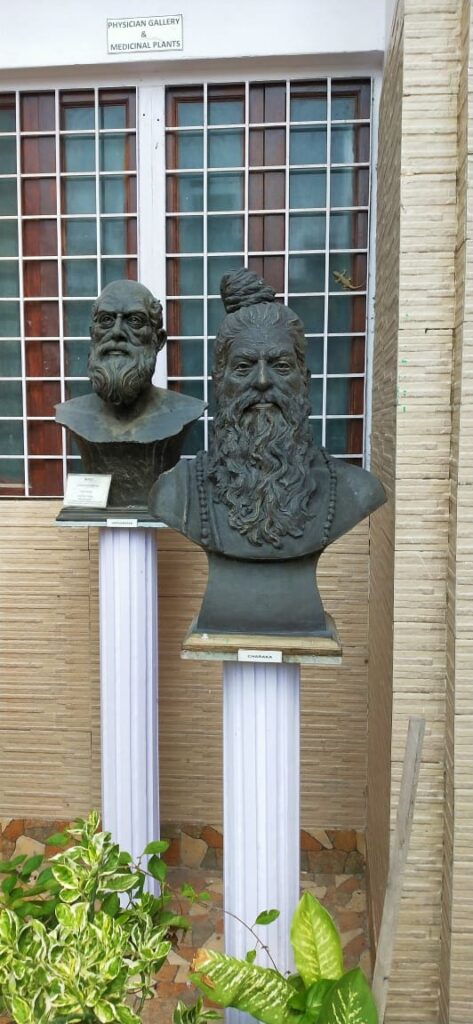
The bust of Ibn Sina with Charak inside the museum

Of Ibn Sina’s four stories, a major attraction is on its second floor which houses the Fazlur Rahman Museum of Orientalism, Art, and Culture. 

It has four main galleries; the crockery gallery has a large collection of oriental and British Indian utensils, hammami plates, bowls, tea sets that belong to prominent personalities such as Hakim Ajmal Khan, Nawab Sultan Jahan, Nawab Shahjahan Begum of Bhopal, Nawab Yusuf Ali Khan of Rampur and many others.

The textile gallery is ornate with attires, garments with gold and silver calicos studded with precious stones, one of which has entire Quranic surah Yaseen embroiled in gold zardozi on it, turbans worn in battles, among many other oriental attires. The picture gallery has prominent personalities of AMU’s pictures, drawings, photography, prints, etc.

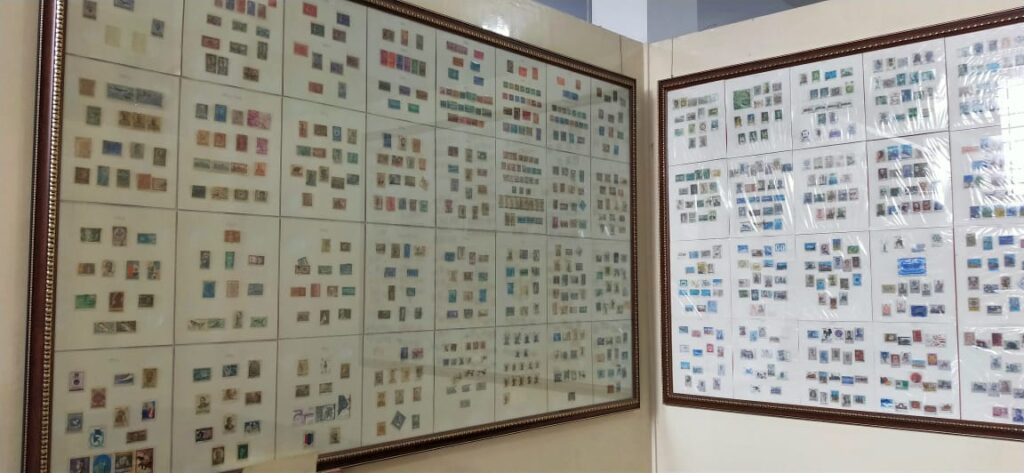
Its miscellaneous gallery has coins, postage stamps, clocks, busts, pens, memes, and relics of prominent personalities. 

“We have over 2 Lakh stamps beginning from ever since the stamps started, from all countries and India. People who were pioneers in the world of arts and culture, education, and freedom fighters on whose names, and stamps were released, we have a collection of the same. shares Dr. Aftab who is a convenor at Ibn Sina.

In addition medical manuscripts, medical philately, medical souvenirs memories of physicians especially those of Nobel laureates are well preserved here.

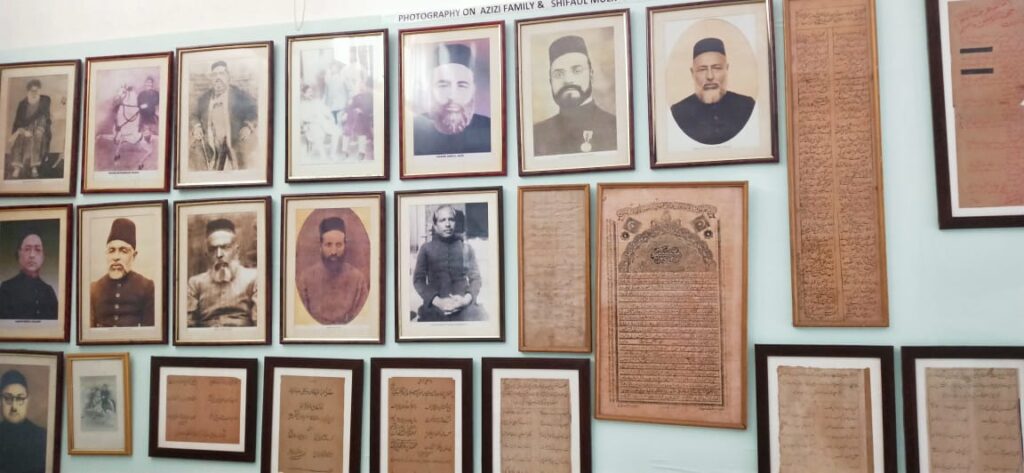
The wall of fame (Pictorial history of some important Muslim families)

The connecting rooms of the galleries welcome you with a sofa of Raja Jai Kishan, a mirror of the times when they were made of iron sheets. The iron sheets called ‘aaina’ were rubbed so many times that they would become sparkling clear and shining to become a mirror. That’s how the mirror got its name ‘aaina’ Later it got a new name –sheesha – with the change of the material..

The academy is rare for numerous reasons. For avid readers of medicine, science, Urdu, Persian, Arabic, literature, poetry, oriental studies, researchers, students preparing for competitions, and scholars IbnSina is a heaven. It boasts of a rare collection of 32000 books, 17000 magazines, 1100 manuscripts, (makhtootaat), 21 rare Qurans including one pocket size in gold, and much more is in store.

Built by professor Syed Zillur Rahman, a medical academic and passionate Urdu litterateur from Aligarh, Ibn Sina was an extension of his colossal library that he had established in 1960 which soon extended into the world’s rare academy and museum of its kind in the year 2000. 

Collection of stamps 

“Hamare yahn Aurangzeb ke hath ka likha, aur uske bete ke hath ka, likha hua Quran hai,” gleams the professor, sharing the information.

Apart from a separate collection of Muslim women achievers, Ibn Sina boasts of the world’s best collection of Islamic sciences, Islamic medicines, and Islamic philosophy being published across countries such as Iran, Central Asia, Syria, Iraq Turkey, etc. Scholars from across the globe come here to refer to books in this section.

For Ghalib devotees, the academy has a separate section called Ghalib Study Centre. It “Ghalibka collection joh mare paas hai vo duniya mein kisike paas nahi hai,” claims the professor.

Delhi finds a special place here boasting of 7500 books, some as old as 1893, dictionaries as old as 150 years, authentic diwaan on Ameer Khusrau, books on and by the last Mughal Bahadur Shah Zafar, British period –Victorian Era with pictures in Lithographs and much more.

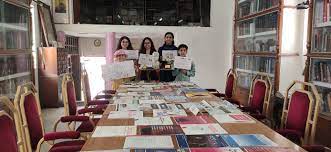
Children using the library

The academy has a library for students especially those preparing for competitive exams. The 100-seater library has the best of books from literature, agriculture, science, math, medicine, etc.

“There is no fee to sit in this library. It opens every day from 10 to 10. This section has over 28000 books including 56 of Professor Rehman on Tibbi and Unnani medicines. there are separate sections for Unani medicine and Sir Syed Movement, biographies,” Dr Aftab Alam, the coordinator of Ghalib Study Centre informed.

There is a reason why the library has most books in Urdu and Persian on Indian history, culture, language, society, education, politics, medicine, etc. “Not much work in English has been done on Muslims. Most work has been done in Urdu and Persian. So this is our helplessness. Our focus is on India – the Hindustan. Indian scholars have done immense work in any domain, philosophy, travelogues, and medicines, especially in Islamic history, the Quran, and hadith that is comparable to anyone in the world, especially the Arabic and Persian world. The problem is we don’t read because we don’t read Urdu,” rues the professor. 

Why Ibn Sina was built has an interesting story. As a young man, Professor Rahman used to watch a bird who had made a nest and would bring food for her newborn, just as the routine was with a cat who had given birth to kittens – at his home. After some months, the birds flew, and the kittens grew and went away with their mothers.

“I thought to myself, ‘Is this the life God has created mankind for? Just be born, eat, sleep, and die like animals? God has created a man to not only take care of his family but also society, language, culture, community, and world.”

Ibn Sina Academy of Medieval Medicines and Sciences

So, he decided to create a legacy that he says would be useful for a generation after 80 years! “We are away from civilization by 80 years. A standard time to develop any civilization is 150 years. So, now people are not able to understand the legacy I have created but the students who read it 80 years later will know what it is. By then we would be a civilization.”

People get worried that the graph of Muslim development is going down. But the Professor feels it is nothing to be worried about. “Every civilization has to go through it. Our graph has risen. We were 10 crores in 1947. After Partition, 7 crore left for Pakistan had 3 crore stayed in India. We were nothing in 1947 but our buzurgs worked very hard to study and became scholars. Now we are making educational institutions, universities, hospitals, media houses, and so on. Most important is that girls are getting higher education and they will change the face of the nation,” he says, satisfied while emphasizing reading Urdu to know a legacy called India and the contribution of Muslims to it.

Rana Siddiqui Zaman is a Delhi-based senior columnist and art reviewer

source: http://www.awazthevoice.in / Awaz, The Voice / Home> Stories / by Rana Siddiqui Zaman / January 10th, 2024

First Kalyana Karnataka Jamborette to Kick Off in Bidar Under Dr. Abdul Qadeer and Dr. Guramma Siddareddy’s Leadership

Bidar, KARNATAKA:

Karnataka:

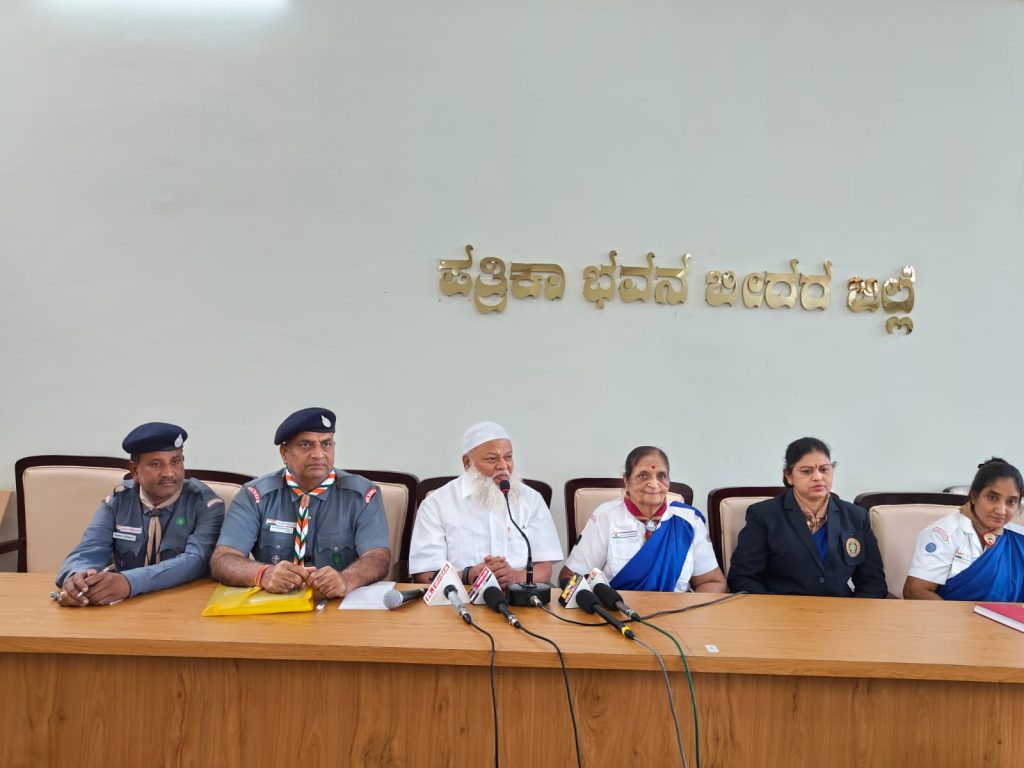
The Bharat Scouts and Guides are set to host the First Kalyana Karnataka Jamborette at Shaheen College premises in Bidar. Scheduled from February 8 to 12, the Jamborette will witness the participation of over 3,000 Scouts, Guides, Rovers, Rangers, and Heads from across the region.

Dr. Abdul Qadeer, founder of Shaheen Group of Institutions and District Vice President of Scouts and Guides, Bidar, has been nominated as the Chief of the event by PGR Sindhia, the state Chief Commissioner of Bharat Scouts and Guides. Dr. Guramma Siddareddy is appointed as the Additional Chief of Jamborette.

From 6:30 am to 8 pm daily, attendees can engage in a diverse array of activities encompassing adventure, cultural pursuits, yoga, meditation, district fair scenario displays, and more.

Dr. Abdul Qadeer emphasizes that these activities aim to foster discipline, physical fitness, mental agility, social skills, moral values, and spiritual development among the youth.

Shaheen College, well-equipped to handle the influx of participants, has made arrangements for accommodation, food, transportation, and other essential facilities. The preparations are in full swing, ensuring a seamless experience for all attendees.

The Jamborette will be inaugurated by Cabinet Minister Ishwara Khandre, Union Minister Bhagavanth Khuba, Urban Administration and Haj Minister Raheem Khan, and Former Lokayukta Justice Santhosh Hegde, Science and Technology Minister N. S. Bhosaraju, Educationist Basavaraj Patil Sedam, KKRDB President Ajay Singh and other leaders will participate.

At a recent press conference, Jamborette Chief Dr. Abdul Qadeer, along with Additional Chief Dr. Guramma Sidda Reddy, Jamborette Secretary Dr. H.B. Bharshetty, Coordinator Malleshwari Jujare, Co-coordinator Rachaiyyah Nasi, Camp Leaders Ramesh Tibshetty and Jaisheela Sudarshan and District Organizer Nagaratna Patil, shared insights into the upcoming event.

The press conference featured discussions on the wide array of activities, ranging from Mehndi and Rangoli to Quiz Competitions and Sustainable Development Training.

source: http://www.thehindustangazette.com / The Hindustan Gazette / Home> Education / by The Hindustan Gazette / January 28th, 2024

Dr Farasat Hussain: Remembering a Doctor, Healer and a Remarkable Son of Magadh

Chhapra District / Gaya, BIHAR :

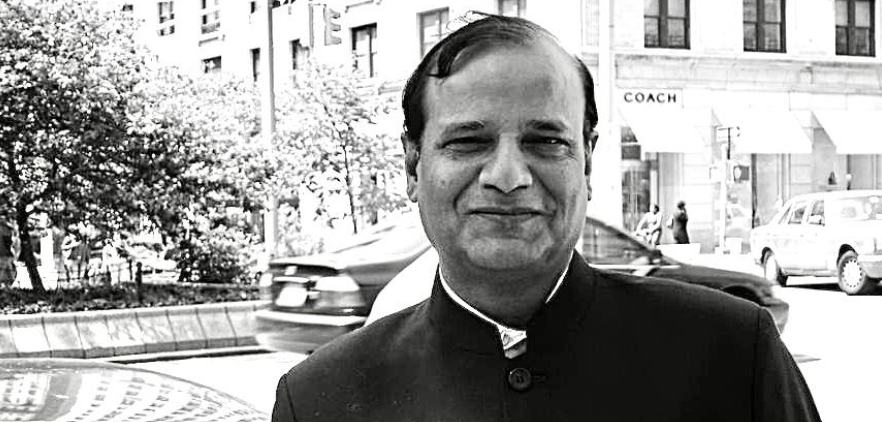
Dr Hussain was the kind of man, that if he himself were to read (or edit) this obituary, he would flinch at the mention of his generosity as a doctor or friend. Good deeds were to be done, he believed, not to be remembered or recounted.

Dr. Farasat Hussain (1952-2023)

This Sunday (August 6) when a group of people assemble to remember Dr Farasat Hussain, in ‘Renaissance’, an aptly named Cultural Centre in Gaya, set up by his lifelong friend, noted litterateur Sanjay Sahay and his wife Durba Sahay, the inter-faith gathering will be much more than a tribute to him. They will of course meet to talk about the good doctor who died on July 28 at the age of 71 in Delhi. But the meeting will embody the very essence of Dr Hussain’s life which was dedicated to bridging divides and building relationships. Be it religious, caste and class, there was not one single divide he had not jumped across.

The meeting will be very personal, no doubt, but it will also be a tribute to the India he inhabited for most of his life, where he was proud to serve as a doctor, live his life as a Magadh ka baashinda, a Bihari, an Indian, and all in all, a lively human being. But it will also be a necessary reminder in these vicious and polarised times of people who with their singular focus on humanitarian work are the secret sauce of what keeps or certainly kept India going.

Born in Bihar’s Chhapra district in 1952, Dr Hussain made Gaya his home soon after he completed his post-graduation in Orthopaedic Surgery at Government Medical College, Ranchi in 1983.

As a young doctor, he would kick-start his Rajdoot motorcycle and ride off to remote villages across Bihar to attend to emergencies. A pioneer in polio corrective surgeries in Bihar, he conducted scores of special camps where he performed more than 3,000 polio surgeries for poor children when he started his work here decades ago. He even conducted Caesarean sections when a gynaecologist wasn’t available.

In a state where public health was never really a thing, doctors like Farasat Hussain were the system. He was anyway an exceptional surgeon who had multiple opportunities and offers to make a career in the lucrative corporate medical sector, but he didn’t even consider it. He stayed in Gaya where he mixed his practice as a doctor with large-scale social work, community building and helped initiate a multi-faith effort to ensure communal harmony across the Magadh region.

But for people there, he wasn’t just a skilful surgeon and an efficient clinician, he was also a psychologist. His unique sense of humour, they suspected, was part of his treatment plan for a patient. Dr Hussain didn’t merely look at the disease of his patients, he treated the person. In a place where health infrastructure had crumbled in the decades of the 80s and 90s, he was an address for the sick where they knew they would surely get help.

He was also closely associated with the upliftment of the disabled population, who remember him as a mentor and benefactor for helping them with their livelihood. Several disabled people travelled from across the region, despite difficulties, and joined his funeral.

In 2010, the government of Bihar honoured Dr Hussain for his work. At that time, he was national president of the Association of Sports Medicine of India. He was honoured for his contribution to promote sports among disabled people, especially polio patients.

Dr Hussain was closely associated with Arpan, an organisation of disabled people in Gaya, where he was instrumental in motivating disabled youngsters to participate in sports and other activities to turn their physical challenges into opportunities that helped them move away from a life merely at the fringes of society.

Dr Hussain mentored Krishna Murari, who subsequently represented India at the sitting volleyball competition in the US.

Several other disabledyoungsters from the Magadh region also attended national sports events in cricket, volleyball and cycling. His focus on encouraging disabled youngsters to take up sports was to help in their inclusion in the social fabric, not as dependents, but as equal partners.

Dr Hussain was an integral part of the inter-faith dialogue, peace and harmony initiatives in the Magadh region.

This is why those who attended his burial say that it aptly exhibited the fruits of his lifelong work to build bridges between communities. Buddhist monks came to pay their respects to him. Hindus and Muslims came and prayed for him. Several disabled men came for the first time into a graveyard, only to express their love for the departed. There were madrassa children, who were helped by him when their institution was in extreme financial distress. A befitting farewell to a man of all persons.

Dr Hussain had been closely involved with one of Bihar’s oldest minority educational institutions – Mirza Ghalib College, where he consistently promoted progressive and secular values. Mirza Ghalib would be proud of all that he upheld there. He was also involved with a number of charity organisations, such as an orphanage at Cherki for more than two decades. This home for poor, underprivileged orphans is one of the biggest in India.

Dr Hussain was an exceptional man, who stood out because he was so restless and always busy, working, helping; a doctor in the truest sense of the word.

I happened to meet him several times, and saw an adoring grandfather to a precocious and thoughtful Farris. His quiet charm, polished demeanour and contagious smile did not mean that he ever held back on his views. A man capable of sharp candour and an openness of the heart, he could surprise you with his diagnosis of the social situation.

Dr Hussain was the kind of man, that if he himself were to read (or edit) this obituary, would frown and take serious umbrage at even a mention of his generosity as a doctor, friend, and human being. Good deeds were to be done, he believed firmly, and not to be remembered or recounted.

He is at eternal rest now. But his life needs to be celebrated for how he lived it and how he wanted the world around him to be. There is a need to nourish his legacy, intangible as it may seem. This is true today more than ever before, as we seem to have a hard time even imagining living a harmonious life as a collective.

He knew very well that there was no magic pill to fix the social fabric, no ready rafoo. But the good doc he was, he knew what it took to keep trying to get there and the importance of keeping all kinds of fevers down.

RIP, Dr Hussain.

source: http://www.thewire.in / The Wire / Home> English> Health> Rights / by Seema Chishti / August 05th, 2023

‘Quran in Embroidery’ a hand crafted phenomenon in 604-pages of velvet cloth – The Miracle of two Bengaluru sisters – Bibi Tabassum and Suraiya Quraishi

Bengaluru, KARNATAKA:

Bibi Tabassum and Suraiya Quraishi who embroidered the Quran.

Bengaluru :

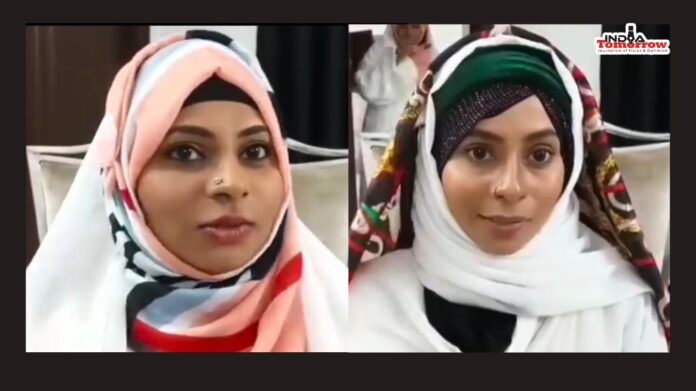
This is a miracle. An awe-inspiring phenomenon took place in this city a few days back, as two sisters- Bibi Tabassum and Suraiya Quraishi- embroidered the sacred Quran onto 604 pages of plush velvet cloth.

Showing excellent craftsmanship, they used needles and threads to meticulously prepare an embroidered holy Quran. This embroidered Quran, prepared under the watchful guidance of an Alim-e-deen (religious scholar), is not only easily legible but also heavenly captivating.

Bibi Tabassum, the younger of the two sisters, holds a great fondness for doing embroidery ever since she was a child. In the beginning, she used to embroider only small verses of the Quran, but one day, an idea graced Bibi Tabassum’s mind – to intricately embroider the entire holy Quran. This took her on a laborious journey, one fueled by love and devotion.

Expressing extreme gratitude to Allah for giving them the opportunity to prepare this embroidered Quran, Bibi Tabassum says that she aspires to gift this embroidered holy Quran to a library in the holy city of Madina.

Venturing on this embroidery voyage of the Quranic verses along with her elder sister Suraiya Quraishi, Bibi Tabassum started with the first inaugural Surah of the Quran i.e. Surah Al-Fatiha, and continued diligently. The last surah- Surah An-Nas marked the culmination of their hard labour.

This embroidered holy Quran is divided into five volumes, and each volume consisting of six chapters. It went through a meticulous binding process by the skilled hands of its creators.

Initially, in the detailed process of embroidery, Bibi Tabassum used to inscribe the verses of the Quran with a pencil on the velvet cloth, followed by both the sisters intricately weaving threads along those sacred lines.

Carrying on the demands of daily life, both sisters, driven by unwavering dedication, used to finish their household chores and then engage in the embroidery work of the holy Quran.

To ensure the utmost accuracy of the embroidered work, a learned religious scholar closely scrutinized each verse upon the completion of a page. Bibi Tabassum says, ‘After completing every page of the embroidered holy Quran, we would show that to our scholar and do any correction if required.”

In the aftermath of this big achievement, family members are thoroughly elated for the two sisters. They say that the two sisters have utilized their time for a very noble endeavour. Extending heartfelt gratitude, they thank Allah for the manifestation of this lovely artwork, which stands as a testament to the beautiful blending of devotion and artistry.

source: http://www.indiatomorrow.net / India Tomorrow / Home> News> Society / by India Tomorrow (headline edited) / February 05th, 2024

Tamil Nadu Govt Honours Fact-Checker Mohammed Zubair With Communal Harmony Award

Bengaluru, KARNATAKA:

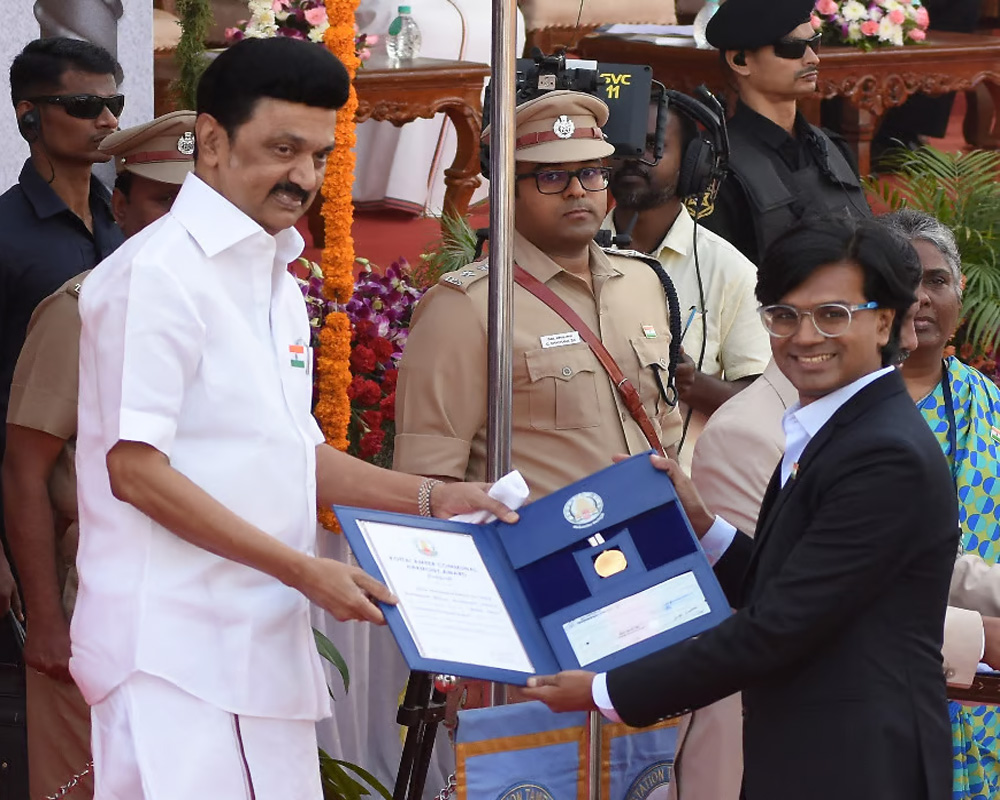
TN chief minister M.K. Stalin with Mohammed Zubair at the awarding ceremony. Photo: Video screengrab.

The government noted that his “work helps prevent the occurrence of violence in society likely to be caused by fake news.” 

New Delhi: 

Fact-checker and journalist Mohammed Zubair is the recipient of the 2024 Kottai Ameer Communal Harmony Award given by the Tamil Nadu government.

The citation notes that Zubair has been “rendering various services to promote communal harmony.”

It observes that in creating the website Alt News – which he co-founded with Pratik Sinha – Zubair has set up an instrument to analyse the “veracity of the news coming out on social media,” giving primacy to real news.

The government noted that his “work helps prevent the occurrence of violence in society likely to be caused by fake news.”

The citation especially says that in March 2023, when there was a rapid spread on social media of the disinformation that migrant workers were being attacked in Tamil Nadu, Alt News‘s verification of the authenticity of the video was instrumental in proving that the footage was not from Tamil Nadu at all.

It “stopped the spread of rumours against Tamil Nadu and acted to prevent violence caused by caste, religion, race and language in Tamil Nadu,” the government said.

In 2022, Zubair was arrested by the Delhi police for a 2018 tweet in which he shared a screenshot from a 1983 Hindi movie. Six cases were slapped on him during the period of his incarceration until the Supreme Court gave him bail.

Zubair is often attacked online by Hindutva commentators for fact-checking viral claims and disinformation.

source: http://www.thewire.in / The Wire / Home> Media> Government / by The Wire Staff / January 26th, 2024

Adv. Raees Ahmed, Others Honoured with Watan Ke Ratan Award 2024

NEW DELHI:

Ashfaq, Bismil wanted discrimination-free democratic country: Qamar Agha

New Delhi :

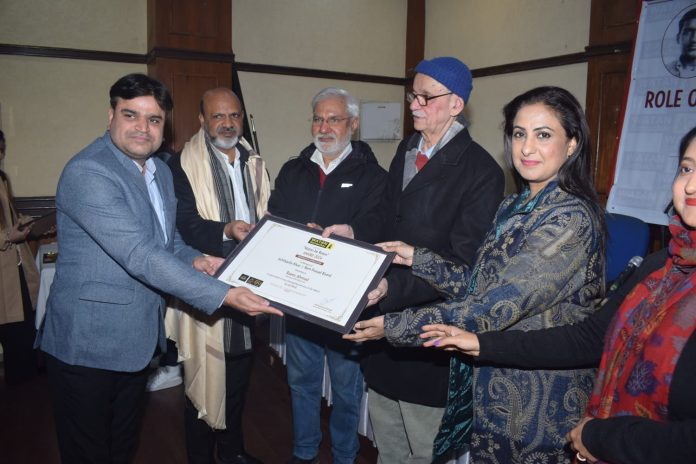
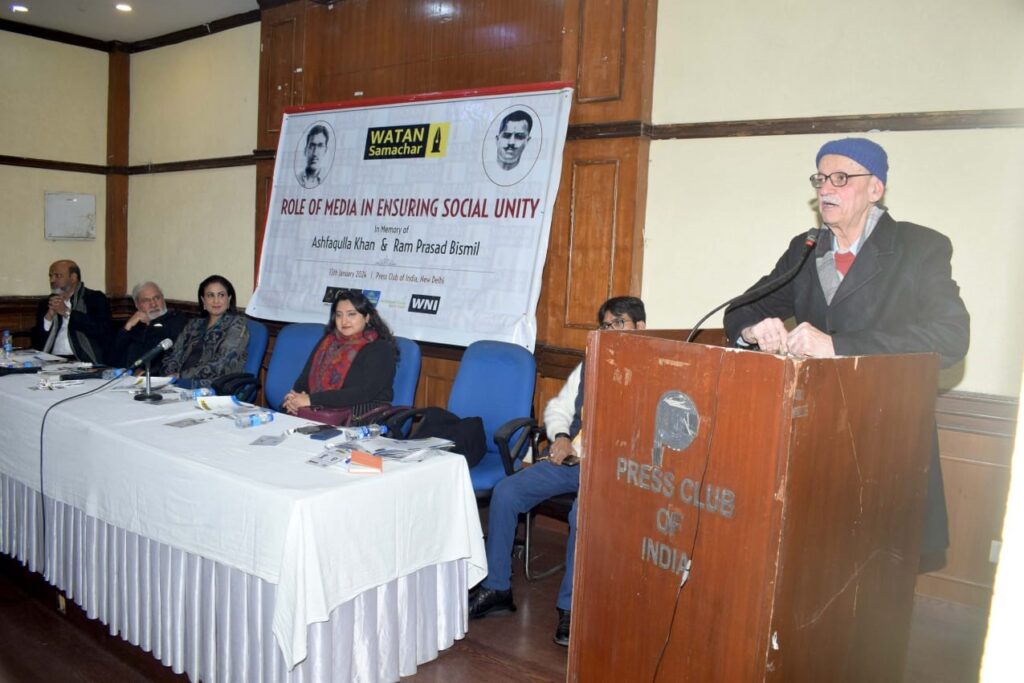
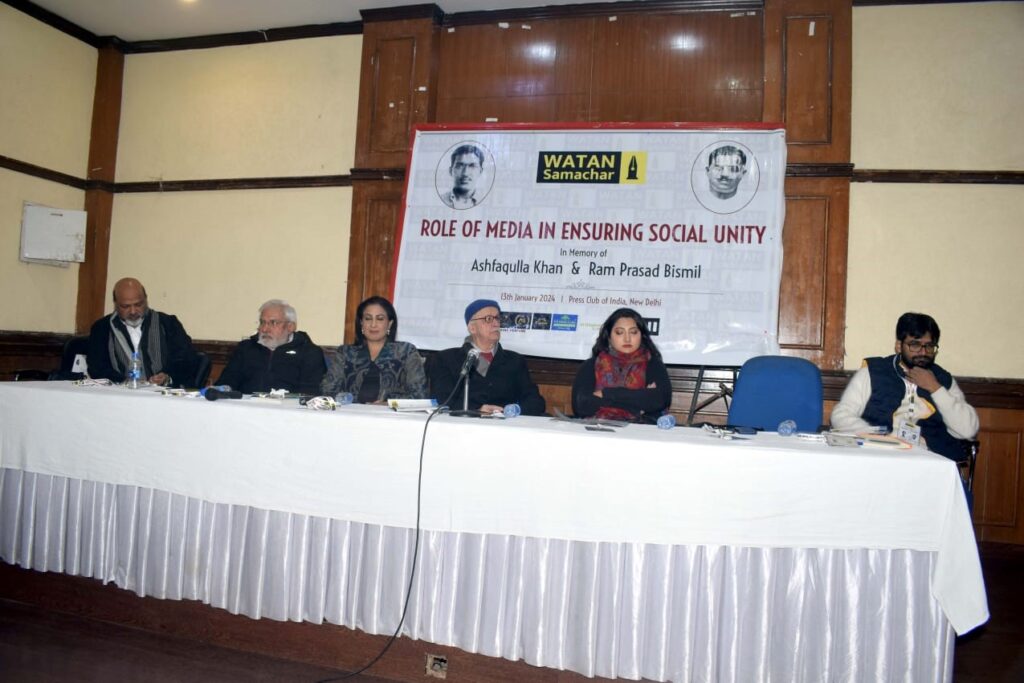
WNI Media Group organized a conference on Role of Media in Ensuring Social Unity in the memory of great freedom fighters Shaheed Ashfaqullah Khan and Ram Prasad Bismil at the Press Club of India here. A large number of dignitaries as well as renowned journalists, social workers and lawyers participated in the conference.

Senior journalists Rahul Dev, Qamar Agha, TV9 Bharatvarsh anchor Sumera Khan, India Today journalist Milan Sharma jointly honored Delhi Minority Commission Advisory Committee former member and Advocate Raees Ahmed with the ‘Watan Ke Ratan’ Award for 2024 for his social and legal services.

Qamar Agha said Ashfaq and Bismil wanted a non-partisan and democratic country. Journalist Rahul Dev said given the current situation that the disease will have to be talked about only then treatment will be possible.

Milan Sharma said hatred spread in the society will be cured through joint efforts. While, Sumera Khan termed the efforts of the Forum as a commendable step.

Advocate Raees Ahmed said that it is important to maintain our mutual brotherhood and unity strongly. We should try to remove misunderstandings and dispute, for which we need to take the help of mutual dialogue, only then society will be free from hatred.

Senior journalist Mohammad Ahmed convened the program.

Professor Farhat Basir, Dr. Zubaidur Rahman alias Babban Mian, Jamal Ahmed Alig, Firoz Ghazi, Neha Garg, Muhammad Akbar, Syed Muhammad Mujahid Hussain, Muhammad Ramish, Asad Sabri, Advocate Anwar Hussain Saifi, Mirza Anwarulhaq Baig, Hunaiza Khan, Jyoti Yadav, Dr. Syed Muhammad Asdar Ali, Shahid Ansari, Vipul, Muhammad Ali, Arshita, Asrar Ahmed, Iqrar Ahmed, Bhavana Yadav, Vakil Aslam (Supreme Court), Haji Zahoor Ataichi Wale, Nisar Ahmed, Nawab Akhtar, Shahnawaz Badar Qasmi, Dawood Bhai Shaikh, Shadab Ahmed Patrika, Aqeel Salmani, Archana Gaod and others were also honored with the Watan Ke Ratna Award- 2024.

Aslam Ahmed Advocate of Supreme Court on record extended vote of thanks.

source: http://www.radiancenews.com / Radiance News / Home> Pride of the Nation> Awards / by Radiance News Bureau / by Shakilur Rahman / January 15th, 2024