Meanwhile, BJP is deliberating upon the reasons for the failure of operation lotus in Bihar and the future course of action in the changed situation there
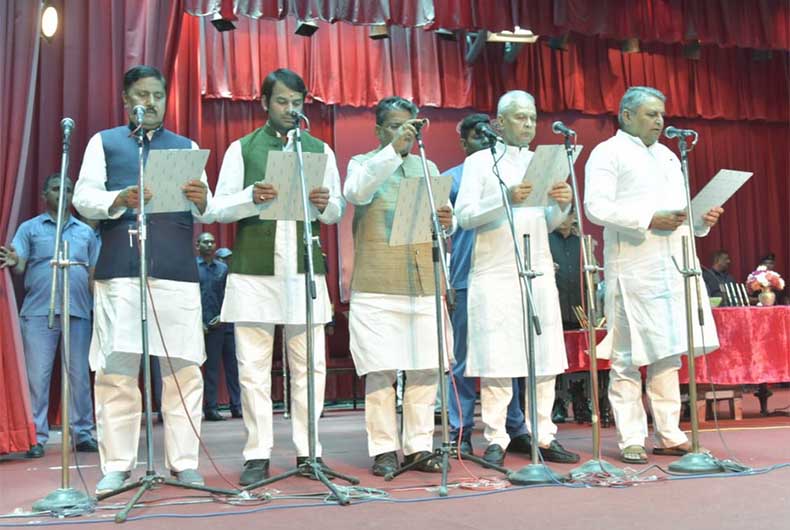
Bihar Chief Minister Nitish Kumar after the expansion of his cabinet has made public that there will be 5 Muslim ministers in his cabinet of 31 Ministers that took oath on August 16, 2022.
The JD-U broke away from the BJP and was successful to retain power in the newly formed government with the RJD and other allies. The JDU gave only one ministerial berth to its member from the minority community from its quota. Jama Khan was made Minister of Minority Affairs.
In Contrast, the RJD gave three Ministerial berths to the minority community from its quota. Shamim Ahmed made sugarcane minister, Shahnawaz Alam got disaster management, and Mohammad Israil Mansoori got information technology.
Congress, the alliance partner of the JDU-RJD combined government has given only one ministerial berth to a member of the minority community. Afaq Alam has become the animal husbandry and fisheries minister of Bihar.
If we compare 2022 with 2020 when the JDU aligned with the BJP to form the government in Bihar, there was not a single Muslim Minister in Nitish Kumar’s cabinet. Even the Minority Affairs Ministry was held by Ashok Chaudhary, a close confide of the Bihar CM. This was worse than in Uttar Pradesh where the lone BJP Muslim MLA was made Minister of Minority Affairs.
In the cabinet expansion, the Rashtriya Janata Dal (RJD) got 16 ministerial berths. The Janata Dal-United (JDU) got 11, the Congress got 2 ministerial berths. Jitin Ram Manjhi’s Hindustani Awam Morcha and an Independent MLA Sumit Kumar Singh also found a place in the new cabinet.
It is learned from the sources that 5 ministerial berths are kept reserved for future expansion of the Bihar cabinet that can have up to 36 ministers, including the Chief Minister.
The Grand Alliance in Bihar has a strength of 163. Now it has climbed to 164 after Sumit Kumar Singh an Independent MLA extended his support to the JDU-RJD alliance and got a ministerial berth in the new government. The RJD- JDU government in Bihar is likely to prove a majority in the Assembly on August 24.
Earlier Chief Minister Nitish Kumar pulled the rug below the BJP’s feet when the saffron party was set to launch a surgical strike code-named operation lotus. Buoyed by the success of its operation in Maharashtra last month with his man Friday Eknath Shinde the BJP propped up RCP Singh the former Union minister who was to plot a coup by taking JDU MLAs to some safe haven in the BJP-ruled state.
However, before he could make any moves, the Chanakya of Magadha got the wind of the ‘Gujarati trap.’ He first exposed RCP Singh’s ill-gotten wealth and sought his explanation. This made BJP’s ‘Mohra’ resign from the primary membership of JD(U). This happened on August 7.
Even before the BJP could launch a strike on Nitish Kumar with the help of RCP Singh, the Vikas Prush of Bihar parted his ways with the BJP. He hems a new alliance with the RJD and other political parties and took oath on August 10 with RJD’s Tejashwi Yadav as his deputy. This is how Nitish Kumar becomes the Chief Minister of Bihar for the seventh time.
The BJP got the taste of its own medicine in Bihar. Now the BJP top brass is holding meetings with the party’s leaders in Bihar. The saffron party is to deliberate upon the reasons for the failure of operation lotus in Bihar and the future course of action in the changed situation there.
[Syed Ali Mujtaba is a journalist. He can be contacted at syedalimujtaba2007@gmail.com]
source: http://www.ummid.com / Ummid.com / Home> India / by Syed Ali Mujtaba / August 18th, 2022
Bharova Village (Bhaderwah District) ,JAMMU & KASHMIR:
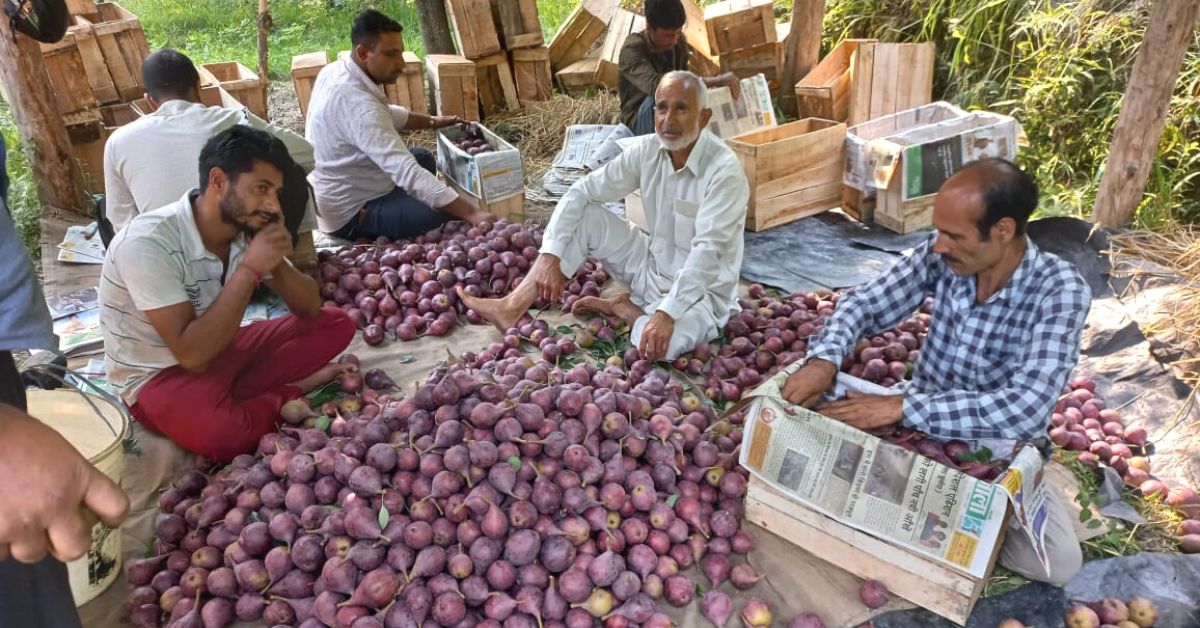
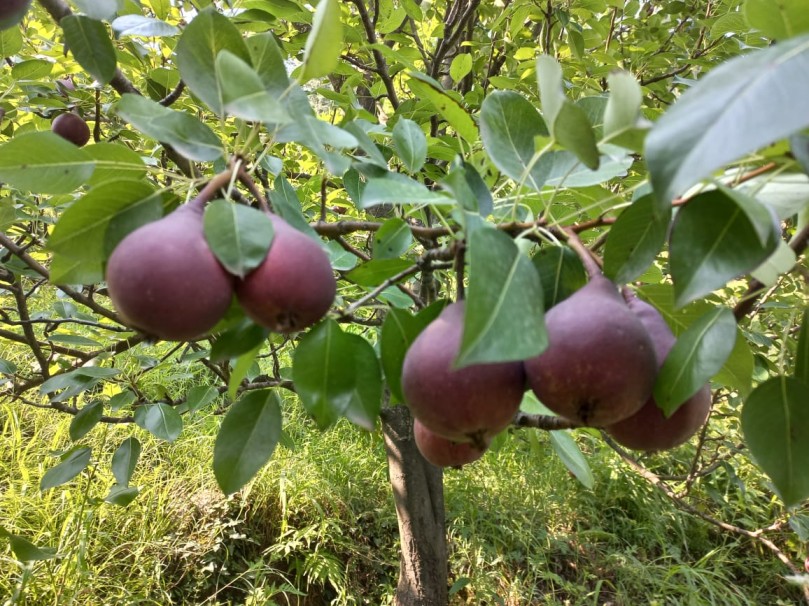
Haji Mohammad Shafi Sheikh from Kashmir quit his job as a contractor in a forest corporation to grow exotic red pears that now fetch him more than Rs 25 lakh a year.
In 1980, Haji Mohammad Shafi Sheikh, a contractor in a forest corporation, was on a routine visit to Kashmir. He was scheduled to meet his younger brother Abdul Rashid Sheikh and cousin Ghulam Nabi, who was pursuing a degree in Engineering at Srinagar’s Engineering College.
The trio decided to explore a few of the tourist destinations. They started their journey with Nishat, a picturesque area of Srinagar, which houses the famed Mughal Garden, home to mighty Chinars.
A road on the outskirts took them to a beautiful garden of green pears, where Shafi and the others spent hours relishing and enquiring about the fruit.
Their interest in the garden grew to the extent that Shafi embarked on a mission to grow a similar orchard in his native village Bharova in Bhaderwah.
Bharova was still oblivious to the existence of these fruits, given its topography and the fact that locals only cultivated maize and fodder to feed their animals.
“The entire area of Bahrova is hilly and maize was the only crop being grown by farmers because of the drought-prone conditions. People were not financially stable due to which they couldn’t explore other options over maize to earn a livelihood,” Shafi says.
In the same year, he took a few saplings of pears and walnuts home and sowed them adjacent to his house to track their growth.
“Surprisingly, plants grew normally and within a few years started bearing fruits. It was very much encouraging for me and my interest grew to sow more plants to give an idea to the people about the scope of horticulture in my area,” Shafi says.
The 74-year-old now annually harvests 3,000 boxes of exotic red pears enough to fetch him more than Rs 25 lakh. “The maize which I grew in my fields would fetch me only Rs 4,000 per annum. Often we suffered crop failures and farmers were becoming poorer. But now, farmers of my area are financially stable,” he says.
Apart from pears and apples, Shafi also harvests 15-20 quintals of walnuts annually.
Horticulture Sheikh of Bhaderwah
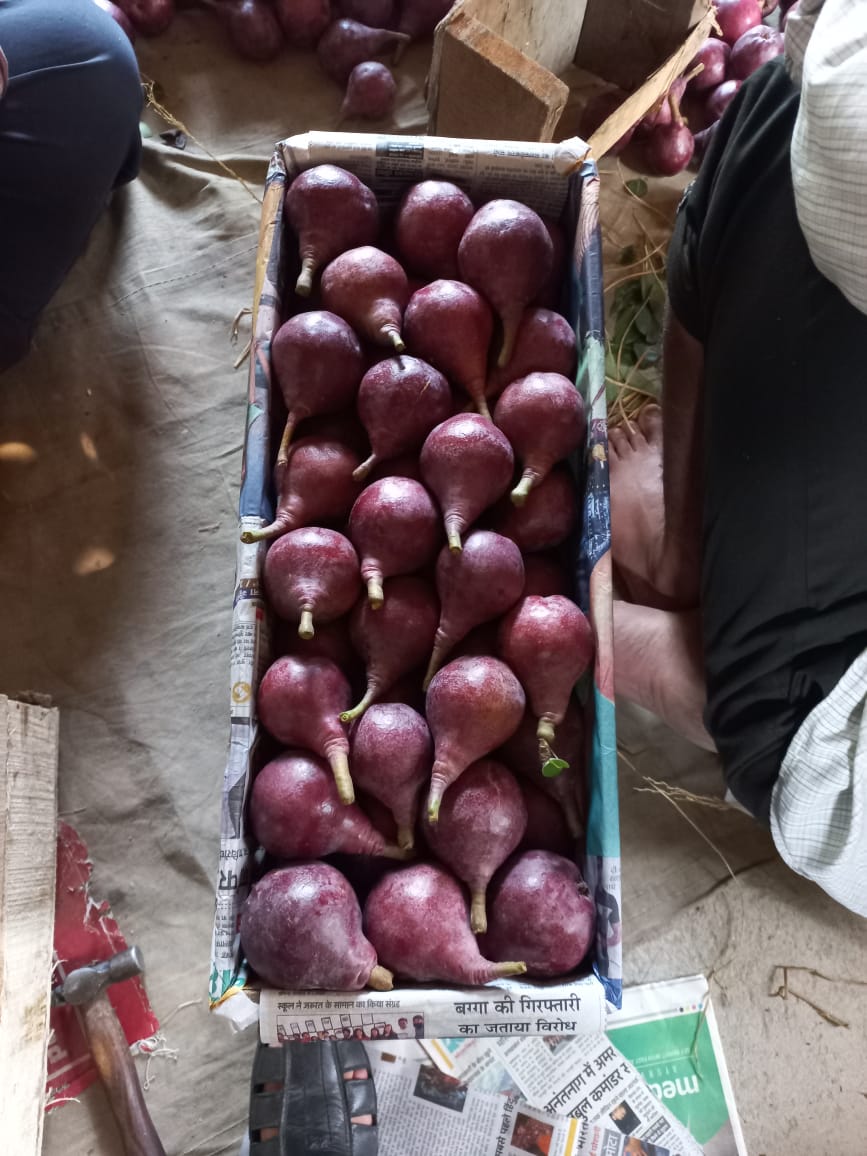
Exotic red pears grown by Shafi Sheikh
The journey of growing pears on land which was confined to just fodder and maize a few decades before was not easy for Shafi. It was indeed a work of patience and determination for him, who would take the help of experts to have disease-free produce.
“In 1993 when I saw my pears growing, I left my job immediately and devoted my entire time to horticulture. I always had a hope that my efforts will change the fate of the people of my village,” he says.
After reaping benefits from his efforts, Shafi finally decided to completely abandon the custom of growing maize in 2002 and shifted to horticulture, despite opposition from his neighbours and family. “It was a very difficult decision for me and people would often question me for giving up maize cultivation. The initial years were full of hardships as plants needed years to bear fruits,” he says.
Growing native pears and walnuts didn’t satisfy his appetite and Shafi finally sought help from Sher-i- Kashmir University of Agriculture Science and Technology Jammu to grow exotic red pears, which he only had heard about till then.
“Seeing my commitment and desire to expand my orchard scientifically during a routine visit by a team of scientists from Krishi Vigyan Kendra, one of the scientists, Dr Vikas Tandon, who is a professor at SKUAST Jammu handed me a few Italian pear seedlings, which was a significant turning point in my path,” he says.
After successfully growing red pears, he grafted green pears plants with red pear fruits to grow high-quality fruits in his orchard. “Now I have some 250 red pear trees and apart from them, I grow green pears, apples and other variety of fruits. For research, I visited Himachal Pradesh and other states to learn technicalities growing exotic fruits in my orchard,” he says.
He is hoping his production increases in the coming years as scores of his plants are ready to bear fruits. “I keep on experimenting with my orchards. From spraying quality pesticides to timely de-weeding, my production will increase in coming years,” he says.
A ray of hope for Bhaderwah farmers
Seeing Shafi’s hard work bearing fruits, his younger brother Abdul Rashid too has shifted to horticulture and has over 2,500 trees of pears in his orchards. His cousin Ghulam Nabi too followed his path and grew pears on his land to get better returns.
“I feel happy that my village is gradually progressing. I can now see a lot of growers, who are dedicated to growing pears and other fruits in our village,” he says.
Not just Bharova, adjacent villages like Khalo and Shanatra too are gaining recognition for growing exotic Italian red pears. These three villages grow nearly 1.5 metric tonnes of red pears annually.
Many farmers are getting inspired by his efforts and taking of horticulture in the hilly district of Bhaderwah. “Our district was only known for its breathtaking landscape a few decades before. Now, with the efforts of Shafi Sahab, we are growing quality exotic pears, which are very unique and have a huge demand in the market,” says Abdul Sattar, a framer.
Today, 165 households from the villages of Bharova, Khalo, and Shanatra have shifted to cultivating fruits, particularly Italian pears, taking their cue from Shafi.
Horticulture, an employment generator
Haji Mohammad Shafi Sheikh now helps other farmers in the region with practising horticulture.
Ever since Shafi took this initiative, the fate of the village has changed. Horticulture has been the employment provider to the village as more youth associate themselves with the growing pears.
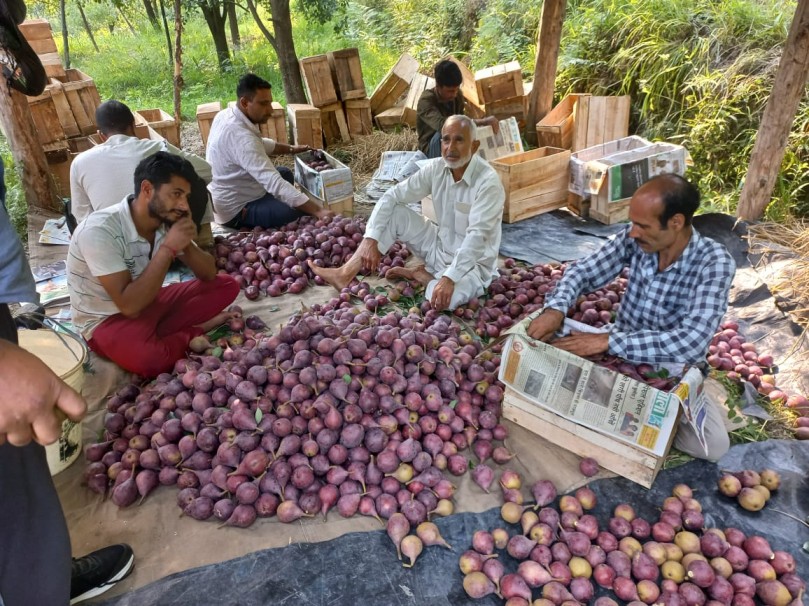
During the season he employs almost 25 people in his orchards, who look after spraying, pruning and harvesting of pears. “Initially I had four boys who would look after my orchards. Now almost 25 boys remain associated with me during harvest season,” he says.
Fifty-year-old Krishan Lal, a resident of village Khalu in Bahderwah has been working for over 15 years with Shafi as a packer. He has been earning a decent livelihood and says, “I was working as a farmer before and my earnings were not enough. Now I earn some Rs 30,000 during the season at Shafi sahab’s garden.”
Shashi, a 35-year-old man too has been associated with the trade of red pears. “Horticulture has a great scope in Bhaderwah and scores of the youth are getting employed in this sector,” he says.
Edited by Yoshita Rao
source: http://www.thebetterindia.com / The Better India / Home> English> Agriculture / by Firdous Hassan / August 10th, 2022
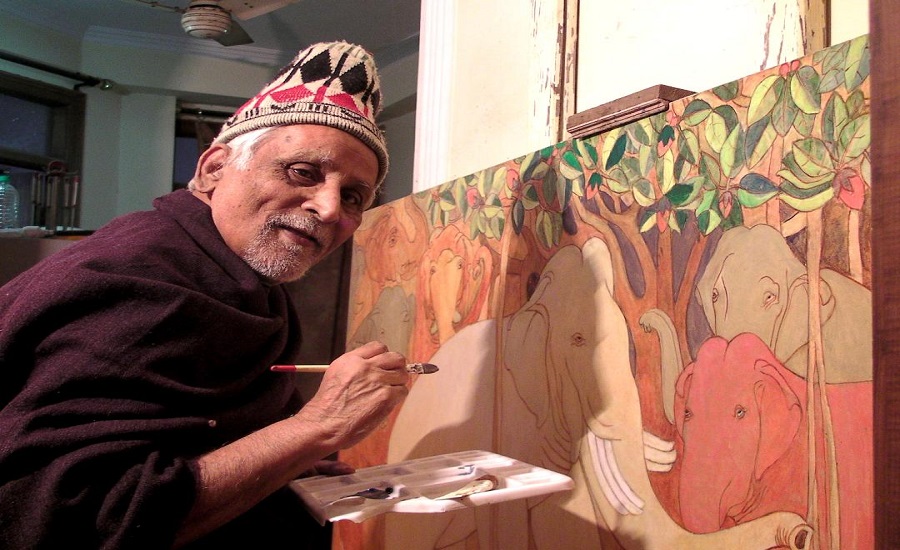
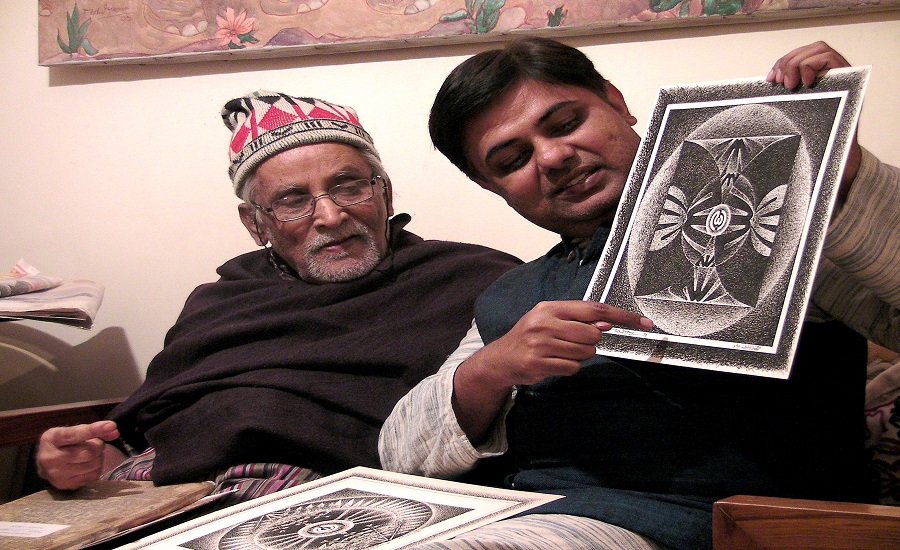
Mohammed Yasin, veteran painter and one of the best calligraphers in the subcontinent.
OBITUARY
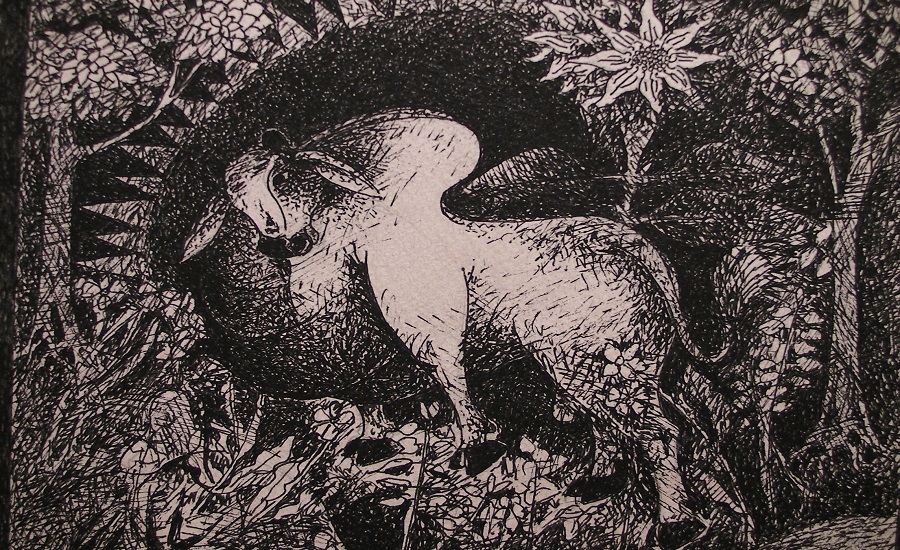
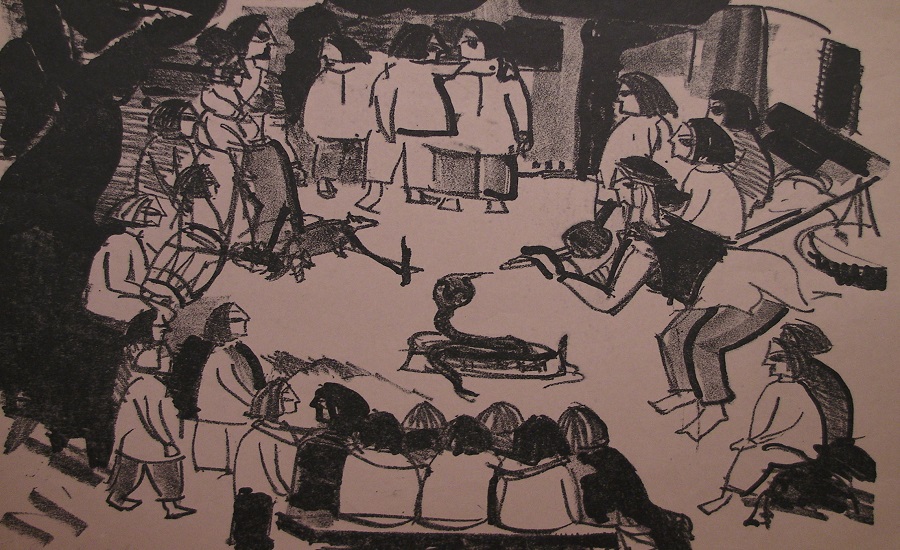
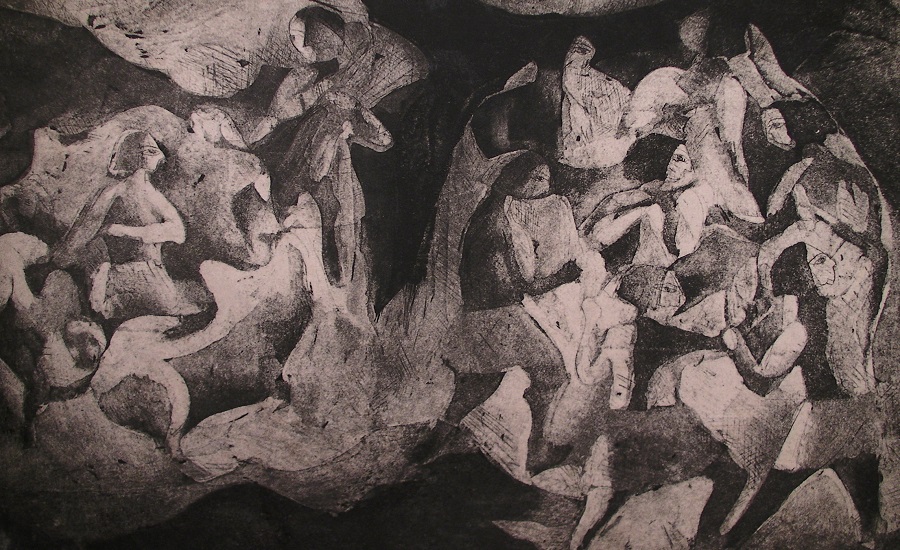
Yasin’s early works have explored all available mediums from lithography, etching, aquatint, engraving, dry point, serigraphy, mezzotint water colours, oils, gouache and egg tempera.
“85-year-old veteran artist Mohammed Yasin’s character impresses as a person and his characteristics as an artist. Perhaps the distinction is unreal, for, in his case, it is the same integrity that reveals itself in the structure of life and in self-expression through art.”
These were the words said a few years ago by a noted art critic for Mohammed Yasin, veteran painter and one of the best calligraphers in the subcontinent, who passed away on August 19.
Yasin was born in Mogalgidda, a village near Shadnagar, 30 km from Hyderabad. As a young school boy, he felt an aptitude for Art when he was just 14 years old. After passing his elementary and intermediate drawing examinations, he moved to Hyderabad city with his family members from his birthplace Mogalgidda.
Showcasing art work.
Though quiet in his demeanour, Yasin has had seriously tragic experiences. His father passed away when he was only 14 months old. He was brought up under his mother’s care and guidance. He had to grow up with many hardships. While as a boy, he was affected by tuberculosis of the spine which has left a limp which necessitates the use of a stick to aid in walking. But through a sustained musing, he has won an inner serenity.
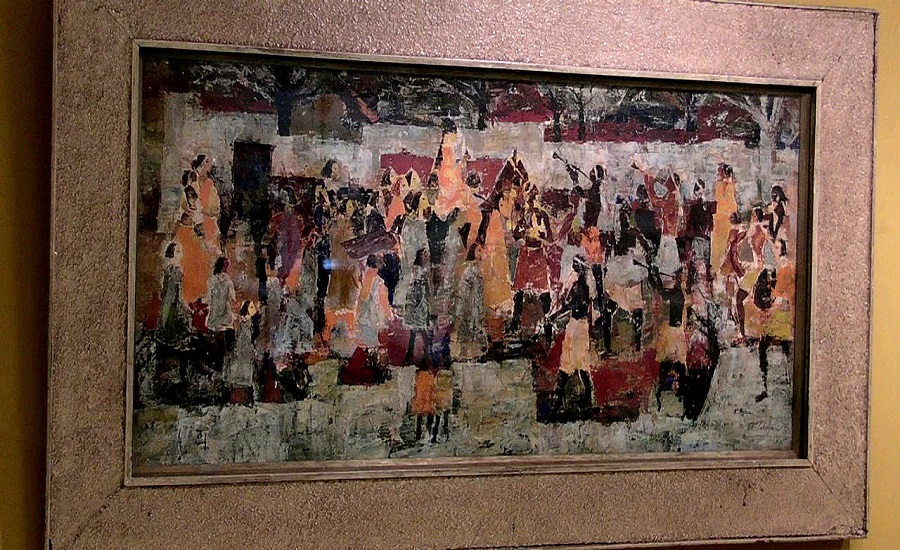
Art works displayed in an art gallery
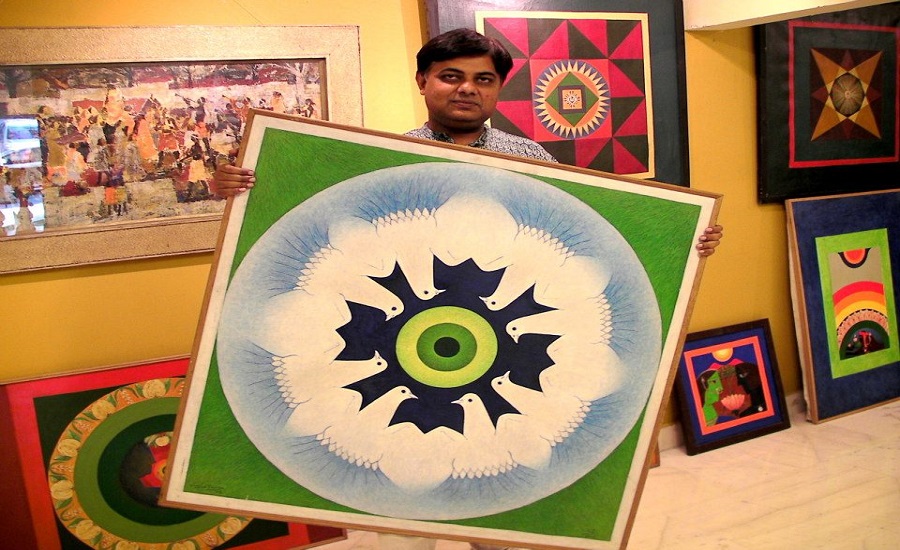
His most important contribution goes to the art of calligraphy. He chose to work in an abstract symbolic manner. Geometrical elements like the circle within the square, concentric circles, etc. comprise the basic structure emphasizing a symmetrical arrangement and abstract formal values–calm and quiet but they are, nevertheless, active fields. They seem to be deeply influenced by the Buddhist art. They generate impulses of colour and focus attention on the symbolic images they contain.
The use of circle, square, triangle adds to his innovation a transparency, a water colour. The orthodox prohibition of representational figuration in art made the Islamic tradition turn to calligraphy. Yasin has brought to this tradition a modernist love of abstraction and monumental geometricism.
His early works have explored all available mediums from lithography, etching, aquatint, engraving, dry point, serigraphy, mezzotint water colours, oils, gouache and egg tempera.
His works are very poetic and also dramatic; actually they are calligraphic in nature. Tantric symbolism, Sufi mysticism, echoes of the miniature schools, shades of thankas and pictorialised Arabic Calligraphy are all inspirations which could be identified in Yasin’s work.
Aseem Asha Usman is founding director of Aseem ASHA Foundation, and has been documenting the life and works of the veteran calligrapher and painter.
source: http://www.clarionindia.net / Clarion India / Home / by Aseem Asha Usman / August 20th, 2020
Ingentas is teaching people everything from basic batteries, jumper wires, buzzers, and sensors to the robotic arm, NASA’s Mars rover, and A.I.-driven drones.
Hyderabad:
Realizing that any type of access to learning robotics and artificial intelligence is not available to most people, Ingentas started off in 2021 with its vision to empower local communities by teaching them technologies that will be more relevant in the future. It’s a first-of-its-kind workshop in Hyderabad, completely run by engineering graduates and students that aims to make the city a hub of robotics.
Tahami Mundewadi, who has been in the field of robotics for the last four years is the founder and CEO of Ingentas. Speaking to Siasat.com, he said that joining the Robotics club at Muffakham Jah College of Engineering (MJCET) helped him learn and grow more in the pursuit of his passion.
“Everything from a vacuum cleaner to the robotic arm used to build cars, all are based on robotics and artificial intelligence, we are living in an interesting time where even surgeries are being performed by robots,” Mundewadi remarked.
He further added that the world is moving at a very fast pace in this direction and that we have to be in this race and compete with the others.w
Ingentas is teaching people everything from basic batteries, jumper wires, buzzers, and sensors to the robotic arm, NASA’s Mars rover, and A.I.-driven drones.
Mundewadi stated, “you don’t necessarily have to be an engineering student to learn robotics, anything with passion can come.”
Furthermore, the CEO of Ingentas added that he believes that in 50 years everything will be based on robotics. “And to make anything mainstream in society we have to begin from the school level and that’s why we have classes from third-grade level all the way to advanced post-graduate level,” he remarked.
source: http://www.siasat.com / The Siasat Daily / Home> News> Hyderabad / by Usama Hazari / August 06th, 2022
Salima Tete’s goal gave India the lead and they led 1-0 at halftime, paving the way for an entertaining second half.
Birmingham:
The Indian women’s hockey team beat defending champions New Zealand 2-1 in a shootout to win the bronze medal and finish its campaign at the Commonwealth Games on a high note here on Sunday.
Leading 1-0, India conceded a penalty corner with less than 30 seconds to go for the final hooter, as the match went into a shootout after Olivia Merry’s equaliser.
India though held their nerves in the shootout to emerge winners.
Coming off their heartbreaking loss to Australia in a controversial semifinal, India showed the intent to wrap up their campaign with a win and earn a podium finish.
Salima Tete’s goal gave the Indian women’s hockey team the lead and they led 1-0 at halftime, paving the way for an entertaining second half.
Neha Goyal almost doubled the lead after the break, but good defending by New Zealand prevented the Indians from consolidating their position.
New Zealand has had to do a lot of defending and they’ve done quite well to remain disciplined until that Tete’s goal.
source: http://www.eastmojo.com / East Mojo / Home> News / by Press Trust of India / August 07th, 2022
Mairaj Ahmad Khan wins a spectacular gold from nowhere in the Digvijay Singh shotgun championship in Delhi on Sunday. | Photo Credit: Kamesh Srinivasan
New Delhi:
Darshna Rathore had a chance to fight for gold but missed the last two birds and thus had to settle for the bronze.
Olympian and World Cup gold medallist Mairaj Ahmad Khan asserted his class yet again as he accelerated to a smart finish in grabbing the skeet gold in the Digvijay Singh shotgun championship at the Dr. Karni Singh Range, Tughlakabad, on Sunday.
The 46-year-old Mairaj beat Arjun Thakur 35-30 for the gold, as he missed only one bird in the medal round. He had qualified on top in the semifinal with 27 hits, after having made the final with a modest score of 115, six point behind qualification topper Gurjoat Khangura.
‘’Final and semifinal are great. I am going to work only on qualification for the next three months’’, said Mairaj, understandably happy about the way he had competed despite not being at his best.
It was a similar case during the last World Cup in Changwon, when Mairaj had to win a shoot off with four others after being tied on 119 for the last two berths, before racing to the gold.
Anantjeet Singh Naruka who had shot 120 in qualification lost the shoot off against Amrinder Singh Cheema for a berth in the medal round.
Raiza Dhillon won both the women’s and junior skeet gold medals. | Photo Credit: Kamesh Srinivasan
It was Raiza Dhillon all the way as she won both the women’s and junior gold. Raiza beat qualification topper Ganemat Sekhon 36-35 for the women’s gold, and beat Parinaaz Dhaliwal 33-32 for the junior gold.
Darshna Rathore had a chance to fight for gold but missed the last two birds and thus had to settle for the bronze.
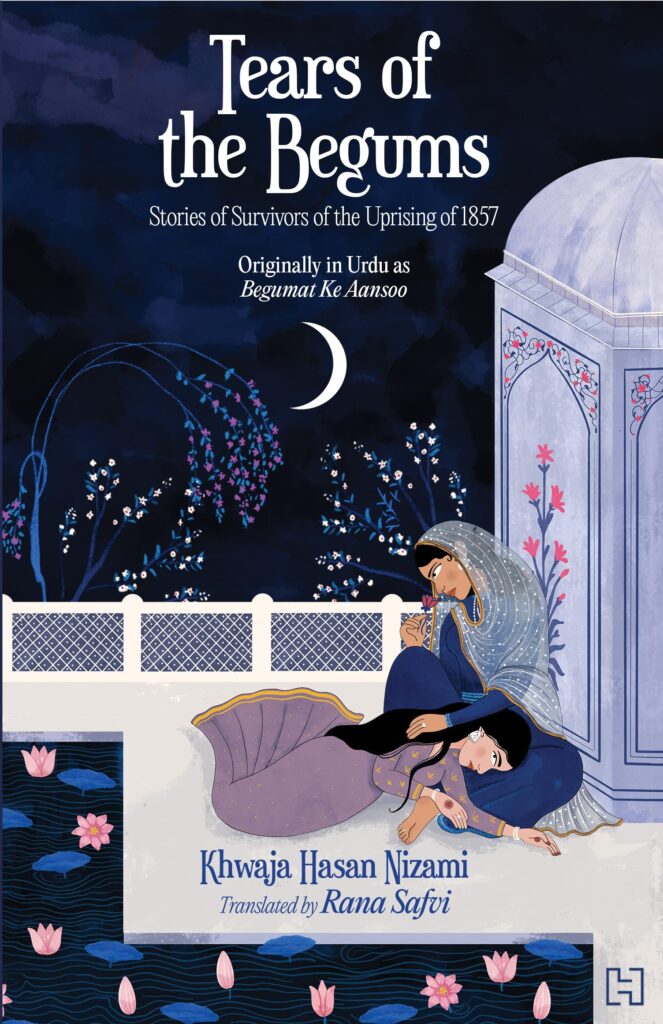
New Book , First ever English translation of Nizami’s invaluable Urdu book Begumat ke Aansoo
pix: amazon.in
Apart from the fifteen years that Sher Shah Suri snatched upon defeating Humayun, the flag of the grand Mughal Empire flew over Delhi undefeated for over 300 years.
But then, 1857 arrived and the mighty sword fell helpless in the face of a mightier British force.
After the fall of Delhi and Emperor Bahadur Shah Zafar’s tragic departure from the Red Fort in 1857, members of the royal Mughal court had to flee to safer places. Driven out from their palaces and palanquins onto the streets in search of food and shelter, the dethroned royals scrambled to survive. Some bore their fate with a bitter pride, others succumbed to the adversity.
Through twenty-nine accounts of the survivors of the Uprising of 1857, Khwaja Hasan Nizami documents the devastating tale of the erstwhile glorious royalty’s struggle with the hardships thrust upon them by a ruthless new enemy.
In vivid and tragic stories drawn from the recollection of true events, Nizami paints a picture of a crumbling historical era and another charging forward to take its place.
With the reminiscence of past glory contrasted against the drudgery of everyday survival, Tears of the Begums – the first ever English translation of Nizami’s invaluable Urdu book Begumat ke Aansoo – chronicles the turning of the wheel of fortune in the aftermath of India’s first war of independence.
source: http://www.amazon.in / Amazon / Home> Books> History> World / as on August 06th, 2022
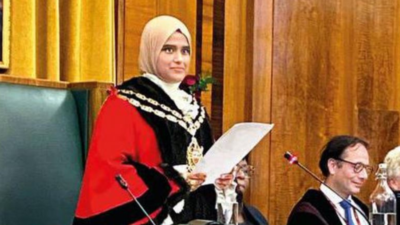
Humaira Garasia, whose family roots are in Valsad, was .elected speaker of London borough of Hackney in May
Surat :
Rishi Sunak might be in news for being the frontrunner for the post of Prime Minister of the UK and he will create history if he is elected for the post of the country that once ruled India.
But Indian origin Humaira Garasia (25) has already created a history by becoming the youngest-ever speaker of council in London Borough of Hackney.
Garasia’s family is originally from Valsad and her father had migrated to the UK at a young age. Garasia was determined to enter active politics when she was 15 and wanted to represent the marginalised population.
She identifies herself as a Gujarati of Indian origin. She studied BA politics from the University of London. Her father Rafik Ahmed, a warehouse worker, is from Nana Taiwad in Valsad while her mother Najma, a housewife, is from Bharuch.
“I am the youngest-ever speaker/civic mayor of Indian origin in the whole of the UK and the youngest speaker to have ever been elected for the London Borough of Hackney,” says Garasia.
“I was elected at the age of 21 as a councillor in 2018 and completed a four-year term. I was the youngest person of Indian origin to be elected as a councillor then. I was successfully re-elected as a councillor in May 2022,” she added.
She said: “I will be working with leaders, residents and communities from across the borough to address issues of inequalities, while also helping to tackle long-term issues such as racism and discrimination. I will focus on providing support to the most vulnerable members of society and helping young people to feel both empowered and safe.”
Born and brought up in London, Garasia’s parents migrated around 35 years ago. Garasia visits Valsad every year with her family.
source: http://www.timesofindia.com / The Times of India / Home> News> City News / by Yagnesh Bharat Mehta / July 23rd, 2022
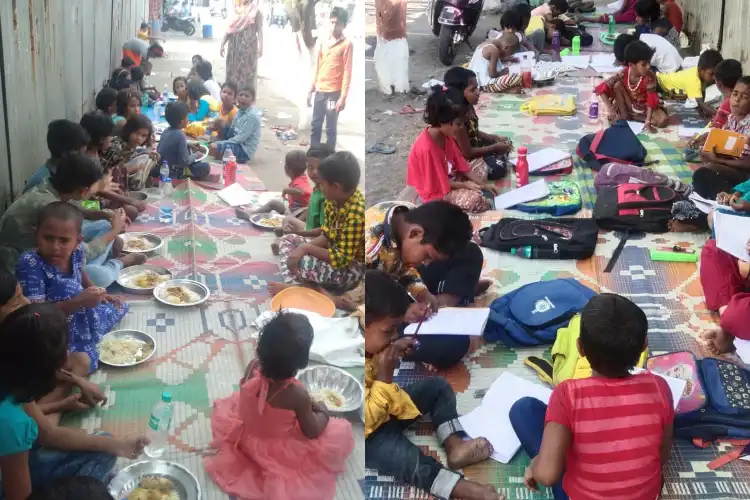
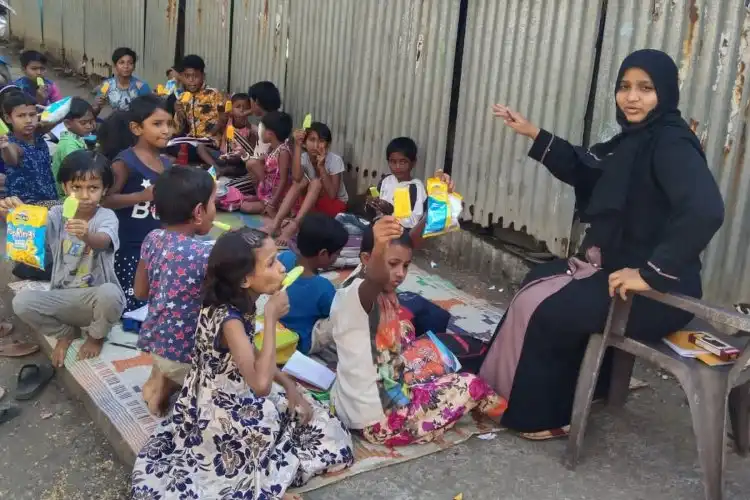
A few mats and a blackboard make a school on a city lane for 50 kids. This footpath of V Power Gym Street in the Kanakia area of Mira Road in Mumbai attracts the attention of the passers-by but the children remain engrossed in studying and oblivious of the world passing by.
The noise of passing traffic and pedestrians does not affect the privacy of students – mostly children of construction labourers and other daily wage earners – for their minds are focused on what their Yasmeen Madam says.
Yasmin Parvez Khan, a homemaker whose husband is a manager in a global software company, has been trying to provide basic education to children in this makeshift roadside school. She has been setting it up from 3 to 5 pm every day for the past ten years.
She is a volunteer who wants to change the lives of children who can’t afford a regular school for various reasons; she neither runs an NGO nor is affiliated with any government agency.
Gallery of images from Yasmeem’s school
Yasmeen says: “One day I thought of doing something for these poor children. After much deliberation, I realized that no amount of monetary or material help will be of much use to them while education has the potential to change their lives and also impact the future of their families. With this idea, I started teaching two kids and today I have 50 of them.”
Yasmeen’s school is for slum children where they receive basic education and then for formal education, Yasmin Madam takes the children for admission to regular schools. This way Yasmeen plays an important role in initiating these underprivileged children into regular education by invoking their interests in studies and knowledge. “It takes time to get children from very poor families interested in education and getting their parents to understand the importance of education is no less than a harder task.”
Yasmeen says she doesn’t charge a fee but children need many things like notebooks, pencils, books, colours, bags, etc. She has an innovative idea for getting these needs of children fulfilled. Pointing to her blackboard, she says, “Whenever I need something for children, write it on the board and you will be surprised that within a short time, someone delivers it.”
To date, children have never had to wait more than half an hour to get their basic things for studies. She smiles and says that she feels happy to cook for children each Thursday and feed them. After seeing this, many passersby and neighbours have started bringing food and gifts for the children. This makes children very happy and adds to their enthusiasm.
Children enjoying meals cooked by Yasmeen Khan on a Thursday
Yasmeen Madam’s teaching sidewalk has neither walls nor roof, but education is complete. The first child who got his primary education from this footpath and reached school today has reached the 11th standard.
People are often inquisitive about Yasmin Parvez Khan, who wears a Burqa. People stop for a moment when they see a veiled woman teaching children on the sidewalk.
Yasmeen says that initially, even her family was not happy with her decision. “When I explained my point that she has to go to them and teach, they understood.”
She says: “Today, my family including my mother-in-law, father-in-law, husband, and my children support me.” Yasmeen Parvez Khan’s husband is a project manager at Wipro Company.
These days Yasmeen’s school is on Monsoon break. She is looking forward to the end of the monsoon and the resumption of her school.
source: http://www.awazthevoice.in / Awaz, The Voice / Home> India / by Shantaj Khan, Pune / July 26th, 2022
In the darkest hour of partition, when the whole of East Punjab was engulfed in a frenzy of communal violence, the town remained calm. And has stayed that way ever since.
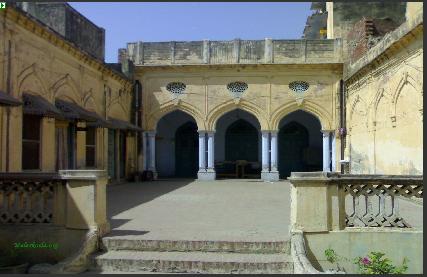
Idgah, Malerkotla: a remembered history of co-existence. Credit: Mohd. Imran, GNU license
Ten years ago, my wife Amarinder and I moved to Bathinda, her home town, to manage a rural school started by her family. For me, a Tamil speaking person originally from Bangalore, it marked a sea change of place and culture. As I gradually acquainted myself with the new rhythms of everyday life in present-day Punjab, I came across sights such as abandoned monuments and ruins battling undergrowth and living Sufi dargahs (shrines) that spoke of the past in an intriguing manner.
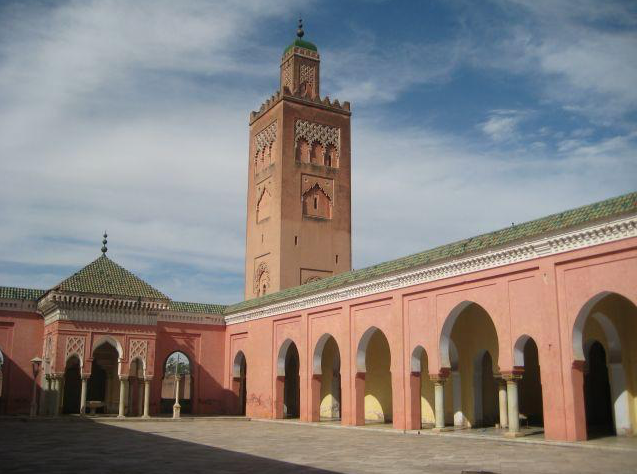
It was the shrines that first caught my attention. During my travels in Punjab, I noticed Sufi shrines frequented by people from all communities, the famous Haji Ratan Dargah in Bathinda being one such example. If asked about any dargah dotting the local landscape, people would refer to its past and say that the Muslims who had looked after it originally had all left. In Bathinda itself, of the two schools that were well known before partition – the Khalsa School and Islamia School – the latter no longer exists, for the city has a minuscule Muslim population. In the erstwhile princely state of Kapurthala, the regal Moorish Mosque built in 1930 by Jagatjit Singh for his Muslim subjects – 60 % of the population then – is mostly deserted except for the odd tourist.
The overall demographic of Punjab in the pre- and post-partition period is revealing: Muslims comprise 1.9% of Punjab’s population today in contrast to 51% in undivided Punjab. The Muslim families that one came across in several villages of rural Punjab weren’t usually locals but migrants from Uttar Pradesh or Bihar. My curiosity about Punjabi Muslims remained unabated.
The inner courtyard of the Moorish Mosque, Kapurthala. Credit: Wikimapia
It was during a discussion with my wife’s late grandfather that I first heard the name of Malerkotla – Punjab’s only ‘Muslim pocket’ as he put it, located in Sangrur District. A princely state before Independence, in fact the only Muslim ruled state in erstwhile East Punjab, it was now the sole Muslim majority city in Punjab, he said. And then he told me something that left me stunned: In the darkest hour of partition, when the whole of East Punjab, including the princely states of Nabha, Jind and Patiala, was engulfed in a frenzy of communal violence, Malerkotla remained calm. Not just that, it became a life-saving refuge for Muslims on their way to Pakistan. Anybody I spoke to on this topic echoed the same sentiment.
Around that time I happened to watch Ajay Bhardwaj’s Punjabi documentary, Rabba Hun Ki Kariye (Thus Departed Our Neighbours), based on the memories of the partition generation. In the film, a resident of Malerkotla recounts how Muslims were chased by mobs till the borders of the state and no further, as if something stopped them from crossing the line.
What I gleaned from conversations, articles and scholarly writings was that even after independence, during several critical flash points in the history of the state and the nation, such as during the years of militancy in Punjab or the Ramjanambhoomi movement leading to the Babri Masjid demolition, Malerkotla remained committed to the spirit of communal harmony that has been a defining aspect of its history. An aspect all communities choose to remember as part of their local history, folk memory and heritage.
Not that this place has been in an eternally idyllic state. As scholar Anna Bigelow notes in an illuminating paper, the conditions that provide fodder for social conflict and make communities “riot-prone” in South Asia have existed in Malerkotla as well, be it flash points between religious groups or economic and political rivalries between communities. The difference, she emphasises, lies in the proactive intent of “local authorities and residents to make the unique history of the town a symbolically significant resource for community building and pluralism in the present.”
Living in times of increasing intolerance for the notion of pluralism, this aspect struck me as being of immense importance. Among the myriad strands that make up local histories and folk memory, some are positive and create common ground, while others are contentious. That the communities of a particular place should choose to recognise their shared history of mutual cooperation as their biggest strength and work towards resolving conflicts in the interests of mutual co-existence was incredible.
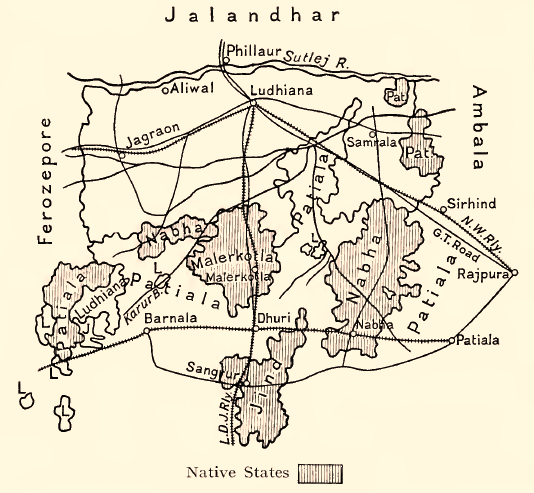
A 1911 map of Ludhiana District showing Malerkotla and the neighbouring princely states. Credit: Government of India
Unravelling the 500 year old skein of Malerkotla, ruled by nawabs of Afghan Pathan descent, was an instructive exercise. In 1454, the Maler settlement was granted to the Sufi saint Shaikh Sadruddin Sadar-i-Jahan, commonly known as Haider Shaikh, by the Lodis who preceded the Mughals in Delhi. The princely state of Malerkotla (the fortress city) came into being in 1657 when Haider Shaikh’s descendant, Bayzid Khan was given the title of nawab by the Mughals.
Thereafter, the fortunes of the tiny princely state kept see-sawing as it went through a series of alignments and realignments in a time of shifting politics common to the region in the 18th century – local kingdoms fought each other repeatedly in different permutations, sometimes on the say-so of more powerful powers, be it the Mughals, Marathas, invaders such as Ahmad Shah Abdali, or Maharaja Ranjit Singh. With the gradual waning of Mughal power after Aurangzeb, the nawabs sought to assert their independence – in the mid-18th century they supported Ahmad Shah Abdali. During the time of Ranjit Singh (1799 – 1839), they allied with the Sikh kingdoms of Nabha, Jind and Patiala to stay out of his grasp, ultimately accepting British protection in 1809. In January 1872, during the Kuka rebellion by the Namdharis, who were opposed to the British, 69 members of the sect, including some women and children, were strapped to a cannon and blown away on the orders of the British Resident. The nawab of the day was still a minor.
As independence brought British rule to an end and partition became a reality, Malerkotla, the sole Muslim ruled state in erstwhile East Punjab, found itself in a vulnerable position. Yet it survived virtually intact.
The most common explanation given by locals and people across Punjab is the role played by Malerkotla’s celebrated ruler, Nawab Sher Mohammad Khan (1672-1712), during a significant period of Sikh history. It was a time when the increasing following commanded by the Sikh gurus posed a serious challenge to Mughal authority. Although the nawab supported the Mughals in their campaigns against the Sikh gurus, he protested the decision of the Mughal governor to brick alive two sons of Guru Gobind Singh who were captured in Sirhind in 1705. In the nawab’s eyes, it was an un-Islamic act to punish the children when the battle was against their father.
Though this nuanced and principled stand fell on deaf ears, Malerkotla came to command a special place in the hearts of Sikhs. In the popular imagination, Guru Gobind Singh’s blessings ensured that the princely state remained virtually untouched by the communal violence that engulfed the neighbouring Sikh kingdoms. The protective power of saints across denominations, including figures such as Haider Shaikh, is also cited as one of the reasons for its good fortune.
Bigelow adds that the enlightened policies pursued by the Nawabs at critical junctures fostered the spirit of harmony and co-existence in the kingdom. For example, when Bayzid Khan established the foundation of Malerkotla, he summoned a Chishti Sufi saint, Shah Fazl, and a Bairagi Hindu saint, Baba Atma Ram, to bless the site, thereby declaring his faith in pluralism.
Nawab Sher Mohammad Institute of Advanced Studies in Urdu, Persian and Arabic, started in 1988. Credit: Abdur Punjabi/Wikimedia Commons, CC BY-SA 3.0
The princely state is a thing of the past, but Malerkotla continues to be in a league of its own even in democratic India (at the time of independence, it had a population of 85,000 in an area of 432 sq km). The fact that it has survived in its present demographic form is an indicator that the spirit of co-existence is still alive: as per the 2011 Census, Muslims, a minority in India and a tiny minority in Punjab, comprise 68% of the city’s population of 1.35 lakh; Hindus, the majority community across India, are placed at 20%, while Sikhs, who comprise the majority in Punjab, are only 10%. The current MLA, Farzana Alam (Akali Dal), has the distinction of being Punjab’s first non-Punjabi state legislator (she is originally from Uttar Pradesh).
Punjab has witnessed communal conflicts between Hindus and Muslims, and Sikhs and Muslims as well as between Hindus and Sikhs in more recent times during the days of militancy. Malerkotla has not been entirely free of flash points arising out of these developments.What sets it apart is that the focus of local authorities and community leaders at all times has been not only to defuse the situation but to approach it in a way as to foster greater solidarity, in keeping with its heritage.
Over a period of time, integrative practices like communal celebration of festivals, visits to each other’s sacred sites and mixed residential localities and joint businesses have helped immensely. Heritage organisations too have done their best to keep alive the memory of the city’s plural traditions. Bigelow cites two examples to illustrate how incidents threatening to upset the peace have been contained: In the aftermath of the Babri Masjid demolition in 1992, some Muslim youths vandalised a Hindu temple and Jain Sabha hall. Local Muslim leaders promptly checked them; some Muslims came forward to pay for the damage, while the Muslim MLA ensured that funds from the state were used for the complete restoration of the damaged buildings. The local Hindus too opted to work with local peace committees. The final message that was sent out was that there was no place for such acts in Malerkotla.
In the other incident, the destruction of the Bamiyan Buddhas by the Taliban in 2000 led to several anti-Muslim actions – in one place the Quran was burnt, at another place pig meat was hurled into a mosque. To protest the Bamiyan Buddhas’ destruction and the local acts against Muslims, the Hindus, Muslims and Sikhs went on a general strike for a day. Says Bigelow, a potentially divisive issue was “transformed into an act of symbolic solidarity against a variety of injustices.”
In the ultimate analysis much of the credit goes to the general population which has proved to be far wiser than it is sometimes perceived to be. The lived reality of Punjab’s sole Muslim-majority city, echoing aspects of a Punjabiyat that once exemplified the region, is a pointer to the fact that pluralism is the strongest weave for a democracy like India, and the strongest antidote to the intolerance of majoritarianism.
Karthik Venkatesh runs a rural school in Bathinda, Punjab
source: http://www.thewire.in / The Wire / Home> Culture / by Karthik Venkatesh / January 16th, 2016




.webp)