Tag Archives: Posiitive News of Muslim Women of India

I had confidence in myself and kept working hard, that is why today I am an IAS…

Chhatabad Village (Dhanbad District), JHARKHAND :

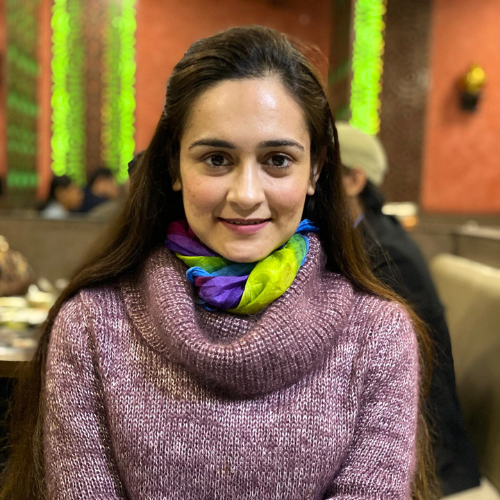
Everything cannot always be in your hands. But working hard to achieve something is definitely in your hands. Rena Jameel also had to work hard, and today she has become an IAS because of her hard work. 

Born in Chhatabad village of Katras area of ​​Dhanbad district of Jharkhand, Rena Jamil has secured 380th rank in the UPSC Civil Service Examination this time. Whereas in the year 2016 examination, she had secured 882 rank.

Rena Jameel says that she got Indian Information Service in 2016. But she had dreams of becoming an IAS. It was also necessary to join training. That is why she gave UPSC again in 2017 along with training, but failed in the prelims itself. Still, I did not give up. I took a few days off and prepared. And as a result, I got 380 rank and now I have become an IAS.

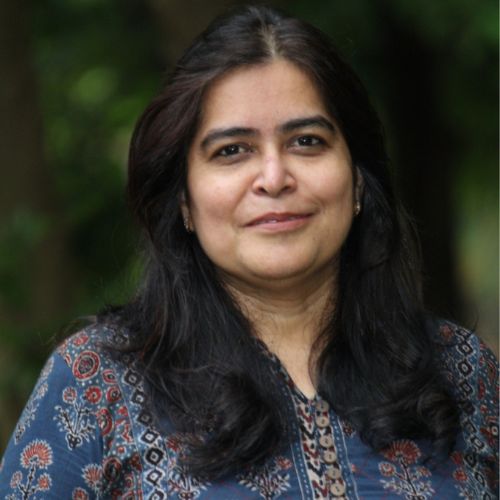
Rena Jamil, UPSC Rank -380

Rena Jameel’s father Mohammad Jameel Ansari has retired from Tata Company. He was a mechanical engineer in Tata. While mother Naseem Ara is a home maker. She has four siblings. Elder brother Raunak Jameel Ansari is in Indian Revenue Service. He had secured 763 rank in 2014. Younger brother is an engineer and is currently working with Prasar Bharati. While younger sister is doing her masters and is preparing for admission in PhD. 

Rena studied in Urdu medium from Chhatabad Urdu Middle School till class 8. Then she completed her 10th and 12th from the same school. After that she did BSc in Zoology from S.S.L.N.T. Mahila Mahavidyalaya and M.Sc from P.K. Roy Memorial College. After this she also did B.Ed.  

Rena says, Ammi was always motivating for me. She never made me do household chores, rather she always insisted on studying. However, all this was not so easy for me. Just to study in college, I had to travel about 50 kilometers every day. Sometimes by bus, sometimes by auto or sometimes by walking for hours… I would leave in the morning and reach home only at night.

When asked that now you are an IAS, what will be your first task in the district you go to after training, Rena says that every district has its own problems. But my special focus will be on education and health sector. Because my experience with both these sectors has been very bad. I would not want that in my district someone loses his life due to health service and someone’s daughter’s education gets interrupted just because the college is very far away.  

Rena Jameel loves Urdu poetry. She has been reading Faiz, Ghalib and Iqbal in particular. The special thing is that Rena herself has written about 50 poems so far. All these poems are in Urdu language. 

What was the reason that made you decide that I have to join the civil service? 

In response to this question, Rena says that, generally, there is not much focus on the education of girls in our society. Even if the family is educating them, the only purpose is that they will get married in a good family. I also had many friends who were very sharp in studies, but somewhere they could not study further. Could not go ahead. Due to family pressure or other reasons. Many were not sent to college only because the distance to the college was too much, but in my case my family was a little supportive. In such a situation, I started thinking that I have to do something that becomes an example for others. Such people should listen to me who educate their girls only for marriages or do not educate them at all. Then I decided that I have to do something big so that I can become an inspiration for girls.  

How and where did you prepare for the exam? 

On this, Rena Jameel says that in 2014, my elder brother succeeded in this exam. I came to Jamia on his guidance. Before this, I had read NCERT thoroughly. I also used to read newspapers regularly. I took Zoology for this exam because I had done BSc and MSc in this subject. 

In a long conversation, Rena tells about her struggles that there were many ups and downs in my life journey. I could not succeed even after reaching the mains twice. I succeeded the third time but did not get what I wanted. Despite this, I had confidence in myself and kept working towards my goal. Today I am successful because of this. Although I was happy with this service too, but it was not my aim or goal. That is why I kept preparing along with the service. I only wanted to become an IAS and I became one.

What message would you like to give to those preparing for UPSC? 

On this question, Rena says that many things are not in your hands. Only hard work is in your hands. And yes! The fruit of hard work is always sweet. I also faced many problems. I also failed. All things kept happening with me. But I kept working hard continuously. I will tell you the same thing that always think about fulfilling your dreams. If I had not done this, then I would definitely not have been an IAS. I would have been doing the service of 2016. Therefore, patience is very important for success in this exam. 

Also I would like to say that you must read newspapers because it is important to read people’s thoughts, it helps you to develop your own thoughts. And yes! You should always keep your resources limited. If you keep yourself busy reading everything then you will never be able to complete your syllabus. Whatever you read, read it with all your heart and give it enough time. 

What would you like to say to the youth of the country, especially the girls of your community? 

On this, Rena says that education is everything today. So pay attention to education at all costs. Never shy away from working hard. If I can do it, then believe me anyone can do it. But for this you will have to come forward and work hard.  

She especially tells girls that you need to come forward and work hard. It is also the responsibility of the society to stop looking at girls with narrow mindedness. Rather, they should be encouraged. Girls have a lot of talent. If we just become a little open minded, they will go far ahead. It is also the responsibility of girls to work hard and fulfill their dreams… and yes, the dreams should be a little big. 

source: http://www.beyondheadlines.in / Beyond Headlines / Home> India> Real Heroes / by Afroz Alam Sahil, Beyond Headlines / June 19th, 2019

NEET (UG) 2025: 472 Students of Al-Ameen Mission Qualify for Free Medical Seats in Government Medical Colleges Across West Bengal

Khalatpur Village (Howrah), WEST BENGAL :

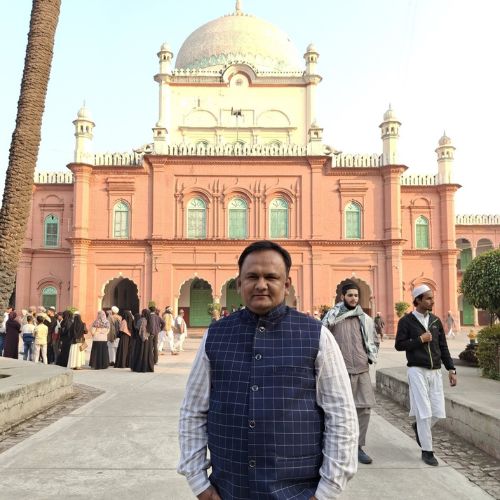
M. Nurul Islam with some of the future doctors at Al Ameen Mission Khalatpur campus

M. Nurul Islam is a proud man as 472 students of Al Ameen Mission have qualified for free medical seats in government medical colleges across West Bengal through NEET (UG) 2025.

Muslims remain one of the most disadvantaged communities in India. In West Bengal—among the more underdeveloped states—their educational and socio-economic struggles are even more pronounced. Districts like Murshidabad and Malda, with significant Muslim populations, rank among the most backward in the country.

When the NEET results were announced, 154 students from Murshidabad and 77 from Malda scored above 500 marks, making them eligible for free medical education in the state’s government colleges.

What stands out is the socio-economic background of these students. Of the 472 successful candidates, 278 (59%) come from modest backgrounds: 194 (41%) belong to middle and upper-middle-income families, 152 (32%) to lower-middle-income groups, and 126 (27%) are from poor and Below Poverty Line (BPL) families.

The success of these students reflects not only academic excellence but also the transformative impact of Al Ameen Mission in empowering underprivileged communities through education.

“This year’s exam was comparatively tougher than in previous years, but by the grace of Allah, our students performed even better,” said M. Nurul Islam, founder general secretary of Al Ameen Mission, while speaking to Muslim Mirror.

Nurul Islam, the visionary general secretary of Al-Ameen Mission—often referred to as the Sir Syed of West Bengal—is widely recognized among the 100 most influential Indian Muslims. He pioneered an educational movement aimed at uplifting underprivileged Muslim students in West Bengal, significantly increasing their representation in medical colleges, even exceeding their population proportion in the state.

Born in 1959 in the small village of Khalatpur in Howrah district, Nurul Islam came from a humble background. His passion for education and community service became the foundation of a lifelong mission. In 1986, while he was a student, he started a hostel with just seven students inside the madrasa building. This initiative was sustained by a grassroots campaign—collecting a fistful of rice from every household in the village. In January 1987, this effort took shape as Al-Ameen Mission.

Today, the Mission has 77 branches across 23 districts of West Bengal, housing nearly 23,000 residential students. Over 49,000 students have passed from Al Ameen Mission, which follows the WBBSE, WBHSE, and CBSE curricula. In 2015, the West Bengal government honored M Nurul Islam with the Banga Bhushan Award for its contributions to education.

The Mission also engages in charitable work, offering financial aid and scholarships to unemployed Muslims. Under Nurul Islam’s leadership, it has become a beacon of holistic education, blending academic excellence with Islamic ethical values. The institution has produced hundreds of successful NEET and JEE candidates, changing the lives of many.

Nurul Islam’s resolute commitment to education and empowerment continues to inspire generations, reshaping the future of Muslim youth in Bengal and beyond.

source: http://www.muslimmirror.com / Muslim Mirro / Home> Education> Indian Muslim> Positive Story / by Jasmine Nehar / June 25th, 2025

Bihar Collective to Release Booklet “Remembering Muslim Makers of Modern Bihar” in Patna on Feb 23

Patna, BIHAR :

Patna :

In an era of unprecedented majoritarian ascendance and anti-Muslim hatred, Bihar Collective, a platform of intellectuals and activists, has brought out a booklet highlighting the contribution of eminent Muslims in making the modern Bihar in the last 200 years.

The booklet titled Remembering Muslim Makers of Modern Bihar has been compiled and edited by renowned academician and writer Prof. Mohammad Sajjad on the initiative of Bihar Collective.

The booklet will be released at an event in Patna on Saturday (February 23).

On the occasion, a discussion will also be held with Prof Faizan Mustafa, Vice Chancellor, NALSAR University of Law, Hyderabad; Prof Vivek Kumar, JNU, New Delhi; and Prof Mohammad Sajjad, AMU, Aligarh as panelists.

A Brief about Booklet:


Pre-empting a reasonable question about the title of the booklet, Prof Sajjad, who has compiled and edited it, writes in its preface: “A simple and obvious question that may readily arise is: why only Muslim makers of modern Bihar? Why not others too? This is indeed a valid and pertinent question.”

Responding to the question, he further says: “Candidly put, this is because of an unprecedentedly menacing rise of majoritarianism, bigotry, and anti-Muslim hatred, with open support of the state.

The Muslim identities are ominously threatened. There are also unabated attempts to dilute (or even take away) whatever little accomplishments have been made by the forces of social justice and secularism.

Only the Muslim segment however is threatened by the jingoist, exclusionary, violent nationalists, to be thrown out to another country. As if the other country is a dustbin, owned by these bigots, into which they can throw away everything they dislike! As if only the religious majority constitutes the nation! Notably, these jingoists had aligned with the British and had stayed away from the national movement.”

“Muslim contributions in the nation-making (and in the freedom movement) remain under-acknowledged, forgotten or even omitted. Erasure of their histories and memories seem to have become even more pronounced and vociferous, now, than ever before…The Bihar Collective therefore decided to compile a short profile of these inspiring role models, history-makers…This is small and humble step towards retrieving and restoring the nationalist provincial pantheons bearing Muslim identities,” says Prof Sajjad.

He, however, admits that the list of Muslim heroes of Bihar given in the booklet is not exhaustive as “…many have been left out essentially because of lack of documentations and researches. Not many have left their own accounts/memoirs; the available memoirs/accounts have not written much about all the personalities. In many cases, even otherwise “resourceful” descendants and/or associates of the history-makers have not been able to provide us with adequate (and credible/verifiable) details.”

Prof Sajjad hopes this small exercise may lead to some big academic work on these history-makers. “In short, this kind of venture may be said to be an ongoing exercise. This effort may hope to open up (and obtain) more details about such history-makers and would also get to know about many more of such peoples and processes, we failed to include here in this hastily prepared tiny volume, amidst constraints of resources and time.”

Names of Muslim Makers of Modern Bihar Mentioned in Booklet:
1. Syed Imdad Ali (d.1886]
2. Khuda Bakhsh (1842-1908)
3. Syed Amir Husain (1843-1910)
4. Imdad Imam Asar (1849-1934)
5. Shah Badruddin(1852-??)
6. Syed Ali Bilgrami (1853-1911)
7. Rasheed-un-Nesa (1855-1926)
8. Syed Noorul Huda (1855-1939)
9. Justice Syed Sharfuddin (1856-1921)
10. Shaikh Gulab (1857-1920)
11. Sarfaraz Husain Khan (1860-1931)
12. Maulana Mazharul Haque (1866-1930)
13. Batakh Miyan Ansari (1867-1957)
14. Sir Fakhruddin (1868-1933)
15. Syed Ali Imam (1869-1932)
16. Syed Hasan Imam (1871-1933)
17. Salahuddin Khuda Bakhsh (1875-1931)
18. Shafi Daudi(1875-1949)
19. Khwaja Md. Noor(1875-??)
20. Abdul Wadood (d.1955)
21. Syed Abul Hasan (1878-1960)
22. Sir Sultan Ahmad (1880-1963)
23. Maulana Sajjad (1880-1940)
24. Pir Mohammad Munis (1882-1949)
25. Abdul Bari (1882-1947)
26. Syed Sulaiman Nadvi (1884-1953)
27. Mohammad Yunus (1884-1952)
28. Shah Md. Zubair (1884-1930)
29. Syed Abdul Aziz (1885-1948)
30. Zubaida Begum Daudi (1886-1972)
31. Syed Tafazzul Karim (1886-1964)
32. Mr. Mohammad Shafi (1888-1955)
33. Qazi Ahmad Husain (1889-1961)
34. Dr. Syed Mahmud (1889-1971)
35. Ali Husain Aasim Bihari (1890-1953)
36. Shah Mohammad Umair (1894-1978)
37. Abdul Ahad Mohammad Noor (1894-1975)
38. Hakeem Md. Kabiruddin (1894-1976)
39. Maulana Usman Ghani (1896-1977)
40. Manzoor Ahsan Aijazi (1897-1969)
41. Shah Md Ozair Muni’mi (1899-1961)
42. Maghfur Aijazi (1900-1966)
43. Syed Jafar Imam (1900-1965)
44. Syed Badruddin Ahmad (1901-1983)
45. Mohammad Tahir (1903-???)
46. Syed Jafar Imam (1903-1979)
47. Syed Fida Husain (1904-80)
48. Abdul Qaiyum Ansari (1905-1974)
49. Wajihuddin Minhaji (1907-1984)
50. Syed Md. Aiyub (1910-1964)
51. Abdul Sami Nadvi (1913-????)
52. Abul Hayat Chand (1914-1958)
53. Ahad Fatmi(1915-1980)
54. Zawwar Husain (1916-80)
55. Shafiqullah Ansari (1917-1980)
56. Shah Mushtaq Ahmad (1917-2002)
57. Abdul Ghafoor (1918-2004)
58. Col. Mahboob Ahmad (1920-1992)
59. Taqi Raheem (1920-1999)
60. Zahra Daudi(1923-2003)
61. Shakoor Ahmad (1924-1981)
62. Syed Hasan (1924-2016)
63. Yunus Lohia (1925-2019)
64. Ghulam Sarwar (1926-2004)
65. Syed Shahabuddin (1935-2017)

A Brief about Author:


Prof Mohammad Sajjad teaches late-colonial and post-independent Indian history at the Centre for Advanced Study in History, Aligarh Muslim University. He has written several books including Muslim Politics in Bihar: Changing Contours; and Contesting Colonialism and Separatism: Muslims of Muzaffarpur since 1857.

His articles are published in reputed academic journals from Routledge, Sage, EPW etc. and also in anthologies from the Oxford University Press and Cambridge University Press.

Bihar Collective:
It is a platform of artists, intellectuals, journalists and activists to promote diversity, pluralism and constitutional values. It aims at bridging the gap between people working in various fields such as media, culture, law, science, arts, human rights, gender equality, films, music, etc.
Email: biharcollective@gmail.com
Facebook: https://www.facebook.com/biharcollective

source: http://www.indiatomorrow.net / India Tomorrow / Home> Society / by India Tomorrow / February 21st, 2019

A Madrasa Like No Other: Inside India’s First Inclusive Madrasa for the Deaf, Mute and Blind

Pune, MAHARASHTRA :

Students at Jamia Abdullah Ibne Umme Maktoom, India’s first inclusive madrasa for differently-abled children in Pune, Maharashtra, walk in a queue as they enter the Vision School campus. The madrasa provides free Islamic and contemporary education to mute, deaf and visually impaired students from 17 states across India.

In Pune, Maharashtra, Jamia Abdullah Ibne Umme Maktoom offers free Islamic and contemporary education to mute, deaf, and blind children from across 17 states—proving that disability is no barrier to dignity, faith, or ambition.

Pune (Maharashtra): 

In a small park in Maharashtra’s Pune, on a Thursday morning in May, a group of well-dressed uniformed students stood barefoot, wearing white skull caps. Many of them were mute or visually impaired. As the national anthem played in the background, the students stood in solemn attention, while others – mute and deaf – used sign language to express the lyrics. It turned the moment into a display of patriotism and unity.

This is the usual beginning of the day at Jamia Abdullah Ibne Umme Maktoom (a religious seminary in Pune), where hundreds of mute, deaf and blind students receive free Islamic and contemporary education.

“It took us years to convince families of the importance of education for their special children,” says Nayeem Ahmad Qasmi, a secretary of the madrasa.

The institution was founded in 2013 with only two children with the vision to uplift differently abled children from across India through inclusive education.

According to the Census of 2011, approximately 2.2% of the population, around 26.8 million people, were identified as living with disabilities.

Female students at Jamia Abdullah Ibne Umme Maktoom in Pune, Maharashtra, offer prayers during school hours. The madrasa currently educates over 70 differently-abled girls – many of whom are mute, deaf or visually impaired – providing them with a safe and inclusive environment for both Islamic and contemporary learning.

Unfortunately, many families abandon differently abled children or keep them confined at home – considering them a burden.

“It is the duty of every person to support differently abled children so they can prove their capabilities,” he adds.

Many students come from rural areas in different states, where families often do not know the value of education or the opportunities available to them.

“Before coming to Jamia, I did not know anything about Islamic and contemporary education,” says 18-year-old Rehan Saleem from Jalgaon in Maharashtra.

Many students have received opportunities to present their skills on different platforms across India. Several have represented their school and secured positions in various sectors.

“By the grace of God, I have completed the Hifz-e-Quran (memorisation of the entire holy Quran) at this Jamia and got the opportunity to perform Umrah,” says Rehan.

Students at Jamia Abdullah Ibne Umme Maktoom in Pune attend a classroom session where they receive both Islamic and contemporary education, guided by their teacher.

Today, the Jamia hosts 210 mute, deaf and blind students from 17 states across India. The seminary provides free education from Grade 1 to Grade 12, including subjects like science, computers, Islamic studies and advanced education.

Many students have gone on to study at various universities and colleges. For those unable to attend in person, the madrasa has launched an online education programme. Children here are provided with education, food, accommodation and even uniforms free of cost.

“Our mission is to see these children represent the country on every platform one day,” says Qasmi.

Despite the struggle, they have succeeded in building a thriving institution. In 2021, the madrasa launched separate sections for mute, blind and deaf women to ensure inclusive learning environments. Women’s education is just as important as men’s, and this initiative reflects that commitment.

Mubashira Sadiya Khan, who teaches specially abled girls at the madrasa, says, “Women’s education is equally important as male education. These girls are usually occupied with household work at their homes, but we are giving them better education and showing them the purpose of life.”

A young visually impaired student sits attentively in class, beside a Braille slate and stylus used for writing. At Jamia Abdullah Ibne Umme Maktoom, visually impaired children are given tools and support to receive religious and formal education in an inclusive environment.

Since safety is a major concern for women in the country, the madrasa has provided separate rooms for them, with all female helpers to ensure a secure learning environment.

Mubashira adds, “Usually, women are not safe in the country, but here we have created a safe space where they can learn and grow with confidence.”

Despite progress in education, children with disabilities in India often remain invisible – excluded from schools, denied opportunities and treated as burdens. Many end up begging or isolated at home, not by choice, but because society offers them no alternatives.

“We often see them begging on the roads, not because they want to, but because the society has failed to give them a chance,” says Qasmi.

Students in uniform attend class at Jamia Abdullah Ibne Umme Maktoom in Pune, where multiple sessions are held simultaneously in a shared hall to support inclusive learning.

The Jamia has been working to ensure that students with disabilities receive quality education, access to proper infrastructure and opportunities to engage in play and creative activities on campus. Its vision is to provide them with equal opportunities so they can compete and thrive like any other student.

“Our goal was simple – give them dignity, knowledge and a future,” Qasmi explains.

The Jamia is already offering digital learning tools, smart boards and inclusive facilities to ensure that the students receive a modern and accessible education. The institution continues to innovate and expand its reach through technology and tailored teaching methods.

“We have introduced smart boards, digital tools and inclusive classrooms because every child no matter their ability deserves access to quality, modern education,” says Qasmi.

In the current political climate in India, the Muslim community has often been portrayed in a negative light, and madrasa education is frequently misunderstood or dismissed. Despite these challenges, Jamia Abdullah Ibne Umme Maktoom continues to provide quality Islamic and contemporary education to differently-abled children, aiming to empower them with knowledge and confidence.

source: http://www.twocircles.net / TwoCircles.net / Home> Disability / by Suhail Bhat, TwoCircles.net / June 21st, 2025

‘Kolnad Friends’ organise blood donation camp in memory of Late Safwan Kolnad; 62 units collected

Mulki Town ( Mangalore Taluk, Dakshina Kannada Distirct) , KARNATAKA / Dubai, U.A.E :

Mulki : 

A public blood donation camp was successfully organised on Sunday in memory of Safwan Kolnad, a 25-year-old youth who tragically passed away on May 10, 2025, due to sudden cardiac arrest in Dubai. The camp was held at Mahila Samudaya Bhavan, located near the Kolnad Government School, and was jointly conducted by Kolnad Friends Kolnad (R) and Blood Helpline Karnataka (R), in collaboration with Wenlock District Hospital, Mangalore.

The event began with a dua and blessings from Sharif Darimi Al-Haitami, Khatib of Shafi Juma Masjid, Kolnad. The program was presided over by Manjunath B.S., Circle Inspector of Mulki Police Station.

Dr. Ayisha Suhana, Consultant Ophthalmologist and Chief Eye Surgeon at Srinivas Institute of Medical Sciences and Research Centre, Mukka, was the chief guest. In her address, she highlighted the critical importance of blood donation and how a single unit of blood can help save up to three lives. She also explained how regular blood donation contributes to better health by reducing the risk of heart attacks, strokes, and certain cancers, while also controlling cholesterol, blood pressure, and iron levels. She advised donors to stay hydrated and avoid strenuous activity after donating blood.

As a tribute to the late Safwan Kolnad, Dr. Ayisha Suhana announced that she will perform five free cataract surgeries with premium intraocular lens implantation for underprivileged patients. She has conducted similar charitable surgeries in the past, in association with NGOs including the Naushad Haji Suralpady Memorial Charitable Trust (R).

This was the second blood donation camp organised by Kolnad Friends Kolnad (Reg) Charitable Trust, and a total of 62 units of blood were collected, including 52 male and 10 female donors.

The organisation continues to serve as a ray of hope for underprivileged patients, providing financial assistance for dialysis and cataract surgeries, and also supporting economically weaker students.

During the event, both Manjunath B.S. and Dr. Ayisha Suhana were felicitated by the organisers.

The program concluded with remarks from Yasir Arafat and a vote of thanks delivered by Abbas Ali.

source: http://www.english.varthabharati.in / Vartha Bharati / Home> Karavali / by Vartha Bharati / May 20th, 2025

AMU Student Wins Best Paper Prize at Jesus and Mary College, DU

Aligarh, UTTAR PRADESH :

Amna Asim receiving the best paper award at Jesus and Mary College, DU

Aligarh:

Amna Asim, a first-year MA History student at the Centre of Advanced Study, Department of History, Aligarh Muslim University, won the Best Paper Prize at the release event of Maazinama Volume IV, held at Jesus and Mary College, University of Delhi.

Her research paper, titled “Memory and Resistance: Tracing India’s Counter-Monumental Legacy through Jallianwala Bagh,” was also published in Maazinama Volume IV, the annual academic journal of the Department of History, Jesus and Mary College. The paper explores the concept of counter-monuments as powerful symbols of collective memory and resistance, with a focused analysis of Jallianwala Bagh’s historical and cultural legacy.

Judges Dr. Devika Mittal and Dr. Bipasha Rosy Lakra appreciated her research and the methodology employed.

Prof. Hassan Imam, Chairperson and Coordinator of the Centre of Advanced Study, Department of History, AMU, congratulated Amna Asim on her achievement and praised her for earning this scholarly recognition.

source: http://www.radiancenews.com / Radiance News / Home> Pride of the Nation> Awards / by Radiance News Bureau / May 16th, 2025

UDO Felicitates Shariya Fatima Sherwani on Scoring 100% Marks in Urdu

NEW DELHI :

Dr. Syed Ahmed Khan, National President of Urdu Development Organisation, felicitating Shariya Fatima Sherwani on securing 100% marks in Urdu in the CBSE Class 10 exams

New Delhi:

Dr. Syed Ahmed Khan, National President of Urdu Development Organisation (UDO), personally visited the home of Shariya Fatima Sherwani, daughter of renowned journalist Sadiq Sherwani, to congratulate her and encourage her on achieving exceptional results in the CBSE Class 10 exams.

It is noteworthy that Shariya Fatima Sherwani secured 100% marks in Urdu, not only setting a new record but also serving as a strong rebuttal to those who hold negative views about the Urdu language.

Similarly, Omar Habib, son of Dr. Habibullah – CMO Unani at the Department of AYUSH, Government of Delhi, posted in Tihar Jail – achieved a remarkable 96% score.

In addition, Samiq Raza, son of senior journalist Syed Izharul Hasan, scored 88.4% in Class 12 at Delhi Air Force School.

The Urdu Development Organisation expressed happiness over the achievements of these students, extended its congratulations, and announced its decision to further encourage more successful and talented students from the community on World Urdu Day, on November 9.

source: http://www.radiancenews.com / Radiance News / Home> Latest News> Markers of Excellence / by Radiance News Bureau / May 15th, 2025

Udupi Student Nuzha Fathima Sarfaraz Scores 95% in CBSE Class 10 Exams

Udupi, KARNATAKA :

Udupi :

Nuzha Fathima Sarfaraz, a student of G.M. Vidyaniketan Public School in Brahmavar, Udupi, has achieved an outstanding 95% in the CBSE Class 10 board examinations, the results of which were declared on May 13, reported the Varta Bharati.

Daughter of Sarfaraz T.S. and Farzana Sarfaraz, and granddaughter of the late T.S. Ismail Saheb and Sabeera Ismail of Kodi Bengre, Nuzha’s accomplishment has earned her praise and admiration from teachers, family, and peers alike. Her dedication, focus, and perseverance have been widely appreciated as the foundation of her academic success.

Her performance stands as an inspiration for fellow students in the region, showcasing the possibilities that hard work and determination can bring.

source: http://www.radiancenews.com / Radiance News / Home> Latest News> Markers of Excellence / by Radiance News Bureau / May 15th, 2025

Trailblazing Leadership Dr Nafeesa Ahmed’s Vision For Empowering Minds In Education

Bengaluru, KARNATAKA :

In the bustling city of Bangalore, where the convergence of tradition and modernity creates a unique educational landscape, Dr Nafeesa Ahmed stands as a beacon of transformative leadership in the field of education. Dr Nafeesa has carved out a unique path for herself as the Director of the Presidency Group of Institutions while also carrying on her father, Dr Nissar Ahmed’s legacy of excellence and innovation.

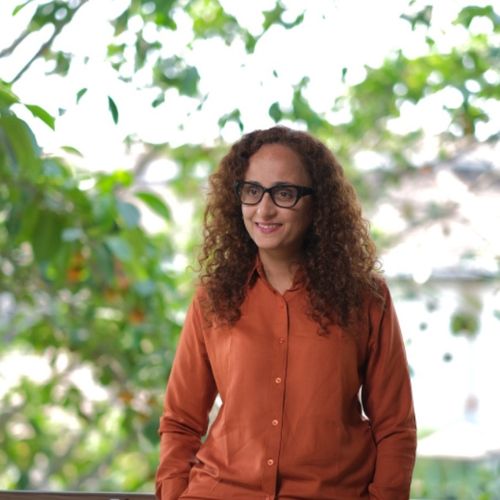
Dr Nafeesa Ahmed, Director, Presidency Group of Institutions, Bengaluru, Karnataka

Dr Nafeesa’s educational journey is nothing short of impressive. A graduate of Mount Carmel College, Bangalore, she holds a Bachelor of Business Management (BBM) degree and pursued postgraduate studies in English literature at Bangalore University. Her commitment to education led her to earn a bachelor’s degree in education from IGNOU. Venturing beyond Indian shores, Dr Nafeesa enriched her perspective with a Master’s in International Management from Royal Holloway, University of London. This international exposure was instrumental in shaping her understanding of global education trends.

Her dedication to continuous learning took her to the prestigious Harvard School, where she honed her skills in management and leadership. Dr Nafeesa’s academic prowess is underscored by her diverse qualifications, including a BBM, a B.Ed., an MA in English Literature, and a Master’s in International Management. Her educational journey serves as an inspiration, reflecting the importance of a broad and holistic approach to learning.

Leadership at the Presidency Group of Institutions

Taking the reins as the Director of the Presidency Group of Institutions, Dr Nafeesa has led the K-12 chain of elite institutions with a commitment to “Equal Opportunity in Diversity.” Her vision is to provide high-quality, affordable education to students from diverse backgrounds. Focusing on aspects like course structure, pedagogical innovation, and outcome-based evaluation, she has fostered a conducive teaching and learning environment.

During the challenging times of the pandemic, Dr Nafeesa displayed exemplary leadership by seamlessly transitioning the education system from physical to virtual and eventually to a mixed classroom approach. Her leadership has been pivotal in ensuring that the team of highly-qualified educators delivers the finest education to students.

Accolades and Achievements: A Trailblazer in Education

Dr Nafeesa’s journey is adorned with prestigious awards and recognitions, attesting to her significant contributions to the field of education. Notably, she received the Economic Times Power Icon Award for “Exceptional Contribution in Education” in 2020 and was honoured as “The Education Icon of the Year 2021” by Education Today. Her recognition as a ‘Speaker’ at the “APAC 5th Global Education & Skill Conclave” and features in Women Entrepreneurs and Education World India showcase her as a thought leader in the education domain.

A crowning achievement in her illustrious career is the conferral of a Ph.D., Philosophiae Doctor Honoris Causa (HC) in Education Management by Ecole Superieure Robert De Sorbon (ESRDS), France, Europe. The recognition, awarded at The House of Lords, London, is a testament to Dr Nafeesa’s global impact and commitment to educational excellence.

As Dr Nafeesa Ahmed continues to shape the future of education, her journey stands as an inspiration, showcasing the transformative power of visionary leadership in the realm of academia. In the words of Dr Nafeesa, “My loved ones have been my rock through thick and thin. Having their back has been crucial to my success.” Indeed, her success radiates not only through personal accolades but also through the positive impact she has had on the lives of countless students and educators.

source: http://www.outlookindia.com / Outlook / Home> Brand Studio / by The Outlook Bureau / March 08th, 2024

INSPIR’Ed Awards 2025 presented to educators at Presidency University

Bengaluru, KARNATAKA :

The Presidency Group of Institutions (PGI) hosted INSPIR’Ed Awards 2025 on Saturday on the Presidency University campus. The event honoured teaching and non-teaching staff for their contributions to education and service within the Presidency Institutions.

Author Anita Nair and former IPS officer and cybersecurity expert Sanjay Sahay were chief guests at the event. They emphasised the significant role educators play in national development.

Nafeesa Ahmed, Director of the Presidency Group of Institutions, spoke about the central role of teachers in guiding students and strengthening communities.

Kauser Nissar Ahmed, Founder Trustee, expressed appreciation for everyone involved in the growth of the Presidency Schools. Dr. Nissar Ahmed, Chairman of PGI and Founder Chancellor of Presidency University, reflected on his five-decade journey in the field of education.

Awards were presented in several categories, including: Long Service Award, Institutional Legacy Award, Best Teacher Award, Rising Star Award.

source: http://www.thehindu.com / The Hindu / Home> News> Cities> Bengaluru / by The Hindu Bureau / April 14th, 2025