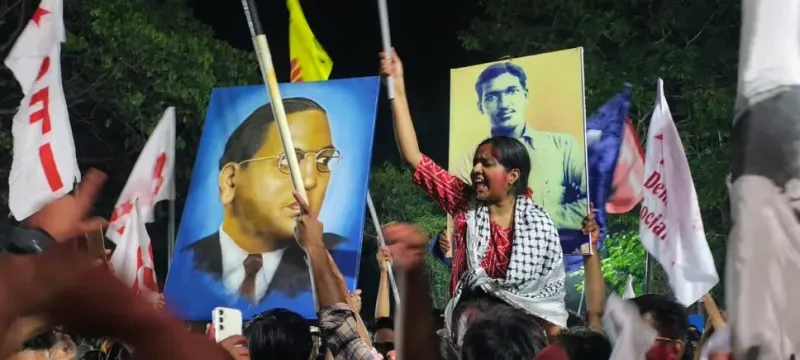
SFI leader Dilshada Raihan, a Muslim woman, was elected president as the AISA–ASA–DSU–SFI–TSF alliance reclaimed the University of Hyderabad Students’ Union from ABVP, winning all general posts.
Dilshada Raihan, the candidate of an alliance comprising the All India Students’ Association (AISA), Ambedkar Students’ Association (ASA), Dalit Students’ Union (DSU), Students’ Federation of India (SFI) and Tribal Students’ Forum (TSF), has been elected president of the University of Hyderabad Students’ Union for 2026.
Her victory puts a Muslim woman at the head of the union after the ABVP won the previous election.
Raihan is an SFI leader.
The alliance also won the vice president and general secretary posts. Korra Nithin Chauhan of TSF was elected vice president, while Pratik Sagar of ASA won the general secretary post.
Naresh Podishetti contested for president on the ABVP–Sevalal Vidyarthi Dal panel. K. Naveen Kumar was the presidential candidate of the alliance comprising the National Students’ Union of India (NSUI), Fraternity Movement, Muslim Students Front (MSF) and Progressive Democratic Students Union (PDSU).
Muhammad Aflah KK and Venisa Choudhary also contested the general secretary post against Pratik Sagar on the three alliance panels.
Siddhant of the All India Students’ Association (AISA) has won the joint secretary post on the AISA–ASA–DSU–SFI–TSF alliance panel.
source: http://www.maktoobmedia.com / Maktoob Media / Home> South India> India / by Maktoob Media / September 30th, 2026
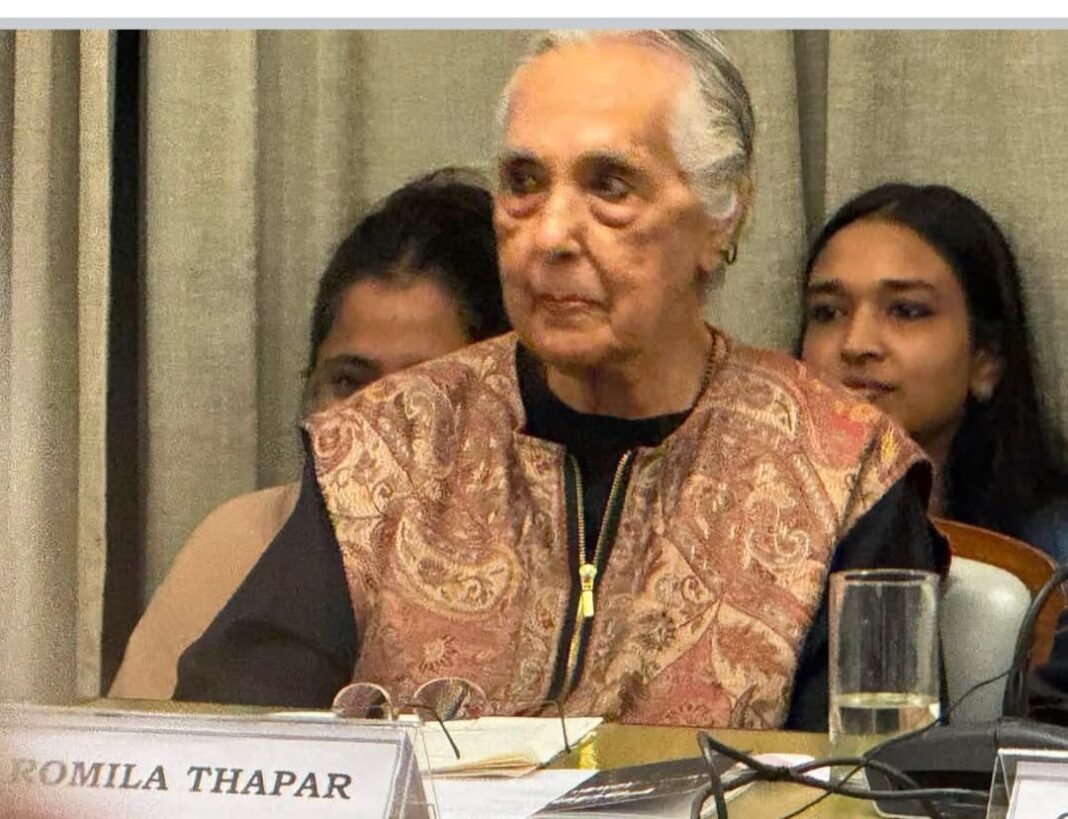
Renowned historian Romila Thapar, speaking at the launch of her memoir “Just Being: A Memoir” at the India International Centre on Sunday evening, drew attention to the rich tradition of memoirs and biographies associated with the Mughal period, describing them as important sources for understanding not only rulers but also the political, social and cultural environment in which they lived.
Rather than speaking extensively about her own memoir, Thapar used the occasion to discuss memoir as a genre of writing and its value to historians. She explained that memoirs and biographies provide more than accounts of individual lives. They also reveal how authors viewed their societies, political surroundings and the people with whom they interacted.
In this context, Thapar highlighted the writings produced during the Mughal period, particularly those associated with Mughal rulers and members of the imperial court. She said these writings were a lively form of historical and literary expression and offered insights into both the public and private worlds of the Mughal elite.
Thapar pointed to the memoir of Babur as one of the most notable examples. Babur recorded his experiences in Ferghana and Kabul, as well as his battles and efforts to establish a kingdom in the frontier region between north-western India and Afghanistan. According to Thapar, Babur’s writing style was remarkably comfortable and informal, with descriptions of major political and military events interspersed with observations about everyday life.
One of the characteristics that makes Babur’s memoir particularly engaging, she noted, is the way serious accounts of warfare and state-building are accompanied by apparently ordinary personal observations. She referred to Babur’s well-known comment that melons in India were not as sweet as those in Ferghana. Such details, Thapar suggested, make the memoir more than a record of battles and political achievements. They provide glimpses into the personality and preferences of the ruler himself.
Thapar also discussed the memoir associated with Humayun, which differs from Babur’s account because it was compiled by his sister, Gulbadan Begum. She described the work as having a stronger biographical character while still containing valuable observations about Mughal court life.
The memoir, according to Thapar, provides glimpses into both the public and private dimensions of the court. It records aspects of the relatively hidden or “surreptitious” life of the court alongside its more visible political activities. This makes such writings particularly valuable to historians attempting to understand how the Mughal court functioned beyond formal descriptions of imperial power.
Thapar also referred to Abul Fazl’s Akbar Nama, describing it as almost a combination of biography and history. The work chronicles the activities of Emperor Akbar while simultaneously providing an account of the wider historical circumstances of his reign. She noted that subsequent Mughal rulers either wrote memoirs themselves or had their lives recorded, producing accounts associated with Jahangir and Shah Jahan.
One of the most striking features of these writings, Thapar said, was the cultural change visible between the period before Akbar and the writing produced during and after his reign. The writings reflected considerable interaction between the author and the surrounding cultural environment, as well as a growing sense of inquiry into the world around them.
Thapar stressed that this cultural interaction is significant because historians need to understand the world as it was perceived by individuals living in a particular period. Mughal writings, she argued, provide evidence not only of how rulers viewed themselves but also of their relationships with the people over whom they ruled and the communities with whom they lived in close proximity.
Such interactions, she suggested, could alter aspects of the lives and cultural patterns on both sides. The memoirs and biographies, therefore, should not simply be read as official records of imperial achievements. They can also be examined as accounts of encounters between different groups and cultures.
Thapar gave particular importance to the writings of Mughal women, observing that some women’s memoirs were highly political. She referred to Jahanara Begum, the daughter of Shah Jahan and sister of Aurangzeb, who wrote about life and politics within the Mughal court.
The importance of such writings, she suggested, lies in the way they bring together ordinary concerns and political observations. Everyday experiences could appear alongside reflections on society, court personalities and political developments. The narration of political activities gave these memoirs a distinct political edge, allowing them to capture the historical moment from perspectives that might otherwise remain underrepresented.
Thapar said these writings also reflected the “mixed identity” of the Mughal elite. The court was not an isolated political institution; it was a space where different cultural influences, social relationships and political interests came together. Memoirs and biographies provide evidence of these interactions and help historians understand how individuals negotiated their identities within that environment.
Her discussion also drew attention to what is missing from historical sources. Thapar expressed disappointment at the absence of comparable reflections on the emerging elite in Sanskrit sources, particularly because some high-caste officials had written about court politics. The contrast demonstrates how the survival and nature of historical sources can influence modern understanding of a particular period.
Thapar’s larger argument was that memoirs should be read critically rather than treated as straightforward factual records. The value of a memoir lies not only in whether every event has been recorded accurately but also in what the author chose to observe, emphasise or ignore.
This approach is particularly relevant when reading Mughal memoirs. A ruler writing about his own battles, a court historian describing an emperor, or a woman writing about life within the imperial household each presents a different perspective. Their accounts reveal their individual experiences and assumptions as much as they reveal the historical events themselves.
She emphasised that biographies and memoirs are therefore commentaries on both the individuals being described and the contexts in which they lived. The author, even when writing about another person, inevitably reveals something about himself or herself through the selection of events and the interpretation of personalities.
Thapar’s discussion placed Mughal memoirs within a much longer tradition of biographical writing in India. She noted that biographies existed well before the Mughal period, citing works such as Banabhatta’s seventh-century biography of King Harshavardhana and the Ramacharitam of Sandhyakar Nandi. However, Mughal-era writings developed within a distinctive cultural and political environment and offer particularly valuable evidence of interactions between rulers, court elites and wider society.
Her comments ultimately suggested that Mughal memoirs should be viewed as more than chronicles of emperors and their achievements. They are records of personalities, political relationships, cultural encounters and changing perceptions. Babur’s observations of his homeland and India, Gulbadan Begum’s account of Humayun and the Mughal household, Abul Fazl’s expansive portrayal of Akbar, and the political observations of women such as Jahanara Begum collectively demonstrate the diversity of voices connected to the Mughal court.
For historians, Thapar argued, these texts are significant precisely because they allow the past to be viewed through the eyes of people who experienced it. Their subjective nature does not diminish their historical value; instead, it provides another layer of evidence about how individuals understood their world.
In her remarks, Thapar ultimately presented Mughal memoirs as a bridge between personal experience and history. By reading them alongside other historical evidence, historians can move beyond the conventional story of kings and battles and gain a deeper understanding of the society, politics and cultural interactions that shaped the Mughal era.
Professor Kumkum Roy, professor of History, formerly of JNU; Professor Neeladri Bhattacharya, professor of History, formerly of JNU; and Ambassador TCA Raghavan, former High Commissioner to Pakistan, also shared their views. At the same time, Professor Kunal Chakravarti moderated the event.
source: http://www.indiatomorrow.net / India Tomorrow / Home> Education> In Depth> Society / by Mohd Naushad Khan / September 08th, 2026
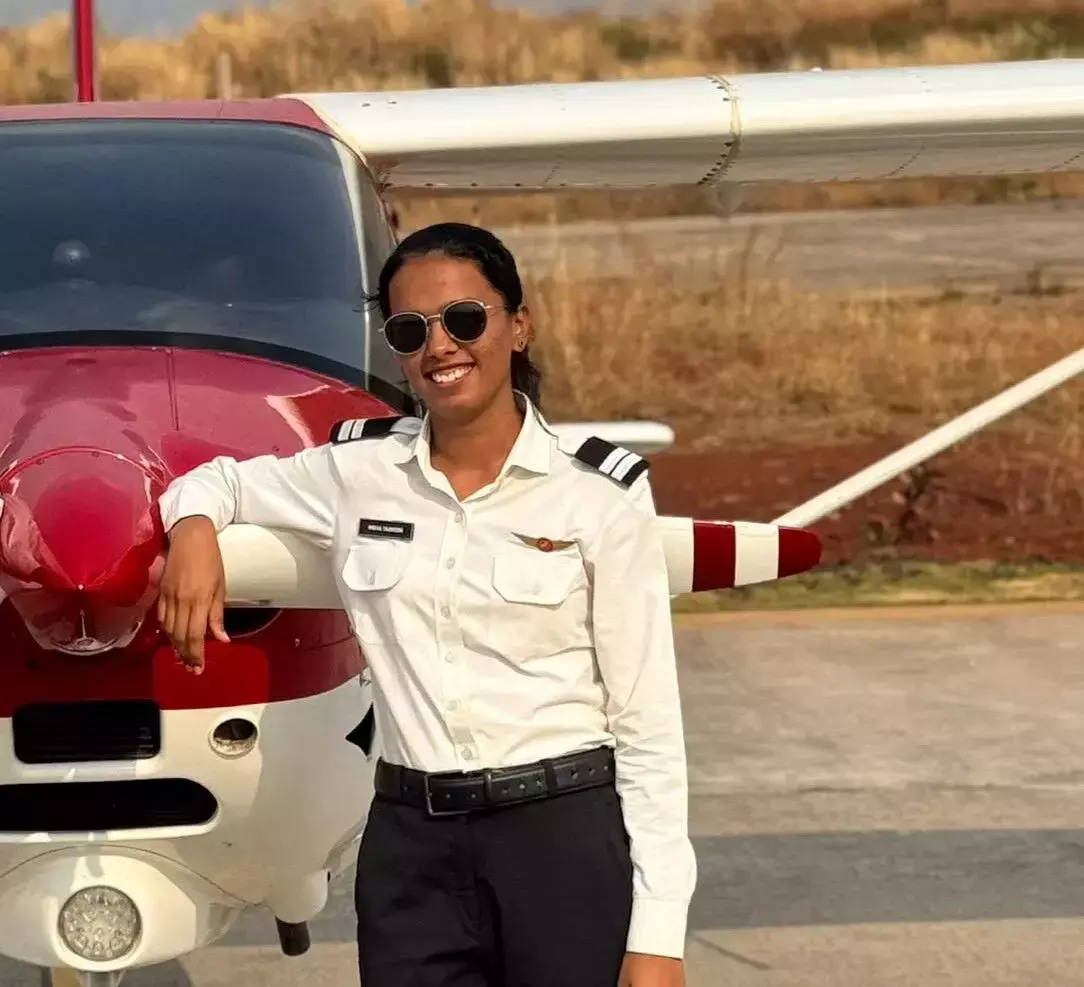
Through rigorous training, continuous hard work and self-confidence, Insha Taskeen has turned her childhood dream into reality. She has now obtained her commercial pilot licence, earning the distinction of being the first woman commercial pilot from Udupi taluk.
Insha Taskeen is the daughter of Ikhlaq Ahmed and Syed Tabassum from Bailur in Udupi city. Her brother serves as a senior executive for Air India at the Delhi airport.
Insha Taskeen completed her education from LKG to Class 12 at Little Rock Indian School, Brahmavar. Afterwards, driven by her dream of becoming a pilot, she underwent training at Redbird Flight Training Academy. At Redbird’s institution in Delhi, she attended ground classes and prepared for the required exams over a period of one year, passing all exams successfully on her very first attempt.
As the next phase of her training, she successfully completed 200 hours of flight training at the Belagavi flying base and obtained her commercial pilot licence.
Insha Taskeen’s achievement of fulfilling her childhood dream through dedicated training, persistent effort and confidence serves as an inspiration to the young women of Udupi district, especially those aspiring to build a career in the aviation sector.
“Initially, I had no interest in becoming a pilot. While studying in SSLC, we once went to Delhi. Seeing the airport there sparked a desire in me to become a pilot. With the support of my family, I was able to make my dream come true. In the coming days, I aim to work as a commercial pilot and dream of achieving even more in the aviation field,” says Capt. Insha Taskeen.
source: http://www.english.varthabharati.in / Vartha Bharati / Home> Karavali / by Vartha Bharati / September 21st, 2026
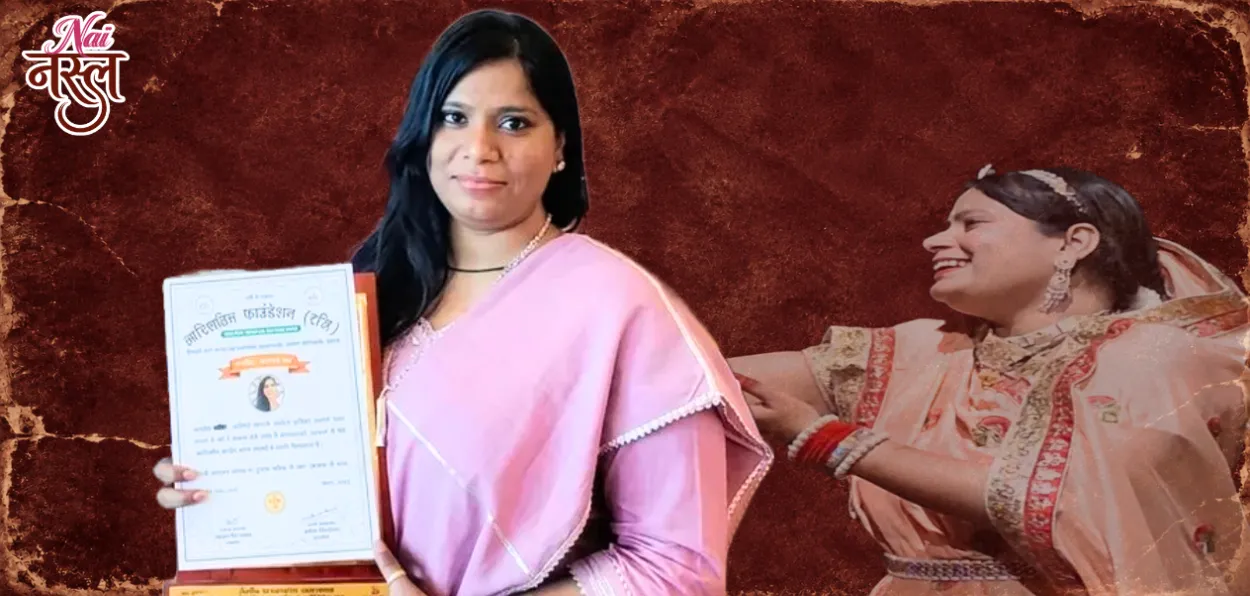
Arshia Parveen of Jaipur has overcome social disapproval, conservative attitudes and financial hardship to carve out a place for herself in Indian theatre. Over the past 15 years, she has worked in almost every aspect of theatre—from direction and acting to costume, lighting and scriptwriting.
Arshia, the second of three siblings, grew up in Jaipur’s walled city in a family that often struggled financially. Her parents, Raza Hussain and Raisa Bano, supported the family through various odd jobs. From Class 10 onwards, Arshia also contributed by taking up sewing and embroidery work.
At a time when many girls in her locality were discouraged from studying beyond Class 7 or 8, Arshia completed her graduation with the support of her mother.
After graduating in 2008, she joined a private school in Jaipur as a computer teacher. She initially wore a burqa while commuting to work, but her decision to take up a job became a subject of gossip in the neighbourhood.
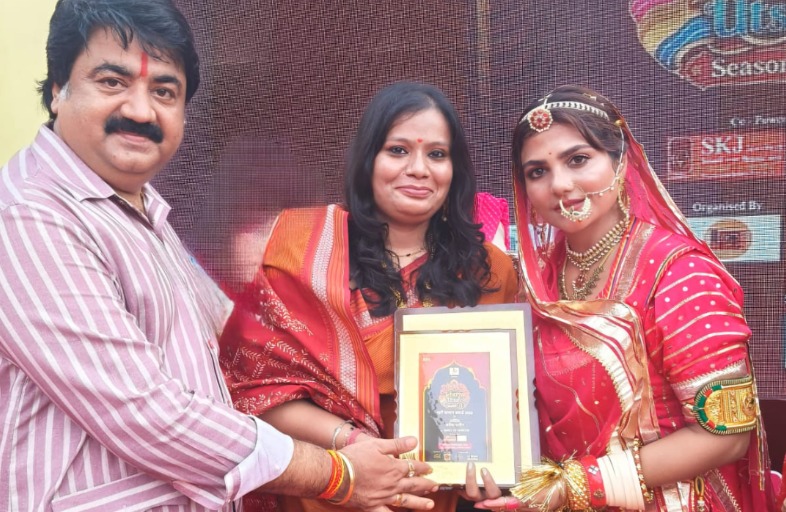
Arshia Parveen (Extreme right) receiving an award
Neighbours and relatives advised her mother to keep her daughter at home and teach her sewing instead. Tired of the taunts and unsolicited advice, Arshia eventually stopped wearing the burqa. She believed that modesty was not merely about clothing but also about one’s gaze and intentions.
She faced opposition from both family and society, but her mother’s quiet support gave her the confidence to continue.
In 2009, while working at the school, Arshia met veteran theatre personality Hemchandra (Raju) Tamhnakar, whom she respectfully called “Dada”. A familiar name in Marathi and Hindi theatre, Tamhnakar had worked with prominent actors, including Bollywood stars Irrfan Khan and Milind Soman.
Around the same time, Arshia’s mother suffered a paralytic stroke, leaving Arshia with the responsibility of managing and supporting the family. During this difficult period, Tamhnakar became a mentor and guide to Arshia and her family.
Parveen (second from left) receiving an award
She began with costume designing in 2010 and, a year later, won the Best Costume award for the play Bharatamba. She gradually expanded her skills to music and lighting design.
Her transition to acting came unexpectedly in 2014. During a national theatre competition in Agra, the lead actress of a play failed to turn up, and Arshia was asked to step into the role. The play went on to be adjudged the third-best production at the national-level theatre festival.
There was no looking back.
The year 2015 proved to be a major turning point. Arshia played a double role in Raktbeej, written by Dr Shankar Shesh, in Siliguri, West Bengal. The play has since been staged 26 times across the country and has received more than 12 national awards.
That year, Arshia also directed Prahari, a play written by Dada, for the first time. Based on the psychological condition of soldiers posted along the India-Pakistan border, the production has won more than 40 national awards in different states and has been staged 36 times so far.
Arshia Parveen with her award
Another chapter in Arshia’s theatre journey came full circle a decade after she first encountered Tamhnakar’s Antardwand. In 2009, she had watched the play as a member of the audience at Ravindra Manch. Ten years later, in 2019, she played the lead role in the same production. In 2026, she directed it herself.
The play deals with the serious subject of surrogacy and is now being staged in major cities, including Mumbai.
Arshia’s growing success did not immediately find acceptance within sections of the Muslim community around her. Her late-night rehearsals, interaction with fellow actors and frequent travel to other cities for performances were viewed with disapproval.
She was initially hesitant to perform in her own city, Jaipur. But over time, her work and talent helped silence many of her critics. Today, without government grants, she continues to promote non-commercial theatre in Rajasthan through the Tamhnakar Theatre Academy.
Her interests extend beyond theatre. Arshia has written research-based features on the tribal regions of Banswara and Dungarpur for Rajasthan Tourism and has also been regularly contributing a column to a Delhi-based media organisation.
Arshia Parveen receiving an award
Since 2013, she has been associated with Jaipur-based social organisation RAYS, which works for the rehabilitation of HIV-positive and abandoned children. She serves as a counsellor and theatre teacher for the children.
Arshia completed her postgraduate studies at the University of Rajasthan and later obtained a diploma in film and theatre acting from Bharat Sevak Samaj in Chennai. She has performed in 18 states and received awards and honours at national theatre festivals in Goa, Assam, Jharkhand, Uttarakhand and Uttar Pradesh.
She was recently appointed National Secretary of the All India Culture Foundation.
On January 31, Arshia’s mentor, Raju Tamhnakar, passed away. Determined to carry forward his legacy, she organised the Hemchandra Raju Tamhnakar Smriti Natya Samaroh, at which the solo play Vyatha Angraj Karn Ki was staged. She also serves as General Secretary of the Tamhnakar Theatre Academy.
Arshia now wants to use her experience to help other young women. She hopes to work with underprivileged girls who are forced to leave school because of social pressure. At the same time, she wants to strengthen the financial foundations of theatre and create better opportunities for emerging artists.
source: http://www.awazthevoice.in / Awaz, The Voice / Home>Mizan / by Farhan Israli, Jaipur / September 28th, 2026
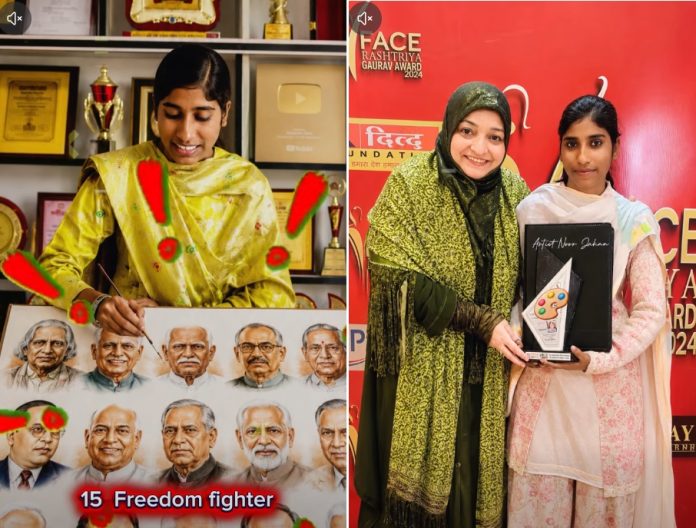
A young Muslim girl from a poor family in Badaun district of Uttar Pradesh has created history with a remarkable display of talent and determination. Noor Jahan painted portraits of 15 Indian freedom fighters simultaneously, holding multiple pens in her mouth at one time, and completed all 15 portraits in a single frame.
The feat left many stunned, including industrialist Anand Mahindra, who called it nothing short of a miracle. Mahindra was so moved by Noor Jahan’s extraordinary skill that he announced a scholarship to support her education in painting and the arts.
Noor Jahan grew up in a poor household in Badaun, a district in western Uttar Pradesh. Despite limited resources, she developed a rare artistic ability. Her technique of holding multiple pens simultaneously in her mouth to draw detailed portraits of historical figures is entirely her own.
The portraits she painted feature 15 freedom fighters who played a role in India’s independence movement. Completing all 15 in a single frame, using only her mouth, drew wide attention across the country.
Anand Mahindra, who regularly highlights exceptional talent on social media, described Noor Jahan’s work as astonishing and pledged to fund her further studies in the field. His support has brought significant national attention to the young artist from Badaun.
Noor Jahan’s achievement carries a clear message: poverty places obstacles in a person’s path, but hard work and genuine skill remove those obstacles. Her story also challenges stereotypes about Muslim communities in India, proving that talent and ambition exist across every background and economic condition.
She has shown that a Muslim girl from a struggling family in rural Uttar Pradesh can write history through skill and effort alone.
source: http://www.radiancenews.com / Radiance News / Home> Arts & Culture> Latest News> Markers of Excellence> Report / by Radiance News Bureau / September 07th, 2026
The star raider has cleared many hurdles and come a long way since taking to kabaddi when he was about 14; irrespective of the hardships, the sport has been a constant.
Inamdar on cloud nine after going all the way at the Asian Games. | Photo Credit: Special Arrangement
There was a moment in the second half of the Asian Games kabaddi gold-medal match against Iran when Aslam Inamdar made a daring raid deep into the opposition half.
His teammate Pawan Sehrawat groaned inwardly as he did so. India’s lead was narrow. Iran was still in the contest. It was a risk that could have gone badly wrong. “It was a bad decision,” Pawan would say later. But Inamdar made the dash count, securing two touches and emerging unscathed. The points brought India closer to victory. “It was a wrong move, but ant bhala toh sab bhala (if the end is good, it’s all worth it),” Inamdar said after the match.
He grinned when he recalled the sequence later. It had been a tough decision to make. Wasn’t he worried when he made that move? What would have happened if it had gone wrong? “Bhai, I’ve gone through things you wouldn’t even imagine. This is nothing,” he said.
That, in many ways, is the story of Aslam Inamdar.
There was a time when, as a 14-year-old, he travelled across Maharashtra in search of kabaddi tournaments without even having enough money for a train ticket. He slept under train seats, survived on stale vada pav or whatever food was available at tournaments. He sometimes stuffed leftover food which often spilled into his bag. “If there was work to be done, I did it. I’ve cleaned toilets. I’ve sold juice and made tea. I’ve worked in fields. If there was a kabaddi tournament to play, I found a way to get there.”
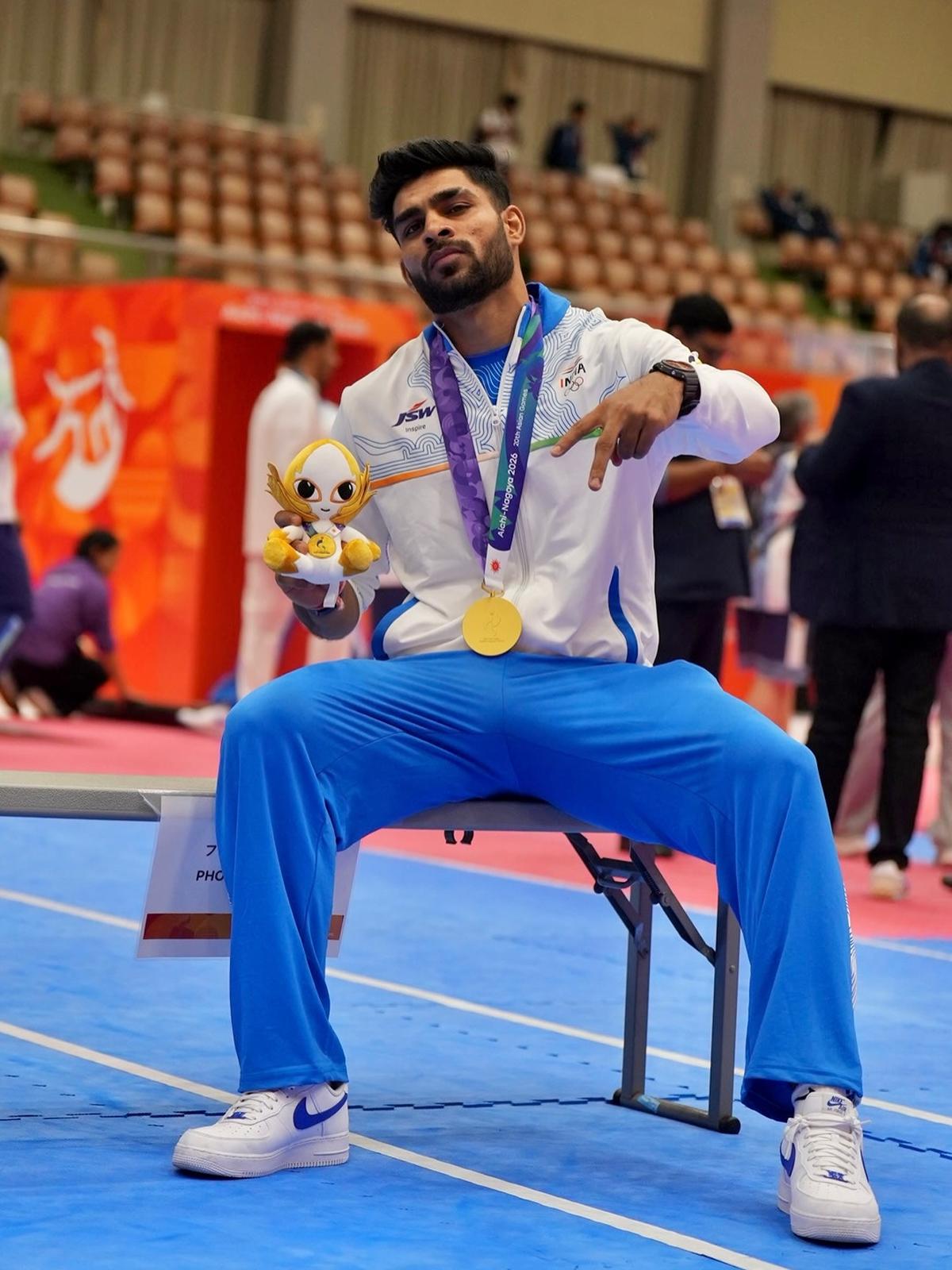
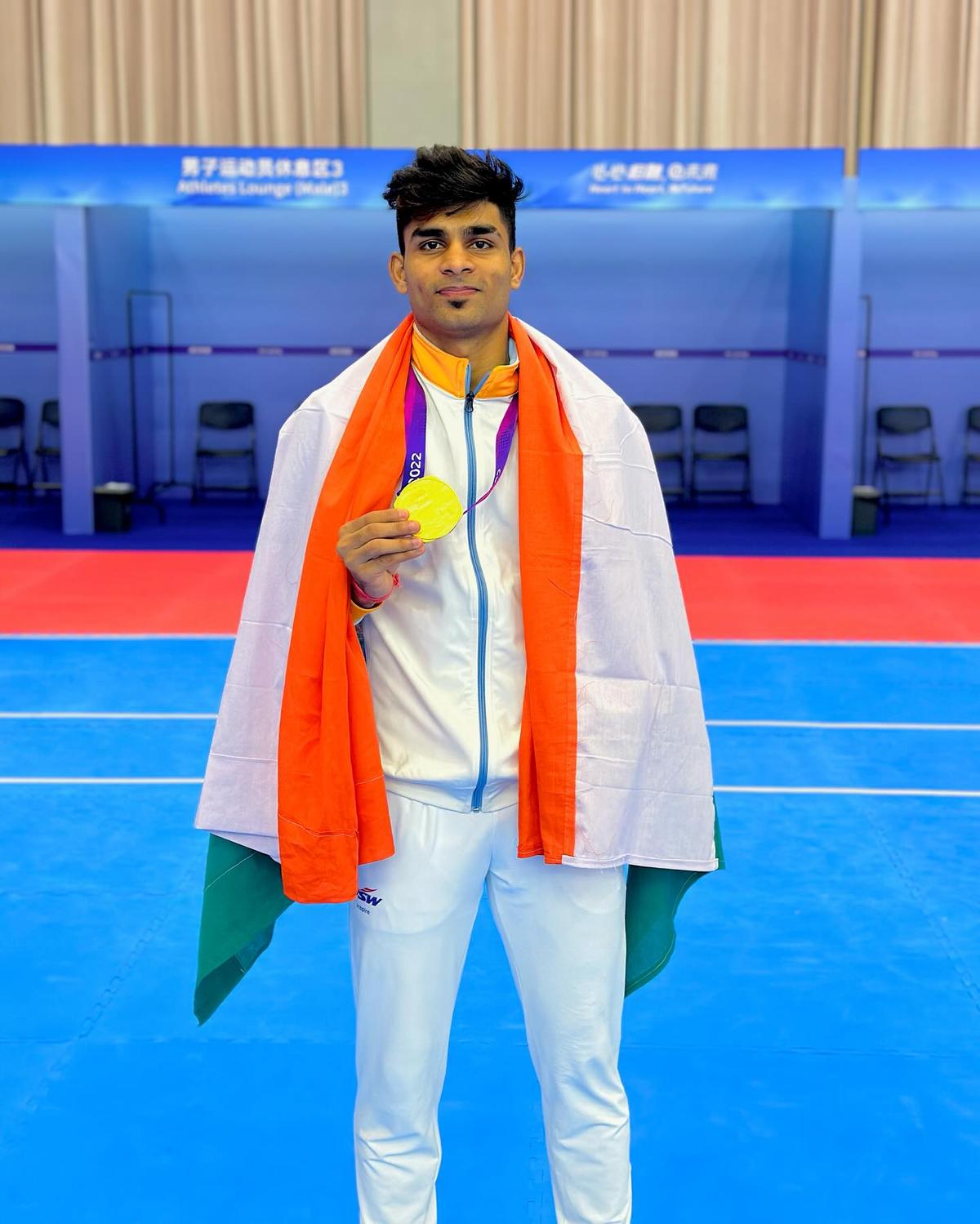
In Nagoya on Saturday, Inamdar stood on the mat as India beat Iran to win the men’s kabaddi gold. It is his second Asian Games gold medal. The distance between those two versions of Inamdar is difficult even for him to comprehend.
“It still feels like a dream to me,” he said. “I often think about how someone who didn’t even have food at home holds two international medals.”
The medals are the latest chapter in a journey that began at Takli Bhan in Maharashtra’s Ahilyanagar district, where Inamdar grew up as one of five children.
His father passed away when he was young, leaving his mother to raise the family. She worked in other homes, doing household chores and washing utensils, to keep the family going. Later, his elder brother Waseem joined the police force and took responsibility, including helping arrange the marriages of their two sisters.
Money was scarce. Inamdar remembers growing up in a house without proper flooring or roof. There were times when even food was difficult to come by.
So, he learnt early that work meant survival. At 11 or 12, he collected discarded bottles and sold them to scrap dealers to buy food. Later, he worked at tea stalls and juice bars, washed utensils, cleaned washrooms and worked in farm fields. He admits he stole sometimes. “It was just to fill my stomach. I faced many hard situations without letting them break me,” he said.
Through all of it, there was one constant: kabaddi. Waseem was a well-known player across several districts while senior player Rahul Bhor also inspired him. Inamdar wanted to establish his own identity. “No matter how long I worked during the day or night, I always went to the ground to train,” the raider said.
Inamdar… a special talent | Photo Credit: Special Arrangement
Kabaddi was a sport he could afford. It required little equipment, and the village ground was enough. For a boy with very little money, it offered something priceless: a chance. By the time he was 14 or 15, Inamdar was travelling alone to tournaments to compete in the 50kg and 55kg categories. He earned between ₹200 and ₹500 a match.
The money was little, but it mattered. It bought him meals when he might otherwise have gone hungry. More importantly, it kept him moving from one tournament to the next.
The path was neither smooth nor uninterrupted. In 2014, while India competed at the Asian Games, Inamdar was at home nursing a fractured leg and following kabaddi on television. His life at the time seemed a world away from an international career. “I was just watching kabaddi on TV. But I believe God’s plans are always better. My hard work never stopped.”
He kept working. Eventually, the Pro Kabaddi League changed the scale of his life.
In his first season, he earned ₹8 lakh. For someone who had once struggled to put food on the table, the money was almost incomprehensible. “Eight lakh felt like eight crore to me,” he said.
He did not forget where he had come from. With his first major earnings, he bought a gold necklace for his mother. Kabaddi had given him something that had once seemed almost impossible: financial security, recognition and a career. He went on to captain Puneri Paltan and establish himself as one of India’s leading players.
Then came the international medals. Inamdar won his first Asian Games gold in Hangzhou. Three years later in Nagoya, he has another. And once again, the final was against Iran — the one opponent which has consistently pushed India hardest at the Asian Games. “Iran is generally the most challenging opponent for us,” Inamdar said. “It has a strong defence and has very experienced players like Fazel Atrachali, who played in his fifth Asian Games.”
For Inamdar, beating such a formidable opponent made the gold more meaningful. “A tough challenge makes winning the gold medal feel even more rewarding.”
But for Inamdar, the significance of the medal lies beyond the result. It is the culmination of a journey that began when he was a boy travelling across Maharashtra for a few hundred rupees, when he collected scrap bottles for food and worked whatever jobs he could find before heading to the kabaddi ground.
Today, he tries to pass on that experience to younger players.
At his training ground in Thane, he speaks to juniors, particularly those from underprivileged backgrounds, about his own journey. He wants them to understand that difficult circumstances do not have to determine where they end up. “I want young, underprivileged players to dream big and aim to achieve even more than I have. I want them to know that whatever happens, they shouldn’t stop working hard. They shouldn’t stop believing,” he said.
source: http://www.thehindu.com / The Hindu / Home> Sports / by Jonathan Selvaraj / September 28th, 2026
Berar (During British in Hyderabad), now in MAHARASHTRA :
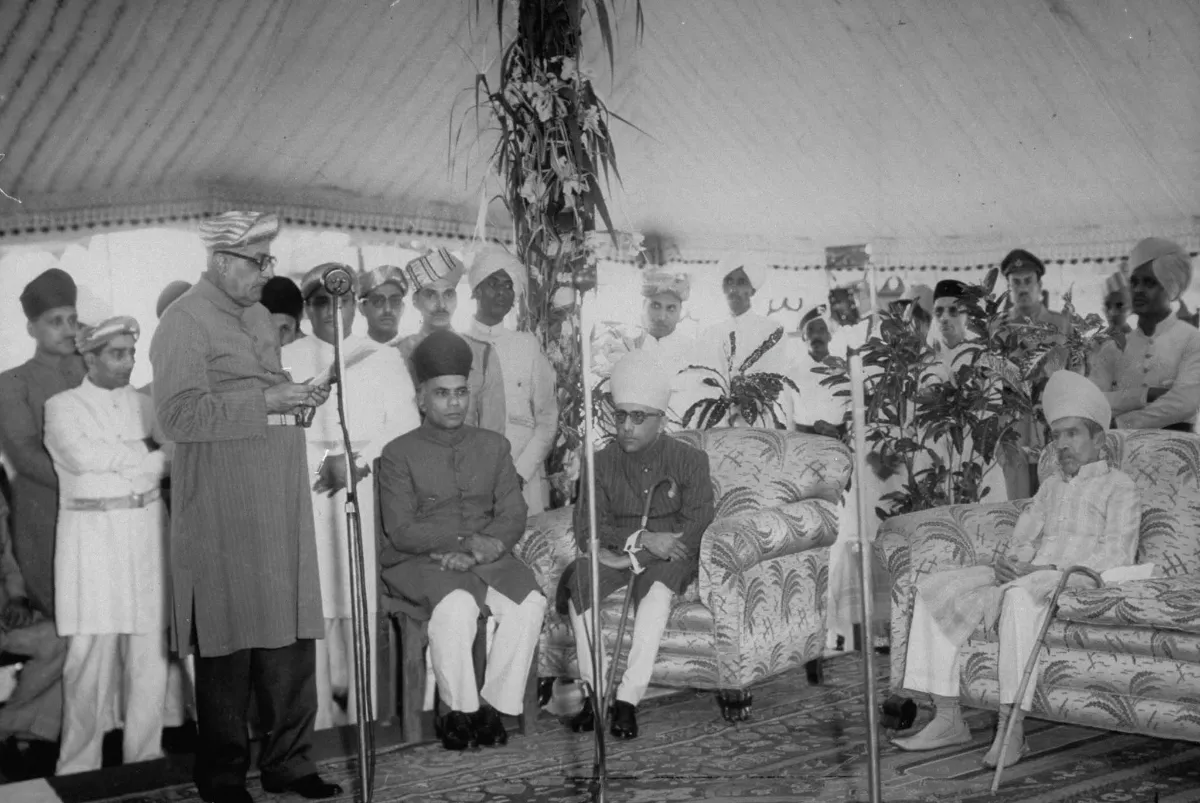
Nizam Osman Ali Khan of Hyderabad and Berar, Himayat Ali Khan the Prince of Berar listening to a presentation
The universal ideals of Islam found a distinctive expression in the historic region of Berar, where the faith spread not only through political authority but also through the influence of scholars, Sufis, jurists, poets, educators and public servants. Over the centuries, Berar became a centre of Islamic learning, Urdu and Persian literature, social reform and public service, producing generations whose lives reflected the Qur’anic ideals of knowledge, justice, compassion and service to humanity.
Situated in the heart of the Deccan, Berar emerged as a meeting ground of diverse cultures and traditions. Mosques, madrasas, khanqahs, libraries and charitable institutions shaped both the religious and intellectual life of society. Islamic scholarship developed in dialogue with local cultural currents, creating a rich and distinctive regional heritage.
The Muslims of Berar were notable not merely for their attachment to religious tradition but for their active engagement with the wider world. They served as judges, administrators, teachers, physicians, lawyers, bankers, writers, journalists, freedom fighters and philanthropists, contributing significantly to the social and cultural development of the region. Their achievements demonstrate that Islam, when lived in its authentic spirit, inspires excellence in every sphere of human endeavour.
Unlike historical accounts that focus mainly on rulers and political events, this work highlights individuals whose enduring influence arose from scholarship, moral leadership and public service. Some belonged to the medieval period, when Islam was taking firm root in the Deccan through scholars and Sufi saints; others flourished under the Bahmani, Imad Shahi, Mughal and Hyderabad administrations; many emerged during the colonial era and in independent India, responding creatively to changing social and educational challenges.
Their fields of achievement varied greatly, yet they were united by common values: knowledge as a sacred trust, integrity as the foundation of leadership, and service to humanity as an expression of faith. Whether they taught in madrasas, administered public institutions, wrote poetry, healed the sick, established schools or worked quietly for community welfare, each contributed in some measure to the intellectual and moral life of Berar.
The spread of Islam in Berar was gradual and deeply connected to institutions of learning and public welfare. From the fourteenth century onward, the growth of towns, educational centres and religious institutions transformed the region into an active participant in the intellectual currents of the medieval Deccan. Persian scholarship flourished for centuries, later enriched by the development of Urdu literature, poetry and historical writing.
Equally important were the contributions of ordinary men and women whose names seldom appear in conventional histories. Teachers in village maktabs, imams guiding local congregations, merchants supporting charitable works and families nurturing learning within the home collectively sustained the spiritual and cultural life of the community. Their quiet efforts formed the unseen foundation upon which more celebrated achievements were built.
The personalities presented in the following pages represent only a small cross-section of this rich inheritance. Some attained national prominence, while others exercised influence within local communities. Together they illustrate how Islamic values were translated into scholarship, public service, literature, education, jurisprudence, spirituality and community leadership across successive generations.
This section is therefore more than a collection of biographies. It is a tribute to a civilisational tradition that flourished in Berar and formed an integral part of India’s composite cultural heritage. In remembering these distinguished men and women, we preserve not merely their personal achievements but also the ideals they embodied—faith enlightened by reason, learning tempered by humility, and devotion expressed through selfless service to society. Their legacy continues to inspire future generations and deserves an honoured place in the history of both Berar and Indian Islam.
The Modern Legacy
Berar’s rich intellectual traditions continued into the modern era through its judicial lineages, literary circles, educational institutions, and public service. Madrasas, mosques, khanqahs, libraries, and scholarly households remained the custodians of an intellectual culture that regarded knowledge as an amanah—a sacred trust to be exercised with integrity, wisdom, and responsibility for the common good.
Across the Bahmani, Imad Shahi, Mughal, and Asaf Jahi periods, the Qazis of Berar successfully adapted to changing political systems without compromising the ethical foundations of their office. Their authority rested not upon political power but upon scholarship, moral integrity, and the confidence of the communities they served. This remarkable continuity enabled the House of Qazis to maintain its influence even as successive dynasties transformed the Deccan’s administrative landscape.
With the advent of modern India, this legacy assumed new forms. Descendants of Berar’s scholarly traditions emerged as judges, advocates, parliamentarians, educationists, scientists, physicians, administrators, industrialists, writers, entrepreneurs, and spiritual leaders. While their professional pursuits diversified, they remained united by a shared commitment to justice, learning, ethical leadership, and public service. In doing so, they demonstrated how a centuries-old culture of scholarship could flourish within the institutions of a democratic nation.
Foremost among these distinguished personalities stands Justice Mohammad Hidayatullah (1905–1992), one of the greatest jurists produced by the erstwhile Central Provinces and Berar. Educated at Morris College, Nagpur, before proceeding to Trinity College, Cambridge, and Lincoln’s Inn, he returned to practise at the High Court of the Central Provinces and Berar. His brilliant legal career included serving as Advocate General, Judge, and Chief Justice of the Nagpur High Court before his elevation to the Supreme Court of India in 1958. In 1968, he became India’s first Muslim Chief Justice. He subsequently served the nation with distinction as Acting President of India and later as Vice President of India, embodying the highest ideals of constitutionalism, judicial independence, and public service.
The biographical sketches that follow present some of the most eminent representatives of Berar’s modern legacy. Though drawn from diverse professions and walks of life, each reflects the enduring values that have characterised the region’s intellectual and spiritual heritage: scholarship, integrity, compassion, and an unwavering commitment to serving humanity.
Kazi Syed Karimuddin belonged to the distinguished Qazi family of Berar, a lineage renowned for its contributions to Islamic jurisprudence, education, and public service. A respected lawyer, parliamentarian, and statesman, he combined professional distinction with an unwavering commitment to constitutional values. As an active member of the Constituent Assembly of India, he made thoughtful and principled interventions in the framing of the Constitution, particularly in defence of civil liberties, minority rights, and the guarantees of equality, freedom, and the rule of law that now form the bedrock of the Republic. Through his legal practice, public service, and constitutional vision, he strengthened the Qazi family’s enduring reputation for scholarship, integrity, and enlightened leadership while promoting education, communal harmony, and ethical public life.
Kazi Syed Ghiyasuddin belonged to the eminent hereditary Qazi family of Berar, renowned for its legacy of judicial scholarship and public leadership. A distinguished statesman of Maharashtra, he served as a Cabinet Minister for over a decade during the tenure of Chief Minister Y. B. Chavan. He later held several key portfolios in the State Government, exemplifying the family’s enduring tradition of service, integrity, and administrative excellence.
Justice Mohd. Mujibuddin Qazi served with distinction as a Judge of the Bombay High Court, being appointed an Additional Judge in September 1981 and confirmed as a permanent Judge in December 1982. Widely admired for his judicial scholarship, integrity, fairness, and balanced judgments, he retired in February 1992 after a distinguished career devoted to the administration of justice. Following his retirement, he served as Chairman of the Maharashtra Administrative Tribunal and later as Chairman of the Anjuman Hami-E-Islam Trust, continuing his distinguished contribution to public life and educational administration.
Justice Mohd. Arifur Rahman Khan was a distinguished member of the higher judiciary whose career was marked by scholarship, integrity, and judicial independence. Through his service on the Bench, he upheld constitutional values and the rule of law while contributing significantly to the administration of justice. His achievements reflect Berar’s enduring legacy of legal excellence.
Justice Zaka Azizul HaqHaq is a distinguished former Judge of the Bombay High Court, serving principally at the Nagpur Bench. Elevated to the Additional Judge rank in 2013 and later confirmed as a permanent Judge, he became widely respected for his judicial scholarship and integrity. Following his retirement, he was designated a Senior Advocate by the Supreme Court of India. He was appointed sole Administrator of the Anjuman Hami-E-Islam Trust, one of Nagpur’s foremost educational institutions, where he has continued to render distinguished service in educational administration and public life.
Dr Syed Mahmood Hussain (S. M. H.) Khatib was an eminent zoologist, pioneering entomologist, and former Head of the Department of Zoology at the Institute of Science, Nagpur. His outstanding research advanced entomological studies in Central India and inspired generations of scientists. Rashtrasant Tukadoji Maharaj Nagpur University perpetuates his memory through the Dr S. M. H. Khatib Memorial Gold Medal and the S. M. H. Khatib Memorial Entomology Research Forum.
Dr Fauzia Khan traces her lineage to the Naqshbandi spiritual tradition through her father, Dr Zafar Naqshbandi, a distinguished physician of Aurangabad. She is a prominent politician from Maharashtra and an advocate of women’s empowerment, education, and public welfare. She made history as the first Muslim woman to serve as a Minister in the Maharashtra Government, holding the portfolios of Education, Health, and Women & Child Development. A former Member of the Rajya Sabha, she has devoted her public life to advancing inclusive governance, social justice, and the welfare of women and marginalised communities.
Qazi Syed Sirajuddin belonged to the distinguished hereditary lineage of the Qazis of Berar. He was a scion of the historic Qazi family of Kalamb, whose judicial and religious authority extended over several generations. Associated with the honorary office traditionally held by the family, he upheld its long-established reputation for integrity, scholarship, and public service. Through his standing within the community, he helped preserve the prestige of an institution that had long served Berar as a guardian of justice, Islamic learning, and moral leadership, while sustaining the family’s enduring legacy of civic responsibility.
Manzoor Hussain Shor (1916–1991) was a distinguished Urdu poet born in Amravati, Berar, where he first established his literary reputation. Following the Partition of India, he migrated to Pakistan and became a respected poet, critic, academic and teacher, later serving at the University of Karachi. His landmark poetry collection, Nabz-e-Dauran (1959), established him as a leading voice of modern Urdu nazm, while subsequent works further enhanced his literary stature. His poetry combined classical elegance with modern sensibilities, preserving the rich literary heritage of Berar while making a lasting contribution to Urdu literature across the subcontinent.
Dr Syed Naimuddin was an eminent scholar of Urdu and Persian who served with distinction as Professor, Head of the Department, and later Principal of the Government Vidarbha Institute of Science and Humanities, Amravati. His pioneering research in Persian and Indo-Turkish literary studies earned international recognition, and one of his scholarly works was published by the Government of Turkey—a rare honour reflecting the global appreciation of his academic contributions. Through his teaching, research, and literary scholarship, he made a lasting contribution to the advancement of Urdu and Persian studies in India.
Dr Syed Rafiuddin Qadri was a distinguished scholar of Arabic and Islamic Studies, renowned for his profound erudition and lifelong dedication to higher learning. A recipient of the President’s Award for Arabic, he earned national recognition for his outstanding contribution to Arabic language and Islamic scholarship. He was also the son-in-law of the revered Sufi saint, Peer Nahe Miyan of Bhopal, reflecting his close association with a distinguished spiritual lineage alongside his own remarkable academic achievements.
Wajida Tabassum was an acclaimed Urdu novelist and short-story writer born in Amravati, Berar. Later associated with Hyderabad, she emerged as one of the most distinctive voices in modern Urdu fiction. Renowned for her bold narrative style and unflinching portrayal of Hyderabadi aristocratic society, gender relations and social change, her works challenged conventional norms and secured her a prominent place in twentieth-century Urdu literature.
Manzar Bhopali (Syed Ali Raza) was born in Amravati, Berar, and is one of the most celebrated contemporary Urdu poets of India. Widely admired for his powerful recitation and lyrical expression, he has represented Urdu poetry at prestigious national and international mushairas. His poetry, rooted in classical tradition yet responsive to contemporary concerns, has earned him recognition across the Urdu-speaking world.
Qaisar Amravatwi was a distinguished Urdu poet and writer born in Amravati, Berar. A respected representative of the classical literary tradition, he contributed significantly to the development of Urdu poetry through his refined diction, literary scholarship and elegant style. His writings enriched the cultural life of Berar and secured him a lasting place among the region’s notable literary figures.
Dr Bano Sartaj was born in Pandharkawada, Yavatmal district of erstwhile Berar. Dr Bano Sartaj is a distinguished fiction writer, humorist, translator and educator. Former Principal of Lal Bahadur Shastri College of Education, Bilaspur, she has made significant contributions to Hindi and Urdu children’s literature. Through her creative writings and academic engagement, she has enriched literary culture while promoting education and imagination among younger generations.
Dr Syed Firozuddin Qadri was a distinguished scholar of Islamic thought and Urdu literature. His doctoral research on Shah Waliullah Dehlawi made a significant contribution to the understanding of one of the greatest reformers, theologians, and intellectual figures of eighteenth-century India. Through his teaching, research, and scholarly writings, he enriched the fields of Islamic studies and Urdu scholarship while upholding Berar’s enduring tradition of learning and intellectual inquiry.
Syed Saulat Hussain Kazi served with distinction as a District Judge and earned widespread respect for his impartiality, legal scholarship, and administrative ability. Though descended from the Khateeb family, Saulat Husain retained the title of Kazi because his branch held the hereditary Qaziat of Anjangaon. Besides his public standing, he was an accomplished writer and reciter of devotional na’ats, earning admiration for his literary and religious contributions. He was an accomplished mystic poet whose writings reflected spiritual insight and literary refinement. His wife, Mrs Surayya Saulat, was a poet whose literary talent found expression in a published collection of poetry.
Shaukat Husain Khateeb e belonged to the distinguished Khateeb family of Ellichpur (Achalpur), a lineage closely associated through matrimonial ties with several eminent Kazi families of Berar. He served as Assistant Director of Education in the erstwhile Hyderabad State under the Nizam.
Dr G. S. Khwaja, a native of Patur, Akola district, is an eminent historian, epigraphist, scholar of Arabic and Persian inscriptions, medieval numismatics, Islamic calligraphy, and architecture.After completing his postgraduate studies in Arabic and Persian literature and journalism, he obtained his Ph.D. from Nagpur University. Retired s Director, Epigraphy, in 2016.A recognised khattat (calligrapher) and scholar of Indian Islamic heritage, he authored important works including Mashaheer-i-Berar Biographies (2005), which preserves the memory of distinguished personalities associated with Berar’s historical and cultural tradition.
Syed Qasim Rasool Ilyas, son of Late Syed Akhtar Husain, represents the contemporary intellectual and public leadership tradition of Berar.He obtained his Ph.D. in Chemistry from Nagpur University in 1983, after completing his M.Sc. and B.Sc. from Nagpur institutions.Alongside his academic background, he has contributed to journalism, public affairs, and social issues. He was associated with the founding of the Welfare Party of India in 2011 and serves as its National President.He has also been associated with the All India Muslim Personal Law Board as a senior member and spokesperson, contributing to public discourse through writing, lectures, and organisational work.
Khan Mohammad Azhar Hussain was a distinguished public figure from Akola who served as a Minister in the Government of Maharashtra and represented the Akola Assembly constituency in the Maharashtra Legislative Assembly. Known for his integrity and commitment to public welfare, he worked for educational advancement, minority welfare and regional development. His enduring association with educational institutions and community service earned him wide respect in Berar’s public life.
Dr Mirza Rafi Ahmad Baig, affectionately known as “Mirza Express,” spent much of his later life in Amravati, from where he captivated audiences across Maharashtra through more than 6,000 performances. His residence, aptly named Mirza Express, became a landmark for admirers of his wit, Varhadi humour, poetry and literary brilliance. Through his unique blend of satire, storytelling and cultural insight, he emerged as one of the finest ambassadors of Varhadi literature and Berar’s rich literary heritage.
Dr Humayun Athar Khatib is a distinguished ophthalmic surgeon from Berar who has earned international recognition for excellence in eye care. After advanced specialist training in Edinburgh, Scotland, he served with distinction in the Kingdom of Saudi Arabia, where his clinical expertise and compassionate service won wide professional respect. His outstanding contributions to ophthalmology have enhanced the reputation of Berar’s medical fraternity both in the Middle East and internationally.
Hamid Husain Khateeb was a distinguished Islamic scholar, accomplished orator, and prolific writer who served as the All-India Secretary of Jamaat-e-Islami Hind. Widely admired for his eloquence, intellectual depth, and leadership, he made significant contributions to Islamic thought and public discourse. Through his scholarship and organisational work, he promoted religious education, moral reform, and social awareness.
Sulaiman Khateeb was the foremost exponent of Dakhani Urdu poetry and was celebrated as the Badshah-e-Mizahiya Shayari. Through humour, satire, and vivid portrayals of everyday Deccan life, he elevated Dakhani into a respected literary medium while preserving its distinctive language, culture, and enduring literary heritage.
Ahmad Husain (Talegaon)was remembered as a prominent literary and political figure. His family’s enduring commitment to scholarship is reflected in later generations, including his grandson SQRIlyas, a noted authority on Muslim Personal Law and a prominent member of the All India Muslim Personal Law Board.
Nawab Anees Ahmad Khan graduated in Commerce from Jamia Millia Islamia, New Delhi. A distinguished philanthropist, educationist, and community leader, he devoted his life to the advancement of education and public welfare in Berar. He rendered valuable service as a member of the Maharashtra State Urdu Academy, the Berar Muslim Education Society, and the Vidarbha Youth Welfare Society.
Shafaqat Husain Kazi He was a distinguished public servant who served as the Honorary Magistrate of Anjangaon during the late nineteenth and early twentieth centuries. Renowned for his exceptional command of English, sound administrative acumen, and unimpeachable integrity, he enjoyed widespread respect among both the public and the civil administration. His career reflected the ideals of justice, enlightened leadership, and civic responsibility, leaving behind a legacy of public service that continued to inspire subsequent generations of the Kazi family.
Khan Bahadur Azmat Husain Khateeb was a distinguished religious scholar and public figure whose learning, integrity, and service earned him the prestigious title of Khan Bahadur. As Khatib of the historic Jama Masjid of Ellichpur, he played a pivotal role in preserving the region’s rich Islamic scholarly tradition while promoting education, religious instruction, and community welfare. Revered for his eloquence, moral leadership, and commitment to public service, he remains one of the most respected figures in the intellectual and religious history of Berar.
Syed Zulfiquar Hussain Khatib was the son of Syed Azmat Hussain Khatib and Mohammadi Begum. After obtaining his LL.B. from Aligarh Muslim University, he devoted himself to legal practice, public service, and the preservation of the distinguished religious and educational traditions associated with the historic Jama Masjid of Achalpur.
Zehra Begum Khatib received her education at home, when formal schooling for girls was uncommon. A gifted Urdu and Persian poet, her literary works were deeply rooted in classical Islamic learning, ethical values and traditional literary culture. Her poems became for her the primary medium of communication. Alongside her devotion to family life, she actively encouraged education, particularly for girls. She is remembered for her literary refinement, cultural influence, and enlightened vision, which harmonised religious learning with intellectual cultivation. She rendered her poems in a mellifluous tone.
Bughdadi Begum was a distinguished Urdu poetess from Berar whose literary talent earned her admiration in the region’s vibrant cultural circles. Her poetry, frequently recited at mushairas, was celebrated for its elegance, sensitivity and expressive beauty. Unlike poets whose writings centred on classical religious themes, her work explored the experiences, emotions and everyday concerns of ordinary life with remarkable grace and insight. She occupies a respected place in Berar’s rich Urdu literary tradition.
Syed Akram Husain Khatib studied under the Calcutta Board before pursuing higher education at Aligarh Muslim University. He served as Rationing Officer at Nagpur from 1945 to 1955 before assuming the hereditary office of Khatib of Ellichpur. Remembered for his generosity and compassion, he devoted his life to assisting students, patients, and families facing social and legal difficulties. His humility, scholarship, and spirit of public service earned him enduring respect throughout Berar.
Syed Abdur Rauf Shah was one of the foremost political leaders produced by Berar during the closing years of British rule. A Member of the Legislative Assembly in the Central Provinces and Provincial President of the All-India Muslim League, he worked closely with Quaid-e-Azam Muhammad Ali Jinnah in strengthening the League’s organisation. At the historic Lahore Session of March 1940, he emerged as one of the principal spokespeople of the Muslims of the Central Provinces in support of the Lahore Resolution. He also served as Salar-i-Ala (Supreme Commander) of the Muslim League National Guards in the region.
Sami Khatib was an eminent industrialist and philanthropist, and the founder of one of India’s leading pharmaceutical enterprises. Widely recognised as a pioneer of the Indian pharmaceutical industry, he received the prestigious Vijay Ratna Award in 1991. He subsequently served on the Government of India’s Drugs Advisory Committee (1996–1999). Through the Sinkhai Foundation and his long association with Anjuman-i-Islam, Maharashtra College, and Kamala Nehru College of Pharmacy, he rendered distinguished service to healthcare, higher education, and philanthropy.
Mohammad Mohibbul Haq was a distinguished parliamentarian of the Indian National Congress who represented the Akola Parliamentary Constituency in the Third Lok Sabha after his 1962 election. A respected public representative from Vidarbha, he actively participated in parliamentary affairs and consistently worked for the region’s political, educational, and economic development.
K. M. Asghar Husain represented Akola in the Fourth and Fifth Lok Sabhas as a distinguished parliamentarian of the Indian National Congress. Throughout his public life, he devoted himself to advancing Vidarbha, earning widespread respect for his integrity, accessibility, and steadfast commitment to democratic values.
Qazi Syed Shahabuddin obtained postgraduate qualifications in the humanities and law. He is remembered among the eminent personalities associated with Berar’s intellectual heritage for his contributions to education, scholarship, and community life. His career reflected the family’s enduring commitment to learning and public service.
Mohd Izhar Qazi is a distinguished human resource professional based in Mumbai. He has served as a trustee of one of India’s leading minority educational institutions and has actively contributed to educational administration, institutional development, and community service. His professional accomplishments demonstrate the Qazi family’s continued engagement with modern educational and social institutions.
Razia Sultana Ahmed was a distinguished educationist and social worker based in Mumbai. She was the first woman from Berar to obtain a postgraduate degree from Osmania University, Hyderabad. Throughout her career, she occupied leadership positions in several Muslim educational and social organisations, becoming a pioneer in promoting women’s education and social empowerment.
Khalida Sultana Qazi obtained her postgraduate degree in Philosophy from Osmania University. Widely respected as an authority on the philosophy and thought of Sir Muhammad Iqbal, she made significant contributions to the study of Islamic philosophy, comparative thought, and modern Muslim intellectual history through her scholarship and public lectures.
Dr Rana Noor Siddiqui is the founder of the Begum Noor Jehan Salam Ahmed Trust, based in Yavatmal district, an educational trust dedicated to the advancement of learning and women’s empowerment. Under her visionary leadership, the Trust has established and nurtured several educational institutions, beginning with the Sunrise English Medium Convent, Wani, followed by the Noor Jahan Begum Salam Ahmed Arts and Commerce College, Wani, and the Noor Jahan Begum Salam Ahmed Women’s College of Law, an exclusive institution devoted to women’s legal education.
Qazi Syed Moinuddin was a prominent advocate practising at Yavatmal. Widely respected for his integrity, legal scholarship, and public spirit, he enjoyed an excellent reputation within the legal fraternity. His distinguished professional career strengthened the longstanding association of the Qazi family with the administration of justice.
Prof. Mohd. Ahtemad Qazi devoted his academic career to the teaching of Zoology. An inspiring teacher and respected scholar, he earned the admiration of generations of students through his scholarship, dedication, and commitment to scientific education. His work exemplified the growing contribution of the Qazi family to higher education.
Prof. Syed Salahuddin Qazi was an accomplished teacher of Zoology at a leading college. Remembered for his commitment to scientific education and academic excellence, he inspired generations of students through his disciplined scholarship and devotion to teaching.
Prof. Syed Minhajuddin Qazi was a distinguished educationist and social figure of Nagpur. A respected Professor of Chemistry, he devoted his career to higher education while actively participating in educational, literary, and community initiatives. His influence extended far beyond the classroom through his mentorship of students and involvement in public life.
Qazi Syed Saifuddin graduated in Science from Aligarh Muslim University after securing a merit scholarship. Deeply committed to humanitarian service, he made his residence in Nagpur a welcoming home for students from Yavatmal and neighbouring districts pursuing higher education. His generosity and hospitality benefited countless young scholars.
Prof. Abrar Hussain Khatib earned a doctorate in Physics and taught at a leading college. Alongside his distinguished academic career, he served as the Khatib of Ellichpur, exemplifying the harmonious integration of religious scholarship with modern scientific education. He remains an outstanding example of intellectual versatility.
Syed Hishamuddin Khatib was a prominent political leader of Balapur. Serving for many years as President of the Municipal Council, he earned widespread respect for his civic leadership, administrative ability, and dedication to public welfare. His long public career contributed significantly to local self-government.
Syed Natiquddin Khatib represented Balapur in the Maharashtra Legislative Assembly and also served as Chairman of the Municipal Council. His distinguished public career reflected his commitment to democratic governance, efficient administration, and community development, making him one of the region’s respected political leaders.
Syed Mukarram Husain Khateeb, currently serving his third consecutive unopposed term as President of the iconic, over-a-century-old Sadar Muslim Library, Nagpur, established in 1922, has also been deeply involved in strengthening school education and uplifting students from poor and working-class families, often extending financial assistance to deserving pupils. With a collection of more than 30,000 books in classical and modern languages, the Library has long been a distinguished centre for promoting Berar’s rich literary and cultural heritage.
Abdul Qadar Khatib was a distinguished educationist and scholar of Urdu, Arabic, and Persian. He taught these classical languages at a leading college in Vidarbha and inspired generations of students through his scholarship, simplicity, and devotion to learning. His intellectual legacy continued through his son, Dr Humayun Khatib, an internationally respected ophthalmic surgeon based in Edinburgh.
Dr Naim Durdana Kazi was an eminent scholar of Urdu, Persian, and Arabic, holding Triple M.A. degrees, a PhD, and the traditional qualifications of Maulvi, Munshi, and Fazil. She served as Principal of Bapuji Aney Mahila Mahavidyalaya, Yavatmal, and was a member of the Boards of Studies of both Nagpur and Amravati Universities. Her research on Allama Rashidul Khairi and her contribution to Urdu scholarship earned her widespread academic respect.
Mardan Ali Khan was a distinguished jurist, Urdu poet, and public figure. A recipient of the Nagpur University Gold Medal in Urdu, presented by Prime Minister Jawaharlal Nehru, he began legal practice at Akola before serving as a Civil Judge and First Class Magistrate. Returning to the Bar in 1973, he authored the acclaimed ghazal collection Sarood-e-Rafta, leaving an enduring legacy in law, literature, and public service.
Dr. Mansha-ur-Rahman Khan was a distinguished Professor of Urdu, celebrated poet, literary critic, and scholar. Through his teaching, research, and creative writings, he made enduring contributions to the Urdu language and literature. Widely respected as a mentor and public intellectual, he enriched the literary and cultural heritage of Berar through his refined scholarship and poetic expression.
Syed Ejauddin Tariq Qazi is a distinguished civil engineer who graduated from the Maulana Azad National Institute of Technology (MANIT), Bhopal. He also obtained professional qualifications in accountancy in the United Kingdom and is presently settled in London. His successful international career reflects the continuing professional excellence and global outlook of the Qazi family.
THE ENDURING LEGACY OF BERAR
The history of Berar’s scholarly families is ultimately the history of ideas carried through generations. Kingdoms disappeared, political frontiers shifted, and administrative systems were repeatedly transformed, yet the ideals that sustained these families remained remarkably constant. Justice, learning, ethical leadership, and service to society continued to define their identity across nearly seven centuries.
The preservation of this legacy now assumes particular importance. Many manuscripts remain unpublished; family archives await systematic documentation; oral traditions risk disappearing as older generations pass away; and numerous scholars who contributed significantly to regional intellectual life remain absent from mainstream historical narratives. Recovering these forgotten histories is therefore not merely an academic exercise but an act of cultural preservation.
Future research must extend beyond biography to encompass the broader institutional history of Berar’s mosques, madrasas, khanqahs, libraries, schools, and courts. Such studies will reveal that the region’s intellectual life was sustained through networks of scholars whose influence extended across the Deccan, Central India, and beyond. Berar deserves recognition not merely as a geographical region but as one of India’s important centres of learning.
In remembering the Houses of Qazi, Khatib, and Qadri, we recover more than the history of distinguished lineages. We recover a vision of civilisation in which knowledge is inseparable from character, public office is inseparable from moral responsibility, and learning achieves its highest fulfilment in the service of humanity. That vision constitutes Berar’s enduring gift to India and secures its rightful place in the nation’s intellectual history.
source: http://www.muslimmirror.com / Muslim Mirror / Home> Indian Muslims / by Moin Qazi / August 04th, 2026
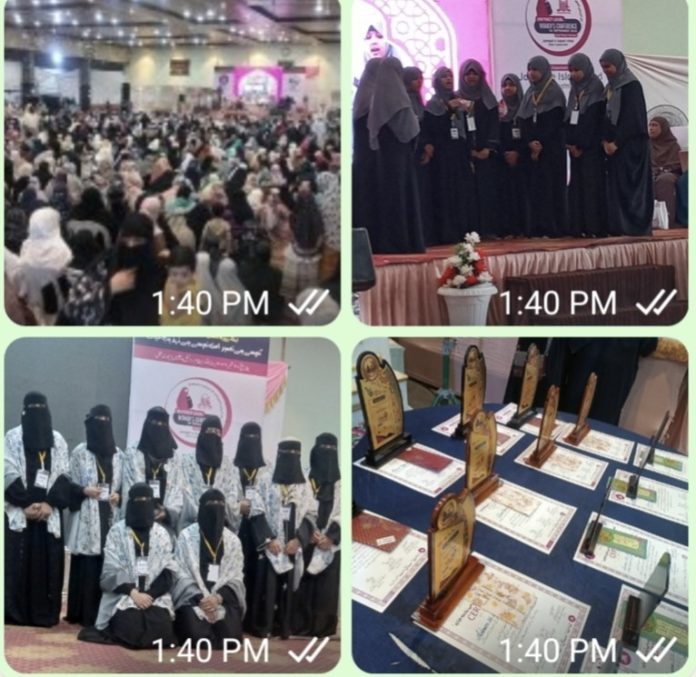
A district-level Muslim Women’s Conference was held at Royal Palace, Yavatmal, under the Women’s Wing of Jamaat-e-Islami Hind (JIH), Yavatmal (North), drawing more than 3,000 women and girls from across the district. The conference was organised around the theme “Tum Se Hai Taameer-e-Ummat, Tum Se Hai Tehzeeb-e-Hayaat,” focusing on women’s role in family life, moral values and social responsibility.
In the run-up to the event, a district-wide quiz competition was held based on Hum Aisi Banein by Mael Khaerabadi, a book on the lives of the Sahabiyaat, the female companions of Prophet Muhammad ﷺ. Copies of the book were distributed to students in high schools and colleges across Yavatmal district, with the Girls Islamic Organisation (GIO) and the Women’s Wing coordinating the effort in towns and villages.
Winners across three categories received cash prizes totalling ₹30,000, along with mementos and certificates, presented during the conference.
The presidential address was delivered by Maulana Ilyas Khan Falahi, State President of JIH Maharashtra, who spoke on the importance of prayer (Salah) as a pillar of Islamic life.
Other speakers included Prof. Mubashshira Firdaus Khan, Assistant National Secretary of the Women’s Wing; Nafisa Atiq, State Secretary of the Women’s Department, Vidarbha Region; Dr. Sabiha Khan, a member of JIH’s Representative Council; and Shameem Bano, District President of the Women’s Wing, Yavatmal. Dr. Rana Noor of Wani, a social worker and educationist involved in setting up the first women’s law college in the Vidarbha region, was also present.
Sessions covered topics including women’s role in building society, household financial management, and raising children with strong values. A separate session addressed the challenges young women face online, including social media platforms and artificial intelligence, and the need to navigate digital spaces responsibly.
The conference featured what organisers described as the first interactive panel discussion of its kind held exclusively for Muslim women on such a scale, facilitated by Dr. Uzma Shah of Wani. The panel discussed family and societal challenges and the multiple roles of Muslim women as students, mothers and community leaders, along with discussions on mental and spiritual well-being and parenting.
Children from the Children’s Islamic Organisation (CIO) performed the CIO Tarana, and the event was anchored by GIO members Aqsa Mirza and Fariha.
The concluding address was delivered by Maulana Ilyas Khan Falahi on the theme “O Daughters of Islam! You Are the Pride of the Ummah,” focusing on women’s character, values and responsibility in strengthening families and society. Organisers said the event, supported by the Yavatmal Volunteer Tehreeki Team, was conducted with discipline and coordination despite the large turnout.
source: http://www.radiancenews.com / Radiance News / Home> Latest News> Report / by Radiance News Bureau / September 29th, 2026
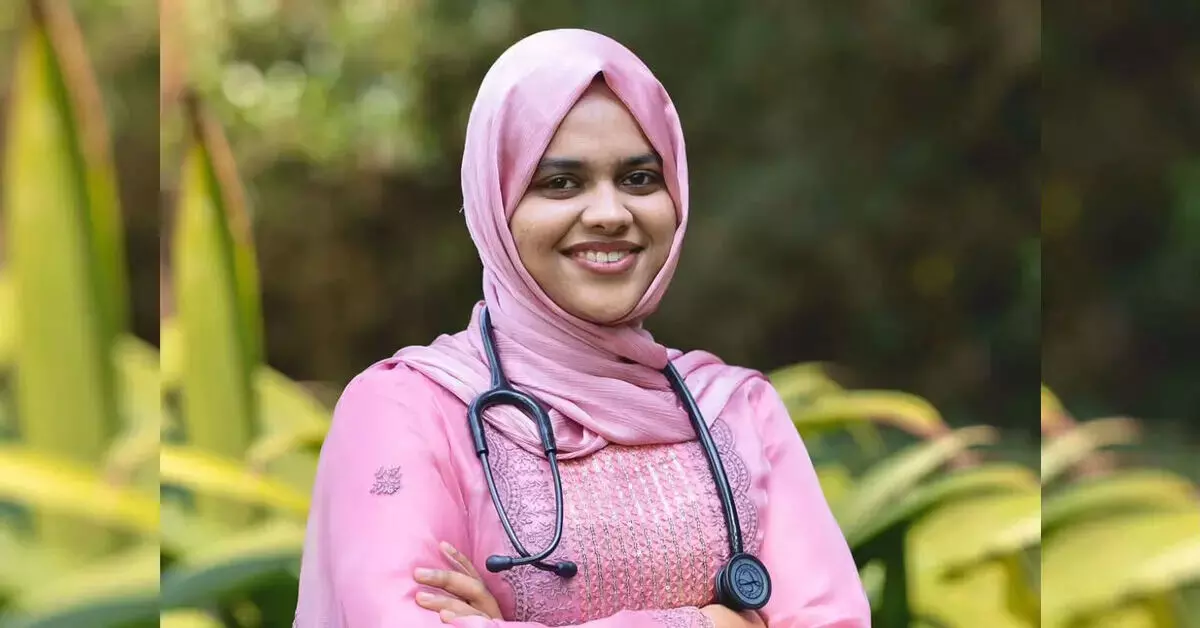
Dr Afla Rafeeq of KS Hegde Medical Academy has secured the 21st All India Rank in the NEET-PG 2026 examination, scoring 614 marks out of 720.
According to data released by the National Board of Examinations in Medical Sciences (NBEMS), 2,73,096 candidates registered for the examination, while 2,65,980 candidates appeared for the test.
Dr Afla is currently pursuing her MBBS internship at KS Hegde Hospital. During her MBBS course, she secured 13 gold medals. She now aims to pursue postgraduate studies in Radiology.
Originally from Bajpe, Afla completed her schooling up to Class 8 at Ansar School in Bajpe. She later completed her SSLC at St. Mary’s High School, Mangaluru, securing 97% marks.
She subsequently studied at Sri Chaitanya PU College, Mangaluru, where she secured 96% marks and achieved a top rank.
Dr Afla Rafeeq is the daughter of Mohammed Rafeeq and Fathima Rafeeq.
source: http://www.english.varthabharati.in / Vartha Bharati / Home> Karavali / by Vartha Bharati / September 25th, 2026
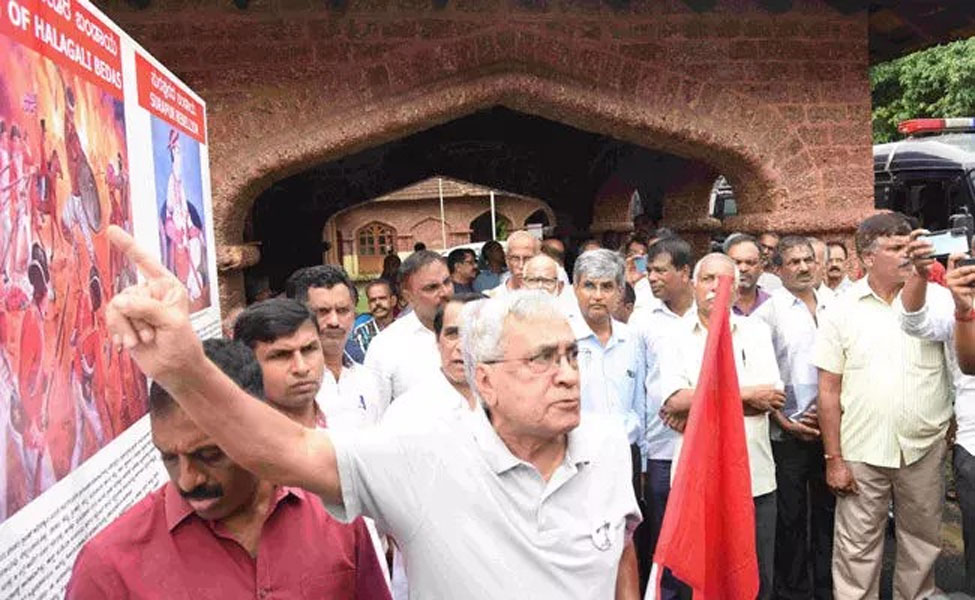
Many parts of India, including parts of Kananda-speaking states, witnessed revolts against the British Raj following the mutiny of 1857. The following 132 names of the martyrs of the 1857 War of Independence are from Karnataka (hundreds of martyrs remain unaccounted for). These included Hindus-Muslims-Sikhs as well as people of all Castes and sections, women included. These names have been gathered from Dictionary of Martyrs: India’s Freedom Struggle 1857-1947, v. 5, Ministry of Culture, Government of India & ICHR, 2018. It is based on contemporary British official documents including ‘Mutiny Records’. This list has been compiled by Dr. Shamsul Islam, former Associate Professor of Delhi University, and published as a Poster during the BV Kakkilaya Oration 2023, held at University College, Mangalore on September 9, 2023.
Koppala Durga (Fort) Battle 1858
The bloodiest anti-British rebellion was at Koppala Fort under the leadership of Bhima Rao Nadagouda, also known as Mundaragi Bhima Raya. Bhima Raya was born as the son of Ranga Rao, Tehsildar of Bellary. Bhimaraya himself served as a Mamledar (a land revenue official) in Bellary, Hoovina Hadagali, and Harapana Halli. He could not stand the exploitation of peasantry under British rule and he was finally dismissed from his position as a result of his protests against the British exploitation of the peasantry. He led the anti-tax propaganda in Dharwad and urged people to join the anti-British movement. In 1857, he gathered 300-400 people and planned a revolt at Hammigi.
However, he had to hold the plan as the information leaked and the District Collector got to know about their plan. He was a friend of Nana Saheb and the latter urged him to revolt in his letters.
He contacted various groups of Beda fighters and started accumulating arms and creating ammunition dumps at various places. He organized an anti-British alliance of patriotic chiefs like Kenchan Gowda Sirnagowda of Govenkop, Srinivas Desai of Dumbal, and Bhaskar Rao Bhave of Nargund, and raised an army of over 3,000 soldiers. On 23 May 1858, the founder of Dambal raided one such arms cache of Kenchan Gowda at Hammigi and sealed it. Rao and his comrade Soratur Desai gathered supporters and marched on Hemmigi took back all the arms and ammunition and shifted to a safer place in Shirahatti. Then he started raiding British armories in various places. Many local landowners and kings supported Bhimaraya and joined him in the revolt. When the British took Bhimaraya’s wife and kids as hostages, Bhimaraya came with his army freed his family went to the fort in Koppal, and prepared to fight with a large stock of food, arms, and ammunition. By May 30, they and Kenchan Gowda had fled to Koppal Fort after killing the security guards, looting the weapons, and attacking the treasuries at Dambal and Gadag. British gathered a large force from their stations at Dharwad, Raichur, Hyderabad, and Bellary and marched on Koppal fort. After a fierce fight, Bhimaraya fell to the bullets on 1 June 1858. British carried out brutal reprisals against Bhimaraya’s associates and supporters.
Martyrs of the Koppaladurg Battle 1858
Bhim Rao Nadgowda: Mundargi, Gadag. Leader. Fell at the battleground after gallant resistance and died on 1 June 1858.
Kenchan Gowda Sirnagowda: Hammigi, Mundaragi, Gadag. Leader. Killed during the battle near the gateway of the fort on 1 June 1858. Captured by the British during the battle, sentenced to death, and shot dead by firing squad or blown away with a cannon in June 1858
3.Bala Saheb: Kurlahalli, Mundargi, Gadag
4. Baramappa: Kurlahalli, Mundargi, Gadag.
5. Barma: Kurlahalli, Mundargi, Gadag.
6. Bani Saheb: Hammigi, Mundargi, Gadag.
7. Barmappa: Nowli, Hadagali, Ballary.
8. Basava: Mundwad, Mundargi, Gadag.
9. Basavanna: Navalagund, Dharwad.
10. Basayya: Kurlahalli, Mundargi, Gadag.
11. Basayya: Wadarhatti, Mundargi, Gadag.
12. Basayya Talari: Tahrargi, Mundargi, Gadag
13. Bawa/Baba Saheb: Kurlahalli, Gadag.
14. Beemah: Kurlahalli, Mundargi, Gadag.
15. Beemnah: Hammigi, Mundargi, Gadag.
16. Bassya: Kundgul, Dharwad.
17. Bhim: Kurlahalli, Mundargi, Gadag.
18. Bhima: Kukanur, Yelburga, Koppal.
19. Bhima: Kurlahalli, Mundargi, Gadag.
20. Bhimanna: Kurlahalli, Mundargi, Gadag.
21. Bhimappa: Hirenandihal, Koppal.
22. Burmah: Kurlahalli, Mundargi, Gadag.
23. Channappa: Betageri, Gadag.
24. Chenna: Singtalur, Mundargi, Gadag.
25. Chunia Virappa: Hammigi, Mundargi, Gadag.
26. Daud Saheb: Venkatapur, Mundargi, Gadag.
27. Durga: Kurlahalli, Mundargi, Gadag.
28. Ella: Hammigi, Gadag.
29. Eman Saheb: Kurlahali, Mundargi, Gadag.
30. Fakeer Saheb: Kurlahali, Mundargi, Gadag.
31. Girianna: Kurlahali, Mundargi, Gadag.
32. Gograppa: Hemmigi, Mundargi, Gadag.
33. Gograppa: Kurlahalli, Gadag.
34. Gurda: Hesarur, Mundargi, Gadag.
35. Hamid Sahib: Kurlahalli, Mundargi, Gadag.
36. Hammanna: Hesarur, Mundargi, Gadag.
37. Hanagowda: Gangapur, Mundargi, Gadag.
38. Hanumanna: Kurlahalli, Mundargi, Gadag.
39. Hareah Saheb: Kurlahalli, Mundargi, Gadag.
40. Hayat Saheb: Kurlahalli, Mundargi, Gadag.
41. Hayat Saib: Bannur, Koppal Hiriyappa:
42. Hesarur, Mundargi, Gadag.
43. Hulgia: Kurlahalli, Mundargi, Gadag.
44. Hunma: Waddarhatti, Mundargi, Gadag.
45. Hunnamah: Kurlahalli, Mundargi, Gadag.
46. Hussun Saib: Kurlahalli, Mundargi, Gadag
47. Jivan Sahib: Hammigi, Mundargi, Gadag.
48. Junah: Hammigi, Raichur.
49. Kajah: Kurlahalli, Mundargi, Gadag.
50. Karka: Kurlahalli, Mundargi, Gadag.
51. Karka: Hammigi, Mundargi, Gadag.
52. Karyanna: Hammigi, Mundargi, Gadag.
53. Lakshmana: Kurlahalli, Mundargi, Gadag.
54. Latchma: Bagewardi, Gadag.
55. Laxmana: Bagewadi, Mundargi, Gadag.
56. Linga: Hammigi, Mundargi, Gadag.
57. Linga: Harpanahalli, Bellary.
58. Linga: Kurlahalli, Mundargi, Gadag.
59. Madarangah: Hesarur, Mundargi, Gadag.
60. Malliah: Waddarhatti, Mundargi, Gadag.
61. Mudallaner: Kuran, Koppal.
62. Mulla (II): Kurlahalli, Mundargi, Gadag.
63. Mulla (I): Kurlahalli, Mundargi, Gadag.
64. Peeru: Hesarur, Mundargi, Gadag.
65. Pongari: Kurlahalli, Mundargi, Gadag.
66. Punee Saheb: Hammigi, Gadag.
67. Ramannah: Singatalur, Mundargi, Gadag.
68. Ranga (II): Kurlahalli, Mundargi, Gadag
69. Ranga (I): Kurlahalli, Mundargi, Gadag.
70. Sahib Husain: Kurlahali, Mundargi, Gadag.
71. Shidda: Bagwadi, Mundargi, Gadag.
72. Syed Budin: Bankapur, Haveri.
73. Tammanna: Kukanur, Yelburga, Koppal.
74. Tammayya: Hesarur, Mundargi, Gadag.
75. Timma: Kurlahalli, Mundargi, Gadag.
76. Tummanah Talari: Hesarur, Mundargi, Gadag.
77. Ukunda: Kurlahalli, Mundargi, Gadag.
78. Urvee: Hammigi, Mundargi, Gadag.
79. Vallabhadas: Bagewadi, Mundargi, Gadag.
80. Veerappa: Raichur.
81 .Vobul Doss: Begewadi, Gadag.
82. Yalya: Hammigi, Mundargi, Gadag.
83. Yllya: Hammigi, Mundargi, Gadag.
84. Balakristayya: Bhalki, distt. Bidar is a descendant of the royal family of Satara. Captured by the British and sentenced to transportation for life, died in penal servitude.
Nargund Revolt
The principality of Nargund was under British overlordship and Bhaskar Rao Bhave also known as Baba Saheb rose to the throne of Nargund in 1842. As he did not have a son, he wanted to adopt one to create an heir for Nargund. The British refused permission and this enraged Baba Saheb and he got in touch with several rulers in Karnataka like Mundaragi Bhimaraya, Surpur Venkatappa Nayaka, the Desais of Hammigi, Dambal, Soratur, and many others. He was aware of the North Indian uprising and wanted to time his revolt in June of 1857. However, he postponed the date at the last moment. In May 1858 when the British sent a force to prevent his networking with other rulers, he attacked them and brought the decapitated head of Officer Manson, the head of the British force sent to suppress him, to his fort and displayed it to the people. The British army marched to Nargund Fort on 1st June. Baba Saheb, upon realizing the treachery of his close associates sought help from Bhimrao and Kenchan Gowda. But they were busy fighting the British at Koppal. The British force killed around 70 men and burned the possessions of Saheb. Though he escaped from the fort, he was later captured at Toragal forest. He was tried and hanged at Haystack Hill at Belgaum on 12 June 1858.
Martyrs of Naragund Revolt
Bhaskar Rao Bhave: Ruler of Nargund Princely State, Gadag. Revolted against the British for the question of adoption, murdered S. J. Manson. He was caught and hanged at Haystack Hill at Belgaum on 12 June 1858.
2. Vishnu Hirekoppa alias Vishnu Kulkarni: Hirekoppa, Nargund, Gadag. Reported to have beheaded the British Officer, Manson, at Sureban on the night of 29 May 1858. Hirekoppa was captured and hanged publicly at Nargund in 1860.
3. Srinivas Veenkatadri Desai: Dumbal, Gadag. Joined the Chief of Nargund, Bhimrao Mundargi, and others on 24 May 1858. Caught and blown away with a gun on 12 June 1858.
4. Bapu: Nargund, Gadag. He was Naik (leader) of the Shetsanadis of Nargund. On the charge of assisting the Chief of Nargund in his rebellion against the British, he was caught on 10 June 1858 and hanged in front of the Petah of Nargund.
5. Arjun: Nargund, Gadag. Arrested and hanged on 24 June 1858 in front of the Petah of Nargund.
6. Basappa: Nargund, Gadag. Arrested and shot dead by firing squad at Nargund on 10 June 1858 at 5 p.m.
7. Basappa: Amargol, Nargund, Gadag. Caught on 18 June 1858 and hanged in front of the Petah of Nargund Basappa
8. Sindagi: Nargund, Gadag. Arrested and shot dead by musketry at Nargund on 12 June 1858.
9. Basappa Tambe: Nargund, Gadag. Caught and hanged at a public place at Dharwad in June 1858.
10. Bhawani Singh: Koppal, Kiledar of Koppal. Captured and shot dead
11. Fakir Mohammad: Nargund, Gadag. Arrested, shot dead by firing squad at Nargund on 10 June 1858 at 5 p.m.
12. Faras Khan: Nargund, Gadag. Arrested, shot dead by firing squad at Nargund on 10 June 1858 at 5 p.m.
13. Gangadhar Chintamun alias Anna Sahasrabudhe: Nargund, Gadag. He was a Clerk in the Nargund Princely State; aged 24. Arrested, hanged to death at a public place at Dharwad in June 1858.
14. Govind Dhanagar: Nargund, Gadag. Arrested and shot dead by firing squad at Nargund on 12 June 1858.
15. Govind Narayan Parachure alias Anna Parachure: Nargund, Gadag. Arrested and hanged at Dharwad in June 1858.
16. Guddu: Nargund, Gadag. Arrested, shot dead by firing squad at Nargund on 10 June 1858 at 5 p.m.
17. Hanumant Ghatage: Nargund, Gadag. Arrested and shot dead by firing squad on 28 June 1858. Hanumanta: Nargund, Gadag. Captured and hanged at Dharwad in the last week of June 1858.
18. Imam Ismail: Nargund, Gadag. Shot dead by musketry at Nargund on 10 June 1858 at 5 p.m.
19. Kallappa: Shirole, Nargund, Gadag. Captured and shot dead by firing squad on 28 June 1858
20. Laxman Janardan: Nargund, Gadag arrested and shot dead by musketry at Nargund on 10 June 1858 at 5 p.m.
21.Linga: Nargund, Gadag. Arrested on 18 June 1858 and hanged in front of the Petah of Nargund.
22. Piraji: Nargund, Gadag. Captured, shot dead by firing squad at Nargund on 10 June 1858 at 5 p.m.
23. Raghoba Limaya: Nargund, Gadag. Arrested and hanged in front of the Petah of Nargund on 16 June 1858 at 6 p.m.
24. Rehaman Khan: Nargund, Gadag. Arrested and charged with waging war against the British between 24 May and 2 June 1858, was shot dead by firing squad at Nargund on 12 June 1858.
25.Raju: Nargund, Gadag. Arrested and hanged on 24 June 1858 in front of the Petah of Nargund.
26. Ramappa: Nargund, Gadag. Captured, shot dead by firing squad at Nargund on 10 June 1858 at 5 p.m.
27. Shankrappa Desai: Kalas and Madathi, Nargund, Gadag. Arrested and hanged on 24 June 1858 in front of the Petah of Nargund.
28. Tammanna: Nargund, Gadag. Captured and shot dead by firing squad on 28 June 1858.
29. Timmappa alias Rangappa Mazumdar: Nargund, Gadag. Captured and hanged by neck on 28 June 1858.
30. Tukaram: Nargund, Gadag. Captured and shot dead by firing squad at Nargund on 10 June 1858 at 5 p.m.
31. Venkappa Naik: Nargund, Gadag. Arrested, and hanged on 24 June 1858 in front of the Petah of Nargund.
32. Vyanakatrao Bhosle: Nargund, Gadag. Arrested and shot dead by firing squad on 28 June 1858.
33. Bhikajipant Ganesh Gokhale: Nargund, Gadag. Arrested and sentenced to transportation beyond the Sea for life. He was deported to the Andaman Islands where he died in custody.
Bedas of Halagali
Bedas were one of the fighting tribes that fought the British tooth and nail from the 1820s and formed the backbone of many uprisings in the Deccan. Bearing arms to protect themselves and the community and their king was part of their life and they did it with great pride. The prince of Mudhol had accepted British overlordship and the Bedas in the area were seething with dissatisfaction. The East India Company announced on 11 September 1857 that all Indians should disarm, submit their arms to the company and then get licences to carry arms. This was simply out of the question for Bedas. Hence when the Company Sarkar’s edict was sought to be implemented by the King of Mudhol principality, the Bedas of Halagali and surrounding areas considered it a great insult and defied him. Declaring that bearing arms was their birthright and that they did not need anybody’s permission for the same, they did not allow any official to enter their villages. The revolt, which started in Halagali, kept snowballing and started spreading to surrounding areas. The British Raj saw it as a serious threat to its rule and when the local ruler was not able to suppress it, the southern Maratha regiment led by Lt Col Seton Karr was sent to quell it. The Bedas, though vastly outnumbered, fought fiercely for their rights. The British after the final battle captured 290 Bedas and hanged 19 leaders of the uprising in Mudhol market in December 1857.
Martyrs of Halagali
01. Babaji Sovaji Nimbalkar: Halagali, Mudhol Princely State, Bagalakot. The chief organizer of the revolt against the British. Killed in a clash on 30 November 1857.
02. Balappa: Halagali, Mudhol, Bagalkot, Karnataka. Arrested and shot dead in the Belgaum prison.
03. Basappa: Halagali, Mudhol, Bagalakot. Captured and hanged at a public place at Dharwad in the last week of June 1858.
04. Bhimanna Mandagai: Halagali, Mudhol, Bagalakot. Caught and blown away with a cannon at Halagali on 14 December 1857.
05. Dadanna: Halagali, Mudhol, Bagalakot. Killed while fighting on 30 November 1857.
06. Dyamavva: Halagali, Mudhol, Bagalakot. She was killed while fighting on 30 November 1857.
07. Jadagannavar Jadagappa: Halagali, Mudhol. Killed in the course of a battle on 30 November 1857.
08. Madar Dyamanna: Halagali, Mudhol, Bagalakot. Killed in an encounter with the British on 30 November 1857.
09. Pujari Hanamma: Halagali, Mudhol, Bagalakot. Killed in fighting on 30 November 1857.
10. Rama: Halagali, Mudhol, Bagalakot. Killed in fighting on 30 November 1857.
Surpur Rebellion
Surapur or Shorapur near Yadgiri, was ruled by Beda Nayak kings who had a fighting tradition. When Raja Krishnappa Nayak died in 1842, Prince Venkatappa Nayak the 4th was only 8 years old. Although he was enthroned, Meadows Taylor a British administrator was appointed as the Regent. In 1853 Taylor handed over the reins to 19-year-old Venkatappa Nayak. In 1857, the British got wind that some representatives of Nana Saheb came to Surapur and had secret meetings with young Raja Venkatappa Nayak. The information that Venkatappa Kayak was closely working with other rebels in the neighboring areas such as Koppal, Naragund, Raichur, Miraj, etc., increased the anxiety of the British. In February 1858, they sent troops led by Capt Windham and Maj Hughes to attack Surapur and a fierce battle ensued. When they were outnumbered, the Raja escaped to Hyderabad but he was handed over to the British. The Raja was sentenced to life imprisonment and while he was being transported to Chenglepet jail from Sikandarabad, shot himself dead on 11 May 1858 at Ambatur
Martyrs of Surapur
01. Venkatappa Nayak: Raja of Surapur, Yadagiri. Arrested for his refusal to bow down and for organizing an anti-British revolt. While being escorted to Chinglepet Prison in Madras Presidency, shot himself dead on 11 May 1858 at Ambatur.
02. Mahipal Singh: Bujora in Banda in Bengal Presidency. He was an emissary of the Chief of Surapur to organize the revolt against the British at Belgaum; he was caught and executed on 14 August 1857 at the age of 35.
03. Hanamappa Naik: Surapur, Yadagir. Played a prominent role in organizing the rebellion of the Arab troops stationed in the area. He was captured by the British and promptly executed by hanging in 1857.
04. Tasdiq Husein: Surapur, Yadagiri. A chief leader and organizer of the rising of the Surapur army, Husein was caught and publicly hanged at a marketplace of Surapur Town, on 3 July 1858.
Other Martyrs
05. Basalingappa: Jambagi, Bijapur. A peasant proprietor. Captured by the British in Jambagi, he was hanged in 1858.
06. Chhattu Singh Rajput: Jamakhandi, Bijapur. A farm laborer refused to surrender arms and to give land revenue; was arrested by the British and executed by hanging in 1857.
07. Chhotu Singh: Commandant of the troops in the Jamakhandi Princely State. Arrested by the British, he was blown away with a cannon in October 1858 at Jamakhandi
08. Mohammed Hussain (Munshi): Poona, Maharashtra. A disciple of Nurul Huda of Poona, he was sent from Poona to Belgaum to give the Sepoys anti-British hostilities. He was apprehended there and executed on 14 August 1857 on the charge of treason.
source: http://www.english.varthabharati.in / Vartha Bharati / Home> Karavali / compiled by Dr Shamsul Islam / September 09th, 2023