Tag Archives: Positive News of Muslims of India

What Days They Were: Memoir sheds light on events before India’s partition and its aftermath

Bayara Village (Basti District), UTTAR PRADESH :

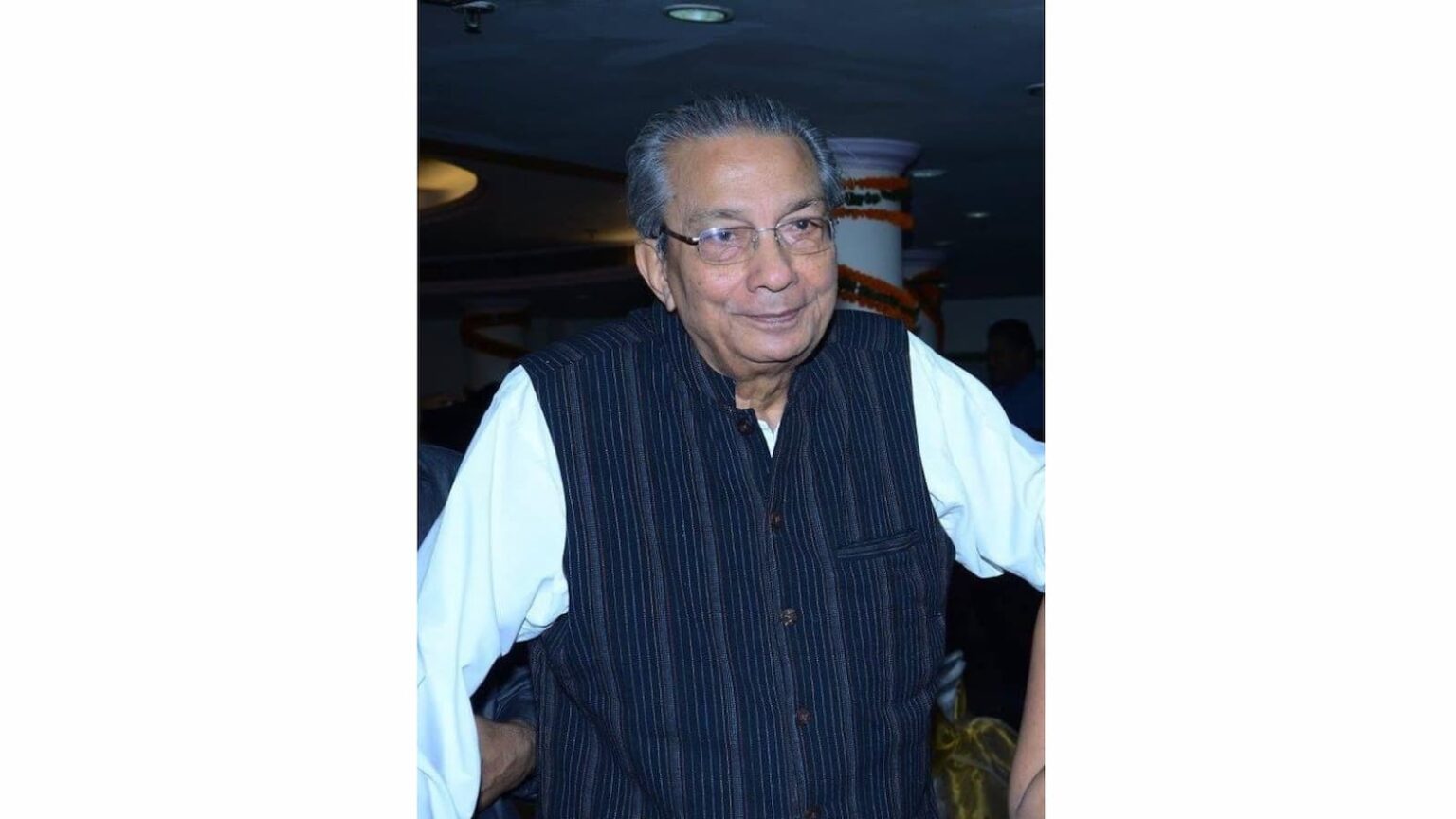
Kazi Jalil Abbasi was a leader, freedom fighter and politician who witnessed key events of twentieth century–not just as an observer but as someone who took active part in public life, participated in movements and after independence went on to fight elections and become a legislator, minister and Parliamentarian.

When a large number of Muslims from Uttar Pradesh including elite and the community leaders, were leaving the country, he remained committed to his political ideology, kept opposing communalism and led from the front–fighting and raising his voice democratically in independent India.

Uttar Pradesh, the heartland and the most populous state in the country, had been the battleground for Congress and Muslim League before 1947. It had seen competitive communalism, inter-religious tensions and riots. On the ground, situation in UP was complex and different from other states.

Kazi Jalil Abbasi’s autobiography is insightful and reveals a lot about the period and the struggles. Abbasi was born in Bayara in Basti district in1912. He studied in different schools in Gonda, Unnao and Basti before he joined the Aligarh Muslim University (AMU) from where he was expelled.

All these circumstances, his idealism, role in freedom struggle are part of the book. He was against the political stand of Muslim League. The books also provides information about Congress’ organisation and the politics in UP, its leaders. There are interesting anecdotes about top leaders, ranging from Rafi Ahmad Kidwai to Indira Gandhi. 

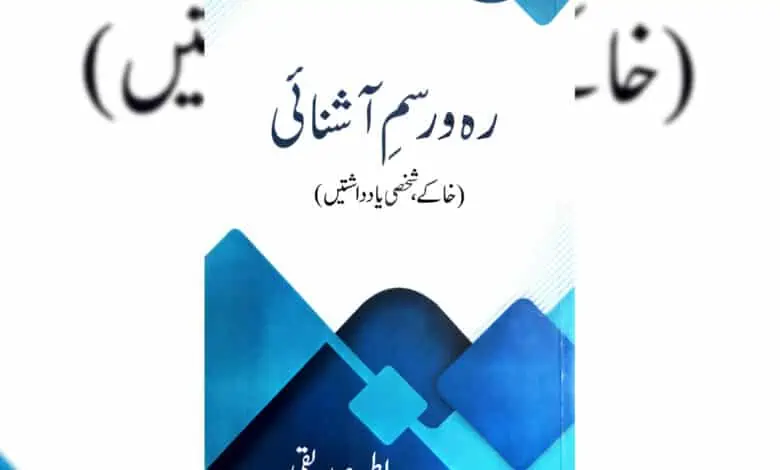
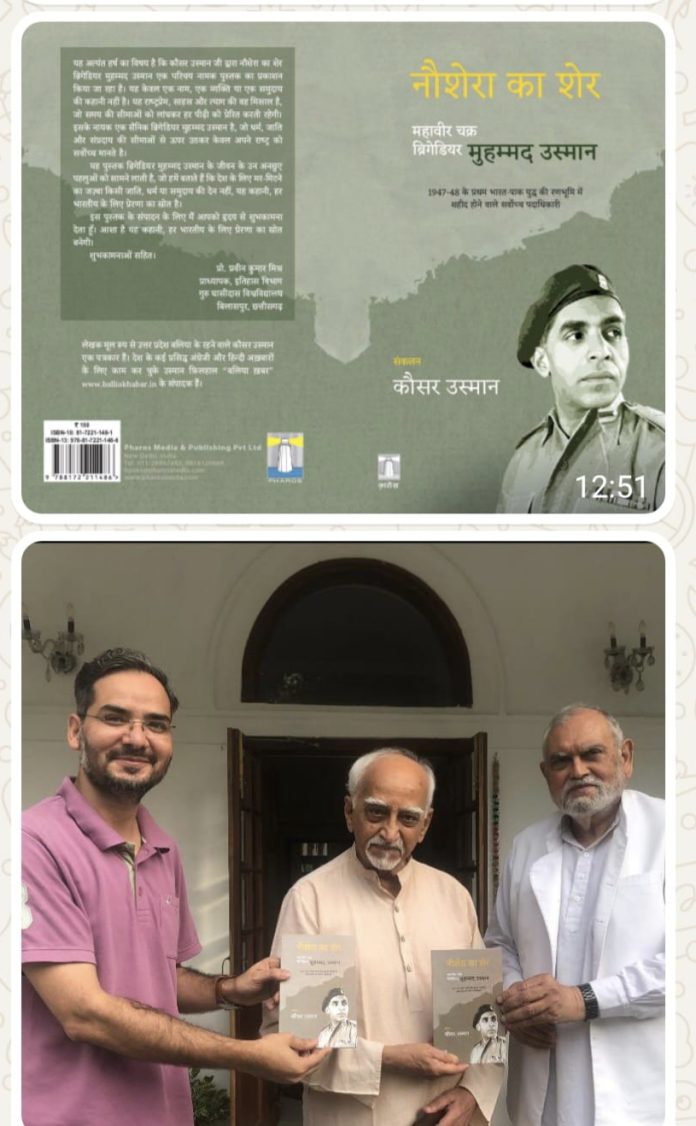
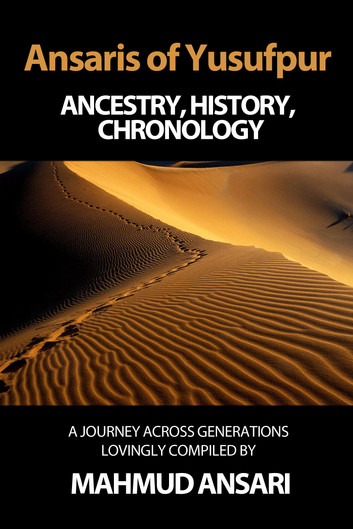
The autobiography titled ‘Kya Din The!’ was originally published in Urdu. 

Arif Ansari has now translated it in English. Ansari is settled in Washington DC. The book that runs into nearly 350 pages is a must-read for anyone who is interested in the era, important events and the post-partition situation in Uttar Pradesh.

Notionpress has published the book and it is available online

source: http://ww.newsbits.in / Newsbits.in / Home> Special / by Shams Ur Rehman Alavi, Bhopal / January 26th, 2021

Shakib Shah, Rukaiya Fatima Claim Top Spots in Bihar Board 12th Exam

BIHAR :

Remarkable achievements highlight talent and determination in Bihar’s intermediate results.

New Delhi :

The Bihar School Examination Board (BSEB) on Tuesday revealed the 2025 Class 12 exam results, and this year, two Muslim students from modest backgrounds have made headlines by securing the first and second positions. Shakib Shah from Buxar district and Rukaiya Fatima from Begusarai have not only made their families proud but also demonstrated the power of hard work and ambition in overcoming challenges.

Shakib Shah, a student at Plus Two High School Koransarai in Buxar, achieved an impressive 473 out of 500 marks, securing the top position in the Arts stream. His 94.6% score has ignited celebrations in his village, with locals and teachers praising him as a source of inspiration. “I studied hard every day, and my teachers supported me throughout. My dream is to crack the Bihar Public Service Commission (BPSC) exam and serve as an administrative officer,” Shakib told Zee Media, his determination evident in his words.

Following the announcement of his results, Shakib received a flood of congratulations at his home in Koransarai. Teachers from his school, along with the District Education Officer, visited the school to honour their star student. “Shakib has always been a focused student. His success is a testament to his hard work and the guidance he received here,” said one of his teachers, beaming with pride.

Meanwhile, Rukaiya Fatima, a student at BN High School Teyai in Begusarai’s Teghra subdivision, earned the second position with 471 marks, achieving 94.2% marks. The daughter of Mohammad Abu Salem, a bidi trader from Kolkata, Rukaiya comes from a family of seven sisters, where she is the third child. Despite her father’s modest income and the challenges of supporting a large family, Rukaiya’s resolve to excel never wavered. “I want to become an IAS officer and work for the poor. Education is my way to change my family’s future,” she shared with local reporters.

Rukaiya’s success has brought joy to her community in Begusarai. Her school principal described her as a diligent and bright student who balanced her studies with household responsibilities. “She would often stay back after classes to clear her doubts. Her success shows what girls can achieve with determination,” the principal remarked.

The Bihar Board 12th exams, held between 1 and 15 February 2025, saw over 12.92 lakh students appear across 1,677 centres in the state. This year’s results reflect an overall pass percentage of 86.50%, with the Arts stream recording 82.75%. Shakib and Rukaiya’s stellar performances stand out, not only for their academic brilliance but also for their powerful message of resilience and hope.

For Shakib, topping the state is just the beginning. Growing up in a simple family in Koransarai, he credits his family’s encouragement and his own disciplined routine. “My parents never let me feel any pressure. They just told me to do my best,” he said. His ambition to join the administrative services stems from a desire to uplift his community and tackle local issues like education and employment.

Rukaiya’s journey is equally inspiring. Despite growing up in a family with limited resources, she often studied by candlelight during power cuts. Her father, Mohammad Abu Salem, expressed his pride over the phone from Kolkata: “I always knew Rukaiya was special. She has made us all proud, and I hope she achieves her dream of becoming an IAS officer.” Rukaiya’s six sisters also look up to her, with the youngest saying, “I want to study hard like Rukaiya Apa.”

The success of these two students has also highlighted the untapped potential within Bihar’s Muslim community, which often faces socio-economic challenges. Local leaders and educators have hailed their achievements as a beacon of hope. “Shakib and Rukaiya have shown that talent knows no boundaries. Their success will inspire countless others,” said a senior official from the BSEB during the result announcement press conference in Patna.

However, their triumphs stand in contrast to the broader narrative in Bihar, where tensions between communities have occasionally erupted. Critics have often pointed to the state’s history of communal friction, exacerbated by divisive politics and economic disparities. Some have accused Hindu groups of marginalising minority achievements in educational settings. Yet, Shakib and Rukaiya’s success challenges these narratives, proving that merit and perseverance can overcome prejudice.

To celebrate their achievements, the BSEB has announced cash prizes and scholarships for the toppers, with Shakib set to receive £2 lakh and Rukaiya £1.5 lakh, along with laptops to support their future academic pursuits. These rewards, doubled from last year, reflect the state’s commitment to nurturing talent. “We are proud of all our students, and these two have set an exceptional standard,” said BSEB Chairman Anand Kishore.

As Bihar celebrates its top achievers, the stories of Shakib Shah and Rukaiya Fatima resonate beyond their exam results. Their journeys embody the dreams of millions in a state where opportunities are scarce, and their success serves as a shining example of the transformative power of education. For now, the spotlight remains on these remarkable individuals, whose stories are only beginning to unfold.

source: http://www.clarionindia.net / Clarion India / Home> Editor’s Pick> Indian Muslim / by Mohammad Bin Ismail, Clarion India / March 26th, 2025

Khwaja Tamboli’s Inspiring Journey from Village Cricket Lover to Bat-Making Entrepreneur

Wadala Village (Solapur), MAHARASHTRA :

Solapur man turns passion into business, crafting custom Cricket Bats for players across India.

Wadala Village (Solapur) :

Khwaja Tamboli’s story is one of grit, determination, and an unshakable belief in hard work. Hailing from a modest family in Wadala village, North Solapur, the 28-year-old entrepreneur has turned his childhood love for cricket into a thriving business—’KT Bats’—producing high-quality tennis ball cricket bats tailored to players’ needs across India.

Khwaja’s journey was far from easy. His father, Ajmuddin Tamboli, had to stop working 14 years ago due to mental illness, leaving his mother, Rashad, as the sole breadwinner. “I’ve seen many difficulties,” Khwaja recalls. “My mother sold household items and managed weekly markets just to keep us afloat. Poverty doesn’t stop dreams, but hard work is needed to fulfil them.”

After completing a B.Sc in Chemistry, Khwaja developed an allergy to chemicals, closing doors to traditional employment. But his passion for cricket opened another. “I was always fascinated by bats,” he says. “When I couldn’t find a job, I decided to start small—selling sports goods from a shop given by the Gram Panchayat.”

Initial struggles tested his resolve. Big companies refused to supply goods without bulk orders, and his first attempt at rebranding cheap bats with his own stickers failed. “Customers didn’t like them, and I faced losses,” he admits. Undeterred, Khwaja travelled to Kashmir to study wood types and bat-making techniques.

Returning with newfound knowledge, he invested in a machine and began crafting bats himself. “I realised if market bats weren’t good, I’d make better ones,” he says. The gamble paid off—his business took off, with players appreciating the customised quality.

Khwaja doesn’t just sell bats; he engineers them. Studying player preferences, he adjusts weight and balance based on playing style. “A 970-gram bat suits aggressive players hitting all around the ground,” he explains. “For those who play ‘V’ shots, a heavier bat (1030-1050g) with weight at the bottom works best.”

His bats now cater to players in Maharashtra, Karnataka, Uttar Pradesh, Chhattisgarh, Gujarat, and Jharkhand. But success hasn’t made him forget his struggles. “I’ve seen poverty, so if a player can’t afford a bat, I give it at a lower price,” he says, recalling how he recently gifted a ‘Player Edition’ bat to a needy cricketer from Gujarat.

Rashad Tamboli, Khwaja’s mother, beams with pride. “He loved cricket since childhood. I invested my savings in his dream, and he proved himself,” she says.

Today, ‘KT Bats’ sells 100-200 bats monthly, priced from ₹2,000 to ₹3,500. But Khwaja dreams bigger. “I want ‘KT Bats’ stores across India,” he says. “My brand should be recognised in every state.”

From a struggling student to a role model for young entrepreneurs, Khwaja Tamboli’s journey proves that with perseverance, even the most humble beginnings can lead to extraordinary success.

source: http://www.clarionindia.net / Clarion India / Home> India> Indian Muslim / by Team Clarion / April 04th, 2025

Bookshop owner who is more interested in collecting books than selling them: Unique Urdu bookshop in Lucknow

Rohtas, BIHAR / Lucknow, UTTAR PRADESH :

Lucknow :

Every city in India has many iconic bookshops and Lucknow too has a few. However, in recent years, a bookshop has drawn attention of book lovers because of the variety and collection of books, particularly, in Urdu.

This bookshop has drawn readers from other states and cities too and people buy from him online as well. But the most unique aspect about this bookshop is that the passion of the owner who has been running it purely for the love of books.

Imagine, you go and find a good book and want to buy it. The bookshop owner appears sad that you chose the particular book. “I have just one copy of this book and I want to keep it”, says the man, who owns this shop. Or going to the extent of telling the visitor that they can take a look and buy from any shop elsewhere or telling the location or suggesting how to get a particular book.

But first about the uniqueness of the bookshop. Unlike other Urdu bookshops, the owner Shahood Ul Hasan Khan keeps a very wide range of books. It’s not limited to a few publishers but he keeps books of all publications and also ensures that books ranging from all the topics are available in Urdu, ensuring a collection.

From literature to language, and law politics to philosophy, history to Islam, Hindusim and other religions, fiction, non fiction, other than books in English and Hindi too, everything is available under one roof. He tries to put on display maximum books of all variety in his shop. 

“I wanted to be among books, own them and have them around me”, he says. That’s the reason he started the bookshop even though people are always suggesting that he should switch to some other business. “It’s true that I put lot of money, because it’s my hobby and passion. However, it is not a very lucrative business.

He gets lot of unwanted advices and people have finally reconciled that he would not switch to anything else, except, keeping himself amid books. People and relatives keep advising that I should give this big space to someone and the rent would be more than my current earnings, but this is my passion”, says Khan, 42, who started Parekh Book Depot, and has totally dedicated himself in this work.

“I do it for the sake of books, not for profit. I always wanted to do this and hence I am happy doing what I do”, he further adds. In a city that has iconic Danish Mahal in Aminabad and many other bookshops, the emergence of Parekh Book Depot and it’s growing popularity, has drawn attention of people.

Urdu readers who come to Lucknow, try to take time out of their schedule and visit the place, as they know they might get a surprise, a rare book that was not available for long, translation of a famous English or French book or latest ones that have just been out of printing press.

As I select the books and am about to pay, he tells me that I can get these books online or from another particular place too. When I asked him why was he not keen on selling it and giving me the suggestion, he said that, ‘this set of books is not an ordinary one and we don’t know when it again gets printed and comes to market, hence, I am having a hitch and can feel that I am losing something.

At least, the set of books was with me till now”, Shahood Ul Hasan says. It was subsequently that I spoke to him and he told me about his life and his passion that has earlier been described in the report. Hailing from Rohtas in Bihar, he had come to Lucknow as an infant. He studied in the famous Nadwatul Ulema and his bookshop is also close to the gate of the seminary in Lucknow.

Many bookshops are selling just religious texts or literature. Also, there are different models. But he has shown a way, how a bookshop can thrive in an era when people keep ruing about lack of readership. “I am happy that I make enough to run my household. What else do I wish for?”.

One thing is sure, he has put in efforts and money but his passion has resulted in this bookshop emerging as an institution. It is remarkable that he opened the bookshop in 2016, and within a couple of years, it was too well known and in direct contact with readers who get details on their Whatsapp accounts about news books’ arrival and then order them through post as well.

source: http://www.newsbits.in / NewsBits.in / Home> Special / by Shams Ur Rehman Alavi / July 11th, 2023

Bhopal-based poet Manzar Bhopali felicitated in US

Bhopal, MADHYA PRADESH :

Manzar Bhopali felicitated by Greg Fischer, the mayor of Louisville, US

In a rare honour, eminent poet Manzar Bhopali was felicitated in Louisville in US and was handed over keys of the city. Louisville is also known as the birthplace of boxing legend Muhammad Ali.

The mayor of Louisville, Greg Fischer, handed over the keys to the Bhopal-based Urdu poet. This is probably the first time an Indian poet has been handed over the keys to an American city.

He was also proclaimed honorary citizen of the city. The poet has been honoured for his contribution towards promoting peace through his poetry.

The honour has been given as the town appreciates the power of a poet to touch people’s hearts and minds, reads the citation. Manzar Bhopali had gone to US recently to participate in ‘mushairas’. “It’s a big honour and I feel humbled,” said Manzar Bhopali.

In an email conversation with Hindustan Times, Louisville mayor Greg Fischer said art connects all people and it is an honour to recognise this global citizen for peace and justice.

“We honour all leaders in arts. They bridge our common humanity and remind us that we are all connected in making our communities and the world a better place,” he further said.

“Compassion is a top value of my administration. Compassion means we respect all of our citizens and work together so that human potential flourishes. We bring compassion to life in many ways including service to others, curriculum in our schools, and being a signatory to, and living the values of, the charter for compassion.”

Manzar Bhopali is a renowned Urdu poet who has more than half-a-dozen collections of poetry to his name. He is a regular at mushairas in Gulf, America, Australia, UK and other foreign countries.

source: http://www.hindustantimes.com / Hindustan Times / Home / by Shams Ur Rehman Alavi, Bhopal / October 10th, 2014

Forgotten martyrs: Nawab Kadar Ali, his companions were hanged by British at Sitabuldi fort in Nagpur

Nagpur, MAHARASHTRA :

More than seven decades after India achieved independence, the role of innumerable martyrs and freedom fighters who gave their blood and offered lives for the motherland, needs to be remembered. 

Many of them got harsh punishments, didn’t get proper last rites, remain forgotten and even those whose sacrifices are known, don’t have monuments or memorials built in their memory.

The martyrdom of Nawab Kadar Ali, and his companions, who planned attack on residency and to take on the East India Company forces in Nagpur, also needs to be recalled. They were hanged here for their role in 1857–the first war of independence.

Though there is no monument named after them and no big memorial, they remain heroes in public memory. The fort that had been a base of 118 Infantry Battalion for years, is opened on three days including August 15 and January 26. Thousands of people arrive on these days, and also pay visit to the grave and offer their respects.

The flame for independence was already lit. History books mention that soon after Meerut, the anger was palpable among soldiers and citizens in this region too. On June 13 1857, a large gathering took place near Mission High School. The soldiers too were anxious and ready. 

Scared, some of the East India Compnay officials ran towards Kamptee Cantonment, while others went inside the Sitabuldi Fort. It was due to treachery that the attack plans had been leaked and the news reached British officers. More EIC forces were called from other places to control and overpower the rebels.

Rani Baka Bai, wife of late Raghoji II, was supporting the British and issued a warning that anyone abetting or aiding the revolutionaries would be arrested and handed to the East India Company. It’s a long story and how the soldiers and citizens suffered, refused to name the leaders of the movement. 

Historical texts say that the signal of a fire balloon was decided. But after the traitors gave information to East India Company officers, Plowden, the commissioner, ordered a regiment to move into the city. The irregular calvary at Tali was dismayed. Major Arrow tried to get information from ring leaders but no one gave names.

Baka Bai summoned all her relations, and dissuaded them with threats. This chilled the spirit of public. However, later when Company officials’ strengthened their hold, the rebels were identified. Arms were collected and after inquiry, Dildar Khan, Inayatullah Khan, Vilayat  Khan and Nawab Kadar Ali were tried and executed.

KILLED, HANGED, BURIED IN A COMMON PIT

The Gazetteer briefly mentions that ‘tucked away between the easter walls of the inner fort and the barracks is a large grave known as Nav Gazah Baba…the grave of Nawab Kadar Ali…and his eight associates..who were killed and hanged by the ramparts of the fort due to their role in the war of independence”. 

“They were all buried in a common pit, nine yards long. The fort recalls to our mind the memory of the brave soldiers who fought in an attempt to preserve the independence of the mother land”. It was treachery that was responsible for the arrests and the punishment.  Those who helped the British, got ‘jagirs’ as rewards.

Ghulam Rasool ‘Ghamgeen’, the poet, wrote these lines in Farsi :

Choo.n Qadar Ali Khan Ameer Kabeer
Shud-az-tohmat, ahl-e-balwa aseer

Bajurm shiraakat girafaar shud
Chau mansoor, Hallaj, bar-daar shud

Duaa’e shahaadat ba-raahe Khuda
shab w roz mi kard aa.n mahtada


Khirad guft ee.n misra-e-silk-e-noor
Za-daar-e-jafaa shud ba-daar-e-suroor

The last couplet of this long Persian verse, brings out the ‘tarikh’, the year of execution. The complete verse is mentioned in Dr Mohammad Sharfuddin Sahil’s book ‘Tarikh-e-Nagpur’. It shows the impact of the hangings on the people in the region. Nagpur is geographillcally considered to be a part of Central India and is the biggest city in Vidarbha region of Maharashtra.

The fort for a long period remained the base of 118 Infantry Battalion of Territorial Army. Every year, on August 15 and January 26, fort is opened for public so that it can pay respect to the freedom fighters. It’s also opened on May 1 i.e. Maharashtra Day. [Illustration is representive]

source: http://www.newsbits.in / NEWS Bits / Home> Top News / by Shams Ur Rehman Alavi / August 15th, 2021

Haidargarh Basoda: The princely state that survived for two centuries in Central India

Haidargarh-Basoda (Vidisha District) , MADHYA PRADESH :

Bhopal :

Once it was a princely state, today it’s a dot on the map of Madhya Pradesh. Haidargarh-Basoda, a principality, remained in existence for nearly two centuries in the centre of India.

It was also known as Nawab Basoda and is known for its unique history. However, after independence when the state merged and lost its identity, not even made a district and relegated to the status of a town, the place lost focus and its heritage and traditions could not be properly documented.

However, it’s well known in history that Nawab Diler Khan was the founder of the State that later got divided into Haidargarh Basoda, Kurwai and Muhammadgarh. The original princely state* had come into being in the year 1713 AD, [and was later carved into three separate states]. Mughal power was weakening after nearly 190 years.

It was during the reign of Emperor Farrukhsiyar, the great grandson of Aurangzeb, that Nawab Diler Khan managed to establish his principality in this region. The death of Nawab Diler Khan is recorded in the year 1732. After him, it was his son Nawab Izzat Khan who succeeded.

However, Nawab Izzat Khan and his younger brother Ahsan Ullah Khan had the territory divided. The latter, Nawab Ahsan Ulla Khan also divided his state into two parts, one of which was known as Haidagarh Basoda or Nawab Basoda. The Basoda state came into being in early 1750s. 

After Nawab Ahsan Ulla Khan’s death in 1790, his son Nawab Wakaullah Khan remained the chieftain but he died five years later. His wife was regent and the minor son Nawab Asud Ali Khan became the ruler when he attained the rightful age. It was during this period that the first war of independence or mutiny [as British termed it] took place. 

Nawab Asud Ali Khan passed away in 1864. He was succeeded by his son Nawab Omar Ali Khan who was an author and a traveller. He went across the world and wrote about his visits. He passed away in 1895. He was succeeded by his son Nawab Mohammad Haidar Ali Khan.

It was during this period that the state became known as Haidargarh. Then, Nawab Masood Ali Khan became Nawab and after a three year stint, state got merged when India became independent. The title remained. After 1971, privy purses were abolished. He passed away in 1976.

“After our grandfather Nawab Masood Ali Khan, his son Nawab Kiswhar Ali Khan succeeded him”, says Siddiq Ali Khan, a descendant of the family. ‘My father Anwar Ali Khan is the younger brother of Kishwar Ali Khan”, he further says. How the family coped with the state was merged?

“Most of the members of our clan took care of the lands. Apart from this, some of us are in different professions”, says Khan, who lives in Bhopal. “We had agrarian land and hence the family got engaged in it, though some took jobs and became doctors, engineers. One of our uncles, Bakhtiyar Ali Khan, studied in Cambridge school in Bhopal. My father has also been in politics”, Siddiq Ali Khan, further adds.

The Haidargarh Basoda state [now Haidergarh] was spread over an area of over 103 sq km i.e. 40 sq miles. Now, it is located near Gyaraspur town in Vidisha district adjoining Bhopal. Haidargarh, now spelt Haidergarh Basoda, is a civic body. The fort and the family’s ancestral palace still stand as testimony to the fact that this small panchayat was once was a principality with a rich history. 

[*Originally Nawab Diler Khan established a state in 1713 AD that was later carved into three separate states and Basoda came into being in 1753]

source: http://www.newsbits.in / NEWS Bits / Home> Heritage / by Shams Ur Rehman Alavi / February 15th, 2023

Assam: CRPF chief visits family of martyr Nasiruddin ahead of Eid-ul-Fitr

Banbaria Village (Barpeta District), ASSAM :

CRPF DIG Sunanda Kumar with the family of late Nasiruddin Sarkar

As Muslims around the world prepare for the joyous culmination of Ramzan into Eid-ul-Fitr celebrations, for many families, especially those of national martyrs, it’s a painful experience to celebrate the day without their loved ones.

Uneasy calm prevails in a household in Assam’s Barpeta district in the last days of Ramzan. The house, located in the remote Banbaria village under the Bhella police station area, is throbbing with grief and painful silence.

The house belongs to the Late Nasiruddin Sarkar, a brave CRPF jawan who laid down his life in the line of duty on April 27, 2024.

Sarkar was deployed along with his other colleagues in Manipur during the elections when suspected Kuki militants attacked a CRPF convoy in the Bishnupur district of Manipur on April 27. Sarkar was among the two CRPF personnel who laid down their lives fighting extremists.

CRPF DIG Sunanda Kumar arriving at the house of Martyr Nasiruddin Sarkar

However, a team of CRPF officials recently visited Sarkar’s house in Banbariya village and wished his family Eid-ul-Fitr.

The CRPF team included CRPF’s Deputy Inspector General (DIG), Lower Assam range Sunanda Kumar, Area Commander of the CRPF’s 10th Battalion Deepak Kumar Singh, and others, who met the family members of Sarkar including his wife, son and daughter.

“Our colleague Nasiruddin Sarkar had attained martyrdom last year while working in Manipur. In CRPF we have a rule that we never leave the family of our soldiers alone. Every year, our senior officers visit such families in March and note down their problems and try to help them,” CRPF DIG Sunanda Kumar told this journalist.

“Similarly, in the case of Late Sarkar also we came here to take care of the family. Sarkar was the breadwinner of the family. So definitely there are issues faced by the family. We came here to talk to them and ensure that they never feel lonely particularly when the grand festival like Eid-Ul-Fitr is coming. We hope that the family of Nasiruddin will enjoy this Eid,” said Kumar.

source: http://www.awazthevoice.in / Awaz, The Voice / Home> Stories / by Karabi Sharma, Barpeta / March 28th, 2025

From the Land of ‘Gangs of Wasseypur’, Ekhlaq Gets Top Rank in GATE

Pathardih (Mohan Bazar, Dhanbad District) , JHARKHAND :

Ekhlaq Sarwer with his parents

Patna: 

On March 19, Ekhlaq Sarwer, a B.Tech. (Mining) student, received his Eid gift a little earlier this year. He secured an impressive All India Rank of 4 in Graduate Aptitude Test in Engineering (GATE) 2025.

GATE is widely regarded as the key to securing admission to postgraduate courses in India’s top engineering colleges and opens doors to jobs in Navratna Public Sector Undertakings (PSUs).

Ekhlaq’s score in GATE was 904 out of 1000, with a remarkable mark of 69 out of 100.

Hailing from Pathardih, the semi-urban town of Mohan Bazar (around 16 kilometers from Dhanbad), in Dhanbad district, Ekhlaq is presently pursuing his B.Tech. from BIT, Sindri (Jharkhand) in the Mining Engineering branch in 2021-25 batch. His hometown, which has gained notoriety for its association with violence, served as the backdrop for the Bollywood movie ‘Gangs of Wasseypur’ that highlighted the region’s troubled history.

Ekhlaq’s father, Eqbal Sarwer, works as an informal medical practitioner (RMP), and his mother, Khurshida Parween, is a homemaker.

Speaking to TwoCircles.net, Eqbal expressed immense joy and gratitude. Noting the timing of his son’s achievement during the holy month of Ramadan, he said, “I feel elated as a father when I recall my childhood, which lacked proper resources. My father passed away early, and we had to struggle. But I ensured that my sons received a proper education. Although it was beyond my means to afford an English-medium CBSE school, I made sure Ekhlaq was enrolled there, cutting down on other expenses to make it happen.”

He continued, “Ekhlaq has always been good at studies, and we encouraged him every step of the way. He has consistently ranked at the top since grade 7. He secured 97% marks in 10th grade and 95% in 12th grade board exams under the CBSE system.”

The Sarwer family celebrated their son’s success by distributing sweets, with plans for a grand celebration after the fasting month of Ramadan ends, marking a “double Eid”.

Ekhlaq’s father proudly said, “We are thrilled that a place once infamous for ‘Gangs of Wasseypur’ is now in the news for such achievements. The area is improving, and it fills me with pride.”

Ekhlaq Sarwer

BIT Sindri, where Ekhlaq is currently studying, is an engineering college under the Jharkhand government. Admission to the prestigious institution is based on the Joint Entrance Examination (JEE), which also opens doors to top institutions like the IITs.

Ekhlaq had scored around 90 percentiles in his first attempt at JEE Main, securing his place at BIT Sindri. Initially uncertain about his choice of Mining Engineering, he now expresses a deep fascination for the field.

Despite being busy with his academic projects, Ekhlaq shared his preparation strategy for GATE. He began preparing for the examination in September 2024, all while also preparing for his final B.Tech. exams.

“My parents were my inspiration for GATE. My professors at college were immensely helpful, and my friends always encouraged me. I used PYQs (Previous Years’ Questions) and relied on textbooks. I also took test series to keep myself on track,” he shared, expressing his hope to join a PSU of his choice when the opportunity arises.

Ekhlaq also emphasised the importance of having a structured routine. “I made a schedule for my preparation, designating specific hours for watching preparatory videos and solving test papers,” he explained.

He added that focus and time management are essential for anyone hoping to clear GATE. “One needs to be clear about what he/she wants to study. Time management is crucial, as is practice,” he advises. “Shedding nervousness is also important.”

The BIT Sindri community celebrated Ekhlaq’s success. Dr. Pankaj Pal, the director of the institution, and Dr. PK Singh, head of the Mining Engineering Department, along with other faculty members, congratulated Ekhlaq and the other students for their academic achievements. “Ekhlaq has made the institution proud with such a stellar rank,” they said, underscoring the significance of his success.

Ekhlaq Sarwer’s journey from a troubled region to an outstanding academic achievement is not only reflective of his dedication but also to the unwavering support of his family and the transformative power of education.

source: http://www.twocircles.net / TwoCircles.net / Home> India News> India Politics> Indian Muslim> Lead Story> TCN Positive / by Sami Ahmad, TwoCircles.net / March 25th, 2025

Munnur gram panchayat member RKC Abdul Azeez passes away

Munnur Gram Panchayat (Ullal, Mangaluru) , KARNATAKA :

Mangaluru :

Munnur gram panchayat member RKC Abdul Azeez passed away due to a heart attack on Thursday, March 6.

A resident of Derlakatte Madaninagara, Abdul Azeez was a Congress leader and dedicated social worker.

He served as the Munnur block Congress leader and was well-regarded for his active involvement in community activities and his humble nature.

source: http://www.daijiworld.com / Daijiworld.com / Home> Karnataka / by Daijiworld Media Network – Mangaluru / March 06th, 2025