Tag Archives: Positive Stories of Indian Muslims

Athar Siddiqui breaks away from tradition and pens some highly evocative sketches

Sahranpur, UTTAR PRADESH / NEW DELHI :

The evocative recapitulation of eminent personalities provides a quick, candid, exquisite and scrupulous portrayal of those who retain their abiding presence without being physically present in the world.
The unprecedented acceptance of monolingualism has put a big question mark on the existence of numerous languages through which people stitch up a warm social rapport and seek to fulfill their cultural aspirations. India, an awe-inspiring repository of innumerable dialects, languages and different linguistic traditions, finds it nerve-racking to carry through the challenges thrown open by the technology-savvy language-English. The domination of English has taken a heavy toll on regional languages, and Urdu, once considered a significant link language, is no exception. Though Urdu is widely used as a spoken language, and its sensitively rendered poetry gets across the country, its script has been fading away with bewildering speed.

It aches much to realize that the popularity draws its sustenance from its oral rendering, and familiarity with its distinct script has been melting away steadily. Barring some notable exceptions, only faculty members and research scholars associated with various departments of   Urdu of the universities and colleges use Urdu as the medium of trifling academic discourse. At a time when Urdu faces the threat of obsolescence,   the gleam of hope emerges from the citadel of learning, Aligarh, where academicians not belonging to humanities draw on Urdu to initiate a perceptive discourse on a plethora of issues without bringing rhetorical flourish into play.

Professor Saeeduz Zafar Chagatai (Physics), Professor  Faseeh Ahmad Siddiqui (Chemistry), Professor  Athar Siddiqui (Zoology), Professor Shaan Mohammad (Political Science), Professor Iftikhar Alam Khan (Museology), Professor Zilur Rehman (Unani Medicine), Professor Mohammad Sajjad( History ), Professor Zafar Mahfooz Nomani (Law) Dr Asad Faisal Farooqui (Mass Communication) and the like seek to strengthen non-fiction prose in Urdu.

Autobiography, memories, diary, letters, sketches and anecdotal scrolls are much-adored genres of non-fiction prose, but in Urdu, they usually betray a strong sense of gushiness and sickening self-adulation. The preponderating narrative of reminisces does not go well with the celebrated author, Professor Athar Siddiqui, whose evocative recapitulation of eminent personalities appeared.

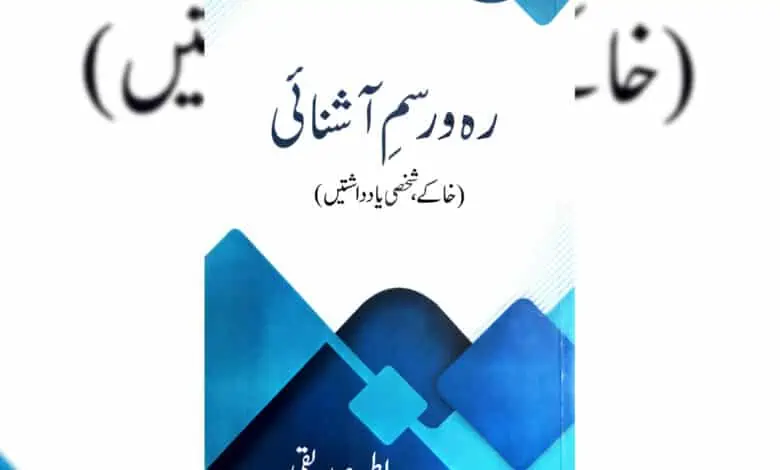
The book Rahe wa Rasm-e-Aashnai (sketches and personal memoirs) provides a quick, candid,   exquisite and scrupulous portrayal of those who retain their abiding presence without being physically present in the world.

Professor Athar Siddiqui, a widely recognized scientist, has produced a captivating narrative of his eventful life, Main Keya Meri Hayat kaya, with disarming humility and jotted down travelogues vividly calling attention to down reaching human experiences that frequent foreign travels produce. Interactive media frequently carry intriguing stories featuring commonplace occurrences. The stories with a strong sense of moral tutoring dished out by the digital world need to be shared with non technology conversant Urdu knowing people.

He left Professor Athar Siddiqui to supplement what had been missing and started translating these pulsating stories into Urdu. It was left to Professor Athar Siddiqui to supplement what had been missing, and he translated these pulsating stories into Urdu.

Tahzibul Aklaqh, a prestigious periodical launched by Sir Syed in 1870, started serializing it with a suggestive title Hairat Sarai Ki Kahaniyan (The stories of wonderland), and two volumes of these laconic and absorbing stories have appeared so far.

He meticulously edited two autobiographies of two illustrious alums of Aligarh Muslim University–Dr. Sheikh Mohammad Abdullah (founder of women’s college, AMU) and Nawab Ahmad Saeed Khan Chattari ( former Governor of Uttar Pradesh). He had astutely done over translating books on Shaheryar and Musa Raza.

Athar Siddiqui’s recently published book, Rah-o-Rasam-e – Aashnai,” creatively maps out the accessible and unchartered terrains of thirty-five personalities in candour-driven idiom, and he hardly holds with the popular notion that put a lock on showing the slightest discourtesy to the deceased. The author asserts, “It is widely mentioned that the sketch writer must not use any indecent or improper word for those resting in the peace. If this sort of exhortation is adhered to, then the sketch, personal article and memories will be read as appreciation and admiration-filled text. If history writing sticks to this principle, then the authentic history of any period could not be produced. I do not buy this argument.”


The subtle wised-up mélange focuses on nine creative writers such as Shahryar, Iqbal Matin, Sajida Zaidi, Qazi Abdus Sattar, Professor Mukhtar Uddin Arzoo, Syed Hamid, Lateefuz Zaman and a couple of close relatives, teachers, friends and former vice-chancellors.

Iqbal Matin, whose awe-inspiring artistic sensibility could not get him the recognition across the country he fully deserved, has come in for a  refined exploration. Athar Siddiqui’s reminiscence is peppered with unusual but fascinating details about the author. The author living in Aligarh tried desperately to contact Iqbal Matin (Hyderabad) when the letter was the preferred communication medium. He realized that his letters were not delivered to the addressee, who was prone to change houses. Iqbal changed thirty-five houses and bore testimony to his nomadic lifestyle.

Much has been written on Jnanpith awardee and prominent poet  Shahryar but a comprehensive and insightful article highlighting his distinctive personal traits and oeuvre is still looked-for. The piece titled  “Shahryar as a man and poet” fills the bill with remarkable ease. Athar saheb cites many instances to prove Shahryar’s unflinching loyalty to his friends but never spitting upon the rivals. The voice of modernism with strong traces of neoclassicism, Shahryar never nurtured animosity and did whatever he could for those who looked up to him in their hours of peril. People, even authors and pushover critics tend to read creative texts in the backdrop of personal details; hence when Shahryar suffering from a terminal illness- cancer–composed a couplet; Aasman ab kuch nahi tere karney ke liye/Ham ne sab taiyaariyan karli hain  marne ke liye (O sky,  now you have nothing to do/I have completed all the preparations for dying) it was considered as the affirmation of impending death. Employing critical acuity, Athar saheb mentioned that the couplet has nothing to do with a nagging sense of personal extinction; the poet laments how we perfected the art of self-destruction reflected in the depletion of Ozone layer manufacturing of weapons of mass destruction.

Athar Siddiqui wrote an immensely readable sketch of Qazi Abdus Sattar, a much overrated and pretentious writer who always took pride in using ornate and florid language in his fiction. His novel Tamam Sultan has been described as magnum opus, but it is hardly more than an oft-repeated titillating story of unrequited love. Athar Saheb and Qazi have had close ties for over fifty years, but Qazi was so intemperate that he pulled ties into pieces as Athar could not attend his facilitation function. It was an act of civility to describe this narcissism as uniqueness of personality.

Prof Zilur Rehman, a widely- respected academician of Unani medicine, is a well-known scholar of Urdu, Persian and Arabic and has more than fifty books to his credit. His books, especially on Ibne Sina, Hakim Ajmal Khan, Sir Ross Masood, Hakim Ehshanullah Khan, and Hakim Abdul Moid, got widespread admiration. In addition to discussing his well-documented and invigorating writings, Athar Siddiqui effortlessly unravels his amenable nature and inimitable passion for books and artefacts. He has a collection of over 70,000 and set up a museum and library, Ibne Sina Academy, which has its website.

Seldom does one attempt to spell out what essentially embodies his wife, going beyond the adulation and berating with a sense of objectivity. This nagging edginess seems to have no bearing on Athar saheb, who painted a stirring wordy portrayal of his wife Zakia Siddiqui, a renowned academician and former principal of Women’s College, Aligarh Muslim University.

One tends to agree with the author when he asserts that during the first ten years wife is treated as the beloved; with the birth of children, she takes over the role of the mother. If harmonious marital life continues, she becomes an inseparable friend who hardly gets perturbed, no matter how annoying one becomes. It is all momentary, and the bond of affinity never weakens.

Athar saheb also evocatively narrated his mother’s life story, and he recollects his memories and anecdotes to document her extraordinary considerate nature. Suhail (son) and Taab (daughter) get pat on the head by the caring and unerring father for their abiding sympathy for others.

The book turns attention to a dozen vice-chancellors and pro-vice-chancellors of AMU, such as Dr Zakir Hussain, Bashir Hussain Zaidi, Badruddin Tyabji, Abdul Aleem, Ali Mohammad Khusro, Syed Hamid, Syed Hashim Ali, Wasiur Rehman, Naseem Farooqui, Mahmoodur Rehman, Hamid Ansari and Abul Hasan Siddiqui.

The author’s appraisal of them looks convincing, but occasionally subjectivity surfaces. The assortment of sketches offers a discerning peep into the life of all who impressed the author. The nuanced and readable prose is used impeccably, and Athar Siddiqui deserves accolades for producing such picturesque vignettes.

Shafey Kidwai is an Indian academic, communication scientist, translator, columnist, and author. He is the chairman of the Department of Mass Communications at Aligarh Muslim University.

source: http://www.siasat.com / The Siasat Daily / Home> Featured News / by Shafey Kidwai / September 26th, 2025

Marziya Pathan breaks stereotypes to lead from the front

Mumbra, MAHARASHTRA :

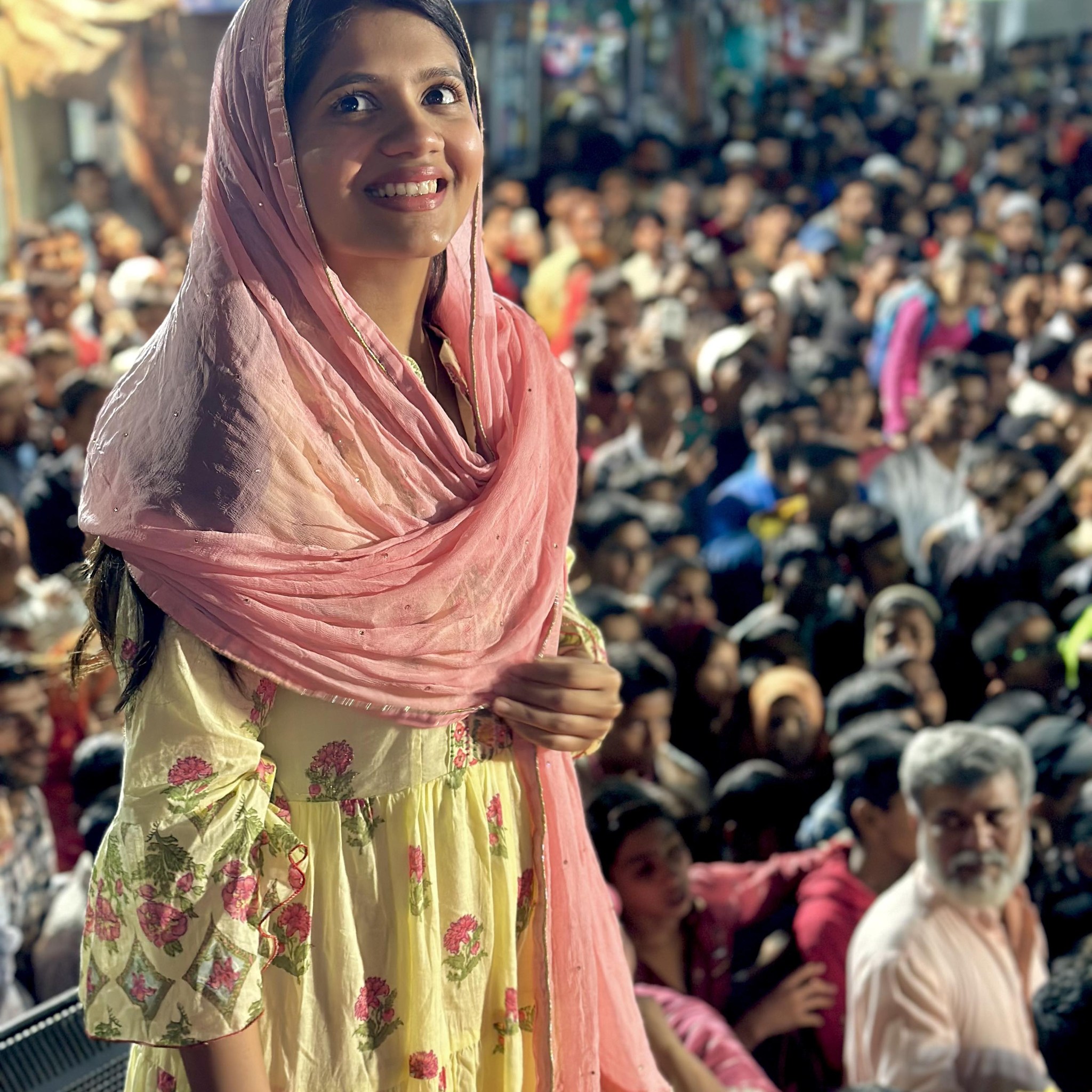
Marziya Shanu Pathan

In the bustling suburb of Mumbra, on the outskirts of Mumbai, a young Muslim woman is emerging as a fearless leader—breaking stereotypes, raising her voice for justice, and empowering her community through bold, grassroots activism.

“People often underestimate how critical basic amenities are,” she says. “But when citizens lack even clean streets or functioning drains, how can we talk about empowerment?”

Marziya Shanu Pathan is not just addressing civic issues—she’s rewriting the script for what political and social leadership can look like, especially for women in marginalized communities.

From an early age, Marziya has been at the forefront of local activism, particularly in areas where Muslim women have historically faced barriers to education, mobility, and leadership.

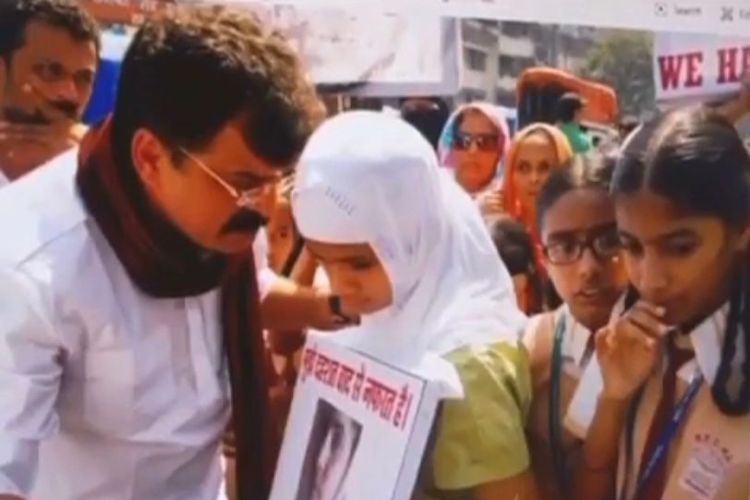
Marziya Shanu Pathan at a Public rally

Through perseverance and determination, she overcame those challenges, completed her education, and entered public life. Now, through her NGO, the MSP Care Foundation, Marziya is creating lasting impact, one initiative at a time.

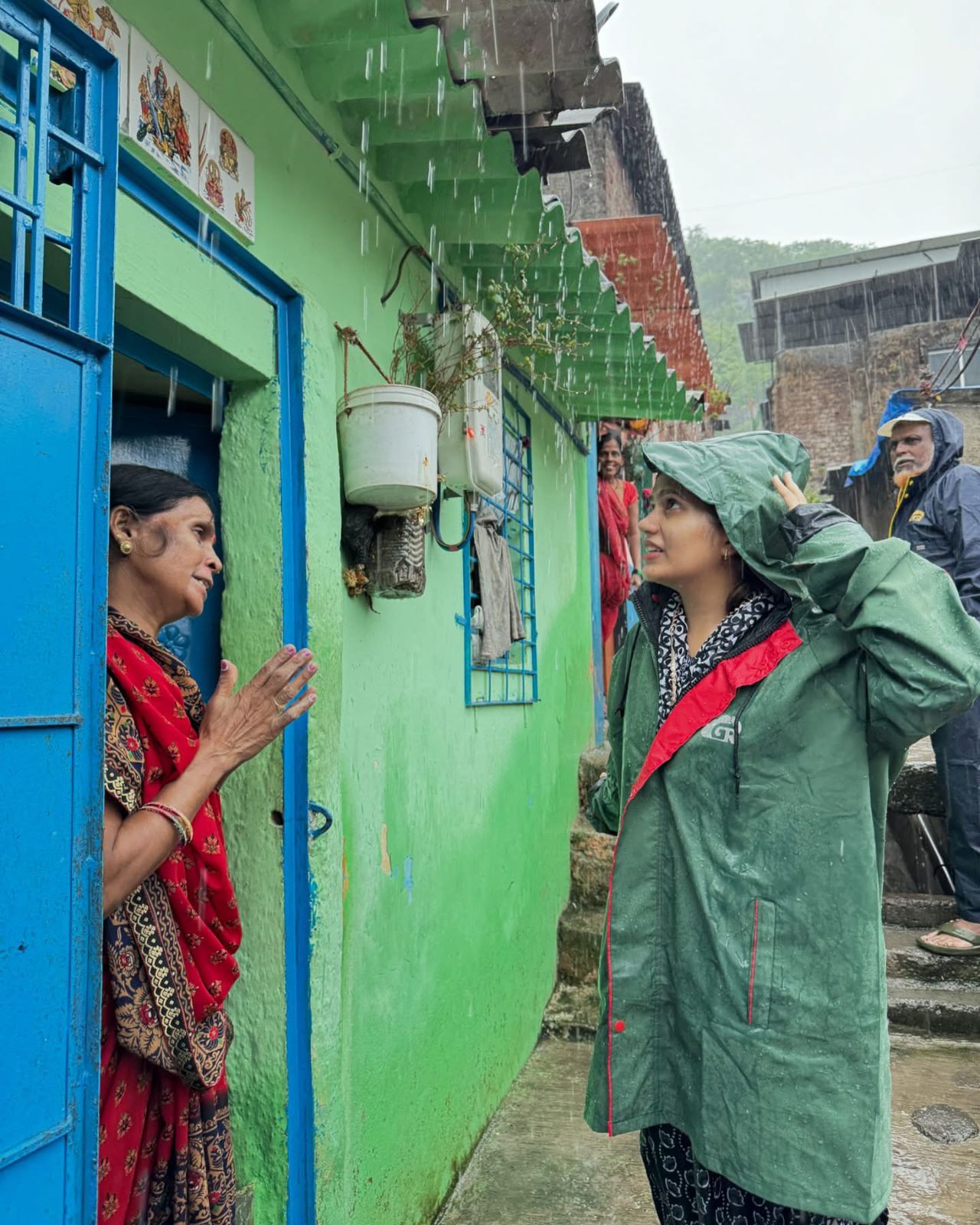
Mumbra struggles with overpopulation, inadequate civic infrastructure, and limited access to basic services. Marziya works tirelessly to bring attention to these problems—rallying for better roads, clean water, improved sanitation, reliable healthcare, and quality education.

Through her Foundation, Marziya leads campaigns to clean drains, address waste management issues, and pressure local authorities to respond to citizens’ needs. She doesn’t just talk about change—she gets her hands dirty doing it.

In 2012, the world was shaken when Malala Yousafzai was shot for advocating girls’ education in Pakistan. That same year, in a quiet corner of India, 12-year-old Marziya Pathan led a march through the streets of Mumbra, demanding access to education for girls. That moment was a turning point—not just for her, but for many in her community.

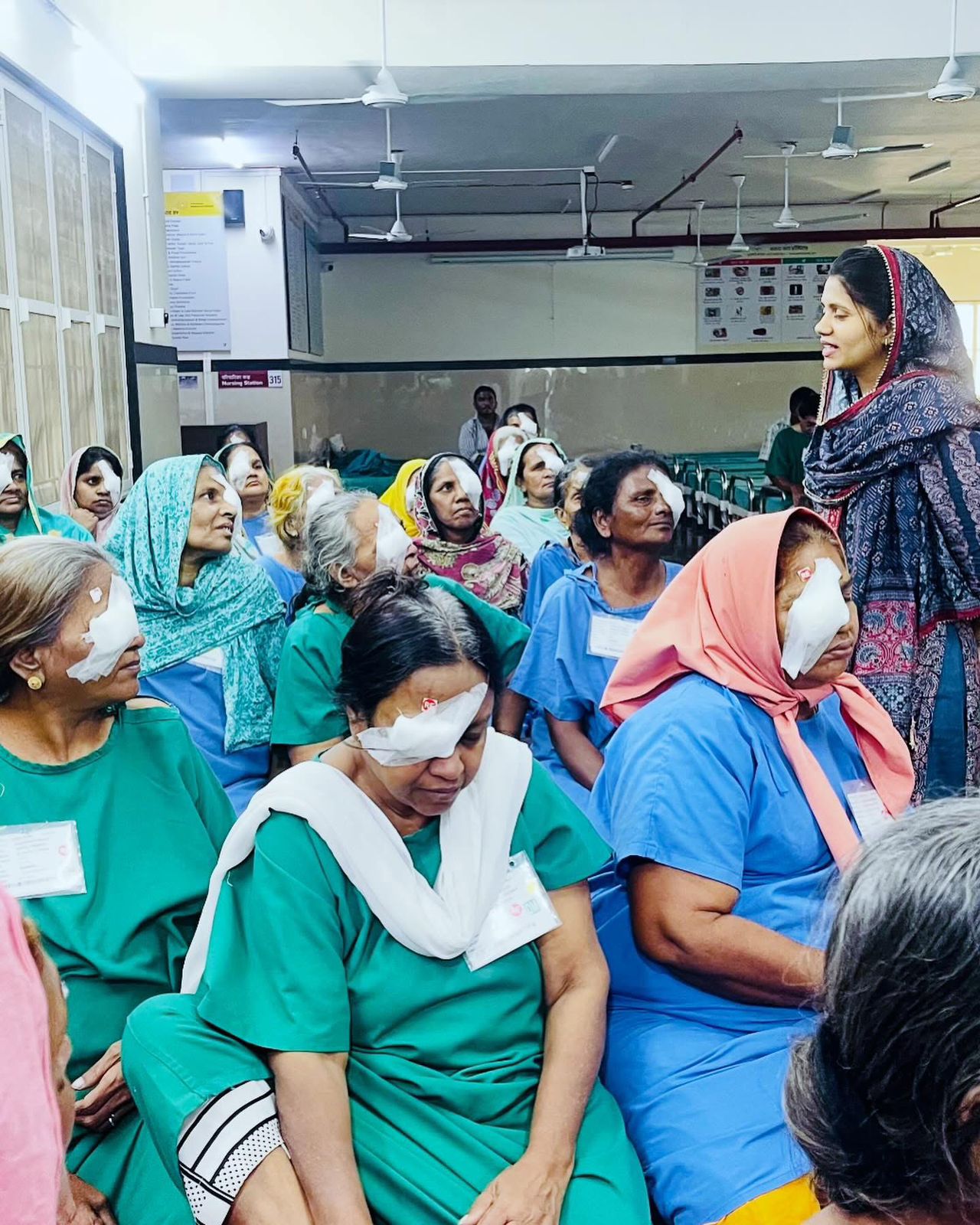
Marziya Shanu Pathan at a Eye surgery camp organised by her Foundation

Since then, she has remained at the frontlines of social reform.

Marziya is the daughter of Ashraf (Shanu) Pathan, a dedicated regional politician in the Thane Municipal Corporation. The father-daughter duo has long worked to address the region’s pressing issues—from water shortages and garbage collection to healthcare and crimes against women.

But Marziya is not content to walk in her father’s footsteps—she’s paving her path. Her focus on youth engagement, women’s empowerment, and constitutional awareness has brought new energy to Mumbra’s civic landscape.

She organizes workshops in schools to educate students about their constitutional rights. She arranges monthly eye camps for senior citizens, ensuring access to free cataract surgeries for those who can’t afford them.

Marziya Shanu Pathan meeting common people during her campaign on civic issues

Two years ago, a video of Marziya managing traffic during Ramzan went viral. Wearing her hijab, she was seen directing traffic late into the night in the congested Mumbra-Kausa market.

“After Mohammad Ali Road, Mumbra hosts Maharashtra’s largest Ramzan market,” she explains. “Women come from far-off areas to shop. We, the women of Mumbra, took it upon ourselves to ensure their safety and convenience.”

That viral moment wasn’t just symbolic—it was transformative. It showcased a new kind of leadership: visible, grounded, and unafraid.

Marziya’s foray into politics is not about power—it’s about purpose. “When I talk to people or address their issues, I don’t just see myself as a politician. I see myself as a citizen standing up for others,” she says.

Marziya Shanu Pathan with Shiv Sena leader Sanjay Raut

Marziya initially aspired to be a government officer and moved to Pune to prepare for competitive examinations. When the COVID-19 pandemic struck, she returned to Mumbra where after watching her father serve during the crisis made her take up social work as full-time work.

She believes more women must enter politics—but acknowledges it’s not easy. “Patriarchy and rigid mindsets create obstacles. But women who persist, who claim their space, can change the narrative,” she says.

“I admire every woman who carves out her identity, no matter the field. It takes courage and resilience.”

Quoting the findings of the 2009 Sachar Committee Report, Marziya points out that Muslim neighborhoods remain critically underdeveloped. “Not much has changed since that report. It’s our responsibility to bring attention to these gaps,” she says.

Whether through organized protests, petitions, or direct engagement with officials, Marziya ensures that issues like education, sanitation, and women’s safety stay at the top of the agenda. Her efforts have already led to the resolution of several long-standing civic problems in Mumbra.

Though born into a politically active family, Marziya has never relied solely on that legacy. Instead, she has chosen the harder road—working alongside the people, from the ground up.

Marziya Shanu Pathan courting arrest

Her courage, vision, and consistent community engagement have made her a role model, especially for young Muslim women and girls.

Marziya Pathan is more than just an activist—she’s a symbol of what young leadership in India can look like: principled, people-first, and fearless. Through constitutional values, civic engagement, and community-led solutions, she is reshaping not just Mumbra, but the larger discourse around women’s rights, minority representation, and participatory democracy.

In her quiet determination and bold action, Marziya proves that true leadership starts not in offices or headlines—but in the streets, schools, and hearts of the people.

source: http://www.awazthevoice.in / Awaz, The Voice / Home> Story / by Bhakti Chalak / July 09th, 2025

Unsung Hero: Pav-seller Nazim Sheikh saves lives on Mumbai shores

Mumbai, MAHARASHTRA :

Mohammed Nazim Sheikh

Mohammed Nazim Sheikh, 51, is a silent saviour of lives on the Mumbai shores. After selling pav (Mumbai bread) at the Colaba, from early monring till noon, the 51-year-old Mumbaikar, leaves for the beach at the Gateway of India to keep an eye on the sea lovers who might be unknowingly putting their lives at risk.

Like a silent sentinel, he has been guarding the dangerous beach at the Gateway of India for 35 years and has saved more than 300 persons so far.

Nazim says,”They (tourists) come closer to the sea to feel the splash. Once they slip, the tide pulls them into the water,” he says. “If somebody doesn’t rush for their help, they’re gone.”

Nazim started rescuing drowning people at the age of just 16. With the skills of a trained lifeguard and a sense of mission, he pulls people out of the water who are unaware of the dangers and are carelessly near death.

“They come just to feel the splash or to see the view, but one slip is enough, and the wave takes them away. If immediate action is not taken, it is not possible to save them,” he says.

Nazim says he has also recovered about 25 to 30 bodies so far—mostly men. He has witnessed many accidents during festivals.

Nazim’s most memorable rescue operation was in 1996 when he swam across during high tide. For this feat, he was awarded the title of ‘Best Swimmer’. In recent years, especially during the 2022 Ganpati immersion, he saved two people from drowning.

According to hawkers who set up shop around the Gateway of India, Nazim is always the first to arrive. Nowadays, due to social media, tourists often start making videos by crossing the safety barrier, which proves to be dangerous. In such a situation, when someone falls into the sea, the first name that comes to everyone’s mind is Nazim – even before the police or the fire brigade.

A 60-year-old woman who runs a stall in front of the Taj Hotel says: “I have been seeing Nazim for years. He has saved countless lives. Everyone working at the gateway knows that he is the one to call immediately in an emergency.”

A local photographer says, “Earlier they used to patrol right in front of the gateway, but now that area is closed for security reasons. Nowadays they are seen in front of the Taj Hotel where people come to enjoy the ocean waves.”

Another 51-year-old cameraman says: “Everyone working at the gateway knows the moderator and knows when to contact him. The best thing is that whether you call him or not, he arrives on his own.”

However, despite his selfless service Nazim has not received any official government recognition or honor till now. The Nazim said that he has written letters to the Prime Minister and the Chief Minister (Devendra Fadnavis), but no action has been taken.

“Still waiting, nothing has happened,” he shrugs. Many of Nazim’s awards and newspaper clippings have also been lost during the renovation of his house. He finishes selling pav by noon, but as soon as the tide comes in, he becomes alert.

“When someone is in trouble, be it locals or the police, they call me. I am not afraid of the sea. Allah has given me this strength, I just do my job,” he says humbly. Nazim was also part of the rescue team during the 2003 Gateway bombing and helped recover bodies from there.

Today, while beach safety has improved and suicides have declined, Nazim still stands as a silent sentinel on Mumbai’s beaches. “If anything happens, I’m ready,” he says resolutely.

Colaba Senior Police Inspector Pramod Bhaute said, “Nazim works as a lifeguard for us. He is always active and alert. His help has proven invaluable in many cases. He lives in the Jetty area. Mumbai Police says it’s grateful to him for him selfless mission in saving lives.

source: http://www.awazthevoice.in / Awaz, The Voice / Home> Story / by Onika Maheshwari, Mumbai / July 13th, 2025

Moradabad Native Sabih Khan, Now Apple’s COO

Moradabad, UTTAR PRADESH / U.S.A :

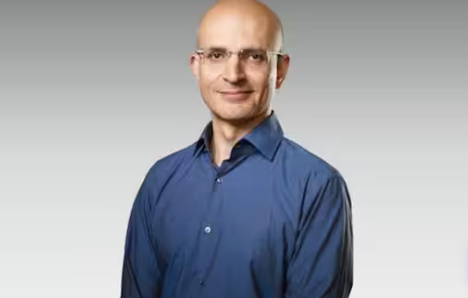
Indian origin Sabih Khan, a native of Moradabad in Uttar Pradesh brought laurels to India in general and his hometown in particular on being appointed as the new Chief Operating Officer (COO) at Apple. He replaces Jeff Williams. Currently, Khan serves as Senior Vice President of Operations. Indeed, an honour to Sabih Khan, known for his extraordinary skill and a brilliant strategist besides an architect of Apple’s supply chain.

Bringing glory to his native Moradabad in Uttar Pradesh, Sabih Khan (58) has been honoured with the post of Chief Operating Officer (COO) at Apple, marking a significant step in the company’s ongoing leadership transition. Notably, Khan has been with Apple for three decades and currently serves as Senior Vice President of Operations and will take over from Jeff Williams later this month, the iPhone maker announced in a statement.

Before joining Apple’s procurement group in 1995, he worked as an applications development engineer and key account technical leader at GE Plastics. A quick look into his biodata revealed that he was born in 1966 in Moradabad, Uttar Pradesh and later moved to Singapore during his school years before settling down in the US. Interestingly, he is armed with dual bachelor’s degrees in economics and mechanical engineering from Tufts University, and a master’s in mechanical engineering from Rensselaer Polytechnic Institute (RPI).

Sabih Khan’s father Saeed Ullah Khan was a resident of Rampur who had settled down in Singapore decades ago. Sabih received his primary education there, after which he moved to America and received higher education from there. Apple CEO Tim Cook described him as “a brilliant strategist and one of the central architects of Apple’s supply chain.”

“Sabih leads with heart and values, and I know he will make an exceptional chief operating officer,” Cook added. “He helped ensure that Apple can be nimble in response to global challenges.”

Moreover, Khan has been playing a vital role in shaping the global supply chain that powers Apple’s operations around the world. In 2019, he was promoted to Senior Vice President of Operations, reporting directly to Jeff Williams. In this role, he led key initiatives in advanced manufacturing, expanding Apple’s global footprint, and navigating complex supply chain challenges, especially during turbulent global events.

According to sources, Khan has also been a major force behind Apple’s environmental efforts. Under his leadership, the company has reportedly reduced its carbon footprint by over 60 per cent, thanks to stronger supplier partnerships and green manufacturing practices.

Further, he also oversees Apple’s supplier responsibility programmes, which aim to improve labour conditions, and provide education and training for workers at production facilities globally. In his new role, Khan will be playing a vital role in shaping the global supply chain that powers Apple’s operations around the world. He has also been a major force behind Apple’s environmental efforts. Under his leadership, the company has reportedly reduced its carbon footprint by over 60 per cent, thanks to stronger supplier partnerships and green manufacturing practices.

Jeff Williams, who has been with Apple for 27 years, will continue to report to CEO Tim Cook and oversee Apple’s design team and health initiatives until his planned retirement later this year. His transition also signals a shift in the structure of Apple’s leadership, with the design team set to report directly to Tim Cook after Williams steps down. Sabhih Khan has made not only his native Moradabad but also his home country India proud.

[The author is former Indian Express and Deccan Chronicle chief]

source: http://www.radiancenews.com / Radiance News / Home> Latest News> Pride of the Nation / by M Rafi Ahmed / July 10th, 2025

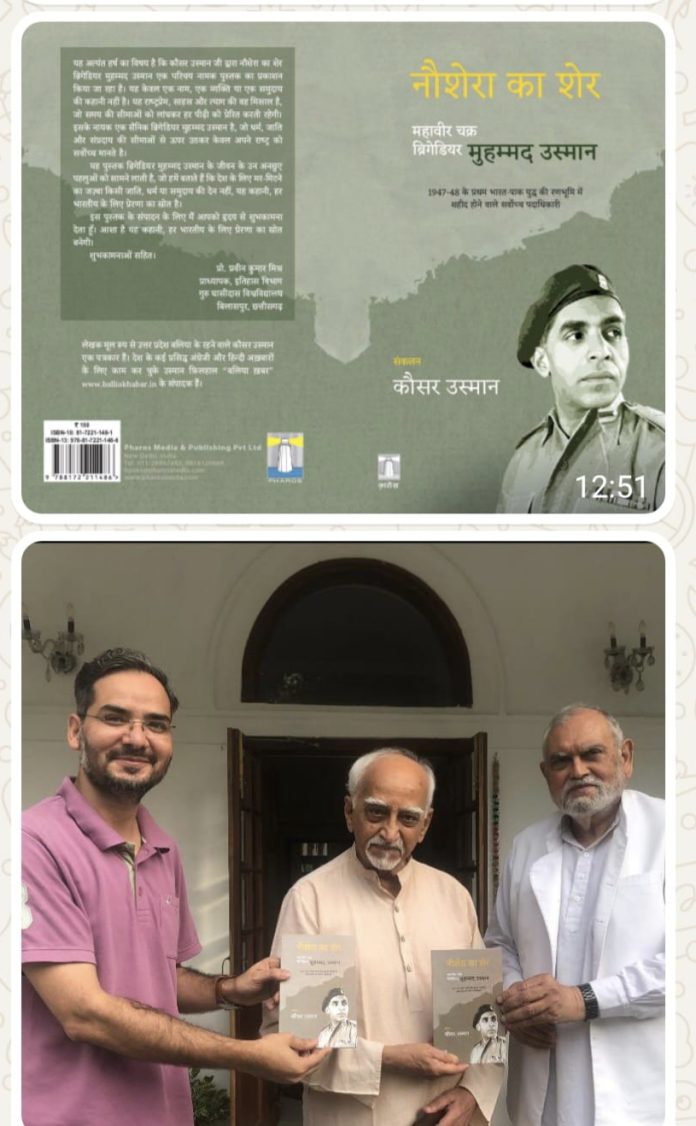
Grand Launch of ‘Naushera ka Sher’ Honouring Brigadier Mohammad Usman : Former Vice President Hamid Ansari Releases the Book

Azamgarh / Naushera, UTTAR PRADESH :

New Delhi:

A grand launch event was held in the capital today for the book “Naushera ka Sher — Brigadier Mohammad Usman”, celebrating the life of the 1947–48 war hero. Authored by senior journalist Kauser Usman from Ballia, Uttar Pradesh, the book honours Brigadier Usman, famously known as the “Hero of Heroes.”

The book was officially released by former Vice President of India, Mr. Hamid Ansari, who is also a family member of Brigadier Usman. Speaking at the event, Mr. Ansari said,

“Brigadier Usman was more than a soldier — he symbolised patriotism, courage, and sacrifice. Kauser Usman’s book is a fitting tribute and an inspiration for future generations.”

Brigadier Mohammad Usman was one of the few Indian Army officers who laid down his life during the India-Pakistan war of 1947–48, without retreating. He was posthumously awarded the Maha Vir Chakra, India’s second-highest wartime gallantry honour.

Author Kauser Usman said,

“This book is my humble tribute to a national hero. Brigadier Usman’s life, simplicity, and service to the nation continue to guide us.”

Dr. Zafarul Islam Khan, former Chairman of the Delhi Minorities Commission, also attended the event.

The book is published by Pharos Media Publishing Pvt. Ltd., New Delhi.

source: http://www.radiancenews.com / Radiance News / Home> Art & Culture / by Mohd Naushad Khan / July 11th, 2025

AMU’s Nabeela Khan shines as Uttar Pradesh clinches gold at 2025 Roller Skating Derby Championship

Aligarh, UTTAR PRADESH :

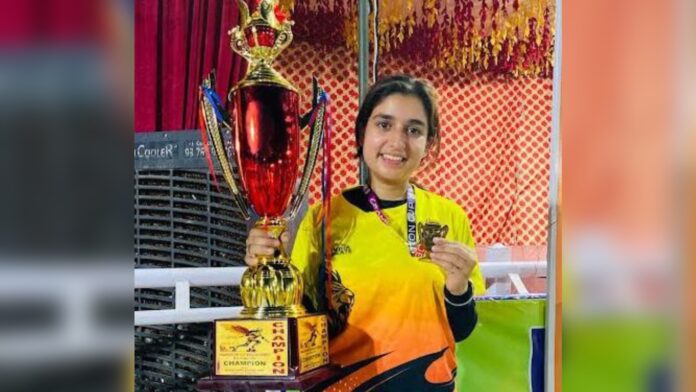
Nabeela Khan, a B.Sc. Biochemistry student from the Women’s College at AMU.

Aligarh Muslim University (AMU) continues to make headlines, not just in academics but also in sports. Nabeela Khan, a B.Sc. Biochemistry student from the Women’s College at AMU, played a pivotal role in leading Uttar Pradesh to a gold medal at the prestigious Federation Cup 2025 Roller Skating Derby Championship held in Bikaner, Rajasthan.

Representing Team Uttar Pradesh, Nabeela demonstrated outstanding skill and determination throughout the tournament. Her performance was instrumental in securing strong victories during the pool stage, including a dominant 44–11 win over Tamil Nadu. In the final, her team put up an equally impressive show, defeating the host team Rajasthan 26–12 to clinch the championship title.

Adding further pride to the university, Syeda Laiba Ali, a recent Class X graduate from AMU, was also part of the victorious state team. Her selection highlights AMU’s growing emphasis on promoting women’s participation in sports and nurturing young talent.

Nabeela’s selection to the state team followed a standout performance during a 10-day intensive training camp in Mohali in 2024. Her speed, consistency, and strategic play caught the attention of national selectors. No stranger to competitive success, Nabeela has already won five medals on the National Roller Derby Circuit, including three golds.

Remarkably, she balances her athletic pursuits with academic excellence. Nabeela has cleared the NEET examination twice, showcasing her dedication to both sports and studies. Her journey reflects the holistic environment AMU fosters—where students are encouraged to pursue excellence in all spheres.

With achievements like these, AMU is reinforcing its reputation as a nurturing ground for talent, empowering women like Nabeela and Laiba to shine on national platforms. Their success stories continue to inspire the next generation of student-athletes at the university. — With Agencies Inputs

source: http://www.muslimmirror.com / Muslim Mirror / Home> Indian Muslim> Women / by Muslim Mirror Desk / July 10th, 2025

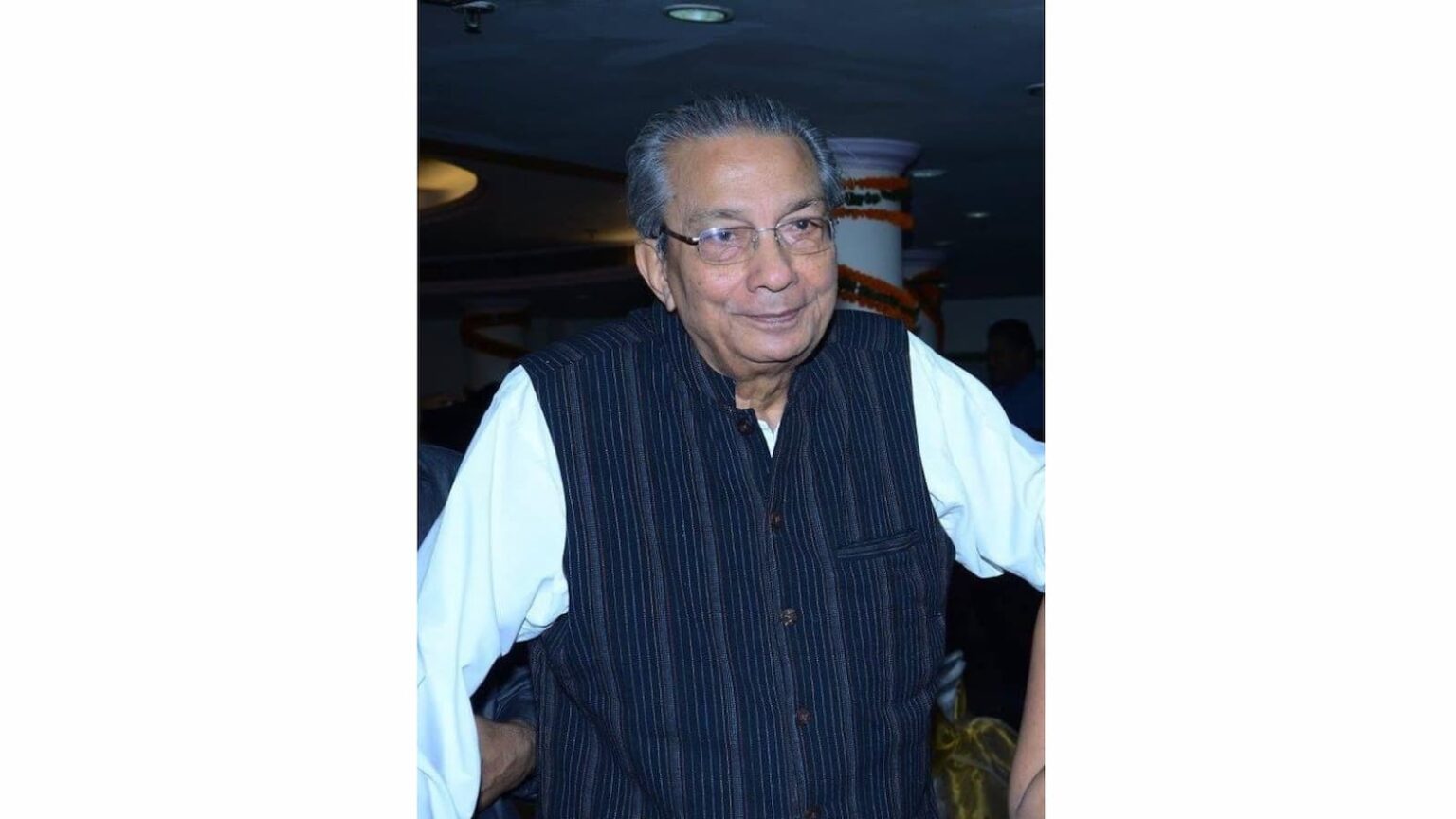
Ather Siddiqi: Journey as a Zoologist, Scholar, and Urdu Literary Maestro

Sahranpur, UTTAR PRADESH / NEW DELHI :

Ather Siddiqi was a researcher of eminence in his field and his research has been nationally and internationally recognised in the scientific world.

Professor Ather H. Siddiqi was born on December 29, 1931, in Saharanpur, Uttar Pradesh. He attained his early education at the Govt. High School, Saharanpur and obtained the degrees of B.Sc. (1950) and M.Sc. (1953) from A.M.U. Topping the university in Science and Zoology, he received two gold medals. He did his PhD in 1956 under the supervision of Professor Babar Mirza from Aligarh Muslim University.

Ather Siddiqi joined the Department of Zoology as a lecturer in 1953. After three years, he joined Purdue University, USA and completed another doctorate in 1958. He became a reader in 1961 and was appointed as a professor in 1977. Prof. Siddiqi also taught at universities in Nigeria and Libya and returned to India in 1980. He served as the Chairman of the Department of Zoology (1985-88) and as the President of the Indian Society for Parasitology. He also served as the Dean of the Faculty of Life Science in 1988-89, finally retiring from his services in 1994.

His scientific work on helminth taxonomy was published by the New York Academy of Sciences in the form of an exhaustive monograph. Despite that, he received his basic training in classical zoology in the early sixties. Later on, he switched to experimental work in parasitology. Ather Siddiqi was a researcher of eminence in his field and his research is nationally and internationally recognised in the scientific world.

Siddiqi’s Immersion in Urdu Writing

Apart from research articles, his popular writing in Urdu started in the 1980s. His first article in Urdu appeared on the life and scientific contribution of his mentor Professor Babar Mirza in the Quarterly “Fikr-o-Nazar” (January 1987). He published two articles in the early years of “Tehzib-ul-Akhlaq”, Aligarh: ‘Ilm-ul-Hayatiat ke Isatiza se Khitab’ (December 1987), ‘Mohammad Babar Mirza-Apnay Chaman ka Aik Deedawar’ (August 1989).

After his retirement in 1994, he devoted himself completely to Urdu writing. His lengthy article, ‘Mashriq say bezar na Maghrib say Hazar Kar’ narrateing the scientific and cultural activities of European countries was serialised in January 2005-June 2006 issues of “Tehzib-ul-Akhlaq”.

Similarly, his Urdu travelogue ‘Saat Haftay Inglistan Main’ (Seven Weeks in England) was published in the June and July 2006 issues of “Tehzib-ul-Akhlaq”. It carried interesting information regarding the scientific and cultural development of England.

His article based on his visit to Spain ‘Undlus Ka Shandaar Mazi’ (The Bright Past of Spain) discussed the scientific and cultural development of medieval Spain.

Ather Siddiqi along with Syed Zillur Rahman, contributed a chapter, ‘Aligarh Muslim University: Development and Progress of Science Teaching and Research, 1877-1947’ in Science and Modern India: An Institutional History, c. 1784-1947 (ed. Uma Das Gupta), Centre for Studies in Civilisation published in 1999.

A Glimpse into his Published Works

He is regularly contributing a literary column ‘Hairat Sarai Ke Kahania’ to “Tehzib-ul-Akhlaq” which consists of the translation of interesting short stories taken from the internet.

Recently, his popular science articles ‘Parasitism: Aik Dilchasp Tareeq Zindagi’ (Parasitism is an Interesting Way of Life) and ‘Yek khuliya Tufailiati Beenariyan’ (Unicell parasitic diseases) appeared in the February 2022 and February 2023 issue, respectively, of the Urdu monthly ‘Aajkal’, Delhi.

After retirement, Ather Siddiqi devoted himself to Urdu writing and authored, translated and edited dozens of books. The names of some of his books are: ‘Kiya aur meri Hayat Kiya’, ‘Lizzat Aabla Pai’, ‘Nishat Aabla Pai’, ‘Hairat Sarai ke Kahaniyan’ (Vol. 1, 2, 3, 4). In 2022, he published “Rah wa Rasam Aashnai”, his last book. He also rendered Retd IAS officer Musa Raza’s book, “Land of Regrets: Kashmir”, in Urdu as “Kashmir Sarzamin Pashemani”.

Ather Siddiqi was one of the best teachers, an internationally acclaimed Zoologist, and a passionate Urdu writer. And above all, he was a wonderful human being. He passed away on 8th November, 2023, in Delhi at the age of 92 years due to old age illness.

References:

 Tehzib-ul-Akhlaq, Aligarh (various issues)
 Science and Modern India: An Institutional History, c. 1784-1947 (ed. Uma Das Gupta), Centre for Studies in Civilisation, New Delhi, 1999.

source: http://www.heritagetimes.in / Heritage Times / Home / by Dr Asad Faisal Farooqui

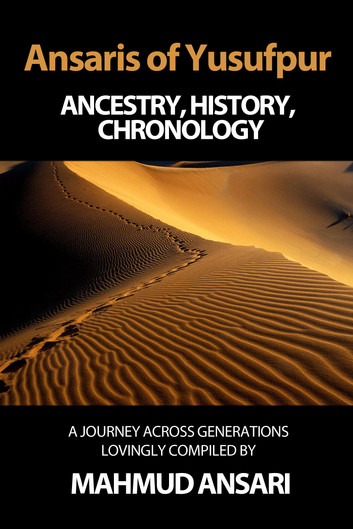
Book: Ansaris of Yusufpur

Yusufpur (GhazipurDistrict), UTTAR PRADESH :

Synopsis

A fascinating history of Ansaris who began their journey in this mortal world a few thousand years ago in the peninsula of Arabia, then called Araba.

As Islam grew and took in its fold various other lands and nations, Ansars, being valiant warriors, became part of just about every major battle that took place from Badr to Constantinople, Qandahar, Herat, and finally to India.

Ansaris were not mere bystanders as history unfolded; they played significant roles and made valuable contributions in the fields of religion, medicine, literature, law, politics and media, no matter which part of the world they chose to settle in.


Since this book is about a branch of Ansaris who arrived in India, i.e. the Ansaris of Yusufpur, they will be covered in depth.

However, as the first book on Ansaris in English language, it would also be of interest to all Ansaris whose ancestors moved from Madinah-e-Munawwara to other countries of the Gulf, Middle East, Iran, Afghanistan, India, Pakistan and other parts of the world.

It is, after all, a common lineage and history that all Ansaris share from the pre-Islamic era and this book provides a ready reference to the origin and history of their ancestors.


This book is a fascinating history of Ansaris who began their journey in this mortal world a few thousand years ago.

As the first book on Ansaris in English language, it would also be of interest to all Ansaris whose ancestors moved from Madinah-e-Munawwara to other countries of the Gulf, Middle East, Iran, Afghanistan, India, Pakistan and other parts of the world.

source: http://www.kobo.com / Rakuten Kobo / Home> Biography & Memoir / by Mahmud Ansari

Zohra Ansari, the Freedom Fighter Who Taught Urdu to Mahatma Gandhi and Sold Her House to Fund Congress

Yusufpur (GhazipurDistrict), UTTAR PRADESH / NEW DELHI / London, U. K :

Begum Zohra Ansari sold away ‘Dar-us-Salam’ to raise party funds and worked for the victory of the candidates of the Indian National Congress and for the defeat of the candidates of the Muslim League, who wanted partition.

Begum Zohra Ansari, an activist of the Indian National Movement whom Mahatma Gandhi addressed as “Vasthad Bi, was born in Delhi. She was the adopted daughter of freedom fighters, Dr. Mukhtar Ahmed Ansari and Begum Shamsunnisa Ansari.

Besides playing an important role in the National Movement, her parents provided hospitality to leaders and a cadre of the Indian National Movement and scholars and people of repute in different walks of life in their residence ‘Dar-us-Salam’.  It was very spacious like a royal palace.

While Begum Shamshunnisa Ansari was busy in these responsibilities, Zohra helped her. Thus she had an opportunity to see from close-quarters leaders such as Mahatma Gandhi, Pandit Motilal Nehru, and the Ali Brothers and to serve them. Right from childhood she evinced interest in literature, history, and social sciences. She also gained proficiency in Urdu, Arabic, Persian, and Hindi.

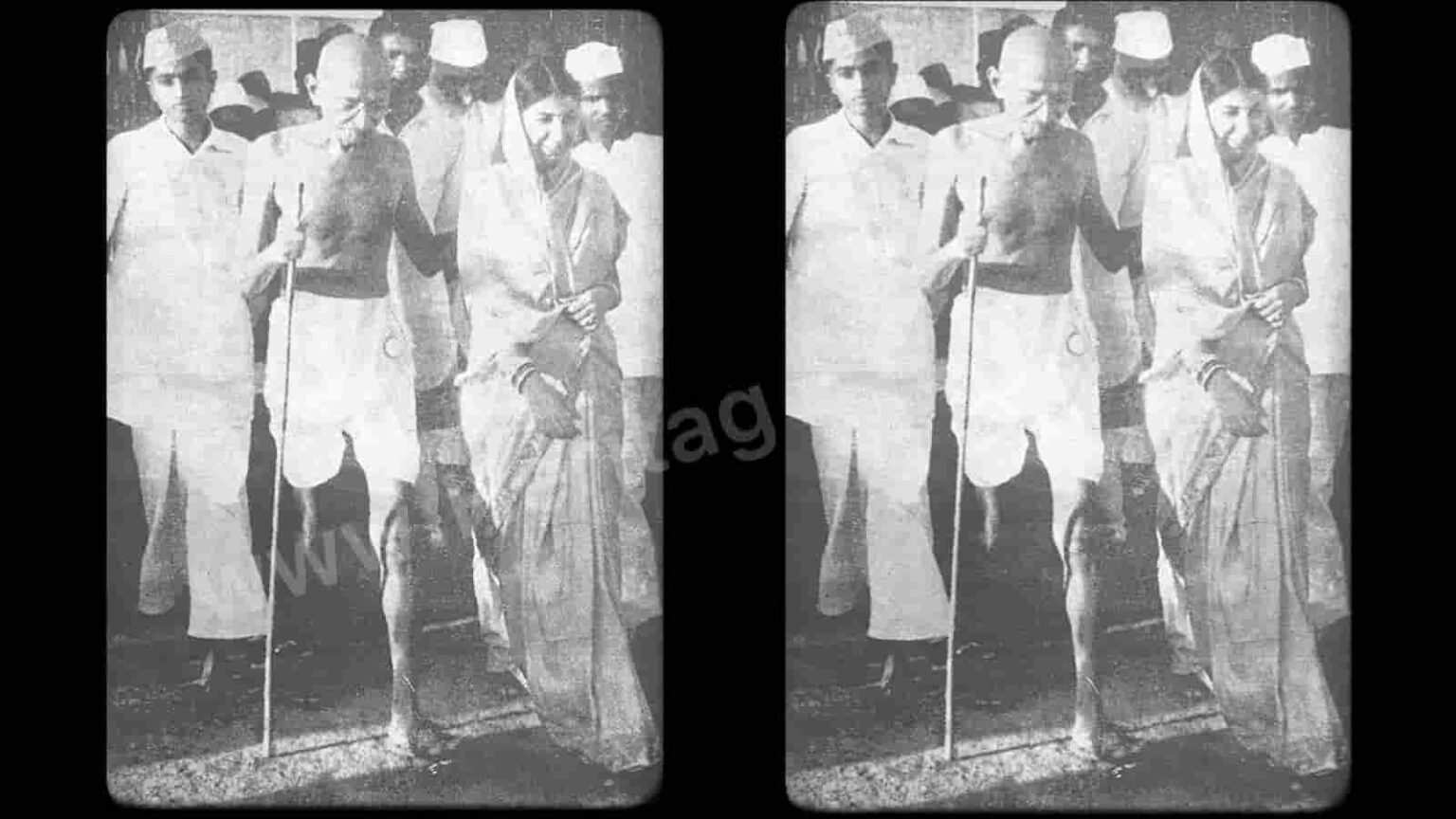
Zohra Ansari and Mahatma Gandhi

Zohra Ansari rendered her services in Wardha Ashram for a long time. Mahatma Gandhi came to know about her command over Urdu and started learning the language from her. He used to address her in his letters as ‘Vastad Bi’ and ‘Beti.

Zohra Ansari and Mahatma Gandhi used to have regular correspondence on various issues. In his letter dated 22 December 1932 to Dr Ansari, Gandhiji remarked that he used to look forward to Zohra’s letter every week. When Zohra expressed her desire to go to jail as a part of the National Movement, like her parents, Gandhiji asked her to wait and promised to allow her to go to jail.

Begum Zohra Ansari married Dr Shaukatulla Shah Ansari (1908-1972) who was her relative and leader of the Indian National Movement. Begum Zohra Ansari lost her father in 1936 and mother in 1938. She took an active part in the Freedom Struggle along with her husband. Both wife and husband opposed the partition of India.

She sold away ‘Dar-us-Salam’ to raise party funds and worked for the victory of the candidates of the Indian National Congress and for the defeat of the candidates of the Muslim League, who wanted partition. Post Independence, Begum Zohra Ansari led a simple life and passed away on 28 July 1988 in England.

source: http://www.heritagetimes.in / Heritage Times / Home / by Syed Naseer Ahamed / December 12th, 2023

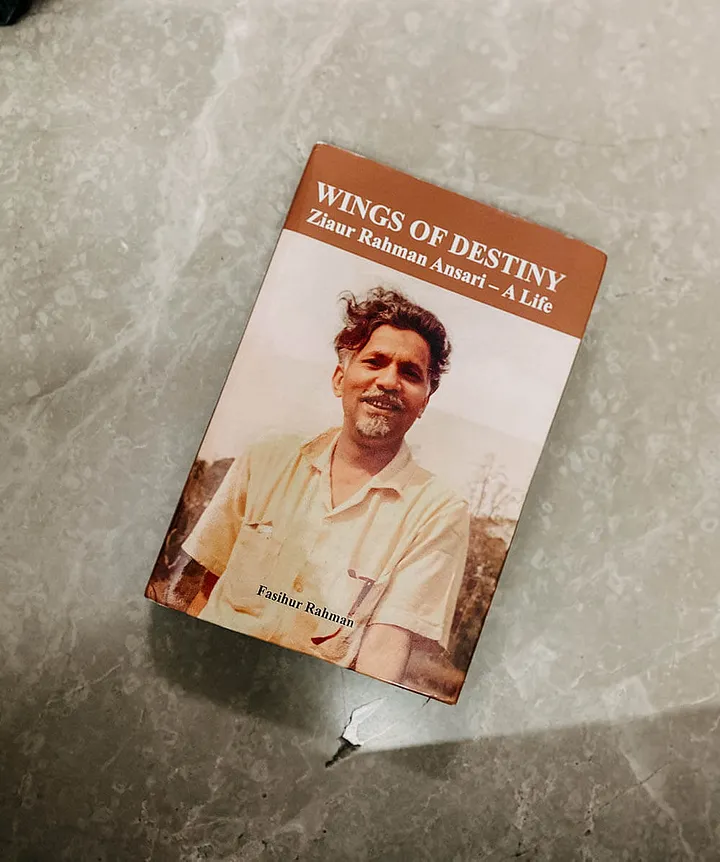
Book Review of ‘Wings of Destiny — Ziaur Rahman Ansari — A life’ by Fasihur Rahman

UTTAR PRADESH / NEW DELHI :

Ziaur Ansari was a prominent political figure, having served as the Union minister in the council of 2 Prime ministers Indira and Rajiv Gandhi. Wings of Destiny written by his son Fasihur Rahman is an ode to his entire political career spanning more than three decades and highlights the stalwart’s remarkable, inspirational life as well as clears the air around the controversies surrounding him.

When the truth stands coy in a corner, visible and yet under the pretence of being unknown and unacknowledged, you know that something somewhere is unfair.

Indeed, many times in life, there comes a threshold where one needs to understand and realize that truth which is the most supreme of all, can be an eye opener, as well as a beautiful and also a terrible thing, many a time. Terrible because there may be more to the situation than what meets the eye.

Yes, we all know and have read about the countless hardships that all of us underwent during the Indian freedom struggle. But, surely not all has come to light as far as the involvement of all parties, be it left or right is concerned. Yes, Muslims too were an integral part of the struggle towards Independence, their contribution being extremely indispensable. A prominent figure among them is Ziaur Rahman Ansari who served as Union minister from 1973 to 1977 and from 1980 to 1989 during the council of two Prime Ministers -Indira Gandhi and Rajiv Gandhi, this book which is written by his nephew Fasihur Rahman is a memoir cum biographical sketch of Ziaur Ansari’s life.

Ziaur Ansari was primarily in the spotlight in the year 1985, when he participated in a debate on a private Member Bill related to the SC judgement on the Shah Bano case, which to date remains one of the most debated issues in India as well as abroad. Having been often misquoted, misinterpreted and improperly perceived, Fasihur has taken it upon himself to finally take the opportunity to tell the world the true story behind Ziaur’s life.

The book which began with giving an ancestral account of Ansari primarily spoke about his father Habibur Rahman Ansari’s invaluable contribution to the freedom movement. What followed was the journey through Ziaur Rahman’s pursuit of politics which was turbulent and spanned a period of almost three decades, showing how he contested 9 elections.

Ziaur, not only being a man of strong ethics and politics, nevertheless was a man with a passion for fine arts, poetry, literature and music too. Ziaur was also inspired by Abul Kalam Azad’s legacy which was one of the cores of Rahman’s life. The hardships suffered by the Ulamas aka the religious scholars after the Mutiny of 1857 have also been explored by Fasihur here highlighting the true role of Darul Uloom Deoband in the Indian freedom struggle. I, for once, was amazed by this one since like mentioned earlier, I realized that many religious scholars, many freedom fighters have remained unsung, unacknowledged in their role in the struggle against the British rule for reasons which were, are and perhaps will always be something we shall never be able to comprehend fully. Racism, unfortunately, in the most erred way possible, nevertheless, Fasihur has brought forth a lot of undeciphered and unknown details forward.

Have you ever known or read about the famous Shah Bano case and the subsequent judgement of 1985? Well, the book explores the same in its entirety giving us Ziaur’s intervention in the Parliamentary debate on the SC judgement.

Ziaur Rahman was the president for a tenure of almost three decades at the All India Momin conference. The book provides a complete walk through the evolution, historical significance, mandate, and contribution of the conference in the complete socio-economic upliftment of the Muslim artisans. It also highlights their contribution to the freedom movement in India.

The last two years of Ziaur’s life were traumatic as Amyotrophic Lateral Sclerosis, an incurable neurological disorder, marked them. Characterized by loss of speech this is one of the most painful possible diseases and indeed Ziaur’s pain and anguish must have been sheer agony.

Lagate ho jigar pe teer par hum kuch nahi kehte. Zabaan hote hue ye bezabaani dekhte jao…

This Urdu couplet which was used by Ziaur himself to express the trauma of the condition he was reduced to was something that shook me personally, making me fathom and realize the kind of inability and pain the disease might have led him to. It was heartbreaking to read the complete scenario, especially since Fasihur has revealed how even being the prominent voice he had been, Ziaur was unable to speed track the path to going abroad and procuring the treatment which would have cured him.

A brilliantly written book, this one is a memoir you surely should not miss. Fasihur Rahman is impeccable in detail, immaculate in expression, not shying away from portraying facts as well as refraining from giving any kind of a judgmental tonality to any of the data he has provided. A crisp narration, this one will give you a lot of detail especially as it delves into pre as well as post-independence happenings and thus will be of interest as well as use to readers and historians too alike.

source: http://www.booxoul.medium.com / Medium.com / Home> Booxoul / December 14th, 2022