For the unversed, Rooh Afza was originally created by a Unani hakim as a herbal concoction to beat the heat, however, it went on to become a staple across India and Pakistan.
Hakim Hafiz Abdul Majeed is the founder of Hamdard that created Rooh Afza as a herbal drink that would help people stay cool in the summer.
Hakim Hafiz Abdul Majeed’s education
Born in 1883, Hakim Hafiz Abdul Majeed studied the origin of Urdu and Persian languages. He went on to acquire the highest degree in unani system of medicine.
Hakim Hafiz Abdul Majeed’s career
In 1906, Hakim Hafiz Abdul Majeed decided to set up a herbal shop at House Qazi in Delhi. In 1920, his small shop turned into a production house. Selecting herbs and syrups from traditional Unani medicines, Hakim Hafiz Abdul Majeed created a drink to fight heat strokes – He named it Rooh Afza, which in Urdu means ‘something that refreshes the soul.”
In 1910, an artist called Mirza Noor Ahmad prepared the labels of Rooh Afza in several colours. It was printed under special arrangement by the Bolton Press of the Parsees of Bombay (Mumbai) since there were no coloured printers at that time.
Journey of Rooh Afza
The partition of India in 1947 played a role in the journey of Rooh Afza. Hakim Abdul Majeed’s eldest son decided to stay in India, but his younger brother Mohammad Saeed wanted to live in Pakistan. He started Hamdard from two rooms in Karachi and in no time the business flourished. As per Sadia Rashid, Hakim Mohammad Said’s daughter, her father gifted the business to the people of Bangladesh after their independence in 1971.
Having said that, Rooh Afza gained more popularity in India. The bottles were deigned in Germany and were initially introduced in a glass bottle, but was later changed to plastic. In 2019, Rooh Afza faced shortage in supplies owning to the lesser availability of herbs needed to make the drink.
Other brands under Rooh Afza
Over the years, Rooh Afza launched products like Pachnaul, Safi, Rogan Badam Shirin.
source: http://www.financialexpress.com / Financial Express / Home> FE Leisure> Business News> Lifestyle / by FE Lifestyle / May 13th, 2023
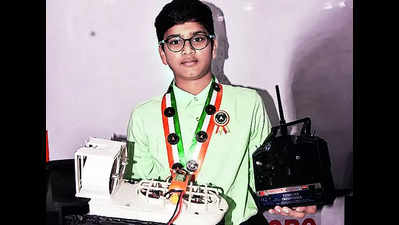
Izaan Ali, a 12-year old from the city, has made an entry into India Book of Records by making the smallest functional model of hovercraft measuring 10 inches x 6 inches.
Izaan’s hovercraft is remotely controlled and is connected to a GPS system. It uses four brushless motors and 3D printed components to run. This initiative that leverages smart technologies to revolutionise healthcare services was approved by the India Book of Records.
Currently studying in Class 7 at a private school in Ludhiana, Izaan thought of the idea years ago when he lost his grandfather to cardiac arrest. He said the family could not get urgent medical aid during the golden hour.
The hovercraft has been envisioned to seamlessly fill in the current lags in access to essential supplies which are currently restricted by operational constraints like working hours of delivery platforms, thus saving precious lives. An official launch and commercialisation are awaited.
Izaan’s parents are committed to his ambitions. While his father, Imtiaz Ali is an educational consultant, his mother Seher Imtiaz, is a rehabilitation psychologist. Residents of Dugri phase III, his parents shared that Izaan worked on this idea for around six-eight months and burnt the midnight oil (even during) his exams to achieve his goal.
Sharing details, Izaan Ali told TOI, “This hovercraft operates by creating a cushion of air underneath itself, allowing it to float above a surface. The main propulsion and lift for this hovercraft are provided by four brushless motors. The structure was enhanced using 3D printed components, making it customisable and relatively easy to repair or modify.”
His parents said the project is a demonstration of his commitment to renewable and sustainable technology and their importance in modern engineering. The project’s use of four brushless motors for propulsion and lift showcases its commitment to efficiency and performance. This design allows the hovercraft to glide smoothly over various terrains, opening up new possibilities for transportation in diverse environments.
“Furthermore, the project’s approach not only makes the hovercraft more adaptable to different needs but also emphasizes the importance of eco-friendly manufacturing practices.” Izaan added. Aiming to become an automobile engineer, he said, “ It me took around 6-8 months of time and around Rs 20,000 to create the prototype.”
Dimple Verma, Izaan’s mentor said, “This is a 4th generation mode of transport which reduces friction by 20-30% and can be beneficial for medical deliveries to rescue people who do not have connectivity, or are disadvantaged and die in challenging terrain.”
source: http://www.timesofindia.indiatimes.com / The Times of India / Home> News> City News> Ludhiana News / April 04th, 2024
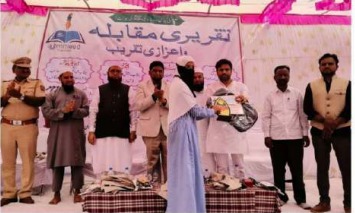
In a district-level speech competition organized by the Umeed Foundation, Malkapur’s Al-Huda Urdu Girls School and Junior College student, Nazifa Namus, emerged victorious, securing the first position.
Daughter of Tariqullah Khan, Namus impressed judges and spectators alike with her eloquence.
She was awarded an honorary certificate and a cash prize of eleven thousand rupees.
The event, held on Sunday, garnered attention from dignitaries such as Abdul Karim Salar, President of the Education Society, and Rajesh Akde, a prominent member of the Provincial Assembly.
Also present were Maulana Ashfaq Qasmi, Haji Rasheed Khan and senior police officials from the city.
source: http://www.radiancenews.com / Radiance News / Home> Education / by Zaina Aman (headline edited) / Radiance News Bureau / March 06th, 2024
She is the daughter of billionaire Rafique Malik, the company’s chairman. Her grandfather, Malik Tejani, founded it in 1955 in Mumbai. Farah has guided Metro Shoes into a new era of modern retail. The company’s brands include Mochi, Metro, and Walkway.
(Image source: LinkedIn)
Eid Ul Fitr was celebrated throughout the country. Amid celebrations, you may be left wondering if you are asked about the wealthiest Muslim woman in the country. The name of the country’s richest Muslim woman is Farah Malik Bhanji. She is the managing director of the Metro brand, which sells premium shoes. Her net worth is more than Rs. 26000 crore. Farah Malik plays an important role in giving the Metro brand a new identity.
She is the daughter of billionaire Rafique Malik, the company’s chairman. Her grandfather, Malik Tejani, founded it in 1955 in Mumbai. Farah has guided Metro Shoes into a new era of modern retail. The company’s brands include Mochi, Metro, and Walkway.
As of December 8, the company’s market capitalisation was Rs 35,117 crore. Farah is the second of five daughters. His father, Rafique, has a real-time net worth of Rs 21697 crore as of 12 April.
Farah has more than 20 years of experience in the footwear industry. She has played a key role in reimagining the company for the new era. She began her career in marketing before moving on to revamp Metro Brands Limited’s technology roadmap and supply chain. The company was listed in December 2021. The late billionaire investor Rakesh Jhunjhunwala’s wife, Rekha, owns a minority stake in Metro Brands.
She pays close attention to detail, is well-versed in business, and has a sense of style. The footwear company has experienced growth for both the company and its employees under her leadership. She has played a crucial role in forging connections with international companies like Skechers, Crocs, and Clarks in addition to forging close bonds with more than 250 reliable vendors. She contributed to the network’s growth from 100 stores in 2010 to 598 locations across 136 Indian cities.
At the close of trading on Wednesday, Metro Brands Ltd. saw a rise to Rs. 1058. Rs. 1,440.45 is the stock’s 52-week high level, and Rs. 784.45 is its 52-week low. Metro Brands’ shares opened at Rs 1044 at the start of the trading session on Wednesday. Subsequently, it increased by over 20 rupees, closing at 1058. The company cap is of Rs 28,773 crore.
source: http://www.dnaindia.com / DNA / Home> Business / by Varnika Srivastava / April 12th, 2024
Makhdoom Awards have been designated for a period of five years
Hyderabad:
The Telangana Urdu Academy has revealed the recipients of the prestigious Makhdoom Awards and Karnama-e-Hayat (Lifetime Achievement) Awards in various categories honoring Urdu writers, scholars, poets, and journalists.
As part of the Telangana Foundation Day celebrations, an award ceremony and mushaira will be held at Ravindra Bharati on June 11.
President of the Urdu Academy, Mohammad Khwaja Mujeebuddin, made the announcement, expressing his enthusiasm for recognizing and celebrating the accomplishments of Urdu language and literature.
The Makhdoom Awards have been designated for a period of five years, from 2019 to 2023, while the Lifetime Achievement Awards will be presented for three years, covering the period from 2018 to 2020.
President Mujeebuddin mentioned that the awardees were chosen by separate committees comprising Urdu language and literature experts who meticulously evaluated the contributions of the nominees.
Under the Karnama-e-Hayat category, the Urdu Academy presents seven awards annually, including the Amjad Hyderabadi and Saeed Shaheedi Awards for Poetry, the Dr. Mohiuddin Quadri Award for Criticism and Research, the Dr. Agha Hyder Hassan Award for Prose, the Prof. Habeeb-ur-Rehman Award for Education and Teaching, the Mahboob Hussain Jigar Award for Journalism, and the Srinivas Lahoti Award for the Promotion of Urdu.
The Makhdoom Award, on the other hand, acknowledges exceptional achievements in the fields of research and criticism, poetry, fiction, journalism, and humour.
For the years 2019 to 2023, the recipients of the Makhdoom Awards are as follows: Dr. Aqeel Hashmi for Research & Criticism (2019), Mr. Jalal Arif for Poetry (2020), Mr. Mazharuzzaman Khan for Fiction (2021), Mr. Aziz Ahmed for Journalism (2022), and Prof. Habeeb Zia for Satire and humour (2023).
Additionally, 21 awards have been announced, with seven awards being presented each year over a three-year period.
The list of recipients for the Makhdoom Awards includes distinguished individuals such as Qazi Farooq Arifi for the Amjad Hyderabadi Award for Poetry, Dr. Raheem Ramesh for the Saeed Shaheedi Award for Poetry, Ms. Khairunnisa Aleem for the Agha Hyder Hasan Award for Fiction, Dr. Fazlullah Mukarram for the Dr. Mohiuddin QuadriZor Award for Research and Criticism, Mohammad Mastan Ali for the Prof. Habeeb-ur-Rehman Award for Education and Teaching, Dr. Fazil Hussain Pervaiz for the Mahboob Hussain Jigar Award for Journalism, and Mr. Baquar Mirza for the Srinivas Lahoti Award.
Each Makhdoom Award consists of a cash prize of Rs 2,00,000, a memento, and a certificate of appreciation, while the Lifetime Achievement Award carries a cash prize of Rs 50,000.
The grand award ceremony is scheduled to take place on June 11 at 10 PM at Ravindra Bharati, and it will be graced by the presence of state ministers K Ishwar, Mohammad Mahmood Ali, Srinivas Yadav, and other dignitaries.
source: http://siasat.com / The Siasat Daily / Home> News> Hyderabad / by Zahed Farooqui / June 10th, 2023
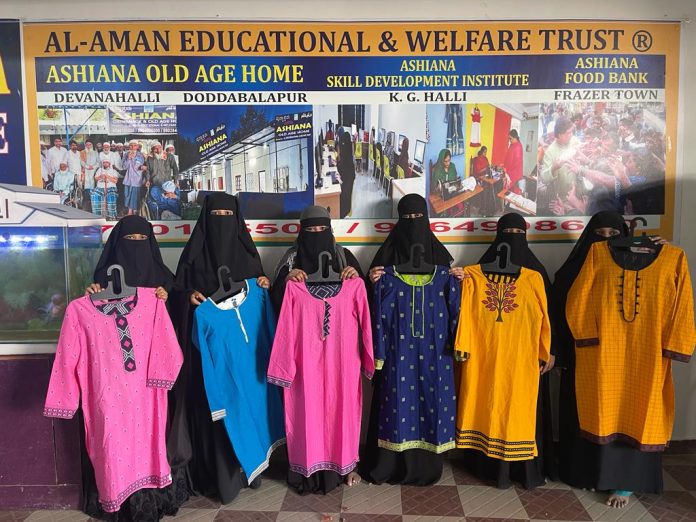
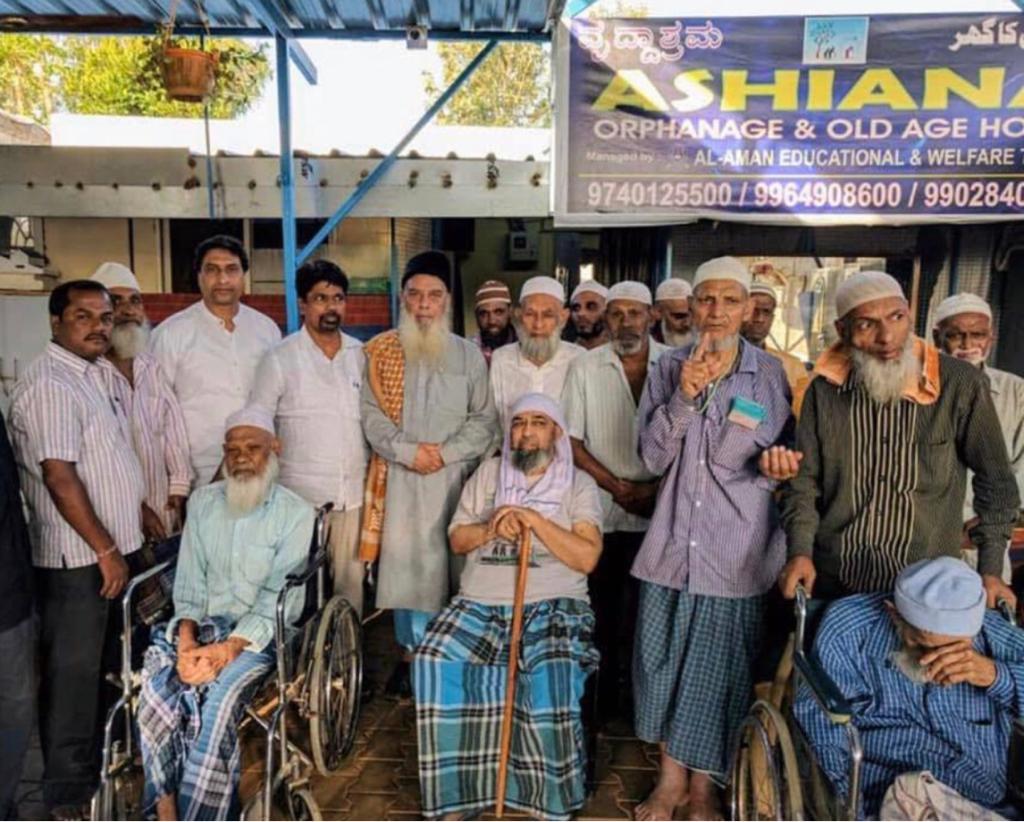
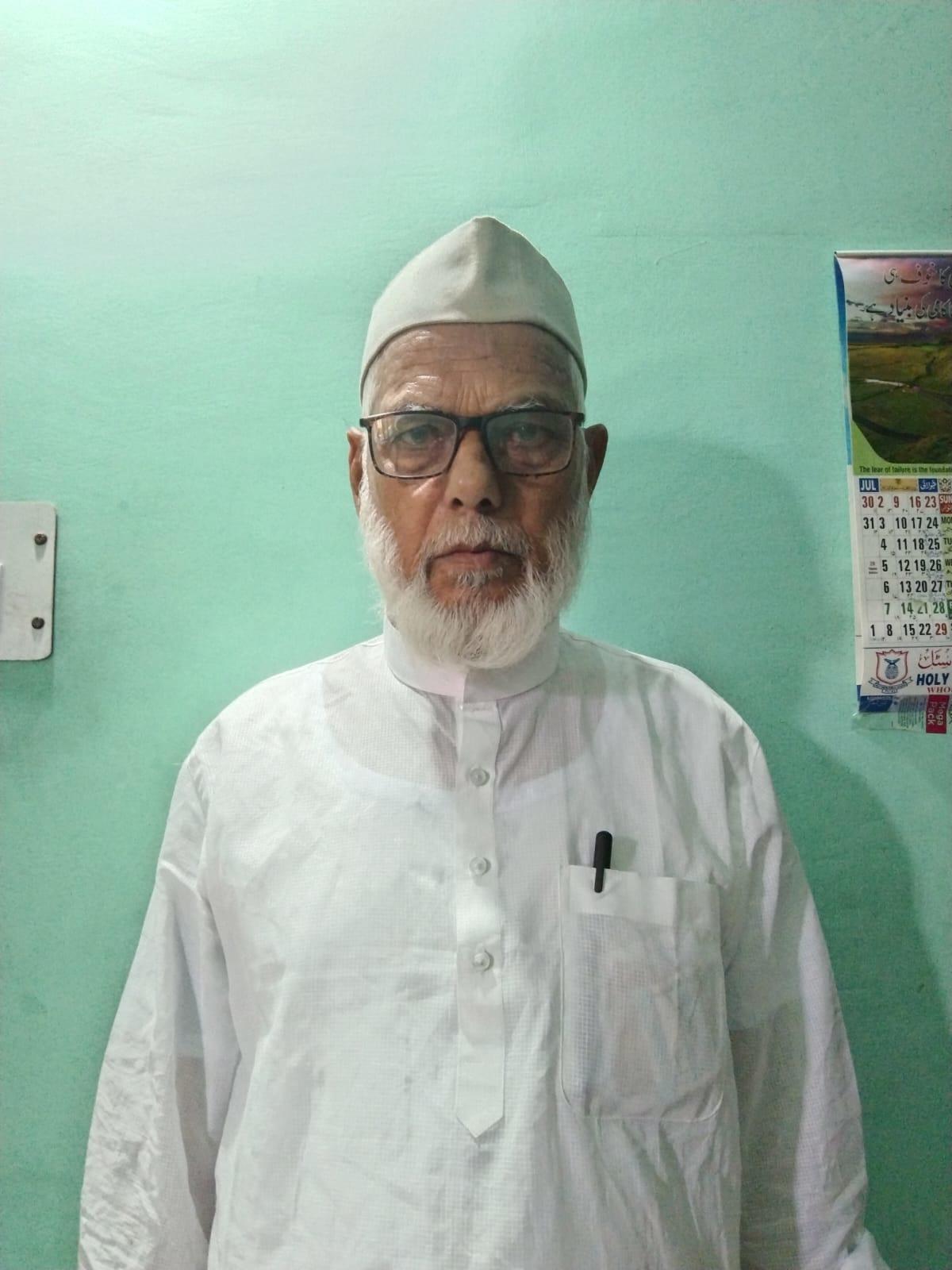
Education is the only way to serve the community and the country, said Dr. Mohammed Farooq, founder president of Ashiana Skill Development Institute, Bengaluru. Addressing the students who have completed various courses run by the institute, Dr. Farooq said the visually and hearing impaired students are also being trained in the institute.
The Ashiana Skill Development Institute provides free courses especially for the empowerment of ladies and girls and also for the visually impaired and hearing impaired persons.
The courses provided are Fashion Designing, Tailoring Computer course for visually impaired and hearing impaired. Computer course (basic, tally, hardware, web designing), Spoken English, Spoken Kannada, Self-grooming, Personality development, Henna design application, etc.
Al Aman Educational and Welfare Trust, the parent body of Ashiana was inaugurated in 1997 to serve people in need without any discrimination in the name of caste, class or creed. The Trust was formed by a group of individuals who were committed to render relentless service towards the development of the underprivileged.
The Trust is working for women and child welfare and bringing about a change in their lifestyle. Thus, the Trust has concentrated on Healthcare, Environmental awareness, Self-employment, leadership training for women, and other such socio-economic activities like Old Age Home, Rural Women Education, Child Care, etc.
source: http://www.radiancenews.com / Radiance News / Home> Latest News / by Radiance News Bureau / March 12th, 2024
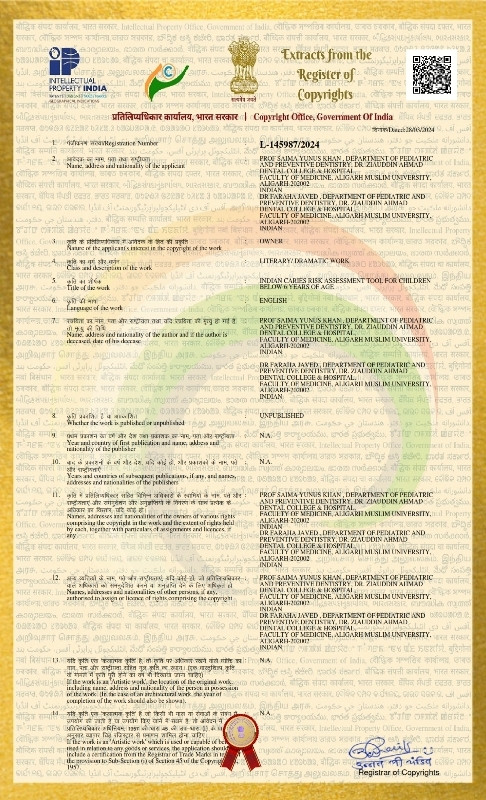
Prof Saima Yunus Khan, Chairperson, Department of Pediatric and Preventive Dentistry, Dr. Z.A. Dental College, Aligarh Muslim University has been awarded the Copyright by the Government of India for her original innovative work on an evidence based Indian Caries Risk Assessment tool for the children up to 6 years of age.
She started to work on the project in 2021, on receiving the John Clarkson Fellowship from the Prestigious International Association for Dental Research.
Being the first Indian to receive this fellowship, she worked in collaboration with Dr. Gerald Niznick, College of Dentistry, Rady Faculty of Health Sciences University of Manitoba, Canada.
According to Dr. Saima, the CRA tool would be beneficial to the Indian children as it addresses the risk factors of early childhood caries of Indian preschoolers. It’s a small compact tool form which can be used with ease by the masses in hospital or field settings.
The Dean, Faculty of Medicine and the Principal, J.N. Medical College, Prof Veena Maheshwari, and the Principal, Dr. Z. A. Dental College & Hospital, Prof R.K. Tewari congratulated Prof. Saima on her exemplary achievement.
source: http://www.amu.ac.in / AMU, Aligarh Muslim University / Home> Public Relations Office (headline edited & additional pix edited) / April 02nd, 2024
I was in grade 7 or 8 when Wasi Ahmed Shamsi sahab joined B D Y High School as an Urdu and Persian teacher. Tucked away on the bank of a pond and surrounded by cultivable land and greenery, the school in rural Darbhanga was like a sanctuary, a gurukul. Away from the din and bustle of a populated location, the school was emotionally attached to people in neighbouring villages though it kept a physical distance from them.
Though the tiled roof leaked in monsoon and wall plaster had peeled off at places, giving the whole structure an impoverished look, we regarded the school as a boon. It was a privilege to be at this school which had earned a reputation for discipline and churning out good students.
The school nurtured dreams and helped shape many destinies. It was in that positive ecosystem that Wasi sahab joined the team of a dozen or so teachers. Clad in white kurta-pajama with the skull cap covering his head, he did not wear a long beard. Like his appearance, Wasi sahab was not very orthodox in thinking too. Since he was educated at Madrassa Shamsul Hoda, Patna, one of the oldest Islamic seminaries of Bihar, he had imbibed many values which orthodox maulvis would disapprove of.
Since my father and Wasi sahab were colleagues though they taught different subjects, they had a cordial relationship and they shared a lot of things, especially about progress of their children.
Wasi sahab had spent years in urban set up before he took transfer to a school close to his village. He wanted to work for his people and therefore he got transferred from a school in Madhubani.
He was fond of reading newspapers and magazines and had even set up a library at his home. The fact that his nephew Abdul Bari Siddiqui, a senior member of Lalu Prasad Yadav’s RJD and a former minister had also built his house in the same mohalla where Wasi sahab lived enhanced Wasi Sahab’s stature. Many of those who visited Siddiqui sahab invariably visited Wasi sahab too. After all, he was a reputed teacher, a wise man, a man of letters, a concerned citizen.
Wasi sahab valued journalism and would “console” my father whenever he despaired at my choice of career as a journalist. If I learned my Ghalib and Iqbal a little early, credit goes to this good teacher who made his lectures interesting. He would ask us to read books beyond what was prescribed in the textbooks. Since I often saw him reading–books, magazines, newspapers–I unknowingly emulated him. He helped create in me a hobby for reading. He was happy that I chose to become a journalist.
After retirement, Wasi sahab undertook a herculean task of writing a book on people of his ilaqa (locality) who had made a mark in life. One summer evening I visited his village home. Clad in just lungi and gunjee (vest), with a ceiling fan whirring overhead, I saw this then septuagenarian retired teacher writing furiously on his pad. Surrounded by books and papers, he was figure of a wordsmith who thought he had little time left on this earth. Age and health issues, especially diabetes, made him restless. He wanted to complete the project he had embarked upon as soon as possible. He wanted to finish the book before the final call came.
Our telephonic discussions were long. I had encouraged him to complete the project before it was too late. Concerned about his health, I would tell him not to exert himself too much as he would fall ill often. Finally, he completed the huge volume he had spent countless hours on. The bulky book in Urdu carries life sketches of many famous personalities Wasi sahab had met at different stages in his life. I was pleasantly surprised to see that he had devoted a few pages writing about my family too, especially the struggle of my father to educate his children. Wasi sahab valued education and had great regards for those who endeavoured to educate themselves and others.
When some of my friends held a discussion on my book “Aligarh Muslim University: The Making Of The Modern Indian Muslim” at Dr Zakir Hussain Teachers’ Training College, Darbhanga, he was kind enough to attend it. And he spoke eloquently about AMU’s contribution and my humble efforts to record some of the fine features of AMU.
I remember, years ago, he had organised an educational conference in his village where the famous Urdu journalist of Patna Ghulam Sarwar who later became a minister too was invited as a chief guest. It is also because of Wasi Sahab’s efforts that Ghulam Sarwar, a great orator, had attended our school’s annual Jalsa- a-Seeratul Nabi function. The headmaster late Ramswaroop Yadav had made a rule that Muslim students would hold Seerat Jalsa, in honour of the holy Prophet, while Hindu students would celebrate Saraswati Puja. Interestingly, both Hindu and Muslim students would participate in one another’s functions. Remarkably, my father, a devout Muslim, would be made in charge of distribution of prasad or sweets as gifts to the visitors at the annual Saraswati Puja. What a great example of communal harmony the school had set?
Koi lauta de woh din for se mere pyare Hindustan mein!!
Of late,Wasi sahab was not keeping well. Despite his poor health, he wanted to bring out an abridged version of his voluminous book. I don’t know if he could complete it or not.
This afternoon I recieved three calls. First, from my elder brother, then from youngest brother, followed by a call from Mujtaba, son of Wasi Sahab. All informed me about the sad demise of Wasi Sahab, my beloved teacher who taught us diligently and honesty. But more than that, he inspired us to strive to excel.
Wasi sahab will be remembered at least for two things–for being an ideal guru, a teach par excellence and for his valuable contribution to writing and preserving the history of the locality he grew up in. He has done a great service to the person of the area. Wasi Sahab now sleeps peacefully among many of his people who preceded him.
Rest in peace, Sir. I will miss you.
Maut uski hai kare jiska zamana afsos/Yun toh duniya mein aye hain sabhi marne keliye
(Death is one which is grieved by the world/Otherwise everyone is fated to die one day).
source: http://www.timesofindia.indiatimes.com / The Times of India / Home> India / by Mohammed Wajihuddin in Beyond the Burqa, Spirituality, TOI / January 07th, 2024
It was December 2001. I was at Dr Rafiq Zakaria’s beautiful, book-lined study at Cuffe Parade house in South Mumbai. In that spacious room Allama Iqbal vied for space with William Wordsworth and Mirza Ghalib sat alongside Shakespeare. World religions and their prophets and pundits were there in plenty. So were heroes and heroines of India’s freedom struggle. Present also were a few villains amidst a pantheon of popular leaders. Muhammad Ali Jinnah could not have been absent. He was there too.
In fact, Jinnah those days was in the intellectual air on both sides of the Indo-Pak border. The Outlook magazine had sent Dr Rafiq Zakaria’s book on Jinnah ‘The Man Who Divided India’ to noted Pakistani journalist Najam Sethi for review and he had panned the book. In the review Sethi had also suggested that Dr Zakaria should have heeded advice of his wife Fatma Zakaria who had tried to stop him from wiring the book, suggesting, “I think you should leave Jinnah alone for a while.” Dr Zakaria had written a rejoinder to Sethi’s piece and explained that he could not help but write about a man responsible for not just dividing India but breaking the social cohesion of the subcontinent Muslims. First, Muslims were divided between two countries–India and Pakistan. Subsequently, a part of Pakistan broke away, leaving Muslims divided in India, Pakistan and Bangladesh. The blood-curdling riots that accompanied these divisions had left Dr Zakaria deeply disturbed and could not rest till he took the grief off his chest.
While he gave an interview to me for the ‘Indian Express” on why he wrote this book and the debate it had generated, he told his office staff that he would not entertain any telephone calls or visitors for the next one hour. Dr Zakaria was holding forth forcefully in the closed room when unexpectedly and suddenly the door opened and Fatma Zakaria, in yellow salwar-kameez clutching a page, breezed in. “The secretary is so terrified after you asked her not to disturb you that she pleaded with me to come. This needs your signature and has to be faxed urgently,” Fatma said, got the paper signed and left quickly.
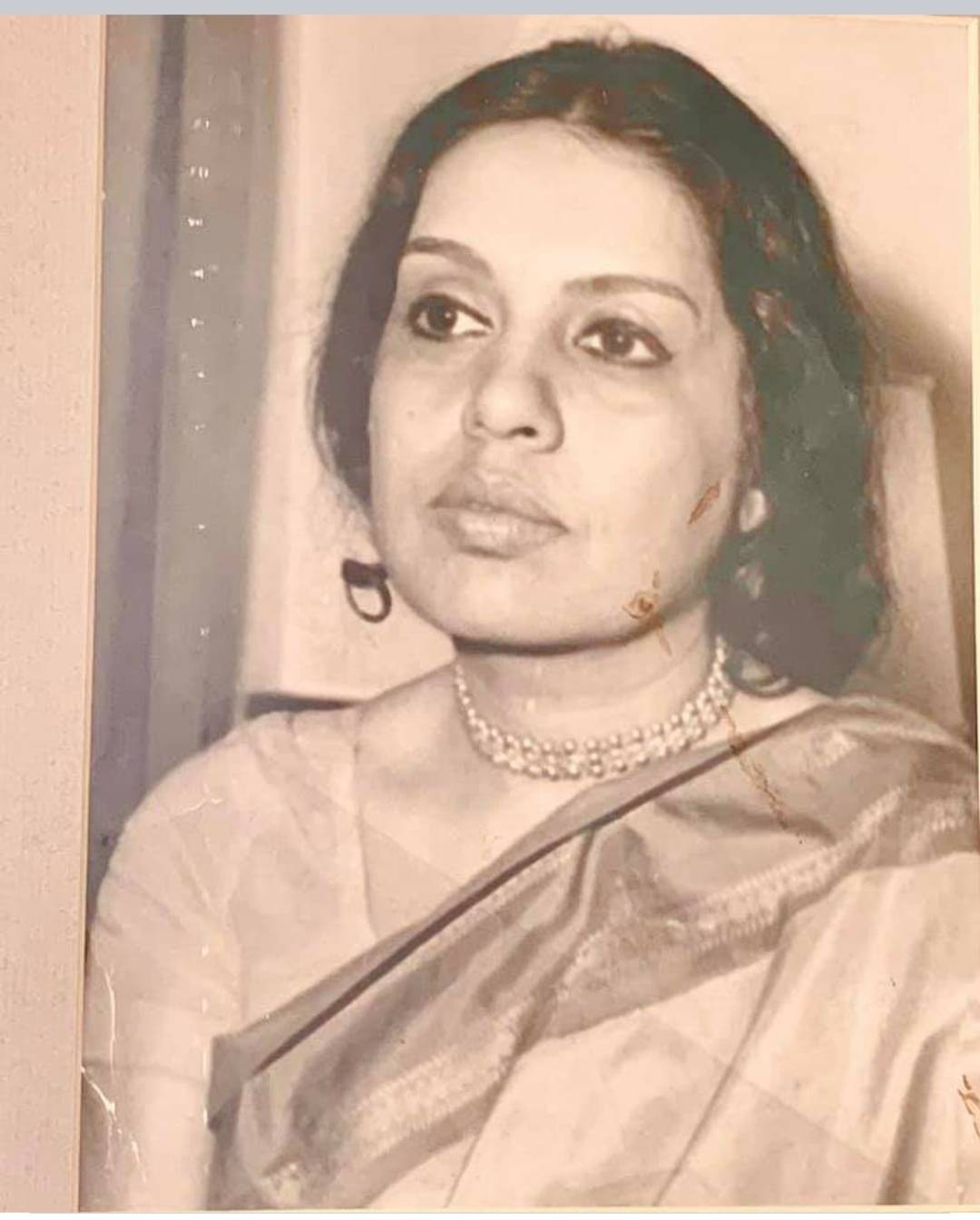
The Zakarias, husband and wife, complimented each other. One half left in 2005. The better half departed yesterday. She was 85. Her famous son, US-based author and Television anchor Fareed Zakaria couldn’t have encapsulated his feelings in a tweet better than this: “My mother, Fatma Zakaria, passed away last night at 85. She lived a long, rich, eventful life, with children and grandchildren whom she adored. She loved this photograph.” The photograph that I use with this essay is the one Fareed Zakaria tweeted. She is survived by, apart from Fareed, her son Arshad Zakaria and step son Mansoor Zakaria and step daughter Tasneem Mehta Zakaria.
Life was never the same again in Mumbai after Dr Rafiq Zakaria had exited. Life at the beautiful educational campus Dr Rafiq Zakaria built in Aurangabad will never be the same again after Fatma Zakaria’s departure. After Dr Zakaria’s death in 2005, Fatma had stepped in to carry on the educational legacy her famous educationist, politician and Islamic scholar husband had left behind.
As you enter the green campus, a sense of gratitude for the Zakarias grips you. For years, Dr Zakaria and then his wife Fatma nursed this seat of learning, endowing it with institutions of repute. Most politicians use their constituencies to scale heights and abandon them once they leave politics and walk into sunset. Few remain clung to their constituencies till they die. Dr Rafiq Zakaria belonged to the second category. “He is the architect of modern Aurangabad and Mrs. Fatma Zakaria was a big pillar of support to him. I don’t think Dr Zakaria could have done so much in the fields of politics, education and scholarship without her,” says eminent Urdu scholar and linguist Prof Abdus Sattar Dalvi who have known the Zakarias for the last five decades. Prof Dalvi had also translated Dr Zakaria’s seminal work Iqbal: Poet and Politician in Urdu.
Fatma was Dr Zakaria’s first reader and critic too. With their children flown out of the nest and into the wider world where they planted victory flags on as varied fields as Investment Banking and Journalism, it was Fatma who provided the much-needed inputs as well as emotional support to Zakaria who heads so many institutions and i wrote so prolifically till his end.
Fatma had worked under legendary editor and ‘dream boss’ of every fledgling journalist, Khushwant Singh, and knew how to curb verbosity in a sentence and straighten a complex paragraph. In book after book that Dr Zakaria churned out, he acknowledged the unpaid services of this able, inhouse editor. She knew Urdu too and could write on arts and literature with as much felicity as she could do political pieces. The biggies she had interviewed included Indira Gandhi, Margaret Thatcher and Jaya Prakash Narayan.
Bachi Karkaria, M J Akbar, Bikram Vora, Jiggs Kalra, Badshah Sen and Ramesh Chandran were her contemporaries when they worked with “The Illustrated Weekly of India” under the stewardship of Khushwant Singh. When I informed Akbar about Fatma’s death yesterday, he reacted with a few words: “What a tragedy. I am saddened.” Akbar was so close to the Zakarias that once I heard him saying, “I feel adopted by the Zakarias.” Perhaps no book launch of Dr Zakaria–and he had at least one or two every year—was held without Akbar as one of the speakers. The speed with which Dr Zakria wrote books, published and launched them left us youngsters amazed. I once joked when he informed me about the launch of yet another book: “Dr Sahab, now I have left count of the number of your book launches and book readings I have attended.” This couldn’t have been possible without the meticulous planning Fatma Zakaria did and tireless support she provided.
It was the launch of Zakaria’s book ” Indian Muslims: Where Have they Gone Wrong?” at the Nehru Centre in Mumbai. The 900-odd capacity auditorium was houseful with young college students (Dr Zakaria and, Fatma after him, was chairperson of the Maharashtra College in Mumbai) occupying a substantial number of seats. As always, Fatma Zakaria didn’t figure among those who graced the stage. When Akbar rose to speak, he inquired about Fatma Zakaria who was seated among the audience. Akbar requested her to come on stage. She refused and was seemingly embarrassed for being invited to the stage. Leaving her to where she felt comfortable, Akbar went on to say: “It is only Dr Rafiq Zakaria who can turn a book launch into a public meeting.”
A couple of years after Dr Zakaria’s death, Islamic scholar and secretary general of the Wisdom Foundation, Dr Zeenat Shaukat Ali, and I were in Aurangabad to participate in a seminar political scientist Dr Zaheer Ali had organized. Historian and ex-VC of Jamia Millia Islamia Prof Mushirul Hasan too had flown in from Delhi. After the seminar, Zeenat Shaukat Ali and I went to see Fatma Zakaria in her office. She was in fine fettle, command of things and ran the show meticulously. We chatted for a while and then she told us not to leave without visiting Dr Sahab’s grave on the same campus.
Zeenat Shaukat Ali and I walked down the paved pathway and reached a small patch of land where Dr Zakaria’s open-to-sky grave squats. With several couplets of Allama Iqbal adorning the place, it resembles a Sufi saint’s last resting place. After a long, eventful life, Fatma Zakaria joined her husband. They will be there till the creator calls them up, along with all of us, on the Judgement Day.
source: http://www.timesofindia.indiatimes.com / The Times of India / Home> India / by Mohammed Wajihuddin in Beyond the Burqa, India, TOI / April 07th, 2021
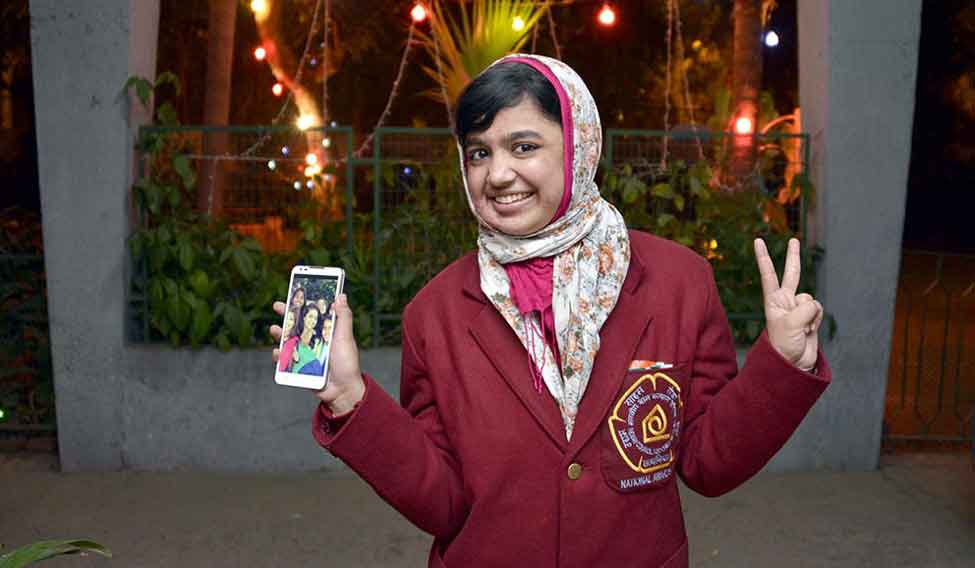
It burnt her face, but not her spirit. Resham Fatma, National Bravery Award winner, is confident about tomorrow
Sometime last summer, Resham Fatma, 17, decided that she needed to score 98 per cent in her twelfth standard board examinations. For days, she had been scouring the newspapers to find the best college to pursue her favourite subject, mathematics. St Stephen’s College, Delhi, it was. “Last year’s cut off was 97.2 per cent, so with 98, it will be smooth sailing,” says the Lucknow girl.
Resham has planned her future in detail. After graduation, she will do an MBA from IIM-Ahmedabad. Then, she will take the Union Public Service Commission exams, get into the Indian Administrative Service and work towards the post of district magistrate, a post from which she believes she can implement all the glorious government policies that remain on paper. “If I set my mind on something, I can achieve it,” she says. But, the future does not always work out the way you plan it. The last year has been, to put it bleakly, scarring for Resham.
The day is etched into her memory. It was February 1. On the previous day, her class had given their seniors a formal farewell. Her hair was a curtain of black satin, glossy from all the shampooing and conditioning. “See, this is me, in the centre,” she says, fishing out her smartphone and showing a groupfie with friends at the farewell.
The next day, she headed for her tuition, getting off the autorickshaw and walking the last mile as per routine. Suddenly, Riyaz, 38, her mother’s cousin, pulled up in his Tata Indica. He had been pestering her for a few years, and she had learnt to avoid him. On farewell day, he had asked her to meet him and she had said, “Main pagalon se baat nahi karti [I don’t talk to madmen].” She had no idea how mad he was.
After dragging her into the car, he held a butcher’s knife to her throat and asked her to marry him. She struggled; he got forceful. When she loosened his grip on the knife, he pulled out a barber’s razor from under the seat. “The car was auto-locked,” she says. “I was in his grip, struggling with all my strength. He banged his head on the steering and asked why I was refusing him. Then, suddenly, he pulled out a plastic bottle from the recess in the car door. It was filled with a yellowish liquid. He asked me if I knew what it was and said it was shakkar pani ghol [sugar solution]. He poured the liquid over my head.”
For a fraction of a second, she did not know what it was. Then it began to burn and she immediately shut her eyes. Her face, arm and thigh were on fire. He pulled her by the hair, still holding the knife to her throat. “I do not know how I got this phenomenal strength at that moment,” she says. “I pushed him and he crumpled towards the door. I fumbled blindly with the ignition, unlocked the car and tumbled out.” It was a dark winter evening and the road was desolate. Presently, an autorickshaw drove by and she pleaded to be taken to the police station. Luck was on her side, the occupants rushed to help. Later, as she was taken from the police station to hospital in an autorickshaw, they had to stop at a railway crossing. Passers-by peered into the auto, clucking in sympathy or gasping in horror. “That’s when I learnt that my face was black and I had my first shudder,” she says. “Riyaz mama ko mat chodna [Don’t let Riyaz get away], I screamed.”
Resham had so far known only unconditional love. She was the eldest grandchild from her maternal side, and her mother’s brothers doted on her so much that when she entered primary school, she moved from Bihar, where her father is an automobile dealer, to her grandfather’s residence at Amausi, near the Lucknow airport. Both her uncles have sons, she grew up as the only girl and the apple of everyone’s eyes. She has a younger sister and brother, who live with her parents. “I am more comfortable here, this is my home,” she says.
Resham means silk. But in the months ahead, the teenager discovered reserves of steel within her. Her long tresses were shorn, there is a huge patch on the scalp where follicles are dead. Resham, for the first time in her life, started wearing a scarf and headed for her evening coaching. She had to skip regular school at Stella Maris; her skin was not ready to face the onslaught of the sun.
In between, she kept popping into the hospital for surgeries. Her thigh needed grafting and her face needs a lot more work, but that has not deterred Resham from going out with nonchalance. A few months after the incident, her uncle declared she could do her own shopping without being escorted around like an invalid. “People ask me what happened, most ask whether it’s an allergy,” she says. “I tell them blankly, ‘No allergy, I survived an acid attack.’’’ Does she miss her old face? “Well, I am a girl, I like looking into the mirror and I’d want to like what I see,” she says. “I am still not bad looking, am I? This is my new identity.”
Most of her friends broke down when they visited and she consoled them. Her best friend is her diary. One day, she wrote about her dream: “I wanted to become the district magistrate and visit Riyaz in jail and tell him, see where you are today and where I am.” But these Bollywood-type situations are not meant for off-screen lives, even if they are as extraordinary as Resham’s.
Riyaz was arrested and was in lockup, where on December 28, he committed suicide. “I read about it in the newspaper next day and felt blank,” Resham says. “He got away so easily. He should have lived a long life, regretting every moment.”
Her earliest recollections of Riyaz are of sitting on his shoulders as he ran across the lawn. As she grew up though, his presence began getting uncomfortable. He would enter her room, force her to leave her books and talk to him. At one point, her grandfather, a former policeman, banished him from their house.
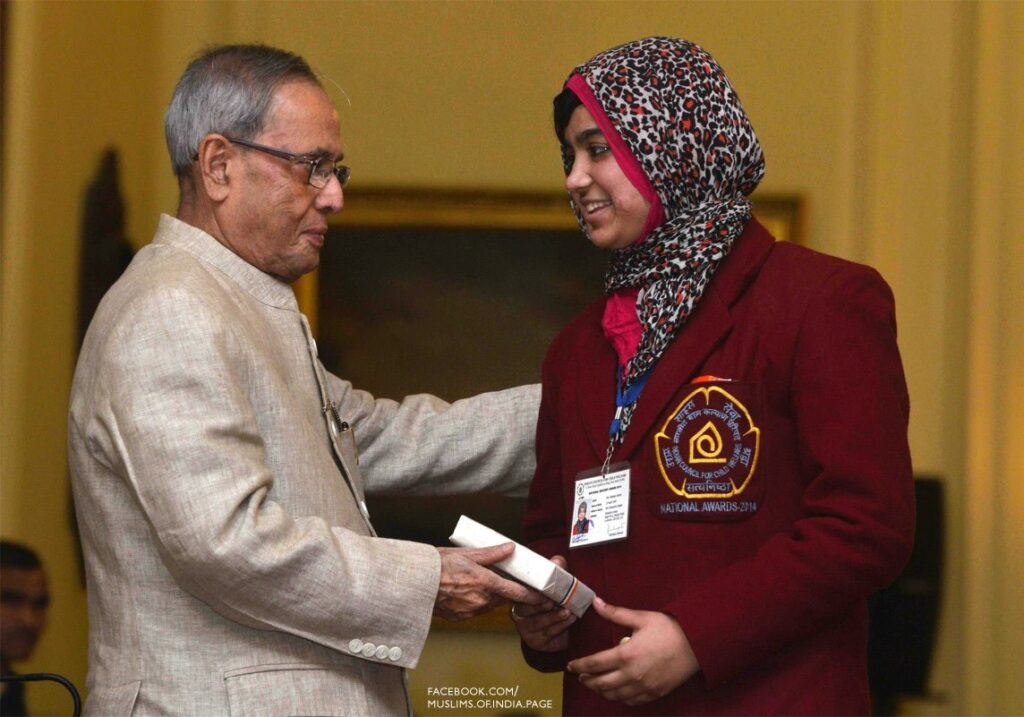
Resham today prefers to look at the possibilities that the future offers. “I have bad days, though I don’t cry in public,” she says. “Some days ago, I was very angry with Allah pak. But then, I got this call from Delhi that I was getting the Bharat Award at the Republic Day celebrations. I am so happy today. I have met big people, Modiji himself. I am a heroine, isn’t that great?” The scar tissue on her face hurts a lot, especially when she has to receive injections for treatment. But now she is complaining happily about how her cheeks are hurting with the constant smiling. “I am posing for cameras all day. Yaay,” she shrieks.
President of India Shri Pranab Mukherjee presenting the ‘National Bravery Awards 2014’ at Rashtrapati Bhavan . January 22nd, 2015. pic credit: facebook.com/Muslims.of.India.Page
There’s a bit of regret, though. “When I came to Delhi, I learnt that all the other children had been felicitated by their states. But no one from my state government ever came to me. A Supreme Court order says the state has to give an immediate relief of 03 lakh to an acid attack victim. I have not got anything yet, though my family has sent several Right To Information pleas. We could afford my treatment, but there are those for whom this money means a lot more. You know, there is a lot of good intent and great laws, but what we lack in this country is implementation. That’s why I want to be an IAS officer,” she emphasises with all her Taurean determination.
source: http://www.theweek.in / The Week / Home> Web Specials> Features> Heroes / by Rekha Dixit / Headline Edited + Additional image inserted courtesy of Facebook.com/Muslims.of.India.page / February 08th, 2015