Tag Archives: Saquib Salim

Muslims who dominated headlines in 2021

INDIA :

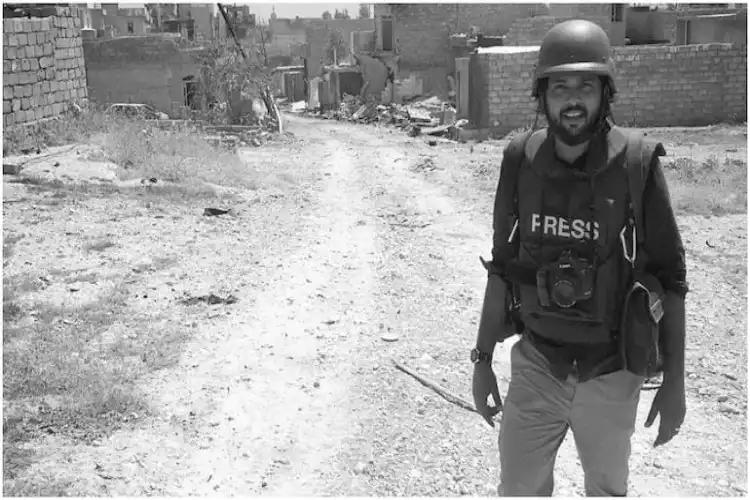
Danish Siddiqui in Afghanistan

As the year draws to an end, we have compiled a brief list of the Indian Muslims who have been in news during 2021.

Danish Siddiqui :

Danish Siddiqui was a Pulitzer Award winning photojournalist from New Delhi, who was killed by Taliban while covering the war in Afghanistan. An alumnus of Jamia Millia Islamia, Siddiqui was one of the country’s most well known photographers who documented the Rohingya refugee crisis, Covid deaths and the Delhi riots to win several awards. In July 2021, Reuters assigned him documentation of the Afghanistan War as an embedded journalist with Afghan Special Forces. On July 16, Siddiqui was killed in action. Governments of India, USA, Afghanistan and United Nations expressed grief and shock on his death and thousands joined his funeral procession in DelhI.

Dr Shahid Jameel :

Dr. Shahid Jameel is a world renowned virologist and is one of the leaders of India’s fight against Covid-19. The Covid-19 outbreak has thrown new challenges to the scientific community. When the Government of India set up an Indian Sars-Cov-2 Genomics Sequencing Consortium (INSACOG), which consists of 38 laboratories to monitor the genomic variations in the SARS-CoV-2, Jameel was appointed as the head of its scientific advisory group. He served the INSACOG in this position till May, 2021 and still advises different government and non-government bodies in strategising the war against Covid-19. 
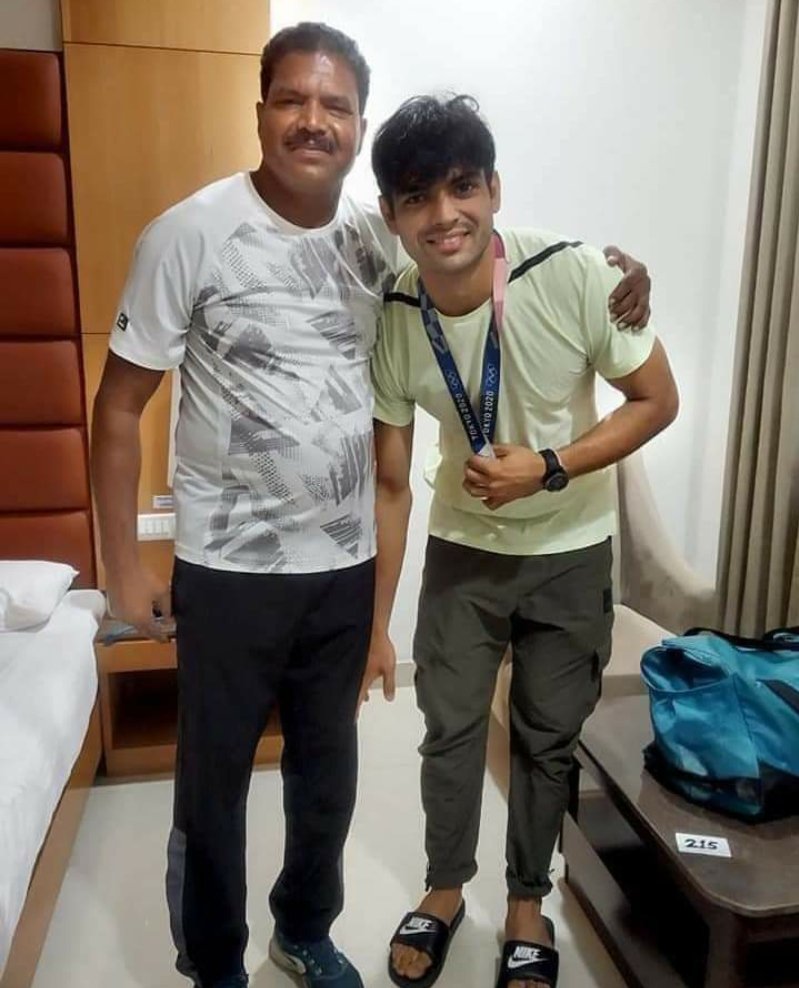
Coach Naseem Ahmed with Olympian Neeraj Chopra

Naseem Ahmed :

Naseem Ahmed: On 7 August, 2021, Neeraj Chopra threw Javelin for 87.58 mts. and became the first Indian to win an Olympic Gold in track and field events. With this success, Naseem Ahmed of Panchkula also hit the headlines. Ahmed was his first coach, who coached Chopra for almost six years at Tau Devi Lal Sports Complex in Panchkula. It was under his guidance that Chopra turned into an athlete from a chubby child. After returning to India, Chopra went to meet and receive blessings from his coach.
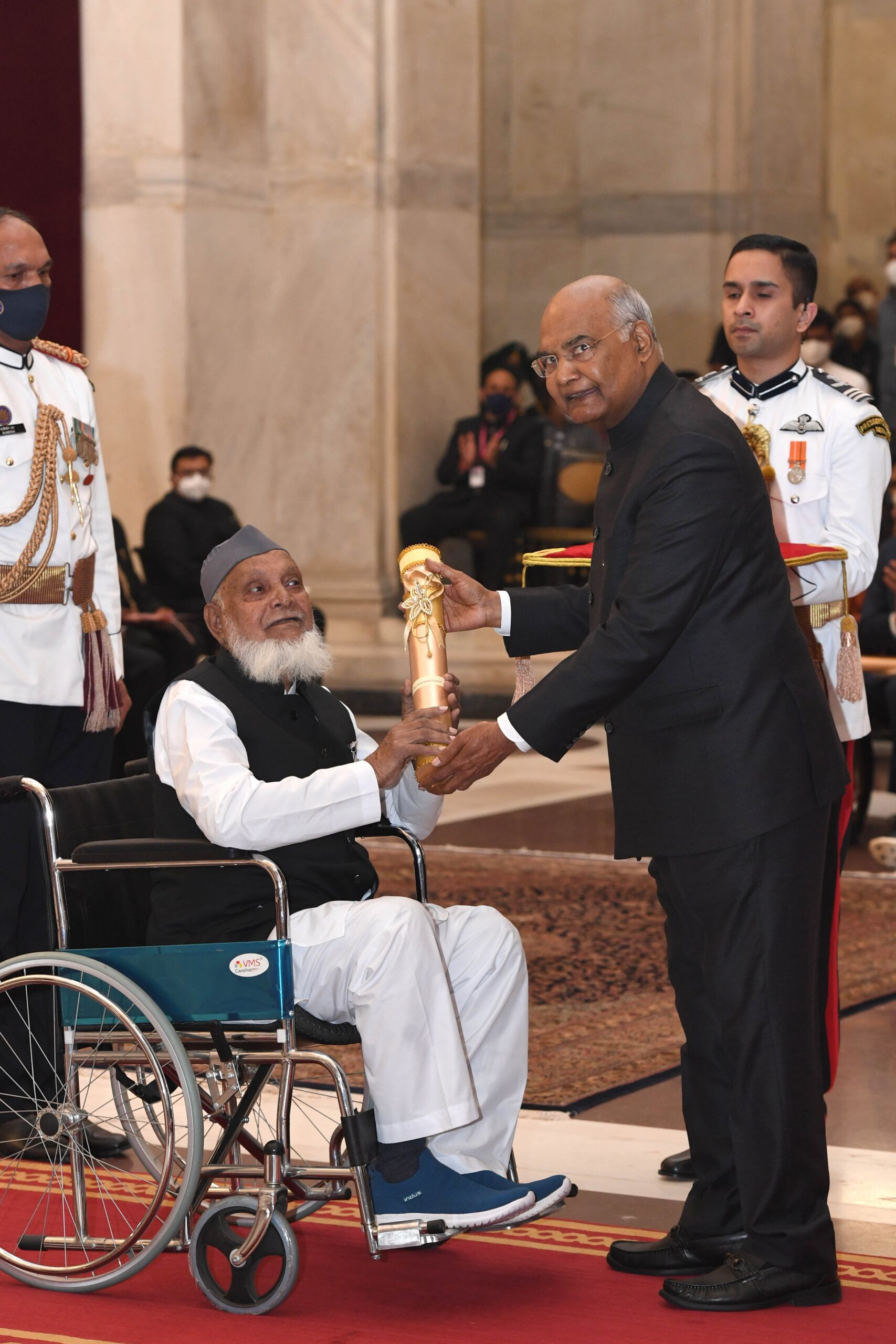
Mohammad Shareef alias Shareef Chacha receiving Padma Shri from President Ran Nath Kovind

Mohammad Shareef :

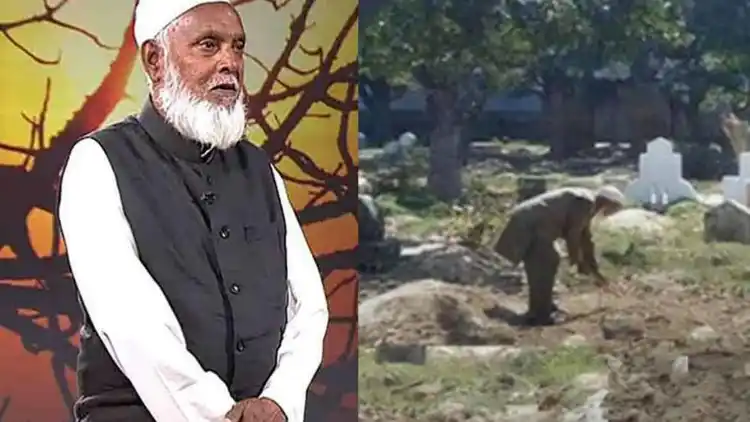
Mohammad Shareef is a bicycle mechanic from Faizabad, Ayodhya and hit the news headlines this year for receiving Padma Shri, the fourth highest civilian award in India, from the President Ram Nath Kovind. In 1992, his son was murdered and was eaten by animals as nobody claimed it. This incident moved him so much that he took it upon himself to perform the last rights of unclaimed dead bodies. In the last 28 years, he has performed the last rights of more than 25,000 unclaimed dead bodies according to their religions.
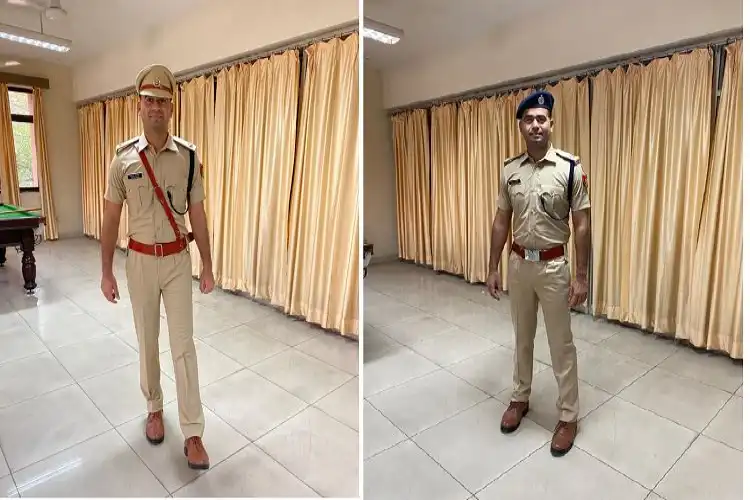
Firoz Alam as an IPS officer (Left) and as a Constable of the Delhi Police (Right)

Firoz Alam :

Firoz Alam’s story is straight out of a fiction, where his character bears resemblance to those played on screen by several film stars. Alam, a resident of Hapur in U.P, was a constable with Delhi Police since 2010. In 2014, he started preparing for UPSC CSE. The work pressure and family responsibilities did not allow him to devote full time to the studies, like many availing coachings could do. After five unsuccessful attempts, in his sixth attempt he qualified UPSC CSE and joined as an IPS officer. His inspiring journey from a constable to IPS had taken the nation by a storm when he joined the training after leaving the job as constable.
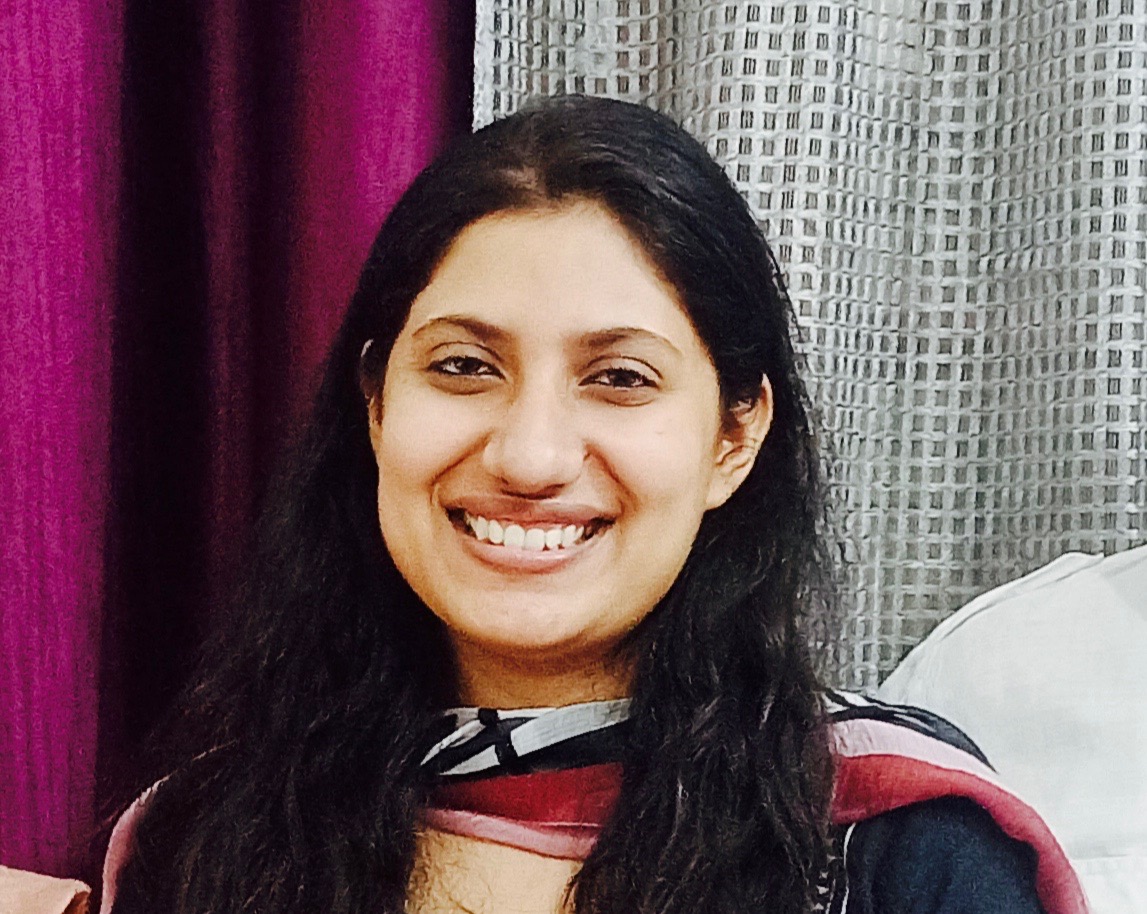
Sadaf Choudhary 

Sadaf Choudhary :

Sadaf Choudhary came into limelight when the UPSC CSE results were declared in September and she secured 23rd rank. She was the highest rank holder among Muslims this year and will become an IAS officer. It must be kept in mind that since independence only 179 Muslims have secured ranks to get IAS allotted to them.
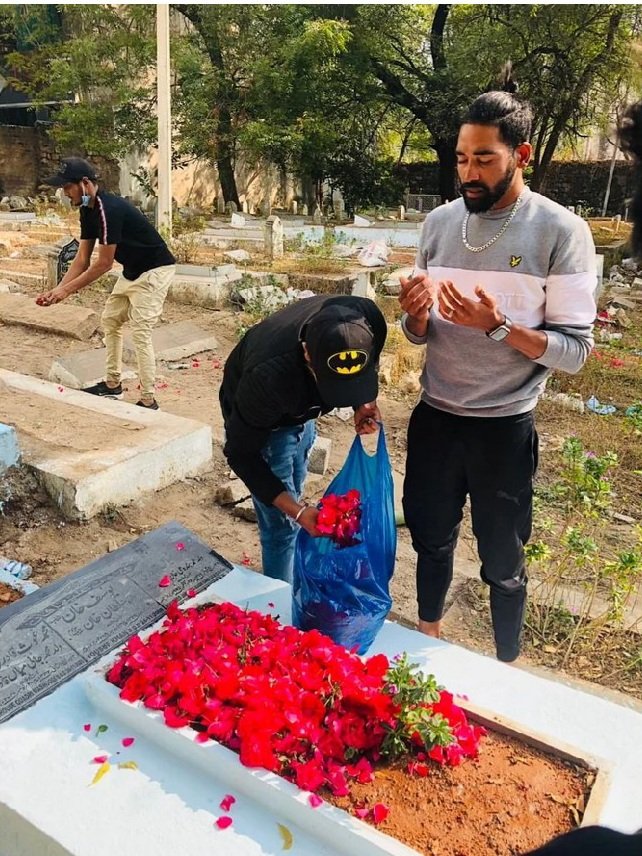
Mohammed Siraj praying at the gave of his father

Mohammed Siraj :

Mohammed Siraj is an Indian cricketer from Hyderabad who made it to the headlines in January by becoming the highest wicket taker from India during the India – Australia Test Match Series in Australia. To claim his 13 scalps, he played only three of the four tests in the series. The fact that his father had died just before the series and he was given an option to return to the country, which he declined citing his commitment to the nation made it even more special.

In the last test match at Brisbane, he bagged five Australian wickets to script a historic win and became a national hero. The headlines of the sports column were filled with his heroics, commitment and ability. Since then he has been a regular feature of the Indian Cricket team as a pacer. 

source: http://www.awazthevoice.in / Awaz, The Voice / Home> Stories / by Saquib Salim / December 30th, 2021
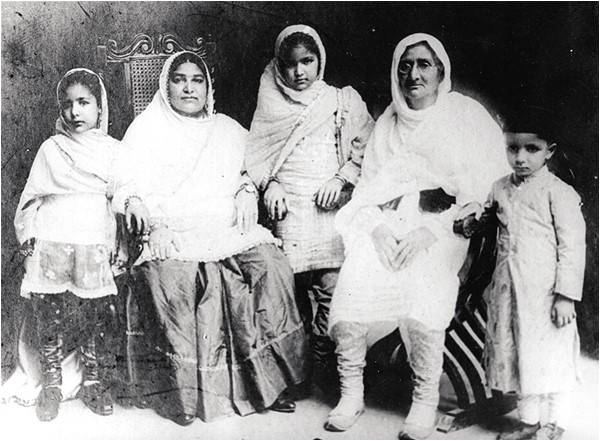
Less known Muslim Women Freedom Fighters

INDIA :

Sultana Saleem was one of the officers of Azad Hind Fauj, or INA, of Subhas Chandra Bose.

It is a concise compilation of a few of less known Muslim women who took part in the Indian Freedom Struggle. 

Begum Mahboob Fatima: On 13 April 1932, two women were arrested at Chandni Chowk in Delhi by the police for commemorating the anniversary of the massacre at Jallianwala Bagh. These two were Begum Mahboob Fatima and Satyawati. On 21 April 1932, Begum Mahboob was sentenced for six months of Rigorous Imprisonment and Rupees 50 of fine. With this she became the first Muslim woman to have been sentenced during the freedom struggle in Delhi.

Sultana Saleem: Sultana Saleem was one of the officers of Azad Hind Fauj, or INA, of Subhas Chandra Bose. Her husband Colonel Saleem, whom she met during the war, also served the INA and Sultana was an officer of Rani Jhansi Regiment. Sultana reached India as part of the first contingent of captured soldiers of Rani of Jhansi Regiment in February 1946. The Indian Express reported on 22 February 1946, “Mrs Sleem felt that there was only one country for her- Hindusthan – and only one nation – Hindustani. She did not believe in either communalism or provincialism. It was the oneness of India that appealed to her most. In East Asia, she said there was no consciousness at all of religious or provincial differences and no untouchability problem. She believed that if India had freedom her many problems could be solved without much difficulty.”

Asghuri Begum: In 1857, when somewhere else Rani of Jhansi and Begum Hazrat Mahal were fighting against the colonial army of the English East India Company, in Muzaffarnagar and Shamli, peasant women had organised themselves in armed bands. The leader was Asghuri Begum. The region had been liberated by the Indian revolutionaries where the women contingent was being led by Asghuri. When Major Sawyer conquered Thana Bhawan, a town in Shamli, in October 1857, Asghuri was also captured. British troops tied her to a pole at a public place and set fire to her alive. 

Nishat-un-Nisa: “I appeal to the youth of this country that they sit at the feet of this goddess (Nishat un Nisa Begum) to learn the lessons of independence and perseverance.” These were the words of famous Urdu poet Pandit Brij Narayan Chakbast. Nishat was the first Muslim woman to address a Congress Session and that too without a purdah. Hasrat Mohani, who coined Inquilab Zinadabad, was her husband. Nishat attended the public political meetings without her husband. She wrote articles, led delegations to Viceroy, participated in strikes and was the first woman to move a resolution for complete independence at a Congress session.

Saadat Bano: Saadat Bano whose husband Saifuddin Kitchlew is known as the hero of Jallianwala Bagh was a writer, poet and political activist much before her marriage. She wrote extensively for women rights, patriotism and education. It is a well known fact that people gathered at Jallianwala on 13 April 1919 to protest the arrest of Saifuddin but it is often overlooked that they came to listen to a public address by Saadat. Saifuddin was in jail but Saadat did not sit at home in those times. She used to address meetings, meet political leaders, attend Congress sessions, write in papers and take part in All India Women Conference activities. She was considered orator par excellence.

Amjadi Begum: How important a person would be if Gandhi himself wrote in one of his articles that this ‘brave woman’ led the ‘fundraising campaigns’ from the front ? Almost no history student in India knows Amjadi Begum. They know her as the wife of Maulana Muhammad Ali Jauhar. Gandhi in one of his articles wondered whether she could teach her husband the art of public oratory, where one impressed upon the hearts of the audience in a few words. She is believed to have single handedly led the fundraising campaigns and managed affairs of Jamia Millia Islamia when her husband was in prison.

Moondar:  Rani of Jhansi’s movement had an important Muslim woman, viz. Moondar. She was a close aide and assisted her during battles. Robert Hamilton, agent of Governor General to Central India, informed the British government on 30 October 1858, “Rani was riding a horse. There was another Muslim woman riding with her, who used to be her servant as well as companion since many years. Both fell down from the horse with the bullet wounds simultaneously.” Another British officer John Venables Sturt claimed that the body recovered by the British was not of Rani but Moondar’s. 

Nani Hakko: Nani Hakko was a jolaha (weaver) woman from Panipat who was impressed by Mahatma Gandhi’s idea of boycott and swadeshi. The she first heard him, Hakko started weaving her own shroud. She willed to be buried in a khadi shroud. When someone asked her what she was weaving, she would reply, ““I am weaving a kafan (shroud) for myself”. 

Hakko left this world only the day after completing this khaddar ka kafan. She asked people to bury her in this handwoven shroud (khaddar ka kafan) and boycotted the foreign made cloth even in her death. According to Khwaja Ahmad Abbas, she was the first person to have been buried in khaddar ka kafan as a result of Gandhi’s call to charkha. Khwaja wrote, “she was the first one to be buried in a khaddar ka kafan — a patriot unto death!”

source: http://www.heritagetimes.in / Heritage Times / Home / by Saquib Salim / March 08th, 2025

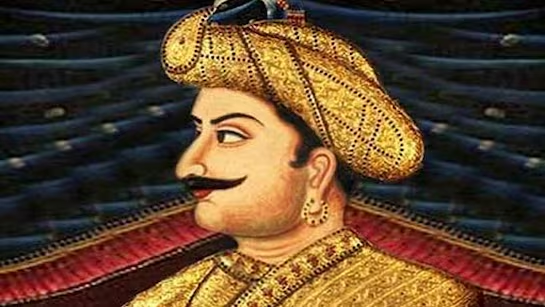
Tipu Sultan’s sons engineered the Vellore Mutiny

Srirangapatna (Mysore) KARNATAKA :

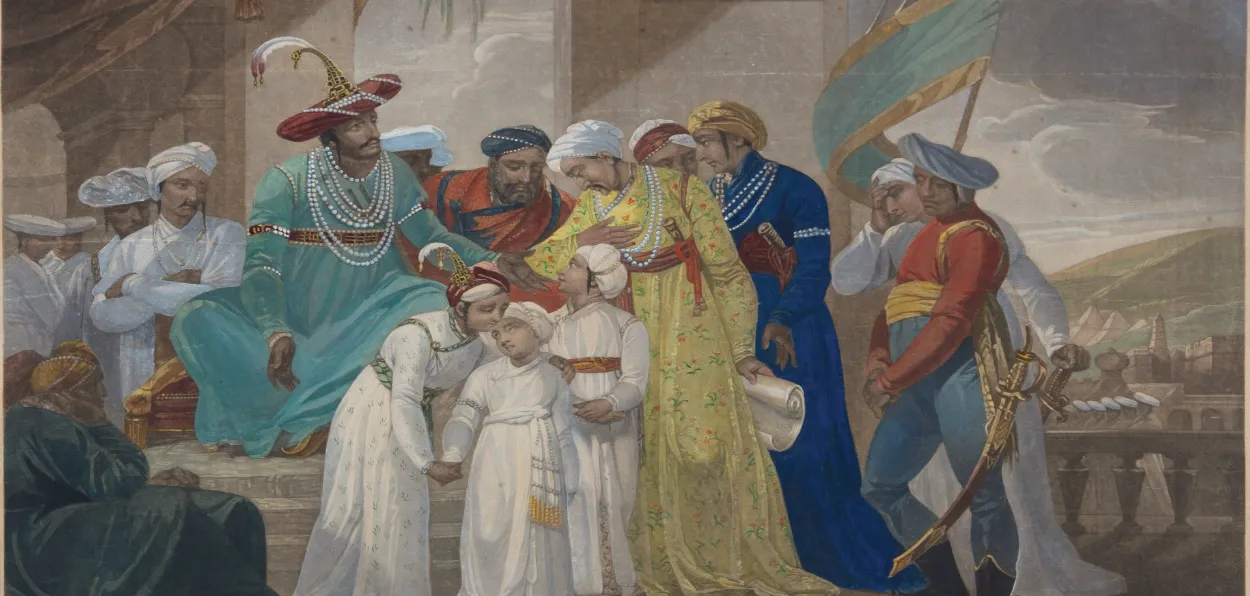
Tippoo Sultaun delivering to Gullum Alli Beg the Vakeel his sons who are taking leave of their brother previous to their departure from Seringapatam (1793) Painting by Henry Singleton

“The Christian drummers were seized, taken to the palace where Tippu’s sons were confined, and made to beat the “general” ; lights flashed in the palace, refreshments were brought out; a mob of sepoys called on the princes to place themselves at their head; Tippu’s own flag, green stripes on a red field, was nailed to the flagstaff. Prince Muizuddin (son of Tipu Sultan) ordered his horse to be saddled, and told off a party of sepoys to go and seize the principal hill fort; when that was captured and the dead body of Colonel Marriott, paymaster of stipends, brought before him, he promised he would mount his horse and ride through the native town proclaiming the restoration of the Mahommedan power.”

A Slice of History

This is the account by Colonel Alfred Keene of the night of 10 July 1806 at Vellore. The rising, popularly known as the Vellore mutiny, was a dress rehearsal of a sort of what would happen in May 1857 at Meerut.

Keene pointed out, “In the mutinies of Vellore and the greater one of 1857, two points of similarity stand out prominently. In each is the unreasoning fear of an attack on the institutions of religion and of caste; for the greased cartridges in the latter mutiny had as much to do with the outbreak as had the new head-dress in 1806, and the presence of the remnants of the Moghul Dynasty at Delhi acted in 1857 precisely as had the presence of Tippu’s family at Vellore in 1806.”

After the fall of Tipu Sultan in 1799, the English East India Company shifted his children to Vellore. In early 1806, the Commander-in-Chief ordered a new headgear and, the removal of beards, tilaks, earrings, or any mark of caste identity.

The Indian sepoys of the 2nd Battalion 4th regiment showed dissatisfaction in May 1806 and disobeyed the orders. These sepoys were tried in army court and 21 of them were found ‘guilty’. Of them, one Hindu leader and other Muslims were discharged from the duty and sentenced to receive 900 lashes each. The other 19 were not discharged but ordered  500 lashes each. The order was passed on 29 June and published to the army on 2 July 1806.

The wife of a serving English officer at Vellore, F. W. Blunt, wrote in a letter to her family in England, “Nine of the ringleaders, as they were called, were brought down to Madras and here passed publicly through the streets in irons, destined to receive the most dreadful military punishment…… The nine men in irons awaiting a most severe punishment was made use of by the sons of Tippoo, who have been kept prisoners in the Palace at Vellore since the taking of Seringapatam and served to ripen a design that had been long formed. A conspiracy was formed by the Sepoys to murder all the Europeans and take possession of that Fort.”

Tipu Sultan

On the night of 10 July 1806, Shaikh Kasim, a sepoy, led the English East India Company sepoys in starting a general massacre of the English troops.

Lt. Col. W. J. Wilson in ‘History of the Madras Army’ wrote, “The sepoys went away shortly afterward, and were heard to call out “Come out, Nawab, come out, Nawab, there is no fear.” This was supposed to be addressed to Futteh Hyder, the eldest of the four Mysore Princes.”

Of the 372 Englishmen present at Vellore, 128 were killed that night by the Indian sepoys. The English flag was replaced with the flag of Tipu Sultan, which was handed over by Moizuddin, the eldest son of Tipu. He was proclaimed the leader of the revolutionaries.

Though the immediate cause was the headgear and other orders, the revolt had been planned for a long time. Charles Macfarlane wrote, “The splendour which the sons of Tippoo were enabled, by the liberality of the Company, to keep up, attracted a continual influx of visitors, including all that came to Vellore from the countries which had once belonged to their father. Among these men were very many who had lost by the change which had taken place in Mysore, who hated the tranquillity which we had introduced into their country, and who longed for the old days of rapine and violence. It is believed that these desperadoes contributed to a regular conspiracy and facilitated the execution of the daring design.

It is said that the confederates intended that all who were brought to join in the insurrection should act upon a preconcerted plan, which had been digested and privately circulated by some of the turbulent Marawa chiefs; and that in connection with these desperadoes were some few Frenchmen, disguised as fakeers or dervishes, who went about the country inveighing everywhere against the English as robbers and tyrants. It is also stated that placards were fixed up within the mosques and Hindu temples, where Europeans never entered, to excite a general spirit of revolt among the whole native population of Madras.”

The English Government set up an enquiry commission headed by Major General Pater which submitted its report on 9 August 1806. The report said, “There are two principal causes which appear to us to have led to the mutiny. The late innovations in the dress and appearance of the sepoys, and the residence of the family of the late Tippoo Sultan at Vellore.”

Sir J. F. Cradock, the Commander-in-Chief, disagreed with these findings and argued in his submission that change in dress was a pretext and the real objective was to restore the rule of Tipu Sultan’s family. 

The Court of Directors after the investigation declared that the “immediate cause of the discontent among the sepoys was the introduction of certain innovations in their dress, which were offensive, and, as they held, degrading to them; and that the captive sons of the late Tippoo Sultan, with their adherents and abettors, took occasion, from the dissatisfaction of the sepoys, to instigate them to insurrection and revolt, with the view of effecting their liberation, and the restoration of the Mahomedan power.”

The mutiny was suppressed by noon on 10 July. Colonel Gillispie stationed at Arcot came to rescue the Englishmen at Vellore before 7 am. His forces, which also included Indian sepoys, killed more than 500 Indians in the fort within a few hours.

At least 15 English officers including, Colonel Fancourt, H.M.’s 34th regiment, commanding the garrison, Lieutenant-Colonel McKerras, Captain Willison and Lieutenants Winchip and Jolly of the 23rd, Captain Miller, Lieutenants O’Reilly, Smart, and Tichbourne of the 1st, and Lieutenants Eley and Popham of the 69th, Mr. Mann Deputy Commissary of Stores, Mr. Gill Conductor of Ordnance, Mr. Smith the Military Paymaster and Major Armstrong of the 16th N.I. were killed.

Among the captured sepoys, six were blown away with cannon guns, five were shot by firing squads, eight were hanged, and several others were transported for life. Out of the retainers of Mysore Princes, one was sentenced to death, two to transportation for life, one to imprisonment for life, and one to imprisonment for ten years. The sons of Tipu Sultan were sent to Kolkata with stricter vigilance.

Lord William Bentinck, Governor, and Sir J. F. Cradock, C-in-C, were removed from their respective offices by the Court of Directors.  

source: http://www.awazthevoice.in / Awaz, The Voice / Home> Stories / by Saquib Salim / July 10th, 2025

Purkazi leader Zaheer Farooqui shows the way to transforming India at grassroots

Purkazi (Muzaffarnagar District), UTTAR PRADESH :

Purkazi, a small town in the Muzaffarnagar district of Uttar Pradesh, would soon have its first higher secondary School, and students would no longer have to travel to neighbouring towns to pursue studies after the 10th class.

This happened due to the generosity of Zaheer Farooqui, Chairperson of the Nagar Panchayat, who donated his land valued at 1.5 crore for the project.

Farooqui, a peasant leader, and a lawyer, was dismayed to see the young girls and boys traveling in local buses and rickety three-wheelers to higher secondary schools in other towns and he chose to do something about it.

Following the adage Charity begins at home, he gave away his land which is otherwise a prized possession of any farmer or realtor.

Though he always championed the change to improve the lives of people living in this Muslim-dominated town, Farooqui was elected as Chairperson of the Nagar Panchayat in 2017.

As an elected head of the local body, his priority was to improve educational facilities since this is the surest way to improve the lives of common people. He initiated the change in schools; and equipped primary classes in the local government schools with an adequate number of chairs and tables for students and internet-linked smart boards.

His efforts were recognized as the local government school was covered under the Prime Minister Shri School scheme of Narendra Modi under which chosen schools are turned into model schools.

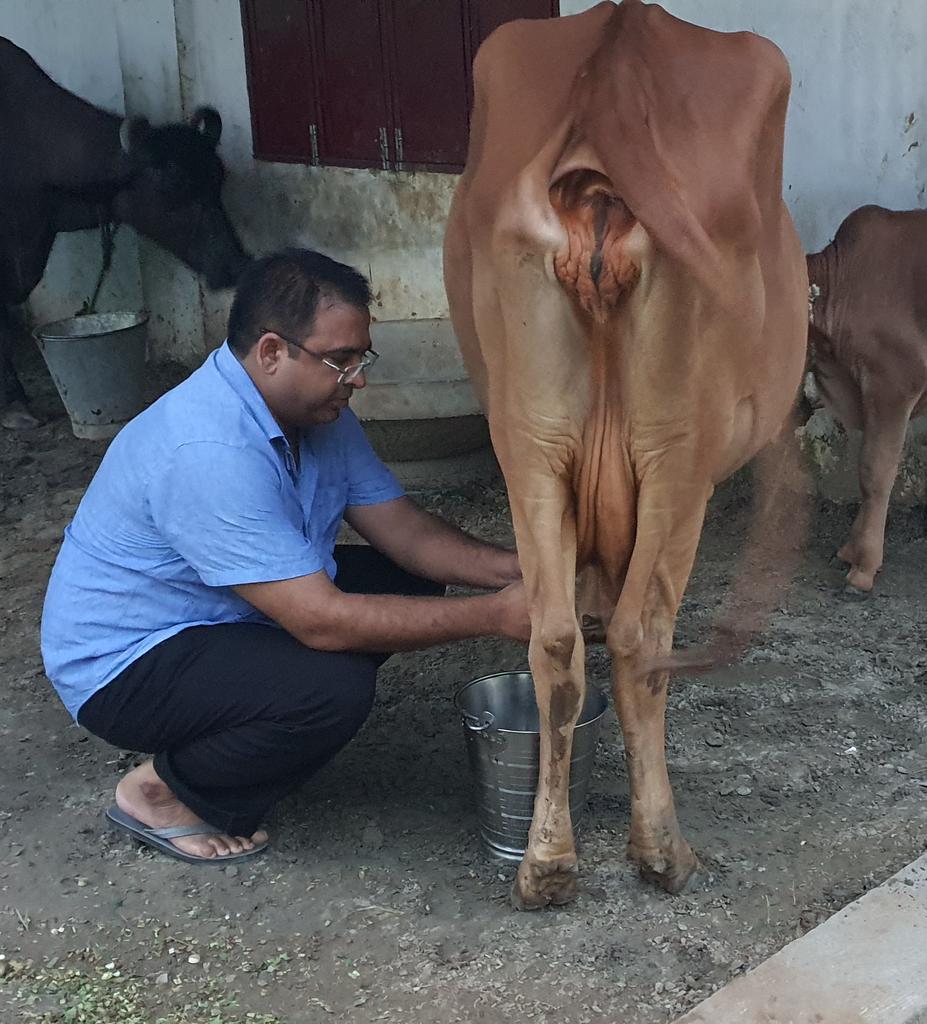
Debunking the common image of a Muslim, he showed keen interest in the upkeep of gaushalas (cow shelters). Till his initiative, the government funds for the establishment of gaushalas often remained unused by most of the Panchayats.

Farooqui-led Panchayat set up what is purported to be the first double-storey government-owned gaushala in India.

The gaushala has separate spaces for calves, pregnant cows, injured, and elderly cows. Its fodder-chopping machine runs on solar power. A veterinary doctor conducts daily health checkups of the animals.

Additionally, the dung produced is converted into manure, and sold to generate income to make gaushala financially viable.

In 2018, Farooqui-led Purkazi Panchayat installed Internet Processing Closed Circuit Television (IP-CCTV) cameras at various locations in the town to combat crime and make locals, especially women, feel safe.

The cameras of the circuit have powerful lenses that can read vehicle license plates. This circuit helped the Muzaffarnagar Police apprehend a man from Uttarakhand, who was identified as rapist of a local six-year-old child.

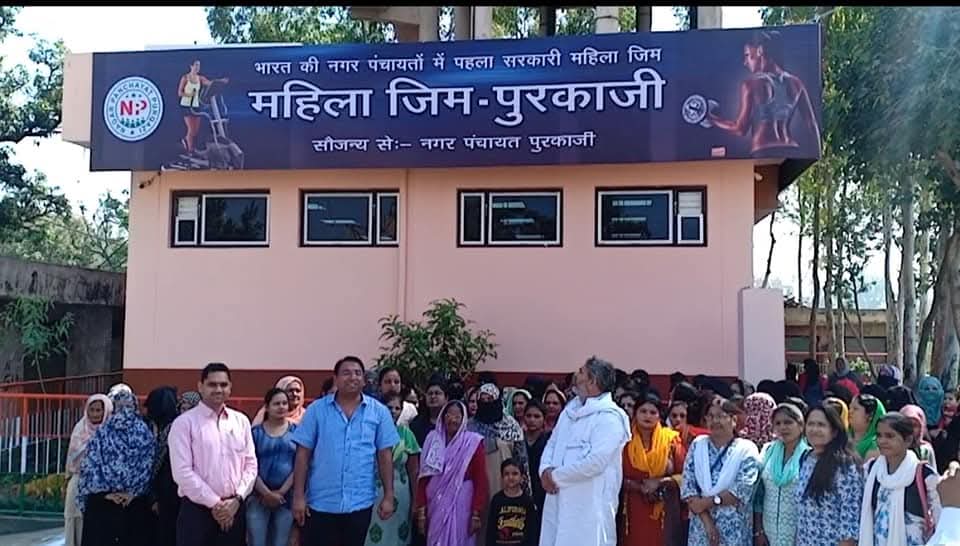
Zaheer Farooqui (In Blue shirt) with locals at the Women’s Gymnasium at Purkazi

Each camera is equipped with loudspeakers which are used to announce fresh government initiatives, raise alarms in an emergency, and community-related messages.

The Purkazi Panchayat was the first one to open a women-exclusive gymnasium to raise health and fitness awareness among women.

The gymnasium was opened in 2019, and its popularity has proven critics and skeptics, who wondered if the burqa-wearing Muslim women would even venture out there of their homes, wrong.

The gymnasium trainer Shaheen Usmani arrives early morning for work. Once in the woman-only space, she removes her burqa. Usmani says, ‘I cannot explain why, but the gym has significantly enhanced the reproductive health of women in the town.’

Independence Day procession at Suliwala Bagh, Purkazi

The gymnasium has nearly one hundred member

The residents of Purkazi led by Farooqui have transformed Suliwala Bagh (garden of the gallows) into a pilgrimage site. This place was used by the British Army to hand Indian revolutionaries during the First War of Independence in 1857.

On the Independence Day and Republic day, thousands of people congregate in this iconic place and take out a rally in memory of freedom fighters. The locals have been carrying out a procession in which the youth carry the longest-ever tricolour as part of the national commemoration of freedom fighters of India.

source: http://www.awazthevoice.in / Awaz, The Voice / Home> Stories> The Changemakers / by Saquib Salim / June 01st, 2025

A Kashmiri Muslim countered Pak narrative in UNSC in 1965 war

JAMMU & KASHMIR :

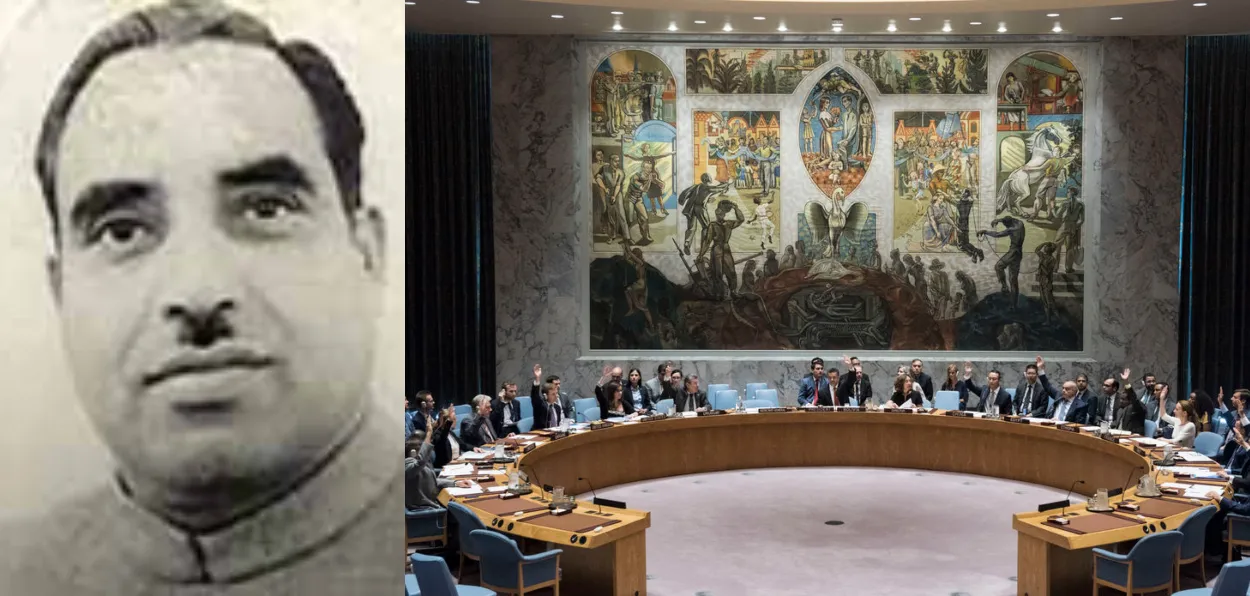
Syed Mir Qasim, former Chief minister of J&K and UN Security Council in session (file)

Since its formation in 1947, Pakistan has tried to portray India as a Hindu country where Muslims are second-class citizens. Each time Pakistan launched an armed attack against India, it was to ‘help’ the Indian Muslims. Not given to learning lessons, Pakistan looked the other way when the Indian Muslims countered its narrative.

In the 1965 war, Pakistan attacked India “to help Muslims in general and Kashmiri Muslims in particular,’ and the propaganda was counter by two Indian Muslims.

Syed Mir Qasim, a Congress leader who later became the chief minister of J&K, represented India at the UN General Assembly during the 1965 war. He declared, “Perhaps I should mention that I belong to the majority community of Muslims in my home State of Kashmir; in our country, unlike Pakistan, we do not believe that religious distinctions should impinge upon political life. I have played a small part in the political life of our State from the days of princely rule. It is for these reasons that it is my duty, on behalf of our delegation, to set the record straight on the various statements made by the Foreign Minister of Pakistan.”

Indian Army Officers in front of a captured Pakistani tank in the 1965 war

Qasim told the Assembly that a Plebiscite in Kashmir was out of the question. He categorically told the world that the Pakistani claim that Kashmir was acceded to India because of a pact signed by the ruler was wrong. India accepted the accession only after the National Conference, the most popular political organisation in Kashmir, asked the Indian leadership to do so. The Indian leadership was convinced that the ordinary Kashmiris wanted to be part of India. He further told the Assembly that much before the Indian Army reached Kashmir in 1947, it was the local Kashmiri Muslim militia that had resisted the invasion.

On the issue of the Plebiscite, Qasim said, “Referring to my statement that there was no binding commitment on the part of India to hold a plebiscite in Jammu and Kashmir, the representative of Pakistan said: “What an extraordinary statement to come and make to this Assembly?” Was this an extraordinary statement? Let us examine the facts. I can do no better than to quote our late Prime Minister, Jawaharlal Nehru, whom the representative of Pakistan does not wish to forget. When proposals for a plebiscite were submitted to the Government of India by the United Nations Commission, the late Prime Minister made it clear that he was accepting the proposal only on certain conditions.”

He added, “Need I remind the representatives that apart from ratifying the accession to India, apart from supporting the political party which stands for irrevocable association and complete integration with India, apart from reaffirming their wishes at periodic elections, the people of Jammu and Kashmir have twice within eighteen years given their answer in blood to Pakistan. Thus, there is no justification for any further ascertainment of the wishes of the people. The Government of India has made its position clear on this point, and I hereby reiterate it. There will be no plebiscite.”

A Muslim representing India at the General Assembly to call out the lies of Pakistan frustrated the Pakistani representative at the Assembly. He said, “Finally, the representative of India and I find this is a peculiar weakness in Muslims who come to represent or plead India’s case at the bar of international opinion – finds himself, and I sympathize with him, in the position of having to be more Catholic than the Pope.”

Qasim gave a befitting reply when he said, “We Muslims of India are quite used to these cheap jibes. We understand the reason, or rather the frustration behind such insulting remarks, not only from the representatives of Pakistan who speak at the United Nations, but also, more so, from the founders and leaders of Pakistan. The frustrations are there because the founders and leaders of Pakistan failed in their efforts to persuade the great nationalist Muslim leaders of India to accept their favourite theory that religion determines nationality.”

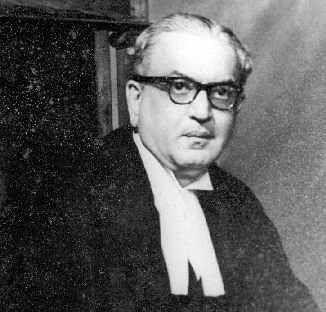
Another Muslim, Mohammedali Currim Chagla, represented India at the Security Council to counter Pakistan’s claim. He told the Security Council (SC), “Pakistan has pretended to show a great solicitude for the Muslims living in India, and the Foreign Minister of Pakistan has stated that hundreds of thousands of Indian Muslims have been pushed out into East Pakistan. When Pakistan talks of the Muslim minority, it gives one the impression that we are dealing with a few thousand or a few hundred of thousands of people in a large country tucked away in some far corner and surrounded by a large mass of Hindu population.

“Now let me inform the Council that Muslims are not a minority in the ordinary sense of the term. They constitute 50 million of the population of India. India is the third largest Muslim State in the world, the first being Indonesia and the second being Pakistan. They are sons of the soil, they are Indian by race, and they enjoy all the rights of citizenship. Every office is open to them, and in fact, many of them hold the highest offices in the land.

“Our civilization is a synthesis of many diverse cultures, and the Muslim contribution is one of the most significant. Ours is a secular State and an egalitarian society where everyone enjoys equal rights and equal opportunities, and equal protection of the law. We have no official religion. Hindus, Muslims, Christians, Buddhists, Sikhs, Parsis, and others have full freedom of worship, and fundamental rights under the Constitution are guaranteed to every citizen. We have no first-class and second-class citizenship.”

Chagla also told the world that India has every right to use its armed forces against Pakistan’s aggression and should redraw the LoC to control infiltration from the other side of the border.

In 2025, when India is again under attack from Pakistan and their propaganda machinery is spreading lies that Indian Muslims are not loyal to their country, they should turn the pages of history to know that these were the Indian Muslims who countered their propaganda during the 1965 war.  

source: http://www.awazthevoice.in / Awaz, The Voice / Home> Stories / by Saquib Salim / May 08th, 2025

Umar Sobhani supplied yarn from his mill for Gandhi’s swadeshi movement

BOMBAY (Mumbai) / PRE-INDEPENDENT INDIA :

“He (Mahatma Gandhi) said that while he did not think that Umar Sobhani was a revolutionary, he was frank and open by nature and he (Gandhi) thought that if Umar felt convinced that a revolution was the best way to secure the well-being of India, he would not hesitate to adopt such methods. He thought that in such a case Umar Sobhani would plainly tell him (Gandhi) of his intentions…” This is what Mahatma Gandhi was reported to have told to C.I.D on 8 May 1919 during a police interrogation.

Unsung Heroes of Freedom Struggle

Sobhani was a rich businessman from Mumbai who traded in cotton and joined the freedom struggle early in his life.

Those who take an interest in Mahatma Gandhi consider Young India, an English journal edited by Gandhi, and Navajivan, a Gujarati journal, as his voice. Interestingly, these journals were started by Sobhani who later cajoled Gandhi to take charge as the editor.

Rajmohan Gandhi, one of the grandsons of Mahatma Gandhi, notes, “Three of the Sabarmati ‘covenanters’, Umar Sobhani, Shankerlal Banker and Indulal Yagnik, were between them bringing out two journals, Young India, a weekly in English from Bombay, and Navajivan, a monthly in Gujarati from Ahmedabad, and were also associated with the nationalist daily, the Bombay Chronicle. At the end of April, in one of the Raj’s drastic measures, Horniman, the British editor of the Chronicle, was deported, and the paper’s publication had to be suspended.

“In response, Sobhani, Banker, and Yagnik requested Gandhi to take over the editorship of Young India and Navajivan and with their help bring out Young India twice a week and Navajivan every week. Gandhi agreed, and on 7 May 1919 the first number of Young India, New Series, came out. When, soon, the Chronicle resumed publication, Young India reverted to being a weekly but now published, for Gandhi’s convenience, in Ahmedabad, along with Navajivan, which first appeared as a weekly on 7 September.

“Gandhi now possessed what he had hoped for from the moment of his return to India: vehicles to communicate his message.”

Charkha (spinning wheel) is a synonym for Mahatma Gandhi and his movement and Sobhani played an instrumental role in making it a success. Rajmohan writes, “Indian spinning mills wanted to turn all their yarn into mill-made cloth, not sell it to hand-weavers. Gandhi therefore asked associates to search for spinning wheels that could make yarn. At the Godhra conference in November. 1917, a woman called Gangaben Majmudar, who had ‘already got rid of the curse of untouchability and fearlessly moved among and served the suppressed classes’ (A 442), promised him that she would locate a wheel.

“She found not one but hundreds in Vijapur in the princely state of Baroda, all lying in attics as ‘useless lumber’ (A 443). Women who in the past plied the charkhas told Gangaben that they would spin again if someone supplied slivers of cotton and bought their yarn.

Gandhi said he would meet the conditions, his friend Umar Sobhani supplied slivers from his Bombay mill, and the ashram received more hand-spun yarn than it could cope with.”

Sobhani was one of the original 20 signatories of the pledge to oppose the Rowlatt Act. The pledge was prepared by Gandhi at his Sabarmati Ashram in Ahmedabad. Along with Sardar Vallabhbhai Patel, Sobhani was one of the associates of Gandhi who backed him against the old guards in Congress on the question of the non-cooperation movement in 1918.

K. R. Malkani, a former R.S.S stalwart and BJP leader, writes, “Gandhiji’s right-hand man in Bombay in the 1921 movement was Umar Sobhani. The first bonfire of one and a half lakh pieces of choicest silk was ignited by Gandhi in Umar’s mill compound in Parel.

“When Gandhiji decided to collect Rs. 1 crore for Tilak Swaraj Fund, Umar offered to contribute the entire amount, but Gandhiji wanted it collected from a large number of people. But even so, Umar contributed Rs. 3 lacs.

“Umar was a big cotton merchant. When the British came to know of his role in the Freedom Movement, they ran special trainloads of cotton to Bombay by Viceregal order. As a result, cotton prices collapsed in Bombay and Umar suffered a loss of Rs. 3.64 crores. Daan-Vir Sobhani ended his life.

“Earlier the British tried to divide the family. At their instance, Umar’s father, Haji Yusuf Sobhani contested the office of Sheriff of Bombay. Umar worked. against his father and had him defeated. Later the British tried to tempt Yusuf Sobhani with a knighthood, but Umar told his father that he could accept the title only “over my dead body.” Today probably not even people living on Sobhani Road, Cuffe Parade, Bombay, know who the great Sobhani was!”

Sobhani used to lead the marches in Mumbai, arrange the meetings of Gandhi, and raise funds for the political agitations against the English. Gandhi, according to the police reports, used to call him one of the props of the satyagraha in Mumbai. 

source: http://www.awazthevoice.in / Awaz, The Voice / Home> Story / by Saquib Salim / July 31st, 2024

Muslims witness positive surge in Padma Awards

INDIA:

Shareef Chacha who receivedPadma Shri award from President
Shareef Chacha who received Padma Shri award from President

A few days ago, when President Ram Nath Kovind presented Padma Awards, the Social Media went abuzz with claims that the Narendra Modi-led Bharatiya Janata Party (BJP) government has transformed an earlier elite award into a people’s award. Awardees like Tulsi Gowda, Mohammad Sharif, Bhuri Bai, and others represent those who had worked at the grass-root level. Earlier the award was mostly given to a select band of people who had access to corridors of power in Lutyen’s Delhi; many deserving Indians were ignored.

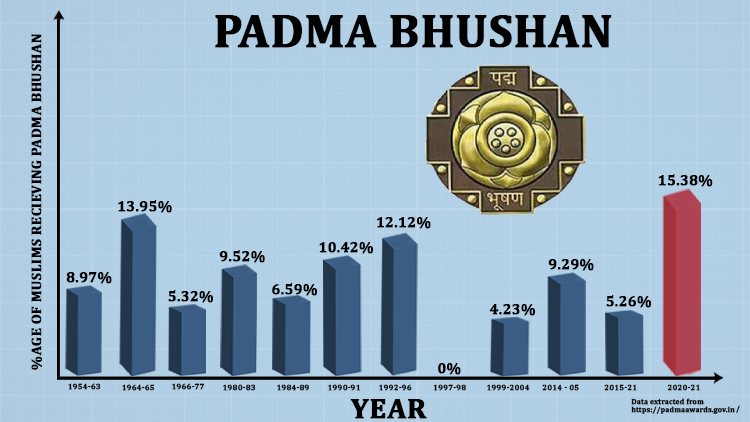
The optics of Padma awards and the chatter around it made me look into the veracity of these claims. As an Indian Muslim, my primary interest was to understand that how Muslims are represented at the Padma Awards over the year and if there was a change in the attitude of the givers of the awards. The first Padma Awards were presented in 1954. So far, 4,827 persons have been conferred the awards. Muslims are under-represented in these awards. With a population share of around 14%, only 7.5% of the awardees were Muslims, including some foreigners. However, the list of awardees for the years 2020 and 2021 that were conferred on recently, Muslims had all the time higher share. The two lists had 24 of the 260 Padma Awardees who are Muslims, 9.23%.

Padma Vibhushan

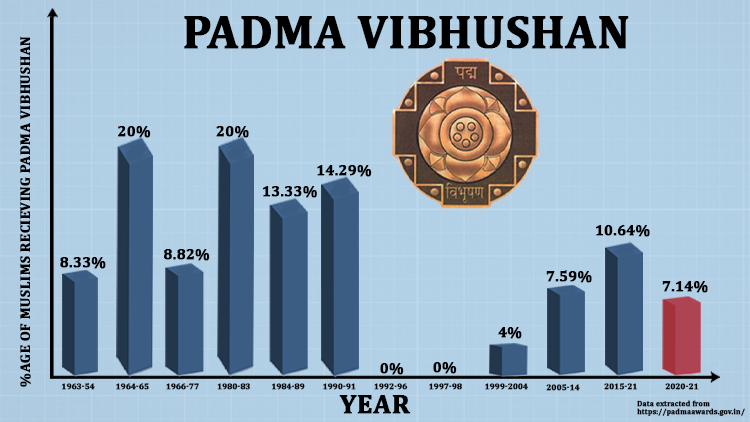
Coming to Padma Awards, the second-highest civilian honour after Bharat Ratna, that and is awarded for exceptional and distinguished services, I worked with figures of Muslims over the years since 1954. So far 321 people have been bestowed upon Padma Vibhushan. If we look at different regimes, it’s interesting to note that Muslims fared worse during the PV Narasimha Rao-led Congress government and Janata Dal governments of 1997 – 98. During these six years, out of a total of 14 Padma Vibhushan, no Muslim name figured in the list of the prestigious awardees. Interestingly, only 2 Muslims receive the award in 9 years of Jawaharlal Nehru’s premiership. One of them was Zakir Husain, who was later awarded a Bharat Ratna as well. Indira Gandhi oversaw 14 Padma award ceremonies during her two spells as Prime Minister and in this period, 7 Muslims were among a total of 73 honoured. Ten years of Manmohan Singh-led UPA government witnessed 6 Muslims receiving the award, while 5 Muslims received it in seven years of the Narendra Modi-led BJP government. Considering a category of PMs who completed a full term, 13.33% of Padma Vibhushan were awarded to Muslims during the Rajiv Gandhi era followed by Narendra Modi, in whose times 10.64% of the awards went to Muslims. 

Padma Bhushan

Padma Bhushan is awarded for distinguished service of higher order. To date, 1281, including 95 Muslims, people have received this award. This is at 7.42%, not commiserating with their population. Like Padma Vidhushan, no Muslim was awarded Padma Bhushan in 1997 and 1998. During Nehru’s time (1954-63) 14 Muslims of the total 156 received the award. The Muslim show was very dismal in the first five years of the present regime with one award for the community. However, in the last two editions, we saw 4 Muslims being awarded Padma Bhushan. Of 26 awardees in the two years, 15.38% were Muslims.

Padma Shri

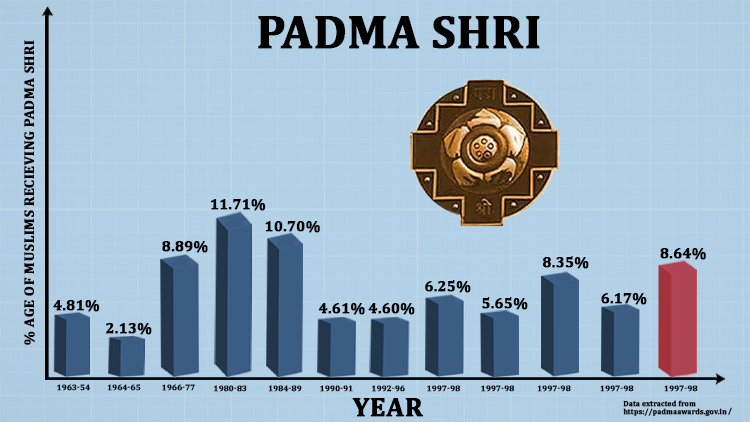
Padma Shri, awarded for distinguished service has since been conferred on 3,225 Persons. In the first 9 editions, only 9 Muslims were among 187 recipients. A period from 1966 to 1983, saw increased representation when 62 (out of 775), awardees were Muslims (9.29%). In the next five years, 23 more Muslims were awarded and it rose to 10.70%. In the 90s, Muslims representation dipped below 5% as fewer Muslims received Padma Shri. In the last two editions, 8.64% of the recipients were Muslims, a very positive surge that creates optimism.

The figures represent only a larger picture. A closer look reveals that a changed nomination policy for Padma Awards is at work. In 2017, the government opened the nominations for the common Indians as against the system of ministers and members of the government forwarding the names and a committee headed by the PM finalising the list of awardees. The government’s social media campaigns encouraged the people to nominate genuinely deserving and unsung heroes. Earlier, the system encouraged the well-connected people with links to the corridors of power to be nominated and get awarded.

In the new policy, people working at the grassroots are being nominated by the common man. As a result, we see people like Ali Manikfan, Abdul Ghafur Khatri, Mohammad Sharif, and Shahabuddin Rathod receiving the Padma awards. Apart from the fact that there is a positive surge in Muslim representation in these awards, the awards have grown to be more inclusive. Muslims from lower castes, backward regions, and non-elite backgrounds are being honoured. Larger participation of communities and people living at the margins, on social media has ensured that people working among them, and from them, are recognized. 

(Saquib Salim is a Writer and a Historian)

source: http://www.awazthevoice.in / Awaz, The Voice / Home> Stories / by Saquib Salim / February 2022

Who was Nishat un Nisa Begum who discarded purdah during freedom movement

UTTAR PRADESH:

“I appeal to the youth of this country that they sit at the feet of this goddess (Nishat un Nisa Begum) to learn the lessons of independence and perseverance.” Famous Indian writer Brij Narayan Chakbast wrote this in 1918 about the freedom fighter Nishat un Nisa Begum.

People knew more about her husband Maulana Hasrat Mohani, who coined the slogan Inquilab Zindabad (Long live revolution). Historians have kept Nishat, like many other women, at the margins of historical narratives. She existed not as a protagonist but as a supporting actor in a play that had her husband as the protagonist.

This happened even though Hasrat admitted that he would have remained an apolitical editor if he had not married her. Maulana Abul Kalam Azad likened her to “a mountain of determination and patience.” Mahatma Gandhi also acknowledged a key role in the Non-Cooperation Movement. By no stretch of the imagination, she was a dependent woman and owed her existence to Hasrat.

Born in Lucknow in 1885, Nishat was home tutored, as was the custom of those times. She knew Urdu, Arabic, Persian, and English. Even before she married Hasrat in 1901 was teaching girls from backward sections of the society at her home. Marriage exposed her to the world of politics. Nishat and Hasrat were among the first Muslims in India to join Bal Gangadhar Tilak’s extremist group of Congress and open a Swadeshi shop in Aligarh. In 1903, the couple started a nationalist Urdu newspaper ‘Urdu e Mualla’. The British did not like it and jailed Hasrat in 1908. After his release, the couple resumed the newspaper. The newspaper had only two employees – Nishat and Hasrat.

Hasrat was again jailed during the First World War. Nishat, who like other Muslim women of her times, used to take a veil, came out in public to defend her husband in the court trial. She wrote letters to leaders, and articles in newspapers, and removed her veil while visiting courts. To go out of one’s house without a purdah was a courageous act.

Hasrat’s friend Pandit Kishan Parshad Kaul wrote, “She (Nishat) took this courageous step at a time when the veil was a symbol of dignity not only among Muslim women but among Hindu women as well”.

In those times Congress and other organizations used to raise public funds to help the families of jailed freedom fighters. Nishat declined to accept her share from it. Pandit Kishan Parshad recalled later that in 1917 when he once visited her in Aligarh he saw her living in abject poverty. Being a friend of Hasrat, he offered her money. Nishat told him, “I am happy with whatever I have”. She later asked him if he could help her in selling the Urdu books printed by their defunct press.

Kishan Parshad told Shiv Prasad Gupta, another prominent freedom fighter from Lucknow about Nishat’s condition. Gupta didn’t take a moment to write a cheque to purchase all the books from Nishat.

When Edwin Montagu visited India in 1917, Nishat was among the representatives of the All India Women’s Conference (AIWC) to meet him. In the meeting, she demanded that all the freedom fighters be released from jail.

Nishat had abandoned the purdah for good. In 1919, she attended the Amritsar Congress session after the Jallianwala Massacre and impressed everyone with her passionate speeches. A Muslim woman, without purdah and participating in politics at par with her husband, she was noticed as a “comrade of Hasrat.”

Nishat and Hasrat were sure that asking for concessions from the British was futile. They moved a resolution for Purna Swaraj (Complete Independence) and not a dominion status at the Ahmedabad session of Congress in 1921 as the party’s goal. Nishat spoke in support of the motion. The resolution was defeated as Mahatma Gandhi opposed the idea. Eight years later, Congress adopted the Purna Swaraj as its goal.

Hasrat was again jailed in 1922 and this time Nishat attended the Congress Session at Gaya without him. She eloquently opposed the participation of Congress members in the Legislative Councils. She said those who wanted complete independence from British rule could not dream of entering the assemblies formed by them.

According to Prof. Abida Samiuddin, Nishat’s politics did not depend on Hasrat alone. She was the first Muslim woman to address a Congress Session. Her work for the popularisation of Swadeshi, the All India Women Conference, correspondences with the nationalist leaders, articles in newspapers, public speeches, and other political activities are proof that she carried her identity in the Indian Freedom Struggle. She was active in workers’ movements till her death in 1937.   

source: http://www.awazthevoice.in / Awaz, The Voice / Home> Stories / by Saquib Salim / May 14th, 2023

Shaukat of INA liberated Manipur on 14 April, 1944

Moirang (Manipur), ASSAM:

INA memorial at Moirang, Manipur

“The Indian National Army (INA) has now crossed the Indo-Burmese border and in the course of the struggle for the liberation of the people of India from the British Yoke, we have now reached Moirang, the ancient citadel of Manipur. Our commitment is the march to Delhi and the unfurling of the Tricolour Flag then at Lal Quila.

Many had died on our way to reach near Moirang and many would die on our way to Delhi. However, the expulsion of the enemy from the sacred soil of India is a compulsion for us… Freedom of India is very near and near at hand. We shall win it and we shall have progress and prosperity of the people of India after it.” Colonel Shaukat Ali Malik of Azad Hind Fauj addressed these words to a large gathering at Moirang in Manipur on 14 April 1944 after hoisting the National Tricolour. In this way, Moirang became the first liberated territory of India, which came under the administration of Azad Hind Sarkar headed by Netaji Subhas Chandra Bose. 

Col. Malik led INA’s victory march over Moirang, liberated the Indian territory, unfurled the national flag, and established a national government.

In his recently published book, Professor Kapil Kumar wrote, “Col. Malik while commanding the Unit, always led from the front and displayed Great feats of Bravery in difficulties achieving successes at various places. Netaji conferred upon him the great honour of Tamgha-e-Sardar-e-Jang.”

Kumar also lists several Indians from Manipur who joined INA forces. Prominent among them were Mairembam Koireng Singh, who later became CM of Manipur, and Naqi Ahmed Chaudhary, an INA soldier from Manipur who helped Col. Malik with the local language and terrain.  

But, the importance of this operation goes beyond the hoisting of the flag and establishment of civilian government. 

In the official newsletter of Azad Hind Fauj, Dr. M. R. Vyas one of the most trusted men of Netaji explained the importance of the victory of Moirang. He wrote, “When the INA first entered India, it appeared as if they would launch a direct assault on Imphal, the capital of Manipur. The British, in this expectation, concentrated powerful forces, consisting of 3 divisions and 2 motorized brigades at Imphal. However, the INA troops avoided any such frontal attack which would necessarily have meant big losses. Instead, the Indian and the Japanese High Command planned for the rendering impotent of a powerful enemy force by encircling it.” 

So, the capture of Moirang “brought about the virtual encirclement of Imphal, thus rendering an entire British force of 60,000 – 80,000 men impotent of launching a major counter-offensive. This force became dependent on air supplies, which, from their very nature, are limited and insufficient for big operations.” 

The plan was to further annihilate this British force with the onset of Monsoons. For more than two months, INA under Col. Malik remained in total control and kept attacking the British posts from there. The British would have faced a humiliating defeat if US Air Force wouldn’t come to their rescue. 

More than 100 US fighter planes bombed Moirang and Bishnupur in Manipur. Fleets of B-25, P-51, and A-31 started bombing INA positions and civilians on 8 May 1944. Hundreds of these US fighter planes bombed civilian areas, INA positions, bridges connecting Myanmar to Manipur, and any supply line available to the Indians. The scale of US operations in Moirang is a testimony to the importance of this victory. 

source: http://www.awazthevoice.in / Awaz, The Voice / Home> Stories / by Saquib Salim / April 14th, 2023

Ajmer Dargah’s role in Indian Freedom Struggle

Ajmer, RAJASTHAN:

Dargah of Khawaja Moinudin Chisty during the annual Urs

“The Dargah (Ajmer Sharif) is undoubtedly a danger-center….the sedition is more or less confined to the Dargah and that it is very difficult to get evidence of what goes on there.” The Above excerpt is from a secret report submitted to the British Government by Intelligence officials in 1922.

A common man may not think that the Dargahs, shrines, and Sufi centers were at the forefront of the Indian Freedom Struggle. For reasons unknown, most people believe that Ajmer Dargah played no, or little, role in the struggle. The fact is that it acted as a center of nationalist activities so much so that the British Government snooped over the activities in Dargah.

The official committee which was formed after Jallianwala Bagh Massacre in its findings pointed out that the Indians were planning a popular uprising against the British. The plan was discussed by nationalists at the Urs under the leadership of Maulana Abdul Bari Firangimahli. 

The spies regularly updated the government on the nationalist activities in the Dragah. In 1920 they reported that more than 5,000 people attended a meeting at Idgah which was addressed by Lala Chand Karan who asked people to fight the British because they promote cow slaughter, massacred people in Punjab, and cause disunity between Muslims and Hindus. The same report notes that the Pesh Imam of the Ajmer Dargah prayed for the defeat of the British after which Maulvi Moinuddin asked people to renounce the titles bestowed upon them by foreign rulers.

Another report from 1921 notes that anti-British speeches were being delivered at the Dargah during Friday prayers.

In 1922, intelligence officers again reported that Urs at the Dargah would be an occasion where the nationalists would be meeting to discuss nationalist ideas.

An intelligence report from 1922 contains the most explosive information. The report claimed that Muslims and Hindus in Rajputana had taken an oath of allegiance with Maulvi Moinuddin of Ajmer. Under his instructions, they were preparing for a war against the British.

An armed militant organisation Jamiat ul-Thaba was founded and arms had been procured from different places in the country. Jamiat ul-Thaba passed a resolution and declared that the British were enemies of religion, nation, and country and that revenge would be taken from them.

75 years have passed since Independence and most of us are unaware of the role of Ajmer Dargah in winning this independence. 

source: http://www.awazthevoice.in / Awaz, The Voice / Home> Story / by Saquib Salim / April 02nd, 2023