Siraj ended the Anderson Tendulkar trophy as the highest wicket-taker with 23 wickets from five games.
Player of the match India’s Mohammed Siraj after India won the match against England on day five of the fifth cricket test match between England and India at The Kia Oval in London, Monday, Aug. 4, 2025. (AP Photo/Kirsty Wigglesworth)
Following his brilliant effort vs England in the 5th and final Test in Manchester last month, pacer Mohammed Siraj was on Monday selected as the ICC Player of the Month for August. Siraj had snapped up 3 wickets in the 5th day of the final Test, finishing with 9 scalps, helping India win the match by 6 runs and tie the series 2-2.
“It is a special honour to be named ICC Player of the Month. The Anderson–Tendulkar Trophy was a memorable series, and it was one of the most intense contests I have been part of. I am proud that I could contribute with some important spells, especially in the decisive moments. Bowling against a top batting line-up in their home conditions was challenging, but it also brought out the best in me,” said Siraj.
Siraj ended the Anderson Tendulkar trophy as the highest wicket-taker with 23 wickets from five games. Not only was he able to play all the games, but also kept his pace high through the five Tests and was able to come back and pick up crucial wickets spell after spell.
Mohammed Siraj takes the glory 👑
𝙏𝙃𝘼𝙏 unforgettable performance at The Oval earns him the ICC Men’s Player of the Month honour for August 2025 🏅
Ben Stokes, England’s captain, would hail him as a “warrior”, Joe Root would say he is “someone you want on your team”. Root would also observe that Siraj’s stares and verbals are part of a “fake anger”. “He has got this fake anger about him sometimes, which I can see straight through. You can tell he is actually a really nice lad. But he tries incredibly hard. He is a very skilful player,” he says.
Also, Ireland all-rounder Orla Prendergast was also named the player of the month alongside Siraj with the cricketer winning the award ahead of Pakistan’s wicketkeeper-batter Muneeba Ali and the Netherlands’ seam bowler Iris Zwilling.
Prendergast was named the Player of the Series in a home T20I series, helping win 2-1 against Pakistan. She scored 144 runs and took four wickets in that series and maintained her fine form in the ICC Women’s T20 World Cup Europe Qualifier, aggregating 244 runs and finishing with seven wickets in the month of August.
(with agency inputs)
source: http://www.indianexpress.com / The Indian Express / Home> edition India> News> Sports> Cricket / by Sports Desk / September 15th, 2025
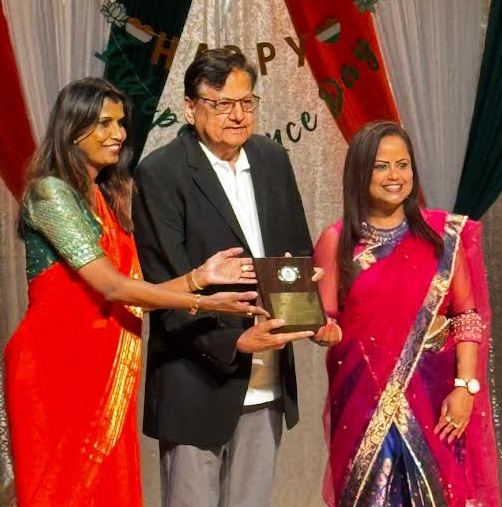
Dr. Abdullah receives the Outstanding Community Service Award in Washington, DC
Aligarh:
Dr. Abdullah, one of the eminent alumni of Aligarh Muslim University (AMU), has been conferred with the Outstanding Community Service Award 2025 by the National Council of Asian Indian Associations (NCAIA), Washington, DC. This prestigious recognition was presented during the 79th Independence Day celebrations of India, honouring Dr. Abdullah’s lifelong dedication to education, social welfare, and cultural advancement.
A highly respected community leader in the United States, Dr. Abdullah has devoted his life to championing causes that uplift the underserved and to promote cultural harmony. For decades, he has worked with passion to advance education, build stronger social bonds, and create pathways for collective progress.
Recognising his extraordinary contributions, NCAIA leaders commended his ability to inspire and mobilise people, calling his service “a true embodiment of the spirit of volunteerism and leadership that NCAIA seeks to promote.”
“His selfless dedication has touched countless lives and continues to leave a profound impact,” remarked Anjana Bordoloi, President of NCAIA.
Deeply connected to his alma mater, Dr. Abdullah has always acknowledged AMU as the foundation of his values, vision, and commitment to service. His contributions stand as a testament to the enduring legacy of AMU alumni who continue to shape communities and institutions across the globe.
On behalf of Aligarh Muslim University and the AMU Alumni Affairs Committee, heartiest congratulations are extended to Dr. Abdullah on this well-deserved honour, said Prof Sartaj Tabbasum Chairman AAAC.
source: http://www.radiancenews.com / Radiance News / Home> Pride of the Nation> Awards> Latest News / by Radiance News Bureau / September 16th, 2025
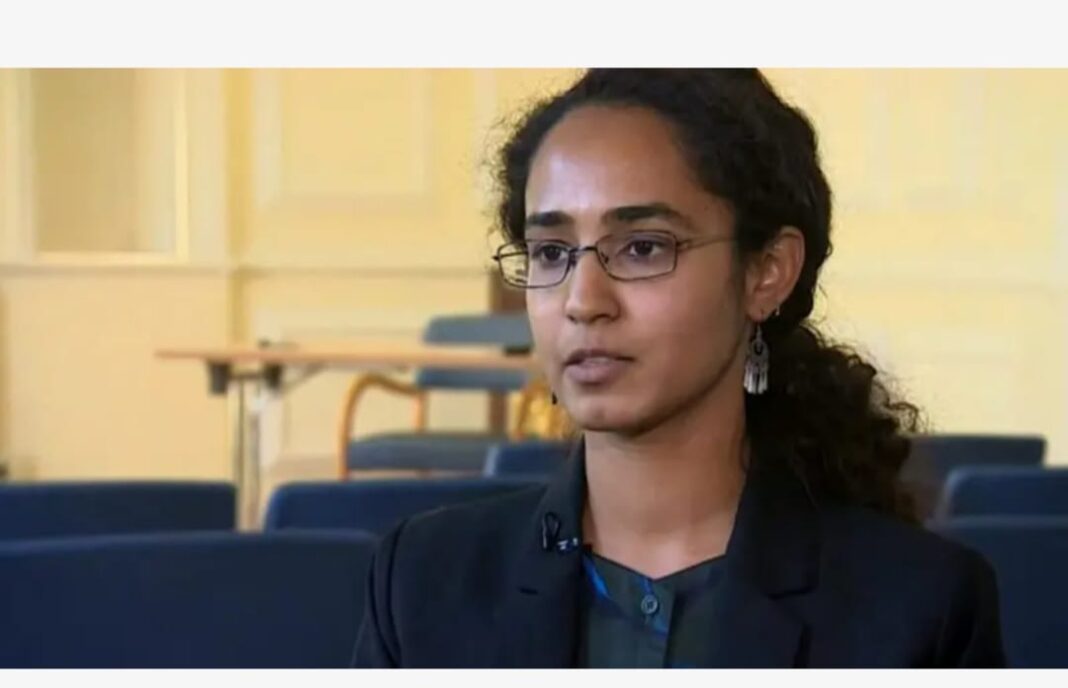
In a significant development, Dr Asiya Islam, an alumna of Women’s College, Aligarh Muslim University, has been appointed Assistant Professor as a permanent faculty at the Department of Gender Studies, London School of Economics and Political Science (LSE), London.
Retd. Professor Kaniz Khwaja Ahmed, who had taught Asiya Islam, Communicative English at Women’s College, told India Tomorrow, “I remember her as an ideal student as I taught her long back. Of all the students, I have taught so far, she stands out as the most ideal student. Although the subject I used to teach her was elementary, used in our daily life conversation, she always took it very seriously. She was very regular, attentive and punctual. In her, I saw the spark to achieve something in her life. I hope she still remembers me. We all are proud of her achievement and wish all the best for her career ahead.”
Before joining LSE Gender Studies, she was a Lecturer in Gender and Work at the University of Leeds. Before that, I was a Junior Research Fellow at Newnham College, University of Cambridge. In these positions, I taught on feminist global political economy, Black feminist theory, and intersectionality.
Asiya completed her PhD in Sociology at the University of Cambridge, her MSc in Gender, Media and Culture at the London School of Economics, and her BA(Hons) in Communicative English at Aligarh Muslim University.
Another teacher Professor Nikhat Taj, who also taught Asiya, said, “Asiya, indeed has made us very proud. Her achievement comes as no surprise for she had been a meritorious/promising student. She excelled not only in academics but was an ace performer in extra-curricular activities as well. She won the Zakir Hussain Medal for Academic Excellence at the undergraduate level, and that was just the beginning of her success story. I recall her as a diligent and committed worker, who would fulfil (most satisfactorily) any task, or project either given to her or taken up by herself.”
Professor Nikhat added, “Her appointment as an associate professor at the London School of Economics is just another step for many other achievements to come her way in the future. I see her as an inspiration and a role model for all the students of AMU – her alma mater.”
AMU Vice-Chancellor Prof Naima Khatoon, who was earlier Principal of Women’s College, while congratulating Dr. Asiya Islam on her achievement, said, “Asiya’s appointment at the London School of Economics will encourage our students to pursue higher studies abroad and work hard to make an academic career in prestigious foreign universities.”
source: http://www.indiatomorrow.net / India Tomorrow / Home> Education / by Mohammed Naushad Khan / September 16th, 2024
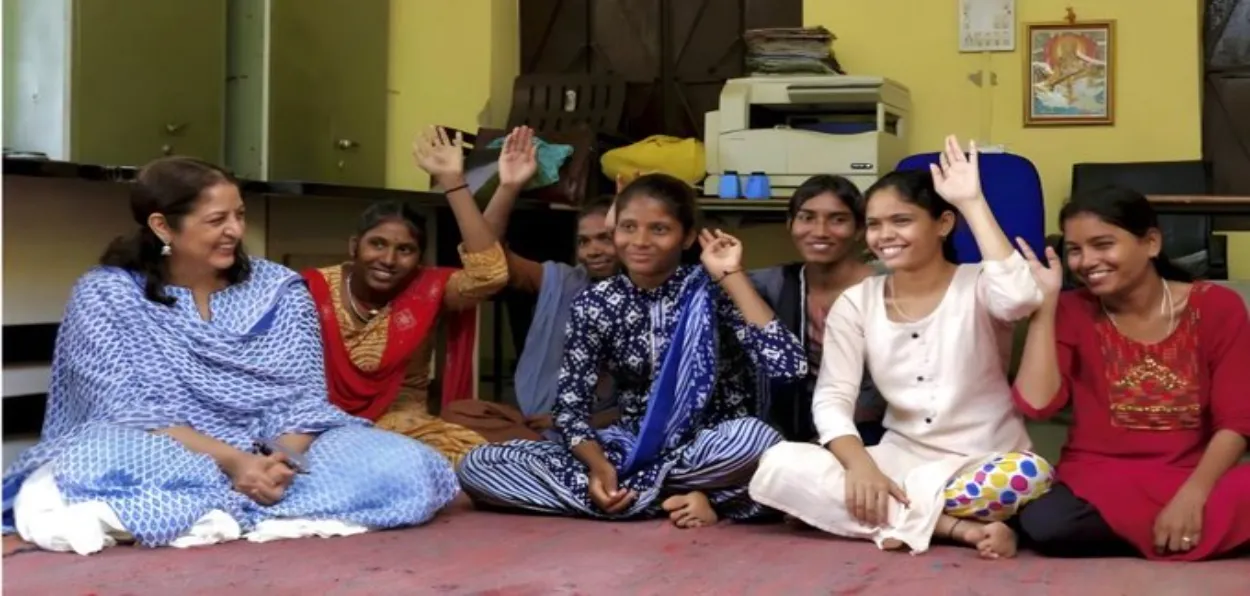
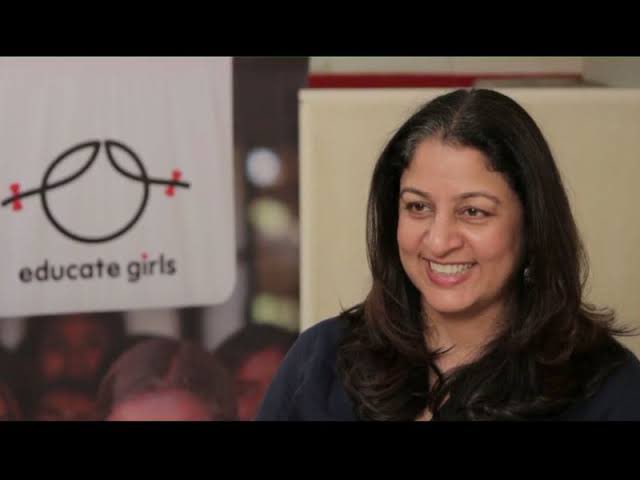
Safeena Husain (Extreme left) with some of the girls who whom her NGO helped
New Delhi
“The Ramon Magsaysay Award for ‘Educate Girls’ is a historic moment for India, and it places the global spotlight on a people-powered movement that began with a single girl in a remote village in the country,” said the non-profit’s founder, Safeena Husain, after the Manila based committee named her NGO for the coveted award for 2025, said.
Founded by Safeena Husain, The Foundation to Educate Girls Globally, widely known as ‘Educate Girls,’ has made history as the first Indian organisation to receive the Ramon Magsaysay Award, a statement from the Ramon Magsaysay Award Foundation (RMAF) said.
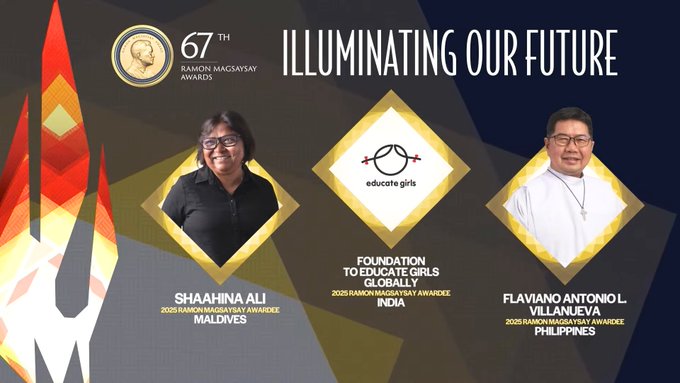
“Educate Girls” shares the 2025 Ramon Magsaysay Award with Shaahina Ali (Maldives), honoured for combating plastic pollution and protecting marine ecosystems, and Fr. Flaviano Antonio L. Villanueva (Philippines), recognized for restoring dignity to Manila’s poor and homeless.
‘Educate Girls’ has been named for Asia’s premier prize and highest honour for “its commitment to addressing cultural stereotyping through the education of girls and young women, liberating them from the bondage of illiteracy and infusing them with skills, courage, and agency to achieve their full human potential,” the RMAF statement said.
Reflecting on the milestone, Husain said, “Being the first Indian non-profit to receive the Ramon Magsaysay Award is a historic moment for Educate Girls and for the country. This recognition places a global spotlight on India’s people-powered movement for girls’ education, one that began with a single girl in the remotest village and grew to reshape entire communities, challenging traditions and shifting mindsets.”
The award honours dedicated Team Balika volunteers, valued partners, passionate gender champions, and supporters, and acknowledges the millions of girls who reclaimed their right to education, she said.
“As we work to reach 10 million learners in the next decade and share this blueprint beyond India, we carry forward a simple truth that when one girl is educated, she takes others with her, multiplying change across families, generations, and nations,” Husain said.
The organisation’s CEO, Gayatri Nair Lobo, said, “At Educate Girls, we believe that education is one of the greatest levers for development. But above all, education is every girl’s fundamental and inherent right. This prestigious award recognises the transformational change that is possible through partnerships with the government, philanthropic institutions, corporations, and grassroots communities, working together to tackle societal and systemic barriers and promote equitable and accessible education for girls everywhere.”
“We are deeply grateful to the Government of India for its phenomenal initiatives that have made this possible. Warm congratulations to our fellow awardees, Shaahina Ali and Fr. Flaviano Villanueva, whose work inspires us all,” she added.
Starting from Rajasthan, Educate Girls identified the neediest communities in terms of girls’ education, brought unschooled or out-of-school girls into the classroom, and worked to keep them there until they were able to acquire credentials for higher education and gainful employment, the statement said.
“It started with 50 pilot village schools reaching over 30,000 villages across India’s most under-served regions, involving over two million girls, with a retention rate of over 90 per cent,” the Foundation said.
The organisation is being recognised for its commitment to addressing cultural stereotyping through the education of girls and young women, liberating them from the bondage of illiteracy and infusing them with skills, courage, and agency to achieve their full human potential, a release said.
Safina Husain, founder The Foundation to Educate Girls Globally
It is the first Indian organisation ever to receive this award, in recognition of ‘its commitment to addressing cultural stereotyping through the education of girls and young women, liberating them from the bondage of illiteracy and infusing them with skills, courage, and agency to achieve their full human potential.’
The non-profit joins a lineage of distinguished laureates, including filmmaker Satyajit Ray, singer M.S. Subbulakshmi, social reformer Kiran Bedi, and Vinoba Bhave, alongside international icons such as Nobel Peace Prize laureates the Dalai Lama and Mother Teresa, as well as Oscar-winning storyteller Hayao Miyazaki.
Educate Girls, founded in 2007, empowers girls through education to break cycles of poverty and illiteracy. Since its inception, mobilising 55,000+ volunteers, it has brought back over 2 million girls to school and supported over 2.4 million children with remedial learning.
It operates in over 30,000 villages, aligning with the government’s priorities and initiatives. With a goal to reach 10 million learners in the next decade, the organization drives systemic change through government partnerships and ensures last-mile access for the most vulnerable. Its global recognition underscores the transformative power of investing in girls’ education.
The 2025 Ramon Magsaysay Awardees will formally receive their medallions and certificates during the 67th Ramon Magsaysay Awards Presentation Ceremonies on 7 November 2025 at the Metropolitan Theatre in Manila, Philippines.
source: http://www.awazthevoice.in / Awaz, The Voice / Home> Stories / posted by Aasha Khosa / September 02nd, 2025
We celebrated the 100th birth anniversary of Prof Rais Ahmed, the former head of the Physics Department, Aligarh Muslim University and the person to whom I owe a great deal for starting me off on my career path in plasma physics research.
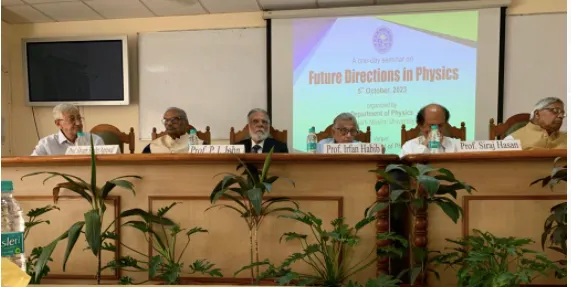
A one-day memorial cum seminar on Future directions in Physics was held at the University on 5th October 2023 Venue. Prof. Irfan Habib, Prof. of History, AMU, Prof. Siraj Hasan (Former Director, Indian Institute of Astrophysics), Prof. Naresh Dadhich (Former Director, IUCAA), Prof. S. K. Singh (Former VC, HNBU), Prof. Wasi Haider and Prof. Shyam Sunder Agrawal (Director General, KIIT Group of Institutions) spoke on the occasion. I spoke about my association with him and the future of Plasma Physics and Thermonuclear Fusion Research in India.
It was a forenoon in July 1964 when I first met Prof Rais Ahmed, who had become the Head of the Department that very year. I had travelled from Kerala seeking an opportunity to do research. He asked me a few questions on Physics, and I suppose I answered them reasonably well. But then he wanted to know why I wanted to pursue research.
I had rather romantic ideas like research leading to new knowledge and our responsibility to seek pure knowledge etc. It was clear that he did not take me seriously as he went on to say that science is what drives social transformation by changing our perception of our relationship with nature. Another observation was about science leading to technology which improves the quality of life.
Our conversation covered many things. I suppose he was gauging my mind and trying to find what kind of person I was. If it was a test, I passed it as he said that I could join for research. He made sure that I had no preference for Nuclear Physics or Spectroscopy, the areas of ongoing work in the department. He talked to me about Plasma Physics as an emerging field and about the work which was going on in Harwell and Oxford on Thermonuclear Fusion Research.
I did not know about Plasma Physics even at an elementary level. However, I was willing to learn and was asked to talk to Prof. D C Sarkar about the thesis work in more detail. I went through an intense learning programme, primarily reading Physical Review and Review of Scientific Instruments. There was no previous laboratory I could walk into and start work and I had to start from scratch. Looking back, I was taking an enormous risk as I had to build an entire laboratory for me to start the thesis work.
I rigged up a Radiofrequency generator with Japanese power tubes scavenged from the Electrical Engineering Department. Prof Venkateswarlu’s lab was full of microwave equipment, which Rais Sab allowed me to borrow. With all this, I set up an experiment and after a struggle of five years, put together a thesis which got me a degree. Almost immediately he gave me a regular job as a lecturer in the department as some vacancies were due to be filled.
As the Head of the Department, he did much to expand research and teaching in Physics in new areas. As Director of Academic Programmes, he organized the Semester System designed to update courses and provide more rigorous instruction to students. He made an alliance with Uppsala University in Sweden for faculty members to do research there. He arranged for PhD scholars to start teaching postgraduate students.
I recalled my interaction with university life during my eight years there. At first, Aligarh gave me a culture shock. My inability to comprehend Urdu was the first barrier to appreciating the culture. The exalted forms of addressing, and the too formal and exaggerated ‘Tehzeeb’, the gestural ‘adaabs’ strewn around were all alien. The food, though delicious, was completely unfamiliar. But the campus was a dream with beautiful buildings, stately halls, verdant lawns, and lush gardens. The library gave me all the books I wanted to read. The accommodation I got at the Sulaiman Hall was quite adequate. The students from central Travancore preferred this. There was a South Indian mess catering our preferred food. Tea at the Paradise restaurant with friends was fun.
Rais Ahmed had interests ranging from his specialization in Electronics to varied areas of science and education. He published over 100 papers on Electronic Circuit Analysis. Analogue Computers. Speech Recognition and Production, and Creative Teaching of Physics. The work he started in the 1970s on speech perception would eventually become an important branch of artificial intelligence and machine recognition of speech.
I recall a symposium he had organized on higher education, where we were asked to be volunteers to help the organization. The attendees were all academics from Universities and IITs and I was fortunate to listen to many of them. The remarkable skill with which Rais Sab generated consensus on many issues which were debated was an eye-opener for me.
In a department seminar, when his student Moonis Ali spoke on the design of an analogue computer system, some of us, ridiculed the idea calling it a paper machine. Rais Sab defended the presentation vigorously, saying that new ideas were what drove science forward and that they had as much importance in science as building new instruments.
His remarkable organizational skills were brought to bear at the prestigious Annual Meeting on High Energy and Nuclear Physics, sponsored by the Department of Atomic Energy. Prof Roy Daniel from TIFR was the coordinator of the meeting, and his being from Kerala, we used to chat about the preparations for the meeting. The participants included bigwigs like Vikram Sarabhai, Prof M G K Menon and Dr Raja Ramanna. The meeting was hailed as very successful thanks to the planning and preparations led by Rais Saheb.
All of us in the department rejoiced when he was made a member of the Science Advisory Committee to the PM, then Mrs Gandhi. After each meeting, he would call all of us to the lawn near the workshop to convey to us the flavour of the meeting. We had the vicarious pleasure of being informed about the thinking in the places of power.
He would call me occasionally to his office to find out how I was doing. In one of these meetings, he advised me to read journals other than those dedicated to pure physics. He cited the Bulletin of Atomic Scientists as an example.
Rais Sab had an abiding faith in Scientific Socialism and felt strongly about the increasing global dominance of the multinationals and about what he saw as a retreat by India from its independent position both in the Economic and Intellectual fields. He had a strong belief that human capital, in the form of expanding knowledge and scientific spirit, held the key to India’s salvation. For this ideal, he worked tirelessly both as an individual and in administrative capacities.
In the 1950’s he was an energetic organizer of the Association of Scientific Workers of India. Once when I asked him about the ethics of unionizing scientific workers, he defended it by saying that collective bargaining need not be about wages and working conditions only. Professional bodies of scientists had a role in influencing public policy.
After I left Aligarh in 1972 to join the Physical Research Laboratory in Ahmedabad, I had occasional interactions with him. He made me a member of the UGC Committee to visit Marathwada University to make an academic assessment. He funded my proposal to have an orientation programme for university teachers in the emerging field of Plasma Physics.
I had an exciting and eventful life contributing to Plasma Physics in India, right from its inception at the Physical Research Laboratory, during the Plasma Physics Programme and its eventual transformation to the Institute for Plasma Research and when India became a proud partner in the ITER project of building the world’s first Thermonuclear fusion reactor in France. I owe a debt of gratitude to Rais Saheb for initiating me into the research path, which made all this possible.
source: http://www.john-pucadyil.medium.com / Medium.com / Home / by John Pucadyil / October 06th, 2023
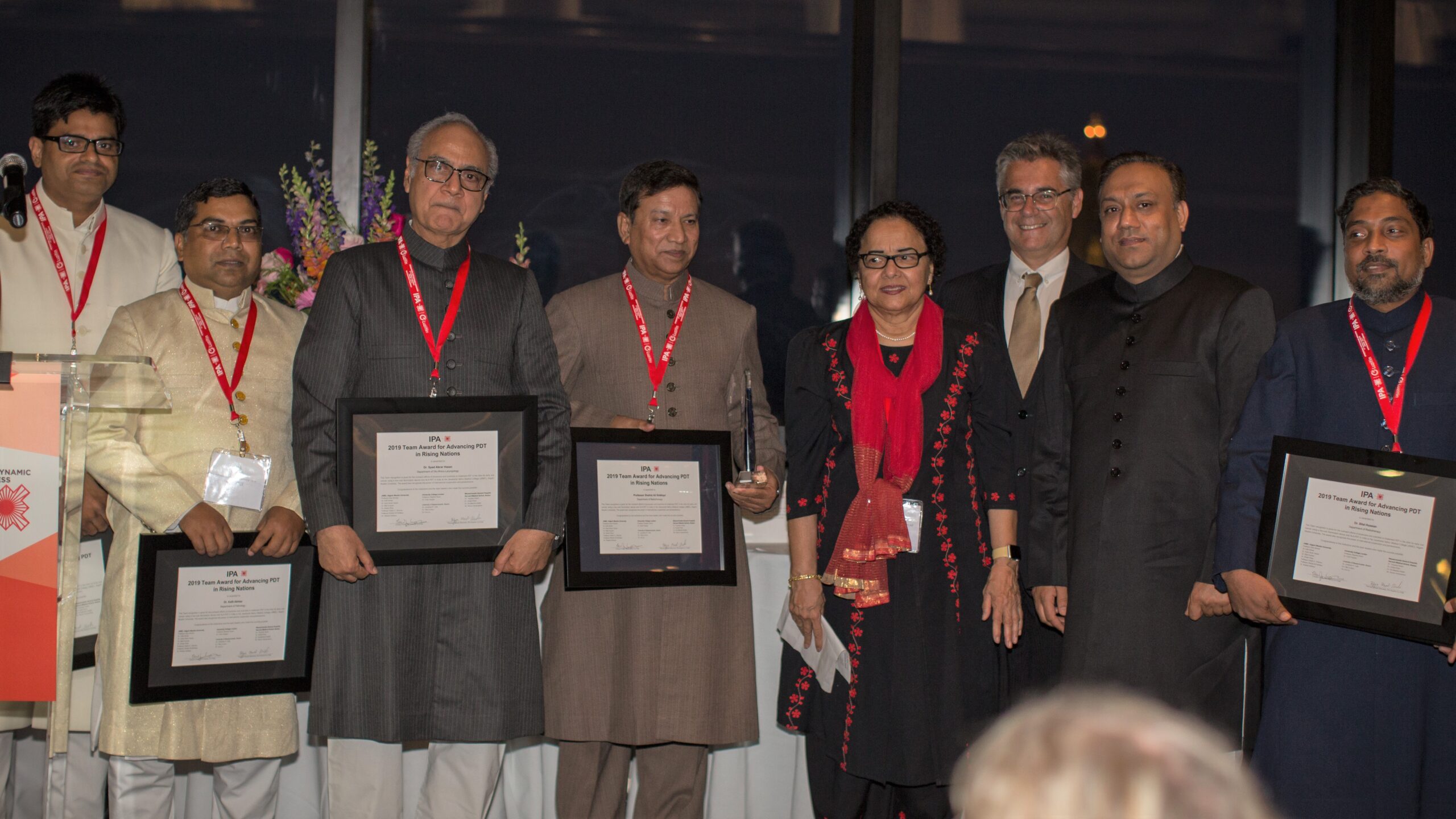
Professors Syed Abrar Hasan (center-left) and Shahid Siddiqui (center) receiving the 2019 Advancing Photodynamic Therapy In Rising Nations Award from Dr. Lothar Lilge (left), IPA Past-President, Dr. Tayyaba Hassan (center-right), and IPA President, Dr. Luis Arnaut (right).
Boston, USA :
At the 17th International Photodynamic Association World Congress in Boston, Massachusetts, Professors Shahid Siddiqui and Syed Abrar Hasan, leading an Indian and international team of PDT clinicians and researchers, were honoured as the 2019 recipients of the IPA award for Advancing Photodynamic Therapy (PDT) in Rising Nations.
The IPA recognizes the joint and considerable efforts of the team over the past three years to establish photodynamic therapy sustainably in the large and growing Indian market. The ‘PDT in India’ initiative is the direct result of the personal efforts, resources and perseverance of Indian Professor Shahid Siddiqui and Professor Syed Abrar Hasan to address the large unmet medical need relating to oral cancer in India. Oral cancer has a high death rate in India, as many people are undiagnosed and do not have access to adequate treatments or healthcare facilities. The Indian contingent of the team include the following clinicians from Jawaharlal Nehru Medical College, Aligarh Muslim University:
Professor Ibne Ahmad
Dr. Kafil Akhtar
Dr. Syed Abrar Hasan
Dr. Bilal Hussain
Dr. Shakir Khan
Professor Satish C. Sharma
Professor Shahid Ali Siddiqui
Dr. Shaista Siddiqui
pix02
From left to right: Dr. Shakir Khan, Dr. Kafil Akhtar, Professor Syed Abrar Hasan, Professor Shahid Siddiqui, Dr. Tayyaba Hassan (IPA Past-President), Dr. Luis Arnaut (IPA President), Dr. Amjad Khan, Dr. Bilal Hussain.
Supporting the Indian clinicians on the team with international PDT expertise are representatives from the University College London, the University of Massachusetts, the Wellman Center for Photomedicine, Massachusetts General Hospital and Harvard Medical School. The international contingent of the team includes the following PDT researchers and clinicians:
Dr. Colin Hopper, University College London
Professor Stephen Bown, University College London
Dr. Jonathan P. Celli, University of Massachusetts, Boston
Dr. Filip Cuckov, University of Massachusetts, Boston
Dr. Hui Liu, University of Massachusetts, Boston
Dr. Tayyaba Hasan, Massachusetts General Hospital, Harvard Medical School, Boston
Dr. Amjad Khan, Massachusetts General Hospital, Harvard Medical School, Boston
Dr. Srivalleesha Mallid, Massachusetts General Hospital, Harvard Medical School, Boston
Mr. Marvin Xavierselvan, Massachusetts General Hospital, Harvard Medical School, Boston
As a result of this international team effort spanning three years, a robust infrastructure for photodynamic treatment has been built and is being maintained at the Jawaharlal Nehru Medical College, Aligarh University, India. Along with the development of PDT infrastructure, PDT equipment/supplier access, and extensive clinician training, patient recruitment processes have been successfully established leading to the ability to better meet the large unmet medical needs in the region. Patients treated to date with PDT have experienced excellent outcomes facilitating accelerating patient acceptance and recruitment rates.
IPA World Congress
The Boston World Congress was the 17th conference held by the International Photodynamic Association, marking 34 years of this global meeting. The IPA World Congresses, held every two years, are the leading PDT meetings bringing together members of the global photodynamic community to advance scientific and clinical research relating to photodiagnosis and photodynamic therapies. The Boston World Congress was led by Congress Chair and IPA President Dr. Tayyaba Hasan, Professor of Dermatology at the Wellman Center for Photomedicine, Harvard Medical School (HMS) and a Professor of Health Sciences and Technology (Harvard-MIT) and had record attendance with representatives from 33 countries. The 2021 IPA World Congress will be hosted in Moscow, Russia and the 2023 IPA World Congress will be held in Shanghai, China.
About Photodynamic Therapy
Photodynamic Therapy (PDT) is a combination therapy involving light activated photosensitizers to diagnose and treat various types and stages of cancers and pre-cancers, macular degeneration and multidrug-resistant infections involving bacteria, viruses and fungi. First developed in the 1980s, PDT has demonstrated superior patient outcomes with considerable cost savings. Over the past 30 years, millions of patients globally have been successfully treated with PDT.
About the International Photodynamic Association
The International Photodynamic Association (IPA) was founded in 1986 to support and endorse the scientific advancement and clinical development of photodynamic therapy and photodiagnosis. With members and associates from over 30 countries, the IPA represents a truly global community consisting of prominent international scientists, clinicians and translational researchers, healthcare professionals and students across academic, hospital, government and private sector organizations. The IPA promotes the study of diagnosis and treatment using light-activated photosensitizers and disseminates scientific information to its members, the research community, and to the community at large. The IPA organizes a biennial World Congress around the world, providing members and non-members a unique opportunity to share and learn more about global developments relating specifically to photodynamic therapy and photodiagnosis.
For further information: ipasecretary@internationalphotodynamic.com
source: http://www.globenewswire.com / GlobeNewsWire / Home / by IPA – International Photodynamic Association / July 11th, 2019
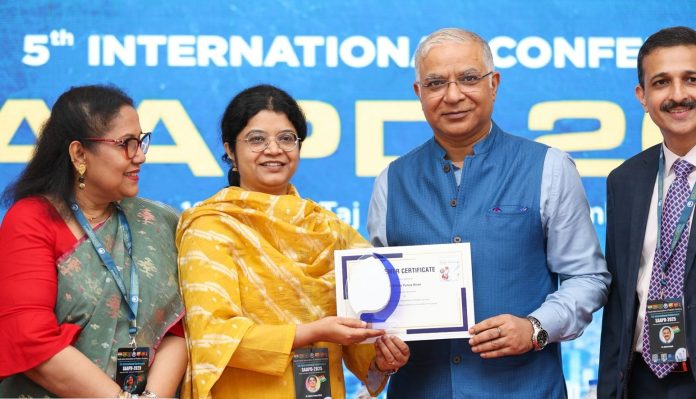
Dr. Saima Yunus Khan receiving the Exemplary Peer Reviewer Award from Indian High Commissioner to Sri Lanka, Mr. Santosh Jha at International Paediatric Dentistry Conference at Siri Lanka
Aligarh:
Dr. Saima Yunus Khan, Professor and Chairperson of the Department of Paediatric and Preventive Dentistry at Dr. Z.A. Dental College, Aligarh Muslim University, has brought laurels to the institution by receiving the Exemplary Peer Reviewer Award for her outstanding research contribution at the 5th International Conference of the South Asian Association of Paediatric Dentistry held at Colombo Sri Lanka.
She was presented the award by the Indian High Commissioner to Sri Lanka, Mr. Santosh Jha, during the conference’s inaugural ceremony. The event, attended by over 250 delegates from more than 10 countries, showcased global advancements in paediatric dentistry.
Prof. Saima also presented her original evidence-based research and chaired a paper presentation session at the conference. She has previously won several national and international accolades, including being the only Indian recipient of the prestigious and highly competitive IADR John Clarkson Fellowship.
source: http://www.radiancenews.com / Radiance News / Home> Pride of the Nation> Awards> Latest News / by Radiance News Bureau / August 13th, 2025
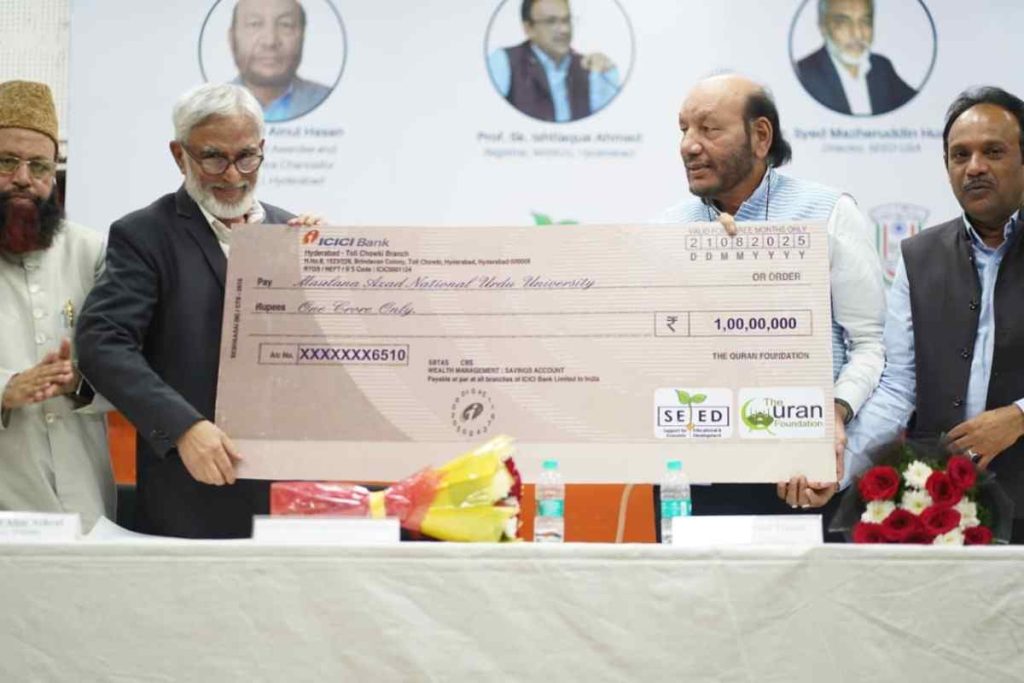
Syed Mazharuddin Hussaini, Director, SEED Foundation, USA, encouraged students to work hard for a brighter future.
In a rare initiative to nurture academic excellence and support deserving talent, scholarships amounting to ₹1 crore were awarded to 1,000 meritorious students of Maulana Azad National Urdu University (MANUU). The scholarships, distributed under the merit-cum-means Scholarship 2025, aim to ease the financial burden of students and encourage them to pursue their educational aspirations without constraints, said the university.
The scholarship distribution ceremony was organised by the Dean of Students’ Welfare, MANUU, and generously sponsored by SEED, USA, in collaboration with The Quran Foundation. The event not only recognised the hard work of the selected students but also underscored the university’s commitment to fostering inclusive education and creating opportunities for students from diverse backgrounds.
Delivering the presidential address, Prof. Syed Ainul Hasan, Vice Chancellor appreciated the efforts of SEED Foundation and The Quran Foundation, while congratulating the students. He instructed the beneficiaries to use the scholarship amount wisely, and strongly encouraged them to study hard, remain disciplined, and not indulge in any unlawful activities. He also urged students to make the best use of this opportunity to contribute towards the progress of society through education.
Syed Mazharuddin Hussaini, Director, SEED Foundation, USA, encouraged students to work hard for a brighter future. He emphasized that SEED has been associated with MANUU for the past three years and assured that the support will continue to grow in the coming years. He also expressed his intent to extend scholarships to students of the Centre for Distance and Online Education (CDOE) from the next year.
Prof. Ishtiaque Ahmed, Registrar remarked that scholarships are not just financial assistance but recognition of students’ hard work and an encouragement to reach greater heights. He urged the students to pursue their education with sincerity, discipline, and a vision for nation-building.
Prof. Syed Alim Ashraf Jaisi, Dean Students’ Welfare delivered welcome address. He assured that MANUU is committed to ensuring that no deserving student is deprived of education due to financial constraints, and highlighted that such scholarships serve as a powerful tool to uplift students academically and socially.
The cheques were distributed to selected students on the occasion.
Mahpara Ali, Chief General Manager (Retd.), SBI, and other dignitaries were also present there. Assistant Deans, Students’ Welfare – Dr. Jarrar Ahmad, Assistant Dean, Students’ Welfare, presented a vote of thanks and Ismat Fathima hosted the event.
In another development, the MANUU, Industrial Training Institute (ITI), Hyderabad is inviting application forms for third phase admission counseling into vacant seats in ITI Trades at Hyderabad. The Last date for submission of filled in application form at MANUU ITI Hyderabad is August 28, 2025.
According to the Principal, Dr. Arshia Azam applications form can be obtained from MANUU – ITI Hyderabad or can be downloaded from University website www.manuu.edu.in. The counseling will be held on August 29 from 9.30 am onwards at ITI, MANUU Campus, Gachibowli.
For details candidates can contact the ITI office in person or by telephone: 040-23008428 & 9440692452, said the university in a latest statement to the media.
source: http://www.theokhlatimes.com / The Okhla Times / Home> JMI-Edu / by The Okhla Times / August 08th, 2025
India’s media innovator Farhat Khan joins global film powerhouse IIFSA as fellow and Astar award council member. Here is the report:
As the global film industry increasingly embraces innovation at the intersection of art, science, and education, an Indian academic has been named to one of its most distinguished international institutions. Prof. Farhat Basir Khan has been elected a Fellow of the International Institute of Film Science and Art (IIFSA) and appointed to its Astar Award Council, becoming the first Indian to hold both positions.
The dual appointment represents a significant moment for India’s academic and cinematic communities. It signals the growing international recognition of India’s contributions to the evolving landscape of film theory, media education, and technological storytelling. As IIFSA prepares to host its inaugural Astar Awards in Bangkok on August 27, and expands its global academic alliances across Europe, North America, and Asia, Khan’s appointment places an Indian voice at the core of international decision-making on the future of screen culture.
The role is more than symbolic. The Astar Council will shape the vision and execution of one of the most anticipated new global awards in film and media innovation. The ceremony will convene leaders from across creative, academic, and technological fields, recognising those redefining what it means to tell stories in the digital age.
Based in New York City, IIFSA is a globally respected think tank advancing the integration of cinematic art with scientific and technological exploration. Its current roster of Fellows includes some of the most influential figures in the field: Demetri Terzopoulos, Oscar Technical Award winner and a pioneer in visual computing; Prof. Patricia Pisters, a leading theorist on neuro-cinema; and George Huang, the UCLA professor whose screenwriting work has shaped Hollywood’s narrative landscape. IIFSA’s initiatives range from academic research and policy reports to cross-continental educational reforms and interdisciplinary artistic collaborations.
Prof Farhat Khan’s journey to this global stage is built on decades of educational innovation. He was instrumental in developing the academic and technical foundation of the AJK Mass Communication Research Centre at Jamia Millia Islamia, now considered among the premier media schools in Asia. Farhat Khan portfolio includes the creation or restructuring of over 24 academic programmes, the establishment of 12 media production labs across Indian institutions, and the launch of the Department of Design and Innovation in 2021 , an interdisciplinary space focused on storytelling, technology, and civic engagement.
Currently heading the Centre for Media and Mass Communication Studies at Jamia Hamdard, Farhat Khan continues to influence media education with an emphasis on accessibility, innovation, and purpose-driven communication. His work extends far beyond the classroom: initiatives like Photos4Peace, ChitthiAayi Hai, and Votography have used visual storytelling as tools for public awareness, democratic participation, and social change.
Farhat Khan also led the Indian student team that won the country’s first Sony World Photography Award (Student Focus category) at Cannes in 2009, competing against teams from around the globe, a milestone still regarded as a turning point in India’s international visual arts recognition.
Farhat Khan election to IIFSA’s Fellowship and Council reflects the organisation’s emphasis on inclusive, global, and interdisciplinary leadership. As IIFSA seeks to shape the next era of cinematic practice and education, perspectives from emerging and underrepresented regions are being brought to the centre of the conversation ,and Khan’s presence plays a key role in that realignment.
Far from being a personal accolade alone, this appointment points to a broader shift: the recognition of India not only as a consumer or producer of cinema, but as a thought leader in how visual narratives will be conceived, taught, and experienced in the years to come.
source: http://www.theokhlatimes.com / The Okhla Times / Home> JMI-Edu / by The Okhla Times / August 08th, 2025
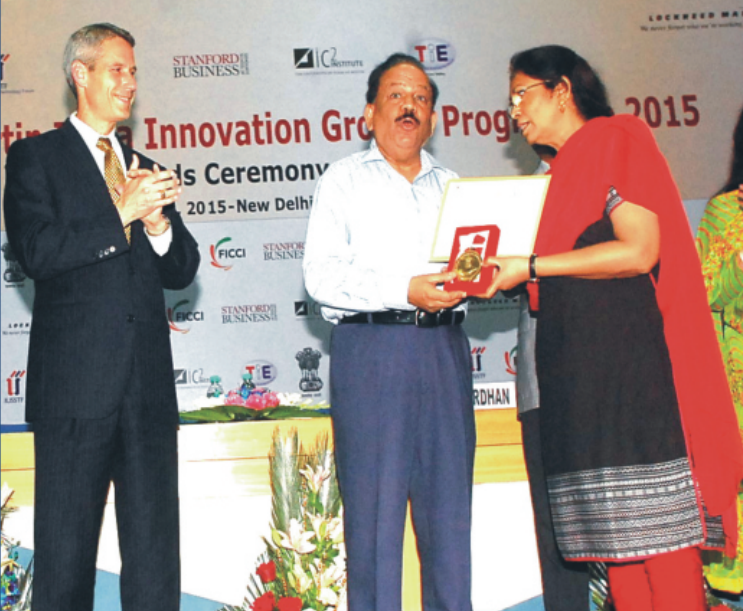
The award presented by Dr. Harsh Vardhan, Hon’ble Minister of Science & Technology & Earth Sciences, Govt. of India on 13 May 2015 in a ceremony held in DRDO Bhavan, New Delhi.13th May 2015
Congratulations Dr. Nahid Ali for achieving Top 10 Innovators award for Dipstick Technology by the DST jointly with FICCI and Lockheed Martin corporation and Indo US Science and Technology Forum 2015.
Dr. Nahid Ali, Chief Scientist, Infectious Diseases and Immunology Division, CSIRIICB, was awarded the Gold Medal and a certificate at the “Innovators Competition” for DST-Lockheed Martin India Innovation Growth Programme 2015. The award was given by Dr. Harsh Vardhan, Hon’ble Minister of Science & Technology & Earth Sciences, Govt. of India on 13 May 2015 in a ceremony held in DRDO Bhavan, New Delhi.
Dr. Ali’s innovation, a dipstick device for the diagnosis of Kala-azar and PKDL, has been selected among top 10 technologies out of 1500 applications received this year. The technology has already been filed for patent and also published in the Journal of Emerging Infectious Diseases (Saha et al, 2011; 17: 1304-06).
source: http://www.iicb.res.in / CSIR-Indian Institute of Chemical Biology