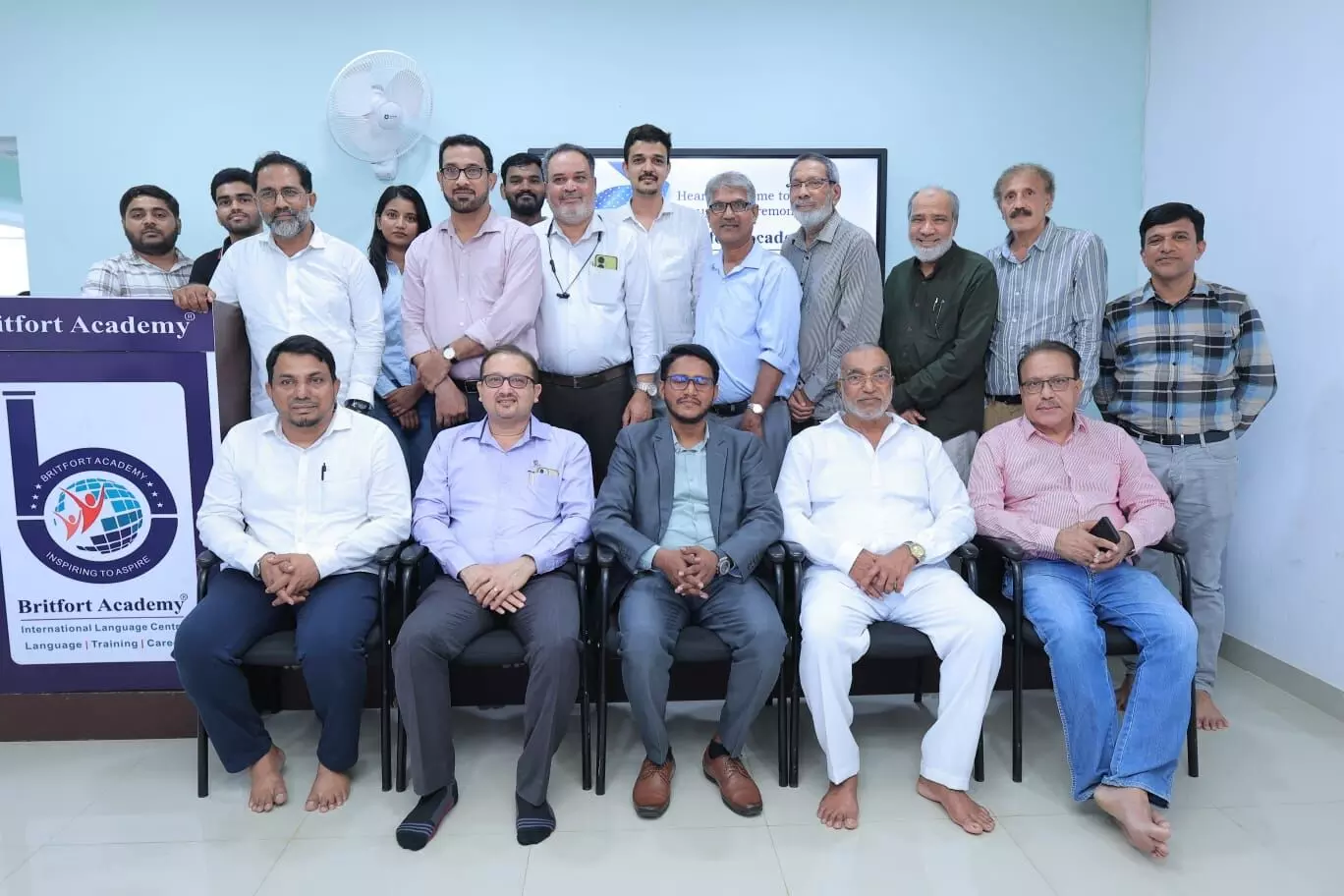
The inauguration of BRITFORT Academy’s Mangalore branch, in collaboration with Ace Foundation, was held on 18th April at the Kankanady Gate Building, Kankanady Bypass Road. The event marked a significant milestone in expanding quality English language education and study abroad services in the coastal region.
BRITFORT Academy is widely recognised for its excellence in Spoken English and Communicative English courses, along with its expert coaching for international English language exams such as IELTS, OET, and PTE. With a growing network of centers across India, BRITFORT continues to empower students with global opportunities through language proficiency and academic support.
The ceremony was formally inaugurated by Noushad, CEO of BRITFORT Academy, who delivered an inspiring keynote address. He shared the remarkable growth of the academy, noting that over 25,000 students have been successfully trained through their programs. The Mangalore branch represents the 16th center in their journey of expansion and the fourth in Karnataka, reinforcing their commitment to making quality education accessible across regions.
Abubacker, President of Ace Foundation, presided over the function and emphasized the importance of collaborations that empower youth through quality education and skill-building initiatives.
The event was further graced by Dr. R.G. D’Souza, Dean of the Engineering Department at Yenepoya University, who attended as the Chief Guest. B.S. Mohd. Basheer, President of Jamiyyatul Falah (Mangalore Corporation Unit), and Anwar Sadath, Managing Director of Hana Beverages Pvt. Ltd., were the Guests of Honour. All dignitaries expressed their appreciation for the initiative and their confidence in the academy’s positive impact on the region’s youth.
Nazeer Ahmed, Director of Ace IAS Academy, welcomed the gathering and highlighted the significance of enhancing language skills for academic and professional growth. The program concluded with a vote of thanks proposed by Imthiaz Khateeb, Secretary of Ace Foundation, expressing gratitude to all guests and participants for their support. The event was compered by Rafik Master.
source: http://www.english.varthabharati.in / Vartha Bharati / Home> Karavali / by Vartha Bharati / April 2Oth, 2025
Kooli Village (Ranebennur, Haveri District), KARNATAKA :
Abu Saliya Khan
Mangaluru/Ranebennur:
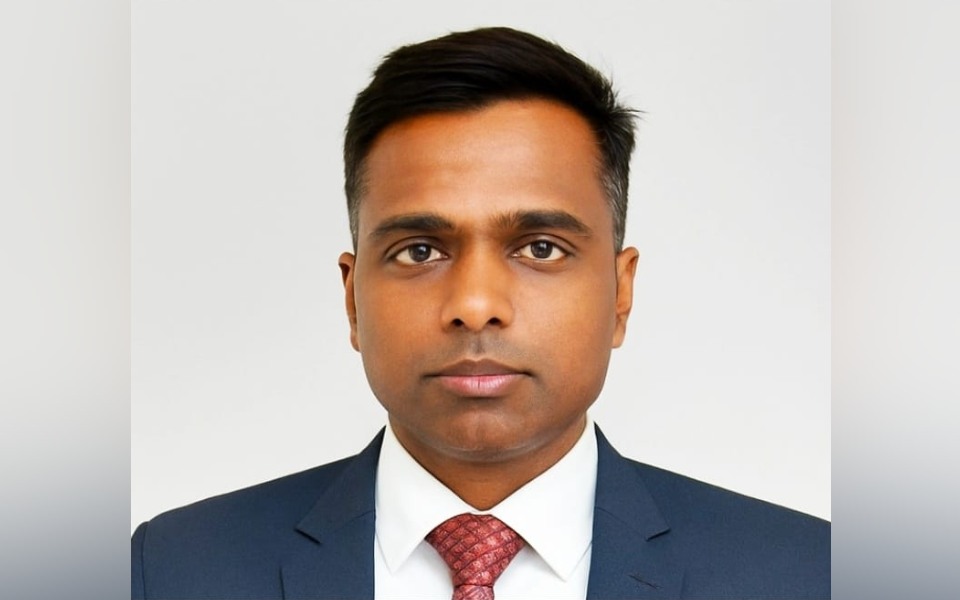
Abu Saliya Khan, a former student of Ace IAS Academy in Mangaluru, has cleared the prestigious UPSC Civil Services Examination with an All India Rank (AIR) of 588, bringing pride to the academy and his hometown of Ranebennur in Karnataka’s Haveri district.
Hailing from Kooli village in Ranebennur taluk, Abu Saliya completed his primary education in a Kannada-medium school before joining RTS College, Ranebennur for his pre-university education in 2014. He later pursued his B.Sc in Agriculture at Shivamogga, graduating in 2019. His journey toward UPSC preparation took a significant turn when he shifted to Mangaluru and enrolled at the Ace IAS Academy for intensive training.
Speaking to Vartha Bharati, Abu Saliya credited his success to the foundation laid during his training at the Ace IAS Academy. “It was here in Mangaluru that I got my basics right. The environment at Ace helped me understand the significance of public service and mentally prepared me for this long journey,” he said.
After his training in Mangaluru, he moved to Delhi and continued his preparation at Jamia Millia Islamia’s Residential Coaching Academy. His perseverance paid off in his fourth attempt. He had earlier cleared the prelims in 2023, which gave him a renewed sense of hope and motivation to make one final attempt, resulting in this year’s success.
Coming from a modest background, Abu Saliya’s story is an inspiration to many. His father, the late Hussain Khan Kulkarni, was a bus conductor with NWKRTC and passed away earlier last year. His mother, Arshad Banu, is a homemaker. Despite financial and emotional hardships, the family stood by his side as he pursued his dream of joining the civil services.
On being asked about his preferred service, Abu Saliya shared that while he had aspired to join the Indian Administrative Service or Indian Police Service, he now expects to be allotted the Indian Revenue Service based on his rank. He also revealed that he had been attempting to qualify for the Indian Forest Services.
Reacting to the news of his success, he said, “My family is overjoyed. These are the moments that come once in a lifetime. There was a time I had almost decided to give up and pursue a career in agriculture. But after clearing the prelims in 2023, I decided to try again—and I’m glad I did.”
His success has been hailed by many in Mangaluru’s civil service aspirant community, with Ace IAS Academy calling it a proud moment for the institution.
source: http://www.english.varthabharati.in / Vartha Bharati / Home> Karavali / by Vartha Bharati / April 24th, 2025
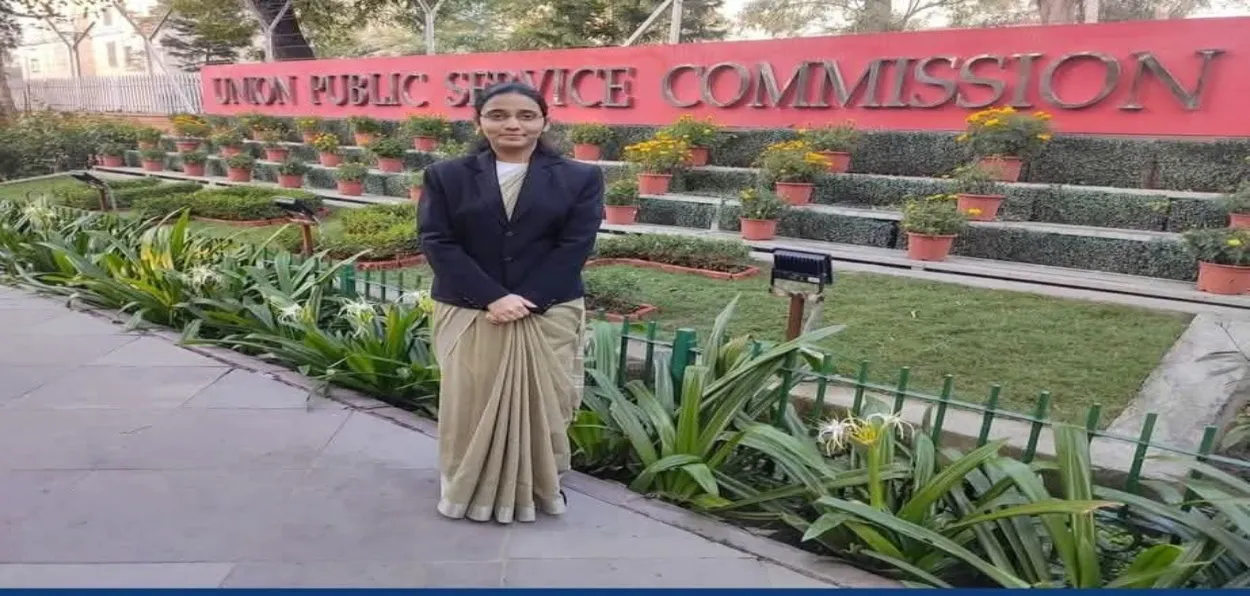
Farkhanda Qureshi of Balaghat, Madya Pradesh, outside UPSC office in Delhi
Farkhanda Qureshi was in her eighth grade when she saw district Collector B. Chandrasekharan son a local Television channel. This visual ignited a dream in her mind; she too wanted to become a civil servant. Today this Muslim woman from from Balaghat, a small town of Madhya Pradesh, has realized her dream which she nurtured over the years with passion, hard work, overcoming failures and perseverance.
Farkhanda Qureshi has secured 67th rank in the UPSC 2024 Civil Services Examination and would soon join the Lal Bahadur Shashtri National Academy for Administration, Dehradun, for training to become an Indian civil servant.
“I had decided that one day I will also become a collector and work for society.” She credits her success in her fourth attempt to her family’s support.
She started preparing for UPSC in 2021. Despite failures, she did not give up. She says, “My parents did not let me break down; they motivated me and told me that I will get success one day. Had they not supported me, I would have probably given up in the first or second attempt,” she told the told media persons.
Farkhanda believes that for a tough exam like UPSC, studying for 18 hours is not necessary, but consistency and strategy are. “I studied for 6 to 8 hours every day, but I studied every day. Old year papers, standard books, current affairs and newspapers were an important part of my preparation.”
Farkhanda Qureshi flanked by her parents Nikhat Anjum and Abdul Malik Qureshi
Farkhanda, who completed her 10th from St. Mary’s School and 12th from Methodist Mission, says, “Being from a small town like Balaghat has never been my weakness. I believe that if the youth here get the right direction and resources, they can make a name for themselves across the country.”
Farkhanda considers her father Abdul Malik Qureshi, who is a lawyer, and her mother Nikhat Anjum Qureshi, a homemaker, her heroes and credits her success to them.
Her father said, “Today people recognize me by my daughter’s name, nothing can give me greater happiness than this.”
There is a festive atmosphere in the area, the collector congratulated Farkhanda and and wished her a bright future. The local mosque committee (Anjuman( also felicitated her and called her inspiration for the Muslim youth.
Out of the 1,009 candidates recommended by UPSC this year, 26 are Muslims, though none made it to the Top 25.
Iram Choudhary (Rank 40) and Farkhanda Qureshi (Rank 67) are the highest-ranking Muslim candidates in the merit list. A total of 97 Muslim candidates were selected for the interview stage, and the success rate stands at 2.57%, lower than previous years.
source: http://www.awazthevoice.in / Awaz, The Voice / Home> Stories / by Abdul Wasim Ansari, Balaghat, Bhopal (name error edited) / April 26th, 2025
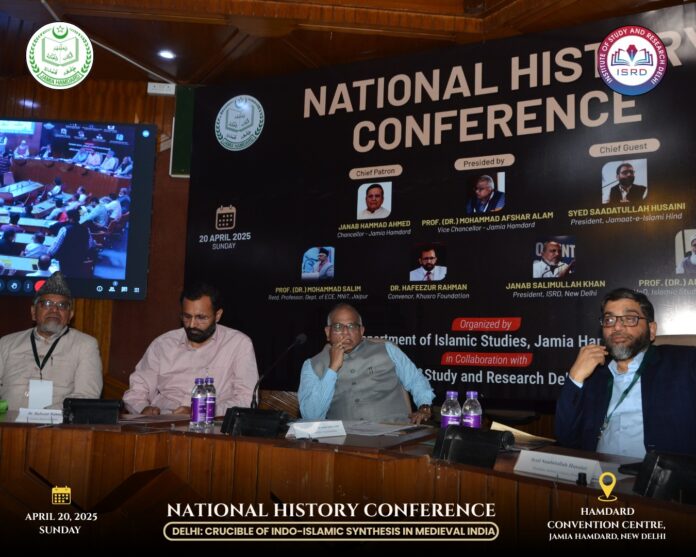
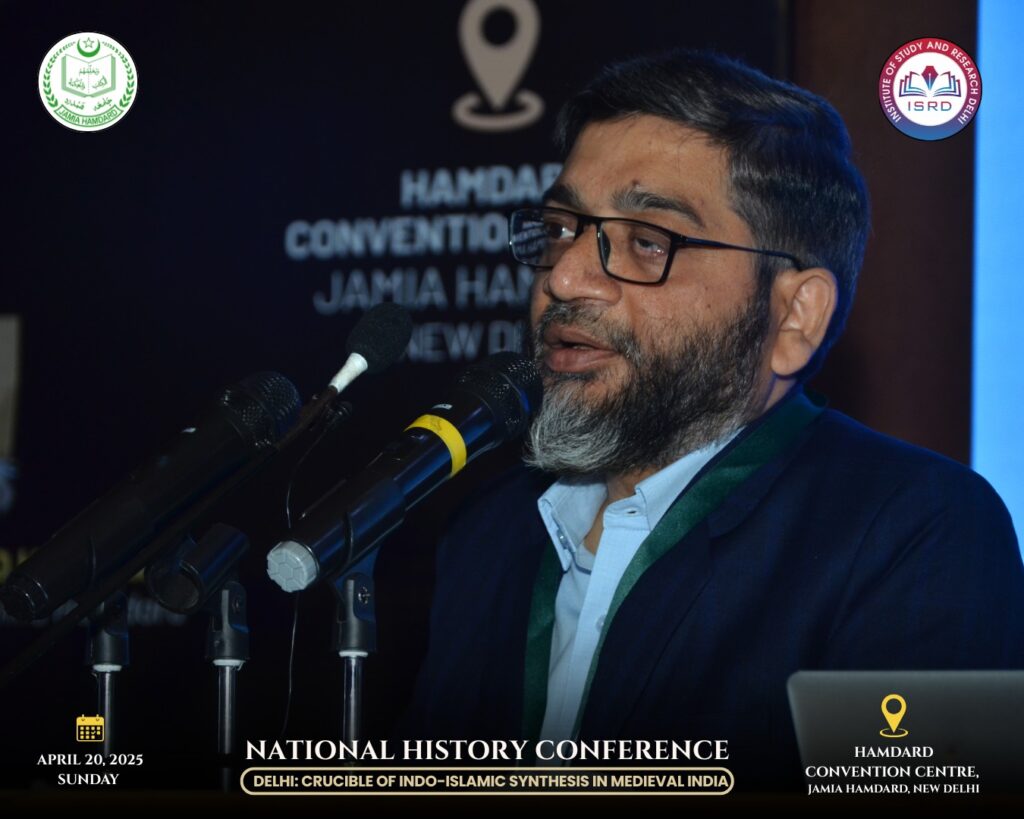
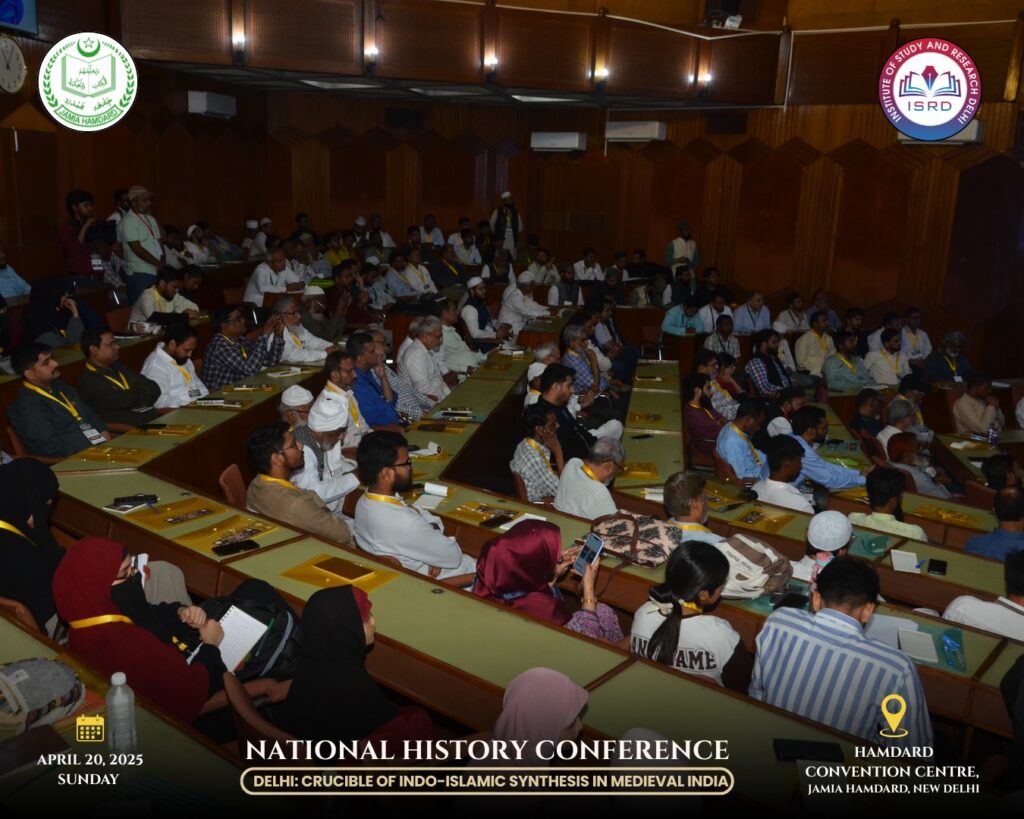
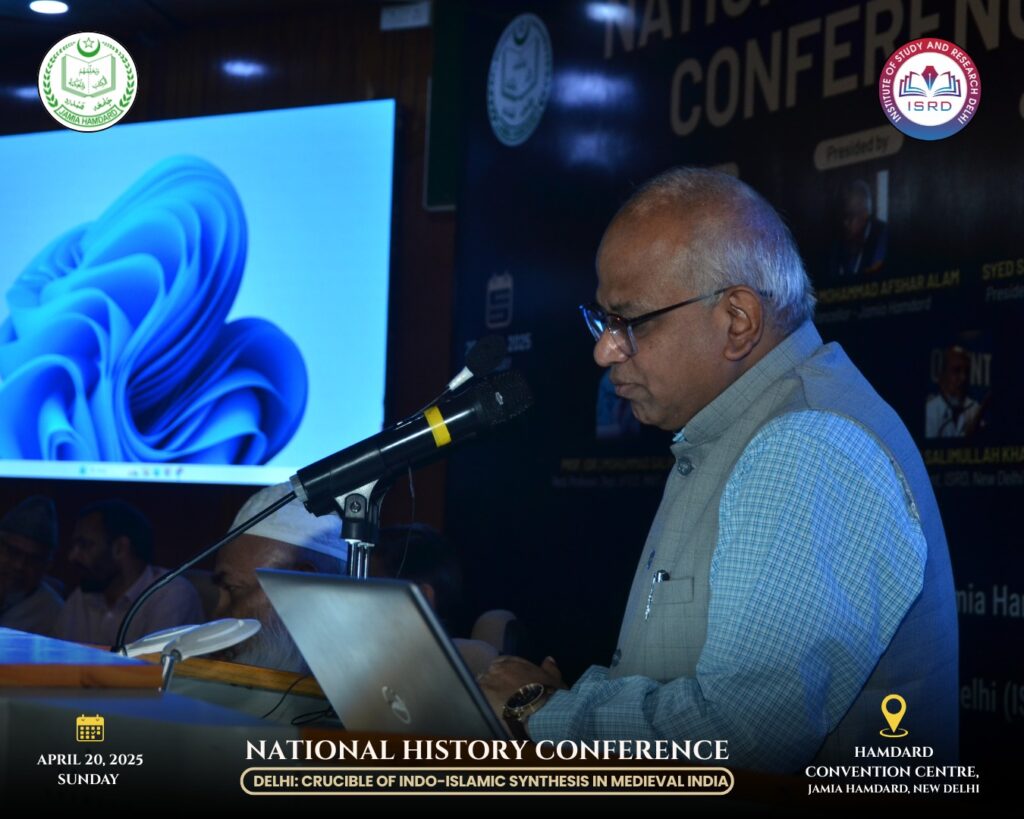
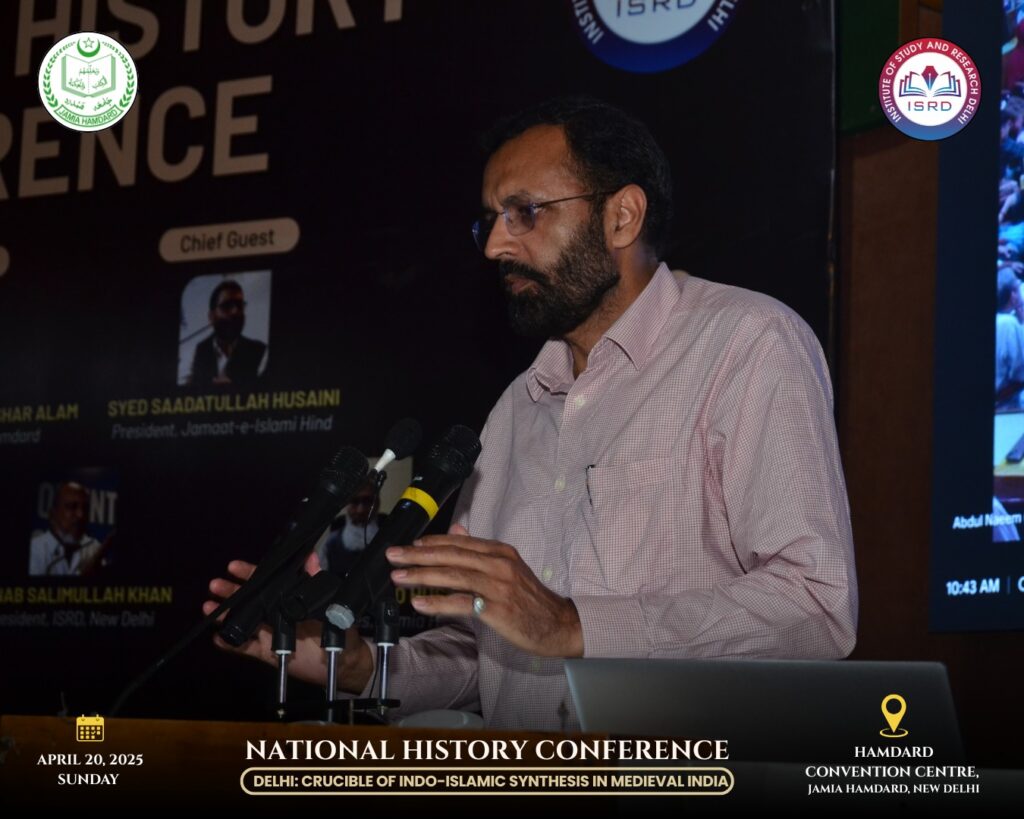
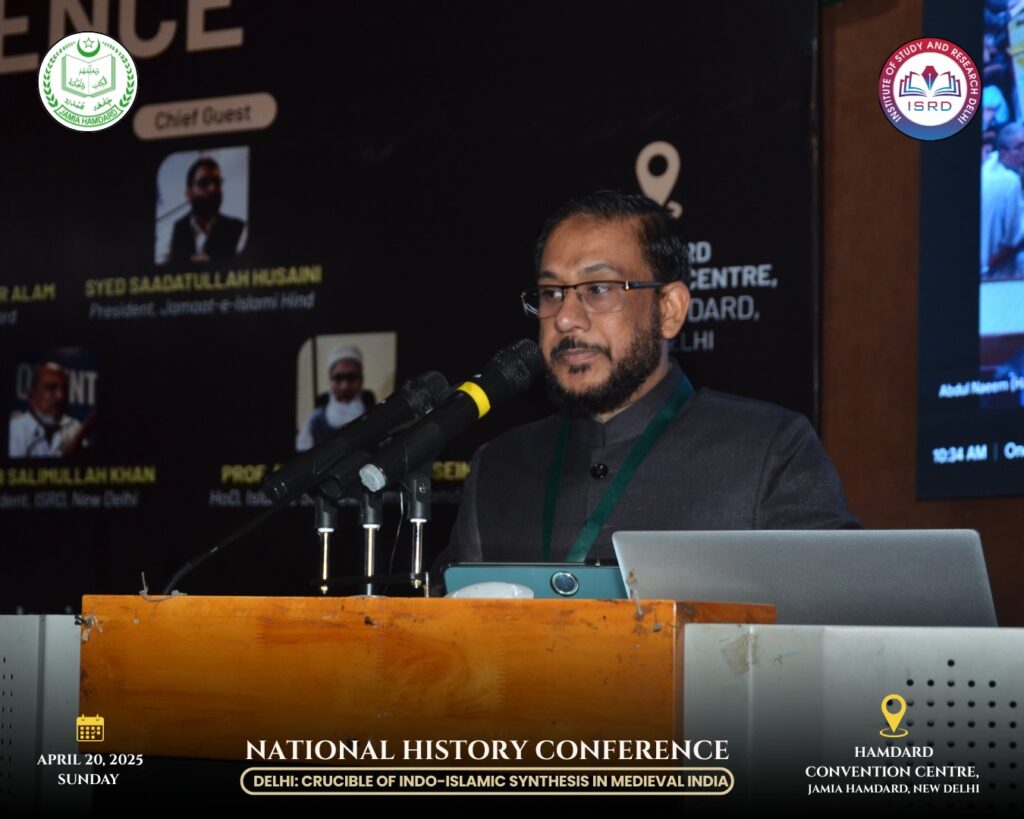
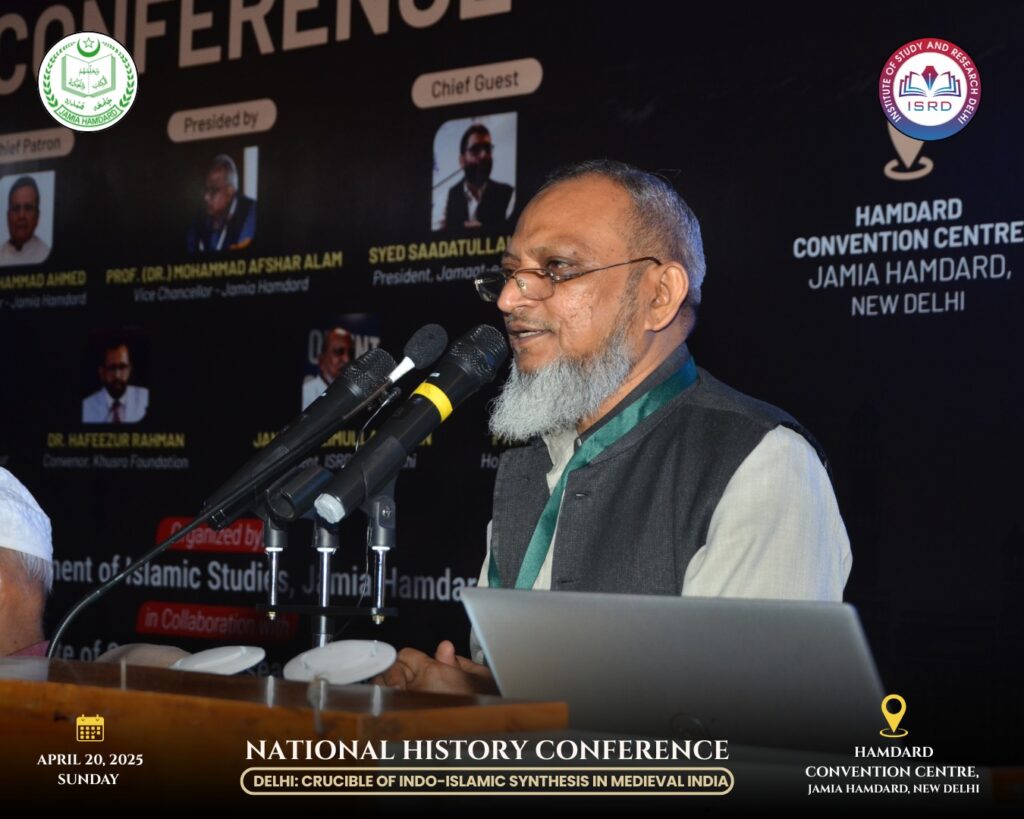
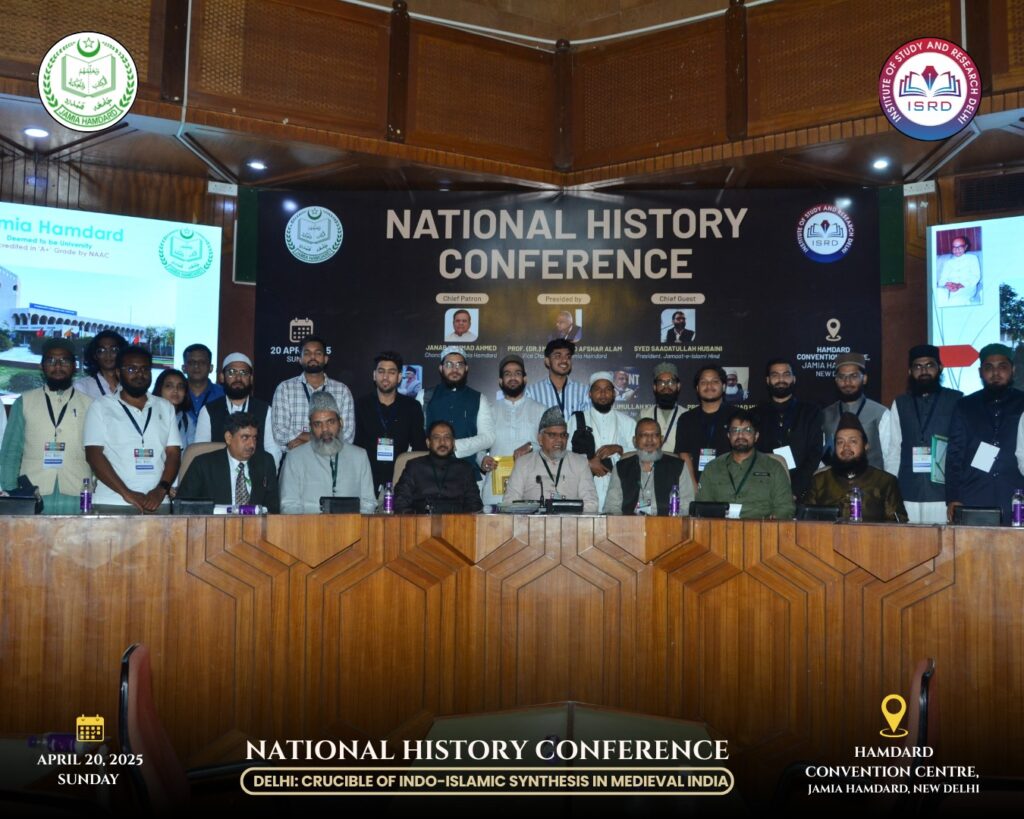
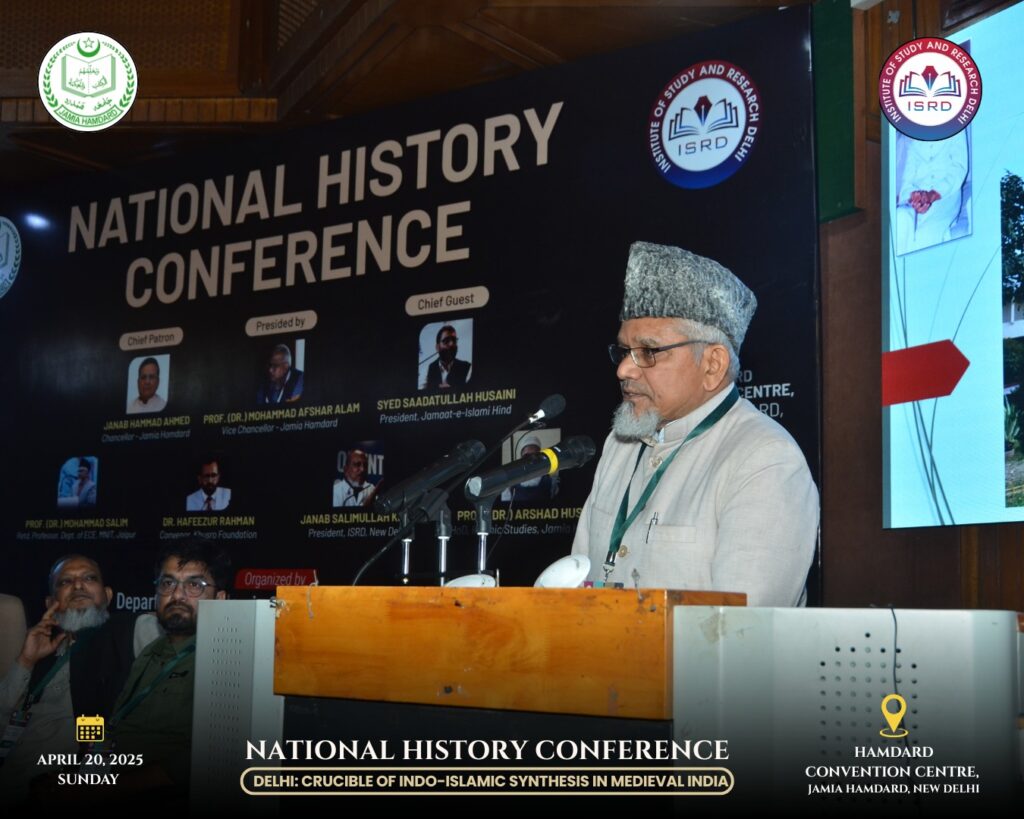
At a landmark one-day national history conference, prominent scholars, professors, and historians Sunday gathered to commemorate the unparalleled contributions of Muslims to India’s cultural and civilizational fabric. Titled “Delhi: Crucible of Indo-Islamic Synthesis in Medieval India,” the conference was hosted by the Department of Islamic Studies, Jamia Hamdard University, in collaboration with the Institute of Study and Research Delhi (ISRD), New Delhi.
Held at the Hamdard Convention Centre, Jamia Hamdard, the conference aimed to explore the profound impact of Islamic heritage on shaping medieval Indian culture, society, and governance, with a special emphasis on Delhi as the epicenter of this cultural convergence.
A wide array of research papers was presented under several sub-themes aligned with the central topic, including the Advent of Islam in North India , Educational Institutions and Knowledge Production, Indo-Islamic Architecture, Sufi Traditions and Sacred Spaces, Language and Literature, Music and Performing Arts Role in the Freedom Struggle, Calligraphy and Decorative Arts, Culinary Heritage and the Culture of Cuisine, Women’s Contributions, Science and Technology, Mughal Gardens and Economic and Administrative Innovations.
As a chief guest, Jamaat-e-Islami Hind Syed Sadatullah Husaini emphasised that the Quran repeatedly encourages the study of history and historical events to extract lessons and guidance. “If lessons are taken from history, it becomes an asset,” he asserted, adding that history serves as a mirror of society.
Refuting the prevailing negative narratives surrounding Muslims in India, Husaini remarked, “Muslims are not outsiders or foreign invaders. They are developers, not destroyers; builders, not colonizers; inheritors, not intruders.” He highlighted how the Delhi Sultanate acted as a conduit, connecting India with the thriving global centers of knowledge in the Muslim world.
He cited the example of Sanskrit scholars and experts in numerics being recognized and honored in the court of the Abbasid Caliphate. The Arabs, he noted, never appropriated the intellectual achievements of Indian scholars but instead gave them due credit. “Muslim Sultanates helped disseminate India’s hidden treasures of knowledge across the globe,” he stated.
Husaini also praised the architectural marvels of the Delhi Sultanate, such as the Qutub Minar, calling them a testament to the era’s artistic grandeur. He emphasized that the most valuable contribution of Muslim rulers was the promotion of unity and human equality, bringing together people across religions, castes, and classes under a shared identity of humankind—a concept Allama Iqbal referred to as “Wahdat-e-Khaas Quwwat” (special power of unity).
Referencing Maulana Abul Kalam Azad, he recalled Azad’s fervent appeals to Muslims at the time of Partition to remain in India, invoking their emotional and civilizational connection to iconic Islamic monuments such as the Taj Mahal, Red Fort, and Qutub Minar.
Dr. Afshar Alam, Vice Chancellor of Jamia Hamdard University, presided over the inaugural session. He provided a historical overview of Islamic rule in India, tracing it from Mohammad Ghori’s arrival in the 12th century to the British colonial era, covering the Slave, Khilji, Tughlaq, Sayyid, Lodhi, and Mughal dynasties.
He emphasized how Delhi became the nucleus of Indo-Islamic cultural fusion, with Central Asian and Persian architectural styles merging with indigenous Indian designs. This, he said, resulted in a unique Indo-Islamic architectural identity, visible in the city’s rich heritage.
Alam also elaborated on the contributions of the Islamic period in education, science, music, literature, governance, and social reform, asserting that this synthesis laid the foundation of what is now referred to as South Asian culture. “This fusion didn’t just shape Indian civilization—it gave it depth, diversity, and resilience,” he concluded.
Dr. Hafeezur Rahman, convenor of the Khusro Foundation and an expert in Urdu and Persian, delivered speech as a special guest. He reflected on historiography, distinguishing between pro-establishment and anti-establishment narratives, and praised Islam’s contribution to historical objectivity through the tradition of “Asma al-Rijal” (biographical evaluation of narrators).
He noted, “It is often said that the Mughals gifted India three unparalleled treasures: the Taj Mahal, Mirza Ghalib, and the Urdu language.” Rahman particularly celebrated the role of Sufi saints, especially Hazrat Nizamuddin Auliya and his disciple Ameer Khusrau, a 13th-century polymath and the founding father of the Urdu language. Khusrau, he said, was also a distinguished scholar in astrology, astronomy, and music.
Quoting Khusrau’s oft-repeated teaching from his spiritual mentor—”Agar duniya aap ke raste mein kaante bichhaye, to tum phool bichhao” (If the world throws thorns in your path, you lay down flowers)—he emphasized the Sufi message of love and resilience.
Dr. Hafeezur Rahman further illustrated how cultural synthesis led to creations like biryani and sherwani, both products of Indo-Islamic fusion. He expressed hope that the academic papers presented at the conference would become historical documents in their own right.
Dr. Fazlur Rahman, Assistant Professor in the Department of Islamic Studies, anchored the conference and gave a brief introduction to its aims.
ISRD Secretary and Organizer Asif Iqbal outlined five core objectives and sub-themes of the event. Asif Iqbal emphasized that civilizational interactions—such as those between Islam and Indian culture—often result in positive transformations. He stated that Muslims, while introducing new cultural and civilizational values to the subcontinent, also embraced indigenous practices. “This mutual exchange reshaped the cultural and intellectual landscape of the region,” he said.
ISRD President Saleemullah Khan offered reflections on the ethical teachings of Prophet Muhammad, citing his instruction to Hazrat Ali to return belongings even to those who plotted to kill him during the Hijrah (migration to Madinah). He also quoted Urdu writer Rashidul Khairi, who praised the skills, cooperation, and intelligence of Delhi’s women during the medieval era.
Professor Arshad Hussain, Head of the Department of Islamic Studies at Jamia Hamdard, delivered the welcome address and warmly greeted all dignitaries and guests.
The day featured parallel academic sessions, with 50 research papers presented by scholars and students from institutions including Jamia Millia Islamia (JMI), Aligarh Muslim University (AMU), Jawaharlal Nehru University (JNU), Maulana Azad National Urdu University (MANUU), National Institute of Technology (NIT), Delhi University, and Jamia Hamdard.
Sessions were chaired by eminent professors such as Prof. Obaidullah Fahad (AMU), Dr. Faizan Ahmed (National Archives of India), Dr. Mohiuddin Ghazi (former Dean, Al Jamia Al Islamia, Kerala), Prof. Azizuddin Husain, and Prof. Parvez Nazir. Guest speakers received mementoes, and research scholars were presented with certificates.
In the valedictory session, Prof. Mohammad Salim Engineer, retired professor from MNIT Jaipur, addressed emerging researchers, emphasizing key research ethics—many of which, he noted, align with Islamic principles. These include academic honesty, objectivity, peer review, and depth over volume. “There’s no shortcut to excellence,” he advised. “Hard work can even surpass intelligence.”
In light of the current communal atmosphere, he urged the Muslim community to take charge of creating history, not just recalling it.
Abdul Kalam, co-convenor of the event, delivered closing thanks, while Dr. Shadab Musa, Assistant Secretary of Jamaat-e-Islami Hind, offered a speech reflecting on the present socio-political environment.
source: http://www.indiatomorrow.net / India Tomorrow / Home> Breaking News> Education> National Interest / by Anwarulhaq Baig / April 21st, 2025
Do it again and again. Consistency makes the raindrops create holes in the rock. Whatever is difficult can be done easily with regular attendance, attention, and action. Perhaps imbibed by the words of Israelmore Ayivor, an inspirational writer, blogger and LifeSkills Entrepreneur, Adeeba Anam Ashfaque Ahmed from Yavatmal in Maharashtra created a record of sorts to become the first female Muslim IAS officer after successfully clearing the civil services with All India Rank 142.
The success saga of Adeeba only proves the awareness shown by Muslim girls to take up civil services exams breaking the barriers.
On cloud nine are Adeeba’s parents, relatives, friends and more particularly her teachers on seeing her victory after three failures. She came out with flying colours in her fourth attempt after getting the necessary guidance and coaching from Jamia Millia Residential Coaching Academy in Delhi.
Can’t imagine a girl hailing from a parched and drought-prone Yavatmal district bringing glory to her native. All because of her patience and consistency as to the quote of American business honcho Robert Kiyosaki – “Successful people don’t fear failure but understand that it’s necessary to learn and grow from.” It is learnt that Maharashtra hardly witnessed any female Muslim IAS officers in the last one decade or so.
Kudos to her dad Ashfaq Ahmed, an auto driver, who despite financial constraints strained his nerves to make his daughter’s civil service dream a reality. Of course, her mom and uncle were very supportive in ensuring she achieved her IAS after successive failures. Adeeba started her early education at Zafarnagar Zilla Parishad Urdu Primary School, where she studied from Class 1 to Class 7. Thereafter, she finished schooling from Class 8 to 10 at Zilla Parishad Government Girls High School. And she completed her 11th and 12th grades at Zilla Parishad Ex-Government College in Yavatmal.
Armed with BSc Mathematics from Inamdar Senior College in Pune, she joined a coaching academy in Pune to take UPSC foundation classes based on the advice of her maternal uncle Jan Nizamuddin Sahib, who works as secretary at Seva NGO.
She got interested after meeting a few IAS officers and was determined to become an IAS. The road to civil services wasn’t smooth for her as she faced many obstacles. However, she was firm and worked relentlessly to taste success.
Noteworthy to mention that her dad Ashfaq Ahmed dropped out of school after tenth standard due to family circumstances. But decided not to let her daughter face the same fate, left no stone unturned and encouraged Adeeba to do her UG. Right from her school days, she had a fascination for civil services inspired by the young IAS officers’ remarkable feat through newspapers. Since then, she has been working towards her civil service dream.
In an interview to a local television channel, she is reported to have said that studying isn’t easy, especially for girls in patriarchal communities like Muslim, but her parents stood by her. She expressed her gratitude to mom, who extended support for her in her endeavours. The community was against girls pursuing higher studies, but her dad told her not to worry about society, and focus on her goal.
It is interesting to infer that she chose Urdu Literature as her optional subject despite having a science background. However, she displayed her prowess in clearing the civil services with confidence. A total of 32 candidates from Jamia Millia Islamia and 3 from Aligarh Muslim University (AMU) Residential Coaching Academy (RCA) have figured in the UPSC Civil Services 2024 Merit List. Of the 1009 candidates selected, only two Muslim candidates figured in the top 100.
She said that IAS is the first step to serve the society and added that her area of interest is to work for the underprivileged, more specifically girls. And she wanted to contribute to the education and health sector as a civil servant. Jamia Millia Islamia (JMI) and Aligarh Muslim University (AMU) RCAs are renowned academies in the field of coaching students for Civil Services. They provide free coaching and training for preparing for the Civil Services Examination for candidates from SC, ST, Women, and Minority communities.
source: http://www.radiancenews.com / Radiance News / Home> Focus> Markers of Excellence / by M Rafi Ahmed, Radiance News Bureau / April 28th, 2025
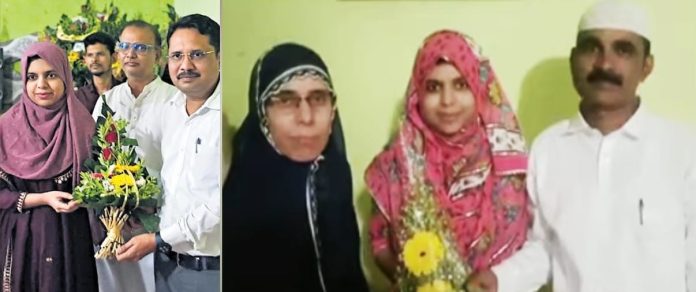
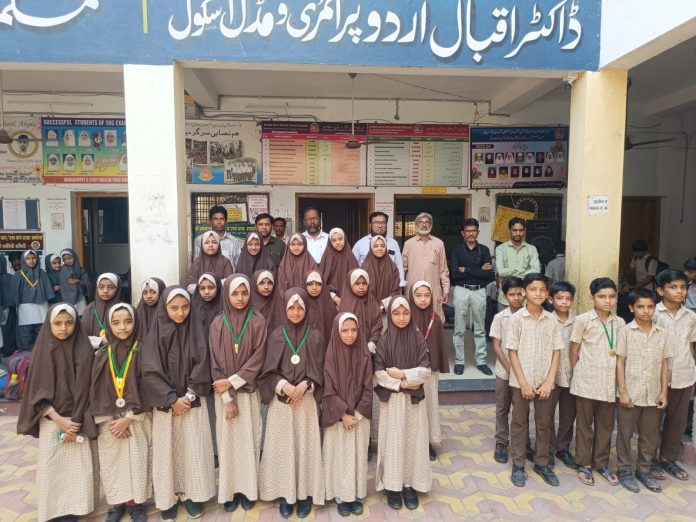
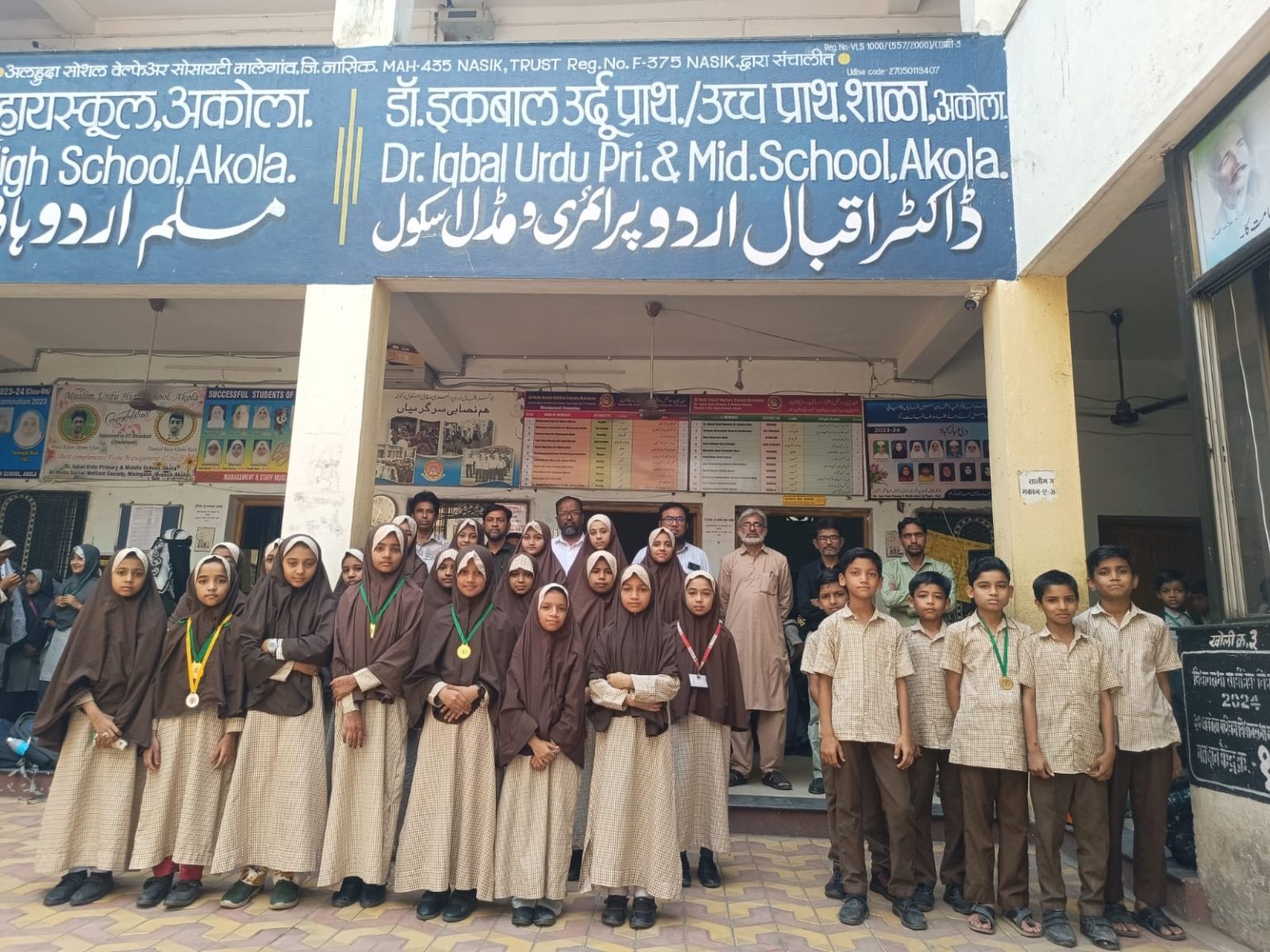
Every year, the Government of Maharashtra conducts a scholarship examination for students of Grade 5, in which lakhs of students from across the state participate. Recently, interim results of this exam were announced. In this examination, 48 students from Dr. Iqbal Urdu Primary School – a renowned and quality institution run by Al-Huda Social Welfare Society, Malegaon, District Nashik – participated. Out of these, 31 students achieved outstanding success.
Hafsa Saman Mohammad Mujahid secured 212 marks out of 300. Fatima Sitwat Azhar Hussain and Zobia Anam Mohammad Mujahid both secured 188 marks respectively, while Sheikh Umar Sheikh Sabir obtained 186 marks.
The school administration always strives not only to encourage students to participate in competitive exams but also to ensure their thorough preparation. For this purpose, the school arranges special classes throughout the year specifically for scholarship students, providing them with extensive practice.
Behind this success lies the significant role of competent and dedicated teachers. The school has expert teachers for this competitive scholarship activity, and the Headmaster is always ready to guide the students. In addition, the parents extended full support.
The institution’s President Dr. Ahmed Urooj, Vice President Khwaja Nizamuddin, Secretary Riyaz Khan, Headmaster Mohammad Ateeque ur Rahman, and the school staff congratulated the students and their parents and expressed their best wishes for great success in the future.
source: http://www.radiancenews.com / Radiance News / Home> Education> Latest News / by Radiance News Bureau / April 26th, 2025
Syed Adil Hussain Shah, the sole breadwinner for his family, was among the 26 killed on Tuesday
Syed Adil Hussain Shah (Photo: Social media), security tightened in Pahalgam (Photo: Reuters)
Syed Adil Hussain Shah, a pony ride operator in Jammu and Kashmir’s Pahalgam, reportedly lost his life while trying to protect a tourist during Tuesday’s terror attack that left 26 people dead. Shah attempted to wrest a rifle from one of the terrorists as gunfire erupted near the scenic Baisaran meadow.
Shah, who earned a living ferrying tourists on horseback from the car park to the meadow – accessible only on foot – was the only local civilian killed in the attack. According to an ANI report, eyewitnesses said the terrorists, before opening fire, asked victims their religion and made them recite Islamic verses, reportedly selecting targets based on their answers.
His brave act came as tourists scrambled to flee the ambush. Shah had reportedly tried to shield the tourist he had taken up the trail earlier that day.
The 32-year-old was the sole breadwinner for his family, which includes his ageing parents, wife, and children. His family is now shattered by both the emotional loss and the financial uncertainty that lies ahead.
His grieving mother, overwhelmed with sorrow, pleaded for justice, while his father, Syed Haider Shah, recounted the panic and heartbreak upon learning of his son’s fate.
“My son went to Pahalgam yesterday for work. Around 3 pm, we heard of the attack. We tried calling him, but his phone was off. It rang again around 4:40 pm, but no one answered. We rushed to the police station and were told he had been shot,” he told ANI.
Shah later succumbed to his injuries.
source: http://www.business-standard.com / Business Standard / Home> India News / by Vasudha Mukherjee, New Delhi (headline edited) / April 23rd, 2025
In a proud moment for Karkala, Shoukath Azeem from Salmara has secured the 345th rank in the UPSC Civil Services Examination 2024, turning his long-cherished dream of becoming an IAS officer into reality.
Undeterred by repeated setbacks, Azeem attempted the UPSC exam nine times, finally succeeding with an impressive rank in his last attempt, demonstrating unwavering determination and grit.
He is the son of Sheikh Abdulla and Maimoona from Salmara. His father, a truck driver by profession, raised the family with modest means. Despite coming from a humble background, Azeem’s ambition to join the civil services was ignited during his childhood after watching the Kannada movie Prithvi, starring Puneeth Rajkumar.
Azeem completed his early education at the Karkala Government Urdu School and a private school followed by higher education at a private college in Kukkundoor. He later earned his engineering degree a private college in Moodbidri.
In 2022, he had cleared the UPSC exam and was selected for the accounts division of the defence department, currently serving in Pune. Encouraged to try once more, Azeem made a final attempt and achieved his ultimate goal of becoming an IAS officer.
source: http://www.daijiworld.com / Daijiworld.com / Home> Top Stories / by Daijiworld Media Network – Karkala / April 26th, 2025
Hanipora Village (Pulwama District),JAMMU & KASHMIR :
Hearing and speech-impaired, hardships of life never robbed this Pulwama man of his passion for art as he sculpted his way to new heights, Fayaz Wani narrates.
29-year-old Suhail Mohammad Khan / Photo | Special arrangement
Jammu :
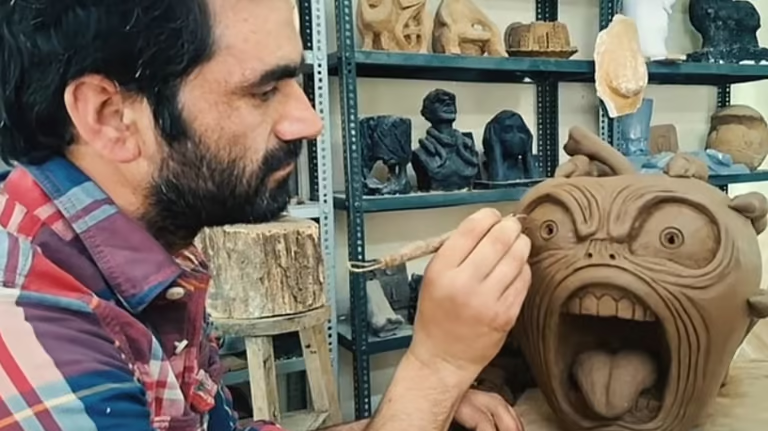
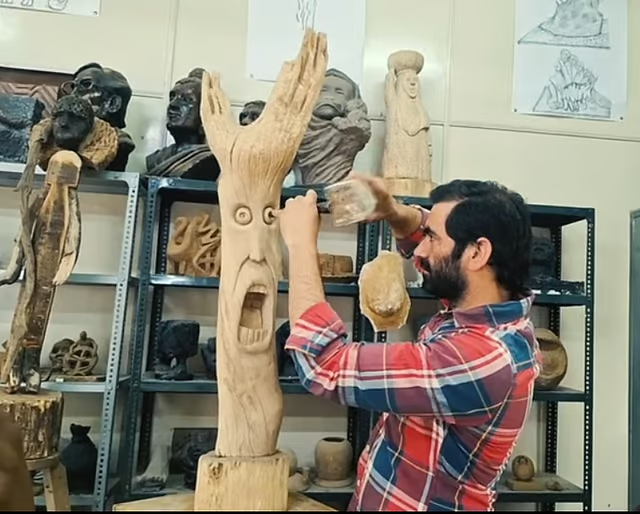
The popular saying “where there is will, there is a way” rings true for 29-year-old Suhail Mohammad Khan, a resident of Hanipora village in Jammu & Kashmir’s Pulwama district, who has overcome his deafness and inability to speak through his art. Versatile as he is, he has mastered several different forms of art.
His hard work, determination and never-say-die attitude have made him a source of inspiration for others. An architectural designer, painter, sculptor and sketch artist, Suhail wears many hats. But his path to success has been anything but easy.
Suhail lost his ability to hear and speak when he was just a child. However, that did not diminish his passion for drawing and painting. He always enjoyed rustling up sketches and paintings of his friends. As years passed, he began to explore other forms of art, including sculpture, printmaking and cake designing, instead of confining himself to one specific genre.
After passing out of school, Suhail joined the Institute of Music and Fine Arts at University of Kashmir. His talent and passion soon earned him admiration from his peers and the artistic community.
Describing his journey as an artist, a friend of Suhail beams with pride, saying, “He is an all-rounder who can create anything in art. For him, nothing is impossible. Suhail literally speaks through his art. He does painting, sculpture, videography and photography. His work is realistic and based on creativity. Although he is deaf and dumb, his work is very realistic.”
Ask this friend if Suhail, who communicates through sign language, faces any difficulty in his everyday life because of his inability to hear or speak, and pat comes his reply: “He doesn’t need to speak or introduce himself to anybody. He speaks through his works. His art does all the talking. We must appreciate the courage and passion he has displayed in the face of adversity. After all, he is living proof that nothing is impossible and that anything can be conquered by sheer persistence.”
Contrary to the popular belief that a disability can seal one’s fate, Suhail remains way ahead of many people who are not even differently abled. He did India proud in the International Snow Sculpture Contest held in January this year in Colorado, US. Only 12 teams from the world participated in the contest. Suhail and his team toiled for four days in freezing temperatures ranging from -25 °C to -35°C to craft their sculpture.
Titled ‘Mind in Meditation’, Team India’s masterpiece stood out for its elegance and precision. India secured third position in the competition.
source: http://www.newindianexpress.com / The New Indian Express / Home> The Sunday Standard / by Fayaz Wani / April 20th, 2025
The Rampur Nawabi family with former Prime Minister Dr. Manmohan Singh
In December 2021, I came across a report in a newspaper that said, “After almost 50 years of legal battle, the Rampur District Court has ruled in the Rampur Nawab family’s property dispute. The property will now be divided among 16 legal heirs. Raza Ali Khan, the last Nawab of Rampur, died in 1966. After a long legal battle, the court has announced the division of his property worth Rs 2,664 crore.”
The Nawab family of Rampur with its glorious history is still important played in Rampur and its surrounding districts. While the family ruled the state for a long time, its members joined the institutions of independent India like Parliament and legislative Assembly. Former Members of Parliament Mickey Mian and Noor Begum belong to the family. Many members of this Royal family have played an important role not only in politics but also in promoting the culture, patronizing poets, writers, musicians, and other creative artists.
Khandaan
The Nawabi family of Rampur State
Before the independence, India was dotted with small states and one of them happened to be the state of Rampur, located in today’s state of Uttar Pradesh. It was founded by Nawab Ali Mohammad Khan, a Pushtun leader on 7 October 1774. There have been 11 Nawabs in the state including Nawab Faizullah Khan, Nawab Hafiz Rehmat Khan Barish, Nawab Muhammad Ali Khan, Nawab Ghulam Muhammad Khan, Nawab Ahmad Ali Khan, Nawab Muhammad Saeed Khan, Nawab Yusuf Ali Khan, Nawab Club Ali Khan. Nawab Muhammad Mushtaq Ali Khan, Nawab Hamid Ali Khan.
Raza Ali Khan was the last Nawab of Rampur. Rampur was one of the important States of the British in India as its rulers were plaint and supported the Raj even during the 1857 revolt. It was a 15 cannons gun salute State and its rulers owned a lot of wealth.
Before the independence, the Nawabs of Rampur used to have their own railway station with two special coaches always in readiness in the service of the Royal family. Whenever the Nawab family had to travel by train to Delhi, Lucknow, or elsewhere, they would board their coach and that was added to the passenger train. During the tenure of the ninth Nawab, Hamid Ali Khan the railway line was laid in the district. At that time, he had built a separate railway station for his use. It was close to the main railway station.
The Royal Coach full of Luxuries and modern appliance
Interestingly the two railway coaches that have immense historic and antique value today are among the assets sought to be distributed among the progeny of the Raza Ali Khan. These were originally valued at Rs. 117.42 million. However, due to almost no maintenance, the price was halved.
Interestingly, these coaches had so many modern conveniences that even the heads of the state today can’t dream of. The coaches were equipped with 33mm and 16mm cinema projectors, cameras, imported radio transistors, and tape recorders. These provided all the luxuries like Bedding, chair, carburetor pillow, seat, silverware, glass, whiskey, beer bottles, English crockery, large cigarette and cigar box, silver footstep, eagle, silver canteen set, silver hooka, silver bed, sword, and various kinds of guns, etc.
The Nawab family’s properties include 1073 acres of land, mansions, palaces like Khas Bagh, Kothi Benazir, Lakhi Bagh, Kanda, and Nawab Railway Station, and immovable assets like arms, jewelry, etc. The valuables include silverware like six silver beds, 20 silver pandans, six khasdans, and 20 cigar boxes, and four hookas. Former Member of Parliament Begum Nurbano says that when she came to Khas Bagh in 1956 as a bride she slept on a silver bed. Khas Bagh was India’s first air-conditioned palace.
Khas Bagh Palace was the first air-conditioned palace in India.
Khas Bagh Palace, Rampur
The state of Rampur was not only a political state but also a great patron of education, art, and culture. Nawab Yusuf Ali Khan was a friend of knowledge and also gave scholarships to scholars and students. He made Mirza Ghalib his consultant on literary matters and he became a student of Ghalib. He used to send a reasonable amount of money to Mirza as a stipend. In addition, hundreds of poets, including Mirzadagh Dehlavi, were patronized by the Nawabs of Rampur.
The Library
The Nawab of Rampur was a friend of knowledge. The symbol of his friendliness of knowledge is Raza Library which was once the largest library in India and it is still very important today. Thousands of rare books and manuscripts in Urdu, Persian and Turkish languages are available here.
The Nawab of Rampur was also an epicurean. He had a whole army of cooks and chefs. These chefs would spend the whole day preparing high-quality food and experimenting with new flavors. Elders were invited to the Nawabi Dastkhwan. After the dissolution of the state, it became difficult for the Nawab to continue the Dasthar Khan.
The Nawabs of Rampur patronized traditional music at their court. Mehboob Khan was one of the greatest thinkers of the royal court of Rampur state. This tradition was followed by his sons Inayat Hussain Khan and Inayat’s brother-in-law Haider Khan and Mushtaq Hussain. It was here that the Rampur-Sahswan family of Indian classical music was born. Sahswan is in the present Badaun district.
One of the Palaces of rampur Nawab family
After independence, the Nawab family took an active part in politics and Major Nawab Syed Zulfiqar Ali Khan Bahadur was the first from the family to be elected to the Lok Sabha. He was known as Mickey Mian. He was the second son of Nawab Sir Syed Raza Ali Khan Bahadur. In 1984 and 1989, he was elected to the Rampur Lok Sabha seat on a Congress ticket. It is also interesting to note that Mickey Mian represented Rampur in Lok Sabha for a long time but never spoke in the House.
After Mickey Mian, his wife Begum Noor Bano served as Member of Parliament in the 11th and 13th Lok Sabha. She was elected from Rampur on a Congress party ticket. Begum Noor Bano alias Mehtab Zamani Begum was born to Nawab Aminuddin Ahmed Khan who was the last ruling Nawab of Loharo (Bhiwani-Haryana). She was educated at Maharani Gayatri Devi Girls Public School, Jaipur.
She joined the All India Congress Committee in 1992 and was elected to the Lok Sabha in 1996. In the next election, she lost to BJP’s Mukhtar Abbas Naqvi. An aficionado of music and dance, Noor Banu is the patron of the Devi Foundation and the Rampur family. Bano is interested in historical and cultural Persian and Arabic books and research on environment and forest protection. She enjoys reading, painting, gardening, and music and is a member of several sports clubs across the country.
Micky Mian and Noor Bano with their children
Micky Mian and Begum Noor Bano have three children. One of them is Nawabzada Syed Muhammad Kazim Ali Khan Bahadur. He was elected MLA several times and is also a Congress candidate in the current Assembly elections. His son Nawabzada Syed Haider Ali Khan Bahadur is also contesting the Assembly elections 2022.
In the current elections in Uttar Pradesh, the reputation and honour of the Royal family is also at stake. Samajwadi Party veteran Azam Khan, who has been elected an MLA from Rampur city nine times is contesting from inside the jail against his traditional rival from the Royal family Mohammad Kazim Ali Khan. Kazim Khan popularly known by his nickname of Navid Miyan is contesting as a candidate of Congress Party and is hoping to defeat the ‘tainted’ Azam Khan.
Besides, Azam Khan’s son Abdullah Azam is contesting from the Suar constituency where he is pitted against Naveed Mian’s son Hamza Mian.
The Nawab of Rampur
Azam Khan has dominated the politics of Rampur for 42 years. He has also held ministerial positions in the Samajwadi government four times. He has also been Leader of the Opposition and Member of Rajya Sabha. On the other hand, the Nawab family has also a great influence on Rampur. Naveed Mian Sawar has been MLA four times from the Tanda seat. Once he was also elected to Legislative Assembly from Bilaspur and was a minister too.
His father Nawab Zulfiqar Ali Khan alias Miki Mian has been a Member of Parliament five times and his mother Begum Noor Bano has been a Member of Parliament twice. Both the Congress and the SP have given tickets to the members of the Rampur Royal family. This time, Congress has given tickets to former MLA Naveed Mian as well as his son Haider Ali Khan alias Hamza Mian.
source: http://www.awazthevoice.in / Awaz, The Voice / Home> Stories / by Ghaus Siwani / February 04th, 2022